

Protein Identification False Discovery Rates for Very Large Proteomics Data Sets Generated by Tandem Mass Spectrometry
Open accessThe DOI matches its Crossref record; 43 of the 44 references it cites were found in a registry or an index.
Abstract
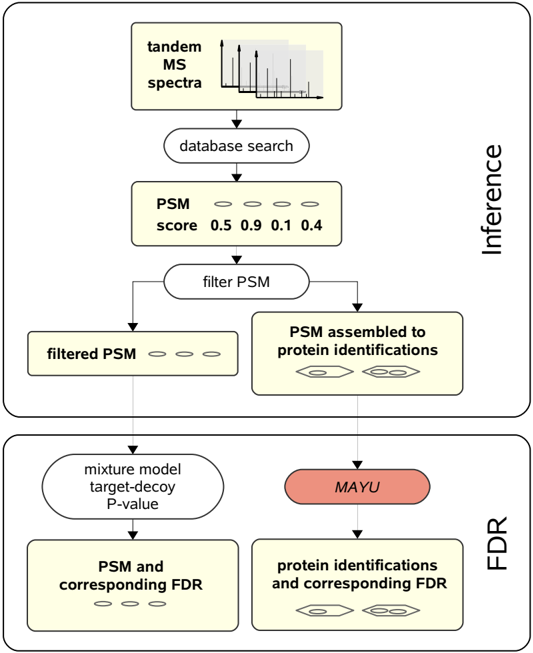
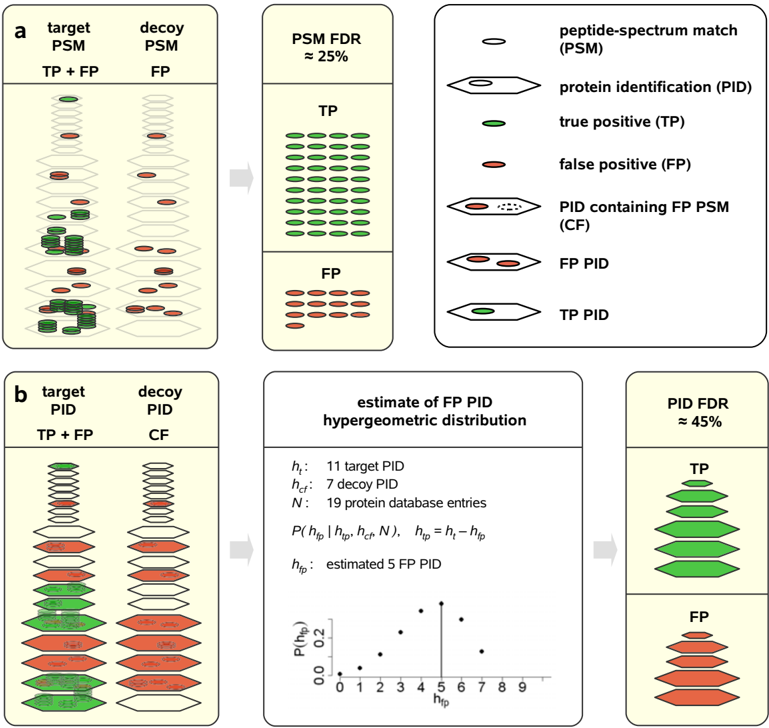
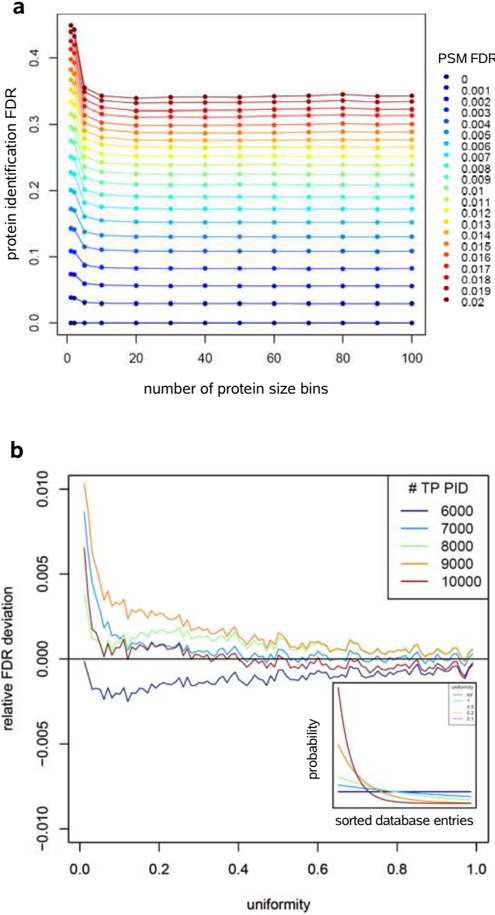
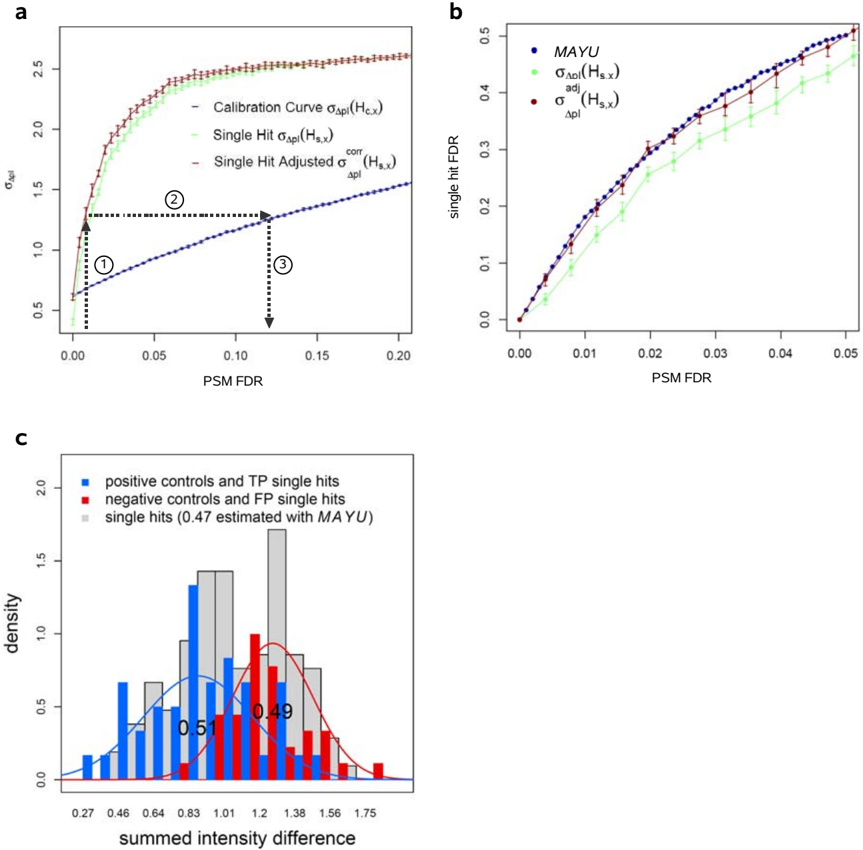
Comprehensive characterization of a proteome is a fundamental goal in proteomics. To achieve saturation coverage of a proteome or specific subproteome via tandem mass spectrometric identification of tryptic protein sample digests, proteomics data sets are growing dramatically in size and heterogeneity. The trend toward very large integrated data sets poses so far unsolved challenges to control the uncertainty of protein identifications going beyond well established confidence measures for peptide-spectrum matches. We present MAYU, a novel strategy that reliably estimates false discovery rates for protein identifications in large scale data sets. We validated and applied MAYU using various large proteomics data sets. The data show that the size of the data set has an important and previously underestimated impact on the reliability of protein identifications. We particularly found that protein false discovery rates are significantly elevated compared with those of peptide-spectrum matches. The function provided by MAYU is critical to control the quality of proteome data repositories and thereby to enhance any study relying on these data sources. The MAYU software is available as standalone software and also integrated into the Trans-Proteomic Pipeline.
Overview
The claims and statistics of this paper haven’t been checked yet.
Free: it reads the open-access text and checks the first 5 claims that cite a source we can check. Create a free account to check every claim.
Integrity signals
Registry
Cites
Statistics
Figures
Verification
Claims the paper makes
The claims and statistics of this paper haven’t been checked yet.
Free: it reads the open-access text and checks the first 5 claims that cite a source we can check. Create a free account to check every claim.
Claims other papers make about this one
Each is checked against this paper’s own text: does it say what the citing paper says it does?
In the citing paper
“To exclude the possibility of an inflated protein false discovery rate (FDR) due to error propagation from peptide to protein level inference, we used the Mayu software tool that determines the protein FDR in large data sets as a function of the peptide FDR (Reiter et al, 2009).”
From The quantitative proteome of a human cell line (2011) · cites this paper as Reiter et al, 2009
In the citing paper
“Protein FDRs have been estimated by the generalized target-decoy strategy Mayu (Reiter et al, 2009).”
From The quantitative proteome of a human cell line (2011) · cites this paper as Reiter et al, 2009
In the citing paper
“The accumulation of new peak groups steadily increased across the data set, indicating a likely accumulation of false positives and, highlighting the importance of appropriate global FDR control55, 56.”
From Multi-laboratory assessment of reproducibility, qualitative and quantitative performance of SWATH-mass spectrometry (2017) · cites this paper as [56]
Self-check
Percentages, sums and reported differences re-computed from the paper’s own numbers.
The self-check needs the paper’s full text.
Citations
Cites
Controlling the False Discovery Rate: A Practical and Powerful Approach to Multiple Testing
Benjamini, Y., & Hochberg, Y. (1995) · Journal of the Royal Statistical Society Series B: Statistical Methodology · doi:10.1111/j.2517-6161.1995.tb02031.x · Cited by 109,482
Mass spectrometry-based proteomics
Aebersold, R., & Mann, M. (2003) · Nature · doi:10.1038/nature01511 · Cited by 6,955 · cited 1×
“An explicit goal of proteomics is the complete description of a proteome and the measurement of its response to perturbations (Aebersold and Mann 2003).”
BackgroundSelf-citationEng, J. K., McCormack, A. L., & Yates, J. R. (1994) · Journal of the American Society for Mass Spectrometry · doi:10.1016/1044-0305(94)80016-2 · Cited by 6,484 · cited 2×
“We searched each data set against a composite target-decoy database using Turbo Sequest (Eng, McCormack et al. 1994) and Sequest on a Sorcerer machine (Sorcerer™-SEQUEST®, 3.10.4 release).”
MethodInfluentialKeller, A., Nesvizhskii, A. I., Kolker, E., & Aebersold, R. (2002) · Analytical Chemistry · doi:10.1021/ac025747h · Cited by 4,830
Self-citationA Statistical Model for Identifying Proteins by Tandem Mass Spectrometry
Nesvizhskii, A. I., Keller, A., Kolker, E., & Aebersold, R. (2003) · Analytical Chemistry · doi:10.1021/ac0341261 · Cited by 4,809 · cited 14×
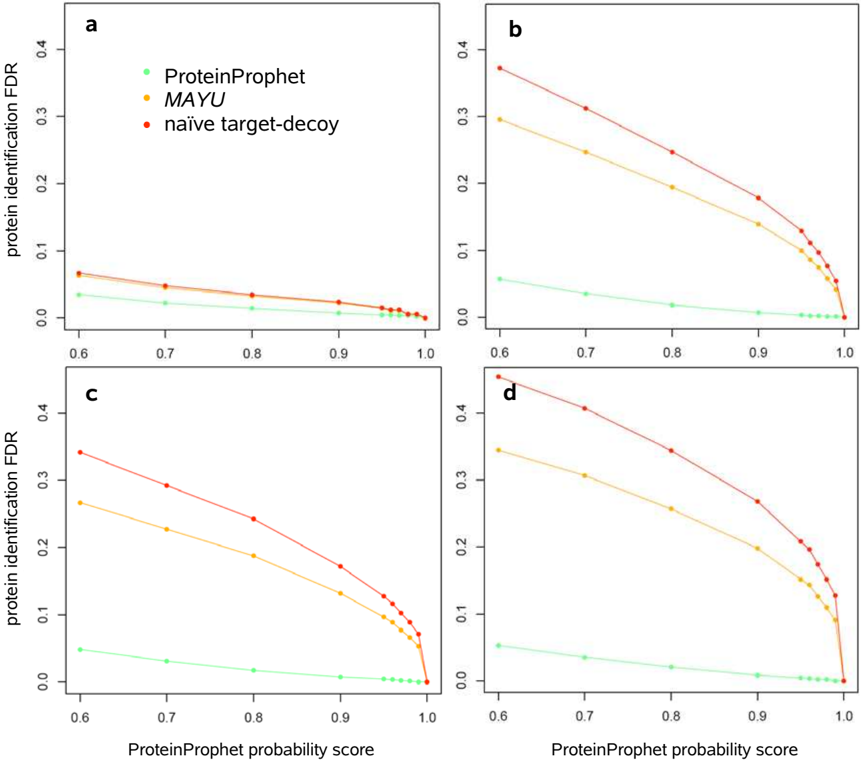
“Widely used protein inference tools like ProteinProphet (24) have proven to yield reliable error estimates on data sets at the experiment level (typically 10–50 LC-MS/MS runs) but fail to estimate an accurate protein identification FDR for large data sets (Fig.”
MethodInfluentialSelf-citationLarge-scale analysis of the yeast proteome by multidimensional protein identification technology
Washburn, M. P., Wolters, D., & Yates, J. R. (2001) · Nature Biotechnology · doi:10.1038/85686 · Cited by 4,752 · cited 1×
“at the protein identification level (2, 3, 7, 27, 28).”
BackgroundElias, J. E., & Gygi, S. P. (2007) · Nature Methods · doi:10.1038/nmeth1019 · Cited by 3,925 · cited 12×
“We performed all the database searches using a concatenated target-decoy database (Elias and Gygi 2007 Based on the well established assumption that false positive PSMs equally likely map to either target or decoy database, we used the number of PSMs mapping to the decoy database as an estimate for the number of false…”
BackgroundMethodInfluentialA Model for Random Sampling and Estimation of Relative Protein Abundance in Shotgun Proteomics
Liu, H., Sadygov, R. G., & Yates, J. R. (2004) · Analytical Chemistry · doi:10.1021/ac0498563 · Cited by 2,500 · cited 1×
“(41), and targeted proteomics approaches based on the”
BackgroundThe Bioperl Toolkit: Perl Modules for the Life Sciences
Stajich, J. E., Block, D., Boulez, K., Brenner, S. E., Chervitz, S. A., Dagdigian, C., Fuellen, G., Gilbert, J. G. R., Korf, I., Lapp, H., et al. (2002) · Genome Research · doi:10.1101/gr.361602 · Cited by 1,654 · cited 2×
“We used the standard deviatio n pI of isoelectric point deviations pI as a quality measure for a set H of PSMs, ( σ where pI pr (i) is the isoelectric point of a PSM i predicted by Bioperl (Stajich, Block et al. 2002). pI ex (i) corresponds to the experimentally measured isoelectric point of a PSM i, determined as the…”
BackgroundInfluentialPeng, J., Elias, J. E., Thoreen, C. C., Licklider, L. J., & Gygi, S. P. (2003) · Journal of Proteome Research · doi:10.1021/pr025556v · Cited by 1,647 · cited 2×
“Number, frequency and size and heterogeneity of proteomic data sets steadily increase (Washburn, Wolters et al. 2001; Peng, Elias et al. 2003; Omenn, States et al. 2005; Foster, de Hoog et al. 2006; King, Deutsch et al. 2006; Brunner, Ahrens et al. 2007; Baerenfaller, Grossmann et al. 2008; de…”
Background
Cited by
Items 101–200 of 312
Medina, L. M. P., Becker, A., Michalik, S., Yedavally, H., Raineri, E. J. M., Hildebrandt, P., Salazar, M. G., Surmann, K., Pförtner, H., Mekonnen, S. A., et al. (2019) · Molecular & Cellular Proteomics · doi:10.1074/mcp.ra118.001138 · Cited by 60
Photoaffinity labelling with small molecules
Homan, R. A., Lapek, J. D., Woo, C. M., Niessen, S., Jones, L. H., & Parker, C. G. (2024) · Nature Reviews Methods Primers · doi:10.1038/s43586-024-00308-4 · Cited by 65
“The protein-level FDR should also be assessed in the context of the study being conducted, as larger studies with more MS runs are subject to higher protein-level FDRs, owing to a compounding of the effects of erroneous assignment of high-confidence PSMs to the protein level 103 .”
Proteomics and the Analysis of Proteomic Data: An Overview of Current Protein‐Profiling Technologies
Gulcicek, E. E., Colangelo, C. M., McMurray, W. J., Stone, K. L., Williams, K. R., WU, T. L., Zhao, H., Spratt, H. M., Kurosky, A., & Wu, B. (2005) · Current Protocols in Bioinformatics · doi:10.1002/0471250953.bi1301s10 · Cited by 70
Hierarchical Clustering of Shotgun Proteomics Data
Koskinen, V. R., Emery, P. A., Creasy, D. M., & Cottrell, J. S. (2011) · Molecular & Cellular Proteomics · doi:10.1074/mcp.m110.003822 · Cited by 57
“the FDR for an existing set of protein identifications (25).”
BackgroundSolution to Statistical Challenges in Proteomics Is More Statistics, Not Less
Serang, O., & Käll, L. (2015) · Journal of Proteome Research · doi:10.1021/acs.jproteome.5b00568 · Cited by 49
Rabe, A., Salazar, M. G., Michalik, S., Fuchs, S., Welk, A., Kocher, T., & Völker, U. (2019) · Journal of Oral Microbiology · doi:10.1080/20002297.2019.1654786 · Cited by 58
A cross-validation scheme for machine learning algorithms in shotgun proteomics
Granholm, V., Noble, W. S., & Käll, L. (2012) · BMC Bioinformatics · doi:10.1186/1471-2105-13-s16-s3 · Cited by 58
“Subsequently, from the set of PSMs, the proteins in the sample can be inferred [5-8].”
BackgroundMüller, D. B., Schubert, O. T., Röst, H. L., Aebersold, R. H., & Vorholt, J. A. (2016) · Molecular & Cellular Proteomics · doi:10.1074/mcp.m116.058164 · Cited by 58
“To determine the iProphet cut-off corresponding to a 1% protein FDR, the software tool MAYU (38) was applied.”
MethodSelf-citationHow to talk about protein‐level false discovery rates in shotgun proteomics
The, M., Tasnim, A., & Käll, L. (2016) · PROTEOMICS · doi:10.1002/pmic.201500431 · Cited by 47
“This increase in error rate is a consequence of present proteins agglomerating more PSMs and peptides than spurious proteins [13, 14].”
BackgroundInfluentialProtein Co-Aggregation Related to Amyloids: Methods of Investigation, Diversity, and Classification
Bondarev, S. A., Antonets, K. S., Kajava, A. V., Nizhnikov, A. A., & Zhouravleva, G. A. (2018) · International Journal of Molecular Sciences · doi:10.3390/ijms19082292 · Cited by 52
“Nevertheless, false discovery rates remain an unresolved problem for proteomic data [100]; thus, each particular interaction needs to be individually validated by other methods.”
BackgroundA comprehensive and scalable database search system for metaproteomics
Chatterjee, S., Stupp, G. S., Park, S. K. R., Ducom, J.-C., Yates, J. R., Su, A. I., & Wolan, D. W. (2016) · BMC Genomics · doi:10.1186/s12864-016-2855-3 · Cited by 55
“A significant concern with larger protein databases is the accuracy of peptide-spectrum matches [16, 21, 22].”
BackgroundKlingauf‐Nerurkar, P., Gillet, L. C. J., Portugal-Calisto, D., Oborská‐Oplová, M., Jäger, M., Schubert, O. T., Pisano, A., Peña, C., Rao, S., Altvater, M., et al. (2020) · eLife · doi:10.7554/elife.52474 · Cited by 49
Self-citationBandhakavi, S., Riper, S. K. V., Tawfik, P. N., Stone, M. D., Haddad, T. C., Rhodus, N. L., Carlis, J. V., & Griffin, T. J. (2010) · Journal of Proteome Research · doi:10.1021/pr100857t · Cited by 48
The Pig PeptideAtlas: A resource for systems biology in animal production and biomedicine
Hesselager, M. O., Codrea, M. C., Sun, Z., Deutsch, E. W., Bennike, T. B., Stensballe, A., Bundgaard, L., Moritz, R. L., & Bendixen, E. (2016) · PROTEOMICS · doi:10.1002/pmic.201500195 · Cited by 49
Park, G. W., Hwang, H., Kim, K. H., Lee, J. Y., Lee, H. K., Park, J. Y., Ji, E. S., Park, S. K. R., Yates, J. R., Kwon, K., et al. (2016) · Journal of Proteome Research · doi:10.1021/acs.jproteome.6b00376 · Cited by 53
qPTM: an updated database for PTM dynamics in human, mouse, rat and yeast
Yu, K., Wang, Y., Zheng, Y., Liu, Z., Zhang, Q., Wang, S., Zhao, Q., Zhang, X.-L., Li, X., Xu, R., et al. (2022) · Nucleic Acids Research · doi:10.1093/nar/gkac820 · Cited by 57
“The quality control became more and more important especially for the integration of large-scale datasets, and it was shown that combining multiple datasets could lead to the aggregation of false-positive hits (75,76).”
BackgroundCarapito, C., Lane, L., Benama, M., Opsomer, A., Mouton‐Barbosa, E., Garrigues, L., de Peredo, A. G., Burel, A., Bruley, C., Gateau, A., et al. (2015) · Journal of Proteome Research · doi:10.1021/pr5010345 · Cited by 50
Choi, M., Eren-Dogu, Z. F., Colangelo, C., Cottrell, J., Hoopmann, M. R., Kapp, E. A., Kim, S., Lam, H., Neubert, T. A., Palmblad, M., et al. (2017) · Journal of Proteome Research · doi:10.1021/acs.jproteome.6b00881 · Cited by 45
Mackmull, M., Nagel, L., Sesterhenn, F., Muntel, J., Großbach, J., Stalder, P., Bruderer, R., Reiter, L., van de Berg, W. D. J., de Souza, N., et al. (2022) · Nature Structural & Molecular Biology · doi:10.1038/s41594-022-00837-0 · Cited by 50
Self-citationFert-Bober, J., Murray, C. I., Parker, S. J., & Van Eyk, J. E. (2018) · Circulation Research · doi:10.1161/circresaha.118.310966 · Cited by 45
Blattmann, P., Heusel, M., & Aebersold, R. (2016) · PLOS ONE · doi:10.1371/journal.pone.0153160 · Cited by 48
Self-citationA comprehensive spectral assay library to quantify the Escherichia coli proteome by DIA/SWATH-MS
Midha, M. K., Kusebauch, U., Shteynberg, D. D., Kapil, C., Bader, S. L., Reddy, P. J., Campbell, D. S., Baliga, N. S., & Moritz, R. L. (2020) · Scientific Data · doi:10.1038/s41597-020-00724-7 · Cited by 47
Pernemalm, M., Petris, L. D., Branca, R. M., Forshed, J., Kanter, L., Soria, J., Girard, P., Validire, P., Pawitan, Y., van den Oord, J., et al. (2013) · Journal of Proteome Research · doi:10.1021/pr4002096 · Cited by 49
DIALib-QC an assessment tool for spectral libraries in data-independent acquisition proteomics
Midha, M. K., Campbell, D. S., Kapil, C., Kusebauch, U., Hoopmann, M. R., Bader, S. L., & Moritz, R. L. (2020) · Nature Communications · doi:10.1038/s41467-020-18901-y · Cited by 45
Generation of a zebrafish SWATH-MS spectral library to quantify 10,000 proteins
Blattmann, P., Stutz, V., Lizzo, G., Richard, J., Gut, P., & Aebersold, R. H. (2019) · Scientific Data · doi:10.1038/sdata.2019.11 · Cited by 45
Self-citationZhu, Z., Su, X., Go, E. P., & Desaire, H. (2014) · Analytical Chemistry · doi:10.1021/ac502176n · Cited by 42
Parker, S. J., Venkatraman, V., & Eyk, J. E. V. (2016) · PROTEOMICS · doi:10.1002/pmic.201600007 · Cited by 44
“Preliminary peak group scores of target peptides and decoy peptides were analyzed using the pyprophet algorithm to determine scoring cut-offs consistent with a given FDR.”
MethodInfluentialLi, S., Cao, Q., Xiao, W., Guo, Y., Yang, Y., Duan, X., & Shui, W. (2017) · Journal of Proteome Research · doi:10.1021/acs.jproteome.6b00767 · Cited by 47
Simulating and validating proteomics data and search results
Geromanos, S. J., Hughes, C. J., Golick, D., Ciavarini, S. J., Gorenstein, M. V., Richardson, K., Hoyes, J. B., Vissers, J. P. C., & Langridge, J. (2011) · PROTEOMICS · doi:10.1002/pmic.201000576 · Cited by 45
“The discontinuity between peptide and protein FDR was recently discussed, while concurrently novel statistical approaches were reported to try to overcome these limitations [20].”
BackgroundAmon, L. M., Law, W., Fitzgibbon, M., Gross, J. A., O'Briant, K. C., Peterson, A. C., Drescher, C. W., Martin, D. B., & McIntosh, M. W. (2010) · PLoS ONE · doi:10.1371/journal.pone.0011137 · Cited by 41
“was used to group peptides into protein groups, but only peptides having PeptideProphet probability >0.95 were used in the ProteinProphet inference (i.e., in contrast to the default configuration in ProteinProphet, we omitted moderately confident peptides due to the dramatic inflation of ProteinProphet rates that resu…”
MethodInfluentialBringing New Methods to the Seed Proteomics Platform: Challenges and Perspectives
Николаевна, С. Г., Gorbach, D., Lukasheva, E., Mavropolo-Stolyarenko, G., Bilova, T. E., Soboleva, A., Tsarev, A. A., Romanovskaya, E. V., Podolskaya, E. P., Zhukov, V. A., et al. (2020) · International Journal of Molecular Sciences · doi:10.3390/ijms21239162 · Cited by 43
Schreiber, J., Végh, M. J., Dawitz, J., Kroon, T., Loos, M., Labonté, D., Li, K. W., van Nierop, P., van Diepen, M. T., Zeeuw, C. I. D., et al. (2015) · The Journal of Cell Biology · doi:10.1083/jcb.201506048 · Cited by 48
“For ubiquitylation assays, cells were first incubated with 20 µM MG132 (Tocris Bioscience) and 500 nM TPA (Sigma-Aldrich) for 4 h and then lysed.”
MethodInference and Validation of Protein Identifications
Claassen, M. (2012) · Molecular & Cellular Proteomics · doi:10.1074/mcp.r111.014795 · Cited by 46
“For large datasets the apparent proteome coverage can deviate significantly from the coverage of true positive (tP) protein identifications. have been observed (53).”
BackgroundInfluentialSelf-citationThe, M., Samaras, P., Küster, B., & Wilhelm, M. (2022) · Molecular & Cellular Proteomics · doi:10.1016/j.mcpro.2022.100437 · Cited by 43
“This is because false target PSMs may arise from both correct and false target proteins, whereas decoy PSMs only arise from decoy proteins, which are false by definition (17).”
BackgroundAdvances in sperm proteomics: best-practise methodology and clinical potential
Codina-Pascual, M., Estanyol, J. M., Fidalgo, M. J., Ballescà, J. L., & Oliva, R. (2015) · Expert Review of Proteomics · doi:10.1586/14789450.2015.1040769 · Cited by 36
“One of them is to mix correct and false identifications using what is called ‘decoy database’, and then analyzing randomly to calculate de false discovery rate and establish it as cut-off [65].”
MethodSerang, O., Moruz, L., Hoopmann, M. R., & Käll, L. (2012) · Journal of Proteome Research · doi:10.1021/pr300426s · Cited by 36
Dissecting the iTRAQ Data Analysis
Aggarwal, S., & Yadav, A. K. (2015) · Methods in molecular biology · doi:10.1007/978-1-4939-3106-4_18 · Cited by 37
MS-READ: Quantitative measurement of amino acid incorporation
Mohler, K., Aerni, H. R., Gassaway, B. M., Ling, J., Ibba, M., & Rinehart, J. (2017) · Biochimica et Biophysica Acta (BBA) - General Subjects · doi:10.1016/j.bbagen.2017.01.025 · Cited by 34
“In practice, however, the predicted misincorporation event must be anticipated due to limitations in current data analysis strategies based on data-base searching algorithms and unbiased sequence surveys which lack the ability to accurately detect all possible mistranslation events and have been associated with extrem…”
BackgroundFeng, X., Li, L., Zhang, J., Zhu, Y., Chang, C., Shu, K., & Ma, J. (2017) · BMC Genomics · doi:10.1186/s12864-017-3491-2 · Cited by 33
“In this study, we used MAYU for protein assembling [28].”
MethodNagel, A. C., Michalik, S., Débarbouillé, M., Hertlein, T., Salazar, M. G., Rath, H., Msadek, T., Ohlsen, K., van Dijl, J. M., Völker, U., et al. (2018) · mBio · doi:10.1128/mbio.01332-18 · Cited by 38
“A global protein false-discovery rate (FDR) of 1% was set using MAYU (86).”
MethodDams, M., Dores‐Sousa, J. L., Lamers, R.-J. A. N., Treumann, A., & Eeltink, S. (2018) · Chromatographia · doi:10.1007/s10337-018-3647-5 · Cited by 34
Willems, P., Fels, U., Staes, A., Gevaert, K., & Damme, P. V. (2021) · Journal of Proteome Research · doi:10.1021/acs.jproteome.0c00350 · Cited by 35
Cotham, V. C., Wine, Y., & Brodbelt, J. S. (2013) · Analytical Chemistry · doi:10.1021/ac400851x · Cited by 33
Forshed, J., Johansson, H. J., Pernemalm, M., Branca, R. M. M., Sandberg, A., & Lehtiö, J. (2011) · Molecular & Cellular Proteomics · doi:10.1074/mcp.m111.010264 · Cited by 32
“One way is to define the limit from MAYU (27), where the protein false discovery rate (FDR) is determined.”
BackgroundAssigning spectrum-specific P-values to protein identifications by mass spectrometry
Spirin, V., Shpunt, A., Seebacher, J., Gentzel, M., Shevchenko, A., Gygi, S. P., & Sunyaev, S. R. (2011) · Bioinformatics · doi:10.1093/bioinformatics/btr089 · Cited by 32
Sementé, L., Baquer, G., García‐Altares, M., Correig, X., & Ràfols, P. (2021) · Analytica Chimica Acta · doi:10.1016/j.aca.2021.338669 · Cited by 34
Kitata, R. B., Dimayacyac-Esleta, B. R. T., Choong, W.-K., Tsai, C.-F., Lin, T., Tsou, C., Weng, S.-H., Chen, Y., Yang, P.-C., Arco, S. D., et al. (2015) · Journal of Proteome Research · doi:10.1021/acs.jproteome.5b00477 · Cited by 33
Walzer, M., García‐Seisdedos, D., Prakash, A., Brack, P., Crowther, P., Graham, R. L., George, N., Mohammed, S., Moreno, P. A., Papatheodorou, I., et al. (2022) · Scientific Data · doi:10.1038/s41597-022-01380-9 · Cited by 35
Direct Maximization of Protein Identifications from Tandem Mass Spectra
Spivak, M., Weston, J., Tomazela, D. M., MacCoss, M. J., & Noble, W. S. (2011) · Molecular & Cellular Proteomics · doi:10.1074/mcp.m111.012161 · Cited by 34
“This approach creates difficulties for estimating protein level FDRs because the PSM or peptide level error rate may be significantly lower than the protein level error rate, especially in the context of a deeply saturated experiment (12, 13).”
BackgroundLiu, Y., Li, C., Xing, Z., Yuan, X., Wu, Y. C., Xu, M., Tu, K., Li, Q., Wu, C., Zhao, M., et al. (2010) · FEBS Journal · doi:10.1111/j.1742-4658.2010.07795.x · Cited by 34
Extensive Mass Spectrometry-based Analysis of the Fission Yeast Proteome
Gunaratne, J., Schmidt, A., Quandt, A., Neo, S. P., Saraç, Ö. S., Gracia, T., Loguercio, S., Ahrné, E., Xia, R. L. H., Tan, K. H., et al. (2013) · Molecular & Cellular Proteomics · doi:10.1074/mcp.m112.023754 · Cited by 32
“ration coverage of the expressed proteome (19).”
Self-citationStrain Differences in Presynaptic Function
Lenselink, A. M., Rotaru, D. C., Li, K. W., van Nierop, P., Rao‐Ruiz, P., Loos, M., van der Schors, R. C., Gouwenberg, Y., Wortel, J., Mansvelder, H. D., et al. (2015) · Journal of Biological Chemistry · doi:10.1074/jbc.m114.628776 · Cited by 34
“False discovery rates (FDR) for peptide and protein identifications (threshold at 5%) were established using Mayu software (20).”
MethodRao‐Ruiz, P., Carney, K. E., Pandya, N. J., van der Loo, R. J., Verheijen, M. H. G., van Nierop, P., Smit, A. B., & Spijker, S. (2015) · Hippocampus · doi:10.1002/hipo.22432 · Cited by 34
“False discovery rates (FDRs) for peptide and protein identifications were established using Mayu software (Reiter et al., 2009).”
MethodRapid Profiling of Protein Complex Reorganization in Perturbed Systems
Bludau, I., Nicod, C., Martelli, C., Xue, P., Heusel, M., Fossati, A., Uliana, F., Frommelt, F., Aebersold, R. H., & Collins, B. C. (2023) · Journal of Proteome Research · doi:10.1021/acs.jproteome.3c00125 · Cited by 30
Self-citationThe 15 N isotope effect in Escherichia coli : A neutron can make the difference
Filiou, M. D., Varadarajulu, J., Teplytska, L., Reckow, S., Maccarrone, G., & Turck, C. W. (2012) · PROTEOMICS · doi:10.1002/pmic.201200209 · Cited by 32
“06 software [33] was used to estimate FDRs on the spectrum as well as on the protein level based on the number of forward and reverse hits with scores above the filtering thresholds.”
MethodBruce, C., Stone, K. L., Gulcicek, E. E., & Williams, K. R. (2013) · Current Protocols in Bioinformatics · doi:10.1002/0471250953.bi1321s41 · Cited by 37
“The use of sophisticated protein inference machines that focus on error minimization have been shown to work better than simple rules like avoiding protein identifications that are based on a single peptide identification (Gupta and Pevzner, 2009; Reiter et al., 2009; Claassen et al., 2012).”
BackgroundMethodThe spectra count label-free quantitation in cancer proteomics.
Zhou, W., Liotta, L. A., & Petricoin, E. F. (2012) · Cancer Genomics & Proteomics · Cited by 39
Generic Comparison of Protein Inference Engines
Claassen, M., Reiter, L., Hengartner, M. O., Buhmann, J. M., & Aebersold, R. H. (2011) · Molecular & Cellular Proteomics · doi:10.1074/mcp.o110.007088 · Cited by 29
“The validity of this approach and the accuracy of its false discovery estimates have been confirmed by various statistical and experimental approaches (29).”
BackgroundMethodResultInfluentialSelf-citationThe potential clinical impact of the release of two drafts of the human proteome
Ezkurdia, I., Calvo, E., del Pozo, Á., Vázquez, J., Valencia, A., & Tress, M. L. (2015) · Expert Review of Proteomics · doi:10.1586/14789450.2015.1103186 · Cited by 26
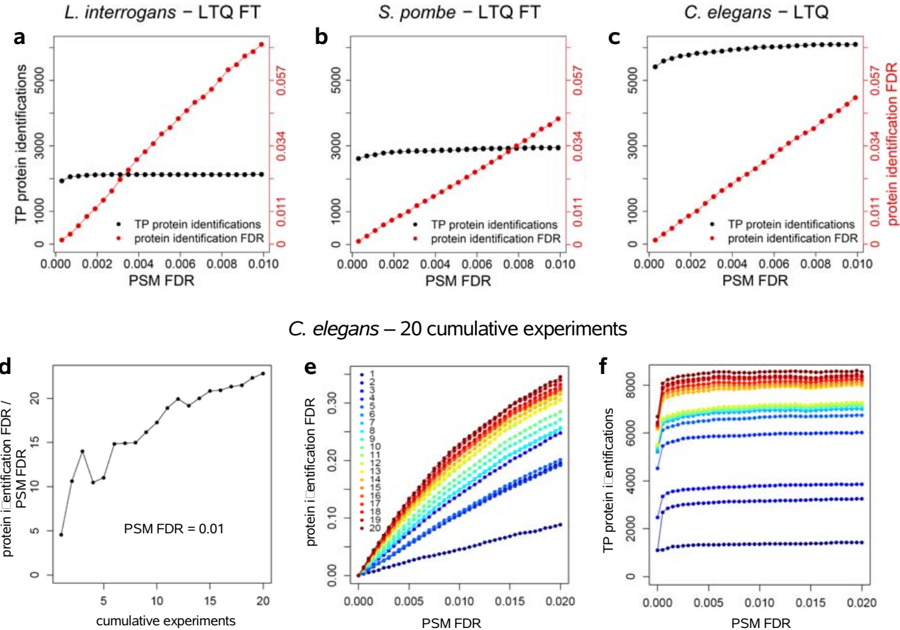
“The peptide FDR for an individual experiment may be correctly estimated, but this FDR will increase when the experiments are concatenated because correctly identified peptides will appear in multiple experiments, while false positive matches tend to be random in nature and different in each experiment (Figure 3).[24]”
BackgroundInfluentialA comparative proteomic analysis of bile for biomarkers of cholangiocarcinoma
Laohaviroj, M., Potriquet, J., Jia, X., Suttiprapa, S., Chamgramol, Y., Pairojkul, C., Sithithaworn, P., Mulvenna, J. P., & Sripa, B. (2017) · Tumor Biology · doi:10.1177/1010428317705764 · Cited by 26
ComPIL 2.0: An Updated Comprehensive Metaproteomics Database
Park, S. K. R., Jung, T., Thuy-Boun, P. S., Wang, A. Y., Yates, J. R., & Wolan, D. W. (2018) · Journal of Proteome Research · doi:10.1021/acs.jproteome.8b00722 · Cited by 26
SPIRE: Systematic protein investigative research environment
Kolker, E., Higdon, R., Welch, D., Bauman, A., Stewart, E., Haynes, W. A., Broomall, W., & Kolker, N. (2011) · Journal of Proteomics · doi:10.1016/j.jprot.2011.05.009 · Cited by 27
Wang, H., Tang, H., Tan, G. C., & Speicher, D. W. (2011) · Journal of Proteome Research · doi:10.1021/pr200464c · Cited by 25
Cantor, D. I., Šlapetová, I., Kan, A., McQuade, L. R., & Baker, M. S. (2013) · Journal of Proteome Research · doi:10.1021/pr301099f · Cited by 27
Expression Dysregulation as a Mediator of Fitness Costs in Antibiotic Resistance
Trauner, A., Banaei‐Esfahani, A., Gygli, S. M., Warmer, P., Feldmann, J., Shafieechashmi, S., Eschbach, K., Zampieri, M., Borrell, S., Collins, B. C., et al. (2021) · Antimicrobial Agents and Chemotherapy · doi:10.1128/aac.00504-21 · Cited by 26
“The processed data were filtered by MAYU to 1% protein false-discovery rate (FDR) (63).”
MethodSelf-citationPrinciples of phosphoproteomics and applications in cancer research
Higgins, L., Gerdes, H., & Cutillas, P. R. (2023) · Biochemical Journal · doi:10.1042/bcj20220220 · Cited by 26
The Equine PeptideAtlas: A resource for developing proteomics‐based veterinary research
Bundgaard, L., Jacobsen, S. E., Sørensen, M. A., Sun, Z., Deutsch, E. W., Moritz, R. L., & Bendixen, E. (2014) · PROTEOMICS · doi:10.1002/pmic.201300398 · Cited by 23
“All filtered data were assessed with the MAYU software [23] to calculate decoy-based FDRs at the peptidespectrum match (PSM), as well as at distinct peptide and protein levels.”
MethodWorkflow for quantitative proteomic analysis of Clostridium acetobutylicum ATCC 824 using iTRAQ tags
Hou, S., Jones, S. W., Choe, L. H., Papoutsakis, E. T., & Lee, K. H. (2013) · Methods · doi:10.1016/j.ymeth.2013.03.013 · Cited by 23
Surfaceome of classical Hodgkin and non‐Hodgkin lymphoma
Hofmann, A., Thiesler, T., Gerrits, B., Behnke, S., Sobotzki, N., Omasits, U., Bausch‐Fluck, D., Bock, T., Aebersold, R. H., Moch, H., et al. (2015) · PROTEOMICS - CLINICAL APPLICATIONS · doi:10.1002/prca.201400146 · Cited by 22
“For the final complete data set with all cell lines, a protein false discovery rate of less than 2% and a peptide false discovery rate of less than 1% were estimated by the MAYU software [22].”
MethodSelf-citationLy, T., Endo, A., Brenes, A. J., Gierliński, M., Afzal, V., Pawellek, A., & Lamond, A. I. (2018) · Wellcome Open Research · doi:10.12688/wellcomeopenres.14392.1 · Cited by 23
“No FDR filtering was performed at the peptide and protein levels; however, using the MAYU normalisation (Reiter et al., 2009), a protein FDR is estimated at ~5–6%.”
MethodZasada, M., Suski, M., Bokiniec, R., Szwarc-Duma, M., Borszewska-Kornacka, M. K., Madej, J., Bujak-Giżycka, B., Madetko‐Talowska, A., Revhaug, C., Baumbusch, L. O., et al. (2019) · The Italian Journal of Pediatrics/Italian journal of pediatrics · doi:10.1186/s13052-019-0676-0 · Cited by 27
“The Peptide False Discovery Rate (FDR) was estimated by Mayu [18] (TPP) and peptide identifications with an FDR below 1% were considered to be correct matches.”
MethodProtein Identification from Tandem Mass Spectra by Database Searching
Edwards, N. J. (2010) · Methods in molecular biology · doi:10.1007/978-1-60761-977-2_9 · Cited by 22
A Candida albicans PeptideAtlas
Vialás, V., Sun, Z., y Penha, C. V. L., Carrascal, M., Abián, J., Monteoliva, L., Deutsch, E. W., Aebersold, R. H., Moritz, R. L., & Gil, C. (2013) · Journal of Proteomics · doi:10.1016/j.jprot.2013.06.020 · Cited by 21
“[36] Reiter L, Claassen M, Schrimpf S.”
Self-citationStrategies for quantitation of phosphoproteomic data
Palmisano, G., & Thingholm, T. E. (2010) · Expert Review of Proteomics · doi:10.1586/epr.10.19 · Cited by 23
Single Amino Acid Variant Discovery in Small Numbers of Cells
Tan, Z., Yi, X., Carruthers, N. J., Stemmer, P. M., & Lubman, D. M. (2018) · Journal of Proteome Research · doi:10.1021/acs.jproteome.8b00694 · Cited by 21
Zhang, Y., Xu, T., Shan, B., Hart, J. R., Aslanian, A., Han, X., Zong, C., Li, H., Choi, H., Wang, D., et al. (2015) · Journal of Proteomics · doi:10.1016/j.jprot.2015.07.006 · Cited by 21
Generation of a murine SWATH-MS spectral library to quantify more than 11,000 proteins
Zhong, C., Wu, J., Qiu, X., Chen, X., Xie, C., & Han, J. (2020) · Scientific Data · doi:10.1038/s41597-020-0449-z · Cited by 21
The PeptideAtlas of a widely cultivated fish Labeo rohita: A resource for the Aquaculture Community
Nissa, M. U., Reddy, P. J., Pinto, N., Sun, Z., Ghosh, B., Moritz, R. L., Goswami, M., & Srivastava, S. (2022) · Scientific Data · doi:10.1038/s41597-022-01259-9 · Cited by 22
Díez, P., Droste, C., Dégano, R. M., González-Muñoz, M., Ibarrola, N., Pérez‐Andrés, M., Garín-Muga, A., Segura, V., Marko‐Varga, G., LaBaer, J., et al. (2015) · Journal of Proteome Research · doi:10.1021/acs.jproteome.5b00474 · Cited by 20
Serang, O. (2014) · PLoS ONE · doi:10.1371/journal.pone.0091507 · Cited by 24
“…or highly complex data sets; on such data sets, iterative numeric methods ( e.g. ProteinProphet [25]) have been demonstrated to be unstable [2,13,26], heuristics and human intuition can break down [27], approximations (such as pruning peptides with nonzero scores) may be forced to yield…”
BackgroundIdentification of Outer Membrane Proteins from an Antarctic Bacterium Pseudomonas syringae Lz4W
Jagannadham, M. V., Abou-eladab, E., & Kulkarni, H. M. (2011) · Molecular & Cellular Proteomics · doi:10.1074/mcp.m110.004549 · Cited by 21
Improvements in Mass Spectrometry Assay Library Generation for Targeted Proteomics
Teleman, J., Hauri, S., & Malmström, J. A. (2017) · Journal of Proteome Research · doi:10.1021/acs.jproteome.6b00928 · Cited by 21
Amir, S. H., Yuswan, M. H., Aizat, W. M., Mansor, M. K., Desa, M. N. M., Yusof, Y. A., Song, L. K., & Mustafa, S. (2021) · Journal of Proteomics · doi:10.1016/j.jprot.2021.104240 · Cited by 22
Fares, A., Nespoulous, C., Rossignol, M., & Peltier, J. (2013) · Methods in molecular biology · doi:10.1007/978-1-62703-631-3_41 · Cited by 20
Platforms and Pipelines for Proteomics Data Analysis and Management
Codrea, M. C., & Nahnsen, S. (2016) · Advances in experimental medicine and biology · doi:10.1007/978-3-319-41448-5_9 · Cited by 22
Petersson, F. J. M., Kilsgård, O., Shannon, O., & Lood, R. (2018) · PLoS ONE · doi:10.1371/journal.pone.0192051 · Cited by 20
Krásný, L., Bland, P. J., Burns, J., Lima, N. C., Harrison, P. T., Pacini, L., Elms, M. L., Ning, J., Martínez, V. G., Yu, Y.-R., et al. (2020) · Disease Models & Mechanisms · doi:10.1242/dmm.044586 · Cited by 22
“In this XenoSWATH workflow (Figure 3), both the MouseRefSWATH library as 24 well as a previously published pan-Human reference library [15] were used in the Spectronaut 25 software [14].”
BackgroundMethodDear-DIA XMBD : Deep Autoencoder Enables Deconvolution of Data-Independent Acquisition Proteomics
He, Q., Zhong, C., Li, X., Guo, H., Li, Y., Gao, M., Yu, R., Liu, X., Zhang, F., Guo, D., et al. (2023) · Research · doi:10.34133/research.0179 · Cited by 25
Patel, S. K., Bons, J., Rose, J., Chappel, J. R., Beres, R. L., Watson, M. A., Webster, C. M., Burton, J. B., Bruderer, R., Desprez, P. Y., et al. (2025) · Aging · doi:10.18632/aging.206292 · Cited by 25
“Search results were filtered using a 1% false discovery rate on the precursor ion, peptide, and protein levels [55, 56].”
Self-citationThe nuclear proteome of the green alga Chlamydomonas reinhardtii
Winck, F. V., Riaño‐Pachón, D. M., Sommer, F., Rupprecht, J., & Mueller‐Roeber, B. (2011) · PROTEOMICS · doi:10.1002/pmic.201000782 · Cited by 18
“Those protein hits were subjected to a false discovery rate (FDR) analysis using the program Mayu [17].”
MethodVaradarajan, A. R., Götze, S., Pavlou, M. P., Grosboillot, V., Shen, Y., Loessner, M. J., Ahrens, C. H., & Wollscheid, B. (2020) · Journal of Proteome Research · doi:10.1021/acs.jproteome.9b00842 · Cited by 19
Omenn, G. S. (2013) · Biochimica et Biophysica Acta (BBA) - Proteins and Proteomics · doi:10.1016/j.bbapap.2013.10.016 · Cited by 17
“The covering set is somewhat larger than the canonical set because it contains some of the possiblydistinguished protein sequences; it is better for estimating FDR using the Mayu adjustment for large datasets and proteome coverage [9], see ref.”
MethodA worm rich in protein: Quantitative, differential, and global proteomics in Caenorhabditis elegans
Schrimpf, S., & Hengartner, M. O. (2010) · Journal of Proteomics · doi:10.1016/j.jprot.2010.03.014 · Cited by 18
“A newly developed algorithm to calculate the FDR of protein identifications [39] yielded the high value of up to 63% FDR for single hits in the C.”
BackgroundMethodSelf-citationPlasma proteome changes in cord blood samples from preterm infants
Suski, M., Bokiniec, R., Szwarc-Duma, M., Madej, J., Bujak-Giżycka, B., Borszewska-Kornacka, M. K., Książek, T., Grabowska, A. K., Revhaug, C., Baumbusch, L. O., et al. (2018) · Journal of Perinatology · doi:10.1038/s41372-018-0150-7 · Cited by 17
Khoontawad, J., Intuyod, K., Rucksaken, R., Hongsrichan, N., Pairojkul, C., Pinlaor, P., Boonmars, T., Wongkham, C., Jones, A., Plieskatt, J. L., et al. (2018) · PLoS ONE · doi:10.1371/journal.pone.0207405 · Cited by 17
Mohammadi, A., Tschanz, A., & Leitner, A. (2021) · Analytical Chemistry · doi:10.1021/acs.analchem.0c03926 · Cited by 17
Detection of Missing Proteins Using the PRIDE Database as a Source of Mass Spectrometry Evidence
Garín-Muga, A., Odriozola, L., Martínez‐Val, A., del‐Toro, N., Martínez, R., Molina, M., Cantero, L., Rivera, R., Garrido, N., Domínguez, F., et al. (2016) · Journal of Proteome Research · doi:10.1021/acs.jproteome.6b00437 · Cited by 17
Fan, K., Hsu, Y., Yeh, C., Chang, C.-H., Chang, W.-H., & Chen, Y. (2021) · International Journal of Molecular Sciences · doi:10.3390/ijms22084174 · Cited by 22
“MAYU [89] was used to select an iProphet cutoff of 0.”
MethodInfluentialIn-Depth Proteomic Characterization of Classical and Non-Classical Monocyte Subsets
Segura, V., Valero, M. L., Cantero, L., Muñoz, J., Zarzuela, E., García, F., Aloria, K., Beaskoetxea, J., Arizmendi, J. M., Navajas, R., et al. (2018) · Proteomes · doi:10.3390/proteomes6010008 · Cited by 19
“False Discovery Rates at PSM level and protein level using Mayu [26] were calculated, and protein identifications were obtained by applying the criteria of PSM FDR < 1% and protein FDR < 1%.”
MethodA novel splicing outcome reveals more than 2000 new mammalian protein isoforms
Wilson, L. O. W., Spriggs, A., Taylor, J. M., & Fahrer, A. M. (2013) · Bioinformatics · doi:10.1093/bioinformatics/btt668 · Cited by 16
Metadata
- Authors
- Reiter, L., Claassen, M., Schrimpf, S. P., Jovanovic, M., Schmidt, A., Buhmann, J. M., Hengartner, M. O., & Aebersold, R.
- Affiliations
- University of Zurich (CH)
- ETH Zurich (CH)
- Corresponding author
- Aebersold, Ruedi
- Venue
- Molecular & Cellular Proteomics
- Publisher
- Elsevier BV
- Published
- 2009-11
- Volume
- 8
- Issue
- 11
- Pages
- 2405-2417
- ISSN
- 1535-9476 (ISSN-L)
- PMC
- PMC2773710
- OpenAlex
- W2129897014
- Cited by
- 312
- References
- 44
- Citations by year
- 2026: 7 · 2025: 3 · 2024: 6 · 2023: 7 · 2022: 14 · 2021: 18 · 2020: 18 · 2019: 20 · 2018: 26 · 2017: 24 · 2016: 25 · 2015: 33 · 2014: 11 · 2013: 25 · 2012: 28
- FWCI
- 10.59
- Type
- journal article
- Language
- en
- Open access
- hybrid
- doi.org
- Licence
- cc-by
- www.elsevier.com/tdm/userlicense/1.0/ (tdm)
- www.elsevier.com/legal/tdmrep-license (tdm)
- creativecommons.org/licenses/by/4.0/ (vor, 3972 d)
- Locations
- Molecular & Cellular Proteomics (publishedVersion, cc-by)
- Europe PMC (PubMed Central) (publishedVersion)
- PubMed Central (publishedVersion)
- PubMed (publishedVersion)
- Zurich Open Repository and Archive (University of Zurich) (acceptedVersion, other-oa)
- Zurich Open Repository and Archive (University of Zurich) (submittedVersion, other-oa)
- Zurich Open Repository and Archive (University of Zurich)
- Funders
- National Science Foundation
- Schweizerischer Nationalfonds zur Förderung der Wissenschaftlichen Forschung (10767)
- Universität Zürich
- SystemsX.ch
- National Institutes of Health (n01hv028179-000)
- Functional Genomics Center Zurich
- National Heart, Lung, and Blood Institute (N01 HV028179, N01-HV-28179)
- Topics
- Physical Sciences › Chemistry › Spectroscopy › Advanced Proteomics Techniques and Applications
- Life Sciences › Biochemistry, Genetics and Molecular Biology › Molecular Biology › Bioinformatics and Genomic Networks
- Physical Sciences › Chemistry › Spectroscopy › Mass Spectrometry Techniques and Applications
- Keywords
- protein identification, false discovery rate, tandem mass spectrometry, peptide-spectrum matches, proteome coverage
- MeSH terms
- Algorithms, Animals, False Positive Reactions, Leptospira, Peptides, Schizosaccharomyces, Reproducibility of Results, Models, Statistical, Caenorhabditis elegans, Computational Biology, Proteome, Databases, Protein, Proteomics, Tandem Mass Spectrometry
About these checks
Registry, retraction, Cites and statistics results are computed, not judged, with one exception: a printed reference that no index lists is read once by a model before it counts as a citation error. Claims are extracted by a model and kept only when their quote appears verbatim in the text; each cited source is then checked, with a model’s help, for whether it says what the claim relies on. Those verdicts can be wrong — read the claim’s quote and the cited source before relying on one.
Statistics and arithmetic are recomputed, not judged.
Confidence bands are shown only for fields calibrated on our annotated test set. None is calibrated yet, so no band is shown.
What counts as a claim ›How we measure confidence ›How we check this ›
Are you an author, or do you see a problem with this page? Request a review
Data sources
Bibliographic data: Semantic Scholar, OpenAlex, Crossref.
Contains information from the Semantic Scholar Academic Graph Datasets, made available under the ODC Attribution License (ODC-BY 1.0).
Semantic Scholar’s data is described in: Kinney, R., et al. (2023). The Semantic Scholar Open Data Platform. arXiv:2301.10140.
