

Protein Identification False Discovery Rates for Very Large Proteomics Data Sets Generated by Tandem Mass Spectrometry
Open accessThe DOI matches its Crossref record; 43 of the 44 references it cites were found in a registry or an index.
Abstract
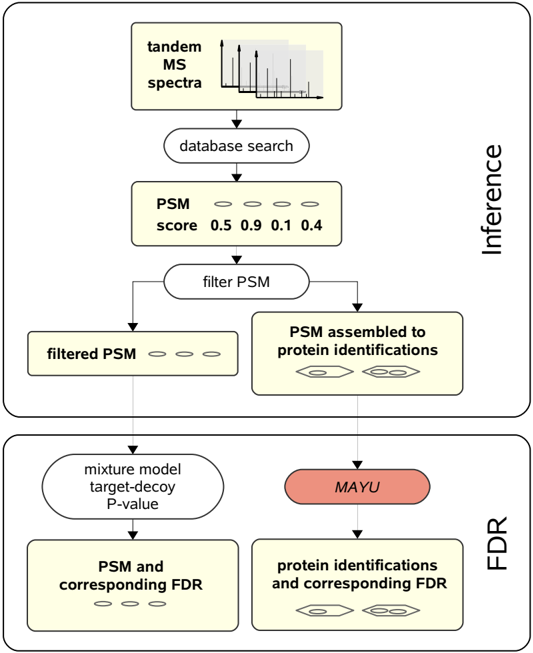
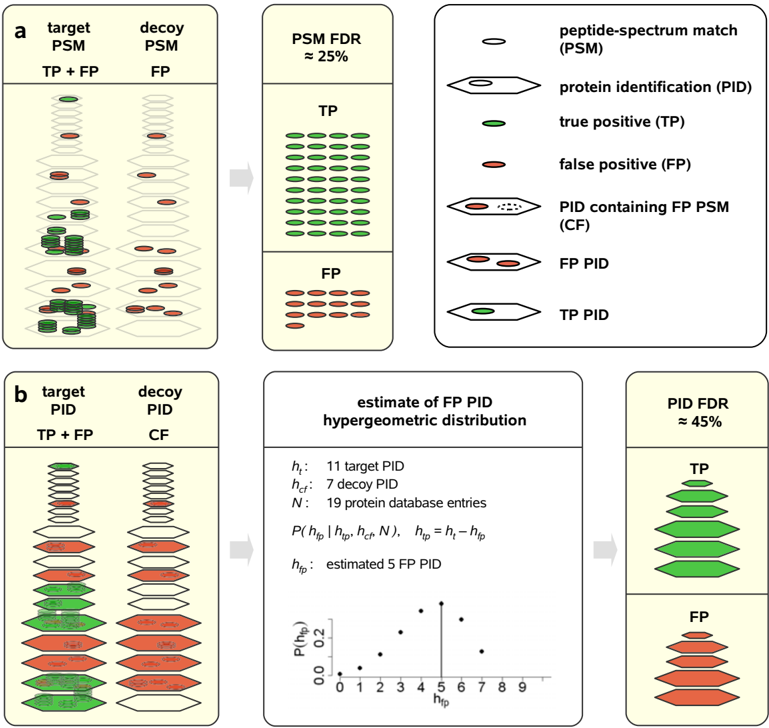
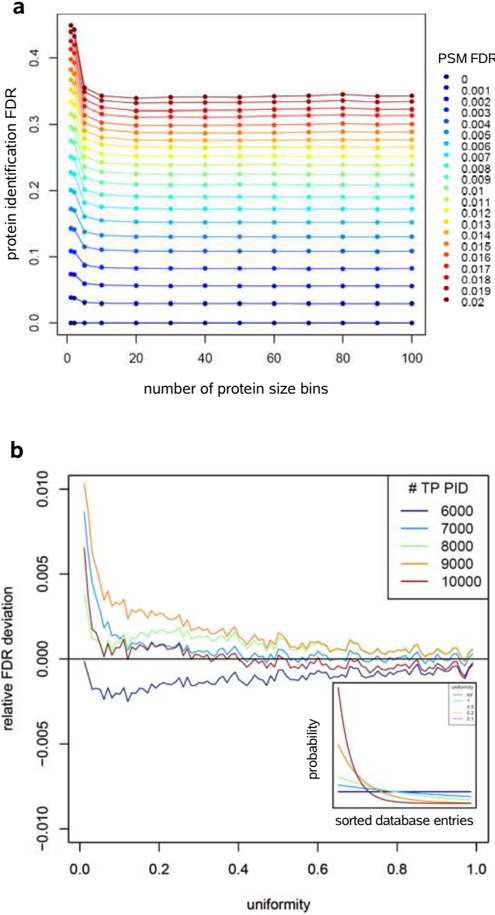
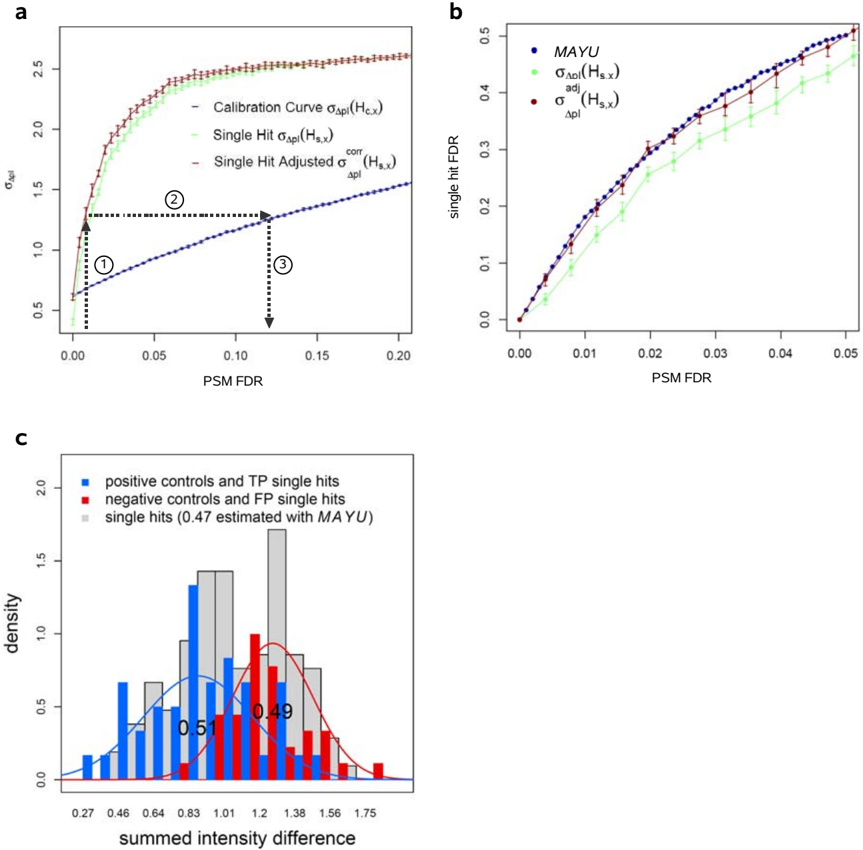
Comprehensive characterization of a proteome is a fundamental goal in proteomics. To achieve saturation coverage of a proteome or specific subproteome via tandem mass spectrometric identification of tryptic protein sample digests, proteomics data sets are growing dramatically in size and heterogeneity. The trend toward very large integrated data sets poses so far unsolved challenges to control the uncertainty of protein identifications going beyond well established confidence measures for peptide-spectrum matches. We present MAYU, a novel strategy that reliably estimates false discovery rates for protein identifications in large scale data sets. We validated and applied MAYU using various large proteomics data sets. The data show that the size of the data set has an important and previously underestimated impact on the reliability of protein identifications. We particularly found that protein false discovery rates are significantly elevated compared with those of peptide-spectrum matches. The function provided by MAYU is critical to control the quality of proteome data repositories and thereby to enhance any study relying on these data sources. The MAYU software is available as standalone software and also integrated into the Trans-Proteomic Pipeline.
Overview
The claims and statistics of this paper haven’t been checked yet.
Free: it reads the open-access text and checks the first 5 claims that cite a source we can check. Create a free account to check every claim.
Integrity signals
Registry
Cites
Statistics
Figures
Verification
Claims the paper makes
The claims and statistics of this paper haven’t been checked yet.
Free: it reads the open-access text and checks the first 5 claims that cite a source we can check. Create a free account to check every claim.
Claims other papers make about this one
Each is checked against this paper’s own text: does it say what the citing paper says it does?
In the citing paper
“To exclude the possibility of an inflated protein false discovery rate (FDR) due to error propagation from peptide to protein level inference, we used the Mayu software tool that determines the protein FDR in large data sets as a function of the peptide FDR (Reiter et al, 2009).”
From The quantitative proteome of a human cell line (2011) · cites this paper as Reiter et al, 2009
In the citing paper
“Protein FDRs have been estimated by the generalized target-decoy strategy Mayu (Reiter et al, 2009).”
From The quantitative proteome of a human cell line (2011) · cites this paper as Reiter et al, 2009
In the citing paper
“The accumulation of new peak groups steadily increased across the data set, indicating a likely accumulation of false positives and, highlighting the importance of appropriate global FDR control55, 56.”
From Multi-laboratory assessment of reproducibility, qualitative and quantitative performance of SWATH-mass spectrometry (2017) · cites this paper as [56]
Self-check
Percentages, sums and reported differences re-computed from the paper’s own numbers.
The self-check needs the paper’s full text.
Citations
Cites
Controlling the False Discovery Rate: A Practical and Powerful Approach to Multiple Testing
Benjamini, Y., & Hochberg, Y. (1995) · Journal of the Royal Statistical Society Series B: Statistical Methodology · doi:10.1111/j.2517-6161.1995.tb02031.x · Cited by 109,482
Mass spectrometry-based proteomics
Aebersold, R., & Mann, M. (2003) · Nature · doi:10.1038/nature01511 · Cited by 6,955 · cited 1×
“An explicit goal of proteomics is the complete description of a proteome and the measurement of its response to perturbations (Aebersold and Mann 2003).”
BackgroundSelf-citationEng, J. K., McCormack, A. L., & Yates, J. R. (1994) · Journal of the American Society for Mass Spectrometry · doi:10.1016/1044-0305(94)80016-2 · Cited by 6,484 · cited 2×
“We searched each data set against a composite target-decoy database using Turbo Sequest (Eng, McCormack et al. 1994) and Sequest on a Sorcerer machine (Sorcerer™-SEQUEST®, 3.10.4 release).”
MethodInfluentialKeller, A., Nesvizhskii, A. I., Kolker, E., & Aebersold, R. (2002) · Analytical Chemistry · doi:10.1021/ac025747h · Cited by 4,830
Self-citationA Statistical Model for Identifying Proteins by Tandem Mass Spectrometry
Nesvizhskii, A. I., Keller, A., Kolker, E., & Aebersold, R. (2003) · Analytical Chemistry · doi:10.1021/ac0341261 · Cited by 4,809 · cited 14×
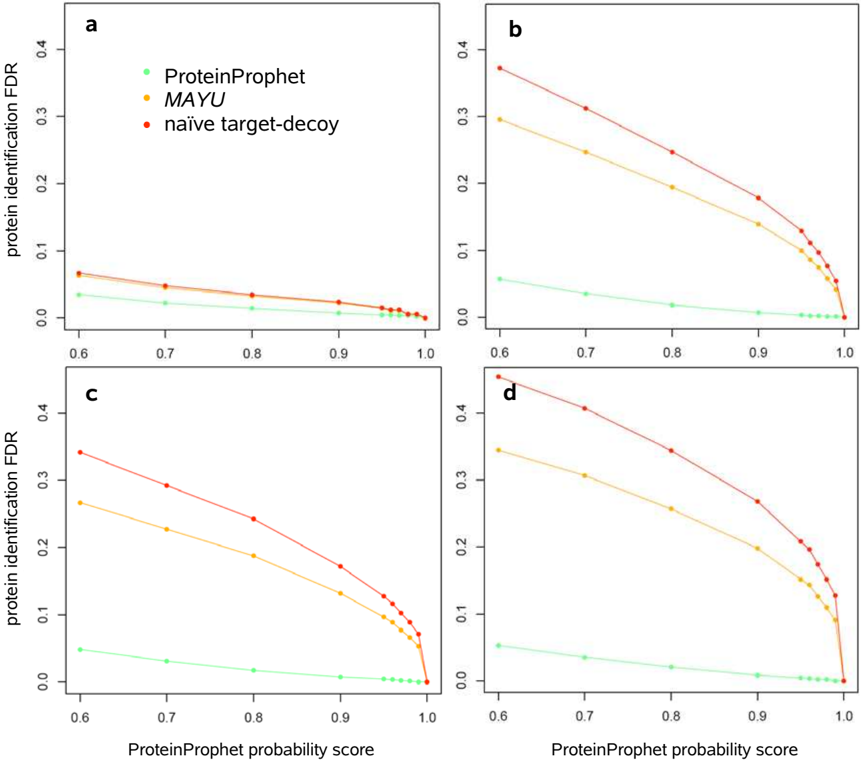
“Widely used protein inference tools like ProteinProphet (24) have proven to yield reliable error estimates on data sets at the experiment level (typically 10–50 LC-MS/MS runs) but fail to estimate an accurate protein identification FDR for large data sets (Fig.”
MethodInfluentialSelf-citationLarge-scale analysis of the yeast proteome by multidimensional protein identification technology
Washburn, M. P., Wolters, D., & Yates, J. R. (2001) · Nature Biotechnology · doi:10.1038/85686 · Cited by 4,752 · cited 1×
“at the protein identification level (2, 3, 7, 27, 28).”
BackgroundElias, J. E., & Gygi, S. P. (2007) · Nature Methods · doi:10.1038/nmeth1019 · Cited by 3,925 · cited 12×
“We performed all the database searches using a concatenated target-decoy database (Elias and Gygi 2007 Based on the well established assumption that false positive PSMs equally likely map to either target or decoy database, we used the number of PSMs mapping to the decoy database as an estimate for the number of false…”
BackgroundMethodInfluentialA Model for Random Sampling and Estimation of Relative Protein Abundance in Shotgun Proteomics
Liu, H., Sadygov, R. G., & Yates, J. R. (2004) · Analytical Chemistry · doi:10.1021/ac0498563 · Cited by 2,500 · cited 1×
“(41), and targeted proteomics approaches based on the”
BackgroundThe Bioperl Toolkit: Perl Modules for the Life Sciences
Stajich, J. E., Block, D., Boulez, K., Brenner, S. E., Chervitz, S. A., Dagdigian, C., Fuellen, G., Gilbert, J. G. R., Korf, I., Lapp, H., et al. (2002) · Genome Research · doi:10.1101/gr.361602 · Cited by 1,654 · cited 2×
“We used the standard deviatio n pI of isoelectric point deviations pI as a quality measure for a set H of PSMs, ( σ where pI pr (i) is the isoelectric point of a PSM i predicted by Bioperl (Stajich, Block et al. 2002). pI ex (i) corresponds to the experimentally measured isoelectric point of a PSM i, determined as the…”
BackgroundInfluentialPeng, J., Elias, J. E., Thoreen, C. C., Licklider, L. J., & Gygi, S. P. (2003) · Journal of Proteome Research · doi:10.1021/pr025556v · Cited by 1,647 · cited 2×
“Number, frequency and size and heterogeneity of proteomic data sets steadily increase (Washburn, Wolters et al. 2001; Peng, Elias et al. 2003; Omenn, States et al. 2005; Foster, de Hoog et al. 2006; King, Deutsch et al. 2006; Brunner, Ahrens et al. 2007; Baerenfaller, Grossmann et al. 2008; de…”
Background
Cited by
The MaxQuant computational platform for mass spectrometry-based shotgun proteomics
Tyanova, S., Temu, T., & Cox, J. (2016) · Nature Protocols · doi:10.1038/nprot.2016.136 · Cited by 4,797
“This is a very crucial step, because if search results for separate raw files are collected into one larger data set without any further higher-level FDR control, false-positive protein identifications will aggregate 42,43 .”
BackgroundMass-spectrometry-based draft of the human proteome
Wilhelm, M., Schlegl, J., Hahne, H., Gholami, A. M., Lieberenz, M., Savitski, M. M., Ziegler, E., Butzmann, L., Gessulat, S., Marx, H., et al. (2014) · Nature · doi:10.1038/nature13319 · Cited by 1,820
Protein Analysis by Shotgun/Bottom-up Proteomics
Zhang, Y., Fonslow, B. R., Shan, B., Baek, M.-C., & Yates, J. R. (2013) · Chemical Reviews · doi:10.1021/cr3003533 · Cited by 1,491
Bruderer, R., Bernhardt, O. M., Gandhi, T., Miladinović, S. M., Cheng, L.-Y., Messner, S., Ehrenberger, T., Zanotelli, V., Butscheid, Y., Escher, C., et al. (2015) · Molecular & Cellular Proteomics · doi:10.1074/mcp.m114.044305 · Cited by 1,238
“The FDR was controlled at protein level (37).”
BackgroundSelf-citationData‐independent acquisition‐based SWATH ‐ MS for quantitative proteomics: a tutorial
Ludwig, C., Gillet, L., Rosenberger, G., Amon, S., Collins, B. C., & Aebersold, R. (2018) · Molecular Systems Biology · doi:10.15252/msb.20178126 · Cited by 1,002
“If SWATH extraction results are summarized at the inferred protein level, the error rate can be further inflated by such false positives (Reiter et al , 2009; Rosen-berger et al , 2017a).”
Self-citationThe quantitative proteome of a human cell line
Beck, M., Schmidt, A., Malmstroem, J., Claassen, M., Ori, A., Szymborska, A., Herzog, F., Rinner, O., Ellenberg, J., & Aebersold, R. (2011) · Molecular Systems Biology · doi:10.1038/msb.2011.82 · Cited by 816
Self-citationMapping intact protein isoforms in discovery mode using top-down proteomics
Tran, J. C., Zamdborg, L., Ahlf, D. R., Lee, J. E., Catherman, A. D., Durbin, K. R., Tipton, J. D., Vellaichamy, A., Kellie, J. F., Li, M., et al. (2011) · Nature · doi:10.1038/nature10575 · Cited by 665
The CPTAC Data Portal: A Resource for Cancer Proteomics Research
Edwards, N. J., Oberti, M., Thangudu, R. R., Cai, S., McGarvey, P. B., Jacob, S., Madhavan, S., & Ketchum, K. A. (2015) · Journal of Proteome Research · doi:10.1021/pr501254j · Cited by 558
Leung, Y. H., Ng, A. M. C., Xu, X., Shen, Z., Gethings, L. A., Wong, M. T., Chan, C. M. N., Guo, M. Y., Ng, Y. H., Djurišić, A. B., et al. (2014) · Small · doi:10.1002/smll.201302434 · Cited by 566
Collins, B. C., Hunter, C. L., Liu, Y., Schilling, B., Rosenberger, G., Bader, S. L., Chan, D. W., Gibson, B. W., Gingras, A.-C., Held, J. M., et al. (2017) · Nature Communications · doi:10.1038/s41467-017-00249-5 · Cited by 576
Self-citationNesvizhskii, A. I. (2010) · Journal of Proteomics · doi:10.1016/j.jprot.2010.08.009 · Cited by 536
Shteynberg, D., Deutsch, E. W., Lam, H., Eng, J. K., Sun, Z., Tasman, N., Mendoza, L., Moritz, R. L., Aebersold, R., & Nesvizhskii, A. I. (2011) · Molecular & Cellular Proteomics · doi:10.1074/mcp.m111.007690 · Cited by 565
“Although Peptide-Prophet and ProteinProphet have been shown to provide accurate estimates in the case of small to intermediate data sets, several simplifying assumptions in these tools limit their performance with increasing data set size (20).”
BackgroundSelf-citationmProphet: automated data processing and statistical validation for large-scale SRM experiments
Reiter, L., Rinner, O., Picotti, P., Hüttenhain, R., Beck, M., Brusniak, M.-Y., Hengartner, M. O., & Aebersold, R. (2011) · Nature Methods · doi:10.1038/nmeth.1584 · Cited by 532
Self-citationMass spectrometry in high-throughput proteomics: ready for the big time
Nilsson, T., Mann, M., Aebersold, R., Yates, J. R., Bairoch, A., & Bergeron, J. J. M. (2010) · Nature Methods · doi:10.1038/nmeth0910-681 · Cited by 470
Self-citationA High-Confidence Human Plasma Proteome Reference Set with Estimated Concentrations in PeptideAtlas
Farrah, T., Deutsch, E. W., Omenn, G. S., Campbell, D. S., Sun, Z., Bletz, J. A., Mallick, P., Katz, J. E., Malmström, J., Ossola, R., et al. (2011) · Molecular & Cellular Proteomics · doi:10.1074/mcp.m110.006353 · Cited by 451
“This subpopulation has a Mayu decoy-estimated protein FDR of 3.4%.”
BackgroundMethodInfluentialSelf-citationA Scalable Approach for Protein False Discovery Rate Estimation in Large Proteomic Data Sets
Savitski, M. M., Wilhelm, M., Hahne, H., Kuster, B., & Bantscheff, M. (2015) · Molecular & Cellular Proteomics · doi:10.1074/mcp.m114.046995 · Cited by 445
“mation of false positive protein hits termed MAYU (27).”
BackgroundInfluentialMass Spectrometry–Based Proteomics and Network Biology
Bensimon, A., Heck, A. J. R., & Aebersold, R. (2012) · Annual Review of Biochemistry · doi:10.1146/annurev-biochem-072909-100424 · Cited by 410
Self-citationA repository of assays to quantify 10,000 human proteins by SWATH-MS
Rosenberger, G., Koh, C. C., Guo, T., Röst, H. L., Kouvonen, P., Collins, B. C., Heusel, M., Liu, Y., Caron, E., Vichalkovski, A., et al. (2014) · Scientific Data · doi:10.1038/sdata.2014.31 · Cited by 413
Self-citationA multicenter study benchmarks software tools for label-free proteome quantification
Navarro, P., Kuharev, J., Gillet, L. C., Bernhardt, O. M., MacLean, B., Röst, H. L., Tate, S. A., Tsou, C.-C., Reiter, L., Distler, U., et al. (2016) · Nature Biotechnology · doi:10.1038/nbt.3685 · Cited by 346
Self-citationDeutsch, E. W., Mendoza, L., Shteynberg, D., Slagel, J., Sun, Z., & Moritz, R. L. (2015) · PROTEOMICS – Clinical Applications · doi:10.1002/prca.201400164 · Cited by 342
Building high-quality assay libraries for targeted analysis of SWATH MS data
Schubert, O. T., Gillet, L. C., Collins, B. C., Navarro, P., Rosenberger, G., Wolski, W. E., Lam, H., Amodei, D., Mallick, P., MacLean, B., et al. (2015) · Nature Protocols · doi:10.1038/nprot.2015.015 · Cited by 309
Self-citationBioinformatics Methods for Mass Spectrometry-Based Proteomics Data Analysis
Chen, C., Hou, J., Tanner, J. J., & Cheng, J. (2020) · International Journal of Molecular Sciences · doi:10.3390/ijms21082873 · Cited by 280
“proposed MAYU [44], which extends the target-decoy strategy for FDR estimation of PSM to the protein level.”
BackgroundInfluentialHiRIEF LC-MS enables deep proteome coverage and unbiased proteogenomics
Branca, R. M. M., Orre, L. M., Johansson, H. J., Granholm, V., Huss, M., Pérez-Bercoff, Å., Forshed, J., Käll, L., & Lehtiö, J. (2014) · Nature Methods · doi:10.1038/nmeth.2732 · Cited by 269
Marcu, A., Bichmann, L., Kuchenbecker, L., Kowalewski, D. J., Freudenmann, L. K., Backert, L., Mühlenbruch, L., Szolek, A., Lübke, M., Wagner, P., et al. (2021) · Journal for ImmunoTherapy of Cancer · doi:10.1136/jitc-2020-002071 · Cited by 250
An Introduction to Mass Spectrometry-Based Proteomics
Shuken, S. R. (2023) · Journal of Proteome Research · doi:10.1021/acs.jproteome.2c00838 · Cited by 223
The challenge of the proteome dynamic range and its implications for in‐depth proteomics
Zubarev, R. A. (2013) · PROTEOMICS · doi:10.1002/pmic.201200451 · Cited by 227
“reversedsequence database search) are only validated for the relatively simple PTM environment [8].”
BackgroundInfluentialModular Assembly of the Bacterial Large Ribosomal Subunit
Davis, J. H., Tan, Y. Z., Carragher, B., Potter, C. S., Lyumkis, D., & Williamson, J. R. (2016) · Cell · doi:10.1016/j.cell.2016.11.020 · Cited by 211
Schubert, O. T., Ludwig, C., Kogadeeva, M., Zimmermann, M., Rosenberger, G., Gengenbacher, M., Gillet, L. C., Collins, B. C., Röst, H. L., Kaufmann, S. H. E., et al. (2015) · Cell Host & Microbe · doi:10.1016/j.chom.2015.06.001 · Cited by 211
Self-citationRosenberger, G., Bludau, I., Schmitt, U., Heusel, M., Hunter, C. L., Liu, Y., MacCoss, M. J., MacLean, B. X., Nesvizhskii, A. I., Pedrioli, P. G. A., et al. (2017) · Nature Methods · doi:10.1038/nmeth.4398 · Cited by 203
“This can be achieved, for example, by adapting a target-decoy approach as initially implemented for protein-level spectrum-centric analyses in MAYU27 or recently in SWATH2stats45.”
Self-citationPerez‐Riverol, Y., Alpi, E., Wang, R., Hermjakob, H., & Vizcaíno, J. A. (2015) · PROTEOMICS · doi:10.1002/pmic.201400302 · Cited by 200
“Over the years, the PeptideAtlas team has developed different tools to control the assignment of incorrect identifications, such as PeptideProphet [69] and ProteinProphet [70], and more recently MAYU [71], to control the protein FDR when different datasets are combined.”
BackgroundMethodBarkovits, K., Pacharra, S., Pfeiffer, K., Steinbach, S., Eisenacher, M., Marcus, K., & Uszkoreit, J. (2020) · Molecular & Cellular Proteomics · doi:10.1074/mcp.ra119.001714 · Cited by 188
“The analysis followed the basic tutorial settings of OpenSWATH using Mascot search re-sults, iProphet (47) for the combination of results, Mayu (48) for the FDR estimation and spectraST (49) for the actual library generation.”
Schubert, O. T., Mouritsen, J., Ludwig, C., Röst, H. L., Rosenberger, G., Arthur, P. K., Claassen, M., Campbell, D. S., Sun, Z., Farrah, T., et al. (2013) · Cell Host & Microbe · doi:10.1016/j.chom.2013.04.008 · Cited by 174
“The PeptideProphet output from above was processed with the software MAYU (Reiter et al., 2009).”
MethodSelf-citationGenerating and navigating proteome maps using mass spectrometry
Ahrens, C. H., Brunner, E., Qeli, E., Basler, K., & Aebersold, R. (2010) · Nature Reviews Molecular Cell Biology · doi:10.1038/nrm2973 · Cited by 168
Self-citationTRIC: an automated alignment strategy for reproducible protein quantification in targeted proteomics
Röst, H. L., Liu, Y., D'Agostino, G., Zanella, M., Navarro, P., Rosenberger, G., Collins, B. C., Gillet, L., Testa, G., Malmström, L., et al. (2016) · Nature Methods · doi:10.1038/nmeth.3954 · Cited by 175
Self-citationMuntel, J., Gandhi, T., Verbeke, L., Bernhardt, O. M., Treiber, T., Bruderer, R., & Reiter, L. (2019) · Molecular Omics · doi:10.1039/c9mo00082h · Cited by 163
Self-citationRudnick, P. A., Markey, S. P., Roth, J., Mirokhin, Y., Yan, X., Tchekhovskoi, D. V., Edwards, N. J., Thangudu, R. R., Ketchum, K. A., Kinsinger, C. R., et al. (2016) · Journal of Proteome Research · doi:10.1021/acs.jproteome.5b01091 · Cited by 155
“Following assembly, the gene-level FDR was assessed using the MAYU (not an acronym) technique to more accurately model inferences with both target and decoy hits 13 .”
BackgroundMethodQuirks of Error Estimation in Cross-Linking/Mass Spectrometry
Fischer, L., & Rappsilber, J. (2017) · Analytical Chemistry · doi:10.1021/acs.analchem.6b03745 · Cited by 158
From coarse to fine: the absolute Escherichia coli proteome under diverse growth conditions
Mori, M., Zhang, Z., Banaei‐Esfahani, A., Lalanne, J., Okano, H., Collins, B. C., Schmidt, A., Schubert, O. T., Lee, D., Li, G., et al. (2021) · Molecular Systems Biology · doi:10.15252/msb.20209536 · Cited by 149
“The combined results were filtered at a 1% protein FDR using MAYU (Reiter et al, 2009).”
Self-citationFish proteome analysis: Model organisms and non‐sequenced species
Forné, I., Abián, J., & Cerdà, J. (2010) · PROTEOMICS · doi:10.1002/pmic.200900609 · Cited by 169
“In this regard, there is much concern in the scientific community about the quality and relevance of the identification data provided in the last years in proteomics experiments [83, 84].”
BackgroundThe Drosophila melanogaster sperm proteome-II (DmSP-II)
Wasbrough, E. R., Dorus, S., Hester, S., Howard-Murkin, J., Lilley, K. S., Wilkin, E. C., Polpitiya, A. D., Pétritis, K., & Karr, T. L. (2010) · Journal of Proteomics · doi:10.1016/j.jprot.2010.09.002 · Cited by 162
“ment and reporting (see reviews by [32,50–56]) that should provide needed guidance for the field.”
BackgroundFrantzi, M., Bhat, A., & Latosinska, A. (2014) · Clinical and Translational Medicine · doi:10.1186/2001-1326-3-7 · Cited by 137
“Methods for evaluation of assignment of peptides to protein sequences have been also described [88,89].”
Computational Methods for Understanding Mass Spectrometry–Based Shotgun Proteomics Data
Sinitcyn, P., Rudolph, J. D., & Cox, J. (2018) · Annual Review of Biomedical Data Science · doi:10.1146/annurev-biodatasci-080917-013516 · Cited by 143
Systematic proteome and proteostasis profiling in human trisomy 21 fibroblast cells
Liu, Y., Borel, C., Li, L., Müller, T., Williams, E. G., Germain, P.-L., Buljan, M., Sajic, T., Boersema, P. J., Shao, W., et al. (2017) · Nature Communications · doi:10.1038/s41467-017-01422-6 · Cited by 141
Self-citationHellinger, R., Sigurdsson, A., Wu, W., Romanova, E. V., Li, L., Sweedler, J. V., Süßmuth, R. D., & Gruber, C. W. (2023) · Nature Reviews Methods Primers · doi:10.1038/s43586-023-00205-2 · Cited by 152
Farrah, T., Deutsch, E. W., Omenn, G. S., Sun, Z., Watts, J. D., Yamamoto, T., Shteynberg, D., Harris, M. M., & Moritz, R. L. (2014) · Journal of Proteome Research · doi:10.1021/pr4010037 · Cited by 130
Riga, D., Kramvis, I., Koskinen, M. K., van Bokhoven, P., van der Harst, J. E., Heistek, T. S., Jaap Timmerman, A., van Nierop, P., van der Schors, R. C., Pieneman, A. W., et al. (2017) · Science Translational Medicine · doi:10.1126/scitranslmed.aai8753 · Cited by 128
The State of the Human Proteome in 2012 as Viewed through PeptideAtlas
Farrah, T., Deutsch, E. W., Hoopmann, M. R., Hallows, J. L., Sun, Z., Huang, C.-Y., & Moritz, R. L. (2013) · Journal of Proteome Research · doi:10.1021/pr301012j · Cited by 121
Transcriptome and venom proteome of the box jellyfish Chironex fleckeri
Brinkman, D. L., Jia, X., Potriquet, J., Kumar, D., Dash, D., Kvaskoff, D., & Mulvenna, J. P. (2015) · BMC Genomics · doi:10.1186/s12864-015-1568-3 · Cited by 129
“Additional file 9: Mayu false discovery analysis of OFFGEL/MS/MS experiments.”
Serang, O., MacCoss, M. J., & Noble, W. S. (2010) · Journal of Proteome Research · doi:10.1021/pr100594k · Cited by 116
Huang, T., Wang, J., Yu, W., & He, Z. (2012) · Briefings in Bioinformatics · doi:10.1093/bib/bbs004 · Cited by 111
“tein identifications is frequently ambiguous in the literature [75].”
BackgroundMethodInfluentialShweiki, M. R. A., Mönchgesang, S., Majovsky, P., Thieme, D., Trutschel, D., & Hoehenwarter, W. (2017) · Journal of Proteome Research · doi:10.1021/acs.jproteome.6b00645 · Cited by 120
Wilmarth, P. A., Riviere, M. A., & David, L. L. (2009) · Journal of ocular biology, diseases, and informatics · doi:10.1007/s12177-009-9042-6 · Cited by 111
“A recent report [39] has shown that the number of incorrect protein identifications is a function of the number of incorrect peptide matches and the size of the protein database.”
BackgroundConfetti: A Multiprotease Map of the HeLa Proteome for Comprehensive Proteomics
Guo, X., Trudgian, D. C., Lemoff, A. S., Yadavalli, S., & Mirzaei, H. (2014) · Molecular & Cellular Proteomics · doi:10.1074/mcp.m113.035170 · Cited by 116
“Protein Inference and Confetti Build—The ProteinProphet tool used for protein inference in CPFP does not scale well to extremely large data sets, often computing inaccurate probabilities (21).”
MethodGeis-Asteggiante, L., Belew, A. T., Clements, V. K., Edwards, N. J., Ostrand-Rosenberg, S., El-Sayed, N. M., & Fenselau, C. (2018) · Journal of Proteome Research · doi:10.1021/acs.jproteome.7b00646 · Cited by 104
Burger, T. (2018) · Journal of Proteome Research · doi:10.1021/acs.jproteome.7b00170 · Cited by 104
Analyzing the First Drafts of the Human Proteome
Ezkurdia, I., Vázquez, J., Valencia, A., & Tress, M. (2014) · Journal of Proteome Research · doi:10.1021/pr500572z · Cited by 102
Absolute quantification of microbial proteomes at different states by directed mass spectrometry
Schmidt, A., Beck, M., Malmström, J., Lam, H., Claassen, M., Campbell, D., & Aebersold, R. (2011) · Molecular Systems Biology · doi:10.1038/msb.2011.37 · Cited by 105
“The fragment ion spectra generated from each of these analyses were database searched and the resulting data were filtered to a peptide and protein level false discovery rate (FDR) of 1% (Reiter et al, 2009).”
Self-citationA Practical Guide to Small Protein Discovery and Characterization Using Mass Spectrometry
Ahrens, C. H., Wade, J. T., Champion, M. M., & Langer, J. D. (2021) · Journal of Bacteriology · doi:10.1128/jb.00353-21 · Cited by 108
Skennerton, C. T., Chourey, K., Iyer, R., Hettich, R. L., Tyson, G. W., & Orphan, V. J. (2017) · mBio · doi:10.1128/mbio.00530-17 · Cited by 97
“For complex systems, metaproteomics easily identifies the most abundant proteins but is limited in dynamic range; thus, the lower-abundance proteins often do not have adequate fragment ions or signal intensity to pass the standard threshold filters (59, 60).”
Sandberg, A., Lindell, G., Källström, B. N., Branca, R. M., Gemzell‐Danielsson, K., Dahlberg, M., Larson, B., Forshed, J., & Lehtiö, J. (2012) · Molecular & Cellular Proteomics · doi:10.1074/mcp.m112.016998 · Cited by 100
“A quality estimation of protein identifications using MAYU (27) and curation of protein quantification by peptide quality control using PQPQ (28) was performed.”
MethodInfluentialOmenn, G. S., Lane, L., Lundberg, E. K., Beavis, R. C., Nesvizhskii, A. I., & Deutsch, E. W. (2015) · Journal of Proteome Research · doi:10.1021/acs.jproteome.5b00499 · Cited by 92
Proteomic cell surface phenotyping of differentiating acute myeloid leukemia cells
Hofmann, A., Gerrits, B., Schmidt, A., Bock, T., Bausch‐Fluck, D., Aebersold, R. H., & Wollscheid, B. (2010) · Blood · doi:10.1182/blood-2010-02-271270 · Cited by 94
“For the final data set, a protein false discovery rate of less than 1% and a peptide false discovery rate of less than 1% were estimated by the MAYU software.(24) CD numbers were”
MethodSelf-citationProteomic and Metabolomic Profiling of a Trait Anxiety Mouse Model Implicate Affected Pathways
Zhang, Y., Filiou, M. D., Reckow, S., Gormanns, P., Maccarrone, G., Kessler, M. S., Frank, E., Hambsch, B., Holsboer, F., Landgraf, R., et al. (2011) · Molecular & Cellular Proteomics · doi:10.1074/mcp.m111.008110 · Cited by 92
“False discovery rates were calculated using the MAYU software (10) based on the number of peptides matching reversed database entries and the number of peptides matching forward database entries.”
MethodInfluentialÅhrman, E., Hallgren, O., Malmström, L., Hedström, U., Malmström, A., Bjermer, L., Zhou, X.-H., Westergren-Thorsson, G., & Malmström, J. (2018) · Journal of Proteomics · doi:10.1016/j.jprot.2018.02.027 · Cited by 88
Building and Searching Tandem Mass Spectral Libraries for Peptide Identification
Lam, H. (2011) · Molecular & Cellular Proteomics · doi:10.1074/mcp.r111.008565 · Cited by 87
“keenly aware of the problem of accumulating false positives as data volume increases (25).”
BackgroundAlgorithms and design strategies towards automated glycoproteomics analysis
Hu, H., Khatri, K., & Zaia, J. (2016) · Mass Spectrometry Reviews · doi:10.1002/mas.21487 · Cited by 91
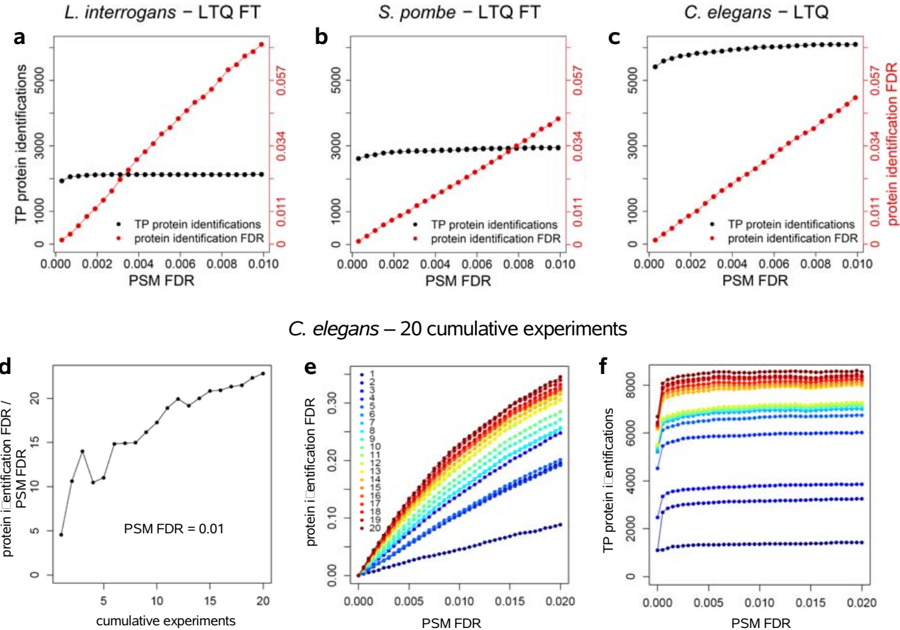
“Reiter et al. implemented a hypergeometric model in the MAYU program (Reiter et al., 2009) to calculate protein identification FDR in large-scale dataset, and showed a large gap between their protein identification FDR and PSM FDR.”
InfluentialAmacher, D. E. (2010) · Toxicology and Applied Pharmacology · doi:10.1016/j.taap.2010.02.011 · Cited by 93
Beck, M., Claassen, M., & Aebersold, R. (2011) · Current Opinion in Biotechnology · doi:10.1016/j.copbio.2010.09.002 · Cited by 83
Self-citationA quantitative targeted proteomics approach to validate predicted microRNA targets in C. elegans
Jovanovic, M., Reiter, L., Picotti, P., Lange, V., Bogan, E., A Hurschler, B., Blenkiron, C., J Lehrbach, N., C Ding, X., Weiss, M., et al. (2010) · Nature Methods · doi:10.1038/nmeth.1504 · Cited by 80
Self-citationSystematic Errors in Peptide and Protein Identification and Quantification by Modified Peptides
Bogdanow, B., Zauber, H., & Selbach, M. (2016) · Molecular & Cellular Proteomics · doi:10.1074/mcp.m115.055103 · Cited by 100
Davis, S. A., Charles, P. D., He, L., Mowlds, P., Kessler, B. M., & Fischer, R. (2017) · Journal of Proteome Research · doi:10.1021/acs.jproteome.6b00915 · Cited by 87
Vowinckel, J., Zelezniak, A., Kibler, A., Bruderer, R., Muelleder, M., Reiter, L., & Ralser, M. (2016) · doi:10.1101/073478 · Cited by 81
Self-citationDeutsch, E. W., Sun, Z., Campbell, D., Kusebauch, U., Chu, C. S., Mendoza, L., Shteynberg, D., Omenn, G. S., & Moritz, R. L. (2015) · Journal of Proteome Research · doi:10.1021/acs.jproteome.5b00500 · Cited by 80
A RanGTP-independent mechanism allows ribosomal protein nuclear import for ribosome assembly
Schütz, S., Fischer, U., Altvater, M., Klingauf‐Nerurkar, P., Peña, C., Gerber, M., Chang, Y., Caesar, S., Schubert, O. T., Schlenstedt, G., et al. (2014) · eLife · doi:10.7554/elife.03473 · Cited by 93
“The iProphet output was processed with MAYU (Reiter et al., 2009), which has been modified to work with iProphet probabilities.”
MethodFalse Discovery Rate Estimation in Proteomics
Aggarwal, S., & Yadav, A. K. (2015) · Methods in molecular biology · doi:10.1007/978-1-4939-3106-4_7 · Cited by 95
“For protein FDR, MAYU software can be used which performs protein identification-level FDR on the basis of peptide identifications [18].”
MethodVowinckel, J., Zelezniak, A., Bruderer, R., Mülleder, M., Reiter, L., & Ralser, M. (2018) · Scientific Reports · doi:10.1038/s41598-018-22610-4 · Cited by 81
“Indeed, when also evaluating proteome depth by controlling protein FDR, we found that median Qvalue filtering is more conservative than controlling protein FDR 38–40 .”
Self-citationLiu, Y., Luo, X., Hu, H., Wang, R. Y., Sun, Y., Zeng, R., & Chen, H. (2012) · PLoS ONE · doi:10.1371/journal.pone.0051748 · Cited by 84
“With the respect to the growing concern over the confidence issue of blood proteins identified [25], we used the stringent criteria, naive target-decoy FDR on protein level to qualify serum proteome [16].”
BackgroundMethodJin, Y., An, X., Mao, B., Sun, R., Kumari, R., Chen, X., Shan, Y., Zang, M., Xu, L., Muntel, J., et al. (2022) · Scientific Reports · doi:10.1038/s41598-022-07153-z · Cited by 73
Self-citationGuo, Z., Zhang, Y., Zou, L., Wang, D., Shao, C., Wang, Y., Sun, W., & Zhang, L. (2015) · PLoS ONE · doi:10.1371/journal.pone.0133270 · Cited by 70
Computational Mass Spectrometry–Based Proteomics
Käll, L., & Vitek, O. (2011) · PLoS Computational Biology · doi:10.1371/journal.pcbi.1002277 · Cited by 82
“For example, arguments exist in favor [47] and against [48] reporting single-peptide protein identifications, and in favor [49] and against [50] the exclusive use of protease-specific peptides.”
BackgroundA review of statistical methods for protein identification using tandem mass spectrometry
Noble, W., & Serang, O. (2012) · Statistics and Its Interface · doi:10.4310/sii.2012.v5.n1.a2 · Cited by 66
“On the other hand, because high-scoring decoy peptides are going to stratify uniformly over the decoy proteins, whereas high-scoring target peptides are more likely to cluster to fewer present target proteins, target-decoy databases may overestimate the number of absent targets and yield overly pessimistic FDR estimat…”
BackgroundMethodAudain, E., Uszkoreit, J., Sachsenberg, T. T., Pfeuffer, J., Liang, X., Hermjakob, H., Sánchez, A., Eisenacher, M., Reinert, K., Tabb, D. L., et al. (2016) · Journal of Proteomics · doi:10.1016/j.jprot.2016.08.002 · Cited by 78
“This leads into steps in a corresponding pseudo-ROC curve and suggests more advanced methods than the q-value or local FDR alone, either combining these or algorithms like Mayu (49).”
MethodBaerenfaller, K., Hirsch‐Hoffmann, M., Svozil, J., Hull, R., Russenberger, D., Bischof, S., Lu, Q., Gruissem, W., & Baginsky, S. (2011) · Integrative Biology · doi:10.1039/c0ib00078g · Cited by 70
Isolation and Proteomic Characterization of the Mouse Sperm Acrosomal Matrix
Guyonnet, B., Zabet‐Moghaddam, M., SanFrancisco, S., & Cornwall, G. A. (2012) · Molecular & Cellular Proteomics · doi:10.1074/mcp.m112.020339 · Cited by 66
“those derived from low abundance proteins, are more difficult to detect, and a large number of fragment ion spectra have to be acquired to increase the likelihood of their detection (43, 44).”
BackgroundTwo-Dimensional Target Decoy Strategy for Shotgun Proteomics
Bern, M. W., & Kil, Y. J. (2011) · Journal of Proteome Research · doi:10.1021/pr200780j · Cited by 65
A Global Screen for Assembly State Changes of the Mitotic Proteome by SEC-SWATH-MS
Heusel, M., Frank, M., Köhler, M., Amon, S., Frommelt, F., Rosenberger, G., Bludau, I., Aulakh, S., Linder, M. I., Liu, Y., et al. (2020) · Cell Systems · doi:10.1016/j.cels.2020.01.001 · Cited by 72
Self-citationOmasits, U., Québatte, M., Stekhoven, D. J., Fortes, C., Roschitzki, B., Robinson, M. D., Dehio, C., & Ahrens, C. H. (2013) · Genome Research · doi:10.1101/gr.151035.112 · Cited by 66
“false-positive peptide evidence for proteins in a random fashion (Reiter et al. 2009).”
BackgroundAng, M. Y., Low, T. Y., Lee, P. Y., Nazarie, W. F. W. M., Guryev, V., & Jamal, R. (2019) · Clinica Chimica Acta · doi:10.1016/j.cca.2019.08.010 · Cited by 66
“As for protein inference, ProteinProphet computes a probability that a protein is present in the sample by combining the probabilities of peptides assigned to this protein [76]; while MAYU extends the targetdecoy strategy to the level of protein identification [77].”
BackgroundTargeted proteome investigation via selected reaction monitoring mass spectrometry
Maiolica, A., Jünger, M. A., Ezkurdia, I., & Aebersold, R. H. (2012) · Journal of Proteomics · doi:10.1016/j.jprot.2012.04.048 · Cited by 66
“tools [54,60,61] and both reached almost identical proteome coverage.”
BackgroundInfluentialSelf-citationDefining, Comparing, and Improving iTRAQ Quantification in Mass Spectrometry Proteomics Data
Hultin‐Rosenberg, L., Forshed, J., Branca, R. M., Lehtiö, J., & Johansson, H. J. (2013) · Molecular & Cellular Proteomics · doi:10.1074/mcp.m112.021592 · Cited by 62
“False discovery rate (FDR) was estimated by searching the data against a database consisting of both forward and reversed sequences and set to 1% at the protein level using MAYU (27).”
MethodAmon, S., Meier‐Abt, F., Gillet, L. C. J., Dimitrieva, S., Theocharides, A. P. A., Manz, M. G., & Aebersold, R. H. (2019) · Molecular & Cellular Proteomics · doi:10.1074/mcp.tir119.001431 · Cited by 67
“Mascot and Comet results were then combined by iProphet (40) and filtered to 1% protein FDR by Mayu (41) (v 1.08).”
MethodInfluentialSelf-citationArmean, I. M., Lilley, K. S., & Trotter, M. W. B. (2012) · Molecular & Cellular Proteomics · doi:10.1074/mcp.r112.019554 · Cited by 60
Marques, J. G., Gryder, B. E., Pavlovic, B., Chung, Y., Ngo, Q. A., Frommelt, F., Gstaiger, M., Song, Y., Benischke, K., Laubscher, D., et al. (2020) · eLife · doi:10.7554/elife.54993 · Cited by 61
IdentiPy: An Extensible Search Engine for Protein Identification in Shotgun Proteomics
Levitsky, L. I., Ivanov, M. V., Lobas, A. A., Bubis, J. A., Tarasova, I. A., Solovyeva, E. M., Pridatchenko, M. L., & Gorshkov, M. V. (2018) · Journal of Proteome Research · doi:10.1021/acs.jproteome.7b00640 · Cited by 58
MSProGene: integrative proteogenomics beyond six-frames and single nucleotide polymorphisms
Zickmann, F., & Renard, B. Y. (2015) · Bioinformatics · doi:10.1093/bioinformatics/btv236 · Cited by 58
Computational approaches to protein inference in shotgun proteomics
Li, Y. F., & Radivojac, P. (2012) · BMC Bioinformatics · doi:10.1186/1471-2105-13-s16-s4 · Cited by 67
“A related correction is implemented in the MAYU approach [50] developed for FDR estimation from large proteomics data sets, i.”
BackgroundMethodGranholm, V., Navarro, J. F., Noble, W. S., & Käll, L. (2012) · Journal of Proteomics · doi:10.1016/j.jprot.2012.12.007 · Cited by 58
“It should be noted, however, that protein confidence is sometimes estimated directly from PSMs [18,19].”
Current algorithmic solutions for peptide-based proteomics data generation and identification
Hoopmann, M. R., & Moritz, R. L. (2012) · Current Opinion in Biotechnology · doi:10.1016/j.copbio.2012.10.013 · Cited by 60
“The MAYU algorithm was developed specifically to address this issue, which becomes more difficult as data set size increases [53].”
MethodWang, X., Shen, S., Rasam, S. S., & Qu, J. (2019) · Mass Spectrometry Reviews · doi:10.1002/mas.21595 · Cited by 59
“A number of approaches, such as MAYU (Reiter et al., 2009) and a “picked” TDA method (Savitski et al.”
MethodQuest for Missing Proteins: Update 2015 on Chromosome-Centric Human Proteome Project
Horvatovich, P. L., Lundberg, E. K., Chen, Y., Sung, T.-Y., He, F., Nice, E. C., Goode, R. J. A., Yu, S., Ranganathan, S., Baker, M. S., et al. (2015) · Journal of Proteome Research · doi:10.1021/pr5013009 · Cited by 58
Metadata
- Authors
- Reiter, L., Claassen, M., Schrimpf, S. P., Jovanovic, M., Schmidt, A., Buhmann, J. M., Hengartner, M. O., & Aebersold, R.
- Affiliations
- University of Zurich (CH)
- ETH Zurich (CH)
- Corresponding author
- Aebersold, Ruedi
- Venue
- Molecular & Cellular Proteomics
- Publisher
- Elsevier BV
- Published
- 2009-11
- Volume
- 8
- Issue
- 11
- Pages
- 2405-2417
- ISSN
- 1535-9476 (ISSN-L)
- PMC
- PMC2773710
- OpenAlex
- W2129897014
- Cited by
- 312
- References
- 44
- Citations by year
- 2026: 7 · 2025: 3 · 2024: 6 · 2023: 7 · 2022: 14 · 2021: 18 · 2020: 18 · 2019: 20 · 2018: 26 · 2017: 24 · 2016: 25 · 2015: 33 · 2014: 11 · 2013: 25 · 2012: 28
- FWCI
- 10.59
- Type
- journal article
- Language
- en
- Open access
- hybrid
- doi.org
- Licence
- cc-by
- www.elsevier.com/tdm/userlicense/1.0/ (tdm)
- www.elsevier.com/legal/tdmrep-license (tdm)
- creativecommons.org/licenses/by/4.0/ (vor, 3972 d)
- Locations
- Molecular & Cellular Proteomics (publishedVersion, cc-by)
- Europe PMC (PubMed Central) (publishedVersion)
- PubMed Central (publishedVersion)
- PubMed (publishedVersion)
- Zurich Open Repository and Archive (University of Zurich) (acceptedVersion, other-oa)
- Zurich Open Repository and Archive (University of Zurich) (submittedVersion, other-oa)
- Zurich Open Repository and Archive (University of Zurich)
- Funders
- National Science Foundation
- Schweizerischer Nationalfonds zur Förderung der Wissenschaftlichen Forschung (10767)
- Universität Zürich
- SystemsX.ch
- National Institutes of Health (n01hv028179-000)
- Functional Genomics Center Zurich
- National Heart, Lung, and Blood Institute (N01 HV028179, N01-HV-28179)
- Topics
- Physical Sciences › Chemistry › Spectroscopy › Advanced Proteomics Techniques and Applications
- Life Sciences › Biochemistry, Genetics and Molecular Biology › Molecular Biology › Bioinformatics and Genomic Networks
- Physical Sciences › Chemistry › Spectroscopy › Mass Spectrometry Techniques and Applications
- Keywords
- protein identification, false discovery rate, tandem mass spectrometry, peptide-spectrum matches, proteome coverage
- MeSH terms
- Algorithms, Animals, False Positive Reactions, Leptospira, Peptides, Schizosaccharomyces, Reproducibility of Results, Models, Statistical, Caenorhabditis elegans, Computational Biology, Proteome, Databases, Protein, Proteomics, Tandem Mass Spectrometry
About these checks
Registry, retraction, Cites and statistics results are computed, not judged, with one exception: a printed reference that no index lists is read once by a model before it counts as a citation error. Claims are extracted by a model and kept only when their quote appears verbatim in the text; each cited source is then checked, with a model’s help, for whether it says what the claim relies on. Those verdicts can be wrong — read the claim’s quote and the cited source before relying on one.
Statistics and arithmetic are recomputed, not judged.
Confidence bands are shown only for fields calibrated on our annotated test set. None is calibrated yet, so no band is shown.
What counts as a claim ›How we measure confidence ›How we check this ›
Are you an author, or do you see a problem with this page? Request a review
Data sources
Bibliographic data: Semantic Scholar, OpenAlex, Crossref.
Contains information from the Semantic Scholar Academic Graph Datasets, made available under the ODC Attribution License (ODC-BY 1.0).
Semantic Scholar’s data is described in: Kinney, R., et al. (2023). The Semantic Scholar Open Data Platform. arXiv:2301.10140.
