

Protein Identification False Discovery Rates for Very Large Proteomics Data Sets Generated by Tandem Mass Spectrometry
Open accessThe DOI matches its Crossref record; 43 of the 44 references it cites were found in a registry or an index.
Abstract
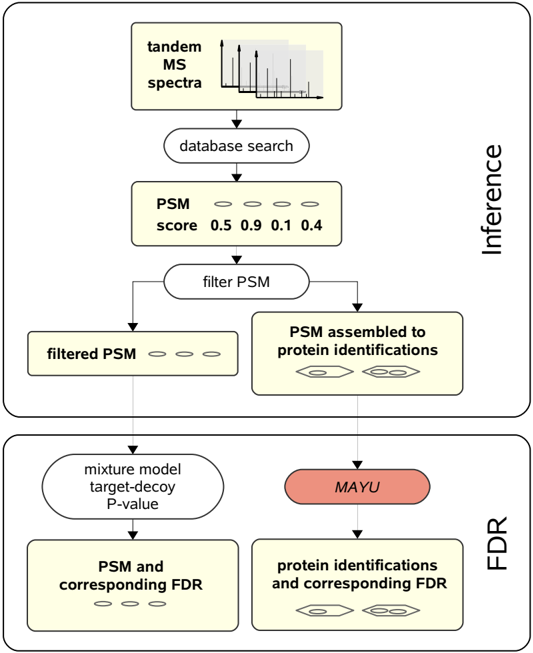
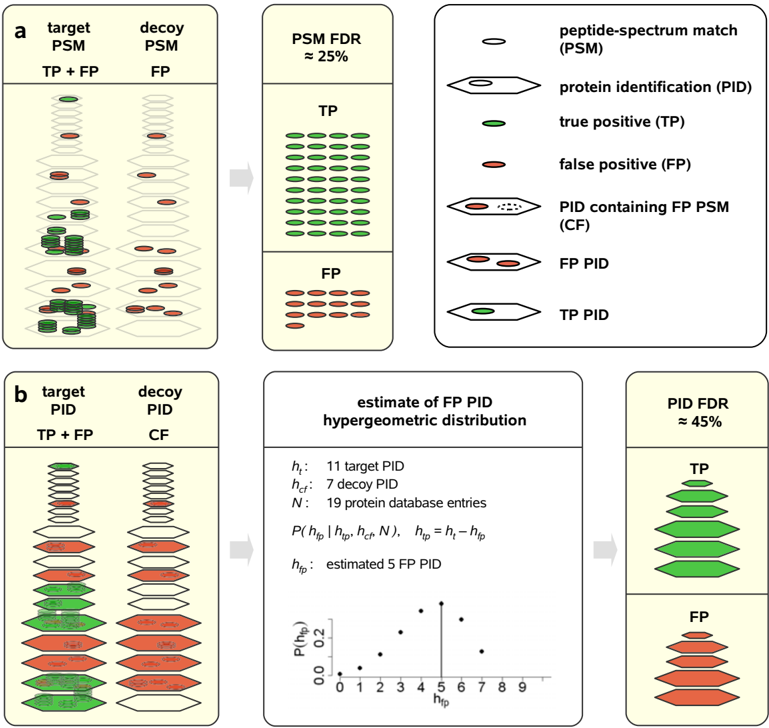
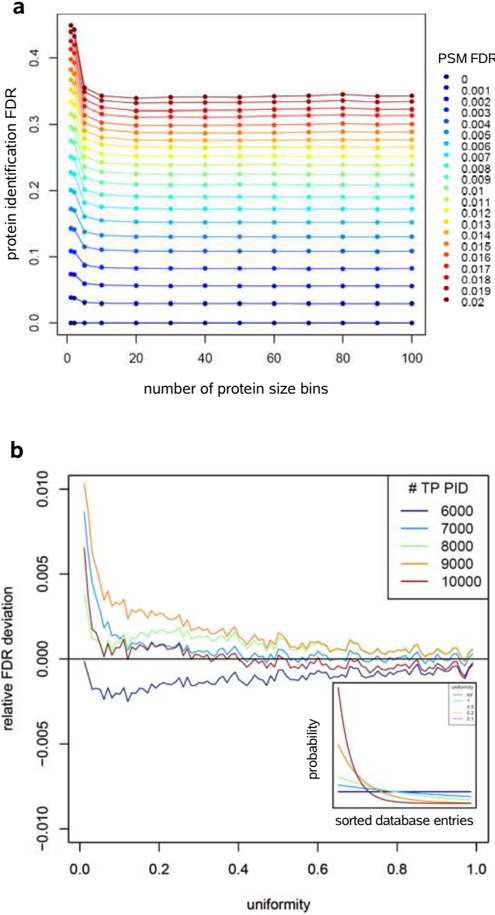
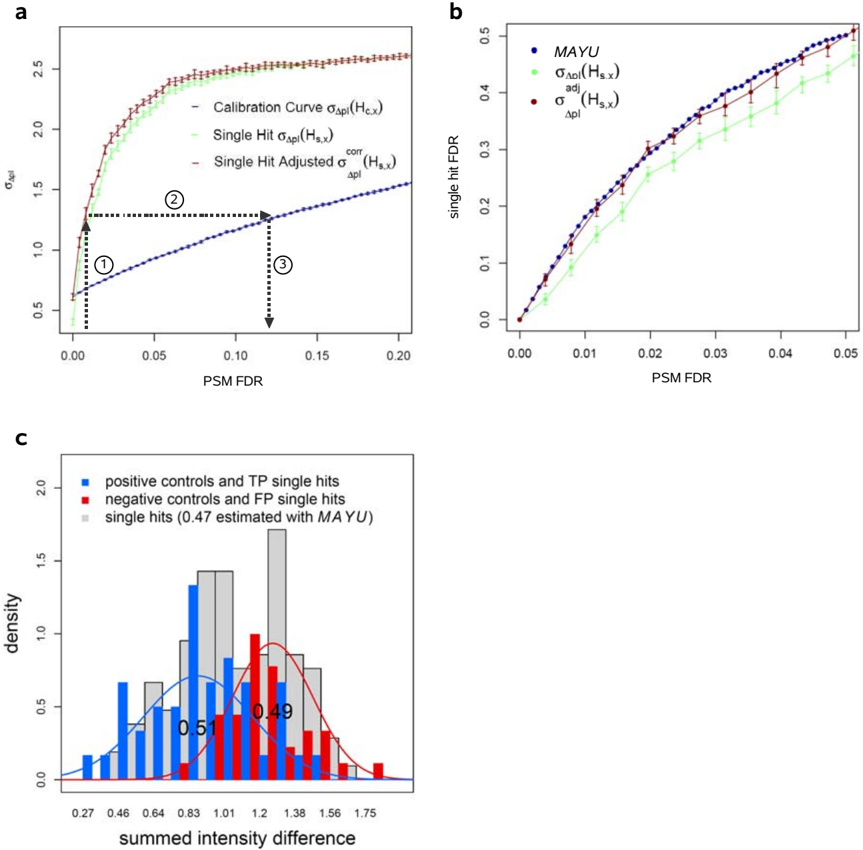
Comprehensive characterization of a proteome is a fundamental goal in proteomics. To achieve saturation coverage of a proteome or specific subproteome via tandem mass spectrometric identification of tryptic protein sample digests, proteomics data sets are growing dramatically in size and heterogeneity. The trend toward very large integrated data sets poses so far unsolved challenges to control the uncertainty of protein identifications going beyond well established confidence measures for peptide-spectrum matches. We present MAYU, a novel strategy that reliably estimates false discovery rates for protein identifications in large scale data sets. We validated and applied MAYU using various large proteomics data sets. The data show that the size of the data set has an important and previously underestimated impact on the reliability of protein identifications. We particularly found that protein false discovery rates are significantly elevated compared with those of peptide-spectrum matches. The function provided by MAYU is critical to control the quality of proteome data repositories and thereby to enhance any study relying on these data sources. The MAYU software is available as standalone software and also integrated into the Trans-Proteomic Pipeline.
Overview
The claims and statistics of this paper haven’t been checked yet.
Free: it reads the open-access text and checks the first 5 claims that cite a source we can check. Create a free account to check every claim.
Integrity signals
Registry
Cites
Statistics
Figures
Verification
Claims the paper makes
The claims and statistics of this paper haven’t been checked yet.
Free: it reads the open-access text and checks the first 5 claims that cite a source we can check. Create a free account to check every claim.
Claims other papers make about this one
Each is checked against this paper’s own text: does it say what the citing paper says it does?
In the citing paper
“To exclude the possibility of an inflated protein false discovery rate (FDR) due to error propagation from peptide to protein level inference, we used the Mayu software tool that determines the protein FDR in large data sets as a function of the peptide FDR (Reiter et al, 2009).”
From The quantitative proteome of a human cell line (2011) · cites this paper as Reiter et al, 2009
In the citing paper
“Protein FDRs have been estimated by the generalized target-decoy strategy Mayu (Reiter et al, 2009).”
From The quantitative proteome of a human cell line (2011) · cites this paper as Reiter et al, 2009
In the citing paper
“The accumulation of new peak groups steadily increased across the data set, indicating a likely accumulation of false positives and, highlighting the importance of appropriate global FDR control55, 56.”
From Multi-laboratory assessment of reproducibility, qualitative and quantitative performance of SWATH-mass spectrometry (2017) · cites this paper as [56]
Self-check
Percentages, sums and reported differences re-computed from the paper’s own numbers.
The self-check needs the paper’s full text.
Citations
Cites
Controlling the False Discovery Rate: A Practical and Powerful Approach to Multiple Testing
Benjamini, Y., & Hochberg, Y. (1995) · Journal of the Royal Statistical Society Series B: Statistical Methodology · doi:10.1111/j.2517-6161.1995.tb02031.x · Cited by 109,482
Mass spectrometry-based proteomics
Aebersold, R., & Mann, M. (2003) · Nature · doi:10.1038/nature01511 · Cited by 6,955 · cited 1×
“An explicit goal of proteomics is the complete description of a proteome and the measurement of its response to perturbations (Aebersold and Mann 2003).”
BackgroundSelf-citationEng, J. K., McCormack, A. L., & Yates, J. R. (1994) · Journal of the American Society for Mass Spectrometry · doi:10.1016/1044-0305(94)80016-2 · Cited by 6,484 · cited 2×
“We searched each data set against a composite target-decoy database using Turbo Sequest (Eng, McCormack et al. 1994) and Sequest on a Sorcerer machine (Sorcerer™-SEQUEST®, 3.10.4 release).”
MethodInfluentialKeller, A., Nesvizhskii, A. I., Kolker, E., & Aebersold, R. (2002) · Analytical Chemistry · doi:10.1021/ac025747h · Cited by 4,830
Self-citationA Statistical Model for Identifying Proteins by Tandem Mass Spectrometry
Nesvizhskii, A. I., Keller, A., Kolker, E., & Aebersold, R. (2003) · Analytical Chemistry · doi:10.1021/ac0341261 · Cited by 4,809 · cited 14×
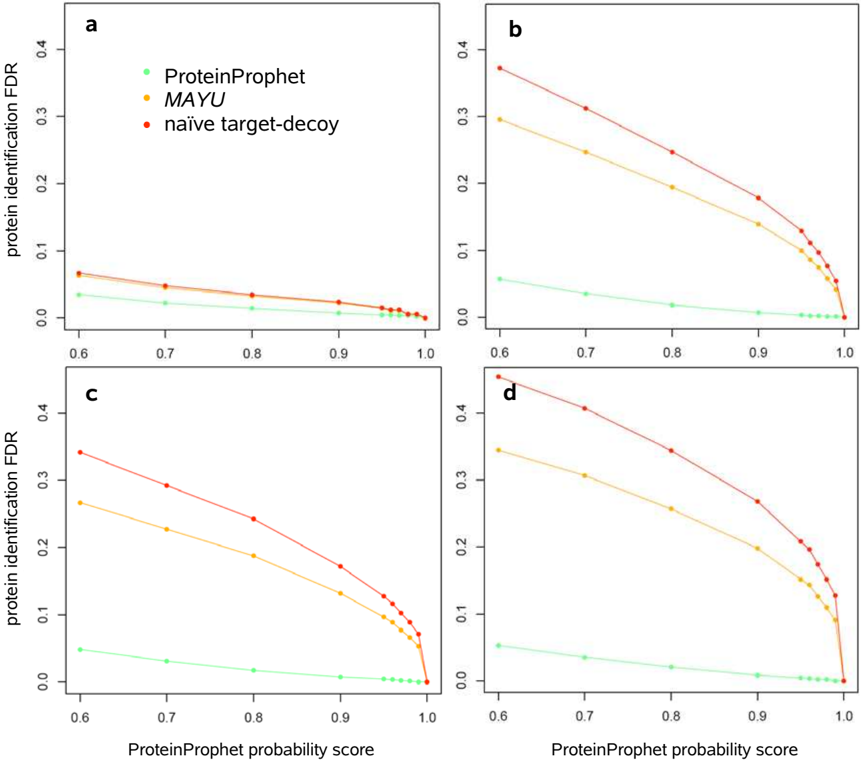
“Widely used protein inference tools like ProteinProphet (24) have proven to yield reliable error estimates on data sets at the experiment level (typically 10–50 LC-MS/MS runs) but fail to estimate an accurate protein identification FDR for large data sets (Fig.”
MethodInfluentialSelf-citationLarge-scale analysis of the yeast proteome by multidimensional protein identification technology
Washburn, M. P., Wolters, D., & Yates, J. R. (2001) · Nature Biotechnology · doi:10.1038/85686 · Cited by 4,752 · cited 1×
“at the protein identification level (2, 3, 7, 27, 28).”
BackgroundElias, J. E., & Gygi, S. P. (2007) · Nature Methods · doi:10.1038/nmeth1019 · Cited by 3,925 · cited 12×
“We performed all the database searches using a concatenated target-decoy database (Elias and Gygi 2007 Based on the well established assumption that false positive PSMs equally likely map to either target or decoy database, we used the number of PSMs mapping to the decoy database as an estimate for the number of false…”
BackgroundMethodInfluentialA Model for Random Sampling and Estimation of Relative Protein Abundance in Shotgun Proteomics
Liu, H., Sadygov, R. G., & Yates, J. R. (2004) · Analytical Chemistry · doi:10.1021/ac0498563 · Cited by 2,500 · cited 1×
“(41), and targeted proteomics approaches based on the”
BackgroundThe Bioperl Toolkit: Perl Modules for the Life Sciences
Stajich, J. E., Block, D., Boulez, K., Brenner, S. E., Chervitz, S. A., Dagdigian, C., Fuellen, G., Gilbert, J. G. R., Korf, I., Lapp, H., et al. (2002) · Genome Research · doi:10.1101/gr.361602 · Cited by 1,654 · cited 2×
“We used the standard deviatio n pI of isoelectric point deviations pI as a quality measure for a set H of PSMs, ( σ where pI pr (i) is the isoelectric point of a PSM i predicted by Bioperl (Stajich, Block et al. 2002). pI ex (i) corresponds to the experimentally measured isoelectric point of a PSM i, determined as the…”
BackgroundInfluentialPeng, J., Elias, J. E., Thoreen, C. C., Licklider, L. J., & Gygi, S. P. (2003) · Journal of Proteome Research · doi:10.1021/pr025556v · Cited by 1,647 · cited 2×
“Number, frequency and size and heterogeneity of proteomic data sets steadily increase (Washburn, Wolters et al. 2001; Peng, Elias et al. 2003; Omenn, States et al. 2005; Foster, de Hoog et al. 2006; King, Deutsch et al. 2006; Brunner, Ahrens et al. 2007; Baerenfaller, Grossmann et al. 2008; de…”
Background
Cited by
Items 201–300 of 312
Zhao, P., Zhong, J., Liu, W., Zhao, J., & Zhang, G. (2017) · Journal of Proteome Research · doi:10.1021/acs.jproteome.7b00463 · Cited by 15
p38 MAPK regulates PKAα and CUB-serine protease in Amphibalanus amphitrite cyprids
Zhang, G., He, L., Wong, Y. H., Xu, Y., Zhang, Y., & Qian, P. (2015) · Scientific Reports · doi:10.1038/srep14767 · Cited by 14
Zhang, J., Yang, M., Zeng, H., & Ge, F. (2016) · Molecular & Cellular Proteomics · doi:10.1074/mcp.m116.060046 · Cited by 15
“The target-decoy strategy (TDS) is the most widely used strategy to estimate FDR (85) and many effective methods have been developed to improve the performance and reliability of TDS (86–88).”
MethodRichardson, K., Denny, R. C., Hughes, C. J., Skilling, J., Sikora, J. W., Dadlez, M., Manteca, Á., Jung, H. R., Jensen, O. N., Redeker, V., et al. (2012) · OMICS A Journal of Integrative Biology · doi:10.1089/omi.2012.0019 · Cited by 15
“…statistical analysis of qualitative search re-sults (Choi and Nesvizhskii, 2008; Fenyo¨ and Beavis, 2003; Keller et al., 2002; Qian et al., 2005; Reiter et al., 2009), and that of quantitative LC-MS data (Listgarten et al., 2007; Smit et al., 2008), are attracting more attention with the…”
Hansmeier, N., Chao, T., Goldman, L. R., Witter, F. R., & Halden, R. U. (2012) · Environmental Health Perspectives · doi:10.1289/ehp.1104190 · Cited by 14
Diamond: a multi-modal DIA mass spectrometry data processing pipeline
Li, C., Gao, M., Yang, W., Zhong, C., & Yu, R. (2021) · Bioinformatics · doi:10.1093/bioinformatics/btaa1093 · Cited by 14
MiTPeptideDB: a proteogenomic resource for the discovery of novel peptides
Guruceaga, E., Garín-Muga, A., & Segura, V. (2019) · Bioinformatics · doi:10.1093/bioinformatics/btz530 · Cited by 16
Prieto, G., & Vázquez, J. (2020) · Journal of Proteome Research · doi:10.1021/acs.jproteome.9b00819 · Cited by 14
Design and Application of a Data-Independent Precursor and Product Ion Repository
Thalassinos, K., Vissers, J. P. C., Tenzer, S., Levin, Y., Thompson, J. W., Daniel, D., Mann, D., DeLong, M. R., Moseley, M. A., America, A. H. P., et al. (2012) · Journal of the American Society for Mass Spectrometry · doi:10.1007/s13361-012-0416-9 · Cited by 14
“The most widely used method to date has been the use of a decoy database strategy, whereby the decoy database is concatenated to the database of interest to infer a false positive rate (FPR) or false discovery rate (FDR) at the peptide and/or protein level [20–22].”
MethodA Non-parametric Cutout Index for Robust Evaluation of Identified Proteins
Serang, O., Paulo, J. A., Steen, H., & Steen, J. A. J. (2013) · Molecular & Cellular Proteomics · doi:10.1074/mcp.o112.022863 · Cited by 15
“First, current methods introduce strong statistical biases, which can be conservative (10) or optimistic (12) in different settings.”
BackgroundMethodPhosphoproteome Resource for Systems Biology Research
Bodenmiller, B., & Aebersold, R. H. (2010) · Methods in molecular biology · doi:10.1007/978-1-60761-977-2_19 · Cited by 14
Self-citationSystematic Assessment of the Effect of Internal Library in Targeted Analysis of SWATH-MS
Zhong, C., Wu, R., Chen, X., Wu, S., Shuai, J., & Han, J. (2019) · Journal of Proteome Research · doi:10.1021/acs.jproteome.9b00669 · Cited by 13
Reales‐Calderón, J. A., Sun, Z., Mascaraque, V., Pérez, E., Vialás, V., Deutsch, E. W., Moritz, R. L., Gil, C., Martínez, J. L., & Molero, G. (2021) · Journal of Proteomics · doi:10.1016/j.jprot.2021.104192 · Cited by 13
Zasada, M., Suski, M., Bokiniec, R., Szwarc-Duma, M., Borszewska-Kornacka, M. K., Madej, J., Bujak-Giżycka, B., Madetko‐Talowska, A., Revhaug, C., Baumbusch, L. O., et al. (2018) · Investigative Ophthalmology & Visual Science · doi:10.1167/iovs.18-24914 · Cited by 13
Khoontawad, J., Pairojkul, C., Rucksaken, R., Pinlaor, P., Wongkham, C., Yongvanit, P., Pugkhem, A., Jones, A., Plieskatt, J. L., Potriquet, J., et al. (2017) · Molecular & Cellular Proteomics · doi:10.1074/mcp.m116.064576 · Cited by 12
Suski, M., Wiśniewska, A., Kuś, K., Kiepura, A., Stachowicz, A., Stachyra, K., Czepiel, K., Madej, J., & Olszanecki, R. (2020) · Molecular Immunology · doi:10.1016/j.molimm.2020.09.005 · Cited by 13
A primary human T-cell spectral library to facilitate large scale quantitative T-cell proteomics
Weerakoon, H. T. W., Potriquet, J., Shah, A. K., Reed, S., Arachchige, B. J., Kapil, C., Midha, M. K., Moritz, R. L., Lepletier, A., Mulvenna, J. P., et al. (2020) · Scientific Data · doi:10.1038/s41597-020-00744-3 · Cited by 12
Finamore, F., Nieddu, G., Rocchiccioli, S., Spirito, R., Guarino, A., Formato, M., & Lepedda, A. J. (2021) · Biomedicines · doi:10.3390/biomedicines9091156 · Cited by 11
Proteome Coverage Prediction for Integrated Proteomics Datasets
Claassen, M., Aebersold, R. H., & Buhmann, J. M. (2010) · Lecture notes in computer science · doi:10.1007/978-3-642-12683-3_7 · Cited by 11
Self-citationHigdon, R., Reiter, L., Hather, G. J., Haynes, W. A., Kolker, N., Stewart, E., Bauman, A. T., Picotti, P., Schmidt, A., van Belle, G., et al. (2011) · Journal of Proteomics · doi:10.1016/j.jprot.2011.06.003 · Cited by 11
Self-citationA tool for integrating genetic and mass spectrometry‐based peptide data: Proteogenomics Viewer
Kroll, J. E., da Silva, V. L., SOUZA, S. J. D., & de Souza, G. A. (2017) · BioEssays · doi:10.1002/bies.201700015 · Cited by 11
“Therefore, the majority of the proteomics researchers will favor peptide search procedures that use reference datasets containing “known” sequences and as little entry redundancy as possible, in order to control the search space size and reduce the chance of false-discoveries [2, 3].”
BackgroundProteomic biomarkers in Gaucher disease
Pawliński, Ł., Tobór, E., Suski, M., Sordyl, M., Polus, A., & Kieć‐Wilk, B. (2020) · Journal of Clinical Pathology · doi:10.1136/jclinpath-2020-206580 · Cited by 11
Li, Y., He, Q., Guo, H., Zhong, C., Xiang, L., Li, Y., Han, J., & Shuai, J. (2022) · Journal of Proteomics · doi:10.1016/j.jprot.2022.104542 · Cited by 11
A new estimation of protein-level false discovery rate
Wu, G., Wan, X., & Xu, B. (2018) · BMC Genomics · doi:10.1186/s12864-018-4923-3 · Cited by 10
Wu, X., Yang, D., Fu, Z., Yang, Z., Wang, D., Qiao, M., Fang, Y., Li, W., Wu, R., He, P., et al. (2019) · Molecular & Cellular Proteomics · doi:10.1074/mcp.ra119.001380 · Cited by 10
“07) (24) was used to determine iProphet probability corresponding to 1% peptide FDR.”
MethodImpact of different oral treatments on the composition of the supragingival plaque microbiome
Rabe, A., Salazar, M. G., Michalik, S., Kocher, T., Below, H., Völker, U., & Welk, A. (2022) · Journal of Oral Microbiology · doi:10.1080/20002297.2022.2138251 · Cited by 11
“php) [32,33] and have chosen the Comet MS/MS search algorithm (http://comet-ms.”
MethodApplication of SWATH Proteomics to Mouse Biology
Wu, Y., Williams, E. G., & Aebersold, R. H. (2017) · Current Protocols in Mouse Biology · doi:10.1002/cpmo.28 · Cited by 11
“It is important to estimate FDR at PSM, peptide, and proteins levels using the MAYU software (Reiter et al., 2009; Schubert et al., 2015).”
MethodSelf-citationBaliban, R. C., DiMaggio, P. A., Plazas-Mayorca, M. D., Garcia, B. A., & Floudas, C. A. (2012) · Journal of Proteome Research · doi:10.1021/pr300418j · Cited by 9
Nowicka-Bauer, K., Kamieniczna, M., Olszewska, M., & Kurpisz, M. K. (2023) · Translational Andrology and Urology · doi:10.21037/tau-23-130 · Cited by 9
Stable Isotope Labeling Methods in Protein Profiling
Lengqvist, J., & Sandberg, A. (2013) · Methods in molecular biology · doi:10.1007/978-1-4614-7209-4_3 · Cited by 10
Suski, M., Wiśniewska, A., Stachowicz, A., Olszanecki, R., Kuś, K., Białas, M. B., Madej, J., & Korbut, R. (2017) · European Journal of Pharmaceutical Sciences · doi:10.1016/j.ejps.2017.04.021 · Cited by 9
Proteomics Mass Spectrometry Data Analysis Tools
Pena, A. B. (2018) · Elsevier eBooks · doi:10.1016/b978-0-12-809633-8.20274-4 · Cited by 9
Proteome Coverage Prediction for Integrated Proteomics Datasets
Claassen, M., Aebersold, R., & Buhmann, J. M. (2011) · Journal of Computational Biology · doi:10.1089/cmb.2010.0261 · Cited by 8
“[10]), we use Pitman-Yor processes as priors for distributions G over a set Π of peptides defined by a protein database of the studied organism.”
InfluentialSelf-citationA comprehensive Candida albicans PeptideAtlas build enables deep proteome coverage
Vialás, V., Sun, Z., Reales‐Calderón, J. A., Hernáez, M. L., Casas, V., Carrascal, M., Abián, J., Monteoliva, L., Deutsch, E. W., Moritz, R. L., et al. (2015) · Journal of Proteomics · doi:10.1016/j.jprot.2015.10.019 · Cited by 10
Proteogenomic Analysis of Single Amino Acid Polymorphisms in Cancer Research
Garín-Muga, A., Corrales, F. J., & Segura, V. (2016) · Advances in experimental medicine and biology · doi:10.1007/978-3-319-42316-6_7 · Cited by 9
The PeptideAtlas of the Domestic Laying Hen
McCord, J. P., Sun, Z., Deutsch, E. W., Moritz, R. L., & Muddiman, D. C. (2017) · Journal of Proteome Research · doi:10.1021/acs.jproteome.6b00952 · Cited by 8
“The filtered data was assessed with the MAYU software 41 to calculate decoy-based FDRs at the peptide-spectrum match (PSM), distinct peptide, and protein levels.”
MethodProtein identification problem from a Bayesian point of view
Arnold, R. J., Li, Y. F., Predrag Radivojac, A., & Tang, H. (2012) · Statistics and Its Interface · doi:10.4310/sii.2012.v5.n1.a3 · Cited by 8
“Statistics and Its Interface Volume 5 (2012) 21–37 Protein identification problem from a Bayesian point of view”
BackgroundDecoy-free protein-level false discovery rate estimation
Teng, B., Huang, T. C., & He, Z. (2013) · Bioinformatics · doi:10.1093/bioinformatics/btt431 · Cited by 7
Chen, C.-T., Ko, C.-L., Choong, W.-K., Wang, J., Hsu, W., & Sung, T. (2019) · Analytical Chemistry · doi:10.1021/acs.analchem.9b01556 · Cited by 7
Serum Biomarkers Reveal Long-term Cardiac Injury in Isoproterenol-treated African Green Monkeys
Liu, Y., Parman, T., Schneider, B., Song, B., Galande, A. K., Anderson, D., & Mirsalis, J. C. (2013) · Journal of Proteome Research · doi:10.1021/pr3011809 · Cited by 7
Quantitative proteomics: A central technology for systems biology
Ahrens, C. H., Brunner, E., & Basler, K. (2009) · Journal of Proteomics · doi:10.1016/j.jprot.2009.12.007 · Cited by 9
“tion and suggested that the software MAYU could be useful in this context [23].”
Amondarain, U. U., Russell, M. R., Patassini, S., Brazzatti, J. A., Graham, C., Whetton, A. D., & Graham, R. L. J. (2021) · Scientific Data · doi:10.1038/s41597-021-00896-w · Cited by 7
Russell, M. R., Currin, A., Rowe, W., Chen, G., Barran, P. E., & Scrutton, N. S. (2022) · Scientific Data · doi:10.1038/s41597-022-01610-0 · Cited by 9
Chen, C.-T., Wang, J.-H., Cheng, C.-W., Hsu, W.-C., Ko, C.-L., Choong, W.-K., & Sung, T. (2021) · Scientific Reports · doi:10.1038/s41598-021-81740-4 · Cited by 6
Kechavarzi, B., Wu, H., & Doman, T. N. (2019) · PLoS ONE · doi:10.1371/journal.pone.0210910 · Cited by 6
Hurtado, P. A. G., Morrison, R., Ribeiro, J. M. C., Magale, H. I., Attaher, O., Diarra, B. S., Mahamar, A., Barry, A., Dicko, A., Duffy, P. E., et al. (2019) · Journal of Proteome Research · doi:10.1021/acs.jproteome.9b00169 · Cited by 5
DeepUEP: Prediction of Urine Excretory Proteins Using Deep Learning
Du, W., Pang, R., Li, G., Cao, H., Li, Y., & Liang, Y. (2020) · IEEE Access · doi:10.1109/access.2020.2997937 · Cited by 5
“To remove the effects of false-positive biomarkers obtained by proteomics [61], we also count the biomarkers that have been detected in more than one study.”
BackgroundProtein Identification from Tandem Mass Spectra by Database Searching
Edwards, N. J. (2017) · Methods in molecular biology · doi:10.1007/978-1-4939-6783-4_17 · Cited by 5
Klimek‐Piotrowska, W., Krawczyk‐Ożóg, A., Suski, M., Kapusta, P., Wołkow, P. P., & Holda, M. K. (2018) · Journal of Anatomy · doi:10.1111/joa.12798 · Cited by 5
Irajizad, E., Fahrmann, J. F., Long, J. P., Vykoukal, J. V., Kobayashi, M., Capello, M., Yu, C., Cai, Y., Hsiao, F. C., Patel, N. J., et al. (2022) · International Journal of Molecular Sciences · doi:10.3390/ijms23168933 · Cited by 4
Nilse, L., Avci, D., Heisterkamp, P., Serang, O., Lemberg, M. K., & Schilling, O. (2016) · Biochimica et Biophysica Acta (BBA) - Proteins and Proteomics · doi:10.1016/j.bbapap.2016.07.002 · Cited by 4
Boyanova, D., Nilla, S., Klau, G. W., Dandekar, T., Müller, T., & Dittrich, M. T. (2014) · Molecular & Cellular Proteomics · doi:10.1074/mcp.m113.032839 · Cited by 7
“Much effort has been spent in recent years to optimize methods for identification of proteins ensuring the validity of measurements (6–8).”
MethodRapid proteotyping reveals cancer biology and drug response determinants in the NCI-60 cellsPreprint
Guo, T., Luna, A., Rajapakse, V. N., Koh, C. C., Wu, Z., Menden, M. P., Cheng, Y., Calzone, L., Martignetti, L., Ori, A., et al. (2018) · bioRxiv (Cold Spring Harbor Laboratory) · doi:10.1101/268953 · Cited by 5
Self-citationMzion enables deep and precise identification of peptides in data-dependent acquisition proteomics
Zhang, Q. (2023) · Scientific Reports · doi:10.1038/s41598-023-34323-4 · Cited by 3
Khalil, S., & Plisnier, M. (2025) · Journal of Pharmaceutical and Biomedical Analysis Open · doi:10.1016/j.jpbao.2025.100082 · Cited by 4
Blood proteomics: insights from public data
Larrea, A., Dai, C., Brenes, A. J., Korff, K., Neely, B. A., Geyer, P. E., Dagley, L. F., Unwin, R. D., Naba, A., MacCoss, M. J., et al. (2026) · Genome biology · doi:10.1186/s13059-026-04027-9 · Cited by 5
“No global FDR correction was applied in this integration step, so the aggregated list should be interpreted as a cumulative resource rather than a rigorously validated proteome [78].”
Electrophoresis-Based Proteomic Meat Animal Research
Zapata, I., & Wick, M. P. (2012) · University of Zagreb University Computing Centre (SRCE) · Cited by 4
He, Z., Huang, T. C., Zhao, C., & Teng, B. (2016) · Advances in experimental medicine and biology · doi:10.1007/978-3-319-41448-5_12 · Cited by 3
The Search for Biomarkers in Biofluids
Veenstra, T. D. (2013) · Wiley eBooks · doi:10.1002/9781118634493.ch7 · Cited by 3
Protein Quantification by Peptide Quality Control (PQPQ) of Shotgun Proteomics Data
Forshed, J. (2013) · Methods in molecular biology · doi:10.1007/978-1-4614-7209-4_9 · Cited by 3
Proteogenomics for the Comprehensive Analysis of Human Cellular and Serum Antibody Repertoires
Díez, P., & Fuentes, M. (2016) · Advances in experimental medicine and biology · doi:10.1007/978-3-319-42316-6_10 · Cited by 4
Rabe, A., Salazar, M. G., & Völker, U. (2021) · Methods in molecular biology · doi:10.1007/978-1-0716-1518-8_13 · Cited by 4
Vialás, V., & Gil, C. (2015) · EuPA Open Proteomics · doi:10.1016/j.euprot.2015.04.002 · Cited by 3
Patel, S. K., Bruderer, R., Basisty, N., Bons, J., Desprez, P., Neri, F., Reiter, L., Campisi, J., & Schilling, B. (2021) · bioRxiv (Cold Spring Harbor Laboratory) · doi:10.1101/2021.02.27.433188 · Cited by 4
Self-citationBorrelia PeptideAtlas: A proteome resource of common Borrelia burgdorferi isolates for Lyme research
Reddy, P. J., Sun, Z., Wippel, H. H., Baxter, D. H., Swearingen, K. E., Shteynberg, D. D., Midha, M. K., Caimano, M. J., Strle, K., Choi, Y., et al. (2024) · Scientific Data · doi:10.1038/s41597-024-04047-9 · Cited by 3
“This approach included the use of the post-search engine reSpect to provide peptide identification from chimeric spectra 51 and MAYU 52 to estimate decoy-based FDR levels for the Borrelia build.”
Jachmann, C., Sun, Z., Velghe, K., Arsène‐Ploetze, F., Hirschler, A., Zuallaert, J., Carapito, C., Bouwmeester, R., Nieselt, K., Deutsch, E. W., et al. (2026) · Journal of Proteome Research · doi:10.1021/acs.jproteome.5c00902 · Cited by 2
Balaya, R. D. A., & Prasad, T. S. K. (2024) · Springer eBooks · doi:10.1007/978-981-97-5045-0_7 · Cited by 3
Candida albicans : A Comprehensive View of the Proteome
Gomez-Artiguez, L., Fuentes, S. D. L. C., Sun, Z., Hernáez, M. L., Borrajo, A., Pitarch, A., Molero, G., Monteoliva, L., Moritz, R. L., Deutsch, E. W., et al. (2025) · Journal of Proteome Research · doi:10.1021/acs.jproteome.4c01020 · Cited by 2
Wright, J. C., & Choudhary, J. S. (2016) · Royal Society of Chemistry eBooks · doi:10.1039/9781782626732-00069 · Cited by 3
Analysis of Bacterial Surface Interactions with Mass Spectrometry-Based Proteomics
Karlsson, C. A. Q., Teleman, J., & Malmström, J. A. (2016) · Methods in molecular biology · doi:10.1007/978-1-4939-6673-8_2 · Cited by 2
Pool-seq driven proteogenomic database for Group G Streptococcus
Weldatsadik, R. G., Datta, N., Kolmeder, C. A., Vuopio, J., Kere, J., Wilkman, S. V., Flatt, J. W., Vuento, R., Haapasalo, K., Keskitalo, S., et al. (2019) · Journal of Proteomics · doi:10.1016/j.jprot.2019.04.015 · Cited by 2
“in the protein groups case could lead to inflated values [30]).”
BackgroundCalculation of False Discovery Rate for Peptide and Protein Identification
Prieto, G., & Vázquez, J. (2019) · Methods in molecular biology · doi:10.1007/978-1-4939-9744-2_6 · Cited by 2
Barrass, S. V., Pulkkinen, L. I. A., Vapalahti, O., Kuivanen, S. H., Anastasina, M., Happonen, L., & Butcher, S. J. (2021) · bioRxiv (Cold Spring Harbor Laboratory) · doi:10.1101/2021.10.29.464531 · Cited by 2
Small open reading frame-encoded peptides (SEPs) as hidden treasures: a review
Ren, X., Liu, Z., & Zhang, P. (2026) · Expert Opinion on Drug Discovery · doi:10.1080/17460441.2025.2603517 · Cited by 2
“If the peptide library is too large, it not only increases the probability of random matches during mass spectrometry data searches, thereby raising the false positive rate [69,70], but also lowers match scores and significantly increases computational resource consumption [71].”
Change in the chondroitin/dermatan structure in distal lung tissue from COPD patients
Alsafadi, H. N., Nybom, A., Wagner, D. E., Malmström, A., Lindstedt, S., Bjermer, L. H., Dellgren, G., Malmström, J. A., Tykesson, E., Westergren‐Thorsson, G., et al. (2026) · Scientific Reports · doi:10.1038/s41598-026-44120-4 · Cited by 1
“7POLAR VORTEX rev 0, Build 201405161127) using peptide Prophet, iProphet and MAYU 40,41 .”
A Procedure for Analyzing the Proteomic Proteomics Profile of Schistosoma mansoni Cercariae
Perera, D. J., Golizeh, M., & Ndao, M. (2020) · Methods in molecular biology · doi:10.1007/978-1-0716-0635-3_7 · Cited by 1
Choong, W.-K., & Sung, T. (2022) · ACS Omega · doi:10.1021/acsomega.2c00466 · Cited by 1
Kuo, T.-Y., Wang, J.-H., Huang, Y.-W., Sung, T., & Chen, C.-T. (2023) · Scientific Reports · doi:10.1038/s41598-023-41124-2 · Cited by 1
“The output of FPF is an ipro.pep.xml file modified from the identification results of DB + SL searching that is fully compatible with the original iProphet format, facilitating a follow-up protein level identification analysis with ProteinProphet 31 or Mayu 32 and quantitation analysis with Libra or Multi-Q 2.”
MethodThe temporal protein signature analyses of developing human deciduous molar tooth germ
Chen, X., Li, G., Zhang, J., Hu, L., Zhao, G., Wu, B., Wei, F., & Xiong, F. (2024) · PROTEOMICS · doi:10.1002/pmic.202300396 · Cited by 1
“Due to the technique limitation, data from shotgun proteomics experiments tends to be redundant, while the low-abundance proteins are more difficult to detect[27].”
Appraisal of the Missing Proteins Based on the mRNAs Bound to Ribosomes
Xu, S., Zhou, R., Ren, Z., Zhou, B., Lin, Z., Hou, G., Deng, Y., Zi, J., Lin, L., Wang, Q., et al. (2015) · Journal of Proteome Research · doi:10.1021/acs.jproteome.5b00476 · Cited by 1
Filtering tandem mass spectra for quality
Feldman, S., Frewen, B. E., MacCoss, M. J., & Gupta, M. R. (2012) · Cited by 1
Identification of Proteins From Proteomic Analysis
Noor, Z., Mohamedali, A., & Ranganathan, S. (2018) · Elsevier eBooks · doi:10.1016/b978-0-12-809633-8.20478-0 · Cited by 1
Guo, Z., Zhang, Y., Zou, L., Wang, D., Shao, C., Wang, Y., Sun, W., & Zhang, L. (2019) · PLoS ONE · doi:10.1371/journal.pone.0213213 · Cited by 1
Andrade-Medina, M., Greco, T. M., Cristea, I. M., & Oberstein, A. (2024) · bioRxiv (Cold Spring Harbor Laboratory) · doi:10.1101/2024.08.01.606090 · Cited by 1
“Spectra were filtered to a final protein level FDR of 1% using MAYU 92 .”
MethodProteomic Characterization of Perisynaptic Astrocytes in Synaptic Plasticity
Carney, K. E. (2014) · theses.fr (ABES) · doi:10.70675/dad7a664z044ez4a26z8243z8b856d2ab7ba · Cited by 1
“False discovery rates (FDR) for peptide and protein identifications were established using Mayu software [277].”
MethodComputational methods and graphical models for integrative proteogenomics
Zickmann, F. (2015) · Universitätsbibliothek der FU Berlin Hochschulschriftenstelle u. Dokumentenserver · doi:10.17169/refubium-9888
Protein Identification Strategies for the Greenshell Mussel Perna canaliculus
Moeke, C. (2012) · Open Access Victoria University of Wellington | Te Herenga Waka (Figshare) · doi:10.26686/wgtn.16999822
Chloroplast proteome analysis: new insights into intracellular trafficking
Bischof, S. (2010) · Repository for Publications and Research Data (ETH Zurich) · doi:10.3929/ethz-a-006089914 · Cited by 1
Protein inference and quantification with statistical models
Gerster, S. (2012) · Repository for Publications and Research Data (ETH Zurich) · doi:10.3929/ethz-a-007594000
Clinical Proteomics – Quantitative Analysis and Biological Interpretation
Sandberg, A. (2012) · Figshare
Abbaraju, N. V. (2011) · ScholarWorks @ The University of New Orleans (The University of New Orleans)
Kuan, C.-W. (2015) · cIRcle (University of British Columbia) · doi:10.14288/1.0167131
Shanmugam, A. K. (2015) · Deep Blue (University of Michigan)
Droste, C. F. (2017) · Gredos (University of Salamanca) · doi:10.14201/gredos.135785
Bioinformatics Support for Farm Animal Proteomics
Pena, A. B., & Lisacek, F. (2018) · Springer eBooks · doi:10.1007/978-3-319-69682-9_18
Evolution of protein abundances in eukaryotes
Weiß, M. (2010) · Zurich Open Repository and Archive (University of Zurich) · doi:10.5167/uzh-45531
Computational Strategies for Proteogenomics Analyses
Kong, A. T. (2017) · Deep Blue (University of Michigan)
Current literature in mass spectrometry
(2010) · Journal of Mass Spectrometry · doi:10.1002/jms.1651
Bhandari, V. (2020) · Faculty Opinions – Post-Publication Peer Review of the Biomedical Literature · doi:10.3410/f.738262071.793576195
Metadata
- Authors
- Reiter, L., Claassen, M., Schrimpf, S. P., Jovanovic, M., Schmidt, A., Buhmann, J. M., Hengartner, M. O., & Aebersold, R.
- Affiliations
- University of Zurich (CH)
- ETH Zurich (CH)
- Corresponding author
- Aebersold, Ruedi
- Venue
- Molecular & Cellular Proteomics
- Publisher
- Elsevier BV
- Published
- 2009-11
- Volume
- 8
- Issue
- 11
- Pages
- 2405-2417
- ISSN
- 1535-9476 (ISSN-L)
- PMC
- PMC2773710
- OpenAlex
- W2129897014
- Cited by
- 312
- References
- 44
- Citations by year
- 2026: 7 · 2025: 3 · 2024: 6 · 2023: 7 · 2022: 14 · 2021: 18 · 2020: 18 · 2019: 20 · 2018: 26 · 2017: 24 · 2016: 25 · 2015: 33 · 2014: 11 · 2013: 25 · 2012: 28
- FWCI
- 10.59
- Type
- journal article
- Language
- en
- Open access
- hybrid
- doi.org
- Licence
- cc-by
- www.elsevier.com/tdm/userlicense/1.0/ (tdm)
- www.elsevier.com/legal/tdmrep-license (tdm)
- creativecommons.org/licenses/by/4.0/ (vor, 3972 d)
- Locations
- Molecular & Cellular Proteomics (publishedVersion, cc-by)
- Europe PMC (PubMed Central) (publishedVersion)
- PubMed Central (publishedVersion)
- PubMed (publishedVersion)
- Zurich Open Repository and Archive (University of Zurich) (acceptedVersion, other-oa)
- Zurich Open Repository and Archive (University of Zurich) (submittedVersion, other-oa)
- Zurich Open Repository and Archive (University of Zurich)
- Funders
- National Science Foundation
- Schweizerischer Nationalfonds zur Förderung der Wissenschaftlichen Forschung (10767)
- Universität Zürich
- SystemsX.ch
- National Institutes of Health (n01hv028179-000)
- Functional Genomics Center Zurich
- National Heart, Lung, and Blood Institute (N01 HV028179, N01-HV-28179)
- Topics
- Physical Sciences › Chemistry › Spectroscopy › Advanced Proteomics Techniques and Applications
- Life Sciences › Biochemistry, Genetics and Molecular Biology › Molecular Biology › Bioinformatics and Genomic Networks
- Physical Sciences › Chemistry › Spectroscopy › Mass Spectrometry Techniques and Applications
- Keywords
- protein identification, false discovery rate, tandem mass spectrometry, peptide-spectrum matches, proteome coverage
- MeSH terms
- Algorithms, Animals, False Positive Reactions, Leptospira, Peptides, Schizosaccharomyces, Reproducibility of Results, Models, Statistical, Caenorhabditis elegans, Computational Biology, Proteome, Databases, Protein, Proteomics, Tandem Mass Spectrometry
About these checks
Registry, retraction, Cites and statistics results are computed, not judged, with one exception: a printed reference that no index lists is read once by a model before it counts as a citation error. Claims are extracted by a model and kept only when their quote appears verbatim in the text; each cited source is then checked, with a model’s help, for whether it says what the claim relies on. Those verdicts can be wrong — read the claim’s quote and the cited source before relying on one.
Statistics and arithmetic are recomputed, not judged.
Confidence bands are shown only for fields calibrated on our annotated test set. None is calibrated yet, so no band is shown.
What counts as a claim ›How we measure confidence ›How we check this ›
Are you an author, or do you see a problem with this page? Request a review
Data sources
Bibliographic data: Semantic Scholar, OpenAlex, Crossref.
Contains information from the Semantic Scholar Academic Graph Datasets, made available under the ODC Attribution License (ODC-BY 1.0).
Semantic Scholar’s data is described in: Kinney, R., et al. (2023). The Semantic Scholar Open Data Platform. arXiv:2301.10140.
