

Hypoxic Tumor Cell Modulates Its Microenvironment to Enhance Angiogenic and Metastatic Potential by Secretion of Proteins and Exosomes
Open accessThe DOI matches its Crossref record; 72 of the 72 references it cites were found in a registry or an index.
Abstract
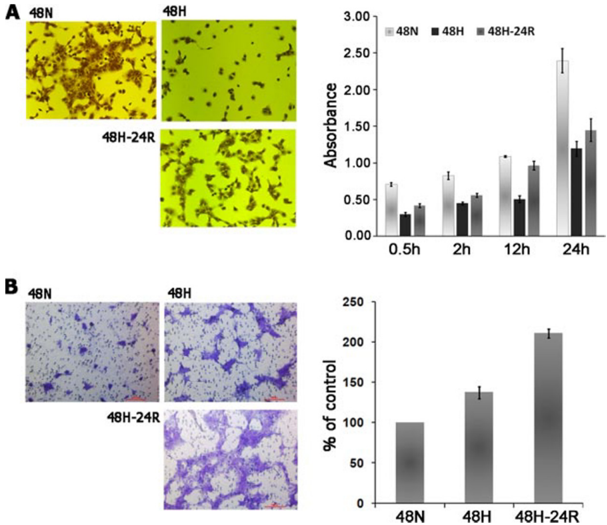
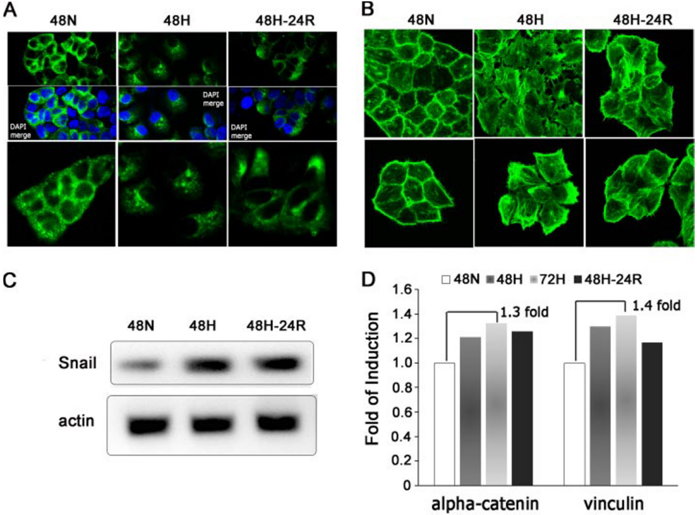
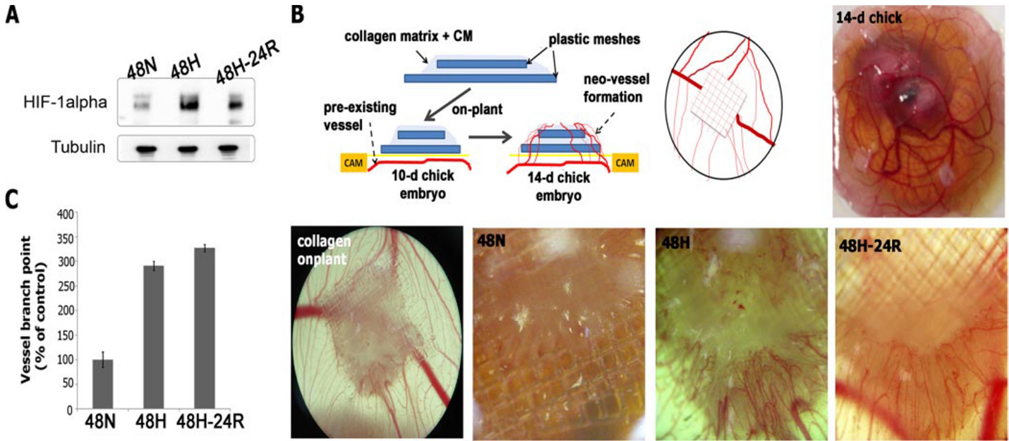
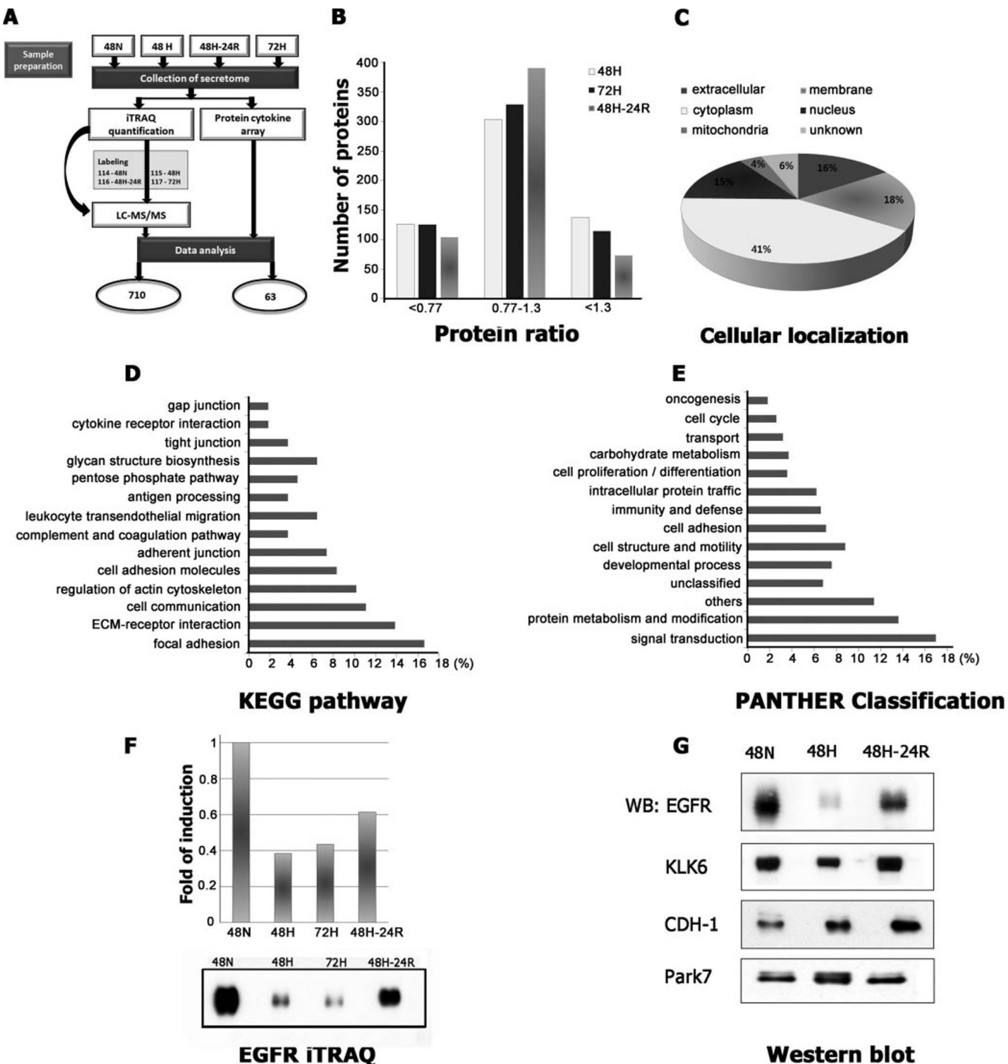
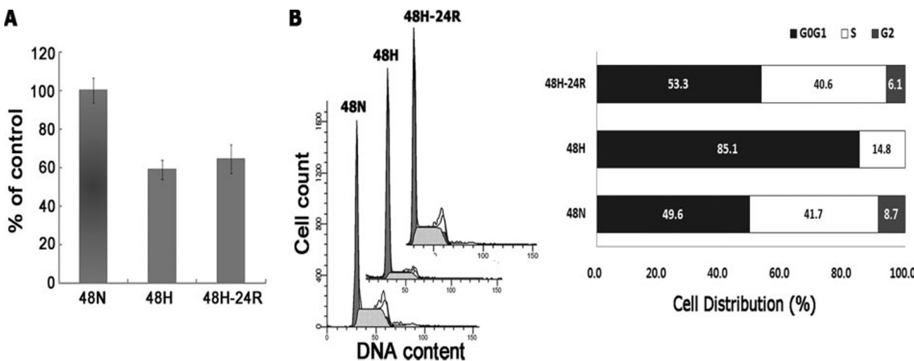
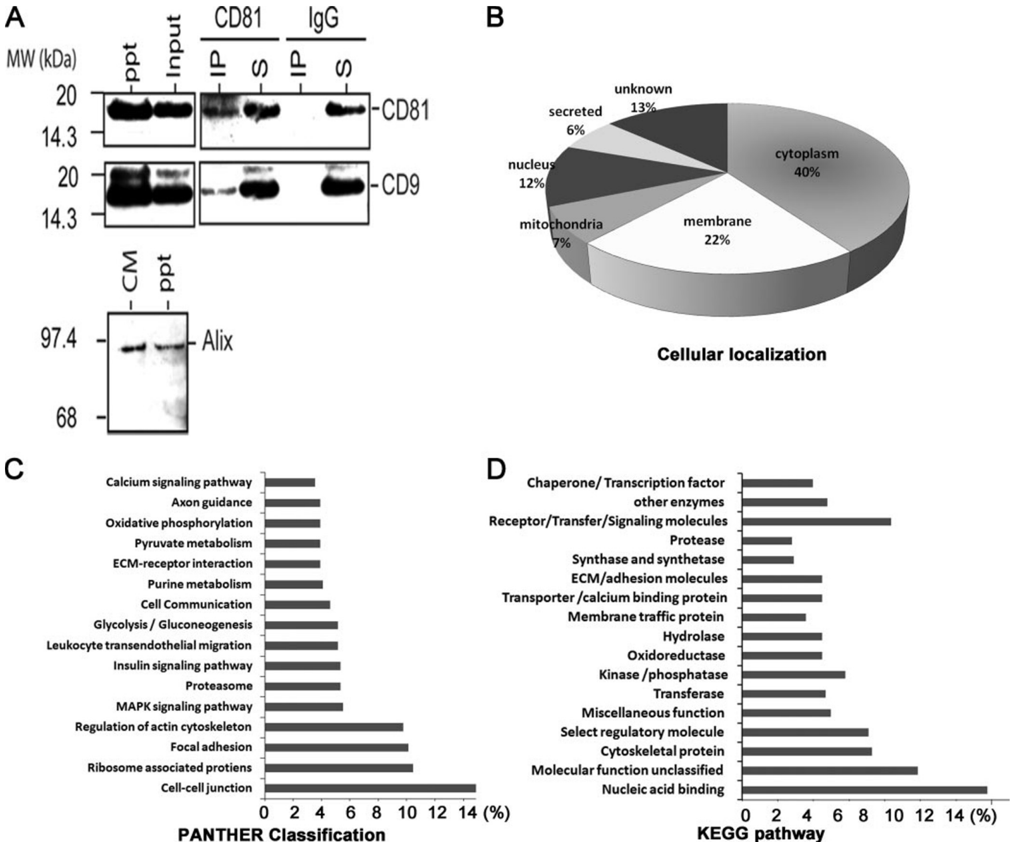
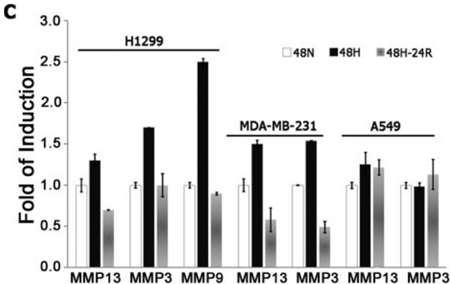
Under hypoxia, tumor cells produce a secretion that modulates their microenvironment to facilitate tumor angiogenesis and metastasis. Here, we observed that hypoxic or reoxygenated A431 carcinoma cells exhibited enhanced angiogenic and metastatic potential such as reduced cell-cell and cell-extracellular matrix adhesion, increased invasiveness, and production of a secretion with increased chorioallantoic membrane angiogenic activity. Consistent with these observations, quantitative proteomics revealed that under hypoxia the tumor cells secreted proteins involved in angiogenesis, focal adhesion, extracellular matrix-receptor interaction, and immune cell recruitment. Unexpectedly, the secreted proteins were predominantly cytoplasmic and membrane proteins. Ultracentrifugation at 100,000 x g precipitated 54% of the secreted proteins and enriched for many exosome-associated proteins such as the tetraspanins and Alix and also proteins with the potential to facilitate angiogenesis and metastasis. Two tetraspanins, CD9 and CD81, co-immunoprecipitated. Together, these data suggested that tumor cells secrete proteins and exosomes with the potential to modulate their microenvironment and facilitate angiogenesis and metastasis.
Overview
The claims and statistics of this paper haven’t been checked yet.
Free: it reads the open-access text and checks the first 5 claims that cite a source we can check. Create a free account to check every claim.
Integrity signals
Registry
Cites
Statistics
Figures
Verification
Claims the paper makes
The claims and statistics of this paper haven’t been checked yet.
Free: it reads the open-access text and checks the first 5 claims that cite a source we can check. Create a free account to check every claim.
Claims other papers make about this one
Each is checked against this paper’s own text: does it say what the citing paper says it does?
The source backs part of the claim, not all of it — or backs it for a different population, condition or comparison.
In the citing paper
“Hypoxia stimulates the release of extracellular vesicles that promote angiogenesis [93–97] and increased exosome formation by hypoxic cancer cells requires HIF activity [96, 98], but the relevant HIF target genes have not been identified.”
From The hypoxic tumor microenvironment: A driving force for breast cancer progression (2016) · cites this paper as [94]
Experimental — accuracy not yet measuredThe source backs part of the claim, not all of it — or backs it for a different population, condition or comparison.
In the citing paper
“Previous studies implicated hypoxia-induced extracellular vesicle formation as a means by which cancer cells influence the phenotype of vascular and other stromal cells [93–96], whereas HIF- and RAB22A-dependent microvesicle formation increases the invasive and metastatic properties of a primary breast tumor by transferring the phenotype of hypoxic BCCs to non-hypoxic BCCs [100].”
From The hypoxic tumor microenvironment: A driving force for breast cancer progression (2016) · cites this paper as [94]
Experimental — accuracy not yet measured
Self-check
Percentages, sums and reported differences re-computed from the paper’s own numbers.
The self-check needs the paper’s full text.
Citations
Cites
Hanahan, D., & Weinberg, R. A. (2000) · Cell · doi:10.1016/s0092-8674(00)81683-9 · Cited by 29,219
Skog, J., Würdinger, T., van Rijn, S., Meijer, D. H., Gainche, L., Curry, W. T., Carter, B. S., Krichevsky, A. M., & Breakefield, X. O. (2008) · Nature Cell Biology · doi:10.1038/ncb1800 · Cited by 5,001
Membrane vesicles as conveyors of immune responses
Théry, C., Ostrowski, M., & Segura, E. (2009) · Nature Reviews Immunology · doi:10.1038/nri2567 · Cited by 3,882 · cited 3×
“nase, EEF1A1, HSP70, HSP90, actin, tubulin, Rab proteins, annexins, and MHC class 1 (46) were clearly detected in the ultracentrifuged pellet by LC-MS/MS.”
BackgroundMethodInfluentialMicroenvironmental regulation of metastasis
Joyce, J. A., & Pollard, J. W. (2009) · Nature Reviews Cancer · doi:10.1038/nrc2618 · Cited by 3,684 · cited 2×
“Because emerging evidence implicates Hx as a key inducer of angiogenesis and metastasis in tumors (6) and because extracellular signals emanating from the tumor cells will be necessary in modulating the extracellular matrix (ECM) to facilitate the cell migration during tumor development (7), we focused on elucidating…”
BackgroundModes of resistance to anti-angiogenic therapy
Bergers, G., & Hanahan, D. (2008) · Nature Reviews Cancer · doi:10.1038/nrc2442 · Cited by 2,953 · cited 1×
“For example, prolonged antiVEGF treatment on tumors is known to select for the tumor cells that recruit alternative angiogenesis signaling pathways involving fibroblast growth factor, platelet-derived growth factor (PDGF), and angiopoietins (5).”
BackgroundPANTHER: A Library of Protein Families and Subfamilies Indexed by Function
Thomas, P. D., Campbell, M. J., Kejariwal, A., Mi, H., Karlak, B., Daverman, R., Diemer, K., Muruganujan, A., & Narechania, A. (2003) · Genome Research · doi:10.1101/gr.772403 · Cited by 2,944 · cited 1×
“tional segregation of the secretome subset was performed utilizing the KEGG pathway or PANTHER database (27, 28).”
MethodMatrix metalloproteinases and the regulation of tissue remodelling
Page-McCaw, A., Ewald, A. J., & Werb, Z. (2007) · Nature Reviews Molecular Cell Biology · doi:10.1038/nrm2125 · Cited by 2,630
Intercellular transfer of the oncogenic receptor EGFRvIII by microvesicles derived from tumour cells
Al-Nedawi, K., Meehan, B., Micallef, J., Lhotak, V., May, L., Guha, A., & Rak, J. (2008) · Nature Cell Biology · doi:10.1038/ncb1725 · Cited by 2,034
Molecular requirements for epithelial–mesenchymal transition during tumor progression
Huber, M. A., Kraut, N., & Beug, H. (2005) · Current Opinion in Cell Biology · doi:10.1016/j.ceb.2005.08.001 · Cited by 1,821 · cited 1×
“2A), possibly for gain of cell motility (64).”
BackgroundWebGestalt: an integrated system for exploring gene sets in various biological contexts
Zhang, B., Kirov, S., & Snoddy, J. (2005) · Nucleic Acids Research · doi:10.1093/nar/gki475 · Cited by 1,796 · cited 1×
“tional segregation of the secretome subset was performed utilizing the KEGG pathway or PANTHER database (27, 28).”
Method
Cited by
Yunna, C., Mengru, H., Lei, W., & Weidong, C. (2020) · European Journal of Pharmacology · doi:10.1016/j.ejphar.2020.173090 · Cited by 2,454
The biology and function of exosomes in cancer
Kalluri, R. (2016) · Journal of Clinical Investigation · doi:10.1172/jci81135 · Cited by 1,849
Classification, Functions, and Clinical Relevance of Extracellular Vesicles
van der Pol, E., Böing, A. N., Harrison, P., Sturk, A., & Nieuwland, R. (2012) · Pharmacological Reviews · doi:10.1124/pr.112.005983 · Cited by 1,754
“The ability of exosomes to promote metastasis and angiogenesis can be increased when exosomes are released under hypoxic conditions (i.e., conditions that many tumors encounter when growing) (Park et al., 2010).”
BackgroundTargeting Tumor Microenvironment for Cancer Therapy
Roma-Rodrigues, C., Mendes, R., Baptista, P. V., & Fernandes, A. R. (2019) · International Journal of Molecular Sciences · doi:10.3390/ijms20040840 · Cited by 1,187
Exosomes in cancer development, metastasis, and drug resistance: a comprehensive review
Azmi, A. S., Bao, B., & Sarkar, F. H. (2013) · Cancer and Metastasis Reviews · doi:10.1007/s10555-013-9441-9 · Cited by 1,167
“Tumor cells exposed to hypoxia secrete exosomes with enhanced angiogenic and metastatic potential, suggesting that tumor cells adapt to a hypoxic microenvironment by secreting exosomes to stimulate angiogenesis or facilitate metastasis to more favorable environment [167].”
Metadata
- Authors
- Park, J. E., Tan, H. S., Datta, A., Lai, R. C., Zhang, H., Meng, W., Lim, S. K., & Sze, S. K.
- Affiliations
- Nanyang Technological University (SG)
- Institute of Medical Biology (SG)
- Corresponding author
- Sze, Siu Kwan
- Venue
- Molecular & Cellular Proteomics
- Publisher
- Elsevier BV
- Published
- 2010-06
- Volume
- 9
- Issue
- 6
- Pages
- 1085-1099
- ISSN
- 1535-9476 (ISSN-L)
- PMC
- PMC2877972
- OpenAlex
- W2079174568
- Cited by
- 582
- References
- 71
- Citations by year
- 2026: 9 · 2025: 33 · 2024: 43 · 2023: 24 · 2022: 55 · 2021: 34 · 2020: 43 · 2019: 39 · 2018: 51 · 2017: 51 · 2016: 45 · 2015: 26 · 2014: 47 · 2013: 39 · 2012: 28
- FWCI
- 10.69
- Type
- journal article
- Language
- en
- Open access
- hybrid
- doi.org
- Licence
- cc-by
- www.elsevier.com/tdm/userlicense/1.0/ (tdm)
- www.elsevier.com/legal/tdmrep-license (tdm)
- creativecommons.org/licenses/by/4.0/ (vor, 3768 d)
- Locations
- Molecular & Cellular Proteomics (publishedVersion, cc-by)
- PubMed Central (publishedVersion)
- PubMed (publishedVersion)
- Funders
- Agency for Science, Technology and Research
- Biomedical Research Council (08/1/22/19/575)
- Topics
- Life Sciences › Biochemistry, Genetics and Molecular Biology › Molecular Biology › Angiogenesis and VEGF in Cancer
- Life Sciences › Biochemistry, Genetics and Molecular Biology › Cancer Research › Cancer, Hypoxia, and Metabolism
- Life Sciences › Biochemistry, Genetics and Molecular Biology › Molecular Biology › Extracellular vesicles in disease
- Keywords
- tumor hypoxia, tumor microenvironment, tumor angiogenesis, metastasis, exosomes, secreted proteins, tetraspanins, CD9, CD81, Alix, focal adhesions, extracellular matrix, cell adhesion, tumor invasion, chorioallantoic membrane angiogenesis, immune cell recruitment
- MeSH terms
- Cell Adhesion, Chromatography, Liquid, Cytoplasm, Extracellular Matrix, Humans, Neoplasm Invasiveness, Neoplasm Metastasis, Neoplasm Proteins, Neoplasms, Neovascularization, Pathologic, Oxygen, Mass Spectrometry, Signal Transduction, Cell Hypoxia, Cluster Analysis, Cytokines, Culture Media, Conditioned, Protein Array Analysis, Cell Line, Tumor, Hypoxia-Inducible Factor 1, alpha Subunit, Exosomes
About these checks
Registry, retraction, Cites and statistics results are computed, not judged, with one exception: a printed reference that no index lists is read once by a model before it counts as a citation error. Claims are extracted by a model and kept only when their quote appears verbatim in the text; each cited source is then checked, with a model’s help, for whether it says what the claim relies on. Those verdicts can be wrong — read the claim’s quote and the cited source before relying on one.
Statistics and arithmetic are recomputed, not judged.
Confidence bands are shown only for fields calibrated on our annotated test set. None is calibrated yet, so no band is shown.
What counts as a claim ›How we measure confidence ›How we check this ›
Are you an author, or do you see a problem with this page? Request a review
How to cite
Cite CoChat for the checks on this page, and the paper for its own findings.
- This page
- CoChat. (2026). Citation check: Hypoxic Tumor Cell Modulates Its Microenvironment to Enhance Angiogenic and Metastatic Potential by Secretion of Proteins and Exosomes. https://app.cochat.ai/papers/10.1074/mcp.m900381-mcp200
- The paper
- Park, J. E., Tan, H. S., Datta, A., Lai, R. C., Zhang, H., Meng, W., Lim, S. K., & Sze, S. K. (2010). Hypoxic Tumor Cell Modulates Its Microenvironment to Enhance Angiogenic and Metastatic Potential by Secretion of Proteins and Exosomes. Molecular & Cellular Proteomics. https://doi.org/10.1074/mcp.m900381-mcp200
Data sources
Bibliographic data: Semantic Scholar, OpenAlex, Crossref.
Contains information from the Semantic Scholar Academic Graph Datasets, made available under the ODC Attribution License (ODC-BY 1.0).
Semantic Scholar’s data is described in: Kinney, R., et al. (2023). The Semantic Scholar Open Data Platform. arXiv:2301.10140.
