

Hypoxic Tumor Cell Modulates Its Microenvironment to Enhance Angiogenic and Metastatic Potential by Secretion of Proteins and Exosomes
Open accessThe DOI matches its Crossref record; 72 of the 72 references it cites were found in a registry or an index.
Abstract
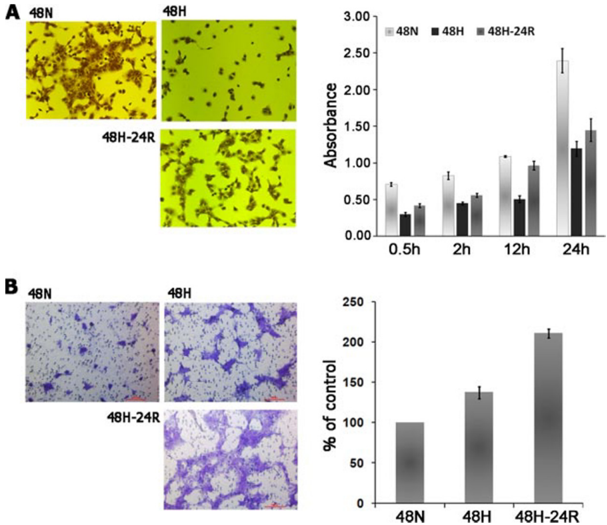
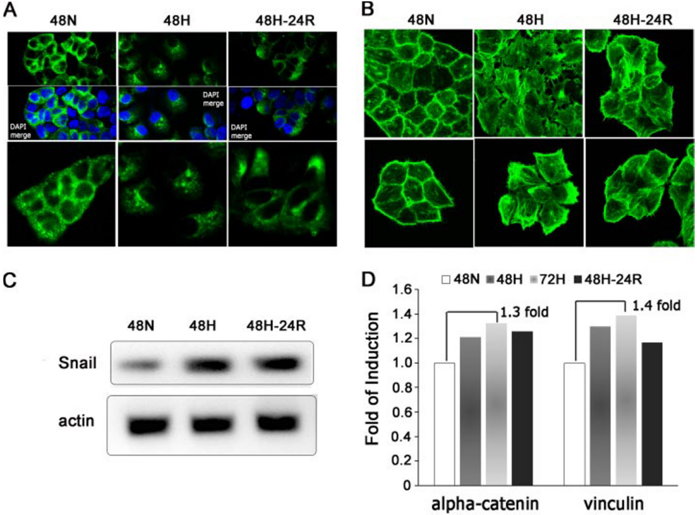
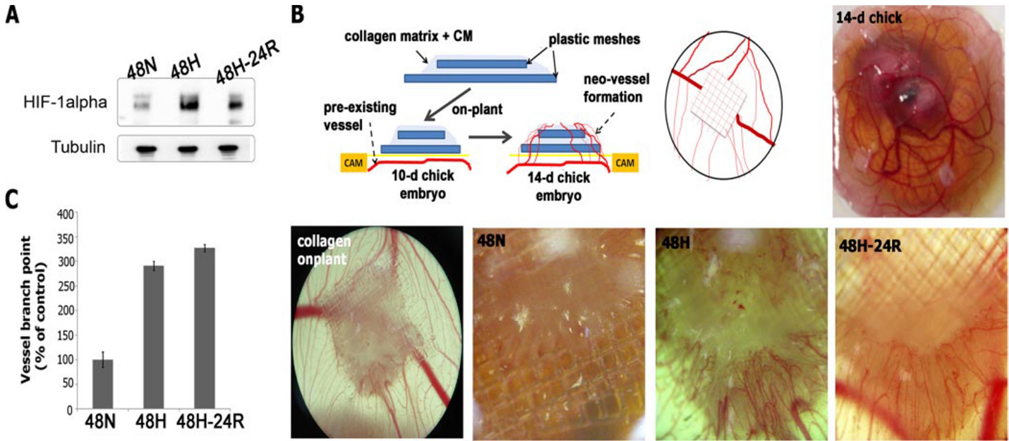
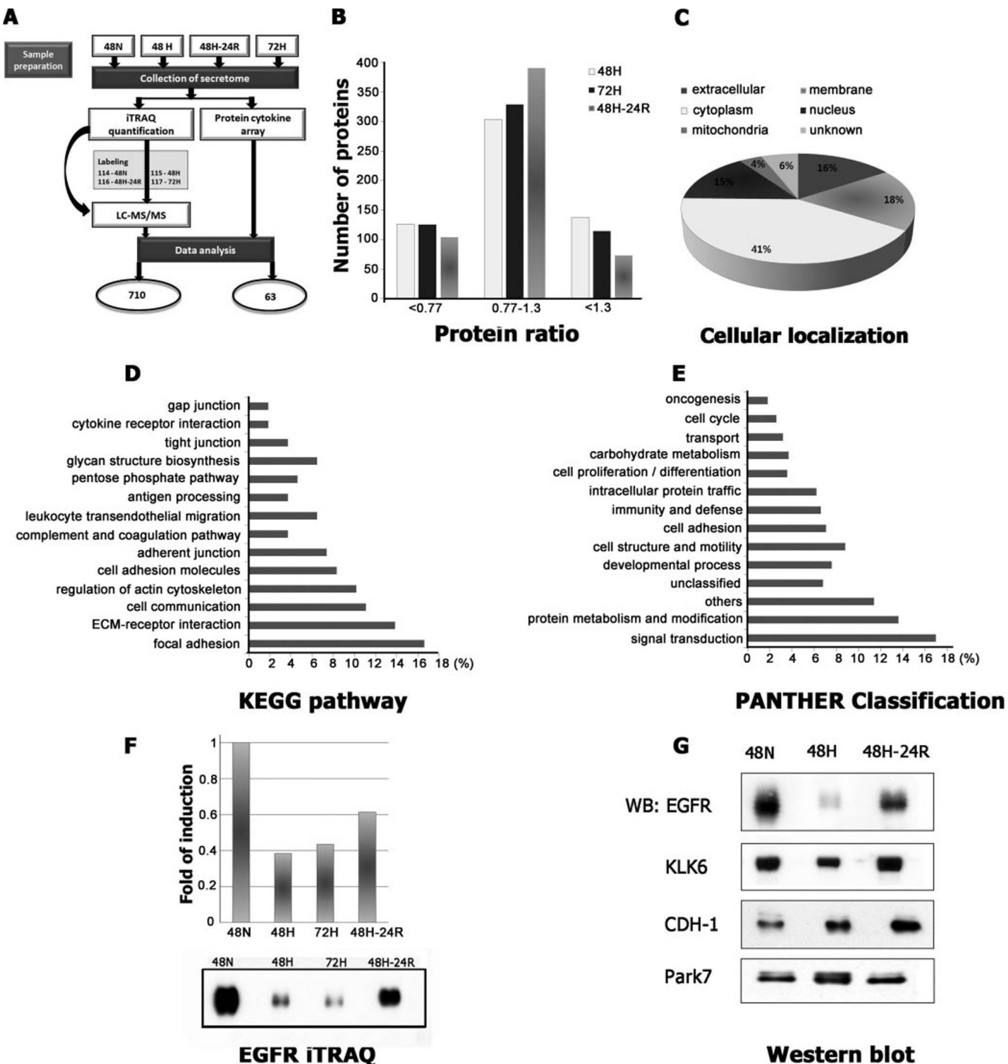
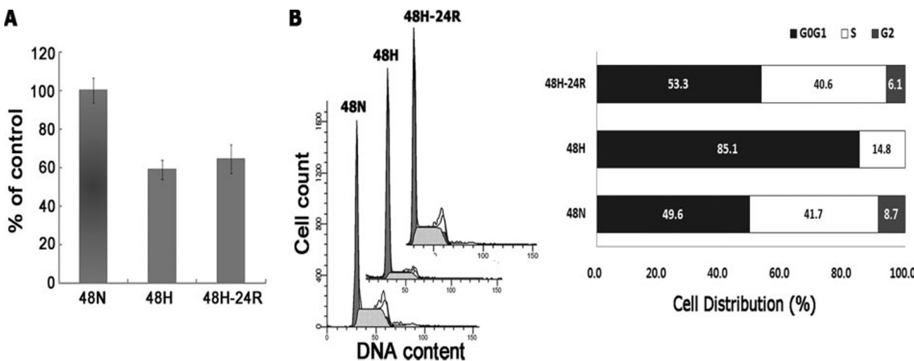
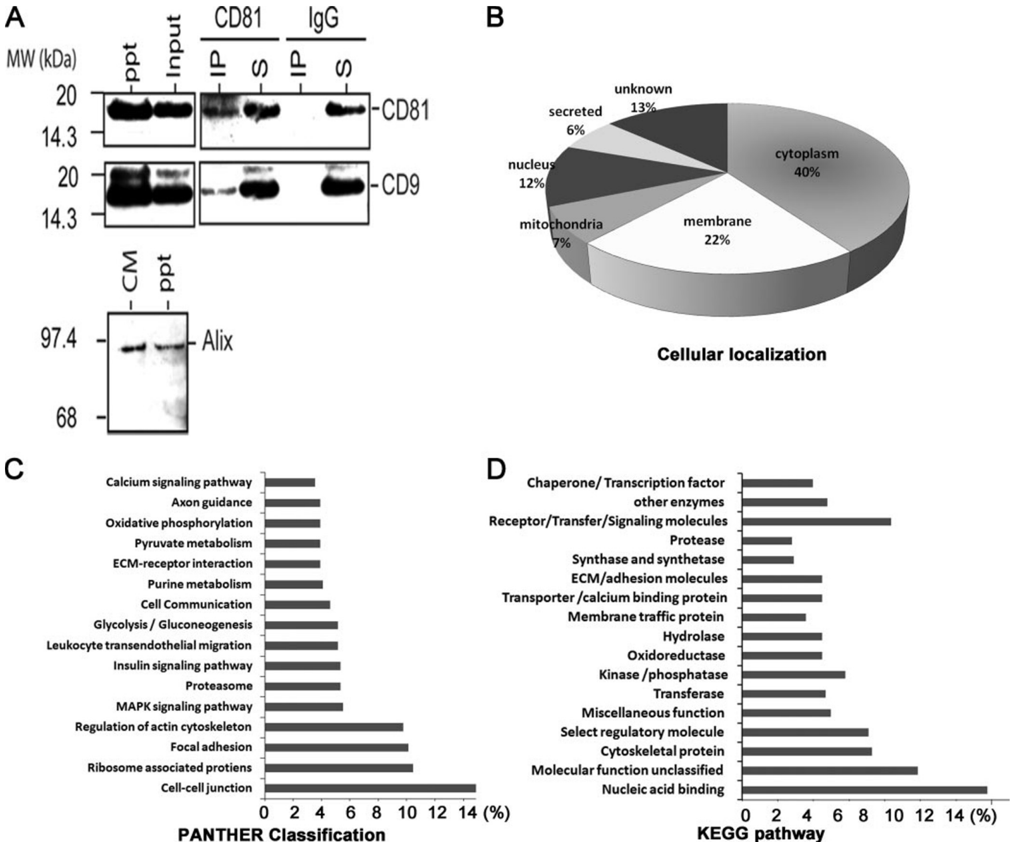
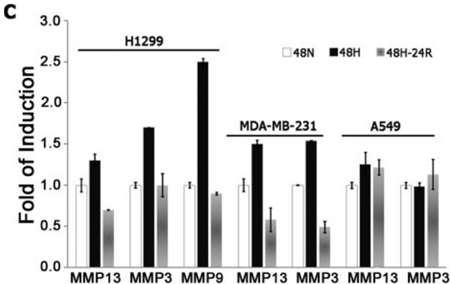
Under hypoxia, tumor cells produce a secretion that modulates their microenvironment to facilitate tumor angiogenesis and metastasis. Here, we observed that hypoxic or reoxygenated A431 carcinoma cells exhibited enhanced angiogenic and metastatic potential such as reduced cell-cell and cell-extracellular matrix adhesion, increased invasiveness, and production of a secretion with increased chorioallantoic membrane angiogenic activity. Consistent with these observations, quantitative proteomics revealed that under hypoxia the tumor cells secreted proteins involved in angiogenesis, focal adhesion, extracellular matrix-receptor interaction, and immune cell recruitment. Unexpectedly, the secreted proteins were predominantly cytoplasmic and membrane proteins. Ultracentrifugation at 100,000 x g precipitated 54% of the secreted proteins and enriched for many exosome-associated proteins such as the tetraspanins and Alix and also proteins with the potential to facilitate angiogenesis and metastasis. Two tetraspanins, CD9 and CD81, co-immunoprecipitated. Together, these data suggested that tumor cells secrete proteins and exosomes with the potential to modulate their microenvironment and facilitate angiogenesis and metastasis.
Overview
The claims and statistics of this paper haven’t been checked yet.
Free: it reads the open-access text and checks the first 5 claims that cite a source we can check. Create a free account to check every claim.
Integrity signals
Registry
Cites
Statistics
Figures
Verification
Claims the paper makes
The claims and statistics of this paper haven’t been checked yet.
Free: it reads the open-access text and checks the first 5 claims that cite a source we can check. Create a free account to check every claim.
Claims other papers make about this one
Each is checked against this paper’s own text: does it say what the citing paper says it does?
The source backs part of the claim, not all of it — or backs it for a different population, condition or comparison.
In the citing paper
“Hypoxia stimulates the release of extracellular vesicles that promote angiogenesis [93–97] and increased exosome formation by hypoxic cancer cells requires HIF activity [96, 98], but the relevant HIF target genes have not been identified.”
From The hypoxic tumor microenvironment: A driving force for breast cancer progression (2016) · cites this paper as [94]
Experimental — accuracy not yet measuredThe source backs part of the claim, not all of it — or backs it for a different population, condition or comparison.
In the citing paper
“Previous studies implicated hypoxia-induced extracellular vesicle formation as a means by which cancer cells influence the phenotype of vascular and other stromal cells [93–96], whereas HIF- and RAB22A-dependent microvesicle formation increases the invasive and metastatic properties of a primary breast tumor by transferring the phenotype of hypoxic BCCs to non-hypoxic BCCs [100].”
From The hypoxic tumor microenvironment: A driving force for breast cancer progression (2016) · cites this paper as [94]
Experimental — accuracy not yet measured
Self-check
Percentages, sums and reported differences re-computed from the paper’s own numbers.
The self-check needs the paper’s full text.
Citations
Cites
Hanahan, D., & Weinberg, R. A. (2000) · Cell · doi:10.1016/s0092-8674(00)81683-9 · Cited by 29,219
Skog, J., Würdinger, T., van Rijn, S., Meijer, D. H., Gainche, L., Curry, W. T., Carter, B. S., Krichevsky, A. M., & Breakefield, X. O. (2008) · Nature Cell Biology · doi:10.1038/ncb1800 · Cited by 5,001
Membrane vesicles as conveyors of immune responses
Théry, C., Ostrowski, M., & Segura, E. (2009) · Nature Reviews Immunology · doi:10.1038/nri2567 · Cited by 3,882 · cited 3×
“nase, EEF1A1, HSP70, HSP90, actin, tubulin, Rab proteins, annexins, and MHC class 1 (46) were clearly detected in the ultracentrifuged pellet by LC-MS/MS.”
BackgroundMethodInfluentialMicroenvironmental regulation of metastasis
Joyce, J. A., & Pollard, J. W. (2009) · Nature Reviews Cancer · doi:10.1038/nrc2618 · Cited by 3,684 · cited 2×
“Because emerging evidence implicates Hx as a key inducer of angiogenesis and metastasis in tumors (6) and because extracellular signals emanating from the tumor cells will be necessary in modulating the extracellular matrix (ECM) to facilitate the cell migration during tumor development (7), we focused on elucidating…”
BackgroundModes of resistance to anti-angiogenic therapy
Bergers, G., & Hanahan, D. (2008) · Nature Reviews Cancer · doi:10.1038/nrc2442 · Cited by 2,953 · cited 1×
“For example, prolonged antiVEGF treatment on tumors is known to select for the tumor cells that recruit alternative angiogenesis signaling pathways involving fibroblast growth factor, platelet-derived growth factor (PDGF), and angiopoietins (5).”
BackgroundPANTHER: A Library of Protein Families and Subfamilies Indexed by Function
Thomas, P. D., Campbell, M. J., Kejariwal, A., Mi, H., Karlak, B., Daverman, R., Diemer, K., Muruganujan, A., & Narechania, A. (2003) · Genome Research · doi:10.1101/gr.772403 · Cited by 2,944 · cited 1×
“tional segregation of the secretome subset was performed utilizing the KEGG pathway or PANTHER database (27, 28).”
MethodMatrix metalloproteinases and the regulation of tissue remodelling
Page-McCaw, A., Ewald, A. J., & Werb, Z. (2007) · Nature Reviews Molecular Cell Biology · doi:10.1038/nrm2125 · Cited by 2,630
Intercellular transfer of the oncogenic receptor EGFRvIII by microvesicles derived from tumour cells
Al-Nedawi, K., Meehan, B., Micallef, J., Lhotak, V., May, L., Guha, A., & Rak, J. (2008) · Nature Cell Biology · doi:10.1038/ncb1725 · Cited by 2,034
Molecular requirements for epithelial–mesenchymal transition during tumor progression
Huber, M. A., Kraut, N., & Beug, H. (2005) · Current Opinion in Cell Biology · doi:10.1016/j.ceb.2005.08.001 · Cited by 1,821 · cited 1×
“2A), possibly for gain of cell motility (64).”
BackgroundWebGestalt: an integrated system for exploring gene sets in various biological contexts
Zhang, B., Kirov, S., & Snoddy, J. (2005) · Nucleic Acids Research · doi:10.1093/nar/gki475 · Cited by 1,796 · cited 1×
“tional segregation of the secretome subset was performed utilizing the KEGG pathway or PANTHER database (27, 28).”
Method
Cited by
Yunna, C., Mengru, H., Lei, W., & Weidong, C. (2020) · European Journal of Pharmacology · doi:10.1016/j.ejphar.2020.173090 · Cited by 2,454
The biology and function of exosomes in cancer
Kalluri, R. (2016) · Journal of Clinical Investigation · doi:10.1172/jci81135 · Cited by 1,849
Classification, Functions, and Clinical Relevance of Extracellular Vesicles
van der Pol, E., Böing, A. N., Harrison, P., Sturk, A., & Nieuwland, R. (2012) · Pharmacological Reviews · doi:10.1124/pr.112.005983 · Cited by 1,754
“The ability of exosomes to promote metastasis and angiogenesis can be increased when exosomes are released under hypoxic conditions (i.e., conditions that many tumors encounter when growing) (Park et al., 2010).”
BackgroundTargeting Tumor Microenvironment for Cancer Therapy
Roma-Rodrigues, C., Mendes, R., Baptista, P. V., & Fernandes, A. R. (2019) · International Journal of Molecular Sciences · doi:10.3390/ijms20040840 · Cited by 1,187
Exosomes in cancer development, metastasis, and drug resistance: a comprehensive review
Azmi, A. S., Bao, B., & Sarkar, F. H. (2013) · Cancer and Metastasis Reviews · doi:10.1007/s10555-013-9441-9 · Cited by 1,167
“Tumor cells exposed to hypoxia secrete exosomes with enhanced angiogenic and metastatic potential, suggesting that tumor cells adapt to a hypoxic microenvironment by secreting exosomes to stimulate angiogenesis or facilitate metastasis to more favorable environment [167].”
Role of Matrix Metalloproteinases in Angiogenesis and Cancer
Quintero-Fabián, S., Arreola, R., Becerril-Villanueva, E., Torres-Romero, J. C., Arana-Argáez, V., Lara-Riegos, J., Ramírez-Camacho, M. A., & Alvarez-Sánchez, M. E. (2019) · Frontiers in Oncology · doi:10.3389/fonc.2019.01370 · Cited by 1,036
“Protein Intervention/process Tumor type/cell lines MMP References IL-1α, IL-3, VEGF, GCSF and GM-CSF Secretion of proteins (IL-1α, IL-3, VEGF, GCSF, GM-CSF) under Hypoxia stress increase efficiency for induction of angiogenesis Human A431 squamous carcino cells Human A549 non-small lung cells, and H1299 NSCL lung cell…”
InfluentialHypoxic enhancement of exosome release by breast cancer cells
King, H. W., Michael, M. Z., & Gleadle, J. M. (2012) · BMC Cancer · doi:10.1186/1471-2407-12-421 · Cited by 1,045
“Recent evidence has highlighted a role for hypoxic tumour cell-derived exosomes in promoting angiogenic signalling [20,21], and there is evidence in several systems for enhanced microvesicle or microparticle release under hypoxia [22,23] and anoxia [24].”
BackgroundExosomes and microvesicles: extracellular vesicles for genetic information transfer and gene therapy
Lee, Y., EL Andaloussi, S., & Wood, M. J. A. (2012) · Human Molecular Genetics · doi:10.1093/hmg/dds317 · Cited by 938
Kucharzewska, P., Christianson, H. C., Welch, J. E., Svensson, K. J., Fredlund, E., Ringnér, M., Mörgelin, M., Bourseau-Guilmain, E., Bengzon, J., & Belting, M. (2013) · Proceedings of the National Academy of Sciences · doi:10.1073/pnas.1220998110 · Cited by 939
“Previous studies have suggested that hypoxic compared with normoxic cells produce higher amounts of exosomes (42), and that more than half of the secreted proteome from hypoxic carcinoma cells may be associated with exosomes (43), providing quantitative data to support a complex role of exosomes in the hypoxic respons…”
BackgroundExosomes in cancer: small particle, big player
Zhang, X., Yuan, X., Shi, H., Wu, L., Qian, H., & Xu, W. (2015) · Journal of Hematology & Oncology · doi:10.1186/s13045-015-0181-x · Cited by 780
“Proteomic analysis has revealed that abundant angiogenic factors are present in malignant mesothelioma-derived exosomes [30].”
BackgroundTumor-Derived Exosomes and Their Role in Cancer Progression
(2016) · Advances in Clinical Chemistry · doi:10.1016/bs.acc.2015.12.005 · Cited by 755
“Hypoxic conditions in the growing tumor induce malignant cells to increase production of exosomes [26, 27].”
BackgroundSorting it out: Regulation of exosome loading
Villarroya-Beltri, C., Baixauli, F., Gutiérrez-Vázquez, C., Sánchez-Madrid, F., & Mittelbrunn, M. (2014) · Seminars in Cancer Biology · doi:10.1016/j.semcancer.2014.04.009 · Cited by 742
“Importantly, hypoxia and anoxia enhance the release of microvesicles containing CD63, CD9 and the hypoxia-related miR-210 [113]; and hypoxia additionally modulates the microenvironment and facilitates angiogenesis and metastasis by inducing the secretion of exosomes containing proteins associated with cell migration,…”
BackgroundAntiangiogenic therapy: impact on invasion, disease progression, and metastasis
Ebos, J. M. L., & Kerbel, R. S. (2011) · Nature Reviews Clinical Oncology · doi:10.1038/nrclinonc.2011.21 · Cited by 685
Exosome-Based Cell-Cell Communication in the Tumor Microenvironment
Maia, J., Caja, S., Strano Moraes, M. C., Couto, N., & Costa-Silva, B. (2018) · Frontiers in Cell and Developmental Biology · doi:10.3389/fcell.2018.00018 · Cited by 666
“In addition, exosomes produced by the human squamous carcinoma cell lineage A431 under hypoxic or reoxygenation conditions were shown to modulate the tumor microenvironment by facilitating angiogenesis, and as consequence, metastasis (Park et al., 2010).”
BackgroundExosomes as intercellular signalosomes and pharmacological effectors
Record, M., Subra, C., Silvente-Poirot, S., & Poirot, M. (2011) · Biochemical Pharmacology · doi:10.1016/j.bcp.2011.02.011 · Cited by 537
“Given that hypoxic cells are thought to acquire a metastatic character, a quantitative proteomic of carcinoma exosomes under hypoxia have been performed and revealed the presence of proteins involved in metastasis and angiogenesis [97].”
BackgroundIntercellular Communication by Exosome-Derived microRNAs in Cancer
Hannafon, B., & Ding, W.-Q. (2013) · International Journal of Molecular Sciences · doi:10.3390/ijms140714240 · Cited by 515
“potentially modulate the microenvironment to facilitate angiogenesis and metastasis [83].”
BackgroundThe hypoxic tumor microenvironment: A driving force for breast cancer progression
Semenza, G. L. (2016) · Biochimica et Biophysica Acta (BBA) - Molecular Cell Research · doi:10.1016/j.bbamcr.2015.05.036 · Cited by 535
Li, L., Li, C., Wang, S., Wang, Z., Jiang, J., Wang, W., Li, X., Chen, J., Liu, K., Li, C., et al. (2016) · Cancer Research · doi:10.1158/0008-5472.can-15-1625 · Cited by 532
“Park and colleagues (27) showed that hypoxia could induce tumor cells secretion of proteins with the potential to modulate their microenvironment and facilitate angiogenesis and metastasis.”
Exosomes: From Garbage Bins to Promising Therapeutic Targets
H. Rashed, M., Bayraktar, E., K. Helal, G., Abd-Ellah, M., Amero, P., Chavez-Reyes, A., & Rodriguez-Aguayo, C. (2017) · International Journal of Molecular Sciences · doi:10.3390/ijms18030538 · Cited by 525
“Similarly, in a highly malignant squamous cell carcinoma model, hypoxic tumor cells modulate their microenvironment and facilitate angiogenesis and metastasis through exosomal secretion of certain proteins [126].”
van Balkom, B. W. M., de Jong, O. G., Smits, M., Brummelman, J., den Ouden, K., de Bree, P. M., van Eijndhoven, M. A. J., Pegtel, D. M., Stoorvogel, W., Würdinger, T., et al. (2013) · Blood · doi:10.1182/blood-2013-02-478925 · Cited by 515
Exosomes — beyond stem cells for restorative therapy in stroke and neurological injury
Zhang, Z. G., Buller, B., & Chopp, M. (2019) · Nature Reviews Neurology · doi:10.1038/s41582-018-0126-4 · Cited by 503
Wang, T., Gilkes, D. M., Takano, N., Xiang, L., Luo, W., Bishop, C. J., Chaturvedi, P., Green, J. J., & Semenza, G. L. (2014) · Proceedings of the National Academy of Sciences · doi:10.1073/pnas.1410041111 · Cited by 493
“Proc Natl Acad Sci USA 108(39):16369–16374.”
Aptamer/AuNP Biosensor for Colorimetric Profiling of Exosomal Proteins
Jiang, Y., Shi, M., Liu, Y., Wan, S., Cui, C., Zhang, L., & Tan, W. (2017) · Angewandte Chemie International Edition · doi:10.1002/anie.201703807 · Cited by 487
The pre-metastatic niche: finding common ground
Sceneay, J., Smyth, M. J., & Möller, A. (2013) · Cancer and Metastasis Reviews · doi:10.1007/s10555-013-9420-1 · Cited by 422
“The secretome of various tumor cell lines contains both soluble factors and exosome-associated proteins [79], suggesting th at exosomes were most likely present in tumor cell conditioned media in previous models of the pre-metastatic”
BackgroundMicrovesicles as Cell–Cell Messengers in Cardiovascular Diseases
Loyer, X., Vion, A.-C., Tedgui, A., & Boulanger, C. M. (2014) · Circulation Research · doi:10.1161/circresaha.113.300858 · Cited by 408
Exosomes: The next generation of endogenous nanomaterials for advanced drug delivery and therapy
Liao, W., Du, Y., Zhang, C., Pan, F., Yao, Y., Zhang, T., & Peng, Q. (2019) · Acta Biomaterialia · doi:10.1016/j.actbio.2018.12.045 · Cited by 411
Corrado, C., Raimondo, S., Chiesi, A., Ciccia, F., De Leo, G., & Alessandro, R. (2013) · International Journal of Molecular Sciences · doi:10.3390/ijms14035338 · Cited by 396
“predominantly classified as cytoplasmic and membrane proteins, were localized in exosomes [120].”
BackgroundMicrovesicles and Viral Infection
Meckes, D. G., & Raab-Traub, N. (2011) · Journal of Virology · doi:10.1128/jvi.05853-11 · Cited by 390
“stress (93), stimulation with cytokines (139), exposure to ATP (17), cell death (61), hypoxia (119), transformation (45), expression of oncogenes (6, 27, 78), and viral infection (11, 88, 102, 140, 162).”
BackgroundThe role of exosomes in cancer metastasis
Steinbichler, T. B., Dudás, J., Riechelmann, H., & Skvortsova, I.-I. (2017) · Seminars in Cancer Biology · doi:10.1016/j.semcancer.2017.02.006 · Cited by 389
Exosomes/microvesicles: mediators of cancer-associated immunosuppressive microenvironments
Taylor, D. D., & Gercel-Taylor, C. (2011) · Seminars in Immunopathology · doi:10.1007/s00281-010-0234-8 · Cited by 383
“The multiplicity of bioactive molecules associated with exosomes suggests that they exhibit a central role in generating the tumor microenvironment [51, 52].”
BackgroundGray, W. D., French, K. M., Ghosh-Choudhary, S., Maxwell, J. T., Brown, M. E., Platt, M. O., Searles, C. D., & Davis, M. E. (2015) · Circulation Research · doi:10.1161/circresaha.116.304360 · Cited by 378
Signaling Pathways in Exosomes Biogenesis, Secretion and Fate
Urbanelli, L., Magini, A., Buratta, S., Brozzi, A., Sagini, K., Polchi, A., Tancini, B., & Emiliani, C. (2013) · Genes · doi:10.3390/genes4020152 · Cited by 355
“hypoxic tumor cells enhance angiogenesis by exosome secretion [92].”
BackgroundExosomes Derived from Hypoxic Leukemia Cells Enhance Tube Formation in Endothelial Cells
Tadokoro, H., Umezu, T., Ohyashiki, K., Hirano, T., & Ohyashiki, J. H. (2013) · Journal of Biological Chemistry · doi:10.1074/jbc.m113.480822 · Cited by 361
“Evidence suggests a possible role for exosomes derived from hypoxic tumor cells in modulating the tumor microenvironment (10, 11); however, the precise mechanism by which tumor progression and angiogenesis are affected has not been fully elucidated.”
BackgroundXue, M., Chen, W., Xiang, A., Wang, R., Chen, H., Pan, J., Pang, H., An, H., Wang, X., Hou, H., et al. (2017) · Molecular Cancer · doi:10.1186/s12943-017-0714-8 · Cited by 359
“Several studies have described that exosomal proteins and miRNAs derived from hypoxic tumor cells are transferred or delivered to modulate biological function and cell signaling of recipient cells [19, 31, 32].”
Zhang, H.-G., & Grizzle, W. E. (2014) · The American Journal of Pathology · doi:10.1016/j.ajpath.2013.09.027 · Cited by 352
Self-citationExosomal Tumor MicroRNA Modulates Premetastatic Organ Cells
Rana, S., Malinowska, K., & Zöller, M. (2013) · Neoplasia · doi:10.1593/neo.122010 · Cited by 346
Tumor cell-derived exosomes: A message in a bottle
Kharaziha, P., Ceder, S., Li, Q., & Panaretakis, T. (2012) · Biochimica et Biophysica Acta (BBA) - Reviews on Cancer · doi:10.1016/j.bbcan.2012.03.006 · Cited by 337
“Exosomes with the potential to modulate microenvironment and facilitate angiogenesis and metastasis are also secreted by hypoxic squamous carcinoma cell [88].”
BackgroundRole of hypoxia-induced exosomes in tumor biology
Shao, C., Yang, F., Miao, S., Liu, W., Wang, C., Shu, Y., & Shen, H. (2018) · Molecular Cancer · doi:10.1186/s12943-018-0869-y · Cited by 317
Park, J. E., Dutta, B., Tse, S. W., Gupta, N., Tan, C. F., Low, J. K., Yeoh, K. W., Kon, O. L., Tam, J. P., & Sze, S. K. (2019) · Oncogene · doi:10.1038/s41388-019-0782-x · Cited by 315
Self-citationHurwitz, S. N., Rider, M. A., Bundy, J. L., Liu, X., Singh, R. K., & Meckes, D. G. (2016) · Oncotarget · doi:10.18632/oncotarget.13569 · Cited by 305
“Accumulating evidence has implicated EVs as major players in the growth, invasion, and metastatic capacity of cancer cells [6, 7].”
Rak, J. (2010) · Seminars in Thrombosis and Hemostasis · doi:10.1055/s-0030-1267043 · Cited by 301
“73 Increased production of TF-containing MP/MV correlates with induction of the proinvasive phenotype (EMT) in EGFR-driven cancer cells.”
Exosomes/miRNAs as mediating cell-based therapy of stroke
Xin, H., Li, Y., & Chopp, M. (2014) · Frontiers in Cellular Neuroscience · doi:10.3389/fncel.2014.00377 · Cited by 297
Internalization of Exosomes through Receptor-Mediated Endocytosis
Gonda, A., Kabagwira, J., Senthil, G. N., & Wall, N. R. (2019) · Molecular Cancer Research · doi:10.1158/1541-7786.mcr-18-0891 · Cited by 296
Extracellular vesicles in renal disease
Karpman, D., Ståhl, A.-L., & Arvidsson, I. (2017) · Nature Reviews Nephrology · doi:10.1038/nrneph.2017.98 · Cited by 295
Extracellular vesicle docking at the cellular port: Extracellular vesicle binding and uptake
French, K. C., Antonyak, M. A., & Cerione, R. A. (2017) · Seminars in Cell & Developmental Biology · doi:10.1016/j.semcdb.2017.01.002 · Cited by 285
“that underlie cancer progression, including inflammatory responses [5], angiogenesis [2, 31-33], metastasis [34, 35], cell migration [36], proliferation [10, 37, 38], and immune suppression [39, 40] (Figure 1A).”
BackgroundRecent advances on the role of tumor exosomes in immunosuppression and disease progression
Filipazzi, P., Bürdek, M., Villa, A., Rivoltini, L., & Huber, V. (2012) · Seminars in Cancer Biology · doi:10.1016/j.semcancer.2012.02.005 · Cited by 283
“Proteomic analysis revealed in fact that 50% of the secreted roteins involved in this process were found to be associated with xosomes [84].”
BackgroundLiu, Y., Luo, F., Wang, B., Li, H., Xu, Y., Liu, X., Shi, L., Lu, X., Xu, W., Lu, L., et al. (2016) · Cancer Letters · doi:10.1016/j.canlet.2015.10.011 · Cited by 275
Tumor-derived exosomes in the regulation of macrophage polarization
Baig, M. S., Roy, A., Rajpoot, S., Liu, D., Savai, R., Banerjee, S., Kawada, M., Faisal, S. M., Saluja, R., Saqib, U., et al. (2020) · Inflammation Research · doi:10.1007/s00011-020-01318-0 · Cited by 267
Zhu, L., Wang, K., Cui, J., Liu, H., Bu, X., Ma, H., Wang, W., Gong, H., Lausted, C., Hood, L., et al. (2014) · Analytical Chemistry · doi:10.1021/ac5023056 · Cited by 258
Pathologic function and therapeutic potential of exosomes in cardiovascular disease
Ailawadi, S., Wang, X., Gu, H., & Fan, G.-C. (2015) · Biochimica et Biophysica Acta (BBA) - Molecular Basis of Disease · doi:10.1016/j.bbadis.2014.10.008 · Cited by 260
“other hand, the inducible secretion is regulated by stress stimuli including aberrant intracellular calcium release, DNA damage, thrombin, heat shock, hypoxia and lipopolysaccharide (LPS) stimulation [42–51].”
Exosome-orchestrated hypoxic tumor microenvironment
Meng, W., Hao, Y., He, C., Li, L., & Zhu, G. (2019) · Molecular Cancer · doi:10.1186/s12943-019-0982-6 · Cited by 251
Self-citationExtracellular vesicles as circulating cancer biomarkers: opportunities and challenges
Lane, R. E., Korbie, D., Hill, M. M., & Trau, M. (2018) · Clinical and Translational Medicine · doi:10.1186/s40169-018-0192-7 · Cited by 245
“[46] observed that squamous carcinoma cells secrete proteins and EVs which together lead to decreased adhesiveness and increased angiogenic behaviour in recipient cells.”
BackgroundFormation and role of exosomes in cancer
Brinton, L. T., Sloane, H. S., Kester, M., & Kelly, K. A. (2015) · Cellular and Molecular Life Sciences · doi:10.1007/s00018-014-1764-3 · Cited by 244
“signaling and flip the angiogenic switch to ensure adequate oxygenation [55, 56].”
BackgroundHost Matrix Modulation by Tumor Exosomes Promotes Motility and Invasiveness
Mu, W., Rana, S., & Zöller, M. (2013) · Neoplasia · doi:10.1593/neo.13786 · Cited by 248
“[70] Park JE, Tan HS, Datta A, Lai RC, Zhang H, Meng W, Lim SK, and Sze SK”
BackgroundKwon, H., Yang, S., Lee, J., Park, B., Park, K., Jung, J., Bae, Y., & Park, G. (2020) · Acta Dermato Venereologica · doi:10.2340/00015555-3666 · Cited by 226
Adipose-Derived Stem Cells Induce Angiogenesis via Microvesicle Transport of miRNA-31
Kang, T., Jones, T. M., Naddell, C., Bacanamwo, M., Calvert, J. W., Thompson, W. E., Bond, V. C., Chen, Y. E., & Liu, D. (2016) · Stem Cells Translational Medicine · doi:10.5966/sctm.2015-0177 · Cited by 237
Exosome: emerging biomarker in breast cancer
Jia, Y., Chen, Y., Wang, Q., Jayasinghe, U., Luo, X., Wei, Q., Wang, J., Xiong, H., Chen, C., Xu, B., et al. (2017) · Oncotarget · doi:10.18632/oncotarget.16684 · Cited by 234
“revealed that hypoxic or reoxygenated epidermal carcinoma cells secreted exosomes with the potential to regulate cell microenvironment and improve angiogenesis and metastasis [66].”
BackgroundXu, J.-F., Yang, G.-H., Pan, X.-H., Zhang, S.-J., Zhao, C., Qiu, B.-S., Gu, H.-F., Hong, J.-F., Cao, L., Chen, Y., et al. (2014) · PLoS ONE · doi:10.1371/journal.pone.0114627 · Cited by 235
“As evidence for this hypothesis, tumor cells exposed to hypoxia secrete exosomes with enhanced angiogenic and metastatic potential, suggesting that tumor cells adapt to a hypoxic microenvironment by secreting exosomes to stimulate angiogenesis or facilitate metastasis to more favorable environment [55].”
BackgroundIonizing Radiation and Glioblastoma Exosomes: Implications in Tumor Biology and Cell Migration
Arscott, W. T., Tandle, A. T., Zhao, S., Shabason, J. E., Gordon, I. K., Schlaff, C. D., Zhang, G., Tofilon, P. J., & Camphausen, K. A. (2013) · Translational Oncology · doi:10.1593/tlo.13640 · Cited by 229
Tripathi, C., Tewari, B. N., Kanchan, R. K., Baghel, K. S., Nautiyal, N., Shrivastava, R., Kaur, H., Bhatt, M. L. B., & Bhadauria, S. (2014) · Oncotarget · doi:10.18632/oncotarget.2110 · Cited by 224
“To sustain growth and survival in hostile microenvironment the rapidly dividing tumor cells must overcome hypoxia and lack of nutrients by potentiating tumor neo- angiogenesis [42].”
Emerging roles of exosomes during epithelial–mesenchymal transition and cancer progression
Greening, D. W., Gopal, S. K., Mathias, R. A., Liu, L., Sheng, J., Zhu, H.-J., & Simpson, R. J. (2015) · Seminars in Cell & Developmental Biology · doi:10.1016/j.semcdb.2015.02.008 · Cited by 220
Tumor-derived exosomes in cancer progression and treatment failure
Yu, S., Cao, H., Shen, B., & Feng, J. (2015) · Oncotarget · doi:10.18632/oncotarget.6022 · Cited by 216
“Generally, exosome release is affected by multiple factors, as follows: ceramide synthesis, calcium signaling, p53, acidosis, and heat and cellular stresses [64-71].”
BackgroundFu, F., Jiang, W., Zhou, L., & Chen, Z. (2018) · Translational Oncology · doi:10.1016/j.tranon.2017.12.012 · Cited by 215
Tumor-cell-derived microvesicles as carriers of molecular information in cancer
Martins, V. R., Dias, M. S., & Hainaut, P. (2013) · Current Opinion in Oncology · doi:10.1097/cco.0b013e32835b7c81 · Cited by 211
“Increased levels of TCMVs also occur in hypoxic lung carcinoma cells [70].”
BackgroundHurwitz, S. N., Nkosi, D., Conlon, M. M., York, S. B., Liu, X., Tremblay, D. C., & Meckes, D. G. (2017) · Journal of Virology · doi:10.1128/jvi.02251-16 · Cited by 202
“A myriad of evidence has demonstrated the role of EVs in manipulation of the tumor microenvironment, including altering the immune response and enhancing tumor growth, invasion, and metastasis (59, 60).”
BackgroundMechanisms of Hypoxia-Mediated Immune Escape in Cancer
Barsoum, I. B., Koti, M., Siemens, D. R., & Graham, C. H. (2014) · Cancer Research · doi:10.1158/0008-5472.can-14-2598 · Cited by 201
Baginska, J., Viry, E., Paggetti, J., Medves, S., Berchem, G., Moussay, E., & Janji, B. (2013) · Frontiers in Immunology · doi:10.3389/fimmu.2013.00490 · Cited by 198
“Exosomes and other types of extracellular vesicles are well-known mediators of intercellular communication and play a crucial role in the development of aggressive and metastatic tumors (102, 103).”
BackgroundVrijsen, K. R., Maring, J. A., Chamuleau, S. A. J., Verhage, V., Mol, E. A., Deddens, J. C., Metz, C. H. G., Lodder, K., van Eeuwijk, E. C. M., van Dommelen, S. M., et al. (2016) · Advanced Healthcare Materials · doi:10.1002/adhm.201600308 · Cited by 204
Examination of the specificity of tumor cell derived exosomes with tumor cells in vitro
Smyth, T. J., Redzic, J. S., Graner, M. W., & Anchordoquy, T. J. (2014) · Biochimica et Biophysica Acta (BBA) - Biomembranes · doi:10.1016/j.bbamem.2014.07.026 · Cited by 195
“Poor vascularization results in hypoxic regions and acidification of the tumor microenvironment [69, 70].”
BackgroundCui, H., Seubert, B., Stahl, E., Dietz, H., Reuning, U., Moreno-Leon, L., Ilie, M., Hofman, P., Nagase, H., Mari, B., et al. (2015) · Oncogene · doi:10.1038/onc.2014.300 · Cited by 190
Microparticles in Angiogenesis: Therapeutic Potential
Martinez, M. C., & Andriantsitohaina, R. (2011) · Circulation Research · doi:10.1161/circresaha.110.233049 · Cited by 178
Kucharzewska, P., & Belting, M. (2013) · Journal of Extracellular Vesicles · doi:10.3402/jev.v2i0.20304 · Cited by 186
“In accordance with this, hypoxic epidermoid carcinoma cells were shown to secrete numerous proteins that have the potential to modulate the tumour microenvironment, and that partly were enriched in exosomes (84).”
Jella, K. K., Nasti, T. H., Li, Z., Malla, S. R., Buchwald, Z. S., & Khan, M. K. (2018) · Vaccines · doi:10.3390/vaccines6040069 · Cited by 182
“This study also demonstrated that exosomes release from tumor cells in a hypoxic microenvironment facilitated angiogenesis and metastasis [78].”
BackgroundHypoxia-Induced Changes in the Bioactivity of Cytotrophoblast-Derived Exosomes
Salomon, C., Kobayashi, M., Ashman, K., Sobrevia, L., Mitchell, M. D., & Rice, G. E. (2013) · PLoS ONE · doi:10.1371/journal.pone.0079636 · Cited by 189
“Our observations that exosome release is affected by oxygen tension are consistent with previously published data obtained from other cell types [28–30], including first trimester placental mesenchymal stem cells [10].”
Qiu, J.-J., Lin, X.-J., Tang, X.-Y., Zheng, T.-T., Lin, Y.-Y., & Hua, K.-Q. (2018) · International Journal of Biological Sciences · doi:10.7150/ijbs.28048 · Cited by 186
“Exosomes, small membrane vesicles of 30-150 nm in size that are derived from multiple cells, are of particular interest because they can mediate cell-cell communication and achieve diverse biologic functions through the transfer of their cargo molecules, such as proteins, DNAs, RNAs, microRNAs (miRNAs) and lncRNAs [21…”
BackgroundNitric oxide in cancer metastasis
Cheng, H., Wang, L., Mollica, M., Re, A. T., Wu, S., & Zuo, L. (2014) · Cancer Letters · doi:10.1016/j.canlet.2014.07.014 · Cited by 182
“[68] When this occurs in a tumor, it may lead to further tumor metastasis due to therapy resistance and accelerated invasion, and is not characterized with a promising prognosis for patients with many types of cancer.[69, 70]”
BackgroundHurwitz, S. N., Conlon, M. M., Rider, M. A., Brownstein, N. C., & Meckes, D. G. (2016) · Journal of Extracellular Vesicles · doi:10.3402/jev.v5.31295 · Cited by 177
“tumour growth and metastasis (6,7), neurodegenerative”
Roles of exosomes in the normal and diseased eye
Klingeborn, M., Dismuke, W. M., Bowes Rickman, C., & Stamer, W. D. (2017) · Progress in Retinal and Eye Research · doi:10.1016/j.preteyeres.2017.04.004 · Cited by 188
“exosome release is increased by hypoxia that often occurs in tumors, and these exosomes stimulate angiogenesis, when taken up by endothelial cells (Hong et al., 2009; Park et al., 2010; Skog et al., 2008; Umezu et al., 2013).”
The Genomic and Proteomic Content of Cancer Cell-Derived Exosomes
Henderson, M. C., & Azorsa, D. O. (2012) · Frontiers in Oncology · doi:10.3389/fonc.2012.00038 · Cited by 178
“Park et al. (2010) characterized the proteomic changes that occurred when cells were grown in hypoxic conditions and noted that 54% of the differentially regulated proteins were co-localized with the exosome fraction of the conditioned media.”
BackgroundThe therapeutic and diagnostic role of exosomes in cardiovascular diseases
Zamani, P., Fereydouni, N., Butler, A. E., Navashenaq, J. G., & Sahebkar, A. (2019) · Trends in Cardiovascular Medicine · doi:10.1016/j.tcm.2018.10.010 · Cited by 177
Liposomal Drug Delivery: A Versatile Platform for Challenging Clinical Applications
Madni, A., Sarfraz, M., Rehman, M., Ahmad, M., Akhtar, N., Ahmad, S., Tahir, N., Ijaz, S., Al-Kassas, R., & Löbenberg, R. (2014) · Journal of Pharmacy & Pharmaceutical Sciences · doi:10.18433/j3cp55 · Cited by 176
“Their surface complexity and non-specificity hindered their use in drug delivery systems and trigger the development of exosome-mimetic, liposomes with functional components of exosomes (72-74).”
BackgroundLi, L., Cao, B., Liang, X., Lu, S., Luo, H., Wang, Z., Wang, S., Jiang, J., Lang, J., & Zhu, G. (2019) · Oncogene · doi:10.1038/s41388-018-0627-z · Cited by 179
Exosomes Function in Pro- and Anti-Angiogenesis
Ribeiro, M. F., Zhu, H., Millard, R. W., & Fan, G.-C. (2013) · Current Angiogenesis · doi:10.2174/22115528113020020001 · Cited by 173
“Squamous carcinoma and colorectal cancer cells can secret exosomes enriched in proteins and cell cycle-related mRNAs that can facilitate angiogenesis and metastasis [36, 37].”
BackgroundExosomes Derived from Squamous Head and Neck Cancer Promote Cell Survival after Ionizing Radiation
Mutschelknaus, L., Peters, C., Winkler, K., Yentrapalli, R., Heider, T., Atkinson, M. J., & Moertl, S. (2016) · PLOS ONE · doi:10.1371/journal.pone.0152213 · Cited by 168
Exosomes Released from Breast Cancer Carcinomas Stimulate Cell Movement
Harris, D. A., Patel, S. H., Gucek, M., Hendrix, A., Westbroek, W., & Taraska, J. W. (2015) · PLOS ONE · doi:10.1371/journal.pone.0117495 · Cited by 169
Differential protein profiling of renal cell carcinoma urinary exosomes
Raimondo, F., Morosi, L., Corbetta, S., Chinello, C., Brambilla, P., Della Mina, P., Villa, A., Albo, G., Battaglia, C., Bosari, S., et al. (2013) · Molecular BioSystems · doi:10.1039/c3mb25582d · Cited by 169
GPR143 controls ESCRT-dependent exosome biogenesis and promotes cancer metastasis
Lee, Y. J., Shin, K. J., Jang, H.-J., Ryu, J.-S., Lee, C. Y., Yoon, J. H., Seo, J. K., Park, S., Lee, S., Je, A. R., et al. (2023) · Developmental Cell · doi:10.1016/j.devcel.2023.01.006 · Cited by 165
miRNA cargo within exosome‐like vesicle transfer influences metastatic bone colonization
Valencia, K., Luis-Ravelo, D., Bovy, N., Antón, I., Martínez-Canarias, S., Zandueta, C., Ormazábal, C., Struman, I., Tabruyn, S., Rebmann, V., et al. (2014) · Molecular Oncology · doi:10.1016/j.molonc.2014.01.012 · Cited by 166
“More importantly, it might potentially be relevant from early steps of tumorigenesis mediating colonization at the primary site through the multistep process of metastasis (Park et al., 2010).”
Tumor cells derived-exosomes as angiogenenic agents: possible therapeutic implications
Ahmadi, M., & Rezaie, J. (2020) · Journal of Translational Medicine · doi:10.1186/s12967-020-02426-5 · Cited by 158
Cancer secretomics reveal pathophysiological pathways in cancer molecular oncology
Karagiannis, G. S., Pavlou, M. P., & Diamandis, E. P. (2010) · Molecular Oncology · doi:10.1016/j.molonc.2010.09.001 · Cited by 159
“…could be mediated with the diffusion of exosomes in the extracellular matrix, an observation that is in concordance with a recent model of hypoxia-triggered exosomal protein secretion with very high angiogenic and metastatic potential in the tumor microenvironment (Park et al., 2010).”
ResultWebber, J., Stone, T. C., Katilius, E., Smith, B. C., Gordon, B., Mason, M. D., Tabi, Z., Brewis, I. A., & Clayton, A. (2014) · Molecular & Cellular Proteomics · doi:10.1074/mcp.m113.032136 · Cited by 153
Taylor, D. D., & Gercel-Taylor, C. (2013) · Frontiers in Genetics · doi:10.3389/fgene.2013.00142 · Cited by 158
“The complexity of extracellular vesicle associated bioactive macromolecules supports a critical role in generating the tumor microenvironment (Marhaba et al., 2008; Park et al., 2010).”
BackgroundExtracellular vesicles as modulators of the cancer microenvironment
Webber, J. P., Yeung, V., & Clayton, A. (2015) · Seminars in Cell and Developmental Biology · doi:10.1016/j.semcdb.2015.01.013 · Cited by 172
Exosomes in Cancer Microenvironment and Beyond: have we Overlooked these Extracellular Messengers?
Ge, R., Tan, E., Sharghi-Namini, S., & Asada, H. H. (2012) · Cancer Microenvironment · doi:10.1007/s12307-012-0110-2 · Cited by 167
“Under hypoxia, cancer cells were found to secrete many cytoplasmic and membrane proteins involved in promoting angiogenesis and metastasis through the release of exosomes that enhance the angiogenic and metastatic potential and modulate its cancer microenvironment [48].”
BackgroundMarimpietri, D., Petretto, A., Raffaghello, L., Pezzolo, A., Gagliani, C., Tacchetti, C., Mauri, P., Melioli, G., & Pistoia, V. (2013) · PLoS ONE · doi:10.1371/journal.pone.0075054 · Cited by 158
“In summary, these findings highlight the role exerted by tumorderived exosomes in the generation and the modulation of tumorsupporting microenvironment [24].”
BackgroundAdipose-derived stem cell exosomes alleviate pathology of amyotrophic lateral sclerosis in vitro
Lee, M., Ban, J.-J., Kim, K.-Y., Jeon, G. S., Im, W., Sung, J., & Kim, M. (2016) · Biochemical and Biophysical Research Communications · doi:10.1016/j.bbrc.2016.09.069 · Cited by 161
Diagnostic and Therapeutic Potential of Exosomes in Cancer: The Beginning of a New Tale?
Mirzaei, H., Sahebkar, A., Jaafari, M. R., Goodarzi, M., & Mirzaei, H. R. (2017) · Journal of Cellular Physiology · doi:10.1002/jcp.25739 · Cited by 155
“The uptake of these biological vehicles may stimulate endothelial cell proliferation, migration, and sprouting (Stoeck et al., 2006; Runz et al., 2007; Nazarenko et al., 2010; Nieuwland et al., 2010; Park et al., 2010).”
BackgroundHow cancer cells dictate their microenvironment: present roles of extracellular vesicles
Naito, Y., Yoshioka, Y., Yamamoto, Y., & Ochiya, T. (2017) · Cellular and Molecular Life Sciences · doi:10.1007/s00018-016-2346-3 · Cited by 148
Extracellular Vesicle Heterogeneity and Its Impact for Regenerative Medicine Applications
van de Wakker, S. I., Meijers, F. M., Sluijter, J. P. G., & Vader, P. (2023) · Pharmacological Reviews · doi:10.1124/pharmrev.123.000841 · Cited by 155
“…2012; Kilpinen et al., 2013), ATP (Wang et al., 2017), heat stress (Chen et al., 2009, 2011), increased intracellular calcium levels (Savina et al., 2003; Montecalvo et al., 2012), hypoxia (Park et al., 2010; Noman et al., 2011), and many other factors (Jaiswal and Sedger, 2019; Kim et al., 2022).”
BackgroundInfluence of storage condition on exosome recovery
Lee, M., Ban, J.-J., Im, W., & Kim, M. (2016) · Biotechnology and Bioprocess Engineering · doi:10.1007/s12257-015-0781-x · Cited by 159
“Cancer cell derived exosomes seem to induce cancer favorable microenvironment, leading to cancer progression [12,13].”
Metadata
- Authors
- Park, J. E., Tan, H. S., Datta, A., Lai, R. C., Zhang, H., Meng, W., Lim, S. K., & Sze, S. K.
- Affiliations
- Nanyang Technological University (SG)
- Institute of Medical Biology (SG)
- Corresponding author
- Sze, Siu Kwan
- Venue
- Molecular & Cellular Proteomics
- Publisher
- Elsevier BV
- Published
- 2010-06
- Volume
- 9
- Issue
- 6
- Pages
- 1085-1099
- ISSN
- 1535-9476 (ISSN-L)
- PMC
- PMC2877972
- OpenAlex
- W2079174568
- Cited by
- 582
- References
- 71
- Citations by year
- 2026: 9 · 2025: 33 · 2024: 43 · 2023: 24 · 2022: 55 · 2021: 34 · 2020: 43 · 2019: 39 · 2018: 51 · 2017: 51 · 2016: 45 · 2015: 26 · 2014: 47 · 2013: 39 · 2012: 28
- FWCI
- 10.69
- Type
- journal article
- Language
- en
- Open access
- hybrid
- doi.org
- Licence
- cc-by
- www.elsevier.com/tdm/userlicense/1.0/ (tdm)
- www.elsevier.com/legal/tdmrep-license (tdm)
- creativecommons.org/licenses/by/4.0/ (vor, 3768 d)
- Locations
- Molecular & Cellular Proteomics (publishedVersion, cc-by)
- PubMed Central (publishedVersion)
- PubMed (publishedVersion)
- Funders
- Agency for Science, Technology and Research
- Biomedical Research Council (08/1/22/19/575)
- Topics
- Life Sciences › Biochemistry, Genetics and Molecular Biology › Molecular Biology › Angiogenesis and VEGF in Cancer
- Life Sciences › Biochemistry, Genetics and Molecular Biology › Cancer Research › Cancer, Hypoxia, and Metabolism
- Life Sciences › Biochemistry, Genetics and Molecular Biology › Molecular Biology › Extracellular vesicles in disease
- Keywords
- tumor hypoxia, tumor microenvironment, tumor angiogenesis, metastasis, exosomes, secreted proteins, tetraspanins, CD9, CD81, Alix, focal adhesions, extracellular matrix, cell adhesion, tumor invasion, chorioallantoic membrane angiogenesis, immune cell recruitment
- MeSH terms
- Cell Adhesion, Chromatography, Liquid, Cytoplasm, Extracellular Matrix, Humans, Neoplasm Invasiveness, Neoplasm Metastasis, Neoplasm Proteins, Neoplasms, Neovascularization, Pathologic, Oxygen, Mass Spectrometry, Signal Transduction, Cell Hypoxia, Cluster Analysis, Cytokines, Culture Media, Conditioned, Protein Array Analysis, Cell Line, Tumor, Hypoxia-Inducible Factor 1, alpha Subunit, Exosomes
About these checks
Registry, retraction, Cites and statistics results are computed, not judged, with one exception: a printed reference that no index lists is read once by a model before it counts as a citation error. Claims are extracted by a model and kept only when their quote appears verbatim in the text; each cited source is then checked, with a model’s help, for whether it says what the claim relies on. Those verdicts can be wrong — read the claim’s quote and the cited source before relying on one.
Statistics and arithmetic are recomputed, not judged.
Confidence bands are shown only for fields calibrated on our annotated test set. None is calibrated yet, so no band is shown.
What counts as a claim ›How we measure confidence ›How we check this ›
Are you an author, or do you see a problem with this page? Request a review
Data sources
Bibliographic data: Semantic Scholar, OpenAlex, Crossref.
Contains information from the Semantic Scholar Academic Graph Datasets, made available under the ODC Attribution License (ODC-BY 1.0).
Semantic Scholar’s data is described in: Kinney, R., et al. (2023). The Semantic Scholar Open Data Platform. arXiv:2301.10140.
