

Hypoxic Tumor Cell Modulates Its Microenvironment to Enhance Angiogenic and Metastatic Potential by Secretion of Proteins and Exosomes
Open accessThe DOI matches its Crossref record; 72 of the 72 references it cites were found in a registry or an index.
Abstract
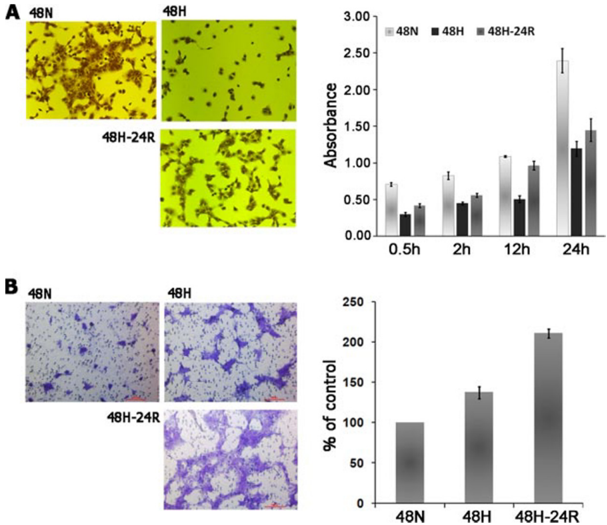
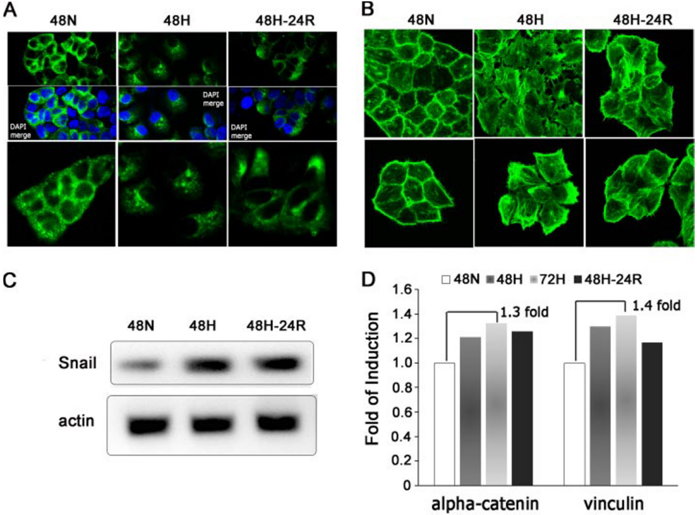
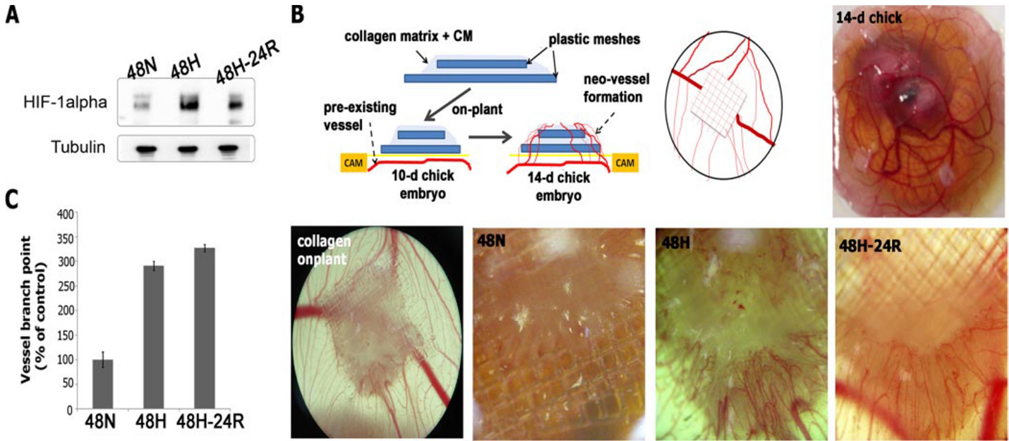
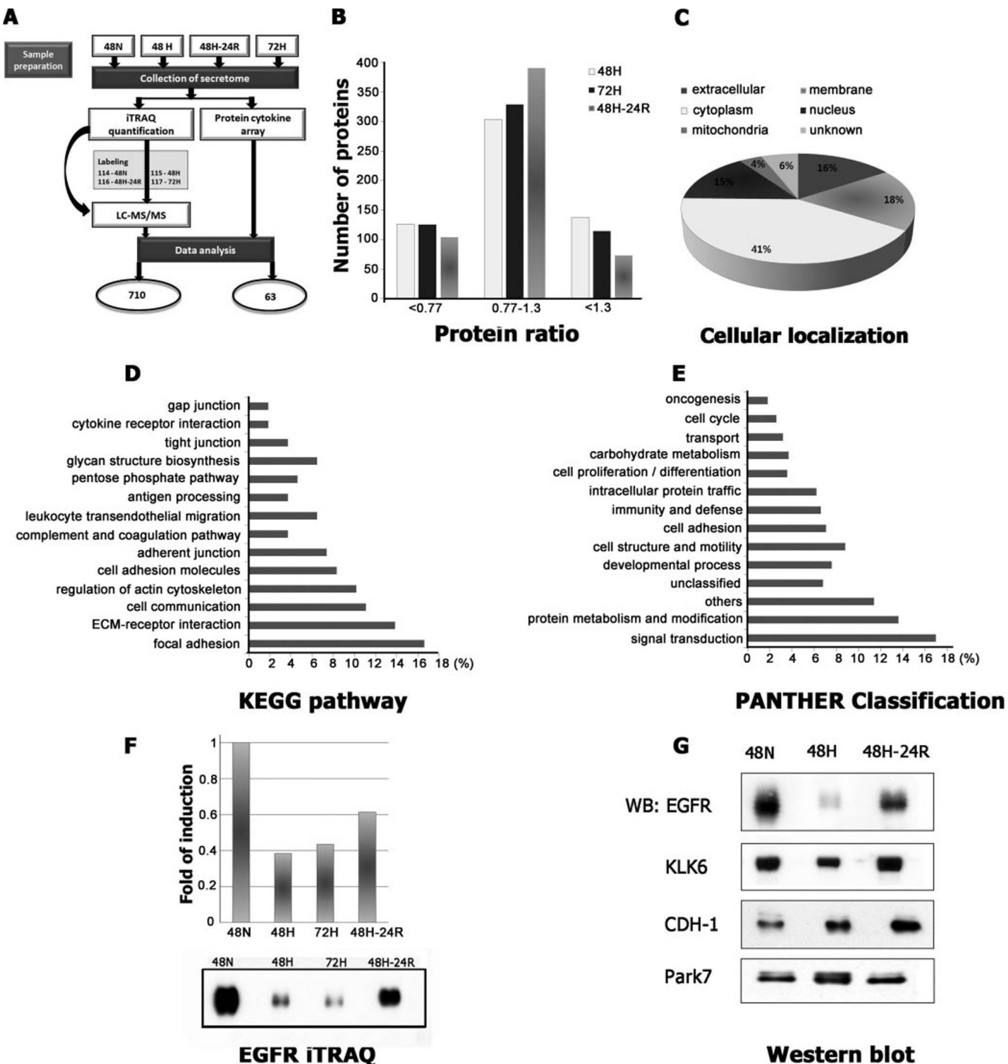
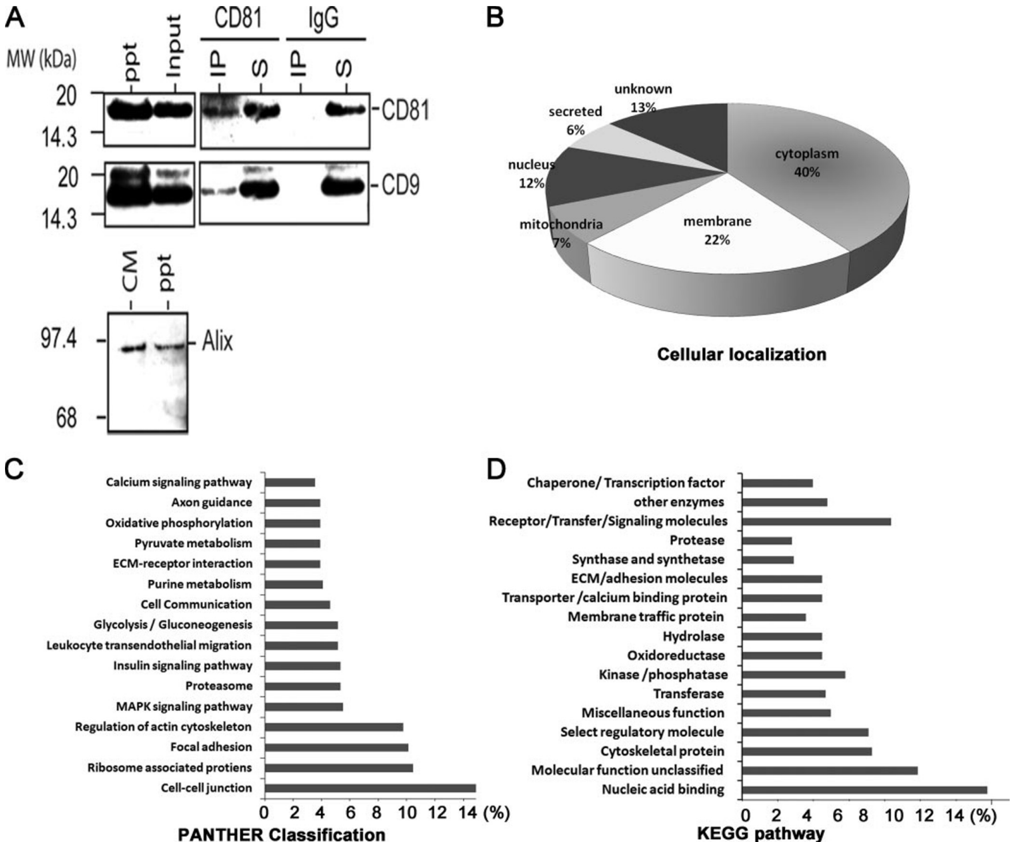
Under hypoxia, tumor cells produce a secretion that modulates their microenvironment to facilitate tumor angiogenesis and metastasis. Here, we observed that hypoxic or reoxygenated A431 carcinoma cells exhibited enhanced angiogenic and metastatic potential such as reduced cell-cell and cell-extracellular matrix adhesion, increased invasiveness, and production of a secretion with increased chorioallantoic membrane angiogenic activity. Consistent with these observations, quantitative proteomics revealed that under hypoxia the tumor cells secreted proteins involved in angiogenesis, focal adhesion, extracellular matrix-receptor interaction, and immune cell recruitment. Unexpectedly, the secreted proteins were predominantly cytoplasmic and membrane proteins. Ultracentrifugation at 100,000 x g precipitated 54% of the secreted proteins and enriched for many exosome-associated proteins such as the tetraspanins and Alix and also proteins with the potential to facilitate angiogenesis and metastasis. Two tetraspanins, CD9 and CD81, co-immunoprecipitated. Together, these data suggested that tumor cells secrete proteins and exosomes with the potential to modulate their microenvironment and facilitate angiogenesis and metastasis.
Overview
The claims and statistics of this paper haven’t been checked yet.
Free: it reads the open-access text and checks the first 5 claims that cite a source we can check. Create a free account to check every claim.
Integrity signals
Registry
Cites
Statistics
Figures
Verification
Claims the paper makes
The claims and statistics of this paper haven’t been checked yet.
Free: it reads the open-access text and checks the first 5 claims that cite a source we can check. Create a free account to check every claim.
Claims other papers make about this one
Each is checked against this paper’s own text: does it say what the citing paper says it does?
The source backs part of the claim, not all of it — or backs it for a different population, condition or comparison.
In the citing paper
“Hypoxia stimulates the release of extracellular vesicles that promote angiogenesis [93–97] and increased exosome formation by hypoxic cancer cells requires HIF activity [96, 98], but the relevant HIF target genes have not been identified.”
From The hypoxic tumor microenvironment: A driving force for breast cancer progression (2016) · cites this paper as [94]
Experimental — accuracy not yet measuredThe source backs part of the claim, not all of it — or backs it for a different population, condition or comparison.
In the citing paper
“Previous studies implicated hypoxia-induced extracellular vesicle formation as a means by which cancer cells influence the phenotype of vascular and other stromal cells [93–96], whereas HIF- and RAB22A-dependent microvesicle formation increases the invasive and metastatic properties of a primary breast tumor by transferring the phenotype of hypoxic BCCs to non-hypoxic BCCs [100].”
From The hypoxic tumor microenvironment: A driving force for breast cancer progression (2016) · cites this paper as [94]
Experimental — accuracy not yet measured
Self-check
Percentages, sums and reported differences re-computed from the paper’s own numbers.
The self-check needs the paper’s full text.
Citations
Cites
Hanahan, D., & Weinberg, R. A. (2000) · Cell · doi:10.1016/s0092-8674(00)81683-9 · Cited by 29,219
Skog, J., Würdinger, T., van Rijn, S., Meijer, D. H., Gainche, L., Curry, W. T., Carter, B. S., Krichevsky, A. M., & Breakefield, X. O. (2008) · Nature Cell Biology · doi:10.1038/ncb1800 · Cited by 5,001
Membrane vesicles as conveyors of immune responses
Théry, C., Ostrowski, M., & Segura, E. (2009) · Nature Reviews Immunology · doi:10.1038/nri2567 · Cited by 3,882 · cited 3×
“nase, EEF1A1, HSP70, HSP90, actin, tubulin, Rab proteins, annexins, and MHC class 1 (46) were clearly detected in the ultracentrifuged pellet by LC-MS/MS.”
BackgroundMethodInfluentialMicroenvironmental regulation of metastasis
Joyce, J. A., & Pollard, J. W. (2009) · Nature Reviews Cancer · doi:10.1038/nrc2618 · Cited by 3,684 · cited 2×
“Because emerging evidence implicates Hx as a key inducer of angiogenesis and metastasis in tumors (6) and because extracellular signals emanating from the tumor cells will be necessary in modulating the extracellular matrix (ECM) to facilitate the cell migration during tumor development (7), we focused on elucidating…”
BackgroundModes of resistance to anti-angiogenic therapy
Bergers, G., & Hanahan, D. (2008) · Nature Reviews Cancer · doi:10.1038/nrc2442 · Cited by 2,953 · cited 1×
“For example, prolonged antiVEGF treatment on tumors is known to select for the tumor cells that recruit alternative angiogenesis signaling pathways involving fibroblast growth factor, platelet-derived growth factor (PDGF), and angiopoietins (5).”
BackgroundPANTHER: A Library of Protein Families and Subfamilies Indexed by Function
Thomas, P. D., Campbell, M. J., Kejariwal, A., Mi, H., Karlak, B., Daverman, R., Diemer, K., Muruganujan, A., & Narechania, A. (2003) · Genome Research · doi:10.1101/gr.772403 · Cited by 2,944 · cited 1×
“tional segregation of the secretome subset was performed utilizing the KEGG pathway or PANTHER database (27, 28).”
MethodMatrix metalloproteinases and the regulation of tissue remodelling
Page-McCaw, A., Ewald, A. J., & Werb, Z. (2007) · Nature Reviews Molecular Cell Biology · doi:10.1038/nrm2125 · Cited by 2,630
Intercellular transfer of the oncogenic receptor EGFRvIII by microvesicles derived from tumour cells
Al-Nedawi, K., Meehan, B., Micallef, J., Lhotak, V., May, L., Guha, A., & Rak, J. (2008) · Nature Cell Biology · doi:10.1038/ncb1725 · Cited by 2,034
Molecular requirements for epithelial–mesenchymal transition during tumor progression
Huber, M. A., Kraut, N., & Beug, H. (2005) · Current Opinion in Cell Biology · doi:10.1016/j.ceb.2005.08.001 · Cited by 1,821 · cited 1×
“2A), possibly for gain of cell motility (64).”
BackgroundWebGestalt: an integrated system for exploring gene sets in various biological contexts
Zhang, B., Kirov, S., & Snoddy, J. (2005) · Nucleic Acids Research · doi:10.1093/nar/gki475 · Cited by 1,796 · cited 1×
“tional segregation of the secretome subset was performed utilizing the KEGG pathway or PANTHER database (27, 28).”
MethodTissue inhibitors of metalloproteinases: structure, regulation and biological functions.
Gomez, D. E., Alonso, D. F., Yoshiji, H., & Thorgeirsson, U. P. (1997) · PubMed · Cited by 1,508
Cell Biology of Extracellular Matrix
(1988) · Springer eBooks · doi:10.1007/978-1-4613-0881-2 · Cited by 1,470
Bevacizumab (Avastin), a humanized anti-VEGF monoclonal antibody for cancer therapy
Ferrara, N., Hillan, K. J., & Novotny, W. (2005) · Biochemical and Biophysical Research Communications · doi:10.1016/j.bbrc.2005.05.132 · Cited by 977 · cited 1×
“Indeed, antitumor angiogenesis drugs such as anti-VEGF therapy have proven to be clinically efficacious (4).”
BackgroundTissue Inhibitor of Metalloproteinase (TIMP-2)
Stetler-Stevenson, W. G., Krutzsch, H. C., & Liotta, L. A. (1989) · Journal of Biological Chemistry · doi:10.1016/s0021-9258(18)71503-2 · Cited by 895
Mining the plasma proteome for cancer biomarkers
Hanash, S. M., Pitteri, S. J., & Faca, V. M. (2008) · Nature · doi:10.1038/nature06916 · Cited by 891
Proteomic profiling of exosomes: Current perspectives
Simpson, R. J., Jensen, S. S., & Lim, J. W. E. (2008) · PROTEOMICS · doi:10.1002/pmic.200800109 · Cited by 857
Exosome Function: From Tumor Immunology to Pathogen Biology
Schorey, J. S., & Bhatnagar, S. (2008) · Traffic · doi:10.1111/j.1600-0854.2008.00734.x · Cited by 758
Regulation of Cytokine Receptors by Golgi N-Glycan Processing and Endocytosis
Partridge, E. A., Le Roy, C., Di Guglielmo, G. M., Pawling, J., Cheung, P., Granovsky, M., Nabi, I. R., Wrana, J. L., & Dennis, J. W. (2004) · Science · doi:10.1126/science.1102109 · Cited by 735
Hypoxia: A key regulator of angiogenesis in cancer
Liao, D., & Johnson, R. S. (2007) · Cancer and Metastasis Reviews · doi:10.1007/s10555-007-9066-y · Cited by 721 · cited 1×
“the most prominent effects of hypoxia is the induction of tumor angiogenesis (25).”
BackgroundAl-Nedawi, K., Meehan, B., Kerbel, R. S., Allison, A. C., & Rak, J. (2009) · Proceedings of the National Academy of Sciences · doi:10.1073/pnas.0804543106 · Cited by 668 · cited 1×
“giogenesis and tumor growth (9, 10) and in a xenograft model”
BackgroundCharacterization and Comprehensive Proteome Profiling of Exosomes Secreted by Hepatocytes
Conde-Vancells, J., Rodriguez-Suarez, E., Embade, N., Gil, D., Matthiesen, R., Valle, M., Elortza, F., Lu, S. C., Mato, J. M., & Falcon-Perez, J. M. (2008) · Journal of Proteome Research · doi:10.1021/pr8004887 · Cited by 642 · cited 1×
“Isolation and Characterization of Exosomes—Exosomes were isolated as described previously (16).”
BackgroundRole of chemokines in tumor growth
Raman, D., Baugher, P. J., Thu, Y. M., & Richmond, A. (2007) · Cancer Letters · doi:10.1016/j.canlet.2007.05.013 · Cited by 578
The actin cytoskeleton in cancer cell motility
Olson, M. F., & Sahai, E. (2009) · Clinical & Experimental Metastasis · doi:10.1007/s10585-008-9174-2 · Cited by 572
Teicher, B. A. (1994) · Cancer and Metastasis Reviews · doi:10.1007/bf00689633 · Cited by 563 · cited 1×
“In solid tumors, a substantial fraction of the tumor cells is subjected to either chronic or acute Hx, and the emerging evidences have suggested that hypoxic cells tend to acquire metastatic character and resistance to cancer therapy (17, 52).”
BackgroundHuman junction adhesion molecule regulates tight junction resealing in epithelia
Liu, Y., Nusrat, A., Schnell, F. J., Reaves, T. A., Walsh, S., Pochet, M., & Parkos, C. A. (2000) · Journal of Cell Science · doi:10.1242/jcs.113.13.2363 · Cited by 526 · cited 1×
“Up-regulated proteins include filamins (FLNA and FLNB), actin cross-linkers that anchor membrane proteins to the actin cytoskeleton (33); F11 receptor, an important regulator of tight junction assemblies (34); plectin-1, a cross-linker of actin, microtubules, and intermediate filaments (35); VASP (vasodilator-stimulat…”
BackgroundHermeking, H. (2003) · Nature Reviews Cancer · doi:10.1038/nrc1230 · Cited by 437
Svitkina, T. M., Verkhovsky, A. B., & Borisy, G. G. (1996) · The Journal of cell biology · doi:10.1083/jcb.135.4.991 · Cited by 414 · cited 1×
“Up-regulated proteins include filamins (FLNA and FLNB), actin cross-linkers that anchor membrane proteins to the actin cytoskeleton (33); F11 receptor, an important regulator of tight junction assemblies (34); plectin-1, a cross-linker of actin, microtubules, and intermediate filaments (35); VASP (vasodilator-stimulat…”
BackgroundHypoxia-driven selection of the metastatic phenotype
Sullivan, R., & Graham, C. H. (2007) · Cancer and Metastasis Reviews · doi:10.1007/s10555-007-9062-2 · Cited by 410 · cited 2×
“(17, 18) and then reorganize their cytoskeleton to facilitate the”
BackgroundGan, C. S., Chong, P. K., Pham, T. K., & Wright, P. C. (2007) · Journal of Proteome Research · doi:10.1021/pr060474i · Cited by 404 · cited 1×
“increasing sensitivity and reproducibility, iTRAQ analysis was performed on two independent biological samples (26).”
MethodMicrovesicles: Messengers and mediators of tumor progression
Al-Nedawi, K., Meehan, B., & Rak, J. (2009) · Cell Cycle · doi:10.4161/cc.8.13.8988 · Cited by 402 · cited 2×
“Based on a recent review of tumor exosomes (50, 66), it is highly conceivable that these exosomes may be functional.”
BackgroundCell Biology of Extracellular Matrix: Second Edition
(1991) · Springer eBooks · doi:10.1007/978-1-4615-3770-0 · Cited by 382 · cited 1×
“Hypoxia Decreased Cell Adhesion and Increased Invasiveness of A431 Cells—To metastasize, malignant cells must first detach from the dense, cross-linked type I collagen network of the ECM and migrate through the host vasculature before extravasating the vasculature and infiltrating the host tissues (55).”
BackgroundAla-aho, R., & Kähäri, V.-M. (2005) · Biochimie · doi:10.1016/j.biochi.2004.12.009 · Cited by 325 · cited 1×
“their use as targets for cancer therapy because of their abnormal expression (67).”
BackgroundMurdoch, A. D., Dodge, G. R., Cohen, I., Tuan, R. S., & Iozzo, R. V. (1992) · Journal of Biological Chemistry · doi:10.1016/s0021-9258(18)42478-7 · Cited by 315 · cited 1×
“membranes and extracellular matrix (32).”
Filamins: promiscuous organizers of the cytoskeleton
Popowicz, G. M., Schleicher, M., Noegel, A. A., & Holak, T. A. (2006) · Trends in Biochemical Sciences · doi:10.1016/j.tibs.2006.05.006 · Cited by 298 · cited 1×
“Up-regulated proteins include filamins (FLNA and FLNB), actin cross-linkers that anchor membrane proteins to the actin cytoskeleton (33); F11 receptor, an important regulator of tight junction assemblies (34); plectin-1, a cross-linker of actin, microtubules, and intermediate filaments (35); VASP (vasodilator-stimulat…”
BackgroundThe role of tumor lymphangiogenesis in metastatic spread
STACKER, S. A., BALDWIN, M. E., & ACHEN, M. G. (2002) · The FASEB Journal · doi:10.1096/fj.01-0945rev · Cited by 296
Huot, J., Houle, F., Rousseau, S., Deschesnes, R. G., Shah, G. M., & Landry, J. (1998) · The Journal of Cell Biology · doi:10.1083/jcb.143.5.1361 · Cited by 295 · cited 1×
“We observed increased stress fiber formation and membrane ruffling (23) in both Hx- and Reox-treated A431 cells (Fig.”
BackgroundRoy, C. R., & Tilney, L. G. (2002) · The Journal of Cell Biology · doi:10.1083/jcb.200205011 · Cited by 282
Elucidating the Secretion Proteome of Human Embryonic Stem Cell-derived Mesenchymal Stem Cells
Sze, S. K., de Kleijn, D. P. V., Lai, R. C., Khia Way Tan, E., Zhao, H., Yeo, K. S., Low, T. Y., Lian, Q., Lee, C. N., Mitchell, W., et al. (2007) · Molecular & Cellular Proteomics · doi:10.1074/mcp.m600393-mcp200 · Cited by 265 · cited 1×
“Because emerging evidence implicates Hx as a key inducer of angiogenesis and metastasis in tumors (6) and because extracellular signals emanating from the tumor cells will be necessary in modulating the extracellular matrix (ECM) to facilitate the cell migration during tumor development (7), we focused on elucidating…”
BackgroundSelf-citationWeiss, E. E., Kroemker, M., Rüdiger, A.-H., Jockusch, B. M., & Rüdiger, M. (1998) · The Journal of Cell Biology · doi:10.1083/jcb.141.3.755 · Cited by 264 · cited 2×
“E-cadherin is often lost at the invasive front of a tumor, and this loss represents an important metastatic step (21, 22).”
BackgroundMethodJuarez, J. C., Manuia, M., Burnett, M. E., Betancourt, O., Boivin, B., Shaw, D. E., Tonks, N. K., Mazar, A. P., & Doñate, F. (2008) · Proceedings of the National Academy of Sciences · doi:10.1073/pnas.0709451105 · Cited by 257 · cited 1×
“giogenesis and tumor growth (9, 10) and in a xenograft model”
BackgroundMatrix metalloproteinases at cancer tumor–host interface
NOEL, A., JOST, M., & MAQUOI, E. (2008) · Seminars in Cell & Developmental Biology · doi:10.1016/j.semcdb.2007.05.011 · Cited by 239
Cairns, R. A., & Hill, R. P. (2004) · Cancer Research · doi:10.1158/0008-5472.can-03-3196 · Cited by 216 · cited 1×
“Moreover, Reox of hypoxic cells is thought to augment invasiveness of cells as supported by the reports of increased spontaneous metastases in vivo and in clinical data (53, 54).”
BackgroundThe chemoinvasion assay: a method to assess tumor and endothelial cell invasion and its modulation
Albini, A., & Benelli, R. (2007) · Nature Protocols · doi:10.1038/nprot.2006.466 · Cited by 201 · cited 1×
“Hypoxia and Reoxygenation Increased Invasiveness of A431 Cells across Reconstituted ECM Layer—One of the rate-limiting steps in the metastatic cascade is the invasion of the basement membrane, which distinguishes malignant from benign tumors (24).”
BackgroundIntermittent hypoxia is a key regulator of cancer cell and endothelial cell interplay in tumours
Toffoli, S., & Michiels, C. (2008) · The FEBS Journal · doi:10.1111/j.1742-4658.2008.06454.x · Cited by 169 · cited 1×
“(17, 18) and then reorganize their cytoskeleton to facilitate the”
BackgroundWang, M., Liu, Y. E., Greene, J., Sheng, S., Fuchs, A., Rosen, E. M., & Shi, Y. E. (1997) · Oncogene · doi:10.1038/sj.onc.1201245 · Cited by 169
Xia, N., Thodeti, C. K., Hunt, T. P., Xu, Q., Ho, M., Whitesides, G. M., Westervelt, R., & Ingber, D. E. (2008) · The FASEB Journal · doi:10.1096/fj.07-090571 · Cited by 162 · cited 1×
“To determine whether there was a link between gain of metastatic potential by hypoxic cells and the adhesion-associated secreted factors, we focused on specific components in the ECM or focal adhesion, dynamic structures that regulate the cell-cell or cell-ECM adhesions (Table I) (29).”
BackgroundYang, G., Cao, K., Wu, L., & Wang, R. (2004) · Journal of Biological Chemistry · doi:10.1074/jbc.m408997200 · Cited by 159
The E-cadherin repressor Snail is associated with lower overall survival of ovarian cancer patients
Blechschmidt, K., Sassen, S., Schmalfeldt, B., Schuster, T., Höfler, H., & Becker, K.-F. (2007) · British Journal of Cancer · doi:10.1038/sj.bjc.6604115 · Cited by 138 · cited 1×
“negative E-cadherin transcription regulator (20).”
Tissue Inhibitor of Metalloproteinases-4. The road less traveled
Melendez-Zajgla, J., Pozo, L., Ceballos, G., & Maldonado, V. (2008) · Molecular Cancer · doi:10.1186/1476-4598-7-85 · Cited by 125
Liao, F., Li, Y., O'Connor, W., Zanetta, L., Bassi, R., Santiago, A., Overholser, J. C., Hooper, A. T., Mignatti, P., Dejana, E., et al. (2000) · PubMed · Cited by 124
Sgambato, A., Migaldi, M., Montanari, M., Camerini, A., Brancaccio, A., Rossi, G., Cangiano, R., Losasso, C., Capelli, G., Trentini, G. P., et al. (2003) · American Journal Of Pathology · doi:10.1016/s0002-9440(10)63881-3 · Cited by 117 · cited 1×
“We observed a decline in the secretion of the ECM components such as DAG1 (dystroglycan), a laminin-binding glycoprotein involved in linking the extracellular matrix to the cytoskeleton (30); laminins (LAMA3, LAMA5, and LAMC1); THBS1 (thrombospondin-1), a potent antiangiogenic molecule and mediator of cell adhesion (3…”
BackgroundProteomics-driven cancer biomarker discovery: looking to the future
Simpson, R. J., Bernhard, O. K., Greening, D. W., & Moritz, R. L. (2008) · Current Opinion in Chemical Biology · doi:10.1016/j.cbpa.2008.02.010 · Cited by 108
Metastasis promoter S100A4 is a potentially valuable molecular target for cancer therapy
Sherbet, G. V. (2008) · Cancer Letters · doi:10.1016/j.canlet.2008.10.037 · Cited by 96 · cited 4×
“cytokines such as S100A4 (37), IL-1, VEGF, and PDGF-BB”
BackgroundInfluentialZhang, J., Ren, H., Yuan, P., Lang, W., Zhang, L., & Mao, L. (2006) · Cancer Research · doi:10.1158/0008-5472.can-04-3905 · Cited by 94 · cited 1×
“tion of the neovasculature of NSCL cancer (45).”
BackgroundCD36 A critical anti angiogenic receptor
Simantov, R. (2003) · Frontiers in bioscience · doi:10.2741/1168 · Cited by 91
Proteomic Analysis of Secreted Exosomes
Olver, C. S., & Vidal, M. (2007) · Springer eBooks · doi:10.1007/978-1-4020-5943-8_7 · Cited by 84 · cited 7×
“Two tetraspanins, CD9 and CD81, co-immunoprecipitated.”
BackgroundInfluentialSvitkina, T., Verkhovsky, A. B., & Borisy, G. G. (1998) · Biological Bulletin · doi:10.2307/1543127 · Cited by 83
Bajpai, S. K., Simões‐Correia, J., Feng, Y., Figueiredo, J., Sun, S. X., Longmore, G. D., Suriano, G., & Wirtz, D. (2008) · Proceedings of the National Academy of Sciences · doi:10.1073/pnas.0806783105 · Cited by 79 · cited 2×
“E-cadherin is often lost at the invasive front of a tumor, and this loss represents an important metastatic step (21, 22).”
BackgroundMethodRofstad, E. K., & Halsør, E. F. (2002) · British Journal of Cancer · doi:10.1038/sj.bjc.6600052 · Cited by 78
Su, H., Hu, N., Shih, J. H., Hu, Y. C., Wang, Q., Chuang, E. Y.-Y., Roth, M. J., Wang, C., Goldstein, A. M., Ding, T., et al. (2003) · PubMed · Cited by 72
Xu, Y., Nguyen, Q., Lo, D. C., & Czaja, M. J. (1997) · Journal of Cellular Physiology · doi:10.1002/(sici)1097-4652(199702)170:2<192::aid-jcp11>3.0.co;2-k · Cited by 71
Complete sequence of human vinculin and assignment of the gene to chromosome 10.
Weller, P. A., Ogryz'ko, E. P., Corben, E. B., Zhidkova, N. I., PATEL, B., Price, G. J., Spurr, N. K., Koteliansky, V., & Critchley, D. R. (1990) · Proceedings of the National Academy of Sciences · doi:10.1073/pnas.87.15.5667 · Cited by 69
Ho, A. T., Voura, E. B., Soloway, P. D., Watson, K. L. M., & Khokha, R. (2001) · Journal of Biological Chemistry · doi:10.1074/jbc.m101647200 · Cited by 69 · cited 1×
“For example, TIMPs have been associated with increased formation of stable complexes between E-cadherin and -catenin (63).”
BackgroundPhenotyping of an in Vitro Model of Ischemic Penumbra by iTRAQ-Based Shotgun Quantitative Proteomics
Datta, A., Park, J. E., Li, X., Zhang, H., Ho, Z. S., Heese, K., Lim, S. K., Tam, J. P., & Sze, S. K. (2009) · Journal of Proteome Research · doi:10.1021/pr900829h · Cited by 67 · cited 1×
“The peak areas of the iTRAQ reporter ions reflect the relative abundances of the proteins in the samples (14, 15).”
BackgroundSelf-citationGuo, T., Gan, C. S., Zhang, H., Zhu, Y., Kon, O. L., & Sze, S. K. (2008) · Journal of Proteome Research · doi:10.1021/pr800403z · Cited by 62 · cited 1×
“The peak areas of the iTRAQ reporter ions reflect the relative abundances of the proteins in the samples (14, 15).”
BackgroundSelf-citationSporn, M. B. (1997) · Annals of the New York Academy of Sciences · doi:10.1111/j.1749-6632.1997.tb48599.x · Cited by 61 · cited 1×
“In fact, prognoses of highly metastatic cancers have not improved in the last century (3).”
BackgroundRydziel, S., Varghese, S., & Canalis, E. (1997) · Journal of Cellular Physiology · doi:10.1002/(sici)1097-4652(199702)170:2<145::aid-jcp6>3.0.co;2-o · Cited by 61 · cited 6×
“tional suppressor of MMP-13 (58) (Tables I and III).”
BackgroundInfluentialBiological responses to PDGF-BB versus PDGF-DD in human mesangial cells
van Roeyen, C. R. C., Ostendorf, T., Denecke, B., Bokemeyer, D., Behrmann, I., Strutz, F. M., Lichenstein, H. S., LaRochelle, W. J., Peña, C. E., Chaudhuri, A., et al. (2006) · Kidney International · doi:10.1038/sj.ki.5000332 · Cited by 53 · cited 1×
“(57) as well as the decrease in TGF- , a potential transcrip-”
BackgroundWei (1994) · Oncology Reports · doi:10.3892/or_00000093 · Cited by 43 · cited 1×
“Up-regulated proteins include filamins (FLNA and FLNB), actin cross-linkers that anchor membrane proteins to the actin cytoskeleton (33); F11 receptor, an important regulator of tight junction assemblies (34); plectin-1, a cross-linker of actin, microtubules, and intermediate filaments (35); VASP (vasodilator-stimulat…”
BackgroundMagagnin, M. G., Sergeant, K., van den Beucken, T., Rouschop, K. M. A., Jutten, B., Seigneuric, R., Lambin, P., Devreese, B. V., Koritzinsky, M., & Wouters, B. G. (2007) · Radiotherapy and Oncology · doi:10.1016/j.radonc.2007.04.027 · Cited by 23 · cited 1×
“Because emerging evidence implicates Hx as a key inducer of angiogenesis and metastasis in tumors (6) and because extracellular signals emanating from the tumor cells will be necessary in modulating the extracellular matrix (ECM) to facilitate the cell migration during tumor development (7), we focused on elucidating…”
BackgroundLichtinghagen, R., Musholt, P. B., Stephan, C., Lein, M., Kristiansen, G., Hauptmann, S., Rudolph, B. D., Schnorr, D., Loening, S. A., & Jung, K. (2003) · PubMed · Cited by 19
Hypoxia-induced cell death of HepG2 cells involves a necrotic cell death mediated by calpain
Kim, M.-J., Oh, S. J., Park, S., Kang, H., Won, M., Kang, T., Hwang, I. K., Park, J., Kim, J., Kim, J., et al. (2006) · APOPTOSIS · doi:10.1007/s10495-006-0002-3 · Cited by 15 · cited 1×
“CAPN1, a Ca(2) dependent cysteine protease, was found to be involved in hypoxia-mediated cell death in a caspase-dependent manner (40).”
BackgroundSelf-citation
Cited by
Yunna, C., Mengru, H., Lei, W., & Weidong, C. (2020) · European Journal of Pharmacology · doi:10.1016/j.ejphar.2020.173090 · Cited by 2,454
The biology and function of exosomes in cancer
Kalluri, R. (2016) · Journal of Clinical Investigation · doi:10.1172/jci81135 · Cited by 1,849
Classification, Functions, and Clinical Relevance of Extracellular Vesicles
van der Pol, E., Böing, A. N., Harrison, P., Sturk, A., & Nieuwland, R. (2012) · Pharmacological Reviews · doi:10.1124/pr.112.005983 · Cited by 1,754
“The ability of exosomes to promote metastasis and angiogenesis can be increased when exosomes are released under hypoxic conditions (i.e., conditions that many tumors encounter when growing) (Park et al., 2010).”
BackgroundTargeting Tumor Microenvironment for Cancer Therapy
Roma-Rodrigues, C., Mendes, R., Baptista, P. V., & Fernandes, A. R. (2019) · International Journal of Molecular Sciences · doi:10.3390/ijms20040840 · Cited by 1,187
Exosomes in cancer development, metastasis, and drug resistance: a comprehensive review
Azmi, A. S., Bao, B., & Sarkar, F. H. (2013) · Cancer and Metastasis Reviews · doi:10.1007/s10555-013-9441-9 · Cited by 1,167
“Tumor cells exposed to hypoxia secrete exosomes with enhanced angiogenic and metastatic potential, suggesting that tumor cells adapt to a hypoxic microenvironment by secreting exosomes to stimulate angiogenesis or facilitate metastasis to more favorable environment [167].”
Metadata
- Authors
- Park, J. E., Tan, H. S., Datta, A., Lai, R. C., Zhang, H., Meng, W., Lim, S. K., & Sze, S. K.
- Affiliations
- Nanyang Technological University (SG)
- Institute of Medical Biology (SG)
- Corresponding author
- Sze, Siu Kwan
- Venue
- Molecular & Cellular Proteomics
- Publisher
- Elsevier BV
- Published
- 2010-06
- Volume
- 9
- Issue
- 6
- Pages
- 1085-1099
- ISSN
- 1535-9476 (ISSN-L)
- PMC
- PMC2877972
- OpenAlex
- W2079174568
- Cited by
- 582
- References
- 71
- Citations by year
- 2026: 9 · 2025: 33 · 2024: 43 · 2023: 24 · 2022: 55 · 2021: 34 · 2020: 43 · 2019: 39 · 2018: 51 · 2017: 51 · 2016: 45 · 2015: 26 · 2014: 47 · 2013: 39 · 2012: 28
- FWCI
- 10.69
- Type
- journal article
- Language
- en
- Open access
- hybrid
- doi.org
- Licence
- cc-by
- www.elsevier.com/tdm/userlicense/1.0/ (tdm)
- www.elsevier.com/legal/tdmrep-license (tdm)
- creativecommons.org/licenses/by/4.0/ (vor, 3768 d)
- Locations
- Molecular & Cellular Proteomics (publishedVersion, cc-by)
- PubMed Central (publishedVersion)
- PubMed (publishedVersion)
- Funders
- Agency for Science, Technology and Research
- Biomedical Research Council (08/1/22/19/575)
- Topics
- Life Sciences › Biochemistry, Genetics and Molecular Biology › Molecular Biology › Angiogenesis and VEGF in Cancer
- Life Sciences › Biochemistry, Genetics and Molecular Biology › Cancer Research › Cancer, Hypoxia, and Metabolism
- Life Sciences › Biochemistry, Genetics and Molecular Biology › Molecular Biology › Extracellular vesicles in disease
- Keywords
- tumor hypoxia, tumor microenvironment, tumor angiogenesis, metastasis, exosomes, secreted proteins, tetraspanins, CD9, CD81, Alix, focal adhesions, extracellular matrix, cell adhesion, tumor invasion, chorioallantoic membrane angiogenesis, immune cell recruitment
- MeSH terms
- Cell Adhesion, Chromatography, Liquid, Cytoplasm, Extracellular Matrix, Humans, Neoplasm Invasiveness, Neoplasm Metastasis, Neoplasm Proteins, Neoplasms, Neovascularization, Pathologic, Oxygen, Mass Spectrometry, Signal Transduction, Cell Hypoxia, Cluster Analysis, Cytokines, Culture Media, Conditioned, Protein Array Analysis, Cell Line, Tumor, Hypoxia-Inducible Factor 1, alpha Subunit, Exosomes
About these checks
Registry, retraction, Cites and statistics results are computed, not judged, with one exception: a printed reference that no index lists is read once by a model before it counts as a citation error. Claims are extracted by a model and kept only when their quote appears verbatim in the text; each cited source is then checked, with a model’s help, for whether it says what the claim relies on. Those verdicts can be wrong — read the claim’s quote and the cited source before relying on one.
Statistics and arithmetic are recomputed, not judged.
Confidence bands are shown only for fields calibrated on our annotated test set. None is calibrated yet, so no band is shown.
What counts as a claim ›How we measure confidence ›How we check this ›
Are you an author, or do you see a problem with this page? Request a review
Data sources
Bibliographic data: Semantic Scholar, OpenAlex, Crossref.
Contains information from the Semantic Scholar Academic Graph Datasets, made available under the ODC Attribution License (ODC-BY 1.0).
Semantic Scholar’s data is described in: Kinney, R., et al. (2023). The Semantic Scholar Open Data Platform. arXiv:2301.10140.
