

A Targeted Spatial-Temporal Proteomics Approach Implicates Multiple Cellular Trafficking Pathways in Human Cytomegalovirus Virion Maturation
Open accessThe DOI matches its Crossref record; 51 of the 51 references it cites were found in a registry or an index.
Abstract
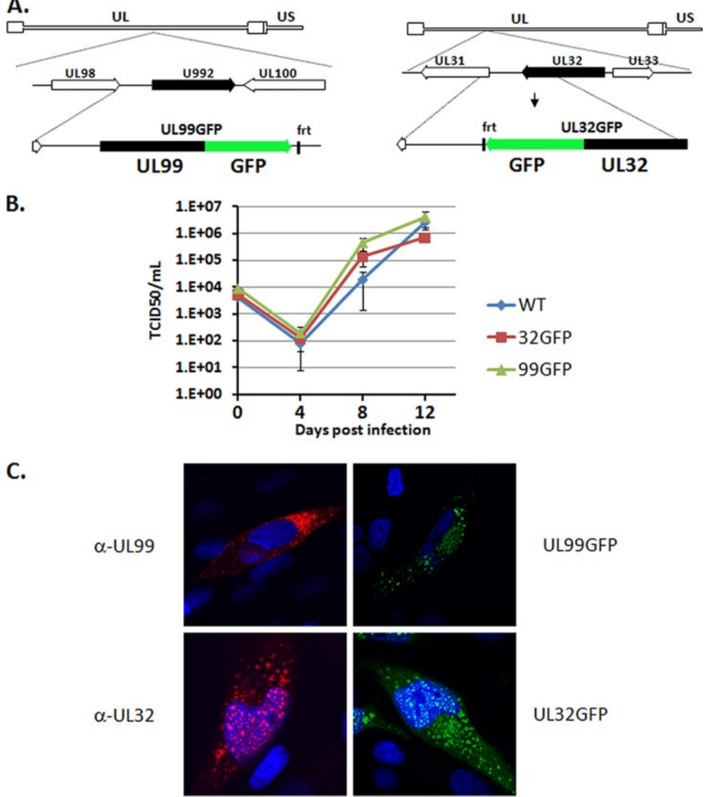
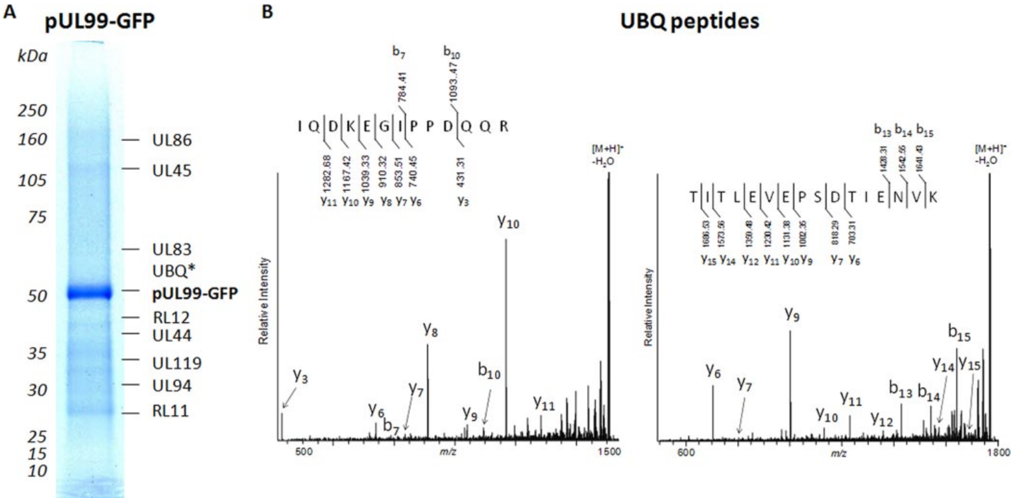
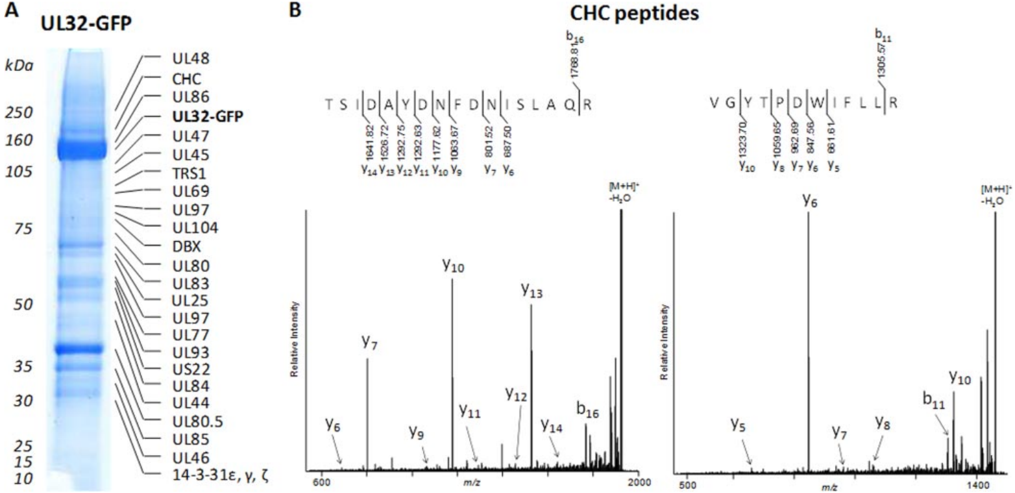
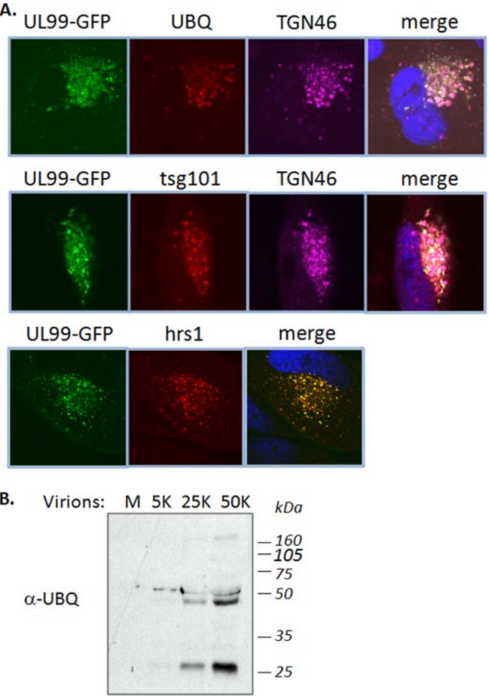
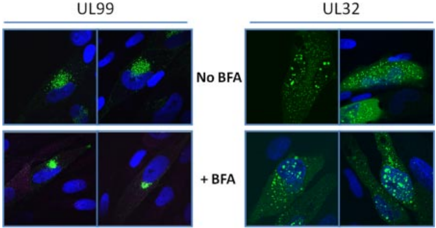
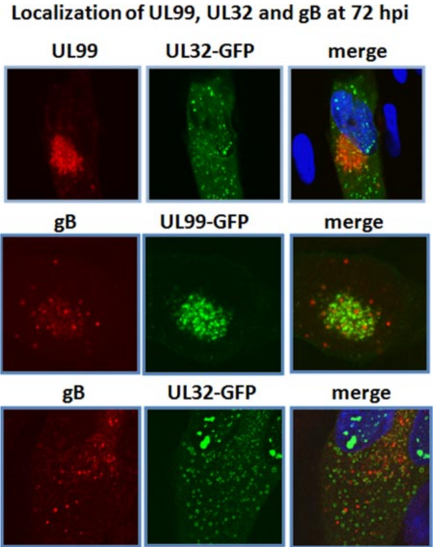
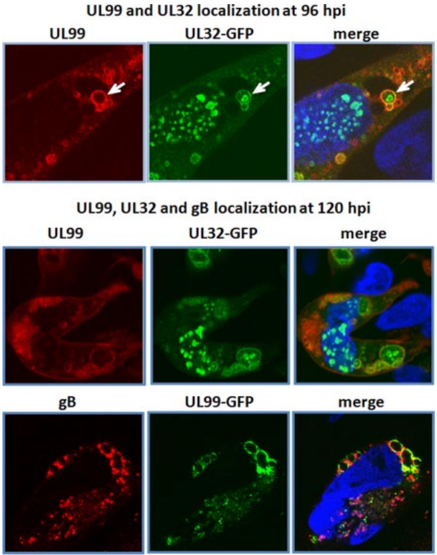
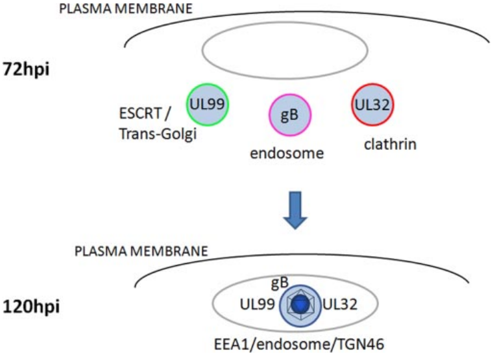
The assembly of infectious virus particles is a complex event. For human cytomegalovirus (HCMV) this process requires the coordinated expression and localization of at least 60 viral proteins that comprise the infectious virion. To gain insight into the mechanisms controlling this process, we identified protein binding partners for two viral proteins, pUL99 (also termed pp28) and pUL32 (pp150), which are essential for HCMV virion assembly. We utilized HCMV strains expressing pUL99 or pUL32 carboxyl-terminal green fluorescent protein fusion proteins from their native location in the HCMV genome. Based on the presence of ubiquitin in the pUL99 immunoisolation, we discovered that this viral protein colocalizes with components of the cellular endosomal sorting complex required for transport (ESCRT) pathway during the initial stages of virion assembly. We identified the nucleocapsid and a large number of tegument proteins as pUL32 binding partners, suggesting that events controlling trafficking of this viral protein in the cytoplasm regulate nucleocapsid/tegument maturation. The finding that pUL32, but not pUL99, associates with clathrin led to the discovery that the two viral proteins traffic via distinct pathways during the early stages of virion assembly. Additional investigation revealed that the majority of the major viral glycoprotein gB initially resides in a third compartment. Analysis of the trafficking of these three viral proteins throughout a time course of virion assembly allowed us to visualize their merger into a single large cytoplasmic structure during the late stages of viral assembly. We propose a model of HCMV virion maturation in which multiple components of the virion traffic independently of one another before merging.
Overview
The claims and statistics of this paper haven’t been checked yet.
Free: it reads the open-access text and checks the first 5 claims that cite a source we can check. Create a free account to check every claim.
Integrity signals
Registry
Cites
Statistics
Figures
Verification
Claims the paper makes
The claims and statistics of this paper haven’t been checked yet.
Free: it reads the open-access text and checks the first 5 claims that cite a source we can check. Create a free account to check every claim.
Claims other papers make about this one
Each is checked against this paper’s own text: does it say what the citing paper says it does?
In the citing paper
“Interestingly, at the same time, the viral glycoprotein gB localized to endosomes, and it was not until late in infection that all three proteins merged within a large virion assembly structure (42).”
From The Impact of Mass Spectrometry–Based Proteomics on Fundamental Discoveries in Virology (2014) · cites this paper as [42]
In the citing paper
“The existing functional knowledge regarding these factors led to the model that pUL99 associates with the ESCRT/TGN pathway, whereas pUL32 traffics in clathrin-coated vesicles.”
From The Impact of Mass Spectrometry–Based Proteomics on Fundamental Discoveries in Virology (2014) · cites this paper as [42]
Self-check
Percentages, sums and reported differences re-computed from the paper’s own numbers.
The self-check needs the paper’s full text.
Citations
Cites
Brefeldin A: insights into the control of membrane traffic and organelle structure.
Klausner, R. D., Donaldson, J. G., & Lippincott-Schwartz, J. (1992) · The Journal of cell biology · doi:10.1083/jcb.116.5.1071 · Cited by 1,846 · cited 1×
“The point of origin of clathrin-coated vesicles can be determined by using the drug brefeldin A (44).”
BackgroundKatzmann, D. J., Babst, M., & Emr, S. D. (2001) · Cell · doi:10.1016/s0092-8674(01)00434-2 · Cited by 1,429 · cited 1×
“have been implicated in the selection of cargo proteins into the ESCRT pathway by virtue of their ubiquitin binding domains (41, 42).”
BackgroundThe ESCRT machinery in endosomal sorting of ubiquitylated membrane proteins
Raiborg, C., & Stenmark, H. (2009) · Nature · doi:10.1038/nature07961 · Cited by 1,359
Functional profiling of a human cytomegalovirus genome
Dunn, W., Chou, C., Li, H., Hai, R., Patterson, D., Stolc, V., Zhu, H., & Liu, F. (2003) · Proceedings of the National Academy of Sciences · doi:10.1073/pnas.2334032100 · Cited by 645
Identification of Proteins in Human Cytomegalovirus (HCMV) Particles: the HCMV Proteome
Varnum, S. M., Streblow, D. N., Monroe, M. E., Smith, P., Auberry, K. J., Paša-Tolić, L., Wang, D., Camp, D. G., Rodland, K., Wiley, S., et al. (2004) · Journal of Virology · doi:10.1128/jvi.78.20.10960-10966.2004 · Cited by 598
Self-citationZhang, W., & Chait, B. T. (2000) · Analytical Chemistry · doi:10.1021/ac991363o · Cited by 595 · cited 1×
“The XProteo probability score indicates the discriminability (d ) for each candidate protein as a normalized distance between the distribution of the candidate protein score and that of randomly matched proteins (in units of standard deviation) based on an updated version of the ProFound Bayesian algorithm (33).”
MethodCoding potential of laboratory and clinical strains of human cytomegalovirus
Murphy, E., Yu, D., Grimwood, J., Schmutz, J., Dickson, M., Jarvis, M. A., Hahn, G., Nelson, J. A., Myers, R. M., & Shenk, T. E. (2003) · Proceedings of the National Academy of Sciences · doi:10.1073/pnas.2136652100 · Cited by 498 · cited 1×
“in the cytoplasm of infected cells (9).”
Self-citationFunctional map of human cytomegalovirus AD169 defined by global mutational analysis
Yu, D., Silva, M. C., & Shenk, T. (2003) · Proceedings of the National Academy of Sciences · doi:10.1073/pnas.1635160100 · Cited by 409 · cited 1×
“Recombinant Virus Construction—We used linear recombination in Escherichia coli (14, 22) to generate the BADinUL99GFP and BADinUL32GFP viruses in the BADwt (23) background.”
MethodSelf-citationInfluence of Secondary Structure on the Fragmentation of Protonated Peptides
Tsaprailis, G., Nair, H., Somogyi, Á., Wysocki, V. H., Zhong, W., Futrell, J. H., Summerfield, S. G., & Gaskell, S. J. (1999) · Journal of the American Chemical Society · doi:10.1021/ja982980h · Cited by 350
Sanchez, V., Greis, K. D., Sztul, E., & Britt, W. J. (2000) · Journal of Virology · doi:10.1128/jvi.74.2.975-986.2000 · Cited by 339
Cited by
Jean Beltran, P. M., Federspiel, J. D., Sheng, X., & Cristea, I. M. (2017) · Molecular Systems Biology · doi:10.15252/msb.20167062 · Cited by 212
“…studying the RNA virus Sindbis (Cristea et al , 2006), this approach was later applied to other viruses, such as the RNA virus respiratory syncytial virus (Wu et al , 2012) and the DNA viruses human cyto-megalovirus (HCMV) and pseudorabies virus (PRV) (Moorman et al , 2010; Kramer et al , 2012).”
InfluentialSelf-citationMass spectrometry‐based protein–protein interaction networks for the study of human diseases
Richards, A. L., Eckhardt, M., & Krogan, N. J. (2021) · Molecular Systems Biology · doi:10.15252/msb.20188792 · Cited by 201
Morris, J. H., Knudsen, G. M., Verschueren, E., Johnson, J. R., Cimermancic, P., Greninger, A. L., & Pico, A. R. (2014) · Nature Protocols · doi:10.1038/nprot.2014.164 · Cited by 198
A Portrait of the Human Organelle Proteome In Space and Time during Cytomegalovirus Infection
Jean Beltran, P. M., Mathias, R. A., & Cristea, I. M. (2016) · Cell Systems · doi:10.1016/j.cels.2016.08.012 · Cited by 174
Self-citationDas, S., & Pellett, P. E. (2011) · Journal of Virology · doi:10.1128/jvi.00155-11 · Cited by 152
“(4, 40), HCMV virion assembly involves multiple cellular trafficking pathways and takes place along a highly integrated assembly-egress continuum that extends from nucleocapsid assembly in the nucleus through cytoplasmic tegumentation, final envelopment, and then the regulated release of mature infectious virions at t…”
BackgroundSirtuins Are Evolutionarily Conserved Viral Restriction Factors
Koyuncu, E., Budayeva, H. G., Miteva, Y., Ricci, D. P., Silhavy, T. J., Shenk, T. E., & Cristea, I. M. (2014) · mBio · doi:10.1128/mbio.02249-14 · Cited by 158
“Infections with HCMV AD169 BADinUL99GFP (49), HSV-1 KOS 1.”
BackgroundInfluentialSelf-citationViral and host control of cytomegalovirus maturation
Tandon, R., & Mocarski, E. S. (2012) · Trends in Microbiology · doi:10.1016/j.tim.2012.04.008 · Cited by 129
“pp28 may also interact with ubiquitin and the proteins of the ESCRT pathway [44], although functional significance of these interactions is still unclear.”
Zhang, A., Williamson, C. D., Wong, D. S., Bullough, M. D., Brown, K. J., Hathout, Y., & Colberg-Poley, A. M. (2011) · Molecular & Cellular Proteomics · doi:10.1074/mcp.m111.009936 · Cited by 118
“interact with HCMV products (43, 44) as well as defined the”
BackgroundKoyuncu, E., Purdy, J. G., Rabinowitz, J. D., & Shenk, T. (2013) · PLoS Pathogens · doi:10.1371/journal.ppat.1003333 · Cited by 114
“At 16 h after transfection, 60 ml DMEM containing 20% serum was added to the wells, and 8 h later, cells were infected with BADinUL99GFP in 100 ml fresh DMEM containing 10% serum.”
MethodInfluentialSelf-citationLum, K. K., & Cristea, I. M. (2016) · Expert Review of Proteomics · doi:10.1586/14789450.2016.1147353 · Cited by 113
“For example, temporal interactions between HCMV virion components and host factors were used to predict that multiple intermediate vesicles are involved in the assembly of infectious particles [43].”
BackgroundSelf-citationMiteva, Y. V., Budayeva, H. G., & Cristea, I. M. (2013) · Analytical Chemistry · doi:10.1021/ac3033257 · Cited by 105
Self-citationLiu, S. T. H., Sharon-Friling, R., Ivanova, P., Milne, S. B., Myers, D. S., Rabinowitz, J. D., Brown, H. A., & Shenk, T. (2011) · Proceedings of the National Academy of Sciences · doi:10.1073/pnas.1109796108 · Cited by 100
“Early endosome markers are at the center of the HCMV assembly compartment (5, 10), clathrin and ARF4 have been detected in the virion (52), and trafficking of the pUL99 virion protein is brefeldin sensitive (53).”
BackgroundSelf-citationThe life cycle and pathogenesis of human cytomegalovirus infection: lessons from proteomics
Beltran, P. M. J., & Cristea, I. M. (2014) · Expert Review of Proteomics · doi:10.1586/14789450.2014.971116 · Cited by 138
“Once capsids reach the cytoplasm, the assembly and transport of virions occurs via the integration of multiple cellular trafficking pathways [27].”
BackgroundSelf-citationProteomic Characterization of Pseudorabies Virus Extracellular Virions
Kramer, T., Greco, T. M., Enquist, L. W., & Cristea, I. M. (2011) · Journal of Virology · doi:10.1128/jvi.02253-10 · Cited by 96
Self-citationNuclear Import of Histone Deacetylase 5 by Requisite Nuclear Localization Signal Phosphorylation
Greco, T. M., Yu, F., Guise, A. J., & Cristea, I. M. (2011) · Molecular & Cellular Proteomics · doi:10.1074/mcp.m110.004317 · Cited by 92
“Immunoaffinity Purification of HDAC5 complexes—WT or mutant HDAC5 and control EGFP were isolated by immunoaffinity purification via the EGFP tag on magnetic beads, as previously described (20, 22).”
MethodSelf-citationGudleski-O'Regan, N., Greco, T. M., Cristea, I. M., & Shenk, T. (2012) · Cell Host & Microbe · doi:10.1016/j.chom.2012.05.012 · Cited by 84
“Cell viability was assessed by a trypan blue exclusion assay (Moorman et al., 2010).”
MethodSelf-citationProcter, D. J., Banerjee, A., Nukui, M., Kruse, K. J., Gaponenko, V., Murphy, E. A., Komarova, Y. A., & Walsh, D. (2018) · Developmental Cell · doi:10.1016/j.devcel.2018.03.010 · Cited by 83
“In line with fixed imaging of laboratory adapted strains (Moorman et al., 2010), UL99-eGFP labeled the Golgi that Procter et al.”
BackgroundInfluentialProteomics in Non-model Organisms: A New Analytical Frontier
Heck, M. L., & Neely, B. A. (2020) · Journal of Proteome Research · doi:10.1021/acs.jproteome.0c00448 · Cited by 91
Terhune, S. S., Moorman, N. J., Cristea, I. M., Savaryn, J. P., Cuevas-Bennett, C., Rout, M. P., Chait, B. T., & Shenk, T. (2010) · PLoS Pathogens · doi:10.1371/journal.ppat.1000965 · Cited by 70
“) and studies using different viral proteins tagged with gfp”
BackgroundSelf-citationCongenital Cytomegalovirus Infection: Molecular Mechanisms Mediating Viral Pathogenesis
Schleiss, M. R. (2011) · Infectious Disorders - Drug Targets · doi:10.2174/187152611797636721 · Cited by 84
“More evidence for this complexity has been noted in recent spatial-temporal proteomic analyses that identified multiple cellular trafficking tracts involved in virion maturation, requiring host cell binding partners in the endosomal sorting complex and clathrin pathways [37, 38].”
BackgroundThe Impact of Mass Spectrometry–Based Proteomics on Fundamental Discoveries in Virology
Greco, T. M., Diner, B. A., & Cristea, I. M. (2014) · Annual Review of Virology · doi:10.1146/annurev-virology-031413-085527 · Cited by 67
“To investigate the spatial-temporal relationship of virion components during HCMV virion assembly, we combined AP-MS, molecular virology, and confocal microscopy (42).”
BackgroundMethodSelf-citationHCMV Induces Macropinocytosis for Host Cell Entry in Fibroblasts
Hetzenecker, S. E. G., Helenius, A., & Krzyzaniak, M. A. (2016) · Traffic · doi:10.1111/tra.12355 · Cited by 73
“To follow the internalization of fluorescent virus capsids, AD169-UL32-GFP (MOI 100) was bound to cells in serum-free growth medium for 1 h at 4∘C. Unbound virus was removed by one PBS wash, replaced with serum-free growth medium, and cells were shifted to 37∘C.”
MethodInfluentialRab27a Is Required for Human Cytomegalovirus Assembly
Fraile‐Ramos, A., Cepeda, V., Elstak, E., & van der Sluijs, P. (2010) · PLoS ONE · doi:10.1371/journal.pone.0015318 · Cited by 69
“MVBs is required for HCMV morphogenesis. Our data also support the notion that HCMV uses multiple cellular trafficking pathways and compartments to assemble infectious virions”
Xie, M., Xuan, B., Shan, J., Pan, D. Y., Sun, Y., Zhao, S., Zhang, J., Yu, D. L., Li, B., & Qian, Z. (2015) · Journal of Virology · doi:10.1128/jvi.03416-14 · Cited by 68
“Finally, IFITMs have been shown to function in stabilization of v-ATPase complexes in intracellular membranes and thus facilitate the proper subcellular localization of clathrin (26), and v-ATPase- and clathrin-mediated vesicle transport are likely involved in vAC maturation (60, 61).”
Carpp, L. N., Rogers, R. S., Moritz, R. L., & Aitchison, J. D. (2014) · Molecular & Cellular Proteomics · doi:10.1074/mcp.m114.038984 · Cited by 64
Oeffinger, M. (2012) · PROTEOMICS · doi:10.1002/pmic.201100509 · Cited by 61
“Compared to a decade ago these approaches have advanced significantly, thanks to improvement in lysis methods, which help keeping complex disintegration to a minimum, and resins that allow for faster isolation of complexes, and faster sample handling overall [19, 20, 23, 71].”
BackgroundHuman Cytomegalovirus Tegument Protein pUL71 Is Required for Efficient Virion Egress
Womack, A., & Shenk, T. (2010) · mBio · doi:10.1128/mbio.00282-10 · Cited by 55
“earlier conclusion that envelopment is not required for cell-to-cell spread of HCMV (34), and supporting the view that multiple, distinct virus trafficking pathways exist (26).”
BackgroundResultSelf-citationProteomics Tracing the Footsteps of Infectious Disease
Greco, T. M., & Cristea, I. M. (2017) · Molecular & Cellular Proteomics · doi:10.1074/mcp.o116.066001 · Cited by 62
“In general, pathogenic protein interactions are ideally determined during the course of natural infections (31, 32, 34, 39).”
BackgroundSelf-citationRecombinant Human Cytomegalovirus (HCMV) RL13 Binds Human Immunoglobulin G Fc
Cortese, M., Calò, S., D’Aurizio, R., Lilja, A., Pacchiani, N., & Merola, M. (2012) · PLoS ONE · doi:10.1371/journal.pone.0050166 · Cited by 65
Carabetta, V. J., Silhavy, T. J., & Cristea, I. M. (2010) · Journal of Bacteriology · doi:10.1128/jb.00300-10 · Cited by 54
Self-citationA molecular tug-of-war: Global plant proteome changes during viral infection
Alexander, M., & Cilia, M. (2015) · Current Plant Biology · doi:10.1016/j.cpb.2015.10.003 · Cited by 53
Target Discovery for Host-Directed Antiviral Therapies: Application of Proteomics Approaches
Çakır, M., Obernier, K., Forget, A., & Krogan, N. J. (2021) · mSystems · doi:10.1128/msystems.00388-21 · Cited by 50
Comparative mapping of host–pathogen protein–protein interactions
Shah, P. S., Wojcechowskyj, J. A., Eckhardt, M., & Krogan, N. J. (2015) · Current Opinion in Microbiology · doi:10.1016/j.mib.2015.07.008 · Cited by 43
Histone Deacetylases in Herpesvirus Replication and Virus-Stimulated Host Defense
Guise, A., Budayeva, H., Diner, B., & Cristea, I. (2013) · Viruses · doi:10.3390/v5071607 · Cited by 43
“Application of these methods has advanced the current understanding of virus-host protein interactions during HCMV [38,121,123] and PRV [126] infections.”
MethodSelf-citationHuman Cytomegalovirus pTRS1 and pIRS1 Antagonize Protein Kinase R To Facilitate Virus Replication
Ziehr, B., Vincent, H. A., & Moorman, N. J. (2016) · Journal of Virology · doi:10.1128/jvi.02714-15 · Cited by 52
“strain DY380 as previously described (47, 48).”
Self-citationLin, A. E., Greco, T. M., Döhner, K., Sodeik, B., & Cristea, I. M. (2013) · Molecular & Cellular Proteomics · doi:10.1074/mcp.m113.030866 · Cited by 38
“To characterize pUL46 interactions at 6 hpi, we employed an immunoaffinity purification approach that has been optimized for use with GFP tags (25, 28, 36).”
MethodSelf-citationDietz, A. N., Read, C., Becker, S., Frick, M., & von Einem, J. (2017) · Journal of Virology · doi:10.1128/jvi.00907-17 · Cited by 36
“Different intracellular trafficking mechanisms have already been shown to be used by different HCMV-encoded proteins for their accumulation at the vAC (12, 58).”
BackgroundPhillips, S. L., Cygnar, D., Thomas, A., & Bresnahan, W. A. (2012) · Journal of Virology · doi:10.1128/jvi.01078-12 · Cited by 39
“plasmic tegumentation and particle envelopment (6, 9, 13, 18).”
BackgroundBudayeva, H. G., & Cristea, I. M. (2016) · Molecular & Cellular Proteomics · doi:10.1074/mcp.m116.061333 · Cited by 42
“secretion (77, 78), and, as expected, we observed this treatment to trigger the dissociation of ERGIC53 (Fig.”
BackgroundSelf-citationA role for the SNARE protein syntaxin 3 in human cytomegalovirus morphogenesis
Cepeda, V., & Fraile‐Ramos, A. (2011) · Cellular Microbiology · doi:10.1111/j.1462-5822.2011.01583.x · Cited by 42
“Importantly, it has been reported that parallel distinct trafficking pathways merge viral proteins into a single structure at the perinuclear assembly compartment (Moorman et al., 2010).”
BackgroundBogdanow, B., Weisbach, H., von Einem, J., Straschewski, S., Voigt, S., Winkler, M., Hagemeier, C., & Wiebusch, L. (2013) · Proceedings of the National Academy of Sciences · doi:10.1073/pnas.1312235110 · Cited by 41
“This is reminiscent to the nucleocytoplasmic distribution of newly synthesized pp150 at late stages of infection (25, 26).”
BackgroundDecoding protein networks during virus entry by quantitative proteomics
Gerold, G., Bruening, J., & Pietschmann, T. (2015) · Virus Research · doi:10.1016/j.virusres.2015.09.006 · Cited by 37
“For other virus life cycle steps, like e.g., CMV particle assembly, interaction proteomics uncovered important mechanistic insights (Moorman et al., 2010) .”
DNA methyltransferase DNMT3A associates with viral proteins and impacts HSV‐1 infection
Rowles, D. L., Tsai, Y., Greco, T. M., Lin, A. E., Li, M., Yeh, J., & Cristea, I. M. (2015) · PROTEOMICS · doi:10.1002/pmic.201500035 · Cited by 35
“To study VP26 protein interactions during infection in HFFs, we used a proteomic approach that we previously reported for studying other viral proteins tagged with GFP [22,27,32].”
MethodSelf-citationInferring differential subcellular localisation in comparative spatial proteomics using BANDLE
Crook, O. M., Davies, C. T. R., Breckels, L. M., Christopher, J. A., Gatto, L., Kirk, P., & Lilley, K. S. (2022) · Nature Communications · doi:10.1038/s41467-022-33570-9 · Cited by 33
Inhibition of endocytic pathways impacts cytomegalovirus maturation
Archer, M. A., Brechtel, T. M., Davis, L. E., Parmar, R. C., Hasan, M., & Tandon, R. (2017) · Scientific Reports · doi:10.1038/srep46069 · Cited by 32
Virus–host protein interactions as footprints of human cytomegalovirus replication
Tyl, M. D., Betsinger, C. N., & Cristea, I. M. (2021) · Current Opinion in Virology · doi:10.1016/j.coviro.2021.11.016 · Cited by 35
Self-citationIntermittent bulk release of human cytomegalovirus
Flomm, F. J., Soh, T. K., Schneider, C., Wedemann, L., Britt, H. M., Thalassinos, K., Pfitzner, S., Reimer, R., Grünewald, K., & Bosse, J. B. (2022) · PLoS Pathogens · doi:10.1371/journal.ppat.1010575 · Cited by 30
“Since HCMV intensively remodels the cells secretory apparatus, it seems unlikely that traditional organelle identity and function is applicable in the infected cell [41,44,45,80].”
BackgroundKinome Profiling Identifies Druggable Targets for Novel Human Cytomegalovirus (HCMV) Antivirals
Arend, K. C., Lenarcic, E. M., Vincent, H. A., Rashid, N. U., Lazear, E., McDonald, I. M., Gilbert, T. S. K., East, M. P., Herring, L. E., Johnson, G. L., et al. (2017) · Molecular & Cellular Proteomics · doi:10.1074/mcp.m116.065375 · Cited by 38
“The pp28-GFP virus has been described previously (45).”
MethodResultInfluentialSelf-citationKennedy, M. A., Hofstadter, W. A., & Cristea, I. M. (2020) · Journal of the American Society for Mass Spectrometry · doi:10.1021/jasms.0c00033 · Cited by 29
“–108 Overall, these changes in distribution of clathrin-associated proteins appear to not only reflect HCMV-induced changes in subcellular organization, but also the necessity of HCMV modulation of diverse cellular trafficking pathways to achieve proper replication.”
BackgroundSelf-citationFederspiel, J. D., Cook, K. C., Kennedy, M. A., Venkatesh, S. S., Otter, C. J., Hofstadter, W. A., Beltran, P. M. J., & Cristea, I. M. (2020) · Cell Reports · doi:10.1016/j.celrep.2020.107943 · Cited by 27
“Using a GFP-tagged virus strain (BADinUL37GFP [Moorman et al., 2010]) in combination with biochemical, microscopy, and computational approaches, we captured pUL37×1 interaction dynamics across HCMV infection.”
BackgroundSelf-citationDeRussy, B. M., Aylward, M. A., Fan, Z., Ray, P. C., & Tandon, R. (2014) · Scientific Reports · doi:10.1038/srep05550 · Cited by 26
Role of Human Cytomegalovirus Tegument Proteins in Virion Assembly
Smith, R. L., Kosuri, S., & Kerry, J. A. (2014) · Viruses · doi:10.3390/v6020582 · Cited by 30
“Mass spectrometry analysis also identified clathrin components as pp150 interacting proteins, although a direct role for this interaction in virion assembly or localization to the AC could not be demonstrated [34].”
BackgroundInfluentialComplementary Proteomic Analysis of Protein Complexes
Greco, T. M., Miteva, Y., Conlon, F. L., & Cristea, I. M. (2012) · Methods in Molecular Biology · doi:10.1007/978-1-61779-992-1_22 · Cited by 23
Self-citationDurán, A. H., Greco, T. M., Vollmer, B., Cristea, I. M., Grünewald, K., & Topf, M. (2019) · PLoS Biology · doi:10.1371/journal.pbio.3000316 · Cited by 27
“Predictions were conducted based on a sequence-based interologues mapping [22] approach (green box) and included the following steps: for each protein involved in a binary oPPI, (1) sequencebased homologous sequences in the HSV1 proteome were searched for using HHblits [23]; (2) a conservative homology threshold was a…”
Self-citationMaschkowitz, G., Gärtner, S., Hofmann-Winkler, H., Fickenscher, H., & Winkler, M. (2018) · Journal of Virology · doi:10.1128/jvi.00013-18 · Cited by 21
“Components of herpesvirus virions likely assemble along several maturation pathways, which converge in the assembly center (11, 51, 52).”
BackgroundMethodGoulidaki, N., Alarifi, S. A., Alkahtani, S. H., Al-Qahtani, A. A., Spandidos, D. A., Stournaras, C., & Sourvinos, G. (2015) · Cell Cycle · doi:10.1080/15384101.2015.1066535 · Cited by 24
“As previously described, 51,52,61 we detected the pUL32 protein both at the nucleus and the cytoplasm of the infected cells at late stages of the infection.”
Oh, H. S., & Knipe, D. M. (2015) · PROTEOMICS · doi:10.1002/pmic.201500020 · Cited by 21
Viswanathan, K., Verweij, M. C., John, N., Malouli, D., & Früh, K. (2017) · PLoS ONE · doi:10.1371/journal.pone.0187899 · Cited by 21
Cappadona, I., Read, C., Schutzius, G., Mertens, T., & von Einem, J. (2015) · Journal of Virology · doi:10.1128/jvi.00603-15 · Cited by 21
The Promise of Proteomics in the Study of Oncogenic Viruses
McBride, A. A. (2017) · Molecular & Cellular Proteomics · doi:10.1074/mcp.o116.065201 · Cited by 20
“tracked, often in concert with live cell microscopy (54, 81) Viruses can often be easily manipulated to express tagged viral proteins that are expressed in the context of an infection, and well characterized viral mutations can help unravel the connection between interacting protein partners and function.”
Hahn, F., Hutterer, C., Henry, C., Hamilton, S. T., Strojan, H., Kraut, A., Schulte, U., Schütz, M., Kohrt, S., Wangen, C., et al. (2018) · Antiviral Research · doi:10.1016/j.antiviral.2018.09.012 · Cited by 21
Immunoisolation of Protein Complexes from Xenopus
Conlon, F. L., Miteva, Y., Kaltenbrun, E., Wasson, L. K., Greco, T. M., & Cristea, I. M. (2012) · Methods in molecular biology · doi:10.1007/978-1-61779-992-1_21 · Cited by 20
Self-citationZiehr, B., Lenarcic, E. M., Vincent, H. A., Cecil, C., Garcia, B. A., Shenk, T. E., & Moorman, N. J. (2015) · PROTEOMICS · doi:10.1002/pmic.201400616 · Cited by 21
“For Western blot assays, equal amounts of protein were analyzed as described previously [22] using antibodies specific to the following antigens: his epitope tag, eIF4E, eukaryotic translation initiation factor 4G (eIF4G), 4EBP1, and poly(A)binding protein cytoplasmic 1 (Cell Signaling) at 1:1000 dilution; PKR (Santa…”
MethodSelf-citationDiscovery of Host–Viral Protein Complexes During Infection
Rowles, D. L., Terhune, S. S., & Cristea, I. M. (2013) · Methods in Molecular Biology · doi:10.1007/978-1-62703-601-6_4 · Cited by 15
“Similarly, building spatialtemporal interaction networks for several GFP-tagged HCMV proteins has provided insights into processes involved in virion assembly, indicating the presence of multiple intermediate virion structures that traffic independently from each other prior to merging into larger vesicles (5).”
BackgroundSelf-citationSucharita, S., Krishnagopal, A., & den Hurk, S. V. D. L. (2023) · Viruses · doi:10.3390/v15102058 · Cited by 19
“…capsid [120,121]. pp150 is phosphorylated by pU L 96 and plays an important role in the stability of the capsid [122–124]. pp150 interacts with the capsid-associated proteins pp71 ( U L 82 gene) and pp65 ( U L 83 gene) to form a firm base for the incorporation of the outer tegument layer [125,126].”
BackgroundArend, K. C., Lenarcic, E. M., & Moorman, N. J. (2018) · Journal of Virology · doi:10.1128/jvi.02128-17 · Cited by 15
“Recombinant viruses were made using a two-step recombination process as described previously (37, 45, 75, 76).”
MethodSelf-citationGreco, T. M., Guise, A. J., & Cristea, I. M. (2016) · Methods in molecular biology · doi:10.1007/978-1-4939-3524-6_3 · Cited by 15
Self-citationManipulation of host pathways by human cytomegalovirus: insights from genome-wide studies
Cohen, Y., & Stern‐Ginossar, N. (2014) · Seminars in Immunopathology · doi:10.1007/s00281-014-0443-7 · Cited by 15
Estrogen-related receptor α is required for efficient human cytomegalovirus replication
Hwang, J., Purdy, J. G., Wu, K., Rabinowitz, J. D., & Shenk, T. E. (2014) · Proceedings of the National Academy of Sciences · doi:10.1073/pnas.1422361112 · Cited by 13
“ADinUL99-GFP, in which the tegument protein pUL99 is tagged with GFP and exhibits wild-type growth kinetics, has been described (64).”
MethodSelf-citationDynamin Is Required for Efficient Cytomegalovirus Maturation and Envelopment
Hasan, M., Davis, L. E., Bollavarapu, R., Mitra, D., Parmar, R. C., & Tandon, R. (2018) · Journal of Virology · doi:10.1128/jvi.01418-18 · Cited by 13
Quantitative proteomic analyses in blood: A window to human health and disease
Whittaker, K., Burgess, R., Jones, V. S., Yang, Y., Zhou, W., Luo, S., Wilson, J. J., & Huang, R. (2019) · Journal of Leukocyte Biology · doi:10.1002/jlb.mr1118-440r · Cited by 18
Human Cytomegalovirus Exploits TACC3 To Control Microtubule Dynamics and Late Stages of Infection
Furey, C., Astar, H., & Walsh, D. (2021) · Journal of Virology · doi:10.1128/jvi.00821-21 · Cited by 11
Inhibition of Human Cytomegalovirus Entry into Host Cells through A Pleiotropic Small Molecule
Elste, J., Kaltenbach, D. D., Patel, V. R., Nguyen, M. T., Sharthiya, H., Tandon, R., Mehta, S. K., Volin, M. V., Fornaro, M., Tiwari, V., et al. (2020) · International Journal of Molecular Sciences · doi:10.3390/ijms21051676 · Cited by 11
“HCMV strain AD169 (ATCC VR-538) was also purchased from ATCC. HCMV strain BAD32GFP (from the Tandon lab), is an AD169 derivative fused with green fluorescent protein (GFP) [76] .”
MethodVlaicu, O., Şelescu, T., Pastrama, F., Munteanu, C. V. A., Riva, L., Dubuisson, J., Rouillé, Y., & Popescu, C.-I. (2017) · Journal of Virological Methods · doi:10.1016/j.jviromet.2017.04.009 · Cited by 12
Mosher, B. S., Kowalik, T. F., & Yurochko, A. D. (2022) · Frontiers in Virology · doi:10.3389/fviro.2022.1026452 · Cited by 10
Meckes, D. G. (2014) · Methods in molecular biology · doi:10.1007/978-1-4939-0428-0_14 · Cited by 9
Inhibition of Human Cytomegalovirus Particle Maturation by Activation of Liver X Receptor
Liu, B., Ma, Y., Huang, Y., Liu, Z., Ruan, Q., & Qi, Y. (2022) · Frontiers in Microbiology · doi:10.3389/fmicb.2022.846386 · Cited by 9
“De-envelopment occurs at the outer nuclear membrane to release the nucleocapsid into the cytoplasm, where it acquires the final complement of tegument protein (Moorman et al., 2010).”
BackgroundProteomics methods for discovering viral–host interactions
Georges, A. A., & Frappier, L. (2015) · Methods · doi:10.1016/j.ymeth.2015.05.001 · Cited by 10
Seo, J.-Y., Heo, J. A., & Britt, W. J. (2020) · The Journal of Microbiology · doi:10.1007/s12275-020-0263-5 · Cited by 7
Tegument Protein pp150 Sequence-Specific Peptide Blocks Cytomegalovirus Infection
Mitra, D., Hasan, M., Bates, J. T., Bidwell, G. L., & Tandon, R. (2021) · Viruses · doi:10.3390/v13112277 · Cited by 6
“Pp150 is known to interact directly with clathrin, which affects the virion maturation process [20].”
BackgroundThe unconventional way out—Egress of HCMV through multiviral bodies
Wedemann, L., Flomm, F. J., & Bosse, J. B. (2022) · Molecular Microbiology · doi:10.1111/mmi.14946 · Cited by 5
“…of organelle- specific markers and the association of viral factors essential for envelopment with different trafficking processes led to the conclusion that HCMV generates a novel compartment tailored to HCMV virion production (Cepeda et al., 2010; Henaff et al., 2012; Moorman et al., 2010).”
BackgroundDissecting functional motifs of the human cytomegalovirus tegument protein pUL71
Fischer, D. (2012) · OPen Access Repositorium der Universität Ulm (OPARU) (Ulm University) · doi:10.18725/oparu-2779 · Cited by 5
Dickmander, R. J., Hale, A., Sanders, W., Lenarcic, E. M., Ziehr, B., & Moorman, N. J. (2024) · mBio · doi:10.1128/mbio.02621-23 · Cited by 4
“Recombinant viruses were made as previously described (32, 55, 59, 60).”
MethodSelf-citationHuman cytomegalovirus deploys molecular mimicry to recruit VPS4A to sites of virus assembly
Butt, B. G., Fischer, D., Rep, A. R., Schauflinger, M., Read, C., Bock, T., Hirner, M., Wienen, F., Graham, S. C., & von Einem, J. (2024) · PLoS Pathogens · doi:10.1371/journal.ppat.1012300 · Cited by 6
“…VPS4 and other ESCRT components such as CHMP1 and HRS localize in the vicinity of the cytoplasmic viral assembly compartment (cVAC) where HCMV viral assembly and maturation in the cytoplasm takes place (Das and Pellett, 2011; Moorman et al., 2010; Streck et al., 2020; Tandon et al., 2009).”
BackgroundImpact of human cytomegalovirus on glioblastoma cell viability and chemotherapy treatment
dos Santos, C. J., Castro, F. L. F., de Aguiar, R. B., Menezes, I. D. G., de Souza, A. C. S., Paulus, C., Nevels, M. M., & da Silva, M. C. C. (2018) · Journal of General Virology · doi:10.1099/jgv.0.001118 · Cited by 5
“328 HCMV BADinUL99GFP [63] was produced by electroporation, and AD169 and 329”
MethodInfluentialInferring differential subcellular localisation in comparative spatial proteomics using BANDLEPreprint
Crook, O. M., Davies, C. T. R., Breckels, L. M., Christopher, J. A., Gatto, L., Kirk, P., & Lilley, K. S. (2021) · bioRxiv (Cold Spring Harbor Laboratory) · doi:10.1101/2021.01.04.425239 · Cited by 6
Lučin, H. M., Štimac, I., Marcelić, M., Skočaj, M., Lisnić, B., Omerović, A., Viduka, I., Radić, B., Karleuša, L., Zagorac, G. B., et al. (2025) · Frontiers in Cell and Developmental Biology · doi:10.3389/fcell.2024.1517236 · Cited by 3
Inferring differential subcellular localisation in comparative spatial proteomics using BANDLEPreprint
Crook, O. M., Davies, C. T. R., Gatto, L., Kirk, P., & Lilley, K. S. (2021) · Research Square · doi:10.21203/rs.3.rs-145772/v1 · Cited by 3
Rodriguez, W., & Cristea, I. M. (2026) · Viruses · doi:10.3390/v18030288 · Cited by 2
Self-citationMoorman, N. J., & Murphy, E. A. (2014) · Current Opinion in Virology · doi:10.1016/j.coviro.2014.09.021 · Cited by 1
“[31–33]), although it has yet to be extended to the study of roseolovirus protein”
BackgroundSelf-citationIntermittent Bulk Release of Human CytomegalovirusPreprint
Flomm, F. J., Soh, T. K., Schneider, C., Wedemann, L., Britt, H. M., Thalassinos, K., Pfitzner, S., Reimer, R., Grünewald, K., & Bosse, J. B. (2021) · bioRxiv (Cold Spring Harbor Laboratory) · doi:10.1101/2020.12.31.424954 · Cited by 3
Navigating Human Cytomegalovirus (hcmv) Envelopment And Egress
Close, W. L. (2017) · Human Biology
Behera, S., & Suryawanshi, A. R. (2023) · Sustainable agriculture reviews · doi:10.1007/978-3-031-21630-5_3
Oncogenèse épithéliale mammaire et cytomégalovirus à « haut » et «faible » risque de transformation
Nehme, Z. (2021) · theses.fr (ABES) · doi:10.70675/fef3d277zc0ebz48e3za619za8b7c47d8350
Metadata
- Authors
- Moorman, N. J., Sharon-Friling, R., Shenk, T., & Cristea, I. M.
- Affiliations
- Princeton University (US)
- Corresponding author
- Cristea, Ileana M.
- Venue
- Molecular & Cellular Proteomics
- Publisher
- Elsevier BV
- Published
- 2010-05
- Volume
- 9
- Issue
- 5
- Pages
- 851-860
- ISSN
- 1535-9476 (ISSN-L)
- PMC
- PMC2871419
- OpenAlex
- W2109177153
- Cited by
- 97
- References
- 51
- Citations by year
- 2026: 1 · 2025: 1 · 2024: 2 · 2023: 3 · 2022: 6 · 2021: 10 · 2020: 5 · 2019: 2 · 2018: 6 · 2017: 9 · 2016: 5 · 2015: 11 · 2014: 11 · 2013: 5 · 2012: 9
- FWCI
- 4.50
- Type
- journal article
- Language
- en
- Open access
- hybrid
- doi.org
- Licence
- cc-by
- www.elsevier.com/tdm/userlicense/1.0/ (tdm)
- www.elsevier.com/legal/tdmrep-license (tdm)
- creativecommons.org/licenses/by/4.0/ (vor, 3799 d)
- Locations
- Molecular & Cellular Proteomics (publishedVersion, cc-by)
- PubMed Central (publishedVersion)
- PubMed (publishedVersion)
- Carolina Digital Repository (University of North Carolina at Chapel Hill) (submittedVersion)
- UNC Libraries
- Funders
- Princeton University
- National Institutes of Health
- National Institute on Drug Abuse (DP1DA026192)
- National Cancer Institute (CA85786, CA 82396, R01CA085786, R01CA082396)
- Topics
- Health Sciences › Medicine › Epidemiology › Cytomegalovirus and herpesvirus research
- Health Sciences › Medicine › Infectious Diseases › Herpesvirus Infections and Treatments
- Life Sciences › Biochemistry, Genetics and Molecular Biology › Cell Biology › Cellular transport and secretion
- Keywords
- human cytomegalovirus, viral assembly, virion maturation, ESCRT pathway, clathrin, viral protein trafficking, nucleocapsid, tegument proteins, gB glycoprotein, ubiquitin, protein-protein interaction, spatial proteomics
- MeSH terms
- Amino Acid Sequence, Cell Compartmentation, Clathrin, Cytomegalovirus, Fibroblasts, Humans, Models, Biological, Molecular Sequence Data, Protein Binding, Recombination, Genetic, Time Factors, Viral Proteins, Virion, Virus Assembly, Nucleocapsid, Brefeldin A, Protein Transport, Proteomics, Host-Pathogen Interactions, Endosomal Sorting Complexes Required for Transport
About these checks
Registry, retraction, Cites and statistics results are computed, not judged, with one exception: a printed reference that no index lists is read once by a model before it counts as a citation error. Claims are extracted by a model and kept only when their quote appears verbatim in the text; each cited source is then checked, with a model’s help, for whether it says what the claim relies on. Those verdicts can be wrong — read the claim’s quote and the cited source before relying on one.
Statistics and arithmetic are recomputed, not judged.
Confidence bands are shown only for fields calibrated on our annotated test set. None is calibrated yet, so no band is shown.
What counts as a claim ›How we measure confidence ›How we check this ›
Are you an author, or do you see a problem with this page? Request a review
Data sources
Bibliographic data: Semantic Scholar, OpenAlex, Crossref.
Contains information from the Semantic Scholar Academic Graph Datasets, made available under the ODC Attribution License (ODC-BY 1.0).
Semantic Scholar’s data is described in: Kinney, R., et al. (2023). The Semantic Scholar Open Data Platform. arXiv:2301.10140.
