

A Targeted Spatial-Temporal Proteomics Approach Implicates Multiple Cellular Trafficking Pathways in Human Cytomegalovirus Virion Maturation
Open accessThe DOI matches its Crossref record; 51 of the 51 references it cites were found in a registry or an index.
Abstract
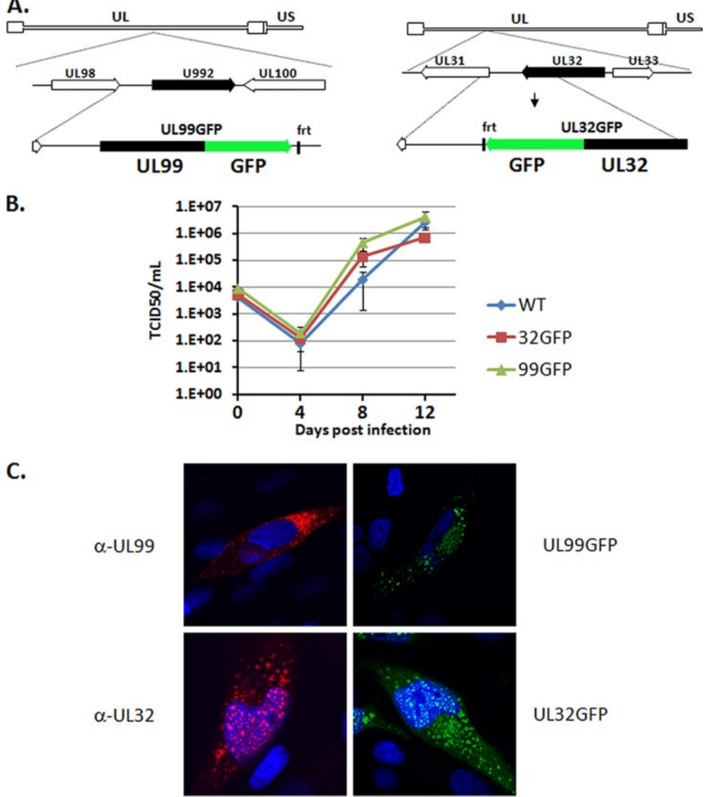
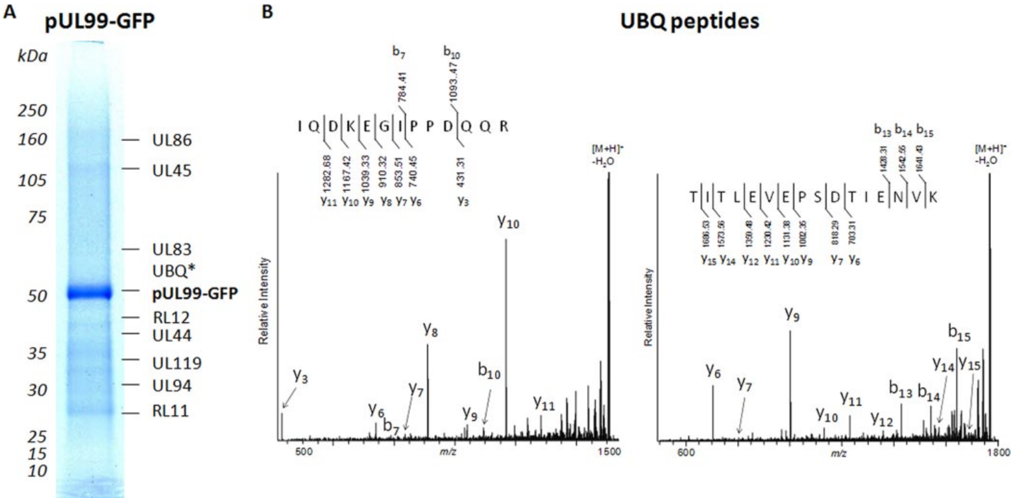
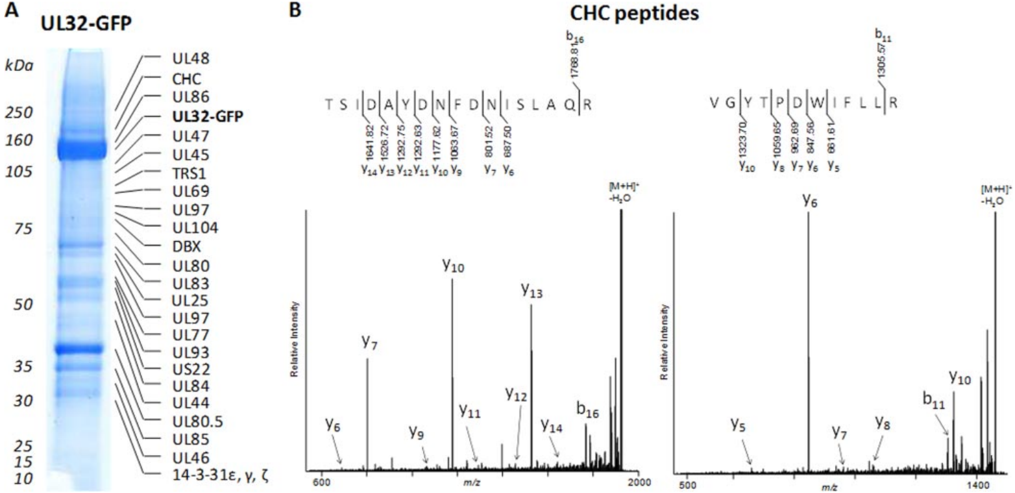
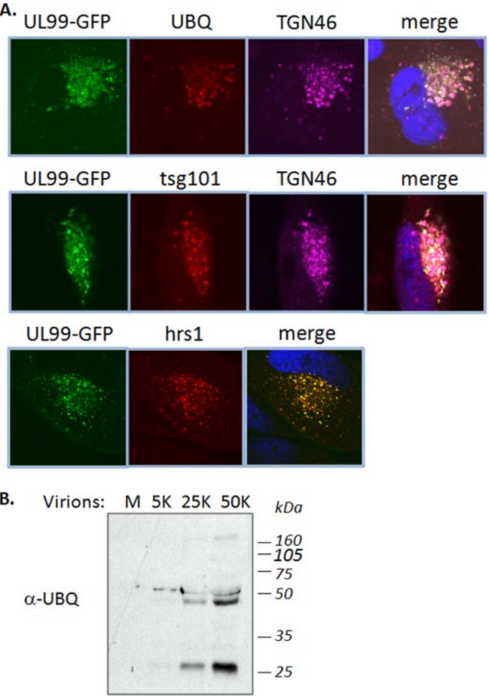
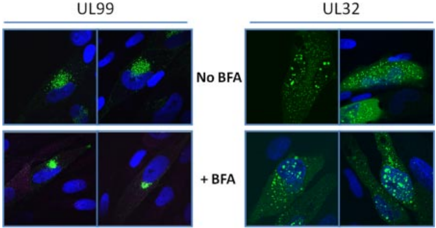
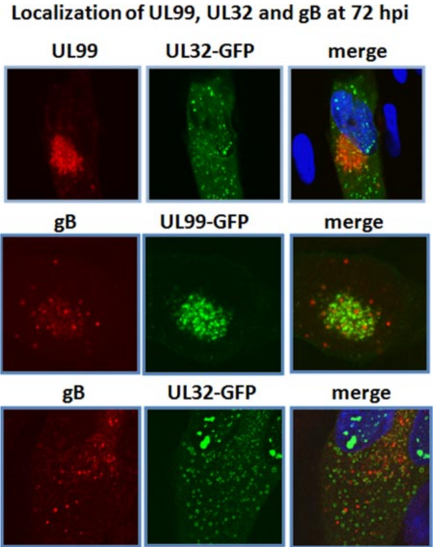
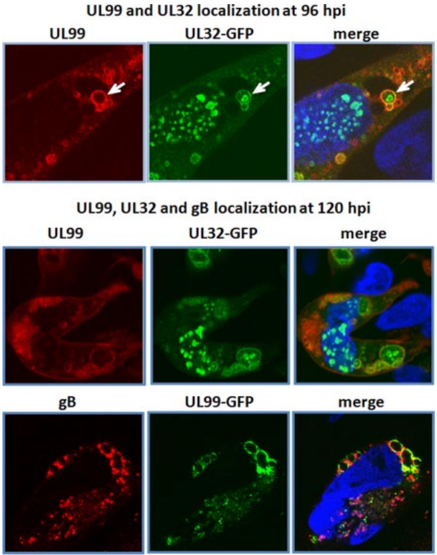
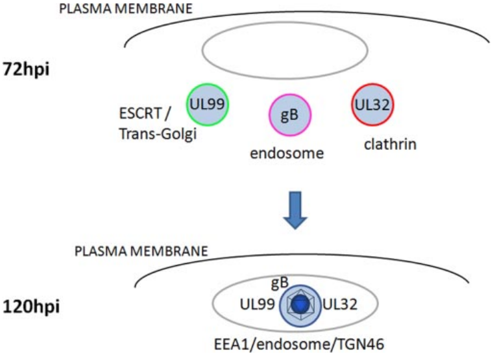
The assembly of infectious virus particles is a complex event. For human cytomegalovirus (HCMV) this process requires the coordinated expression and localization of at least 60 viral proteins that comprise the infectious virion. To gain insight into the mechanisms controlling this process, we identified protein binding partners for two viral proteins, pUL99 (also termed pp28) and pUL32 (pp150), which are essential for HCMV virion assembly. We utilized HCMV strains expressing pUL99 or pUL32 carboxyl-terminal green fluorescent protein fusion proteins from their native location in the HCMV genome. Based on the presence of ubiquitin in the pUL99 immunoisolation, we discovered that this viral protein colocalizes with components of the cellular endosomal sorting complex required for transport (ESCRT) pathway during the initial stages of virion assembly. We identified the nucleocapsid and a large number of tegument proteins as pUL32 binding partners, suggesting that events controlling trafficking of this viral protein in the cytoplasm regulate nucleocapsid/tegument maturation. The finding that pUL32, but not pUL99, associates with clathrin led to the discovery that the two viral proteins traffic via distinct pathways during the early stages of virion assembly. Additional investigation revealed that the majority of the major viral glycoprotein gB initially resides in a third compartment. Analysis of the trafficking of these three viral proteins throughout a time course of virion assembly allowed us to visualize their merger into a single large cytoplasmic structure during the late stages of viral assembly. We propose a model of HCMV virion maturation in which multiple components of the virion traffic independently of one another before merging.
Overview
The claims and statistics of this paper haven’t been checked yet.
Free: it reads the open-access text and checks the first 5 claims that cite a source we can check. Create a free account to check every claim.
Integrity signals
Registry
Cites
Statistics
Figures
Verification
Claims the paper makes
The claims and statistics of this paper haven’t been checked yet.
Free: it reads the open-access text and checks the first 5 claims that cite a source we can check. Create a free account to check every claim.
Claims other papers make about this one
Each is checked against this paper’s own text: does it say what the citing paper says it does?
In the citing paper
“Interestingly, at the same time, the viral glycoprotein gB localized to endosomes, and it was not until late in infection that all three proteins merged within a large virion assembly structure (42).”
From The Impact of Mass Spectrometry–Based Proteomics on Fundamental Discoveries in Virology (2014) · cites this paper as [42]
In the citing paper
“The existing functional knowledge regarding these factors led to the model that pUL99 associates with the ESCRT/TGN pathway, whereas pUL32 traffics in clathrin-coated vesicles.”
From The Impact of Mass Spectrometry–Based Proteomics on Fundamental Discoveries in Virology (2014) · cites this paper as [42]
Self-check
Percentages, sums and reported differences re-computed from the paper’s own numbers.
The self-check needs the paper’s full text.
Citations
Cites
Brefeldin A: insights into the control of membrane traffic and organelle structure.
Klausner, R. D., Donaldson, J. G., & Lippincott-Schwartz, J. (1992) · The Journal of cell biology · doi:10.1083/jcb.116.5.1071 · Cited by 1,846 · cited 1×
“The point of origin of clathrin-coated vesicles can be determined by using the drug brefeldin A (44).”
BackgroundKatzmann, D. J., Babst, M., & Emr, S. D. (2001) · Cell · doi:10.1016/s0092-8674(01)00434-2 · Cited by 1,429 · cited 1×
“have been implicated in the selection of cargo proteins into the ESCRT pathway by virtue of their ubiquitin binding domains (41, 42).”
BackgroundThe ESCRT machinery in endosomal sorting of ubiquitylated membrane proteins
Raiborg, C., & Stenmark, H. (2009) · Nature · doi:10.1038/nature07961 · Cited by 1,359
Functional profiling of a human cytomegalovirus genome
Dunn, W., Chou, C., Li, H., Hai, R., Patterson, D., Stolc, V., Zhu, H., & Liu, F. (2003) · Proceedings of the National Academy of Sciences · doi:10.1073/pnas.2334032100 · Cited by 645
Identification of Proteins in Human Cytomegalovirus (HCMV) Particles: the HCMV Proteome
Varnum, S. M., Streblow, D. N., Monroe, M. E., Smith, P., Auberry, K. J., Paša-Tolić, L., Wang, D., Camp, D. G., Rodland, K., Wiley, S., et al. (2004) · Journal of Virology · doi:10.1128/jvi.78.20.10960-10966.2004 · Cited by 598
Self-citationZhang, W., & Chait, B. T. (2000) · Analytical Chemistry · doi:10.1021/ac991363o · Cited by 595 · cited 1×
“The XProteo probability score indicates the discriminability (d ) for each candidate protein as a normalized distance between the distribution of the candidate protein score and that of randomly matched proteins (in units of standard deviation) based on an updated version of the ProFound Bayesian algorithm (33).”
MethodCoding potential of laboratory and clinical strains of human cytomegalovirus
Murphy, E., Yu, D., Grimwood, J., Schmutz, J., Dickson, M., Jarvis, M. A., Hahn, G., Nelson, J. A., Myers, R. M., & Shenk, T. E. (2003) · Proceedings of the National Academy of Sciences · doi:10.1073/pnas.2136652100 · Cited by 498 · cited 1×
“in the cytoplasm of infected cells (9).”
Self-citationFunctional map of human cytomegalovirus AD169 defined by global mutational analysis
Yu, D., Silva, M. C., & Shenk, T. (2003) · Proceedings of the National Academy of Sciences · doi:10.1073/pnas.1635160100 · Cited by 409 · cited 1×
“Recombinant Virus Construction—We used linear recombination in Escherichia coli (14, 22) to generate the BADinUL99GFP and BADinUL32GFP viruses in the BADwt (23) background.”
MethodSelf-citationInfluence of Secondary Structure on the Fragmentation of Protonated Peptides
Tsaprailis, G., Nair, H., Somogyi, Á., Wysocki, V. H., Zhong, W., Futrell, J. H., Summerfield, S. G., & Gaskell, S. J. (1999) · Journal of the American Chemical Society · doi:10.1021/ja982980h · Cited by 350
Sanchez, V., Greis, K. D., Sztul, E., & Britt, W. J. (2000) · Journal of Virology · doi:10.1128/jvi.74.2.975-986.2000 · Cited by 339
Cleavage N-Terminal to Proline: Analysis of a Database of Peptide Tandem Mass Spectra
Breci, L. A., Tabb, D. L., Yates, J. R., & Wysocki, V. H. (2003) · Analytical Chemistry · doi:10.1021/ac026359i · Cited by 312
ESCRTing proteins in the endocytic pathway
SAKSENA, S., SUN, J., CHU, T., & EMR, S. (2007) · Trends in Biochemical Sciences · doi:10.1016/j.tibs.2007.09.010 · Cited by 294
Yu, D., Smith, G. A., Enquist, L. W., & Shenk, T. (2002) · Journal of Virology · doi:10.1128/jvi.76.5.2316-2328.2002 · Cited by 259 · cited 3×
“We used linear recombination in Escherichia coli (14, 22) to generate the BADinUL99GFP and BADinUL32GFP viruses in the BADwt (23) background.”
MethodSelf-citationFluorescent Proteins as Proteomic Probes
Cristea, I. M., Williams, R., Chait, B. T., & Rout, M. P. (2005) · Molecular & Cellular Proteomics · doi:10.1074/mcp.m500227-mcp200 · Cited by 251
Self-citationEndosomal and non-endosomal functions of ESCRT proteins
Slagsvold, T., Pattni, K., Malerød, L., & Stenmark, H. (2006) · Trends in Cell Biology · doi:10.1016/j.tcb.2006.04.004 · Cited by 238
The Cell Biology of HIV-1 Virion Genesis
Bieniasz, P. D. (2009) · Cell Host & Microbe · doi:10.1016/j.chom.2009.05.015 · Cited by 215 · cited 1×
“human immunodeficiency virus, type 1 (47)) and several DNA viruses (including HCMV (8), herpes simplex virus 1 (48), and likely HHV6 (49)) during the envelopment process.”
BackgroundTegument Proteins of Human Cytomegalovirus
Kalejta, R. F. (2008) · Microbiology and Molecular Biology Reviews · doi:10.1128/mmbr.00040-07 · Cited by 208 · cited 1×
“Although the formation of the nucleocapsid occurs in the nucleus, the herpesvirus tegument is acquired as the nucleocapsid moves into the cytoplasm through an undefined mechanism (2, 3).”
BackgroundSilva, M. C., Yu, Q.-C., Enquist, L., & Shenk, T. (2003) · Journal of Virology · doi:10.1128/jvi.77.19.10594-10605.2003 · Cited by 195 · cited 2×
“envelopment of capsids to generate virions (10, 11).”
BackgroundMethodSelf-citationDas, S., Vasanji, A., & Pellett, P. E. (2007) · Journal of Virology · doi:10.1128/jvi.01077-07 · Cited by 194 · cited 1×
“This work has led to the view that HCMV virion maturation occurs by progressing through the endoplasmic reticulum to the Golgi apparatus (4, 5) and then via the ESCRT pathway to its site of release into the extracellular space (8).”
BackgroundMoorman, N. J., Cristea, I. M., Terhune, S. S., Rout, M. P., Chait, B. T., & Shenk, T. (2008) · Cell Host & Microbe · doi:10.1016/j.chom.2008.03.002 · Cited by 194 · cited 2×
“After 72 h, the cells were harvested and frozen in liquid nitrogen as small pellets as described previously (22).”
MethodSelf-citationTracking and Elucidating Alphavirus-Host Protein Interactions
Cristea, I. M., Carroll, J.-W. N., Rout, M. P., Rice, C. M., Chait, B. T., & MacDonald, M. R. (2006) · Journal of Biological Chemistry · doi:10.1074/jbc.m603980200 · Cited by 192
Self-citationBritt, W. J. (1984) · Virology · doi:10.1016/0042-6822(84)90193-4 · Cited by 186 · cited 1×
“The following antibodies were used in this study: anti-pUL99 (11), anti-gB (34), anti-UL48 (35), anti-ubiquitin (Santa Cruz Biotechnology, Inc.”
MethodCalder, A. G., Garden, K. E., Anderson, S. E., & Lobley, G. E. (1999) · Rapid Communications in Mass Spectrometry · doi:10.1002/(sici)1097-0231(19991115)13:21<2174::aid-rcm771>3.0.co;2-k · Cited by 184
Human Herpesvirus‐6 Induces MVB Formation, and Virus Egress Occurs by an Exosomal Release Pathway
Mori, Y., Koike, M., Moriishi, E., Kawabata, A., Tang, H., Oyaizu, H., Uchiyama, Y., & Yamanishi, K. (2008) · Traffic · doi:10.1111/j.1600-0854.2008.00796.x · Cited by 182
Sampaio, K. L., Cavignac, Y., Stierhof, Y., & Sinzger, C. (2005) · Journal of Virology · doi:10.1128/jvi.79.5.2754-2767.2005 · Cited by 155 · cited 1×
“Despite its localization to both the nucleus and the cytoplasm during infection (19, 20), pUL32 acts primarily in the cytoplasm where it may affect the localization and stability of the nucleocapsid (16, 21).”
BackgroundHomman-Loudiyi, M., Hultenby, K. R., Britt, W. J., & Söderberg‐Nauclér, C. (2003) · Journal of Virology · doi:10.1128/jvi.77.5.3191-3203.2003 · Cited by 153 · cited 1×
“This work has led to the view that HCMV virion maturation occurs by progressing through the endoplasmic reticulum to the Golgi apparatus (4, 5) and then via the ESCRT pathway to its site of release into the extracellular space (8).”
BackgroundPawliczek, T., & Crump, C. M. (2009) · Journal of Virology · doi:10.1128/jvi.00574-09 · Cited by 150 · cited 1×
“human immunodeficiency virus, type 1 (47)) and several DNA viruses (including HCMV (8), herpes simplex virus 1 (48), and likely HHV6 (49)) during the envelopment process.”
BackgroundQin, J., & Chait, B. T. (1995) · Journal of the American Chemical Society · doi:10.1021/ja00124a045 · Cited by 122
Human Cytomegalovirus Exploits ESCRT Machinery in the Process of Virion Maturation
Tandon, R., AuCoin, D. P., & Mocarski, E. S. (2009) · Journal of Virology · doi:10.1128/jvi.01093-09 · Cited by 110 · cited 4×
“This work has led to the view that HCMV virion maturation occurs by progressing through the endoplasmic reticulum to the Golgi apparatus (4, 5) and then via the ESCRT pathway to its site of release into the extracellular space (8).”
BackgroundInfluentialAuCoin, D. P., Smith, G. B., Meiering, C. D., & Mocarski, E. S. (2006) · Journal of Virology · doi:10.1128/jvi.00457-06 · Cited by 106 · cited 2×
“Despite its localization to both the nucleus and the cytoplasm during infection (19, 20), pUL32 acts primarily in the cytoplasm where it may affect the localization and stability of the nucleocapsid (16, 21).”
BackgroundESCRT ubiquitin-binding domains function cooperatively during MVB cargo sorting
Shields, S. B., Oestreich, A. J., Winistorfer, S., Nguyen, D., Payne, J. A., Katzmann, D. J., & Piper, R. (2009) · Journal of Cell Biology · doi:10.1083/jcb.200811130 · Cited by 101 · cited 1×
“have been implicated in the selection of cargo proteins into the ESCRT pathway by virtue of their ubiquitin binding domains (41, 42).”
BackgroundHuman cytomegalovirus virion proteins
Britt, W. J., & Boppana, S. B. (2004) · Human Immunology · doi:10.1016/j.humimm.2004.02.008 · Cited by 98
Membrane traffic in the secretory pathway: The life cycle of a transport vesicle
Spang, A. (2008) · Cellular and Molecular Life Sciences · doi:10.1007/s00018-008-8349-y · Cited by 94 · cited 1×
“soluble N-ethylmaleimide-sensitive factor attachment protein receptor (SNARE) proteins) (50).”
BackgroundBechtel, J. T., & Shenk, T. E. (2002) · Journal of Virology · doi:10.1128/jvi.76.3.1043-1050.2002 · Cited by 87 · cited 1×
“The following antibodies were used in this study: anti-pUL99 (11), anti-gB (34), anti-UL48 (35), anti-ubiquitin (Santa Cruz Biotechnology, Inc.”
MethodSelf-citationStructure and Formation of the Cytomegalovirus Virion
Gibson, W. (2008) · Current topics in microbiology and immunology · doi:10.1007/978-3-540-77349-8_11 · Cited by 85 · cited 1×
“Although the formation of the nucleocapsid occurs in the nucleus, the herpesvirus tegument is acquired as the nucleocapsid moves into the cytoplasm through an undefined mechanism (2, 3).”
BackgroundMALDI produced ions inspected with a linear ion trap-orbitrap hybrid mass analyzer
Strupat, K., Kovtoun, V. V., Bui, H. A., Viner, R., Stafford, G. C., & Horning, S. R. (2009) · Journal of the American Society for Mass Spectrometry · doi:10.1016/j.jasms.2009.04.013 · Cited by 81
Buchkovich, N. J., Maguire, T. G., Paton, A. W., Paton, J. C., & Alwine, J. C. (2009) · Journal of Virology · doi:10.1128/jvi.00762-09 · Cited by 78
Cytomegalovirus Basic Phosphoprotein (pUL32) Binds to Capsids In Vitro through Its Amino One-Third
Baxter, M. K., & Gibson, W. (2001) · Journal of Virology · doi:10.1128/jvi.75.15.6865-6873.2001 · Cited by 73 · cited 3×
“pUL32 is capable of directly binding to the nucleocapsid, and this event occurs shortly after nucleocapsid assembly (18).”
BackgroundResultInfluentialHuman cytomegalovirus cell-to-cell spread in the absence of an essential assembly protein
Silva, M. C., Schröer, J., & Shenk, T. (2005) · Proceedings of the National Academy of Sciences · doi:10.1073/pnas.0409597102 · Cited by 65 · cited 1×
“ess that does not require enveloped nucleocapsids (13).”
BackgroundSelf-citationClathrin-mediated endocytosis before fluorescent proteins
Roth, M. G. (2005) · Nature Reviews Molecular Cell Biology · doi:10.1038/nrm1783 · Cited by 62 · cited 1×
“Clathrin-coated vesicles originate in multiple locations in the cell, and their formation has long been associated with vesicular trafficking (43).”
BackgroundSeo, J.-Y., & Britt, W. J. (2007) · Journal of Virology · doi:10.1128/jvi.02852-06 · Cited by 62
Jones, T. R., & Lee, S.-W. (2004) · Journal of Virology · doi:10.1128/jvi.78.3.1488-1502.2004 · Cited by 57 · cited 1×
“envelopment of capsids to generate virions (10, 11).”
BackgroundNuclear localization of the human cytomegalovirus tegument protein pp150 (ppUL32)
Hensel, G., Meyer, H. H., Gartner, S., Brand, G., & Kern, H. F. (1995) · Journal of General Virology · doi:10.1099/0022-1317-76-7-1591 · Cited by 57 · cited 1×
“Despite its localization to both the nucleus and the cytoplasm during infection (19, 20), pUL32 acts primarily in the cytoplasm where it may affect the localization and stability of the nucleocapsid (16, 21).”
BackgroundControl of Cytoplasmic Maturation Events by Cytomegalovirus Tegument Protein pp150
Tandon, R., & Mocarski, E. S. (2008) · Journal of Virology · doi:10.1128/jvi.00533-08 · Cited by 56 · cited 1×
“Despite its localization to both the nucleus and the cytoplasm during infection (19, 20), pUL32 acts primarily in the cytoplasm where it may affect the localization and stability of the nucleocapsid (16, 21).”
BackgroundProteomics: A Cold Spring Harbor Laboratory Course Manual
Link, A. J., & LaBaer, J. (2008) · Cited by 55
Resolving the composition of protein complexes using a MALDI LTQ orbitrap
Luo, Y., Li, T., Yu, F., Kramer, T., & Cristea, I. M. (2010) · Journal of the American Society for Mass Spectrometry · doi:10.1016/j.jasms.2009.08.026 · Cited by 38 · cited 4×
“MS/MS analyses were carried out by MALDI ion trap CID as described (26) using precursor ion isolation in the linear ion trap, a 2-mass unit isolation width, a normalized collision energy of 33%, an activation q of 0.”
MethodSelf-citationAffinity Purification of Protein Complexes
Cristea, I. M., & Chait, B. T. (2011) · Cold Spring Harbor Protocols · doi:10.1101/pdb.prot5611 · Cited by 38
Self-citationMeyer, H. H., Ripalti, A., Kern, H. F., Hensel, G. M., Landini, M. P., & Radsak, K. (1997) · Journal of General Virology · doi:10.1099/0022-1317-78-10-2621 · Cited by 37
Inhibition of Human Cytomegalovirus Maturation by Brefeldin A
Eggers, M., Bogner, E., Agricola, B. A., Kern, H., & Radsak, K. (1992) · Journal of General Virology · doi:10.1099/0022-1317-73-10-2679 · Cited by 32 · cited 1×
“Clathrin has been found to be required for late events in the HCMV life cycle (45, 46) as treatment with brefeldin A inhibits envelopment.”
BackgroundModular Mass Spectrometric Tool for Analysis of Composition and Phosphorylation of Protein Complexes
Blethrow, J. D., Tang, C., Deng, C., & Krutchinsky, A. N. (2007) · PLoS ONE · doi:10.1371/journal.pone.0000358 · Cited by 17 · cited 1×
“1% (v/v) TFA directly onto a magnetic MALDI target (27).”
BackgroundKregler, O., Schilf, R., Lander, A., Bannert, N., & Bogner, E. (2009) · FEBS Letters · doi:10.1016/j.febslet.2009.03.011 · Cited by 5 · cited 1×
“Clathrin has been found to be required for late events in the HCMV life cycle (45, 46) as treatment with brefeldin A inhibits envelopment.”
Background
Cited by
Jean Beltran, P. M., Federspiel, J. D., Sheng, X., & Cristea, I. M. (2017) · Molecular Systems Biology · doi:10.15252/msb.20167062 · Cited by 212
“…studying the RNA virus Sindbis (Cristea et al , 2006), this approach was later applied to other viruses, such as the RNA virus respiratory syncytial virus (Wu et al , 2012) and the DNA viruses human cyto-megalovirus (HCMV) and pseudorabies virus (PRV) (Moorman et al , 2010; Kramer et al , 2012).”
InfluentialSelf-citationMass spectrometry‐based protein–protein interaction networks for the study of human diseases
Richards, A. L., Eckhardt, M., & Krogan, N. J. (2021) · Molecular Systems Biology · doi:10.15252/msb.20188792 · Cited by 201
Morris, J. H., Knudsen, G. M., Verschueren, E., Johnson, J. R., Cimermancic, P., Greninger, A. L., & Pico, A. R. (2014) · Nature Protocols · doi:10.1038/nprot.2014.164 · Cited by 198
A Portrait of the Human Organelle Proteome In Space and Time during Cytomegalovirus Infection
Jean Beltran, P. M., Mathias, R. A., & Cristea, I. M. (2016) · Cell Systems · doi:10.1016/j.cels.2016.08.012 · Cited by 174
Self-citationDas, S., & Pellett, P. E. (2011) · Journal of Virology · doi:10.1128/jvi.00155-11 · Cited by 152
“(4, 40), HCMV virion assembly involves multiple cellular trafficking pathways and takes place along a highly integrated assembly-egress continuum that extends from nucleocapsid assembly in the nucleus through cytoplasmic tegumentation, final envelopment, and then the regulated release of mature infectious virions at t…”
Background
Metadata
- Authors
- Moorman, N. J., Sharon-Friling, R., Shenk, T., & Cristea, I. M.
- Affiliations
- Princeton University (US)
- Corresponding author
- Cristea, Ileana M.
- Venue
- Molecular & Cellular Proteomics
- Publisher
- Elsevier BV
- Published
- 2010-05
- Volume
- 9
- Issue
- 5
- Pages
- 851-860
- ISSN
- 1535-9476 (ISSN-L)
- PMC
- PMC2871419
- OpenAlex
- W2109177153
- Cited by
- 97
- References
- 51
- Citations by year
- 2026: 1 · 2025: 1 · 2024: 2 · 2023: 3 · 2022: 6 · 2021: 10 · 2020: 5 · 2019: 2 · 2018: 6 · 2017: 9 · 2016: 5 · 2015: 11 · 2014: 11 · 2013: 5 · 2012: 9
- FWCI
- 4.50
- Type
- journal article
- Language
- en
- Open access
- hybrid
- doi.org
- Licence
- cc-by
- www.elsevier.com/tdm/userlicense/1.0/ (tdm)
- www.elsevier.com/legal/tdmrep-license (tdm)
- creativecommons.org/licenses/by/4.0/ (vor, 3799 d)
- Locations
- Molecular & Cellular Proteomics (publishedVersion, cc-by)
- PubMed Central (publishedVersion)
- PubMed (publishedVersion)
- Carolina Digital Repository (University of North Carolina at Chapel Hill) (submittedVersion)
- UNC Libraries
- Funders
- Princeton University
- National Institutes of Health
- National Institute on Drug Abuse (DP1DA026192)
- National Cancer Institute (CA85786, CA 82396, R01CA085786, R01CA082396)
- Topics
- Health Sciences › Medicine › Epidemiology › Cytomegalovirus and herpesvirus research
- Health Sciences › Medicine › Infectious Diseases › Herpesvirus Infections and Treatments
- Life Sciences › Biochemistry, Genetics and Molecular Biology › Cell Biology › Cellular transport and secretion
- Keywords
- human cytomegalovirus, viral assembly, virion maturation, ESCRT pathway, clathrin, viral protein trafficking, nucleocapsid, tegument proteins, gB glycoprotein, ubiquitin, protein-protein interaction, spatial proteomics
- MeSH terms
- Amino Acid Sequence, Cell Compartmentation, Clathrin, Cytomegalovirus, Fibroblasts, Humans, Models, Biological, Molecular Sequence Data, Protein Binding, Recombination, Genetic, Time Factors, Viral Proteins, Virion, Virus Assembly, Nucleocapsid, Brefeldin A, Protein Transport, Proteomics, Host-Pathogen Interactions, Endosomal Sorting Complexes Required for Transport
About these checks
Registry, retraction, Cites and statistics results are computed, not judged, with one exception: a printed reference that no index lists is read once by a model before it counts as a citation error. Claims are extracted by a model and kept only when their quote appears verbatim in the text; each cited source is then checked, with a model’s help, for whether it says what the claim relies on. Those verdicts can be wrong — read the claim’s quote and the cited source before relying on one.
Statistics and arithmetic are recomputed, not judged.
Confidence bands are shown only for fields calibrated on our annotated test set. None is calibrated yet, so no band is shown.
What counts as a claim ›How we measure confidence ›How we check this ›
Are you an author, or do you see a problem with this page? Request a review
Data sources
Bibliographic data: Semantic Scholar, OpenAlex, Crossref.
Contains information from the Semantic Scholar Academic Graph Datasets, made available under the ODC Attribution License (ODC-BY 1.0).
Semantic Scholar’s data is described in: Kinney, R., et al. (2023). The Semantic Scholar Open Data Platform. arXiv:2301.10140.
