

Utilising one-on-one interactive oral assessments as the major final assessment within a bioscience course
Open accessThe DOI matches its Crossref record; 38 of the 38 references it cites were found in a registry or an index; 4 of the 27 sources its claims cite were checked for support.
Abstract
Traditional written examinations in higher education face challenges of authenticity and integrity. This study evaluated interactive oral assessments (IOA) as an alternative to traditional written examinations in bioscience education. Using a mixed-methods approach, data from 722 students across multiple offerings of the course (2009–2023) were analysed, comparing cohorts before and after the IOA implementation. Quantitative analysis revealed significant improvements in both final assessment performance and overall course grades following IOA introduction, with no significant differences in performance across gender, international status, or language background. Thematic analysis of focus groups and surveys identified four key themes: assessment authenticity, academic integrity benefits, student anxiety evolution, and inclusive assessment practices. While students initially reported anxiety about the oral format, their perceptions became increasingly positive with experience, and this anxiety did not negatively impact performance. The IOA format demonstrated resilience to academic misconduct, including inappropriate use of Generative AI tools. Our findings suggest that with appropriate scaffolding and implementation strategies, an IOA can serve as an effective, equitable assessment approach that enhances authentic student learning while maintaining academic integrity in undergraduate science education.
Overview
CoChat Summary
TL;DR
This study evaluated a 40% interactive oral assessment (IOA) as the major final assessment in a second-year undergraduate genetics course, replacing a written examination. It reports improved final assessment and course marks after IOA introduction, with no significant performance differences by gender, international status, or language background, alongside positive student and staff perceptions despite initial anxiety.
Key findings
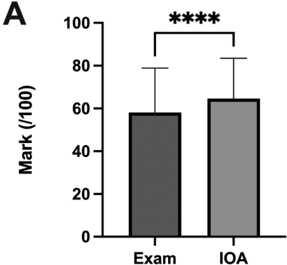
- Across 722 students (pre-IOA 2009–2019, n = 590; post-IOA 2022–2023, n = 132), final assessment marks and whole-course marks increased significantly after IOA introduction (p < 0.0001, Mann-Whitney U test).
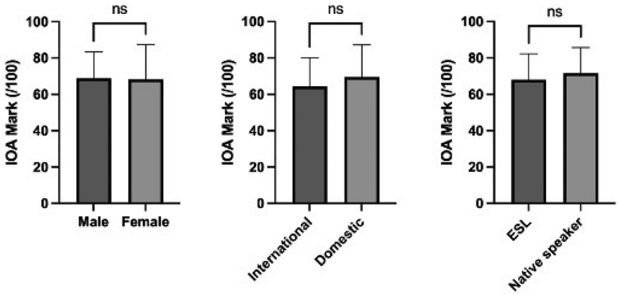
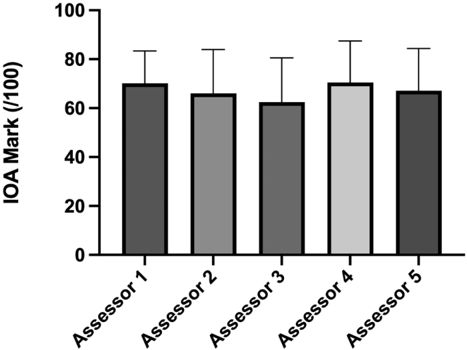
- No significant differences in mean IOA scores were observed for gender, international vs. domestic enrolment, or English as an additional language vs. native English speakers; no significant differences in average marks between assessors were found.
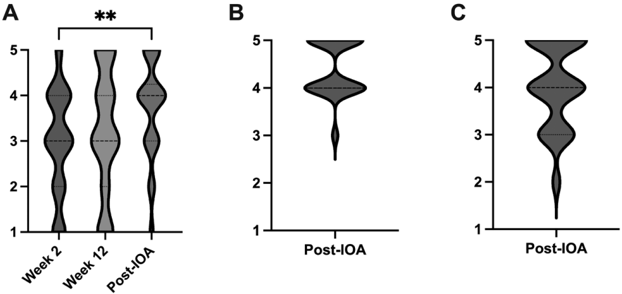
- Student surveys showed a statistically significant increase in agreement that the major-IOA was easier to prepare for than a traditional written examination (p < 0.001) and that it allowed them to share their perspectives (p < 0.05); post-IOA preference for IOA over written examination also increased significantly (p < 0.01).
- Thematic analysis identified four themes: assessment authenticity, academic integrity benefits, student anxiety evolution, and inclusive assessment practices; students reported initial anxiety but increasingly positive perceptions with experience, and anxiety did not negatively impact performance.
Methods
- Mixed-methods design comparing pre-IOA and post-IOA cohorts in a 13-week second-year Genetics course at the University of South Australia; 2020–2021 cohorts were excluded due to COVID-19 delivery changes.
- Quantitative data included student demographics, assessment grades, course grades, myCourseExperience responses (average response rate 33.4%), and assessment-specific Likert surveys (90% response rate for Surveys 1 and 2; 72% for the 2023 Post-IOA survey).
- Qualitative data included 2022 focus groups with seven self-nominated students early in the course, five of whom participated again post-IOA, plus a teaching staff focus group; analysis used thematic analysis, with quantitative comparisons via t-tests, Mann-Whitney, or Kruskal-Wallis tests (p < 0.05 significant).
Limitations
- The paper states that the pre- and post-IOA comparison spans different academic years, potentially introducing confounding variables, and that voluntary survey participation may have introduced self-selection bias in the qualitative data.
- Evident from the text: the study is limited to one undergraduate genetics course at one institution, the post-IOA cohort is much smaller (n = 132) than the pre-IOA cohort (n = 590), and the focus groups relied on self-nominated students (seven initially, five follow-up), which may further limit generalizability.
Model-written summary. Check it against the paper before relying on it.
Integrity signals
Registry
Cites
Statistics
Figures




Verification
Claims the paper makes
3 Valid · 1 Not valid · 18 Not checked · 86 Own results and interpretations
The cited sources support only part of this claim — read each source’s verdict below.
In the paper
“This addresses common concerns about potential bias in oral assessments, particularly for EAl students (Huxham, Campbell, and Westwood 2012).”
§ Utilising one-on-one interactive oral assessments as the major final assessment within a bioscience course > Discussion
What the sources say
- Partly supportedcites Huxham, Campbell, and Westwood 2012 matched to “Oral versus written assessments: a test of student performance and attitudes” (2012) sourceExperimental — accuracy not yet measured
Huxham, Campbell and Westwood (2012) do document and then answer the common concerns about bias in oral assessment: the Introduction lists warnings that orals 'may be open to bias' (citing Wakeford 2000) and may favour the extravert/confident student (Wisker 2004), and the Discussion concludes 'The current work has found no evidence of disadvantage accruing from oral assessments to particular groups of students' and that orals need not be restricted to 'special' groups. However, the 'particularly for EAL students' qualifier is not supported: the paper's inclusivity argument is about students with disabilities/dyslexia (via Waterfield and West 2006), and non-native English speakers appear only in the Randomised test section as two students who asked to move from the oral to the written group, with no analysis of bias affecting that group. Note also the paper's own caution that sample sizes were too small for sub-group divisions and its sample was biology students at a single institution. (LLM, conf=0.78)
plainstates a cause- Asserted: passes — The authors put it forward as true.
- Checkable: passes — It can be checked against evidence.
- Load-bearing: passes — The paper’s conclusions depend on it.
- Based: passes — The paper gives a reason why it holds.
- Partly supported
The cited sources support only part of this claim — read each source’s verdict below.
In the paper
“These findings support the authentic assessment literature suggesting that assessment methods aligned with professional practice can enhance student engagement and learning outcomes (Ashford-rowe, Herrington, and Brown 2014;Fawns et al. 2025).”
§ Utilising one-on-one interactive oral assessments as the major final assessment within a bioscience course > Discussion
What the sources say
- Partly supportedcites Ashford-rowe, Herrington, and Brown 2014 matched to “Establishing the critical elements that determine authentic assessment” (2014) sourceExperimental — accuracy not yet measured
Ashford-Rowe, Herrington and Brown (2014) do support the engagement half of the claim: their study's conclusion (The resilience of the eight critical design elements, p. 10) reports that 'students ... responded well to a task that had been designed to incorporate the characteristics of authentic assessment', noted their 'clear understanding of the ultimate workplace benefits', and that the redesigned activity 'was considered valuable to students'; alignment of assessment with real-world/professional contexts is built into the framework itself (Introduction, p. 4; element 3, Transfer of knowledge, p. 5). However, the paper never measures or demonstrates enhanced learning outcomes — its evaluation was of student perception of one redesigned module only. The learning-outcome link appears in the paper as a quotation credited to another work (Meyers and Nulty, 2009, p. 567, cited on p. 10) and to Boud (1995) on p. 3, so presenting this source as establishing that aligned assessment enhances learning outcomes overstates it. (LLM, conf=0.72)
- Partly supportedcites Fawns et al. 2025 matched to “Authentic assessment: from panacea to criticality” (2025) sourceExperimental — accuracy not yet measured
The Conclusions section concedes only the engagement half: 'While authenticity in assessment can promote relevance, engagement and application to important contexts, principles of authenticity require integration into a broader pedagogical framework...' — a hedged acknowledgement, not an endorsement that professionally aligned methods enhance learning outcomes. On the learning-outcomes part the paper runs the other way: the Introduction (p. 1) frames the belief that authentic assessment ensures 'relevancy to future personal, social and professional contexts (Ashford-Rowe, Herrington, and Brown 2014; Villarroel et al. 2018...)' as one of the 'superpowers' that make it a panacea, and 'Authentic assessment and the problem of preparing students for their futures' states 'immersion in authentic activity is not necessarily conducive to learning' and that performativity 'can lead to superficial and distorted engagement with learning activities'. So citing Fawns et al. 2025 as literature 'suggesting' enhanced engagement and learning outcomes overstates the source; the unsupported part is the enhancement of learning outcomes (and, as the paper's position rather than a concession, the engagement claim). (LLM, conf=0.75)
hedgedstates a possible cause- Asserted: passes — The authors put it forward as true.
- Checkable: passes — It can be checked against evidence.
- Load-bearing: passes — The paper’s conclusions depend on it.
- Based: passes — The paper gives a reason why it holds.
- Partly supported
A result the paper reports from its own data — it cites no other source for it, so there is none to check. The quote shows it is in the paper.
In the paper
“Staff were aware of student anxiety during the IOA, with one assessor noting: 'I was shocked by the anxiety [noticeable] for some of those students' .”
§ Utilising one-on-one interactive oral assessments as the major final assessment within a bioscience course > Theme 3: Anxiety
plain- Asserted: passes — The authors put it forward as true.
- Checkable: passes — It can be checked against evidence.
- Load-bearing: unclear — It is unclear whether the paper’s conclusions depend on it.
- Based: passes — The paper gives a reason why it holds.
- Rests on an assumption not shown here.
A result the paper reports from its own data — it cites no other source for it, so there is none to check. The quote shows it is in the paper.
In the paper
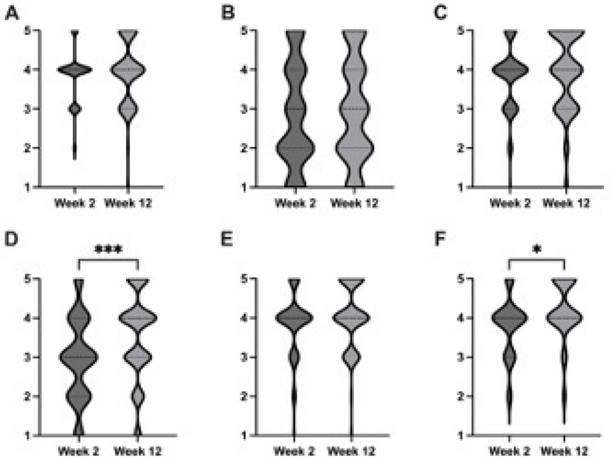
“Additionally, a majority of respondents agreed that the IOA effectively assessed course content and objectives, and that they felt adequately supported by teaching staff during preparation (Figures 5(B,C)).”
§ Utilising one-on-one interactive oral assessments as the major final assessment within a bioscience course > Student perceptions of the major-IOA
plain- Asserted: passes — The authors put it forward as true.
- Checkable: passes — It can be checked against evidence.
- Load-bearing: unclear — It is unclear whether the paper’s conclusions depend on it.
- Based: passes — The paper gives a reason why it holds.
- Rests on an assumption not shown here.
A result the paper reports from its own data — it cites no other source for it, so there is none to check. The quote shows it is in the paper.
In the paper
“Students reported assessment-related anxiety at both time points (Figure 4(B)).”
§ Utilising one-on-one interactive oral assessments as the major final assessment within a bioscience course > Student perceptions of the major-IOA
plain- Asserted: passes — The authors put it forward as true.
- Checkable: passes — It can be checked against evidence.
- Load-bearing: unclear — It is unclear whether the paper’s conclusions depend on it.
- Based: passes — The paper gives a reason why it holds.
- Rests on an assumption not shown here.
54 more claims
Create a free account to see all 108 claims and to verify the 7 references still open.
- Probably not a substantial claim. 34
- It may state two separate claims as one. 27
Claims other papers make about this one
Each is checked against this paper’s own text: does it say what the citing paper says it does?
The source backs part of the claim, not all of it — or backs it for a different population, condition or comparison.
In the citing paper
“Pairing group inquiry with individual oral defenses preserves authenticity while protecting validity (Davey et al., 2025;Ward et al., 2024).”
From OTE Reconstructing the Assessment System of the Undergraduate Course “Plant Physiology” in the AI Era: A Framework for Authentic and AI-Resilient Task Design (2026) · cites this paper as Davey et al., 2025
Experimental — accuracy not yet measuredThe cited source says what the claim attributes to it.
In the citing paper
“studies show no significant performance differences across demographics when students are carefully scaffolded (Davey et al., 2025).”
From OTE Reconstructing the Assessment System of the Undergraduate Course “Plant Physiology” in the AI Era: A Framework for Authentic and AI-Resilient Task Design (2026) · cites this paper as Davey et al., 2025
The cited source says what the claim attributes to it.
In the citing paper
“This improved student engagement is consistent with other applications of IOA in the literature (Davey et al., 2025;Ward et al., 2023).”
From Replacing Traditional Written Laboratory Reports with Interactive Oral Assessments: Enhancing Laboratory Skill Assessment in Undergraduate Genetics Education (2026) · cites this paper as Davey et al., 2025
Citations
Cites
Using thematic analysis in psychology
Braun, V., & Clarke, V. (2006) · Qualitative Research in Psychology · doi:10.1191/1478088706qp063oa · Cited by 194,414
Teaching for quality learning at university
Boulton‐Lewis, G. M. (2008) · Faculty of Education · Cited by 4,926
Analyzing and Interpreting Data From Likert-Type Scales
Sullivan, G. M., & Artino, A. R. (2013) · Journal of Graduate Medical Education · doi:10.4300/jgme-5-4-18 · Cited by 3,044 · cited 1×
“For five-point likert-style items, either parametric t-tests, non-parametric Mann-Whitney tests, or non-parametric Kruskal-Wallis tests are suitable to assess differences between groups with a p-value of 0.05 considered to be significant (Sullivan and Artino 2013).”
InfluentialDouglas, O. B., & Holland, B. F. (2015) · Fundamentals of educational psychology. · doi:10.1037/14910-020 · Cited by 2,272
(1998) · Perspectives on Individual Differences · doi:10.1007/b109548 · Cited by 1,105
Educative assessment: designing assessments to inform and improve student performance
(1999) · Choice Reviews Online · doi:10.5860/choice.36-2887 · Cited by 931
A five-dimensional framework for authentic assessment
Gulikers, J. T. M., Bastiaens, T. J., & Kirschner, P. A. (2004) · Educational Technology Research and Development · doi:10.1007/bf02504676 · Cited by 916 · cited 1×
“…prevalent in STEM education, face increasing scrutiny regarding their reliability, validity, authenticity, and capacity to assess deep learning (Gulikers, Bastiaens, and Kirschner 2004; Haertel 2006; Biggs and Tang 2011), student psychological distress, and potential to perpetuate academic…”
ChatGPT in higher education: considerations for academic integrity and student learning
(2023) · Journal of Applied Learning & Teaching · doi:10.37074/jalt.2023.6.1.17 · Cited by 853 · cited 1×
“…online assessment modalities have impacted traditional evaluation paradigms while highlighting long-standing concerns about written examinations’ reliability, validity, authenticity, and capacity to assess deep learning (Holden, Norris, and Kuhlmeier 2021; Sullivan, Kelly, and Mclaughlan 2023).”
Authentic assessment: creating a blueprint for course design
Villarroel, V., Bloxham, S., Bruna, D., Bruna, C., & Herrera-Seda, C. (2018) · Assessment & Evaluation in Higher Education · doi:10.1080/02602938.2017.1412396 · Cited by 560 · cited 1×
“…of generative artificial intelligence (GenAI) have fundamentally disrupted higher education’s traditional assessment paradigms (Moorhouse, Yeo, and Wan 2023), prompting universities to explore innovative and authentic approaches to teaching and assessment (Wiggins 1998; Villarroel et al. 2018).”
Contract cheating: a survey of australian university students
Bretag, T., Harper, R., Burton, M., Ellis, C., Newton, P., Rozenberg, P., Saddiqui, S., & van Haeringen, K. (2019) · Studies in Higher Education · doi:10.1080/03075079.2018.1462788 · Cited by 476 · cited 1×
“Despite cited benefits in knowledge recall (Butler and roediger 2007) and deterrence of academic misconduct, these advantages are increasingly contested in contemporary educational research (Bretag et al. 2019; Harper, Bretag, and rundle 2021; French, Dickerson, and Mulder 2024).”
Generative AI tools and assessment: Guidelines of the world's top-ranking universities
Moorhouse, B. L., Yeo, M. A., & Wan, Y. (2023) · Computers and Education Open · doi:10.1016/j.caeo.2023.100151 · Cited by 461 · cited 1×
“…and the explosion of generative artificial intelligence (GenAI) have fundamentally disrupted higher education’s traditional assessment paradigms (Moorhouse, Yeo, and Wan 2023), prompting universities to explore innovative and authentic approaches to teaching and assessment (Wiggins 1998;…”
Testing improves long-term retention in a simulated classroom setting
Butler, A. C., & Roediger, H. L. (2007) · European Journal of Cognitive Psychology · doi:10.1080/09541440701326097 · Cited by 434 · cited 1×
“Despite cited benefits in knowledge recall (Butler and roediger 2007) and deterrence of academic misconduct, these advantages are increasingly contested in contemporary educational research (Bretag et al. 2019; Harper, Bretag, and rundle 2021; French, Dickerson, and Mulder 2024).”
Employability and Good Learning in Higher Education
Knight, P. T., & Yorke, M. (2003) · Teaching in Higher Education · doi:10.1080/1356251032000052294 · Cited by 421 · cited 1×
“The student perceptions align with research by Joughin on the development of student confidence in oral assessment formats, while the reported benefits mirror those identified in studies of workplace-aligned assessment practices (Knight and Yorke 2003).”
Beyond test anxiety: Development and validation of the test emotions questionnaire (TEQ)
Pekrun, R., Goetz, T., Perry, R. P., Kramer, K., Hochstadt, M., & Molfenter, S. (2004) · Anxiety, Stress & Coping · doi:10.1080/10615800412331303847 · Cited by 412 · cited 1×
“Assessment anxiety is a well-documented phenomenon which can significantly impact student performance and well-being (Zeidner 1998; Pekrun et al. 2004).”
Establishing the critical elements that determine authentic assessment
Ashford-Rowe, K., Herrington, J., & Brown, C. (2014) · Assessment & Evaluation in Higher Education · doi:10.1080/02602938.2013.819566 · Cited by 390
Academic Integrity in Online Assessment: A Research Review
Holden, O. L., Norris, M. E., & Kuhlmeier, V. A. (2021) · Frontiers in Education · doi:10.3389/feduc.2021.639814 · Cited by 310 · cited 1×
“…online assessment modalities have impacted traditional evaluation paradigms while highlighting long-standing concerns about written examinations’ reliability, validity, authenticity, and capacity to assess deep learning (Holden, Norris, and Kuhlmeier 2021; Sullivan, Kelly, and Mclaughlan 2023).”
Sotiriadou, P., Logan, D., Daly, A., & Guest, R. (2020) · Studies in Higher Education · doi:10.1080/03075079.2019.1582015 · Cited by 265 · cited 1×
“IOA is a semi-structured oral assessment defined as a ‘ genuine and unscripted interaction between a student and an assessor ’ (Sotiriadou et al. 2020).”
When old becomes new: a case study of oral examination as an online assessment tool
Akimov, A., & Malin, M. D. (2020) · Assessment & Evaluation in Higher Education · doi:10.1080/02602938.2020.1730301 · Cited by 193 · cited 1×
“In the pursuit of more creative and secure assessment methodologies, oral assessments have gained prominence in tertiary education with a diverse array of modalities, utilised in both formative and summative contexts (Sutherland et al. 2019; Akimov and Malin 2020; Nallaya et al. 2024).”
Oral versus written assessments: a test of student performance and attitudes
Huxham, M., Campbell, F., & Westwood, J. (2012) · Assessment & Evaluation in Higher Education · doi:10.1080/02602938.2010.515012 · Cited by 187 · cited 3×
“This addresses common concerns about potential bias in oral assessments, particularly for EAl students (Huxham, Campbell, and Westwood 2012).”
A review of the benefits and drawbacks of high-stakes final examinations in higher education
French, S., Dickerson, A., & Mulder, R. A. (2024) · Higher Education · doi:10.1007/s10734-023-01148-z · Cited by 126 · cited 1×
“Despite cited benefits in knowledge recall (Butler and roediger 2007) and deterrence of academic misconduct, these advantages are increasingly contested in contemporary educational research (Bretag et al. 2019; Harper, Bretag, and rundle 2021; French, Dickerson, and Mulder 2024).”
Detecting contract cheating: examining the role of assessment type
Harper, R., Bretag, T., & Rundle, K. (2021) · Higher Education Research & Development · doi:10.1080/07294360.2020.1724899 · Cited by 124 · cited 1×
“Despite cited benefits in knowledge recall (Butler and roediger 2007) and deterrence of academic misconduct, these advantages are increasingly contested in contemporary educational research (Bretag et al. 2019; Harper, Bretag, and rundle 2021; French, Dickerson, and Mulder 2024).”
Student conceptions of oral presentations
Joughin, G. (2007) · Studies in Higher Education · doi:10.1080/03075070701346873 · Cited by 110 · cited 1×
“This addresses common concerns about the subjective nature of oral assessments raised in previous studies (Joughin 2007; Huxham, Campbell, and Westwood 2012). research by Memon, Joughin, and Memon (2010) specifically emphasizes the importance of standardised assessment criteria and assessor…”
Exams disadvantage women in introductory biology
Ballen, C. J., Salehi, S., & Cotner, S. (2017) · PLOS ONE · doi:10.1371/journal.pone.0186419 · Cited by 108 · cited 1×
“…authenticity, and capacity to assess deep learning (Gulikers, Bastiaens, and Kirschner 2004; Haertel 2006; Biggs and Tang 2011), student psychological distress, and potential to perpetuate academic inequities across demographic groups (Shapiro 2014; Klenowski 2016; Ballen, Salehi, and Cotner 2017).”
Memon, M. A., Joughin, G., & Memon, B. (2008) · Advances in Health Sciences Education · doi:10.1007/s10459-008-9111-9 · Cited by 90 · cited 3×
“…concerns about the subjective nature of oral assessments raised in previous studies (Joughin 2007; Huxham, Campbell, and Westwood 2012). research by Memon, Joughin, and Memon (2010) specifically emphasizes the importance of standardised assessment criteria and assessor training in maintaining…”
Test anxiety among nursing students: A systematic review
Shapiro, A. L. (2014) · Teaching and learning in nursing · doi:10.1016/j.teln.2014.06.001 · Cited by 84 · cited 1×
“…authenticity, and capacity to assess deep learning (Gulikers, Bastiaens, and Kirschner 2004; Haertel 2006; Biggs and Tang 2011), student psychological distress, and potential to perpetuate academic inequities across demographic groups (Shapiro 2014; Klenowski 2016; Ballen, Salehi, and Cotner 2017).”
Culturally Responsive Assessment: Provisional Principles
Walker, M. E., Olivera‐Aguilar, M., Lehman, B., Laitusis, C., Guzman‐Orth, D., & Gholson, M. (2023) · ETS Research Report Series · doi:10.1002/ets2.12374 · Cited by 62 · cited 1×
“This perspective aligns with work on culturally responsive assessment that balances cultural sensitivity with preparation for professional contexts (Walker et al. 2023).”
Exams? Why worry? Interpreting anxiety as facilitative and stress appraisals
Strack, J., & Esteves, F. (2015) · Anxiety, Stress, & Coping · doi:10.1080/10615806.2014.931942 · Cited by 52 · cited 1×
“In fact, we observed an improvement in course outcomes suggesting the IOA may induce facilitating rather than debilitating anxiety (Strack and Esteves 2015).”
Authentic assessment: from panacea to criticality
Fawns, T., Bearman, M., Dawson, P., Nieminen, J. H., Ashford-Rowe, K., Willey, K., Jensen, L. X., Damşa, C., & Press, N. (2025) · Assessment & Evaluation in Higher Education · doi:10.1080/02602938.2024.2404634 · Cited by 49 · cited 1×
“These findings support the authentic assessment literature suggesting that assessment methods aligned with professional practice can enhance student engagement and learning outcomes (Ashford-rowe, Herrington, and Brown 2014; Fawns et al. 2025).”
The effectiveness of oral presentation assessment in a Finance subject: An empirical examination
Bhati, S. (2012) · Journal of University Teaching and Learning Practice · doi:10.53761/1.9.2.6 · Cited by 44 · cited 1×
“…expertise (Burke-Smalley 2014), others high-light potential limitations, including lack of standardisation, the potential for bias, equity concerns for students with English as an additional language (EAl), and heightened student anxiety (Bhati 2012; Turner et al. 2013; Mascadri et al. 2023).”
Using Oral Exams to Assess Communication Skills in Business Courses
Burke-Smalley, L. A. (2014) · Business and Professional Communication Quarterly · doi:10.1177/2329490614537873 · Cited by 29 · cited 1×
“While numerous studies on oral assessments report improved student performance, development of communication skills, and subject matter expertise (Burke-Smalley 2014), others high-light potential limitations, including lack of standardisation, the potential for bias, equity concerns for students…”
Developing interactive oral assessments to foster graduate attributes in higher education
Tan, C. P., Howes, D., Tan, R. K. W., & Dancza, K. M. (2022) · Assessment & Evaluation in Higher Education · doi:10.1080/02602938.2021.2020722 · Cited by 29
Turner, K., Roberts, L., Heal, C., & Wright, L. (2013) · Assessment & Evaluation in Higher Education · doi:10.1080/02602938.2012.680016 · Cited by 26 · cited 1×
“…expertise (Burke-Smalley 2014), others high-light potential limitations, including lack of standardisation, the potential for bias, equity concerns for students with English as an additional language (EAl), and heightened student anxiety (Bhati 2012; Turner et al. 2013; Mascadri et al. 2023).”
Ward, M., O’Riordan, F., Logan-Fleming, D., Cooke, D., Concannon-Gibney, T., Efthymiou, M., & Watkins, N. (2024) · Innovations in Education and Teaching International · doi:10.1080/14703297.2023.2251967 · Cited by 25 · cited 1×
“This format allows for a more flexible assessment, enabling assessors to ascertain students’ understanding through follow-up questions and discussions (Memon, Joughin, and Memon 2010), while preparing students for professional communication and promoting academic integrity (Ward et al. 2024).”
Plagiarism or not? investigation of Turnitin®‐detected similarity hits in biology laboratory reports
Bertram Gallant, T., Picciotto, M., Bozinovic, G., & Tour, E. (2019) · Biochemistry and Molecular Biology Education · doi:10.1002/bmb.21236 · Cited by 21 · cited 1×
“This aligns with the conceptualization of academic integrity as not merely preventing misconduct but fostering ethical and effective learning practices (Bertram Gallant et al. 2019).”
Assessing Diagnostic Reasoning Using a Standardized Case-Based Discussion
Sutherland, R., Reid, K., Chiavaroli, N. G., Smallwood, D., & McColl, G. (2019) · Journal of Medical Education and Curricular Development · doi:10.1177/2382120519849411 · Cited by 12 · cited 1×
“In the pursuit of more creative and secure assessment methodologies, oral assessments have gained prominence in tertiary education with a diverse array of modalities, utilised in both formative and summative contexts (Sutherland et al. 2019; Akimov and Malin 2020; Nallaya et al. 2024).”
Assessors’ perspectives of an oral assessment within a teaching performance assessment
Mascadri, J., Spina, N., Spooner-Lane, R., & Briant, E. (2023) · Assessment & Evaluation in Higher Education · doi:10.1080/02602938.2022.2122930 · Cited by 8 · cited 1×
“…expertise (Burke-Smalley 2014), others high-light potential limitations, including lack of standardisation, the potential for bias, equity concerns for students with English as an additional language (EAl), and heightened student anxiety (Bhati 2012; Turner et al. 2013; Mascadri et al. 2023).”
Measuring final-year nursing students' satisfaction with the viva assessment
Salamonson, Y., Metcalfe, L., Alexandrou, E., Cotton, A. H., Mcnally, S., Murphy, J., & Frost, S. A. (2016) · Nurse Education in Practice · doi:10.1016/j.nepr.2015.09.003 · Cited by 6 · cited 1×
“…negotiation of meaning, and assessor support unavailable in written formats. rather than disadvantaging EAl students as some previous literature suggested (Salamonson et al. 2016), our implementation with appropriate scaffolding and support structures enabled equitable performance outcomes.”
Fairer Assessment for Indigenous Students: An Australian Perspective
Klenowski, V. (2015) · The enabling power of assessment · doi:10.1007/978-3-319-23347-5_11 · Cited by 6 · cited 1×
“…authenticity, and capacity to assess deep learning (Gulikers, Bastiaens, and Kirschner 2004; Haertel 2006; Biggs and Tang 2011), student psychological distress, and potential to perpetuate academic inequities across demographic groups (Shapiro 2014; Klenowski 2016; Ballen, Salehi, and Cotner 2017).”
Research works printed but not linked: 1
- Nallaya, S., S. Gentili, S. Weeks, and K. Baldock. 2024. "The Validity, reliability, Academic Integrity and Integration of Oral Assessments in Higher Education: A Systematic review. " Issues in Educational Research 34 (2): 629-646.
Cited by
Student Perceptions of Cognitive, Psychomotor and Affective Learning in the Undergraduate Laboratory
Cleaver, A., Crean, L. M., & Howitt, S. M. (2025) · Biochemistry and Molecular Biology Education · doi:10.1002/bmb.70011 · Cited by 6
Assurance by design: embedding the SAGE Defend step in AI-integrated higher education assessment
Elkhodr, M., & Gide, E. (2026) · Frontiers in Education · doi:10.3389/feduc.2026.1872630 · Cited by 3
Jhangiani, R. S., & Baker, N. (2026) · Psychology Learning & Teaching · doi:10.1177/14757257261467363 · Cited by 1
Developing Academic Capacity for Interactive Oral Assessments
Kalman, E., Clarke, S. L., Miller, B., & Frawley, J. (2026) · IGI Global eBooks · doi:10.4018/979-8-3373-3638-1.ch012
An analysis of AI ‐enabled authentic assessment strategy using text mining techniques
Ogunleye, B., Olayinka, O., Zakariyyah, K. I., Ajao, O., & Sharma, H. (2026) · Review of Education · doi:10.1002/rev3.70206 · Cited by 1
Metadata
- Authors
- Davey, S. K., Birbeck, D., Nallaya, S., Sallows, G., & Della Vedova, C. B.
- Affiliations
- Department of Clinical and Health Sciences, University of South Australia
- University of South Australia (AU)
- Teaching Innovation Unit, University of South Australia
- Flinders University (AU)
- Venue
- Assessment & Evaluation in Higher Education
- Publisher
- Informa UK Limited
- Published
- 2025-05-14
- Volume
- 50
- Issue
- 7
- Pages
- 1154-1171
- ISSN
- 0260-2938 (ISSN-L)
- 1469-297X
- OpenAlex
- W4410357651
- Cited by
- 9
- References
- 38
- Citations by year
- 2026: 8 · 2025: 1
- FWCI
- 27.67
- Type
- journal article
- Language
- en
- Open access
- hybrid
- doi.org
- Licence
- Locations
- Assessment & Evaluation in Higher Education (publishedVersion, cc-by-nc-nd)
- Adelaide Research & Scholarship (AR&S) (University of Adelaide) (submittedVersion, cc-by-nc-nd)
- Funders
- University of South Australia Teaching & Learning Development Grant
- Topics
- Social Sciences › Education › Student Assessment and Feedback
- Social Sciences › Education › Academic integrity and plagiarism
- Social Sciences › Education › Evaluation of Teaching Practices
- Keywords
- final assessment, biology education, academic integrity, assessment authenticity, student anxiety, generative AI misuse, inclusive assessment, assessment equity, written examinations, undergraduate science education
About these checks
Registry, retraction, Cites and statistics results are computed, not judged, with one exception: a printed reference that no index lists is read once by a model before it counts as a citation error. Claims are extracted by a model and kept only when their quote appears verbatim in the text; each cited source is then checked, with a model’s help, for whether it says what the claim relies on. Those verdicts can be wrong — read the claim’s quote and the cited source before relying on one.
The claim verdicts this report counts are experimental: their accuracy is not yet measured.
A language model drew the claims from the paper on 2026-10-10, under version 3 of the claim definition (model deepseek-v4.1-flash, prompt extract-v3).
A second model labelled each claim on 2026-10-10 (model jev-1.13-20260917, definition revision gold-guideline-v0.2).
Cited sources are checked with a language model’s help (qwen3.8-omni-flash).
Statistics and arithmetic are recomputed, not judged.
Confidence bands are shown only for fields calibrated on our annotated test set. None is calibrated yet, so no band is shown.
What counts as a claim ›How we measure confidence ›How we check this ›
Are you an author, or do you see a problem with this page? Request a review
Data sources
Bibliographic data: Semantic Scholar, OpenAlex, Crossref.
Contains information from the Semantic Scholar Academic Graph Datasets, made available under the ODC Attribution License (ODC-BY 1.0).
Semantic Scholar’s data is described in: Kinney, R., et al. (2023). The Semantic Scholar Open Data Platform. arXiv:2301.10140.
