

Fostering student engagement with motivating teaching: an observation study of teacher and student behaviours
Open accessThe DOI matches its Crossref record; 74 of the 74 references it cites were found in a registry or an index.
Abstract
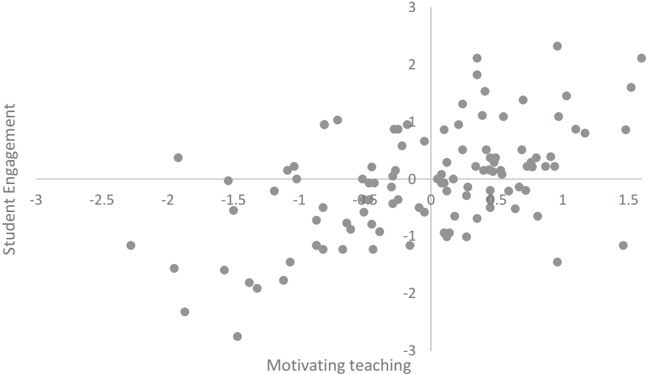
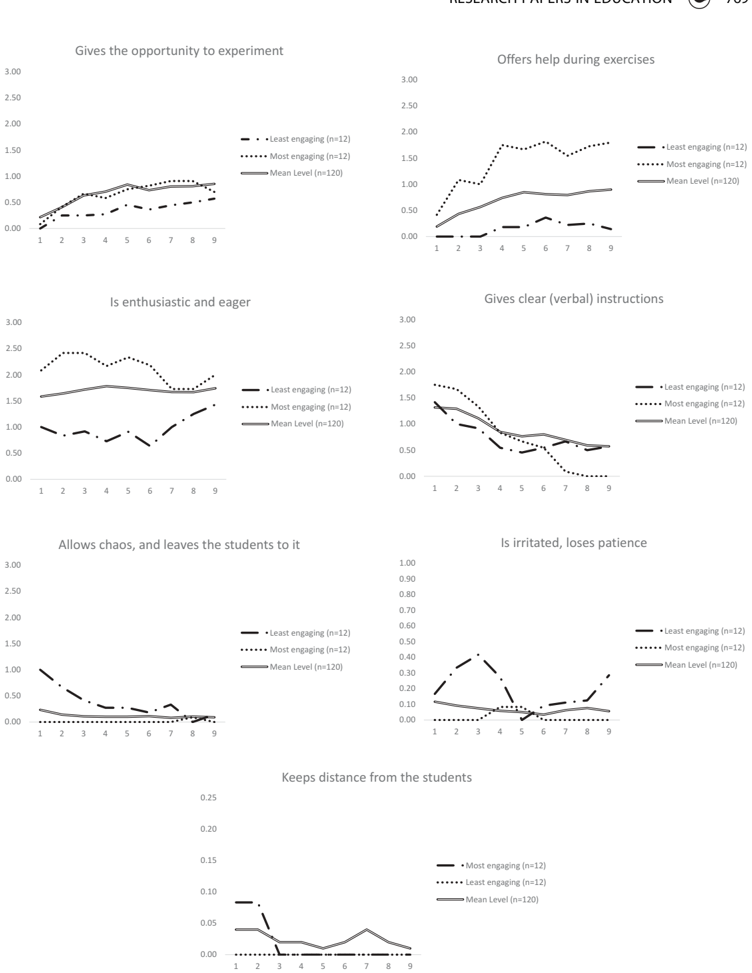
Given the importance of student engagement for students’ current and future success, it is essential to explore how teachers can foster student engagement within lessons. This study relied on classroom observations to describe how teachers applied Self-Determination Theory (SDT) related (de)motivating teaching behaviours to foster students’ engagement. Results from 120 observed lessons of 43 teachers indicated there were distinct relations between motivating teaching behaviours and student engagement. Most striking regarding the use of motivating teaching behaviours were the higher levels of relatedness support and guidance during activities in lessons in which students showed the highest levels of engagement. Conversely, in lessons where students were least engaged, teachers showed higher levels of chaotic teaching behaviours. Analyses of behaviours within lowly and highly engaging lessons showed that teachers in highly engaging lessons were observed to start with high levels of enthusiasm and after about ten to fifteen minutes focused on activating their students by offering room for experimenting and support while students worked on assignments. In contrast, teachers in lowly engaging lessons seemed to have a tendency to employ demotivating teaching behaviour at the start of the lesson. Implications and directions for future research are discussed.
Overview
The claims and statistics of this paper haven’t been checked yet.
Free: it reads the open-access text and checks the first 5 claims that cite a source we can check. Create a free account to check every claim.
Integrity signals
Registry
Cites
Statistics
Figures


Verification
Claims the paper makes
The claims and statistics of this paper haven’t been checked yet.
Free: it reads the open-access text and checks the first 5 claims that cite a source we can check. Create a free account to check every claim.
Claims other papers make about this one
Each is checked against this paper’s own text: does it say what the citing paper says it does?
The source backs part of the claim, not all of it — or backs it for a different population, condition or comparison.
In the citing paper
“Also, Cents-Boonstra et al. [53] investigated the role of motivating teaching behaviour and found that teachers who offered support and guidance during learning had more student engagement in comparison to teachers who did not offer any support or show enthusiasm for teaching.”
From Impact of online learning on student's performance and engagement: a systematic review (2024) · cites this paper as [53]
Experimental — accuracy not yet measured
Self-check
Percentages, sums and reported differences re-computed from the paper’s own numbers.
The self-check needs the paper’s full text.
Citations
Cites
Ryan, R. M., & Deci, E. L. (2000) · American Psychologist · doi:10.1037//0003-066x.55.1.68 · Cited by 54,599 · cited 1×
“In the current study, we relied on self-determination theory (SDT, Ryan and Deci 2000), to describe the classroom dynamics related to observed student engagement and (de)motivating teaching behaviours within lessons.”
Method-Handbook of Self-Determination Research by Edward L. Deci and Richard M. Ryan (Editors)
Paulson, D. S. (2002) · The Journal of mind and behavior · Cited by 5,169
Skinner, E. A., & Belmont, M. J. (1993) · Journal of Educational Psychology · doi:10.1037/0022-0663.85.4.571 · Cited by 3,428 · cited 2×
“Structure has been defined as the provision of desired information and guidance such that students can successfully achieve various outcomes (Grolnick and Pomerantz 2009; Skinner and Belmont 1993).”
BackgroundJournal on Educational Psychology
Winston, J., Mandernach, J., Winsor, D. L., Sinnott, J. D., & Gujjar, A. A. (2014) · Cited by 2,947
Niemiec, C. P., & Ryan, R. M. (2009) · Theory and Research in Education · doi:10.1177/1477878509104318 · Cited by 2,542
REEVE, J. (2009) · Educational Psychologist · doi:10.1080/00461520903028990 · Cited by 1,728 · cited 1×
“On the one hand teachers’ (de)motivating behaviour is influenced by trait-like teacher factors, such as teachers’ own motivational orientation (Van den Berghe et al. 2013), beliefs (Hornstra et al. 2015) and a preferred teaching style (Aelterman et al. 2014; Reeve 2009).”
BackgroundJang, H., Reeve, J., & Deci, E. L. (2010) · Journal of Educational Psychology · doi:10.1037/a0019682 · Cited by 1,650 · cited 8×
“In general, these studies indicate that observed motivating teaching behaviour (Reeve et al. 2004) is positively related to student engagement (Jang, Reeve, and Deci 2010; Reeve et al. 2004; Van den Berghe et al. 2016).”
BackgroundInfluentialAgency as a fourth aspect of students’ engagement during learning activities
Reeve, J., & Tseng, C.-M. (2011) · Contemporary Educational Psychology · doi:10.1016/j.cedpsych.2011.05.002 · Cited by 1,618
Enhancing Students' Engagement by Increasing Teachers' Autonomy Support
Reeve, J., Jang, H., Carrell, D., Jeon, S., & Barch, J. (2004) · Motivation and Emotion · doi:10.1023/b:moem.0000032312.95499.6f · Cited by 1,594 · cited 8×
“In general, these studies indicate that observed motivating teaching behaviour (Reeve et al. 2004) is positively related to student engagement (Jang, Reeve, and Deci 2010; Reeve”
BackgroundMethodInfluentialHandbook of Motivation at School
(2016) · Routledge eBooks · doi:10.4324/9781315773384 · Cited by 1,131
Research works printed but not linked: 6
- Drechsel, B., K. Prenzel, and M. Kramer. 2002. ' Self-determined and Interested Learning in Vocational Education. ' In Teaching -learning Processes in Vocational Education , edited by K. Beck, 43 -68. Frankfurt am Main: Peter Lang.
- Good, T., and J. Brophy. 1987. Looking in Classrooms . 4th ed. New York: Harper and Row.
- Hornstra, L., D. Weijers, I. Van der Veen, and T. Peetsma. 2016. Het Motiveren Van Leerlingen Met Verschillende Prestatieniveaus En Achtergrondken merken: Onderzoeksverslag . Utrecht: Universiteit Utrecht.
- Pelletier, L., and E. C. Sharp. 2009. ' Administrative Pressures and Teachers ' Interpersonal Behaviour in the Classroom. ' School Field 7 (2): 174 -183.
- Reeve, J. 2002. ' Self-determination Theory Applied to Educational Settings. ' In Handbook of Selfdetermination Research , edited by E. L. Deci and R. M. Ryan, 2 -183, New York: University of Rochester Press.
- Vugteveen, J., A. C. Timmermans, H. Korpershoek, M. Van Rooijen, and M.-C. Opdenakker. 2016. Overgangen En Aansluitingen in Het Onderwijs: Deelrapportage 3: Empirische Studie Naar De Cognitieve En Niet-cognitieve Ontwikkeling Van Leerlingen Rondom De Vmbo-mbo Overgang . Groningen: GION onderzoek/onderwijs.
Cited by
Impact of online learning on student's performance and engagement: a systematic review
Akpen, C. N., Asaolu, S., Atobatele, S., Okagbue, H., & Sampson, S. (2024) · Discover Education · doi:10.1007/s44217-024-00253-0 · Cited by 205
“Also, Cents-Boonstra et al. [53] investigated the role of motivating teaching behaviour and found that teachers who offered support and guidance during learning had more student engagement in comparison to teachers who did not offer any support or show enthusiasm for teaching.”
Huang, L., & Wang, D. (2023) · Behavioral Sciences · doi:10.3390/bs13090704 · Cited by 170
Classroom Behavior Recognition Using Computer Vision: A Systematic Review
Liu, Q., Jiang, X., & Jiang, R. (2025) · Sensors · doi:10.3390/s25020373 · Cited by 97
Bao, C., Zhang, L. J., & Dixon, H. R. (2021) · Frontiers in Psychology · doi:10.3389/fpsyg.2021.710736 · Cited by 78
“, 2020), which requires that teachers should analyze the external factors that might impact student engagement; (2) student engagement is associated with student motivation (Yuan and Zhang, 2017; Bond et al., 2020; Cents-Boonstra et al., 2020) and persistence to learning (Archambault et al.”
BackgroundInfluentialSystematic review of inquiry-based learning: assessing impact and best practices in education
Ramaila, S. M. (2024) · F1000Research · doi:10.12688/f1000research.155367.1 · Cited by 91
Unveiling Chinese senior high school EFL students' burnout and engagement: Profiles and antecedents
Wu, H., Zeng, Y., & Fan, Z. (2024) · Acta Psychologica · doi:10.1016/j.actpsy.2024.104153 · Cited by 64
Patterns of motivating teaching behaviour and student engagement: a microanalytic approach
Cents-Boonstra, M., Lichtwarck‐Aschoff, A., Lara, M. M., & Denessen, E. J. P. G. (2021) · European Journal of Psychology of Education · doi:10.1007/s10212-021-00543-3 · Cited by 67
Self-citationPaulmann, S., & Weinstein, N. (2023) · British Journal of Educational Psychology · doi:10.1111/bjep.12567 · Cited by 38
Miao, H., Guo, R., & Li, M. (2025) · Frontiers in Psychology · doi:10.3389/fpsyg.2025.1562354 · Cited by 86
Effect of teachers’ teaching strategies on students’ learning engagement: moderated mediation model
Zhang, H., Yang, J., & Liu, Z. (2024) · Frontiers in Psychology · doi:10.3389/fpsyg.2024.1475048 · Cited by 103
Tomaszewski, W., Xiang, N., Huang, Y., Western, M., McCourt, B., & McCarthy, I. (2022) · Education Sciences · doi:10.3390/educsci12050358 · Cited by 80
“Future studies could further explore the effect of teaching practices using randomized in-class experiments [20].”
BackgroundYan, X.-Q., Zhou, Y.-Y., Zhang, K., & Cui, G. (2023) · Psychology Research and Behavior Management · doi:10.2147/prbm.s400137 · Cited by 53
“Engagement involves more than participation in an activity; it also includes emotions, feelings, and finding value in an experience.(88,89) Learning engagement in this study pertains to the”
BackgroundLi, Q., Jiang, Q., Liang, J., Pan, X., & Zhao, W. (2022) · Australasian Journal of Educational Technology · doi:10.14742/ajet.7280 · Cited by 66
“By using peer review, and teacher-student mutual evaluation and interaction, students may reduce online loneliness and anxiety, and enhance their perception of relatedness (Cents-Boonstra et al., 2020).”
BackgroundMotivating and demotivating teaching styles: A comparison among planned, adopted, and perceived
Wang, J., Meng, W., Xing, Q., & Moè, A. (2024) · Social Psychology of Education · doi:10.1007/s11218-024-09943-x · Cited by 42
“…autonomy support and structure, while need-thwarting teaching and adoption of a controlling or chaotic style hampers student optimal functioning (e.g., Cents-Boonstra et al., 2021; Cheon et al., 2020; Cronin et al., 2019; Herrera et al., 2021; Lombardero Posada et al., 2023; Zhang et al., 2020).”
InfluentialDong, Z., Liu, H., & Zheng, X. (2021) · PLoS ONE · doi:10.1371/journal.pone.0244935 · Cited by 42
Man, S. S., Fang, Y., Chan, A. H. S., & Han, J. (2024) · Education and Information Technologies · doi:10.1007/s10639-024-12969-5 · Cited by 25
Deep, P. D., Chen, Y., Ghosh, N., & Rahaman, M. S. (2024) · Education Sciences · doi:10.3390/educsci15010033 · Cited by 71
Decolonising the curriculum: students’ perspectives in criminology
Elhinnawy, H. (2022) · Race Ethnicity and Education · doi:10.1080/13613324.2022.2154374 · Cited by 25
“Engagement is viewed in the literature as vital for enhanced learning outcomes for all students (Saeed and Zyngier 2012; Cents-Boonstra et al. 2020).”
BackgroundGuo, Q., Wang, X., Gao, Z., Gao, J., Lin, X., & Samsudin, S. (2025) · PLoS ONE · doi:10.1371/journal.pone.0331876 · Cited by 48
“Additionally, teacher relatedness support increases students’ motivation and engagement [45].”
A Video Dataset for Classroom Group Engagement Recognition
Lu, W., Yang, Y., Song, R., Chen, Y., Wang, T., & Bian, C. (2025) · Scientific Data · doi:10.1038/s41597-025-04987-w · Cited by 27
The impact of digital learning on Saudi nursing students' engagement: A qualitative study
Alosaimi, D. N. (2024) · Nursing Open · doi:10.1002/nop2.2188 · Cited by 16
“…to promptly assess students' perceptions of engagement, previous studies have more objectively defined engagement, discussed how students acquire the ability to engage, and provided examples of engagement (Amerstorfer & Freiin von Münster-Kistner, 2021; Cents-Boonstra et al., 2021 ; Kong, 2021).”
BackgroundGao, Z., Hu, G., Akram, S., Hassan, M. U., Shahzad, M. F., & Jan, S. A. (2025) · Scientific Reports · doi:10.1038/s41598-025-90900-9 · Cited by 44
Jonge, S. D., Opdecam, E., & Haerens, L. L. (2024) · Contemporary Educational Psychology · doi:10.1016/j.cedpsych.2024.102273 · Cited by 19
Self-citationHow Teachers’ Emotional Leadership Influences College Students’ Learning Engagement
Wang, S., Lu, Z., Li, C., & Zhang, Y. (2024) · Behavioral Sciences · doi:10.3390/bs14090748 · Cited by 27
“…the empathy displayed by teachers can inspire students in post-secondary education to ask questions proactively and engage with the course material [16], and teachers’ social skills used in the classroom can affect the emotional and behavioral engagement of students in grades five to ten [17].”
BackgroundExploring student engagement in virtual classrooms: a person-centred approach using cluster analysis
Gupta, K. P. (2022) · International Journal of Educational Management · doi:10.1108/ijem-08-2022-0309 · Cited by 17
Virtual classrooms engagement among Jordanian EFL students during the pandemic of COVID-19 period
Al-khresheh, M. H. (2023) · Cogent Education · doi:10.1080/2331186x.2023.2188989 · Cited by 18
“Student engagement is typically characterised as the level of cognitive, emotional, and behavioural communication between students and their learning environment (Alghamdi et al., 2020; Cents-Boonstra et al., 2020; Gonzalez et al., 2020), but it is seen as essential for students’ future success (Quin, 2017).”
BackgroundBuilding confidence in STEM students through breaking (unseen) barriers
Heron, P. J., & Williams, J. A. (2022) · Geoscience Communication · doi:10.5194/gc-5-355-2022 · Cited by 11
Teraoka, E., de Diego, F. E. L., & Kirk, D. (2023) · European Physical Education Review · doi:10.1177/1356336x231186751 · Cited by 23
Honson, V., Vu, T. T., Tran, T. P., & Estay, W. T. (2024) · Journal of Work-Applied Management · doi:10.1108/jwam-11-2023-0121 · Cited by 20
The Relationship of Affective, Behavioral and Cognitive Engagements in ESL Higher Learning Classroom
Nazamud-Din, A., Zaini, M. H., & Jamil, N. H. M. (2020) · English Language Teaching and Linguistics Studies · doi:10.22158/eltls.v2n4p48 · Cited by 13
“It became a medium to achieve efficacy in various teaching methods such as deep learning and a bridge for the students to explore their social terms in society (Cents-Boonstra et al., 2020; Czerkawski & Lyman III, 2016).”
BackgroundLoopers, J., Küpers, E., de Boer, A., & Minnaert, A. E. M. G. (2022) · European Journal of Special Needs Education · doi:10.1080/08856257.2022.2159279 · Cited by 13
“Given the mutual influence that teachers and students have on each other’s behaviour over time (e.g. Cents-Boonstra et al. 2020; Hyungshim et al. 2009), future studies should also address the behaviour and engagement of students.”
Norder, W., de Boer, A., & Minnaert, A. E. M. G. (2025) · British Journal of Educational Psychology · doi:10.1111/bjep.12773 · Cited by 13
Stakeholders’ Involvement and School Leadership for Effective Implementation of Strategic Planning
Murugi, R. M., & Mugwe, M. (2023) · Journal of Research Innovation and Implications in Education · doi:10.59765/fa59zan3 · Cited by 8
Kingma, T., Smits, A., Jaarsma, D. A. D. C., & Voogt, J. M. (2024) · International Journal of Educational Research Open · doi:10.1016/j.ijedro.2024.100331 · Cited by 12
Villegas, F. E., van der Steen, S., van Dijk, M., Villegas, D. A. E., & Minnaert, A. E. M. G. (2025) · Journal of Autism and Developmental Disorders · doi:10.1007/s10803-025-06723-0 · Cited by 15
van der Zanden, P. J. A. C., Denessen, E. J. P. G., Cillessen, A. H. N., & Meijer, P. C. (2021) · Frontline Learning Research · doi:10.14786/flr.v9i2.665 · Cited by 8
Self-citationEffects of Helicopter Parenting on Tutoring Engagement and Continued Attendance at Cram Schools
Ho, Y.-J., Hong, J., Ye, J., Chen, P., Ma, L.-P., & Lee, Y. (2022) · Frontiers in Psychology · doi:10.3389/fpsyg.2022.880894 · Cited by 8
Narca, M. L. G., & Caballes, D. G. (2021) · International Journal of Asian Education · doi:10.46966/ijae.v2i4.217 · Cited by 7
Suyatmo, S., Prayitno, H., Wirawan, W. A., Pratiwi, D. I., & Waluyo, B. (2025) · Acta Psychologica · doi:10.1016/j.actpsy.2025.105892 · Cited by 31
Exploring L2 learner engagement in spoken English practices with a GenAI-powered chatbot
Min, S., Gao, Y., & Zhang, J. (2026) · System · doi:10.1016/j.system.2026.103982 · Cited by 13
THE EFFECTS OF SOCIO-SCIENTIFIC INQUIRY BASED LEARNING ON STUDENTS' PROBLEM-SOLVING SKILLS
Nugroho, A. A., Sajidan, S., Suranto, S., & Masykuri, M. (2025) · Journal of Baltic Science Education · doi:10.33225/jbse/25.24.149 · Cited by 24
Pan, H.-L. W. (2023) · Sustainability · doi:10.3390/su15032461 · Cited by 17
Gianni, A. M., & Antoniadis, N. (2023) · Information · doi:10.3390/info14090498 · Cited by 16
Zhang, Y., Guan, X., Wang, J., Yin, S., Li, X., Yang, L., Jobe, M. C., & Ahmed, M. Z. (2025) · Frontiers in Psychology · doi:10.3389/fpsyg.2025.1513538 · Cited by 23
“Among the various factors affecting learning approaches, teacher-related influences are particularly significant (Zheng, 2022; Cents-Boonstra et al., 2020; Howe et al., 2019).”
Jeon, E.-Y. (2025) · Teaching and Teacher Education : An International Journal of Research and Studies · doi:10.1016/j.tate.2025.105153 · Cited by 7
The effect of a belongingness strategy on online higher education student performance measures
Bull, D., Johansen, A., Kaiser, D., Merritt-Myrick, S., Nybro, P., Santangelo, D., Slater, L. M., & Tarr, J. E. (2024) · Cogent Education · doi:10.1080/2331186x.2024.2311612 · Cited by 12
Jiang, L., Zhang, B., Tang, X., Wu, L., & Li, H. (2025) · Interactive Learning Environments · doi:10.1080/10494820.2025.2523402 · Cited by 8
Gabutan, J. J., Parpa, J. C., & Du, E. (2024) · Journal of interdisciplinary perspectives · doi:10.69569/jip.2024.0274 · Cited by 9
Laranjeira, M. A. C., & Teixeira, M. O. (2025) · Psychology in the Schools · doi:10.1002/pits.23593 · Cited by 4
Categorising student behaviours as manifest indicators of learning engagement: a contextual approach
Lomholt, R., & Qvortrup, A. (2025) · European Journal of Psychology of Education · doi:10.1007/s10212-025-01034-5 · Cited by 10
“Building on their assessments of learning engagement, teachers may adjust their momentary instructional behaviours to better meet the anticipated needs of the students (Cents-Boonstra et al., 2020; Rimm-Kaufman et al., 2015; Wang et al., 2021).”
Zhou, W., & Liu, Q. (2025) · BMC Psychology · doi:10.1186/s40359-025-03069-1 · Cited by 22
“Empirically, a few research has explored the relationship between teaching style and classroom engagement [32, 49].”
InfluentialCoopmans, M., van der Veen, I., & Daas, R. (2023) · Citizenship Social and Economics Education · doi:10.1177/14788047231225376 · Cited by 5
Vallabhajosyula, R., Perumal, V., Chandrasekaran, R., & Mogali, S. R. (2024) · JMIR Formative Research · doi:10.2196/52533 · Cited by 4
“The learning environment plays a key role in fostering student motivation and learning [24,25].”
BackgroundEvaluation of the Application Effect of Intelligent Teaching Systems in Mathematics Education
Chen, Y. (2025) · International Journal of Web-Based Learning and Teaching Technologies · doi:10.4018/ijwltt.368027 · Cited by 12
Alscher, P., Ludewig, U., Kleinkorres, R., & McElvany, N. (2025) · Contemporary Educational Psychology · doi:10.1016/j.cedpsych.2025.102370 · Cited by 8
Between Innovation and Tradition: The Impact of AI on Literature Education
Daghamin, H., & Daghmin, N. (2025) · Dibon Journal of Education · doi:10.64169/dje.11 · Cited by 4
Active Learning, Student Engagement, and Motivation: The Importance of Caring Behaviors in Teaching
Zengaro, S. A., & Zengaro, F. (2022) · Advances in higher education and professional development book series · doi:10.4018/978-1-7998-9564-0.ch004 · Cited by 11
John, J. A., N.A., J. P. S., AlSalman, M., Ahmed, E., & Hasan, F. (2022) · International Journal on Recent and Innovation Trends in Computing and Communication · doi:10.17762/ijritcc.v10i7.5559 · Cited by 4
Trần, T. T., Nguyễn, T. C., & Luong, D. (2024) · European Journal of Education · doi:10.1111/ejed.12768 · Cited by 4
The Effects of Spatial Experience and Preferences in Smart Classrooms on Student Learning Engagement
Ao, Y., Zhou, Y., Peng, P., Li, X., Martek, I., & Jia, L. (2026) · Buildings · doi:10.3390/buildings16051039 · Cited by 3
Hussain, Z., Dahar, M. A., & Imran, M. (2024) · Al-Qamar · doi:10.53762/alqamar.07.01.e05 · Cited by 3
Schaap, H., Khaled, A. E., Faber, M., Bijlsma, N., & de Bruijn, E. (2023) · Pedagogische Studiën · doi:10.59302/ps.v100i1.13990 · Cited by 4
“Rather, research on conversations between VET-teachers and students tend to focus more on self-regulated learning, motivation or career choices (Cents-Boonstra et al., 2020; Mittendorff, Den Brok & Beijaard, 2010).”
BackgroundFinch, J. E., Saavedra, A., & Obradović, J. (2023) · Journal of Child and Family Studies · doi:10.1007/s10826-023-02666-1 · Cited by 9
“In the school environment, teachers in fl uence students ’ academic motivation through their classroom practices and feedback delivery (Cents-Boonstra et al., 2020; Cheon et al., 2018; Martinek et al., 2016; Reeve & Jang, 2006).”
Improve student engagement in online learning – A review
Vithana, N., Ellepola, N., & Fernando, G. (2023) · AIP conference proceedings · doi:10.1063/5.0185068 · Cited by 4
The Role of Consumerism in Pharmacy Education
Bowers, R. D., Stover, K. R., Strachan, D. A., Hughes, J. A., Edwards, K. L., Diepenbrock, A., Harris, J. B., Rajagopalan, V., Thigpen, J. L., Parmar, J. R., et al. (2024) · American Journal of Pharmaceutical Education · doi:10.1016/j.ajpe.2024.100708 · Cited by 3
Alscher, P., Ludewig, U., Kleinkorres, R., & McElvany, N. (2024) · SSRN Electronic Journal · doi:10.31234/osf.io/27jr4 · Cited by 3
A Gamified Instruction in Teaching Physical Education: A Meta-Synthesis
Angco, R. J. N., Caballero, M. M., Caumeran, R., Grijaldo, A., & Plasencia, N. R. (2025) · Human Behavior, Development and Society · doi:10.62370/hbds.v26i1.278090 · Cited by 8
“Cents-Boonstra et al. (2020) emphasized that fulfilling students' psychological needs such as autonomy, competence, and relatedness, directly fosters motivation and engagement.”
Abukasim, S. M., Sutrisno, H., & Rohaeti, E. (2025) · Frontiers in Education · doi:10.3389/feduc.2025.1570760 · Cited by 6
LLM-Based Teacher Tone Recognition for Educational Scenarios
Yang, L., Chen, S., Xie, Y., Zhu, Z., Zhang, M., Zhang, Y., & Li, J. (2025) · International Conference on Software Engineering and Computer Science (CSECS) · doi:10.1109/csecs64665.2025.11009912 · Cited by 4
“Moreover, encouraging and supportive tones can significantly enhance students’ motivation to learn and their level of classroom engagement [18], [19].”
Montante, J. T. (2025) · Psychology and Education A Multidisciplinary Journal · doi:10.70838/pemj.390604 · Cited by 8
Paymard, P., Ellis, G., & Briers, G. (2025) · Journal of Agricultural Education · doi:10.5032/jae.v66i4.3244 · Cited by 3
Lomholt, R. (2026) · Social Psychology of Education · doi:10.1007/s11218-026-10169-2 · Cited by 3
“…shaping how they allocate support, provide scaffolding and create relevant opportunities for participation in learning activities (Bae & Lai, 2020; Brandmiller et al., 2024; Cents-Boonstra et al., 2021; Pianta et al., 2012; Rimm-Kaufman et al., 2015; Rubie-Davies et al., 2015; Wang et al., 2021).”
Yibin, Y., Sun, Y., Lan, J., & Wang, Z. (2026) · Asia Pacific Journal of Education · doi:10.1080/02188791.2026.2621731 · Cited by 2
Huangfu, Q., Yang, Y., & Lv, J. (2026) · Chemistry Education Research and Practice · doi:10.1039/d5rp00415b · Cited by 3
Lobo, J. (2026) · Frontiers in Sports and Active Living · doi:10.3389/fspor.2026.1797819 · Cited by 2
“Higher levels of engagement are associated with more meaningful learning experiences, including greater receptiveness to feedback, collaboration with peers, and persistence when facing challenges (57).”
Subaşı, M., Koçak, G., Taş, Y., & Yerdelen, S. (2023) · International Journal of Contemporary Educational Research · doi:10.33200/ijcer.1099080 · Cited by 3
From ‘pushed out’ to reengaged: experiences from a flexible learning programme
Butson, M. L., & Jeanes, R. (2023) · Preventing School Failure Alternative Education for Children and Youth · doi:10.1080/1045988x.2023.2230921 · Cited by 4
Investigating the circumplex model of (de)motivating teaching styles in higher education
Huić, A., Pavlin-Bernardić, N., & Vlahović-Štetić, V. (2024) · Psihologijske teme · doi:10.31820/pt.33.2.9 · Cited by 8
Nurse Educators’ Perspectives in Facilitating Ethics Education: A Descriptive Qualitative Study
Zolkefli, Y., Muharram, S. H., Nursalam, N., & Atan, A. (2024) · Teaching and learning in nursing · doi:10.1016/j.teln.2024.07.014 · Cited by 4
Exploring beliefs, motivations and emotions: Insights from learning Maltese as a second language
Caruana, L. F., & Żammit, J. (2024) · Language Teaching Research · doi:10.1177/13621688241289724 · Cited by 6
When more or less? The role of two types of flow experiences in creative teaching
Zhu, W., Wang, X., Yang, Y., Liu, Y., & Miao, J. (2024) · Thinking Skills and Creativity · doi:10.1016/j.tsc.2024.101676 · Cited by 2
Zuckerman, D., Yablon, Y. B., & Iluz, S. (2024) · Education Sciences · doi:10.3390/educsci14111265 · Cited by 5
Imsa-ard, P. (2024) · Heliyon · doi:10.1016/j.heliyon.2024.e40578 · Cited by 5
Xu, A., & Zhang, Y. (2025) · Asia Pacific Journal of Education · doi:10.1080/02188791.2025.2505665 · Cited by 2
Gendered patterns in mathematics self-esteem and student perceptions of teacher dispositions
Gyan, R. K., & Mensah, F. S. (2025) · Discover Education · doi:10.1007/s44217-025-00656-7 · Cited by 5
“Conversely, even occasional controlling practices may disproportionately affect students with lower baseline self-confidence or those already marginalised by classroom hierarchies [10].”
Da’as, R. (2025) · Research Papers in Education · doi:10.1080/02671522.2025.2540801 · Cited by 4
Let's Give Ear to the University Students Attending and Not Attending Synchronous Online Lessons!
Koşar, G. (2022) · International Journal of Adult Education and Technology · doi:10.4018/ijaet.315775 · Cited by 2
Lu, S., Yang, X., & Zhao, Y. (2023) · Revista de Psicodidáctica · doi:10.1016/j.psicod.2023.06.002 · Cited by 2
Cao, Y., Jeyaraj, J. J., & Razali, A. B. (2024) · International Journal of Learning Teaching and Educational Research · doi:10.26803/ijlter.23.1.26 · Cited by 2
Combining Different Teaching Methods to Teach Physics Topics: Using Creative Drama and 7E Model
Şahin, E., & Yaǵbasan, R. (2021) · Pamukkale University Journal of Education · doi:10.9779/pauefd.787276 · Cited by 1
Arriagada, C. G. J., & Vásquez, H. C. (2023) · Revista Brasileira de Educação · doi:10.1590/s1413-24782023280124 · Cited by 3
Improving Ray Tracing Understanding With Immersive Environments
Trindade, N. V., Custódio, L., Ferreira, A., & Pereira, J. M. (2024) · IEEE Transactions on Learning Technologies · doi:10.1109/tlt.2024.3436656 · Cited by 2
Zhao, S., Liu, W., & Lan, Y. (2024) · Educational Gerontology · doi:10.1080/03601277.2024.2410531 · Cited by 2
Majjate, H., Bellarhmouch, Y., Jeghal, A., Yahyaouy, A., Tairi, H., & Zidani, K. A. (2024) · Lecture notes in networks and systems · doi:10.1007/978-3-031-74491-4_60 · Cited by 1
Xia, Y., & Long, Y. (2025) · Asia Pacific Journal of Education · doi:10.1080/02188791.2024.2448151 · Cited by 4
Students’ perceptions of culturally relevant teaching practices
Evan, R. J., Berte, E., Li, J., & Culbreth, D. (2025) · Journal of Education for Business · doi:10.1080/08832323.2024.2449501 · Cited by 3
Ulfah, B., Nooryastuti, N. A., & Widiati, U. (2025) · rEFLections · doi:10.61508/refl.v32i1.263871 · Cited by 1
“Teachers play a pivotal role in shaping the classroom experience, and their behaviours can significantly impact students' engagement and interest (Ardi et al., 2023; Cents-Boonstra et al., 2021; Li et al., 2023; Zheng, 2021).”
Prevalence and Correlates of Bullying by Teachers
Norvilitis, J. M., Kamper‐DeMarco, K. E., & Mitsuyama-Brandenberger, J. (2025) · Journal of Child & Adolescent Trauma · doi:10.1007/s40653-025-00705-1 · Cited by 2
“Such teaching is directly related to students who are intrinsically motivated, who are academically well-adjusted, and who display trust in their teachers, leading to continued education and success and wellbeing in college (e.g. Cents-Boonstra et al., 2020 ; Quin, 2017 ).”
Tran‐Duong, Q. H., & Nguyen, D. (2025) · European Journal of Education · doi:10.1111/ejed.70145 · Cited by 1
Role of Motivation on Professionalism in Teachers
Talwelkar, A. S., & Uppal, A. G. (2025) · Studies in systems, decision and control · doi:10.1007/978-3-031-84628-1_24 · Cited by 4
Metadata
- Authors
- Cents-Boonstra, M., Lichtwarck-Aschoff, A., Denessen, E., Aelterman, N., & Haerens, L.
- Affiliations
- Radboud University Nijmegen (NL)
- Behavioural Science Institute, Radboud University, Nijmegen, The Netherlands
- Leiden University (NL)
- Ghent University (BE)
- Corresponding author
- Cents-Boonstra, Miriam
- Venue
- Research Papers in Education
- Publisher
- Informa UK Limited
- Published
- 2020-05-20
- Volume
- 36
- Issue
- 6
- Pages
- 754-779
- ISSN
- 0267-1522 (ISSN-L)
- 1470-1146
- OpenAlex
- W3027350858
- Semantic Scholar
- 34ee056fe97fe3a0bc9ba155615f29af31175260
- Cited by
- 216
- References
- 72
- Citations by year
- 2026: 48 · 2025: 68 · 2024: 45 · 2023: 25 · 2022: 20 · 2021: 9 · 2020: 1
- FWCI
- 15.02
- Type
- journal article
- Language
- en
- Open access
- hybrid
- doi.org
- Locations
- Research Papers in Education (publishedVersion, other-oa)
- Radboud Repository (Radboud University) (submittedVersion, other-oa)
- Ghent University Academic Bibliography (Ghent University) (submittedVersion, cc-by-nc-nd)
- University of Groningen research database (University of Groningen / Centre for Information Technology) (submittedVersion, cc-by-nc-nd)
- Radboud Repository (Radboud University) (submittedVersion)
- University of Groningen research database (University of Groningen / Centre for Information Technology) (submittedVersion)
- Funders
- funding agencies
- Topics
- Social Sciences › Psychology › Social Psychology › Motivation and Self-Concept in Sports
- Social Sciences › Psychology › Developmental and Educational Psychology › Education, Achievement, and Giftedness
- Social Sciences › Psychology › Developmental and Educational Psychology › Innovative Teaching and Learning Methods
- Keywords
- student engagement, self-determination theory, relatedness, teacher enthusiasm, classroom observation, teacher-student relationship
About these checks
Registry, retraction, Cites and statistics results are computed, not judged, with one exception: a printed reference that no index lists is read once by a model before it counts as a citation error. Claims are extracted by a model and kept only when their quote appears verbatim in the text; each cited source is then checked, with a model’s help, for whether it says what the claim relies on. Those verdicts can be wrong — read the claim’s quote and the cited source before relying on one.
Statistics and arithmetic are recomputed, not judged.
Confidence bands are shown only for fields calibrated on our annotated test set. None is calibrated yet, so no band is shown.
What counts as a claim ›How we measure confidence ›How we check this ›
Are you an author, or do you see a problem with this page? Request a review
Data sources
Bibliographic data: Semantic Scholar, OpenAlex, Crossref.
Contains information from the Semantic Scholar Academic Graph Datasets, made available under the ODC Attribution License (ODC-BY 1.0).
Semantic Scholar’s data is described in: Kinney, R., et al. (2023). The Semantic Scholar Open Data Platform. arXiv:2301.10140.
