

The DOI matches its Crossref record; 61 of the 62 references it cites were found in a registry or an index.
Development and aetiology of body dissatisfaction in adolescent boys and girls
Open accessAbstract
between the ages of 14 and 18, and to identify factors associated with BD at age 18, among 413 adolescents. Between the ages of 14 and 18, the proportion of girls wanting to be thinner increased, although it remained unchanged among boys. A ratio of 1:2 girls and 1:5 boys reported having seriously tried to lose weight. Factors associated with BD in girls at age 18 were (1) wanting to be thinner, (2) body mass index (BMI), (3) weight control behaviours and (4) negative comments about weight. Factors associated with BD in boys at age 18 were (1) wanting to be thinner or bigger, (2) BMI, (3) having experienced sexual intercourse and (4) negative comments about weight. The high prevalence of BD and weight-related concerns suggest a need for early interventions.
Overview
The claims and statistics of this paper haven’t been checked yet.
Run the check — free, no account needed. It reads the open-access text and checks the sources it cites.
Integrity signals
Registry
Cites
Statistics
Figures
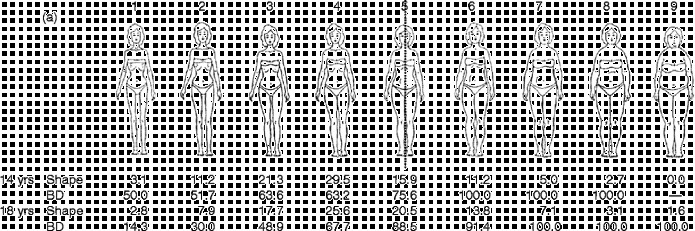
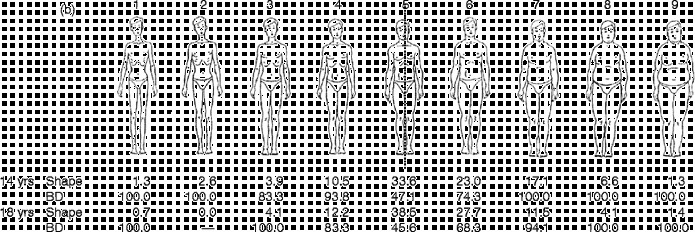
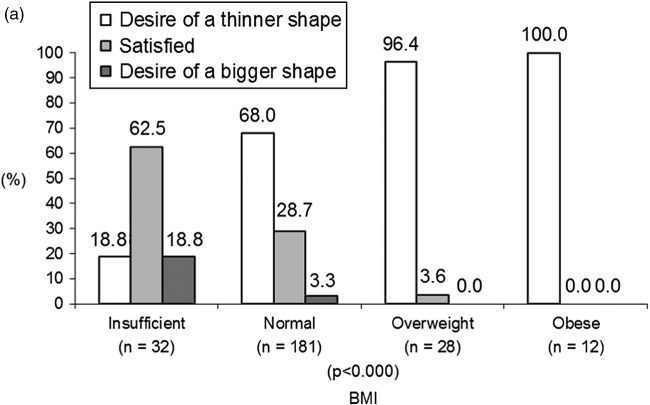
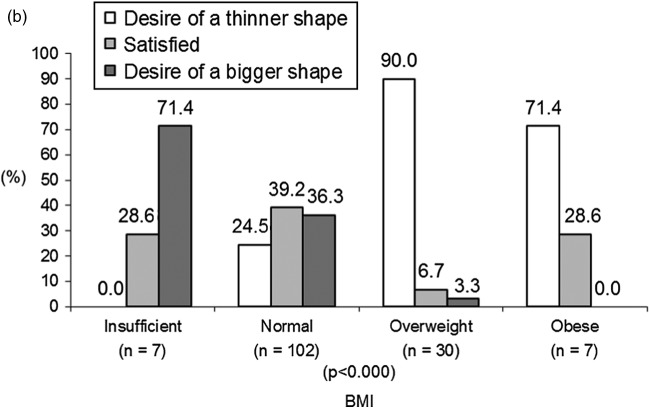
Verification
Claims the paper makes
The claims and statistics of this paper haven’t been checked yet.
Run the check — free, no account needed. It reads the open-access text and checks the sources it cites.
Claims other papers make about this one
Each is checked against this paper’s own text: does it say what the citing paper says it does?
In the citing paper
“Dion et al. [24] found a greater prevalence of body dissatisfaction (wanting to be thinner) in females from age 14 to 18.”
From Effects of Social Media and Smartphone Use on Body Esteem in Female Adolescents: Testing a Cognitive and Affective Model (2020) · cites this paper as [24]
Self-check
Percentages, sums and reported differences re-computed from the paper’s own numbers.
The self-check needs the paper’s full text.
Citations
Cites
Exacting beauty: Theory, assessment, and treatment of body image disturbance.
Thompson, J. K., Heinberg, L. J., Altabe, M., & Tantleff-Dunn, S. (1999) · doi:10.1037/10312-000 · Cited by 3,100
Risk and maintenance factors for eating pathology: A meta-analytic review.
Stice, E. M. (2002) · Psychological Bulletin · doi:10.1037/0033-2909.128.5.825 · Cited by 2,710 · cited 4×
“…control behaviours as well as eating pathologies (Crow, Eisenberg, Story, & Neumark-Sztainer, 2008; Neumark-Sztainer, Paxton, Hannan, Haines, & Story, 2006b; Paxton, Neumark-Sztainer, Hannan, & Eisenberg, 2006b; Stice, 2002; Stice & Bearman, 2001; Stice, Marti, & Durant, 2011; Tiggemann, 2005).”
BackgroundInfluentialAsia Pacific Journal of Clinical Nutrition
(2010) · Asia Pacific Journal of Clinical Nutrition · doi:10.1111/(issn)1440-6047 · Cited by 1,852
Body image: a handbook of theory, research, and clinical practice
(2003) · Choice Reviews Online · doi:10.5860/choice.40-3703 · Cited by 1,834
Rosenberg, M. (2011) · PsycTESTS Dataset · doi:10.1037/t01038-000 · Cited by 1,226
Neumark-Sztainer, D., Paxton, S. J., Hannan, P. J., Haines, J., & Story, M. (2006) · Journal of Adolescent Health · doi:10.1016/j.jadohealth.2005.12.001 · Cited by 1,087 · cited 1×
“Preventive programmes should target a broad spectrum of weight-related problematic conditions and behaviours, such as obesity, eating disorders and BD (Neumark-Sztainer, 2005; Neumark-Sztainer et al., 2006a).”
BackgroundRisk factors for body dissatisfaction in adolescent girls: A longitudinal investigation.
Stice, E. M., & Whitenton, K. (2002) · Developmental Psychology · doi:10.1037/0012-1649.38.5.669 · Cited by 846 · cited 1×
“Nonetheless, some studies did not find depression (Holsen, Kraft, & Roysamb, 2001; Stice & Whitenton, 2002) or low self-esteem (Tiggeman, 2005) to prospectively predict BD. Finally, some social and family-related factors are reported to predict BD in longitudinal studies, for example, friends…”
BackgroundNeumark‐Sztainer, D., Wall, M. M., Larson, N., Eisenberg, M. E., & Loth, K. A. (2011) · Journal of the American Dietetic Association · doi:10.1016/j.jada.2011.04.012 · Cited by 772 · cited 1×
“As found in other studies (Eaton et al., 2008; Neumark-Sztainer et al., 2002, 2011), moderate weight control behaviours (e.g. reducing sugar and fat intake) were more common than extreme ones (e.g. skipping meals, using laxatives, purging).”
ResultDevelopment and Validation of a New Body-Image Assessment Scale
Thompson, M. A., & Gray, J. J. (1995) · Journal of Personality Assessment · doi:10.1207/s15327752jpa6402_6 · Cited by 738 · cited 4×
“These students were interested in participating in the longitudinal study and were authorised to do so by their parents.”
BackgroundMethodInfluentialPaxton, S. J., Neumark‐Sztainer, D., Hannan, P. J., & Eisenberg, M. E. (2006) · Journal of Clinical Child & Adolescent Psychology · doi:10.1207/s15374424jccp3504_5 · Cited by 715 · cited 4×
“…explore how adolescent sexuality (such as the circumstances of the first intercourse and sexual risk taking) could be associated with BD. Self-esteem was found to be related to BD in previous longitudinal studies (e.g. Cantin & Stan, 2010; Paxton et al., 2006a), with one exception (Tiggeman, 2005).”
BackgroundResultInfluential
Research works printed but not linked: 2
- CashT. F. & PruzinskyT. (2011). Body image: A Handbook of theory research and clinical Practice. New York NY: The Guilford Press.
- TomkinsC. (2006). An introduction to non-parametric statistics for health scientists. University of Alberta Health Sciences Journal, 3, 20–26.
Cited by
Sorted by citations
Body dissatisfaction and psychological distress in adolescents: Is self-esteem a mediator?
Duchesne, A.-P., Dion, J., Lalande, D. R., Bégin, C., Émond, C., Lalande, G., & McDuff, P. (2016) · Journal of Health Psychology · doi:10.1177/1359105316631196 · Cited by 169
“%) of body dissatisfaction among adolescents, which corroborates previous research (e.g. Bearman et al., 2006; Dion et al., 2015).”
InfluentialScully, M., Swords, L., & Nixon, E. (2023) · Irish Journal of Psychological Medicine · doi:10.1017/ipm.2020.93 · Cited by 156
“Body dissatisfaction levels in early adolescence are the single best predictor of body dissatisfaction levels in late adolescence (Dion et al. 2015).”
BackgroundKelly, A. S., Armstrong, S., Michalsky, M. P., & Fox, C. K. (2024) · JAMA · doi:10.1001/jama.2024.11809 · Cited by 165
Body Image Dissatisfaction and Anxiety Trajectories During Adolescence
Vannucci, A., & Ohannessian, C. M. (2017) · Journal of Clinical Child & Adolescent Psychology · doi:10.1080/15374416.2017.1390755 · Cited by 158
“Body image dissatisfaction is common among adolescents, with prevalence rates ranging from 30% to 80% (Dion et al., 2015).”
BackgroundInsatisfação com a imagem corporal e fatores associados em adolescentes
de Carvalho, G. X., Nunes, A. P. N., de Moraes, C. L., & da Veiga, G. V. (2020) · Ciência & Saúde Coletiva · doi:10.1590/1413-81232020257.27452018 · Cited by 101
“Dieting and unhealthy weight control behaviors during adolescence: Do they predict changes in weight ten years later? J Adolesc Health 2012; 50(1):80-86.”
BackgroundMethodInfluentialBody image dissatisfaction and its determinants among young primary-school adolescents
Latiff, A. A., Muhamad, J., & Rahman, R. A. (2017) · Journal of Taibah University Medical Sciences · doi:10.1016/j.jtumed.2017.07.003 · Cited by 114
Correlates of Body Dissatisfaction in Children.
Dion, J., Hains, J., Vachon, P., Plouffe, J., Laberge, L., Perron, M., McDuff, P., Kalinova, É., & Leone, M. (2016) · Jornal de Pediatria · doi:10.1016/j.jpeds.2015.12.045 · Cited by 83
Normative body image development: A longitudinal meta-analysis of mean-level change
Lacroix, E., Smith, A. J., Incé A. Husain, Orth, U., & von Ranson, K. M. (2023) · Body Image · doi:10.1016/j.bodyim.2023.03.003 · Cited by 114
Yang, H., Wang, J. J., Tng, G. Y. Q., & Yang, S. (2020) · Children · doi:10.3390/children7090148 · Cited by 81
“[24] found a greater prevalence of body dissatisfaction (wanting to be thinner) in females from age 14 to 18.”
BackgroundBody dissatisfaction in adolescent boys.
Baker, J. H., Neyland, M. K. H., Thornton, L. M., Runfola, C. D., Larsson, H., Lichtenstein, P., & Bulik, C. M. (2019) · Developmental Psychology · doi:10.1037/dev0000724 · Cited by 88
“Body dissatisfaction tends to onset during adolescence; it has been estimated that 49% to 84% of adolescents experience body dissatisfaction (Dion et al., 2015), with this dissatisfaction increasing over time (Bucchianeri, Arikian, Hannan, Eisenberg, & Neumark-Sztainer, 2013).”
BackgroundPrevalence of body weight dissatisfaction among adolescents: a systematic review
Martini, M. C. S., de Assumpção, D., Barros, M. B. D. A., Mattei, J., & Filho, A. D. A. B. (2022) · Revista Paulista de Pediatria · doi:10.1590/1984-0462/2023/41/2021204 · Cited by 56
Body image and adolescence: A behavioral impairment model
Senín‐Calderón, C., Testal, J. F. R., Garcelán, S. P., & Perpiñá, C. (2016) · Psychiatry Research · doi:10.1016/j.psychres.2016.12.003 · Cited by 68
van Dalen, M., Dierckx, B., Pasmans, S. G. M. A., Aendekerk, E. W. C., Mathijssen, I. M. J., Koudstaal, M. J., Timman, R., Williamson, H., Hillegers, M. H. J., Utens, E. M. W. J., et al. (2020) · Body Image · doi:10.1016/j.bodyim.2020.02.006 · Cited by 44
McLean, S. A., Wertheim, E. H., Marques, M. D., & Paxton, S. J. (2016) · Journal of Health Psychology · doi:10.1177/1359105316678668 · Cited by 39
“Body image, prevention, school, media literacy, appearance comparison of girls reporting a desire to be thinner (Dion et al., 2014).”
Gómez‐Baya, D., Berjano, R. M., de Matos, M. G., & Tomico, A. (2017) · European Journal of Developmental Psychology · doi:10.1080/17405629.2017.1364988 · Cited by 38
“Body dissatisfaction can be defined as the discrepancy between the perceived shape and the ideal shape (Dion et al., 2015) and is part of the wider and”
BackgroundAssociation between body image dissatisfaction and obesity among schoolchildren aged 7-10years.
da Cunha, F. C. L., Silva, D. S., Alvarenga, M. D. S., & de Vasconcelos, F. D. A. G. (2016) · Physiology and Behavior · doi:10.1016/j.physbeh.2016.03.022 · Cited by 18
Güleç, H., & Šmahel, D. (2022) · JMIR mhealth and uhealth · doi:10.2196/40340 · Cited by 29
Yager, Z., Doley, J. R., McLean, S. A., & Griffiths, S. (2022) · Body Image · doi:10.1016/j.bodyim.2022.11.003 · Cited by 28
Body Image Development and Sexual Satisfaction: A Prospective Study From Adolescence to Adulthood
Kvalem, I. L., Træen, B., Marković, A. P., & von Soest, T. (2018) · The Journal of Sex Research · doi:10.1080/00224499.2018.1518400 · Cited by 28
“However, an increase in body mass index (BMI) in young male adults can be a consequence of an increase in muscle mass, which may influence body evaluation in the opposite direction (Calzo et al., 2013; Dion et al., 2015).”
BackgroundCarter, A., Forrest, J. I., & Kaida, A. (2017) · Journal of Medical Internet Research · doi:10.2196/jmir.5636 · Cited by 26
“[2], as did a 4-year longitudinal study of young women in Quebec (57.1% at baseline; 65.8% at follow-up) [3].”
InfluentialAbildsnes, E., Stea, T. H., Berntsen, S., Omfjord, C. S., & Rohde, G. E. (2015) · BMC Public Health · doi:10.1186/s12889-015-2660-y · Cited by 34
“Furthermore, in a recently published longitudinal study high levels of body dissatisfaction throughout adolescence (14–18 years of age), especially among girls was reported [36].”
BackgroundPerceived overweight/obesity, low resilience, and body size dissatisfaction among adolescents
Borinsky, S. A., Gaughan, J., & Feldman‐Winter, L. (2019) · Obesity Research & Clinical Practice · doi:10.1016/j.orcp.2019.08.002 · Cited by 23
Positive Youth Development and Depression: An Examination of Gender Differences in Croatia and Spain
Gómez‐Baya, D., Čikeš, A. B., Hirnstein, M., Kurtović, A., Vrdoljak, G., & Wiium, N. (2022) · Frontiers in Psychology · doi:10.3389/fpsyg.2021.689354 · Cited by 26
“, 2008), body dissatisfaction (Dion et al., 2015), ruminative coping (Krause et al.”
BackgroundJalali‐Farahani, S., Abbasi, B., & Daniali, M. (2019) · Health and Quality of Life Outcomes · doi:10.1186/s12955-018-1074-9 · Cited by 18
Young adult mental health sequelae of eating and body image disturbances in adolescence.
Linardon, J., Greenwood, C., Fuller-Tyszkiewicz, M., Macdonald, J., Spry, E., Hutchinson, D., Youssef, G., Sanson, A., Wertheim, E., McIntosh, J., et al. (2021) · International Journal of Eating Disorders · doi:10.1002/eat.23575 · Cited by 18
Bijsterbosch, J. M., Hasenack, B., van Rooijen, B., Sternheim, L. C., Boelen, P. A., Dijkerman, H. C., & Keizer, A. (2023) · Journal of Adolescence · doi:10.1002/jad.12237 · Cited by 22
Tebar, W. R., Canhin, D. D. S., Colognesi, L. A., Morano, A. E. V. A., Silva, D. T. C., & Christófaro, D. G. D. (2020) · International Journal of Adolescent Medicine and Health · doi:10.1515/ijamh-2019-0241 · Cited by 18
van Vliet, J. S., Gustafsson, P. A., & Nelson, N. (2016) · Food & Nutrition Research · doi:10.3402/fnr.v60.29530 · Cited by 16
“Attitudes among girls regarding an ideal thinner body make them more likely to engage in various forms of weight reduction behaviours, including skipping breakfast (1, 9, 11, 18).”
BackgroundKaslı Olma Dürtüsü Ölçeği’nin Türkçe Uyarlaması: Geçerlik ve Güvenirlik Çalışması
Selvi, K., & Bozo, Ö. (2019) · Nesne Psikoloji Dergisi · doi:10.7816/nesne-07-14-05 · Cited by 17
Leppers, I., Tiemeier, H. W., Swanson, S. A., Verhulst, F. C., Jaddoe, V. W. V., Franco, O. H., & Jansen, P. W. (2017) · Obesity · doi:10.1002/oby.21934 · Cited by 14
“A few small studies have shown that children with overweight and obesity often do have the desire to be thinner, but it has not been investigated how this relates with self-perception of body size (11,12).”
BackgroundJalali‐Farahani, S., Amiri, P., Zarani, F., & Azizi, F. (2021) · BMC Public Health · doi:10.1186/s12889-020-10096-7 · Cited by 15
Dysmorphic concern and behavioural impairment related to body image in adolescents
Senín‐Calderón, C., Gálvez‐González, J., Garcelán, S. P., Camacho, C., & Testal, J. F. R. (2019) · International Journal of Psychology · doi:10.1002/ijop.12646 · Cited by 15
Mishina, K. E., Kronström, K., Heinonen, E., & Sourander, A. (2024) · European Child & Adolescent Psychiatry · doi:10.1007/s00787-023-02327-0 · Cited by 23
“These concerns include for example muscularity-oriented disordered eating behavior [14], wishes to be thinner and attempts to lose weight [15].”
BackgroundLee, C. Y., Yusof, H. M., & Zakaria, N. S. (2019) · Malaysian Journal of Medical Sciences · doi:10.21315/mjms2019.26.5.11 · Cited by 14
“Such finding is in contrast with that of previous findings for adolescents in other countries that reported almost half of the adolescents engaged in weightcontrol behaviours (28, 29).”
ResultMARTÍNEZ-SÁNCHEZ, S. M., Martínez-García, C., Martínez-García, T. E., & Munguía‐Izquierdo, D. (2020) · Frontiers in Psychiatry · doi:10.3389/fpsyt.2020.503274 · Cited by 13
“A score of 0 was interpreted as satisfaction with body image, and a score different than 0 was interpreted as body dissatisfaction (Satisfied = 0; Dissatisfied = 1) (34).”
BackgroundDevelopment and validation of the body image scale for youth (BISY)
Jalali‐Farahani, S., Amiri, P., Zarani, F., Zayeri, F., & Azizi, F. (2022) · Journal of Eating Disorders · doi:10.1186/s40337-022-00657-z · Cited by 15
“In this regard, previous findings demonstrated that while girls tend to be dissatisfied with their bodies when their BMI is average or above average; boys tend to be dissatisfied with their bodies when they have a BMI either below or above average [39, 40].”
BackgroundTekola, A., Regassa, L. D., Mandefro, M., Shawel, S., Kassa, O., Bayisa, F. S., Nimani, T. D., Masrie, A., Tamire, A., & Roba, K. T. (2024) · Frontiers in Psychiatry · doi:10.3389/fpsyt.2024.1397155 · Cited by 16
Saleh, S. T., Osaili, T. M. I., Al‐Jawaldeh, A., Hasan, H. A., Hashim, M. S., Mohamad, M. N., Qiyas, S. J. A., Sabbah, H. A., Daour, R. A., Rajaby, R. A., et al. (2024) · Frontiers in Nutrition · doi:10.3389/fnut.2024.1385554 · Cited by 11
Craddock, N., Garbett, K. M., Haywood, S., Nasution, K., White, P., Saraswati, L. A., Rizkiah, C., Medise, B. E., & Diedrichs, P. C. (2021) · BMC Public Health · doi:10.1186/s12889-021-11770-0 · Cited by 14
Geraets, A. F. J., Cosma, A. P., Fismen, A., Ojala, K., Pierannunzio, D., Kelly, C. N. M., Melkumova, M., Vassallo, C., Rakić, J. G., & Heinz, A. (2023) · Child and Adolescent Obesity · doi:10.1080/2574254x.2023.2218148 · Cited by 11
“It might be that adolescent girls are more likely to have tried to lose or control weight by harmful means than boys (Ojala et al. 2012; Dion et al. 2015).”
BackgroundTrait-Based Emotional Intelligence, Body Image Dissatisfaction, and HRQoL in Children
Pollatos, O., Georgiou, E., Kobel, S., Schreiber, A., Dreyhaupt, J., & Steinacker, J. M. (2020) · Frontiers in Psychiatry · doi:10.3389/fpsyt.2019.00973 · Cited by 18
“While the prevalence of these disorders is rising, especially among girls (2), their onset is gradually dropping (3).”
BackgroundPsychosocial functioning in pediatric patients with pectus excavatum and pectus carinatum
Bahadır, A. T., Bektaşoğlu, P. K., Cakıroglu, A., Afacan, C., & Yüksel, M. (2017) · TURKISH JOURNAL OF MEDICAL SCIENCES · doi:10.3906/sag-1511-66 · Cited by 11
Paquette, M., Bőthe, B., Dion, J., Girouard, A., & Bergeron, S. (2023) · Archives of Sexual Behavior · doi:10.1007/s10508-023-02679-3 · Cited by 14
“These changes and distress could lead to body dissatisfaction (Bucchianeri et al., 2013; Dion et al., 2015).”
BackgroundContreras, M. O., Solis, O., Pinto, N. S., & Rodríguez‐Villalobos, J. M. (2020) · Retos · doi:10.47197/retos.v37i37.72386 · Cited by 9
Sugimoto, N., Nishida, A., Ando, S., Usami, S., Toriyama, R., Morimoto, Y., Koike, S., Yamasaki, S., Kanata, S., Fujikawa, S., et al. (2019) · International Journal of Eating Disorders · doi:10.1002/eat.23202 · Cited by 9
MARTÍNEZ-SÁNCHEZ, S. M., Martínez-García, T. E., & Munguía‐Izquierdo, D. (2020) · Psychiatry Investigation · doi:10.30773/pi.2020.0016 · Cited by 9
Tiunova, A. (2015) · Activitas Nervosa Superior · doi:10.1007/bf03379626 · Cited by 8
“The received results also refine the results of one study (Dion et al., 2015) that self-esteem is more connected with factors associated with physical appearance compared with body dissatisfaction.”
BackgroundResultSenín‐Calderón, C., Santos-Morocho, J., & Testal, J. F. R. (2019) · Eating and Weight Disorders - Studies on Anorexia Bulimia and Obesity · doi:10.1007/s40519-019-00650-7 · Cited by 8
Body Image and Lifestyle Behaviors in High School Adolescents
Bordeleau, M., Alméras, N., Panahi, S., & Drapeau, V. (2023) · Children · doi:10.3390/children10071263 · Cited by 8
“In girls, the desire to reduce body size has been shown to increase based on their body weight, while boys reported a higher desire to be bigger when classified as underweight [10].”
BackgroundResultSociocultural influences of parents on body dissatisfaction in adolescents
Ivanović, M., Milosavljevic, S., & Ivanović, U. (2017) · Fizicko vaspitanje i sport kroz vekove · doi:10.1515/spes-2016-0021 · Cited by 8
Malete, L., Tladi, D., Etnier, J. L., Makhanda, J., & Anabwani, G. M. (2019) · PLoS ONE · doi:10.1371/journal.pone.0225890 · Cited by 8
“Research evidence has established relationships between body weight dissatisfaction, depression, negative self-evaluations, and low participation in PA [21,22,23].”
BackgroundParaskeva, N., Pegram, G., Goel, R., Mandhaani, M., Suneja, V., White, P., & Diedrichs, P. C. (2023) · Body Image · doi:10.1016/j.bodyim.2023.101658 · Cited by 7
van Dalen, M., Hermans, M. M., Leemreis, W., Kraaij, V., de Laat, P. D., Pasmans, S., Versnel, S., Koudstaal, M., Hillegers, M., Utens, E., et al. (2021) · The Cleft Palate-Craniofacial Journal · doi:10.1177/10556656211031411 · Cited by 6
“Indeed, studies have shown that the majority of adolescents in the general population experience body dissatisfaction (Dion et al., 2015).”
BackgroundGagné, A., Blackburn, M.-È., & Dion, J. (2023) · European Review of Applied Psychology · doi:10.1016/j.erap.2023.100889 · Cited by 7
Lie, S. Ø., Bastos, R. V. S., Sundgot-Borgen, C., Wisting, L., & Dahlgren, C. L. (2024) · Journal of Eating Disorders · doi:10.1186/s40337-024-01151-4 · Cited by 6
“Among several components of body image, body dissatisfaction refers to a negative evaluation of one’s body [9], and is a well-known risk and maintenance factor for eating disorders (EDs) [10].”
Yu, J. J. (2016) · Body Image · doi:10.1016/j.bodyim.2016.10.002 · Cited by 6
Adolescents’ Responses to Cereal Ads: An Assessment of Weight and Gender
Castonguay, J. S., Bakir, A., & Blodgett, J. G. (2019) · Journal of Food Products Marketing · doi:10.1080/10454446.2019.1678208 · Cited by 6
Dell’Osbel, R. S., Donatti, T., Henn, R. L., Cremonese, C., Capp, E., & Gregoletto, M. L. D. O. (2020) · British Journal Of Nutrition · doi:10.1017/s0007114520004250 · Cited by 6
“It is known that weight loss attempts are significantly greater among individuals with BD(53,54), in addition to, at the age of 18 years, increasing the chances of having BD and wanting a thinner figure about two times(11).”
BackgroundMethodInfluentialYetişkin Bireylerde Vücut Farkındalığı ve Antropometrik Ölçümlerle İlişkisi
Koçyiğit, E., Arslan, N., & Köksal, E. (2018) · Journal of Nutrition and Dietetics · doi:10.33076/2018.bdd.317 · Cited by 6
“Yapılan araştırmalar cinsiyet farkı gözetmeksizin bireylerin vücut ağırlıklarını oldukları ağırlıktan daha düşük tahmin ettiğini ve bu durumun yeme bozukluğu tanısı olanlarda, adölesanlarda, fazla kilolu ve obez bireylerde daha belirgin olduğunu bildirmektedir (28-30).”
Reframing How Providers Advocate for Adolescent Well-Being in Body Image, Eating, and Weight
Ozbardakci, E. V., & Lydecker, J. A. (2023) · Journal of the American Academy of Child & Adolescent Psychiatry · doi:10.1016/j.jaac.2023.03.008 · Cited by 6
Wang, Y., Cao, R., Peng, X., Zhang, L., Zhang, Z., & Fu, L. (2022) · Frontiers in Public Health · doi:10.3389/fpubh.2022.926079 · Cited by 5
KURTULUŞ, H. Y., Deniz, M. E., & Satıcı, S. A. (2025) · Journal of Health Psychology · doi:10.1177/13591053241311013 · Cited by 4
“This dissatisfaction stems from the discrepancy between the perceived physical appearance and the ideal physical appearance (Dion et al., 2015).”
Adolescent Diet Culture: Where Does it Originate?
Weiss, A. L., Miller, J. N., & Chermak, R. (2022) · Springer eBooks · doi:10.1007/978-3-031-10565-4_3 · Cited by 4
Richards, K. A. R., Shiver, V. N., Kuipers, K. L., & Jacobs, J. M. (2023) · Journal of Physical Education Recreation & Dance · doi:10.1080/07303084.2023.2185330 · Cited by 4
Lopez-Muley, C., López, M. J., Pérez, K., Sánchez, E., & Serral, G. (2024) · Public Health · doi:10.1016/j.puhe.2024.07.012 · Cited by 5
Investigating the factors affecting adolescents’ test anxiety in Greece during the COVID-19 pandemic
Trikoilis, D. (2023) · Pastoral Care in Education · doi:10.1080/02643944.2023.2214920 · Cited by 4
“Teenagers frequently experience body image dissatisfaction, with prevalence rates ranging from 30% to 80% (Dion et al., 2014).”
BackgroundJalali‐Farahani, S., Amiri, P., Zarani, F., & Azizi, F. (2021) · Child Psychiatry & Human Development · doi:10.1007/s10578-021-01235-1 · Cited by 5
Samari, E., Vaingankar, J. A., Tan, B. C. W., Chang, S. S. H., Tan, Y. W. B., Archana, S., Chua, Y. C., Tang, C. Y. Z., Lee, Y. P., Chew, C. S. E., et al. (2025) · Frontiers in Psychiatry · doi:10.3389/fpsyt.2025.1505161 · Cited by 9
Pengaruh Ketidakpuasan Tubuh terhadap Kecenderungan Gangguan Makan pada Remaja
Permanasari, K., & Arbi, D. K. A. (2022) · Buletin Riset Psikologi dan Kesehatan Mental (BRPKM) · doi:10.20473/brpkm.v2i1.36592 · Cited by 3
Mental Health of Russian Adolescents during the COVID-19 Pandemic
Slobodskaya, H. R., Safronova, M. V., Semenova, N. B., Kornienko, O. S., Rippinen, T. O., Валентиновна, Р. Е., Leto, I. V., Petrenko, E. N., Козлова, Е. А., Варшал, А. В., et al. (2023) · Psikhiatriya · doi:10.30629/2618-6667-2023-21-1-16-26 · Cited by 4
Alsheweir, A., Goyder, E., Alzahrani, M. A., & Caton, S. J. (2024) · Nutrients · doi:10.3390/nu16132119 · Cited by 3
“A longitudinal study focused on understanding the aetiology of body dissatisfaction in adolescent girls aged 14 to 18 years concluded that their body dissatisfaction is linked to the desire to be thinner, weight control practises, negative comments about weight, and BMI [17].”
BackgroundSmıth, D. J., Damiano, S. R., McLean, S. A., Wertheim, E. H., & Paxton, S. J. (2024) · Journal of Eating Disorders · doi:10.1186/s40337-024-01178-7 · Cited by 4
“Regarding biological factors, it is of interest that BMI was unrelated to body satisfaction in this sample when this relationship is consistently observed in adolescents [28, 83, 84].”
Eating Disorders and Body Image Across the Lifespan: A Focus on Boys and Men in Midlife and Beyond
Brown, T. A., & Lavender, J. M. (2021) · Springer eBooks · doi:10.1007/978-3-030-67127-3_21 · Cited by 3
Hochgraf, A. K., Lanza, S. T., Fosco, G. M., & McHale, S. M. (2021) · International Journal of Eating Disorders · doi:10.1002/eat.23586 · Cited by 3
CONNECTIONS BETWEEN BODY IMAGE AND ADOLESCENTS’ HEALTH, PSYCHOLOGICAL AND SOCIAL VARIABLES
Argüelles, D. F., Fernández‐Río, J., & Estrada, J. A. C. (2022) · Journal of Sport and Health Research · doi:10.58727/jshr.89470 · Cited by 5
A structural equation model of intuitive eating with adolescents
Williot, A., Blackburn, M.-È., Auclair, J., Brault, M., Carbonneau, N., & Dion, J. (2023) · European Review of Applied Psychology · doi:10.1016/j.erap.2022.100816 · Cited by 4
Body image dissatisfaction during the first year of pediatric inflammatory bowel disease diagnosis
Cushman, G. K., Rea, K. E., Westbrook, A. L., Alexander, C., & Reed, B. (2023) · Journal of Pediatric Gastroenterology and Nutrition · doi:10.1002/jpn3.12095 · Cited by 3
Quandt, V. G., Martins‐Silva, T., Kaufmann, C. C., Bielemann, R. M., Muniz, L. C., & Mintem, G. C. (2024) · Ciência & Saúde Coletiva · doi:10.1590/1413-81232024295.01542023 · Cited by 3
Wei, Z., Liu, K., Yang, W., Zhang, Y., Fu, H., & Fu, L. (2025) · Humanities and Social Sciences Communications · doi:10.1057/s41599-025-05396-5 · Cited by 3
“Children are more likely to experience body image dissatisfaction due to their characteristics of physical, cognitive, and emotional (Dion et al., 2014).”
Body Image in Adolescents – A Clinical Issue
Pemde, H. K. (2015) · The Indian Journal of Pediatrics · doi:10.1007/s12098-015-1901-5 · Cited by 3
“BD in boys at 18 y was associated with wanting to be thinner or bigger, BMI, having experienced sexual intercourse and negative comments about weight [9].”
BackgroundThe structure of adolescent mental health problems: The role of effortful control and school safety
Валентиновна, Р. Е., Slobodskaya, H. R., & Semenova, N. B. (2023) · Journal of Adolescence · doi:10.1002/jad.12166 · Cited by 5
İlçede öğrenim gören ortaokul öğrencilerinin beslenme alışkanlıkları
Kzbn, T. S. C. N., & Koçoğlu, D. (2021) · Mersin üniversitesi sağlık bilimleri dergisi/Mersin üniversitesi sağlık bilimleri dergisi · doi:10.26559/mersinsbd.790405 · Cited by 2
Ekberg, K. M., Michelini, G., Schneider, K. L., Docherty, A. R., Shabalin, A. A., Perlman, G., Kotov, R., Klein, D. N., & Waszczuk, M. A. (2024) · Pediatric Research · doi:10.1038/s41390-024-03323-z · Cited by 2
“18,19 Consistently, BMI is positively associated with body dissatisfaction, especially concerns around weight and body shape.”
Xie, P., Sang, H., Wang, X., & Huang, C. (2025) · Appetite · doi:10.1016/j.appet.2025.107913 · Cited by 2
Distorted body representation in adolescent girls with anorexia nervosa
Bijsterbosch, J. M., Sternheim, L. C., Boelen, P. A., Danner, U. N., van Eikenhorst, C. H., Dijkerman, H. C., & Keizer, A. (2025) · Acta Psychologica · doi:10.1016/j.actpsy.2025.104830 · Cited by 2
Montes, J. F. C., González, Ó. U. R., Rayas, P. M. D. C., León, Y. J. G., Alcalá, Y. A. M., & Hernández, D. L. A. (2018) · Revista de Psicología y Ciencias del Comportamiento de la Unidad Académica de Ciencias Jurídicas y Sociales · doi:10.29059/rpcc.20181207-74 · Cited by 2
Screening for Body Image Concerns, Eating Disorders, and Sexual Abuse in Adolescents
Spinner, S., & Rudolph, B. D. (2019) · Elsevier eBooks · doi:10.1016/b978-0-323-66130-0.00012-0 · Cited by 3
Developing a Positive Body Image in Young Women by the Means of Training Technologies
Белогай, К. Н., Morozova, I. S., Каган, Е. С., Ивановна, Г. М., & Borisenko, Y. V. (2019) · Counseling Psychology and Psychotherapy · doi:10.17759/cpp.2019270402 · Cited by 2
Primaningtyas, W., PUTRI, A. A. A. K. A. N., & Hastuti, H. (2020) · Smart Medical Journal · doi:10.13057/smj.v2i2.35672 · Cited by 2
Blomquist, K. K., Ellison, W. D., Siddiqui, S., & Montgomery, K. (2023) · Body Image · doi:10.1016/j.bodyim.2023.101675 · Cited by 1
Teen sexual harassment, sexual orientation, and health in an urban setting
Bosch-Arís, M., León-Gómez, B. B., Forcadell‐Díez, L., Espinel-Flores, V., Serral, G., López, M. J., Vives‐Cases, C., Sanz‐Barbero, B., & Pérez, G. (2024) · Violence An International Journal · doi:10.1177/26330024241249188 · Cited by 1
“…yes but not in the last 30 days, never); (e) Bodily satisfaction (satis fi ed/dissatis fi ed) measured by the Contour Drawing Rating Scale (CDRS) (Dion et al., 2015); (f) Having experienced discrimination because of sexual orientation (yes/no), de fi ned in the questionnaire as “ feeling upset or…”
MethodÇebi, M., & Ertekin, A. (2024) · Van Sağlık Bilimleri Dergisi · doi:10.52976/vansaglik.1513142 · Cited by 1
Suh, B. C., Beccia, A. L., Celebrano, B., & Veilleux, N. (2025) · International Journal of Eating Disorders · doi:10.1002/eat.24421 · Cited by 1
Adolescents’ Experiences with Being Weighed at School: A Qualitative Interview Study in Norway
Risøy, M. K., & Gunnarskog, M. G. (2026) · Global Qualitative Nursing Research · doi:10.1177/23333936261435414 · Cited by 1
“Although BMI measurements are implemented with health-promoting intentions, the findings indicate that this practice may undermine those aims, particularly when psychological, social, and organizational factors are considered.”
InfluentialCuccì, G., Colombo, C. C., Natale, A. F. D., Confalonieri, E., & Villani, D. (2026) · European Journal of Developmental Psychology · doi:10.1080/17405629.2026.2701692 · Cited by 1
Livazović, G., & Mudrinić, I. (2018) · International Journal of Child Health and Nutrition · doi:10.6000/1929-4247.2018.07.02.5 · Cited by 1
Weight-Related Selves and Their Relationship With Body Mass Index Among Young Individuals in Curaçao
Dijkstra, P., van Brummen-Girigori, O. J., & Barelds, D. P. H. (2019) · Journal of Black Psychology · doi:10.1177/0095798419865402 · Cited by 1
“Originally, studies on weight-related selves were conducted in Western cultures, such as the Netherlands (Dalley & Buunk, 2009), France (e.g., Dion et al., 2015), and the United States (e.g., Fallon & Rozin, 1985).”
BackgroundResultInfluentialRavesh, S. M. H. H. (2020) · Physical education sport and health culture in modern society · doi:10.29038/2220-7481-2020-01-107-115 · Cited by 1
Bridging Science and Practical Appliance in Resistance Training
Marinho, D. A., Forte, P., de Sousa, M. D. S. C., & Neiva, H. P. (2023) · IntechOpen eBooks · doi:10.5772/intechopen.104335 · Cited by 1
Investigating Appearance Ideal Alignment of Popular Fitness Apparel Brands on Instagram
Monk, S., Fetter, S., Coyne, P., & Woodruff, S. J. (2023) · International Journal of Social Media and Online Communities · doi:10.4018/ijsmoc.331084 · Cited by 2
Metadata
- Authors
- Dion, J., Blackburn, M.-E., Auclair, J., Laberge, L., Veillette, S., Gaudreault, M., Vachon, P., Perron, M., & Touchette, É.
- Affiliations
- Université du Québec à Chicoutimi (CA)
- ,
- Cégep de Jonquière (CA)
- Université du Québec à Trois-Rivières (CA)
- Corresponding author
- Dion, Jacinthe
- Venue
- International Journal of Adolescence and Youth
- Publisher
- Informa UK Limited
- Published
- 2014-12-03
- Volume
- 20
- Issue
- 2
- Pages
- 151-166
- ISSN
- 0267-3843 (ISSN-L)
- 2164-4527
- PMC
- PMC4391290
- OpenAlex
- W1999993784
- Cited by
- 141
- References
- 62
- Citations by year
- 2026: 9 · 2025: 13 · 2024: 13 · 2023: 24 · 2022: 10 · 2021: 17 · 2020: 14 · 2019: 16 · 2018: 4 · 2017: 7 · 2016: 9 · 2015: 5
- FWCI
- 8.28
- Type
- journal article
- Language
- en
- Open access
- gold
- doi.org
- Locations
- International Journal of Adolescence and Youth (publishedVersion)
- PubMed Central (publishedVersion, cc-by)
- PubMed (publishedVersion)
- Constellation (Université du Québec à Chicoutimi) (acceptedVersion)
- Le dépôt institutionnel (Université du Québec à Trois-Rivières) (acceptedVersion)
- Funders
- Université du Québec à Chicoutimi
- Topics
- Social Sciences › Psychology › Clinical Psychology › Eating Disorders and Behaviors
- Social Sciences › Psychology › Clinical Psychology › Body Image and Dysmorphia Studies
- Health Sciences › Nursing › Nutrition and Dietetics › Nutrition, Health and Food Behavior
- Keywords
- body dissatisfaction, adolescents, body image, weight concern, body mass index, weight control behaviors, sexual intercourse, gender differences, etiology, development (biology), early intervention
About these checks
Registry, retraction, Cites and statistics results are computed, not judged, with one exception: a printed reference that no index lists is read once by a model before it counts as a citation error. Claims are extracted by a model and kept only when their quote appears verbatim in the text; each cited source is then checked, with a model’s help, for whether it says what the claim relies on. Those verdicts can be wrong — read the claim’s quote and the cited source before relying on one.
Statistics and arithmetic are recomputed, not judged.
Confidence bands are shown only for fields calibrated on our annotated test set. None is calibrated yet, so no band is shown.
What counts as a claim ›How we measure confidence ›How we check this ›
Are you an author, or do you see a problem with this page? Request a review
