

The DOI matches its Crossref record; 61 of the 62 references it cites were found in a registry or an index.
Development and aetiology of body dissatisfaction in adolescent boys and girls
Open accessAbstract
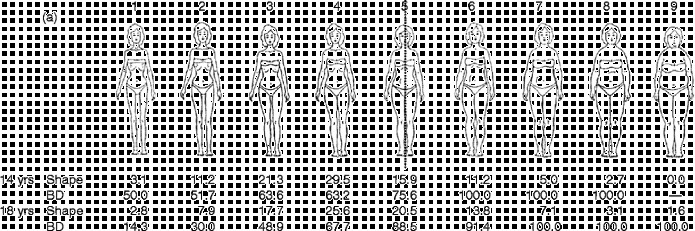
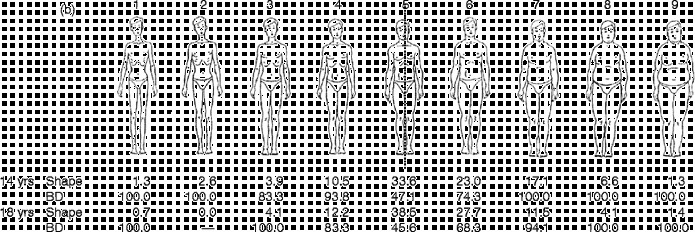
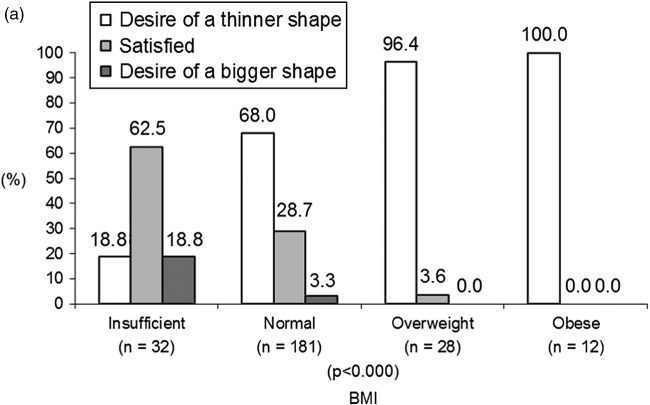
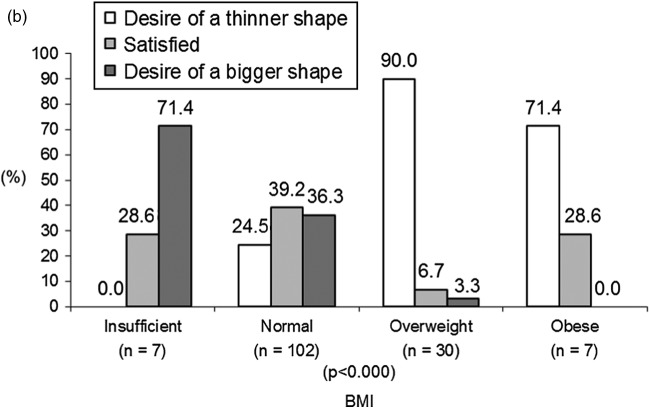
between the ages of 14 and 18, and to identify factors associated with BD at age 18, among 413 adolescents. Between the ages of 14 and 18, the proportion of girls wanting to be thinner increased, although it remained unchanged among boys. A ratio of 1:2 girls and 1:5 boys reported having seriously tried to lose weight. Factors associated with BD in girls at age 18 were (1) wanting to be thinner, (2) body mass index (BMI), (3) weight control behaviours and (4) negative comments about weight. Factors associated with BD in boys at age 18 were (1) wanting to be thinner or bigger, (2) BMI, (3) having experienced sexual intercourse and (4) negative comments about weight. The high prevalence of BD and weight-related concerns suggest a need for early interventions.
Overview
The claims and statistics of this paper haven’t been checked yet.
Run the check — free, no account needed. It reads the open-access text and checks the sources it cites.
Integrity signals
Registry
Cites
Statistics
Figures
Verification
Claims the paper makes
The claims and statistics of this paper haven’t been checked yet.
Run the check — free, no account needed. It reads the open-access text and checks the sources it cites.
Claims other papers make about this one
Each is checked against this paper’s own text: does it say what the citing paper says it does?
In the citing paper
“Dion et al. [24] found a greater prevalence of body dissatisfaction (wanting to be thinner) in females from age 14 to 18.”
From Effects of Social Media and Smartphone Use on Body Esteem in Female Adolescents: Testing a Cognitive and Affective Model (2020) · cites this paper as [24]
Self-check
Percentages, sums and reported differences re-computed from the paper’s own numbers.
The self-check needs the paper’s full text.
Citations
Cites
Exacting beauty: Theory, assessment, and treatment of body image disturbance.
Thompson, J. K., Heinberg, L. J., Altabe, M., & Tantleff-Dunn, S. (1999) · doi:10.1037/10312-000 · Cited by 3,100
Risk and maintenance factors for eating pathology: A meta-analytic review.
Stice, E. M. (2002) · Psychological Bulletin · doi:10.1037/0033-2909.128.5.825 · Cited by 2,710 · cited 4×
“…control behaviours as well as eating pathologies (Crow, Eisenberg, Story, & Neumark-Sztainer, 2008; Neumark-Sztainer, Paxton, Hannan, Haines, & Story, 2006b; Paxton, Neumark-Sztainer, Hannan, & Eisenberg, 2006b; Stice, 2002; Stice & Bearman, 2001; Stice, Marti, & Durant, 2011; Tiggemann, 2005).”
BackgroundInfluentialAsia Pacific Journal of Clinical Nutrition
(2010) · Asia Pacific Journal of Clinical Nutrition · doi:10.1111/(issn)1440-6047 · Cited by 1,852
Body image: a handbook of theory, research, and clinical practice
(2003) · Choice Reviews Online · doi:10.5860/choice.40-3703 · Cited by 1,834
Rosenberg, M. (2011) · PsycTESTS Dataset · doi:10.1037/t01038-000 · Cited by 1,226
Neumark-Sztainer, D., Paxton, S. J., Hannan, P. J., Haines, J., & Story, M. (2006) · Journal of Adolescent Health · doi:10.1016/j.jadohealth.2005.12.001 · Cited by 1,087 · cited 1×
“Preventive programmes should target a broad spectrum of weight-related problematic conditions and behaviours, such as obesity, eating disorders and BD (Neumark-Sztainer, 2005; Neumark-Sztainer et al., 2006a).”
BackgroundRisk factors for body dissatisfaction in adolescent girls: A longitudinal investigation.
Stice, E. M., & Whitenton, K. (2002) · Developmental Psychology · doi:10.1037/0012-1649.38.5.669 · Cited by 846 · cited 1×
“Nonetheless, some studies did not find depression (Holsen, Kraft, & Roysamb, 2001; Stice & Whitenton, 2002) or low self-esteem (Tiggeman, 2005) to prospectively predict BD. Finally, some social and family-related factors are reported to predict BD in longitudinal studies, for example, friends…”
BackgroundNeumark‐Sztainer, D., Wall, M. M., Larson, N., Eisenberg, M. E., & Loth, K. A. (2011) · Journal of the American Dietetic Association · doi:10.1016/j.jada.2011.04.012 · Cited by 772 · cited 1×
“As found in other studies (Eaton et al., 2008; Neumark-Sztainer et al., 2002, 2011), moderate weight control behaviours (e.g. reducing sugar and fat intake) were more common than extreme ones (e.g. skipping meals, using laxatives, purging).”
ResultDevelopment and Validation of a New Body-Image Assessment Scale
Thompson, M. A., & Gray, J. J. (1995) · Journal of Personality Assessment · doi:10.1207/s15327752jpa6402_6 · Cited by 738 · cited 4×
“These students were interested in participating in the longitudinal study and were authorised to do so by their parents.”
BackgroundMethodInfluentialPaxton, S. J., Neumark‐Sztainer, D., Hannan, P. J., & Eisenberg, M. E. (2006) · Journal of Clinical Child & Adolescent Psychology · doi:10.1207/s15374424jccp3504_5 · Cited by 715 · cited 4×
“…explore how adolescent sexuality (such as the circumstances of the first intercourse and sexual risk taking) could be associated with BD. Self-esteem was found to be related to BD in previous longitudinal studies (e.g. Cantin & Stan, 2010; Paxton et al., 2006a), with one exception (Tiggeman, 2005).”
BackgroundResultInfluential
Research works printed but not linked: 2
- CashT. F. & PruzinskyT. (2011). Body image: A Handbook of theory research and clinical Practice. New York NY: The Guilford Press.
- TomkinsC. (2006). An introduction to non-parametric statistics for health scientists. University of Alberta Health Sciences Journal, 3, 20–26.
Cited by
Sorted by citations
Items 101–141 of 141
Accessible Resistance Movement Experiences for Elementary Students and Educators
Murray, A. M., Murray, P., & Howells, K. (2023) · IntechOpen eBooks · doi:10.5772/intechopen.110179 · Cited by 1
Predictive Factors for Compulsive Exercise in Adolescent Athletes: A Cross-Sectional Study
Fortier, M., Rodrigue, C., Clermont, C., Gagné, A., Brassard, A., Lalande, D. R., & Dion, J. (2023) · Journal of Clinical Sport Psychology · doi:10.1123/jcsp.2023-0025 · Cited by 2
Duholm, C. S., Højgaard, D. R. M. A., Wellnitz, K. B., Ørnbøl, E., Thomsen, P. H., Rimvall, M. K., & Rask, C. U. (2025) · JCPP Advances · doi:10.1002/jcv2.70018 · Cited by 2
“However, the reporting of bodily dissatisfaction across all four groups was generally high, which is in line with previous literature suggesting that adolescents very commonly report high bodily dissatisfaction (Dion et al., 2015).”
Diäterfahrungen zur Gewichtsreduzierung von Jugendlichen in Deutschland – Ergebnisse aus EsKiMo II
Lehmann, F., Barbosa, C. L., Haftenberger, M., Brettschneider, A.-K., Frank, M., Patelakis, E., Heide, K., Perlitz, H., Hölling, H., Richter, A., et al. (2019) · Adipositas - Ursachen Folgeerkrankungen Therapie · doi:10.1055/a-0802-0757 · Cited by 1
“[17] Dion J, Blackburn M-E, Auclair J et al.”
BackgroundDiäterfahrungen zur Gewichtsreduzierung von Jugendlichen in Deutschland – Ergebnisse aus EsKiMo II
Lehmann, F., Barbosa, C. L., Haftenberger, M., Brettschneider, A.-K., Frank, M., Patelakis, E., Heide, K., Perlitz, H., Hölling, H., Richter, A., et al. (2019) · Aktuelle Ernährungsmedizin · doi:10.1055/a-0894-6767 · Cited by 1
“[17] Dion J, Blackburn M-E, Auclair J et al.”
BackgroundWebb, I. (2015) · Staff Publications Online (The Tavistock and Portman) · doi:10.15123/pub.4534 · Cited by 1
Gillen, M. M., & Markey, C. H. (2021) · Elsevier eBooks · doi:10.1016/b978-0-323-91497-0.00004-7 · Cited by 1
Obésité chez l’adolescent : un diagnostic simple, une prise en charge complexe
Lefèvre, H. (2015) · Soins Pédiatrie/Puériculture · doi:10.1016/j.spp.2015.07.002
Cortical Reactivity and Attentional Bias during a Body Image Exposure
Chong, S. (2016) · Knowledge Commons (Lakehead University)
Hutchinson, T. D. (2016) · Libraries and Cultural Resources (University of Calgary) · doi:10.11575/prism/26820
Bulimia Nervosa: Is Body Dissatisfaction a Risk Factor?
Pinto, N. S., Casas, M. V., & Cézar, R. F. (2019) · IntechOpen eBooks · doi:10.5772/intechopen.84169
Crespo, J. S. (2020) · Universidad Peruana de Ciencias Aplicadas (UPC) · doi:10.19083/tesis/653075
Jacques, K., Boothroyd, L. G., & Hanson, L. (2021) · doi:10.31234/osf.io/bd6ur
The Relationship between Body Image with Eating Disorder in Medical Student
Natarijadi, D. N., & Hadiati, T. (2021) · Jurnal Kedokteran Diponegoro (Diponegoro Medical Journal) · doi:10.14710/dmj.v10i3.29376
Development and Validation of the Iranian Body Image Scale (IBIS)Preprint
Jalali‐Farahani, S., Amiri, P., Zarani, F., Zayeri, F., & Azizi, F. (2021) · Research Square · doi:10.21203/rs.3.rs-1151201/v1
“In this regards, previous ndings demonstrated that while girls tend to be dissatis ed with their bodies when their BMI is average or above average; boys tend to be dissatis ed with their body when they have a BMI either below or above average [33, 34].”
BackgroundComo os adolescentes avaliam o seu peso?
Martini, M. C. S. (2020) · doi:10.47749/t/unicamp.2020.1128897
Studi Mindfulness terhadap Body Image pada Remaja Putri
Nafisyah, W. A., & Khasanah, A. N. (2023) · Bandung Conference Series Psychology Science · doi:10.29313/bcsps.v3i1.5469
Lopez-Muley, C., López, M. J., Pérez, K., Sánchez, E., & Serral, G. (2023) · Research Square · doi:10.21203/rs.3.rs-3356072/v1
Unga mäns psykiska ohälsa i Norden
Randell, E. (2023) · TemaNord · doi:10.6027/temanord2023-543
Young men’s mental ill-health in the Nordics
Randell, E. (2023) · TemaNord · doi:10.6027/temanord2023-549
Job Crafting dan Work Engagement pada Wanita Karir
Suarya, L. M. K. S., Immanuel, A. S., & Gagahriyanto, M. A. (2023) · Jurnal Psikologi Udayana · doi:10.24843//jpu.2023.v10.i02.p04
Dutra, R. P., Castro, Y. M., Almeida, M. V. S. F., Pedrozo, L. L., de Sousa, J. V. T., Bastos, M., de Campos, W., & da Silva, M. P. (2024) · Revista Paulista de Pediatria · doi:10.1590/1984-0462/2025/43/2023221
“4,7,8 8-10 In the global context, systematic reviews estimate that between 32.2% and 83.0% of adolescents have some degree of BID and that dissatisfaction with body weight affects between 18.0% and 56.6% of adolescents.”
BackgroundResultInfluentialRiboli, G., Daminato, L., Nese, M., Cassola, M., Caselli, G., Brighetti, G., & Borlimi, R. (2025) · Adolescents · doi:10.3390/adolescents5020014
“…with the literature reporting the important role of body image during middle adolescence (ages 12–15), a period of life in which body dissatisfaction becomes more pronounced [44], posing a notable risk factor for mental health, particularly among adolescents assigned female at birth [45].”
Macías, G. R., Piedra, J., & Sánchez, A. R. R. (2025) · Sport Education and Society · doi:10.1080/13573322.2025.2531380
“This pressure towards certain body types echoes findings on body image dissatisfaction among adolescent girls, often higher than in boys, which may influence sport participation (Dion et al., 2015).”
Ogawa, M., Nakazato, M., Yokota, J., & Koga, K. (2025) · Preventive Medicine Reports · doi:10.1016/j.pmedr.2025.103186
“Discrepancy scores range from (cid:0) 8 to (cid:0) 1 for those desiring a thinner shape, and from 1 to 8 for those preferring a larger shape (Dion et al., 2015).”
Ali, M., McMullen, K. A., Roaten, K., Ryan, C. M., Flores, E., & Kowalske, K. J. (2025) · Journal of Burn Care & Research · doi:10.1093/jbcr/iraf178
Craddock, N., Garbett, K. M., Haywood, S., Nasution, K., White, P., Saraswati, L. A., Rizkiah, C., Medise, B. E., & Diedrichs, P. C. (2021) · Figshare · doi:10.6084/m9.figshare.17030732
Craddock, N., Garbett, K. M., Haywood, S., Nasution, K., White, P., Saraswati, L. A., Rizkiah, C., Medise, B. E., & Diedrichs, P. C. (2021) · Figshare · doi:10.6084/m9.figshare.17030723
Craddock, N., Garbett, K. M., Haywood, S., Nasution, K., White, P., Saraswati, L. A., Rizkiah, C., Medise, B. E., & Diedrichs, P. C. (2021) · Figshare · doi:10.6084/m9.figshare.17030738
Craddock, N., Garbett, K. M., Haywood, S., Nasution, K., White, P., Saraswati, L. A., Rizkiah, C., Medise, B. E., & Diedrichs, P. C. (2021) · Figshare · doi:10.6084/m9.figshare.17030729
Additional file 1 of Development and validation of the body image scale for youth (BISY)
Jalali-Farahani, S., Amiri, P., Zarani, F., Zayeri, F., & Azizi, F. (2022) · Figshare · doi:10.6084/m9.figshare.21019215
Jalali-Farahani, S., Amiri, P., Zarani, F., & Azizi, F. (2021) · Figshare · doi:10.6084/m9.figshare.13543940
The dangers of dieting in adolescence
Harrison, M. E., Vandermorris, A., Vyver, E., Rodrigues, A., Agostino, H., Robinson, A., & Toulany, A. (2025) · Paediatrics & Child Health · doi:10.1093/pch/pxaf129
Les dangers des diètes à l’adolescence
Harrison, M. E., Vandermorris, A., Vyver, E., Rodrigues, A., Agostino, H., Robinson, A., & Toulany, A. (2025) · Paediatrics & Child Health · doi:10.1093/pch/pxaf132
Blackburn, M.-È., Auclair, J., Brault, M., Bégin, C., Jean, M., Hamel, C., Gagnon, J., Bouchard, A.-A. D., Desrochers, S. L., Mercier, M., et al. (2026) · Journal of Affective Disorders · doi:10.1016/j.jad.2026.121707
Mason, T. B., Morales, J. C., Smith, K. E., & Dunton, G. F. (2026) · JCPP Advances · doi:10.1002/jcv2.70132
“…are prominent social self - evaluative factors in adolescence and body dissatisfaction, body image self - conscious emotions, and social appearance anxiety are rampant during this timeframe (Bucchianeri et al., 2013; Dion et al., 2015; Sabiston et al., 2022; Zimmer - Gembeck et al., 2018).”
Demir, N. (2026) · Cankaya University Journal of Humanities and Social Sciences · doi:10.47777/cankujhss.1816344
Dismorfia Muscular: Uma Investigação sobre sua Prevalência e Perfil em Adeptos da Musculação
Martins, A. C. D. S., Vidal, T. M. D. S., Costa, K. B., Brito, A. D. F., Costa, M. D. C., & dos Santos, W. R. (2026) · Revista Psicologia e Saúde · doi:10.20435/pssa.v1i1.2977
Muscolino, I., Dockray, S., Dempsey, M., & Tomei, E. (2026) · Journal of Adolescence · doi:10.1002/jad.70238
Ramos-Camino, D., Miño, C., Montenegro-Espinosa, J. A., Quiroz-Cárdenas, F., Ridgell, L., Sepulveda, R. A. Y., Arancibia, J. E. O., Páez‐Herrera, J., Yon, D. K., & López‐Gil, J. F. (2026) · European Journal of Investigation in Health Psychology and Education · doi:10.3390/ejihpe16100146
“Female adolescents tend to aspire to a thin body shape, whereas male adolescents more often endorse a larger and more muscular physique as the ideal (Dion et al., 2015).”
Sion, A., & Joel, D. (2026) · Frontiers in Social Psychology · doi:10.3389/frsps.2026.1904592
Metadata
- Authors
- Dion, J., Blackburn, M.-E., Auclair, J., Laberge, L., Veillette, S., Gaudreault, M., Vachon, P., Perron, M., & Touchette, É.
- Affiliations
- Université du Québec à Chicoutimi (CA)
- ,
- Cégep de Jonquière (CA)
- Université du Québec à Trois-Rivières (CA)
- Corresponding author
- Dion, Jacinthe
- Venue
- International Journal of Adolescence and Youth
- Publisher
- Informa UK Limited
- Published
- 2014-12-03
- Volume
- 20
- Issue
- 2
- Pages
- 151-166
- ISSN
- 0267-3843 (ISSN-L)
- 2164-4527
- PMC
- PMC4391290
- OpenAlex
- W1999993784
- Cited by
- 141
- References
- 62
- Citations by year
- 2026: 9 · 2025: 13 · 2024: 13 · 2023: 24 · 2022: 10 · 2021: 17 · 2020: 14 · 2019: 16 · 2018: 4 · 2017: 7 · 2016: 9 · 2015: 5
- FWCI
- 8.28
- Type
- journal article
- Language
- en
- Open access
- gold
- doi.org
- Locations
- International Journal of Adolescence and Youth (publishedVersion)
- PubMed Central (publishedVersion, cc-by)
- PubMed (publishedVersion)
- Constellation (Université du Québec à Chicoutimi) (acceptedVersion)
- Le dépôt institutionnel (Université du Québec à Trois-Rivières) (acceptedVersion)
- Funders
- Université du Québec à Chicoutimi
- Topics
- Social Sciences › Psychology › Clinical Psychology › Eating Disorders and Behaviors
- Social Sciences › Psychology › Clinical Psychology › Body Image and Dysmorphia Studies
- Health Sciences › Nursing › Nutrition and Dietetics › Nutrition, Health and Food Behavior
- Keywords
- body dissatisfaction, adolescents, body image, weight concern, body mass index, weight control behaviors, sexual intercourse, gender differences, etiology, development (biology), early intervention
About these checks
Registry, retraction, Cites and statistics results are computed, not judged, with one exception: a printed reference that no index lists is read once by a model before it counts as a citation error. Claims are extracted by a model and kept only when their quote appears verbatim in the text; each cited source is then checked, with a model’s help, for whether it says what the claim relies on. Those verdicts can be wrong — read the claim’s quote and the cited source before relying on one.
Statistics and arithmetic are recomputed, not judged.
Confidence bands are shown only for fields calibrated on our annotated test set. None is calibrated yet, so no band is shown.
What counts as a claim ›How we measure confidence ›How we check this ›
Are you an author, or do you see a problem with this page? Request a review
