

Human-centered design for global health equity
Open accessThe DOI matches its Crossref record; 114 of the 119 references it cites were found in a registry or an index.
Abstract
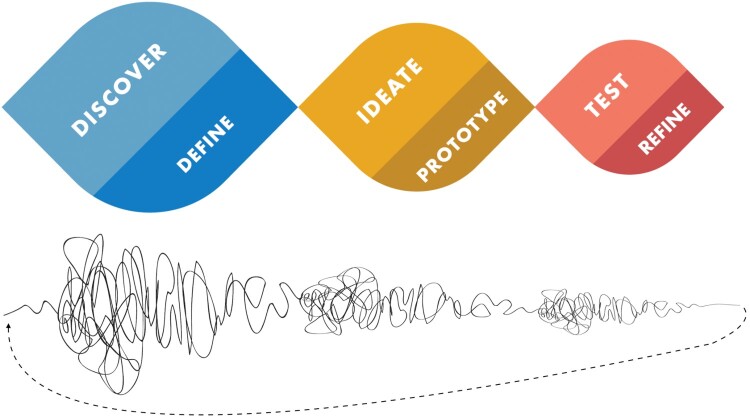
As digital technologies play a growing role in healthcare, human-centered design is gaining traction in global health. Amid concern that this trend offers little more than buzzwords, our paper clarifies how human-centered design matters for global health equity. First, we contextualize how the design discipline differs from conventional approaches to research and innovation in global health, by emphasizing craft skills and iterative methods that reframe the relationship between design and implementation. Second, while there is no definitive agreement about what the 'human' part means, it often implies stakeholder participation, augmenting human skills, and attention to human values. Finally, we consider the practical relevance of human-centered design by reflecting on our experiences accompanying health workers through over seventy digital health initiatives. In light of this material, we describe human-centered design as a flexible yet disciplined approach to innovation that prioritizes people's needs and concrete experiences in the design of complex systems.
Overview
The claims and statistics of this paper haven’t been checked yet.
Free: it reads the open-access text and checks the first 5 claims that cite a source we can check. Create a free account to check every claim.
Integrity signals
Registry
Cites
Statistics
Figures
Verification
Claims the paper makes
The claims and statistics of this paper haven’t been checked yet.
Free: it reads the open-access text and checks the first 5 claims that cite a source we can check. Create a free account to check every claim.
Self-check
Percentages, sums and reported differences re-computed from the paper’s own numbers.
The self-check needs the paper’s full text.
Citations
Cites
Liberati, A., Altman, D. G., Tetzlaff, J., Mulrow, C., Gøtzsche, P. C., Ioannidis, J. P. A., Clarke, M., Devereaux, P. J., Kleijnen, J., & Moher, D. (2009) · PLoS Medicine · doi:10.1371/journal.pmed.1000100 · Cited by 28,164 · cited 2×
“While systematic review methods (Liberati et al., 2009) are the norm in medicine and public health, all of these challenges led us to a conclusion that has been recognized elsewhere (Bates & Glennerster, 2017) – such reproducible methods break down and are less useful for reviewing highly ambiguous…”
BackgroundThe Reflective Practitioner: How Professionals Think in Action
Checkoway, B., & Schon, D. A. (1985) · Journal of Policy Analysis and Management · doi:10.2307/3324262 · Cited by 21,268
The reflective practitioner: How professionals think in action
Stewart, C. J. (1984) · Patient Education and Counseling · doi:10.1016/0738-3991(84)90022-3 · Cited by 19,752
Dilemmas in a general theory of planning
Rittel, H. W. J., & Webber, M. M. (1973) · Policy Sciences · doi:10.1007/bf01405730 · Cited by 16,338 · cited 5×
“This iterative integration of design within the wider human context of implementation is precisely how a design approach is thought to be amenable to solving complex or wicked social problems (Rittel & Webber, 1973; Schön, 1983).”
BackgroundInfluentialMichie, S., van Stralen, M. M., & West, R. (2011) · Implementation Science · doi:10.1186/1748-5908-6-42 · Cited by 13,697
Co-creation and the new landscapes of design
Sanders, E. B.-N., & Stappers, P. J. (2008) · CoDesign · doi:10.1080/15710880701875068 · Cited by 5,561 · cited 2×
“Many now use the term co-design together with participatory design (Sanders & Stappers, 2008).”
MethodSocial determinants of health inequalities
Marmot, M. (2005) · The Lancet · doi:10.1016/s0140-6736(05)71146-6 · Cited by 5,086
Manifesto for agile software development
Beck, K., Beedle, M., van Bennekum, A., Cockburn, A., Cunningham, W., Fowler, M., & Thomas, D. A. (2001) · Cited by 4,284
Wicked Problems in Design Thinking
Buchanan, R. (1992) · Design Issues · doi:10.2307/1511637 · Cited by 3,539 · cited 3×
“Many associate the classic view of designing as a complex human activity with seminal works for example by Rittel and Webber (1973), Schön (1983), Krippendorff (1989), Buchanan (1992), Cross (2001), and Nelson and Stolterman (2003).”
BackgroundClosing the gap in a generation: health equity through action on the social determinants of health
Marmot, M., Friel, S., Bell, R., Houweling, T. A., & Taylor, S. (2008) · The Lancet · doi:10.1016/s0140-6736(08)61690-6 · Cited by 3,247
Research works printed but not linked: 11
- Anokwa, Y., Smyth, T. N., Ramachandran, D., Sherwani, J., Schwartzman, Y., Luk, R., … DeRenzi, B. (2009). Stories from the field: Reflections on HCI4D experiences. Information Technologies & International Development, 5(4), 101– 115.
- Bannon, L. J., & Ehn, P. (2013). Design matters in participatory design. In J. Simonsen & T. Robertson (Eds.), Routledge international handbook of participatory design (pp. 37– 63). New York, NY: Routledge.
- Bates, M. A., & Glennerster, R. (2017). The generalizability puzzle. Stanford Social Innovation Review, 15(3), 50– 54.
- Boland, R. (2004). In F. Collopy (Ed.), Managing as designing (pp. 164– 168). Redwood City, CA: Stanford University Press.
- Ehn, P., & Kyng, M. (1992, January). Cardboard computers: Mocking-it-up or hands-on the future. In J. Greenbaum & M. Kyng (Eds.), Design at work (pp. 169– 196). Hillsdale, NJ: Lawrence Erlbaum Associates.
- Farmer, P., & Gutiérrez, G. (2013). In the company of the poor (M. Griffin & J. W. Block, Eds.) (pp. 1–224). Maryknoll, NY: Orbis Books.
- Kay, M., Santos, J., & Takane, M. (2011). mHealth: New horizons for health through mobile technologies: Second global survey on eHealth (pp. 1–102). World Health Organization.
- Li, M., & Nielsen, P. (2019). Making usable generic software. A matter of global or local design? Forthcoming in Nordic Contributions in IS Research: 10th Scandinavian Conference on Information Systems, SCIS 2019, Nokia, Finland, August 11–14, 2019, Springer.
- Mumford, E. (1987). Designing human systems: The ETHICS method. Manchester: Manchester Business School.
- Papanek, V., & Fuller, R. B. (1972). Design for the real world. London: Thames and Hudson.
- Toyama, K. (2015). Geek Heresy. New York, NY: Public Affairs.
Cited by
Items 101–200 of 320
Leason, I., Longridge, N. N., & Nickpour, F. (2023) · Community Dentistry And Oral Epidemiology · doi:10.1111/cdoe.12892 · Cited by 9
Wasunna, B., & Holeman, I. (2021) · Oxford University Press eBooks · doi:10.1093/oso/9780198866244.003.0005 · Cited by 9
Self-citationLocally adapting digital health technologies to address the global challenge of Parkinson’s disease
Lizárraga, K. J., Salazar, I. C., Zizzi, C. E., Romero, S. E., Arispe, J. C., Quico, A. V., Dye, T., Dorsey, E. R., & Castañeda, B. (2025) · Equity Neuroscience · doi:10.1016/j.neuros.2025.100010 · Cited by 8
Xie, Z., Or, C. K., & Ye, X. (2025) · Applied Ergonomics · doi:10.1016/j.apergo.2025.104655 · Cited by 9
Zimmermann, R., Konjufca, J., Sakejo, P., Kilonzo, M. N., Quevedo, Y., Blum, K., Biba, E., Mosha, T., Cottin, M., Hernández, C., et al. (2023) · BMC Psychiatry · doi:10.1186/s12888-023-05201-0 · Cited by 9
“HCD has become important in global health and matters for global health equity [29].”
BackgroundHoleman, I., Citrin, D., Albirair, M. T., Puttkammer, N. H., Ballard, M., DeRenzi, B., O’Donovan, J., & Wasunna, B. (2024) · BMJ Global Health · doi:10.1136/bmjgh-2023-014001 · Cited by 8
“12 13 By contrast, CHIS deployments that have scaled up significantly, often through collaboration among Ministries of Health and ecosystems of partners, have seldom been systematically described or evaluated in the peer-reviewed literature.”
BackgroundSelf-citationBaumann, S. E., Rabin, M. A., Devkota, B., Hawk, M. E., Upadhyaya, K., Shrestha, G. R., Joseph, B., & Burke, J. G. (2024) · Community Health Equity Research & Policy · doi:10.1177/2752535x241264331 · Cited by 9
Burleson, G., Wojciechowski, L. R., Toyama, K., & Sienko, K. H. (2024) · Design Science · doi:10.1017/dsj.2024.28 · Cited by 8
“Other methods, such as participatory design , empathic design and human centered design , focus on working closely with stakeholders to uncover contextual factors and identify deeper needs (Heylighen & Dong 2019; Holeman & Kane 2020; Drain, Shekar & Grigg 2021).”
Dunbar, E. L., Olsen, H. E., Salomon, E., Bhatt, S., Mutuku, R., Wasunna, B., Edwards, J., Kolko, B. E., & Holeman, I. (2021) · CHI Conference Extended Abstracts on Human Factors in Computing Systems (CHI EA) · doi:10.1145/3411763.3443438 · Cited by 8
Self-citationPersonal and organisational resources on electronic health usage intentions in an emerging economy
Altab, H. M., Bosompem, J., Okae-Adjei, S., Avornyo, P., Boadi, E. A., Boadi, V. A., & Say, J. (2022) · Telematics and Informatics · doi:10.1016/j.tele.2022.101832 · Cited by 9
Morales-Cahuancama, B., Verdezoto, N. X., Gonzales-Achuy, E., Quispe-Gala, C., Bautista-Olórtegui, W., Hinojosa-Mamani, P., & Aparco, J. P. (2024) · JMIR Formative Research · doi:10.2196/49168 · Cited by 8
“Taking a human-centered approach [52], our first step was to include caregivers in the survey because of their clear relevance in the education of schoolchildren [53].”
BackgroundSuryanti, H. H. S., Hartini, S. H. A., & Utami, F. P. (2021) · Jurnal Cakrawala Pendidikan · doi:10.21831/cp.v41i1.43943 · Cited by 11
Dolan, S., Wittenauer, R., Njoroge, A., Onyango, P., Owiso, G., Shearer, J., Lober, W. B., Liu, S., Puttkammer, N. H., & Rabinowitz, P. M. (2023) · JMIR Formative Research · doi:10.2196/39777 · Cited by 8
Reñosa, M. D. C., Wachinger, J., Guevarra, J. R., Landicho‐Guevarra, J., Aligato, M. F., Endoma, V., Landicho, J., Bravo, T. A., Malacad, C. M., Demonteverde, M. P., et al. (2023) · BMJ Global Health · doi:10.1136/bmjgh-2023-012613 · Cited by 9
L’innovation inclusive en pratique : fondations, apports et défis dans le domaine du handicap
Peyrard, E. (2022) · theses.fr (ABES) · doi:10.70675/73edcc12ze75az4609z90b6z9d3883f15176 · Cited by 9
Ekpenyong, N., Heitz-Tokpa, K., Nwankwo, O., O'Donnell, D., Franco, D. R., Berte, S., Kouassi, S. A., Eteng, G., Undelikwo, V. A., Auer, C., et al. (2022) · Frontiers in Public Health · doi:10.3389/fpubh.2022.916397 · Cited by 7
Gerchow, L., Lanier, Y., Fayard, A., & Squires, A. P. (2024) · JMIR Pediatrics and Parenting · doi:10.2196/60692 · Cited by 7
“This approach to mitigating adolescent pregnancy is situated in a research approach where health care providers and researchers design models of care to address predetermined problems based on their expertise [27] and measure success using outcomes such as contraceptive uptake or STI rate.”
Community-Centered Design Thinking as a Scalable STEM Learning Intervention
Breen, K., Asturias, G., Peña, D. B., Dotson, M. E., Springate, H., Álvarez, V., Madonna, M. C., & Ramanujam, N. (2023) · doi:10.18260/3-1-1153-36042 · Cited by 7
Algorithmic Management for Community Health Worker in Sub-Saharan Africa: Curse or Blessing?
Staehelin, D., Dolata, M., Peyer, N., Gerber, F., & Schwabe, G. (2023) · Lecture notes in computer science · doi:10.1007/978-3-031-42286-7_6 · Cited by 8
Caloudas, A. B., Frosio, K. E., Torous, J. B., Goss, C. W., Novins, D. K., Lindsay, J. A., & Shore, J. H. (2023) · Journal of Technology in Behavioral Science · doi:10.1007/s41347-023-00348-9 · Cited by 8
“Human-centered design emphasizes integrating needs, wants, and limitations of the intended user throughout the developmental process (Holeman & Kane, 2020).”
Tijani, B., Igbokwe, U., Filani, T., Adewemimo, A., Ameyan, L., Iyekekpolor, M., Karera, S., Oluyide, O., Ezike, E., Akinreni, T., et al. (2024) · JMIR Human Factors · doi:10.2196/58577 · Cited by 7
Designing for Diversity, Equity, and Inclusion in Systems Engineering Education
Rogers, C. C., & Valdez, R. S. (2021) · ASEE Annual Conference & Exposition · doi:10.18260/1-2--36929 · Cited by 7
Leave no community behind: the digital divide
Hansen, C., Ringel, M., Evans, L., & Evans, J. (2023) · European Respiratory Society eBooks · doi:10.1183/2312508x.10001123 · Cited by 7
Aranda, Z., Vázquez, S., Gopaluni, A., Martínez, L., Ramírez, M., Jimenez, A., Bernal-Serrano, D., Rodríguez, A. L., Chacón-Hernández, S. S. T., Vargas, B., et al. (2024) · BMC Health Services Research · doi:10.1186/s12913-024-10590-3 · Cited by 7
“…observing the intended final user’s use of the tool, creating spaces for sharing user feedback on app design features, and conducting iterative pilot testing to incorporate observations and feedback ideas into the app [52], has been shown to be effective in improving visit coverage by CHWs [53].”
BackgroundEngaging stakeholders with evidence and uncertainty: developing a toolkit
Oliver, S. R., Langer, L., Nduku, P., Umayam, H., aid, I. C. I. D. A. H., Conroy, K., aid, I. C. I. D. A. H., Maugham, C., Worldwide, I., Bradley, T., et al. (2021) · doi:10.51744/cmwp4 · Cited by 9
Khatib, M., Shah, R., Azugbene, E. A., & Buman, M. P. (2026) · Frontiers in Public Health · doi:10.3389/fpubh.2025.1681798 · Cited by 6
“DSH bridges these traditions by embedding design thinking’s cycles of divergence and convergence within CBPR’s equity-centered engagement practices (22).”
Carlo, L., Cruz, E., Arias, A. C., Baca, M., Carlo, M. P. J., Carpio-Arias, T. V., Waters, W. F., Mackintosh, N. J., & Verdezoto, N. X. (2025) · Digital Health · doi:10.1177/20552076251343684 · Cited by 6
“This includes an understanding of pregnant women and healthcare professionals ’ experiences, challenges and invisible work practices, using human-centered design 196 and participatory design 171 approaches to ensure their voices are heard in the design of digital maternal health interventions.”
Lyon, A. R. (2024) · School Mental Health · doi:10.1007/s12310-024-09711-4 · Cited by 6
“As reflected in many of the articles, HCD and IS also have increasing diversity, equity, and inclusion (DEI) orientations (Holeman & Kane, 2020; Shelton & Brownson, 2023).”
Leave No One Behind: how systemic racism impacts Sustainable Development Goals
Ebron, K. T., Luzynski, C., & Komanski, C. S. N. (2023) · International Journal of Public Leadership · doi:10.1108/ijpl-02-2022-0010 · Cited by 6
Baumann, S. E., Leeson, L., Raonivololona, M., & Burke, J. G. (2024) · PLoS ONE · doi:10.1371/journal.pone.0297106 · Cited by 6
Cookson, T. P., Fuentes, L., Saxena, A., & Jha, S. (2020) · Global Public Health · doi:10.1080/17441692.2020.1839931 · Cited by 6
“Recent work on human-centred and participatory design practices in the global health field emphasises the importance of mindsets, processes, and specific methods that can enable such work (Holeman and Kane 2020).”
BackgroundHancock, J., Hui, R., Singh, J., & Mazumder, A. (2024) · Extended Abstracts of the CHI Conference on Human Factors in Computing Systems · doi:10.1145/3613905.3651081 · Cited by 5
“Frameworks such as human-centred computing and participatory design can help to develop a close and continued partnership with affected communities, ensure the effectiveness of products, and promote community autonomy and agency [8, 18, 48].”
Hasan Hanafi’s Perspective Soul Theory
Syah, A. M., Christoph, N., & Rosario, F. T. (2022) · Journal International Dakwah and Communication · doi:10.55849/jidc.v2i2.200 · Cited by 5
“Tauhid means the unity of humanity without racial discrimination (Hull & Ortyl, 2019), without economic differences, without differences in developed and developing societies (Holeman & Kane, 2020), Western and non-Western, and so on.”
BackgroundDrabarek, D., Hoang, D. T., Yapa, H. M., Dang, T. T. H., Vu, H. D., Nguyen, T. A., Do, T. T., Nguyen, B. H., Vu, D. H., Fox, G. J., et al. (2025) · PLOS Global Public Health · doi:10.1371/journal.pgph.0004454 · Cited by 6
“The flexibility to incorporate iterative learning which may emerge over time is key to ensuring that an intervention’s design can accommodate the relational and systemic context of implementation [54–57].”
Ramiller, A., Mudie, K., Seibert, E., & Whittaker, S. (2022) · JMIR Research Protocols · doi:10.2196/36798 · Cited by 5
“The creation of the Registry integrated community input and human-centered design (HCD) methodologies [28].”
MethodBai, P., Beversluis, C., Song, A., Alicea, N., Eisenberg, Y., Layden, B. T., Scanzera, A. C., Leifer, A., Musick, H., & Chan, R. V. P. (2024) · International Ophthalmology Clinics · doi:10.1097/iio.0000000000000531 · Cited by 5
“15 A more recent review from 2021 identi fi ed 82 studies that used HCD to tackle health care problems, such as designing interventions for smoking cessation, providing support to patients with diabetes, and designing web-based vision screening for children with amblyopia, 16 demonstrating how this…”
Using human-centred design to develop an innovative female condom
Coffey, P. S., & Kilbourne‐Brook, M. (2021) · BMJ Innovations · doi:10.1136/bmjinnov-2020-000534 · Cited by 5
Wanyama, C. W., Nagraj, S., Muinga, N., Tuti, T., Edgcombe, H., Geniets, A., Winters, N., English, M., Rossner, J., & Paton, C. (2022) · Advances in Simulation · doi:10.1186/s41077-021-00197-7 · Cited by 5
“Both involve early and continuous stakeholder engagement, reflective and iterative learning and democratic decision-making [43, 44].”
BackgroundFuster, M., Dimond, E., Handley, M. A., Rose, D. D., Stoecker, C., Knapp, M., Elbel, B. D., Conaboy, C., & Huang, T. T. ‐. (2023) · Frontiers in Public Health · doi:10.3389/fpubh.2023.1150790 · Cited by 8
“Given the importance of usercenteredness, it is expected that interventions co-developed with end users through this approach should result in greater acceptability, fidelity, and sustainability (20, 22).”
BackgroundRodriguez, M., Papadopoulos, A. S., COLEMAN, J. L., Bryant, A., Merz, K., & Marceau, L. D. (2023) · Maternal and Child Health Journal · doi:10.1007/s10995-023-03711-7 · Cited by 5
Oncology Nurse Navigation in Underserved Communities: Opportunities and Future Directions
Brant, J. M. (2024) · Seminars in Oncology Nursing · doi:10.1016/j.soncn.2024.151586 · Cited by 6
Managing healthcare innovation activities in Kazakhstan for optimal effectiveness
Kusmoldayeva, Z., Spanov, M., Mukhamediyeva, G., Baimbetova, A., & Sugirova, G. S. (2024) · Journal of the International Council for Small Business · doi:10.1080/26437015.2024.2370416 · Cited by 5
“The growing significance of digital innovations highlights the ongoing need to develop physical healthcare infrastructure alongside virtual capabilities (Frączkiewicz-Wronka, 2021; Holeman & Kane, 2020).”
The empathy paradox: deconstructing concepts within human-centred design and development discourse
Liljenquist, M. M. (2025) · Third World Quarterly · doi:10.1080/01436597.2025.2470992 · Cited by 6
“This adoption of HCD by international development consultancies such as Empacta and the validation of its principles by major development institutions like the United Nations Development Programme (UNDP) point to its growing relevance in the development sector (Holeman and Kane 2020).”
InfluentialHall‐Clifford, R., Arzu, A., Contreras, S., Muguercia, M. G. C., Figueroa, D. X. D. L., Elias, M. V. O., Fernández, A. Y. S., Tariq, A., Banerjee, I., & Pennington, P. M. (2022) · PLOS Global Public Health · doi:10.1371/journal.pgph.0000918 · Cited by 5
“Our co-design approach facilitates end-user-led creative thinking about project goals and an iterative process of feedback on prototypes [21, 22].”
MethodWille, C., Clerck, I. L. D., Hove, G. V., van Loon, J., VELDE, D. V. D., & VRIENDT, P. D. (2022) · BMJ Open · doi:10.1136/bmjopen-2022-061736 · Cited by 6
User-Centred Interaction Design for Enhancing Professional Well-Being in Healthcare Environments
Caschera, M. C., & Guzzo, T. (2026) · Healthcare · doi:10.3390/healthcare14050637 · Cited by 6
Rousham, E. K., Pareja, R. G., Creed‐Kanashiro, H., Bartolini, R. M., Pradeilles, R., Ortega, D., Holdsworth, M., Griffiths, P. L., & Verdezoto, N. X. (2023) · BMJ Open · doi:10.1136/bmjopen-2022-071280 · Cited by 10
Social work + just design = practice 2.0
Balestrery, J. E. (2024) · Social Work Education · doi:10.1080/02615479.2024.2417728 · Cited by 4
“…policy practices creating systemic differences in health-related outcomes for different groups of people that are avoidable, unnecessary, and unjust, place—literally—some lives more than others at higher risk for harm and, in the worst-case scenario, for loss of life: death (Holeman & Kane, 2020).”
Triplett, N. S., Mbwayo, A., Kiche, S. W., Sackey, E., AlRasheed, R., Okoth, D. A., Nyaboke, O. A., Amanya, C., & Dorsey, S. (2024) · SSM - Mental Health · doi:10.1016/j.ssmmh.2024.100319 · Cited by 4
“Importantly, many definitions of both implementation science (e.g., Allotey et al., 2008; Glasgow et al., 2013) and HCD exist (Holeman and Kane, 2019), with each highlighting different aspects of its respective field.”
BackgroundPradhan, A., Wright, E. A., Hayduk, V. A., Berhane, J., Sponenberg, M., Webster, L., Anderson, H., Park, S., Graham, J., & Friedenberg, S. M. (2024) · JMIR Medical Informatics · doi:10.2196/58456 · Cited by 4
Akello, C. K., & Nabukenya, J. (2024) · Oxford Open Digital Health · doi:10.1093/oodh/oqae020 · Cited by 5
“However, few resources provide rigorous academic literature for further reading that system developers can use to guide them through the requirements gathering, analysis and design phases of the eHIS development process [43].”
Moucheraud, C., Wollum, A., Awan, M. A., Dow, W. H., Friedman, W., Koulidiati, J., Sabasaba, A. N., Shah, M., & Wagner, Z. (2024) · Contraception and Reproductive Medicine · doi:10.1186/s40834-024-00296-6 · Cited by 4
“Public health programs and projects must recognize the critical role of intervention design, and the potential power of human-centered design, for successful implementation [28–30].”
BackgroundFuster, M., Hipol, S., Huang, T. T. ‐., Colón‐Ramos, U., Conaboy, C., Abreu-Runkel, R., Mortillaro, L. C., & Handley, M. A. (2024) · Global Implementation Research and Applications · doi:10.1007/s43477-024-00133-7 · Cited by 4
Cohen, S. R., Marchand, V., Calkins, K., Stephens, M. J., Barabara, M. L., Minja, L., Olomi, G. A., Mlay, J., Mlay, P. S., Hanson, O. R., et al. (2025) · Evaluation and Program Planning · doi:10.1016/j.evalprogplan.2025.102550 · Cited by 5
Mont, J. D., Kosa, S. D., Burley, J. F., & Macdonald, S. (2021) · Transgender Health · doi:10.1089/trgh.2020.0184 · Cited by 4
“2 The engagement of Network members in the design of the WebPortal will be vital in promoting its relevance and utility and is consistent with recommendations in the literature for consulting users in the early development of digital interventions to promote health equity for marginalized groups.(13,14) This approach…”
BackgroundAugustin, C., Holeman, I., Salomon, E., Olsen, H. E., Azar, P., & Ayyangar, M. (2021) · CHANCE · doi:10.1080/09332480.2021.1979808 · Cited by 4
Self-citationApplication of digital health products in community-dwelling older adults: A scoping review
Guo, Y., Peng, R., Zhang, C., Li, X., Du, Y., Chen, Y., Lu, Y., Li, Z., & Feng, H. (2025) · Geriatric Nursing · doi:10.1016/j.gerinurse.2025.103420 · Cited by 3
Women patients’ experiences with electronic medical records: a ‘Jeevan Yapan’ perspective
Tandon, A., & Kandathil, G. M. (2025) · Information Technology for Development · doi:10.1080/02681102.2025.2521278 · Cited by 4
“To support this e ff ort, we o ff er design principles for aligning design justice framework with the ethos of Jeevan Yapan applicable to the ITD fi eld.”
InfluentialDesign knowledge for digital health implementation: a scoping review based on citation analysis
Bodell, F. K., Pannunzio, V., Houwen, J., Lamé, G., Snelders, D., & Kleinsmann, M. S. (2025) · Design Science · doi:10.1017/dsj.2025.10022 · Cited by 4
“It was, for instance, presented as a way to enhance the user experience (Hardy et al. 2022), help understand the context, not to disrupt it when implementing a change (Choosri et al. 2022), and foster more equitable implementations (Holeman & Kane 2020).”
Zadey, S., Leraas, H. J., Gupta, A., Biswas, A., Hollier, P. C., Vissoci, J. R. N., Mugaga, J., Ssekitoleko, R., Everitt, J. I., Loh, A. H. P., et al. (2023) · Surgical Endoscopy · doi:10.1007/s00464-023-10054-5 · Cited by 3
“Human-centered design is an iterative process whereby intended users of a new technology are interviewed to determine their needs and resources, and how they intend to use the technology [20].”
BackgroundHuman-centered design of a smartphone-based self-test for HIV viral load monitoring
Rodriguez, N. M., Balian, L. N., Tolliver, C., Kataki, I., Jesus, J. R.-D., & Linnes, J. C. (2023) · Journal of Clinical and Translational Science · doi:10.1017/cts.2023.686 · Cited by 3
“These approaches been advocated for use in global health applications due to their prioritization of stakeholders ’ needs and lived experiences [28,29].”
BackgroundEmpowering Community Health Workers With Scripted Medicine: Design Science Research Study
Staehelin, D., Schmid, D., Gerber, F., Dolata, M., & Schwabe, G. (2025) · JMIR Human Factors · doi:10.2196/57545 · Cited by 3
“An interdisciplinary and multicultural project team adopted a human-centered approach to gather extensive requirements for the envisioned community-based health program with support from students in Lesotho and Switzerland [73,74].”
Pyne‐Mercier, L., Jafa, K., Maigua, S., Muli, J., Gichinga, E., Khaemba, A., Kataraia, N., Mohammed, A., Tembo, F. K., Esmail, I., et al. (2025) · JMIR Medical Informatics · doi:10.2196/65325 · Cited by 3
“The CHT is intended to empower health workers to care for members of their community, and Medic’s design process considers the interests of the person overall [34].”
Ahmadon, F., Mahmud, M., Saidin, A. Z., & Azuddin, M. (2025) · UiTM Institutional Repositories (Universiti Teknologi MARA) · doi:10.24191/jikm.v15i1.2721 · Cited by 3
Garcia, J. J., Castilla, C., Aguirre, J., Martínez-Cano, J. P., & Liu, W. (2022) · Lecture notes in computer science · doi:10.1007/978-3-031-05900-1_8 · Cited by 3
Olusanya, O., Collier, W. G. A., Marshall, S., Knapp, V., & Baldwin, A. (2022) · Journal of Participatory Research Methods · doi:10.35844/001c.37039 · Cited by 3
Packard-Winkler, M., Golding, L., Tewodros, T., Faerber, E., & Girard, A. W. (2024) · Current Developments in Nutrition · doi:10.1016/j.cdnut.2024.104414 · Cited by 4
“Its principlescanbeappliedtointegratepartnersmorepurposivelyin a co-creation process involving testing and development of materials and methods [121,216,217].”
MethodObstetrics and gynecology devices designed for low‐ and middle‐income countries: A narrative review
Thiyagarajan, D. K., Adanu, E. A., & Amico, K. R. (2024) · International Journal of Gynecology & Obstetrics · doi:10.1002/ijgo.16048 · Cited by 3
Technology Innovations in Fighting Slavery and Human Trafficking
Enrile, A., & Aquino, G. (2024) · Springer eBooks · doi:10.1007/978-3-031-58614-9_10 · Cited by 6
Azmi, L. F., & Ahmad, N. (2021) · Lecture notes on data engineering and communications technologies · doi:10.1007/978-3-030-70713-2_24 · Cited by 3
Wittenauer, R. (2020) · ResearchWorks at the University of Washington (University of Washington) · Cited by 3
Design considerations for supporting social interaction in algorithmic social media feed
Kwak, D., Bae, H., & Lim, Y.-K. (2023) · International Association of Societies of Design Research Congress (IASDR) · doi:10.21606/iasdr.2023.536 · Cited by 2
Liebe, J.-D., & Esdar, M. (2024) · Springer eBooks · doi:10.1007/978-3-658-43236-2_57 · Cited by 2
Abalovi, K., Fortin, G., Parvez, M., Senga, J., Abou-malhab, J., Nguyen, C. T., Quach, C., Vandermorris, A., Zinszer, K., & McKinnon, B. (2025) · International Journal of Environmental Research and Public Health · doi:10.3390/ijerph22020198 · Cited by 2
“However, research has also highlighted challenges in creating personas within HCD, particularly in ensuring inclusivity and accurately representing diverse user needs, including in public health contexts [36].”
Wyche, S. P., Olson, J., Karanu, M., Mathu, L., & Omondi, E. (2024) · International Conference on Information and Communication Technologies and Development (ICTD) · doi:10.1145/3700794.3700808 · Cited by 2
““Human-centered design” is used interchangeably with “user-experience design” and “design thinking”, due to these terms’ shared emphasis on centering the people you are designing for [21, 24].”
InfluentialCarries, S., Mkhwanazi, Z., Sithole, N., Sigwadhi, L. N., Moshabela, M., Nyirenda, M., Goudge, J., Davids, E. L., & Govindasamy, D. (2025) · PLOS Global Public Health · doi:10.1371/journal.pgph.0003799 · Cited by 2
“Drawing on elements of human-centred design thinking [22], we hosted three participatory workshops with the CAB to understand how they experience wellbeing, their needs and barriers to wellbeing.”
MARTINS, R. M. C. D., & Fleury, A. L. (2025) · The Design Journal · doi:10.1080/14606925.2025.2590077 · Cited by 2
“…had little prior engagement with design research and practice, including medicine, management, and public policy, are now recognizing the critical role of design methods in meeting people’s needs and improving the effectiveness of science delivery (Erwin and Krishnan 2016; Holeman and Kane 2019).”
Fernando, W. D. R., Chamorro‐Koc, M., Pandey, A. K., & Jeyakumar, S. (2025) · International Journal of Occupational Safety and Ergonomics · doi:10.1080/10803548.2025.2597074 · Cited by 2
Hawley, I., Song, M., Scheckter, R., McClure, T., Piper, J., Chen, B. A., Hoesley, C., Liu, A. Y., & van der Straten, A. (2021) · AIDS Research and Human Retroviruses · doi:10.1089/aid.2021.0077 · Cited by 2
A Human-Centered and Adaptive Robotic System Using Deep Learning and Adaptive Predictive Controllers
Toyoguchi, S., Coronado, E., & Venture, G. (2023) · Journal of Robotics and Mechatronics · doi:10.20965/jrm.2023.p0834 · Cited by 2
Kansa talk: mapping cancer terminologies in Bagamoyo, Tanzania towards dignity-based practice
Rafiq, M. Y., Krugman, D. W., Bapumia, F., Enumah, Z. O., Wheatley, H., Tungaraza, K., Gerrets, R. P., Mfuko, S., Hall, B. J., Kasogela, O., et al. (2023) · BMJ Global Health · doi:10.1136/bmjgh-2023-012349 · Cited by 2
“If epistemologically pluralistic health systems are to exist and be built by the field of global health, the coloniality of language and its advancement through status-quo transfers of Western, biomedical knowledge must be overcome.”
Therapies for Geographic Atrophy
Gasparian, S. A., Skrehot, H. C., & Weng, C. Y. (2023) · International Ophthalmology Clinics · doi:10.1097/iio.0000000000000515 · Cited by 2
Davison, R. M., Andrade, A. D., Bailey, A., Ruhode, E., Walsham, G., Belle, J.-P. V., van Biljon, J. A., Wakunuma, K., Park, K. R., Jóia, L. A., et al. (2024) · IFIP advances in information and communication technology · doi:10.1007/978-3-031-50758-8_4 · Cited by 2
Parra-Calderón, C. L., García-García, J. A., Ramos-Cueli, J. M., Álvarez-Romero, C., Román-Villarán, E., Martínez-García, A., & Escalona, M. J. (2024) · ACM Transactions on Software Engineering and Methodology · doi:10.1145/3674732 · Cited by 2
Ethical and Social Consideration in Mechatronics
Mobarak, M. H., Hasan, M. J., Rahman, M., Rana, M., Shaikat, A. S., & Tasnim, R. (2024) · Emerging trends in mechatronics · doi:10.1007/978-981-97-7117-2_8 · Cited by 4
Puttkammer, N. H., Dunbar, E. L., Germanovych, M., Rosol, M., Golden, M. R., Hubashova, A., Fedorchenko, V., Hetman, L. I., Legkostup, L., Flowers, J., et al. (2025) · JMIR Formative Research · doi:10.2196/66132 · Cited by 2
“…with problem definition before solution design; supporting divergence and convergence of ideas through the design process; using participatory co-design techniques, prototyping, and iteration; and applying values of creativity, empathy, tolerance for ambiguity, and willingness to fail [18,20-22].”
Șerban, I. B., Fruytier, L., Houben, S., Colombo, S., van de Sande, D. A., Kemps, H., & Brombacher, A. (2025) · JMIR Rehabilitation and Assistive Technologies · doi:10.2196/62986 · Cited by 3
“Ensuring ease of use and user satisfaction can be achieved through human-centered design (HCD) approaches (eg, user research or participatory design)—increasingly used in eHealth design [69].”
From Zeta to Alpha: How AI Is Transforming Generational Interactions
Lanfranchi, G., Sassi, S., & Crupi, A. (2025) · Emerald Group Publishing Limited eBooks · doi:10.1108/978-1-83549-105-820251012 · Cited by 3
Johnson, A., Tate, M. M., Filippovych, M., Bromberg, D. J., Kiriazova, T. K., Madden, L. M., Дворяк, С., & Altice, F. L. (2026) · Journal of the Association of Nurses in AIDS Care · doi:10.1097/jnc.0000000000000640 · Cited by 2
Kueh, C., Durrant, G., Peng, F., Ely, P., & Bionat, J. F. (2023) · Springer eBooks · doi:10.1007/978-3-031-20168-4_14 · Cited by 2
TOWARDS A BETTER HUMAN CENTRE DESIGN PRACTICE IN AN ACADEMIC CONTEXT
Campos, J. R. D. L. O., & Castorena, D. G. (2023) · International Conference on Engineering and Product Design Education (EPDE) · doi:10.35199/epde.2023.36 · Cited by 2
“As stated by Holeman and Kane [1], the HCD approach is centred on the active engagement of users to enhance the comprehension of users’ needs and task requirements.”
A Framework for Social Needs-Based Medical Biodesign Innovation
Metaxas, A., Hantgan, S. L., Wang, K. W., Desai, J., Zwerling, S., & Jariwala, S. P. (2024) · Applied Clinical Informatics · doi:10.1055/a-2312-8621 · Cited by 2
Hyde, Z., Roura, R., Varanasi, K., McGinn, T., Evans, J., Verschoore, B., Yang, P., Labrique, A. B., Ricketts, E. P., Rothman, R. E., et al. (2022) · Digital Health · doi:10.1177/20552076221143238 · Cited by 1
Roveri, P. F., Shibukawa, B. M. C., Piran, C. M. G., Furtado, M. D., Merino, M. D. F. G. L., & Higarashi, I. H. (2022) · Revista Eletrônica de Enfermagem · doi:10.5216/ree.v24.70509 · Cited by 1
Msokera, C., Jumbam, D. T., Nthalika, I., Corner, M., Gaie, E., Ayala, R., Chokotho, T. K., Kanmounye, U. S., & Mhango, D. (2023) · Journal of Global Health Reports · doi:10.29392/001c.84862 · Cited by 1
Phillips, H., Renda, G., & McDonald, R. L. (2023) · International Association of Societies of Design Research Congress (IASDR) · doi:10.21606/iasdr.2023.190 · Cited by 1
“Here, design methods can support change and encourage improved practices that may result in sustainable employment opportunities (Holeman & Kane, 2020; Micsinszki et al., 2022).”
BackgroundMethodInfluentialTo, D., Southerst, D., Atkinson-Graham, M., Yu, H., Connell, G. P., Draper, C., & Cancelliere, C. (2024) · Chiropractic & Manual Therapies · doi:10.1186/s12998-024-00560-1 · Cited by 1
Amhaz, H., Chen, S. X., Elchehimi, A., Han, K. J., Gil, J. M., Lu, Y., Vidler, M., Berry-Einarson, K., Dewar, K., Tuason, M., et al. (2025) · JMIR Human Factors · doi:10.2196/60825 · Cited by 1
Ogland-Hand, C., Schulte, J., Yamoah, O., Poppe, K., Ciesielski, T. H., Gee, R., Zubieta, A. C., & Freedman, D. A. (2025) · JMIR Formative Research · doi:10.2196/70104 · Cited by 1
“Community participation in technology development often occurs through the use of “Human-Centered Design”—a collaborative design process that includes multiple stakeholders [28,29].”
Metadata
- Authors
- Holeman, I., & Kane, D.
- Affiliations
- University of Washington (US)
- Medic Mobile, Seattle, WA, USA
- Corresponding author
- Holeman, Isaac
- ORCID
- Holeman, Isaac
- Venue
- Information Technology for Development
- Publisher
- Association for Information Systems
- Published
- 2019-09-29
- Volume
- 26
- Issue
- 3
- Pages
- 477-505
- ISSN
- 0268-1102 (ISSN-L)
- 1554-0170
- PMC
- PMC7484921
- OpenAlex
- W2979239620
- Semantic Scholar
- 87dc51d88c3e792ab2072e0303f13ad954c300ef
- Cited by
- 285
- References
- 119
- Citations by year
- 2026: 43 · 2025: 45 · 2024: 63 · 2023: 53 · 2022: 37 · 2021: 36 · 2020: 7 · 2019: 1
- FWCI
- 19.15
- Type
- journal article
- Language
- en
- Open access
- hybrid
- doi.org
- Locations
- Information Technology for Development (publishedVersion, cc-by)
- PubMed Central (publishedVersion, cc-by)
- PubMed (publishedVersion)
- RePEc: Research Papers in Economics (submittedVersion)
- Funders
- Bill and Melinda Gates Foundation (OPP1183755)
- Gates Cambridge Trust
- Topics
- Physical Sciences › Computer Science › Human-Computer Interaction › Innovative Human-Technology Interaction
- Social Sciences › Business, Management and Accounting › Management of Technology and Innovation › Innovative Approaches in Technology and Social Development
- Physical Sciences › Computer Science › Human-Computer Interaction › Usability and User Interface Design
- Keywords
- human-centered design, global health equity, digital health, stakeholder engagement, health worker engagement, human values, digital technologies in healthcare
About these checks
Registry, retraction, Cites and statistics results are computed, not judged, with one exception: a printed reference that no index lists is read once by a model before it counts as a citation error. Claims are extracted by a model and kept only when their quote appears verbatim in the text; each cited source is then checked, with a model’s help, for whether it says what the claim relies on. Those verdicts can be wrong — read the claim’s quote and the cited source before relying on one.
Statistics and arithmetic are recomputed, not judged.
Confidence bands are shown only for fields calibrated on our annotated test set. None is calibrated yet, so no band is shown.
What counts as a claim ›How we measure confidence ›How we check this ›
Are you an author, or do you see a problem with this page? Request a review
Data sources
Bibliographic data: Semantic Scholar, OpenAlex, Crossref.
Contains information from the Semantic Scholar Academic Graph Datasets, made available under the ODC Attribution License (ODC-BY 1.0).
Semantic Scholar’s data is described in: Kinney, R., et al. (2023). The Semantic Scholar Open Data Platform. arXiv:2301.10140.
