

Human-centered design for global health equity
Open accessThe DOI matches its Crossref record; 114 of the 119 references it cites were found in a registry or an index.
Abstract
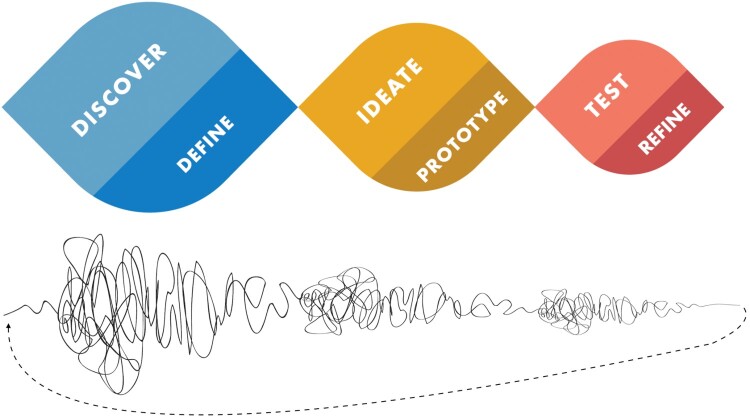
As digital technologies play a growing role in healthcare, human-centered design is gaining traction in global health. Amid concern that this trend offers little more than buzzwords, our paper clarifies how human-centered design matters for global health equity. First, we contextualize how the design discipline differs from conventional approaches to research and innovation in global health, by emphasizing craft skills and iterative methods that reframe the relationship between design and implementation. Second, while there is no definitive agreement about what the 'human' part means, it often implies stakeholder participation, augmenting human skills, and attention to human values. Finally, we consider the practical relevance of human-centered design by reflecting on our experiences accompanying health workers through over seventy digital health initiatives. In light of this material, we describe human-centered design as a flexible yet disciplined approach to innovation that prioritizes people's needs and concrete experiences in the design of complex systems.
Overview
The claims and statistics of this paper haven’t been checked yet.
Free: it reads the open-access text and checks the first 5 claims that cite a source we can check. Create a free account to check every claim.
Integrity signals
Registry
Cites
Statistics
Figures
Verification
Claims the paper makes
The claims and statistics of this paper haven’t been checked yet.
Free: it reads the open-access text and checks the first 5 claims that cite a source we can check. Create a free account to check every claim.
Self-check
Percentages, sums and reported differences re-computed from the paper’s own numbers.
The self-check needs the paper’s full text.
Citations
Cites
Liberati, A., Altman, D. G., Tetzlaff, J., Mulrow, C., Gøtzsche, P. C., Ioannidis, J. P. A., Clarke, M., Devereaux, P. J., Kleijnen, J., & Moher, D. (2009) · PLoS Medicine · doi:10.1371/journal.pmed.1000100 · Cited by 28,164 · cited 2×
“While systematic review methods (Liberati et al., 2009) are the norm in medicine and public health, all of these challenges led us to a conclusion that has been recognized elsewhere (Bates & Glennerster, 2017) – such reproducible methods break down and are less useful for reviewing highly ambiguous…”
BackgroundThe Reflective Practitioner: How Professionals Think in Action
Checkoway, B., & Schon, D. A. (1985) · Journal of Policy Analysis and Management · doi:10.2307/3324262 · Cited by 21,268
The reflective practitioner: How professionals think in action
Stewart, C. J. (1984) · Patient Education and Counseling · doi:10.1016/0738-3991(84)90022-3 · Cited by 19,752
Dilemmas in a general theory of planning
Rittel, H. W. J., & Webber, M. M. (1973) · Policy Sciences · doi:10.1007/bf01405730 · Cited by 16,338 · cited 5×
“This iterative integration of design within the wider human context of implementation is precisely how a design approach is thought to be amenable to solving complex or wicked social problems (Rittel & Webber, 1973; Schön, 1983).”
BackgroundInfluentialMichie, S., van Stralen, M. M., & West, R. (2011) · Implementation Science · doi:10.1186/1748-5908-6-42 · Cited by 13,697
Co-creation and the new landscapes of design
Sanders, E. B.-N., & Stappers, P. J. (2008) · CoDesign · doi:10.1080/15710880701875068 · Cited by 5,561 · cited 2×
“Many now use the term co-design together with participatory design (Sanders & Stappers, 2008).”
MethodSocial determinants of health inequalities
Marmot, M. (2005) · The Lancet · doi:10.1016/s0140-6736(05)71146-6 · Cited by 5,086
Manifesto for agile software development
Beck, K., Beedle, M., van Bennekum, A., Cockburn, A., Cunningham, W., Fowler, M., & Thomas, D. A. (2001) · Cited by 4,284
Wicked Problems in Design Thinking
Buchanan, R. (1992) · Design Issues · doi:10.2307/1511637 · Cited by 3,539 · cited 3×
“Many associate the classic view of designing as a complex human activity with seminal works for example by Rittel and Webber (1973), Schön (1983), Krippendorff (1989), Buchanan (1992), Cross (2001), and Nelson and Stolterman (2003).”
BackgroundClosing the gap in a generation: health equity through action on the social determinants of health
Marmot, M., Friel, S., Bell, R., Houweling, T. A., & Taylor, S. (2008) · The Lancet · doi:10.1016/s0140-6736(08)61690-6 · Cited by 3,247
Research works printed but not linked: 11
- Anokwa, Y., Smyth, T. N., Ramachandran, D., Sherwani, J., Schwartzman, Y., Luk, R., … DeRenzi, B. (2009). Stories from the field: Reflections on HCI4D experiences. Information Technologies & International Development, 5(4), 101– 115.
- Bannon, L. J., & Ehn, P. (2013). Design matters in participatory design. In J. Simonsen & T. Robertson (Eds.), Routledge international handbook of participatory design (pp. 37– 63). New York, NY: Routledge.
- Bates, M. A., & Glennerster, R. (2017). The generalizability puzzle. Stanford Social Innovation Review, 15(3), 50– 54.
- Boland, R. (2004). In F. Collopy (Ed.), Managing as designing (pp. 164– 168). Redwood City, CA: Stanford University Press.
- Ehn, P., & Kyng, M. (1992, January). Cardboard computers: Mocking-it-up or hands-on the future. In J. Greenbaum & M. Kyng (Eds.), Design at work (pp. 169– 196). Hillsdale, NJ: Lawrence Erlbaum Associates.
- Farmer, P., & Gutiérrez, G. (2013). In the company of the poor (M. Griffin & J. W. Block, Eds.) (pp. 1–224). Maryknoll, NY: Orbis Books.
- Kay, M., Santos, J., & Takane, M. (2011). mHealth: New horizons for health through mobile technologies: Second global survey on eHealth (pp. 1–102). World Health Organization.
- Li, M., & Nielsen, P. (2019). Making usable generic software. A matter of global or local design? Forthcoming in Nordic Contributions in IS Research: 10th Scandinavian Conference on Information Systems, SCIS 2019, Nokia, Finland, August 11–14, 2019, Springer.
- Mumford, E. (1987). Designing human systems: The ETHICS method. Manchester: Manchester Business School.
- Papanek, V., & Fuller, R. B. (1972). Design for the real world. London: Thames and Hudson.
- Toyama, K. (2015). Geek Heresy. New York, NY: Public Affairs.
Cited by
Göttgens, I., & Oertelt-Prigione, S. (2021) · JMIR mHealth and uHealth · doi:10.2196/28102 · Cited by 385
Human-centred design in industry 4.0: case study review and opportunities for future research
Nguyen Ngoc, H., Lasa, G., & Iriarte, I. (2022) · Journal of Intelligent Manufacturing · doi:10.1007/s10845-021-01796-x · Cited by 168
Duffy, A., Christie, G. J., & Moreno, S. (2022) · JMIR Human Factors · doi:10.2196/35693 · Cited by 114
“ImplementationReviewHoleman and Kane [32], 2019 IDEAS (integrate, design, assess, share), a framework strategy to design, develop and evaluate digital interventions and health behavior change incorporating a wide swathe of human-centered factors.”
BackgroundInfluentialRodriguez, N. M., Burleson, G., Linnes, J. C., & Sienko, K. H. (2023) · Annual Review of Biomedical Engineering · doi:10.1146/annurev-bioeng-081922-024834 · Cited by 119
Wu, M., Çetindamar, D., Min, C., & Zhang, Y. (2021) · Advanced Engineering Informatics · doi:10.1016/j.aei.2021.101368 · Cited by 109
“Further, this cluster contains several branches highlighting the highly-relevant sectors of digitization in practice, including supply chains [105-107], manufacturing [108-111], and healthcare [112, 113].”
BackgroundVerdezoto, N., Bagalkot, N., Akbar, S. Z., Sharma, S., Mackintosh, N., Harrington, D., & Griffiths, P. (2021) · Proceedings of the ACM on Human-Computer Interaction · doi:10.1145/3449165 · Cited by 75
“Designing interventions in community health should recognize and value the crucial role of frontline health workers as system builders to promote their active participation throughout the design process [51].”
BackgroundInterventions to address global inequity in diabetes: international progress
Walker, A. F., Graham, S., Maple-Brown, L., Egede, L. E., Campbell, J. A., Walker, R. J., Wade, A. N., Mbanya, J. C., Long, J. A., Yajnik, C., et al. (2023) · The Lancet · doi:10.1016/s0140-6736(23)00914-5 · Cited by 77
Using human centered design to identify opportunities for reducing inequities in perinatal care
Nijagal, M. A., Patel, D., Lyles, C. R., Liao, J., Chehab, L. Z., Williams, S., & Sammann, A. (2021) · BMC Health Services Research · doi:10.1186/s12913-021-06609-8 · Cited by 88
Ramos, G., Hernandez-Ramos, R., Taylor, M. E., & Schueller, S. M. (2024) · Behavior Therapy · doi:10.1016/j.beth.2024.04.004 · Cited by 73
AI in Global Health: The View from the Front Lines
Ismail, A., & Kumar, N. (2021) · Proceedings of the 2021 CHI Conference on Human Factors in Computing Systems · doi:10.1145/3411764.3445130 · Cited by 59
Systematic literature review on the security challenges of blockchain in IoT-based smart cities
Yu, Z., Song, L., Jiang, L., & Sharafi, O. K. (2021) · Kybernetes · doi:10.1108/k-07-2020-0449 · Cited by 68
Ingram, C., Langhans, T., & Perrotta, C. (2022) · BMC Medical Education · doi:10.1186/s12909-022-03334-6 · Cited by 55
Fakoya, I., Cole, C. B., Larkin, C., Punton, M., Brown, E., & Suleiman, A. B. (2021) · Health Promotion Practice · doi:10.1177/15248399211003544 · Cited by 52
“HCD practitioners have increasingly become involved in design and implementation of myriad projects within global health (Holeman & Kane, 2020).”
BackgroundRinaldi, M., & Bottani, E. (2023) · International Journal of Production Economics · doi:10.1016/j.ijpe.2023.108915 · Cited by 55
Human-Centered Design to Enhance Implementation and Impact in Health
Lyon, A. R., Aung, T., Bruzios, K. E., & Munson, S. A. (2024) · Annual Review of Public Health · doi:10.1146/annurev-publhealth-071823-122337 · Cited by 55
El‐Bassel, N., Gilbert, L., Hunt, T., Wu, E., Oga, E. A., Mukherjee, T. I., Campbell, A. N. C., Sabounchi, N. S., Gutnick, D. N., Kerner, R., et al. (2021) · Drug and Alcohol Dependence · doi:10.1016/j.drugalcdep.2021.108675 · Cited by 54
Vaccine acceptance in rural India: Engaging faith leaders as vaccine ambassadors
Banerjee, P., Seth, R., Dhaliwal, B. K., Sullivan, A., Qiayum, Y., Thankachen, B., Closser, S., & Shet, A. (2022) · Frontiers in Public Health · doi:10.3389/fpubh.2022.979424 · Cited by 46
“These formative interviews and HCD workshops were aimed at understanding community perspectives regarding vaccines and identifying specific barriers to vaccine acceptance that could be addressed through the project (20).”
BackgroundKharono, B., Kaggiah, A., Mugo, C., Seeh, D., Guthrie, B. L., Moreno, M. A., John-Stewart, G. C., Inwani, I. W., & Ronen, K. (2021) · mHealth · doi:10.21037/mhealth-21-23 · Cited by 47
“mHealth interventions have been proposed as an approach to promote health equity, by providing patients with remote support in contexts where barriers exist to inperson care (12,13).”
BackgroundDeconstructing design thinking as a tool for the implementation of a population health initiative
Jarrett, C., Baxter, Y. C., Boch, J., Carrasco, C., Muñoz, D. C., Dib, K. M., Pessoa, L., Saric, J., Silveira, M., & Steinmann, P. (2022) · Health Research Policy and Systems · doi:10.1186/s12961-022-00892-5 · Cited by 42
Equity and bias in electronic health records data
Boyd, A. D., Gonzalez-Guarda, R. M., Lawrence, K. S., Patil, C. L., Ezenwa, M. O., O'Brien, E. C., Paek, H., Braciszewski, J. M., Adeyemi, O. J., Cuthel, A. M., et al. (2023) · Contemporary Clinical Trials · doi:10.1016/j.cct.2023.107238 · Cited by 40
Oberschmidt, K., Grünloh, C., Nijboer, F., & van Velsen, L. (2022) · Journal of Medical Internet Research · doi:10.2196/31795 · Cited by 42
“Holeman and Kane [53] emphasize that reflection should not only take place within the project, but it should also be explicitly reported to help other researchers.”
Background“Nothing about us without us:” engaging at users in at research
Koontz, A. M., Duvall, J. A., Johnson, R. E., Reissman, T., & Smith, E. (2022) · Assistive Technology · doi:10.1080/10400435.2022.2117524 · Cited by 37
Poncette, A.-S., Mosch, L. K., Stablo, L., Spies, C., Schieler, M., Weber‐Carstens, S., Feufel, M. A., & Balzer, F. (2022) · JMIR Human Factors · doi:10.2196/30655 · Cited by 40
“Moreover, as was the case in our study, the design and implementation of health technologies are often separate processes, making it difficult to apply an HCD approach across all development and implementation phases [22,73].”
BackgroundMethodFabian, K. E., Foster, K. T., Chwastiak, L., Turner, M., & Wagenaar, B. H. (2023) · Translational Behavioral Medicine · doi:10.1093/tbm/ibad041 · Cited by 33
Security challenges of blockchain in Internet of things: Systematic literature review
Ye, C., Cao, W., & Chen, S. (2020) · Transactions on Emerging Telecommunications Technologies · doi:10.1002/ett.4177 · Cited by 35
Black, C. J., Berent, J. M., Joshi, U., Khan, A., Chamlagai, L. K., Shrivastava, R., Gautam, B., Negeye, A., Iftin, A. N., Ali, H., et al. (2023) · Global Health Science and Practice · doi:10.9745/ghsp-d-22-00312 · Cited by 32
“INTRODUCTION Global mental health is a relatively new field directed at achieving mental health equity worldwide.(1) Driven by the perspective that mental health is a fundamental human right,(2) global mental health research has Research Program on Children and Adversity, School of Social Work, Boston College, Boston,…”
BackgroundGlocal is global: reimagining the training of global health students in high-income countries
Anand, S. S., & Pai, M. (2023) · The Lancet Global Health · doi:10.1016/s2214-109x(23)00382-0 · Cited by 31
Design thinking capabilities in the digital world: A bibliometric analysis of emerging trends
Dragičević, N., Vladova, G., & Ullrich, A. (2023) · Frontiers in Education · doi:10.3389/feduc.2022.1012478 · Cited by 33
“about how digital technologies might change businesses by considering human values (Beckman, 2020; Holeman and Kane, 2020; Verganti et al., 2020).”
BackgroundAssessing the application of human-centered design to translational research
Norman, M. K., Hamm, M., Schenker, Y., Mayowski, C. A., Hierholzer, W., Rubio, D. M., & Reís, S. E. (2021) · Journal of Clinical and Translational Science · doi:10.1017/cts.2021.794 · Cited by 33
LaFond, A., & Cherney, M. (2021) · Global Health Science and Practice · doi:10.9745/ghsp-d-21-00334 · Cited by 31
“HCD also helps to position the ecosystem to achieve greater equity and inclusion in its practices and its outcomes.(5) At the ecosystem level, HCD contributes to the following preconditions for greater equity, inclusion, and innovation:”
BackgroundMethodEvans, L., Evans, J., Pagliari, C., & Källander, K. (2022) · JMIR Research Protocols · doi:10.2196/34013 · Cited by 30
“These interventions, which are complex in themselves, are deployed in complex environments (eg, multiple organizations, environments with competing priorities among stakeholders, etc) to address complex or “wicked” problems, such as reaching low-income populations to provide them with high-quality, affordable health c…”
InfluentialComplexity in Health: Can Design Help Support Interdisciplinary Solutions?
Andrawes, L., Johnson, T., & Coleman, M. (2021) · Global Health Science and Practice · doi:10.9745/ghsp-d-21-00222 · Cited by 32
“Design practices are supporting the shift toward working cultures that allow for integration across the many disciplines devoted to an understanding of human behavior and human values.(26) For some, integration comes with risks, such as the risk of design practices being reduced to a toolkit approach that can lead to…”
BackgroundScoping review: exploring the equity impact of current digital health design practices
Evans, L., Evans, J., Pagliari, C., & Källander, K. (2023) · Oxford Open Digital Health · doi:10.1093/oodh/oqad006 · Cited by 31
Challenges and opportunities for human-centered design in CGIAR
Müller, A., Steinke, J., Dorado, H., Keller, S., Jimenez, D. R., Ortiz-Crespo, B., & Schumann, C. (2024) · Agricultural Systems · doi:10.1016/j.agsy.2024.104005 · Cited by 33
Doyle, A. M., Mulhern, E., Rosen, J. E., Appleford, G., Atchison, C. J., Bottomley, C., Hargreaves, J., & Weinberger, M. (2019) · Gates Open Research · doi:10.12688/gatesopenres.12998.2 · Cited by 27
Design Is an Essential Medicine
Mishra, P., & Sandhu, J. S. (2021) · Global Health Science and Practice · doi:10.9745/ghsp-d-21-00332 · Cited by 26
Lazarevic, N., Lecoq, M., Bœhm, C., & Caillaud, C. (2023) · International Journal of Environmental Research and Public Health · doi:10.3390/ijerph20021012 · Cited by 30
Feldacker, C., Holeman, I., Murenje, V., Xaba, S., Korir, M., Wambua, B., Makunike-Chikwinya, B., Holec, M. M., Barnhart, S., & Tshimanga, M. (2020) · PLoS ONE · doi:10.1371/journal.pone.0233234 · Cited by 26
“Since 2010 the CHT’s core framework was shaped by a rigorous and well documented humancentered design process [57]} and is highly configurable.”
BackgroundSelf-citationArrivillaga, M., Bermúdez, P. C., García-Cifuentes, J. P., & Botero, J. (2020) · PLoS ONE · doi:10.1371/journal.pone.0238099 · Cited by 28
Equity by design principles for digital health interventions
Bitomsky, L., Nißen, M., & Kowatsch, T. (2025) · International Journal for Equity in Health · doi:10.1186/s12939-025-02645-6 · Cited by 26
“While there are frameworks introducing equity in DHIs (e.g., human-centered design [53] or community-based participatory research approaches [53]), these often either lack specificity or offer too much flexibility that designers and developers are left with limited guidance for consistent…”
Skeen, S. J., Jones, S. S., Cruse, C. M., & Horvath, K. J. (2022) · JMIR Human Factors · doi:10.2196/37350 · Cited by 26
“These methods can represent important contributions toward global health equity [30,31].”
MethodModel of ethical analysis of digital technologies: towards true digital humanism
de la Cruz, C. D., Fernández, J. L. F., & Villegas-Galaviz, C. (2025) · AI & Society · doi:10.1007/s00146-025-02330-w · Cited by 29
“This can include technologies that aim to bridge the digital divide or promote economic and educational equity (Holeman and Kane 2020).”
Liu, Q., Chen, X., & Tang, X. (2023) · Expert Systems with Applications · doi:10.1016/j.eswa.2023.122279 · Cited by 25
Kang, B., Poddar, M., Luitel, A., Rimal, R. N., Ayalew, B. M., & Black, D. P. (2025) · Global Health Science and Practice · doi:10.9745/ghsp-d-24-00164 · Cited by 27
Overcoming barriers to mHealth co-design in low- and middle-income countries: a research toolkit
Poulsen, A., Hickie, I. B., Alam, M., Crouse, J. J., Ekambareshwar, M., Loblay, V., Song, Y. J. C., & LaMonica, H. M. (2024) · Information Technology for Development · doi:10.1080/02681102.2023.2295480 · Cited by 22
“Facing high fail rates (Gitau & Marsden, 2009) and ‘ pilotitis ’ (Holeman & Kane, 2020) in ICT4D projects, utilising co-design in ICT4D research and practice seeks to improve project sustainability, as well as the sustainability of development outcomes (Bailur, 2006; Cumbula et al., 2013; Jacobs et…”
Sarmiento, L. H. T., Capdevila, M. G., Granollers, A., Lamos-Díaz, H., & Rodrigues, K. A. P. (2024) · Big Data and Cognitive Computing · doi:10.3390/bdcc8060069 · Cited by 26
Gewali, A., Lopez, A. R., Dachelet, K., Healy, E., Jean-Baptiste, M., Harridan, H., Evans, Y. N., Unger, J. A., Bhat, A. S., Tandon, S. D., et al. (2021) · JMIR Mental Health · doi:10.2196/26188 · Cited by 23
“Our adaptation process used a human-centered design approach [36], focusing on modifications to MB that were needed to (1) meet the unique mental health needs of perinatal youth and (2) deliver content through a digital delivery modality.”
MethodBanerjee, S., Shaw, D., & Sparke, M. B. (2023) · Globalisation Societies and Education · doi:10.1080/14767724.2023.2209585 · Cited by 21
“It provides a set of prompts for prioritising ordinary people ’ s aspirations and experiences when imagining and implementing complex systems and services (Banerjee, Carney, and Hulga ̊ rd 2019; Isaac and Dianna 2020).”
Mureithi, M., Ng’aari, L., Wasunna, B., Kiruthu-Kamamia, C., Sande, O., Chiwaya, G. D., Huwa, J. M., Tweya, H. M., Jafa, K., & Feldacker, C. (2024) · PLOS Digital Health · doi:10.1371/journal.pdig.0000480 · Cited by 21
A call to integrate health equity into learning health system research training
Coley, R. Y., Duan, K. I., Hoopes, A. J., Lapham, G. T., Liljenquist, K. S., Marcotte, L. M., Ramirez, M., & Schuttner, L. (2022) · Learning Health Systems · doi:10.1002/lrh2.10330 · Cited by 20
“To allow the emergence of this knowledge, research methodologies used by scholars should ensure shared power dynamics such as participatory action research(48) and human-centered design approaches.(49,50)”
MethodHuwa, J. M., Tweya, H. M., Mureithi, M., Kiruthu-Kamamia, C., Oni, F., Chintedza, J., Chiwaya, G. D., Waweru, E., Kudzala, A., Wasunna, B., et al. (2023) · PLoS ONE · doi:10.1371/journal.pone.0278806 · Cited by 20
Improving facility-based care: eliciting tacit knowledge to advance intervention design
English, M., Nzinga, J., Oliwa, J. N., Maina, M., Oluoch, D., Barasa, E., Irimu, G., Muinga, N., Vincent, C. A., & McKnight, J. (2022) · BMJ Global Health · doi:10.1136/bmjgh-2022-009410 · Cited by 19
Hashmi, F. A., Bürger, O., Goldwater, M. B., Johnson, T. P., Mondal, S., Singh, P., & Legare, C. H. (2023) · She ji · doi:10.1016/j.sheji.2024.02.001 · Cited by 25
Development of an Offline, Open-Source, Electronic Health Record System for Refugee Care
Brotherton, T., Brotherton, S., Ashworth, H. C., Kadambi, A., Ebrahim, H., & Ebrahim, S. (2022) · Frontiers in Digital Health · doi:10.3389/fdgth.2022.847002 · Cited by 18
“By utilizing a human-centered design process we have designed a free and open-source EHR specifically for displaced populations (14).”
MethodHaroun, Y., Sambaiga, R. F., Sarkar, N. D. P., Kapologwe, N., Kengia, J. T., Liana, J., Kimatta, S. S., James, J., Simon, V. T., Hassan, F., et al. (2022) · BMC Health Services Research · doi:10.1186/s12913-022-08744-2 · Cited by 19
“Reflecting their own experiences with over seventy digital health initiatives, [25, 29], are of the view that human-centred design is a practical way of accompanying health workers and communities in their struggles for the quality of health and equity.”
BackgroundInfluentialYang, J. E., Lassala, D., Liu, J. X., Whidden, C., Holeman, I., Keita, Y., Djiguiba, Y., N’Diaye, S. I., Fall, F., Kayentao, K., et al. (2021) · BMJ Global Health · doi:10.1136/bmjgh-2021-007205 · Cited by 17
“UHC Mode was the result of an iterative, human-centred design process, 20 which involved direct observations of CHWs planning their daily home visits, focus groups with CHWs and CHW supervisors to elicit feedback on design features to promote higher minimum expected home visit coverage, and months…”
BackgroundSelf-citationBeeman, A., Kwesiga, J., Ippoliti, N. B., Bhandari, T., Pandya, G., Acam, F. A., Lee, S., Hope, R., Gibbs, T., & Levine, J. (2023) · BMC Women s Health · doi:10.1186/s12905-023-02421-0 · Cited by 19
Participatory AI for inclusive crop improvement
Lasdun, V., Güereña, D., Ortiz-Crespo, B., Mutuvi, S., Selvaraj, M. G., & Assefa, T. (2024) · Agricultural Systems · doi:10.1016/j.agsy.2024.104054 · Cited by 17
“…(HCD) methodologies to achieve this, which involve ideation and iteration of proposed innovations with active involvement from target users, focusing on understanding their needs and capacities to identify appropriate solutions (Coggins et al., 2022; Holeman and Kane, 2020; Steinke et al., 2024).”
Moon, K. J., Montiel, G. I., Cantero, P. J., & Nawaz, S. (2021) · Preventing Chronic Disease · doi:10.5888/pcd18.200656 · Cited by 22
A Free, Open-Source, Offline Digital Health System for Refugee Care
Ashworth, H. C., Ebrahim, S., Ebrahim, H., Bhaiwala, Z., & Chilazi, M. J. (2022) · JMIR Medical Informatics · doi:10.2196/33848 · Cited by 17
“We refocused EHR development by employing a human-centered design approach that has been used successfully in global health technology, particularly for chronic disease management [12].”
MethodShapiro, M., Renly, S., Maiorano, A., Young, J. J., Medina, E., Neinstein, A. B., & Odisho, A. Y. (2023) · JMIR Formative Research · doi:10.2196/43009 · Cited by 21
“Human-centered design is the creative approach to problem-solving that directly engages with the people for whom the design is intended [16].”
BackgroundAccess to mobile health in lower middle-income countries: a review
Poulsen, A., Hickie, I. B., Alam, M., Wilson, C. E., & LaMonica, H. M. (2025) · Health and Technology · doi:10.1007/s12553-025-00948-w · Cited by 18
“Likewise, facing high rates of mHealth project pilot failure (or ‘pilotitis’) [17], understanding the context in which mHealth solutions are implemented is essential to intervention access and success, including in LMICs [18, 19].”
A Novel Method for Digital Pain Assessment Using Abstract Animations: Human-Centered Design Approach
Rao, N., Perdomo, S. J., & Jonassaint, C. R. (2022) · JMIR Human Factors · doi:10.2196/27689 · Cited by 17
“Human-centered design is gaining traction in health care and the proliferation of mobile technologies expands opportunities for innovation, particularly because of the wide access to smartphones in clinical populations [23,46-48].”
BackgroundKumar, M., Macharia, P. M., Nyongesa, V., Kathono, J., Yator, O., Mwaniga, S., McKay, M. M., Huang, K., Shidhaye, R. R., Njuguna, S., et al. (2022) · Digital Health · doi:10.1177/20552076221090035 · Cited by 16
“…but also because stakeholders often reasonably demand changes to integrate multiple health programs or to accommodate local infrastructure and health worker routines, 32 we believe that our efforts will help make contextual adaptations that would bene fi t both providers and their clientele.”
BackgroundFeldacker, C., Pienaar, J., Wasunna, B., Ndebele, F., Makhele, C., Day, S., Tweya, H. M., Oni, F., Sardini, M., Adhikary, B., et al. (2023) · Journal of Medical Internet Research · doi:10.2196/42111 · Cited by 17
“The People, Messages, and Reports tabs (Figures 1-3) were updated through an iterative human-centered design process [68,69] that solicited user feedback from HCWs, nurses, and managers from all study sites to reflect local preferences and priorities, in accordance with the Principles of Digital Development [70].”
MethodAbejirinde, I. O., Kishimoto, V., Pfisterer, K. J., Uddin, N., McGuire, K., Brual, J., Merriman, K., Agarwal, P., Smith, J., Alfred, M. C., et al. (2025) · npj Digital Medicine · doi:10.1038/s41746-025-01731-x · Cited by 15
Andersson, S., Hassanen, S., Momanyi, A. M., Onyango, D. K., Gatwechi, D. K., Lutukai, M., Aura, K. O., Mungai, A. M., & Chandani, Y. (2021) · Global Health Science and Practice · doi:10.9745/ghsp-d-20-00378 · Cited by 15
“HCD, which centers on designing digital solutions in complex environments,may potentially result in less time spent overall since uptake is faster and more intuitive and fewer iterations to the tools are required after implementation; however this needs to be evaluated.(18) HCDwhen implemented in its purest form can t…”
BackgroundProbst, F., Ratcliffe, J., Molteni, E., Mexia, N., Rees, J., Matcham, F., Antonelli, M., Tinker, A., Shi, Y., Ourselin, S., et al. (2024) · Design Science · doi:10.1017/dsj.2024.22 · Cited by 20
“Questions remain related to health equity, social justice, and whether technologies are inclusive of people with different socioeconomical statuses (Holeman & Kane 2020).”
Karlyn, A., Odindo, S., Onyango, R., Mbindyo, C., Mberi, T., Too, G., Dalley, J., Holeman, I., & Wasunna, B. (2020) · mHealth · doi:10.21037/mhealth-19-261 · Cited by 16
“The Smart Health App is an opensource platform based on Medic Mobile’s Community Health Toolkit (CHT) (11).”
MethodSelf-citationAssessing Disparities in Reduction Mammaplasty: There Is Room for Improvement
Morris, M. P., Christopher, A. N., Patel, V., Broach, R. B., Fischer, J. P., & Butler, P. D. (2021) · Aesthetic Surgery Journal · doi:10.1093/asj/sjab138 · Cited by 15
Hunter, L. A., McCoy, S. I., Rao, A., Mnyippembe, A., Hassan, K., Njau, P., Mfaume, R. S., & Liu, J. X. (2021) · Health Policy and Planning · doi:10.1093/heapol/czab084 · Cited by 15
“There has been increasing interest by the global health community in applying HCD to solve staunch public health challenges (Bazzano et al., 2017; Holeman and Kane, 2020), including SRH challenges faced by young women.”
Problematizing Human-Centred Design: Notes on Planet- Oriented Design
Tironi, M., Albornoz, C., & Chilet, M. (2022) · DIID · doi:10.30682/diid7722c · Cited by 21
Including the Voice of Care Recipients in Community Health Feedback Loops in Rural Kenya
Okeke, F., Wasunna, B., Amulele, M. A., Holeman, I., & Dell, N. L. (2019) · Proceedings of the ACM on Human-Computer Interaction · doi:10.1145/3359173 · Cited by 17
Self-citationFeldacker, C., Mugwanya, R., Irongo, D., Kathumba, D., Chiwoko, J., Kitsao, E., Sippell, K., Wasunna, B., Jonas, K., Samala, B., et al. (2023) · JMIR Formative Research · doi:10.2196/48671 · Cited by 14
Health Technology for All: An Equity-Based Paradigm Shift Opportunity
MacDonald, J., Demiris, G., Shevin, M., Israni, S. T., Carney, T. J., & Cupito, A. (2022) · NAM Perspectives · doi:10.31478/202212a · Cited by 19
“…and family advisory councils is a growing trend in health care, and humancentered design thinking is increasingly prevalent in the development of new technologies (Holeman and Kane, 2019), the voices and power of people most impacted by inequality are not yet adequately or equitably included.”
BackgroundBucher, S., Young, A., Dolan, M., Padmanaban, G. P., Chandnani, K., & Purkayastha, S. (2023) · PLOS Digital Health · doi:10.1371/journal.pdig.0000216 · Cited by 14
Whither convergence? Co-designing convergent research and wrestling with its emergent tensions
Ashton, W. S., Sungu, A., Davis, L., Agarwalla, V., Burke, M., Benavides, E. D., Espat, S., Harper, K., Knight, A., Labruto, N., et al. (2024) · Ecology and Society · doi:10.5751/es-15319-290426 · Cited by 16
“…research collaboration includes building collaborative and creative problem-solving capacity of researchers through trainings and toolkits (Holeman and Kane 2020); extensive and application-oriented collaborations involving formal expertise of designers (Norman et al. 2021); and the…”
Dolan, S., Wittenauer, R., Shearer, J., Njoroge, A., Onyango, P., Owiso, G., Lober, W. B., Liu, S., Puttkammer, N. H., & Rabinowitz, P. M. (2023) · JMIR Formative Research · doi:10.2196/39775 · Cited by 13
“DHI projects often fail to be effectively adopted by users or to demonstrate their potential value owing to the poor understanding of users’ needs and the implementation context [10].”
BackgroundWebb, M. M., Bridges, P., Aruparayil, N., Chugh, C., Beacon, T., Singh, T., Sawhney, S. S., Bains, L., Hall, R., Jayne, D. G., et al. (2022) · IEEE Journal of Translational Engineering in Health and Medicine · doi:10.1109/jtehm.2022.3177313 · Cited by 13
“conducting this work, it was found that including multiple representatives from different disciplines helped ensure a robust design process and avoid over-reliance on individual opinion which may not be representative [42], [43].”
BackgroundHow to eradicate polio in Pakistan: Insights from community health workers
Sultan, M. A., Closser, S., Majidulla, A., Ahmed, S., Naz, F., Nayyab, S., Zaman, A., Shafique, M., & Sohail, A. (2023) · PLOS Global Public Health · doi:10.1371/journal.pgph.0002289 · Cited by 13
Healthcare Infrastructures in Ecuador: Challenges, Reflections and Opportunities for Digital Health
Carlo, L., Carpio-Arias, T. V., Verdezoto, N. X., Eslambolchilar, P., Cruz, E., Malo, F., & Espinosa, D. (2020) · International Conference on Information and Communication Technologies and Development (ICTD) · doi:10.1145/3392561.3397578 · Cited by 16
“…further understand culturally diverse LATAM contexts and create digital ecosystems bridging the gap between multiple stakeholders (academics, healthcare providers, policy makers, NGO’s, technology industry and local communities, etc.) promoting active participation in the design process [32, 50].”
Day, S., Ncube, V., Maja, L., Wasunna, B., Pienaar, J., Setswe, G., Waweru, E., & Feldacker, C. (2023) · JMIR Formative Research · doi:10.2196/44122 · Cited by 15
“The 2wT platform was designed and built using an HCD approach, which centers the user during the design development [7,38,39].”
BackgroundMethodMarcotte, L. M., Langevin, R., Hempstead, B. H., Ganguly, A., Lyon, A. R., Weiner, B. J., Akinsoto, N., Houston, P. L., Fang, V., & Hsieh, G. (2024) · Implementation Science Communications · doi:10.1186/s43058-024-00569-w · Cited by 12
“[ 17] HCD methods elicit information regarding user environment and experience through continuous partner/user engagement and draw from multidisciplinary expertise [18].”
MethodCookson, T. P., Fuentes, L., Zulver, J., & Nelson, A. (2023) · Gender Technology and Development · doi:10.1080/09718524.2023.2182035 · Cited by 13
“Existing design shortfalls are not insurmountable; we suggest that participatory design approaches (see Holeman & Kane 2020) may provide a practical pathway to improving accessibility and accountability features.”
BackgroundFeldacker, C., Klabbers, R. E., Huwa, J. M., Kiruthu-Kamamia, C., Thawani, A., Tembo, P., Chintedza, J., Chiwaya, G. D., Kudzala, A., Bisani, P., et al. (2024) · PLoS ONE · doi:10.1371/journal.pone.0298494 · Cited by 12
Baumann, S. E., Rabin, M. A., Hawk, M. E., Devkota, B., Upadhaya, K., Shrestha, G. R., Joseph, B., & Burke, J. G. (2024) · Culture Health & Sexuality · doi:10.1080/13691058.2024.2373793 · Cited by 11
“HCD is an approach to problem solving that prioritises human experiences and needs in the design process (Holeman and Kane 2020).”
Human-Centered Design to Create an Emergency Care Action Plan for Children With Medical Complexity
Pulcini, C. D., Broder‐Fingert, S., CALLAS, P. W., Dayan, P. S., Drath, B., Gravel-Pucillo, C., Kuo, D. Z., Lamberson, M., Mistry, R. D., Palaza, A., et al. (2025) · PEDIATRICS · doi:10.1542/peds.2024-069125 · Cited by 11
Piera-Jiménez, J., Creus, N. V., Costa, A. M., Vegas, X. M., Fageda, A. C., Farré, A., Herczeg, L., Parameswaran, L., Carot-Sans, G., & Valle, L. (2026) · Journal of Medical Internet Research · doi:10.2196/84129 · Cited by 11
“This orientation resonates with the broader global health literature describing human-centered design as a disciplined yet flexible practice that bridges design and implementation by iteratively engaging stakeholders and aligning innovation with human values and equity goals [17,18].”
Johnson‐Peretz, J., Arunga, T. O., Lee, J., Akatukwasa, C., Atwine, F., Onyango, A., Owino, L., & Camlin, C. S. (2024) · International Journal of Qualitative Methods · doi:10.1177/16094069241236268 · Cited by 12
“…product, the risk of omitting valued contributions from all team members threatens the twin goals of achieving equity in global health research and of designing research for a balanced re-presentation of the participants studied (Gallagher & Kim, 2008; Holeman & Kane, 2020; Pratt & Hyder, 2018).”
Ethics of the Use of Social Media as Training Data for AI Models Used for Digital Phenotyping
Jaiswal, A., Shah, A., Harjadi, C., Windgassen, E., & Washington, P. Y. (2024) · JMIR Formative Research · doi:10.2196/59794 · Cited by 14
EN-BIRTH Study Group, Ruysen, H., Rahman, A. E., Gordeev, V. S., Hossain, M. T., Basnet, O., Shirima, K., Rahman, Q. S.-U., Zaman, S. B., Rana, N., et al. (2021) · BMC Pregnancy and Childbirth · doi:10.1186/s12884-020-03426-5 · Cited by 13
“Multidisciplinary perspectives are essential in bringing together diverse perspectives and experiences via a cooperative design process to innovate and reframe challenges from multiple perspectives [35].”
BackgroundCrooks, C. L., Talwalkar, S., Sharma, T., Arora, K., & Venkatesh, K. (2024) · IEEE SoutheastCon · doi:10.1109/southeastcon52093.2024.10500080 · Cited by 11
“HCD is a systematic approach guided by the following key principles: deep understanding of users, user involvement, user-centered evaluation, and iterative process[3][4][5].”
Human-centered design of a novel soft exosuit for post-stroke gait rehabilitation
Krishnan, C., Adeeko, O. P., Washabaugh, E. P., Augenstein, T. E., Brudzinski, M., Portelli, A., & Kalpakjian, C. Z. (2024) · Journal of NeuroEngineering and Rehabilitation · doi:10.1186/s12984-024-01356-3 · Cited by 11
“It allows for more effective and efficient design by engaging with users early in the development process, yielding valuable insights while working with prototypes and sketches, rather than fully built products, which can prevent the misallocation of resources [24].”
BackgroundAdewusi, B. A., Adekunle, B. I., Mustapha, S. D., & Uzoka, A. C. (2021) · Journal of Frontiers in Multidisciplinary Research · doi:10.54660/.jfmr.2021.2.1.148-161 · Cited by 11
Wittenauer, R., Dolan, S., Njoroge, A., Onyango, P., Owiso, G., Rabinowitz, P. M., & Puttkammer, N. H. (2023) · JMIR Formative Research · doi:10.2196/39383 · Cited by 11
“Even if a clinic’s context is well suited for EIR adoption, if the system is poorly designed without the HCW needs in mind, then it will have cascading negative effects on acceptability from the HCW [12,31,32].”
BackgroundGender Data, Intersectionality, and a Feminist Politics of “Negotiated Refusal”
Cookson, T. P., & Fuentes, L. (2025) · Violence Against Women · doi:10.1177/10778012241309362 · Cited by 9
“As “ constructive enquiry ” (Koshy, 2005, p. 9), action research is an attractive mode of knowledge production for research-practitioners, including at the intersection of technology and humanitarian action (Dekker et al., 2022; Holeman & Kane, 2020).”
Høiseth, M., & Nakrem, S. (2024) · Design for Health · doi:10.1080/24735132.2024.2449288 · Cited by 10
“…areas, such as new future education programs and lifelong learning across different disciplines, the role of rapidly advancing technologies for integrating adaptive co-creation or reinforcing co-creation and participatory design as a political and pragmatic matter (e.g. holeman and Kane 2019).”
Climate conscious health equity is essential to achieve climate-resilient digital healthcare
Lokmic-Tomkins, Z., Borda, A., & Skouteris, H. (2024) · The Journal of Climate Change and Health · doi:10.1016/j.joclim.2024.100301 · Cited by 9
“Critical to achieving human-centered, equitable, climate-resil-ient digital health services is the role of consumer-driven, environmentally sustainable design involving consumers, end-users, and other key stakeholders in the decision-making process [10].”
Umstead, K. A., Gill, C., Pearsall, M. S., Stuebe, A. M., & Tully, K. P. (2023) · International Journal of Qualitative Studies on Health and Well-Being · doi:10.1080/17482631.2023.2205282 · Cited by 9
Metadata
- Authors
- Holeman, I., & Kane, D.
- Affiliations
- University of Washington (US)
- Medic Mobile, Seattle, WA, USA
- Corresponding author
- Holeman, Isaac
- ORCID
- Holeman, Isaac
- Venue
- Information Technology for Development
- Publisher
- Association for Information Systems
- Published
- 2019-09-29
- Volume
- 26
- Issue
- 3
- Pages
- 477-505
- ISSN
- 0268-1102 (ISSN-L)
- 1554-0170
- PMC
- PMC7484921
- OpenAlex
- W2979239620
- Semantic Scholar
- 87dc51d88c3e792ab2072e0303f13ad954c300ef
- Cited by
- 285
- References
- 119
- Citations by year
- 2026: 43 · 2025: 45 · 2024: 63 · 2023: 53 · 2022: 37 · 2021: 36 · 2020: 7 · 2019: 1
- FWCI
- 19.15
- Type
- journal article
- Language
- en
- Open access
- hybrid
- doi.org
- Locations
- Information Technology for Development (publishedVersion, cc-by)
- PubMed Central (publishedVersion, cc-by)
- PubMed (publishedVersion)
- RePEc: Research Papers in Economics (submittedVersion)
- Funders
- Bill and Melinda Gates Foundation (OPP1183755)
- Gates Cambridge Trust
- Topics
- Physical Sciences › Computer Science › Human-Computer Interaction › Innovative Human-Technology Interaction
- Social Sciences › Business, Management and Accounting › Management of Technology and Innovation › Innovative Approaches in Technology and Social Development
- Physical Sciences › Computer Science › Human-Computer Interaction › Usability and User Interface Design
- Keywords
- human-centered design, global health equity, digital health, stakeholder engagement, health worker engagement, human values, digital technologies in healthcare
About these checks
Registry, retraction, Cites and statistics results are computed, not judged, with one exception: a printed reference that no index lists is read once by a model before it counts as a citation error. Claims are extracted by a model and kept only when their quote appears verbatim in the text; each cited source is then checked, with a model’s help, for whether it says what the claim relies on. Those verdicts can be wrong — read the claim’s quote and the cited source before relying on one.
Statistics and arithmetic are recomputed, not judged.
Confidence bands are shown only for fields calibrated on our annotated test set. None is calibrated yet, so no band is shown.
What counts as a claim ›How we measure confidence ›How we check this ›
Are you an author, or do you see a problem with this page? Request a review
Data sources
Bibliographic data: Semantic Scholar, OpenAlex, Crossref.
Contains information from the Semantic Scholar Academic Graph Datasets, made available under the ODC Attribution License (ODC-BY 1.0).
Semantic Scholar’s data is described in: Kinney, R., et al. (2023). The Semantic Scholar Open Data Platform. arXiv:2301.10140.
