

Human-centered design for global health equity
Open accessThe DOI matches its Crossref record; 114 of the 119 references it cites were found in a registry or an index.
Abstract
As digital technologies play a growing role in healthcare, human-centered design is gaining traction in global health. Amid concern that this trend offers little more than buzzwords, our paper clarifies how human-centered design matters for global health equity. First, we contextualize how the design discipline differs from conventional approaches to research and innovation in global health, by emphasizing craft skills and iterative methods that reframe the relationship between design and implementation. Second, while there is no definitive agreement about what the 'human' part means, it often implies stakeholder participation, augmenting human skills, and attention to human values. Finally, we consider the practical relevance of human-centered design by reflecting on our experiences accompanying health workers through over seventy digital health initiatives. In light of this material, we describe human-centered design as a flexible yet disciplined approach to innovation that prioritizes people's needs and concrete experiences in the design of complex systems.
Overview
The claims and statistics of this paper haven’t been checked yet.
Free: it reads the open-access text and checks the first 5 claims that cite a source we can check. Create a free account to check every claim.
Integrity signals
Registry
Cites
Statistics
Figures
Verification
Claims the paper makes
The claims and statistics of this paper haven’t been checked yet.
Free: it reads the open-access text and checks the first 5 claims that cite a source we can check. Create a free account to check every claim.
Self-check
Percentages, sums and reported differences re-computed from the paper’s own numbers.
The self-check needs the paper’s full text.
Citations
Cites
Liberati, A., Altman, D. G., Tetzlaff, J., Mulrow, C., Gøtzsche, P. C., Ioannidis, J. P. A., Clarke, M., Devereaux, P. J., Kleijnen, J., & Moher, D. (2009) · PLoS Medicine · doi:10.1371/journal.pmed.1000100 · Cited by 28,164 · cited 2×
“While systematic review methods (Liberati et al., 2009) are the norm in medicine and public health, all of these challenges led us to a conclusion that has been recognized elsewhere (Bates & Glennerster, 2017) – such reproducible methods break down and are less useful for reviewing highly ambiguous…”
BackgroundThe Reflective Practitioner: How Professionals Think in Action
Checkoway, B., & Schon, D. A. (1985) · Journal of Policy Analysis and Management · doi:10.2307/3324262 · Cited by 21,268
The reflective practitioner: How professionals think in action
Stewart, C. J. (1984) · Patient Education and Counseling · doi:10.1016/0738-3991(84)90022-3 · Cited by 19,752
Dilemmas in a general theory of planning
Rittel, H. W. J., & Webber, M. M. (1973) · Policy Sciences · doi:10.1007/bf01405730 · Cited by 16,338 · cited 5×
“This iterative integration of design within the wider human context of implementation is precisely how a design approach is thought to be amenable to solving complex or wicked social problems (Rittel & Webber, 1973; Schön, 1983).”
BackgroundInfluentialMichie, S., van Stralen, M. M., & West, R. (2011) · Implementation Science · doi:10.1186/1748-5908-6-42 · Cited by 13,697
Co-creation and the new landscapes of design
Sanders, E. B.-N., & Stappers, P. J. (2008) · CoDesign · doi:10.1080/15710880701875068 · Cited by 5,561 · cited 2×
“Many now use the term co-design together with participatory design (Sanders & Stappers, 2008).”
MethodSocial determinants of health inequalities
Marmot, M. (2005) · The Lancet · doi:10.1016/s0140-6736(05)71146-6 · Cited by 5,086
Manifesto for agile software development
Beck, K., Beedle, M., van Bennekum, A., Cockburn, A., Cunningham, W., Fowler, M., & Thomas, D. A. (2001) · Cited by 4,284
Wicked Problems in Design Thinking
Buchanan, R. (1992) · Design Issues · doi:10.2307/1511637 · Cited by 3,539 · cited 3×
“Many associate the classic view of designing as a complex human activity with seminal works for example by Rittel and Webber (1973), Schön (1983), Krippendorff (1989), Buchanan (1992), Cross (2001), and Nelson and Stolterman (2003).”
BackgroundClosing the gap in a generation: health equity through action on the social determinants of health
Marmot, M., Friel, S., Bell, R., Houweling, T. A., & Taylor, S. (2008) · The Lancet · doi:10.1016/s0140-6736(08)61690-6 · Cited by 3,247
Research works printed but not linked: 11
- Anokwa, Y., Smyth, T. N., Ramachandran, D., Sherwani, J., Schwartzman, Y., Luk, R., … DeRenzi, B. (2009). Stories from the field: Reflections on HCI4D experiences. Information Technologies & International Development, 5(4), 101– 115.
- Bannon, L. J., & Ehn, P. (2013). Design matters in participatory design. In J. Simonsen & T. Robertson (Eds.), Routledge international handbook of participatory design (pp. 37– 63). New York, NY: Routledge.
- Bates, M. A., & Glennerster, R. (2017). The generalizability puzzle. Stanford Social Innovation Review, 15(3), 50– 54.
- Boland, R. (2004). In F. Collopy (Ed.), Managing as designing (pp. 164– 168). Redwood City, CA: Stanford University Press.
- Ehn, P., & Kyng, M. (1992, January). Cardboard computers: Mocking-it-up or hands-on the future. In J. Greenbaum & M. Kyng (Eds.), Design at work (pp. 169– 196). Hillsdale, NJ: Lawrence Erlbaum Associates.
- Farmer, P., & Gutiérrez, G. (2013). In the company of the poor (M. Griffin & J. W. Block, Eds.) (pp. 1–224). Maryknoll, NY: Orbis Books.
- Kay, M., Santos, J., & Takane, M. (2011). mHealth: New horizons for health through mobile technologies: Second global survey on eHealth (pp. 1–102). World Health Organization.
- Li, M., & Nielsen, P. (2019). Making usable generic software. A matter of global or local design? Forthcoming in Nordic Contributions in IS Research: 10th Scandinavian Conference on Information Systems, SCIS 2019, Nokia, Finland, August 11–14, 2019, Springer.
- Mumford, E. (1987). Designing human systems: The ETHICS method. Manchester: Manchester Business School.
- Papanek, V., & Fuller, R. B. (1972). Design for the real world. London: Thames and Hudson.
- Toyama, K. (2015). Geek Heresy. New York, NY: Public Affairs.
Cited by
Items 201–300 of 320
Deck, A., Singh, K., Caras, P., LeClair, A. M., Gore‐Massy, M., Chiu, F., Dantas, L. O., McAlindon, T. E., Folta, S. C., & Kasturi, S. (2025) · JMIR Formative Research · doi:10.2196/75399 · Cited by 1
“This contrasts with traditional design methods, which typically develop products based primarily on expert opinion [54].”
Till, S. C., Wilson, T., Dewlok, M., Verdezoto, N. X., & Densmore, M. (2025) · International Conference on Communities and Technologies (C&T) · doi:10.1145/3742800.3742825 · Cited by 1
“However, it is crucially important to ensure that the technology designed is culturally and contextually relevant [26, 52].”
Harvesting Perspectives: A Worker-Centered Inquiry into the Future of Fruit-Picking Farm Robots
Malik, M. A. B., Brandão, M., & Coopamootoo, K. (2025) · IEEE RO-MAN · doi:10.1109/ro-man63969.2025.11217649 · Cited by 1
“Worker-centered and human-centered design frameworks emphasize augmenting human labour rather than replacing it, while promoting dignity, autonomy, and equity [18], [20].”
Patient Perceptions of Blockchain-Based Health Information Exchange: User-Centered Design Study
Guse, R., Hu, S., Thiebes, S., Erler, C., Caridia, C., Stork, W., Gersch, M., & Sunyaev, A. (2025) · Journal of Medical Internet Research · doi:10.2196/78849 · Cited by 2
“For the development of the blockchain-based HIE mobile app, we used user-centered design involving patients as primary users to cater the mobile app to patients’ needs [36,37].”
Ortega, D., Bartolini, R. M., Pareja, R. G., Stawarz, K., Creed‐Kanashiro, H., Holdsworth, M., Griffiths, P., Rousham, E. K., & Verdezoto, N. X. (2026) · ACM Transactions on Computing for Healthcare · doi:10.1145/3793548 · Cited by 1
“Taking a human-centred design approach [88], we engaged with a professional graphic designer who sketched the four main design challenges (listed in Section 3.1) through several iterations and using provocative scenarios to trigger self-reflection and empathy [80], going beyond assumption-based…”
InfluentialBaumann, S. E., Schwarz, H., Agarwal, A., Devkota, B., Miller, E. P., Youk, A. O., Parker, S., Murthy, S., Sharma, N., Shrestha, A., et al. (2026) · JMIR Research Protocols · doi:10.2196/89117 · Cited by 1
Reading gender into citizen data practices for sustainable development
Cookson, T. P., & Fuentes, L. (2026) · Data & Policy · doi:10.1017/dap.2026.10065 · Cited by 1
“As “ constructive enquiry ” (Koshy, 2005, p. 9), action research is an attractive mode of knowledge production for us as researcher-practitioners (Holeman and Kane, 2020; Dekker et al., 2022).”
Health equity readiness index for digital health organizations
Wagon, L., Nißen, M., & Kowatsch, T. (2026) · International Journal for Equity in Health · doi:10.1186/s12939-026-02964-2 · Cited by 1
Co-designing a landscape fire smoke health plan for at-risk populations in Australia
Campbell, S. L., Gjedrem, A. M., Dodd, B., & Johnston, F. H. (2026) · Environmental Research Health · doi:10.1088/2752-5309/ae9f8b · Cited by 1
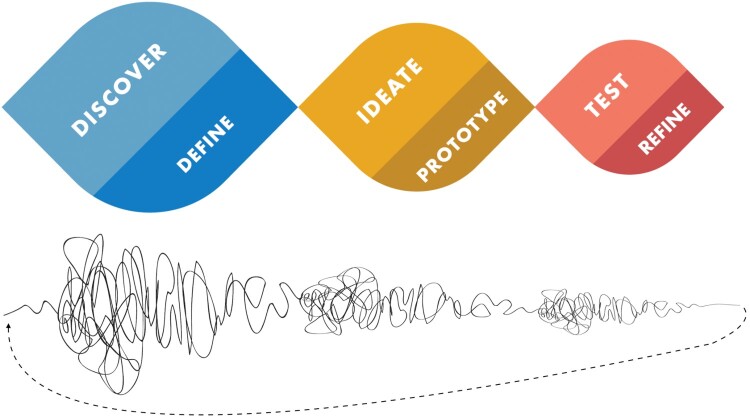
“The approach involves six iterative steps (Holeman and Kane 2020): (i) Discover: gather insights and new perspectives (ii) Define: synthesise findings from (i) and set priorities and constraints (iii) Ideate: explore options and possibilities (iv) Prototype: create tangible outcomes (v) Test: test…”
Firoozi, A. A., & Firoozi, A. A. (2025) · Springer eBooks · doi:10.1007/978-3-032-08019-6_8 · Cited by 1
Wolfe, C. G. (2023) · Corpus Université Laval (Université Laval) · Cited by 1
Lilan, S., Osborn, T. L., Musonye, W. M., Kasudi, J., Otieno, B. H., Etyang, I., Tu, J., Korley, E., & Wasanga, C. (2026) · JMIR Human Factors · doi:10.2196/79107 · Cited by 1
“Future governance structures should consider greater community ownership [42,45].”
Subrahmanyam, S. (2026) · IGI Global eBooks · doi:10.4018/979-8-3373-3947-4.ch009 · Cited by 1
Data-Centric Explanation Methods for Healthcare Professionals
Dievoort, D. V., Croon, R. D., Abeele, V. V., & Verbert, K. (2026) · Communications in computer and information science · doi:10.1007/978-3-032-21514-7_7 · Cited by 1
Nyatuka, D. R., Macharia, P., & Jabin, M. S. R. (2026) · INQUIRY The Journal of Health Care Organization Provision and Financing · doi:10.1177/00469580261485823 · Cited by 1
“73-76”
Molina, D. M., Castillo, J. Z., & Aguinaga, A. A. (2021) · Revista Ciencias y Artes · doi:10.37211/2789.1216.v1.n2.22 · Cited by 1
A Practical Framework for Research
Madon, T., Agnihotri, A., & Gadgil, A. J. (2022) · Springer eBooks · doi:10.1007/978-3-030-86065-3_3 · Cited by 1
(2024) · Frontiers research topics · doi:10.3389/978-2-8325-4357-3 · Cited by 2
Refining Parent SMART: User feedback to optimize a multi-modal intervention
Becker, S. J., Shiller, H., Fan, Y. A., DiBartolo, E., Olson, M. B., Casline, E. P., Wijaya, C., Helseth, S. A., & Kelly, L. M. (2024) · Journal of Substance Use and Addiction Treatment · doi:10.1016/j.josat.2024.209405 · Cited by 1
Human centered design for applied anthropology
Carnes, M., VandenBroek, A. K., & Brunson, E. K. (2024) · Annals of Anthropological Practice · doi:10.1111/napa.12223 · Cited by 1
Foundations and Future Directions of Global Health Communication
Adam, M., Gates, J., Mbewu, N., & Bärnighausen, T. (2024) · Sustainable development goals series · doi:10.1007/978-3-031-53793-6_6 · Cited by 1
Lessons Learned From the Use of Human-Centered Design Approaches to Improve Nutrition in Nigeria
Brandt, A. J., Lith, L. M. V., Chipanta, N. S. K., Sherburne, L., Oladeinde, K. U., Samba, A., Haygood, T., Onyechi, C., Idiong, E., Olaniru, S., et al. (2025) · Health Promotion Practice · doi:10.1177/15248399241303897 · Cited by 1
“Detailed descriptions of the human-centered design process are widely available in the literature (Holeman & Kane, 2020; Melles et al., 2021; Van der Bijl-Brouwer & Dorst, 2017; Yan et al., 2021).”
Co-Designing Health Interventions With Refugee Communities – A Scoping Review.Preprint
Bartlett, R., Watterson, J., & Boyle, J. A. (2021) · Research Square · doi:10.21203/rs.3.rs-804858/v1 · Cited by 1
Storey, D. (2022) · Wiley eBooks · doi:10.1002/9781119678816.iehc0847 · Cited by 1
The Capability Approach: Addressing learners' ability to pursue STEM interests and careers.
Polito, F. (2024) · doi:10.31274/td-20240617-65 · Cited by 1
Using Human-Centered Design to Address Pet Food Security: A Case Study of Ellie’s Pet Food Pantry
Rauktis, M. E., Hoffman, B. L., Smith, S. F., Jackson, F., & Cavalancia, J. (2025) · Journal of Participatory Research Methods · doi:10.35844/001c.140845 · Cited by 1
Designing Experiences in Preventive Healthcare - CASE: Neosmart Health
Tuomas, T. (2020) · Theseus (Ammattikorkeakoulujen)
Ofori, M. Q., & El-Gayar, O. (2021) · AIS Electronic Library (AISeL)
Informação digital em saúde para idosos: recomendações para o design de artefatos audiovisuais
Ana Caroline Colombi, N. A. I., & Goldchmit, S. M. (2022) · doi:10.5151/ped2022-2659476
Zheng, J., Howse, M., & Sutton, E. (2023) · Advances in educational technologies and instructional design book series · doi:10.4018/978-1-6684-6868-5.ch006
Elucidating Harm Reduction Principles in a Client-Centered Representative Payee Program
Abua, J., Hagert, Z., Baumann, S. E., Batey, S., Creasy, S. L., Davis, D., Kay, E. S., & Hawk, M. E. (2023) · Community Mental Health Journal · doi:10.1007/s10597-023-01180-4
“…or “design thinking,” is a systematic yet creative approach to problem-solving that centers the participant in the problem-solving and design process, which melds principles from engineering, psychology, anthropology, the arts, and other disciplines (Holeman & Kane, 2020; Ideo, 2015; USAID, 2021).”
Gonzaga, S., Nam, K.-Y., Rebaglio, A., & Selloni, D. (2023) · International Association of Societies of Design Research Congress (IASDR) · doi:10.21606/iasdr.2023.888
Calambur, V., Zhang, Z., Huh, J., & Schiaffino, M. K. (2023) · SSRN Electronic Journal · doi:10.2139/ssrn.4624787
Creating a Framework for Virtual Reality Learning Environment (VRLE) for Studio-Based Learning
Keng, C. W., Yatim, M. H. M., & Saad, N. B. (2024) · Journal of Human Centered Technology · doi:10.11113/humentech.v3n1.64 · Cited by 1
Romo, J. F. M., & Lena, M. M.-L. (2024) · PSICUMEX · doi:10.36793/psicumex.v14i1.591
Hall-Clifford, R. (2024) · The MIT Press eBooks · doi:10.7551/mitpress/15135.003.0014
Introductory Chapter: Setting the Stage for the Multidimensional Puzzle of Health Equity
Krishnamoorthy, Y. (2024) · IntechOpen eBooks · doi:10.5772/intechopen.1003743
Bottani, E., Gebennini, E., Morea, D., & Murino, T. (2024) · Computers & Industrial Engineering · doi:10.1016/j.cie.2024.110462
“It spreads like wildfire”: mothers’ gatherings for vaccine acceptance
de Acosta, D., Moore, T., Alam, F., Hoffman, S. J., Keaveney, M., Mann, E., & Dawson-Hahn, E. E. (2024) · Frontiers in Public Health · doi:10.3389/fpubh.2024.1198108
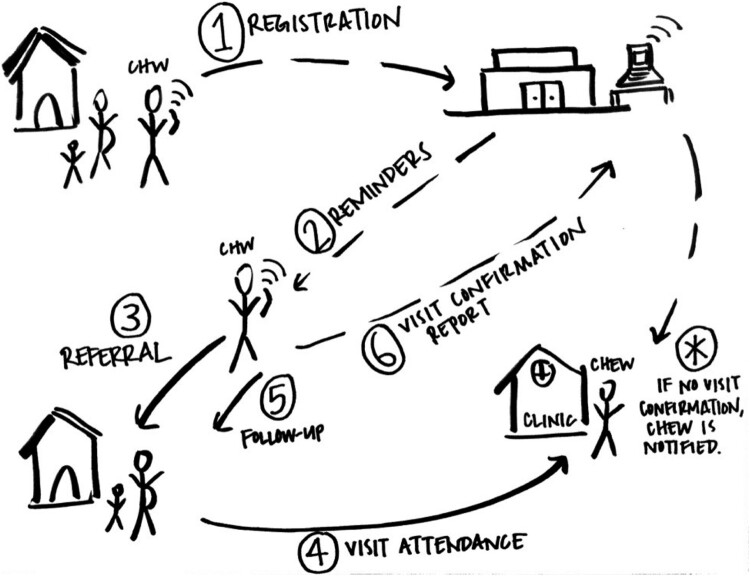
“The CHW model of care figures prominently in a landmark 2020 paper by Holeman and Kane about the promise of human-centered design for global health equity (8).”
BackgroundInfluentialScaling-up Telemedicine: Challenges and Opportunities Seen in ASEAN
Uy, K. N., Co, F. A., & Bagon, A. C. (2024) · Asian journal of public health practice. · doi:10.4103/ajphp.ajphp_14_24
Systematic need-led design to develop low-cost solutions to healthcare challenges remotely
Venkatramani, A., Kulkarni, M. S., & Hamed, R. (2026) · Design for Health · doi:10.1080/24735132.2026.2750753
Байболова, Д. (2025) · Habaršy. Pedagogika ġylymdary seriâsy · doi:10.51889/2959-5762.2025.86.2.035
UI/UX Design Using Design Thinking Method Based on Website Unload Repair
Bonari, A. H. B., & Putra, F. A. (2025) · JISA(Jurnal Informatika dan Sains) · doi:10.31326/jisa.v8i1.2305
FSDI: A Holistic Framework for Sustainability-Driven Innovation
Ullah, W., & Khan, M. A. (2025) · International Conference on Innovation in Artificial Intelligence and Internet of Things (AIIT) · doi:10.1109/aiit63112.2025.11082799
“Holeman and Kane in [19] integrate human-centered design with sustainability but concentrated mainly on resource efficiency, neglecting trust, transparency, and hardware development issues.”
AI-Powered Tutoring: Enhancing Student Support
Ellington, L. M. (2025) · Advances in computational intelligence and robotics book series · doi:10.4018/979-8-3373-5102-5.ch011
Lassell, R., Metaxas, A., Wang, K. W., Hantgan, S. L., Gottipati, P., Zwerling, S., Pena, T., Pollak, C., Gitlin, L. N., & Jariwala, S. P. (2025) · JMIR Formative Research · doi:10.2196/64930
“Public health professionals may also find this framework helpful to develop policies and public health initiatives by using human-centered design principles, such as the end users’ evaluation to iteratively refine a policy for better uptake [10].”
InfluentialNew Developments in Nutritional Neuroscience in the Age of Digitalization
Yıldırım, İ. (2025) · Nutritional neurosciences · doi:10.1007/978-981-95-1983-5_6
Firoozi, A. A., & Firoozi, A. A. (2025) · Springer eBooks · doi:10.1007/978-3-032-08019-6_5
Kovalainen, J., & de Heer, S. (2025) · Perspectives in law, business and innovation · doi:10.1007/978-981-95-2058-9_12
Development of MaRiTensi: A mobile health app for hypertension self-management in Indonesia
Widyastuti, C. S., Dinarti, L. K., Aulawi, K., & Lazuardi, L. (2025) · Next research. · doi:10.1016/j.nexres.2025.101113
Fishman, E., Castle, N., Chinguwa, M. J., Eguavoen, A., Alfred, T. A., Ellis, S., Indra, Y., Amos, P. B., & Iskarpatyoti, B. (2025) · medRxiv · doi:10.64898/2025.12.16.25342426
Ingram, C., Langhans, T., & Perrotta, C. (2022) · Figshare · doi:10.6084/m9.figshare.19588806
Krishnan, C., Adeeko, O. P., Washabaugh, E. P., Augenstein, T. E., Brudzinski, M., Portelli, A., & Kalpakjian, C. Z. (2024) · Figshare · doi:10.6084/m9.figshare.25687366
Aranda, Z., Vázquez, S., Gopaluni, A., Martínez, L., Ramírez, M., Jimenez, A., Bernal, D., Rodríguez, A. L., Chacón-Hernández, S. S. T., Vargas, B., et al. (2024) · Figshare · doi:10.6084/m9.figshare.26668986
Marcotte, L. M., Langevin, R., Hempstead, B. R., Ganguly, A., Lyon, A. R., Weiner, B. J., Akinsoto, N., Houston, P. L., Fang, V., & Hsieh, G. (2024) · Figshare · doi:10.6084/m9.figshare.26699153
Marcotte, L. M., Langevin, R., Hempstead, B. R., Ganguly, A., Lyon, A. R., Weiner, B. J., Akinsoto, N., Houston, P. L., Fang, V., & Hsieh, G. (2024) · Figshare · doi:10.6084/m9.figshare.26699150
Zimmermann, R., Konjufca, J., Sakejo, P., Kilonzo, M. N., Quevedo, Y., Blum, K., Biba, E., Mosha, T., Cottin, M., Hernández, C., et al. (2024) · Figshare · doi:10.6084/m9.figshare.24234282
Jarrett, C., Baxter, Y. C., Boch, J., Carrasco, C., Muñoz, D. C., Dib, K. M., Pessoa, L., Saric, J., Silveira, M., & Steinmann, P. (2022) · Figshare · doi:10.6084/m9.figshare.20521620
Zimmermann, R., Konjufca, J., Sakejo, P., Kilonzo, M. N., Quevedo, Y., Blum, K., Biba, E., Mosha, T., Cottin, M., Hernández, C., et al. (2023) · Figshare · doi:10.6084/m9.figshare.24234161
Palm, E., Ekholm, J., & Rudny, M. F. (2024) · Uppsala University Publications (Uppsala University)
Sagan, S. (2023) · KTH Publication Database DiVA (KTH Royal Institute of Technology)
Design Approaches to Developing Technologies for Global Surgery
Webb, M. M. (2021) · White Rose eTheses Online (University of Leeds, The University of Sheffield, University of York) · Cited by 1
Design thinking: A strategy to enhance customer value
Magoleng, T. (2024) · UpSpace Institutional Repository (University of Pretoria)
Fostering Sense of Belonging in Change
Nieminen, J. (2023) · Theseus (Ammattikorkeakoulujen)
Branco, A. C. B. D. S. (2023) · RepositóriUM (Universidade do Minho)
Robinson, L. E. (2025) · Carolina Digital Repository (University of North Carolina at Chapel Hill) · doi:10.17615/3fc7-0427
AMARD, A. (2025) · Open Repository and Bibliography (University of Luxembourg) · Cited by 1
Data-centric explanation methods for healthcare professionals
Van Dievoort, D., De Croon, R., Vanden Abeele, V., & Verbert, K. (2025) · Lirias
Why Public Health Needs Human-Centred Innovation: A Design Thinking Agenda for Public Health
Victorino, G., & Mendonça, J. (2025) · Portuguese Journal of Public Health · doi:10.1159/000550206
“Human-centred approaches also bring to light equity-relevant barriers that standard segmentation may not reveal, such as hidden participation costs, unequal access, and lack of trust, thus reducing the risk of widening existing inequities [7].”
InfluentialGerchow, L., Pasha, V. C., Squires, A. P., & Fayard, A. (2026) · Advances in Nursing Science · doi:10.1097/ans.0000000000000621
Muthuri, J. N., Kutuk, G., Muchiri, R., Muriithi, B., Kamere, G., & Fassbender, K. (2026) · British Educational Research Journal · doi:10.1002/berj.70074 · Cited by 2
A Design Thinking Agenda for Public Health
Victorino, G., & Mendonça, J. (2026) · Portuguese National Funding Agency for Science, Research and Technology (RCAAP Project by FCT)
Patrones de conducta para evocar la intuición creativa en el proceso de diseño
Gómez-de-Gispert, M., Simoes, I., & Andrés, J. P. (2026) · grafica · doi:10.5565/rev/grafica.503
van Rensburg, A. J., Luvuno, Z., Kathree, T., Hongo, N., Mthethwa, L., Grant, M., Bhana, A., Rao, D. P., & Petersen, I. (2026) · BMC Family Practice · doi:10.1186/s12875-026-03223-7
“The co-designed curriculum, which entailed the undertaking of a situational analysis, followed by problem identification and continuous quality improvement using iterative group-based solu-tion testing and learning, took a similar shape to human-centred design [43].”
Dragičević, N., Vladova, G., & Ullrich, A. (2022) · Weizenbaum Library (Weizenbaum Institute) · doi:10.3389/feduc.2022.1012478/full#supplementary-material
Leung, C. L., Bosworth, H. B., Webel, A. R., Aifah, A. A., Akwanalo, C. O., Bloomfield, G. S., Choi, E. W., Gripshover, B., Hileman, C. O., Kamano, J. H., et al. (2026) · BMC Global and Public Health · doi:10.1186/s44263-026-00257-y
AI-Driven Telehealth in Rural India: Challenges, Adoption Behaviour, and Collaborative Strategies
Priya, R. M., Sathyanarayana, N., & Daniel Nesa Kumar, C. (2026) · Advances in computational intelligence and robotics book series · doi:10.4018/979-8-3373-5906-9.ch008
Arthur, K. E. (2026) · Research Square · doi:10.21203/rs.3.rs-9357192/v1
Jabin, M. S. R., Mbwayo, A., Misoi, I. C., Ngaruiya, M., & Macharia, P. M. (2026) · doi:10.2196/preprints.97360
Obese, V., Nkum, B., Akassi, J., Agbenorku, M., Adamu, S., Opare‐Addo, P. A., Bilson, A. J., Ababio, H., Rizig, M., & Sarfo, F. S. (2026) · Equity Neuroscience · doi:10.1016/j.neuros.2026.100051
“Scalable, locally adapted technological solutions (such as mobile health platforms for symptom monitoring, tele-neurology consultations, and wearable devices for tracking motor symptoms) may help reduce gaps in specialist access, particularly in underserved regions [31, 32].”
Rabin, M. A., Buttenheim, A. M., Marson, K. G., Ogachi, S., Kisitu, R., Ayieko, J., Kabami, J., Kamya, M. R., Desai, S., Chouhan, K., et al. (2026) · medRxiv · doi:10.64898/2026.04.28.26351157
Maciel, A. P. F., Soares, R. A., D’Ângelo, M. F. S. V., Barbosa, D. A., Torres, J. D. R. V., Versiani, C. M. C., Mota, É. C., & Silva, C. S. D. O. E. (2026) · Ciência & Saúde Coletiva · doi:10.1590/1413-81232026314.11242024esp
Maciel, A. P. F., Soares, R. A., D’Ângelo, M. F. S. V., Barbosa, D. A., Torres, J. D. R. V., Versiani, C. M. C., Mota, É. C., & Silva, C. S. D. O. E. (2026) · Ciência & Saúde Coletiva · doi:10.1590/1413-81232026314.11242024en
Maciel, A. P. F., Soares, R. A., D’Ângelo, M. F. S. V., Barbosa, D. A., Torres, J. D. R. V., Versiani, C. M. C., Mota, É. C., & Silva, C. S. D. O. E. (2026) · Ciência & Saúde Coletiva · doi:10.1590/1413-81232026314.11242024
Inclusive Innovation: Designing Health Enterprises for Underserved Populations
Velmurugan, R., Bhuvaneswari, R., & Thirumalaisamy, R. (2026) · IGI Global eBooks · doi:10.4018/979-8-3373-7026-2.ch005
Tao, X., CHANG, H., & Wang, C. (2026) · Disability and Rehabilitation Assistive Technology · doi:10.1080/17483107.2026.2662425
“…to and drive the development of technology, adjustments in social structures and the varying needs of different groups, this human-centred design philosophy not only respects individual differences but also provides effective support for promoting social equity and enhancing quality of life [10].”
Human-centered design as an approach to adapting schools for individuals with special needs
Al-Qaisi, A. A. H., & AL-Moqaram, A. M. H. (2026) · AIP conference proceedings · doi:10.1063/5.0329766
Meghani, A., Sutter, A., Hadejia, I. S., Oskouipour, P., Nava, O., Kafayat, O. A., Anyanwu, M. O., Grapa, E., Dadari, I., & Hossain, I. (2026) · SSM - Health Systems · doi:10.1016/j.ssmhs.2026.100223
Abdurrahman, A. R. M., Prabaswari, A. D., Pribadi, A. R., & Lati, G. M. (2026) · ASU International Conference in Emerging Technologies for Sustainability and Intelligent Systems (ICETSIS) · doi:10.1109/icetsis68266.2026.11549391
Ali, M., Nguyen, C., Agraviador, D., & Childers, T. B. (2026) · PubMed · doi:10.2105/ajph.2026.308611
Human-centered ethics for artificial intelligence-integrated digital health ecosystems
Góra-Błaszczykowska, A., & Radhakrishnan, G. V. (2026) · Elsevier eBooks · doi:10.1016/b978-0-443-45282-6.00021-5
Liu, Y. (2026) · Healthcare · doi:10.3390/healthcare14142031
“Human-centered design (HCD) is an iterative innovation approach that focuses on developing solutions by deeply understanding the needs, capabilities, and limitations of users (such as patients, doctors and nurses) in real-world environments [29].”
Digital Transformation in Welfare Systems: Data, Technologies, and Emerging Social Challenges
Amaturo, E., Aragona, B., & Artiaco, R. (2026) · IGI Global eBooks · doi:10.4018/979-8-2600-3048-6.ch001
Zhang, R., de Reuver, M., Smith, A. D. R., Orchard, N. A., & Figueroa, C. A. (2026) · Internet Interventions · doi:10.1016/j.invent.2026.100981
“The rise of HCD in the digital health field was often driven by oversimplified assumptions about user preferences and behaviors, leading to digital health tools that failed to align with user needs (Holeman and Kane, 2019).”
InfluentialDike, N. O. (2026) · Canadian Medical Education Journal · doi:10.36834/c64gsy46
From needs to values: approaching the ‘How’ for ethical XR experiences
Hallström, L., Jennes, I., & den Broeck, W. V. (2026) · Frontiers in Computer Science · doi:10.3389/fcomp.2026.1856855
Zhou, S., & Chen, S. (2026) · International Conference on Intelligent Engineering and Next-Gen Healthcare Systems (IEHNS) · doi:10.1109/iehns68708.2026.11606771
Metadata
- Authors
- Holeman, I., & Kane, D.
- Affiliations
- University of Washington (US)
- Medic Mobile, Seattle, WA, USA
- Corresponding author
- Holeman, Isaac
- ORCID
- Holeman, Isaac
- Venue
- Information Technology for Development
- Publisher
- Association for Information Systems
- Published
- 2019-09-29
- Volume
- 26
- Issue
- 3
- Pages
- 477-505
- ISSN
- 0268-1102 (ISSN-L)
- 1554-0170
- PMC
- PMC7484921
- OpenAlex
- W2979239620
- Semantic Scholar
- 87dc51d88c3e792ab2072e0303f13ad954c300ef
- Cited by
- 285
- References
- 119
- Citations by year
- 2026: 43 · 2025: 45 · 2024: 63 · 2023: 53 · 2022: 37 · 2021: 36 · 2020: 7 · 2019: 1
- FWCI
- 19.15
- Type
- journal article
- Language
- en
- Open access
- hybrid
- doi.org
- Locations
- Information Technology for Development (publishedVersion, cc-by)
- PubMed Central (publishedVersion, cc-by)
- PubMed (publishedVersion)
- RePEc: Research Papers in Economics (submittedVersion)
- Funders
- Bill and Melinda Gates Foundation (OPP1183755)
- Gates Cambridge Trust
- Topics
- Physical Sciences › Computer Science › Human-Computer Interaction › Innovative Human-Technology Interaction
- Social Sciences › Business, Management and Accounting › Management of Technology and Innovation › Innovative Approaches in Technology and Social Development
- Physical Sciences › Computer Science › Human-Computer Interaction › Usability and User Interface Design
- Keywords
- human-centered design, global health equity, digital health, stakeholder engagement, health worker engagement, human values, digital technologies in healthcare
About these checks
Registry, retraction, Cites and statistics results are computed, not judged, with one exception: a printed reference that no index lists is read once by a model before it counts as a citation error. Claims are extracted by a model and kept only when their quote appears verbatim in the text; each cited source is then checked, with a model’s help, for whether it says what the claim relies on. Those verdicts can be wrong — read the claim’s quote and the cited source before relying on one.
Statistics and arithmetic are recomputed, not judged.
Confidence bands are shown only for fields calibrated on our annotated test set. None is calibrated yet, so no band is shown.
What counts as a claim ›How we measure confidence ›How we check this ›
Are you an author, or do you see a problem with this page? Request a review
Data sources
Bibliographic data: Semantic Scholar, OpenAlex, Crossref.
Contains information from the Semantic Scholar Academic Graph Datasets, made available under the ODC Attribution License (ODC-BY 1.0).
Semantic Scholar’s data is described in: Kinney, R., et al. (2023). The Semantic Scholar Open Data Platform. arXiv:2301.10140.
