

What do people know about fertility? A systematic review on fertility awareness and its associated factors
Open accessThe DOI matches its Crossref record; 129 of the 130 references it cites were found in a registry or an index.
Abstract
INTRODUCTION: Recent evidence indicates that reproductive-age people have inadequate fertility awareness (FA) concerning fertility, infertility risk factors, and consequences of delaying childbearing. However, no study has tried to summarize these studies and to clarify the variables associated with FA, namely the role of gender, age, education, and reproductive status on FA. METHODS: A literature search up to February 2017 was conducted using the EBSCO, Web of Science, Scielo, and Scopus electronic databases with combinations of keywords and MeSH terms (e.g. 'awareness' OR 'health knowledge, attitudes, practice' AND 'fertility'; 'fertile period'; 'assisted reprod*'). RESULTS: Seventy-one articles met the eligibility criteria and were included. The main results showed that participants report low-to-moderate FA. Higher levels of FA were shown by women, highly educated individuals, people who reported difficulties with conceiving, and those who had planned their pregnancies. Having or desiring to have children was not related to FA level. An inconsistent association between study participant age and FA was observed, with some studies indicating that older participants had higher FA, but others found an opposite result or did not find any association. CONCLUSION: The current findings suggest that interventions to increase FA are warranted, especially those targeting men, people with low education, and in family planning settings. Interventions and campaigns should be customized to meet individuals' needs regarding FA. Because of the high heterogeneity regarding the assessment of FA, these conclusions must be interpreted with caution.
Overview
The claims and statistics of this paper haven’t been checked yet.
Free: it reads the open-access text and checks the first 5 claims that cite a source we can check. Create a free account to check every claim.
Integrity signals
Registry
Cites
Statistics
Figures
Verification
Claims the paper makes
The claims and statistics of this paper haven’t been checked yet.
Free: it reads the open-access text and checks the first 5 claims that cite a source we can check. Create a free account to check every claim.
Claims other papers make about this one
Each is checked against this paper’s own text: does it say what the citing paper says it does?
The cited source says what the claim attributes to it.
In the citing paper
“Lay populations, especially, have a limited and misconstrued understanding of both the relationship of age to infertility and the limitations of available reproductive technologies to overcome the effects of age (Bunting et al., 2013; Pedro et al., 2018; Delbaere et al., 2020; Choi et al., 2023).”
From Declining global fertility rates and the implications for family planning and family building: an IFFS consensus document based on a narrative review of the literature (2024) · cites this paper as Pedro et al., 2018
Self-check
Percentages, sums and reported differences re-computed from the paper’s own numbers.
The self-check needs the paper’s full text.
Citations
Cites
Preferred Reporting Items for Systematic Reviews and Meta-Analyses: the PRISMA statement
Moher, D., Liberati, A., Tetzlaff, J., Altman, D. G., & for the PRISMA Group (2009) · BMJ · doi:10.1136/bmj.b2535 · Cited by 83,823
Preferred Reporting Items for Systematic Reviews and Meta-Analyses: The PRISMA Statement
Moher, D., Liberati, A., Tetzlaff, J., Altman, D. G., & The PRISMA Group (2009) · PLoS Medicine · doi:10.1371/journal.pmed.1000097 · Cited by 64,042 · cited 2×
“We followed the Preferred Reporting Items for Systematic Reviews and Meta-Analyses (PRISMA) guidelines for reporting the data analysed (46).”
BackgroundMethodPreferred reporting items for systematic reviews and meta-analyses: the PRISMA Statement.
(2009) · PubMed Central · Cited by 44,859
Reprint—Preferred Reporting Items for Systematic Reviews and Meta-Analyses: The PRISMA Statement
Moher, D., Liberati, A., Tetzlaff, J., Altman, D. G., & and the PRISMA Group (2009) · Physical Therapy · doi:10.1093/ptj/89.9.873 · Cited by 2,486 · cited 1×
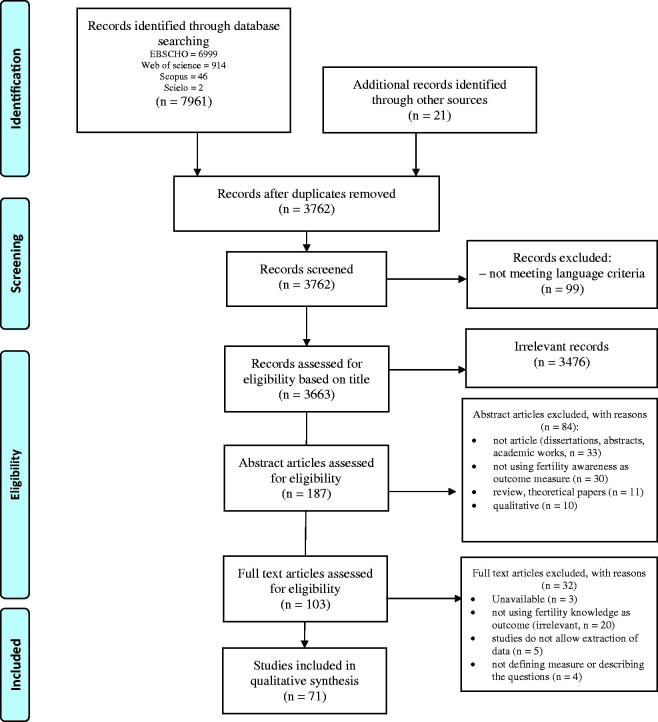
“From Moher et al., 2009 (46). risk factors, age-related fertility decline, the fertile period, and the consequences of delaying childbearing.”
BackgroundBoivin, J., Bunting, L., Collins, J. A., & Nygren, K. G. (2007) · Human Reproduction · doi:10.1093/humrep/dem046 · Cited by 2,437 · cited 1×
“problem (8,9) that affects people around the world.”
Mascarenhas, M. N., Flaxman, S. R., Boerma, T., Vanderpoel, S., & Stevens, G. A. (2012) · PLoS Medicine · doi:10.1371/journal.pmed.1001356 · Cited by 2,312 · cited 1×
“problem (8,9) that affects people around the world.”
BackgroundThe International Glossary on Infertility and Fertility Care, 2017
Zegers-Hochschild, F., Adamson, G. D., Dyer, S., Racowsky, C., de Mouzon, J., Sokol, R., Rienzi, L., Sunde, A., Schmidt, L., Cooke, I. D., et al. (2017) · Fertility and Sterility · doi:10.1016/j.fertnstert.2017.06.005 · Cited by 1,505
Self-citationMays, N., Pope, C., & Popay, J. (2005) · Journal of Health Services Research & Policy · doi:10.1258/1355819054308576 · Cited by 1,375
The variability of female reproductive ageing
te Velde, E. R. (2002) · Human Reproduction Update · doi:10.1093/humupd/8.2.141 · Cited by 1,214
Effectiveness of strategies for informing, educating, and involving patients
Coulter, A., & Ellins, J. (2007) · BMJ · doi:10.1136/bmj.39246.581169.80 · Cited by 1,128 · cited 1×
“There is evidence that web-based educational interventions positively impact health behaviour (135).”
BackgroundWhy do people postpone parenthood? Reasons and social policy incentives
Mills, M., Rindfuss, R. R., McDonald, P., te Velde, E., & on behalf of the ESHRE Reproduction and Society Task Force (2011) · Human Reproduction Update · doi:10.1093/humupd/dmr026 · Cited by 1,082 · cited 1×
“Because people delay childbearing for various reasons (6) and the decision to have children is multifaceted (2,3), it is likely that FA only has a modest effect on reproductive decisions among highly educated people.”
BackgroundLifestyle factors and reproductive health: taking control of your fertility
Sharma, R., Biedenharn, K. R., Fedor, J. M., & Agarwal, A. (2013) · Reproductive Biology and Endocrinology · doi:10.1186/1477-7827-11-66 · Cited by 845
Infertility and the provision of infertility medical services in developing countries
Ombelet, W., Cooke, I., Dyer, S., Serour, G., & Devroey, P. (2008) · Human Reproduction Update · doi:10.1093/humupd/dmn042 · Cited by 720 · cited 1×
“Further, in less developed countries unsafe abortions, pregnancy-related infections, and insufficient delivery care are important risk factors for secondary infertility (29).”
BackgroundDemographic and medical consequences of the postponement of parenthood
Schmidt, L., Sobotka, T., Bentzen, J. G., Nyboe Andersen, A., & on behalf of the ESHRE Reproduction and Society Task Force (2012) · Human Reproduction Update · doi:10.1093/humupd/dmr040 · Cited by 656 · cited 1×
“People from developed countries (4) and engaged in higher”
BackgroundSelf-citationBalbo, N., Billari, F. C., & Mills, M. (2013) · European Journal of Population / Revue européenne de Démographie · doi:10.1007/s10680-012-9277-y · Cited by 623
Homan, G. F., Davies, M., & Norman, R. (2007) · Human Reproduction Update · doi:10.1093/humupd/dml056 · Cited by 546
Increased Infertility With Age in Men and Women
Dunson, D. B., Baird, D. D., & Colombo, B. (2004) · Obstetrics & Gynecology · doi:10.1097/01.aog.0000100153.24061.45 · Cited by 515 · cited 1×
“Female and male ages are both associated with an increased time to pregnancy (16,17).”
BackgroundSmoking and female infertility: a systematic review and meta-analysis
Augood, C., Duckitt, K., & Templeton, A. A. (1998) · Human Reproduction · doi:10.1093/humrep/13.6.1532 · Cited by 510 · cited 1×
“In addition to age, other modifiable factors include sexually transmitted infections (STIs) (19), smoking (20,21), alcohol consumption (22,23), and obesity or low weight (21,24,25); for a full review of these and other risk factors, see (26–28).”
BackgroundYoung people and healthy eating: a systematic review of research on barriers and facilitators
Shepherd, J. (2005) · Health Education Research · doi:10.1093/her/cyh060 · Cited by 484 · cited 1×
“Using a standardized quality framework for non-intervention studies (64) used for previous”
MethodLampic, C., Svanberg, A. S., Karlström, P., & Tydén, T. (2006) · Human Reproduction · doi:10.1093/humrep/dei367 · Cited by 474
Female reproductive ageing: current knowledge and future trends
Broekmans, F. J., Knauff, E. A. H., te Velde, E. R., Macklon, N. S., & Fauser, B. C. (2007) · Trends in Endocrinology & Metabolism · doi:10.1016/j.tem.2007.01.004 · Cited by 427 · cited 1×
“related to fewer and poorer-quality follicles (11,12) as well as”
BackgroundNegative lifestyle is associated with a significant reduction in fecundity
Hassan, M. A. M., & Killick, S. R. (2004) · Fertility and Sterility · doi:10.1016/j.fertnstert.2003.06.027 · Cited by 425 · cited 1×
“In addition to age, other modifiable factors include sexually transmitted infections (STIs) (19), smoking (20,21), alcohol consumption (22,23), and obesity or low weight (21,24,25); for a full review of these and other risk factors, see (26–28).”
BackgroundMen's influences on women's reproductive health: medical anthropological perspectives
Dudgeon, M. R., & Inhorn, M. C. (2004) · Social Science & Medicine · doi:10.1016/j.socscimed.2003.11.035 · Cited by 377 · cited 1×
“and childbearing decisions (125) and our findings suggest lower”
BackgroundEffect of male age on fertility: evidence for the decline in male fertility with increasing age
Hassan, M. A. M., & Killick, S. R. (2003) · Fertility and Sterility · doi:10.1016/s0015-0282(03)00366-2 · Cited by 311 · cited 1×
“Female and male ages are both associated with an increased time to pregnancy (16,17).”
BackgroundBunting, L., Tsibulsky, I., & Boivin, J. (2013) · Human Reproduction · doi:10.1093/humrep/des402 · Cited by 292 · cited 4×
“Four found moderate levels of awareness (45,57,59, 60), three found low levels of FA (43,53,69), and the remaining study (54) found high awareness regarding female body anatomy (M1⁄4 86.”
BackgroundInfluentialA public health focus on infertility prevention, detection, and management
Macaluso, M., Wright-Schnapp, T. J., Chandra, A., Johnson, R., Satterwhite, C. L., Pulver, A., Berman, S. M., Wang, R. Y., Farr, S. L., & Pollack, L. A. (2010) · Fertility and Sterility · doi:10.1016/j.fertnstert.2008.09.046 · Cited by 286
Peterson, B. D., Pirritano, M., Tucker, L., & Lampic, C. (2012) · Human Reproduction · doi:10.1093/humrep/des011 · Cited by 284 · cited 3×
“Studies showed that young people want to first complete their education, find a stable partner, and climb the career ladder before childbirth (36,37,62), which can result in less interest in FA.”
BackgroundResultLifestyle factors in people seeking infertility treatment – A review
ANDERSON, K., NISENBLAT, V., & NORMAN, R. (2010) · Australian and New Zealand Journal of Obstetrics and Gynaecology · doi:10.1111/j.1479-828x.2009.01119.x · Cited by 277
Hodes-Wertz, B., Druckenmiller, S., Smith, M., & Noyes, N. (2013) · Fertility and Sterility · doi:10.1016/j.fertnstert.2013.07.201 · Cited by 270 · cited 1×
“Five other studies also found moderate-to-high awareness regarding the effect of age on treatment success and the age at which the chances of pregnancy decrease (55,73,79,99,100).”
ResultThe patients' perspective on fertility care: a systematic review
Dancet, E. A. F., Nelen, W. L. D. M., Sermeus, W., De Leeuw, L., Kremer, J. A. M., & D'Hooghe, T. M. (2010) · Human Reproduction Update · doi:10.1093/humupd/dmq004 · Cited by 263 · cited 1×
“reviews (65,66), two researchers independently evaluated the”
Advanced maternal age and adverse perinatal outcome: A review of the evidence
Carolan, M., & Frankowska, D. (2011) · Midwifery · doi:10.1016/j.midw.2010.07.006 · Cited by 258
Effects of subfertility cause, smoking and body weight on the success rate of IVF
Lintsen, A. M. E., Pasker-de Jong, P. C. M., de Boer, E. J., Burger, C. W., Jansen, C. A. M., Braat, D. D. M., & van Leeuwen, F. E. (2005) · Human Reproduction · doi:10.1093/humrep/deh898 · Cited by 253 · cited 1×
“In addition to age, other modifiable factors include sexually transmitted infections (STIs) (19), smoking (20,21), alcohol consumption (22,23), and obesity or low weight (21,24,25); for a full review of these and other risk factors, see (26–28).”
BackgroundEvaluating men's involvement as a strategy in sexual and reproductive health promotion
Sternberg, P. (2004) · Health Promotion International · doi:10.1093/heapro/dah312 · Cited by 241 · cited 1×
“The high awareness of female risk factors compared with male risk factors can be specific of reproductive health which might be a reflection of the higher focus on women’s health in the reproductive and sexual health-care services (113).”
BackgroundMoos, M.-K., Dunlop, A. L., Jack, B. W., Nelson, L., Coonrod, D. V., Long, R., Boggess, K., & Gardiner, P. M. (2008) · American Journal of Obstetrics and Gynecology · doi:10.1016/j.ajog.2008.08.060 · Cited by 217 · cited 2×
“example, the Reproductive Life Plan (128) is a programme”
BackgroundWomen's awareness and perceptions of delay in childbearing
Maheshwari, A., Porter, M., Shetty, A., & Bhattacharya, S. (2008) · Fertility and Sterility · doi:10.1016/j.fertnstert.2007.07.1338 · Cited by 209 · cited 6×
“Five other studies also found moderate-to-high awareness regarding the effect of age on treatment success and the age at which the chances of pregnancy decrease (55,73,79,99,100).”
BackgroundResultInfluentialSexually transmitted infections: impact on male fertility
Ochsendorf, F. R. (2008) · Andrologia · doi:10.1111/j.1439-0272.2007.00825.x · Cited by 207 · cited 1×
“In addition to age, other modifiable factors include sexually transmitted infections (STIs) (19), smoking (20,21), alcohol consumption (22,23), and obesity or low weight (21,24,25); for a full review of these and other risk factors, see (26–28).”
BackgroundAlcohol and caffeine consumption and decreased fertility
Hakim, R. B., Gray, R. H., & Zacur, H. (1998) · Fertility and Sterility · doi:10.1016/s0015-0282(98)00257-x · Cited by 205 · cited 1×
“In addition to age, other modifiable factors include sexually transmitted infections (STIs) (19), smoking (20,21), alcohol consumption (22,23), and obesity or low weight (21,24,25); for a full review of these and other risk factors, see (26–28).”
BackgroundFertility and aging: do reproductive-aged Canadian women know what they need to know?
Bretherick, K. L., Fairbrother, N., Avila, L., Harbord, S. H. A., & Robinson, W. P. (2010) · Fertility and Sterility · doi:10.1016/j.fertnstert.2009.01.064 · Cited by 198 · cited 1×
“Six studies exploring awareness regarding the increased risk of miscarriage with age found high awareness (42,58,63,73,74,76), and one found low awareness (35).”
BackgroundCooke, A., Mills, T. A., & Lavender, T. (2010) · International Journal of Nursing Studies · doi:10.1016/j.ijnurstu.2010.06.001 · Cited by 192 · cited 2×
“process (6), and it seems to make an important contribution”
BackgroundAli, S., Sophie, R., Imam, A. M., Khan, F. I., Ali, S. F., Shaikh, A., & Farid-ul-Hasnain, S. (2011) · BMC Public Health · doi:10.1186/1471-2458-11-760 · Cited by 191 · cited 7×
“Approximately half of the studies (n1⁄4 11) did not find significant associations between age and FA (31,53,58,60,63,75,81,94,97,104,110); nine studies found that older people had higher FA (43,52,56,57,86,98,99,103,109); and only one found that younger participants (<30 years old) presented with higher FA (76).”
BackgroundResultInfluentialDiverging fertility among U.S. women who delay childbearing past age 30
Martin, S. P. (2000) · Demography · doi:10.1353/dem.2000.0007 · Cited by 187
Childless women’s knowledge of fertility and assisted human reproduction: identifying the gaps
Daniluk, J. C., Koert, E., & Cheung, A. (2012) · Fertility and Sterility · doi:10.1016/j.fertnstert.2011.11.046 · Cited by 177 · cited 6×
“Approximately half of the studies (n1⁄4 11) did not find significant associations between age and FA (31,53,58,60,63,75,81,94,97,104,110); nine studies found that older people had higher FA (43,52,56,57,86,98,99,103,109); and only one found that younger participants (<30 years old) presented with higher FA (76).”
BackgroundInfluentialTough, S., Benzies, K., Fraser-Lee, N., & Newburn-Cook, C. (2007) · Maternal and Child Health Journal · doi:10.1007/s10995-006-0156-1 · Cited by 173 · cited 3×
“Women presented greater FA than men in 12 studies (34,48,57,60,69,80,87,95,96,98,103,110); however, a similar number of studies (n1⁄4 10) found no significant gender differences (31,45,49,50,55,62,82,85,88,89).”
BackgroundDelayed Childbearing: Effects on Fertility and the Outcome of Pregnancy
Balasch, J., & Gratacós, E. (2011) · Fetal Diagnosis and Therapy · doi:10.1159/000323142 · Cited by 168 · cited 1×
“a higher risk of miscarriage (12–14), obstetric morbidity, and perinatal complications (15).”
BackgroundBunting, L., & Boivin, J. (2008) · Human Reproduction · doi:10.1093/humrep/den168 · Cited by 165 · cited 3×
“Women presented greater FA than men in 12 studies (34,48,57,60,69,80,87,95,96,98,103,110); however, a similar number of studies (n1⁄4 10) found no significant gender differences (31,45,49,50,55,62,82,85,88,89).”
BackgroundHammarberg, K., Setter, T., Norman, R. J., Holden, C. A., Michelmore, J., & Johnson, L. (2013) · Fertility and Sterility · doi:10.1016/j.fertnstert.2012.10.031 · Cited by 163
Tackling burden in ART: an integrated approach for medical staff
Boivin, J., Domar, A. D., Shapiro, D. B., Wischmann, T. H., Fauser, B. C. J. M., & Verhaak, C. (2012) · Human Reproduction · doi:10.1093/humrep/der467 · Cited by 163
Lundsberg, L. S., Pal, L., Gariepy, A. M., Xu, X., Chu, M. C., & Illuzzi, J. L. (2014) · Fertility and Sterility · doi:10.1016/j.fertnstert.2013.12.006 · Cited by 161 · cited 4×
“Two studies presented mixed results (74,106).”
BackgroundResultInfluentialEffects of alcohol consumption on female fertility during an 18-year period
Eggert, J., Theobald, H., & Engfeldt, P. (2004) · Fertility and Sterility · doi:10.1016/j.fertnstert.2003.06.018 · Cited by 160 · cited 1×
“In addition to age, other modifiable factors include sexually transmitted infections (STIs) (19), smoking (20,21), alcohol consumption (22,23), and obesity or low weight (21,24,25); for a full review of these and other risk factors, see (26–28).”
BackgroundDaniluk, J. C., & Koert, E. (2012) · Fertility and Sterility · doi:10.1016/j.fertnstert.2012.10.033 · Cited by 149 · cited 9×
“Approximately half of the studies (n1⁄4 11) did not find significant associations between age and FA (31,53,58,60,63,75,81,94,97,104,110); nine studies found that older people had higher FA (43,52,56,57,86,98,99,103,109); and only one found that younger participants (<30 years old) presented with higher FA (76).”
BackgroundResultInfluentialVirtala, A., Vilska, S., Huttunen, T., & Kunttu, K. (2011) · The European Journal of Contraception & Reproductive Health Care · doi:10.3109/13625187.2011.553295 · Cited by 149 · cited 2×
“Women presented greater FA than men in 12 studies (34,48,57,60,69,80,87,95,96,98,103,110); however, a similar number of studies (n1⁄4 10) found no significant gender differences (31,45,49,50,55,62,82,85,88,89).”
BackgroundRealizing a desired family size: when should couples start?
Habbema, J. D. F., Eijkemans, M. J. C., Leridon, H., & te Velde, E. R. (2015) · Human Reproduction · doi:10.1093/humrep/dev148 · Cited by 145 · cited 1×
“A recent study estimated that if a couple desires to have two children without making use of fertility treatments, they should start trying to conceive when the woman is 27 years old to have a 90% chance of success (18).”
BackgroundDaniluk, J. C., & Koert, E. (2015) · Human Reproduction · doi:10.1093/humrep/deu328 · Cited by 141 · cited 8×
“Six studies found that a high percentage of participants believed that MAR treatments compensate for the age-related fertility decline (42,58,63,73,93,99).”
BackgroundInfluentialShawe, J., Delbaere, I., Ekstrand, M., Hegaard, H. K., Larsson, M., Mastroiacovo, P., Stern, J., Steegers, E., Stephenson, J., & Tydén, T. (2015) · The European Journal of Contraception & Reproductive Health Care · doi:10.3109/13625187.2014.990088 · Cited by 140
Female university students' attitudes to future motherhood and their understanding about fertility
Tydén, T., Svanberg, A. S., Karlström, P., Lihoff, L., & Lampic, C. (2006) · The European Journal of Contraception & Reproductive Health Care · doi:10.1080/13625180600557803 · Cited by 132 · cited 2×
“Nine studies found mixed results: four studies found both high and low awareness regarding different risk factors (48,87,94,103), two found both low and moderate awareness (78,95), one found both moderate and high awareness (58), and two found low, moderate, and high awareness for different risk factors (30,82).”
BackgroundResultChan, C., Chan, T. H. Y., Peterson, B. D., Lampic, C., & Tam, M. (2014) · Human Reproduction · doi:10.1093/humrep/deu324 · Cited by 131 · cited 3×
“One exception to this pattern was the awareness regarding the marked decline of fertility due to female age, with nine studies reporting that between 40% and 90% of participants provided a correct answer or an accurate estimate (34,42,58,61,63,80,81,88,97).”
BackgroundSocial egg freezing: for better, not for worse
Mertes, H., & Pennings, G. (2011) · Reproductive BioMedicine Online · doi:10.1016/j.rbmo.2011.09.010 · Cited by 128 · cited 1×
“to seek egg freezing at a later age (131); thus, young people”
BackgroundWhat Do Healthy Women Know about the Consequences of Delayed Childbearing?
Gossett, D. R., Nayak, S. R., Bhatt, S., & Bailey, S. C. (2013) · Journal of Health Communication · doi:10.1080/10810730.2013.825677 · Cited by 124 · cited 3×
“Five of the eight studies focusing on fertility status found that participants with a current or previous infertility diagnosis had greater FA than those without a diagnosis (60,67,76,109,111); one study found no association (30), and two studies (55,73) found inconsistent associations (see Supplementary Table A2, ava…”
BackgroundPublic perception on infertility and its treatment: an international survey
Bertarelli Foundation Scientific Board, T. (2000) · Human Reproduction · doi:10.1093/humrep/15.2.330 · Cited by 123
Attitudes toward parenthood and awareness of fertility among postgraduate students in Sweden
Svanberg, A. S., Lampic, C., Karlström, P., & Tydén, T. (2006) · Gender Medicine · doi:10.1016/s1550-8579(06)80207-x · Cited by 120
Daumler, D., Chan, P. T. K., Lo, K. C., TAKEFMAN, J. E., & Zelkowitz, P. (2016) · Human Reproduction · doi:10.1093/humrep/dew265 · Cited by 120 · cited 4×
“Regarding childbearing status, five of the nine studies found no significant differences between parents and non-parents (53,55,57,75,86), and two found that participants who had child(ren) had greater FA than nonparents did (54,106).”
BackgroundResultInfluentialIntroducing reproductive life plan-based information in contraceptive counselling: an RCT
Stern, J., Larsson, M., Kristiansson, P., & Tyden, T. (2013) · Human Reproduction · doi:10.1093/humrep/det279 · Cited by 116 · cited 4×
“Four found moderate levels of awareness (45,57,59, 60), three found low levels of FA (43,53,69), and the remaining study (54) found high awareness regarding female body anatomy (M1⁄4 86.”
BackgroundInfluentialWaldenström, U., Aasheim, V., Nilsen, A. B. V., Rasmussen, S., Pettersson, H. J., & Schytt, E. (2013) · Obstetrics and Gynecology · doi:10.1097/aog.0000000000000062 · Cited by 113
Hashiloni-Dolev, Y., Kaplan, A., & Shkedi-Rafid, S. (2011) · Human Reproduction · doi:10.1093/humrep/der304 · Cited by 108
Meissner, C., Schippert, C., & von Versen‐Höynck, F. (2016) · Journal of Assisted Reproduction and Genetics · doi:10.1007/s10815-016-0717-1 · Cited by 104 · cited 3×
“One exception to this pattern was the awareness regarding the marked decline of fertility due to female age, with nine studies reporting that between 40% and 90% of participants provided a correct answer or an accurate estimate (34,42,58,61,63,80,81,88,97).”
BackgroundResultFertility awareness and attitudes towards parenthood among Danish university college students
Sørensen, N. O., Marcussen, S., Backhausen, M. G., Juhl, M., Schmidt, L., Tydén, T., & Hegaard, H. K. (2016) · Reproductive Health · doi:10.1186/s12978-016-0258-1 · Cited by 103 · cited 3×
“Women presented greater FA than men in 12 studies (34,48,57,60,69,80,87,95,96,98,103,110); however, a similar number of studies (n1⁄4 10) found no significant gender differences (31,45,49,50,55,62,82,85,88,89).”
BackgroundSelf-citationIncreasing fertility knowledge and awareness by tailored education: a randomized controlled trial
García, D., Vassena, R., Prat, A., & Vernaeve, V. (2015) · Reproductive BioMedicine Online · doi:10.1016/j.rbmo.2015.10.008 · Cited by 100 · cited 3×
“Four found moderate levels of awareness (45,57,59, 60), three found low levels of FA (43,53,69), and the remaining study (54) found high awareness regarding female body anatomy (M1⁄4 86.”
BackgroundPostponing parenthood to advanced age
Waldenström, U. (2016) · Upsala Journal of Medical Sciences · doi:10.1080/03009734.2016.1201553 · Cited by 100
Knowledge, attitude, and practices of infertility among Saudi couples
Abolfotouh, M. A., Alabdrabalnabi, Albacker, Al-Jughaiman, U. A., & Hassan (2013) · International Journal of General Medicine · doi:10.2147/ijgm.s46884 · Cited by 96 · cited 6×
“the previous use of contraceptive pills reduces fertility) (30,58,63,70,97,103).”
BackgroundResultInfluentialMaeda, E., Sugimori, H., Nakamura, F., Kobayashi, Y., Green, J., Suka, M., Okamoto, M., Boivin, J., & Saito, H. (2015) · Reproductive Health · doi:10.1186/1742-4755-12-10 · Cited by 96 · cited 6×
“However, this difference was not statistically significant among participants trying to conceive (60).”
BackgroundInfluentialDjahanbakhch, O., Ezzati, M., & Zosmer, A. (2007) · The Journal of Pathology · doi:10.1002/path.2108 · Cited by 95 · cited 1×
“related to fewer and poorer-quality follicles (11,12) as well as”
BackgroundHammoud, A. O., Gibson, M., Stanford, J. B., White, G. L., Carrell, D. T., & Peterson, M. (2008) · Fertility and Sterility · doi:10.1016/j.fertnstert.2007.10.038 · Cited by 95
Ojukwu, O., Patel, D., Stephenson, J., Howden, B., & Shawe, J. (2016) · Upsala Journal of Medical Sciences · doi:10.1080/03009734.2016.1215853 · Cited by 94 · cited 1×
“countries, there is no consensus about the content (126,127)”
BackgroundKudesia, R., Chernyak, E., & McAvey, B. (2017) · Fertility and Sterility · doi:10.1016/j.fertnstert.2017.07.1158 · Cited by 92 · cited 1×
“focusing on FA should better define their instruments and examine their psychometric properties as claimed by some authors (121,122).”
BackgroundWhat Do Women Know About the Risks of Delayed Childbearing?
Tough, S., Benzies, K., Newburn‐Cook, C. V., Tofflemire, K. M., Fraser-Lee, N. J., Faber, A. J., & SAUVE, R. S. (2006) · Canadian Journal of Public Health · doi:10.1007/bf03405615 · Cited by 87 · cited 4×
“Five of the eight studies focusing on fertility status found that participants with a current or previous infertility diagnosis had greater FA than those without a diagnosis (60,67,76,109,111); one study found no association (30), and two studies (55,73) found inconsistent associations (see Supplementary Table A2, ava…”
BackgroundResultInfluentialWojcieszek, A. M., & Thompson, R. (2013) · Fertility and Sterility · doi:10.1016/j.fertnstert.2013.03.050 · Cited by 87 · cited 1×
“leaflets) is associated with positive outcomes in increasing health knowledge (44), its effect on actual health behaviour is not known.”
BackgroundSwift, B. E., & Liu, K. E. (2014) · Journal of Obstetrics and Gynaecology Canada · doi:10.1016/s1701-2163(15)30412-6 · Cited by 85 · cited 5×
“Approximately half of the studies (n1⁄4 11) did not find significant associations between age and FA (31,53,58,60,63,75,81,94,97,104,110); nine studies found that older people had higher FA (43,52,56,57,86,98,99,103,109); and only one found that younger participants (<30 years old) presented with higher FA (76).”
BackgroundResultInfluentialMaeda, E., Nakamura, F., Kobayashi, Y., Boivin, J., Sugimori, H., Murata, K., & Saito, H. (2016) · Human Reproduction · doi:10.1093/humrep/dew133 · Cited by 84 · cited 3×
“Four found moderate levels of awareness (45,57,59, 60), three found low levels of FA (43,53,69), and the remaining study (54) found high awareness regarding female body anatomy (M1⁄4 86.”
BackgroundResultConceição, C., Pedro, J., & Martins, M. V. (2017) · The European Journal of Contraception & Reproductive Health Care · doi:10.1080/13625187.2017.1288903 · Cited by 83 · cited 1×
“Of the 16 studies that analysed awareness regarding women’s most fertile age, eight found high awareness (33,36,79–84), six reported moderate awareness (between 38% and 52%) (37,62,78,85–87), and two observed low awareness (41,88).”
BackgroundSelf-citationFertility awareness among medical and non-medical students: a case-control study
Nouri, K., Huber, D., Walch, K., Promberger, R., Buerkle, B., Ott, J., & Tempfer, C. (2014) · Reproductive Biology and Endocrinology · doi:10.1186/1477-7827-12-94 · Cited by 82 · cited 4×
“Women presented greater FA than men in 12 studies (34,48,57,60,69,80,87,95,96,98,103,110); however, a similar number of studies (n1⁄4 10) found no significant gender differences (31,45,49,50,55,62,82,85,88,89).”
BackgroundResultInfluentialSwedish high school students' knowledge and attitudes regarding fertility and family building
Ekelin, M., Åkesson, C., Ångerud, M., & Kvist, L. J. (2012) · Reproductive Health · doi:10.1186/1742-4755-9-6 · Cited by 81 · cited 3×
“A majority of studies focused on FA suggests that young adults of reproductive age desire to have children (33,34) but they are not sufficiently informed about age-related fertility decline and infertility risk factors (33,35–37).”
BackgroundResultPorter, M., & Bhattacharya, S. (2008) · Human Reproduction · doi:10.1093/humrep/dem398 · Cited by 79 · cited 2×
“These results were expected because people facing difficulties in trying to conceive seek information about fertility and strategies to increase their chances of becoming pregnant (120).”
BackgroundMartins, M. V., Basto-Pereira, M., Pedro, J., Peterson, B., Almeida, V., Schmidt, L., & Costa, M. E. (2016) · Human Reproduction Update · doi:10.1093/humupd/dmw009 · Cited by 76 · cited 2×
“reviews (65,66), two researchers independently evaluated the”
BackgroundSelf-citationTerävä, A.-N., Gissler, M., Hemminki, E., & Luoto, R. M. (2007) · European Journal of Obstetrics & Gynecology and Reproductive Biology · doi:10.1016/j.ejogrb.2007.05.009 · Cited by 74
Infertility knowledge and attitudes in urban high school students
Quach, S., & Librach, C. L. (2008) · Fertility and Sterility · doi:10.1016/j.fertnstert.2007.10.024 · Cited by 72 · cited 4×
“Four studies found moderate levels of awareness (58,63,70,103), and two found high levels of awareness (50,104).”
BackgroundInfluentialFulford, B., Bunting, L., Tsibulsky, I., & Boivin, J. (2013) · Human Reproduction · doi:10.1093/humrep/det373 · Cited by 72 · cited 1×
“Four found moderate levels of awareness (45,57,59, 60), three found low levels of FA (43,53,69), and the remaining study (54) found high awareness regarding female body anatomy (M1⁄4 86.”
BackgroundRovei, V., Gennarelli, G., Lantieri, T., Casano, S., Revelli, A., & Massobrio, M. (2010) · Reproductive BioMedicine Online · doi:10.1016/j.rbmo.2010.03.024 · Cited by 71 · cited 2×
“Only one study did not find statistically significant differences in FA between humanities and science students (84).”
BackgroundResultVassard, D., Lallemant, C., Andersen, A. N., Macklon, N., & Schmidt, L. (2016) · Upsala Journal of Medical Sciences · doi:10.1080/03009734.2016.1194503 · Cited by 69 · cited 3×
“One exception to this pattern was the awareness regarding the marked decline of fertility due to female age, with nine studies reporting that between 40% and 90% of participants provided a correct answer or an accurate estimate (34,42,58,61,63,80,81,88,97).”
BackgroundSelf-citationTop Down versus Bottom Up: The Social Construction of the Health Literacy Movement
Huber, J. T., Shapiro, R. M., & Gillaspy, M. L. (2012) · The Library Quarterly · doi:10.1086/667438 · Cited by 66 · cited 1×
“cess in improving the adoption of health behaviours (123,124).”
BackgroundBloom, S. S., TSUI, A. O., Plotkin, M., & Bassett, S. (2000) · Journal of Biosocial Science · doi:10.1017/s0021932000002376 · Cited by 60 · cited 3×
“Two studies presented mixed results (74,106).”
BackgroundBennett, L. R., Wiweko, B., Bell, L., Shafira, N., Pangestu, M., Adayana, I. B. P., Hinting, A., & Armstrong, G. (2014) · Patient Education and Counseling · doi:10.1016/j.pec.2014.11.016 · Cited by 60 · cited 3×
“Four studies found moderate levels of awareness (58,63,70,103), and two found high levels of awareness (50,104).”
BackgroundBavan, B., Porzig, E. F., & Baker, V. L. (2011) · Fertility and Sterility · doi:10.1016/j.fertnstert.2011.08.018 · Cited by 58
Age and Fertility: A Study on Patient Awareness
Deatsman, S. L., Vasilopoulos, T., & Rhoton-Vlasak, A. S. (2016) · JBRA · doi:10.5935/1518-0557.20160024 · Cited by 58 · cited 4×
“Five of the eight studies focusing on fertility status found that participants with a current or previous infertility diagnosis had greater FA than those without a diagnosis (60,67,76,109,111); one study found no association (30), and two studies (55,73) found inconsistent associations (see Supplementary Table A2, ava…”
BackgroundInfluentialBirch Petersen, K., Hvidman, H. W., Sylvest, R., Pinborg, A., Larsen, E. C., Macklon, K. T., Andersen, A. N., & Schmidt, L. (2015) · Human Reproduction · doi:10.1093/humrep/dev237 · Cited by 57
Self-citationSimoni, M. K., Mu, L., & Collins, S. C. (2017) · Human Reproduction · doi:10.1093/humrep/dex275 · Cited by 57 · cited 1×
“Hence, it seems that people with more education, who are expected to be more focused on their career goals, are those who are more optimistic about being able to have the children they desire without infertility problems, even when they delay childbearing (119).”
BackgroundPreconception health and care (PHC)—a strategy for improved maternal and child health
Berglund, A., & Lindmark, G. (2016) · Upsala Journal of Medical Sciences · doi:10.1080/03009734.2016.1191564 · Cited by 53 · cited 1×
“countries, there is no consensus about the content (126,127)”
BackgroundBodin, M., Käll, L. F., Tydén, T., Stern, J., Drevin, J., & Larsson, M. (2017) · Upsala Journal of Medical Sciences · doi:10.1080/03009734.2017.1316531 · Cited by 53
When do involuntarily infertile couples choose to seek medical help?
Moreau, C., Bouyer, J., Ducot, B., Spira, A., & Slama, R. (2008) · Fertility and Sterility · doi:10.1016/j.fertnstert.2008.10.011 · Cited by 52
Mortensen, L. L., Hegaard, H. K., Andersen, A. N., & Bentzen, J. G. (2012) · The European Journal of Contraception & Reproductive Health Care · doi:10.3109/13625187.2012.728015 · Cited by 50 · cited 4×
“One exception to this pattern was the awareness regarding the marked decline of fertility due to female age, with nine studies reporting that between 40% and 90% of participants provided a correct answer or an accurate estimate (34,42,58,61,63,80,81,88,97).”
BackgroundInfluentialTrent, M., Millstein, S. G., & Ellen, J. M. (2006) · Journal of Adolescent Health · doi:10.1016/j.jadohealth.2005.02.012 · Cited by 49
Critical health literacy: a case study from China in schistosomiasis control
Wang, R. (2000) · Health Promotion International · doi:10.1093/heapro/15.3.269 · Cited by 47 · cited 1×
“cess in improving the adoption of health behaviours (123,124).”
BackgroundReproductive Health Awareness Among Adolescent Girls in Rural Bangladesh
Uddin, M. J., & Choudhury, A. M. (2008) · Asia Pacific Journal of Public Health · doi:10.1177/1010539507311328 · Cited by 47 · cited 2×
“Of the 11 studies assessing awareness regarding the fertile period (Supplementary Table B5), four found that a low percentage of participants were able to identify the ovulation period (52,95,106,107); three studies found moderate awareness (86,103,108), and four studies found high awareness (74,94,97,104).”
BackgroundUkrainian medical students’ attitudes to parenthood and knowledge of fertility
Mogilevkina, I., Stern, J., Мельник, Д. В., Getsko, E., & Tydén, T. (2016) · The European Journal of Contraception & Reproductive Health Care · doi:10.3109/13625187.2015.1130221 · Cited by 42
Heywood, W., Pitts, M. K., Patrick, K., & Mitchell, A. (2016) · Australian and New Zealand Journal of Public Health · doi:10.1111/1753-6405.12562 · Cited by 38 · cited 3×
“Women presented greater FA than men in 12 studies (34,48,57,60,69,80,87,95,96,98,103,110); however, a similar number of studies (n1⁄4 10) found no significant gender differences (31,45,49,50,55,62,82,85,88,89).”
BackgroundResultUsing the Reproductive Life Plan in contraceptive counselling
Tydén, T., Verbiest, S., van Achterberg, T., Larsson, M., & Stern, J. (2016) · Upsala Journal of Medical Sciences · doi:10.1080/03009734.2016.1210267 · Cited by 38 · cited 1×
“egies in order to achieve their reproductive goals (129).”
BackgroundGarcía, D., Vassena, R., Prat, A., & Vernaeve, V. (2016) · Reproductive BioMedicine Online · doi:10.1016/j.rbmo.2016.09.013 · Cited by 36
What Do You Know about Reproductive Medicine? – Results of a German Representative Survey
Stöbel‐Richter, Y., Geue, K., Borkenhagen, A., Brähler, E., & Weidner, K. (2012) · PLoS ONE · doi:10.1371/journal.pone.0050113 · Cited by 30 · cited 1×
“Women presented greater FA than men in 12 studies (34,48,57,60,69,80,87,95,96,98,103,110); however, a similar number of studies (n1⁄4 10) found no significant gender differences (31,45,49,50,55,62,82,85,88,89).”
BackgroundChildress, K. J., Lawson, A. K., Ghant, M. S., Mendoza, G., Cardozo, E. R., Confino, E., & Marsh, E. E. (2015) · Fertility and Sterility · doi:10.1016/j.fertnstert.2015.04.002 · Cited by 28
Lucas, N. C. C., Rosario, R., & Shelling, A. N. (2015) · Human Fertility · doi:10.3109/14647273.2015.1006694 · Cited by 28 · cited 1×
“In general, people were aware of the decline in fertility due to age because they estimated a lower likelihood of becoming pregnant at older ages (89,90).”
BackgroundFertility knowledge and awareness in oocyte donors in Spain
García, D., Vassena, R., Trullenque, M., Rodríguez, A., & Vernaeve, V. (2014) · Patient Education and Counseling · doi:10.1016/j.pec.2014.10.009 · Cited by 26 · cited 4×
“Regarding childbearing status, five of the nine studies found no significant differences between parents and non-parents (53,55,57,75,86), and two found that participants who had child(ren) had greater FA than nonparents did (54,106).”
BackgroundInfluentialAbiodun, O. A., Alausa, K., & Olasehinde, O. E. (2016) · International Journal of Adolescent Medicine and Health · doi:10.1515/ijamh-2016-0091 · Cited by 23 · cited 1×
“Women presented greater FA than men in 12 studies (34,48,57,60,69,80,87,95,96,98,103,110); however, a similar number of studies (n1⁄4 10) found no significant gender differences (31,45,49,50,55,62,82,85,88,89).”
BackgroundKnowledge, attitudes and practices relating to fertility among nurses working in primary health care
Hammarberg, K., Collison, L., Nguyen, H. T. M., & Fisher, J. (2016) · Australian journal of advanced nursing · doi:10.37464/2016.341.1501 · Cited by 21 · cited 5×
“(94)) recognized or mentioned STIs as a risk factor for infertility.”
BackgroundResultInfluentialIranian primigravid women's awareness of the risks associated with delayed childbearing
Behboudi‐Gandevani, S., Ziaei, S., Farahani, F. K., & Jasper, M. A. (2013) · The European Journal of Contraception & Reproductive Health Care · doi:10.3109/13625187.2013.832195 · Cited by 19 · cited 4×
“Participants who had previously planned their pregnancy showed greater FA than those who did not in both studies exploring these differences (56,111).”
BackgroundResultInfluentialPerception of infertility and acceptability of assisted reproduction technology in northern Nigeria.
Iliyasu, Z., Galadanci, H. S., Abubakar, I. S., Bashir, F., Salihu, H. M., & Aliyu, M. H. (2013) · PubMed · Cited by 18
Chelli, L., Riquet, S., Perrin, J., & Courbière, B. (2015) · Gynécologie Obstétrique & Fertilité · doi:10.1016/j.gyobfe.2015.01.002 · Cited by 17
Relationship between body mass index and infertility in healthy male Japanese workers: a pilot study
Ohwaki, K., Endo, F., & Yano, E. (2009) · Andrologia · doi:10.1111/j.1439-0272.2008.00896.x · Cited by 17 · cited 1×
“In addition to age, other modifiable factors include sexually transmitted infections (STIs) (19), smoking (20,21), alcohol consumption (22,23), and obesity or low weight (21,24,25); for a full review of these and other risk factors, see (26–28).”
BackgroundPeterson, B. D. (2017) · Fertility and Sterility · doi:10.1016/j.fertnstert.2017.08.027 · Cited by 16 · cited 1×
“focusing on FA should better define their instruments and examine their psychometric properties as claimed by some authors (121,122).”
BackgroundGuedes, M., & Canavarro, M. C. (2014) · Journal of Midwifery & Women s Health · doi:10.1111/jmwh.12205 · Cited by 15 · cited 8×
“However, 10 studies did not find significant differences between men and women, and four found mixed results (55,62,82,89).”
BackgroundResultInfluentialSystematic development of an evidence-based website on preconception care
Delbaere, I., Mokangi, P., Roelens, K., Sutter, A. D., Gellynck, X., Beeckman, D., van de Walle, L., Vandenbulcke, P., & Steur, H. D. (2016) · Upsala Journal of Medical Sciences · doi:10.1080/03009734.2016.1216481 · Cited by 13 · cited 1×
“In the field of reproductive health, online websites seem to be a good resource of information in preconception and fertility education (42,136).”
BackgroundKnowledge and Behaviour of Young People Concerning Fertility Risks - Results of a Questionnaire
Fügener, J., Matthes, A., & Strauss, B. M. (2013) · Geburtshilfe und Frauenheilkunde · doi:10.1055/s-0033-1350761 · Cited by 12 · cited 4×
“Four found moderate levels of awareness (45,57,59, 60), three found low levels of FA (43,53,69), and the remaining study (54) found high awareness regarding female body anatomy (M1⁄4 86.”
BackgroundResultInfluentialMachado, M. D. C., Alves, M. I., Couceiro, L., Goiana-da-Silva, F., de Almeida, M. M., & Alves, I. (2014) · Acta Médica Portuguesa · doi:10.20344/amp.5196 · Cited by 10
Pitts, M. K., & Hanley, F. (2004) · Health Education · doi:10.1108/09654280410525540 · Cited by 10 · cited 4×
“Women presented greater FA than men in 12 studies (34,48,57,60,69,80,87,95,96,98,103,110); however, a similar number of studies (n1⁄4 10) found no significant gender differences (31,45,49,50,55,62,82,85,88,89).”
BackgroundResultInfluentialJapanese single women have limited knowledge of age‐related reproductive time limits
Sugiura‐Ogasawara, M., Ozaki, Y., Kaneko, S. J., Kitaori, T., & Kumagai, K. (2009) · International Journal of Gynecology & Obstetrics · doi:10.1016/j.ijgo.2009.10.020 · Cited by 10 · cited 2×
“Although this population is familiar with the term infertility (50,72), awareness is generally low and certain myths remain.”
BackgroundCouples perception regarding how lifestyle might affect fertility: results of a pilot study
Homan, G., & Norman, R. J. (2009) · Australian journal of advanced nursing · doi:10.37464/2009.264.1753 · Cited by 10
Lucke, J. C. (2015) · The American Journal of Bioethics · doi:10.1080/15265161.2015.1088989 · Cited by 9 · cited 1×
“This overestimation might have been reinforced by schools’ sexual education curricula, which are generally focused on preventing pregnancy (112).”
BackgroundHashim, T. J. (1994) · Journal of the Royal Society of Health · doi:10.1177/146642409411400505 · Cited by 6 · cited 1×
“Of the 11 studies assessing awareness regarding the fertile period (Supplementary Table B5), four found that a low percentage of participants were able to identify the ovulation period (52,95,106,107); three studies found moderate awareness (86,103,108), and four studies found high awareness (74,94,97,104).”
BackgroundKhazraj, L. A. A., & Mohammed Ahmed Al, A. (2009) · American Journal of Applied Sciences · doi:10.3844/ajassp.2009.1725.1730 · Cited by 4 · cited 1×
“Five of the eight studies focusing on fertility status found that participants with a current or previous infertility diagnosis had greater FA than those without a diagnosis (60,67,76,109,111); one study found no association (30), and two studies (55,73) found inconsistent associations (see Supplementary Table A2, ava…”
BackgroundPerceptions of infertility--a survey of urban residents in Port Harcourt.
Ikimalo, J. I., & Babatunde, S. (2013) · PubMed · Cited by 3
Who benefits from putting family life into ice?
Hovatta, O. (2016) · Upsala Journal of Medical Sciences · doi:10.1080/03009734.2016.1219432 · Cited by 2 · cited 1×
“about success rates and risks involved (132).”
Research works printed but not linked: 9
- Sobotka T, Zeman K, Potancokova M, Eder J, Brzozowska Z, Beaujouan E, et al. Fertility datasheet 2015 2015.
- Barnett EC Beating the biological clock. USA Seattle News and Events. Seattle; 2006 Oct 9; Available from: http://archive.seattleweekly.com/20011128/%0Anews/beatingthebiologicalclock/
- Weizhen T Fertility ads give birth to controversy. The Straits Times. Singapore; 2016 Feb 5; Available from: http://www.straitstimes.com/singapore/health/fertilityadsgivebirthtocontroversy
- Boon TH, Yee HS, Ting HW Financial literacy and personal financial planning in Klang Valley, Malaysia. Int J Econ Manag. 2011; 5: 149– 68.
- Fotopoulou V, Chasiakou A, Gryparis A, Baka S Greek medical student’s knowledge and attitudes towards infertility and assisted reproductive technologies (Greek medical students and ART). Womens Health Care. 2015; 4: 4– 7.
- Holton S, Hammarberg K, Rowe H, Kirkman M, Jordan L, McNamee K, et al. Men’s fertility-related knowledge and attitudes, and childbearing desires, expectations and outcomes: findings from the Understanding Fertility Management in Contemporary Australia Survey. Int J Mens Health. 2016; 15: 315– 28.
- Ola T, Aladekomo F, Oludare B Knowledge and beliefs of the general public about infertility in Osun state, southwest Nigeria. J Reprod Infer. 2010; 1: 26– 32.
- Ozsoy S, Adana F, Colakoglu HS University students’ knowledge about fertile period. Healthmed. 2012; 6: 3174– 9.
- Coulter A, Jo E Patient-focused interventions: a review of the evidence. London, UK: The Health Foundation and Picker Institute Europe; 2006.
Cited by
Fauser, B. C. J. M., Adamson, G. D., Boivin, J., Chambers, G. M., de Geyter, C., Dyer, S., Inhorn, M. C., Schmidt, L., Serour, G. I., Tarlatzis, B., et al. (2024) · Human Reproduction Update · doi:10.1093/humupd/dmad028 · Cited by 224
“…the stigma of infertility in low-, middle-, and high-income countries, generally poor knowledge about infertility means that most people cannot avoid risks or seek help in a timely fashion when having difficulty achieving pregnancy or fathering a child (Pedro et al. , 2018; Gerrits et al. , 2023).”
BackgroundSelf-citationFarquhar, C. M., Bhattacharya, S., Repping, S., Mastenbroek, S., Kamath, M. S., Marjoribanks, J., & Boivin, J. (2019) · Nature Reviews Disease Primers · doi:10.1038/s41572-018-0058-8 · Cited by 180
Knowledge about the impact of age on fertility: a brief review
Delbaere, I., Verbiest, S., & Tydén, T. (2020) · Upsala Journal of Medical Sciences · doi:10.1080/03009734.2019.1707913 · Cited by 157
“They should be customized to meet individual needs (18).”
BackgroundFrequency, morbidity and equity — the case for increased research on male fertility
Kimmins, S., Anderson, R. A., Barratt, C. L. R., Behre, H. M., Catford, S. R., Jonge, C. J. D., Delbès, G., Eisenberg, M. L., Garrido, N., Houston, B. J., et al. (2023) · Nature Reviews Urology · doi:10.1038/s41585-023-00820-4 · Cited by 82
Fertility awareness-based methods of family planning
Simmons, R. G., & Jennings, V. H. (2019) · Best Practice & Research Clinical Obstetrics & Gynaecology · doi:10.1016/j.bpobgyn.2019.12.003 · Cited by 124
Metadata
- Authors
- Pedro, J., Brandão, T., Schmidt, L., Costa, M. E., & Martins, M. V.
- Affiliations
- Universidade do Porto (PT)
- Autonomous University of Lisbon (PT)
- University of Copenhagen (DK)
- Corresponding author
- Pedro, Juliana
- Venue
- Upsala Journal of Medical Sciences
- Publisher
- Uppsala Medical Society
- Published
- 2018-04-03
- Volume
- 123
- Issue
- 2
- Pages
- 71-81
- ISSN
- 0300-9734 (ISSN-L)
- 2000-1967
- PMC
- PMC6055749
- OpenAlex
- W2810816237
- Cited by
- 263
- References
- 130
- Citations by year
- 2026: 34 · 2025: 49 · 2024: 37 · 2023: 48 · 2022: 25 · 2021: 32 · 2020: 28 · 2019: 8 · 2018: 1
- FWCI
- 2.60
- Type
- journal article
- Language
- en
- Open access
- diamond
- doi.org
- Licence
- Locations
- Upsala Journal of Medical Sciences (publishedVersion, cc-by)
- Europe PMC (PubMed Central) (publishedVersion, cc-by)
- PubMed Central (publishedVersion, cc-by)
- PubMed (publishedVersion)
- Research at the University of Copenhagen (University of Copenhagen) (publishedVersion, cc-by)
- Repositório Institucional da Universidade Autónoma de Lisboa (Universidade Autónoma de Lisboa) (submittedVersion, cc-by-nc-nd)
- DOAJ (DOAJ: Directory of Open Access Journals) (submittedVersion)
- Portuguese National Funding Agency for Science, Research and Technology (RCAAP Project by FCT) (submittedVersion, other-oa)
- Funders
- Portuguese Foundation for Science and Technology (SFRH/BD/103234/2014, SFRH/BPD/85789/2012, UID/PSI/04345/2013)
- Topics
- Health Sciences › Medicine › Reproductive Medicine › Reproductive Health and Technologies
- Health Sciences › Medicine › Public Health, Environmental and Occupational Health › Reproductive Health and Contraception
- Social Sciences › Gender Studies › Demographic Trends and Gender Preferences
- Keywords
- fertility awareness, fertility knowledge, infertility risk factors, delayed childbearing, gender differences, educational attainment, age, reproductive status, family planning, pregnancy planning
- MeSH terms
- Age Factors, Female, Fertility, Health Policy, Humans, Infertility, Health Knowledge, Attitudes, Practice, Male, Patient Education as Topic, Risk Factors
About these checks
Registry, retraction, Cites and statistics results are computed, not judged, with one exception: a printed reference that no index lists is read once by a model before it counts as a citation error. Claims are extracted by a model and kept only when their quote appears verbatim in the text; each cited source is then checked, with a model’s help, for whether it says what the claim relies on. Those verdicts can be wrong — read the claim’s quote and the cited source before relying on one.
Statistics and arithmetic are recomputed, not judged.
Confidence bands are shown only for fields calibrated on our annotated test set. None is calibrated yet, so no band is shown.
What counts as a claim ›How we measure confidence ›How we check this ›
Are you an author, or do you see a problem with this page? Request a review
Data sources
Bibliographic data: Semantic Scholar, OpenAlex, Crossref.
Contains information from the Semantic Scholar Academic Graph Datasets, made available under the ODC Attribution License (ODC-BY 1.0).
Semantic Scholar’s data is described in: Kinney, R., et al. (2023). The Semantic Scholar Open Data Platform. arXiv:2301.10140.
