

What do people know about fertility? A systematic review on fertility awareness and its associated factors
Open accessThe DOI matches its Crossref record; 129 of the 130 references it cites were found in a registry or an index.
Abstract
INTRODUCTION: Recent evidence indicates that reproductive-age people have inadequate fertility awareness (FA) concerning fertility, infertility risk factors, and consequences of delaying childbearing. However, no study has tried to summarize these studies and to clarify the variables associated with FA, namely the role of gender, age, education, and reproductive status on FA. METHODS: A literature search up to February 2017 was conducted using the EBSCO, Web of Science, Scielo, and Scopus electronic databases with combinations of keywords and MeSH terms (e.g. 'awareness' OR 'health knowledge, attitudes, practice' AND 'fertility'; 'fertile period'; 'assisted reprod*'). RESULTS: Seventy-one articles met the eligibility criteria and were included. The main results showed that participants report low-to-moderate FA. Higher levels of FA were shown by women, highly educated individuals, people who reported difficulties with conceiving, and those who had planned their pregnancies. Having or desiring to have children was not related to FA level. An inconsistent association between study participant age and FA was observed, with some studies indicating that older participants had higher FA, but others found an opposite result or did not find any association. CONCLUSION: The current findings suggest that interventions to increase FA are warranted, especially those targeting men, people with low education, and in family planning settings. Interventions and campaigns should be customized to meet individuals' needs regarding FA. Because of the high heterogeneity regarding the assessment of FA, these conclusions must be interpreted with caution.
Overview
The claims and statistics of this paper haven’t been checked yet.
Free: it reads the open-access text and checks the first 5 claims that cite a source we can check. Create a free account to check every claim.
Integrity signals
Registry
Cites
Statistics
Figures
Verification
Claims the paper makes
The claims and statistics of this paper haven’t been checked yet.
Free: it reads the open-access text and checks the first 5 claims that cite a source we can check. Create a free account to check every claim.
Claims other papers make about this one
Each is checked against this paper’s own text: does it say what the citing paper says it does?
The cited source says what the claim attributes to it.
In the citing paper
“Lay populations, especially, have a limited and misconstrued understanding of both the relationship of age to infertility and the limitations of available reproductive technologies to overcome the effects of age (Bunting et al., 2013; Pedro et al., 2018; Delbaere et al., 2020; Choi et al., 2023).”
From Declining global fertility rates and the implications for family planning and family building: an IFFS consensus document based on a narrative review of the literature (2024) · cites this paper as Pedro et al., 2018
Self-check
Percentages, sums and reported differences re-computed from the paper’s own numbers.
The self-check needs the paper’s full text.
Citations
Cites
Preferred Reporting Items for Systematic Reviews and Meta-Analyses: the PRISMA statement
Moher, D., Liberati, A., Tetzlaff, J., Altman, D. G., & for the PRISMA Group (2009) · BMJ · doi:10.1136/bmj.b2535 · Cited by 83,823
Preferred Reporting Items for Systematic Reviews and Meta-Analyses: The PRISMA Statement
Moher, D., Liberati, A., Tetzlaff, J., Altman, D. G., & The PRISMA Group (2009) · PLoS Medicine · doi:10.1371/journal.pmed.1000097 · Cited by 64,042 · cited 2×
“We followed the Preferred Reporting Items for Systematic Reviews and Meta-Analyses (PRISMA) guidelines for reporting the data analysed (46).”
BackgroundMethodPreferred reporting items for systematic reviews and meta-analyses: the PRISMA Statement.
(2009) · PubMed Central · Cited by 44,859
Reprint—Preferred Reporting Items for Systematic Reviews and Meta-Analyses: The PRISMA Statement
Moher, D., Liberati, A., Tetzlaff, J., Altman, D. G., & and the PRISMA Group (2009) · Physical Therapy · doi:10.1093/ptj/89.9.873 · Cited by 2,486 · cited 1×
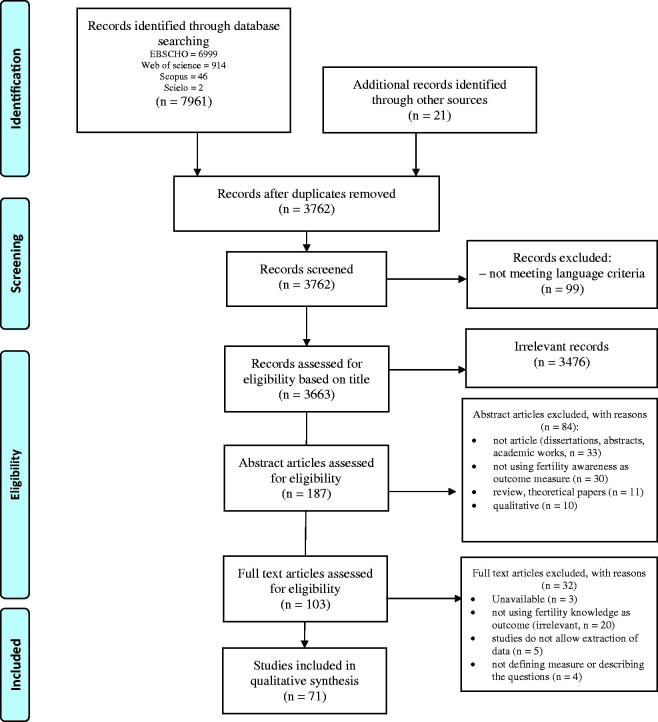
“From Moher et al., 2009 (46). risk factors, age-related fertility decline, the fertile period, and the consequences of delaying childbearing.”
BackgroundBoivin, J., Bunting, L., Collins, J. A., & Nygren, K. G. (2007) · Human Reproduction · doi:10.1093/humrep/dem046 · Cited by 2,437 · cited 1×
“problem (8,9) that affects people around the world.”
Mascarenhas, M. N., Flaxman, S. R., Boerma, T., Vanderpoel, S., & Stevens, G. A. (2012) · PLoS Medicine · doi:10.1371/journal.pmed.1001356 · Cited by 2,312 · cited 1×
“problem (8,9) that affects people around the world.”
BackgroundThe International Glossary on Infertility and Fertility Care, 2017
Zegers-Hochschild, F., Adamson, G. D., Dyer, S., Racowsky, C., de Mouzon, J., Sokol, R., Rienzi, L., Sunde, A., Schmidt, L., Cooke, I. D., et al. (2017) · Fertility and Sterility · doi:10.1016/j.fertnstert.2017.06.005 · Cited by 1,505
Self-citationMays, N., Pope, C., & Popay, J. (2005) · Journal of Health Services Research & Policy · doi:10.1258/1355819054308576 · Cited by 1,375
The variability of female reproductive ageing
te Velde, E. R. (2002) · Human Reproduction Update · doi:10.1093/humupd/8.2.141 · Cited by 1,214
Effectiveness of strategies for informing, educating, and involving patients
Coulter, A., & Ellins, J. (2007) · BMJ · doi:10.1136/bmj.39246.581169.80 · Cited by 1,128 · cited 1×
“There is evidence that web-based educational interventions positively impact health behaviour (135).”
Background
Research works printed but not linked: 9
- Sobotka T, Zeman K, Potancokova M, Eder J, Brzozowska Z, Beaujouan E, et al. Fertility datasheet 2015 2015.
- Barnett EC Beating the biological clock. USA Seattle News and Events. Seattle; 2006 Oct 9; Available from: http://archive.seattleweekly.com/20011128/%0Anews/beatingthebiologicalclock/
- Weizhen T Fertility ads give birth to controversy. The Straits Times. Singapore; 2016 Feb 5; Available from: http://www.straitstimes.com/singapore/health/fertilityadsgivebirthtocontroversy
- Boon TH, Yee HS, Ting HW Financial literacy and personal financial planning in Klang Valley, Malaysia. Int J Econ Manag. 2011; 5: 149– 68.
- Fotopoulou V, Chasiakou A, Gryparis A, Baka S Greek medical student’s knowledge and attitudes towards infertility and assisted reproductive technologies (Greek medical students and ART). Womens Health Care. 2015; 4: 4– 7.
- Holton S, Hammarberg K, Rowe H, Kirkman M, Jordan L, McNamee K, et al. Men’s fertility-related knowledge and attitudes, and childbearing desires, expectations and outcomes: findings from the Understanding Fertility Management in Contemporary Australia Survey. Int J Mens Health. 2016; 15: 315– 28.
- Ola T, Aladekomo F, Oludare B Knowledge and beliefs of the general public about infertility in Osun state, southwest Nigeria. J Reprod Infer. 2010; 1: 26– 32.
- Ozsoy S, Adana F, Colakoglu HS University students’ knowledge about fertile period. Healthmed. 2012; 6: 3174– 9.
- Coulter A, Jo E Patient-focused interventions: a review of the evidence. London, UK: The Health Foundation and Picker Institute Europe; 2006.
Cited by
Fauser, B. C. J. M., Adamson, G. D., Boivin, J., Chambers, G. M., de Geyter, C., Dyer, S., Inhorn, M. C., Schmidt, L., Serour, G. I., Tarlatzis, B., et al. (2024) · Human Reproduction Update · doi:10.1093/humupd/dmad028 · Cited by 224
“…the stigma of infertility in low-, middle-, and high-income countries, generally poor knowledge about infertility means that most people cannot avoid risks or seek help in a timely fashion when having difficulty achieving pregnancy or fathering a child (Pedro et al. , 2018; Gerrits et al. , 2023).”
BackgroundSelf-citationFarquhar, C. M., Bhattacharya, S., Repping, S., Mastenbroek, S., Kamath, M. S., Marjoribanks, J., & Boivin, J. (2019) · Nature Reviews Disease Primers · doi:10.1038/s41572-018-0058-8 · Cited by 180
Knowledge about the impact of age on fertility: a brief review
Delbaere, I., Verbiest, S., & Tydén, T. (2020) · Upsala Journal of Medical Sciences · doi:10.1080/03009734.2019.1707913 · Cited by 157
“They should be customized to meet individual needs (18).”
BackgroundFrequency, morbidity and equity — the case for increased research on male fertility
Kimmins, S., Anderson, R. A., Barratt, C. L. R., Behre, H. M., Catford, S. R., Jonge, C. J. D., Delbès, G., Eisenberg, M. L., Garrido, N., Houston, B. J., et al. (2023) · Nature Reviews Urology · doi:10.1038/s41585-023-00820-4 · Cited by 82
Fertility awareness-based methods of family planning
Simmons, R. G., & Jennings, V. H. (2019) · Best Practice & Research Clinical Obstetrics & Gynaecology · doi:10.1016/j.bpobgyn.2019.12.003 · Cited by 124
The International Fertility Education Initiative: research and action to improve fertility awareness
Harper, J. C., Hammarberg, K., Simopoulou, M., Koert, E., Pedro, J., Massin, N., Fincham, A., Balen, A. H., Initiative, I. F. E., Bagócsi, T., et al. (2021) · Human Reproduction Open · doi:10.1093/hropen/hoab031 · Cited by 76
“However, lack of knowledge and awareness of the factors that influence fertility, including age, among people of reproductive age might contribute to later childbearing (Hammarberg et al., 2013; Pedro et al., 2018).”
BackgroundSelf-citationZhang, Y., Hui, L., Wenbin, J., Lu, L., Li, Y., Bohan, L., & Lili, W. (2021) · BMC Public Health · doi:10.1186/s12889-021-12338-8 · Cited by 69
“Studies have shown that the decision to have children is multifaceted and determined not only by individual and economic factors but also by social policies [31, 32].”
BackgroundProjecting the Contribution of Assisted Reproductive Technology to Completed Cohort Fertility
Lazzari, E., Potančoková, M., Sobotka, T., Gray, E., & Chambers, G. M. (2023) · Population Research and Policy Review · doi:10.1007/s11113-023-09765-3 · Cited by 51
“This is especially relevant when considering the widespread misconceptions in the population regarding the biological limits to reproduction and the chances of achieving conception and birth at later ages via ART (Pedro et al., 2018).”
BackgroundMartins, M. V., Koert, E., Sylvest, R., Maeda, E., Moura‐Ramos, M., Hammarberg, K., & Harper, J. C. (2023) · Human Reproduction · doi:10.1093/humrep/dead253 · Cited by 63
“The need to improve fertility awareness was demonstrated in a systematic review, which revealed that fertility knowledge is in general low to moderate and that neither age nor child wish predict higher levels of fertility awareness (Pedro et al. , 2018).”
BackgroundSelf-citationDring, J. C., Forma, A., Chilimoniuk, Z., Dobosz, M., Teresiński, G., Buszewicz, G., Flieger, J., Cywka, T., Januszewski, J., & Baj, J. (2021) · Nutrients · doi:10.3390/nu14010185 · Cited by 52
Maeda, E., Boivin, J., Toyokawa, S., Murata, K., & Saito, H. (2018) · Human Reproduction · doi:10.1093/humrep/dey293 · Cited by 42
“People generally lack accurate knowledge about the duration of the reproductive lifespan, the likelihood of natural conceiving, or the ability of ART to help them conceive (Pedro et al., 2018).”
BackgroundDomar, A. D., Vassena, R., Dixon, M. E., Costa, M., Vegni, E. A. M., Collura, B. L., Markert, M., Samuelsen, C. H., Guiglotto, J., Roitmann, E., et al. (2021) · Reproductive BioMedicine Online · doi:10.1016/j.rbmo.2021.09.002 · Cited by 47
Self-citationMale Attitudes towards Infertility: Results from a Global Questionnaire
Jonge, C. J. D., Gellatly, S. A., Vazquez-Levin, M. H., Barratt, C. L. R., & Rautakallio-Hokkanen, S. (2022) · The World Journal of Men s Health · doi:10.5534/wjmh.220099 · Cited by 44
“For those publications that do exist, research has focused primarily on more peripheral aspects, such as feelings about their involvement in ‘MAR treatment’ [9], knowledge about fertility [10], and, importantly, a relationship between infertility and masculinity [11].”
BackgroundPreconditions to parenthood: changes over time and generations
Bodin, M., Holmström, C., Plantin, L. O., Schmidt, L., Ziebe, S., & Elmerstig, E. (2021) · Reproductive Biomedicine & Society Online · doi:10.1016/j.rbms.2021.03.003 · Cited by 53
“Friese et al. (2008) argue that delayed childbearing has become part of the pro-file of a new middle age, which has been made possible partly through medically assisted reproduction (MAR).”
BackgroundInfluentialSelf-citationUniversity students’ fertility awareness and its influencing factors: a systematic review
Ren, Y., Xie, Y., Xu, Q., Long, M., Zheng, Y., Li, L., & Niu, C. (2023) · Reproductive Health · doi:10.1186/s12978-023-01628-6 · Cited by 58
“found that people have a good understanding of lifestyle-related infertility risk factors (smoking, alcohol, and drug abuse) and a clear understanding that these factors are common risk factors for various other chronic diseases, such as cardiovascular disease and lung cancer [29].”
BackgroundReproductive Health Literacy and Fertility Awareness Among Polish Female Students
Chawłowska, E., Lipiak, A., Krzysztoszek, J., Krupa, B., & Staszewski, R. (2020) · Frontiers in Public Health · doi:10.3389/fpubh.2020.00499 · Cited by 49
Night Shift Among Women: Is It Associated With Difficulty Conceiving a First Birth?
Fernandez, R. C., Moore, V., Marino, J. L., Whitrow, M. J., & Davies, M. J. (2020) · Frontiers in Public Health · doi:10.3389/fpubh.2020.595943 · Cited by 42
Pérez-García, L. F., Röder, E., Goekoop, R. J., Hazes, J. M. W., Kok, M. R., Smeele, H. T. W., Tchetverikov, I., Mil, A. H. M. V. D. H., van der Kaap, J. H., Kok, P., et al. (2021) · Annals of the Rheumatic Diseases · doi:10.1136/annrheumdis-2021-220709 · Cited by 37
“…be in part explained by the high incidence of varicocele and sperm abnormalities that have been reported for men diagnosed with AS. 6 30 31 Nonetheless, this study was primarily designed to study the impact of Behçet’s syndrome on male fertility and only included 79 male patients diagnosed with AS.”
Szalma, I., & Bitó, T. (2021) · Reproductive Biomedicine & Society Online · doi:10.1016/j.rbms.2021.06.005 · Cited by 45
“Respondents in the older group were closer to their end of the reproductive life span, and thus may have been more motivated to seek information and be more aware about general fertility and ART-related fertility issues (Bunting et al., 2013; Pedro et al., 2018).”
BackgroundResultInfluentialFertility preservation in women with benign gynaecological conditions
Santulli, P., Blockeel, C., Bourdon, M., Coticchio, G., Campbell, A., Vos, M. D., Macklon, K. T., Pinborg, A. B., & García-Velasco, J. A. (2023) · Human Reproduction Open · doi:10.1093/hropen/hoad012 · Cited by 34
“Irrespective of whether young women with low serum AMH levels decide to embark on FP, there is a need for public awareness campaigns to assist women in understanding the consequences of age-related fertility decline (Hvidman et al., 2015; Pedro et al., 2018).”
Sousa-Leite, M., Costa, R. A., Figueiredo, B., & Gameiro, S. (2023) · Human Reproduction · doi:10.1093/humrep/dead096 · Cited by 32
“As patients progress through repeated unsuccessful cycles and develop awareness that treatment may not work, they may become more receptive to PCUFT (Pedro et al. , 2018).”
Change in the perceived reproductive age window and delayed fertility in Europe
Lazzari, E., Compans, M., & Beaujouan, É. (2024) · Population Studies · doi:10.1080/00324728.2023.2298678 · Cited by 47
“…(both spontaneously and with infertility treatment), men and especially women are generally familiar with the notion that the ability to reproduce declines with age, as they estimate a lower likelihood of becoming pregnant at older ages (see Pedro et al. 2018, for a systematic literature review).”
Social freezing of oocytes: a means to take control of your fertility
Wennberg, A.-L. (2020) · Upsala Journal of Medical Sciences · doi:10.1080/03009734.2019.1707332 · Cited by 30
Hoffman, J. R., Delaney, M. A., Valdés, C. T., Herrera, D. S., Washington, S. L., Aghajanova, L., Smith, J. F., & Herndon, C. N. (2020) · Fertility Research and Practice · doi:10.1186/s40738-020-00084-1 · Cited by 33
Bimerew, M., & Getie, ፟. (2020) · International Journal of Women s Health · doi:10.2147/ijwh.s267675 · Cited by 34
Capotosto, M. P. (2021) · Nursing for Women s Health · doi:10.1016/j.nwh.2021.04.001 · Cited by 37
Grace, B., Shawe, J., Johnson, S., Usman, N. O., & Stephenson, J. (2022) · Human Reproduction · doi:10.1093/humrep/deac036 · Cited by 32
“These findings are consistent with other studies where people of reproductive age hope to have children in the future but have poor awareness of age-related fertility decline (Pedro et al., 2018).”
InfluentialHarper, J. C., & Botero-Meneses, J. S. (2022) · Human Reproduction · doi:10.1093/humrep/deac209 · Cited by 38
“As shown in several studies, most women, especially those who are highly educated or experiencing infertility, are aware that their biological clock is ticking but there are sometimes difficulties in deciding on the right time to get pregnant (Pedro et al., 2018).”
InfluentialKasaven, L. S., Mitra, A., Ostrysz, P., Theodorou, E., Murugesu, S., Yazbek, J., Bracewell‐Milnes, T., Nagi, J. B., Jones, B. P., & Saso, S. (2023) · Human Reproduction · doi:10.1093/humrep/dead200 · Cited by 28
Buñay, J., Gallardo, L.-M., Torres-Fuentes, J. L., Aguirre-Arias, M. V., Orellana, R., Sepúlveda, N., & Moreno, R. D. (2020) · Asian Journal of Andrology · doi:10.4103/aja.aja_76_20 · Cited by 29
Roux, F., Burns, S. K., Hendriks, J., & Chih, H. (2021) · Women s Reproductive Health · doi:10.1080/23293691.2021.1901517 · Cited by 28
Sharma, A., Kamboj, N., Saraswathy, K. N., Puri, M., Babu, N., & Mahajan, C. (2022) · Journal of Biosocial Science · doi:10.1017/s0021932022000347 · Cited by 24
“(Pedro et al., 2018) This demonstrates that participants have little or no understanding of avoiding infertility or when or where to seek treatment if they are infertile.”
InfluentialAbdiShahshahani, M., Torabi, M., & Kazemi, A. (2020) · Journal of Education and Health Promotion · doi:10.4103/jehp.jehp_412_19 · Cited by 24
“[27] People with higher levels of education use more effective coping mechanisms which can improve their mental health.[32,33]”
BackgroundBeilby, K. H., Dudink, I., Kablar, D., Kaynak, M., Rodrigo, S., & Hammarberg, K. (2020) · Australian and New Zealand Journal of Obstetrics and Gynaecology · doi:10.1111/ajo.13174 · Cited by 21
Knowledge gaps in the understanding of fertility among non-medical graduate students
Bernardi, L. A., Luck, M. L., Kyweluk, M. A., & Feinberg, E. C. (2020) · F&S Reports · doi:10.1016/j.xfre.2020.08.002 · Cited by 30
“The ability to pursue planned oocyte cryopreservation has factored into the growing interest and has promoted increasingmedia attention (2, 3).”
BackgroundCracked open: exploring attitudes on access to egg freezing
Johnston, M., Fuscaldo, G., Richings, N. M., Gwini, S. M., & Catt, S. L. (2020) · Sexual and Reproductive Health Matters · doi:10.1080/26410397.2020.1758441 · Cited by 21
Xiong, Y., Jiao, G., Zheng, J., Gao, J. P., Xue, Y., Tian, B., & Cheng, J. (2022) · International Journal of Environmental Research and Public Health · doi:10.3390/ijerph192416531 · Cited by 25
“Yet fertility intention is often affected by multifaceted factors, not only by individual and economic factors, but also by family relations and social support [49,50].”
BackgroundSimon, D. J., Jamali, Y., Olorunsaiye, C. Z., & Théodat, J.-M. (2023) · BMC Women s Health · doi:10.1186/s12905-022-02136-8 · Cited by 24
“Consistent with findings from previous studies [16, 34, 35], this could be explained by the fact that individuals with higher education level are literate and better informed on topics related to reproductive health [36, 37].”
ResultWhat do women undergoing in vitro fertilization (IVF) understand about their chance of IVF success?
McMahon, C., Hammarberg, K., Lensen, S. F., Wang, R., Mol, B. W., & Vollenhoven, B. J. (2023) · Human Reproduction · doi:10.1093/humrep/dead239 · Cited by 30
“Strong evidence exists for a lack of knowledge about fertility and treatments for infertility in the general population (Hammarberg et al. , 2013; Maeda et al. , 2015; Kudesia et al. , 2017; Pedro et al. , 2018; Cheung et al. , 2019).”
Harper, J. C., Hepburn, J., Vautier, G., Callander, E., Glasgow, T., Balen, A. H., & Boivin, J. (2019) · Human Fertility · doi:10.1080/14647273.2019.1570354 · Cited by 19
Fertility Health Knowledge in U.S. Adults: Men Narrowing the Knowledge Gap
Barron, M. L., Lithgow, D., Wade, G. H., & Luckey, G. (2022) · American Journal of Men s Health · doi:10.1177/15579883221117915 · Cited by 23
“This gap in male-specific fertility health education has been acknowledged by a number of researchers who are calling for change in fertility health education to include male-specific factors (Bernardi et al., 2020; Harper et al., 2017; Pedro et al., 2018; Robins et al., 2016).”
BackgroundReproductive health education in the schools of the four UK nations: is it falling through the gap?
Maslowski, K., Reiss, M. J., Biswakarma, R., & Harper, J. C. (2023) · Human Fertility · doi:10.1080/14647273.2023.2216395 · Cited by 29
“Better such education might help address unrealistic media portrayals of fertility and the relatively low success of assisted reproductive technology (ART) (Littleton, 2012; Mills et al., 2011; Pedro et al., 2018).”
BackgroundBodin, M., Plantin, L. O., & Elmerstig, E. (2019) · Reproductive Biomedicine & Society Online · doi:10.1016/j.rbms.2019.11.002 · Cited by 26
Pedro, J., Fernandes, J., Barros, A., Xavier, P., Almeida, V., Costa, M. E., Schmidt, L., & Martins, M. V. (2020) · Human Fertility · doi:10.1080/14647273.2020.1854482 · Cited by 23
“…and Fertility Collaborators, 2018) have been important themes in research and political agendas, and stimulated a large number of studies that show that young people do not have adequate knowledge about reproduction and fertility (Hammarberg et al., 2017; for a review see, Pedro et al., 2018).”
BackgroundResultSelf-citationRelationship between sleep disorders and female infertility among US reproductive-aged women
Zhao, J., Chen, Q., & Xue, X. (2023) · Sleep And Breathing · doi:10.1007/s11325-023-02802-7 · Cited by 20
“Infertility is a public health issue affecting people worldwide [1].”
BackgroundParaben exposure and couple fecundity: a preconception cohort study
Ao, J., Qiu, W., Huo, X., Wang, Y., Wang, W., Zhang, Q., Liu, Z., & Zhang, J. (2023) · Human Reproduction · doi:10.1093/humrep/dead016 · Cited by 22
Rodriguez‐Wallberg, K. A., Ahlgren, J., Smedby, K. E. E., Gorman, J. R., Hellman, K., Henriksson, R., Ståhl, O., Wettergren, L., & Lampic, C. (2023) · Acta Oncologica · doi:10.1080/0284186x.2023.2272291 · Cited by 23
“Also, these results could be related to reproductive-aged women’s greater awareness of age-related fertility decline, infertility risk factors and consequences of delaying childbearing compared to men, as previously reported [41].”
ResultRacial and Ethnic Disparities in Fertility Awareness Among Reproductive-Aged Women
Siegel, D. R., Sheeder, J. L., & Polotsky, A. J. (2021) · Women s Health Reports · doi:10.1089/whr.2021.0034 · Cited by 22
“spite the Minority group being significantly more likely to desire pregnancy in the next year, which other studies have suggested may improve fertility awareness.(12) While reproductive-aged women overall continue to overestimate the fecundability of women at age”
BackgroundOkine, R., Hughes, L. M., Smith, G. L., Bonus, M. L., Feinberg, E. C., & Bernardi, L. A. (2023) · Heliyon · doi:10.1016/j.heliyon.2023.e14623 · Cited by 24
Assisted reproductive technology (ART) patient information-seeking behavior: a qualitative study
Mayette, E., Scalise, A. L., Li, A., McGeorge, N., James, K. E., & Mahalingaiah, S. (2024) · BMC Women s Health · doi:10.1186/s12905-024-03183-z · Cited by 18
Is it an issue before it’s a problem? Investigating men’s talk about fertility
Bodin, M., & Käll, L. F. (2020) · Sociology of Health & Illness · doi:10.1111/1467-9566.13148 · Cited by 17
“2016, Pedro et al .”
The pros and cons of fertility awareness and information: a generational, Swedish perspective
Bodin, M., Plantin, L. O., Schmidt, L., Ziebe, S., & Elmerstig, E. (2021) · Human Fertility · doi:10.1080/14647273.2021.1968045 · Cited by 23
“Recent studies from Western societies have shown that young people often lack evidence-based knowledge about fertility (Pedro et al., 2018).”
BackgroundSelf-citationMalling, G. M. H., Schmidt, L., Pitsillos, T., Hammarberg, K., Tydén, T., Friberg, B., Jensen, I., & Ziebe, S. (2020) · Human Fertility · doi:10.1080/14647273.2020.1798516 · Cited by 21
“…the reviewed studies, men’s knowledge about behavioural risk factors for infertility (e.g. STIs, smoking, obesity, alcohol consumption) varied between studies from low (<40% were aware of a specific risk factor) to high (>60% had knowledge regarding a specific risk factor) (Pedro et al., 2018).”
BackgroundResultSelf-citationA scoping review of the information provided by fertility smartphone applications
Ford, E. A., Peters, A. E., Roman, S. D., McLaughlin, E. A., Beckett, E., & Sutherland, J. M. (2021) · Human Fertility · doi:10.1080/14647273.2021.1871784 · Cited by 18
“, 2018; United Nations Department of Economic & Social Affairs & Population Division, 2015), women’s knowledge about their own fertility remains poor (Pedro et al., 2018).”
BackgroundInfluentialBerthelsen, A. S. N., Gamby, A. L. N., Christensen, U., Schmidt, L., & Koert, E. (2021) · Human Reproduction Open · doi:10.1093/hropen/hoab027 · Cited by 15
“Studies show that FA is limited in the general population, and men especially have insufficient knowledge about both women’s and men’s limited fertility (Hammarberg et al., 2017a; Pedro et al., 2018; Sylvest et al., 2018b; Hviid Malling et al., 2020).”
BackgroundResultInfluentialSelf-citationJena, S. K., Dolui, M., Ghoshal, S., & Sarkar, S. (2024) · BMC Public Health · doi:10.1186/s12889-024-18296-1 · Cited by 22
Zegeye, B., Adjei, N. K., Idriss-Wheeler, D., & Yaya, S. (2022) · BMC Women s Health · doi:10.1186/s12905-022-01984-8 · Cited by 15
ESHRE’s key research priorities in infertility: maximizing impact on science, people and society
Tassot, J., Ahlström, A., Capalbo, A., Cheong, Y. C., Coticchio, G., Delbaere, I., Fadler, C., Gameiro, S., Goddijn, M., Kirkman‐Brown, J., et al. (2025) · Human Reproduction · doi:10.1093/humrep/deaf150 · Cited by 14
“Furthermore, all ESHRE’s key research priorities in infertility | 1831 studies on fertility awareness consistently indicate that the general population lacks knowledge about the factors influencing fertility (Pedro et al. , 2018).”
Place, J. M., Peterson, B. D., Horton, B., & Sanchez, M. A. G. (2020) · Human Fertility · doi:10.1080/14647273.2020.1817577 · Cited by 19
Koert, E., Sylvest, R., Vittrup, I., Hvidman, H. W., Petersen, K. B., Boivin, J., Andersen, A. N., & Schmidt, L. (2020) · Human Reproduction Open · doi:10.1093/hropen/hoaa036 · Cited by 18
“A recent systematic review on 71 articles assessing fertility awareness confirmed the gaps in men and women’s knowledge and called for interventions to increase fertility awareness (Pedro et al., 2018).”
BackgroundSelf-citationKruglova, K., Gelgoot, E. N., Chan, P. T. K., Lo, K. C., Rosberger, Z., Bélanger, É., Kazdan, J., Robins, S., & Zelkowitz, P. (2021) · American Journal of Men s Health · doi:10.1177/15579883211049027 · Cited by 17
“However, men tend to have limited fertility awareness (Hammarberg et al., 2017; Pedro et al., 2018).”
BackgroundU.S. Women's Knowledge of Reproductive Biology
Fowler, C. I., Koo, H. P., Richmond, A. D., Creel, D. V., & Asman, K. (2022) · Women s Health Issues · doi:10.1016/j.whi.2022.05.004 · Cited by 17
Women’s Knowledge and Awareness of the Effect of Age on Fertility in Kazakhstan
Sarría‐Santamera, A., Bapayeva, G., Utepova, G., Krstić, J., Terzic, S., Aimagambetova, G. N., Shauyen, F., & Terzić, M. (2020) · Sexes · doi:10.3390/sexes1010006 · Cited by 20
“Identifying gaps in knowledge, including prevalent myths and misconceptions, attitudes, and practices, of women of reproductive age before planning and conceiving a pregnancy is important to optimize reproductive and pregnancy outcomes [1].”
BackgroundFrench, R., Shawe, J., Tilouche, N., Earle, S., & Grenfell, P. (2020) · BMJ Sexual & Reproductive Health · doi:10.1136/bmjsrh-2020-200862 · Cited by 14
“21 However, while women may wish and/or experience pressure to be in command of their own fertility, such “expec-tations of choice and control are frequently an illu-sion”.”
BackgroundAustralian men’s fertility information seeking attitudes and behaviour: A qualitative investigation
Pearson, L., Holton, S., McLachlan, R. I., & Hammarberg, K. (2021) · Sexual & Reproductive Healthcare · doi:10.1016/j.srhc.2021.100621 · Cited by 17
Portugal, A., Kosturakis, A. K., Onyewuenyi, T. L., Rivera‐Cruz, G., & Jimenez, P. T. (2023) · Obstetrics and Gynecology Clinics of North America · doi:10.1016/j.ogc.2023.08.007 · Cited by 13
Reproductive Toxicity and Multi/Transgenerational Effects of Emerging Pollutants on C. elegans
Wu, Z., Wang, L., Chen, W., Wang, Y., Cui, K., Chen, W., Liu, J., Jin, H., & Zhou, Z. (2024) · Toxics · doi:10.3390/toxics12110785 · Cited by 12
“There are many factors contributing to infertility, such as age, lifestyle, and environmental factors [2,3].”
Contraceptive use among women seeking an early induced abortion in Sweden
Hultstrand, J. N., Törnroos, E., Tydén, T., Larsson, M., Makenzius, M., Gemzell‐Danielsson, K., Poromaa, I. S., & Ekstrand, M. (2023) · Acta Obstetricia Et Gynecologica Scandinavica · doi:10.1111/aogs.14630 · Cited by 11
“868b Other reasons 26 (7) 3 (12) 11 (7) 12 (6) 0.”
InfluentialPeterson, B. D. (2017) · Fertility and Sterility · doi:10.1016/j.fertnstert.2017.08.027 · Cited by 16
Tippett, A. (2023) · Human Fertility · doi:10.1080/14647273.2022.2164746 · Cited by 10
“…disputed within the fertility expert community, with ecological factors, pregnancy-postponement, and age-related infertility, being highlighted as major contributors to the rise in fertility treatment (Perret et al. 2022; Delbaere et al., 2020; Inhorn, 2022; Pedro et al., 2018; Wang et al., 2019).”
BackgroundLahoti, U., Pajai, S., Shegekar, T., & Juganavar, A. (2023) · Cureus · doi:10.7759/cureus.47956 · Cited by 15
Krishnan, S., Daly, M. P., Kipping, R., & Harrison, C. (2024) · Human Fertility · doi:10.1080/14647273.2024.2328066 · Cited by 13
“…studies have primarily sampled highly educated individuals (Maeda et al., 2020; Stern et al., 2013; Williamson et al., 2014), couples (Chan et al., 2022), people who have undergone fertility treatment and those struggling to conceive (Halleran et al., 2022; Mahey et al., 2018; Pedro et al., 2018).”
Prémusz, V., Kovács, K. A., Skriba, E., Tándor, Z., Szmatona, G., & Dózsa-Juhász, O. (2024) · Epidemiologia · doi:10.3390/epidemiologia5040044 · Cited by 12
“Pedro et al. reported controversial results in a systematic review, which re-ported significantly more studies with no effect regarding childbearing status based on five studies versus two studies, proving that parents have better reproductive knowledge [29].”
BackgroundResultHarrison, C., Greves, G., Barnard, E., Davies, A. P., McEleny, K. R., Gordon, U. D., Lucky, M., Woodward, B. J., Pacey, A. A., Heatley, M., et al. (2023) · Human Reproduction · doi:10.1093/humrep/dead195 · Cited by 12
“Where there is research on men, results indicate that men may be particularly uninformed (Quach and Librach, 2008; Hammarberg et al. , 2017; Pedro et al. , 2018; Hviid Malling et al. , 2022).”
BackgroundCheshire, J., Chu, J., Boivin, J., Dugdale, G., Harper, J. C., & Balen, A. H. (2024) · Human Fertility · doi:10.1080/14647273.2024.2417940 · Cited by 12
“…reasons for delaying having children, there is a recognized lack of awareness of factors that might impact future fertility (Harper et al., 2017; Pedro et al., 2018) as well as overestimation of their perceived chances of success with assisted reproductive technology (Fauser et al., 2019).”
Jurkowski, L., Manubens, R. T., Olivera, J., & Rossi, M. (2021) · JBRA · doi:10.5935/1518-0557.20210019 · Cited by 20
“Several authors have looked into the matter, including Peterson et al. (2012) in the United States and Chan et al. (2015) in China.”
BackgroundResultInfluentialChan, S. L., Thumboo, J., Boivin, J., Saffari, S. E., Yin, S., Yeo, S. R., Chan, J. K. Y., Ng, K. C., Chua, K.-H., & Yu, S. L. (2022) · BMJ Open · doi:10.1136/bmjopen-2021-051710 · Cited by 15
Roux, F., Burns, S. K., Hendriks, J., & Chih, H. (2023) · The Australian Educational Researcher · doi:10.1007/s13384-023-00632-w · Cited by 16
“Parental education may help address the prevalence of poor knowledge observed in Australia (Hammarberg et al., 2013; Hampton et al., 2013), as else-where (Ayoola et al., 2016; Bunting et al., 2013; Daniluk et al., 2012; Lundsberg et al., 2014; Pedro et al., 2018).”
Afferri, A., Dierickx, S., Allen, H., Bittaye, M., Marena, M., Pacey, A. A., & Balen, J. (2024) · BMC Health Services Research · doi:10.1186/s12913-024-10701-0 · Cited by 12
Fertility knowledge and its related factors among married men and women in Zanjan, Iran
Mohammadi, H., Kamali, K., Jahanfar, S., & Ranjbar, F. (2022) · Human Fertility · doi:10.1080/14647273.2021.2021593 · Cited by 11
“The results of a systematic review study on fertility knowledge and its associated factors showed that the level of awareness about fertility was low to moderate (Pedro et al., 2018).”
BackgroundResultInfluentialACOG Committee Statement No. 14: Infertility: Disparities and Access to Services
(2024) · Obstetrics and Gynecology · doi:10.1097/aog.0000000000005769 · Cited by 9
Mashayekh‐Amiri, S., Molaie, B., Aliasghari, F., Rashidi, F., Hemmati, E., & Mirghafourvand, M. (2025) · BMC Public Health · doi:10.1186/s12889-025-22347-6 · Cited by 9
“Five studies found no significant relationship, and the results of one study showed that participants with university degrees had higher fertility awareness than those with non-university education [28].”
InfluentialFertility awareness scale development study in Turkish women
Özşahin, Z., & Derya, Y. A. (2022) · European Journal of Integrative Medicine · doi:10.1016/j.eujim.2022.102101 · Cited by 10
Herzberger, E. H., Sun, B., Engel, O., Wolf, Y., Herzberger, S., Ben‐Kimhy, R., Miller, N. D., Wiser, A., & Klement, A. H. (2022) · Journal of Assisted Reproduction and Genetics · doi:10.1007/s10815-022-02590-1 · Cited by 11
“A recent systematic review of studies investigating FA among the general population revealed consistently low-to-moderate levels [2].”
BackgroundExperiences of infertility among couples in Morocco
Benbella, A., Mburu, G., Zaidouni, A., Elomrani, S., Yahyane, A., Gholbzouri, K., Kiarie, J. N., & Bezad, R. (2025) · Frontiers in Reproductive Health · doi:10.3389/frph.2024.1513243 · Cited by 8
“A lack of information on infertility is rampant in many counties, and researchers have identi fi ed the need for awareness raising campaigns to destigmatize infertility (45) and assist in help seeking (46).”
Familie und Reproduktionsmedizin
Kuhnt, A., & Passet-Wittig, J. (2022) · Springer eBooks · doi:10.1007/978-3-658-35215-8_25-1 · Cited by 7
Larsen, C. N., Mortensen, L. M., Sylvest, R., Schmidt, L., & Koert, E. (2023) · Human Fertility · doi:10.1080/14647273.2022.2163466 · Cited by 7
“not only contraception) in sexual education in high schools (Berthelsen et al., 2021; Boivin et al., 2019; Hammarberg et al., 2013; J. Harper et al., 2017; Hviid Malling et al., 2022; Pedro et al., 2018).”
BackgroundInfluentialSelf-citationZegeye, B., Idriss-Wheeler, D., Oladimeji, O., & Yaya, S. (2023) · Reproductive Health · doi:10.1186/s12978-023-01675-z · Cited by 7
“This finding was consistent with a systematic review conducted by Pedro et al. [59] and studies conducted in Uganda [60] and Ethiopia [61].”
ResultHow to talk to young adults about fertility
Sylvest, R., Koert, E., Balslev, J., Steenberg, M., Schmidt, L., & Ziebe, S. (2024) · Reproductive BioMedicine Online · doi:10.1016/j.rbmo.2024.103937 · Cited by 10
Self-citationEgg freezing for young women: A new dawn for reproductive autonomy?
Proost, M. D., Johnston, M., & Mertes, H. (2025) · Best Practice & Research Clinical Obstetrics & Gynaecology · doi:10.1016/j.bpobgyn.2025.102589 · Cited by 7
Pedro, J., Brandão, T., Fernandes, J., Barros, A., Xavier, P., Schmidt, L., Costa, M. E., & Martins, M. V. (2020) · Journal of Clinical Psychology in Medical Settings · doi:10.1007/s10880-020-09743-3 · Cited by 10
Self-citationFertility awareness and subclinical infertility among women trying to get pregnant at home
Iino, K., Fukuhara, R., Yokota, M., & Yokoyama, Y. (2022) · BMC Women s Health · doi:10.1186/s12905-022-01626-z · Cited by 12
Gentile, G., Tesei, C., Brunetti, S., Cavaceppi, P., Sorrenti, G., Lambertini, M., & Ciccarone, M. (2025) · Therapeutic Advances in Medical Oncology · doi:10.1177/17588359251341210 · Cited by 7
Infertility: knowledge and attitudes of Moroccan young people—gender approach
Adlani, S. E., Benksim, A., Benkaddour, Y. A., Soummani, A., & Cherkaoui, M. (2021) · Middle East Fertility Society Journal · doi:10.1186/s43043-021-00060-9 · Cited by 6
“Moreover, the articles had affirmed people through on fertility treatment and they believed that the age could influence the fertility too later [11].”
BackgroundInfertility Among Women in Low- and Middle-Income Countries
Withers, M. H. (2021) · Springer eBooks · doi:10.1007/978-3-030-45009-0_43 · Cited by 12
Johansson, L., Vesström, J., Alehagen, S., & Kilander, H. (2023) · Reproductive Health · doi:10.1186/s12978-023-01642-8 · Cited by 13
Ribeiro, S., Pedro, J., & Martins, M. V. (2024) · Human Reproduction · doi:10.1093/humrep/deae001 · Cited by 11
Self-citationYokota, R., Okuhara, T., Ueno, H., Okada, H., Furukawa, E., & Kiuchi, T. (2020) · Journal of Medical Internet Research · doi:10.2196/19777 · Cited by 6
“In terms of sex differences, several studies have shown that, compared with women, men are less knowledgeable regarding the associations between lifestyle factors and reduced fertility [3,29].”
BackgroundFertility awareness and intentions among young adults in Greece
Lardou, I., Chatzipapas, I., Chouzouris, M., Xenos, P., Petrogiannis, N., Tryfos, D., Chandakas, S., Grigoriadis, T., & Michala, L. (2021) · Upsala Journal of Medical Sciences · doi:10.48101/ujms.v126.8148 · Cited by 11
“According to similar studies from other parts of the world, fertility awareness tends to be low to moderate (15, 16) irrespective of gender (17).”
BackgroundDetermining the content and needs assessment a mobile-based self-care program in infertile men
Nadjarzadeh, A., Fallahzadeh, A. R., Abasi, A., Poornematy, M. M., Farahzadi, H. R., & Aghda, S. A. F. (2023) · BMC Medical Informatics and Decision Making · doi:10.1186/s12911-023-02366-2 · Cited by 6
“Pedro et al. [41] conducted a systematic review to examine fertility awareness.”
Background
Metadata
- Authors
- Pedro, J., Brandão, T., Schmidt, L., Costa, M. E., & Martins, M. V.
- Affiliations
- Universidade do Porto (PT)
- Autonomous University of Lisbon (PT)
- University of Copenhagen (DK)
- Corresponding author
- Pedro, Juliana
- Venue
- Upsala Journal of Medical Sciences
- Publisher
- Uppsala Medical Society
- Published
- 2018-04-03
- Volume
- 123
- Issue
- 2
- Pages
- 71-81
- ISSN
- 0300-9734 (ISSN-L)
- 2000-1967
- PMC
- PMC6055749
- OpenAlex
- W2810816237
- Cited by
- 263
- References
- 130
- Citations by year
- 2026: 34 · 2025: 49 · 2024: 37 · 2023: 48 · 2022: 25 · 2021: 32 · 2020: 28 · 2019: 8 · 2018: 1
- FWCI
- 2.60
- Type
- journal article
- Language
- en
- Open access
- diamond
- doi.org
- Licence
- Locations
- Upsala Journal of Medical Sciences (publishedVersion, cc-by)
- Europe PMC (PubMed Central) (publishedVersion, cc-by)
- PubMed Central (publishedVersion, cc-by)
- PubMed (publishedVersion)
- Research at the University of Copenhagen (University of Copenhagen) (publishedVersion, cc-by)
- Repositório Institucional da Universidade Autónoma de Lisboa (Universidade Autónoma de Lisboa) (submittedVersion, cc-by-nc-nd)
- DOAJ (DOAJ: Directory of Open Access Journals) (submittedVersion)
- Portuguese National Funding Agency for Science, Research and Technology (RCAAP Project by FCT) (submittedVersion, other-oa)
- Funders
- Portuguese Foundation for Science and Technology (SFRH/BD/103234/2014, SFRH/BPD/85789/2012, UID/PSI/04345/2013)
- Topics
- Health Sciences › Medicine › Reproductive Medicine › Reproductive Health and Technologies
- Health Sciences › Medicine › Public Health, Environmental and Occupational Health › Reproductive Health and Contraception
- Social Sciences › Gender Studies › Demographic Trends and Gender Preferences
- Keywords
- fertility awareness, fertility knowledge, infertility risk factors, delayed childbearing, gender differences, educational attainment, age, reproductive status, family planning, pregnancy planning
- MeSH terms
- Age Factors, Female, Fertility, Health Policy, Humans, Infertility, Health Knowledge, Attitudes, Practice, Male, Patient Education as Topic, Risk Factors
About these checks
Registry, retraction, Cites and statistics results are computed, not judged, with one exception: a printed reference that no index lists is read once by a model before it counts as a citation error. Claims are extracted by a model and kept only when their quote appears verbatim in the text; each cited source is then checked, with a model’s help, for whether it says what the claim relies on. Those verdicts can be wrong — read the claim’s quote and the cited source before relying on one.
Statistics and arithmetic are recomputed, not judged.
Confidence bands are shown only for fields calibrated on our annotated test set. None is calibrated yet, so no band is shown.
What counts as a claim ›How we measure confidence ›How we check this ›
Are you an author, or do you see a problem with this page? Request a review
Data sources
Bibliographic data: Semantic Scholar, OpenAlex, Crossref.
Contains information from the Semantic Scholar Academic Graph Datasets, made available under the ODC Attribution License (ODC-BY 1.0).
Semantic Scholar’s data is described in: Kinney, R., et al. (2023). The Semantic Scholar Open Data Platform. arXiv:2301.10140.
