

Personal Informatics, Self-Insight, and Behavior Change: A Critical Review of Current Literature
Open accessThe DOI matches its Crossref record; 58 of the 59 references it cites were found in a registry or an index.
Abstract
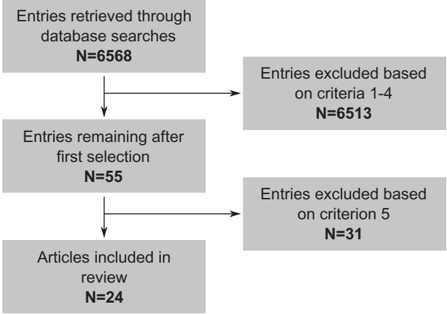
Personal informatics (PI) systems allow users to collect and review personally relevant information. The purpose commonly envisioned for these systems is that they provide users with actionable, data-driven self-insight to help them change their behavioral patterns for the better. Here, we review relevant theory as well as empirical evidence for this self-improvement hypothesis. From a corpus of 6,568, only 24 studies met the selection criteria of being a peer-reviewed empirical study reporting on actionable, data-driven insights from PI data, using a “clean” PI system with no other intervention techniques (e.g., additional coaching) on a nonclinical population. First results are promising—many of the selected articles report users gaining actionable insights—but we do note a number of methodological issues that make these results difficult to interpret. We conclude that more work is needed to investigate the self-improvement hypothesis and provide a set of recommendations for future work.
Overview
The claims and statistics of this paper haven’t been checked yet.
Free: it reads the open-access text and checks the first 5 claims that cite a source we can check. Create a free account to check every claim.
Integrity signals
Registry
Cites
Statistics
Figures



Verification
Claims the paper makes
The claims and statistics of this paper haven’t been checked yet.
Free: it reads the open-access text and checks the first 5 claims that cite a source we can check. Create a free account to check every claim.
Claims other papers make about this one
Each is checked against this paper’s own text: does it say what the citing paper says it does?
The cited source says what the claim attributes to it.
In the citing paper
“Ultimately, this can lead individuals to change their views about themselves (DeVito et al., 2017) and maybe even to modify their behavior (Isaacs et al., 2013;Kersten-van Dijk et al., 2017).”
From Understanding Autobiographical Memory in the Digital Age: The AMEDIA-Model (2024) · cites this paper as Kersten-van Dijk et al., 2017
In the citing paper
“Some HCI research on designing technology for reflection focuses on the domain of personal informatics, designing technology for the functional goal of supporting self-improvement [6,37].”
From Reflection Across AI-based Music Composition (2024) · cites this paper as [37]
Self-check
Percentages, sums and reported differences re-computed from the paper’s own numbers.
The self-check needs the paper’s full text.
Citations
Cites
Self-efficacy: Toward a unifying theory of behavioral change
Bandura, A. (1977) · Psychological Review · doi:10.1037/0033-295x.84.2.191 · Cited by 43,925 · cited 4×
“Perhaps the most obvious is information about past performance accomplishments (Bandura, 1977): If individuals succeeded at something before, they are likely to feel more confident that they can succeed again.”
BackgroundInfluentialFrom Intentions to Actions: A Theory of Planned Behavior
Ajzen, I. (1985) · Action Control · doi:10.1007/978-3-642-69746-3_2 · Cited by 19,057 · cited 2×
“…many of the concepts and ideas from the TTM are shared by a variety of other behavior (change) models, like the theory of planned behavior (Ajzen, 1985), the health belief model (Rosenstock, 1974), and various others (Bagozzi, 2000; Bandura, 1977, 1991; De Vries et al., 2003; Fishbein,…”
BackgroundHattie, J., & Timperley, H. (2007) · Review of Educational Research · doi:10.3102/003465430298487 · Cited by 12,905
The Transtheoretical Model of Health Behavior Change.
Prochaska, J. O., & Velicer, W. F. (1997) · American Journal of Health Promotion · doi:10.4278/0890-1171-12.1.38 · Cited by 7,782 · cited 3×
“Both Li et al. (2010, 2011) and Epstein et al. (2015) noted similarities between their models of PI (the stage-based model and the lived informatics model, respectively) and the TTM (Prochaska & Velicer, 1997).”
MethodResultSocial cognitive theory of self-regulation
Bandura, A. (1991) · Organizational Behavior and Human Decision Processes · doi:10.1016/0749-5978(91)90022-l · Cited by 6,875 · cited 4×
“…(change) models, like the theory of planned behavior (Ajzen, 1985), the health belief model (Rosenstock, 1974), and various others (Bagozzi, 2000; Bandura, 1977, 1991; De Vries et al., 2003; Fishbein, 2000; Hagger & Chatzisarantis, 2014; Klein, Mogles, & Van Wissen, 2011; Kluger & DeNisi, 1998;…”
BackgroundResultInfluentialA Protection Motivation Theory of Fear Appeals and Attitude Change1
Rogers, R. W. (1975) · The Journal of Psychology · doi:10.1080/00223980.1975.9915803 · Cited by 6,805 · cited 5×
“…belief model (Rosenstock, 1974), and various others (Bagozzi, 2000; Bandura, 1977, 1991; De Vries et al., 2003; Fishbein, 2000; Hagger & Chatzisarantis, 2014; Klein, Mogles, & Van Wissen, 2011; Kluger & DeNisi, 1998; Maes & Gebhardt, 2000; Rogers, 1975; Ryan, 2009; Schwarzer, 2008; Witte, 1992).”
BackgroundInfluentialHistorical Origins of the Health Belief Model
Rosenstock, I. M. (1974) · Health Education Monographs · doi:10.1177/109019817400200403 · Cited by 6,116 · cited 2×
“…from the TTM are shared by a variety of other behavior (change) models, like the theory of planned behavior (Ajzen, 1985), the health belief model (Rosenstock, 1974), and various others (Bagozzi, 2000; Bandura, 1977, 1991; De Vries et al., 2003; Fishbein, 2000; Hagger & Chatzisarantis, 2014;…”
BackgroundKluger, A. N., & DeNisi, A. (1996) · Psychological Bulletin · doi:10.1037/0033-2909.119.2.254 · Cited by 5,882 · cited 1×
“In a review, Kluger and Denisi (1996) found that the majority of feedback interventions were effective, although it should be noted that for about one third of the interventions the effect was adverse rather than beneficial.”
BackgroundReadings in Information Visualization: Using Vision to Think
Card, S. K., Mackinlay, J. D., & Shneiderman, B. (1999) · Cited by 3,935
Putting the fear back into fear appeals: the extended parallel process model
Witte, K. (1992) · Communication Monographs · doi:10.1080/03637759209376276 · Cited by 3,880 · cited 2×
“…belief model (Rosenstock, 1974), and various others (Bagozzi, 2000; Bandura, 1977, 1991; De Vries et al., 2003; Fishbein, 2000; Hagger & Chatzisarantis, 2014; Klein, Mogles, & Van Wissen, 2011; Kluger & DeNisi, 1998; Maes & Gebhardt, 2000; Rogers, 1975; Ryan, 2009; Schwarzer, 2008; Witte, 1992).”
Background
Research works printed but not linked: 6
- Consolvo, S., Klasnja, P., McDonald, D. W., Avrahami, D., Froehlich, J., LeGrand, L., … Landay, J. A. (2008). Flowers or a robot army?: En- couraging awareness & activity with personal, mobile displays. Proceedings of the UbiComp 2008 International Conference on Ubiquitous Computing . New York, NY: ACM.
- Fujinami, K. (2010). A case study on information presentation to increase awareness of walking exercise in everyday life. International Journal of Smart Home , 4 (4), 11 -26. doi:10.1007/978-3-540-68504-328 · doi:10.1007/978-3-540-68504-328
- Li, I., Dey, A. K., & Forlizzi, J. (2011). Understanding my data, myself: Sup -porting selfreflection with ubicomp technologies. Proceedings of the International Conference on Ubiquitous Computing . New York, NY: ACM.
- Park, S., Pedro, J. S., & Oliver, N. (2015). Mobitop: Bringing topic-based re -flection to mobile browsing habits. Proceedings of the 2015 International Joint Conference on Pervasive and
- Ubiquitous Computing and Proceedings of the 2015 International Symposium on Wearable Computers . New York, NY: ACM.
- 10.1007/978-1-4612-4964-11 · doi:10.1007/978-1-4612-4964-11
Cited by
Self-Control in Cyberspace: Applying Dual Systems Theory to a Review of Digital Self-Control Tools
Lyngs, U., Lukoff, K., Slovak, P., Binns, R., Slack, A., Inzlicht, M., Van Kleek, M., & Shadbolt, N. (2019) · Proceedings of the 2019 CHI Conference on Human Factors in Computing Systems · doi:10.1145/3290605.3300361 · Cited by 218
“A large body of HCI work exists on how digital tools can assist behaviour change in general [38, 59, 87, 103, 160, 203].”
BackgroundMapping and Taking Stock of the Personal Informatics Literature
Epstein, D. A., Caldeira, C., Figueiredo, M. C., Lu, X., Silva, L. M., Williams, L., Lee, J. H., Li, Q., Ahuja, S., Chen, Q., et al. (2020) · Proceedings of the ACM on Interactive, Mobile, Wearable and Ubiquitous Technologies · doi:10.1145/3432231 · Cited by 218
“informatics systems by considering a corpus of over 6,000 publications [133].”
BackgroundFlexible and Mindful Self-Tracking: Design Implications from Paper Bullet Journals
Ayobi, A., Sonne, T., Marshall, P., & Cox, A. L. (2018) · Proceedings of the 2018 CHI Conference on Human Factors in Computing Systems · doi:10.1145/3173574.3173602 · Cited by 149
Self-Reflection and Personal Physicalization Construction
Thudt, A., Hinrichs, U., Huron, S., & Carpendale, S. (2018) · Proceedings of the 2018 CHI Conference on Human Factors in Computing Systems · doi:10.1145/3173574.3173728 · Cited by 164
“However, meta-reviews of selftracking [29] and reflective informatics research [3] found that studies often do not explicitly focus on insights and reflective processes or provide evidence of “reflective thought beyond simply looking at the data” [3].”
BackgroundSensing Fine-Grained Hand Activity with Smartwatches
Laput, G., & Harrison, C. (2019) · Proceedings of the 2019 CHI Conference on Human Factors in Computing Systems · doi:10.1145/3290605.3300568 · Cited by 147
“One obvious use for fine-grained hand activity sensing is personal informatics [33].”
BackgroundGPTCoach: Towards LLM-Based Physical Activity Coaching
Jörke, M., Sapkota, S., Warkenthien, L., Vainio, N., Schmiedmayer, P., Brunskill, E., & Landay, J. A. (2025) · CHI Conference on Human Factors in Computing Systems · doi:10.1145/3706598.3713819 · Cited by 145
Stiglbauer, B., Weber, S., & Batinic, B. (2019) · Computers in Human Behavior · doi:10.1016/j.chb.2019.01.018 · Cited by 130
Cho, J., Xu, T., Zimmermann-Niefield, A., & Voida, S. (2022) · CHI Conference on Human Factors in Computing Systems · doi:10.1145/3491102.3501991 · Cited by 116
“Individuals move through each stage to obtain self-knowledge by looking at their data and subsequently changing their behavior based on what they learn from the interaction with the PI system [84].”
BackgroundInfluentialStawarz, K., Preist, C., & Coyle, D. (2019) · JMIR Mental Health · doi:10.2196/12546 · Cited by 107
Nour, M. M., Rouf, A. S., & Allman-Farinelli, M. A. (2017) · Appetite · doi:10.1016/j.appet.2017.10.016 · Cited by 83
Personal Health Oracle: Explorations of Personalized Predictions in Diabetes Self-Management
Desai, P. M., Mitchell, E. G., Hwang, M. L., Levine, M. E., Albers, D. J., & Mamykina, L. (2019) · Proceedings of the 2019 CHI Conference on Human Factors in Computing Systems · doi:10.1145/3290605.3300600 · Cited by 67
Mapping HCI research methods for studying social media interaction: A systematic literature review
Shibuya, Y., Hamm, A., & Pargman, T. C. (2021) · Computers in Human Behavior · doi:10.1016/j.chb.2021.107131 · Cited by 74
Rapp, A., & Boldi, A. (2023) · ACM Transactions on Computer-Human Interaction · doi:10.1145/3603497 · Cited by 68
“Moreover, whether referring to the past or the future, behavior change time is usually narrow, being close to the site of the intervention [Kersten-van Dijk et al. 2017 ; Rho et al. 2017 ; Lee et al. 2020 ].”
BackgroundZhang, C., Lakens, D., & IJsselsteijn, W. A. (2021) · Journal of Medical Internet Research · doi:10.2196/17127 · Cited by 66
“As self-tracking studies mostly focus on the effectiveness of the technology as a whole, evidence regarding its specific role in supporting goal-directed learning is lacking [122].”
BackgroundInfluentialSelf-citationPeuters, C., Maenhout, L., Cardon, G., Paepe, A. L. D., DeSmet, A., Lauwerier, E., Leta, K., & Crombez, G. (2024) · BMC Public Health · doi:10.1186/s12889-023-17260-9 · Cited by 69
“A more accurate image of one’s health behavior can contribute to ‘consciousness raising’ and help a person transition from pre-intender towards an intention to improve their behavior [104].”
BackgroundPersonality Sensing for Theory Development and Assessment in the Digital Age
Harari, G. M., Vaid, S. S., Müller, S. R., Stachl, C., Marrero, Z., Schoedel, R., Bühner, M., & Gosling, S. D. (2020) · European Journal of Personality · doi:10.1002/per.2273 · Cited by 68
“…with the ability to select what is tracked and receive feedback based on their data to obtain self ‐ insight or behaviour change; for a review, see Kersten ‐ van Dijk, Westerink, Beute, & IJsselsteijn, 2017), and (v) generally adopting approaches that respect individual privacy (e.g. treating…”
BackgroundData Sensemaking in Self-Tracking: Towards a New Generation of Self-Tracking Tools
Coşkun, A., & Karahanoğlu, A. (2022) · International Journal of Human-Computer Interaction · doi:10.1080/10447318.2022.2075637 · Cited by 65
“…(e.g., Jin et al., 2020), proposed guidelines and implications to inspire new STT designs (e.g., Elsden et al., 2016; Rapp & Cena, 2016), and identified challenges and opportunities to advance the personal informatics field (e.g., E. T. Kersten-van Dijk et al., 2017; Khovanskaya et al., 2013).”
BackgroundMethodAffectiveWall: Designing Collective Stress-Related Physiological Data Visualization for Reflection
Xue, M., Liang, R.-H., Yu, B., Funk, M., Hu, J., & Feijs, L. M. G. (2019) · IEEE Access · doi:10.1109/access.2019.2940866 · Cited by 62
“Providing immediate feedback on their action’s progress helps to improve their sense of self-efficacy [10] and to stay engaged in their behavior.”
BackgroundLey-Flores, J., Vidal, L. T., Bianchi‐Berthouze, N., Singh, A., Bevilacqua, F. P., & Tajadura‐Jiménez, A. (2021) · CHI Conference on Human Factors in Computing Systems · doi:10.1145/3411764.3445558 · Cited by 60
“Physically inactive people that are aware of their activity levels may still feel incapable of changing behavior by themselves [16,17].”
BackgroundAs Light as You Aspire to Be: Changing Body Perception with Sound to Support Physical Activity
Tajadura‐Jiménez, A., Newbold, J. W., Zhang, L., Rick, P., & Bianchi‐Berthouze, N. (2019) · CHI Conference on Human Factors in Computing Systems · doi:10.1145/3290605.3300888 · Cited by 64
Goals for Goal Setting: A Scoping Review on Personal Informatics
Ekhtiar, T., Karahanoğlu, A., Gouveia, R. H. D. F., & Ludden, G. (2023) · Designing Interactive Systems Conference · doi:10.1145/3563657.3596087 · Cited by 58
“These databases were also used by other reviews on personal informatics, such as [23, 43].”
MethodShin, Y. (2025) · JMIR Human Factors · doi:10.2196/69533 · Cited by 57
Enabling Good Work Habits in Software Developers through Reflective Goal-Setting
Meyer, A. N., Murphy, G. C., Zimmermann, T., & Fritz, T. (2021) · IEEE Transactions on Software Engineering · doi:10.1109/tse.2019.2938525 · Cited by 43
“The daily self-reflections allowed participants to evaluate the progress they made towards their goals and refine them when necessary, effectively providing a feedback mechanism on goal-achievement which previously was shown to be an important aspect of lasting behavior change [18], [19], [38].”
BackgroundInfluentialShared Gaze Visualizations in Collaborative Interactions: Past, Present and Future
D’Angelo, S., & Schneider, B. (2021) · Interacting with Computers · doi:10.1093/iwcomp/iwab015 · Cited by 55
On Being Told How We Feel: How Algorithmic Sensor Feedback Influences Emotion Perception
Hollis, V., Pekurovsky, A., Wu, E., & Whittaker, S. (2018) · Proceedings of the ACM on Interactive, Mobile, Wearable and Ubiquitous Technologies · doi:10.1145/3264924 · Cited by 52
“While gaining additional information about the self could promote insight and augment self-awareness [41], several acknowledged that feedback itself could be a self-fulfilling prophecy.”
BackgroundBeyond Behavior: The Coach's Perspective on Technology in Health Coaching
Rutjes, H., Willemsen, M. C., & IJsselsteijn, W. A. (2019) · CHI Conference on Human Factors in Computing Systems · doi:10.1145/3290605.3300900 · Cited by 50
Self-citationSelf-Control in Cyberspace: Applying Dual Systems Theory to a Review of Digital Self-Control Tools
Lyngs, U., Lukoff, K., Slovák, P., Binns, R., Slack, A., Inzlicht, M., Kleek, M. G. V., & Shadbolt, N. (2019) · Research Portal (King's College London) · doi:10.48550/arxiv.1902.00157 · Cited by 49
“A large body of HCI work exists on how digital tools can assist behaviour change in general [38, 59, 87, 103, 160, 203].”
BackgroundMindNavigator: Exploring the Stress and Self-Interventions for Mental Wellness
Lee, K., & Hong, H. (2018) · CHI Conference on Human Factors in Computing Systems · doi:10.1145/3173574.3174146 · Cited by 45
Imagining Personal Data: Experiences of Self-Tracking
Fors, V., Pink, S., Berg, M., & O’Dell, T. (2020) · Routledge eBooks · doi:10.4324/9781003085676 · Cited by 43
Continued use of wearables for wellbeing with a cultural probe
Lin, F., & Windasari, N. A. (2018) · Service Industries Journal · doi:10.1080/02642069.2018.1504924 · Cited by 40
Self-E: Smartphone-Supported Guidance for Customizable Self-Experimentation
Daskalova, N., Kyi, E., Ouyang, K., Borem, A., Chen, S., Park, S. H., Nugent, N. R., & Huang, J. J. S. (2021) · CHI Conference on Human Factors in Computing Systems · doi:10.1145/3411764.3445100 · Cited by 39
“Numerous studies have focused on developing personal informatics systems to help people collect and review personally relevant information [42].”
BackgroundA process-oriented approach to respecting privacy in the context of mobile phone tracking
Harari, G. M. (2019) · Current Opinion in Psychology · doi:10.1016/j.copsyc.2019.09.007 · Cited by 38
Spotswood, F., Shankar, A., & Piwek, L. (2020) · Sociology of Health & Illness · doi:10.1111/1467-9566.13057 · Cited by 30
Debard, G., Witte, N. A. J. D., Sels, R., Mertens, M., Daele, T. V., & Bonroy, B. (2020) · Journal of Sensors · doi:10.1155/2020/8846077 · Cited by 38
“The review of Kersten-van Dijk and colleagues [13] provides evidence that personal informatics, which refers to using technological devices to monitor and review personally relevant data, can provide end users with new insights and raise awareness about stress for example.”
BackgroundYfantidou, S., Sermpezis, P., & Vakali, A. I. (2023) · ACM Transactions on Computing for Healthcare · doi:10.1145/3592621 · Cited by 38
“[79] have reported promising insights and methodological pitfalls drawn from 24 empirical studies utilizing ST technology.”
BackgroundIbrahim, Z., Nurain, N., & Clawson, J. (2024) · CHI Conference on Human Factors in Computing Systems · doi:10.1145/3613904.3642374 · Cited by 37
Feng, Y., & Agosto, D. E. (2019) · Journal of the Association for Information Science and Technology · doi:10.1002/asi.24253 · Cited by 35
“Per-tinently, ATT developers and designers should avoid design biases such as the self-improvement hypothesis (Kersten-van Dijk et al., 2017), which tends to categorize (and potentially discriminate) users solely based on patterns of data from ATT without acknowledging individual conditions.”
BackgroundEngaging with self-tracking applications: how do users respond to their performance data?
Constantiou, I., Mukkamala, A. M., Sjöklint, M., & Trier, M. (2022) · European Journal of Information Systems · doi:10.1080/0960085x.2022.2081096 · Cited by 35
D'Adamo, A., Lesur, M. R., Vidal, L. T., Dehshibi, M. M., de la Prida, D., Diaz-Durán, J. R., Azpicueta-Ruiz, L. A., Väljamäe, A., & Tajadura‐Jiménez, A. (2024) · CHI Conference on Human Factors in Computing Systems · doi:10.1145/3613904.3642651 · Cited by 36
Altering body perception and emotion in physically inactive people through movement sonification
Ley-Flores, J., Bevilacqua, F. P., Bianchi‐Berthouze, N., & Tajadura‐Jiménez, A. (2019) · International Conference on Affective Computing and Intelligent Interaction and workshops · doi:10.1109/acii.2019.8925432 · Cited by 32
“By doing so, we respond to the call in [4] asking for tools to alter behaviour and decrease frustration.”
BackgroundLee, K.-R., Ju, S., Dzhoroev, T., Goh, G., Lee, M.-H., & Park, Y. (2020) · Designing Interactive Systems Conference · doi:10.1145/3357236.3395439 · Cited by 30
Promoting Occupational Health through Gamification and E-Coaching: A 5-Month User Engagement Study
Zhang, C., Gorp, P. M. E. V., Derksen, M., Nuijten, R., IJsselsteijn, W. A., Zanutto, A., Melillo, F., & Pratola, R. (2021) · International Journal of Environmental Research and Public Health · doi:10.3390/ijerph18062823 · Cited by 30
“, self-discovery by self-tracking [58,59]).”
Self-citationPark, S. O., Kim, H., & Lim, Y.-K. (2025) · CHI Conference on Human Factors in Computing Systems · doi:10.1145/3706598.3713722 · Cited by 29
Designing Ecological Auditory Feedback on Lower Limb Kinematics for Hemiparetic Gait Training
Kantan, P. R., Dahl, S., Jørgensen, H. R. M., Khadye, C., & Spaich, E. G. (2023) · Sensors · doi:10.3390/s23083964 · Cited by 30
“As per [42], our approach allowed us to rapidly design and evaluate multiple feedback designs in terms of usability and acceptance, helping taper a relatively broad set (abstract, ecological, musical, and their sub-variants) to one promising candidate.”
BackgroundMethodMillennials' adoption of personal financial management ( PFM ) technology and financial behavior
Walsh, B., & Lim, H. S. (2020) · Financial Planning Review · doi:10.1002/cfp2.1095 · Cited by 29
Kumar, H., Yoo, S., Bernuy, A. Z., Shi, J., Luo, H., Williams, J. J., Kuzminykh, A., Anderson, A., & Kornfield, R. (2025) · Proceedings of the ACM on Human-Computer Interaction · doi:10.1145/3757619 · Cited by 29
Ting, W. (2019) · Neural Computing and Applications · doi:10.1007/s00521-019-04019-w · Cited by 28
Anyone else have this experience: Sharing the Emotional Labor of Tracking Data About Me
Knittel, M. L., Kollig, F., Mason, A., & Wash, R. (2021) · Proceedings of the ACM on Human-Computer Interaction · doi:10.1145/3449153 · Cited by 29
An Interview Method for Engaging Personal Data
Moore, J., Goffin, P., Wiese, J., & Meyer, M. (2021) · Proceedings of the ACM on Interactive Mobile Wearable and Ubiquitous Technologies · doi:10.1145/3494964 · Cited by 30
“For personal informatics researchers and practitioners, the explosion in available data sets has created myriad opportunities to learn about how and why people engage with personal data [13, 25, 53], and the kinds of behavioral changes this engagement provokes [42].”
BackgroundPotapov, K., Vasalou, A., Lee, V. R., & Marshall, P. (2021) · CHI Conference on Human Factors in Computing Systems · doi:10.1145/3411764.3445239 · Cited by 27
“The efficacy of such approaches has been challenged [21].”
BackgroundCo-Designing Sensory Feedback for Wearables to Support Physical Activity through Body Sensations
Ley-Flores, J., Vidal, L. T., Segura, E. M., Singh, A., Bevilacqua, F. P., Cuadrado, F., Diaz-Durán, J. R., Valdiviezo, O., Sánchez-Martín, M., & Tajadura‐Jiménez, A. (2024) · Proceedings of the ACM on Interactive Mobile Wearable and Ubiquitous Technologies · doi:10.1145/3643499 · Cited by 26
Flexible Minimalist Self-Tracking to Support Individual Reflection
Barker, M., Gooch, D., van der Linden, J., & Petre, M. (2024) · ACM Transactions on Computer-Human Interaction · doi:10.1145/3660339 · Cited by 26
“Many studies fail to assess whether the designed systems result in data-driven change [19], potentially due to the complexity of relating participant experiences to our understanding of reflection.”
BackgroundWu, H. S., Gal, R., van Sleeuwen, N. C., Brombacher, A., IJsselsteijn, W. A., May, A. M., & Monninkhof, E. M. (2019) · JMIR mhealth and uhealth · doi:10.2196/10820 · Cited by 29
“A recent literature review demonstrated that there is mounting evidence for this “self-improvement hypothesis,” in which users gain usable insights from self-tracking data [13].”
BackgroundSelf-citationBloom: Designing for LLM-Augmented Behavior Change Interactions
Jörke, M., Genç, D., Teutschbein, V., Sapkota, S., Chung, S., Schmiedmayer, P., Campero, M. I., King, A. C., Brunskill, E., & Landay, J. A. (2026) · CHI Conference on Human Factors in Computing Systems · doi:10.1145/3772318.3790506 · Cited by 28
“Common implementations frequently include visualizations [5, 30, 60, 136] such as step count graphs, often seen in commercial health tracking apps.”
Petrou, P., & de Vries, J. D. (2023) · Journal of Leisure Research · doi:10.1080/00222216.2023.2244953 · Cited by 26
“We draw on literature addressing awareness-raising, goal-setting and self-reflection as essential antecedents of behavioral change (Epton et al., 2017; Kersten-van Dijk et al., 2017).”
WheelPoser: Sparse-IMU Based Body Pose Estimation for Wheelchair Users
Li, Y., Mollyn, V., Yuan, K., & Carrington, P. (2024) · International ACM SIGACCESS Conference on Computers and Accessibility (ASSETS) · doi:10.1145/3663548.3675638 · Cited by 27
Quantified or nonquantified: How quantification affects consumers' motivation in goal pursuit
Zhang, Y., Li, D., Zhang, C., & Zhang, H. (2019) · Journal of Consumer Behaviour · doi:10.1002/cb.1752 · Cited by 25
Chopra, S., Juarez, K., Fogarty, J. A., & Munson, S. A. (2025) · Proceedings of the ACM on Interactive Mobile Wearable and Ubiquitous Technologies · doi:10.1145/3749503 · Cited by 25
Freedom and Constraint in Digital Environments: Implications for the Self
Talaifar, S., & Lowery, B. S. (2022) · Perspectives on Psychological Science · doi:10.1177/17456916221098036 · Cited by 24
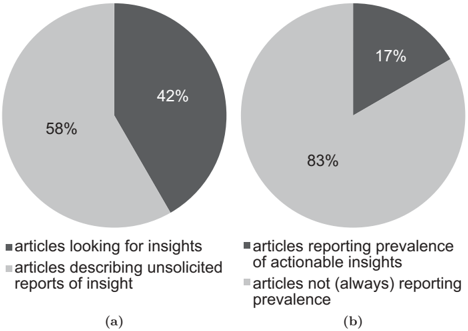
“A review of 24 studies found that self-tracking seems to lead to newfound self-insight for some participants, but often these participants did not find the insight to be actionable (Kersten-van Dijk et al., 2017).”
BackgroundZouinar, M., & Carey-Libbrecht, L. (2019) · Réseaux · doi:10.3917/res.216.0083 · Cited by 25
Luo, Y., Gui, X., Ding, X., Zheng, X., Hernandez, R. H., Li, Z., & Song, Q. (2025) · Designing Interactive Systems Conference · doi:10.1145/3715336.3735746 · Cited by 25
Turchioe, M. R., Burgermaster, M., Mitchell, E. G., Desai, P. M., & Mamykina, L. (2020) · Journal of Biomedical Informatics · doi:10.1016/j.jbi.2020.103572 · Cited by 23
Introduction to This Special Issue on the Lived Experience of Personal Informatics
Cosley, D., Churchill, E. F., Forlizzi, J., & Munson, S. A. (2017) · Human-Computer Interaction · doi:10.1080/07370024.2017.1324787 · Cited by 24
Reflection Across AI-based Music Composition
Ford, C., Noel-Hirst, A., Cardinale, S., Loth, J., Sarmento, P., Wilson, E., Wolstanholme, L., Worrall, K., & Bryan-Kinns, N. (2024) · Creativity and Cognition · doi:10.1145/3635636.3656185 · Cited by 22
“Some HCI research on designing technology for reflection focuses on the domain of personal informatics, designing technology for the functional goal of supporting self-improvement [6, 37].”
BackgroundMatzat, U., & van Ingen, E. J. (2020) · Nomos Verlagsgesellschaft mbH & Co. KG eBooks · doi:10.5771/9783845295008-379 · Cited by 22
Kannan, P., & Zapata‐Rivera, D. (2022) · Frontiers in Education · doi:10.3389/feduc.2022.913594 · Cited by 21
Singh, A., Hrobat, M., Gui, S., Bianchi‐Berthouze, N., Ley-Flores, J., Bevilacqua, F. P., Diaz-Durán, J. R., Segura, E. M., & Tajadura‐Jiménez, A. (2024) · ACM Transactions on Computer-Human Interaction · doi:10.1145/3648616 · Cited by 22
Soziologie des Digitalen - Digitale Soziologie? Soziale Welt - Sonderband 23
Maasen, S., & Passoth, J.-H. (2020) · Nomos Verlagsgesellschaft mbH & Co. KG eBooks · doi:10.5771/9783845295008 · Cited by 22
Sun, Z., Reani, M., Li, Q., & Ma, X. (2020) · International Journal of Human-Computer Studies · doi:10.1016/j.ijhcs.2020.102430 · Cited by 20
Krpan, D., & Urbaník, M. (2021) · Behavioural Public Policy · doi:10.1017/bpp.2021.40 · Cited by 19
Hidalgo, E. S., Ball, M. P., Opoix, M., & Tzovaras, B. G. (2022) · Humanities and Social Sciences Communications · doi:10.1057/s41599-022-01199-0 · Cited by 19
“This research expands on previous approaches such as “lifelogging” (Rapp et al., 2018), exploring how self-tracking tools can provide individuals with actionable self-insights to change behavior and improve their quality of life (Dijk et al., 2017).”
BackgroundMethodFamilyScope: Visualizing Affective Aspects of Family Social Interactions using Passive Sensor Data
Lee, H., Jung, Y., Shin, Y., Park, H. S., Choi, W., & Lee, U. (2024) · Proceedings of the ACM on Human-Computer Interaction · doi:10.1145/3637334 · Cited by 18
The Role of Uncertainty as a Facilitator to Reflection in Self-Tracking
Alqahtani, D. A., Jay, C., & Vigo, M. (2020) · Designing Interactive Systems Conference · doi:10.1145/3357236.3395448 · Cited by 18
“For instance, incorporating non-tracked factors to help reflection is prone to confirmation bias [25], which can be exhibited in two ways: when users search for factors that confirm their prior beliefs and ignore the information that contradicts their current beliefs, and when the information at hand is interpreted in…”
BackgroundJung, G., & Lee, U. (2025) · CHI Conference on Human Factors in Computing Systems · doi:10.1145/3706598.3713730 · Cited by 17
Integrating Social Scientific Perspectives on the Quantified Employee Self
Calvard, T. S. (2019) · Social Sciences · doi:10.3390/socsci8090262 · Cited by 18
“Kersten-van Dijk and colleagues (Kersten-van Dijk et al. 2017) reviewed theories and studies on ‘personal informatics’ (another term for the quantified self), self-insights and behavior change and found some limited support for a self-improvement hypothesis.”
BackgroundThe Advent of Digital Productivity Assistants: The Case of Microsoft MyAnalytics
Winikoff, M., Cranefield, J., Li, Y., Doyle, C., & Richter, A. (2021) · Hawaii International Conference on System Sciences (HICSS) · doi:10.24251/hicss.2021.040 · Cited by 17
Lahza, H. F., Demartini, G., Noroozi, O., Gašević, D., Sadiq, S., & Khosravi, H. (2025) · Computers & Education · doi:10.1016/j.compedu.2025.105260 · Cited by 16
Martin-Hammond, A. M., & Purnell, T. S. (2022) · Proceedings of the ACM on Human-Computer Interaction · doi:10.1145/3492848 · Cited by 16
“Personal informatics is the act of collecting data about oneself for monitoring or reflection [15, 16, 39].”
BackgroundXue, M., An, P., Liang, R.-H., Guo, Z., Hu, J., Hansen, P., & Feijs, L. M. G. (2023) · Designing Interactive Systems Conference · doi:10.1145/3563657.3596118 · Cited by 16
“to help them optimize their behavioral patterns and thereby improve their well-being [21, 30, 46].”
BackgroundKonstanti, C., Karapanos, E., & Markopoulos, P. (2021) · International Journal of Human-Computer Interaction · doi:10.1080/10447318.2021.1990519 · Cited by 16
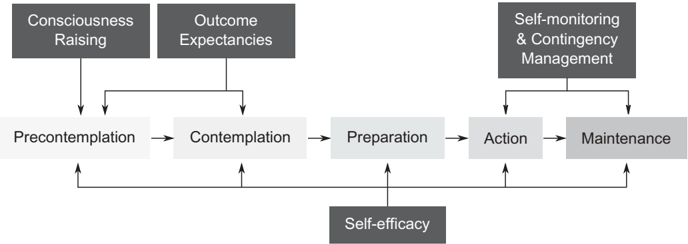
“On the contrary, the results of a review study by Kersten-Van Dijk et al. (2017), suggest that personal informatics technology is mainly effective in the later stages (action and maintenance).”
ResultTowards a Reflection in Creative Experience Questionnaire
Ford, C., & Bryan-Kinns, N. (2023) · Proceedings of the 2023 CHI Conference on Human Factors in Computing Systems · doi:10.1145/3544548.3581077 · Cited by 15
“HCI research has more frequently explored refection as a desirable aspect in personal informatics [87], slow technology [37] and design processes [76].”
BackgroundExploring the Effectiveness of Time-lapse Screen Recording for Self-Reflection in Work Context
Hu, D., & Lee, S. W. (2024) · CHI Conference on Human Factors in Computing Systems · doi:10.1145/3613904.3642469 · Cited by 15
“In tandem with these devices and technologies, PI was developed to illustrate users’ cyclical behaviors, focusing on methodologies that can facilitate the systematic collection, integration, and use of personally relevant information [39, 74].”
BackgroundTajadura‐Jiménez, A., Ley-Flores, J., Valdiviezo, O., Singh, A., Sánchez-Martín, M., Diaz-Durán, J. R., & Segura, E. M. (2022) · International Conference on Movement and Computing (MOCO) · doi:10.1145/3537972.3538001 · Cited by 15
“, Fitbit, GoogleFit) and employing personal informatics [16, 31] to support behavior change [14], e.”
BackgroundUtesch, T., Piesch, L., Busch, L., Strauß, B., & Geukes, K. (2022) · German Journal of Exercise and Sport Research · doi:10.1007/s12662-022-00821-2 · Cited by 15
Keys, R., Marshall, P., Stuart, G., & O’Kane, A. A. (2025) · CHI Conference on Human Factors in Computing Systems · doi:10.1145/3706598.3713326 · Cited by 14
A transdisciplinary collaborative journey leading to sensorial clothing
Kuusk, K., Tajadura‐Jiménez, A., & Väljamäe, A. (2020) · CoDesign · doi:10.1080/15710882.2020.1833934 · Cited by 14
“;) and monitoring devices (Kersten-van Dijk et al., 2017) are also increasingly becoming an integral part of our everyday clothing.”
Sticky Goals: Understanding Goal Commitments for Behavioral Changes in the Wild
Lee, H., Kim, A., Hong, H., & Lee, U. (2021) · CHI Conference on Human Factors in Computing Systems · doi:10.1145/3411764.3445295 · Cited by 14
“Such prior works showed that gathering and inspecting selfrelevant data could lead to efective self-refection, thus possibly leading to positive behavior changes [50].”
BackgroundNim, E. G. (2018) · Antropologicheskij forum · doi:10.31250/1815-8870-2018-14-38-172-192 · Cited by 14
Personal Informatics at the Office: User-Driven, Situated Sensor Kits in the Workplace
van den Heuvel, R., & Lallemand, C. (2023) · Annual Symposium on Human-Computer Interaction for Work (CHIWORK) · doi:10.1145/3596671.3598577 · Cited by 13
“Due to a growing presence of ubiquitous sensing technologies on our bodies, in our homes and offices, the field of personal informatics has become a fertile ground for HCI researchers [28].”
BackgroundUnderstanding Temporality of Reflection in Personal Informatics through Baby Tracking
Louie, J., Mukund, T., Vu, C., Epstein, D. A., & Papoutsaki, A. (2025) · CHI Conference on Human Factors in Computing Systems · doi:10.1145/3706598.3713197 · Cited by 13
Designed to Death? The Tensions Underpinning Design in Educational Discourse
Dishon, G. (2023) · Postdigital Science and Education · doi:10.1007/s42438-023-00409-5 · Cited by 13
Smartphones in Personal Informatics: A Framework for Self-Tracking Research with Mobile Sensing
Vaid, S. S., & Harari, G. M. (2019) · Studies in neuroscience, psychology and behavioral economics · doi:10.1007/978-3-030-31620-4_5 · Cited by 13
Understanding Autobiographical Memory in the Digital Age: The AMEDIA-Model
Hutmacher, F., Appel, M., & Schwan, S. (2024) · Psychological Inquiry · doi:10.1080/1047840x.2024.2384125 · Cited by 12
“Ultimately, this can lead individuals to change their views about themselves (DeVito et al., 2017) and maybe even to modify their behavior (Isaacs et al., 2013; Kersten-van Dijk et al., 2017).”
Recipes for Breaking Data Free: Alternative Interactions for Experiencing Personal Data
Wirfs-Brock, J. (2019) · ACM Conference Companion Publication on Designing Interactive Systems (DIS Companion) · doi:10.1145/3301019.3323892 · Cited by 12
Designing a gesture-sound wearable system to motivate physical activity by altering body perception
Tajadura‐Jiménez, A., Cuadrado, F., Rick, P., Bianchi‐Berthouze, N., Singh, A., Väljamäe, A., & Bevilacqua, F. P. (2018) · International Conference on Movement and Computing (MOCO) · doi:10.1145/3212721.3212877 · Cited by 12
“However, a recent review of the field [8] has highlighted key limitations of the approach used and called for reconsidering this work through the lens of critical but unaddressed factors that may be responsible for undermining adherence to PA.”
BackgroundJanzen, I., & McGrenere, J. (2022) · CHI Conference on Human Factors in Computing Systems · doi:10.1145/3491102.3517493 · Cited by 11
“Research suggests that deep reflection is either a primary outcome of research [7, 10, 23, 25, 52, 75] or a way to encourage the user to refine and improve their personal behavior [20, 51, 83].”
BackgroundInfluentialInvestigating psychological variables for technologies promoting physical activity
Rick, P., Sánchez-Martín, M., Singh, A., Navas-León, S., Mas, M. D. L. M. B., Bianchi‐Berthouze, N., & Tajadura‐Jiménez, A. (2022) · Digital Health · doi:10.1177/20552076221116559 · Cited by 11
WatchGuardian: Enabling User-Defined Personalized Just-in-Time Intervention on Smartwatch
Lei, Y., Cao, Y., Wang, W. K., Dong, Y., Yin, C., Cao, W., Zhang, P., Yang, J., Yao, B., Peng, Y., et al. (2026) · ACM Transactions on Computing for Healthcare · doi:10.1145/3788689 · Cited by 10
Multitudes: Widening the research agenda for personal informatics design
Winter, E., Knowles, B., Richards, D., Snooks, K., & Speed, C. (2022) · Proceedings of DRS · doi:10.21606/drs.2022.415 · Cited by 10
Kumar, H., Yoo, S., Bernuy, A., Shi, J., Luo, H., Williams, J. J., Kuzminykh, A., Anderson, A., & Kornfield, R. (2024) · doi:10.2139/ssrn.4892998 · Cited by 9
Metadata
- Authors
- Kersten-van Dijk, E. T., Westerink, J. H. D. M., Beute, F., & IJsselsteijn, W. A.
- Affiliations
- Eindhoven University of Technology, the Netherlands
- Eindhoven University of Technology (NL)
- Venue
- Human–Computer Interaction
- Publisher
- Informa UK Limited
- Published
- 2017-02-17
- Volume
- 32
- Issue
- 5-6
- Pages
- 268-296
- ISSN
- 0737-0024 (ISSN-L)
- 1532-7051
- OpenAlex
- W2574487674
- Cited by
- 171
- References
- 59
- Citations by year
- 2026: 20 · 2025: 20 · 2024: 17 · 2023: 18 · 2022: 15 · 2021: 23 · 2020: 20 · 2019: 26 · 2018: 9 · 2017: 3
- FWCI
- 19.60
- Type
- journal article
- Language
- en
- Open access
- hybrid
- doi.org
- Licence
- Locations
- Human-Computer Interaction (publishedVersion, cc-by-nc-nd)
- TU/e Research Portal (acceptedVersion, other-oa)
- TU/e Research Portal (acceptedVersion)
- TU/e Research Portal (submittedVersion, other-oa)
- TU/e Research Portal (submittedVersion)
- Topics
- Physical Sciences › Computer Science › Human-Computer Interaction › Innovative Human-Technology Interaction
- Health Sciences › Health Professions › General Health Professions › Mobile Health and mHealth Applications
- Social Sciences › Psychology › Applied Psychology › Digital Mental Health Interventions
- Keywords
- personal informatics, self-insight, behavior change, actionable insights, non-clinical population, methodological issues
About these checks
Registry, retraction, Cites and statistics results are computed, not judged, with one exception: a printed reference that no index lists is read once by a model before it counts as a citation error. Claims are extracted by a model and kept only when their quote appears verbatim in the text; each cited source is then checked, with a model’s help, for whether it says what the claim relies on. Those verdicts can be wrong — read the claim’s quote and the cited source before relying on one.
Statistics and arithmetic are recomputed, not judged.
Confidence bands are shown only for fields calibrated on our annotated test set. None is calibrated yet, so no band is shown.
What counts as a claim ›How we measure confidence ›How we check this ›
Are you an author, or do you see a problem with this page? Request a review
Data sources
Bibliographic data: Semantic Scholar, OpenAlex, Crossref.
Contains information from the Semantic Scholar Academic Graph Datasets, made available under the ODC Attribution License (ODC-BY 1.0).
Semantic Scholar’s data is described in: Kinney, R., et al. (2023). The Semantic Scholar Open Data Platform. arXiv:2301.10140.
