

Personal Informatics, Self-Insight, and Behavior Change: A Critical Review of Current Literature
Open accessThe DOI matches its Crossref record; 58 of the 59 references it cites were found in a registry or an index.
Abstract
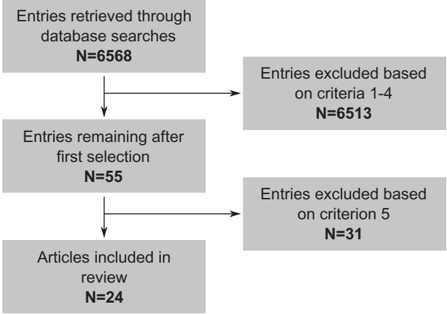
Personal informatics (PI) systems allow users to collect and review personally relevant information. The purpose commonly envisioned for these systems is that they provide users with actionable, data-driven self-insight to help them change their behavioral patterns for the better. Here, we review relevant theory as well as empirical evidence for this self-improvement hypothesis. From a corpus of 6,568, only 24 studies met the selection criteria of being a peer-reviewed empirical study reporting on actionable, data-driven insights from PI data, using a “clean” PI system with no other intervention techniques (e.g., additional coaching) on a nonclinical population. First results are promising—many of the selected articles report users gaining actionable insights—but we do note a number of methodological issues that make these results difficult to interpret. We conclude that more work is needed to investigate the self-improvement hypothesis and provide a set of recommendations for future work.
Overview
The claims and statistics of this paper haven’t been checked yet.
Free: it reads the open-access text and checks the first 5 claims that cite a source we can check. Create a free account to check every claim.
Integrity signals
Registry
Cites
Statistics
Figures



Verification
Claims the paper makes
The claims and statistics of this paper haven’t been checked yet.
Free: it reads the open-access text and checks the first 5 claims that cite a source we can check. Create a free account to check every claim.
Claims other papers make about this one
Each is checked against this paper’s own text: does it say what the citing paper says it does?
The cited source says what the claim attributes to it.
In the citing paper
“Ultimately, this can lead individuals to change their views about themselves (DeVito et al., 2017) and maybe even to modify their behavior (Isaacs et al., 2013;Kersten-van Dijk et al., 2017).”
From Understanding Autobiographical Memory in the Digital Age: The AMEDIA-Model (2024) · cites this paper as Kersten-van Dijk et al., 2017
In the citing paper
“Some HCI research on designing technology for reflection focuses on the domain of personal informatics, designing technology for the functional goal of supporting self-improvement [6,37].”
From Reflection Across AI-based Music Composition (2024) · cites this paper as [37]
Self-check
Percentages, sums and reported differences re-computed from the paper’s own numbers.
The self-check needs the paper’s full text.
Citations
Cites
Self-efficacy: Toward a unifying theory of behavioral change
Bandura, A. (1977) · Psychological Review · doi:10.1037/0033-295x.84.2.191 · Cited by 43,925 · cited 4×
“Perhaps the most obvious is information about past performance accomplishments (Bandura, 1977): If individuals succeeded at something before, they are likely to feel more confident that they can succeed again.”
BackgroundInfluentialFrom Intentions to Actions: A Theory of Planned Behavior
Ajzen, I. (1985) · Action Control · doi:10.1007/978-3-642-69746-3_2 · Cited by 19,057 · cited 2×
“…many of the concepts and ideas from the TTM are shared by a variety of other behavior (change) models, like the theory of planned behavior (Ajzen, 1985), the health belief model (Rosenstock, 1974), and various others (Bagozzi, 2000; Bandura, 1977, 1991; De Vries et al., 2003; Fishbein,…”
BackgroundHattie, J., & Timperley, H. (2007) · Review of Educational Research · doi:10.3102/003465430298487 · Cited by 12,905
The Transtheoretical Model of Health Behavior Change.
Prochaska, J. O., & Velicer, W. F. (1997) · American Journal of Health Promotion · doi:10.4278/0890-1171-12.1.38 · Cited by 7,782 · cited 3×
“Both Li et al. (2010, 2011) and Epstein et al. (2015) noted similarities between their models of PI (the stage-based model and the lived informatics model, respectively) and the TTM (Prochaska & Velicer, 1997).”
MethodResultSocial cognitive theory of self-regulation
Bandura, A. (1991) · Organizational Behavior and Human Decision Processes · doi:10.1016/0749-5978(91)90022-l · Cited by 6,875 · cited 4×
“…(change) models, like the theory of planned behavior (Ajzen, 1985), the health belief model (Rosenstock, 1974), and various others (Bagozzi, 2000; Bandura, 1977, 1991; De Vries et al., 2003; Fishbein, 2000; Hagger & Chatzisarantis, 2014; Klein, Mogles, & Van Wissen, 2011; Kluger & DeNisi, 1998;…”
BackgroundResultInfluentialA Protection Motivation Theory of Fear Appeals and Attitude Change1
Rogers, R. W. (1975) · The Journal of Psychology · doi:10.1080/00223980.1975.9915803 · Cited by 6,805 · cited 5×
“…belief model (Rosenstock, 1974), and various others (Bagozzi, 2000; Bandura, 1977, 1991; De Vries et al., 2003; Fishbein, 2000; Hagger & Chatzisarantis, 2014; Klein, Mogles, & Van Wissen, 2011; Kluger & DeNisi, 1998; Maes & Gebhardt, 2000; Rogers, 1975; Ryan, 2009; Schwarzer, 2008; Witte, 1992).”
BackgroundInfluentialHistorical Origins of the Health Belief Model
Rosenstock, I. M. (1974) · Health Education Monographs · doi:10.1177/109019817400200403 · Cited by 6,116 · cited 2×
“…from the TTM are shared by a variety of other behavior (change) models, like the theory of planned behavior (Ajzen, 1985), the health belief model (Rosenstock, 1974), and various others (Bagozzi, 2000; Bandura, 1977, 1991; De Vries et al., 2003; Fishbein, 2000; Hagger & Chatzisarantis, 2014;…”
BackgroundKluger, A. N., & DeNisi, A. (1996) · Psychological Bulletin · doi:10.1037/0033-2909.119.2.254 · Cited by 5,882 · cited 1×
“In a review, Kluger and Denisi (1996) found that the majority of feedback interventions were effective, although it should be noted that for about one third of the interventions the effect was adverse rather than beneficial.”
BackgroundReadings in Information Visualization: Using Vision to Think
Card, S. K., Mackinlay, J. D., & Shneiderman, B. (1999) · Cited by 3,935
Putting the fear back into fear appeals: the extended parallel process model
Witte, K. (1992) · Communication Monographs · doi:10.1080/03637759209376276 · Cited by 3,880 · cited 2×
“…belief model (Rosenstock, 1974), and various others (Bagozzi, 2000; Bandura, 1977, 1991; De Vries et al., 2003; Fishbein, 2000; Hagger & Chatzisarantis, 2014; Klein, Mogles, & Van Wissen, 2011; Kluger & DeNisi, 1998; Maes & Gebhardt, 2000; Rogers, 1975; Ryan, 2009; Schwarzer, 2008; Witte, 1992).”
Background
Research works printed but not linked: 6
- Consolvo, S., Klasnja, P., McDonald, D. W., Avrahami, D., Froehlich, J., LeGrand, L., … Landay, J. A. (2008). Flowers or a robot army?: En- couraging awareness & activity with personal, mobile displays. Proceedings of the UbiComp 2008 International Conference on Ubiquitous Computing . New York, NY: ACM.
- Fujinami, K. (2010). A case study on information presentation to increase awareness of walking exercise in everyday life. International Journal of Smart Home , 4 (4), 11 -26. doi:10.1007/978-3-540-68504-328 · doi:10.1007/978-3-540-68504-328
- Li, I., Dey, A. K., & Forlizzi, J. (2011). Understanding my data, myself: Sup -porting selfreflection with ubicomp technologies. Proceedings of the International Conference on Ubiquitous Computing . New York, NY: ACM.
- Park, S., Pedro, J. S., & Oliver, N. (2015). Mobitop: Bringing topic-based re -flection to mobile browsing habits. Proceedings of the 2015 International Joint Conference on Pervasive and
- Ubiquitous Computing and Proceedings of the 2015 International Symposium on Wearable Computers . New York, NY: ACM.
- 10.1007/978-1-4612-4964-11 · doi:10.1007/978-1-4612-4964-11
Cited by
Items 201–218 of 218
Chan, R., Kisob, D., & Ferguson, S. A. (2026) · Annual Symposium on Human-Computer Interaction for Work (CHIWORK) · doi:10.1145/3808045.3808075
Personal Informatics in the Workplace: A Mapping Review
Ekandjo, T. A. T., Cranefield, J., & Chiu, Y.-T. (2026) · AIS Transactions on Human-Computer Interaction · doi:10.17705/1thci.00243
Vaquero, F. M. (2026) · Gredos (University of Salamanca)
Activity Trackers and Wearables
Harrison, D., & Ayobi, A. (2026) · Springer eBooks · doi:10.1007/978-3-031-52643-5_69-1
Lietz, R., Whittaker, S., & Su, N. M. (2026) · Behaviour and Information Technology · doi:10.1080/0144929x.2026.2711023
“However, this emphasis on positive experiences leaves little room for addressing the challenges and setbacks that naturally occur during long-term change (Epstein, Kang, et al. 2016; Kersten-van Dijk et al. 2017; Rapp, Tirassa, and Tirabeni 2019).”
Dichotomies of (dis)empowerment in health & well-being self-tracking—an integrative review
Khalil, F. G., Seittu, H. A.-M., Ciuchita, R., & Burggraf, S. (2026) · AMS Review · doi:10.1007/s13162-026-00348-x
“As recent ST reviews make clear (Feng et al., 2021; Kersten-van Dijk et al., 2017; Wieczorek et al., 2022), the potential for disempowerment remains ambiguous and insufficiently explored.”
Designing Mobile and Wearable Sensor-Fused Conversational Agents for Health and Wellbeing
Lee, H., Fonseca, P., & (24461553), M. H. A. (2026) · International Conference on Human-Computer Interaction with Mobile Devices and Services (MobileHCI) · doi:10.1145/3821581.3833141
“Personal informatics research has shown that self-tracking involves collection, integration, reflection, and action, and that users often need support in connecting data to meaningful self-management decisions [6, 10, 17].”
Digital Data Engagement and Health Behavior Diversity Among Smartwatch Users
Tung, F.-W., & Jia, L.-M. (2026) · World · doi:10.3390/world7090143
“Prior work has similarly cautioned that self-insight does not necessarily lead to behavior change, especially when users lack the conditions needed to interpret or act on personal data [31].”
Multisensory narrative interface design: Data-driven self-reflection and mental wellbeing
Wang, S. W. (2026) · The Design Journal · doi:10.1080/14606925.2026.2720500
Semiotik, Z. F. (2025) · Zeitschrift für Semiotik
Ponzo, M. M. K. J., Ponzo, J., & Kubas, M. M. (2024) · Institutional Research Information System University of Turin (University of Turin)
Towards Personal Informatics for Academic Internet Self-Regulatory Efficacy – the PAISE Framework
von Schoultz, D. (2023) · Nelson Mandela University Research Repository
Guided Reflection for Personal Sleep Insight in Everyday Sleep TrackingPreprint
Kim, B., Mahmood, A., Zhao, H., Atwood, M. E., Buenaver, L. F., Xiao, Z., & Huang, C.-M. (2026) · arXiv (Cornell University) · doi:10.48550/arxiv.2610.10822
“Yet tracking does not consistently lead to insight or behavior change, and many applications leave the interpretive work to the user [12, 25].”
Okuhara, T., Okada, H., & Furukawa, E. (2026) · Journal of Medical Internet Research · doi:10.2196/95781
“Research on personal informatics systems has shown that the manner in which data are collected, visualized, and reflected back to users fundamentally shapes their self-understanding [32,33].”
Beyond Emotional Tracking: Theorizing How Personal Informatics Shape Emotional Awareness
Himawan, A., & Wong, R. (n.d.) · AIS Electronic Library (AISeL)
Kersting, N., Rey, B., Vredenborg, M., & Bentvelzen, M. (2026) · Electronic workshops in computing · doi:10.14236/ewic/britchi26.25
Imputing Missing Data in Longitudinal Life-Logging Athlete DataPreprint
Sahdra, S. K., Yacef, K., Lee, H., & Kay, J. (2026) · arXiv (Cornell University) · doi:10.48550/arxiv.2610.41226
Quantified self and healthy food consumption: evidence from a household survey in ChinaPreprint
Zhu, Y., 谌金宇, & Zhang, X. (2026) · Research Square · doi:10.21203/rs.3.rs-11117318/v1
Metadata
- Authors
- Kersten-van Dijk, E. T., Westerink, J. H. D. M., Beute, F., & IJsselsteijn, W. A.
- Affiliations
- Eindhoven University of Technology, the Netherlands
- Eindhoven University of Technology (NL)
- Venue
- Human–Computer Interaction
- Publisher
- Informa UK Limited
- Published
- 2017-02-17
- Volume
- 32
- Issue
- 5-6
- Pages
- 268-296
- ISSN
- 0737-0024 (ISSN-L)
- 1532-7051
- OpenAlex
- W2574487674
- Cited by
- 171
- References
- 59
- Citations by year
- 2026: 20 · 2025: 20 · 2024: 17 · 2023: 18 · 2022: 15 · 2021: 23 · 2020: 20 · 2019: 26 · 2018: 9 · 2017: 3
- FWCI
- 19.60
- Type
- journal article
- Language
- en
- Open access
- hybrid
- doi.org
- Licence
- Locations
- Human-Computer Interaction (publishedVersion, cc-by-nc-nd)
- TU/e Research Portal (acceptedVersion, other-oa)
- TU/e Research Portal (acceptedVersion)
- TU/e Research Portal (submittedVersion, other-oa)
- TU/e Research Portal (submittedVersion)
- Topics
- Physical Sciences › Computer Science › Human-Computer Interaction › Innovative Human-Technology Interaction
- Health Sciences › Health Professions › General Health Professions › Mobile Health and mHealth Applications
- Social Sciences › Psychology › Applied Psychology › Digital Mental Health Interventions
- Keywords
- personal informatics, self-insight, behavior change, actionable insights, non-clinical population, methodological issues
About these checks
Registry, retraction, Cites and statistics results are computed, not judged, with one exception: a printed reference that no index lists is read once by a model before it counts as a citation error. Claims are extracted by a model and kept only when their quote appears verbatim in the text; each cited source is then checked, with a model’s help, for whether it says what the claim relies on. Those verdicts can be wrong — read the claim’s quote and the cited source before relying on one.
Statistics and arithmetic are recomputed, not judged.
Confidence bands are shown only for fields calibrated on our annotated test set. None is calibrated yet, so no band is shown.
What counts as a claim ›How we measure confidence ›How we check this ›
Are you an author, or do you see a problem with this page? Request a review
Data sources
Bibliographic data: Semantic Scholar, OpenAlex, Crossref.
Contains information from the Semantic Scholar Academic Graph Datasets, made available under the ODC Attribution License (ODC-BY 1.0).
Semantic Scholar’s data is described in: Kinney, R., et al. (2023). The Semantic Scholar Open Data Platform. arXiv:2301.10140.
