

Diversity, Equity, and Inclusion in Artificial Intelligence: An Evaluation of Guidelines
Open accessThe DOI matches its Crossref record; 59 of the 59 references it cites were found in a registry or an index; none of the 81 sources its claims cite is checked for support yet.
Abstract
Artificial intelligence (AI) is present everywhere in the lives of individuals. Unfortunately, several cases of discrimination by AI systems have already been reported. Scholars have warned on risks of AI reproducing existing inequalities or even amplifying them. To tackle these risks and promote responsible AI, many ethics guidelines for AI have emerged recently, including diversity, equity, and inclusion (DEI) principles and practices. However, little is known about the DEI content of these guidelines, and to what extent they meet the most relevant accumulated knowledge from DEI literature. We performed a semi-systematic literature review of the AI guidelines regarding DEI stakes and analyzed 46 guidelines published from 2015 to today. We fleshed out the 14 DEI principles and the 18 DEI practices recommended underlying these 46 guidelines. We found that the guidelines mostly encourage one of the DEI management paradigms, namely fairness, justice, and nondiscrimination, in a limited compliance approach. We found that narrow technical practices are favored over holistic ones. Finally, we conclude that recommended practices for implementing DEI principles in AI should include actions aimed at directly influencing AI actors’ behaviors and awareness of DEI risks, rather than just stating intentions and programs.
Overview
CoChat Summary
TL;DR
This semi-systematic review analyzes 46 AI ethics guidelines published from 2015 onward and finds that their DEI content is dominated by fairness, justice, and nondiscrimination in a limited compliance approach. It concludes that guidelines favor narrow technical practices over holistic organizational ones and rarely target AI actors’ day-to-day behaviors or awareness of DEI risks.
Key findings
- The review identified 14 DEI principles and 18 DEI practices across 46 guidelines. Of the 14 principles, 12 (86%) map to the “fair representation and treatment and nondiscrimination” paradigm, while only 2 (14%) reflect a “valuing diversity” or synergy perspective.
- The most cited DEI principles were Equity/Fairness (76%, 35 sources), Nondiscrimination (57%, 26), and Diversity in learning datasets/Representativeness (50%, 23). The most targeted groups were female (N = 34), disabled or health vulnerable people (N = 34), and racial or ethnic minorities (N = 32).
- In the AIS development process, the most recommended practices were verification and validation of AIS results (63%, 29), AIS learning sources and dataset (57%, 26), transparency of AIS decisions (54%, 25), and explicability of AIS decisions (52%, 24).
- For AIS design organizations, accountability/responsibility for AIS was recommended by 57% (26), team diversity in AIS companies by 50% (23), and DEI training/awareness by 43% in Table 5 (20; described as 50% in the text). Only one of eight organizational practices directly addressed the praxis dimension—objectives/incentives for compliance with DEI principles (13%, 6)—and no guideline included penalties for noncompliance.
Methods
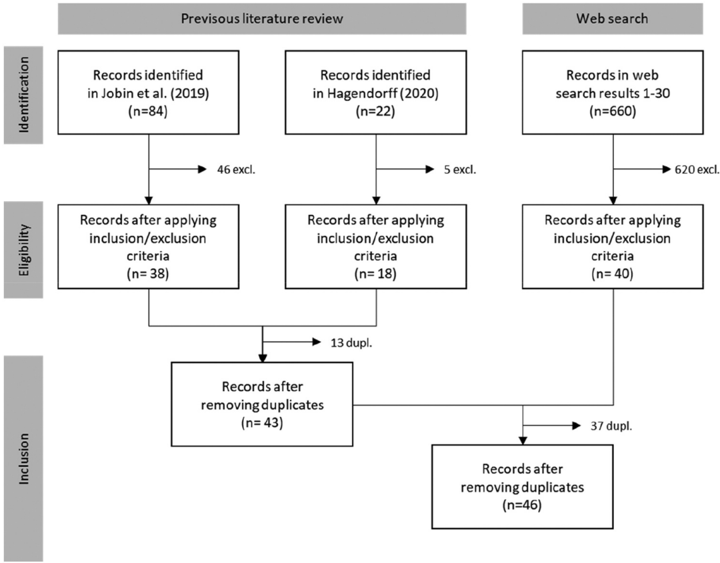
- Semi-systematic literature review adapted from PRISMA, using a two-step search: prior comprehensive AI ethics reviews plus keyword-based web search. Inclusion criteria were documents published in 2015 or later, written in English, and from reliable influential sources such as governmental/intergovernmental reports, professional AI associations, and influential private AI companies; the final sample was 46 documents.
- Content extraction and categorization used deductive categories based on DEI expertise, followed by inductive identification of additional categories. This yielded 14 DEI principles and 18 DEI practices, with 361 extracted entries for principles and 588 for practical recommendations.
- Two research graduate students coded independently; agreement was almost perfect for principles (k = 0.85, p < .05) and AIS development process (k = 0.84, p < .05), and substantial for AIS design organizations (k = 0.80, p < .05). A third researcher specializing in DEI management in AI inspected the results.
Limitations
- Paper-stated: the review selected only English-language sources, which may explain the strong Western domination in the results; the authors also note that no document, code, or charter dedicated specifically to DEI in AI was found within their criteria.
- Paper-stated: the authors call for further research on whether intentions and pro-DEI programs alone can influence AI actors’ DEI behaviors, or whether binding regulation is needed; they also note the lack of diversity among guideline authors (60.8% male, 74.2% white, 78.3% nationals of Western countries) and within the AI community.
- Evident from the text: the analysis is based on manual coding by two graduate students with a third researcher inspecting results, and the sample is limited to 46 English-language guidelines, so the categorization and geographic coverage may be shaped by those constraints.
Model-written summary. Check it against the paper before relying on it.
Integrity signals
Registry
Cites
Statistics
Figures


Verification
Claims the paper makes
0 Valid · 1 Not valid · 71 Not checked · 119 Own results and interpretations
A result the paper reports from its own data — it cites no other source for it, so there is none to check. The quote shows it is in the paper.
In the paper
“DEI principles in AI always target certain groups to benefit from the erected principles, such as social justice or fairness.”
§ Inclusion in Artificial Intelligence: An Evaluation of Guidelines > Targeted Groups in DEI Principles in AI
plainstates a cause- Asserted: passes — The authors put it forward as true.
- Checkable: passes — It can be checked against evidence.
- Load-bearing: unclear — It is unclear whether the paper’s conclusions depend on it.
- Based: passes — The paper gives a reason why it holds.
In the paper
“Results show an almost perfect agreement for the principles (k = 0.85; p < .05)and the AIS development process (k = 0.84; p < .05),and a substantial agreement for the regarding AIS design organizations (k = 0.80; p < .05)(Landis and Koch 1977).”
§ Inclusion in Artificial Intelligence: An Evaluation of Guidelines > Content Extraction and Categorization
What the sources say
- Not checked yetcites Landis and Koch 1977
plainstates an association- Asserted: passes — The authors put it forward as true.
- Checkable: passes — It can be checked against evidence.
- Load-bearing: unclear — It is unclear whether the paper’s conclusions depend on it.
- Based: passes — The paper gives a reason why it holds.
A result the paper reports from its own data — it cites no other source for it, so there is none to check. The quote shows it is in the paper.
In the paper
“Practices for ensuring more diverse and representative”
§ Inclusion in Artificial Intelligence: An Evaluation of Guidelines > The AIS Development Process
plain- Asserted: passes — The authors put it forward as true.
- Checkable: passes — It can be checked against evidence.
- Load-bearing: passes — The paper’s conclusions depend on it.
- Based: passes — The paper gives a reason why it holds.
A result the paper reports from its own data — it cites no other source for it, so there is none to check. The quote shows it is in the paper.
In the paper
“The respect of human dignity and social justice (referred, respectively, to by 35% and 33% of guidelines) are also pointed out, referring to a consideration of all individuals without distinction.”
§ Inclusion in Artificial Intelligence: An Evaluation of Guidelines > DEI Principles in AI Ethical Guidelines
plain- Asserted: passes — The authors put it forward as true.
- Checkable: passes — It can be checked against evidence.
- Load-bearing: unclear — It is unclear whether the paper’s conclusions depend on it.
- Based: passes — The paper gives a reason why it holds.
A result the paper reports from its own data — it cites no other source for it, so there is none to check. The quote shows it is in the paper.
In the paper
“Also, 26% percent of guidelines consider the importance of addressing the digital divide, which entails that all have access to AISs developed, with adequate literacy and understanding, fighting against barriers to access and empowering beneficiaries.”
§ Inclusion in Artificial Intelligence: An Evaluation of Guidelines > DEI Principles in AI Ethical Guidelines
plain- Asserted: passes — The authors put it forward as true.
- Checkable: passes — It can be checked against evidence.
- Load-bearing: unclear — It is unclear whether the paper’s conclusions depend on it.
- Based: passes — The paper gives a reason why it holds.
79 more claims
Create a free account to see all 191 claims and to verify the 81 references still open.
- Probably not a substantial claim. 59
- The quote only partly states this claim. 13
- It may state two separate claims as one. 65
Claims other papers make about this one
Each is checked against this paper’s own text: does it say what the citing paper says it does?
The cited source says what the claim attributes to it.
In the citing paper
“Incorporating DEI principles must be perceived as an essential priority, particularly given a lack of representation in current regulatory guidelines for AI applications50,83.”
From Bias recognition and mitigation strategies in artificial intelligence healthcare applications (2025) · cites this paper as [50]
Self-check
Percentages, sums and reported differences re-computed from the paper’s own numbers.
Each contradiction between two passages listed here was confirmed by an independent check.
Rated minor: it would not touch a result — a value no result rests on, a p-value that stays on the same side of the significance level, or a conflict that is clerical, resolved elsewhere in the paper, or outside its own findings.
In the paper
§ Inclusion in Artificial Intelligence: An Evaluation of Guidelines > The Rather Technical Operationalization of DEI Principles in AI Practices (R2a)
“7 out of 10 practices devoted to the AIS development process are recommended by 40% and more of guidelines”
§ Inclusion in Artificial Intelligence: An Evaluation of Guidelines > Conclusion
“| Functional design of AIS | 22 | 48% | | Technical design of AIS | 18 | 39% | | Correction of biased AIS results | 18 | 39% | | Mechanisms of redress for users/beneficiaries | 16 | 35% |”
Citations
Cites
The Measurement of Observer Agreement for Categorical Data
Landis, J. R., & Koch, G. G. (1977) · Biometrics · doi:10.2307/2529310 · Cited by 81,148 · cited 1×
“Results show an almost perfect agreement for the principles (k = 0.85; p < .05) and the AIS development process (k = 0.84; p < .05), and a substantial agreement for the regarding AIS design organizations (k = 0.80; p < .05) (Landis and Koch 1977).”
ResultInfluentialPreferred Reporting Items for Systematic Reviews and Meta-Analyses: The PRISMA Statement
Moher, D., Liberati, A., Tetzlaff, J., Altman, D. G., & The PRISMA Group (2009) · PLoS Medicine · doi:10.1371/journal.pmed.1000097 · Cited by 64,042 · cited 1×
“We developed a protocol for selecting eligible sources, adapted from the Preferred Reporting Items for Systematic Reviews and Meta-Analyses (PRISMA) framework (Moher et al. 2009).”
Tranfield, D., Denyer, D., & Smart, P. (2003) · British Journal of Management · doi:10.1111/1467-8551.00375 · Cited by 15,386 · cited 1×
“Following semi-systematic literature review guidelines, a rigorous source selection process was implemented (Tranfield, Denyer, and Smart 2003).”
MethodLiterature review as a research methodology: An overview and guidelines
Snyder, H. (2019) · Journal of Business Research · doi:10.1016/j.jbusres.2019.07.039 · Cited by 11,524 · cited 1×
“A semi-systematic review is relevant when covering a broad topic emerging from different diverse disciplines and different types of documents, and for detecting themes, perspectives, or common issues within a specific topic (Snyder 2019).”
BackgroundThe global landscape of AI ethics guidelines
Jobin, A., Ienca, M., & Vayena, E. (2019) · Nature Machine Intelligence · doi:10.1038/s42256-019-0088-2 · Cited by 6,220 · cited 8×
“First, we relied on the most comprehensive literature reviews available on ethics guidelines in AI including those regarding DEI (see Hagendorff 2020; Jobin, Ienca, and Vayena 2019).”
BackgroundMethodInfluentialMitchell, R. K., Agle, B. R., & Wood, D. J. (1997) · The Academy of Management Review · doi:10.2307/259247 · Cited by 5,039
Floridi, L., Cowls, J., Beltrametti, M., Chatila, R., Chazerand, P., Dignum, V., Luetge, C., Madelin, R., Pagallo, U., Rossi, F., et al. (2018) · Minds and Machines · doi:10.1007/s11023-018-9482-5 · Cited by 4,774
What is AI Literacy? Competencies and Design Considerations
Long, D., & Magerko, B. (2020) · Proceedings of the 2020 CHI Conference on Human Factors in Computing Systems · doi:10.1145/3313831.3376727 · Cited by 3,241 · cited 1×
“If AI literacy begins to be a subject of research and recommendations (Long and Magerko 2020; Ng et al. 2021), such research and recommendations should also explore the technological distance and literacy from diverse economic and cultural contexts.”
BackgroundUnderstanding HRM–Firm Performance Linkages: The Role of the “Strength” of the HRM System
Bowen, D. E., & Ostroff, C. (2004) · Academy of Management Review · doi:10.5465/amr.2004.12736076 · Cited by 2,996 · cited 1×
“When widely perceived and interpreted by organizational incumbents, these messages create a strong climate (Bowen and Ostroff 2004), that would lead them to adopt the desired behaviors toward DEI.”
Background(2019) · Cited by 2,637
Research works printed but not linked: 45
- Accenture. 2019. Responsible AI and robotics: An ethical framework. Accenture, UK. ACM. 2017. Statement on algorithmic transparency and accountability. Washington, DC: Association for Computing Machinery US Public Policy Council.
- ACM. 2017. Statement on algorithmic transparency and accountability. Washington, DC: Association for Computing Machinery US Public Policy Council.
- Avila, R., A. Brandusescu, J. O. Freuler, and D. Takur. 2018. Artifcial intelligence: Open questions about gender inclusion. Argentina: World Wide Web Foundation. Beijing Academy of Artificial Intelligence. 2019. Beijing AI Principles. Beijing Academy of Artificial Intelligence (BAAI), Beijing: Beijing Academy of Artifcial Intelligence.
- Beijing Academy of Artificial Intelligence. 2019. Beijing AI Principles. Beijing Academy of Artificial Intelligence (BAAI), Beijing: Beijing Academy of Artifcial Intelligence.
- Benessaieh, K. 2022. Le Québec se classe 7e au monde. La Presse, 29(2): March 9th.
- Dawson, D., E. Schleiger, J. Horton, J. McLaughlin, C. Robinson, G. Quezada, J. Scowcroft, and S. Hajkowicz. 2019. Artificial intelligence: Australia's ethics framework. Data61 CSIRO, Australia.
- DeepMind. 2019. Ethics and society principles. London: DeepMind.
- DeepMind. 2019. Ethics and society principles. London: DeepMind. Deloitte. 2020. Trustworthy AI. USA: The Deloitte AI Institute.
- Diakopoulos, N., Friedler S, Arenas M, Barocas S, Hay M, Howe B, Jagadish HV, Unsworth K, Sahuguet A, Venkatasubramanian S,et al. 2019. Principles for accountable algorithms and a social impact statement for algorithms. Fairness, Accountability, and Transparency in Machine Learning (FAT/ML). https://www.fatml.org/resources/principles-for-accountable-algorithms
- Donaldson, T. 1989. The Ethics of International Business. OxfordNew York.
- Eubanks, V. 2018. Automating inequality: How high-tech tools profle, police, and punish the poor. New York: St. Marting's Press. e2176618-740
- G. CACHAT-ROSSET AND A. KLARSFELD European Commission. 2020. The Assessment List for Trustworthy Artificial Intelligence for self assessment. In Directorate-General for Communications Networks. Content and Technology, Publications Office.
- Freeman, R. E. 1984. Strategic management: A stakeholder theory. Journal of Management Studies 39 (1):1-21.
- Future of Life Institute. 2017. Asilomar AI principles. California: Future of Life Institute.
- Future of Life Institute. 2017. Asilomar AI principles. California: Future of Life Institute. The Future Society. 2018. The future society, law & society initiative, principles for the govern- ance of AI. Policy Research, The Law & Society Initiative.
- Gilligan, C. 1982. In a different voice: Psychological theory and women's development. Cambridge: Harvard University Press.
- Google. 2018. Artificial intelligence at google: Our principles. Google AI.
- Google. 2018. Artificial intelligence at google: Our principles. Google AI. Government of the Republic of Korea. 2017. Mid-to long-term master plan in preparation for the intelligent information society: Managing the fourth industrial revolution. Korea: Government of the Republic of Korea Interdepartmental Exercise.
- GOV.UK. 2019. Initial code of conduct for data-driven health and care technology. United Kingdom: GOV.UK.
- Green Digital Working Group. 2016. Position on robotics and artificial intelligence. The Green Digital Working Group, Europe.
- IBM. 2018. Everyday ethics for artificial intelligence, IBM design for AI. USA.
- IEEE. 2016. Ethically aligned design: a vision for prioritizing human well-being with autonomous and intelligent systems, version 1. IEEE Advancing Technology for Humanity. https://standards.ieee.org/wp-content/uploads/import/documents/other/ead_v1.pdf
- IEEE. 2019. Ethically aligned design: A vision for prioritizing human well-being with autonomous and intelligent systems, First Edition ed, IEEE Advancing Technology for Humanity. https://ieeexplore.ieee.org/stamp/stamp.jsp?tp=&arnumber=9398613
- IBM. 2018. Everyday ethics for artificial intelligence, IBM design for AI. USA. IEEE. 2016. Ethically aligned design: a vision for prioritizing human well-being with autonomous and intelligent systems, version 1. IEEE Advancing Technology for Humanity. https:// standards.ieee.org/wp-content/uploads/import/documents/other/ead_v1.pdf IEEE. 2019. Ethically aligned design: A vision for prioritizing human well-being with autono- mous and intelligent systems, First Edition ed, IEEE Advancing Technology for Humanity. https://ieeexplore.ieee.org/stamp/stamp.jsp?tp=&arnumber=9398613 Information Accountability Foundation. 2015. Unified ethical frame for big data analysis: IAF big data ethics initiative. Part A. Institute of Business Ethics. 2018. Business ethics and artificial intelligence. London: Institute of Business Ethics.
- Institute of Business Ethics. 2018. Business ethics and artificial intelligence. London: Institute of Business Ethics.
- ITI. 2017. AI policy principles. Information Technology Industry Council. https://www.itic.org/ public-policy/ITIAIPolicyPrinciplesFINAL.pdf
- Crawford, K., and M. Whittaker 2016. The AI now report: The social and economic implica- tions of artificial intelligence technologies. AI Now Institute, New York.
- Klarsfeld, A., L. A. E. Booysen, E. Ng, I. Roper, and A. Tatli. 2014. Perspectives from 16 countries on diversity and equal treatment at work: An overview and transverse questions country perspectives on diversity and equal treatment. Cheltenham: Edward Elgar Publishing.
- Leaders of the G7. 2018. Common vision for the future of artificial intelligence, G7. Charlevoix.
- Microsoft Corporation. 2019. Microsoft AI principles. USA: Microsoft Corporation. Ministry of State for Science and Technology Policy. 2017. Report on Artificial Intelligence and Human Society: Unofficial Translation. In Advisory Board on Artificial Intelligence and Human Society, Japan.
- Executive Office of the President National Science and Technology Council Committee on Technology. 2016. Report on the future of artificial intelligence, USA.
- Montréal Declaration. 2018. Montréal declaration for a responsible development of artificial intelligence. Montreal. https://www.montrealdeclaration-responsibleai.com/
- Partnership on AI. 2018. Advancing positive outcomes for people and society.
- PwC. 2019. The responsible AI framework. PwC. Royal Society. 2017. Machine learning: The power and promise of computers that learn by example. London: The Royal Society.
- Royal Society. 2017. Machine learning: The power and promise of computers that learn by example. London: The Royal Society.
- Thomas, D. A., and R. J. Ely. 1996. Making differences matter: A new paradigm for diversity management. Harvard Business Review 74 (5):79-90.
- Toronto declaration. 2018. The toronto declaration, protecting the right to equality and non- discrimination in machine learning systems. Toronto: Human Rights Watch.
- UNESCO. 2021. Recommendation on the ethics of artificial intelligence. Paris: SHS/BIO/REC- AIETHICS/2021.
- UNI Global Union. 2017. Top 10 Principles for Ethical AI. Switzerland: UNI Global Union.
- van Est, R., and J. Gerritsen. 2017. Human rights in the robot age: Challenges arising from the use of robotics, AI, and virtual and augmented reality. The Netherlands: Rathenau Instituut.
- Villani, C. 2018. For a meaningful artificial intelligence: Towards a French and European strategy. France: AI for Humanity.
- Wallach, W., and G. E. Marchant 2018. An agile ethical/legal model for the international and national governance of AI and robotics. Aies Conference on Artificial Intelligence, Ethics and Society, New Orleans, USA.
- West, S. M., M. Whittaker, and K. Crawford. 2019. Discriminating systems: Gender, race and power in AI. AI Now Institute.
- Whittaker, M., Crawford K, Dobbe R, Fried G, Kaziunas E, Mathur V, West SM, Richardson R, Schultz J, Schwartz O et al. 2018. AI now report 2018. New York: AI Now Institute.
- World Economic Forum. 2018. How to Prevent Discriminatory Outcomes in Machine Learning. In World Economic Forum Global Future Council on Human Rights 2016-18, REF, 120318-case 00040065 . Switzerland.
Cited by
Bias recognition and mitigation strategies in artificial intelligence healthcare applications
Hasanzadeh, F., Josephson, C. B., Waters, G., Adedinsewo, D., Azizi, Z., & White, J. A. (2025) · npj Digital Medicine · doi:10.1038/s41746-025-01503-7 · Cited by 320
AI and the quest for diversity and inclusion: a systematic literature review
Shams, R. A., Zowghi, D., & Bano, M. (2025) · AI and Ethics · doi:10.1007/s43681-023-00362-w · Cited by 192
“Even with these insights, many existing AI ethics guidelines remain narrowly focused on fairness, justice, and non-discrimination, with a heavy lean toward compliance-based procedures [28].”
Onciul, R., Tataru, C.-I., Dumitru, A. V., Crivoi, C., Serban, M., Covache-Busuioc, R.-A., Radoi, M. P., & Toader, C. (2025) · Journal of Clinical Medicine · doi:10.3390/jcm14020550 · Cited by 113
“Ensuring that future AI systems are inclusive and equi-table will require concerted efforts to collect diverse, representative data [299].”
Marko, J. G. O., Neagu, D. C., & Anand, P. B. (2025) · BMC Medical Informatics and Decision Making · doi:10.1186/s12911-025-02884-1 · Cited by 156
“Promoting fairness and equality in AI applications has a positive impact on public trust, especially among diverse populations [140, 141].”
Viberg, O., Kizilcec, R. F., Wise, A. F., Jivet, I., & Nixon, N. (2024) · British Journal of Educational Technology · doi:10.1111/bjet.13507 · Cited by 99
Behavioral health and generative AI: a perspective on future of therapies and patient care
Sezgın, E., & McKay, I. T. (2024) · npj Mental Health Research · doi:10.1038/s44184-024-00067-w · Cited by 81
A framework of diversity, equity, and inclusion safeguards for chatbots
Abdelhalim, E., Anazodo, K. S., Gali, N., & Robson, K. (2024) · Business Horizons · doi:10.1016/j.bushor.2024.03.003 · Cited by 60
Mastering digital transformation in workforce management
Akter, S., Biswas, K., Vrontis, D., Cooper, C. L., & Tarba, S. Y. (2023) · Production Planning & Control · doi:10.1080/09537287.2023.2270465 · Cited by 78
“To address unconscious biases in HR practices, AI-driven technologies can establish more consistent and objective criteria for hiring, performance evaluation, and promotion (K € ochling and Wehner 2020; Cachat-Rosset and Klarsfeld 2023).”
A Systematic Review of Responsible Artificial Intelligence Principles and Practice
Gunasekara, L., El-Haber, N., Nagpal, S., Moraliyage, H., Issadeen, Z., Manic, M., & Silva, D. D. (2025) · Applied System Innovation · doi:10.3390/asi8040097 · Cited by 71
Campo-Ruiz, I. (2025) · Humanities and Social Sciences Communications · doi:10.1057/s41599-024-03968-5 · Cited by 53
AI literacy as a core component of AI education
Tadimalla, S. Y., & Maher, M. L. (2025) · AI Magazine · doi:10.1002/aaai.70007 · Cited by 72
van Esch, P., Cui, Y. G., & Heilgenberg, K. (2024) · Australasian Marketing Journal (AMJ) · doi:10.1177/14413582241244504 · Cited by 39
“As a result, these initiatives lead to a largely reactive approach aiming for preventing liabilities for non-compliance with legal paradigms and/or societal norms, instead of a more proactive approaches that consider the potential benefits of embracing AI (Cachat-Rosset & Klarsfeld, 2023).”
Shi, L. (2025) · Human Resource Development Review · doi:10.1177/15344843251332360 · Cited by 37
“Additionally, leveraging online platforms can make training more accessible and scalable, providing opportunities for workers in remote or underserved areas and fostering inclusive workforce growth with suf fi cient AI competencies (Cachat-Rosset & Klarsfeld, 2023; Manyika et al., 2017b).”
AI governance systems: a multi-scale analysis framework, empirical findings, and future directions
Attard-Frost, B., & Lyons, K. A. (2024) · AI and Ethics · doi:10.1007/s43681-024-00569-5 · Cited by 38
Bauwens, T., Hartley, K., Hekkert, M. P., & Kirchherr, J. (2024) · Journal of Cleaner Production · doi:10.1016/j.jclepro.2024.143970 · Cited by 28
Artificial intelligence in cardiovascular pharmacotherapy: applications and perspectives
Costa, F., Gómez‐Doblas, J. J., Expósito, A. D., Adamo, M., D’Ascenzo, F., Kołtowski, Ł., Saba, L., Mendieta, G., Gragnano, F., Calabrò, P., et al. (2025) · European Heart Journal · doi:10.1093/eurheartj/ehaf474 · Cited by 37
“112,113 This necessitates training and validating AI models on data that accurately reflect the full spectrum of patient populations, encompassing variations in age, sex, ethnicity, socioeconomic background, and comorbidities.”
Festa, G., D’Amato, A., Palladino, R., Papa, A., & Cuomo, M. T. (2025) · European Journal of Innovation Management · doi:10.1108/ejim-04-2024-0465 · Cited by 30
Robinson, J. R., Stey, A. M., Schneider, D. F., Kothari, A. N., Lindeman, B. M., Kaafarani, H. M. A., & Haines, K. (2025) · Journal of Surgical Research · doi:10.1016/j.jss.2024.12.059 · Cited by 21
“45,46 Ensuring diversity, equity, and inclusion in health-care AI development is crucial for minimizing bias and achieving fair, equitable outcomes in academic medicine settings.”
The Future of AI Is in the States: The Case of Autonomous Vehicle Policies
Mallinson, D. J., Azevedo, L., Best, E., Robles, P., & Wang, J. (2023) · Business and Politics · doi:10.1017/bap.2023.19 · Cited by 21
Martín, P. (2023) · International Electronic Conference on Applied Sciences (ASEC) · doi:10.3390/asec2023-15521 · Cited by 31
Braga, C. M., Serrano, M., & Fernández‐Medina, E. (2025) · Expert Systems with Applications · doi:10.1016/j.eswa.2025.128034 · Cited by 26
Amin, D., Salminen, J. O., Jansen, B. J. J., Shin, J., & Kim, D. H. (2025) · International Journal of Human-Computer Studies · doi:10.1016/j.ijhcs.2025.103657 · Cited by 26
Wörner, J. H. R., Turtova, A. P., & Lang, A. S. I. D. (2024) · IEEE SoutheastCon · doi:10.1109/southeastcon52093.2024.10500042 · Cited by 25
Rahimi, S. A., Shrivastava, R., Brown-Johnson, A., Caïdor, P., Davies, T. C., Janati, A. I., Talla, P. K., Madathil, S. A., Willie, B. M., & Emami, E. (2024) · Journal of Medical Internet Research · doi:10.2196/63356 · Cited by 22
Reyes, R. L., & Regala, J. D. (2025) · Science & Education · doi:10.1007/s11191-025-00667-8 · Cited by 20
“In order to confront these obstacles, educators must establish strategies that guarantee all students have equitable access to AI-enhanced chemistry education (Cachat-Rosset & Klarsfeld, 2023).”
Interdisciplinary fetal-neonatal neurology training improves brain health across the lifespan
Scher, M. S. (2024) · Frontiers in Neurology · doi:10.3389/fneur.2024.1411987 · Cited by 17
Nain, V., & Shyam, H. S. (2024) · Proceedings on Engineering Sciences · doi:10.24874/pes06.02a.008 · Cited by 24
“Nevertheless, the incorporation of artificial intelligence (AI) into the field of human resources (HR) gives rise to significant inquiries about ethical considerations, the need for transparency, and the possibility of biases inherent in the algorithms used (Cachat-Rosset & Klarsfeld, 2023).”
Hesami, S. (2025) · Strategy and Leadership · doi:10.1108/sl-02-2025-0019 · Cited by 33
Quian, A., & García, J. S. (2024) · Revista de Comunicación · doi:10.26441/rc23.1-2024-3374 · Cited by 21
Akram, H. M. (2025) · Dentistry Review · doi:10.1016/j.dentre.2025.100157 · Cited by 15
Artificial intelligence in nephrology: predicting CKD progression and personalizing treatment
Yuan, S., Guo, L., & Xu, F. (2025) · International Urology and Nephrology · doi:10.1007/s11255-025-04878-4 · Cited by 20
The Impact of Artificial Intelligence on Learners and Teachers: A Mathematics Education Perspective
Li, X., Gould, T., & Zaki, R. (2024) · Integrated science · doi:10.1007/978-3-031-60713-4_9 · Cited by 14
Dykstra, S., MacDonald, M., Beaudry, R. I., Labib, D., King, M., Feng, Y., Flewitt, J. A., Bakal, J. A., Lee, B., Dean, S., et al. (2025) · npj Digital Medicine · doi:10.1038/s41746-025-01490-9 · Cited by 17
“While broadly recognized to provide strong contextual value for predicting cardiovascular outcomes 16 – 18 and of critical importance for the fair and equitable delivery of AI models 19 – 21 , SDOH and PROMs remain the least consistently captured variables by electronic health records.”
Zallio, M., Ike, C. B., & Chivăran, C. (2025) · AI · doi:10.3390/ai6070143 · Cited by 22
Wang, X., Xie, F., Cheng, G., & Shehzadi, K. (2025) · Information Development · doi:10.1177/02666669251329032 · Cited by 15
Engineering equity: designing diversity-aware AI to reflect humanity
Shin, D. (2025) · AI & Society · doi:10.1007/s00146-025-02314-w · Cited by 12
“In an age where AI mediates so many facets of human interaction, diversity-aware AI represents a powerful means of promoting cultural inclu-sivity and empowering underserved communities (Cachat-Rosset and Klarsfeld 2023).”
InfluentialDigital Ethics: A Review of Leadership Theories, Challenges, and Responsibilities
Kamal, M., Hossain, M. M., Islam, J., Alam, I. K., Sayed, N. I., Assiri, M. A., & Mia, R. (2025) · SAGE Open · doi:10.1177/21582440251386901 · Cited by 31
“As far as there is concern about fairness, inclusivity, and equity, ethical leaders must be seen to deploy such technologies (Cachat-Rosset & Klarsfeld, 2023).”
Gul, M., Javaid, Z. K., Khan, K., & Chaudhry, H. A. (2023) · International Journal of Human Rights in Healthcare · doi:10.1108/ijhrh-08-2023-0072 · Cited by 15
Ethics in Persuasive Technologies: A Systematic Literature Review
Rahman, P., & Adaji, I. (2024) · International Conference on Mobile and Ubiquitous Multimedia (MUM) · doi:10.1145/3701571.3701572 · Cited by 14
Kaliisa, R., Baker, R. S., Wasson, B., & Prinsloo, P. (2025) · Journal of Learning Analytics · doi:10.18608/jla.2025.8495 · Cited by 11
“While some frameworks, such as the AI Classification Framework (Cachat-Rosset & Klarsfeld, 2023), predominantly emphasize AI features such as automation, and pay limited attention to societal implications, the OECD framework offers a multifaceted classification approach, considering diverse aspects…”
Board Diversity as Institutional Competence: Recognition and Misrecognition of Diversity Claims
Erbil, C., & Özbilgin, M. F. (2025) · Springer eBooks · doi:10.1007/978-3-031-69308-3_2 · Cited by 7
Bridging Gaps: AI-Driven Accessibility in Language Education
Asrifan, A., Shafa, S., Pratiwi, W. R., Bahri, A., Siregar, S. R., & Ingilan, S. S. (2025) · Advances in computational intelligence and robotics book series · doi:10.4018/979-8-3693-7260-9.ch006 · Cited by 7
Alevizos, V., Georgousis, I., Simasiku, A., Messinis, A., Karypidou, S., & Malliarou, D. (2024) · International Conference on Artificial Intelligence, Computer, Data Sciences and Applications (ACDSA) · doi:10.1109/acdsa59508.2024.10467463 · Cited by 14
“However, the adoption of AI comes with its own set of challenges [5] and [6], notably concerns regarding bias and inclusiveness.”
BackgroundNzobonimpa, S., Savard, J., Caron, I., & Lawarée, J. (2024) · AI & Society · doi:10.1007/s00146-024-02103-x · Cited by 8
Levkovich, I., Rabin, E., Farraj, R. H., & Elyoseph, Z. (2025) · Research in Developmental Disabilities · doi:10.1016/j.ridd.2025.104970 · Cited by 9
Özbilgin, M. F., Erbil, C., & Gündoğdu, N. (2025) · International perspectives on equality, diversity and inclusion · doi:10.1108/s2051-233320250000012027 · Cited by 7
Beyond aversion – principles of appropriate algorithmic decision-making in human resource management
Strohmeier, S., Becker, M., & Scheer-Weller, E. (2025) · Expert Systems with Applications · doi:10.1016/j.eswa.2025.128954 · Cited by 10
McDonnell, K. J. (2023) · Journal of Clinical Medicine · doi:10.3390/jcm12144830 · Cited by 12
Exploring AI's Role in Supporting Diversity and Inclusion Initiatives in Multicultural Marketplaces
Mariyono, D., & Hidayatullah, A. N. A. (2024) · International Journal of Religion · doi:10.61707/apmwg008 · Cited by 17
“However, challenges like algorithmic bias, data privacy concerns, and the digital divide must be addressed to prevent exacerbating existing inequalities (Cachat-Rosset & Klarsfeld, 2023).”
BackgroundInfluentialSilva, G. H. B. A. D. (2025) · Sustainability · doi:10.3390/su17219360 · Cited by 7
Duke, B. C. (2026) · Journal of International Students · doi:10.32674/96t36095 · Cited by 8
Inteligência Artificial e Transparência no Jornalismo
Canavilhas, J., & Biolchi, B. (2024) · Revista Mídia e Cotidiano · doi:10.22409/rmc.v18i2.62654 · Cited by 18
Leveraging AI for Diversity, Equity, and Inclusion in Service Marketing
Semwal, R. L., Tripathi, N., & Tyagi, P. K. (2024) · Advances in hospitality, tourism and the services industry (AHTSI) book series · doi:10.4018/979-8-3693-7909-7.ch017 · Cited by 6
Co-Producing AI: Toward an Augmented, Participatory Lifecycle
Mushkani, R., Berard, H., Ammar, T., Chatonnier, C., & Koseki, S. (2025) · Proceedings of the AAAI/ACM Conference on AI, Ethics, and Society · doi:10.1609/aies.v8i2.36674 · Cited by 5
Promoting Equality Through Ethical AI and DEI Principles: A Case Study of the LSST
D'Avino, E., de Gennaro, D., Inno, L., & Vicentini, G. (2024) · Emerald Group Publishing Limited eBooks · doi:10.1108/978-1-83549-284-020241020 · Cited by 4
Female Entrepreneurship Facing Artificial Intelligence in the European Union Countries
Gaweł, A. (2024) · Emerald Group Publishing Limited eBooks · doi:10.1108/s2043-052320240000023009 · Cited by 6
A Decision Model for the Adoption of Artificial Intelligence in Fostering DEI in the Workplace
Choudhary, H., & Pandita, D. (2023) · International Conference on Decision Aid Sciences and Applications (DASA) · doi:10.1109/dasa59624.2023.10286643 · Cited by 4
“Recommended practices for implementing DEI principles in AISs neglect actions aimed at directly influencing AI actors’ behaviours and individual awareness of DEI risks and best practices [28].”
MethodNwafor, I. E. (2024) · Communicatio · doi:10.1080/02500167.2024.2438071 · Cited by 4
Artificial Intelligence and the Sustainable Development Goals: AI Applications for Each SDG
Ozili, P. K. (2025) · Approaches to global sustainability, markets, and governance · doi:10.1007/978-981-96-5719-3_8 · Cited by 4
Artificial Intelligence and Sustainable Development
Carayannis, E. G., & Erokhin, V. L. (2025) · Synthesis lectures on engineering, science, and technology · doi:10.1007/978-3-032-03127-3_8 · Cited by 3
Requirements for Inclusive AI-Driven Recruitment: Lessons Learned from an Industry Workshop
Bano, M., Zowghi, D., Mourão, F., Kaur, S., & Zhang, T. (2025) · IEEE International Requirements Engineering Conference (RE) · doi:10.1109/re63999.2025.00035 · Cited by 3
“…(RE) [9-12] and the integration of D&I principles into technology development and governance [5-8 , 13-15 13-15 Despite the growing awareness of ethical AI guidelines, there remains a lack of empirical studies that explore how such guidelines can be practically applied in real-world settings [18].”
Rosario, M. D. L. Á. O. D., Caballero, R., Domínguez, M. A. M., Lescure, R., Noguera, J. C., Jaén-Ortega, A. A., & Castaño, C. (2025) · Applied Sciences · doi:10.3390/app152011056 · Cited by 11
Liu, R., & Glave, C. Z. (2025) · Journal of Research in Childhood Education · doi:10.1080/02568543.2025.2578526 · Cited by 6
“Although substantial research exists on AI; education; and issues of justice, equity, diversity, and inclusion (JEDI), studies typically focus on the intersection of only two of these areas (e.g., Cachat-Rosset & Klarsfeld, 2023; Shams et al., 2023).”
Bridging the AI Divide: Equity, Integrity, and the Governance of Generative AI in Higher Education
Shapiro, S. J., & Lam, V. D. (2025) · Advances in computational intelligence and robotics book series · doi:10.4018/979-8-3373-1195-1.ch006 · Cited by 5
Generative Artificial Intelligence and Ethicality in Entrepreneurs’ Creativity
Mostafiz, M. I., Gali, N., Ahmed, F. U., Hughes, M. M., & Simeonova, B. (2026) · Journal of Business Ethics · doi:10.1007/s10551-026-06301-z · Cited by 12
“We suggest that the lack of integration of ethical values in using G-AI (Cachat-Rosset & Klarsfeld, 2023; Niu & Mvondo, 2024), in conjunction with the potential for entre-preneurs to misuse G-AI to serve higher gains, produces a permissive moral context.”
An Advance Review of Urban-AI and Ethical Considerations
Mirindi, D., Sinkhonde, D., & Mirindi, F. (2024) · ACM SIGSPATIAL International Workshop on Advances in Urban-AI (UrbanAI) · doi:10.1145/3681780.3697246 · Cited by 6
“Moreover, urban-AI can contribute to social equity by identifying and addressing issues of accessibility [27], affordability [28, 29], and inclusion in urban services and amenities [30, 31].”
Algor-ética y una mirada bioética a la inteligencia artificial
Gamboa-Bernal, G. A. (2024) · Persona y Bioética · doi:10.5294/pebi.2024.28.2.1 · Cited by 8
Zhang, L., Carter, R. A., & Lim, S. N. (2025) · Journal of Special Education Technology · doi:10.1177/01626434251349405 · Cited by 6
“This includes establishing a diverse workforce that includes individuals from diverse backgrounds, including individuals with disabilities (Cachat-Rosset & Klarsfeld, 2023).”
InfluentialLu, F., & Chia, S. C. (2025) · International Journal of Human-Computer Interaction · doi:10.1080/10447318.2025.2520928 · Cited by 3
“To mitigate these risks, recent guidelines emphasize principles like diversity, equity, and inclusion (Cachat-Rosset & Klarsfeld, 2023; Chow & Li, 2024).”
Navigating the Landscape of AI Ethics and Responsibility
da Cunha, P. R., & Estima, J. (2023) · Lecture notes in computer science · doi:10.1007/978-3-031-49008-8_8 · Cited by 9
Fabris, A., Dadà, S., & Grande, E. (2024) · Human perspectives in health sciences and technology · doi:10.1007/978-3-031-76961-0_2 · Cited by 6
Wani, S. A., & Mansoor, S. I. U. (2025) · Advances in computational intelligence and robotics book series · doi:10.4018/979-8-3693-9395-6.ch004 · Cited by 3
Harnessing Ethical AI: Measures of Redressing Hate Speech in the Social Media Context
Mansoor, S. I. U., & Wani, S. A. (2025) · Advances in social networking and online communities book series · doi:10.4018/979-8-3693-9904-0.ch003 · Cited by 3
Emerging roles and trends of equity, diversity, and inclusion in artificial intelligence
Zowghi, D., & Bano, M. (2026) · AI & Society · doi:10.1007/s00146-026-02969-z · Cited by 4
Synergizing AI and HRM: Leveraging Business Analytics for a Future-Ready Workforce
Allil, K. (2023) · Advances in human resources management and organizational development book series · doi:10.4018/979-8-3693-0039-8.ch010 · Cited by 5
Artificial Intelligence for Regional Anesthesiology and Acute Pain Medicine in the 21st Century
Schroeder, K. M., Nanda, M., Mariano, E. R., Gupta, R. K., Maniker, R. B., & Elkassabany, N. M. (2025) · Anesthesiology Clinics · doi:10.1016/j.anclin.2025.02.009 · Cited by 4
Spaces for democracy with generative artificial intelligence: public architecture at stake
Campo-Ruiz, I. (2025) · AI & Society · doi:10.1007/s00146-025-02353-3 · Cited by 3
The Ethical Implications of AI in Human Resources: Addressing Bias and Promoting Fairness
Khanal, K. (2025) · Advances in computational intelligence and robotics book series · doi:10.4018/979-8-3373-3104-1.ch001 · Cited by 4
Falcon, G., & Carillo, K. (2026) · Behaviour and Information Technology · doi:10.1080/0144929x.2026.2657460 · Cited by 5
Singh, R. K., Kumar, P., & Gupta, M. P. (2026) · Global Journal of Flexible Systems Management · doi:10.1007/s40171-026-00503-0 · Cited by 2
“Furthermore, inclusion emphasizes the integration of multi-stakeholder perspectives to ensure representative governance (Cachat-Rosset & Klarsfeld, 2023; Shams et al., 2025).”
Al-Naser, Y. (2024) · Journal of medical imaging and radiation sciences · doi:10.1016/j.jmir.2024.101436 · Cited by 2
Antecedents of Enhancing Diversity and Inclusion with AI Tools—An HR Perspective
Zheng, C. S.-M., & Wilkens, U. (2025) · Springer eBooks · doi:10.1007/978-981-96-2516-1_12 · Cited by 3
Chatbots as Learning Companions Exploring Ethical Dimensions of AI in Education
Maqsood, M., Butt, H. H., Ali, M. A., Chinedu, C. C., & Ahmad, M. (2025) · Advances in web technologies and engineering book series · doi:10.4018/979-8-3693-2973-3.ch012 · Cited by 2
Future of humanity in an artificial intelligence centric world
Baloda, S., Sharma, M., & Kumar, M. (2025) · Engineering Applications of Artificial Intelligence · doi:10.1016/j.engappai.2025.112405 · Cited by 5
Semeniuk, R., Holovnia, Y., Huda, O., & Савастру, Н. (2024) · Futurity Education · doi:10.57125/fed.2024.03.25.02 · Cited by 15
“…personalized learning as custom ized learning for each student’s strengths, needs, and skills, and interests ( Patkar & Kumbhar, 2021), inclusivity (Cachat-Rosset & Klarsfeld, 2023), accurate and objective assessment (Hooda et al., 2022), students’ engagement into interactive activities ( Ochoa &…”
Leveraging psychedelic neuroscience to boost human creativity using artificial intelligence
Ross, B. M. (2025) · Frontiers in Artificial Intelligence · doi:10.3389/frai.2025.1589086 · Cited by 1
Lee, J., Yoo, W., & Kim, H. (2025) · Frontiers in Genetics · doi:10.3389/fgene.2025.1563544 · Cited by 3
The AI Revolution in HR: Future-proofing Your Workforce
Islam, M. M. (2025) · Emerald Group Publishing Limited eBooks · doi:10.1108/978-1-83662-982-520251001 · Cited by 1
Systemic Integration: Infrastructure and Ecosystem Design for Agentic AI in Schools
Suyunovna, K. D., NIYAZOVA, N. F., Salayeva, L., Ahmad, M., & Sharifzoda, S. (2025) · Advances in computational intelligence and robotics book series · doi:10.4018/979-8-3373-4621-2.ch008 · Cited by 1
ChatGPT as a Catalyst for AI Literacy and Attitude Shifts in Diverse Educational Contexts
Grassini, S., Dietrich, L. K., & Cipriani, E. (2026) · Springer eBooks · doi:10.1007/978-981-95-4871-2_11 · Cited by 1
A question bank to assess inclusive AI
Shams, R. A., Zowghi, D., & Bano, M. (2026) · AI and Ethics · doi:10.1007/s43681-026-01068-5 · Cited by 2
Fong, A., McPherson, A., Rossi, M. S., & Rajan, K. (2026) · Frontiers in Environmental Science · doi:10.3389/fenvs.2026.1805980 · Cited by 1
Interactive and Explainable Robot Learning: A Comprehensive Review
Seraj, E., Lee, K. M., Zaidi, Z., Xiao, Q., Li, Z., Nascimento, A., van Waveren, S., Tambwekar, P., Paleja, R., Das, D., et al. (2024) · Foundations and Trends in Robotics · doi:10.1561/2300000081 · Cited by 7
Evaluation algorithmique inclusive de la qualité des espaces publics
Koseki, S. A., Ammar, T., Mushkani, R. A., Berard, H., & Tannir, S. (2024) · SHS Web of Conferences · doi:10.1051/shsconf/202420301005 · Cited by 2
Kour, G., & Bhat, S. (2025) · Advances in human resources management and organizational development book series · doi:10.4018/979-8-3693-3960-2.ch018 · Cited by 2
Artificial Intelligence and Diversity, Equity, and Inclusion
Garard, J., Ezirigwe, J., & Ayoub, M. (2026) · Springer eBooks · doi:10.1007/978-3-031-76750-0_72 · Cited by 1
Woven Narratives: AI’s Dichotomy in Shaping Gender Equality Within DEI
Chawla, S., & Avinash, S. (2024) · Springer eBooks · doi:10.1007/978-3-031-32257-0_129-1 · Cited by 1
Khalid, S., Chakraborty, S., & Rani, S. (2024) · Advances in computational intelligence and robotics book series · doi:10.4018/979-8-3693-4326-5.ch012 · Cited by 2
The Process of Inclusivity: Indications for Psychiatric–Mental Health Nursing
Warren, B. J. (2025) · Journal of Psychosocial Nursing and Mental Health Services · doi:10.3928/02793695-20250114-01
Metadata
- Authors
- Cachat-Rosset, G., & Klarsfeld, A.
- Affiliations
- Department of Management, Faculty of Business Administration, Université Laval, Québec, QC, Canada
- Head of Laboratory Work, employment and Health, Toulouse Business School Toulouse, Toulouse, France
- Venue
- Applied Artificial Intelligence
- Publisher
- Informa UK Limited
- Published
- 2023-02-22
- Volume
- 37
- Issue
- 1
- ISSN
- 0883-9514 (ISSN-L)
- 1087-6545
- OpenAlex
- W4321494006
- Semantic Scholar
- b690c7900b0e9c0295cdcee7491824dfca128c50
- Cited by
- 138
- References
- 58
- Citations by year
- 2026: 32 · 2025: 64 · 2024: 33 · 2023: 9
- FWCI
- 34.61
- Type
- journal article
- Language
- en
- Open access
- gold
- doi.org
- Licence
- Locations
- Applied Artificial Intelligence (publishedVersion, cc-by-nc)
- DOAJ (DOAJ: Directory of Open Access Journals) (submittedVersion, cc-by-sa)
- Topics
- Physical Sciences › Computer Science › Artificial Intelligence › Ethics and Social Impacts of AI
- Physical Sciences › Computer Science › Artificial Intelligence › Explainable Artificial Intelligence (XAI)
- Social Sciences › Business, Management and Accounting › Organizational Behavior and Human Resource Management › AI and HR Technologies
- Keywords
- diversity, equity, and inclusion, algorithmic discrimination, responsible AI, compliance approach
About these checks
Registry, retraction, Cites and statistics results are computed, not judged, with one exception: a printed reference that no index lists is read once by a model before it counts as a citation error. Claims are extracted by a model and kept only when their quote appears verbatim in the text; each cited source is then checked, with a model’s help, for whether it says what the claim relies on. Those verdicts can be wrong — read the claim’s quote and the cited source before relying on one.
A language model drew the claims from the paper on 2026-10-05, under version 3 of the claim definition (model deepseek-v4.1-flash, prompt extract-v3).
A second model labelled each claim on 2026-10-05 (model jev-1.13-20260917, definition revision gold-guideline-v0.2).
Statistics and arithmetic are recomputed, not judged.
Confidence bands are shown only for fields calibrated on our annotated test set. None is calibrated yet, so no band is shown.
What counts as a claim ›How we measure confidence ›How we check this ›
Are you an author, or do you see a problem with this page? Request a review
Data sources
Bibliographic data: Semantic Scholar, OpenAlex, Crossref.
Contains information from the Semantic Scholar Academic Graph Datasets, made available under the ODC Attribution License (ODC-BY 1.0).
Semantic Scholar’s data is described in: Kinney, R., et al. (2023). The Semantic Scholar Open Data Platform. arXiv:2301.10140.
