

Additive manufacturing and supply chains–a systematic review
Open accessThe DOI matches its Crossref record; 151 of the 151 references it cites were found in a registry or an index.
Abstract
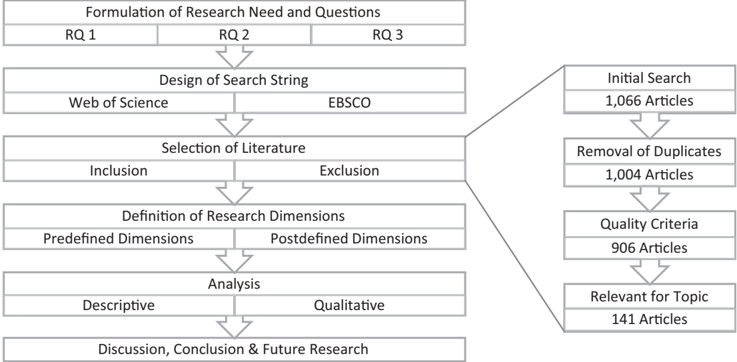
In most supply chains, the application of additive manufacturing (AM) is still far from common. However, various industries ranging from aerospace to consumer goods are investigating its potential to enable the digital value chain. Considering these developments, the research community has supported the adoption of AM in supply chains in many ways. This article contributes to the scientific discourse by systematically reviewing relevant literature depending on industry sector, purpose and supply chain area following the SCOR framework to allow fast access to essential information. The review encompasses 1004 articles, where 141 were subjected to a full-text analysis with argument-specific coding. Findings revealed the predominant AM trends for supply chains, perceived benefits and challenges, and possible applications. Managerial implications based on an overview of (envisioned) applications of AM in different industries are outlined. Additionally, based on a qualitative analysis, gaps in the literature and future lines of research were identified.
Overview
The claims and statistics of this paper haven’t been checked yet.
Free: it reads the open-access text and checks the first 5 claims that cite a source we can check. Create a free account to check every claim.
Integrity signals
Registry
Cites
Statistics
Figures



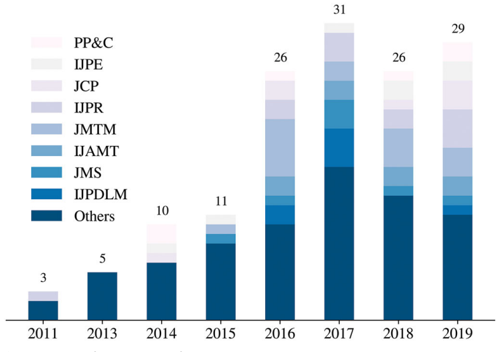
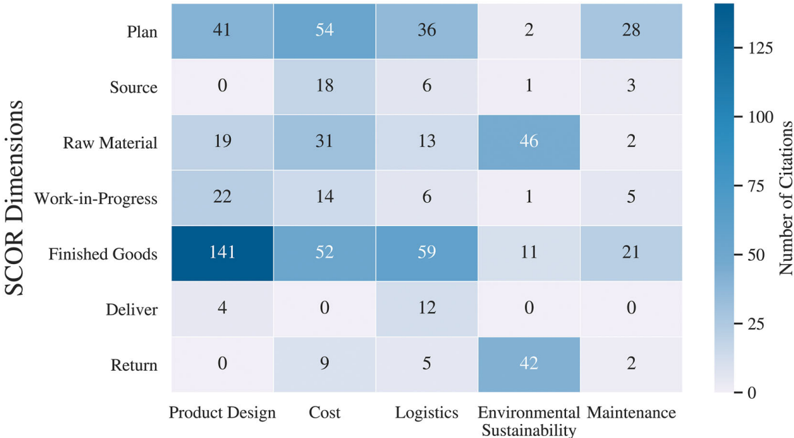
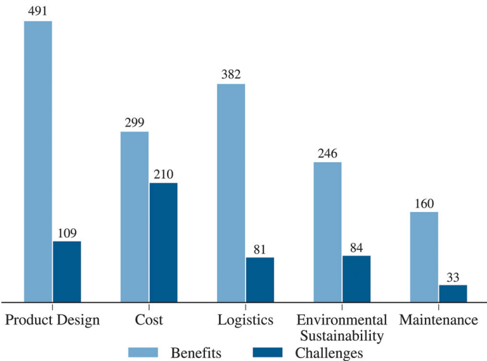
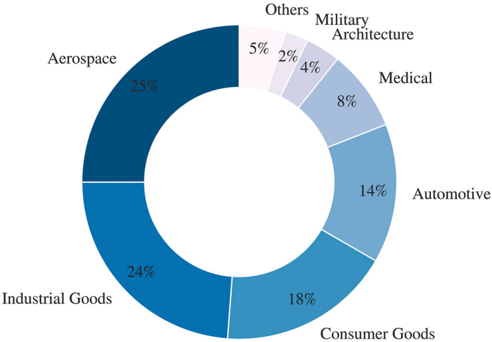



Verification
Claims the paper makes
The claims and statistics of this paper haven’t been checked yet.
Free: it reads the open-access text and checks the first 5 claims that cite a source we can check. Create a free account to check every claim.
Claims other papers make about this one
Each is checked against this paper’s own text: does it say what the citing paper says it does?
The source backs part of the claim, not all of it — or backs it for a different population, condition or comparison.
In the citing paper
“However, widespread adoption of AM faces barriers such as limited government regulations, management support, raw material availability, and workforce constraints [154].”
From Transformative Procurement Trends: Integrating Industry 4.0 Technologies for Enhanced Procurement Processes (2023) · cites this paper as [154]
Experimental — accuracy not yet measured
Self-check
Percentages, sums and reported differences re-computed from the paper’s own numbers.
The self-check needs the paper’s full text.
Citations
Cites
The Measurement of Observer Agreement for Categorical Data
Landis, J. R., & Koch, G. G. (1977) · Biometrics · doi:10.2307/2529310 · Cited by 81,148 · cited 1×
“Such a result indicates very high intercoder reliability according to Landis and Koch (1977), and upon reaching this result, the coding of the remaining articles was completed by one author.”
ResultTranfield, D., Denyer, D., & Smart, P. (2003) · British Journal of Management · doi:10.1111/1467-8551.00375 · Cited by 15,386 · cited 2×
“After a coordination meeting of two researchers that allowed in-depth discussion and debate as suggested by Petticrew and Roberts (2006) as well as Tranfield, Denyer, and Smart (2003), the researchers independently assigned all articles to one of three categories (Include, Maybe, Exclude) by…”
MethodResearch Methods for Business Students
(2000) · Qualitative Market Research: An International Journal · doi:10.1108/qmr.2000.3.4.215.2 · Cited by 5,592
Practical Assessment, Research & Evaluation, 2000-2001.
Rudner, L. M., & Schafer, W. D. (2001) · Practical assessment, research & evaluation · Cited by 3,905
Systematic Reviews in the Social Sciences: A Practical Guide
Petticrew, M., & Roberts, H. (2006) · doi:10.1002/9780470754887 · Cited by 3,586
Gibson, I., Rosen, D., & Stucker, B. (2015) · doi:10.1007/978-1-4939-2113-3 · Cited by 3,299
Systematic reviews: CRD's guidance for undertaking reviews in health care
Tacconelli, E. (2010) · The Lancet Infectious Diseases · doi:10.1016/s1473-3099(10)70065-7 · Cited by 3,245
The SAGE handbook of organizational research methods
Buchanan, D., & Bryman, A. E. (2009) · Cited by 2,559
Additive manufacturing: technology, applications and research needs
Guo, N., & Leu, M. C. (2013) · Frontiers of Mechanical Engineering · doi:10.1007/s11465-013-0248-8 · Cited by 2,073 · cited 1×
“Finally, the articles by Boon and van Wee (2018), Guo and Leu (2013), Jin et al. (2017), and Steenhuis and Pretorius (2015) either focus on technological aspects or provide unstructured reviews that are primarily meant to motivate future research directions.”
BackgroundWriting Integrative Literature Reviews: Using the Past and Present to Explore the Future
Torraco, R. J. (2016) · Human Resource Development Review · doi:10.1177/1534484316671606 · Cited by 2,031 · cited 1×
“A systematic literature review should be regarded as a selfcontained research project as it is commonly used to answer well-focussed research questions (Denyer and Tranfield 2009; Torraco 2016; Hochrein et al. 2015).”
MethodAdditive manufacturing and sustainability: an exploratory study of the advantages and challenges
Ford, S., & Despeisse, M. (2016) · Journal of Cleaner Production · doi:10.1016/j.jclepro.2016.04.150 · Cited by 1,889 · cited 8×
“Consolidation further decreases material flows and simplifies value chains by making them less hierarchical with fewer production steps (Laplume, Petersen, and Pearce 2016; Kleer and Piller 2019), fewer suppliers (€Oberg and Shams 2019), and reduced environmental impacts (Ford and Despeisse 2016).”
BackgroundInfluentialThe rise of 3-D printing: The advantages of additive manufacturing over traditional manufacturing
Attaran, M. (2017) · Business Horizons · doi:10.1016/j.bushor.2017.05.011 · Cited by 1,822 · cited 7×
“This allows faster, more specific solutions and extended product lifecycles (Attaran 2017; Eyers and Potter 2015).”
BackgroundInfluentialUndertaking a literature review: a step-by-step approach
Cronin, P., Ryan, F., & Coughlan, M. (2008) · British Journal of Nursing · doi:10.12968/bjon.2008.17.1.28059 · Cited by 1,426 · cited 1×
“Contrary to traditional ‘narrative’ literature reviews, a systematic literature review is a more rigorous and well-defined approach to reviewing the literature in a subject area (Cronin, Ryan, and Coughlan 2008; Tranfield, Denyer, and Smart 2003; Delbufalo 2012).”
MethodDesigning and Managing the Supply Chain Concepts, Strategies, and Case Studies
(2000) · International Journal of Quality & Reliability Management · doi:10.1108/ijqrm.2000.17.7.812.1 · Cited by 1,298
Conducting content‐analysis based literature reviews in supply chain management
Seuring, S., & Gold, S. (2012) · Supply Chain Management: An International Journal · doi:10.1108/13598541211258609 · Cited by 1,245 · cited 2×
“The Cohen’s Kappa is the measurement metric of choice for this purpose (Seuring and Gold 2012) and during this study a Cohen’s Kappa of 0.8057 was reached.”
MethodInfluentialKamble, S. S., Gunasekaran, A., & Gawankar, S. A. (2020) · International Journal of Production Economics · doi:10.1016/j.ijpe.2019.05.022 · Cited by 1,015 · cited 2×
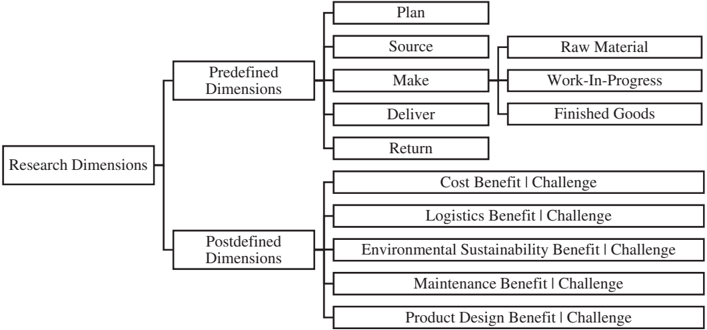
“For this purpose, the SCOR framework (APICS 2017) was found suitable as it is widely applied in both academia as well as practice and it has previously been used to structure systematic reviews (Kamble, Gunasekaran, and Gawankar 2020; Chehbi-Gamoura et al. 2020).”
MethodA global sustainability perspective on 3D printing technologies
Gebler, M., Schoot Uiterkamp, A. J. M., & Visser, C. (2014) · Energy Policy · doi:10.1016/j.enpol.2014.08.033 · Cited by 950
Nascimento, D. L. M., Alencastro, V., Quelhas, O. L. G., Caiado, R. G. G., Garza-Reyes, J. A., Rocha-Lona, L., & Tortorella, G. (2019) · Journal of Manufacturing Technology Management · doi:10.1108/jmtm-03-2018-0071 · Cited by 903 · cited 1×
“Reused materials for AM include plastics, metals, and even organic wastes such as wood, but the processing for recycling can be cumbersome (Nascimento et al. 2019).”
BackgroundConducting systematic literature review in operations management
Thomé, A. M. T., Scavarda, L. F., & Scavarda, A. J. (2016) · Production Planning & Control · doi:10.1080/09537287.2015.1129464 · Cited by 812
Weller, C., Kleer, R., & Piller, F. T. (2015) · International Journal of Production Economics · doi:10.1016/j.ijpe.2015.02.020 · Cited by 783 · cited 9×
“…because complex designs can be manufactured without dedicated tools or moulds (Ben-Ner and Siemsen 2017; Cohen 2014; Khajavi, Partanen, and Holmstr€om 2014; Mothes 2015; Neugebauer et al. 2011; Niaki and Nonino 2017; Simons 2018; Weller, Kleer, and Piller 2015; Fontana, Klahn, and Meboldt 2019).”
BackgroundInfluentialAdditive manufacturing: A framework for implementation
Mellor, S., Hao, L., & Zhang, D. (2014) · International Journal of Production Economics · doi:10.1016/j.ijpe.2013.07.008 · Cited by 777 · cited 1×
“Additionally, AM machine producers might control the metal powders that can be processed on their respective machines, which can reduce the available material range, thus reducing competition and keeping costs high (Mellor, Hao, and Zhang 2014).”
BackgroundA Guide to Writing the Dissertation Literature Review
Randolph, J. (2020) · ScholarWorks@UMassAmherst (University of Massachusetts Amherst) · doi:10.7275/b0az-8t74 · Cited by 722
Additive manufacturing in the spare parts supply chain
Khajavi, S. H., Partanen, J., & Holmström, J. (2014) · Computers in Industry · doi:10.1016/j.compind.2013.07.008 · Cited by 683 · cited 2×
“Since tooling is not required, spare parts can be easily produced at different locations (Khajavi, Partanen, and Holmstr€om 2014) and consumers can print their spare parts themselves to repair previously purchased products.”
BackgroundAdditive layered manufacturing: sectors of industrial application shown through case studies
Petrovic, V., Vicente Haro Gonzalez, J., Jordá Ferrando, O., Delgado Gordillo, J., Ramón Blasco Puchades, J., & Portolés Griñan, L. (2011) · International Journal of Production Research · doi:10.1080/00207540903479786 · Cited by 676 · cited 2×
“This includes complex internal structures (Deschamps et al. 2017; Neugebauer et al. 2011; Petrovic et al. 2011; Zeltmann et al. 2016; Zanoni et al. 2019).”
BackgroundIndustry 4.0, global value chains and international business
Strange, R., & Zucchella, A. (2017) · Multinational Business Review · doi:10.1108/mbr-05-2017-0028 · Cited by 631 · cited 4×
“…but also increases sustainability and energy efficiency of the AM production process (Baechler, DeVuono, and Pearce 2013; Despeisse et al. 2017; Garmulewicz et al. 2018; van Le, Paris, and Mandil 2017; Mami et al. 2017; Meisel et al. 2016; Niaki and Nonino 2017; Strange and Zucchella 2017).”
BackgroundInfluentialUnlocking value for a circular economy through 3D printing: A research agenda
Despeisse, M., Baumers, M., Brown, P., Charnley, F., Ford, S. J., Garmulewicz, A., Knowles, S., Minshall, T. H. W., Mortara, L., Reed-Tsochas, F. P., et al. (2017) · Technological Forecasting and Social Change · doi:10.1016/j.techfore.2016.09.021 · Cited by 529 · cited 2×
“This potential can be further enhanced through local and flexible material markets that might benefit from localised recycling activities (Despeisse et al. 2017; Garmulewicz et al. 2018) and reduced SC risks (Strange and Zucchella 2017).”
BackgroundBogers, M., Hadar, R., & Bilberg, A. (2016) · Technological Forecasting and Social Change · doi:10.1016/j.techfore.2015.07.024 · Cited by 457 · cited 6×
“…reduces SC complexity, transportation, and logistics (Birtchnell and Urry 2013; Durach, Kurpjuweit, and Wagner 2017; Rogers, Baricz, and Pawar 2016; Bogers, Hadar, and Bilberg 2016; Chen 2016, 2017; Gress and Kalafsky 2015; Kothman and Faber 2016; Scott and Harrison 2015; Smith and Kerbache 2017;…”
BackgroundInfluentialFaludi, J., Bayley, C., Bhogal, S., & Iribarne, M. (2015) · Rapid Prototyping Journal · doi:10.1108/rpj-07-2013-0067 · Cited by 431 · cited 3×
“Equipment selection and its adequate utilisation is often essential to reduce the ecological footprint (Faludi et al. 2015; Kellens et al. 2017).”
BackgroundMandolla, C., Petruzzelli, A. M., Percoco, G., & Urbinati, A. (2019) · Computers in Industry · doi:10.1016/j.compind.2019.04.011 · Cited by 416 · cited 1×
“Technologically, this could either be achieved with block-chain technology to trace the product history (Mandolla et al. 2019) or with cloud-based solutions that allow simultaneous access to product and process information (Qian et al. 2019).”
BackgroundBolstorff, P., & Rosenbaum, R. (2003) · Thammasat University Digital Collections · Cited by 382
Kreiger, M. A., Mulder, M. L., Glover, A. G., & Pearce, J. M. (2014) · Journal of Cleaner Production · doi:10.1016/j.jclepro.2014.02.009 · Cited by 350 · cited 1×
“Especially, if a distributed recycling concept is employed, emissions related to the collection and transportation of wastes can be reduced (Chen 2017; Baechler, DeVuono, and Pearce 2013; Garmulewicz et al. 2018; Kreiger et al. 2014).”
BackgroundGlobal value chains from a 3D printing perspective
Laplume, A. O., Petersen, B., & Pearce, J. M. (2016) · Journal of International Business Studies · doi:10.1057/jibs.2015.47 · Cited by 347 · cited 1×
“Consolidation further decreases material flows and simplifies value chains by making them less hierarchical with fewer production steps (Laplume, Petersen, and Pearce 2016; Kleer and Piller 2019), fewer suppliers (€Oberg and Shams 2019), and reduced environmental impacts (Ford and Despeisse 2016).”
BackgroundCosts, benefits, and adoption of additive manufacturing: a supply chain perspective
Thomas, D. (2016) · The International Journal of Advanced Manufacturing Technology · doi:10.1007/s00170-015-7973-6 · Cited by 342 · cited 6×
“This enables economies of scale and reduces inventory costs as the raw material can be shared between different products (Tsai 2017; Thomas 2016).”
BackgroundInfluentialKellens, K., Baumers, M., Gutowski, T. G., Flanagan, W., Lifset, R., & Duflou, J. R. (2017) · Journal of Industrial Ecology · doi:10.1111/jiec.12629 · Cited by 310 · cited 4×
“Equipment selection and its adequate utilisation is often essential to reduce the ecological footprint (Faludi et al. 2015; Kellens et al. 2017).”
BackgroundInfluentialEnvironmental assessment of additive manufacturing in the automotive industry
Böckin, D., & Tillman, A.-M. (2019) · Journal of Cleaner Production · doi:10.1016/j.jclepro.2019.04.086 · Cited by 307 · cited 2×
“…improvements such as weight reduction, part consolidation, improved airflow, and thermal efficiency often enhance environmental sustainability during the use-phase of final parts (Ford and Despeisse 2016; Gebler, Schoot Uiterkamp, and Visser 2014; Faludi et al. 2015; B€ockin and Tillman 2019).”
BackgroundThe global rise of 3D printing during the COVID-19 pandemic
Choong, Y. Y. C., Tan, H. W., Patel, D. C., Choong, W. T. N., Chen, C.-H., Low, H. Y., Tan, M. J., Patel, C. D., & Chua, C. K. (2020) · Nature Reviews Materials · doi:10.1038/s41578-020-00234-3 · Cited by 283 · cited 1×
“Choong et al. (2020) elaborated on the responsiveness of AM as goods that were under shortage, such as personal protective equipment, were produced by AM with little delay.”
BackgroundDistributed recycling of waste polymer into RepRap feedstock
Baechler, C., DeVuono, M., & Pearce, J. M. (2013) · Rapid Prototyping Journal · doi:10.1108/13552541311302978 · Cited by 269 · cited 2×
“Especially, if a distributed recycling concept is employed, emissions related to the collection and transportation of wastes can be reduced (Chen 2017; Baechler, DeVuono, and Pearce 2013; Garmulewicz et al. 2018; Kreiger et al. 2014).”
BackgroundLiu, P., Huang, S. H., Mokasdar, A., Zhou, H., & Hou, L. (2014) · Production Planning & Control · doi:10.1080/09537287.2013.808835 · Cited by 265 · cited 2×
“…on demand and on location reduces inventories and lead times which in turn might increase system availability (Eyers and Potter 2015; Ghadge et al. 2018; Liu et al. 2014; Verhoef et al. 2018; Wagner and Walton 2016; Sirichakwal and Conner 2016; Sasson and Johnson 2016; Waller and Fawcett 2014).”
Background(2019) · Jurnal Ilmiah Ekonomi Bisnis · doi:10.35760/ekbis · Cited by 256
A meta‐analysis of humanitarian logistics research
Kunz, N., & Reiner, G. (2012) · Journal of Humanitarian Logistics and Supply Chain Management · doi:10.1108/20426741211260723 · Cited by 252 · cited 1×
“Accordingly, all three authors identified the research dimensions in a two-step process following the example of Kunz and Reiner (2012) and Wankm€uller and Reiner (2019).”
BackgroundSelf-citationAdoption of 3D-printing technologies in manufacturing: A survey analysis
Schniederjans, D. G. (2017) · International Journal of Production Economics · doi:10.1016/j.ijpe.2016.11.008 · Cited by 249 · cited 1×
“In most supply chains (SCs), the application of AM is still far from common (Schniederjans 2017), various industries ranging from aerospace to consumer goods as well as related services (e.g. logistics service providers and shipping companies) are, however, investigating its potential as a key…”
BackgroundDawes, J., Bowerman, R., & Trepleton, R. (2015) · Johnson Matthey Technology Review · doi:10.1595/205651315x688686 · Cited by 248 · cited 3×
“In some cases, it can even be the largest cost factor (Dawes, Bowerman, and Trepleton 2015; Scott and Harrison 2015).”
BackgroundInfluentialManufacturing and Security Challenges in 3D Printing
Zeltmann, S. E., Gupta, N., Tsoutsos, N. G., Maniatakos, M., Rajendran, J., & Karri, R. (2016) · JOM · doi:10.1007/s11837-016-1937-7 · Cited by 245 · cited 1×
“This includes complex internal structures (Deschamps et al. 2017; Neugebauer et al. 2011; Petrovic et al. 2011; Zeltmann et al. 2016; Zanoni et al. 2019).”
Tang, Y., Mak, K., & Zhao, Y. F. (2016) · Journal of Cleaner Production · doi:10.1016/j.jclepro.2016.06.037 · Cited by 237
Achillas, C., Aidonis, D., Iakovou, E., Thymianidis, M., & Tzetzis, D. (2015) · Journal of Manufacturing Systems · doi:10.1016/j.jmsy.2014.07.014 · Cited by 229 · cited 3×
“Consolidation leads to a reduction of assembly steps which in turn reduces intermediate part costs such as handling, inventory, and labour costs (Achillas et al. 2015; Mothes 2015; Weller, Kleer, and Piller 2015).”
BackgroundAdditive manufacturing technology in spare parts supply chain: a comparative study
Li, Y., Jia, G., Cheng, Y., & Hu, Y. (2017) · International Journal of Production Research · doi:10.1080/00207543.2016.1231433 · Cited by 223 · cited 2×
“Unfortunately, some of these sustainability benefits are offset by high carbon emissions during raw material production (Li et al. 2017).”
BackgroundThe impact of additive manufacturing on supply chains
Durach, C. F., Kurpjuweit, S., & Wagner, S. M. (2017) · International Journal of Physical Distribution & Logistics Management · doi:10.1108/ijpdlm-11-2016-0332 · Cited by 221 · cited 4×
“…argument is that printing parts on demand and close to the customer reduces SC complexity, transportation, and logistics (Birtchnell and Urry 2013; Durach, Kurpjuweit, and Wagner 2017; Rogers, Baricz, and Pawar 2016; Bogers, Hadar, and Bilberg 2016; Chen 2016, 2017; Gress and Kalafsky 2015;…”
BackgroundInfluentialBen-Ner, A., & Siemsen, E. (2017) · California Management Review · doi:10.1177/0008125617695284 · Cited by 219 · cited 7×
“…(Ben-Ner and Siemsen 2017; Sasson and Johnson 2016; Scott and Harrison 2015; Verhoef et al. 2018) and lead times become shorter (Attaran 2017; Ben-Ner and Siemsen 2017; Bogers, Hadar, and Bilberg 2016; Dwivedi, Srivastava, and Srivastava 2017; Khajavi et al. 2015; Knofius, van der Heijden,…”
BackgroundInfluentialDelbufalo, E. (2012) · Supply Chain Management: An International Journal · doi:10.1108/13598541211246549 · Cited by 214 · cited 2×
“…are widely used for systematic literature searches in supply chain research (see for example Sauer and Seuring (2017), Wankm€uller and Reiner (2019), or Delbufalo (2012)) and offer good applicability in regard to the scope of this article as well as the specified inclusion and quality criteria.”
BackgroundMethodThe impact of 3D Printing Technology on the supply chain: Manufacturing and legal perspectives
Chan, H. K., Griffin, J., Lim, J. J., Zeng, F., & Chiu, A. S. F. (2018) · International Journal of Production Economics · doi:10.1016/j.ijpe.2018.09.009 · Cited by 212 · cited 3×
“…and Despeisse 2016; Gress and Kalafsky 2015; Grzesiak, Becker, and Verl 2011; Mothes 2015; Niaki and Nonino 2017; Neugebauer et al. 2011; Rehnberg and Ponte 2018; Simons 2018; Sirichakwal and Conner 2016; Steenhuis and Pretorius 2015; Chan et al. 2018; Chowdhury et al. 2019; Colosimo et al. 2018).”
BackgroundThe 3D printing order: variability, supercenters and supply chain reconfigurations
Sasson, A., & Johnson, J. C. (2016) · International Journal of Physical Distribution & Logistics Management · doi:10.1108/ijpdlm-10-2015-0257 · Cited by 208 · cited 6×
“Distributed general purpose AM facilities allow the concentration of the production of various low-volume, high customisation, high urgency parts (Ratnayake 2019; Sasson and Johnson 2016) even in remote locations (Verboeket and Krikke 2019).”
BackgroundInfluentialAdditive manufacturing management: a review and future research agenda
Khorram Niaki, M., & Nonino, F. (2017) · International Journal of Production Research · doi:10.1080/00207543.2016.1229064 · Cited by 208 · cited 7×
“…because complex designs can be manufactured without dedicated tools or moulds (Ben-Ner and Siemsen 2017; Cohen 2014; Khajavi, Partanen, and Holmstr€om 2014; Mothes 2015; Neugebauer et al. 2011; Niaki and Nonino 2017; Simons 2018; Weller, Kleer, and Piller 2015; Fontana, Klahn, and Meboldt 2019).”
BackgroundInfluential3D printing services: classification, supply chain implications and research agenda
Rogers, H., Baricz, N., & Pawar, K. S. (2016) · International Journal of Physical Distribution & Logistics Management · doi:10.1108/ijpdlm-07-2016-0210 · Cited by 208 · cited 4×
“Rogers, Baricz, and Pawar (2016) explained that most of the scientific literature focuses on mere technical or operational aspects of the manufacturing approach itself.”
BackgroundInfluentialProduction planning in additive manufacturing and 3D printing
Li, Q., Kucukkoc, I., & Zhang, D. Z. (2017) · Computers & Operations Research · doi:10.1016/j.cor.2017.01.013 · Cited by 202 · cited 2×
“Unfortunately, some of these sustainability benefits are offset by high carbon emissions during raw material production (Li et al. 2017).”
BackgroundHannibal, M., & Knight, G. (2018) · International Business Review · doi:10.1016/j.ibusrev.2018.04.003 · Cited by 191 · cited 1×
“It is especially important in cases in which the perceived timing of a need for the product and its arrival at the user’s location is relatively short (Hannibal and Knight 2018).”
BackgroundOettmeier, K., & Hofmann, E. (2016) · Journal of Manufacturing Technology Management · doi:10.1108/jmtm-12-2015-0113 · Cited by 188 · cited 2×
“In any case, to harness most benefits, new skills, training, infrastructure, and work structures are required (Oettmeier and Hofmann 2016; Rylands et al. 2016).”
BackgroundHow 3D printing technology changes the rules of the game: Insights from the construction sector
Kothman, I., & Faber, N. R. (2016) · Journal of Manufacturing Technology Management · doi:10.1108/jmtm-01-2016-0010 · Cited by 178 · cited 5×
“This eliminates intermediate steps in the value chain (Eyers and Potter 2015; Kothman and Faber 2016).”
BackgroundInfluentialIngarao, G., Priarone, P. C., Deng, Y., & Paraskevas, D. (2018) · Journal of Cleaner Production · doi:10.1016/j.jclepro.2017.12.115 · Cited by 178
Transparency Built‐in: Energy Consumption and Cost Estimation for Additive Manufacturing
Baumers, M., Tuck, C., Wildman, R., Ashcroft, I., Rosamond, E., & Hague, R. (2013) · Journal of Industrial Ecology · doi:10.1111/j.1530-9290.2012.00512.x · Cited by 177 · cited 3×
“On the positive side, the measurement of process energy consumption and carbon accounting becomes more transparent compared to conventional manufacturing methods as the production process is simplified (Baumers et al. 2013).”
BackgroundMethodSustainable supply chain management for minerals
Sauer, P. C., & Seuring, S. (2017) · Journal of Cleaner Production · doi:10.1016/j.jclepro.2017.03.049 · Cited by 176 · cited 2×
“These databases are widely used for systematic literature searches in supply chain research (see for example Sauer and Seuring (2017), Wankm€uller and Reiner (2019), or Delbufalo (2012)) and offer good applicability in regard to the scope of this article as well as the specified inclusion and…”
MethodLife Cycle Assessment of 3D Printed Products in a Distributed Manufacturing System
Cerdas, F., Juraschek, M., Thiede, S., & Herrmann, C. (2017) · Journal of Industrial Ecology · doi:10.1111/jiec.12618 · Cited by 172 · cited 2×
“Yet, inexperienced users often decrease the efficiency of the AM process and hence cause more CO2 emissions (Cerdas et al. 2017).”
BackgroundResearch Methods for Operations Management
(2016) · Routledge eBooks · doi:10.4324/9781315671420 · Cited by 172
Opportunities and challenges of quality engineering for additive manufacturing
Colosimo, B. M., Huang, Q., Dasgupta, T., & Tsung, F. (2018) · Journal of Quality Technology · doi:10.1080/00224065.2018.1487726 · Cited by 170 · cited 1×
“…and Despeisse 2016; Gress and Kalafsky 2015; Grzesiak, Becker, and Verl 2011; Mothes 2015; Niaki and Nonino 2017; Neugebauer et al. 2011; Rehnberg and Ponte 2018; Simons 2018; Sirichakwal and Conner 2016; Steenhuis and Pretorius 2015; Chan et al. 2018; Chowdhury et al. 2019; Colosimo et al. 2018).”
BackgroundFawcett, S. E., & Waller, M. A. (2014) · Journal of Business Logistics · doi:10.1111/jbl.12058 · Cited by 169 · cited 2×
“Nevertheless, in the AM supply chain, significant time is spent on the production process (Huang et al. 2017) which is also the key reason why AM cannot match the efficiency of mass production for larger production quantities (Fawcett and Waller 2014).”
BackgroundAnalysis of barriers to implement additive manufacturing technology in the Indian automotive sector
Dwivedi, G., Srivastava, S. K., & Srivastava, R. K. (2017) · International Journal of Physical Distribution & Logistics Management · doi:10.1108/ijpdlm-07-2017-0222 · Cited by 167 · cited 1×
“…Sasson and Johnson 2016; Scott and Harrison 2015; Verhoef et al. 2018) and lead times become shorter (Attaran 2017; Ben-Ner and Siemsen 2017; Bogers, Hadar, and Bilberg 2016; Dwivedi, Srivastava, and Srivastava 2017; Khajavi et al. 2015; Knofius, van der Heijden, and Zijm 2016; Liu et al. 2014).”
BackgroundFrom 3D models to 3D prints: an overview of the processing pipeline
Livesu, M., Ellero, S., Martínez, J., Lefebvre, S., & Attene, M. (2017) · Computer Graphics Forum · doi:10.1111/cgf.13147 · Cited by 162 · cited 1×
“Furthermore, support materials and their removal introduces additional constraints that are particularly restrictive for complex infills and cause additional effort to reach the required part quality (Livesu et al. 2017).”
BackgroundAdditive Manufacturing: Design, Methods, and Processes
(2017) · CRC Press eBooks · doi:10.1201/9781315196589 · Cited by 162
Disruptive Technology as an Enabler of the Circular Economy: What Potential Does 3D Printing Hold?
Garmulewicz, A., Holweg, M., Veldhuis, H., & Yang, A. (2018) · California Management Review · doi:10.1177/0008125617752695 · Cited by 151 · cited 4×
“…but also increases sustainability and energy efficiency of the AM production process (Baechler, DeVuono, and Pearce 2013; Despeisse et al. 2017; Garmulewicz et al. 2018; van Le, Paris, and Mandil 2017; Mami et al. 2017; Meisel et al. 2016; Niaki and Nonino 2017; Strange and Zucchella 2017).”
BackgroundInfluentialImpact of additive manufacturing on business competitiveness: a multiple case study
Khorram Niaki, M., & Nonino, F. (2017) · Journal of Manufacturing Technology Management · doi:10.1108/jmtm-01-2016-0001 · Cited by 150 · cited 7×
“…because complex designs can be manufactured without dedicated tools or moulds (Ben-Ner and Siemsen 2017; Cohen 2014; Khajavi, Partanen, and Holmstr€om 2014; Mothes 2015; Neugebauer et al. 2011; Niaki and Nonino 2017; Simons 2018; Weller, Kleer, and Piller 2015; Fontana, Klahn, and Meboldt 2019).”
BackgroundInfluentialFrom smiling to smirking? 3D printing, upgrading and the restructuring of global value chains
REHNBERG, M., & PONTE, S. (2018) · Global Networks · doi:10.1111/glob.12166 · Cited by 150 · cited 2×
“Therefore, more and more AM production capacity is created around the world which ultimately might even reduce market entry barriers (Rehnberg and Ponte 2018).”
BackgroundVerhoef, L. A., Budde, B., Chockalingam, C., Nodar, B. G., & van Wijk, A. (2017) · Energy Policy · doi:10.1016/j.enpol.2017.10.034 · Cited by 149 · cited 2×
“…on demand and on location reduces inventories and lead times which in turn might increase system availability (Eyers and Potter 2015; Ghadge et al. 2018; Liu et al. 2014; Verhoef et al. 2018; Wagner and Walton 2016; Sirichakwal and Conner 2016; Sasson and Johnson 2016; Waller and Fawcett 2014).”
BackgroundThe adoption process and impact of additive manufacturing on manufacturing systems
Rylands, B., Boehme, T., Gorkin, R. A., III, Fan, J. P.-O., & Birtchnell, T. (2016) · Journal of Manufacturing Technology Management · doi:10.1108/jmtm-12-2015-0117 · Cited by 148 · cited 3×
“In any case, to harness most benefits, new skills, training, infrastructure, and work structures are required (Oettmeier and Hofmann 2016; Rylands et al. 2016).”
BackgroundDelić, M., Eyers, D. R., & Mikulić, J. (2019) · Supply Chain Management An International Journal · doi:10.1108/scm-12-2017-0406 · Cited by 148
Conducting a Literature Review — The Example of Sustainability in Supply Chains
Seuring, S., Müller, M., Westhaus, M., & Morana, R. (2005) · Research Methodologies in Supply Chain Management · doi:10.1007/3-7908-1636-1_7 · Cited by 147 · cited 2×
“Subsequently, two researchers independently applied a selection process to the 906 remaining articles to reduce bias and ensure consistency as recommended by Seuring et al. (2005).”
BackgroundMethod3D printing the future: scenarios for supply chains reviewed
Ryan, M. J., Eyers, D. R., Potter, A. T., Purvis, L., & Gosling, J. (2017) · International Journal of Physical Distribution & Logistics Management · doi:10.1108/ijpdlm-12-2016-0359 · Cited by 145 · cited 2×
“Most notably, Niaki and Nonino (2017) reviewed the literature on the management of AM, FossoWamba (2017) addressed AM supply chain issues with a limited scope, and Ryan et al. (2017) summarised the discussion about future AM supply chain scenarios.”
BackgroundThe Bionic Handling Assistant: a success story of additive manufacturing
Grzesiak, A., Becker, R., & Verl, A. W. (2011) · Assembly Automation · doi:10.1108/01445151111172907 · Cited by 144 · cited 3×
“…complex part becomes possible (Weller, Kleer, and Piller 2015; Waller and Fawcett 2014; Wagner and Walton 2016; Strange and Zucchella 2017; Rylands et al. 2016; Mothes 2015; Kellens et al. 2017; Ben-Ner and Siemsen 2017; Grzesiak, Becker, and Verl 2011; Knofius, van der Heijden, and Zijm 2019a).”
BackgroundMethodChehbi-Gamoura, S., Derrouiche, R., Damand, D., & Barth, M. (2020) · Production Planning & Control · doi:10.1080/09537287.2019.1639839 · Cited by 143 · cited 2×
“For this purpose, the SCOR framework (APICS 2017) was found suitable as it is widely applied in both academia as well as practice and it has previously been used to structure systematic reviews (Kamble, Gunasekaran, and Gawankar 2020; Chehbi-Gamoura et al. 2020).”
MethodWesterweel, B., Basten, R. J. I., & van Houtum, G.-J. (2018) · European Journal of Operational Research · doi:10.1016/j.ejor.2018.04.015 · Cited by 142
Le, V. T., Paris, H., & Mandil, G. (2017) · Journal of Manufacturing Systems · doi:10.1016/j.jmsy.2017.06.003 · Cited by 141 · cited 2×
“…but also increases sustainability and energy efficiency of the AM production process (Baechler, DeVuono, and Pearce 2013; Despeisse et al. 2017; Garmulewicz et al. 2018; van Le, Paris, and Mandil 2017; Mami et al. 2017; Meisel et al. 2016; Niaki and Nonino 2017; Strange and Zucchella 2017).”
BackgroundMethodJia, F., Wang, X., Mustafee, N., & Hao, L. (2015) · Technological Forecasting and Social Change · doi:10.1016/j.techfore.2015.07.026 · Cited by 140 · cited 4×
“This might be facilitated by a direct integration of E-commerce platforms when dealing with customised designs (Jia et al. 2016).”
BackgroundInfluentialAdopting additive manufacturing in SMEs: exploring the challenges and solutions
Martinsuo, M. M., & Luomaranta, T. (2018) · Journal of Manufacturing Technology Management · doi:10.1108/jmtm-02-2018-0030 · Cited by 139 · cited 1×
“This particularly holds because of fast technological advancements and rapidly changing market dynamics (Garmulewicz et al. 2018; Martinsuo and Luomaranta 2018).”
BackgroundAdditive manufacturing’s impact and future in the aviation industry
Wagner, S. M., & Walton, R. O. (2016) · Production Planning & Control · doi:10.1080/09537287.2016.1199824 · Cited by 138 · cited 4×
“To that end, the efficient utilisation of the build chamber capacity is also important (Baumers et al. 2013) which provides one reason why the production of larger parts is usually relatively more expensive (Wagner and Walton 2016).”
BackgroundInfluentialSelecting parts for additive manufacturing in service logistics
Knofius, N., van der Heijden, M. C., & Zijm, W. H. M. (2016) · Journal of Manufacturing Technology Management · doi:10.1108/jmtm-02-2016-0025 · Cited by 138
Self-citationImpact of additive manufacturing on aircraft supply chain performance: A system dynamics approach
Ghadge, A., Karantoni, G., Chaudhuri, A., & Srinivasan, A. (2018) · Journal of Manufacturing Technology Management · doi:10.1108/jmtm-07-2017-0143 · Cited by 138 · cited 3×
“…spare parts on demand and on location reduces inventories and lead times which in turn might increase system availability (Eyers and Potter 2015; Ghadge et al. 2018; Liu et al. 2014; Verhoef et al. 2018; Wagner and Walton 2016; Sirichakwal and Conner 2016; Sasson and Johnson 2016; Waller and…”
BackgroundInfluentialChekurov, S., Metsä-Kortelainen, S., Salmi, M., Roda, I., & Jussila, A. (2018) · International Journal of Production Economics · doi:10.1016/j.ijpe.2018.09.008 · Cited by 137 · cited 2×
“In this regard, Chekurov et al. (2018) revealed that there is a strong desire from practitioners to be able to order their spare parts centrally.”
BackgroundCoordination, cooperation and collaboration in relief supply chain management
Wankmüller, C., & Reiner, G. (2019) · Journal of Business Economics · doi:10.1007/s11573-019-00945-2 · Cited by 137
Self-citationden Boer, J., Lambrechts, W., & Krikke, H. R. (2020) · Journal of Cleaner Production · doi:10.1016/j.jclepro.2020.120301 · Cited by 134 · cited 1×
“Additionally, Boer, Lambrechts, and Krikke (2020) analysed the related responsiveness, efficiency and most notably sustainability of the spare parts supply chain in the military domain.”
BackgroundVerboeket, V., & Krikke, H. R. (2019) · Computers in Industry · doi:10.1016/j.compind.2019.07.003 · Cited by 131 · cited 4×
“Verboeket and Krikke (2019) presented a literature review with the conclusion that AM is mainly used for small, low demand and geometrically complex products.”
BackgroundInfluentialFrom consumer to prosumer: a supply chain revolution in 3D printing
Halassi, S., Semeijn, J., & Kiratli, N. (2018) · International Journal of Physical Distribution & Logistics Management · doi:10.1108/ijpdlm-03-2018-0139 · Cited by 130 · cited 2×
“End users constitute an important factor for the deployment and adoption of AM and its services as described by Halassi, Semeijn, and Kiratli (2019).”
BackgroundGress, D. R., & Kalafsky, R. V. (2015) · Geoforum · doi:10.1016/j.geoforum.2015.01.003 · Cited by 128 · cited 2×
“…that geometric complexity is no longer an obstacle in the AM process which allows new design approaches (Cohen 2014; Ford and Despeisse 2016; Gress and Kalafsky 2015; Grzesiak, Becker, and Verl 2011; Mothes 2015; Niaki and Nonino 2017; Neugebauer et al. 2011; Rehnberg and Ponte 2018; Simons…”
BackgroundZhang, J., Vo, A. Q., Feng, X., Bandari, S., & Repka, M. A. (2018) · AAPS PharmSciTech · doi:10.1208/s12249-018-1097-x · Cited by 124 · cited 1×
“Zhang et al. (2018), as well as Akmal et al. (2018), have already taken the first strides into the investigation of personalised drug delivery systems.”
BackgroundUnderstanding Additive Manufacturing: Rapid Prototyping, Rapid Tooling, Rapid Manufacturing
Gebhardt, A. (2011) · Cited by 123
Birtchnell, T., & Urry, J. (2013) · Futures · doi:10.1016/j.futures.2013.03.005 · Cited by 121 · cited 1×
“A widely recurring argument is that printing parts on demand and close to the customer reduces SC complexity, transportation, and logistics (Birtchnell and Urry 2013; Durach, Kurpjuweit, and Wagner 2017; Rogers, Baricz, and Pawar 2016; Bogers, Hadar, and Bilberg 2016; Chen 2016, 2017; Gress and…”
BackgroundHuang, R., Riddle, M. E., Graziano, D., Das, S., Nimbalkar, S., Cresko, J., & Masanet, E. (2017) · Journal of Industrial Ecology · doi:10.1111/jiec.12641 · Cited by 114 · cited 2×
“Nevertheless, in the AM supply chain, significant time is spent on the production process (Huang et al. 2017) which is also the key reason why AM cannot match the efficiency of mass production for larger production quantities (Fawcett and Waller 2014).”
BackgroundLocal manufacturing and structural shifts in competition: Market dynamics of additive manufacturing
Kleer, R., & Piller, F. T. (2019) · International Journal of Production Economics · doi:10.1016/j.ijpe.2019.04.019 · Cited by 114 · cited 2×
“Consolidation further decreases material flows and simplifies value chains by making them less hierarchical with fewer production steps (Laplume, Petersen, and Pearce 2016; Kleer and Piller 2019), fewer suppliers (€Oberg and Shams 2019), and reduced environmental impacts (Ford and Despeisse 2016).”
BackgroundPeeters, B., Kiratli, N., & Semeijn, J. (2019) · Journal of Cleaner Production · doi:10.1016/j.jclepro.2019.118313 · Cited by 111 · cited 1×
“Moreover, for various products, consumers demand high (aesthetic) quality which could sometimes rule out the use of recycled materials (Peeters, Kiratli, and Semeijn 2019).”
BackgroundWaller, M. A., & Fawcett, S. E. (2014) · Journal of Business Logistics · doi:10.1111/jbl.12045 · Cited by 109 · cited 5×
“Furthermore, the entire product development process profits from shorter cycle times and lower setup cost (Waller and Fawcett 2014).”
BackgroundInfluentialSalmi, M., Akmal, J. S., Pei, E., Wolff, J., Jaribion, A., & Khajavi, S. H. (2020) · Applied Sciences · doi:10.3390/app10114004 · Cited by 109 · cited 1×
“Salmi et al. (2020) stressed the importance of open source solutions in this context and Sinha, Bourgeois, and Sorger (2020) regarded the distributed and decentralised nature of the AM response.”
BackgroundOpen-source, self-replicating 3-D printer factory for small-business manufacturing
Laplume, A. O., Anzalone, G. C., & Pearce, J. M. (2015) · The International Journal of Advanced Manufacturing Technology · doi:10.1007/s00170-015-7970-9 · Cited by 108 · cited 2×
“Laplume, Anzalone, and Pearce (2016) explain that AM enables a distributed manufacturing approach which likely causes a reduction of transportation and packaging costs as compared to conventional SCs.”
BackgroundPrinting spare parts through additive manufacturing: legal and digital business challenges
Ballardini, R. M., Ituarte, I. F., & Pei, E. (2018) · Journal of Manufacturing Technology Management · doi:10.1108/jmtm-12-2017-0270 · Cited by 100
Additive manufacturing in the spare parts supply chain: hub configuration and technology maturity
Khajavi, S. H., Holmström, J., & Partanen, J. P. (2018) · Rapid Prototyping Journal · doi:10.1108/rpj-03-2017-0052 · Cited by 99 · cited 3×
“Through the utilisation of AM technology, spare parts can be manufactured closer to the point of need, which shortens delivery time and reduces downtime costs (Khajavi, Holmstr€om, and Partanen 2018).”
BackgroundOn the adoption of additive manufacturing in healthcare: a literature review
Ramola, M., Yadav, V., & Jain, R. (2018) · Journal of Manufacturing Technology Management · doi:10.1108/jmtm-03-2018-0094 · Cited by 98
Consolidating spare parts for asset maintenance with additive manufacturing
Knofius, N., van der Heijden, M. C., & Zijm, W. H. M. (2019) · International Journal of Production Economics · doi:10.1016/j.ijpe.2018.11.007 · Cited by 94
Self-citationHow will the diffusion of additive manufacturing impact the raw material supply chain process?
Kunovjanek, M., & Reiner, G. (2019) · International Journal of Production Research · doi:10.1080/00207543.2019.1661537 · Cited by 94 · cited 1×
“This and the design freedom of AM enables product optimisation, which can also increase raw material efficiency (Deschamps et al. 2017; Evans 2013; Ford and Despeisse 2016; Ingarao et al. 2018; Strange and Zucchella 2017; Kunovjanek and Reiner 2020).”
BackgroundSelf-citationE-commerce channels for additive manufacturing: an exploratory study
Eyers, D. R., & Potter, A. T. (2015) · Journal of Manufacturing Technology Management · doi:10.1108/jmtm-08-2013-0102 · Cited by 93 · cited 5×
“This eliminates intermediate steps in the value chain (Eyers and Potter 2015; Kothman and Faber 2016).”
BackgroundInfluentialAdditive manufacturing scenarios for distributed production of spare parts
Durão, L. F. C. S., Christ, A., Zancul, E. D. S., Anderl, R., & Schützer, K. (2017) · The International Journal of Advanced Manufacturing Technology · doi:10.1007/s00170-017-0555-z · Cited by 89
Evaluating Eco‐Efficiency of 3D Printing in the Aeronautic Industry
Mami, F., Revéret, J., Fallaha, S., & Margni, M. (2017) · Journal of Industrial Ecology · doi:10.1111/jiec.12693 · Cited by 89 · cited 1×
“…but also increases sustainability and energy efficiency of the AM production process (Baechler, DeVuono, and Pearce 2013; Despeisse et al. 2017; Garmulewicz et al. 2018; van Le, Paris, and Mandil 2017; Mami et al. 2017; Meisel et al. 2016; Niaki and Nonino 2017; Strange and Zucchella 2017).”
BackgroundShukla, M., Todorov, I., & Kapletia, D. (2018) · Production Planning & Control · doi:10.1080/09537287.2018.1474395 · Cited by 89 · cited 2×
“These efforts can either be realised internally or outsourced to specialised service providers (Shukla, Todorov, and Kapletia 2018).”
BackgroundLi, Y., Yang, C., Hu, Q., Zhou, S., Ma, L., & Lim, M. K. (2018) · International Journal of Production Research · doi:10.1080/00207543.2018.1543975 · Cited by 88 · cited 1×
“With AM, spare parts can be produced on demand and on location, which is especially beneficial when penalty costs are high (Li et al. 2019).”
BackgroundSimulation based method considering design for additive manufacturing and supply chain
Chiu, M., & Lin, Y. (2016) · Industrial Management & Data Systems · doi:10.1108/imds-07-2015-0266 · Cited by 83 · cited 3×
“A major cost benefit that can be gained by making products with AM is its high raw material efficiency that can decrease overall raw material costs (Achillas et al. 2015; Chiu and Lin 2016; Gebler, Schoot Uiterkamp, and Visser 2014).”
BackgroundA qualification procedure to manufacture and repair aerospace parts with electron beam melting
Portolés, L., Jordá, O., Jordá, L., Uriondo, A., Esperon-Miguez, M., & Perinpanayagam, S. (2016) · Journal of Manufacturing Systems · doi:10.1016/j.jmsy.2016.07.002 · Cited by 82
Influence of 3D printing on transport: a theory and experts judgment based conceptual model
Boon, W., & van Wee, B. (2017) · Transport Reviews · doi:10.1080/01441647.2017.1370036 · Cited by 78
Implementation of Industrial Additive Manufacturing: Intelligent Implants and Drug Delivery Systems
Akmal, J. S., Salmi, M., Mäkitie, A. A., Björkstrand, R. V., & Partanen, J. P. (2018) · Journal of Functional Biomaterials · doi:10.3390/jfb9030041 · Cited by 78 · cited 1×
“Zhang et al. (2018), as well as Akmal et al. (2018), have already taken the first strides into the investigation of personalised drug delivery systems.”
BackgroundMoving to additive manufacturing for spare parts supply
Knofius, N., van der Heijden, M. C., & Zijm, W. H. M. (2019) · Computers in Industry · doi:10.1016/j.compind.2019.103134 · Cited by 77
Self-citationHandbook of Supply Chain Management
Boyce, P. R. (2006) · Auerbach Publications eBooks · doi:10.1201/9781420013009 · Cited by 72
Case Studies on Local Reinforcement of Sheet Metal Components by Laser Additive Manufacturing
Bambach, M., Sviridov, A., Weisheit, A., & Schleifenbaum, J. H. (2017) · Metals · doi:10.3390/met7040113 · Cited by 71 · cited 2×
“The previously mentioned increased raw material efficiency of AM also effects the environmental sustainability positively (Attaran 2017; Bambach et al. 2017; Ben-Ner and Siemsen 2017; Chiu and Lin 2016; Faludi et al. 2015; Ford and Despeisse 2016).”
BackgroundAdditive manufacturing in the mechanical engineering and medical industries spare parts supply chain
Muir, M., & Haddud, A. (2018) · Journal of Manufacturing Technology Management · doi:10.1108/jmtm-01-2017-0004 · Cited by 71 · cited 3×
“This can result in an improvement of on-time delivery performance (Muir and Haddud 2017).”
BackgroundAdditive manufacturing boosts efficiency of heat transfer components
Neugebauer, R., Müller, B., Gebauer, M., & Töppel, T. (2011) · Assembly Automation · doi:10.1108/01445151111172925 · Cited by 70 · cited 3×
“…approaches (Cohen 2014; Ford and Despeisse 2016; Gress and Kalafsky 2015; Grzesiak, Becker, and Verl 2011; Mothes 2015; Niaki and Nonino 2017; Neugebauer et al. 2011; Rehnberg and Ponte 2018; Simons 2018; Sirichakwal and Conner 2016; Steenhuis and Pretorius 2015; Chan et al. 2018; Chowdhury…”
BackgroundA scientometric review of hotspots and emerging trends in additive manufacturing
Jin, Y., Jia, W., Li, X., & Yu, J. (2017) · Journal of Manufacturing Technology Management · doi:10.1108/jmtm-12-2015-0114 · Cited by 69 · cited 1×
“Finally, the articles by Boon and van Wee (2018), Guo and Leu (2013), Jin et al. (2017), and Steenhuis and Pretorius (2015) either focus on technological aspects or provide unstructured reviews that are primarily meant to motivate future research directions.”
BackgroundIs 3D printing an inclusive innovation?: An examination of 3D printing in Brazil
Woodson, T. S., Alcantara, J. T., & do Nascimento, M. S. (2019) · Technovation · doi:10.1016/j.technovation.2018.12.001 · Cited by 66
Literature reviews in supply chain management: a tertiary study
Hochrein, S., Glock, C. H., Bogaschewsky, R., & Heider, M. (2015) · Management Review Quarterly · doi:10.1007/s11301-015-0113-4 · Cited by 65 · cited 3×
“A systematic literature review should be regarded as a selfcontained research project as it is commonly used to answer well-focussed research questions (Denyer and Tranfield 2009; Torraco 2016; Hochrein et al. 2015).”
MethodKhajavi, S. H., Partanen, J. P., Holmström, J., & Tuomi, J. (2015) · Computers in Industry · doi:10.1016/j.compind.2015.08.008 · Cited by 65 · cited 3×
“…Sasson and Johnson 2016; Scott and Harrison 2015; Verhoef et al. 2018) and lead times become shorter (Attaran 2017; Ben-Ner and Siemsen 2017; Bogers, Hadar, and Bilberg 2016; Dwivedi, Srivastava, and Srivastava 2017; Khajavi et al. 2015; Knofius, van der Heijden, and Zijm 2016; Liu et al. 2014).”
BackgroundImplications of Additive Manufacturing for Spare Parts Inventory
Sirichakwal, I., & Conner, B. (2016) · 3D Printing and Additive Manufacturing · doi:10.1089/3dp.2015.0035 · Cited by 65
Tosello, G., Charalambis, A., Kerbache, L., Mischkot, M., Pedersen, D. B., Calaon, M., & Hansen, H. N. (2018) · The International Journal of Advanced Manufacturing Technology · doi:10.1007/s00170-018-2762-7 · Cited by 63 · cited 3×
“Tosello et al. (2019) exemplified this potential by means of a production case used for injection moulding.”
BackgroundMethodResearch on the Impact of 3D Printing on the International Supply Chain
Chen, Z. (2016) · Advances in Materials Science and Engineering · doi:10.1155/2016/4173873 · Cited by 61 · cited 2×
“The direct digital manufacturing capabilities of AM can reduce SC complexity, lead time, freight volume, and corresponding costs (Bogers, Hadar, and Bilberg 2016; Chen 2016; Durach, Kurpjuweit, and Wagner 2017).”
BackgroundQian, C., Zhang, Y., Liu, Y., & Wang, Z. (2019) · Journal of Cleaner Production · doi:10.1016/j.jclepro.2019.118379 · Cited by 58 · cited 1×
“Technologically, this could either be achieved with block-chain technology to trace the product history (Mandolla et al. 2019) or with cloud-based solutions that allow simultaneous access to product and process information (Qian et al. 2019).”
BackgroundZanoni, S., Ashourpour, M., Bacchetti, A., Zanardini, M., & Perona, M. (2019) · The International Journal of Advanced Manufacturing Technology · doi:10.1007/s00170-019-03430-w · Cited by 57 · cited 3×
“Also, design improvements such as a lower product weight or higher functionality might reduce cost during the use phase of the product (Zanoni et al. 2019).”
BackgroundAdditive Manufacturing in an End-to-End Supply Chain Setting
Scott, A., & Harrison, T. P. (2015) · 3D Printing and Additive Manufacturing · doi:10.1089/3dp.2015.0005 · Cited by 55
Value-driven clustering of industrial additive manufacturing applications
Fontana, F., Klahn, C., & Meboldt, M. (2018) · Journal of Manufacturing Technology Management · doi:10.1108/jmtm-06-2018-0167 · Cited by 52 · cited 2×
“…because complex designs can be manufactured without dedicated tools or moulds (Ben-Ner and Siemsen 2017; Cohen 2014; Khajavi, Partanen, and Holmstr€om 2014; Mothes 2015; Neugebauer et al. 2011; Niaki and Nonino 2017; Simons 2018; Weller, Kleer, and Piller 2015; Fontana, Klahn, and Meboldt 2019).”
BackgroundDecision support for additive manufacturing deployment in remote or austere environments
Meisel, N. A., Williams, C. B., Ellis, K. P., & Taylor, D. (2016) · Journal of Manufacturing Technology Management · doi:10.1108/jmtm-06-2015-0040 · Cited by 49 · cited 3×
“…but also increases sustainability and energy efficiency of the AM production process (Baechler, DeVuono, and Pearce 2013; Despeisse et al. 2017; Garmulewicz et al. 2018; van Le, Paris, and Mandil 2017; Mami et al. 2017; Meisel et al. 2016; Niaki and Nonino 2017; Strange and Zucchella 2017).”
BackgroundAdditive Manufacturing in Offsite Repair of Consumer Electronics
Chekurov, S., & Salmi, M. (2017) · Physics Procedia · doi:10.1016/j.phpro.2017.08.009 · Cited by 44 · cited 1×
“Further, as Chekurov and Salmi (2017) have shown in their study, it matters where in the business network AM is performed.”
BackgroundAdditive manufacturing—a revolution in progress? Insights from a multiple case study
Simons, M. (2018) · The International Journal of Advanced Manufacturing Technology · doi:10.1007/s00170-018-1601-1 · Cited by 43 · cited 4×
“…and Despeisse 2016; Gress and Kalafsky 2015; Grzesiak, Becker, and Verl 2011; Mothes 2015; Niaki and Nonino 2017; Neugebauer et al. 2011; Rehnberg and Ponte 2018; Simons 2018; Sirichakwal and Conner 2016; Steenhuis and Pretorius 2015; Chan et al. 2018; Chowdhury et al. 2019; Colosimo et al. 2018).”
BackgroundInfluentialPersonal Protective Equipment for COVID-19: Distributed Fabrication and Additive Manufacturing
Sinha, M. S., Bourgeois, F. T., & Sorger, P. K. (2020) · American Journal of Public Health · doi:10.2105/ajph.2020.305753 · Cited by 41 · cited 1×
“Salmi et al. (2020) stressed the importance of open source solutions in this context and Sinha, Bourgeois, and Sorger (2020) regarded the distributed and decentralised nature of the AM response.”
BackgroundKhajavi, S. H., Deng, G., Holmström, J., Puukko, P., & Partanen, J. P. (2018) · International Journal of Production Research · doi:10.1080/00207543.2018.1436781 · Cited by 40 · cited 1×
“Economies of scale, however, are lost in the production process and thus render AM less viable for higher volumes as the per-piece price is relatively high (Baumers et al. 2013; Khajavi et al. 2015; Khajavi et al. 2018; Tosello et al. 2019).”
Backgroundla Torre, N. D., Escudero, M. D. M. E., & Somonte, M. D. (2016) · Human Factors and Ergonomics in Manufacturing & Service Industries · doi:10.1002/hfm.20672 · Cited by 38
Perception of 3D-printing: analysis of manufacturing use and adoption
Schniederjans, D. G., & Yalcin, M. G. (2018) · Rapid Prototyping Journal · doi:10.1108/rpj-04-2017-0056 · Cited by 33 · cited 1×
“Tools and dies can be remanufactured with AM which increases the usage period (Schniederjans and Yalcin 2018).”
BackgroundSustainable design of on-demand supply chain network for additive manufacturing
Chowdhury, S., Shahvari, O., Marufuzzaman, M., Francis, J., & Bian, L. (2018) · IISE Transactions · doi:10.1080/24725854.2018.1532134 · Cited by 33 · cited 2×
“…and Despeisse 2016; Gress and Kalafsky 2015; Grzesiak, Becker, and Verl 2011; Mothes 2015; Niaki and Nonino 2017; Neugebauer et al. 2011; Rehnberg and Ponte 2018; Simons 2018; Sirichakwal and Conner 2016; Steenhuis and Pretorius 2015; Chan et al. 2018; Chowdhury et al. 2019; Colosimo et al. 2018).”
BackgroundAn Additive Manufacturing Spare Parts Inventory Model for an Aviation Use Case
Togwe, T., Eveleigh, T., & Tanju, B. (2019) · Engineering Management Journal · doi:10.1080/10429247.2019.1565618 · Cited by 31 · cited 1×
“Pooling AM capacity across organisations might lessen associated cost and risk but increase the organisational effort (Togwe, Eveleigh, and Tanju 2019).”
BackgroundOn the verge of disruption: rethinking position and role – the case of additive manufacturing
Öberg, C., & Shams, T. (2019) · Journal of Business and Industrial Marketing · doi:10.1108/jbim-10-2018-0293 · Cited by 30 · cited 2×
“Furthermore, a virtual spare parts inventory management can reduce stock-out risks, inventory obsolescence (Sirichakwal and Conner 2016), and lead times (€Oberg and Shams 2019).”
BackgroundThe impact of cost structure on supply chain cash flow risk
Tsai, C. (2017) · International Journal of Production Research · doi:10.1080/00207543.2017.1330568 · Cited by 25 · cited 1×
“This enables economies of scale and reduces inventory costs as the raw material can be shared between different products (Tsai 2017; Thomas 2016).”
BackgroundElverum, C. W., & Welo, T. (2016) · International Journal of Production Research · doi:10.1080/00207543.2016.1152406 · Cited by 24 · cited 1×
“Therefore, AM often allows an increase in the functionality of final parts (Elverum and Welo 2016; Ford and Despeisse 2016; Grzesiak, Becker, and Verl 2011; Kellens et al. 2017; Kothman and Faber 2016; Rylands et al. 2016; Thomas 2016).”
BackgroundDo, N. (2016) · The International Journal of Advanced Manufacturing Technology · doi:10.1007/s00170-016-9688-8 · Cited by 24 · cited 2×
“Especially, the exchange of design and manufacturing data to support product design, process planning, production planning, and execution of manufacturing operations is essential (Do 2017).”
BackgroundThe Influence of 3D Printing on Global Container Multimodal Transport System
Chen, Z. (2017) · Complexity · doi:10.1155/2017/7849670 · Cited by 24 · cited 5×
“Additionally, certain creative activities can be shifted from the manufacturer to the consumer/user (Bogers, Hadar, and Bilberg 2016; Rogers, Baricz, and Pawar 2016; Chen 2017; Eyers and Potter 2015; Jia et al. 2016; Kothman and Faber 2016).”
BackgroundInfluentialZhang, J., Zhang, Z., & Han, Y. (2017) · Journal of Manufacturing Systems · doi:10.1016/j.jmsy.2017.03.002 · Cited by 22 · cited 2×
“It was often argued that lacking economies of scale reduce the potential of AM for high production volumes (Weller, Kleer, and Piller 2015; Zhang, Zhang, and Han 2017).”
BackgroundRatnayake, R. M. C. (2019) · Production Planning & Control · doi:10.1080/09537287.2018.1540054 · Cited by 21 · cited 2×
“Distributed general purpose AM facilities allow the concentration of the production of various low-volume, high customisation, high urgency parts (Ratnayake 2019; Sasson and Johnson 2016) even in remote locations (Verboeket and Krikke 2019).”
BackgroundMontero, J., Paetzold, K., Bleckmann, M., & Holtmannspötter, J. (2018) · Proceedings of the ... International Design Conference/Design ... · doi:10.21278/idc.2018.0444 · Cited by 20 · cited 1×
“In the military domain Montero et al. (2018) emphasised the potentials of AM for spare parts management and maintenance during field deployments.”
BackgroundCohen, D. L. (2014) · 3D Printing and Additive Manufacturing · doi:10.1089/3dp.2014.0007 · Cited by 19
No‐Regret‐Lösungen – Modulare Produktionskonzepte für komplexe, unsichere Zeiten
Mothes, H. (2015) · Chemie Ingenieur Technik · doi:10.1002/cite.201400133 · Cited by 18 · cited 4×
“Consolidation leads to a reduction of assembly steps which in turn reduces intermediate part costs such as handling, inventory, and labour costs (Achillas et al. 2015; Mothes 2015; Weller, Kleer, and Piller 2015).”
BackgroundMethodInfluentialTopological network design of closed finite capacity supply chain networks
Smith, J. M., & Kerbache, L. (2017) · Journal of Manufacturing Systems · doi:10.1016/j.jmsy.2017.08.001 · Cited by 16 · cited 2×
“…2013; Durach, Kurpjuweit, and Wagner 2017; Rogers, Baricz, and Pawar 2016; Bogers, Hadar, and Bilberg 2016; Chen 2016, 2017; Gress and Kalafsky 2015; Kothman and Faber 2016; Scott and Harrison 2015; Smith and Kerbache 2017; Laplume, Anzalone, and Pearce 2016; Halassi, Semeijn, and Kiratli 2019).”
BackgroundLighter structures for transports: The role of innovation in metallurgy
Deschamps, A., Martin, G., Dendievel, R., & Landeghem, H. P. V. (2017) · Comptes Rendus Physique · doi:10.1016/j.crhy.2017.09.006 · Cited by 8 · cited 3×
“This includes complex internal structures (Deschamps et al. 2017; Neugebauer et al. 2011; Petrovic et al. 2011; Zeltmann et al. 2016; Zanoni et al. 2019).”
Background(1983) · Naval Engineers Journal · doi:10.1111/j.1559-3584.1983.tb01688.x · Cited by 2
Research works printed but not linked: 7
- APICS. 2017. Supply Chain Operations Reference Model -SCOR. SCOR Version 12.0 . Chicago: APICS.
- Chartered Association of Business Schools. 2018. ' The academic journal guide 2018. ' Accessed June 17, 2018. https://charteredabs.org/academic-journal-guide-2018-view/.
- Evans, John. 2013. ' Print Your Own. ' Chemistry & Industry 77 (1): 16 -18. Eyers, Daniel R., and Andrew T. Potter. 2015. ' E-Commerce Channels for
- Fosso-Wamba, Samuel, ed. 2017. ' 3D Printing and Supply Chain Management: A Literature Review and Research Agenda. ' 5th International Conference on Mechanical Engineering (Meche), September 30 to October 1st, Dubai, UAE.
- Rutter, Deborah, Jennifer Francis, Esther Coren, and Mike Fisher. 2006. SCIE Systematic Research Reviews: Guidelines . 2nd ed. London: Social Care Institute for Excellence.
- The Cochrane Collaboration. 2018. ' About Cochrane Reviews. ' Accessed May 15, 2018. www.cochranelibrary.com/about/about-cochrane-systematic-reviews.html.
- Wohlers, Terry. 2019. Wohlers Report 2019: 3D Printing and Additive Manufacturing State of the Industry . Fort Collins, CO: Wohlers Associates.
Cited by
Hassan, M., Mohanty, A. K., & Misra, M. (2023) · Materials & Design · doi:10.1016/j.matdes.2023.112558 · Cited by 170
Naghshineh, B., & Carvalho, H. (2021) · International Journal of Production Economics · doi:10.1016/j.ijpe.2021.108387 · Cited by 152
Rahman, M., Saleh, T., Jahan, M. P., McGarry, C., Chaudhari, A., Huang, R., Tauhiduzzaman, M., Ahmed, A., Mahmud, A. A., Bhuiyan, M. S., et al. (2023) · Micromachines · doi:10.3390/mi14030508 · Cited by 136
“By incorporating a ‘smart’ component into AM, a cyber physical system (CPS) can be developed to respond to market demand in real-time situations, thereby enabling the digital value chain [23].”
BackgroundRaja Santhi, A., & Muthuswamy, P. (2022) · Logistics · doi:10.3390/logistics6040081 · Cited by 109
Althabatah, A., Yaqot, M., Menezes, B., & Kerbache, L. (2023) · Logistics · doi:10.3390/logistics7030063 · Cited by 108
“However, widespread adoption of AM faces barriers such as limited government regulations, management support, raw material availability, and workforce constraints [154].”
Background
Metadata
- Authors
- Kunovjanek, M., Knofius, N., & Reiner, G.
- Affiliations
- University of Klagenfurt (AT)
- University of Twente (NL)
- Vienna University of Economics and Business (AT)
- Corresponding author
- Kunovjanek, Maximilian
- Venue
- Production Planning & Control
- Publisher
- Informa UK Limited
- Published
- 2020-12-16
- Volume
- 33
- Issue
- 13
- Pages
- 1231-1251
- ISSN
- 0953-7287 (ISSN-L)
- 1366-5871
- OpenAlex
- W3111772018
- Cited by
- 149
- References
- 151
- Citations by year
- 2026: 17 · 2025: 34 · 2024: 26 · 2023: 36 · 2022: 26 · 2021: 10
- FWCI
- 1.24
- Type
- journal article
- Language
- en
- Open access
- hybrid
- doi.org
- Licence
- Locations
- Production Planning & Control (publishedVersion, cc-by-nc-nd)
- University of Twente Research Information (publishedVersion, cc-by-nc-nd)
- WU Research (submittedVersion, cc-by-nc-nd)
- University of Twente Research Information (submittedVersion, cc-by-nc-nd)
- Topics
- Physical Sciences › Engineering › Industrial and Manufacturing Engineering › Additive Manufacturing and 3D Printing Technologies
- Social Sciences › Business, Management and Accounting › Strategy and Management › Sustainable Supply Chain Management
- Physical Sciences › Engineering › Industrial and Manufacturing Engineering › Digital Transformation in Industry
- Keywords
- additive manufacturing, supply chain, digital value chain, industrial applications, aerospace industry, consumer goods industry, research gaps
About these checks
Registry, retraction, Cites and statistics results are computed, not judged, with one exception: a printed reference that no index lists is read once by a model before it counts as a citation error. Claims are extracted by a model and kept only when their quote appears verbatim in the text; each cited source is then checked, with a model’s help, for whether it says what the claim relies on. Those verdicts can be wrong — read the claim’s quote and the cited source before relying on one.
Statistics and arithmetic are recomputed, not judged.
Confidence bands are shown only for fields calibrated on our annotated test set. None is calibrated yet, so no band is shown.
What counts as a claim ›How we measure confidence ›How we check this ›
Are you an author, or do you see a problem with this page? Request a review
Data sources
Bibliographic data: Semantic Scholar, OpenAlex, Crossref.
Contains information from the Semantic Scholar Academic Graph Datasets, made available under the ODC Attribution License (ODC-BY 1.0).
Semantic Scholar’s data is described in: Kinney, R., et al. (2023). The Semantic Scholar Open Data Platform. arXiv:2301.10140.
