

The DOI matches its Crossref record; 77 of the 84 references it cites were found in a registry or an index.
Values and Creativity
Open accessAbstract
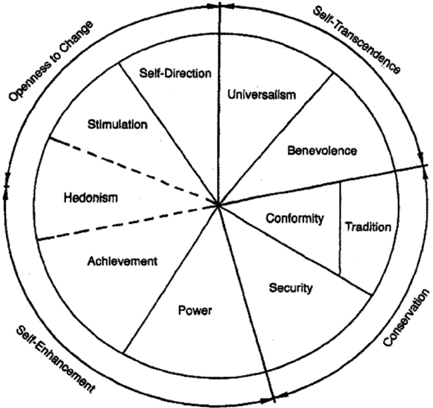
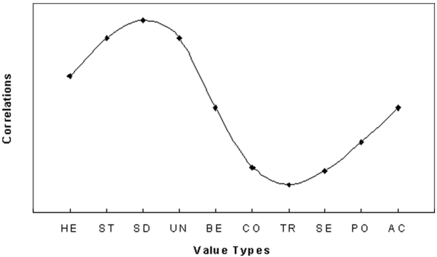
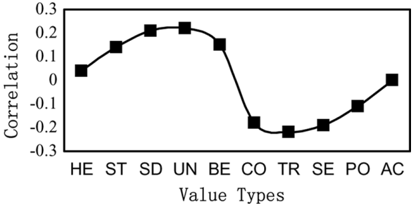
Does extrinsic motivation inhibit or foster creativity? Whereas previous researchers examined the effects of externally controlled extrinsic motivation on creativity, we focus on the effects of self-determined extrinsic motivation arising from one's personally held core values. In this study, we present a theoretical argument which predicts that (a) creative behavior is fostered by certain value types, inhibited by other value types, and holistically related to the total integrative-dynamic pattern of value types identified by Schwartz (1994 Schwartz , S. ( 1994 ). Are there universal aspects in the structure and contents of human values? Journal of Social Issues , 50 , 19 – 45 .[Crossref], [Web of Science ®] , [Google Scholar]), and (b) creative performance is synergistically promoted by the interaction between the Self-Direction value type and intrinsic motivational orientation. These hypotheses were tested in a study of 248 undergraduates whose value priorities and intrinsic motivational orientation were measured by self-report and whose creative performance was assessed across multiple tasks in the verbal, artistic, and mathematical domains. All predictions were supported.
Overview
The claims and statistics of this paper haven’t been checked yet.
Run the check — free, no account needed. It reads the open-access text and checks the sources it cites.
Integrity signals
Registry
Cites
Statistics
Figures
Verification
Claims the paper makes
The claims and statistics of this paper haven’t been checked yet.
Run the check — free, no account needed. It reads the open-access text and checks the sources it cites.
Claims other papers make about this one
Each is checked against this paper’s own text: does it say what the citing paper says it does?
The cited source says what the claim attributes to it.
In the citing paper
“Schwartz's (1992) self-direction value was positively related to creativity (Dollinger, Burke, & Gump, 2007; Kasof, Chen, Himsel, & Greenberger, 2007).”
From Creativity: The Influence of Cultural, Social, and Work Contexts (2010) · cites this paper as Kasof, Chen, Himsel, & Greenberger, 2007
The cited source says what the claim attributes to it.
In the citing paper
“In contrast, the values of tradition, security, and conformity were negatively related to creativity (Dollinger et al., 2007; Kasof et al., 2007).”
From Creativity: The Influence of Cultural, Social, and Work Contexts (2010) · cites this paper as Kasof et al., 2007
Self-check
Percentages, sums and reported differences re-computed from the paper’s own numbers.
The self-check needs the paper’s full text.
Citations
Cites
(1973) · DigitalGeorgetown (Georgetown University Library) · Cited by 10,144
Are There Universal Aspects in the Structure and Contents of Human Values?
Schwartz, S. H. (1994) · Journal of Social Issues · doi:10.1111/j.1540-4560.1994.tb01196.x · Cited by 6,122 · cited 6×
“Schwartz (1994) further argued that value types differ in their degree of compatibility with other value types.”
BackgroundMethodInfluentialMeasurement and Control of Response Bias
Paulhus, D. L. (1991) · Elsevier eBooks · doi:10.1016/b978-0-12-590241-0.50006-x · Cited by 3,867 · cited 1×
“We used the 20-item Impression Management Scale (Paulhus, 1991) rather than the Crowne-Marlowe Scale because the latter actually measures approval motivation rather than response bias (Paulhus).”
MethodThe Social Psychology of Creativity
Amabile, T. M. (1983) · Springer eBooks · doi:10.1007/978-1-4612-5533-8 · Cited by 3,183
The pervasive effects of family on entrepreneurship: toward a family embeddedness perspective
Aldrich, H. E., & Cliff, J. E. (2003) · Journal of Business Venturing · doi:10.1016/s0883-9026(03)00011-9 · Cited by 2,802
Further Examining the American Dream: Differential Correlates of Intrinsic and Extrinsic Goals
Kasser, T., & Ryan, R. M. (1996) · Personality and Social Psychology Bulletin · doi:10.1177/0146167296223006 · Cited by 2,745 · cited 2×
“(This may explain why narcissistic individuals, who highly value public recognition of competitive success, Kasser & Ryan, 1996, behave more creatively when anticipating public social comparison but not when anticipating private social comparison, Wallace & Baumeister, 2002.)”
BackgroundA motivational approach to self: integration in personality.
Deci, E. L., & Ryan, R. M. (1990) · PubMed · Cited by 2,718
Goal striving, need satisfaction, and longitudinal well-being: The self-concordance model
Sheldon, K. M., & Elliot, A. J. (1999) · Journal of Personality and Social Psychology · doi:10.1037/0022-3514.76.3.482 · Cited by 2,541 · cited 2×
“…with personal values (Sansone & Smith, 2000) and operationalized with participants’ assessments of the importance, value, or degree of fit with one’s values of various goals, strivings, or other endeavors (e.g., Koestner et al., 2002; Sheldon & Elliot, 1998, 1999; Sheldon & Houser-Marko, 2001).”
BackgroundA Meta-Analysis of Personality in Scientific and Artistic Creativity
Feist, G. J. (1998) · Personality and Social Psychology Review · doi:10.1207/s15327957pspr0204_5 · Cited by 2,180 · cited 1×
“Additionally, creative behavior is encouraged by attributes that are expressed in the values of independence, autonomy, and curiosity (Feist, 1998; Ochse, 1990).”
BackgroundA structural equation test of the value-attitude-behavior hierarchy.
Homer, P., & Kahle, L. (1988) · Journal of Personality and Social Psychology · doi:10.1037/0022-3514.54.4.638 · Cited by 2,041 · cited 1×
“106 Creativity Research Journal Second, by influencing one’s evaluations of activities and their expected consequences, one’s value priorities help determine, respectively, one’s level of intrinsic motivation and external motivation for doing activities (Feather, 1995; Homer & Kahle, 1988).”
BackgroundThe Work Preference Inventory: Assessing intrinsic and extrinsic motivational orientations.
Amabile, T. M., Hemphill, S. A., Hennessey, B. A., & Tighe, E. M. (1994) · Journal of Personality and Social Psychology · doi:10.1037/0022-3514.66.5.950 · Cited by 1,892
Creativity, divergent thinking, and openness to experience.
McCrae, R. R. (1987) · Journal of Personality and Social Psychology · doi:10.1037/0022-3514.52.6.1258 · Cited by 1,768 · cited 2×
“…values and variables conceptually similar to creativity, the ‘‘values’’ facet of Openness to Experience correlated positively with divergent thinking (McCrae, 1987) and values were not consistently related to assessments of product quality and originality on vocational tasks (Mumford et al.,…”
BackgroundEvaluating the structure of human values with confirmatory factor analysis
Schwartz, S. H., & Boehnke, K. (2003) · Journal of Research in Personality · doi:10.1016/s0092-6566(03)00069-2 · Cited by 1,168 · cited 2×
“) This model of the structure of human values has been supported in analyses of thousands of participants in various cultural groups (Schwartz & Boehnke, 2004 ).”
BackgroundMethodAmabile, T. M. (1993) · Human Resource Management Review · doi:10.1016/1053-4822(93)90012-s · Cited by 1,150 · cited 1×
“This hypothesis bears resemblance to Amabile's ( 1993 1997 ) motivational synergy hypothesis.”
MethodA Rose by Any Name? The Values Construct
Rohan, M. J. (2000) · Personality and Social Psychology Review · doi:10.1207/s15327957pspr0403_4 · Cited by 1,129 · cited 2×
“1 Values are defined as stable beliefs about the relative importance of desirable transsituational goals/ideals, functioning as general principles guiding evaluations, decisions, and behavior and operationalized with participants' assessments of the importance of various qualities/ideals (Braithwaite & Scott, 1991 ; R…”
BackgroundHow motives, skills, and values determine what people do.
McClelland, D. C. (1985) · American Psychologist · doi:10.1037/0003-066x.40.7.812 · Cited by 965 · cited 1×
“Such an outcome is consistent with McClelland's ( 1985 ) suggestion that values (indicating explicit self-attributed motivation) predict relevant behavior more strongly when such behavior is measured explicitly.”
ResultFeather, N. T. (1995) · Journal of Personality and Social Psychology · doi:10.1037/0022-3514.68.6.1135 · Cited by 792 · cited 4×
“Although this hypothesized pattern of associations between creative behavior and value types was never before tested with creative behavior, it is consistent with Feather’s (1995) findings concerning attitudes and choices related to creativity.”
BackgroundResultInfluentialMotivation and creativity: Effects of motivational orientation on creative writers.
Amabile, T. M. (1985) · Journal of Personality and Social Psychology · doi:10.1037/0022-3514.48.2.393 · Cited by 758 · cited 2×
“As in previous research by other investigators (e.g., Amabile, 1985; Cheek & Stahl, 1986; Ruscio, Whitney, & Amabile, 1998), participants were assigned the first line of each poem.”
ResultSchwartz, S. H. (2002) · Psicodebate · doi:10.18682/pd.v2i0.514 · Cited by 704
The performance of narcissists rises and falls with perceived opportunity for glory.
Wallace, H. M., & Baumeister, R. F. (2002) · Journal of Personality and Social Psychology · doi:10.1037/0022-3514.82.5.819 · Cited by 678 · cited 2×
“(This may explain why narcissistic individuals, who highly value public recognition of competitive success, Kasser & Ryan, 1996, behave more creatively when anticipating public social comparison but not when anticipating private social comparison, Wallace & Baumeister, 2002.)”
BackgroundKoestner, R., Ryan, R. M., Bernieri, F., & Holt, K. (1984) · Journal of Personality · doi:10.1111/j.1467-6494.1984.tb00879.x · Cited by 669 · cited 1×
“Since then, many studies have examined the hypothesis that intrinsic motivation is conducive to creativity, and these studies have been largely supportive (eg, Koestner, Ryan, Bernieri, & Holt, 1984 ; Kruglanski, Friedman, & Zeevi, 1971 ; for a review, see Amabile, 1996 ).”
BackgroundSelf-concordance, goal attainment, and the pursuit of happiness: Can there be an upward spiral?
Sheldon, K. M., & Houser-Marko, L. (2001) · Journal of Personality and Social Psychology · doi:10.1037/0022-3514.80.1.152 · Cited by 663 · cited 1×
“Identified motivation has been equated with personal values (Sansone & Smith, 2000) and operationalized with participants' assessments of the importance, value, or degree of fit with one's values of various goals, strivings, or other endeavors (eg, Koestner et al, 2002 ; Sheldon & Elliot, 1998, 1999 ; Sheldon & Houser…”
BackgroundHuman values and the emergence of a sustainable consumption pattern: A panel study
Thøgersen, J. B., & Ölander, F. (2002) · Journal of Economic Psychology · doi:10.1016/s0167-4870(02)00120-4 · Cited by 647
Values and religiosity: a meta-analysis of studies using Schwartz’s model
Saroglou, V., Delpierre, V., & Dernelle, R. (2003) · Personality and Individual Differences · doi:10.1016/j.paid.2003.10.005 · Cited by 637 · cited 1×
“The predicted wavelike pattern has been confirmed in studies of electoral, religious, and intergroup behaviors (Saroglou et al., 2004; Schwartz, 1996).”
BackgroundEffects of productivity goals, creativity goals, and personal discretion on individual creativity.
Shalley, C. E. (1991) · Journal of Applied Psychology · doi:10.1037/0021-9010.76.2.179 · Cited by 632
Transformational Leadership, Conservation, and Creativity: Evidence From Korea
(2003) · Academy of Management Journal · doi:10.5465/30040662 · Cited by 589 · cited 1×
“Shin and Zhou (2003) measured the values of tradition, conformity, and security among employees at Korean R&D companies and reported that such values did not correlate with supervisor ratings of dispositional creativity.2 Although important, previous studies of values and creativity are difficult…”
BackgroundInglehart, R., Basáñez, M. E., & Moreno, A. (1998) · University of Michigan Press eBooks · doi:10.3998/mpub.14858 · Cited by 553
Attaining personal goals: Self-concordance plus implementation intentions equals success.
Koestner, R., Lekes, N., Powers, T. A., & Chicoine, E. (2002) · Journal of Personality and Social Psychology · doi:10.1037/0022-3514.83.1.231 · Cited by 526 · cited 2×
“…with personal values (Sansone & Smith, 2000) and operationalized with participants’ assessments of the importance, value, or degree of fit with one’s values of various goals, strivings, or other endeavors (e.g., Koestner et al., 2002; Sheldon & Elliot, 1998, 1999; Sheldon & Houser-Marko, 2001).”
BackgroundCollins, M. A., & Amabile, T. M. (1998) · Cambridge University Press eBooks · doi:10.1017/cbo9780511807916.017 · Cited by 520 · cited 1×
“The issue of whether extrinsic motivation prevents or promotes creativity has sparked intense debate, which has not yet been fully resolved (Collins & Amabile, 1999; Eisenberger & Shanock, 2003).”
BackgroundGhiselin, B. (1955) · Cited by 518
Bettman, J. R., & Sujan, M. (1987) · Journal of Consumer Research · doi:10.1086/209102 · Cited by 515 · cited 1×
“In future research, causal direction could be experimentally controlled by measuring creative behavior after inducing states of heightened importance for creativity versus other values (Bettman & Sujan, 1987 ).”
BackgroundContemporary Approaches to Creative Thinking.
Lunsky, L. L. (1963) · Archives of Internal Medicine · doi:10.1001/archinte.1963.03860020198043 · Cited by 502
Entrepreneurial Creativity Through Motivational Synergy
Amabile, T. M. (1997) · The Journal of Creative Behavior · doi:10.1002/j.2162-6057.1997.tb00778.x · Cited by 490 · cited 1×
“…a multiplicative interaction, Amabile explicitly hypothesized that informational=enabling extrinsic motivation should ‘‘add’’ to intrinsic motivation (Amabile, 1997, p. 22) and described her prediction of motivational synergy as ‘‘an additive effect of intrinsic and extrinsic motivation’’…”
BackgroundTalent and its development: An emergenic and epigenetic model.
Simonton, D. K. (1999) · Psychological Review · doi:10.1037/0033-295x.106.3.435 · Cited by 483 · cited 1×
“The making of a creative product may be considered a multiplicative task, because it generally consists of multiple subtasks that are each necessary but insufficient for successful creativity (Loehle, 1994; Simonton, 2000; Sternberg & Lubart, 1995).”
BackgroundIncremental effects of reward on creativity.
Eisenberger, R., & Rhoades, L. (2001) · Journal of Personality and Social Psychology · doi:10.1037/0022-3514.81.4.728 · Cited by 443 · cited 1×
“…yielded mixed results, some researchers claiming negative effects of extrinsic motivation on creativity (e.g., Amabile, 1985), other researchers claiming positive effects (e.g., Boice, 1983; Eisenberger & Rhoades, 2001), and still others reporting mixed effects (Baer, Oldham, & Cummings, 2003).”
ResultNye, F. I., & Kohn, M. L. (1970) · Journal of Marriage and the Family · doi:10.2307/350141 · Cited by 421 · cited 1×
“If the present results generalize to individuals who are less highly educated, then values should be related to creative behavior more strongly in a more representative sample because college students generally place higher priority on the value types that facilitated creative behavior and lower priority on those that…”
ResultEisenberger, R., & Shanock, L. R. (2003) · Creativity Research Journal · doi:10.1080/10400419.2003.9651404 · Cited by 396 · cited 2×
“The issue of whether extrinsic motivation prevents or promotes creativity has sparked intense debate, which has not yet been fully resolved (Collins & Amabile, 1999; Eisenberger & Shanock, 2003 ).”
BackgroundThe effects of extrinsic incentive on some qualitative aspects of task performance1
Kruglanski, A. W., Friedman, I., & Zeevi, G. (1971) · Journal of Personality · doi:10.1111/j.1467-6494.1971.tb00066.x · Cited by 366
Rewarding creativity: when does it really matter?
Baer, M., Oldham, G. R., & Cummings, A. (2003) · The Leadership Quarterly · doi:10.1016/s1048-9843(03)00052-3 · Cited by 352
Creativity and personal freedom
Barron, F. (1963) · Cited by 324
Āllport, G. W., Vernon, P. E., & Lindzey, G. E. (1960) · Medical Entomology and Zoology · Cited by 309
Value priorities and social desirability: Much substance, some style
Schwartz, S. H., Verkasalo, M., Antonovsky, A., & Sagiv, L. (1997) · British Journal of Social Psychology · doi:10.1111/j.2044-8309.1997.tb01115.x · Cited by 299 · cited 2×
“We used the 20-item Impression Management Scale (Paulhus, 1991) rather than the Crowne-Marlowe Scale because the latter actually measures approval motivation rather than response bias (Paulhus).”
MethodThe self-serving bias in relational context.
Sedikides, C., Campbell, W. K., Reeder, G. D., & Elliot, A. J. (1998) · Journal of Personality and Social Psychology · doi:10.1037/0022-3514.74.2.378 · Cited by 297 · cited 1×
“However, the possibility that participants' creative performance in our study influenced their values ratings does not provide a plausible explanation of the present results, for several reasons: (a) Participants created original products after they had already indicated their value priorities; (b) correlations of cre…”
ResultIdentified and introjected forms of political internalization: Extending self-determination theory.
Koestner, R., Losier, G. F., Vallerand, R. J., & Carducci, D. (1996) · Journal of Personality and Social Psychology · doi:10.1037//0022-3514.70.5.1025 · Cited by 294 · cited 1×
“First, many studies have revealed that identified motivation predicted various behaviors more strongly than did any other type of motivation, including intrinsic motivation (Koestner, Losier, Vallerand, & Carducci, 1996 ; Losier & Koestner, 1999 ; Losier, Perreault, Koestner, & Vallerand, 2001 ; Sheldon & Elliot, 1998…”
BackgroundHarrington, D. M. (1975) · Journal of Personality · doi:10.1111/j.1467-6494.1975.tb00715.x · Cited by 268 · cited 2×
“Relative to standard instructions, explicit creativity instructions have been found to increase the strength of correlations between traits and creative behavior (e.g., Chen, Kasof, Himsel, Dmitrieva, Dong, & Xue, 2005; Harrington, 1975; Katz & Poag, 1979) and stimulate creativity more strongly in individuals who are…”
BackgroundExplaining Creativity: The Attributional Perspective
Kasof, J. (1995) · Creativity Research Journal · doi:10.1207/s15326934crj0804_1 · Cited by 266 · cited 3×
“Similarly, prioritizing Self-Direction values far above all else may increase an aspiring scientist’s motivation to do highly original work, but if it leads to excessive rejection of the field’s norms, conventions, and traditions, the aspiring scientist may face major difficulties in securing a foothold in the social…”
BackgroundInfluentialSelf-citationConformity and creative thinking.
Crutchfield, R. (1962) · Atherton Press eBooks · doi:10.1037/13117-004 · Cited by 225 · cited 1×
“Nearly 50 years ago, Crutchfield (1961, 1962) proposed that creative thinking is facilitated by intrinsic motivation and inhibited by extrinsic motivation.”
BackgroundIn search of human effectiveness
MacKinnon, D. W. (1978) · Medical Entomology and Zoology · Cited by 219
Looking Inside the Fishbowl of Creativity: Verbal and Behavioral Predictors of Creative Performance
Ruscio, J., Whitney, D., & Amabile, T. M. (1998) · Creativity Research Journal · doi:10.1207/s15326934crj1103_4 · Cited by 205 · cited 1×
“As in previous research by other investigators (eg, Amabile, 1985 ; Cheek & Stahl, 1986 ; Ruscio, Whitney, & Amabile, 1998 ), participants were assigned the first line of each poem.”
ResultWomen mathematicians and the creative personality.
Helson, R. (1971) · Journal of Consulting and Clinical Psychology · doi:10.1037/h0030728 · Cited by 178 · cited 2×
“…correlated negatively with the Q-sort item ‘‘favors conservative values’’ and correlated positively with the items ‘‘values own independence and autonomy’’ and ‘‘values intellectual and cognitive matters’’ (Barron, 1968; Helson, 1971; MacKinnon, 1978; also see Helson, Roberts, & Agronick, 1995).”
BackgroundValues and work environment: Mapping 32 occupations
Knafo‐Noam, A., & Sagiv, L. (2004) · European Journal of Psychology of Education · doi:10.1007/bf03173223 · Cited by 176 · cited 2×
“Creativity-relevant values appear to motivate selection of situations conducive to creative behavior (e.g., careers, academic majors, specializations; Knafo & Sagiv, 2004; Sagiv, 2002; Scott, 1965; also see Getzels & Csikszentmihalyi, 1976, p. 50).”
BackgroundVocational Interests and Basic Values
Sagiv, L. (2002) · Journal of Career Assessment · doi:10.1177/1069072702010002007 · Cited by 161 · cited 2×
“Creativity-relevant values appear to motivate selection of situations conducive to creative behavior (e.g., careers, academic majors, specializations; Knafo & Sagiv, 2004; Sagiv, 2002; Scott, 1965; also see Getzels & Csikszentmihalyi, 1976, p. 50).”
BackgroundA goal-affect analysis of everyday situational choices
Emmons, R. A., & Diener, E. (1986) · Journal of Research in Personality · doi:10.1016/0092-6566(86)90137-6 · Cited by 161 · cited 2×
“In general, for traits that motivate the preferential selection of situations conducive to trait-expressive behavior, traits predict trait-expressive behavior less strongly in externally imposed situations than self-selected situations (Emmons & Diener, 1986 ; Feather, 1995 ; Snyder, 1983).”
BackgroundChange and Stability in American Value Systems, 1968-1971
Rokeach, M. (1974) · Public Opinion Quarterly · doi:10.1086/268153 · Cited by 138 · cited 1×
“Indeed, when a value survey was administered to large representative samples of American adults in 1968 and 1971, creativity was last-ranked among the survey’s 36 values (Rokeach, 1974).”
BackgroundBoundless Creativity: Evidence for the Domain Generality of Individual Differences in Creativity
Chen, C., Himsel, A. J., Kasof, J., Greenberger, E., & Dmitrieva, J. (2006) · The Journal of Creative Behavior · doi:10.1002/j.2162-6057.2006.tb01272.x · Cited by 134 · cited 1×
“(For further details of these analyses, see Chen et al., 2006.)”
MethodSelf-citationMathematicians: The creative researcher and the average PhD.
Helson, R., & Crutchfield, R. S. (1970) · Journal of Consulting and Clinical Psychology · doi:10.1037/h0029003 · Cited by 130 · cited 2×
“The two IPAR studies in which values were measured with Creativity Research Journal 107 Allport, Vernon, and Lindzey’s (1951) Study of Values questionnaire yielded conflicting, and mostly insignificant, results (Helson & Crutchfield, 1970; MacKinnon, 1962).”
MethodResultCreativity in Drawings of Geometric Shapes
Chen, C., Kasof, J., Himsel, A. J., Greenberger, E., Dong, Q., & Xue, G. (2002) · Journal of Cross-Cultural Psychology · doi:10.1177/0022022102033002004 · Cited by 118
Self-citationEnduringness and change in creative personality and the prediction of occupational creativity.
Helson, R., Roberts, B. W., & Agronick, G. S. (1995) · Journal of Personality and Social Psychology · doi:10.1037//0022-3514.69.6.1173 · Cited by 98
Braithwaite, V. A., & Scott, W. A. (1991) · Elsevier eBooks · doi:10.1016/b978-0-12-590241-0.50016-2 · Cited by 95 · cited 2×
“…beliefs about the relative importance of desirable transsituational goals=ideals, functioning as general principles guiding evaluations, decisions, and behavior and operationalized with participants’ assessments of the importance of various qualities=ideals (Braithwaite & Scott, 1991; Rohan, 2000).”
BackgroundEnduringness and change in creative personality and the prediction of occupational creativity.
Helson, R., Roberts, B. W., & Agronick, G. S. (1995) · Journal of Personality and Social Psychology · doi:10.1037/0022-3514.69.6.1173 · Cited by 94 · cited 1×
“In Chen, Himsel, Kasof, Greenberger, and Dmitrieva’s (2006) analyses of the 158 participants who received each of the creativity tasks, principal component factor analyses with varimax rotations accounted for nearly 60% of the variance in each instructional condition and revealed three factors that correspond to the t…”
Value self-confrontation as a method to aid in weight loss.
Schwartz, S. H., & Inbar-Saban, N. (1988) · Journal of Personality and Social Psychology · doi:10.1037/0022-3514.54.3.396 · Cited by 87 · cited 2×
“Although personal value systems are relatively stable dispositions, research has demonstrated that at least some value priorities can be deliberately altered by various methods (eg, Ball-Rokeach, Rokeach, & Grube, 1984 ; Schwartz & Inbar-Saban, 1988 ).”
BackgroundEffects of Explicit Instruction to “Be Creative” Across Domains and Cultures
Chen, C., Kasof, J., Himsel, A. J., Dmitrieva, J., Dong, Q., & Xue, G. (2005) · The Journal of Creative Behavior · doi:10.1002/j.2162-6057.2005.tb01252.x · Cited by 86 · cited 1×
“(For more details about the instructional conditions and their effects, see Chen et al., 2005.)”
BackgroundSelf-citationLosier, G. F., & Koestner, R. (1999) · Personality and Social Psychology Bulletin · doi:10.1177/0146167299025003002 · Cited by 80 · cited 2×
“…have revealed that identified motivation predicted various behaviors more strongly than did any other type of motivation, including intrinsic motivation (Koestner, Losier, Vallerand, & Carducci, 1996; Losier & Koestner, 1999; Losier, Perreault, Koestner, & Vallerand, 2001; Sheldon & Elliot, 1998).”
BackgroundArtistic creation as stimulated by superimposed versus separated visual images.
Sobel, R. S., & Rothenberg, A. (1980) · Journal of Personality and Social Psychology · doi:10.1037//0022-3514.39.5.953 · Cited by 71 · cited 2×
“The drawing task was adapted from tasks used in many previous creativity studies (e.g., Chen, Kasof, Himsel, Greenberger, Dong, & Xue, 2002; Getzels & Cskszentmihalyi, 1976; Sobel & Rothenberg, 1980; Sternberg & Lubart, 1995).”
MethodCheek, J. M., & Stahl, S. S. (1986) · Journal of Research in Personality · doi:10.1016/0092-6566(86)90108-x · Cited by 70 · cited 2×
“As in previous research by other investigators (e.g., Amabile, 1985; Cheek & Stahl, 1986; Ruscio, Whitney, & Amabile, 1998), participants were assigned the first line of each poem.”
ResultLosier, G. F., Perreault, S., Koestner, R., & Vallerand, R. J. (2001) · Journal of Research in Personality · doi:10.1006/jrpe.2000.2300 · Cited by 58 · cited 1×
“First, many studies have revealed that identified motivation predicted various behaviors more strongly than did any other type of motivation, including intrinsic motivation (Koestner, Losier, Vallerand, & Carducci, 1996 ; Losier & Koestner, 1999 ; Losier, Perreault, Koestner, & Vallerand, 2001 ; Sheldon & Elliot, 1998…”
BackgroundMathematical Creativity in Schoolchildren
Haylock, D. W. (1987) · The Journal of Creative Behavior · doi:10.1002/j.2162-6057.1987.tb00452.x · Cited by 47 · cited 3×
“To assess mathematical creativity, simple objective coding schemes were developed based on Haylock (1987).”
MethodInfluentialThe Journal of Creative Behavior
(1966) · The Journal of Applied Behavioral Science · doi:10.1177/002188636600200406 · Cited by 43
Sex differences in instructions to “be creative” on divergent and nondivergent test scores
Katz, A. N., & Poag, J. R. (1979) · Journal of Personality · doi:10.1111/j.1467-6494.1979.tb00630.x · Cited by 39 · cited 2×
“…been found to increase the strength of correlations between traits and creative behavior (e.g., Chen, Kasof, Himsel, Dmitrieva, Dong, & Xue, 2005; Harrington, 1975; Katz & Poag, 1979) and stimulate creativity more strongly in individuals who are more creative in their occupations (Datta, 1963).”
BackgroundMumford, M. D., Connelly, M. S., Helton-Fauth, W. B., Doorn, J. R. V., & Osburn, H. K. (2002) · Journal of Vocational Behavior · doi:10.1006/jvbe.2001.1860 · Cited by 38 · cited 2×
“…values and variables conceptually similar to creativity, the ‘‘values’’ facet of Openness to Experience correlated positively with divergent thinking (McCrae, 1987) and values were not consistently related to assessments of product quality and originality on vocational tasks (Mumford et al., 2002).”
BackgroundBoice, R. (1983) · Behaviour Research and Therapy · doi:10.1016/0005-7967(83)90045-1 · Cited by 35 · cited 2×
“Third, research on creative writers has produced the counterintuitive finding that ‘‘creative inspiration is more likely to follow, than precede, productivity’’ (Boice, 1983, p. 542), particularly when the antecedent productivity is motivated by one’s own values.”
BackgroundResultNarrative and Paradigmatic Thinking Styles in Creative Writing and Journalism Students
Kaufman, J. C. (2002) · The Journal of Creative Behavior · doi:10.1002/j.2162-6057.2002.tb01064.x · Cited by 32 · cited 1×
“Consistent with research on state intrinsic motivation, the trait of IMO correlates positively with creative behavior (Amabile et al., 1994; Kaufman, 2002).”
BackgroundWhich is more Productive, Writing in Binge Patterns of Creative Illness or in Moderation?
Boice, B. (1997) · Written Communication · doi:10.1177/0741088397014004001 · Cited by 26 · cited 1×
“…submitted fewer manuscripts for publication, and reported greater procrastination than did writers who typically began writing before they wanted to and wrote in regular sessions they had scheduled, apparently motivated by an internal sense of the importance of their work (Boice, 1997).”
BackgroundTest Instructions and Identification of Creative Scientific Talent
Datta, L. (1963) · Psychological Reports · doi:10.2466/pr0.1963.13.2.495 · Cited by 21 · cited 2×
“, Chen, Kasof, Himsel, Dmitrieva, Dong, & Xue, 2005; Harrington, 1975; Katz & Poag, 1979) and stimulate creativity more strongly in individuals who are more creative in their occupations (Datta, 1963).”
BackgroundA Critical Path Analysis of Scientific Productivity
Loehle, C. (1994) · The Journal of Creative Behavior · doi:10.1002/j.2162-6057.1994.tb00718.x · Cited by 16 · cited 1×
“The making of a creative product may be considered a multiplicative task, because it generally consists of multiple subtasks that are each necessary but insufficient for successful creativity (Loehle, 1994; Simonton, 2000; Sternberg & Lubart, 1995).”
BackgroundThe Great American Values Test
Ball‐Rokeach, S. J., Rokeach, M., & and Grube, J. W. (1984) · DigitalGeorgetown (Georgetown University Library) · Cited by 13
Steinkraus, W. E. (1985) · BRILL eBooks · doi:10.1163/9789004455511_006 · Cited by 2 · cited 1×
“…the work of creativity with such terms as ‘‘toil,’’ ‘‘painstaking,’’ ‘‘laborious,’’ ‘‘painful effort,’’ ‘‘serious hard work,’’ ‘‘like going to the dentist,’’ and ‘‘Hell on Earth’’ (Ghiselin, 1952, pp. 117, 118; Plimpton, 1999, pp. 61, 249; Steinkraus, 1985; Webb, 1998, p. 2; Zollo, 2003, p. 332).”
Research works printed but not linked: 17
- Amabile , T. ( 1996 ). Creativity in context . Boulder , CO : Westview Press .
- Crutchfield , R. ( 1961 ). The creative process . In Proceedings of the Conference on “The Creative Person” (pp. VI-1 – VI-16 ). Lake Tahoe , CA : University of California Alumni Center .
- Csikszentmihalyi , M. ( 1996 ). Creativity . New York : Harper Perennial .
- De Cook , L. ( 1972 ). Ansel Adams . Boston , MA : Little, Brown .
- Getzels , J. , & Csikszentmihalyi , M. ( 1976 ). The creative vision . New York : John Wiley .
- Koestner , R. , & Losier , G. ( 2002 ). Distinguishing three ways of being internally motivated: A closer look at introjection, identification, and intrinsic motivation . In E. Deci & R. Ryan (Eds.), Handbook of self-determination (pp. XX – XX ). Rochester , NY : University of Rochester Press .
- 10.1037/0022-3514.70.5.1025 · DOI
- MacKinnon , D. ( 1962 ). The personality correlates of creativity: A study of American architects . In G. Nielsen (Ed.), Proceedings of the 14th International Congress of Applied Psychology ( Vol. 2 , pp. 11 – 39 ). Copenhagen : Munksgaard .
- Ochse , R. ( 1990 ). Before the gates of excellence . New York : Cambridge University Press .
- Plimpton , G. (Ed). (1999). The writer's chapbook . New York : Modern Library.
- Pryor , J. , Hurtado , S. , Saenz , V. , Londholm , J. , Korn , W. , & Mahoney , K. ( 2006 ). The American freshman . Los Angeles : UCLA Higher Education Research Institute .
- Schwartz , S. ( 1996 ). Value priorities and behavior: Applying a theory of integrated value systems . In C. Seligman , J. Olson , & M. Zanna (Eds.), The psychology of values: The Ontario symposium ( Vol. 8 , pp. 1 – 24 ). Mahwah , NJ : Lawrence Erlbaum Associates, Inc.
- Scott , W. ( 1965 ). Values and organizations . Chicago : Rand McNally .
- 10.1037/0022-3514.39.5.953 · DOI
- Uelsmann , J. ( 1992 ). Photo synthesis . Gainesville , FL : University Press of Florida .
- Webb , J. ( 1998 ). Tunesmith . New York : Hyperion .
- Zollo , P. ( 2003 ). Songwriters on songwriting . Cambridge , MA : Da Capo.
Cited by
Sorted by citations
Beyond the Glass Ceiling: Does Gender Matter?
Adams, R. B., & Funk, P. (2011) · Management Science · doi:10.1287/mnsc.1110.1452 · Cited by 1,552
Personal Values Across Cultures
Sagiv, L., & Schwartz, S. H. (2021) · Annual Review of Psychology · doi:10.1146/annurev-psych-020821-125100 · Cited by 449
Shareholders and stakeholders: How do directors decide?
Adams, R. B., Licht, A. N., & Sagiv, L. (2011) · Strategic Management Journal · doi:10.1002/smj.940 · Cited by 412
“For example, evidence suggests that values are related to creativity (Dollinger, Burke, and Gump, 2007; Kasof et al., 2007), reactions to organizational change (Sverdlik and Oreg, 2009), cooperation versus competition in social dilemmas (Sagiv, Sverdlik, and Schwarz, 2011) and conflict resolution style (Morris et al.”
Beyond New and Appropriate: Who Decides What Is Creative?
Kaufman, J. C., & Baer, J. (2012) · Creativity Research Journal · doi:10.1080/10400419.2012.649237 · Cited by 337
“As a result, some researchers have been tempted to use nonexperts as judges of creativity—novices, such as college students with no other qualifications than a desire to earn research participation credit in Introductory Psychology (eg, Baer, 1996 ; Chen, Himsel, Kasof, Greenberger, & Dmitreiva, 2006; Joussemet & Koes…”
BackgroundSmall Business Owners' Success Criteria, a Values Approach to Personal Differences
Gorgievski, M. J., Ascalon, M. E., & Stephan, U. (2011) · Journal of Small Business Management · doi:10.1111/j.1540-627x.2011.00322.x · Cited by 329
Metadata
- Authors
- Kasof, J., Chen, C., Himsel, A., & Greenberger, E.
- Affiliations
- University of California, Irvine (US)
- Corresponding author
- Kasof, Joseph
- ORCID
- Chen, Chuansheng
- Venue
- Creativity Research Journal
- Publisher
- Informa UK Limited
- Published
- 2007-07-20
- Volume
- 19
- Issue
- 2-3
- Pages
- 105-122
- ISSN
- 1040-0419 (ISSN-L)
- 1532-6934
- OpenAlex
- W2069449766
- Cited by
- 151
- References
- 84
- Citations by year
- 2026: 4 · 2025: 8 · 2024: 8 · 2023: 10 · 2022: 6 · 2021: 11 · 2020: 8 · 2019: 8 · 2018: 20 · 2017: 9 · 2016: 7 · 2015: 4 · 2014: 5 · 2013: 8 · 2012: 8
- FWCI
- 7.71
- Type
- journal article
- Language
- en
- Open access
- green
- escholarship.org
- Licence
- cc-by
- Locations
- Creativity Research Journal (publishedVersion)
- eScholarship (California Digital Library) (submittedVersion, cc-by)
- Topics
- Social Sciences › Psychology › Experimental and Cognitive Psychology › Creativity in Education and Neuroscience
- Social Sciences › Psychology › Social Psychology › Cultural Differences and Values
- Social Sciences › Psychology › Experimental and Cognitive Psychology › Psychological and Educational Research Studies
- Keywords
- creativity, extrinsic motivation, self-determination theory, core values, value types, self-direction, intrinsic motivation, creative performance
About these checks
Registry, retraction, Cites and statistics results are computed, not judged, with one exception: a printed reference that no index lists is read once by a model before it counts as a citation error. Claims are extracted by a model and kept only when their quote appears verbatim in the text; each cited source is then checked, with a model’s help, for whether it says what the claim relies on. Those verdicts can be wrong — read the claim’s quote and the cited source before relying on one.
Statistics and arithmetic are recomputed, not judged.
Confidence bands are shown only for fields calibrated on our annotated test set. None is calibrated yet, so no band is shown.
What counts as a claim ›How we measure confidence ›How we check this ›
Are you an author, or do you see a problem with this page? Request a review
