

The DOI matches its Crossref record; 34 of the 35 references it cites were found in a registry or an index.
Nose-to-brain delivery of temozolomide-loaded PLGA nanoparticles functionalized with anti-EPHA3 for glioblastoma targeting
Open accessAbstract
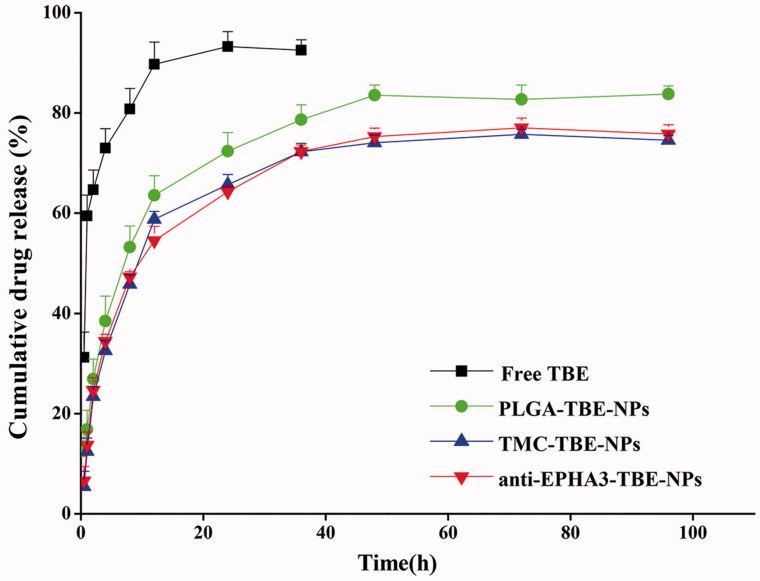
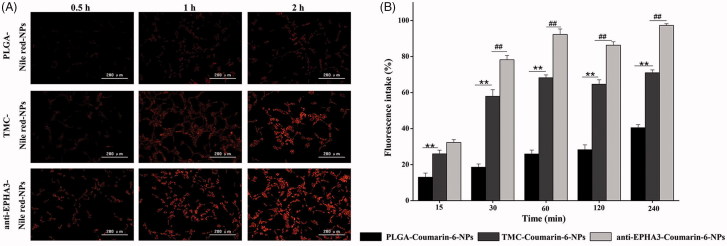
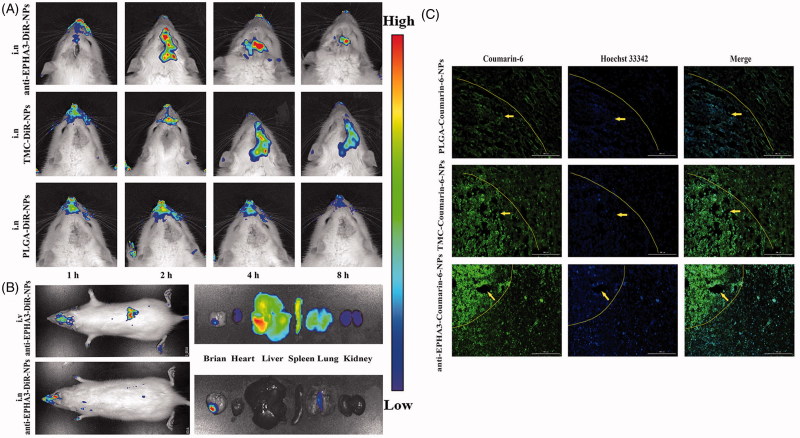
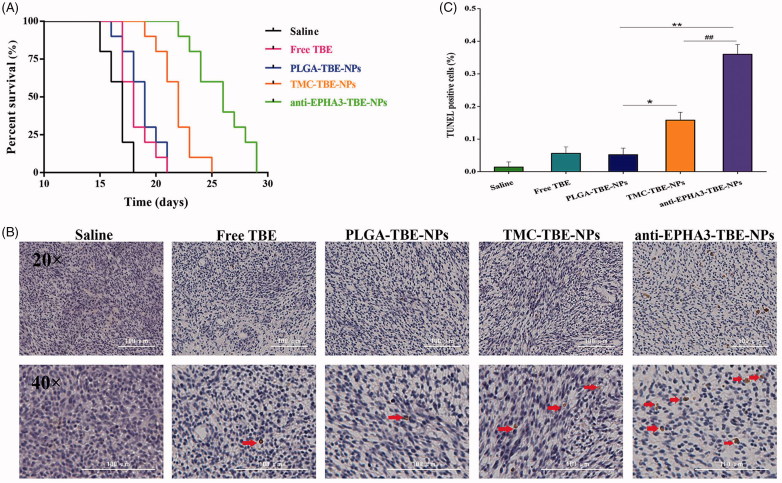
Glioblastoma is the most common malignant brain tumor. Efficient delivery of drugs targeting glioblastomas remains a challenge. Ephrin type-A receptor 3 (EPHA3) tyrosine kinase antibody-modified polylactide-co-glycolide (PLGA) nanoparticles (NPs) were developed to target glioblastoma via nose-to-brain delivery. Anti-EPHA3-modified, TBE-loaded NPs were prepared using an emulsion-solvent evaporation method, showed a sustained in vitro release profile up to 48 h and a mean particle size of 145.9 ± 8.7 nm. The cellular uptake of anti-EPHA3-modified NPs by C6 cells was significantly enhanced compared to that of nontargeting NPs (p < .01). In vivo imaging and distribution studies on the glioma-bearing rats showed that anti-EPHA3-modified NPs exhibited high fluorescence intensity in the brain and effectively accumulated to glioma tissues, indicating the targeting effect of anti-EPHA3. Glioma-bearing rats treated with anti-EPHA3-modified NPs resulted in significantly higher tumor cell apoptosis (p < .01) than that observed with other formulations and prolonged the median survival time of glioma-bearing rats to 26 days, which was 1.37-fold longer than that of PLGA NPs. The above results indicated that anti-EPHA3-modified NPs may potentially serve as a nose-to-brain drug carrier for the treatment of glioblastoma.
Overview
The claims and statistics of this paper haven’t been checked yet.
Run the check — free, no account needed. It reads the open-access text and checks the sources it cites.
Integrity signals
Registry
Cites
Statistics
Figures
Verification
Claims the paper makes
The claims and statistics of this paper haven’t been checked yet.
Run the check — free, no account needed. It reads the open-access text and checks the sources it cites.
Claims other papers make about this one
Each is checked against this paper’s own text: does it say what the citing paper says it does?
In the citing paper
“The uptake of anti-EPHA3 modified NPs in cells was significantly enhanced, and showed a higher distribution in the brain, indicating that anti-EPHA3 has a brain-targeting effect.210”
From Smart nanoparticles for cancer therapy (2023) · cites this paper as [210]
Self-check
Percentages, sums and reported differences re-computed from the paper’s own numbers.
The self-check needs the paper’s full text.
Citations
Cites
Yung, W. K. A., Albright, R. E., Olson, J., Fredericks, R., Fink, K., Prados, M. D., Brada, M., Spence, A., Hohl, R. J., Shapiro, W., et al. (2000) · British Journal of Cancer · doi:10.1054/bjoc.2000.1316 · Cited by 929 · cited 2×
“Food and Drug Administration for clinical use (Yung et al., 2000).”
BackgroundBrain drug delivery of small molecules using immunoliposomes
Huwyler, J., Wu, D., & Pardridge, W. M. (1996) · Proceedings of the National Academy of Sciences · doi:10.1073/pnas.93.24.14164 · Cited by 660
Nasal drug delivery devices: characteristics and performance in a clinical perspective—a review
Djupesland, P. G. (2013) · Drug Delivery and Translational Research · doi:10.1007/s13346-012-0108-9 · Cited by 563
Studies on the Internalization Mechanism of Cationic Cell-penetrating Peptides
Drin, G., Cottin, S. C., Blanc, E. M., Rees, A. R., & Temsamani, J. (2003) · Journal of Biological Chemistry · doi:10.1074/jbc.m303938200 · Cited by 530
Progress and perspectives on targeting nanoparticles for brain drug delivery
Gao, H. (2016) · Acta Pharmaceutica Sinica B · doi:10.1016/j.apsb.2016.05.013 · Cited by 507
Progress in brain targeting drug delivery system by nasal route
Khan, A. R., Liu, M., Khan, M. W., & Zhai, G. (2017) · Journal of Controlled Release · doi:10.1016/j.jconrel.2017.09.001 · Cited by 402
Ferritin Nanocarrier Traverses the Blood Brain Barrier and Kills Glioma
Fan, K., Jia, X., Zhou, M., Wang, K., Conde, J., He, J., Tian, J., & Yan, X. (2018) · ACS Nano · doi:10.1021/acsnano.7b06969 · Cited by 401
Self-citationRuan, S., Yuan, M., Zhang, L., Hu, G., Chen, J., Cun, X., Zhang, Q., Yang, Y., He, Q., & Gao, H. (2014) · Biomaterials · doi:10.1016/j.biomaterials.2014.10.007 · Cited by 333
Meng, Q., Wang, A., Hua, H., Jiang, Y. Y., Wang, Y., Mu, H., Wu, Z., & Sun, K. (2018) · International Journal of Nanomedicine · doi:10.2147/ijn.s151474 · Cited by 318
Self-citationAttenello, F. J., Mukherjee, D. R., Datoo, G., McGirt, M. J., Bohan, E. M., WEINGART, J. D., Olivi, A., Quiñones‐Hinojosa, A., & Brem, H. (2008) · Annals of Surgical Oncology · doi:10.1245/s10434-008-0048-2 · Cited by 245
Research works printed but not linked: 1
- Baker S, 1999, Clin Cancer Res, 5, 309
Cited by
Sorted by citations
Smart nanoparticles for cancer therapy
Sun, L., Liu, H., Ye, Y., Lei, Y., Islam, R., Tan, S., Tong, R., Miao, Y.-B., & Cai, L. (2023) · Signal Transduction and Targeted Therapy · doi:10.1038/s41392-023-01642-x · Cited by 1,073
Thirty Years of Cancer Nanomedicine: Success, Frustration, and Hope
Salvioni, L., Rizzuto, M. A., Bertolini, J. A., Pandolfi, L., Colombo, M., & Prosperi, D. (2019) · Cancers · doi:10.3390/cancers11121855 · Cited by 214
Ortíz, R., Perazzoli, G., Cabeza, L., Jiménez‐Luna, C., Luque, R., Prados, J. C., & Melguizo, C. (2020) · Current Neuropharmacology · doi:10.2174/1570159x18666200626204005 · Cited by 187
Nanotechnology-based drug delivery for central nervous system disorders
Nguyen, T. T., Nguyen, T. T. D., Vo, T. K., An, T. N. M., Nguyen, M. K., Toi, V. V., & Vo, G. V. (2021) · Biomedicine & Pharmacotherapy · doi:10.1016/j.biopha.2021.112117 · Cited by 182
Tang, S.-N., Wang, A.-P., Yan, X., Chu, L., Yang, X., Song, Y., Sun, K.-X., Yu, X., Liu, R.-X., Wu, Z., et al. (2019) · Drug Delivery · doi:10.1080/10717544.2019.1636420 · Cited by 144
Self-citationRecent expansions of novel strategies towards the drug targeting into the brain
Alexander, A., Agrawal, M., Uddin, A. N. M. S., Siddique, S., Shehata, A. M., Shaker, M. A., Rahman, S. A. U., Abdul, M. I. M., & Shaker, M. A. (2019) · International Journal of Nanomedicine · doi:10.2147/ijn.s210876 · Cited by 165
Nasal Delivery to the Brain: Harnessing Nanoparticles for Effective Drug Transport
Gandhi, S. J., Shastri, D. H., Shah, J., Nair, A. B., & Jacob, S. (2024) · Pharmaceutics · doi:10.3390/pharmaceutics16040481 · Cited by 162
Quader, S., Kataoka, K., & Cabral, H. (2022) · Advanced Drug Delivery Reviews · doi:10.1016/j.addr.2022.114115 · Cited by 146
Multifunctional Polymeric Nanoplatforms for Brain Diseases Diagnosis, Therapy and Theranostics
Shakeri, S., Ashrafizadeh, M., Zarrabi, A., Roghanian, R., Afshar, E. G., Pardakhty, A., Mohammadinejad, R., Kumar, A., & Thakur, V. K. (2020) · Biomedicines · doi:10.3390/biomedicines8010013 · Cited by 136
Bruinsmann, F. A., Vaz, G. R., Alves, A. D. C. S., Aguirre, T. A. S., Pohlmann, A. R., Guterres, S. S., & Sonvico, F. (2019) · Molecules · doi:10.3390/molecules24234312 · Cited by 123
Microemulsion-Based Media in Nose-to-Brain Drug Delivery
Froelich, A., Osmałek, T. Z., Jadach, B., Puri, V., & Michniak‐Kohn, B. B. (2021) · Pharmaceutics · doi:10.3390/pharmaceutics13020201 · Cited by 110
Polymeric Nanoparticles in Brain Cancer Therapy: A Review of Current Approaches
Caraway, C. A., Gaitsch, H., Wicks, E. E., Kalluri, A. L., Kunadi, N., & Tyler, B. (2022) · Polymers · doi:10.3390/polym14142963 · Cited by 102
Wang, L., Tang, S., Yu, Y., Lv, Y., Wang, A., Yan, X., Li, N., Sha, C., Sun, K., & Li, Y. (2021) · Molecular Pharmaceutics · doi:10.1021/acs.molpharmaceut.0c00911 · Cited by 89
Self-citationDuan, M., Cao, R., Yang, Y., Chen, X., Liu, L., Ren, B., Wang, L., & Goh, B.-C. (2024) · Cancers · doi:10.3390/cancers16193300 · Cited by 84
Temozolomide nano enabled medicine: promises made by the nanocarriers in glioblastoma therapy
Yasaswi, P. S., Shetty, K., & Yadav, K. S. (2021) · Journal of Controlled Release · doi:10.1016/j.jconrel.2021.07.003 · Cited by 87
Akel, H., Ismail, R., Katona, G., Sabir, F., Ambrus, R., & Csóka, I. (2021) · International Journal of Pharmaceutics · doi:10.1016/j.ijpharm.2021.120724 · Cited by 80
Qu, Y., Li, A., Ma, L., Iqbal, S., Sun, X., Ma, W., Li, C., Zheng, D., Xu, Z., Zhao, Z., et al. (2021) · International Journal of Pharmaceutics · doi:10.1016/j.ijpharm.2021.120250 · Cited by 74
Yu, Y., Wang, A., Wang, S., Sun, Y., Chu, L., Zhou, L., Yang, X., Liu, X., Sha, C., Sun, K., et al. (2022) · Molecular Pharmaceutics · doi:10.1021/acs.molpharmaceut.2c00083 · Cited by 72
Self-citationIntranasal Delivery of Functionalized Polymeric Nanomaterials to the Brain
Zha, S., Wong, K., & All, A. H. (2022) · Advanced Healthcare Materials · doi:10.1002/adhm.202102610 · Cited by 72
Borrajo, M. L., & Alonso, M. J. (2021) · Drug Delivery and Translational Research · doi:10.1007/s13346-021-01086-2 · Cited by 76
Patharapankal, E. J., Ajiboye, A. L., Mattern, C., & Trivedi, V. (2023) · Pharmaceutics · doi:10.3390/pharmaceutics16010066 · Cited by 75
Patel, H., Gandhi, P. A., Chaudhari, P. S., Desai, B. V., Desai, D. T., Dedhiya, P. P., Maulvi, F. A., & Vyas, B. (2021) · Journal of Drug Delivery Science and Technology · doi:10.1016/j.jddst.2021.102533 · Cited by 64
Nose-to-brain delivery: exploring newer domains for glioblastoma multiforme management
Upadhaya, P. G., Pulakkat, S., & Patravale, V. B. (2020) · Drug Delivery and Translational Research · doi:10.1007/s13346-020-00747-y · Cited by 62
Filippo, L. D. D., Azambuja, J. H., Dutra, J. A. P., Luiz, M. T., Duarte, J. L., Nicoleti, L. R., Saad, S. T. O., & Chorilli, M. (2021) · European Journal of Pharmaceutics and Biopharmaceutics · doi:10.1016/j.ejpb.2021.08.011 · Cited by 65
Chung, K., Ullah, I., Kim, N., Lim, J., Shin, J., Lee, S. C., Jeon, S., Kim, S. H., Kumar, P., & Lee, S. (2019) · Journal of drug targeting · doi:10.1080/1061186x.2019.1706095 · Cited by 63
Engineering nanomaterials for glioblastoma nanovaccination
Hameedat, F., Mendes, B. B., Conniot, J., Filippo, L. D. D., Chorilli, M., Schroeder, A., Conde, J., & Sousa, F. (2024) · Nature Reviews Materials · doi:10.1038/s41578-024-00684-z · Cited by 65
Fabrication of a Thermosensitive In Situ Gel Nanoemulsion for Nose to Brain Delivery of Temozolomide
Bayanati, M., Khosroshahi, A. G., Alvandi, M., & Mahboobian, M. M. (2021) · Journal of Nanomaterials · doi:10.1155/2021/1546798 · Cited by 57
Nose-to-Brain Targeting via Nanoemulsion: Significance and Evidence
Misra, S. K., & Pathak, K. (2023) · Colloids and Interfaces · doi:10.3390/colloids7010023 · Cited by 53
Convolutions in the rendition of nose to brain therapeutics from bench to bedside: Feats & fallacies
Goel, H., Kalra, V., Verma, S. K., Dubey, S. K., & Tiwary, A. K. (2021) · Journal of Controlled Release · doi:10.1016/j.jconrel.2021.12.009 · Cited by 56
Smiley, S. B., Yun, Y., Ayyagari, P., Shannon, H. E., Pollok, K. E., Vannier, M. W., DAS, S. K., & Veronesi, M. C. (2021) · Pharmaceutical Research · doi:10.1007/s11095-021-03050-8 · Cited by 53
Chaudhari, V. S., Gawali, B., Saha, P., Naidu, V. G. M., Murty, U. S., & Banerjee, S. (2021) · European Journal of Pharmacology · doi:10.1016/j.ejphar.2021.174400 · Cited by 49
Jatyan, R., Singh, P., Sahel, D. K., Karthik, Y., Mittal, A., & Chitkara, D. (2022) · Journal of Controlled Release · doi:10.1016/j.jconrel.2022.08.024 · Cited by 50
Drug Delivery Nanosystems in Glioblastoma Multiforme Treatment: Current State of the Art
Filippo, L. D. D., Duarte, J. L., Luiz, M. T., de Araújo, J. T. C., & Chorilli, M. (2020) · Current Neuropharmacology · doi:10.2174/1570159x18666200831160627 · Cited by 46
Antibody Drug Conjugates in Glioblastoma – Is There a Future for Them?
Parakh, S., Nicolazzo, J. A., Scott, A. M., & Gan, H. K. (2021) · Frontiers in Oncology · doi:10.3389/fonc.2021.718590 · Cited by 46
Patel, H., Chaudhari, P. S., Gandhi, P. A., Desai, B. V., Desai, D. T., Dedhiya, P. P., Vyas, B., & Maulvi, F. A. (2021) · International Journal of Pharmaceutics · doi:10.1016/j.ijpharm.2021.120474 · Cited by 47
Functionalized Nanomaterials as Tailored Theranostic Agents in Brain Imaging
Thangam, R., Paulmurugan, R., & Kang, H. (2021) · Nanomaterials · doi:10.3390/nano12010018 · Cited by 45
Nanomedicine for glioblastoma: Progress and future prospects
Khan, I., Baig, M. H., Mahfooz, S., Imran, M. A., Khan, M. I., Dong, J.-J., Choi, Y., & Hatiboğlu, M. A. (2022) · Seminars in Cancer Biology · doi:10.1016/j.semcancer.2022.06.007 · Cited by 43
Nose-to-brain drug delivery for the treatment of CNS disease: New development and strategies
Du, L., Chen, L., Liu, F., Wang, W., & Huang, H. (2023) · International review of neurobiology · doi:10.1016/bs.irn.2023.05.014 · Cited by 43
Highlights in targeted nanoparticles as a delivery strategy for glioma treatment
Luiz, M. T., Filippo, L. D. D., Tofani, L. B., de Araújo, J. T. C., Dutra, J. A. P., Marchetti, J. M., & Chorilli, M. (2021) · International Journal of Pharmaceutics · doi:10.1016/j.ijpharm.2021.120758 · Cited by 44
Nanotherapy of Glioblastoma—Where Hope Grows
Grzegorzewski, J., Michalak, M., Wołoszczuk, M., Bulicz, M., & Majchrzak‐Celińska, A. (2025) · International Journal of Molecular Sciences · doi:10.3390/ijms26051814 · Cited by 51
PLGA nanoparticles for nasal drug delivery
Alghareeb, S., Asare‐Addo, K., Conway, B. R., & Adebisi, A. O. (2024) · Journal of Drug Delivery Science and Technology · doi:10.1016/j.jddst.2024.105564 · Cited by 46
Nose‐to‐brain delivery of nanotherapeutics: Transport mechanisms and applications
Xu, K., Duan, S., Wang, W., Ouyang, Q., Qin, F., Guo, P., Hou, J., He, Z., Wei, W., & Qin, M. (2024) · Wiley Interdisciplinary Reviews Nanomedicine and Nanobiotechnology · doi:10.1002/wnan.1956 · Cited by 46
Musumeci, T., Benedetto, G. D., Carbone, C., Bonaccorso, A., Amato, G., Faro, M. J. L., Burgaletto, C., Puglisi, G., Bernardini, R., & Cantarella, G. (2022) · Biomedicines · doi:10.3390/biomedicines10050985 · Cited by 41
The role of pyruvate kinase M2 in anticancer therapeutic treatments (Review)
Su, Q., Luo, S., Tan, Q., Deng, J., Zhou, S., Peng, M., Tao, T., & Yang, X. (2019) · Oncology Letters · doi:10.3892/ol.2019.10948 · Cited by 40
Research Progress on Nanoplatforms and Nanotherapeutic Strategies in Treating Glioma
Qiao, L., Yang, H., Shao, X., Yin, Q., Fu, X., & Wei, Q. (2022) · Molecular Pharmaceutics · doi:10.1021/acs.molpharmaceut.1c00856 · Cited by 41
Wang, M., Chen, J., Li, W., Zang, F., Liu, X., & Qin, S. (2020) · Materials Science and Engineering C · doi:10.1016/j.msec.2020.111046 · Cited by 37
Smart Nanoformulations for Brain Cancer Theranostics: Challenges and Promises
Ahmad, F., Varghese, R., Panda, S., Ramamoorthy, S., Areeshi, M. Y., Fagoonee, S., & Haque, S. (2022) · Cancers · doi:10.3390/cancers14215389 · Cited by 37
Antibody Targeting of Eph Receptors in Cancer
Janes, P. W., Vail, M. E., Gan, H. K., & Scott, A. M. (2020) · Pharmaceuticals · doi:10.3390/ph13050088 · Cited by 36
Role of Nanotechnology and Their Perspectives in the Treatment of Kidney Diseases
Merlin, J. P. J., & Li, X. (2022) · Frontiers in Genetics · doi:10.3389/fgene.2021.817974 · Cited by 35
Clinical translation of nanomedicines for brain diseases: Current challenges and future directions
Wang, G., Wang, N., Xia, X., Ismail, M., & Shi, B. (2026) · Journal of Controlled Release · doi:10.1016/j.jconrel.2025.114426 · Cited by 33
van Schaik, P. E. M., Zuhorn, I. S., & Baron, W. (2022) · International Journal of Molecular Sciences · doi:10.3390/ijms23158418 · Cited by 35
Guo, T., Guo, Y., Gong, Y., Ji, J., Hao, S., Deng, J., & Wang, B. (2019) · International Journal of Pharmaceutics · doi:10.1016/j.ijpharm.2019.05.050 · Cited by 30
Zhang, C., Wang, A., Wang, H., Yan, M., Liang, R., He, X., Fu, F., Mu, H., & Sun, K. (2019) · International Journal of Pharmaceutics · doi:10.1016/j.ijpharm.2019.01.052 · Cited by 27
Self-citationNose-to-Brain Delivery of Biomimetic Nanoparticles for Glioblastoma Targeted Therapy
Ferreira, N. N., Leite, C. M., Moreno, N. S., Miranda, R. R., Lins, P. M. P., Rodero, C. F., de Oliveira, E., Lima, E. M., Reis, R. M., & Zucolotto, V. (2024) · ACS Applied Materials & Interfaces · doi:10.1021/acsami.4c16837 · Cited by 25
Kanwore, K., Kanwore, K., Adzika, G. K., Abiola, A. A., Guo, X., Kambey, P. A., Xia, Y., & Gao, D. (2022) · Frontiers in Immunology · doi:10.3389/fimmu.2022.831636 · Cited by 26
Polymeric nanoparticles for efficient nose-to-brain delivery
Bolon, M., Fieux, M., Monge, C., & Richard, S. (2025) · Nanoscale · doi:10.1039/d5nr00870k · Cited by 26
Revealing the epigenetic effect of temozolomide on glioblastoma cell lines in therapeutic conditions
Belter, A., Barciszewski, J. F., & Barciszewska, A. (2020) · PLoS ONE · doi:10.1371/journal.pone.0229534 · Cited by 25
Intranasal delivery in glioblastoma treatment: prospective molecular treatment modalities
Morales, D. E., & Mousa, S. A. (2022) · Heliyon · doi:10.1016/j.heliyon.2022.e09517 · Cited by 24
Exploring intranasal drug delivery via nanocarriers: A promising glioblastoma therapy
Deshmukh, V., Pathan, N. S., Haldar, N., Nalawade, S., Narwade, M., Gajbhiye, K. R., & Gajbhiye, V. (2024) · Colloids and Surfaces B Biointerfaces · doi:10.1016/j.colsurfb.2024.114285 · Cited by 23
Novel Receptor Tyrosine Kinase Pathway Inhibitors for Targeted Radionuclide Therapy of Glioblastoma
Bolcaen, J., Nair, S., Driver, C. H. S., Boshomane, T. G., Ebenhan, T., & Vandevoorde, C. (2021) · Pharmaceuticals · doi:10.3390/ph14070626 · Cited by 24
Wang, S., Yu, Y., Wang, A., Duan, X., Sun, Y., Wang, L., Chu, L., Lv, Y., Cui, N., Fan, X., et al. (2022) · Frontiers in Pharmacology · doi:10.3389/fphar.2022.965789 · Cited by 23
Self-citationDutra, J. A. P., Luiz, M. T., Tavares, A. G., Filippo, L. D. D., Carvalho, S. G., & Chorilli, M. (2022) · Current Pharmaceutical Design · doi:10.2174/1381612828666220603152918 · Cited by 20
Glioblastoma Multiforme Selective Nanomedicines for Improved Anti-Cancer Treatments
Duskey, J. T., Rinaldi, A., Ottonelli, I., Caraffi, R., Benedictis, C. A. D., Sauer, A. K., Tosi, G., Vandelli, M. A., Ruozi, B., & Grabrucker, A. M. (2022) · Pharmaceutics · doi:10.3390/pharmaceutics14071450 · Cited by 21
Recent Advances on PKM2 Inhibitors and Activators in Cancer Applications
Chen, P., Lou, L., Sharma, B., Li, M., Xie, C., Yang, F., Wu, Y., Xiao, Q., & Gao, L. (2023) · Current Medicinal Chemistry · doi:10.2174/0929867331666230714144851 · Cited by 20
Zhou, C., Li, S., Qiu, N., Sun, P., Hamblin, M. H., Dixon, C. E., Chen, J., & Yin, K. (2024) · JCI Insight · doi:10.1172/jci.insight.178650 · Cited by 17
Sa, P., Singh, P., Dilnawaz, F., & Sahoo, S. K. (2022) · Current Pharmaceutical Design · doi:10.2174/1381612828666220729104433 · Cited by 16
Rojanaratha, T., Tienthai, P., Woradulayapinij, W., Yimsoo, T., Boonkanokwong, V., & Ritthidej, G. C. (2024) · European Journal of Pharmaceutical Sciences · doi:10.1016/j.ejps.2024.106935 · Cited by 18
Wu, Y., Moonshi, S. S., & Ta, H. T. (2025) · ACS Applied Bio Materials · doi:10.1021/acsabm.4c01956 · Cited by 20
Nanotechnology Meets the Tumor Microenvironment: Unlocking New Horizons in Cancer Therapy
Yadav, P., Yadav, A. K., & Bhatia, D. D. (2025) · ACS Biomaterials Science & Engineering · doi:10.1021/acsbiomaterials.5c01120 · Cited by 16
Şentürk, F., Çakmak, S., Gümüşderelíoğlu, M., & Öztürk, G. G. (2022) · Journal of Drug Delivery Science and Technology · doi:10.1016/j.jddst.2022.103101 · Cited by 15
Agnihotri, T. G., Jadhav, G. S., Sahu, B., & Jain, A. (2022) · Drug Delivery and Translational Research · doi:10.1007/s13346-022-01173-y · Cited by 15
Civril, E., Sanyal, R., & Sanyal, A. (2025) · Journal of Materials Chemistry B · doi:10.1039/d5tb02193f · Cited by 14
Progress in research and development of temozolomide brain-targeted preparations: a review
Yang, J., Xu, Y., Fu, Z., Chen, J., Fan, W., & Wu, X. (2022) · Journal of drug targeting · doi:10.1080/1061186x.2022.2119243 · Cited by 14
Recent progress in the intranasal PLGA-based drug delivery for neurodegenerative diseases treatment.
Delche, N. A., Kheiri, R., Nejad, B. G., Sheikhi, M., Razavi, M. S., Rahimzadegan, M., & Salmasi, Z. (2023) · PubMed Central · doi:10.22038/ijbms.2023.70192.15264 · Cited by 14
Antibody Conjugated Nano-Enabled Drug Delivery Systems Against Brain Tumors
Topçu, B. T., Pehlivan, S. B., Akdağ, Y., Mut, M., & Öner, L. (2024) · Journal of Pharmaceutical Sciences · doi:10.1016/j.xphs.2024.03.017 · Cited by 15
Adscheid, S. A., Türeli, A. E., Günday-Türeli, N., & Schneider, M. (2024) · Beilstein Journal of Nanotechnology · doi:10.3762/bjnano.15.113 · Cited by 13
Deshmukh, V., Narwade, M., & Gajbhiye, K. R. (2025) · AAPS PharmSciTech · doi:10.1208/s12249-025-03046-2 · Cited by 12
Natural polymeric nanocarriers in malignant glioma drug delivery and targeting
Gao, Y., Wang, R., Zhao, L., & Liu, A. (2021) · Journal of drug targeting · doi:10.1080/1061186x.2021.1904250 · Cited by 12
Smiley, S. B., Zarrinmayeh, H., DAS, S. K., Pollok, K. E., Vannier, M. W., & Veronesi, M. C. (2022) · Therapeutic Delivery · doi:10.4155/tde-2021-0086 · Cited by 12
Development of an Anti-EphB4 Monoclonal Antibody for Multiple Applications Against Breast Cancers
Nanamiya, R., Suzuki, H., Kaneko, M. K., & Kato, Y. (2023) · Monoclonal Antibodies in Immunodiagnosis and Immunotherapy · doi:10.1089/mab.2023.0015 · Cited by 11
Kumar, N., Khurana, B., & Arora, D. (2023) · Pharmaceutical Development and Technology · doi:10.1080/10837450.2023.2285506 · Cited by 12
Tang, C., Wang, Y., Wu, M. H., Wang, Z., Zhou, Y., Lin, Y., Wang, Y., & Xu, H. (2024) · Journal of Biomedical Research · doi:10.7555/jbr.38.20240100 · Cited by 11
Nanosystems at Nexus: Navigating Nose-to-Brain Delivery for Glioblastoma Treatment
Agnihotri, T. G., Dahifale, A., Gomte, S. S., Rout, B., Peddinti, V., & Jain, A. (2025) · Molecular Pharmaceutics · doi:10.1021/acs.molpharmaceut.4c00703 · Cited by 12
Self-assembled dehydropeptide nanocarrier as a delivery system for antitumor drug temozolomide
Wang, T., Meng, Q., Lin, L., Yang, L., Zhao, W., & Sun, D. (2022) · Bioorganic Chemistry · doi:10.1016/j.bioorg.2022.105842 · Cited by 11
Kamyab, H., Jamalpour, S., Khalili, E., & Rajendran, S. (2026) · Powder Technology · doi:10.1016/j.powtec.2026.122244 · Cited by 13
Liu, Y., Wu, H., & Liang, G. (2025) · Biomaterials Research · doi:10.34133/bmr.0133 · Cited by 10
Kumar, A., & Shukla, R. (2024) · Journal of Biomaterials Science Polymer Edition · doi:10.1080/09205063.2024.2396721 · Cited by 10
Quality-by-design-engineered mitochondrial targeted nanoparticles for glioblastoma therapy
Dahifale, A., Agnihotri, T. G., Jain, A., & Jain, A. (2024) · RSC Advances · doi:10.1039/d4ra04748f · Cited by 9
Nose-to-brain delivery of biologics and stem cells
Agrawal, M., Konwar, A. N., Alexander, A., & Borse, V. B. (2021) · Elsevier eBooks · doi:10.1016/b978-0-12-822522-6.00015-1 · Cited by 9
Bahadur, S., & Prakash, A. (2022) · Current Drug Targets · doi:10.2174/1389450124666221019141044 · Cited by 9
Polymer-based nanomedicines: Supporting multimodal approaches to glioblastoma multiforme treatment
Benaicha-Fernández, A., Atkinson, S. P., Conejos‐Sánchez, I., Medel, M., & Vicent, M. J. (2025) · Advanced Drug Delivery Reviews · doi:10.1016/j.addr.2025.115735 · Cited by 9
Zhang, Y., Chen, C., Zhao, J., & Liu, G. (2019) · Asian Journal of Organic Chemistry · doi:10.1002/ajoc.201900644 · Cited by 8
Adverse Effects of Non-Metallic Nanoparticles in the Central Nervous System
Sikorska, K., Sawicki, K., Czajka, M., Kapka‐Skrzypczak, L., Kruszewski, M. K., & Brzóska, K. (2023) · Materials · doi:10.3390/ma16237264 · Cited by 7
Harnessing the Power of Eph/ephrin Biosemiotics for Theranostic Applications
Hughes, R. M., & Virag, J. A. I. (2020) · Pharmaceuticals · doi:10.3390/ph13060112 · Cited by 7
Brar, H. K., Park, T., Dumo, C. J., Choi, P. J., Hwang, K., Nam, K. M., Kim, C., Dragunow, M., Wu, Z., Jose, J., et al. (2025) · Drug Delivery and Translational Research · doi:10.1007/s13346-025-01850-8 · Cited by 6
Self-citationApplications of Polymeric Nanoparticle in Nose to Brain Drug Delivery
Sunena, S., Kumar, S., Sulekha, S., Tomar, D., Kumar, D., & Kishore, V. (2023) · Research Journal of Pharmacy and Technology · doi:10.52711/0974-360x.2023.00988 · Cited by 6
Biomedical Applications of Nanocarriers in Nasal Delivery
Dhas, N. L., Neyyar, S., Garkal, A., Kudarha, R. R., Patel, J., Mutalik, S., & Mehta, T. A. (2023) · Springer eBooks · doi:10.1007/978-3-031-23112-4_7 · Cited by 6
Biopolymers as promising vehicles for drug delivery to the brain
Mythri, R. B., & Aishwarya, M. (2023) · Drug Metabolism Reviews · doi:10.1080/03602532.2023.2281855 · Cited by 6
Status and Prospects of Glioblastoma Multiforme Treatments
Yang, X., Wang, S., Montana, V., Tong, X., & Parpura, V. (2025) · Journal of Neurochemistry · doi:10.1111/jnc.70158 · Cited by 6
Pharmacokinetics of intranasal drugs, still a missed opportunity?
Sardu, M. L., & Poggesi, I. (2024) · Xenobiotica · doi:10.1080/00498254.2024.2349046 · Cited by 4
Metadata
- Authors
- Chu, L., Wang, A., Ni, L., Yan, X., Song, Y., Zhao, M., Sun, K., Mu, H., Liu, S., Wu, Z., & Zhang, C.
- Affiliations
- Yantai University (CN)
- Luye Pharma (China) (CN)
- Corresponding author
- Wang, Aiping
- Sun, Kaoxiang
- Venue
- Drug Delivery
- Publisher
- Informa UK Limited
- Published
- 2018-01-01
- Volume
- 25
- Issue
- 1
- Pages
- 1634-1641
- ISSN
- 1071-7544 (ISSN-L)
- 1521-0464
- PMC
- PMC6127843
- OpenAlex
- W2889706401
- Cited by
- 127
- References
- 35
- Citations by year
- 2026: 5 · 2025: 16 · 2024: 20 · 2023: 14 · 2022: 25 · 2021: 27 · 2020: 10 · 2019: 10
- FWCI
- 3.81
- Type
- journal article
- Language
- en
- Open access
- gold
- doi.org
- Licence
- Locations
- Drug Delivery (publishedVersion, cc-by)
- Europe PMC (PubMed Central) (publishedVersion, cc-by)
- PubMed Central (publishedVersion, cc-by)
- PubMed (publishedVersion)
- DOAJ (DOAJ: Directory of Open Access Journals) (submittedVersion, cc-by-sa)
- ResearchSpace (University of Auckland) (submittedVersion, cc-by)
- Funders
- Natural Science Foundation of Shandong Province (LH076, HB58)
- Topics
- Physical Sciences › Materials Science › Biomaterials › Nanoparticle-Based Drug Delivery
- Life Sciences › Pharmacology, Toxicology and Pharmaceutics › Pharmaceutical Science › Advanced Drug Delivery Systems
- Health Sciences › Medicine › Oncology › Glioma Diagnosis and Treatment
- Keywords
- glioblastoma, nose-to-brain delivery, temozolomide, PLGA nanoparticles, targeted drug delivery, brain tumor therapy, tumor cell apoptosis
- MeSH terms
- Temozolomide, Animals, Antibodies, Monoclonal, Antineoplastic Agents, Brain Neoplasms, Drug Carriers, Glioblastoma, Humans, Male, Polyglactin 910, Rats, Sprague-Dawley, Receptor Protein-Tyrosine Kinases, Receptor, EphA3, Cell Line, Tumor, Rats, Nanoparticles, Molecular Targeted Therapy
About these checks
Registry, retraction, Cites and statistics results are computed, not judged, with one exception: a printed reference that no index lists is read once by a model before it counts as a citation error. Claims are extracted by a model and kept only when their quote appears verbatim in the text; each cited source is then checked, with a model’s help, for whether it says what the claim relies on. Those verdicts can be wrong — read the claim’s quote and the cited source before relying on one.
Statistics and arithmetic are recomputed, not judged.
Confidence bands are shown only for fields calibrated on our annotated test set. None is calibrated yet, so no band is shown.
What counts as a claim ›How we measure confidence ›How we check this ›
Are you an author, or do you see a problem with this page? Request a review
