

Reactivation of autophagy by spermidine ameliorates the myopathic defects of collagen VI-null mice
Open accessThe DOI matches its Crossref record; 37 of the 39 references it cites were found in a registry or an index.
Abstract
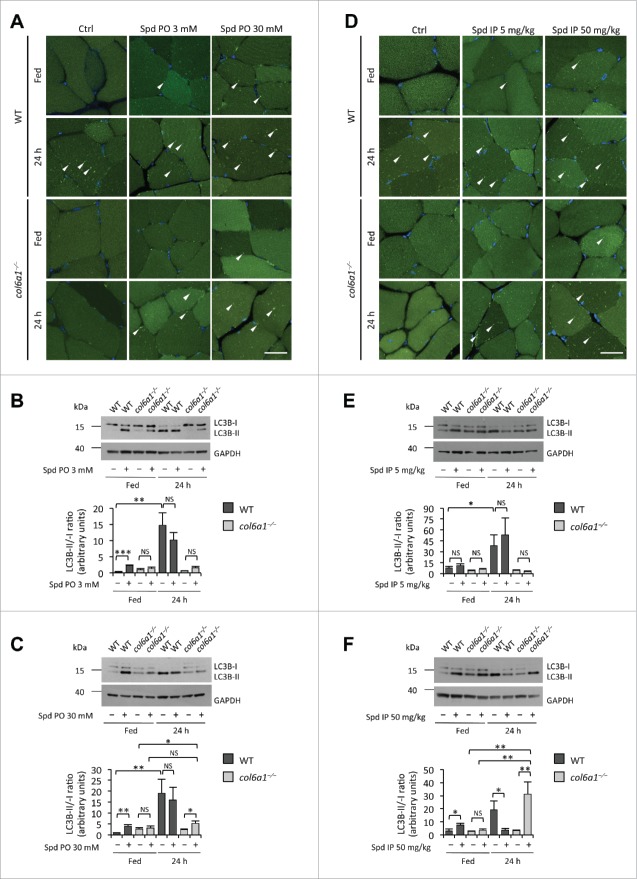
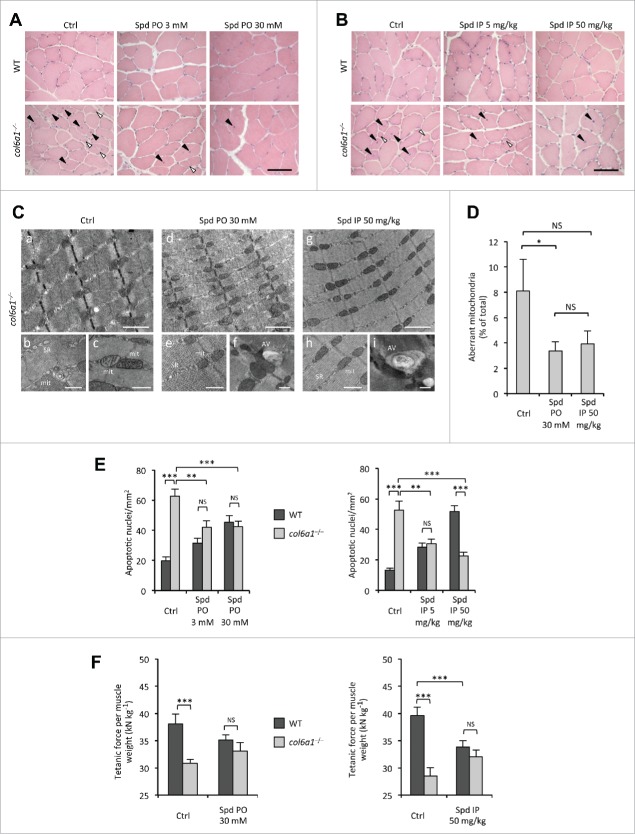
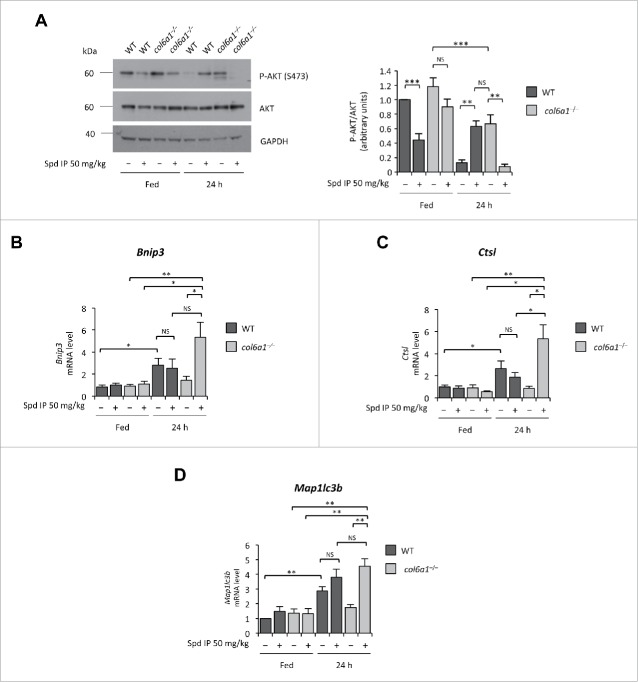
Autophagy is a self-degradative process responsible for the clearance of damaged or unnecessary cellular components. We have previously found that persistence of dysfunctional organelles due to autophagy failure is a key event in the pathogenesis of COL6/collagen VI-related myopathies, and have demonstrated that reactivation of a proper autophagic flux rescues the muscle defects of Col6a1-null (col6a1(-/-)) mice. Here we show that treatment with spermidine, a naturally occurring nontoxic autophagy inducer, is beneficial for col6a1(-/-) mice. Systemic administration of spermidine in col6a1(-/-) mice reactivated autophagy in a dose-dependent manner, leading to a concurrent amelioration of the histological and ultrastructural muscle defects. The beneficial effects of spermidine, together with its being easy to administer and the lack of overt side effects, open the field for the design of novel nutraceutical strategies for the treatment of muscle diseases characterized by autophagy impairment.
Overview
The claims and statistics of this paper haven’t been checked yet.
Free: it reads the open-access text and checks the first 5 claims that cite a source we can check. Create a free account to check every claim.
Integrity signals
Registry
Cites
Statistics
Figures
Verification
Claims the paper makes
The claims and statistics of this paper haven’t been checked yet.
Free: it reads the open-access text and checks the first 5 claims that cite a source we can check. Create a free account to check every claim.
Claims other papers make about this one
Each is checked against this paper’s own text: does it say what the citing paper says it does?
The source backs part of the claim, not all of it — or backs it for a different population, condition or comparison.
In the citing paper
“(iv) conditions in which pharmacological activation of muscular autophagy reinstalls functionality of the muscle (Chrisam et al, 2015)”
From Autophagy in major human diseases (2021) · cites this paper as Chrisam et al, 2015
Experimental — accuracy not yet measuredThe cited source says what the claim attributes to it.
In the citing paper
“Myopathic defects associated with impaired autophagic flux and aberrant organelle accumulation”
From Autophagy in major human diseases (2021) · cites this paper as Chrisam et al (2015)
Self-check
Percentages, sums and reported differences re-computed from the paper’s own numbers.
The self-check needs the paper’s full text.
Citations
Cites
NIH Image to ImageJ: 25 years of image analysis
Schneider, C. A., Rasband, W. S., & Eliceiri, K. W. (2012) · Nature Methods · doi:10.1038/nmeth.2089 · Cited by 64,638 · cited 1×
“Densitometric quantification was performed by ImageJ software (NIH, Bethesda, Maryland, USA).(35)”
MethodRepertoires of Autophagy in the Pathogenesis of Ocular Diseases
Li, Y.-J., Jiang, Q., Cao, G.-F., Yao, J., & Yan, B. (2015) · Cellular Physiology and Biochemistry · doi:10.1159/000373980 · Cited by 16,304
Autophagy in the Pathogenesis of Disease
Levine, B., & Kroemer, G. (2008) · Cell · doi:10.1016/j.cell.2007.12.018 · Cited by 7,069 · cited 3×
“In physiological conditions, autophagy plays a crucial role during development, cell differentiation and tissue remodeling, acts as a cell housekeeper by degrading damaged or unnecessary organelles, and allows the retrieval of metabolites under nutrient starvation.(3,4) Age-related degeneration processes and neurodege…”
BackgroundAutophagy and Viruses: Adversaries or Allies?
Dong, X., & Levine, B. (2013) · Journal of Innate Immunity · doi:10.1159/000346388 · Cited by 4,430
Self-eating and self-killing: crosstalk between autophagy and apoptosis
Maiuri, M. C., Zalckvar, E., Kimchi, A., & Kroemer, G. (2007) · Nature Reviews Molecular Cell Biology · doi:10.1038/nrm2239 · Cited by 3,577
FoxO3 Controls Autophagy in Skeletal Muscle In Vivo
Mammucari, C., Milan, G., Romanello, V., Masiero, E., Rudolf, R., Del Piccolo, P., Burden, S. J., Di Lisi, R., Sandri, C., Zhao, J., et al. (2007) · Cell Metabolism · doi:10.1016/j.cmet.2007.11.001 · Cited by 1,953 · cited 4×
“Primer sequences were described elsewhere.(8,19)”
BackgroundInfluentialInduction of autophagy by spermidine promotes longevity
Eisenberg, T., Knauer, H., Schauer, A., Büttner, S., Ruckenstuhl, C., Carmona-Gutierrez, D., Ring, J., Schroeder, S., Magnes, C., Antonacci, L., et al. (2009) · Nature Cell Biology · doi:10.1038/ncb1975 · Cited by 1,680 · cited 5×
“Spermidine supplementation to cell culture media or in vivo administration to entire animals prolongs life span in different model organisms, an effect which is linked to autophagy induction.(9,10) Although the mechanisms by which spermidine acts are not yet fully understood, it has been shown that they involve a comp…”
BackgroundInfluentialCellular and molecular mechanisms of muscle atrophy
Bonaldo, P., & Sandri, M. (2013) · Disease Models & Mechanisms · doi:10.1242/dmm.010389 · Cited by 1,284 · cited 2×
“Indeed, alterations of the autophagic flux affect muscle homeostasis and also impinge on the body metabolic state.(7) COL6/collagen VI-related myopathies represent a notable group of inherited muscle disorders where a link between dystrophic phenotype and autophagy flux impairment was first demonstrated.”
BackgroundSelf-citationRogov, V., Dötsch, V., Johansen, T., & Kirkin, V. (2014) · Molecular Cell · doi:10.1016/j.molcel.2013.12.014 · Cited by 992 · cited 1×
“In physiological conditions, autophagy plays a crucial role during development, cell differentiation and tissue remodeling, acts as a cell housekeeper by degrading damaged or unnecessary organelles, and allows the retrieval of metabolites under nutrient starvation.(3,4) Age-related degeneration processes and neurodege…”
BackgroundModulation of cellular function by polyamines
Igarashi, K., & Kashiwagi, K. (2010) · The International Journal of Biochemistry & Cell Biology · doi:10.1016/j.biocel.2009.07.009 · Cited by 851 · cited 1×
“It is possible, for example, that this effect is correlated at least in part with the modulation of ion channels activity by polyamines.(30) Among the broad range of intracellular targets for spermidine,(9-11,30) which may mediate its beneficial effects in col6a1¡/¡ muscles, we focused on the AKT-MTOR axis.”
Background
Cited by
Autophagy in major human diseases
Klionsky, D. J., Petroni, G., Amaravadi, R. K., Baehrecke, E. H., Ballabio, A., Boya, P., Bravo‐San Pedro, J. M., Cadwell, K., Cecconi, F., Choi, A. M. K., et al. (2021) · The EMBO Journal · doi:10.15252/embj.2021108863 · Cited by 1,585
Self-citationSpermidine in health and disease
Madeo, F., Eisenberg, T., Pietrocola, F., & Kroemer, G. (2018) · Science · doi:10.1126/science.aan2788 · Cited by 1,154
“Similarly, spermidine reactivated autophagy and ameliorated the myopathic defects of collagenVI–deficient mice, which are normally characterized by invalidating mitochondrial defects (71).”
BackgroundDietary spermidine improves cognitive function
Schroeder, S., Hofer, S. J., Zimmermann, A., Pechlaner, R., Dammbrueck, C., Pendl, T., Marcello, G. M., Pogatschnigg, V., Bergmann, M., Müller, M., et al. (2021) · Cell Reports · doi:10.1016/j.celrep.2021.108985 · Cited by 225
Role of Oxidative Stress as Key Regulator of Muscle Wasting during Cachexia
Ábrigo, J., Elorza, A. A., Riedel, C. A., Vilos, C., Simon, F., Cabrera, D., Estrada, L., & Cabello-Verrugio, C. (2018) · Oxidative Medicine and Cellular Longevity · doi:10.1155/2018/2063179 · Cited by 221
Mechanisms of spermidine-induced autophagy and geroprotection
Hofer, S. J., Simon, A. K., Bergmann, M., Eisenberg, T., Kroemer, G., & Madeo, F. (2022) · Nature Aging · doi:10.1038/s43587-022-00322-9 · Cited by 204
Collagen VI disorders: Insights on form and function in the extracellular matrix and beyond
Lamandé, S. R., & Bateman, J. F. (2018) · Matrix Biology · doi:10.1016/j.matbio.2017.12.008 · Cited by 185
“Rapamycin, an mTOR inhibitor that activates autophagy, likewise ameliorated the phenotype [94], as did spermidine which induces autophagy by an unknown mechanism [95].”
Yue, F., Li, W., Zou, J., Jiang, X., Xu, G., Huang, H., & Liu, L. (2017) · Cancer Research · doi:10.1158/0008-5472.can-16-3462 · Cited by 176
“Spermidine-related knowledge for cancer patients, spermidine has been reported to reactivate autophagy to ameliorate myopathic defects (46) and prolong the lifespans of”
Autophagy regulates satellite cell ability to regenerate normal and dystrophic muscles
Fiacco, E., Castagnetti, F., Bianconi, V., Madaro, L., Bardi, M. D., Nazio, F., D’Amico, A., Bertini, E., Cecconi, F., Puri, P., et al. (2016) · Cell Death and Differentiation · doi:10.1038/cdd.2016.70 · Cited by 156
Self-citationAutophagy in health and disease: From molecular mechanisms to therapeutic target
Lu, G. X., Wang, Y., Shi, Y. P., Zhang, Z., Huang, C., He, W., Wang, C., & Shen, H. (2022) · MedComm · doi:10.1002/mco2.150 · Cited by 149
Basement membrane collagens and disease mechanisms
Gatseva, A., Sin, Y. Y., Brezzo, G., & Agtmael, T. V. (2019) · Essays in Biochemistry · doi:10.1042/ebc20180071 · Cited by 136
New Insights into the Roles and Mechanisms of Spermidine in Aging and Age-Related Diseases
Ni, Y., & Liu, Y. (2021) · Aging and Disease · doi:10.14336/ad.2021.0603 · Cited by 135
Yang, Y., Chen, S., Zhang, Y., Lin, X., Song, Y., Xue, Z., Qian, H., Wang, S., Wan, G., Zheng, X., et al. (2017) · Cell Death & Disease · doi:10.1038/cddis.2017.161 · Cited by 112
Oil for the cancer engine: The cross-talk between oncogenic signaling and polyamine metabolism
Arruabarrena-Aristorena, A., Zabala‐Letona, A., & Carracedo, A. (2018) · Science Advances · doi:10.1126/sciadv.aar2606 · Cited by 132
Nutritional Aspects of Spermidine
Madeo, F., Hofer, S. J., Pendl, T., Bauer, M. A., Eisenberg, T., Carmona-Gutierrez, D., & Kroemer, G. (2020) · Annual Review of Nutrition · doi:10.1146/annurev-nutr-120419-015419 · Cited by 112
Di Rienzo, M., Antonioli, M., Fusco, C., Liu, Y., Mari, M., Orhon, I., Refolo, G., Germani, F., Corazzari, M., Romagnoli, A., et al. (2019) · Science Advances · doi:10.1126/sciadv.aau8857 · Cited by 107
Bloemberg, D., & Quadrilatero, J. (2019) · American Journal of Physiology-Cell Physiology · doi:10.1152/ajpcell.00261.2018 · Cited by 105
“However, emphasizing autophagy’s dual nature, in the studies just mentioned, both a long-term, low-protein diet (48, 81) and spermidine administration (40) increased apoptotic nuclei in muscle of wild-type mice, while inhibition of autophagy improved clinical symptoms of muscular dystrophy in a mouse model of MDC1A (l…”
BackgroundMethods for Measuring Autophagy in Mice
Moulis, M., & Vindis, C. (2017) · Cells · doi:10.3390/cells6020014 · Cited by 90
“Spermidine could be either orally administered in drinking water (3 to 30 mM) that was replenished or replaced every 2–3 days, or intraperitoneally injected at the dose of 50 mg/kg [53,61,62].”
MethodParodi, C., Hardman, J. A., Allavena, G., Marotta, R., Catelani, T., Bertolini, M., Paus, R., & Grimaldi, B. (2018) · PLoS Biology · doi:10.1371/journal.pbio.2002864 · Cited by 86
Autophagy as a Therapeutic Target to Enhance Aged Muscle Regeneration
Lee, D. E., Bareja, A., Bartlett, D. B., & White, J. P. (2019) · Cells · doi:10.3390/cells8020183 · Cited by 64
Collagen VI in the Musculoskeletal System
Martino, A. C. D., Cescon, M., D’Agostino, C., Schilardi, F., Sabatelli, P., Merlini, L., & Faldini, C. (2023) · International Journal of Molecular Sciences · doi:10.3390/ijms24065095 · Cited by 67
Role of autophagy in muscle disease
Franco‐Romero, A., & Sandri, M. (2021) · Molecular Aspects of Medicine · doi:10.1016/j.mam.2021.101041 · Cited by 71
Autophagy activation in COL6 myopathic patients by a low-protein-diet pilot trial
Castagnaro, S., Pellegrini, C., Pellegrini, M., Chrisam, M., Sabatelli, P., Toni, S., Grumati, P., Ripamonti, C., Pratelli, L., Maraldi, N. M., et al. (2016) · Autophagy · doi:10.1080/15548627.2016.1231279 · Cited by 64
Self-citationSakakibara, I., Yanagihara, Y., Himori, K., Yamada, T., Sakai, H., Sawada, Y., Takahashi, H., Saeki, N., Hirakawa, H., Yokoyama, A., et al. (2021) · iScience · doi:10.1016/j.isci.2021.102303 · Cited by 65
Collagen VI is required for the structural and functional integrity of the neuromuscular junction
Cescon, M., Gregorio, I. D., Eiber, N., Borgia, D., Fusto, A., Sabatelli, P., Scorzeto, M., Megighian, A., Pegoraro, E., Hashemolhosseini, S., et al. (2018) · Acta Neuropathologica · doi:10.1007/s00401-018-1860-9 · Cited by 61
Self-citationSacitharan, P. K., Lwin, S. T., Bou–Gharios, G., & Edwards, J. (2018) · Experimental & Molecular Medicine · doi:10.1038/s12276-018-0149-3 · Cited by 57
Castets, P., Frank, S., Sinnreich, M., & Rüegg, M. A. (2016) · Journal of Neuromuscular Diseases · doi:10.3233/jnd-160153 · Cited by 49
“Improvements included normalization of muscle ultrastructure, decreased apoptosis, increased muscle strength and/or reduced muscle degeneration [118, 159].”
BackgroundSkeletal Muscle Pathophysiology: The Emerging Role of Spermine Oxidase and Spermidine
Cervelli, M., Leonetti, A., Duranti, G., Sabatini, S., Ceci, R., & Mariottini, P. (2018) · Medical Sciences · doi:10.3390/medsci6010014 · Cited by 60
“Spermidine was found to ameliorate myopathic defects in the animal model of Ullrich congenital muscular dystrophy (UCMD) and Bethlem myopathy (BM) (col6a1−/− mice) by reactivating autophagy in skeletal muscle [56].”
BackgroundInfluentialChai, N., Zhang, H., Li, L., Yu, X. M., Liu, Y., Yan, L., Wang, L., Yan, J., Николаевна, С. Е., & Zhao, Y. (2019) · Oxidative Medicine and Cellular Longevity · doi:10.1155/2019/5406468 · Cited by 51
“SPD (5 mg/kg ip) treatments in mice for 10 d led to a partial rescue of histological alterations in muscle defects [35].”
Extracellular Collagen VI Has Prosurvival and Autophagy Instructive Properties in Mouse Fibroblasts
Castagnaro, S., Chrisam, M., Cescon, M., Braghetta, P., Grumati, P., & Bonaldo, P. (2018) · Frontiers in Physiology · doi:10.3389/fphys.2018.01129 · Cited by 45
“It is composed of three major genetically distinct chains, α1(VI), α2(VI) and α3(VI), which associate intracellularly to form a triple helical monomer, followed by assembly into disulfide-bonded dimers and tetramers (Colombatti et al., 1995).”
Self-citationAbbonante, V., Malara, A., Chrisam, M., Metti, S., Soprano, P. M., Semplicini, C., Bello, L., Bozzi, V., Battiston, M., Pecci, A., et al. (2022) · Autophagy · doi:10.1080/15548627.2022.2100105 · Cited by 39
“These defects were shown to be the consequence of a failure of the autophagy-lysosome system, which determines the accumulation of damaged organelles in COL6-deficient myofibers [16,27].”
BackgroundSelf-citationGuo, Z., Zhang, X., Lin, C., Huang, Y., Zhong, Y., Guo, H., Zhou, Z., & Weng, S. (2022) · Frontiers in Oncology · doi:10.3389/fonc.2022.962204 · Cited by 42
Disrupted autophagy undermines skeletal muscle adaptation and integrity
Jokl, E. J., & Blanco, G. (2016) · Mammalian Genome · doi:10.1007/s00335-016-9659-2 · Cited by 46
Extracellular matrix guidance of autophagy: a mechanism regulating cancer growth
Chen, C. G., & Iozzo, R. V. (2022) · Open Biology · doi:10.1098/rsob.210304 · Cited by 35
“Interestingly, activating autophagy via spermidine or pterostilbene both reduced muscle defects and myopathy in collagen VI-deficient mice [133,134].”
BackgroundSpermidine-eIF5A axis is essential for muscle stem cell activation via translational control
Zhang, Q., Han, W., Wu, R., Deng, S., Meng, J., Yang, Y., Li, L., Sun, M., Ai, H., Chen, Y., et al. (2024) · Cell Discovery · doi:10.1038/s41421-024-00712-w · Cited by 37
“Chrisam et al. reported that systemic administration of spermidine reactivated autophagy, leading to a concurrent amelioration of the histological and ultrastructural muscle defects 33 .”
Che, H., Ma, C., Li, H., Yu, F., Wei, Y., Chen, H., Wu, J., & Ren, Y. (2022) · Oxidative Medicine and Cellular Longevity · doi:10.1155/2022/8033353 · Cited by 34
Dilmaghani, N. A., Safaroghli‐Azar, A., Pourbagheri‐Sigaroodi, A., & Bashash, D. (2021) · IUBMB Life · doi:10.1002/iub.2446 · Cited by 31
Ponnusamy, S., Sullivan, R. D., You, D., Zafar, N., Yang, C. H., Thiyagarajan, T., Johnson, D. L., Barrett, M. L., Koehler, N. J., Star, M., et al. (2017) · Human Molecular Genetics · doi:10.1093/hmg/ddx150 · Cited by 34
“These two pathways play important roles in skeletal muscle hypertrophy and atrophy (45).”
BackgroundAutophagy in the mesh of collagen VI
Castagnaro, S., Gambarotto, L., Cescon, M., & Bonaldo, P. (2020) · Matrix Biology · doi:10.1016/j.matbio.2020.12.004 · Cited by 25
Self-citationZhang, L., Gong, H., Sun, Q., Zhao, R., & Jia, Y. (2018) · Journal of Agricultural and Food Chemistry · doi:10.1021/acs.jafc.7b04482 · Cited by 26
Aging-Related Sarcopenia: Metabolic Characteristics and Therapeutic Strategies
Chen, Y., & Wu, J. (2024) · Aging and Disease · doi:10.14336/ad.2024.0407 · Cited by 27
“Short-term spermidine administration was able to reactivate autophagy and improve fiber defects, whereas long-term feeding improved skeletal muscle function in col6a1 -/- mice [82, 83].”
Civiletto, G., Brunetti, D., Lizzo, G., Muller, K., Jacot, G. E., Daskalaki, I., Sizzano, F., Huh, M., Meo, I. D., Colombo, M. N., et al. (2025) · Nature Aging · doi:10.1038/s43587-025-00957-4 · Cited by 27
“For short-term thymol supplementation studies in mice, the sample size was determined based on previous publications to detect significant changes in mitophagy or autophagy induction, as measured by the mitophagy index or the LC3-II/LC3-I ratio, respectively 38,84 .”
Metti, S., Gambarotto, L., Chrisam, M., Spina, M. L., Baraldo, M., Braghetta, P., Blaauw, B., & Bonaldo, P. (2020) · Frontiers in Cell and Developmental Biology · doi:10.3389/fcell.2020.580933 · Cited by 25
Self-citationTakenaka-Ninagawa, N., Kim, J., Zhao, M., Sato, M., Jonouchi, T., Goto, M., Yoshioka, C. K. B., Ikeda, R., Harada, A., Sato, T., et al. (2021) · Stem Cell Research & Therapy · doi:10.1186/s13287-021-02514-3 · Cited by 21
The untapped potential of spermidine alkaloids: Sources, structures, bioactivities and syntheses
Shi, Y., Zhang, J., Wang, Y., Ding, K., Yu, Y., Xia, C., Li, X.-X., He, J., Zhang, W., & Xu, J. (2022) · European Journal of Medicinal Chemistry · doi:10.1016/j.ejmech.2022.114600 · Cited by 25
Zhu, S., He, M., Liu, Z., Qin, Z., Wang, Z., & Duan, L. (2020) · Journal of Advanced Research · doi:10.1016/j.jare.2020.01.016 · Cited by 31
Guo, F., Meng, F.-G., Zhang, X., & Zeng, T. (2022) · Journal of Functional Foods · doi:10.1016/j.jff.2022.105115 · Cited by 23
Autophagy in adult stem cell homeostasis, aging, and disease therapy
Zhao, K., Chan, I. T. C., Tse, E. H. Y., Xie, Z., Cheung, T. H., & Zeng, Y. A. (2025) · Cell Regeneration · doi:10.1186/s13619-025-00224-2 · Cited by 30
“In the context of disease, administering SPD in collagen VI-null myopathic models helped to clear damaged proteins and organelles, thereby alleviating myopathic defects (Chrisam et al. 2015).”
Polyamines and Physical Activity in Musculoskeletal Diseases: A Potential Therapeutic Challenge
Galasso, L., Cappella, A., Mulè, A., Castelli, L., Ciorciari, A. M., Stacchiotti, A., & Montaruli, A. (2023) · International Journal of Molecular Sciences · doi:10.3390/ijms24129798 · Cited by 25
“In contrast, exercise-activated AKT inhibits FOXO through direct phosphorylation or indirectly activates the mTOR, which contrasts the FOXO migration into the nucleus inhibiting the autophagy.”
BackgroundInfluentialOh, J., Park, C., Kim, S., Kim, M. G., Kim, C.-S., Jo, W., Park, S., Yi, G., & Park, J. (2023) · Metabolism · doi:10.1016/j.metabol.2023.155629 · Cited by 23
Spatio-temporal expression and distribution of collagen VI during zebrafish development
Tonelotto, V., Trapani, V., Bretaud, S., Heumüller, S. E., Wagener, R., Ruggiero, F., & Bonaldo, P. (2019) · Scientific Reports · doi:10.1038/s41598-019-56445-4 · Cited by 20
Self-citationLi, Y., Li, G., Wang, K., Xie, Y., Zhou, R., Meng, Y., Ding, R., Ge, J., & Chen, F. (2017) · Toxicology and Applied Pharmacology · doi:10.1016/j.taap.2017.01.016 · Cited by 19
“…the genome (Sehgal et al., 2015), which plays a crucial role in clinical treatment of various diseases, such as Parkinson's disease (Bento et al., 2016), myopathies (Chrisam et al., 2015), dilated cardiomyopathy (Saito et al., 2016), alcoholic liver disease (Denaes et al., 2016), and other cancers.”
BackgroundRuff, Z. D. V., Miller, M. J., Moro, T., Reidy, P. T., Ebert, S. M., Volpi, E., Adams, C. M., & Rasmussen, B. B. (2025) · GeroScience · doi:10.1007/s11357-025-01564-2 · Cited by 22
“SMOX and its reaction product spermidine may contribute to muscle hypertrophy through increase autophagy and inhibition of apoptotic pathways [126, 127].”
Conjard‐Duplany, A., Osseni, A., Lamboux, A., Mouradian, S., Picard, F., Moncollin, V., Angleraux, C., Dorel-Dubois, T., Puccio, H. M., Leblanc, P., et al. (2025) · Cellular and Molecular Life Sciences · doi:10.1007/s00018-025-05695-9 · Cited by 17
“Sustained AKT/PKB signaling has been consistently associated with autophagy inhibition in various skeletal muscle models, including wild-type [48, 60], col6a1 −/− [30] and mdx mice, as well as individuals with Duchenne Muscular Dystrophy (DMD) [61].”
InfluentialLiu, C., Li, L., Ge, M., Gu, L., Wang, M., Zhang, K., Su, Y., Zhang, Y., Liu, C., Lan, M., et al. (2019) · Cells · doi:10.3390/cells8050459 · Cited by 20
Zhang, X. H., Nie, Z., Wang, S., Ma, Y., Han, D., Hu, T., Liu, L., Men, L., Zhang, T., Wu, X., et al. (2025) · Cell Metabolism · doi:10.1016/j.cmet.2025.05.013 · Cited by 18
Mao, M., Yang, L. C., Jin, Z., Li, L.-X., Wang, Y.-R., Li, T., Zhao, Y., & Ai, J. (2020) · Acta Pharmacologica Sinica · doi:10.1038/s41401-020-0437-z · Cited by 15
Ablation of collagen VI leads to the release of platelets with altered function
Abbonante, V., Gruppi, C., Battiston, M., Zulian, A., Buduo, C. A. D., Chrisam, M., Sereni, L. P., Laurent, P.-A., Semplicini, C., Lombardi, E., et al. (2021) · Blood Advances · doi:10.1182/bloodadvances.2020002671 · Cited by 10
Self-citationMolon, S., Brun, P., Scarpa, M., Bizzotto, D., Zuccolotto, G., Scarpa, M., Fassan, M., Angriman, I., Rosato, A., Braghetta, P., et al. (2023) · The Journal of Pathology · doi:10.1002/path.6092 · Cited by 11
Self-citationGambarotto, L., Metti, S., Corpetti, M., Baraldo, M., Sabatelli, P., Castagnaro, S., Cescon, M., Blaauw, B., & Bonaldo, P. (2023) · Autophagy · doi:10.1080/15548627.2023.2241125 · Cited by 11
Self-citationCollagen VI Muscle Disorders: Mutation Types, Pathogenic Mechanisms and Approaches to Therapy
Lamandé, S. R. (2021) · Advances in experimental medicine and biology · doi:10.1007/978-3-030-80614-9_14 · Cited by 11
Opposing roles of RUBCN isoforms in autophagy and memory B cell generation
Tsai, C., Sakakibara, S., Kuan, Y.-D., Omori, H., Hussien, M. A. E., Okuzaki, D., Lu, S.-L., Noda, T., Tabata, K., Nakamura, S., et al. (2023) · Science Signaling · doi:10.1126/scisignal.ade3599 · Cited by 10
Unuma, K., Aki, T., Noritake, K., Funakoshi, T., & Uemura, K. (2017) · Biochemical and Biophysical Research Communications · doi:10.1016/j.bbrc.2017.04.131 · Cited by 8
The functional roles and mechanisms of polyamines in age-related bone diseases
Zhang, J., Cai, C., Zhang, Y., Luo, C., Huo, S., Wang, K., Shi, C., Liu, J., & Xu, G. (2025) · Cellular and Molecular Life Sciences · doi:10.1007/s00018-025-06001-3 · Cited by 8
“This effect is mediated through modulation of AKT-mTOR signaling and enhanced transcription of FOXO-dependent autophagy genes [70].”
Ding, W., Bao, S., Zhao, Q. D., Hao, W., Fang, K., Xiao, Y., Lin, X., Zhao, Z., Xu, X., Cui, X., et al. (2024) · Advanced Science · doi:10.1002/advs.202403202 · Cited by 9
da Costa, R. M., Bruder‐Nascimento, A., Alves, J. V., Awata, W. M. C., Singh, S., Rodrigues, D., Bruder-Nascimento, T. B., & Tostes, R. C. (2025) · American Journal of Physiology-Heart and Circulatory Physiology · doi:10.1152/ajpheart.00829.2024 · Cited by 7
Delayed denervation-induced muscle atrophy in Opg knockout mice
Zhang, M., Chen, M., Li, Y., Rao, M., Wang, D., Wang, Z., Zhang, L., Yin, P., & Tang, P. (2023) · Frontiers in Physiology · doi:10.3389/fphys.2023.1127474 · Cited by 8
“Considering the close relationship between bone and muscle tissues, the effects of the OPG/RANKL/RANK axis on the muscle have been studied (Dufresne et al., 2018; Hamoudi et al., 2019; Xiong et al., 2021).”
BackgroundSpina, M. L., Azzolini, M., Salmaso, A., Parrasia, S., Galletta, E., Schiavone, M., Chrisam, M., Mattarei, A., Benedetto, G. D., Ballabio, A., et al. (2021) · Oxidative Medicine and Cellular Longevity · doi:10.1155/2021/7658501 · Cited by 7
“Administration of spermidine, an autophagy inducer, has been observed to lead to improvements in a dystrophic mouse model [96].”
Self-citationZhang, Z.-W., Wang, M., Hu, J., Xu, G., Zhang, Y., & Zhang, N. (2018) · The Tohoku Journal of Experimental Medicine · doi:10.1620/tjem.246.87 · Cited by 6
Role of adiponectin in the metabolism of skeletal muscles in collagen VI-related myopathies
Gamberi, T., Magherini, F., Mannelli, M., Chrisam, M., Cescon, M., Castagnaro, S., Modesti, A., Braghetta, P., & Fiaschi, T. (2019) · Journal of Molecular Medicine · doi:10.1007/s00109-019-01766-0 · Cited by 5
Self-citationThorup, C. V., Jeppesen, C. N. A., Jensen, T., Tinggaard, A. B., Hvas, C. L., Rud, C. L., Skou, M. K., Mortensen, J. K., Reggiori, F., Dengjel, J., et al. (2025) · Trials · doi:10.1186/s13063-025-09176-z · Cited by 9
Autophagy in striated muscle diseases
Bailin, P. L., Zhang, L., Zhang, L., & Han, R. (2022) · Frontiers in Cardiovascular Medicine · doi:10.3389/fcvm.2022.1000067 · Cited by 7
Molecular Subtypes and Machine Learning-Based Predictive Models for Intracranial Aneurysm Rupture
Zhong, A., Wang, F., Zhou, Y., Ding, N., Yang, G., & Chai, X. (2023) · World Neurosurgery · doi:10.1016/j.wneu.2023.08.043 · Cited by 5
Effect of spermidine intake on skeletal muscle regeneration after chemical injury in male mice
Iwata, T., Shirai, T., Uemichi, K., Tanimura, R., & Takemasa, T. (2024) · Physiological Reports · doi:10.14814/phy2.70092 · Cited by 6
“Furthermore, oral intake and intraperitoneal injection of spermidine have been re-ported to reduce muscle damage in collagen VI-null mice (Chrisam et al., 2015).”
BackgroundSantos‐Gómez, A., Juliá‐Palacios, N., Rejano‐Bosch, A., Marí-Vico, R., Míguez‐Cabello, F., Masana, M., Soto, D., Olivella, M., García‐Cazorla, À., & Altafaj, X. (2025) · Journal of Inherited Metabolic Disease · doi:10.1002/jimd.70015 · Cited by 5
“Mice were split into two drinking water regimens, consisting of either standard or 3 mM spermidine-supplemented water (a dosage based on previous reports showing tolerability and lack of side effects) [18, 34, 35] starting 6 weeks prior to behavioral and electrophysiological phenotyping.”
PA YEAST SC-1, Polyamine-Rich Saccharomyces cerevisiae, Induces Muscle Hypertrophy in C2C12 Myotubes
Yoshioka, Y., ONISHI, K., Yasui, K., & Miyoshi, N. (2024) · Journal of Nutritional Science and Vitaminology · doi:10.3177/jnsv.70.53 · Cited by 4
Acheson, J., Joanisse, S., Sale, C., & Hodson, N. W. (2025) · Bioscience Reports · doi:10.1042/bsr20240137 · Cited by 6
“In vitro and animal-based studies have reported that nutraceutical compounds such as curcumin [282,283], spermidine [284,285,287], and quercetin [288,289] can promote lysosomal biogenesis and autophagic function, although the use of these in relation to exercise-induced autophagy have yet to be…”
Identification of key genes affecting ventilator-induced diaphragmatic dysfunction in diabetic mice
Xing, R., Yu, H., Yu, J., Zeng, R., Xiang, Z., Ma, H., Li, G., & Zhao, Y. (2024) · Frontiers in Genetics · doi:10.3389/fgene.2024.1387688 · Cited by 4
Collagens and Muscle Diseases: A Focus on Collagen VI
Tonelotto, V., Castagnaro, S., Cescon, M., & Bonaldo, P. (2021) · Biology of extracellular matrix · doi:10.1007/978-3-030-67592-9_6 · Cited by 5
Self-citationPolyamines and autophagy as a dynamic regulatory network in skeletal muscle regeneration and aging
Attili, L., Rossi, M. N., Santo, R. D., Duranti, G., Ceci, R., & Cervelli, M. (2026) · Mechanisms of Ageing and Development · doi:10.1016/j.mad.2026.112188 · Cited by 3
Calabrò, S., Nogara, L., Jian, Y., Valentin, M., Bizzotto, D., Braghetta, P., Russo, L., Gambarotto, L., Blaauw, B., Hashemolhosseini, S., et al. (2024) · Clinical and Translational Medicine · doi:10.1002/ctm2.1688 · Cited by 2
Self-citationIn Situ Immunofluorescent Staining of Autophagy in Muscle Stem Cells
Castagnetti, F., Fiacco, E., Imbriano, C., & Latella, L. (2017) · Journal of Visualized Experiments · doi:10.3791/55908 · Cited by 2
Stathmin 1 regulates mitophagy and cellular function in hematopoietic stem cellsPreprint
Paracatu, L. C., Schuetz, M., Dong, Q., Warmka, M. G., Valin, L., Jones, A., Hunt, P., Petermeier, C., Wang, J., Roundy, N., et al. (2025) · bioRxiv (Cold Spring Harbor Laboratory) · doi:10.1101/2025.03.10.642434 · Cited by 2
Effect of spermidine intake on overload‐induced skeletal muscle hypertrophy in male mice
Iwata, T., Shirai, T., Tanimura, R., Iwai, R., & Takemasa, T. (2025) · Physiological Reports · doi:10.14814/phy2.70209 · Cited by 2
“Spermidine intake also improves skeletal muscle pathology caused by collagen VI deficiency and β - galactose administration (Chrisam et al., 2015; Fan et al., 2017).”
Moreno-Manuel, A. I., Cruz, F. M., Macías, Á., Cabrera‐Borrego, E., & Jalife, J. (2025) · bioRxiv (Cold Spring Harbor Laboratory) · doi:10.1101/2025.09.10.675300 · Cited by 1
Bet on autophagy in the race against muscular dystrophies
Catarinella, G., & Latella, L. (2018) · Muscle & Nerve · doi:10.1002/mus.26164
“Systemic administration of spermidine reactivates autophagy, ameliorating the histologic and ultrastructural muscle defects in collagen VI null mice.(14) Rapamycin is a treatment used to stimulate autophagy.”
BackgroundPridoksal Fosfatın Kolajen Tip VI İlişkili Miyopatilerde Potansiyel Tedavi Edici Etkisi
Özer, İ. (2018) · Ege Tıp Bilimleri Dergisi · doi:10.33713/egetbd.455485
“Tam kan sayımında lökosit 7790/mm3 (4000-10000), hemoglobin 11,2 g/dl (11,5-16), hematokrit %35,9 (%32-37), trombosit 470000/ mm3 (150000-500000), biyokimyasal tetkiklerde kan şekeri 81 mg/dl (74-106), üre 17 mg/dl (<50), kreatin 0,37 mg/dl (0,5-0,9), ürik asit 4,1 mg/dl (2,6-6), AST 17 Ü/L (<31), ALT 15 Ü/L (<33), AL…”
InfluentialTakenaka-Ninagawa, N., Kim, J., Zhao, M., Sato, M., Jonouchi, T., Goto, M., Yoshioka, C. K. B., Ikeda, R., Harada, A., Sato, T., et al. (2021) · SSRN Electronic Journal · doi:10.2139/ssrn.3790188
Autophagy as a Pathogenetic Link and a Target for Therapy of Musculoskeletal System Diseases
Kalugina, K. K., Сухарева, К. С., Churkina, A. I., & Kostareva, A. A. (2021) · Journal of Evolutionary Biochemistry and Physiology · doi:10.1134/s0022093021030145
A historia nunca contada de Mendel, ratos no laboratorio, educaBarrié
Calvo, L. A. R., Prieto, A. A., Rodilla, A. R., & González, M. T. (2012) · Boletín das ciencias
Nishtuk, Y. V., Stasyk, O. V., & Stasyk, O. G. (2022) · Studia Biologica · doi:10.30970/sbi.1603.691 · Cited by 2
Targeting membrane fragility in LGMD R2 through pharmacological autophagy inductionPreprint
Grossi, N., Pellier, E., Miagoux, Q., Benabidès, M., Polentes, J., Leteur, C., Bruge, C., & Nissan, X. (2025) · Research Square · doi:10.21203/rs.3.rs-6671973/v1
Takenaka-Ninagawa, N., Kim, J., Zhao, M., Sato, M., Jonouchi, T., Goto, M., Yoshioka, C. K. B., Ikeda, R., Harada, A., Sato, T., et al. (2021) · Figshare · doi:10.6084/m9.figshare.15139505
Takenaka-Ninagawa, N., Kim, J., Zhao, M., Sato, M., Jonouchi, T., Goto, M., Yoshioka, C. K. B., Ikeda, R., Harada, A., Sato, T., et al. (2021) · Figshare · doi:10.6084/m9.figshare.15139493
Takenaka-Ninagawa, N., Kim, J., Zhao, M., Sato, M., Jonouchi, T., Goto, M., Yoshioka, C. K. B., Ikeda, R., Harada, A., Sato, T., et al. (2021) · Figshare · doi:10.6084/m9.figshare.15139499
Harissa, Z., Bloks, N. G. C., Steward, N. S., Tufa, S. F., Keene, D. R., Ramos, Y. F., Meulenbelt, I., & Guilak, F. (2026) · Stem Cell Research & Therapy · doi:10.1186/s13287-026-04940-7
Zhang, Z., Wang, Y., Hu, Z., Tian, W., Li, M., Tang, Z., Chang, L., Tang, H.-H., Tang, G., Li, J., et al. (2026) · Journal of Orthopaedic Translation · doi:10.1016/j.jot.2026.101063 · Cited by 2
“Additionally, Mar-tina et al. found that spermidine improved muscle defects in COL6/- collagen VI-related myopathies by reactivating autophagy in mice [55, 56].”
Zhang, M., Chang, F., Ge, S., Cao, F., Fu, P., Zhang, H., Chen, M., Li, Y., Tang, P., & Yin, P. (2026) · Cell Proliferation · doi:10.1111/cpr.70231
“In muscular diseases, researches showed that Spd reactivated autophagy to clear dysfunctional organelles in collagen VI-null mice, ameliorating the histological and ultrastructural muscle defects [44, 45].”
Research progress on spermidine for the amelioration of metabolic diseases
Shuang-Bin, W. A. N. G., Rui-Ze, A. I., Zhang, Y.-J., HUANG, Q.-C., Xiao-Xia, F. A. N., & Le-Le, J. I. (2026) · Shengming kexue · doi:10.3724/cbls.2026049
Impaired Myogenic Differentiation Is a Shared Feature Across Genetic Myopathies
Soule, T., Slavin, M. B., Pontifex, C. S., Dabaja, M. Z., Melnyk, A., Dufour, A., Dumont, N. A., Shutt, T. E., & Pfeffer, G. (2026) · International Journal of Molecular Sciences · doi:10.3390/ijms27146338
“Notably, the reactivation of mitophagy and autophagy ameliorates pathogenicity in COL6A1 null mouse muscle [322,323].”
Thorup, C. V., Jensen, T., Jeppesen, C. N. A., Tinggaard, A. B., Johannsen, M., Hansen, J., Hvas, C. L., Rud, C. L., Nielsen, R. R., Wang, J., et al. (2026) · European Heart Journal Open · doi:10.1093/ehjopen/oeag150
Metadata
- Authors
- Chrisam, M., Pirozzi, M., Castagnaro, S., Blaauw, B., Polishchuck, R., Cecconi, F., Grumati, P., & Bonaldo, P.
- Affiliations
- University of Padua (IT)
- Telethon Institute Of Genetics And Medicine (IT)
- Veneto Institute of Molecular Medicine (IT)
- University of Rome Tor Vergata (IT)
- Goethe University Frankfurt (DE)
- Corresponding author
- Grumati, Paolo
- Bonaldo, Paolo
- ORCID
- Venue
- Autophagy
- Publisher
- Informa UK Limited
- Published
- 2015-12-01
- Volume
- 11
- Issue
- 12
- Pages
- 2142-2152
- ISSN
- 1554-8627 (ISSN-L)
- 1554-8635
- PMC
- PMC4835186
- OpenAlex
- W2293066471
- Cited by
- 101
- References
- 39
- Citations by year
- 2026: 8 · 2025: 13 · 2024: 8 · 2023: 8 · 2022: 10 · 2021: 16 · 2020: 5 · 2019: 8 · 2018: 11 · 2017: 9 · 2016: 4
- FWCI
- 3.48
- Type
- journal article
- Language
- en
- Open access
- hybrid
- doi.org
- Licence
- Locations
- Autophagy (publishedVersion, cc-by)
- PubMed Central (publishedVersion, cc-by)
- PubMed (publishedVersion)
- Publication Server of Goethe University Frankfurt am Main (Goethe University Frankfurt) (submittedVersion, cc-by)
- Padua Research Archive (University of Padova) (submittedVersion)
- Topics
- Life Sciences › Biochemistry, Genetics and Molecular Biology › Molecular Biology › Muscle Physiology and Disorders
- Life Sciences › Biochemistry, Genetics and Molecular Biology › Cell Biology › Autophagy in Disease and Therapy
- Health Sciences › Medicine › Genetics (clinical) › Neurogenetic and Muscular Disorders Research
- Keywords
- spermidine, collagen VI-related myopathies, autophagic flux, muscle ultrastructure, muscle histology, nutraceutical therapy, myopathy, autophagy inducers
- MeSH terms
- Animals, Autophagy, Disease Models, Animal, Mice, Inbred C57BL, Mitochondria, Muscles, Muscular Diseases, Spermidine, Apoptosis, Mice, Knockout, Collagen Type VI
About these checks
Registry, retraction, Cites and statistics results are computed, not judged, with one exception: a printed reference that no index lists is read once by a model before it counts as a citation error. Claims are extracted by a model and kept only when their quote appears verbatim in the text; each cited source is then checked, with a model’s help, for whether it says what the claim relies on. Those verdicts can be wrong — read the claim’s quote and the cited source before relying on one.
Statistics and arithmetic are recomputed, not judged.
Confidence bands are shown only for fields calibrated on our annotated test set. None is calibrated yet, so no band is shown.
What counts as a claim ›How we measure confidence ›How we check this ›
Are you an author, or do you see a problem with this page? Request a review
Data sources
Bibliographic data: Semantic Scholar, OpenAlex, Crossref.
Contains information from the Semantic Scholar Academic Graph Datasets, made available under the ODC Attribution License (ODC-BY 1.0).
Semantic Scholar’s data is described in: Kinney, R., et al. (2023). The Semantic Scholar Open Data Platform. arXiv:2301.10140.
