

Reactivation of autophagy by spermidine ameliorates the myopathic defects of collagen VI-null mice
Open accessThe DOI matches its Crossref record; 39 of the 39 references it cites were found in a registry or an index.
Abstract
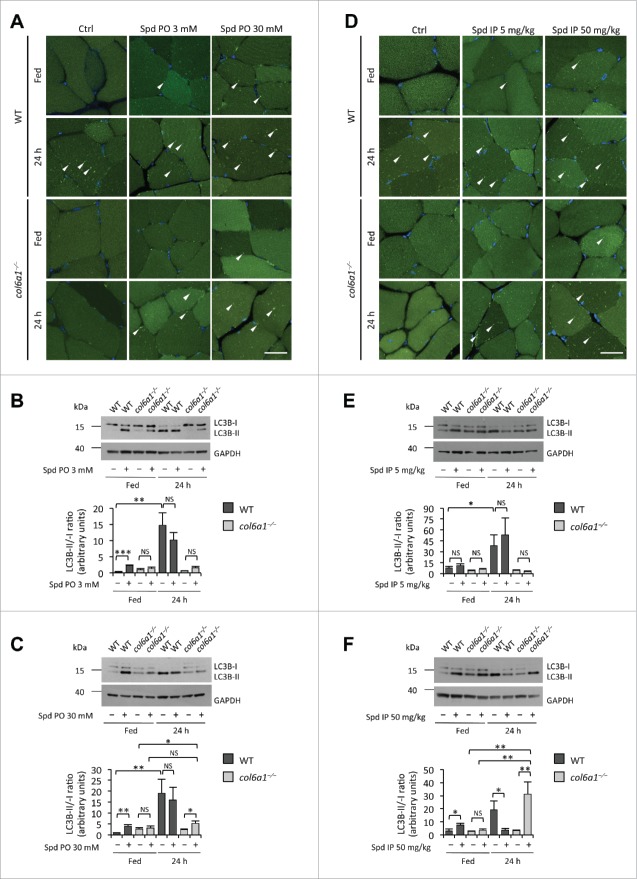
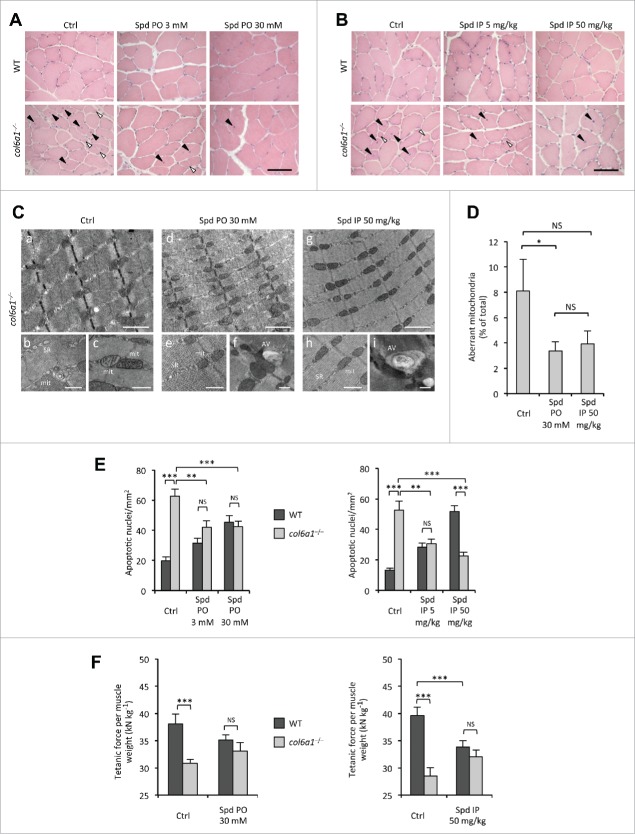
Autophagy is a self-degradative process responsible for the clearance of damaged or unnecessary cellular components. We have previously found that persistence of dysfunctional organelles due to autophagy failure is a key event in the pathogenesis of COL6/collagen VI-related myopathies, and have demonstrated that reactivation of a proper autophagic flux rescues the muscle defects of Col6a1-null (col6a1(-/-)) mice. Here we show that treatment with spermidine, a naturally occurring nontoxic autophagy inducer, is beneficial for col6a1(-/-) mice. Systemic administration of spermidine in col6a1(-/-) mice reactivated autophagy in a dose-dependent manner, leading to a concurrent amelioration of the histological and ultrastructural muscle defects. The beneficial effects of spermidine, together with its being easy to administer and the lack of overt side effects, open the field for the design of novel nutraceutical strategies for the treatment of muscle diseases characterized by autophagy impairment.
Overview
The claims and statistics of this paper haven’t been checked yet.
Free: it reads the open-access text and checks the first 5 claims that cite a source we can check. Create a free account to check every claim.
Integrity signals
Registry
Cites
Statistics
Figures
Verification
Claims the paper makes
The claims and statistics of this paper haven’t been checked yet.
Free: it reads the open-access text and checks the first 5 claims that cite a source we can check. Create a free account to check every claim.
Claims other papers make about this one
Each is checked against this paper’s own text: does it say what the citing paper says it does?
The source backs part of the claim, not all of it — or backs it for a different population, condition or comparison.
In the citing paper
“(iv) conditions in which pharmacological activation of muscular autophagy reinstalls functionality of the muscle (Chrisam et al, 2015)”
From Autophagy in major human diseases (2021) · cites this paper as Chrisam et al, 2015
Experimental — accuracy not yet measuredThe cited source says what the claim attributes to it.
In the citing paper
“Myopathic defects associated with impaired autophagic flux and aberrant organelle accumulation”
From Autophagy in major human diseases (2021) · cites this paper as Chrisam et al (2015)
Self-check
Percentages, sums and reported differences re-computed from the paper’s own numbers.
The self-check needs the paper’s full text.
Citations
Cites
NIH Image to ImageJ: 25 years of image analysis
Schneider, C. A., Rasband, W. S., & Eliceiri, K. W. (2012) · Nature Methods · doi:10.1038/nmeth.2089 · Cited by 64,638 · cited 1×
“Densitometric quantification was performed by ImageJ software (NIH, Bethesda, Maryland, USA).(35)”
MethodRepertoires of Autophagy in the Pathogenesis of Ocular Diseases
Li, Y.-J., Jiang, Q., Cao, G.-F., Yao, J., & Yan, B. (2015) · Cellular Physiology and Biochemistry · doi:10.1159/000373980 · Cited by 16,304
Autophagy in the Pathogenesis of Disease
Levine, B., & Kroemer, G. (2008) · Cell · doi:10.1016/j.cell.2007.12.018 · Cited by 7,069 · cited 3×
“In physiological conditions, autophagy plays a crucial role during development, cell differentiation and tissue remodeling, acts as a cell housekeeper by degrading damaged or unnecessary organelles, and allows the retrieval of metabolites under nutrient starvation.(3,4) Age-related degeneration processes and neurodege…”
BackgroundAutophagy and Viruses: Adversaries or Allies?
Dong, X., & Levine, B. (2013) · Journal of Innate Immunity · doi:10.1159/000346388 · Cited by 4,430
Self-eating and self-killing: crosstalk between autophagy and apoptosis
Maiuri, M. C., Zalckvar, E., Kimchi, A., & Kroemer, G. (2007) · Nature Reviews Molecular Cell Biology · doi:10.1038/nrm2239 · Cited by 3,577
FoxO3 Controls Autophagy in Skeletal Muscle In Vivo
Mammucari, C., Milan, G., Romanello, V., Masiero, E., Rudolf, R., Del Piccolo, P., Burden, S. J., Di Lisi, R., Sandri, C., Zhao, J., et al. (2007) · Cell Metabolism · doi:10.1016/j.cmet.2007.11.001 · Cited by 1,953 · cited 4×
“Primer sequences were described elsewhere.(8,19)”
BackgroundInfluentialInduction of autophagy by spermidine promotes longevity
Eisenberg, T., Knauer, H., Schauer, A., Büttner, S., Ruckenstuhl, C., Carmona-Gutierrez, D., Ring, J., Schroeder, S., Magnes, C., Antonacci, L., et al. (2009) · Nature Cell Biology · doi:10.1038/ncb1975 · Cited by 1,680 · cited 5×
“Spermidine supplementation to cell culture media or in vivo administration to entire animals prolongs life span in different model organisms, an effect which is linked to autophagy induction.(9,10) Although the mechanisms by which spermidine acts are not yet fully understood, it has been shown that they involve a comp…”
BackgroundInfluentialCellular and molecular mechanisms of muscle atrophy
Bonaldo, P., & Sandri, M. (2013) · Disease Models & Mechanisms · doi:10.1242/dmm.010389 · Cited by 1,284 · cited 2×
“Indeed, alterations of the autophagic flux affect muscle homeostasis and also impinge on the body metabolic state.(7) COL6/collagen VI-related myopathies represent a notable group of inherited muscle disorders where a link between dystrophic phenotype and autophagy flux impairment was first demonstrated.”
BackgroundSelf-citationRogov, V., Dötsch, V., Johansen, T., & Kirkin, V. (2014) · Molecular Cell · doi:10.1016/j.molcel.2013.12.014 · Cited by 992 · cited 1×
“In physiological conditions, autophagy plays a crucial role during development, cell differentiation and tissue remodeling, acts as a cell housekeeper by degrading damaged or unnecessary organelles, and allows the retrieval of metabolites under nutrient starvation.(3,4) Age-related degeneration processes and neurodege…”
BackgroundModulation of cellular function by polyamines
Igarashi, K., & Kashiwagi, K. (2010) · The International Journal of Biochemistry & Cell Biology · doi:10.1016/j.biocel.2009.07.009 · Cited by 851 · cited 1×
“It is possible, for example, that this effect is correlated at least in part with the modulation of ion channels activity by polyamines.(30) Among the broad range of intracellular targets for spermidine,(9-11,30) which may mediate its beneficial effects in col6a1¡/¡ muscles, we focused on the AKT-MTOR axis.”
BackgroundWeidberg, H., Shvets, E., Shpilka, T., Shimron, F., Shinder, V., & Elazar, Z. (2010) · The EMBO Journal · doi:10.1038/emboj.2010.74 · Cited by 777 · cited 1×
“In order to further clarify the status of the autophagy machinery in the skeletal muscle of fed wild-type and col6a1¡/¡ mice subjected to per os spermidine treatment at different doses, we analyzed by immunoblotting the protein levels of RAB7, a small Ras-like GTPase with an essential role in lysosomal biogenesis and…”
MethodThe ins and outs of FoxO shuttling: mechanisms of FoxO translocation and transcriptional regulation
van der HEIDE, L. P., HOEKMAN, M. F. M., & SMIDT, M. P. (2004) · Biochemical Journal · doi:10.1042/bj20040167 · Cited by 691 · cited 1×
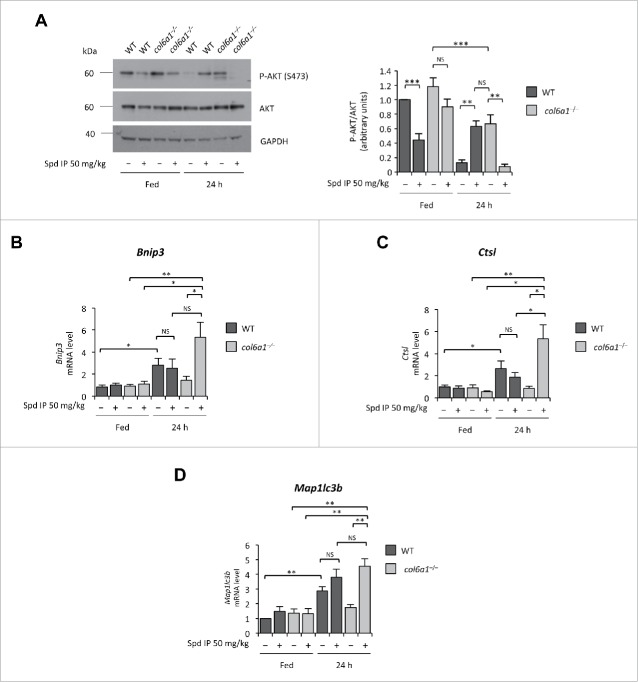
“AKT kinase negatively regulates the activity of FOXO (forkhead box O) transcription factors by phosphorylation, and decreased levels of phosphorylated AKT represent a permissive condition for FOXO activation.(19,20) To understand whether the autophagy-inducing effects of spermidine involve the AKT-FOXO axis, we invest…”
BackgroundGrumati, P., Coletto, L., Sabatelli, P., Cescon, M., Angelin, A., Bertaggia, E., Blaauw, B., Urciuolo, A., Tiepolo, T., Merlini, L., et al. (2010) · Nature Medicine · doi:10.1038/nm.2247 · Cited by 540 · cited 10×
“Indeed, we have previously demonstrated that the muscle defects of col6a1¡/¡ mice are strictly linked to a failure to maintain a proper autophagic flux in myofibers.(8) Inefficient autophagy in Col6a1-null muscles leads to the progressive accumulation of harmful organelles inside myofibers, which progressively degener…”
BackgroundMethodSelf-citationThe Role of Autophagy in Mammalian Development: Cell Makeover Rather than Cell Death
Cecconi, F., & Levine, B. (2008) · Developmental Cell · doi:10.1016/j.devcel.2008.08.012 · Cited by 521
Self-citationMitochondrial dysfunction and apoptosis in myopathic mice with collagen VI deficiency
Irwin, W. A., Bergamin, N., Sabatelli, P., Reggiani, C., Megighian, A., Merlini, L., Braghetta, P., Columbaro, M., Volpin, D., Bressan, G. M., et al. (2003) · Nature Genetics · doi:10.1038/ng1270 · Cited by 509 · cited 2×
“A well-established feature of col6a1¡/¡ mice and of UCMD and BM patients is the increased incidence of apoptotic myofibers in skeletal muscles.(8,17) TUNEL analysis for diaphragm revealed that spermidine administration elicited a strongly decreased incidence of apoptotic myofibers in col6a1¡/¡ mice.”
BackgroundSelf-citationSpermidine and resveratrol induce autophagy by distinct pathways converging on the acetylproteome
Morselli, E., Mariño, G., Bennetzen, M. V., Eisenberg, T., Megalou, E., Schroeder, S., Cabrera, S., Bénit, P., Rustin, P., Criollo, A., et al. (2011) · Journal of Cell Biology · doi:10.1083/jcb.201008167 · Cited by 499 · cited 3×
“Spermidine supplementation to cell culture media or in vivo administration to entire animals prolongs life span in different model organisms, an effect which is linked to autophagy induction.(9,10) Although the mechanisms by which spermidine acts are not yet fully understood, it has been shown that they involve a comp…”
BackgroundThe pleiotropic role of autophagy: from protein metabolism to bactericide
Mizushima, N. (2005) · Cell Death & Differentiation · doi:10.1038/sj.cdd.4401728 · Cited by 481 · cited 1×
“Autophagy is constantly active at low rates in the whole organism, but various stress or pharmacological stimuli can induce its flux.(1,3) In physiological conditions, autophagy plays a crucial role during development, cell differentiation and tissue remodeling, acts as a cell housekeeper by degrading damaged or unnec…”
BackgroundMaturation of autophagosomes and endosomes: A key role for Rab7
Hyttinen, J. M. T., Niittykoski, M., Salminen, A., & Kaarniranta, K. (2013) · Biochimica et Biophysica Acta (BBA) - Molecular Cell Research · doi:10.1016/j.bbamcr.2012.11.018 · Cited by 422
Regulation of autophagy by the Rab GTPase network
Ao, X., Zou, L., & Wu, Y. (2014) · Cell Death & Differentiation · doi:10.1038/cdd.2013.187 · Cited by 411
Wang, I.-F., Guo, B.-S., Liu, Y.-C., Wu, C.-C., Yang, C.-H., Tsai, K.-J., & Shen, C.-K. J. (2012) · Proceedings of the National Academy of Sciences · doi:10.1073/pnas.1206362109 · Cited by 377 · cited 1×
“Moreover, spermidine shows a rapamycin-like effect in promoting the removal of brain protein aggregates and ameliorating the phenotype of a mouse model for TDP-43 proteinopathies, suggesting that it may be a useful route for the therapy of neurodegenerative diseases such as frontotemporal lobar dementia.(25) Published…”
BackgroundRestoring polyamines protects from age-induced memory impairment in an autophagy-dependent manner
Gupta, V. K., Scheunemann, L., Eisenberg, T., Mertel, S., Bhukel, A., Koemans, T. S., Kramer, J. M., Liu, K. S. Y., Schroeder, S., Stunnenberg, H. G., et al. (2013) · Nature Neuroscience · doi:10.1038/nn.3512 · Cited by 372
Spermidine induces autophagy by inhibiting the acetyltransferase EP300
Pietrocola, F., Lachkar, S., Enot, D. P., Niso-Santano, M., Bravo-San Pedro, J. M., Sica, V, Izzo, V, Maiuri, M. C., Madeo, F., Mariño, G., et al. (2015) · Cell Death & Differentiation · doi:10.1038/cdd.2014.215 · Cited by 357 · cited 1×
“Recently, the histone acetyltransferase EP300 has been described as the major target on which spermidine exerts an inhibitory activity, determining autophagy induction in vitro.(11) Since in our previous studies we have found that reactivation of autophagy by either prolonged starvation or a low-protein diet is capabl…”
BackgroundInterplay between FOXO, TOR, and Akt
Hay, N. (2011) · Biochimica et Biophysica Acta (BBA) - Molecular Cell Research · doi:10.1016/j.bbamcr.2011.03.013 · Cited by 311 · cited 5×
“Hay N. Interplay between FOXO, TOR, and AKT.”
BackgroundInfluentialBonaldo, P. (1998) · Human Molecular Genetics · doi:10.1093/hmg/7.13.2135 · Cited by 305 · cited 1×
“BM and UCMD patients suffer from respiratory insufficiency due to a loss of functionality of diaphragm,(18) which is also the most affected muscle in col6a1¡/¡ mice where it displays marked ultrastructural defects and high incidence of apoptotic myofibers.(16) Both these aspects were rescued by spermidine.”
BackgroundSelf-citationBlaauw, B., Canato, M., Agatea, L., Toniolo, L., Mammucari, C., Masiero, E., Abraham, R., Sandri, M., Schiaffino, S., & Reggiani, C. (2009) · The FASEB Journal · doi:10.1096/fj.09-131870 · Cited by 244 · cited 1×
“Tetanic force measurements In vivo determination of force and contraction kinetics of gastrocnemius muscle was carried out as previously described.(36) Briefly, mice were anesthetized and contraction elicited by stimulation of the sciatic nerve with multistranded steel wires (Cooner Wire, Chatsworth, CA, USA) implante…”
MethodSelf-citationQuantitation of "autophagic flux" in mature skeletal muscle
Ju, J.-S., Varadhachary, A. S., Miller, S. E., & Weihl, C. C. (2010) · Autophagy · doi:10.4161/auto.6.7.12785 · Cited by 229 · cited 1×
“investigating the autophagic flux in skeletal muscle.(15) Consistently with the role of RAB7 in the intracellular vesicle trafficking and in the fusion of autophagosomes with lysosomes, this protein displayed unaltered levels in spermidine plus colchicinetreated animals with respect to untreated control conditions (Fi…”
BackgroundThe autophagy enhancer spermidine reverses arterial aging
LaRocca, T. J., Gioscia-Ryan, R. A., Hearon, C. M., & Seals, D. R. (2013) · Mechanisms of Ageing and Development · doi:10.1016/j.mad.2013.04.004 · Cited by 207
Misregulation of autophagy and protein degradation systems in myopathies and muscular dystrophies.
Sandri, M., Coletto, L., Grumati, P., & Bonaldo, P. (2013) · Journal of Cell Science · doi:10.1242/jcs.114041 · Cited by 179 · cited 2×
“Thereafter, defective autophagy induction has been reported in murine models for Duchenne muscular dystrophy and Emery-Dreyfuss muscular dystrophy, whereas increased autophagy flux contributes to the phenotype of dy/dy mice, the animal model of MDC1A congenital muscular dystrophy.(5) Notably, the”
BackgroundSelf-citationPolyamines in foods: development of a food database
Atiya Ali, M., Poortvliet, E., Strömberg, R., & Yngve, A. (2011) · Food & Nutrition Research · doi:10.3402/fnr.v55i0.5572 · Cited by 163 · cited 1×
“A major advantage of spermidine is that it is a natural compound, present at high concentrations in foods such as mushrooms or soybean, and that it can be easily administered.(32) In conclusion, our data in col6a1¡/¡ animals point at spermidine as a nutraceutical therapeutic option for COL6-relatedmyopathies and indic…”
BackgroundChapter 2 Methods for Monitoring Autophagy Using GFP‐LC3 Transgenic Mice
Mizushima, N. (2009) · Methods in Enzymology · doi:10.1016/s0076-6879(08)03602-1 · Cited by 160 · cited 1×
“RBRC00806).(33) GFP-LC3 mice were backcrossed in the C57BL/6N strain and then crossed with col6a1¡/¡ mice to generate col6a1¡/¡;GFP-LC3 animals.”
MethodPolyamines and programmed cell death
Moschou, P. N., & Roubelakis–Angelakis, K. A. (2013) · Journal of Experimental Botany · doi:10.1093/jxb/ert373 · Cited by 143 · cited 1×
“In addition to this, the antiapoptotic effect of spermidine may also depend on a direct influence of this polyamine on the regulation of programmed cell death or on the crosstalk between the regulatory networks of these 2 processes.(26,27) Conversely, in wild-type mice, high-dose spermidine administration had some adv…”
BackgroundCarmignac, V., Svensson, M., Körner, Z., Elowsson, L., Matsumura, C., Gawlik, K. I., Allamand, V., & Durbeej, M. (2011) · Human Molecular Genetics · doi:10.1093/hmg/ddr427 · Cited by 119 · cited 1×
“Autophagy induction in spermidine-treated wild-type muscles was promptly detectable even in fed conditions, and it is well known that excessively induced autophagy is detrimental for myofiber homeostasis.(8,28) The most detrimental known effect of spermidine is due to its capability to inhibit NOS1 (nitric oxid syntha…”
BackgroundPosttranslational modifications control FoxO3 activity during denervation
Bertaggia, E., Coletto, L., & Sandri, M. (2012) · American Journal of Physiology-Cell Physiology · doi:10.1152/ajpcell.00142.2011 · Cited by 114 · cited 1×
“FOXO transcription factors are regulated by different post-translational modifications, and among these inhibitory acetylation by the histone acetyltransferase EP300 has been thoroughly described.(31) As spermidine also acts as a histone acetyltransferase inhibitor, and one of its known targets is EP300,(11) it is pla…”
BackgroundMinois, N., Carmona-Gutierrez, D., Bauer, M. A., Rockenfeller, P., Eisenberg, T., Brandhorst, S., Sigrist, S. J., Kroemer, G., & Madeo, F. (2012) · Cell Death & Disease · doi:10.1038/cddis.2012.139 · Cited by 108 · cited 1×
“Spermidine counteracts aging and promotes longevity in different species by increasing the basal autophagy levels.(9,10,22) Recent work suggests that this polyamine may be beneficial for counteracting several age-related pathologies, such as arterial aging and memory impairment.”
BackgroundVainshtein, A., Grumati, P., Sandri, M., & Bonaldo, P. (2014) · Journal of Molecular Medicine · doi:10.1007/s00109-013-1096-z · Cited by 88 · cited 2×
“Skeletal muscle is an extremely plastic tissue, able to undergo extensive changes in response to physical exercise, dietary restriction and metabolic dysregulation.(6) In this tissue, autophagy is essential for providing energy and eliminating harmful exhausted organelles.”
BackgroundSelf-citationCollagen VI regulates peripheral nerve myelination and function
Chen, P., Cescon, M., Megighian, A., & Ronaldo, P. (2014) · The FASEB Journal · doi:10.1096/fj.13-239533 · Cited by 84 · cited 1×
“Western blotting Protein extraction from muscles and western blot analysis were performed as previously described.(34) Primary antibodies against the following proteins were used: AKT (Cell Signaling Technology, 9272), phospho-AKT (Ser473; Cell Signaling Technology, 4058), LC3B (Thermo Scientific, PA1–16930), GAPDH (M…”
MethodBernardi, P., & Bonaldo, P. (2008) · Annals of the New York Academy of Sciences · doi:10.1196/annals.1427.009 · Cited by 79 · cited 1×
“A well-known feature of col6a1¡/¡ muscles is the presence of altered organelles, in particular swollen mitochondria and dilated sarcoplasmic reticulum.(8,17,18) Histological staining for SDH/succinate dehydrogenase, a mitochondrial marker, showed a more homogeneous labeling, pointing at an amelioration of the mitochon…”
BackgroundSelf-citationAli, M. A., Poortvliet, E., Strömberg, R., & Yngve, A. (2011) · Food & Nutrition Research · doi:10.3402/fnr.v55i0.5455 · Cited by 44
EFFECTS OF POLYAMINES ON THE CENTRAL NERVOUS SYSTEM
Sakurada, T., Onodera, K., Tadano, T., & Kisara, K. (1975) · The Japanese Journal of Pharmacology · doi:10.1254/jjp.25.653 · Cited by 21
Cited by
Autophagy in major human diseases
Klionsky, D. J., Petroni, G., Amaravadi, R. K., Baehrecke, E. H., Ballabio, A., Boya, P., Bravo‐San Pedro, J. M., Cadwell, K., Cecconi, F., Choi, A. M. K., et al. (2021) · The EMBO Journal · doi:10.15252/embj.2021108863 · Cited by 1,585
Self-citationSpermidine in health and disease
Madeo, F., Eisenberg, T., Pietrocola, F., & Kroemer, G. (2018) · Science · doi:10.1126/science.aan2788 · Cited by 1,154
“Similarly, spermidine reactivated autophagy and ameliorated the myopathic defects of collagenVI–deficient mice, which are normally characterized by invalidating mitochondrial defects (71).”
BackgroundDietary spermidine improves cognitive function
Schroeder, S., Hofer, S. J., Zimmermann, A., Pechlaner, R., Dammbrueck, C., Pendl, T., Marcello, G. M., Pogatschnigg, V., Bergmann, M., Müller, M., et al. (2021) · Cell Reports · doi:10.1016/j.celrep.2021.108985 · Cited by 225
Role of Oxidative Stress as Key Regulator of Muscle Wasting during Cachexia
Ábrigo, J., Elorza, A. A., Riedel, C. A., Vilos, C., Simon, F., Cabrera, D., Estrada, L., & Cabello-Verrugio, C. (2018) · Oxidative Medicine and Cellular Longevity · doi:10.1155/2018/2063179 · Cited by 221
Mechanisms of spermidine-induced autophagy and geroprotection
Hofer, S. J., Simon, A. K., Bergmann, M., Eisenberg, T., Kroemer, G., & Madeo, F. (2022) · Nature Aging · doi:10.1038/s43587-022-00322-9 · Cited by 204
Metadata
- Authors
- Chrisam, M., Pirozzi, M., Castagnaro, S., Blaauw, B., Polishchuck, R., Cecconi, F., Grumati, P., & Bonaldo, P.
- Affiliations
- University of Padua (IT)
- Telethon Institute Of Genetics And Medicine (IT)
- Veneto Institute of Molecular Medicine (IT)
- University of Rome Tor Vergata (IT)
- Goethe University Frankfurt (DE)
- Corresponding author
- Grumati, Paolo
- Bonaldo, Paolo
- ORCID
- Venue
- Autophagy
- Publisher
- Informa UK Limited
- Published
- 2015-12-01
- Volume
- 11
- Issue
- 12
- Pages
- 2142-2152
- ISSN
- 1554-8627 (ISSN-L)
- 1554-8635
- PMC
- PMC4835186
- OpenAlex
- W2293066471
- Cited by
- 101
- References
- 39
- Citations by year
- 2026: 8 · 2025: 13 · 2024: 8 · 2023: 8 · 2022: 10 · 2021: 16 · 2020: 5 · 2019: 8 · 2018: 11 · 2017: 9 · 2016: 4
- FWCI
- 3.48
- Type
- journal article
- Language
- en
- Open access
- hybrid
- doi.org
- Licence
- Locations
- Autophagy (publishedVersion, cc-by)
- PubMed Central (publishedVersion, cc-by)
- PubMed (publishedVersion)
- Publication Server of Goethe University Frankfurt am Main (Goethe University Frankfurt) (submittedVersion, cc-by)
- Padua Research Archive (University of Padova) (submittedVersion)
- Topics
- Life Sciences › Biochemistry, Genetics and Molecular Biology › Molecular Biology › Muscle Physiology and Disorders
- Life Sciences › Biochemistry, Genetics and Molecular Biology › Cell Biology › Autophagy in Disease and Therapy
- Health Sciences › Medicine › Genetics (clinical) › Neurogenetic and Muscular Disorders Research
- Keywords
- spermidine, collagen VI-related myopathies, autophagic flux, muscle ultrastructure, muscle histology, nutraceutical therapy, myopathy, autophagy inducers
- MeSH terms
- Animals, Autophagy, Disease Models, Animal, Mice, Inbred C57BL, Mitochondria, Muscles, Muscular Diseases, Spermidine, Apoptosis, Mice, Knockout, Collagen Type VI
About these checks
Registry, retraction, Cites and statistics results are computed, not judged, with one exception: a printed reference that no index lists is read once by a model before it counts as a citation error. Claims are extracted by a model and kept only when their quote appears verbatim in the text; each cited source is then checked, with a model’s help, for whether it says what the claim relies on. Those verdicts can be wrong — read the claim’s quote and the cited source before relying on one.
Statistics and arithmetic are recomputed, not judged.
Confidence bands are shown only for fields calibrated on our annotated test set. None is calibrated yet, so no band is shown.
What counts as a claim ›How we measure confidence ›How we check this ›
Are you an author, or do you see a problem with this page? Request a review
Data sources
Bibliographic data: Semantic Scholar, OpenAlex, Crossref.
Contains information from the Semantic Scholar Academic Graph Datasets, made available under the ODC Attribution License (ODC-BY 1.0).
Semantic Scholar’s data is described in: Kinney, R., et al. (2023). The Semantic Scholar Open Data Platform. arXiv:2301.10140.
