

Acceptance- and mindfulness-based interventions for the treatment of chronic pain: a meta-analytic review
Open accessThe DOI matches its Crossref record; 138 of the 141 references it cites were found in a registry or an index, and 2 are not checked yet; 7 of the 23 sources its claims cite were checked for support.
Abstract
The number of acceptance- and mindfulness-based interventions for chronic pain, such as acceptance and commitment therapy (ACT), mindfulness-based stress reduction (MBSR), and mindfulness-based cognitive therapy (MBCT), increased in recent years. Therefore an update is warranted of our former systematic review and meta-analysis of studies that reported effects on the mental and physical health of chronic pain patients. Pubmed, EMBASE, PsycInfo and Cochrane were searched for eligible studies. Current meta-analysis only included randomized controlled trials (RCTs). Studies were rated for quality. Mean quality did not improve in recent years. Pooled standardized mean differences using the random-effect model were calculated to represent the average intervention effect and, to perform subgroup analyses. Outcome measures were pain intensity, depression, anxiety, pain interference, disability and quality of life. Included were twenty-five RCTs totaling 1285 patients with chronic pain, in which we compared acceptance- and mindfulness-based interventions to the waitlist, (medical) treatment-as-usual, and education or support control groups. Effect sizes ranged from small (on all outcome measures except anxiety and pain interference) to moderate (on anxiety and pain interference) at post-treatment and from small (on pain intensity and disability) to large (on pain interference) at follow-up. ACT showed significantly higher effects on depression and anxiety than MBSR and MBCT. Studies’ quality, attrition rate, type of pain and control group, did not moderate the effects of acceptance- and mindfulness-based interventions. Current acceptance- and mindfulness-based interventions, while not superior to traditional cognitive behavioral treatments, can be good alternatives. © 2016 Swedish Association for Behaviour Therapy.
Verified 2026-11-22 · 2 references not checked yet
Overview
CoChat Summary
TL;DR
This meta-analysis of 25 RCTs (1285 chronic pain patients) found acceptance- and mindfulness-based interventions produced small-to-moderate benefits at post-treatment and generally larger effects at follow-up, especially for pain interference. ACT showed significantly higher effects on depression and anxiety than MBSR/MBCT, but the interventions were not superior to traditional CBT and can be considered good alternatives.
Key findings
- At post-treatment, pooled SMDs were small for pain intensity (.24, 95% CI .06–.42), depression (.43, .18–.68), disability (.40, .01–.79), and quality of life (.44, −.05–.93; p = .08, not significant); moderate for anxiety (.51, .10–.92) and pain interference (.62, .21–1.03).
- At follow-up (2–6 months), effects were small for pain intensity (.41, .14–.68) and disability (.39, .11–.67), moderate for depression (.53, .24–.82), anxiety (.59, .14–1.04), and quality of life (.66, .06–1.26), and large for pain interference (1.05, .55–1.56); all were statistically significant.
- ACT had significantly higher effects than mindfulness-based interventions on depression (SMD .82 vs. .18) and anxiety (SMD .64 vs. −.01).
- Studies’ quality, attrition rate, type of pain, and control group did not moderate effects in the abstract’s summary; subgroup analyses found (M)TAU controls had higher anxiety effects than education/support controls, and medium-quality studies had lower quality-of-life effects than low- or high-quality studies.
Methods
- Systematic review and meta-analysis of randomized controlled trials; searched PubMed, EMBASE, PsycInfo, and Cochrane Central Register of Controlled Trials, updating a prior search up to December 2008 with studies from January 2009 to December 2013, restricted to English-language studies.
- Main analyses included 25 RCTs totaling 1285 chronic pain patients, comparing acceptance- and mindfulness-based interventions (ACT, MBSR, MBCT, and related programs) with waitlist, (medical) treatment-as-usual, or education/support controls; five studies compared interventions with active treatments such as CBT, multidisciplinary treatment, or relaxation.
- Pooled standardized mean differences were calculated using a random-effects model; subgroup analyses examined quality score, control group, intervention type, pain type, and attrition rate; methodological quality was assessed with an 8-point scale, and funnel plots assessed publication bias.
Limitations
- The paper states that average study quality did not improve over the past six years, that quality ratings may be underestimated because criteria were scored as unmet when not reported, and that ACT and mindfulness-based treatments could only be compared at post-treatment because too few studies were available for follow-up subgroup analyses.
- The paper also states that a small number of studies were represented in some subgroup analyses.
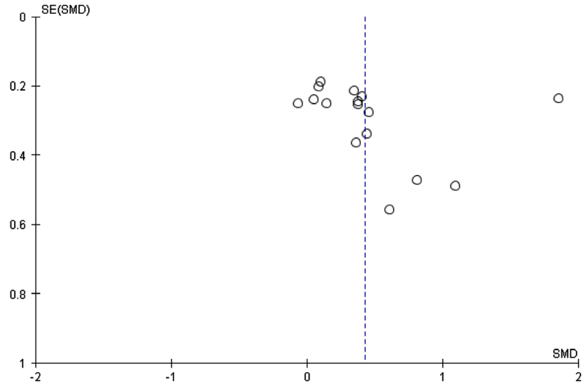
- Evident from the text: heterogeneity was substantial for several outcomes (e.g., I² = 85% for post-treatment quality of life, 96% for some active-treatment comparisons), pain interference and anxiety had few studies (4 and 6 at post-treatment, respectively), and some indication of publication bias was found for depression.
Model-written summary. Check it against the paper before relying on it.
Integrity signals
Registry
Cites
Statistics
Figures



Verification
Claims the paper makes
6 Valid · 1 Not valid · 13 Not checked · 80 Own results and interpretations
The cited sources support only part of this claim — read each source’s verdict below.
In the paper
“Systematic reviews that qualitatively assess the efficacy of ACT, MBSR and MBCT generally find beneficial effects in chronic pain conditions (Lakhan & Schofield, 2013; McCracken & Vowles, 2014).”
What the sources say
- Partly supportedcites Lakhan & Schofield, 2013 matched to “Mindfulness-Based Therapies in the Treatment of Somatization Disorders: A Systematic Review and Meta-Analysis” (2013) sourceExperimental — accuracy not yet measured
The Discussion and Conclusions report beneficial effects of mindfulness-based therapies, including MBSR and MBCT, for some somatization conditions; pain improvement was clearest for irritable bowel syndrome. The paper does not establish a beneficial effect of ACT specifically, and its findings do not extend uniformly across chronic pain conditions. Page numbers are unavailable in our copy. (LLM, conf=0.86)
- Partly supportedcites McCracken & Vowles, 2014 matched to “Acceptance and commitment therapy and mindfulness for chronic pain: Model, process, and progress.” (2014) sourceExperimental — accuracy not yet measured
The ACT for Chronic Pain section reports positive chronic-pain trials and a meta-analysis finding acceptance- and mindfulness-based treatments at least as effective as traditional CBT. The Mindfulness section also describes symptom and emotional-functioning benefits. But the paper does not establish that qualitative systematic reviews generally found benefits for each of ACT, MBSR, and MBCT in chronic pain; its ACT systematic reviews covered mixed disorders, and the passages found do not address MBCT specifically. (LLM, conf=0.86)
plainstates an association- Asserted: passes — The authors put it forward as true.
- Checkable: passes — It can be checked against evidence.
- Load-bearing: passes — The paper’s conclusions depend on it.
- Based: passes — The paper gives a reason why it holds.
- Partly supported
Every source the paper cites for this claim was checked and supports it.
In the paper
“some impact on pain intensity may be reached because mindfulness skills have been found to influence brain mechanisms that may alter the pain experience (Zeidan et al., 2011).”
What the sources say
- Supportedcites Zeidan et al., 2011 matched to “Brain Mechanisms Supporting the Modulation of Pain by Mindfulness Meditation” (2011) source
The Discussion reports that meditation reduced pain-intensity ratings and links that relief to brain regions involved in cognitive pain modulation. Its section on multiple brain mechanisms specifically associates lower pain-intensity ratings with anterior cingulate and anterior insula activation. This supports the citing sentence’s cautious claim. (LLM, conf=0.93)
hedgedstates a possible cause- Asserted: passes — The authors put it forward as true.
- Checkable: passes — It can be checked against evidence.
- Load-bearing: unclear — It is unclear whether the paper’s conclusions depend on it.
- Based: passes — The paper gives a reason why it holds.
- Supported
Every source the paper cites for this claim was checked and supports it.
In the paper
“However, as is the case for biomedical treatment solutions, effect sizes of CBTs are modest (Williams, Eccleston, & Morley, 2012).”
What the sources say
- Supportedcites Williams, Eccleston, & Morley, 2012 matched to “Psychological therapies for the management of chronic pain (excluding headache) in adults” (2012) source
The Summary of results describes CBT effect sizes as “small to moderate.” The review also reports small effects on pain and disability compared with treatment as usual. The biomedical-treatment comparison is the citing authors’ framing, not a finding attributed to this source. (LLM, conf=0.92)
plain- Asserted: passes — The authors put it forward as true.
- Checkable: passes — It can be checked against evidence.
- Load-bearing: passes — The paper’s conclusions depend on it.
- Based: passes — The paper gives a reason why it holds.
- Supported
Every source the paper cites for this claim was checked and supports it.
In the paper
“Overall, the effect sizes found in this study were at least comparable to those found in a recent meta-analysis of CBT for chronic pain patients (Williams et al., 2012).”
What the sources say
- Supportedcites Williams et al., 2012 matched to “Psychological therapies for the management of chronic pain (excluding headache) in adults” (2012) source
The cited review reports pooled CBT effect sizes for adults with chronic pain in “Cognitive behavioural versus treatment as usual posttreatment,” including SMDs of −0.21 for pain, −0.26 for disability, and −0.38 for mood. It therefore supplies the meta-analysis benchmark cited in the sentence; whether the citing study’s effects are at least comparable depends on that study’s own results, not on this source. (LLM, conf=0.88)
plain- Asserted: passes — The authors put it forward as true.
- Checkable: passes — It can be checked against evidence.
- Load-bearing: passes — The paper’s conclusions depend on it.
- Based: passes — The paper gives a reason why it holds.
- Supported
The cited sources support only part of this claim — read each source’s verdict below.
In the paper
“However, only the effect size of mood was maintained at follow-up (Williams et al., 2012).”
What the sources say
- Partly supportedcites Williams et al., 2012 matched to “Psychological therapies for the management of chronic pain (excluding headache) in adults” (2012) sourceExperimental — accuracy not yet measured
The Summary of results says that, for CBT versus treatment as usual or waiting list, the mood effect was maintained at follow-up while pain and disability effects were not. But the unqualified claim overlooks a different comparison: the Cognitive behavioural versus active control at follow-up section reports a significant disability effect and no significant mood effect. (LLM, conf=0.87)
plain- Asserted: passes — The authors put it forward as true.
- Checkable: passes — It can be checked against evidence.
- Load-bearing: passes — The paper’s conclusions depend on it.
- Based: passes — The paper gives a reason why it holds.
- Partly supported
41 more claims
Create a free account to see all 100 claims and to verify the 1 reference still open.
- It may state two separate claims as one. 29
- Probably not a substantial claim. 30
- Not yet classified. 1
- The quote only partly states this claim. 7
Claims other papers make about this one
Each is checked against this paper’s own text: does it say what the citing paper says it does?
The cited source doesn’t support the claim as written.
In the citing paper
“whereas for the other meta-analysis the effects were non-significant (Veehof et al., 2016).”
From The empirical status of acceptance and commitment therapy: A review of meta-analyses (2020) · cites this paper as Veehof et al., 2016
Checked by a reasoning model — may be wrong.
Experimental — accuracy not yet measuredThe source backs part of the claim, not all of it — or backs it for a different population, condition or comparison.
In the citing paper
“Mindfulness-based interventions have been shown to enhance quality of life in many different chronic conditions (Demarzo et al., 2015; Crowe et al., 2016; Veehof et al., 2016; Haller et al., 2017) and we confirmed this with respect to MS in our study.”
From The effectiveness of a body-affective mindfulness intervention for multiple sclerosis patients with depressive symptoms: A randomized controlled clinical trial (2017) · cites this paper as Veehof et al., 2016
Experimental — accuracy not yet measuredThe source backs part of the claim, not all of it — or backs it for a different population, condition or comparison.
In the citing paper
“Mindfulness-based interventions are a relatively brief and cost-effective psychological treatment that have been shown to reduce depressive symptoms and improve quality of life in patients with several chronic diseases (Hofmann et al., 2010; Crowe et al., 2016; Veehof et al., 2016; Haller et al., 2017).”
From The effectiveness of a body-affective mindfulness intervention for multiple sclerosis patients with depressive symptoms: A randomized controlled clinical trial (2017) · cites this paper as Veehof et al., 2016
Experimental — accuracy not yet measuredThe source backs part of the claim, not all of it — or backs it for a different population, condition or comparison.
In the citing paper
“As such, our findings are in accordance with the theory that being mindful helps one encounter the pain experience without unnecessary elaboration, catastrophizing, or reactivity.10,15,50”
From Mindful attention is inversely associated with pain via mediation by psychological distress in orthopedic patients. (2024) · cites this paper as [50]
Experimental — accuracy not yet measuredThe source backs part of the claim, not all of it — or backs it for a different population, condition or comparison.
In the citing paper
“A meta-analysis defined MBIs with a duration of 2 weeks or less as brief. They were shown to have positive effects on negative affectivity (15).”
From Effects of a Brief Mindfulness-based Intervention in Patients with Psoriasis: A Randomized Controlled Trial (2024) · cites this paper as [15]
Experimental — accuracy not yet measured
65 more claims about this paper
Create a free account to see every claim other papers make about this one.
Self-check
Percentages, sums and reported differences re-computed from the paper’s own numbers.
Each contradiction between two passages listed here was confirmed by an independent check.
Rated major: it would touch a result — a value a result rests on, reported and recomputed p-values on opposite sides of the significance level, two passages that conflict with no sign which is right, or a cited work retracted before this paper was published.
In the paper
§ Follow-up effects
“The effects on anxiety and disability remained moderate with mean SMDs of respectively .59 (95% CI = .14, 1.04) and .39 (95% CI = .11, .67).”
§ Post-treatment effects
“| | Follow-up | 4 | Luciano et al., 2014; Wicksell et al., 2008, 2013; Wong et al., 2011 | χ 2 = 12.07, df = 3 ( p = .007); I 2 = 75% | .57 (.00, 1.14) | Z = 1.97 ( p = .05) |”
Rated major: it would touch a result — a value a result rests on, reported and recomputed p-values on opposite sides of the significance level, two passages that conflict with no sign which is right, or a cited work retracted before this paper was published.
In the paper
§ ABSTRACT
“Studies' quality, attrition rate, type of pain and control group, did not moderate the effects of acceptanceand mindfulness-based interventions.”
§ Subgroup analyses
“Finally, medium quality studies (SMD .17) showed a lower mean effect on quality of life than the low (SMD 1.01) and high (2.33) quality studies.”
Rated major: it would touch a result — a value a result rests on, reported and recomputed p-values on opposite sides of the significance level, two passages that conflict with no sign which is right, or a cited work retracted before this paper was published.
In the paper
§ ABSTRACT
“Studies' quality, attrition rate, type of pain and control group, did not moderate the effects of acceptanceand mindfulness-based interventions.”
§ Subgroup analyses
“Furthermore, studies using a (M)TAU group as the control group (SMD .85) showed a higher mean effect on anxiety than studies using an education/support group as an active control group (SDM .07).”
Rated major: it would touch a result — a value a result rests on, reported and recomputed p-values on opposite sides of the significance level, two passages that conflict with no sign which is right, or a cited work retracted before this paper was published.
In the paper
§ Follow-up effects
“The effects on depression and quality of life (slightly) increased and became moderate with mean SMDs of respectively . 53 (95% CI = .24, .82) and .66 (95% CI = .06, 1.26).”
§ Post-treatment effects
“| | Follow-up | 10 | Zautra et al., 2008 Astin et al., 2003; Luciano et al., 2014; McCracken et al., 2013; Parra-Delgado & Latorre-Posti- go, 2013; Pradhan et al., 2007; Schmidt et al., 2011; Sephton et al., 2007; Wicksell et al., 2008, | χ 2 = 30.65, df = 9 ( p = .0003); I 2 = 71% | .50 (.19, .80) | Z = 3.22 ( p = .001) |”
Rated minor: it would not touch a result — a value no result rests on, a p-value that stays on the same side of the significance level, or a conflict that is clerical, resolved elsewhere in the paper, or outside its own findings.
In the paper
§ Main findings
“the current meta-analysis which showed that the effects on all outcomes, except pain intensity, increased at follow-up.”
§ Follow-up effects
“The effects on anxiety and disability remained moderate with mean SMDs of respectively .59 (95% CI = .14, 1.04) and .39 (95% CI = .11, .67).”
1 more finding
Create a free account to see every finding of this check.
Citations
Cites
Statistical Power Analysis for the Behavioral Sciences (2nd ed.).
Lachenbruch, P. A., & Cohen, J. (1989) · Journal of the American Statistical Association · doi:10.2307/2290095 · Cited by 37,395 · cited 2×
“Cohen (Cohen, 1977) has described effect sizes .”
BackgroundStatistical Power Analysis for the Behavioral Sciences
Cohen, J. (2013) · doi:10.4324/9780203771587 · Cited by 25,373
Cochrane Handbook for Systematic Reviews of Interventions: Cochrane Book Series
(2008) · doi:10.1002/9780470712184 · Cited by 25,048
Assessing the quality of reports of randomized clinical trials: Is blinding necessary?
Jadad, A. R., Moore, R. A., Carroll, D., Jenkinson, C., Reynolds, D. J. M., Gavaghan, D. J., & McQuay, H. J. (1996) · Controlled Clinical Trials · doi:10.1016/0197-2456(95)00134-4 · Cited by 17,582 · cited 1×
“Methodological quality of included studies was independently assessed by two reviewers (MV and KS) using a 8-point scale, based on criteria by the Cochrane Collaboration (Higgins & Altman, 2008) and the validated Jadad scale (Jadad, 1996) tailored for the included studies (see Table 1).”
MethodUsing Self-Report Assessment Methods to Explore Facets of Mindfulness
Baer, R. A., Smith, G. T., Hopkins, J., Krietemeyer, J., & Toney, L. (2006) · Assessment · doi:10.1177/1073191105283504 · Cited by 7,511
(2008) · Medical Entomology and Zoology · Cited by 7,477
Acceptance and commitment therapy: model, processes and outcomes
Hayes, S. C., Luoma, J. B., Bond, F. W., Masuda, A., & Lillis, J. (2006) · Behaviour Research and Therapy · doi:10.1016/j.brat.2005.06.006 · Cited by 6,587
Shapiro, S. L., Carlson, L. E., Astin, J. A., & Freedman, B. (2006) · Journal of Clinical Psychology · doi:10.1002/jclp.20237 · Cited by 4,002
The effect of mindfulness based therapy on anxiety and depression: A meta analytic review
Hofmann, S. G., Sawyer, A. T., Witt, A. A., & Oh, D. (2010) · Journal of Consulting and Clinical Psychology · doi:10.1037/a0018555 · Cited by 3,846
(2008) · Cited by 3,790
Core outcome measures for chronic pain clinical trials: IMMPACT recommendations
Dworkin, R. H., Turk, D. C., Farrar, J. T., Haythornthwaite, J. A., Jensen, M. P., Katz, N. P., Kerns, R. D., Stucki, G., Allen, R. R., Bellamy, N., et al. (2005) · Pain · doi:10.1016/j.pain.2004.09.012 · Cited by 3,732 · cited 1×
“In agreement with the Clinical Importance of Treatment Outcomes in Chronic Pain Clinical Trials recommendations (Dworkin et al., 2005), our outcome measures were pain intensity, depression, anxiety, disability, pain interference, and quality of life.”
Result(2001) · Cited by 3,666
Core outcome domains for chronic pain clinical trials: IMMPACT recommendations
Turk, D. C., Dworkin, R. H., Allen, R. R., Bellamy, N., Brandenburg, N., Carr, D. B., Cleeland, C., Dionne, R., Farrar, J. T., Galer, B. S., et al. (2003) · Pain · doi:10.1016/j.pain.2003.08.001 · Cited by 3,510
Assessing Risk of Bias in Included Studies
Higgins, J. P., & Altman, D. G. (2008) · Cochrane Handbook for Systematic Reviews of Interventions · doi:10.1002/9780470712184.ch8 · Cited by 3,396 · cited 1×
“Methodological quality of included studies was independently assessed by two reviewers (MV and KS) using a 8-point scale, based on criteria by the Cochrane Collaboration (Higgins & Altman, 2008) and the validated Jadad scale (Jadad, 1996) tailored for the included studies (see Table 1).”
MethodTHE JOURNAL OF REPRODUCTIVE MEDICINE: PATIENT ANXIETY DURING GYNECOLOGIC EXAMINATIONS
Reddy, D. M., & Wasserman, S. A. (1999) · American Journal of Nursing · doi:10.1097/00000446-199901000-00024 · Cited by 2,483
Publication Bias in Meta‐Analysis: Prevention, Assessment and Adjustments
(2005) · doi:10.1002/0470870168 · Cited by 2,368
Alternative Therapies in Health and Medicine
Bick, D. (1996) · JAMA: The Journal of the American Medical Association · doi:10.1001/jama.1996.03530370072040 · Cited by 1,734
Psychological therapies for the management of chronic pain (excluding headache) in adults
Williams, A. C. D. C., Eccleston, C., & Morley, S. (2012) · Cochrane Database of Systematic Reviews · doi:10.1002/14651858.cd007407.pub3 · Cited by 1,634
Acceptance and commitment therapy.
Hayes, S. C., & Lillis, J. (2012) · American Psychological Association eBooks · doi:10.1037/17335-000 · Cited by 1,543
The Analysis of Contingency Tables
Odoroff, C. L. (1978) · Technometrics · doi:10.1080/00401706.1978.10489678 · Cited by 1,541
Mindfulness-Based Cognitive Therapy for Depression: A New Approach to Preventing Relapse
Morgan, D. (2003) · Psychotherapy Research · doi:10.1080/713869628 · Cited by 1,193
Fear-Avoidance Model of Chronic Pain: The Next Generation
Crombez, G., Eccleston, C., Van Damme, S., Vlaeyen, J. W. S., & Karoly, P. (2012) · The Clinical Journal of Pain · doi:10.1097/ajp.0b013e3182385392 · Cited by 960
Fifteen Years of Explaining Pain: The Past, Present, and Future
Moseley, G. L., & Butler, D. S. (2015) · The Journal of Pain · doi:10.1016/j.jpain.2015.05.005 · Cited by 856 · cited 1×
“Pain education as developed by Moseley and his colleagues has been shown to have beneficial effects as a treatment on its own (Moseley & Butler, 2015).”
BackgroundMediation Models for Longitudinal Data in Developmental Research
Selig, J. P., & Preacher, K. J. (2009) · Research in Human Development · doi:10.1080/15427600902911247 · Cited by 804 · cited 1×
“It must be scheduled in such a way that one is most certain to catch unfolding of processes one is interested in (Selig & Preacher, 2009).”
BackgroundVeehof, M. M., Oskam, M.-J., Schreurs, K. M. G., & Bohlmeijer, E. T. (2011) · PAIN · doi:10.1016/j.pain.2010.11.002 · Cited by 792 · cited 5×
“Selection procedure and eligibility criteria Inclusion criteria were the same as the ones in our previous review, except that all studies had to have a randomised controlled design (Veehof et al., 2011).”
MethodResultInfluentialSelf-citationTreatment of chronic non-cancer pain
Turk, D. C., Wilson, H. D., & Cahana, A. (2011) · The Lancet · doi:10.1016/s0140-6736(11)60402-9 · Cited by 716 · cited 1×
“In general total pain relief is an unrealistic goal and treatments should focus on improving function (Turk et al., 2011).”
BackgroundJournal of Multidisciplinary Healthcare
(2020) · doi:10.2147/jmdh · Cited by 644
Breivik, H., Eisenberg, E., & O’Brien, T. (2013) · BMC Public Health · doi:10.1186/1471-2458-13-1229 · Cited by 643
Brain Mechanisms Supporting the Modulation of Pain by Mindfulness Meditation
Zeidan, F., Martucci, K. T., Kraft, R. A., Gordon, N. S., McHaffie, J. G., & Coghill, R. C. (2011) · The Journal of Neuroscience · doi:10.1523/jneurosci.5791-10.2011 · Cited by 640 · cited 1×
“Pain control and reduction are not the primary aims of acceptance- and mindfulness-based interventions, but some impact on pain intensity may be reached because mindfulness skills have been found to influence brain mechanisms that may alter the pain experience (Zeidan et al., 2011).”
BackgroundAcceptance and commitment therapy and mindfulness for chronic pain: Model, process, and progress.
McCracken, L. M., & Vowles, K. E. (2014) · American Psychologist · doi:10.1037/a0035623 · Cited by 627 · cited 2×
“Systematic reviews that qualitatively assess the efficacy of ACT, MBSR and MBCT generally find beneficial effects in chronic pain conditions (Lakhan & Schofield, 2013; McCracken & Vowles, 2014).”
Background(2019) · doi:10.12809/hkmj · Cited by 608
Weekly change in mindfulness and perceived stress in a mindfulness-based stress reduction program
Baer, R. A., Carmody, J., & Hunsinger, M. (2012) · Journal of Clinical Psychology · doi:10.1002/jclp.21865 · Cited by 546 · cited 1×
“In a MBSR study among adults with problematic stress resulting from chronic pain, chronic disease or other life circumstances, increases in mindfulness preceded decreases in perceived stress (Baer et al., 2012).”
BackgroundMorone, N. E., Greco, C. M., & Weiner, D. K. (2008) · Pain · doi:10.1016/j.pain.2007.04.038 · Cited by 546
(2006) · Arthritis & Rheumatism · doi:10.1002/(issn)1529-0131 · Cited by 530
Rosenzweig, S., Greeson, J. M., Reibel, D. K., Green, J. S., Jasser, S. A., & Beasley, D. (2010) · Journal of Psychosomatic Research · doi:10.1016/j.jpsychores.2009.03.010 · Cited by 517 · cited 1×
“Rempe, & Bradley, 2013; Rosenzweig et al., 2010; Vernon, 2011; Vowles & McCracken, 2010; Vowles, McCracken, & O’Brien, 2011; Vowles, Witkiewitz, Sowden, & Ashworth, 2014), no randomization (Cusens, Duggan, Thorne, & Burch, 2010; Vowles, Wetherell, & Sorrell, 2009), sample contained subjects other…”
Wetherell, J. L., Afari, N., Rutledge, T., Sorrell, J. T., Stoddard, J. A., Petkus, A. J., Solomon, B. C., Lehman, D. H., Liu, L., Lang, A. J., et al. (2011) · PAIN · doi:10.1016/j.pain.2011.05.016 · Cited by 508 · cited 3×
“Five studies compared acceptance- and mindfulness-based interventions to active treatments such as CBT (Wetherell et al., 2011; Zautra et al., 2008), relaxation (Schmidt et al., 2011; Thorsell et al., 2011) or MDT (Wicksell et al., 2009).”
BackgroundResultThe Journal of the American Osteopathic Association
(2015) · Journal of Osteopathic Medicine · doi:10.7556/jaoa.2015.001 · Cited by 473
McCracken, L. M., & Morley, S. (2014) · The Journal of Pain · doi:10.1016/j.jpain.2013.10.014 · Cited by 464 · cited 1×
“In acceptance- and mindfulness-based treatments, mindfulness and psychological flexibility are hypothesized to be the main process of change (McCracken & Morley, 2014).”
BackgroundDahl, J., Wilson, K. G., & Nilsson, A. (2004) · Behavior Therapy · doi:10.1016/s0005-7894(04)80020-0 · Cited by 448
Garland, E. L., Manusov, E. G., Froeliger, B., Kelly, A., Williams, J. M., & Howard, M. O. (2014) · Journal of Consulting and Clinical Psychology · doi:10.1037/a0035798 · Cited by 431
Zautra, A. J., Davis, M. C., Reich, J. W., Nicassario, P., Tennen, H., Finan, P., Kratz, A., Parrish, B., & Irwin, M. R. (2008) · Journal of Consulting and Clinical Psychology · doi:10.1037/0022-006x.76.3.408 · Cited by 430 · cited 17×
“The mediating role of psychological inflexibility was also found in individuals with pain that finished an online ACT program, but there were indications that catastrophizing, a putative mediating variable in a CBT model, was also an independent mediator on pain interference (Trompetter, Bohlmeijer, Fox, & Schreurs, 2…”
BackgroundResultInfluentialWicksell, R. K., Melin, L., Lekander, M., & Olsson, G. L. (2009) · Pain · doi:10.1016/j.pain.2008.11.006 · Cited by 393 · cited 5×
“Small effects were found in favour of CBT, and moderate to large effects were found in favour of acceptanceand mindfulness-based treatments compared to relaxation or MDT.”
BackgroundResultInfluentialThe Analysis of Contingency Tables
Everitt, B. S. (1992) · doi:10.1201/b15072 · Cited by 388
Sephton, S. E., Salmon, P., Weissbecker, I., Ulmer, C., Floyd, A., Hoover, K., & Studts, J. L. (2007) · Arthritis Care & Research · doi:10.1002/art.22478 · Cited by 387
Effect of Mindfulness‐Based stress reduction in rheumatoid arthritis patients
Pradhan, E. K., Baumgarten, M., Langenberg, P., Handwerger, B., Gilpin, A. K., Magyari, T., Hochberg, M. C., & Berman, B. M. (2007) · Arthritis Care & Research · doi:10.1002/art.23010 · Cited by 309
The Concepts of Power Analysis
Cohen, J. (1977) · Statistical Power Analysis for the Behavioral Sciences · doi:10.1016/b978-0-12-179060-8.50006-2 · Cited by 299
Schmidt, S., Grossman, P., Schwarzer, B., Jena, S., Naumann, J., & Walach, H. (2011) · PAIN · doi:10.1016/j.pain.2010.10.043 · Cited by 297 · cited 4×
“, 2008), relaxation (Schmidt et al., 2011; Thorsell et al., 2011) or MDT (Wicksell et al.”
BackgroundResultInfluentialBuhrman, M., Skoglund, A., Husell, J., Bergström, K., Gordh, T., Hursti, T., Bendelin, N., Furmark, T., & Andersson, G. (2013) · Behaviour Research and Therapy · doi:10.1016/j.brat.2013.02.010 · Cited by 285
Carson, J. W., Carson, K. M., Jones, K. D., Bennett, R. M., Wright, C. L., & Mist, S. D. (2010) · Pain · doi:10.1016/j.pain.2010.08.020 · Cited by 284 · cited 2×
“, 2010; Tekur, Chametcha, Hongasandra, & Raghuram, 2010; Tekur, Nagarathna, Chametcha, Hankey, & Nagendra, 2012; Vincent, Hill, Kruk, Cha, & Bauer, 2010), mindfulness or acceptance is not the main component of the intervention (Carbonell-Baeza et al., 2011; Carson, Carson, Jones, Mist, & Bennett, 2012; Carson et al.,…”
McCracken, L. M., & Gutiérrez-Martínez, O. (2011) · Behaviour Research and Therapy · doi:10.1016/j.brat.2011.02.004 · Cited by 283 · cited 1×
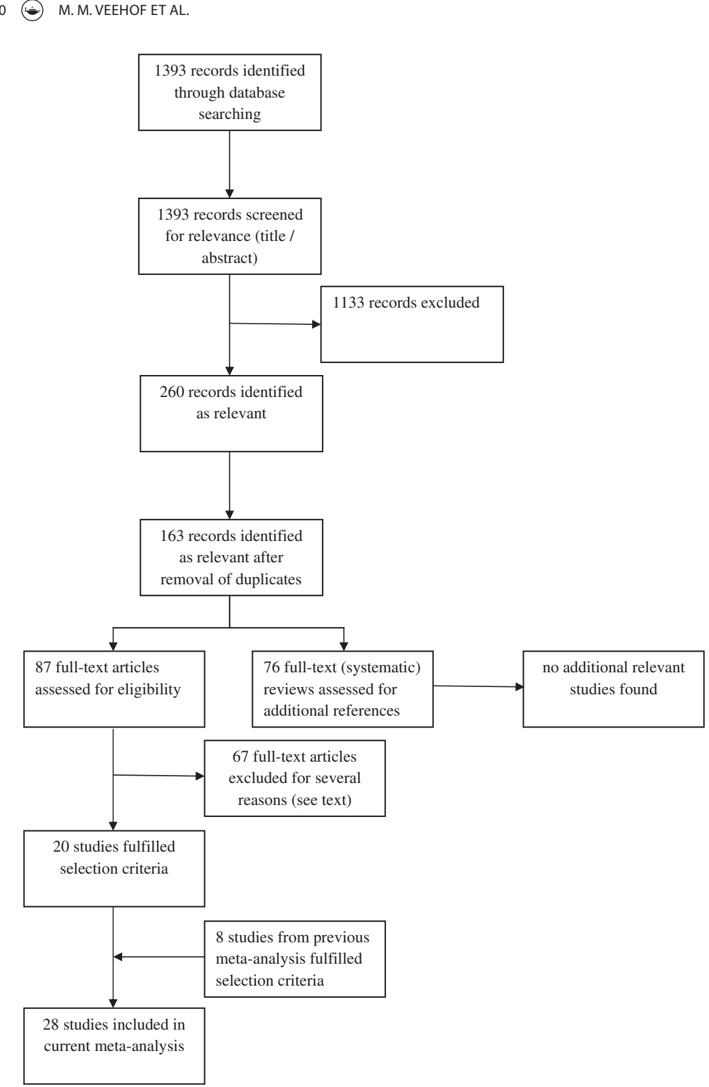
“…& Eide, 2012; Kristjánsdóttir et al., 2011; Ljotsson et al., 2013; Lunde & Nordhus, 2009; Lush et al., 2009; Mathias, Parry-Jones, & Huws, 2013; McCracken & Gutiérrez-Martínez, 2011; McCracken & Jones, 2012; Oberg, 87 full-text articles assessed for eligibility 76 full-text (systematic)…”
Mindfulness, Acceptance, and Positive Psychology: The Seven Foundations of Well-Being
Kashdan, T. B., & Ciarrochi, J. (2013) · Cited by 269
Lauche, R., Cramer, H., Dobos, G., Langhorst, J., & Schmidt, S. (2013) · Journal of Psychosomatic Research · doi:10.1016/j.jpsychores.2013.10.010 · Cited by 268
(2012) · Re-Unir (International University of La Rioja) · Cited by 262
Wicksell, R. K., Olsson, G. L., & Hayes, S. C. (2010) · European Journal of Pain · doi:10.1016/j.ejpain.2010.05.001 · Cited by 259 · cited 1×
“In a mediation analysis within a sample of patients with chronic whiplash-associated disorders, psychological inflexibility was identified as a mediator on pain-related disability and life satisfaction, but kinesiophobia was not (Wicksell et al., 2010).”
BackgroundAcceptance and commitment therapy for fibromyalgia: A randomized controlled trial.
Wicksell, R. K., Kemani, M., Jensen, K., Kosek, E., Kadetoff, D., Sorjonen, K., Ingvar, M., & Olsson, G. L. (2013) · European Journal of Pain · doi:10.1002/j.1532-2149.2012.00224.x · Cited by 244 · cited 2×
“…in the control group (Jastrowski Mano et al., 2013), duplicate study data (Jensen et al., 2012; Wicksell, Olsson, & Hayes, 2010, 2011), insufficient quantitative data or none at all (Esmer, Blum, Rulf, & Pier, 2010; Olsson et al., 2013; S. Y. Wong, 2009), single treatment session (Martin, 2012).”
Background(2003) · PubMed · Cited by 242
Wicksell, R. K., Ahlqvist, J., Bring, A., Melin, L., & Olsson, G. L. (2008) · Cognitive Behaviour Therapy · doi:10.1080/16506070802078970 · Cited by 235
Lakhan, S. E., & Schofield, K. L. (2013) · PLoS ONE · doi:10.1371/journal.pone.0071834 · Cited by 233 · cited 2×
“Systematic reviews that qualitatively assess the efficacy of ACT, MBSR and MBCT generally find beneficial effects in chronic pain conditions (Lakhan & Schofield, 2013; McCracken & Vowles, 2014).”
BackgroundJensen, K. B., Kosek, E., Wicksell, R., Kemani, M., Olsson, G., Merle, J. V., Kadetoff, D., & Ingvar, M. (2012) · PAIN · doi:10.1016/j.pain.2012.04.010 · Cited by 230 · cited 2×
“, 2013), duplicate study data (Jensen et al., 2012; Wicksell, Olsson, & Hayes, 2010, 2011), insufficient quantitative data or none at all (Esmer, Blum, Rulf, & Pier, 2010; Olsson et al.”
BackgroundDo mindfulness-based interventions reduce pain intensity? A critical review of the literature
Reiner, K., Tibi, L., & Lipsitz, J. D. (2013) · Pain Medicine · doi:10.1111/pme.12006 · Cited by 208
STINSON, J. N., McGRATH, P. J., HODNETT, E. D., FELDMAN, B. M., DUFFY, C. M., HUBER, A. M., TUCKER, L. B., HETHERINGTON, C. R., TSE, S. M. L., SPIEGEL, L. R., et al. (2010) · The Journal of Rheumatology · doi:10.3899/jrheum.091327 · Cited by 207 · cited 2×
“Of the 87 articles, 67 were excluded for the following reasons: no acceptance- and mindfulness-based intervention (Coleman, 2011; Cramer et al., 2013; Curtis, Osadchuk, & Katz, 2011; Elinoff, Lynn, Ochiai, & Hallquist, 2009; Elomaa, Williams, & Kalso, 2009; Evans et al., 2011; Friedberg et al., 2013; Hirschfeld et al.…”
Vowles, K. E., Witkiewitz, K., Sowden, G., & Ashworth, J. (2014) · The Journal of Pain · doi:10.1016/j.jpain.2013.10.002 · Cited by 201
Tekur, P., Nagarathna, R., Chametcha, S., Hankey, A., & Nagendra, H. R. (2012) · Complementary Therapies in Medicine · doi:10.1016/j.ctim.2011.12.009 · Cited by 188
Luciano, J. V., Guallar, J. A., Aguado, J., López-del-Hoyo, Y., Olivan, B., Magallón, R., Alda, M., Serrano-Blanco, A., Gili, M., & Garcia-Campayo, J. (2014) · PAIN · doi:10.1016/j.pain.2013.12.029 · Cited by 183 · cited 3×
“Statistical heterogeneity between the studies was caused by the studies of Luciano et al. (2014) (for pain, depression, anxiety and quality of life) and Mo’tamedi, Rezaiemaram, and Figure 2.”
BackgroundInfluentialVowles, K. E., McCracken, L. M., & O’Brien, J. Z. (2011) · Behaviour Research and Therapy · doi:10.1016/j.brat.2011.08.002 · Cited by 179
Borenstein, M. (2005) · Publication Bias in Meta‐Analysis · doi:10.1002/0470870168.ch11 · Cited by 178 · cited 1×
“This might be due to the fact that smaller studies are more likely to be published if they have larger-than-average effects (Borenstein, 2005).”
BackgroundMorley, S. (2011) · Pain · doi:10.1016/j.pain.2010.10.042 · Cited by 172 · cited 1×
“The meta-analytic approach of this study and the reported effect sizes not only offer insight into the strength of effects, but can also be used to benchmark pre- to post-treatment as well as follow-up measurements in daily practice (Morley, 2011).”
BackgroundMcCracken, L. M., Sato, A., & Taylor, G. J. (2013) · The Journal of Pain · doi:10.1016/j.jpain.2013.06.011 · Cited by 162
Mediators of change in Acceptance and Commitment Therapy for pediatric chronic pain
Wicksell, R. K., Olsson, G. L., & Hayes, S. C. (2011) · Pain · doi:10.1016/j.pain.2011.09.003 · Cited by 160
A mind-body program for older adults with chronic low back pain: results of a pilot study.
Morone, N. E., Rollman, B. L., Moore, C. G., Li, Q., & Weiner, D. K. (2009) · Pain Medicine · doi:10.1111/j.1526-4637.2009.00746.x · Cited by 157
Davis, M. C., & Zautra, A. J. (2013) · Annals of Behavioral Medicine · doi:10.1007/s12160-013-9513-7 · Cited by 151
Curtis, K., Osadchuk, & Katz, J. (2011) · Journal of Pain Research · doi:10.2147/jpr.s22761 · Cited by 150
The Analysis of Contingency Tables.
Everitt, B. S. (1992) · Biometrics · doi:10.2307/2532373 · Cited by 147
Fjorback, L. O., Arendt, M., Ørnbøl, E., Walach, H., Rehfeld, E., Schröder, A., & Fink, P. (2013) · Journal of Psychosomatic Research · doi:10.1016/j.jpsychores.2012.09.006 · Cited by 144 · cited 1×
“…& Burch, 2010; Vowles, Wetherell, & Sorrell, 2009), sample contained subjects other than pain patients (Branstetter-Rost, Cushing, & Douleh, 2009; Fjorback et al., 2012, 2013; Hartmann & Vlieger, 2012; Sampalli, Berlasso, Fox, & Petter, 2009), no appropriate outcome measure(s) (Cathcart,…”
Vowles, K. E., Wetherell, J. L., & Sorrell, J. T. (2009) · Cognitive and Behavioral Practice · doi:10.1016/j.cbpra.2008.08.001 · Cited by 144
The Effectiveness of an Acceptance and Commitment Therapy Self-help Intervention for Chronic Pain.
Johnston, M., Foster, M., Shennan, J., Starkey, N. J., & Johnson, A. (2010) · The Clinical Journal of Pain · doi:10.1097/ajp.0b013e3181cf59ce · Cited by 142
Mindfulness-Oriented Recovery Enhancement Reduces Pain Attentional Bias in Chronic Pain Patients
Garland, E. L., & Howard, M. O. (2013) · Psychotherapy and Psychosomatics · doi:10.1159/000348868 · Cited by 141 · cited 1×
“…Fox, & Petter, 2009), no appropriate outcome measure(s) (Cathcart, Barone, Immink, & Proeve, 2013; Cathcart, Vedova, Immink, Proeve, & Hayball, 2013; Garland & Howard, 2013; McCracken, Sato, & Taylor, 2013; Vago & Nakamura, 2011), 100% attrition in the control group (Jastrowski Mano et al., 2013),…”
Thorsell, J., Finnes, A., Dahl, J., Lundgren, T., Gybrant, M., Gordh, T., & Buhrman, M. (2011) · The Clinical Journal of Pain · doi:10.1097/ajp.0b013e318219a933 · Cited by 136 · cited 4×
“, 2008), relaxation (Schmidt et al., 2011; Thorsell et al., 2011) or MDT (Wicksell et al.”
BackgroundResultInfluentialPersonal values and pain tolerance: Does a values intervention add to acceptance?
Branstetter-Rost, A., Cushing, C., & Douleh, T. (2009) · The Journal of Pain · doi:10.1016/j.jpain.2009.01.001 · Cited by 135
Gauntlett-Gilbert, J., Connell, H., Clinch, J., & McCracken, L. M. (2013) · Journal of Pediatric Psychology · doi:10.1093/jpepsy/jss098 · Cited by 131
Vowles, K. E., & McCracken, L. M. (2010) · Behaviour Research and Therapy · doi:10.1016/j.brat.2009.09.011 · Cited by 122 · cited 1×
“Rempe, & Bradley, 2013; Rosenzweig et al., 2010; Vernon, 2011; Vowles & McCracken, 2010; Vowles, McCracken, & O’Brien, 2011; Vowles, Witkiewitz, Sowden, & Ashworth, 2014), no randomization (Cusens, Duggan, Thorne, & Burch, 2010; Vowles, Wetherell, & Sorrell, 2009), sample contained subjects other…”
Mindfulness-Based Stress Reduction for Failed Back Surgery Syndrome: A Randomized Controlled Trial
Esmer, G., Blum, J., Rulf, J., & Pier, J. (2010) · The Journal of the American Osteopathic Association · doi:10.7556/jaoa.2010.110.11.646 · Cited by 120
Mindfulness meditation for symptom reduction in fibromyalgia: psychophysiological correlates.
Lush, E., Salmon, P., Floyd, A., Studts, J. L., Weissbecker, I., & Sephton, S. E. (2009) · Journal of Clinical Psychology in Medical Settings · doi:10.1007/s10880-009-9153-z · Cited by 112 · cited 1×
“Hennard, 2011; Ilgen et al., 2011; Jelin, Granum, & Eide, 2012; Kristjánsdóttir et al., 2011; Ljotsson et al., 2013; Lunde & Nordhus, 2009; Lush et al., 2009; Mathias, Parry-Jones, & Huws, 2013; McCracken & Gutiérrez-Martínez, 2011; McCracken & Jones, 2012; Oberg, 87 full-text articles assessed for…”
(2010) · PubMed · Cited by 108
Hsu, M. C., Schubiner, H., Lumley, M. A., Stracks, J. S., Clauw, D. J., & Williams, D. A. (2010) · Journal of General Internal Medicine · doi:10.1007/s11606-010-1418-6 · Cited by 102 · cited 2×
“…Elinoff, Lynn, Ochiai, & Hallquist, 2009; Elomaa, Williams, & Kalso, 2009; Evans et al., 2011; Friedberg et al., 2013; Hirschfeld et al., 2013; Hsu et al., 2010; Liu et al., 2012; Paoloni et al., 2013; Rasmussen, Mikkelsen, Haugen, Pripp, & Forre, 2009; Rasmussen et al., 2012; Sawynok, Hiew,…”
Cusens, B., Duggan, G. B., Thorne, K., & Burch, V. (2010) · Clinical Psychology & Psychotherapy · doi:10.1002/cpp.653 · Cited by 102
Cathcart, S., Galatis, N., Immink, M., Proeve, M., & Petkov, J. (2014) · Behavioural and Cognitive Psychotherapy · doi:10.1017/s1352465813000234 · Cited by 102
Cassidy, E. L., Atherton, R. J., Robertson, N., Walsh, D. A., & Gillett, R. (2012) · Pain · doi:10.1016/j.pain.2011.11.027 · Cited by 102
Wong, S. Y.-S., Chan, F. W.-K., Wong, R. L.-P., Chu, M.-C., Kitty Lam, Y.-Y., Mercer, S. W., & Ma, S. H. (2011) · The Clinical Journal of Pain · doi:10.1097/ajp.0b013e3182183c6e · Cited by 100 · cited 1×
“Wong et al. (2011) reported follow-up results at both 3 and 6 months.”
BackgroundRimes, K. A., & Wingrove, J. (2013) · Clinical Psychology & Psychotherapy · doi:10.1002/cpp.793 · Cited by 99 · cited 1×
“…& Gillett, 2012; Smeeding, Bradshaw, Kumpfer, Trevithick, & Stoddard, 2011), no intervention study (Morone et al., 2012), only CFS no chronic pain (Rimes & Wingrove, 2013), no control group (Abbey & Nanke, 2013; Baer, Carmody, & Hunsinger, 2012; Duggan et al., 2015; Fox, Flynn, & Allen, 2011;…”
Brown, C. A., & Jones, A. K. P. (2013) · The Clinical Journal of Pain · doi:10.1097/ajp.0b013e31824c5d9f · Cited by 98
Wong, W. S., Lam, J., Chen, P. P., Chow, Y. F., Wong, S., Lim, H. S., Jensen, M. P., & Fielding, R. (2014) · International Journal of Behavioral Medicine · doi:10.1007/s12529-014-9413-7 · Cited by 97
Vago, D. R., & Nakamura, Y. (2011) · Cognitive Therapy and Research · doi:10.1007/s10608-011-9391-x · Cited by 93 · cited 1×
“…Barone, Immink, & Proeve, 2013; Cathcart, Vedova, Immink, Proeve, & Hayball, 2013; Garland & Howard, 2013; McCracken, Sato, & Taylor, 2013; Vago & Nakamura, 2011), 100% attrition in the control group (Jastrowski Mano et al., 2013), duplicate study data (Jensen et al., 2012; Wicksell,…”
“I'm More in Balance”: A Qualitative Study of Yoga for Patients with Chronic Neck Pain
Cramer, H., Lauche, R., Haller, H., Langhorst, J., Dobos, G., & Berger, B. (2013) · The Journal of Alternative and Complementary Medicine · doi:10.1089/acm.2011.0885 · Cited by 93 · cited 2×
“Of the 87 articles, 67 were excluded for the following reasons: no acceptance- and mindfulness-based intervention (Coleman, 2011; Cramer et al., 2013; Curtis, Osadchuk, & Katz, 2011; Elinoff, Lynn, Ochiai, & Hallquist, 2009; Elomaa, Williams, & Kalso, 2009; Evans et al., 2011; Friedberg et al.,…”
Effect of yoga on quality of life of CLBP patients: A randomized control study
Tekur, P., Chametcha, S., Hongasandra, R., & Raghuram, N. (2010) · International Journal of Yoga · doi:10.4103/0973-6131.66773 · Cited by 88
Kristjánsdóttir, Ó. B., Fors, E. A., Eide, E., Finset, A., van Dulmen, S., Wigers, S. H., & Eide, H. (2011) · BMC Musculoskeletal Disorders · doi:10.1186/1471-2474-12-51 · Cited by 86 · cited 1×
“Hennard, 2011; Ilgen et al., 2011; Jelin, Granum, & Eide, 2012; Kristjánsdóttir et al., 2011; Ljotsson et al., 2013; Lunde & Nordhus, 2009; Lush et al., 2009; Mathias, Parry-Jones, & Huws, 2013; McCracken & Gutiérrez-Martínez, 2011; McCracken & Jones, 2012; Oberg, 87 full-text articles assessed for…”
Mo'tamedi, H., Rezaiemaram, P., & Tavallaie, A. (2012) · Headache The Journal of Head and Face Pain · doi:10.1111/j.1526-4610.2012.02192.x · Cited by 85
Internet-Delivered Acceptance and Values-Based Exposure Treatment for Fibromyalgia: A Pilot Study
Ljótsson, B., Atterlöf, E., Lagerlöf, M., Andersson, E., Jernelöv, S., Hedman, E., Kemani, M., & Wicksell, R. K. (2014) · Cognitive Behaviour Therapy · doi:10.1080/16506073.2013.846401 · Cited by 70 · cited 1×
“Hennard, 2011; Ilgen et al., 2011; Jelin, Granum, & Eide, 2012; Kristjánsdóttir et al., 2011; Ljotsson et al., 2013; Lunde & Nordhus, 2009; Lush et al., 2009; Mathias, Parry-Jones, & Huws, 2013; McCracken & Gutiérrez-Martínez, 2011; McCracken & Jones, 2012; Oberg, 87 full-text articles assessed for…”
Hirschfeld, G., Hechler, T., Dobe, M., Wager, J., von Lützau, P., Blankenburg, M., Kosfelder, J., & Zernikow, B. (2013) · Journal of Pediatric Psychology · doi:10.1093/jpepsy/jss115 · Cited by 69 · cited 2×
“Of the 87 articles, 67 were excluded for the following reasons: no acceptance- and mindfulness-based intervention (Coleman, 2011; Cramer et al., 2013; Curtis, Osadchuk, & Katz, 2011; Elinoff, Lynn, Ochiai, & Hallquist, 2009; Elomaa, Williams, & Kalso, 2009; Evans et al., 2011; Friedberg et al., 2013; Hirschfeld et al.…”
Parra-Delgado, M., & Latorre-Postigo, J. M. (2013) · Cognitive Therapy and Research · doi:10.1007/s10608-013-9538-z · Cited by 65
McCracken, L. M., & Jones, R. (2012) · Pain Medicine · doi:10.1111/j.1526-4637.2012.01407.x · Cited by 63
Carbonell‐Baeza, A., Aparicio, V. A., Chillón, P., Femia, P., Delgado‐Fernández, M., & Ruiz, J. R. (2011) · PubMed · Cited by 62
Attention management as a treatment for chronic pain
Elomaa, M. M., de Williams, A. C., & Kalso, E. A. (2009) · European Journal of Pain · doi:10.1016/j.ejpain.2008.12.002 · Cited by 61
Benefit of Qigong Exercise in Patients With Fibromyalgia: A Pilot Study
Liu, W., Zahner, L., Cornell, M., Le, T., Ratner, J., Wang, Y., Pasnoor, M., Dimachkie, M., & Barohn, R. (2012) · International Journal of Neuroscience · doi:10.3109/00207454.2012.707713 · Cited by 61 · cited 2×
“Of the 87 articles, 67 were excluded for the following reasons: no acceptance- and mindfulness-based intervention (Coleman, 2011; Cramer et al., 2013; Curtis, Osadchuk, & Katz, 2011; Elinoff, Lynn, Ochiai, & Hallquist, 2009; Elomaa, Williams, & Kalso, 2009; Evans et al., 2011; Friedberg et al., 2013; Hirschfeld et al.…”
Carson, J. W., Carson, K. M., Jones, K. D., Mist, S. D., & Bennett, R. M. (2012) · The Clinical Journal of Pain · doi:10.1097/ajp.0b013e31824549b5 · Cited by 50
(2011) · PubMed · Cited by 49
Fjorback, L. O., Carstensen, T. B. W., Arendt, M. C. B. B., Ørnbøl, E., Walach, H., Rehfeld, E., & Fink, P. (2012) · Journal of Psychosomatic Research · doi:10.1016/j.jpsychores.2012.09.010 · Cited by 42 · cited 1×
“…& Burch, 2010; Vowles, Wetherell, & Sorrell, 2009), sample contained subjects other than pain patients (Branstetter-Rost, Cushing, & Douleh, 2009; Fjorback et al., 2012, 2013; Hartmann & Vlieger, 2012; Sampalli, Berlasso, Fox, & Petter, 2009), no appropriate outcome measure(s) (Cathcart,…”
Sampalli, T. (2009) · Journal of Multidisciplinary Healthcare · doi:10.2147/jmdh.s5220 · Cited by 41
Jelin, E., Granum, V., & Eide, H. (2012) · Pain Management Nursing · doi:10.1016/j.pmn.2011.08.008 · Cited by 35
The Promises and Pitfalls of Leveraging Mobile Health Technology for Pain Care: Table 1
Richardson, J. E., & Reid, M. C. (2013) · Pain Medicine · doi:10.1111/pme.12206 · Cited by 34
Lunde, L.-H., & Nordhus, I. H. (2009) · Clinical Case Studies · doi:10.1177/1534650109337527 · Cited by 34 · cited 1×
“Hennard, 2011; Ilgen et al., 2011; Jelin, Granum, & Eide, 2012; Kristjánsdóttir et al., 2011; Ljotsson et al., 2013; Lunde & Nordhus, 2009; Lush et al., 2009; Mathias, Parry-Jones, & Huws, 2013; McCracken & Gutiérrez-Martínez, 2011; McCracken & Jones, 2012; Oberg, 87 full-text articles assessed for…”
Treating Chronic Pain in Veterans Presenting to an Addictions Treatment Program
Ilgen, M. A., Haas, E., Czyz, E. K., Webster, L., Sorrell, J. T., & Chermack, S. T. (2010) · Cognitive and Behavioral Practice · doi:10.1016/j.cbpra.2010.05.002 · Cited by 33 · cited 1×
“Hennard, 2011; Ilgen et al., 2011; Jelin, Granum, & Eide, 2012; Kristjánsdóttir et al., 2011; Ljotsson et al., 2013; Lunde & Nordhus, 2009; Lush et al., 2009; Mathias, Parry-Jones, & Huws, 2013; McCracken & Gutiérrez-Martínez, 2011; McCracken & Jones, 2012; Oberg, 87 full-text articles assessed for…”
Chronic Fatigue Self-Management in Primary Care: A Randomized Trial
Friedberg, F., Napoli, A., Coronel, J., Adamowicz, J., Seva, V., Caikauskaite, I., Ngan, M. C., Chang, J., & Meng, H. (2013) · Psychosomatic Medicine · doi:10.1097/psy.0b013e31829dbed4 · Cited by 30 · cited 2×
“Of the 87 articles, 67 were excluded for the following reasons: no acceptance- and mindfulness-based intervention (Coleman, 2011; Cramer et al., 2013; Curtis, Osadchuk, & Katz, 2011; Elinoff, Lynn, Ochiai, & Hallquist, 2009; Elomaa, Williams, & Kalso, 2009; Evans et al., 2011; Friedberg et al., 2013; Hirschfeld et al.…”
Mathias, B., Parry-Jones, B., & Huws, J. C. (2014) · Psychology & Health · doi:10.1080/08870446.2013.845667 · Cited by 29
Hawtin, H., & Sullivan, C. (2011) · British Journal of Occupational Therapy · doi:10.4276/030802211x12996065859283 · Cited by 27 · cited 1×
“…(Rimes & Wingrove, 2013), no control group (Abbey & Nanke, 2013; Baer, Carmody, & Hunsinger, 2012; Duggan et al., 2015; Fox, Flynn, & Allen, 2011; Gauntlett-Gilbert, Connell, Clinch, & McCracken, 2013; Hawtin & Sullivan, 2011; aScores are summed, 1 point for each fulfilled criterion, range 0–8.”
Qualitative evaluation of the SMART2 self-management system for people in chronic pain
Duggan, G. B., Keogh, E., Mountain, G. A., McCullagh, P. J., Leake, J., & Eccleston, C. (2013) · Disability and Rehabilitation Assistive Technology · doi:10.3109/17483107.2013.845696 · Cited by 26 · cited 1×
“…(Morone et al., 2012), only CFS no chronic pain (Rimes & Wingrove, 2013), no control group (Abbey & Nanke, 2013; Baer, Carmody, & Hunsinger, 2012; Duggan et al., 2015; Fox, Flynn, & Allen, 2011; Gauntlett-Gilbert, Connell, Clinch, & McCracken, 2013; Hawtin & Sullivan, 2011; aScores are summed, 1…”
A Protocol and Pilot Study for Managing Fibromyalgia with Yoga and Meditation
Hennard, J. (2011) · International Journal of Yoga Therapy · doi:10.17761/ijyt.21.1.ah8r9t4x57p6247p · Cited by 25 · cited 1×
“Hennard, 2011; Ilgen et al., 2011; Jelin, Granum, & Eide, 2012; Kristjánsdóttir et al., 2011; Ljotsson et al., 2013; Lunde & Nordhus, 2009; Lush et al., 2009; Mathias, Parry-Jones, & Huws, 2013; McCracken & Gutiérrez-Martínez, 2011; McCracken & Jones, 2012; Oberg, 87 full-text articles assessed for…”
The design and methods of the aging successfully with pain study
Morone, N. E., Greco, C. M., Rollman, B. L., Moore, C. G., Lane, B., Morrow, L. A., Glynn, N. W., Delaney, J., Albert, S. M., & Weiner, D. K. (2011) · Contemporary Clinical Trials · doi:10.1016/j.cct.2011.11.012 · Cited by 23 · cited 2×
“, 2010; Cassidy, Atherton, Robertson, Walsh, & Gillett, 2012; Smeeding, Bradshaw, Kumpfer, Trevithick, & Stoddard, 2011), no intervention study (Morone et al., 2012), only CFS no chronic pain (Rimes & Wingrove, 2013), no control group (Abbey & Nanke, 2013; Baer, Carmody, & Hunsinger, 2012; Duggan et al.”
Evans, S., Moieni, M., Subramanian, S. K., Tsao, J. C. I., Sternlieb, B., & Zeltzer, L. K. (2011) · Journal of Yoga & Physical Therapy · doi:10.4172/2157-7595.1000101 · Cited by 23 · cited 2×
“…(Coleman, 2011; Cramer et al., 2013; Curtis, Osadchuk, & Katz, 2011; Elinoff, Lynn, Ochiai, & Hallquist, 2009; Elomaa, Williams, & Kalso, 2009; Evans et al., 2011; Friedberg et al., 2013; Hirschfeld et al., 2013; Hsu et al., 2010; Liu et al., 2012; Paoloni et al., 2013; Rasmussen, Mikkelsen,…”
External Qigong for Chronic Pain
Vincent, A., Hill, J., Kruk, K. M., Cha, S. S., & Bauer, B. A. (2010) · The American Journal of Chinese Medicine · doi:10.1142/s0192415x10008160 · Cited by 22
Smeeding, S. J. W., Bradshaw, D. H., Kumpfer, K. L., Trevithick, S., & Stoddard, G. J. (2010) · Clinical Journal of Pain · doi:10.1097/ajp.0b013e3181f158e8 · Cited by 20
Wong, S. Y. S. (2009) · PubMed · Cited by 19
indicated, N. A. (1992) · Contemporary Psychology: A Journal of Reviews · doi:10.1037/032287 · Cited by 19 · cited 2×
“Formal meditation is the central technique in mindfulness based stress reduction (MBSR) (Kabat-Zinn, 1990) and mindfulness-based cognitive therapy (MBCT) (Segal, Williams, & Teasdale, 2002).”
The Efficacy of Kiko Exercises on the Prevention of Migraine Headaches: A Pilot Study
Elinoff, V., Lynn, S. J., Ochiai, H., & Hallquist, M. N. (2009) · The American Journal of Chinese Medicine · doi:10.1142/s0192415x09006977 · Cited by 17
Oberg, E. B., Rempe, M., & Bradley, R. D. (2013) · Global Advances in Health and Medicine · doi:10.7453/gahmj.2013.006 · Cited by 17
Chaoyi Fanhuan Qigong and Fibromyalgia: Methodological Issues and Two Case Reports
Sawynok, J., Hiew, C. H., & Marcon, D. (2012) · The Journal of Alternative and Complementary Medicine · doi:10.1089/acm.2011.0861 · Cited by 14
Rasmussen, L. B., Mikkelsen, K., Haugen, M. A., Pripp, A. H., Fields, J. Z., & Førre, Ø. T. (2012) · Clinical Rheumatology · doi:10.1007/s10067-011-1907-y · Cited by 12 · cited 2×
“…et al., 2013; Hirschfeld et al., 2013; Hsu et al., 2010; Liu et al., 2012; Paoloni et al., 2013; Rasmussen, Mikkelsen, Haugen, Pripp, & Forre, 2009; Rasmussen et al., 2012; Sawynok, Hiew, & Marcon, 2013; Stinson et al., 2010; Tekur, Chametcha, Hongasandra, & Raghuram, 2010; Tekur, Nagarathna,…”
Haematopoietic stem cell transplantation in Taiwan: past, present, and future.
Pm, C., Hsiao, L., Tang, J., Cc, Y., Liu, H., Lin, K., Tj, C., & Tzeng, C. H. (2009) · PubMed · Cited by 12
Rasmussen, L. B., Mikkelsen, K., Haugen, M. A., Pripp, A. H., & Førre, Ø. T. (2009) · PubMed · Cited by 10
Abbey, H., & Nanke, L. (2013) · International journal of osteopathic medicine · doi:10.1016/j.ijosm.2013.01.007 · Cited by 10 · cited 1×
“…Trevithick, & Stoddard, 2011), no intervention study (Morone et al., 2012), only CFS no chronic pain (Rimes & Wingrove, 2013), no control group (Abbey & Nanke, 2013; Baer, Carmody, & Hunsinger, 2012; Duggan et al., 2015; Fox, Flynn, & Allen, 2011; Gauntlett-Gilbert, Connell, Clinch, &…”
Paoloni, M., Tavernese, E., Cacchio, A., Tattoli, M., Melis, L., Ronconi, R., & Santilli, V. (2013) · PubMed · Cited by 7
(2012) · Cited by 7
Reducing chronic pain using mindfulness meditation: an exploration of the role of spirituality
Mawani, A.-N. (2010) · Mspace (University of Manitoba) · Cited by 7
Mindfulness training does not reduce inflammatory cytokine
Cathcart, S., Vedova, C. B. D., Immink, M. A., Proeve, M. J., & Hayball, J. D. (2013) · University of Canberra Research Portal · Cited by 4
Effects of mind–body therapies in children
Hartmann, F., & Vlieger, A. M. (2012) · Focus on Alternative and Complementary Therapies · doi:10.1111/j.2042-7166.2012.01146.x · Cited by 4 · cited 1×
“…& Sorrell, 2009), sample contained subjects other than pain patients (Branstetter-Rost, Cushing, & Douleh, 2009; Fjorback et al., 2012, 2013; Hartmann & Vlieger, 2012; Sampalli, Berlasso, Fox, & Petter, 2009), no appropriate outcome measure(s) (Cathcart, Barone, Immink, & Proeve, 2013;…”
Mindfulness training does not reduce generalized hyperalgesia in chronic tension-type headache
Cathcart, S., Barone, V., Immink, M. A., & Proeve, M. J. (2013) · University of Canberra Research Portal · Cited by 4
Barbero (2014) · doi:10.1016/j · Cited by 1
Spring Forest Qigong and Chronic Pain
Coleman, J. F. (2010) · Journal of Holistic Nursing · doi:10.1177/0898010110385939
(2018) · Digital Commons@Becker (Washington University School of Medicine) · doi:10.1371/journal
Smeeding, S. J. W. (2012) · BMC Complementary and Alternative Medicine · doi:10.1186/1472-6882-12-s1-p131
(2013) · PubMed
Research works printed but not linked: 6
- Martin, K. L. (2012). The influence of pain avoidance on the experience of mindfulness training (Published doctoral dissertation). San Diego, CA: Alliant International University.
- Nash-Mc Feron, D. E. (2006). Mindfulness in the treatment of chronic headache pain. Dissertation Abstracts International: Section B: The Sciences and Engineering, 67 , 2841.
- Trompetter, H. R., Bohlmeijer, E. T., Fox, J.-P ., Schreurs, K. M. G. (2015). Psychological flexibility and catastrophising as associated change mechanisms during an online acceptance-based intervention for chronic pain. In H. Trompetter (Ed.), ACT with pain. Measurement, efficacy and mechanisms of acceptance & commitment therapy. (Unpublished disseration). Enschede: University of Twente.
- Vernon, A. D. (2011). Paying attention to values instead of pain: Chronic pain and neuropsychological functioning, as potentially mediated by acceptance of pain (Published doctoral dissertation). Berkely, CA: Wright Institute Graduate School of Psychology.
- Wicksell, R. K., Kemani, M., Jensen, K., Kosek, E., Kadetoff, D., Sorjonen, K., Ingvar, M. (2013). Acceptance and commitment therapy for fibromyalgia: A randomized controlled trial. European Journal of Pain, 17 , 599-611. · doi:10.1002/ejp.2013.17.issue-4
- Wong, C. M. (2009). Four-step mindfulness-based therapy for chronic pain: A pilot randomized controlled trial (Unpublished doctoral dissertation). The Chinese University of Hong Kong, Hong Kong.
Cited by
The empirical status of acceptance and commitment therapy: A review of meta-analyses
Gloster, A. T., Walder, N., Levin, M. E., Twohig, M. P., & Karekla, M. (2020) · Journal of Contextual Behavioral Science · doi:10.1016/j.jcbs.2020.09.009 · Cited by 622
Acceptance and Commitment Therapy (ACT) for Chronic Pain: A Systematic Review and Meta-Analyses
Hughes, L. S., Clark, J., Colclough, J. A., Dale, E., & McMillan, D. (2017) · The Clinical Journal of Pain · doi:10.1097/ajp.0000000000000425 · Cited by 611
Psychological therapies for the management of chronic pain (excluding headache) in adults
Williams, A. C. D. C., Fisher, E., Hearn, L., & Eccleston, C. (2020) · Cochrane Database of Systematic Reviews · doi:10.1002/14651858.cd007407.pub4 · Cited by 605
Chronic Pain and Mental Health Disorders
Hooten, W. M. (2016) · Mayo Clinic Proceedings · doi:10.1016/j.mayocp.2016.04.029 · Cited by 571
Evidence-Based Nonpharmacologic Strategies for Comprehensive Pain Care
Tick, H., Nielsen, A., Pelletier, K. R., Bonakdar, R., Simmons, S., Glick, R., Ratner, E., Lemmon, R. L., Wayne, P., & Zador, V. (2018) · EXPLORE · doi:10.1016/j.explore.2018.02.001 · Cited by 380
“based interventions were shown to be comparable to cognitive behavioral therapy (CBT) in managing chronic pain.(334) ACT was comparable to CBT but with higher patient satisfaction in”
Metadata
- Authors
- Veehof, M. M., Trompetter, H. R., Bohlmeijer, E. T., & Schreurs, K. M. G.
- Affiliations
- Medisch Spectrum Twente (NL)
- University of Twente (NL)
- Roessingh Research and Development (NL)
- Corresponding author
- Schreurs, K. M. G.
- Venue
- Cognitive Behaviour Therapy
- Publisher
- Informa UK Limited
- Published
- 2016-01-02
- Volume
- 45
- Issue
- 1
- Pages
- 5-31
- ISSN
- 1650-6073 (ISSN-L)
- 1651-2316
- OpenAlex
- W2254182258
- Semantic Scholar
- e6ce9512bc205dfdbae68c8909df568fb0379e2d
- Cited by
- 737
- References
- 137
- Citations by year
- 2026: 48 · 2025: 64 · 2024: 55 · 2023: 77 · 2022: 90 · 2021: 96 · 2020: 102 · 2019: 74 · 2018: 60 · 2017: 50 · 2016: 19
- FWCI
- 10.02
- Type
- journal article
- Language
- en
- Open access
- hybrid
- doi.org
- Licence
- Locations
- Cognitive Behaviour Therapy (publishedVersion, cc-by-nc-nd)
- PubMed (publishedVersion)
- University of Twente Research Information (publishedVersion, other-oa)
- University of Twente Research Information (submittedVersion, other-oa)
- Topics
- Social Sciences › Psychology › Clinical Psychology › Mindfulness and Compassion Interventions
- Health Sciences › Health Professions › Physical Therapy, Sports Therapy and Rehabilitation › Musculoskeletal pain and rehabilitation
- Life Sciences › Neuroscience › Cognitive Neuroscience › Pain Management and Placebo Effect
- Keywords
- acceptance and commitment therapy, mindfulness-based stress reduction, mindfulness-based cognitive therapy, chronic pain, pain intensity, pain interference, depression, anxiety, disability, quality of life, psychological intervention
- MeSH terms
- Humans, Treatment Outcome, Chronic Pain, Mindfulness, Acceptance and Commitment Therapy
About these checks
Registry, retraction, Cites and statistics results are computed, not judged, with one exception: a printed reference that no index lists is read once by a model before it counts as a citation error. Claims are extracted by a model and kept only when their quote appears verbatim in the text; each cited source is then checked, with a model’s help, for whether it says what the claim relies on. Those verdicts can be wrong — read the claim’s quote and the cited source before relying on one.
The claim verdicts this report counts are experimental: their accuracy is not yet measured.
A language model drew the claims from the paper on 2026-09-28, under version 3 of the claim definition (model deepseek-v4.1-flash, prompt extract-v3).
A second model labelled each claim on 2026-09-28 (model jev-1.13-20260917, definition revision gold-guideline-v0.2).
Cited sources are checked with a language model’s help (gpt-6-sol).
Statistics and arithmetic are recomputed, not judged.
Confidence bands are shown only for fields calibrated on our annotated test set. None is calibrated yet, so no band is shown.
What counts as a claim ›How we measure confidence ›How we check this ›
Are you an author, or do you see a problem with this page? Request a review
Data sources
Bibliographic data: Semantic Scholar, OpenAlex, Crossref.
Contains information from the Semantic Scholar Academic Graph Datasets, made available under the ODC Attribution License (ODC-BY 1.0).
Semantic Scholar’s data is described in: Kinney, R., et al. (2023). The Semantic Scholar Open Data Platform. arXiv:2301.10140.
