

The DOI matches its Crossref record; 31 of the 31 references it cites were found in a registry or an index.
Fast food consumption among young adolescents aged 12–15 years in 54 low- and middle-income countries
Open accessAbstract
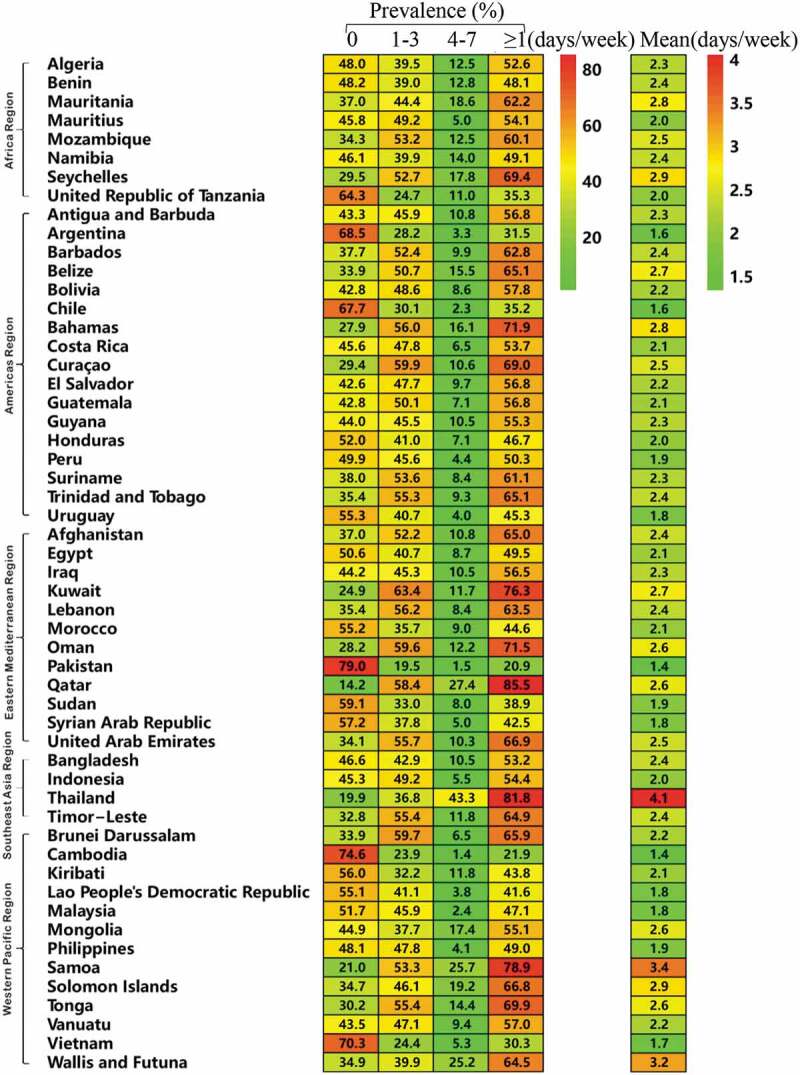
BACKGROUND: Most countries worldwide, especially low- and middle-income countries (LMICs), are facing an increasing prevalence of fast-food consumption and multiple burdens of malnutrition among young adolescents. OBJECTIVE: To compare the prevalence of fast-food consumption among young adolescents in LMICs. METHODS: We used data from the most recent Global School-Based Student Health Survey (2009-2015), which had been collected using a standardized questionnaire. The weighted prevalence and 95% confidential intervals of fast-food consumption were calculated overall and in subgroups stratified by age, sex, and nutritional status. The pooled overall and regional estimates were obtained using a random-effects model. Heterogeneity was assessed using the I2 statistic. The associated risk factors for fast-food consumption were explored using logistic regression analysis. RESULTS: Our study comprised 153,496 young adolescents (46.90% boys) from 54 LMICs. Overall, approximately 55.2% (51.3-59.1%) of the adolescents consumed fast food at least 1 day per week, and 10.3% (8.3-12.4%) did so 4-7 days per week. The prevalence of fast-food consumption 4-7 days per week was lowest in the Americas (8.3%; 6.7-9.9%) and highest in Southeast Asia (17.7%; 2.3-33.2%). At a country level, the prevalence was lowest in Pakistan (1.5%; 1.0-2.0%) and highest in Thailand (43.3%; 40.4-46.1%). Furthermore, in subgroups stratified by nutritional status, the prevalence was lowest in the obesity group (6.6%; 4.5-8.7%). Factors such as age, sex, BMI, food insecurity, fruit consumption, vegetable consumption, soft-drink consumption, smoking, physical activity level, and sedentary behavior level were found to be correlated with fast-food consumption. CONCLUSIONS: The identified high prevalence of fast-food consumption among young adolescents in LMICs indicates the urgent need to prioritize the implementation of healthy-diet promotion programs to improve adolescent health in these countries.
Overview
The claims and statistics of this paper haven’t been checked yet.
Run the check — free, no account needed. It reads the open-access text and checks the sources it cites.
Integrity signals
Registry
Cites
Statistics
Figures
Verification
Claims the paper makes
The claims and statistics of this paper haven’t been checked yet.
Run the check — free, no account needed. It reads the open-access text and checks the sources it cites.
Claims other papers make about this one
Each is checked against this paper’s own text: does it say what the citing paper says it does?
The source backs part of the claim, not all of it — or backs it for a different population, condition or comparison.
In the citing paper
“Adolescents in both low- and middle-income countries (LMICs) and high-income countries (HICs) frequently have diets that are calorie-dense yet nutrient-deficient, marked by excessive consumption of sugar-sweetened beverage (SSB), ultra-processed foods, and insufficient intake of FV [11–13].”
From School-based healthy eating interventions for adolescents aged 10–19 years: an umbrella review (2024) · cites this paper as [11]
Experimental — accuracy not yet measured
Self-check
Percentages, sums and reported differences re-computed from the paper’s own numbers.
The self-check needs the paper’s full text.
Citations
Cites
Global nutrition transition and the pandemic of obesity in developing countries
Popkin, B. M., Adair, L. S., & Ng, S. W. (2012) · Nutrition Reviews · doi:10.1111/j.1753-4887.2011.00456.x · Cited by 4,313 · cited 1×
“Globally, young adolescents, especially those in lowand middle-income countries (LMICs), are experiencing a nutritional transition in the form of a dramatic shift in food-consumption patterns from their respective countries’ traditional diet to a Westernized diet [1,2].”
BackgroundPereira, M. A., Kartashov, A. I., Ebbeling, C. B., Van Horn, L., Slattery, M. L., Jacobs, D. R., & Ludwig, D. S. (2005) · The Lancet · doi:10.1016/s0140-6736(04)17663-0 · Cited by 1,348 · cited 1×
“Such unhealthy dietary habits in youth are thus associated with an increased risk of obesity [7], cardiovascular disease [8], type 2 diabetes [9], and cancer [10] in later adulthood.”
Undue reliance on I 2 in assessing heterogeneity may mislead
Rücker, G., Schwarzer, G., Carpenter, J. R., & Schumacher, M. (2008) · BMC Medical Research Methodology · doi:10.1186/1471-2288-8-79 · Cited by 1,287
Obesity and the food system transformation in Latin America
Popkin, B. M., & Reardon, T. (2018) · Obesity Reviews · doi:10.1111/obr.12694 · Cited by 629 · cited 1×
“Examples include marketing controls, including the enaction and enforcement of regulations to limit the advertisement and sale of fast food [30], attaching front-of-pack supplementary nutritional labels, and implementing formula fast-foods contain less salt, saturated fat, trans-fat, sugar, and energy [30]; implementi…”
BackgroundNutrition in adolescents: physiology, metabolism, and nutritional needs
Das, J. K., Salam, R. A., Thornburg, K. L., Prentice, A. M., Campisi, S., Lassi, Z. S., Koletzko, B., & Bhutta, Z. A. (2017) · Annals of the New York Academy of Sciences · doi:10.1111/nyas.13330 · Cited by 597 · cited 1×
“Failure to meet nutrient requirements during adolescence can result in growth retardation, impaired organ remodeling, and micronutrient deficiencies [6].”
BackgroundPowell, L. M., & Nguyen, B. T. (2013) · JAMA Pediatrics · doi:10.1001/jamapediatrics.2013.417 · Cited by 346
Determinants of takeaway and fast food consumption: a narrative review
Janssen, H. G., Davies, I. G., Richardson, L. D., & Stevenson, L. (2017) · Nutrition Research Reviews · doi:10.1017/s0954422417000178 · Cited by 303 · cited 1×
“Notably, fast-food consumption among young adolescents in LMICs has increased significantly in recent decades [11].”
BackgroundNutritional challenges and health implications of takeaway and fast food
Jaworowska, A., Blackham, T., Davies, I. G., & Stevenson, L. (2013) · Nutrition Reviews · doi:10.1111/nure.12031 · Cited by 230 · cited 1×
“Fast food is a common component of Westernstyle diets, and is energy-dense, nutrient-poor, low in fiber and micronutrients, and high in refined grains, sodium, and sugar [3,4].”
BackgroundCaleyachetty, R., Thomas, G. N., Kengne, A. P., Echouffo-Tcheugui, J. B., Schilsky, S., Khodabocus, J., & Uauy, R. D. (2018) · American Journal of Clinical Nutrition · doi:10.1093/ajcn/nqy105 · Cited by 207 · cited 2×
“In addition, as multiple burdens of malnutrition are common in young adolescents in LMICs [13], we also performed subgroup analyses stratified by nutritional status.”
MethodManyanga, T., El-Sayed, H. F., Doku, D. T., & Randall, J. R. (2014) · BMC Public Health · doi:10.1186/1471-2458-14-887 · Cited by 204 · cited 1×
“Consistent with our findings, another research also found that obesity was not associated with fast-food consumption among adolescents [26].”
Result
Cited by
Sorted by citations
Maternal diet disrupts the placenta-brain axis in a sex-specific manner
Ceasrine, A. M., Devlin, B. A., Bolton, J. L., Green, L. A., Jo, Y. C., Huynh, C., Patrick, B., Washington, K., Sánchez, C., Joo, F., et al. (2022) · Nature Metabolism · doi:10.1016/j.bbi.2022.07.117 · Cited by 104
George, C., Echouffo-Tcheugui, J. B., Jaar, B. G., Okpechi, I. G., & Kengne, A. P. (2022) · BMC Medicine · doi:10.1186/s12916-022-02438-6 · Cited by 91
“prevalence, underpinned by poor nutrition [2] and physical inactivity [3].”
BackgroundYouness, R. A., Dawoud, A., Eltahtawy, O., & Farag, M. A. (2022) · Nutrition & Metabolism · doi:10.1186/s12986-022-00696-y · Cited by 99
National Cancer Registry of Pakistan: First Comprehensive Report of Cancer Statistics 2015-2019
Ikram, A., Pervez, S., Khadim, M. T., Sohaib, M., Uddin, H., Badar, F., Masood, A. I., Khattak, Z. I. A., Naz, S., Rahat, T., et al. (2023) · Journal of College of Physicians And Surgeons Pakistan · doi:10.29271/jcpsp.2023.06.625 · Cited by 43
Shawon, M. S. R., Rouf, R. R., Jahan, E., Hossain, F. B., Mahmood, S., Gupta, R. D., Islam, M. I., Kibria, G. M. A., & Islam, S. M. S. (2023) · Scientific Reports · doi:10.1038/s41598-023-49500-8 · Cited by 49
School-based healthy eating interventions for adolescents aged 10–19 years: an umbrella review
Samad, N., Bearne, L., Noor, F. M., Akter, F., & Parmar, D. (2024) · International Journal of Behavioral Nutrition and Physical Activity · doi:10.1186/s12966-024-01668-6 · Cited by 41
“Adolescents in both low-and middle-income countries (LMICs) and high-income countries (HICs) frequently have diets that are calorie-dense yet nutrient-deficient, marked by excessive consumption of sugar-sweetened beverage (SSB), ultra-processed foods, and insufficient intake of FV [11–13].”
BackgroundThe intention to consume healthy food among older Gen-Z: Examining antecedents and mediators
Savelli, E., & Murmura, F. (2022) · Food Quality and Preference · doi:10.1016/j.foodqual.2022.104788 · Cited by 43
Determinants of Fast-Food Consumption in Romania: An Application of the Theory of Planned Behavior
Bîlbîie, A., Druică, E., Dumitrescu, R., Aducovschi, D., SAKIZLIAN, R., & Sakizlian, M. (2021) · Foods · doi:10.3390/foods10081877 · Cited by 40
“carbohydrates [1,11], resulting in population overweight, child obesity, headache, depression, dental distress, acne, heart disease or stroke, high blood pressure, high cholesterol, blood sugar spike, bloating and puffiness, and insulin resistance [12,13].”
BackgroundLi, H., Zhang, W., & Yan, J. H. (2024) · PeerJ · doi:10.7717/peerj.17097 · Cited by 46
Export-Driven, Extensive Coastal Aquaculture Can Benefit Nutritionally Vulnerable People
Mamun, A., Murray, F. J., Sprague, M., McAdam, B. J., Roos, N., de Roos, B., Pounds, A., & Little, D. C. (2021) · Frontiers in Sustainable Food Systems · doi:10.3389/fsufs.2021.713140 · Cited by 34
“, 2020) which has been linked, at least partially, to fast food substitution (Li et al., 2020).”
BackgroundBiswas, T., Tran, N., Hạnh, H. T. M., Hien, P. V., Cúc, N. T. T., Van, P. H., Tuan, K. A., Oanh, T. T. M., & Mamun, A. A. (2022) · BMJ Open · doi:10.1136/bmjopen-2021-052725 · Cited by 28
Dietary patterns of adolescent students during the COVID-19 pandemic lockdown
Martín-Rodríguez, A., Tornero-Aguilera, J. F., López-Pérez, P. J., & Clemente‐Suárez, V. J. (2022) · Physiology & Behavior · doi:10.1016/j.physbeh.2022.113764 · Cited by 27
Child and adolescent exposure to unhealthy food marketing across digital platforms in Canada
Kent, M. P., Bagnato, M., Remedios, L., Guimarães, J. S., Gillis, G., Soto, C., Hatoum, F., & Pritchard, M. (2024) · BMC Public Health · doi:10.1186/s12889-024-19094-5 · Cited by 24
“The food category with the highest exposure was fast food; a food category that is associated with poor diet and weight gain amongst youth, increasing their risk for negative health outcomes such as cardiovascular disease, cancer and diabetes [35–38].”
BackgroundAmeye, H., Hülsen, V., Glatzel, K., Laar, A., & Qaim, M. (2025) · Food Policy · doi:10.1016/j.foodpol.2025.102981 · Cited by 36
Shawon, M. S. R., Jahan, E., Rouf, R. R., & Hossain, F. B. (2022) · British Journal Of Nutrition · doi:10.1017/s0007114522002306 · Cited by 25
Nguyen, P. H., Tran, L. M., Hoang, N. T., Deitchler, M., Moursi, M., & Bergeron, G. (2023) · Annals of the New York Academy of Sciences · doi:10.1111/nyas.15053 · Cited by 21
Mason, T. B., Smith, K. E., Lavender, J. M., & Leventhal, A. M. (2020) · International Journal of Environmental Research and Public Health · doi:10.3390/ijerph17249375 · Cited by 19
Pachekrepapol, U., Thangrattana, M., & Kitikangsadan, A. (2022) · International Journal of Gastronomy and Food Science · doi:10.1016/j.ijgfs.2022.100598 · Cited by 19
Bassi, S., Bahl, D., Harrell, M. B., Jain, N., Kandasamy, A., Salunke, S. R., Shah, V. G., Raghunathan, P., Markandan, S., Murthy, P., et al. (2021) · F1000Research · doi:10.12688/f1000research.51136.1 · Cited by 20
Healthy and quality food attitudes and lifestyle: a generational cohort comparison
Savelli, E., Murmura, F., & Bravi, L. (2023) · The TQM Journal · doi:10.1108/tqm-05-2023-0156 · Cited by 18
Hartman‐Petrycka, M., Witkoś, J., Lebiedowska, A., & Błońska‐Fajfrowska, B. (2022) · Nutrients · doi:10.3390/nu14194098 · Cited by 19
“Over a period of 40 years (1980–2020), the share of total sugar intake from soft drinks increased from 15% to 37%, and further increases in their consumption are continually being reported [21,32].”
BackgroundGodbharle, S. R., Kesa, H., & Jeyakumar, A. (2024) · Journal of Nutritional Science · doi:10.1017/jns.2024.13 · Cited by 18
Kusuma, J. D., Yang, H., Yang, Y., Chen, Z., & Shiao, S.-Y. P. K. (2022) · Nutrients · doi:10.3390/nu14030537 · Cited by 15
“The fast-food diet encompasses processed foods rich in calories, fat, sodium, and sugar [33,34].”
BackgroundMethodInfluentialMaternal diet disrupts the placenta-brain axis in a sex-specific mannerPreprint
Ceasrine, A. M., Devlin, B. A., Bolton, J. L., Green, L. A., Jo, Y. C., Huynh, C., Patrick, B., Washington, K., Sanchez, C. L., Joo, F., et al. (2021) · bioRxiv (Cold Spring Harbor Laboratory) · doi:10.1101/2021.11.12.468408 · Cited by 14
Sinha, S., & Haque, M. (2022) · Cureus · doi:10.7759/cureus.28762 · Cited by 19
Preference for and consumption of traditional and fast foods among adolescents in Indonesia
Briawan, D., Khomsan, A., Alfiah, E., Nasution, Z., & Putri, P. A. (2023) · Food Research · doi:10.26656/fr.2017.7(4).156 · Cited by 27
“low intake of fruits and vegetables, among adolescents (Li et al., 2020; Rachmi et al., 2020).”
BackgroundLekey, A., Masumo, R. M., Jumbe, T. J., Ezekiel, M. J., Daudi, Z., Mchome, N. J., David, G. L., Akyoo, W. O., & Leyna, G. H. (2024) · PLOS Global Public Health · doi:10.1371/journal.pgph.0003598 · Cited by 13
Tekalegn, Y., Roder, D. M., Shi, Z., & Li, M. (2025) · Nutrients · doi:10.3390/nu17040609 · Cited by 13
“Globally, 86% of adolescents worldwide do not consume the recommended amount of fruits and vegetables, 55% consume fast-foods at least once a week [12], 54% consume carbonated soft drinks daily [13], 85% do not achieve WHO’s guideline of at least 60 min of physical activity per day, and 30% report…”
Manners, R., Adewopo, J. B., Niyibituronsa, M., Remans, R., Ghosh, A., Schut, M., Egoeh, S. G., Kilwenge, R., & Fraenzel, A. (2022) · Frontiers in Sustainable Food Systems · doi:10.3389/fsufs.2021.804821 · Cited by 16
“However, their consumption was observed to be high in younger, wealthier individuals, conforming with findings in other LMICs (e.g., Li et al., 2020).”
ResultNigerian adolescents’ exposure to fast food marketing via Instagram
Bankole, E., Harris, N., Rutherford, S., & Wiseman, N. (2024) · BMC Public Health · doi:10.1186/s12889-024-18604-9 · Cited by 13
“Fast food consumption rates are rising rapidly among adolescents in low-and middle income countries (LMICs) as highlighted by the recent finding that 55.5% of 12 to 15 year old adolescents across 54 LMICs consume fast food at least once a week [1, 2].”
BackgroundInfluentialArya, C., & Dubey, N. (2023) · International Journal of Community Medicine and Public Health · doi:10.18203/2394-6040.ijcmph20231717 · Cited by 11
Vakili, M., Mirzadeh, M., Mirzaei, M., Modarresi, M., Raei, R., Karimi, R., Aghakoochak, A., & Imani, A. (2023) · Heliyon · doi:10.1016/j.heliyon.2023.e16404 · Cited by 9
Luo, Y., Wang, Q., Wang, Y., Mackay, L. E., Yan, N., Wang, Y., Shiferaw, B. D., Wang, Y., Wang, J., Tang, J. T., et al. (2024) · BMC Public Health · doi:10.1186/s12889-024-20607-5 · Cited by 10
“Poor eating habits, such as consumption of fast food, may negatively impact overall health, including vision [81, 82].”
Determinants of dietary patterns in school going adolescents in Urban Zambia
Mukanu, M. M., Delobelle, P., Thow, A. M., & Mchiza, Z. J. (2022) · Frontiers in Nutrition · doi:10.3389/fnut.2022.956109 · Cited by 9
“Adolescents are generally associated with the snacking dietary pattern, characterized by consumption of snacks, sugar sweetened drinks, and fast foods (11).”
BackgroundReview of policy action for healthy environmentally sustainable food systems in sub-Saharan Africa
Holdsworth, M., Kimenju, S. C., Hallen, G., Laar, A. K., & Oti, S. O. (2023) · Current Opinion in Environmental Sustainability · doi:10.1016/j.cosust.2023.101376 · Cited by 9
Jeong, J., Jo, H., Son, Y., Lee, S., Lee, K., Choi, Y., Lee, H., Kim, S., Jacob, L., Smith, L., et al. (2024) · International Archives of Allergy and Immunology · doi:10.1159/000539518 · Cited by 8
“Therefore, there is a need to implement healthy-diet promotion programs targeted at adolescents, as evidenced by our fi ndings in relation to prior research [53].”
Positive parenting, adolescent adjustment, and quality of adolescent diet in nine countries
Zietz, S., Cheng, E., Lansford, J. E., Deater-Deckard, K. D., Giunta, L. D., Dodge, K. A., Gurdal, S., Liu, Q., Long, Q., Oburu, P. O., et al. (2022) · Journal of Adolescence · doi:10.1002/jad.12089 · Cited by 8
National Cancer Registry of Pakistan: First Comprehensive Report of Cancer Statistics 2015-2019
(2023) · Journal of College of Physicians And Surgeons Pakistan · doi:10.29271/jcpsp.2023.06.857 · Cited by 8
From clicks to calories: Online-to-offline food consumption and overweight and obesity
Zou, Y., & Lin, L. (2024) · PLoS ONE · doi:10.1371/journal.pone.0315189 · Cited by 9
Zhou, Y., Nie, X., Lin, Y., Pan, S., Cao, R., & Zhang, Y. (2025) · Appetite · doi:10.1016/j.appet.2025.108170 · Cited by 6
Buyinza, T., Buzigi, E., Kitimbo, J., Ssabika, G., Mbuliro, M., Kiwanuka, J. P., Bukenya, J. N., Guwatudde, D., & Ndejjo, R. (2025) · PLoS ONE · doi:10.1371/journal.pone.0337797 · Cited by 6
“These poor dietary practices are more pronounced in SSA, particularly among adolescents of low socio-economic status [12,13].”
Marinakou, E., Giousmpasoglou, C., & Sakulrungsap, K. (2023) · Tourism and hospitality management · doi:10.20867/thm.29.4.6 · Cited by 6
Yang, Y., Yang, H., Kusuma, J. D., & Shiao, S.-Y. P. K. (2022) · Nutrients · doi:10.3390/nu14153168 · Cited by 6
“Additionally, fast foods [25,26], high school foods [26], smoothies [27–29], pure liquids [27,30], and dozens of other diet types emerged following urbanization and growing aging populations.”
BackgroundMethodInfluentialSritart, H., Taertulakarn, S., & Miyazaki, H. (2022) · International Journal of Environmental Research and Public Health · doi:10.3390/ijerph20010626 · Cited by 7
“Thailand was found to have the highest fast-food consumption—at 4–7 days per week—among other low- and middle-income countries [60].”
BackgroundReligious Participation: Does It Shape Food Consumption?
He, Y., & Tian, W. (2023) · Religions · doi:10.3390/rel14030350 · Cited by 6
ÇOCUK VE ADOLESANLARDA HEDONİK AÇLIK İLE OBEZİTE İLİŞKİSİ
Bozkurt, O., & Yıldıran, H. (2022) · Gazi Sağlık Bilimleri Dergisi · doi:10.52881/gsbdergi.1034683 · Cited by 6
Kumari, G., Rathoria, E., Khan, F. A., Singh, S. K., Lahari, R., Rathoria, R., Bansal, U., & Singh, A. (2024) · International Journal of Contemporary Pediatrics · doi:10.18203/2349-3291.ijcp20243466 · Cited by 5
“22 Adity et al study reported a significant association of daily junk food intake with overweight and obesity (p 0.0001).”
InfluentialParra, K., Alaofè, H., Ehiri, J. E., Nuño, V. L., Mazariegos, M., García, B. T. R., Martinez, E., Junkins, A., & Jolly, P. E. (2021) · Food and Nutrition Bulletin · doi:10.1177/03795721211019638 · Cited by 5
“These foods are commonly consumed among Guatemala girls.(26,27) Each food item was assigned a score of 0 to 5 depending on frequency of food intake (0 being never/rarely and 5 being 2 or more times per day) so that the JFIM ranged from 0 to 25 (0 being no junk food consumed).”
BackgroundPing, T., Zheng, M., Zhang, P., Yan, T., Miao, X., Wang, K., & Lian, K. (2022) · RSC Advances · doi:10.1039/d2ra03423a · Cited by 5
Trans-Fatty Acids in Fast-Food and Intake Assessment for Yerevan’s Population, Armenia
Pipoyan, D., Beglaryan, M., Stepanyan, S., & Merendino, N. (2022) · Foods · doi:10.3390/foods11091294 · Cited by 5
Fast Food Consumption Patterns Nutritional Status and Anemia Among Female
Masthalina, H., Purba, M. S., & Pangaribuan, L. (2024) · Jurnal Penelitian Pendidikan IPA · doi:10.29303/jppipa.v10i7.8030 · Cited by 7
“A study conducted by Li et al. (2020) found that 60.90% of female adolescents consumed fast food once a week, and 20.30% of female adolescents consumed fast food twice or more per week and the frequency of students consuming fast food was mostly twice a week at 31.70%.”
BackgroundInfluentialKlemm, J., Muli, S., Oluwagbemigun, K., Parlasca, M. C., Crentsil, A. O., Alangea, D. O., Quartey, P., Laar, A. K., Lartey, A. A., Borgemeister, C., et al. (2024) · Maternal and Child Nutrition · doi:10.1111/mcn.13775 · Cited by 5
“…observed particularly alongside a growing urban middle ‐ class in low ‐ and middle ‐ income countries (Colozza, 2022; Karanja et al. 2022; Landais et al. 2023; Li et al. 2020), parallels increased attention to indicators reflecting healthy and unhealthy elements of diets (Herforth et al. 2020).”
Norddin, N., Che’Ya, N. N., Mohidem, N. A., & Zalbahar, N. (2025) · Heliyon · doi:10.1016/j.heliyon.2025.e42247 · Cited by 5
“Fast food and pre-packaged snacks are major sources of energy-dense food intake, with their consumption increased significantly in both high and low-to-middle-income countries, including Malaysia [4].”
Hassan, R., Shamim, A. A., Ali, M., & Amin, M. R. (2025) · Public Health Challenges · doi:10.1002/puh2.70095 · Cited by 8
“[37], and Syria (43”
InfluentialAnalysis of the Lifestyle and Psychological Well-being of Adolescents: Age-related Differences
Boraita, R. J., Torres, J. M. D., Ibort, E. G., & Alsina, D. A. (2022) · Child Indicators Research · doi:10.1007/s12187-022-09977-7 · Cited by 8
“also coinciding with those obtained by another previously conducted study (Li et al., 2020).”
ResultLoh, V. H. Y., Poelman, M. P., Veitch, J., McNaughton, S. A., Leech, R. M., & Timperio, A. F. (2021) · Public Health Nutrition · doi:10.1017/s1368980021004298 · Cited by 4
“Fast food and pre-packaged snacks are major sources of energydense food intake, and consumption of these foods has increased substantially among adolescents in high-(4,7) and low-to-middle-income countries(8) in the past decades.”
BackgroundPlant-based Food in the Hospitality Industry: An Exploratory Case Study of Leading Fast Food Outlets
Jones, P. (2022) · Athens Journal of Tourism · doi:10.30958/ajt.9-2-1 · Cited by 4
Langley-Evans, S. (2021) · Wiley eBooks · doi:10.1002/9781119717577.ch7 · Cited by 4
Health and income inequality: a comparative analysis of USA and Italy
Porta, C. A. M. L., & Zapperi, S. (2024) · Frontiers in Public Health · doi:10.3389/fpubh.2024.1421509 · Cited by 5
“These diseases are not equally distributed not only in USA where there is a great inequality in wealth but also in in low-and middle-income countries (LMICs) both in adults and adolescents (27–29).”
BackgroundGupta, P., Srivastava, R., Jain, S. P., & Jain, S. P. (2024) · American Business Review · doi:10.37625/abr.27.2.706-774 · Cited by 4
Upreti, Y. R., Acharya, D., Yogi, B. N., Devkota, B., & Bhandari, T. R. (2022) · Journal of Health Promotion · doi:10.3126/jhp.v10i1.50981 · Cited by 6
Santos, J. A., & Sotelo-Drequito, G. (2024) · Business Economic Communication and Social Sciences (BECOSS) Journal · doi:10.21512/becossjournal.v6i1.11201 · Cited by 3
“Price segmentation and value-based pricing have been widely adopted by fast-food chains to attract diverse customer segments (Li et al., 2020).”
BackgroundÖzmet, T. D., & Ergün, A. (2024) · Clinical and Experimental Health Sciences · doi:10.33808/clinexphealthsci.1282680 · Cited by 3
Nabila, S., Haque, M. J., Morshed, M. M., & Bari, M. S. (2024) · Saudi Journal of Medical and Pharmaceutical Sciences · doi:10.36348/sjmps.2024.v10i06.011 · Cited by 3
Alashmali, S. M. (2024) · Frontiers in Public Health · doi:10.3389/fpubh.2024.1408145 · Cited by 3
“According to a recent Global School-Based Student Health Survey across 54 low-to-middle-income countries, over half of the adolescents consumed fast food weekly, with 10.3% consuming it four to seven times a week, the highest rates noted in Southeast Asia (7).”
BackgroundInfluentialInterconexiones entre cultura y seguridad alimentaria: Factores socioeconómicos y tradicionales
Zúñiga, E. J. L., Esponda-Pérez, J. A., Rateike, L. Á., Trujillo, A. M. Á., Ramos, P. A., & García, M. I. H. (2025) · LATAM Revista Latinoamericana de Ciencias Sociales y Humanidades · doi:10.56712/latam.v6i2.3618 · Cited by 2
Mahmood, H., Shaikh, B. T., Pervaiz, F., & Idrees, M. (2025) · BMC Public Health · doi:10.1186/s12889-025-24734-5 · Cited by 7
Young Adolescent Health and Well-Being
Mertens, S. Β., & Caskey, M. M. (2023) · Emerald Group Publishing Limited eBooks · doi:10.1108/979-8-88730-203-420251004 · Cited by 2
Stravování a vztah k jídlu u českých adolescentů ve 21. století
Pipová, H., Dolejš, M., Suchá, J., Kostková, M., & Urešová, A. (2020) · doi:10.5507/ff.20.24458212 · Cited by 3
Generation Z's Perception of Fast Food's Product Safety, Nutrition, and Health
Tahir, N. S., Ahmad, Y., Bustami, M. R., Hamid, S. N. F. A., Zamri, N. E. M. M., & Mulyany, R. (2022) · Environment-Behaviour Proceedings Journal · doi:10.21834/ebpj.v7i20.3441 · Cited by 2
HEALTH EDUCATION BY PEER COUNSELORS INCREASES ADOLESCENT KNOWLEDGE ABOUT HEALTHY LIFESTYLES
Rachmawati, P. D., Kurnia, I. D., Arief, Y. S., Qur’aniati, N., Kristiawati, K., Krisnana, I., & Nastiti, A. A. (2023) · Jurnal Pengabdian Masyarakat Dalam Kesehatan · doi:10.20473/jpmk.v6i1.49590 · Cited by 6
Comparative determination of factors affecting attitude level towards healthy nutrition
Özdemir, S., & Baltacı, F. (2025) · Scientific Reports · doi:10.1038/s41598-024-80128-4 · Cited by 4
Oktavia, A. D., & Prasetya, G. (2022) · JURNAL MUTIARA KESEHATAN MASYARAKAT · doi:10.51544/jmkm.v7i2.3525 · Cited by 2
Junk Food Consumption Among Adolescents in IbadanPreprint
Akinola, A. (2023) · SSRN Electronic Journal · doi:10.2139/ssrn.4575994 · Cited by 2
Cross-Sectional Study on Overweight and Obesity Associated with Fast-Food Consumption in Bangladesh
Sultana, F., Siddiqui, S. A., Islam, M. A., Muktadir, M. A., Millat, M. S., Islam, M. M., Tareq, A. M., Afroz, N., Rahman, M., Amin, M. N., et al. (2022) · Makara Journal of Health Research · doi:10.7454/msk.v26i2.1347 · Cited by 1
A Comparison between Attitudes and Knowledge Towards Fast-Food and Probiotics of Undergraduates
CEBİRBAY, M. A., & EKİNOĞLU, E. (2024) · Mutiara Medika: Jurnal Kedokteran dan Kesehatan · doi:10.18196/mmjkk.v24i1.21032 · Cited by 1
Devy, Jansen, & Yani, H. (2024) · International Journal of Public Health Excellence (IJPHE) · doi:10.55299/ijphe.v3i2.752 · Cited by 1
Role of Food and Dietary Choices in Shaping Health Behavior of Chinese Families
Shi, Q. (2024) · American Journal of Health Behavior · doi:10.5993/ajhb.48.2.15 · Cited by 1
Kamil, N. Z. I. A., Mokhtar, A. H., Yahya, A., Zain, F. M., Selamat, R., Ishak, Z., & Jalaludin, M. Y. (2025) · BMC Public Health · doi:10.1186/s12889-024-20725-0 · Cited by 1
Fast food consumption has a great impact on the aging process — A review
Awlqadr, F. H., Altemimi, A. B., Qadir, S. A., Alkanan, Z. T., Faraj, A. M., ALKaisy, Q. H., & Abedelmaksoud, T. G. (2025) · Theory and practice of meat processing · doi:10.21323/2414-438x-2025-10-1-11-31 · Cited by 2
AI-Based Health Assistant for Young Adults
Chen, X., Yu, B., Fan, H., Azizan, M. F. B., Ann, O. C., Merritt, T. R., & Fernando, O. N. N. (2025) · Lecture notes in computer science · doi:10.1007/978-3-031-93418-6_18 · Cited by 1
Akter, S., Banna, M. H. A., Tetteh, J. K., Mallick, T., Azhar, B. S., Nahar, J., Chowdhury, M. J., Wilfred, A. G. G., & Sahrin, S. (2025) · BMC Nutrition · doi:10.1186/s40795-025-01101-6 · Cited by 1
“Previous study [23] reported the rates of fast food consumption among adolescents varied from countries to countries, such as Pakistan had the lowest prevalence (1.5”
InfluentialObesity in Children and Socioeconomic Factors: Thailand Perspectives
Sritart, H., & Taertulakarn, S. (2025) · Springer eBooks · doi:10.1007/978-3-031-32047-7_173-1 · Cited by 1
Li, H., Jing, Z., Li, R., Shen, Z., Bai, T., & Song, Q. (2026) · Frontiers in Endocrinology · doi:10.3389/fendo.2026.1662823 · Cited by 2
“In addition to the in fl uence of lifestyle and medical resources (38, 39), factors such as a high prevalence of metabolic syndrome (40) and changes in population demographics are major reasons for the increasing disease burden in this region (41, 42).”
Self-citationHeartrending Contention of Processed Food
Haque, M. (2021) · Advances in Human Biology · doi:10.4103/aihb.aihb_42_21 · Cited by 1
Fast-Food Consumption among Children According to Shari'ah Perspective
Ramli, M. A., Omar, M. H., & Jamaludin, M. A. (2021) · Halalsphere · doi:10.31436/hs.v1i2.17 · Cited by 1
Yosef, D. K., & Osman, F. A. (2024) · Applied Medical Research · doi:10.47363/amr/2024(11)240 · Cited by 1
Briawan, D., Alfiah, E., & Putri, P. A. (2024) · Jurnal Gizi dan Dietetik Indonesia (Indonesian Journal of Nutrition and Dietetics) · doi:10.21927/ijnd.2024.12(2).59-79 · Cited by 1
“Meanwhile, vegetable consumption was linked with higher fast-food consumption which associated with poor kind of diet (23,24).”
BackgroundIdentification of a Social Problem: Fast-food Intake among Youth – An Interactive Narrative Review
Krubaa, P. (2024) · SBV Journal of Basic Clinical and Applied Health Science · doi:10.4103/sbvj.sbvj_50_24 · Cited by 1
Leal, Y. A. (2021) · Elsevier eBooks · doi:10.1016/b978-0-12-819828-5.00001-2 · Cited by 1
RISING FAST FOOD CONSUMPTION AMONG ADOLESCENT GIRLS IN URBAN AREA : CALL FOR CONCERN
Vishal, R., Mishra, C. P., & Srivastava, P. (2022) · INTERNATIONAL JOURNAL OF SCIENTIFIC RESEARCH · doi:10.36106/ijsr/4122294 · Cited by 1
Samad, N., Bearne, L., Akter, F., Delord, M., & Parmar, D. (2023) · doi:10.17504/protocols.io.kqdg3x87eg25/v1
My Child Repudiates to Regular Meals: Basis and Innuendo
Chowdhury, K., Ahmad, R., Sinha, S., & Haque, M. (2024) · Advances in Human Biology · doi:10.4103/aihb.aihb_59_24 · Cited by 1
Catherine, W. K., Moyo, M., Mwaura, L., & Muzhingi, T. (2021) · International Journal of Nutrition and Metabolism · doi:10.5897/ijnam2021.0287
Nutritional problems of adolescents
Gordon, S., & Ruxton, C. H. S. (2021) · Elsevier eBooks · doi:10.1016/b978-0-12-821848-8.00010-x
Ping, T., Zheng, M., Zhang, P., Yan, T., Miao, X., Lian, K., & Wang, K. (2022) · SSRN Electronic Journal · doi:10.2139/ssrn.4020661
Impact of the COVID-19 pandemic on teenagers’ diet
Adumitrăchioaiei, H., & Luca, A.-C. (2022) · Medic ro · doi:10.26416/med.148.4.2022.7014
Consumption of snacks and energy by adolescents and overweight
Ciampo, L. A. D., & Ciampo, I. R. L. D. (2023) · Revista Paulista de Pediatria · doi:10.1590/1984-0462/2023/41/2022118
Khan, N. W. (2023) · Journal of Development and Social Sciences · doi:10.47205/jdss.2023(4-iii)58
Nazri, N. A. N. M., Nizam, K. K. M., Nasran, N. S., Ngali, N. B., & Rahmat, N. B. (2023) · International Journal of Business and Technology Management · doi:10.55057/ijbtm.2023.5.s1.7
Metadata
- Authors
- Li, L., Sun, N., Zhang, L., Xu, G., Liu, J., Hu, J., Zhang, Z., Lou, J., Deng, H., Shen, Z., & Han, L.
- Affiliations
- Ningbo University (CN)
- Ningbo College of Health Sciences (CN)
- Harbin Medical University (CN)
- Weifang Medical University (CN)
- Nutrition Department, Yuyao People’s Hospital, Yuyao, Zhejiang, PR China
- Ningbo Medical Center Lihuili Hospital (CN)
- Ningbo No. 2 Hospital (CN)
- Corresponding author
- Shen, Zhisen
- Han, Liyuan
- ORCID
- Venue
- Global Health Action
- Publisher
- Informa UK Limited
- Published
- 2020-08-07
- Volume
- 13
- Issue
- 1
- Pages
- 1795438-1795438
- ISSN
- 1654-9716 (ISSN-L)
- 1654-9880
- PMC
- PMC7480506
- OpenAlex
- W3047735631
- Cited by
- 135
- References
- 31
- Citations by year
- 2026: 17 · 2025: 22 · 2024: 33 · 2023: 19 · 2022: 30 · 2021: 12 · 2020: 2
- FWCI
- 9.96
- Type
- journal article
- Language
- en
- Open access
- gold
- doi.org
- Licence
- Locations
- Global Health Action (publishedVersion, cc-by)
- PubMed Central (publishedVersion, cc-by)
- PubMed (publishedVersion)
- DOAJ (DOAJ: Directory of Open Access Journals) (submittedVersion, cc-by-sa)
- Funders
- National Key R&D Program of China (2017YFC1310902)
- National Natural Science Foundation of China (U1503223)
- Ningbo Health Branding Subject Fund (PPXK2018-02)
- Sanming Project of Medicine in Shenzhen (SZSM201803080)
- K.C. Wong Magna Fund of Ningbo University
- Topics
- Health Sciences › Nursing › Nutrition and Dietetics › Nutrition, Health and Food Behavior
- Health Sciences › Medicine › Public Health, Environmental and Occupational Health › Obesity, Physical Activity, Diet
- Health Sciences › Medicine › Public Health, Environmental and Occupational Health › Consumer Attitudes and Food Labeling
- Keywords
- fast food consumption, early adolescents, low- and middle-income countries, prevalence, nutritional status, obesity, food insecurity, soft drink consumption, fruit and vegetable intake, sedentary behavior, physical activity, smoking, healthy eating promotion, adolescent nutrition
- MeSH terms
- Adolescent, Child, Developing Countries, Diet, Female, Health Surveys, Humans, Male, Nutritional Status, Risk Factors, Prevalence, Fast Foods
About these checks
Registry, retraction, Cites and statistics results are computed, not judged, with one exception: a printed reference that no index lists is read once by a model before it counts as a citation error. Claims are extracted by a model and kept only when their quote appears verbatim in the text; each cited source is then checked, with a model’s help, for whether it says what the claim relies on. Those verdicts can be wrong — read the claim’s quote and the cited source before relying on one.
Statistics and arithmetic are recomputed, not judged.
Confidence bands are shown only for fields calibrated on our annotated test set. None is calibrated yet, so no band is shown.
What counts as a claim ›How we measure confidence ›How we check this ›
Are you an author, or do you see a problem with this page? Request a review
