

Effects of 24-week prebiotic intervention on self-reported upper respiratory symptoms, gastrointestinal symptoms, and markers of immunity in elite rugby union players
Open accessThe DOI matches its Crossref record; 31 of the 31 references it cites were found in a registry or an index.
Abstract
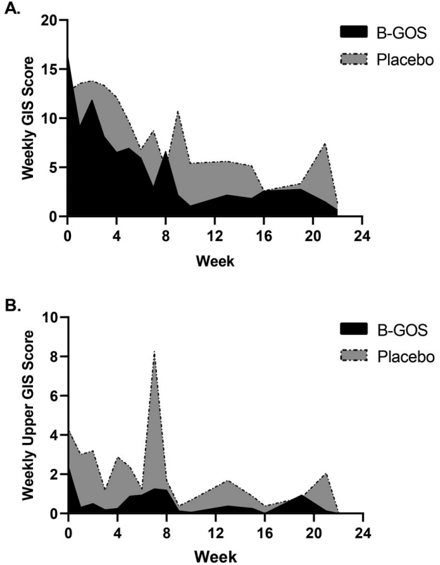
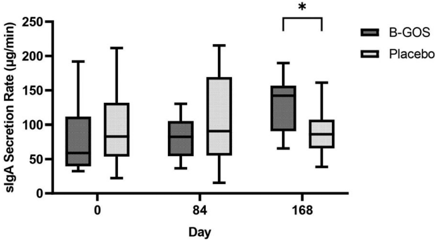
Objectives: Elite rugby union players face numerous physiological and psychological stressors which can increase upper respiratory and gastrointestinal illness risk, and in turn can compromise training and competitive performance. This study aimed to investigate the effect of daily prebiotic supplementation on upper respiratory symptoms, gastrointestinal symptoms, and markers of immune function in elite rugby union players. Methods: Thirty‐three elite rugby union players were randomly assigned to consume a prebiotic (2.8 g/day galactooligosaccharide) or placebo (2.8 g/day maltodextrin), daily for 168 days under double‐blind conditions. Participants completed daily and weekly questionnaires for self‐reported upper respiratory and gastrointestinal symptoms respectively. Blood and saliva samples were collected at 0, 84, and 168 days for assessment of plasma TNF‐α and CRP, and saliva IgA respectively. Results: The prebiotic group experienced a 2‐day reduction in upper respiratory symptom duration (P = 0.045). Gastrointestinal symptom severity and incidence were lower in the prebiotic group compared to the placebo group (P < 0.001, P = 0.041) respectively. Salivary immunoglobulin A secretion rate was 42% greater in the prebiotic group compared to the placebo group at day 168 (P = 0.004), no differences in CRP and TNF‐α were found (P > 0.05). Conclusion: A 168‐day dietary prebiotic intervention reduced the duration of upper respiratory symptoms and reduced the incidence and severity of gastrointestinal symptoms in elite rugby union players. These findings suggest that seasonal prebiotic interventions may be beneficial for reducing illness in elite rugby union players, improving their availability to train and compete. Key points Elite athletes are susceptible to upper respiratory symptoms and gastrointestinal symptoms which may impact upon training availability and competition performance. For the first time, this study shows that a dietary prebiotic intervention can reduce the duration of upper respiratory symptoms by 2 days in elite rugby union players. Dietary prebiotic supplementation can improve the incidence and severity of gastrointestinal symptoms experienced by elite rugby union players. Prebiotic supplementation was able to increase salivary IgA secretion after 168 days. These findings can inform practice suggesting that seasonal prebiotic use has the potential to modulate immune function and reduce illness in elite rugby union, which may improve a player's availability to train and compete. The mechanisms by which prebiotics reduce URS and GIS require further research exploration.
Overview
The claims and statistics of this paper haven’t been checked yet.
Free: it reads the open-access text and checks the first 5 claims that cite a source we can check. Create a free account to check every claim.
Integrity signals
Registry
Cites
Statistics
Figures

Verification
Claims the paper makes
The claims and statistics of this paper haven’t been checked yet.
Free: it reads the open-access text and checks the first 5 claims that cite a source we can check. Create a free account to check every claim.
Claims other papers make about this one
Each is checked against this paper’s own text: does it say what the citing paper says it does?
The check wasn’t confident either way, so it gives no verdict — never disputed.
In the citing paper
“Thus, specific probiotics may support endogenous GLP-1 signaling and potentially complement GLP-1RAs by visceral fat, body weight, and waist circumference reduction [143,144,257]”
From Nutritional Approaches to Enhance GLP-1 Analogue Therapy in Obesity: A Narrative Review (2025) · cites this paper as [144]
Experimental — accuracy not yet measuredIn the citing paper
“In a 12-week randomized placebo-controlled trial, overweight adults (BMI 25-35) receiving L. gasseri BNR17 (10 billion CFU/day) had a ~22 cm 2 decrease in visceral adiposity and reduced waist circumference versus placebo”
From Nutritional Approaches to Enhance GLP-1 Analogue Therapy in Obesity: A Narrative Review (2025) · cites this paper as [144]
In the citing paper
“Even low-dose L. gasseri BNR17 (1 billion CFU) reduced waist circumference [144].”
From Nutritional Approaches to Enhance GLP-1 Analogue Therapy in Obesity: A Narrative Review (2025) · cites this paper as [144]
Self-check
Percentages, sums and reported differences re-computed from the paper’s own numbers.
The self-check needs the paper’s full text.
Citations
Cites
Gibson, G. R., Hutkins, R., Sanders, M. E., Prescott, S. L., Reimer, R. A., Salminen, S. J., Scott, K., Stanton, C., Swanson, K. S., Cani, P. D., et al. (2017) · Nature Reviews Gastroenterology & Hepatology · doi:10.1038/nrgastro.2017.75 · Cited by 5,634 · cited 1×
“Prebiotics are substrates that are selectively utilised by host microorganisms conferring a health bene fi t (Gibson et al., 2017).”
BackgroundSelf-citationPrebiotic effects: metabolic and health benefits
Roberfroid, M., Gibson, G. R., Hoyles, L., McCartney, A. L., Rastall, R., Rowland, I., Wolvers, D., Watzl, B., Szajewska, H., Stahl, B., et al. (2010) · British Journal of Nutrition · doi:10.1017/s0007114510003363 · Cited by 2,085
Self-citationVulevic, J., Drakoularakou, A., Yaqoob, P., Tzortzis, G., & Gibson, G. R. (2008) · The American Journal of Clinical Nutrition · doi:10.3945/ajcn.2008.26242 · Cited by 451 · cited 3×
“Bimuno-galactooligosaccharides (B-GOS) have been shown to increase the count and activity of the genus Bi fi dobacterium (Depeint et al., 2008; Vulevic et al., 2008) and elicit immunomodulatory e ff ects as shown by reductions in proin fl ammatory cytokines (C-reactive protein and interleukin-1 β ) in…”
BackgroundSelf-citationJACKSON, G. G. (1958) · A.M.A. Archives of Internal Medicine · doi:10.1001/archinte.1958.00260140099015 · Cited by 384 · cited 1×
“To establish the presence of URS, participants completed the Jackson questionnaire daily (Jackson et al., 1958).”
MethodVulevic, J., Juric, A., Tzortzis, G., & Gibson, G. R. (2013) · The Journal of Nutrition · doi:10.3945/jn.112.166132 · Cited by 349 · cited 4×
“However, our fi ndings contrast with a 12-week supplementation of prebiotic B-GOS in obese individuals, which showed an increase in faecal IgA but not saliva (Vulevic et al., 2013).”
InfluentialSelf-citationUltramarathon running and upper respiratory tract infections. An epidemiological survey.
Peters, E. M., & Bateman, E. D. (1983) · PubMed · Cited by 335
Vulevic, J., Juric, A., Walton, G. E., Claus, S. P., Tzortzis, G., Toward, R. E., & Gibson, G. R. (2015) · British Journal of Nutrition · doi:10.1017/s0007114515001889 · Cited by 317 · cited 1×
“…et al., 2008; Vulevic et al., 2008) and elicit immunomodulatory e ff ects as shown by reductions in proin fl ammatory cytokines (C-reactive protein and interleukin-1 β ) in elderly, overweight, asthmatic, and healthy individuals (Vulevic et al., 2013; Vulevic et al., 2015; Williams et al., 2016).”
BackgroundSelf-citationCocate, P. G., Pereira, L. G., Marins, J. C., Cecon, P. R., Bressan, J., & Alfenas, R. C. (2011) · Nutrition Journal · doi:10.1186/1475-2891-10-1 · Cited by 269
Depeint, F., Tzortzis, G., Vulevic, J., I'Anson, K., & Gibson, G. R. (2008) · The American Journal of Clinical Nutrition · doi:10.1093/ajcn/87.3.785 · Cited by 268 · cited 2×
“Bimuno-galactooligosaccharides (B-GOS) have been shown to increase the count and activity of the genus Bi fi dobacterium (Depeint et al., 2008; Vulevic et al., 2008) and elicit immunomodulatory e ff ects as shown by reductions in proin fl ammatory cytokines (C-reactive protein and interleukin-1 β ) in…”
BackgroundSelf-citationDaily Probiotic’s (Lactobacillus casei Shirota) Reduction of Infection Incidence in Athletes
Gleeson, M., Bishop, N. C., Oliveira, M., & Tauler, P. (2011) · International Journal of Sport Nutrition and Exercise Metabolism · doi:10.1123/ijsnem.21.1.55 · Cited by 239 · cited 4×
“(Gleeson et al., 2011).”
InfluentialCox, A. J., Pyne, D. B., Saunders, P. U., & Fricker, P. A. (2010) · British Journal of Sports Medicine · doi:10.1136/bjsm.2007.044628 · Cited by 234 · cited 2×
“In addition, probiotic interventions in similar athletic cohorts have also reported reductions in URS incidence and duration (Cox et al., 2010; Gleeson et al., 2011; Strasser et al., 2016 ; Haywood et al., 2014).”
Hernot, D. C., Boileau, T. W., Bauer, L. L., Middelbos, I. S., Murphy, M. R., Swanson, K. S., & Fahey, G. C. (2009) · Journal of Agricultural and Food Chemistry · doi:10.1021/jf802484j · Cited by 203 · cited 1×
“Indeed, elevated faecal SCFA concentrations have been accompanied by enhanced gut epithelial integrity and mucosal immunity (Mariadason et al., 1997; Hernot et al., 2009).”
Effect of short-chain fatty acids on paracellular permeability in Caco-2 intestinal epithelium model
Mariadason, J. M., Barkla, D. H., & Gibson, P. R. (1997) · American Journal of Physiology-Gastrointestinal and Liver Physiology · doi:10.1152/ajpgi.1997.272.4.g705 · Cited by 182 · cited 1×
“Indeed, elevated faecal SCFA concentrations have been accompanied by enhanced gut epithelial integrity and mucosal immunity (Mariadason et al., 1997; Hernot et al., 2009).”
BackgroundDrakoularakou, A., Tzortzis, G., Rastall, R. A., & Gibson, G. R. (2010) · European Journal of Clinical Nutrition · doi:10.1038/ejcn.2009.120 · Cited by 174
Self-citationGleeson, M., Bishop, N., Oliveira, M., McCauley, T., Tauler, P., & Muhamad, A. S. (2012) · Scandinavian Journal of Medicine & Science in Sports · doi:10.1111/j.1600-0838.2010.01272.x · Cited by 165 · cited 6×
“(Gleeson et al., 2011).”
InfluentialStrasser, B., Geiger, D., Schauer, M., Gostner, J., Gatterer, H., Burtscher, M., & Fuchs, D. (2016) · Nutrients · doi:10.3390/nu8110752 · Cited by 142 · cited 2×
“In addition, probiotic interventions in similar athletic cohorts have also reported reductions in URS incidence and duration (Cox et al., 2010; Gleeson et al., 2011; Strasser et al., 2016 ; Haywood et al., 2014).”
Probiotics for preventing acute upper respiratory tract infections
Zhao, Y., Dong, B. R., & Hao, Q. (2022) · Cochrane Database of Systematic Reviews · doi:10.1002/14651858.cd006895.pub4 · Cited by 127
Drew, M. K., Vlahovich, N., Hughes, D., Appaneal, R., Peterson, K., Burke, L., Lundy, B., Toomey, M., Watts, D., Lovell, G., et al. (2017) · Journal of Science and Medicine in Sport · doi:10.1016/j.jsams.2017.02.010 · Cited by 111 · cited 1×
“…acute upper respiratory symptoms (URS) (e.g. cough, sneezing, sore throat & nasal congestion) and gastrointestinal symptoms (GIS) (e.g. bloating, belching, fl atulence, nausea and diarrhoea) (Peters & Bateman, 1983; Drew et al., 2017; Hellard et al., 2015; Svendsen et al., 2016; Wentz et al., 2018).”
Gleeson, M., Bishop, N. C., Oliveira, M., McCauley, T., Tauler, P., & Lawrence, C. (2012) · International Journal of Sport Nutrition and Exercise Metabolism · doi:10.1123/ijsnem.22.4.235 · Cited by 100 · cited 2×
“However, not all studies have reported improvements in URS following probiotic supplementation (West et al., 2011; Gleeson et al., 2012).”
BackgroundInfluentialGaskell, S. K., Snipe, R. M. J., & Costa, R. J. S. (2019) · International Journal of Sport Nutrition and Exercise Metabolism · doi:10.1123/ijsnem.2018-0215 · Cited by 95 · cited 2×
“To assess the presence of GIS, participants completed a GIS tool at the end of each week (Gaskell et al., 2019).”
BackgroundMethodHaywood, B. A., Black, K. E., Baker, D., McGarvey, J., Healey, P., & Brown, R. C. (2014) · Journal of Science and Medicine in Sport · doi:10.1016/j.jsams.2013.08.004 · Cited by 85 · cited 3×
“Similarly in elite rugby union, the use of a multi-strain probiotic showed a trend for ∼ 2 day reduction in the duration of URS (Haywood et al., 2014).”
Svendsen, I. S., Taylor, I. M., Tønnessen, E., Bahr, R., & Gleeson, M. (2016) · British Journal of Sports Medicine · doi:10.1136/bjsports-2015-095398 · Cited by 84 · cited 1×
“…acute upper respiratory symptoms (URS) (e.g. cough, sneezing, sore throat & nasal congestion) and gastrointestinal symptoms (GIS) (e.g. bloating, belching, fl atulence, nausea and diarrhoea) (Peters & Bateman, 1983; Drew et al., 2017; Hellard et al., 2015; Svendsen et al., 2016; Wentz et al., 2018).”
Hughes, C., Davoodi‐Semiromi, Y., Colee, J., Culpepper, T., Dahl, W. J., Mai, V., Christman, M. C., & Langkamp‐Henken, B. (2011) · American Journal of Clinical Nutrition · doi:10.3945/ajcn.111.014126 · Cited by 81 · cited 2×
“Our fi ndings support Hughes et al who observed reductions in GIS incidence and the percentage of days with URS in academically stressed students following a daily dose of either 2.5 g or 5 g of GOS over 8-weeks (Hughes et al., 2011).”
BackgroundMethodInfluentialMartineau, A. R., Hanifa, Y., Witt, K. D., Barnes, N. C., Hooper, R. L., Patel, M., Stevens, N., Enayat, Z., Balayah, Z., Syed, A., et al. (2015) · Thorax · doi:10.1136/thoraxjnl-2015-206996 · Cited by 80
Training-Related Risk of Common Illnesses in Elite Swimmers over a 4-yr Period
HELLARD, P., AVALOS, M., GUIMARAES, F., TOUSSAINT, J.-F., & PYNE, D. B. (2015) · Medicine & Science in Sports & Exercise · doi:10.1249/mss.0000000000000461 · Cited by 78 · cited 1×
“…acute upper respiratory symptoms (URS) (e.g. cough, sneezing, sore throat & nasal congestion) and gastrointestinal symptoms (GIS) (e.g. bloating, belching, fl atulence, nausea and diarrhoea) (Peters & Bateman, 1983; Drew et al., 2017; Hellard et al., 2015; Svendsen et al., 2016; Wentz et al., 2018).”
BackgroundWentz, L. M., Ward, M. D., Potter, C., Oliver, S. J., Jackson, S., Izard, R. M., Greeves, J. P., & Walsh, N. P. (2018) · Military Medicine · doi:10.1093/milmed/usy090 · Cited by 47 · cited 1×
“…acute upper respiratory symptoms (URS) (e.g. cough, sneezing, sore throat & nasal congestion) and gastrointestinal symptoms (GIS) (e.g. bloating, belching, fl atulence, nausea and diarrhoea) (Peters & Bateman, 1983; Drew et al., 2017; Hellard et al., 2015; Svendsen et al., 2016; Wentz et al., 2018).”
Williams, N. C., Johnson, M. A., Shaw, D. E., Spendlove, I., Vulevic, J., Sharpe, G. R., & Hunter, K. A. (2016) · British Journal of Nutrition · doi:10.1017/s0007114516002762 · Cited by 46 · cited 5×
“B-GOS has previously been shown to encourage the growth of bi fi dobacteria in the human gut and subsequently confer numerous health bene fi ts such as reduced systemic in fl ammation and improved immune response in elderly and overweight populations (Vulevic et al., 2008; Vulevic et al., 2013).”
BackgroundInfluentialSelf-citationTiernan, C., Lyons, M., Comyns, T., Nevill, A. M., & Warrington, G. D. (2019) · The Journal of Strength and Conditioning Research · doi:10.1519/jsc.0000000000003019 · Cited by 44 · cited 2×
“Illness can have detrimental e ff ects on athlete training availability and match preparation (Cunni ff e et al., 2009; Tiernan et al., 2020; Keaney et al., 2021).”
BackgroundHasle, G., Raastad, R., Bjune, G., Jenum, P. A., & Heier, L. (2017) · Journal of Travel Medicine · doi:10.1093/jtm/tax057 · Cited by 28 · cited 1×
“GOS has also previously been shown to reduce the number of URS days, and severity of GIS in a student cohort (Hughes et al., 2011) and reduce incidence of tra-vellers ’ diarrhoea (Drakoularakou et al., 2010; Hasle et al., 2017).”
Illness Monitoring in Team Sports Using a Web-Based Training Diary
Cunniffe, B., Griffiths, H., Proctor, W., Jones, K., Baker, J. S., & Davies, B. (2009) · Clinical Journal of Sport Medicine · doi:10.1097/jsm.0b013e3181c125d3 · Cited by 20 · cited 4×
“Illness can have detrimental e ff ects on athlete training availability and match preparation (Cunni ff e et al., 2009; Tiernan et al., 2020; Keaney et al., 2021).”
BackgroundResultInfluentialKeaney, L. C., Kilding, A. E., Mérien, F., Shaw, D. M., Borotkanics, R., Cupples, B., & Dulson, D. K. (2021) · Journal of Sports Sciences · doi:10.1080/02640414.2021.1888430 · Cited by 8 · cited 2×
“Illness can have detrimental e ff ects on athlete training availability and match preparation (Cunni ff e et al., 2009; Tiernan et al., 2020; Keaney et al., 2021).”
Background
Cited by
Deehan, E. C., Antwan, S. A., Witwer, R. S., Guerra, P. G., John, T., & Monheit, L. (2024) · Advances in Nutrition · doi:10.1016/j.advnut.2024.100329 · Cited by 77
“With fewer respiratory infections, athletes would not lose training time to sickness, and performance may also be maintained [79,175].”
Fibre: The Forgotten Carbohydrate in Sports Nutrition Recommendations
Mancin, L., Burke, L. M., & Rollo, I. (2025) · Sports Medicine · doi:10.1007/s40279-024-02167-1 · Cited by 48
“Therefore, it is surprising that the only “official” fibre-related recommendations in the American College of Sports Medicine sports nutrition position statements for athletic performance are concerned with limiting fibre intake prior to exercise.”
Prebiotics: types, selectivity and utilization by gut microbes
Yalçıntaş, Y. M., Bolino, M. J., Duman, H., Sarıtaş, S., Pekdemir, B., Kalkan, A. E., Canbolat, A. A., Bolat, E., Eker, F., Rocha, J. M., et al. (2025) · International Journal of Food Sciences and Nutrition · doi:10.1080/09637486.2025.2582557 · Cited by 26
Prebiotics, Probiotics and Postbiotics: The Changing Paradigm of Functional Foods
Kango, N., & Nath, S. (2024) · Journal of Dietary Supplements · doi:10.1080/19390211.2024.2363199 · Cited by 29
“The prebiotic was found to shorten the duration of upper respiratory problems and lessen the frequency and intensity of gastrointestinal symptoms (Parker et al. 2023).”
Tunc, H. A., Calder, P. C., Cait, A., Dodd, G. F., Gasaly, N., Guillemet, D., James, D., Korzeniowski, K. J., Lubkowska, A., Meynier, A., et al. (2025) · Critical Reviews in Food Science and Nutrition · doi:10.1080/10408398.2025.2514700 · Cited by 25
Self-citation
Metadata
- Authors
- Parker, C., Hunter, K. A., Johnson, M. A., Sharpe, G. R., Gibson, G. R., Walton, G. E., Poveda, C., Cousins, B., & Williams, N. C.
- Affiliations
- Nottingham Trent University (GB)
- University of Reading (GB)
- London Irish Rugby Football Club Hazelwood Centre Sunbury‐on‐Thames United Kingdom
- Corresponding author
- Williams, N.C.
- Venue
- European Journal of Sport Science
- Publisher
- Wiley
- Published
- 2023-06-18
- Volume
- 23
- Issue
- 11
- Pages
- 2232-2239
- ISSN
- 1536-7290 (ISSN-L)
- 1746-1391
- OpenAlex
- W4381110733
- Cited by
- 13
- References
- 31
- Citations by year
- 2026: 5 · 2025: 6 · 2024: 2
- FWCI
- 2.28
- Type
- journal article
- Language
- en
- Open access
- hybrid
- doi.org
- Licence
- Locations
- European Journal of Sport Science (publishedVersion, cc-by)
- PubMed (publishedVersion)
- CentAUR (University of Reading) (submittedVersion)
- Nottingham Trent University's Institutional Repository (Nottingham Trent Repository) (submittedVersion, cc-by)
- Topics
- Health Sciences › Nursing › Nutrition and Dietetics › Microbial Metabolites in Food Biotechnology
- Life Sciences › Agricultural and Biological Sciences › Food Science › Probiotics and Fermented Foods
- Health Sciences › Medicine › Physiology (medical) › Exercise and Physiological Responses
- Keywords
- prebiotic supplementation, galactooligosaccharides, rugby union players, elite athletes, upper respiratory symptoms, gastrointestinal symptoms, salivary IgA, immune function, TNF-α, C-reactive protein, access to training, gut-immune axis, dietary intervention, microbiota modulation
- MeSH terms
- Rugby, Football, Gastrointestinal Diseases, Humans, Immunoglobulin A, Tumor Necrosis Factor-alpha, Prebiotics, Self Report
About these checks
Registry, retraction, Cites and statistics results are computed, not judged, with one exception: a printed reference that no index lists is read once by a model before it counts as a citation error. Claims are extracted by a model and kept only when their quote appears verbatim in the text; each cited source is then checked, with a model’s help, for whether it says what the claim relies on. Those verdicts can be wrong — read the claim’s quote and the cited source before relying on one.
Statistics and arithmetic are recomputed, not judged.
Confidence bands are shown only for fields calibrated on our annotated test set. None is calibrated yet, so no band is shown.
What counts as a claim ›How we measure confidence ›How we check this ›
Are you an author, or do you see a problem with this page? Request a review
Data sources
Bibliographic data: Semantic Scholar, OpenAlex, Crossref.
Contains information from the Semantic Scholar Academic Graph Datasets, made available under the ODC Attribution License (ODC-BY 1.0).
Semantic Scholar’s data is described in: Kinney, R., et al. (2023). The Semantic Scholar Open Data Platform. arXiv:2301.10140.
