

Atypical frontal-posterior synchronization of Theory of Mind regions in autism during mental state attribution
Open accessThe DOI matches its Crossref record; 80 of the 80 references it cites were found in a registry or an index.
Abstract
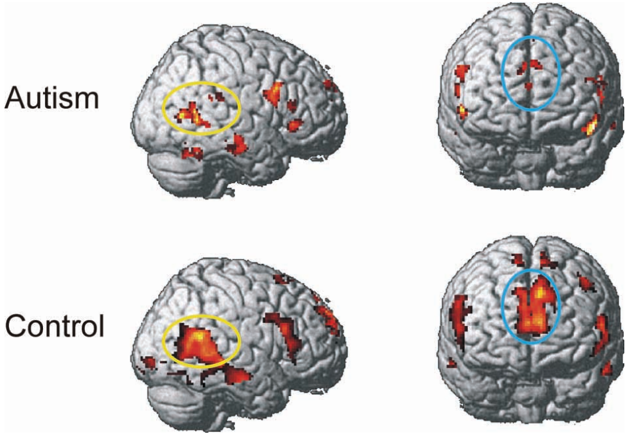
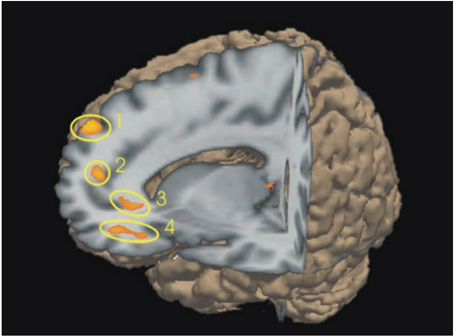
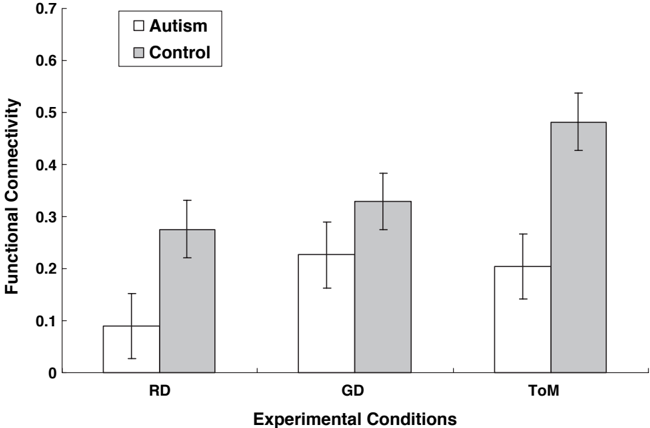
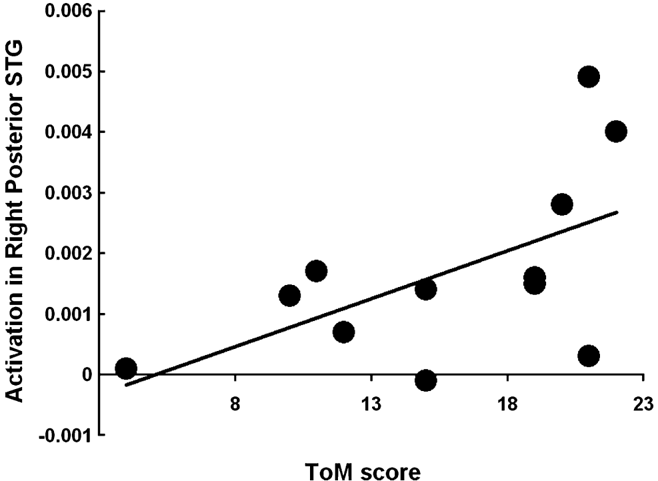
This study used fMRI to investigate the functioning of the Theory of Mind (ToM) cortical network in autism during the viewing of animations that in some conditions entailed the attribution of a mental state to animated geometric figures. At the cortical level, mentalizing (attribution of metal states) is underpinned by the coordination and integration of the components of the ToM network, which include the medial frontal gyrus, the anterior paracingulate, and the right temporoparietal junction. The pivotal new finding was a functional underconnectivity (a lower degree of synchronization) in autism, especially in the connections between frontal and posterior areas during the attribution of mental states. In addition, the frontal ToM regions activated less in participants with autism relative to control participants. In the autism group, an independent psychometric assessment of ToM ability and the activation in the right temporoparietal junction were reliably correlated. The results together provide new evidence for the biological basis of atypical processing of ToM in autism, implicating the underconnectivity between frontal regions and more posterior areas.
Overview
The claims and statistics of this paper haven’t been checked yet.
Free: it reads the open-access text and checks the first 5 claims that cite a source we can check. Create a free account to check every claim.
Integrity signals
Registry
Cites
Statistics
Figures
Verification
Claims the paper makes
The claims and statistics of this paper haven’t been checked yet.
Free: it reads the open-access text and checks the first 5 claims that cite a source we can check. Create a free account to check every claim.
Self-check
Percentages, sums and reported differences re-computed from the paper’s own numbers.
The self-check needs the paper’s full text.
Citations
Cites
Tzourio-Mazoyer, N., Landeau, B., Papathanassiou, D., Crivello, F., Etard, O., Delcroix, N., Mazoyer, B., & Joliot, M. (2002) · NeuroImage · doi:10.1006/nimg.2001.0978 · Cited by 16,319
Statistical parametric maps in functional imaging: A general linear approach
Friston, K. J., Holmes, A. P., Worsley, K. J., Poline, J. ‐., Frith, C. D., & Frackowiak, R. S. J. (1994) · Human Brain Mapping · doi:10.1002/hbm.460020402 · Cited by 9,688 · cited 3×
“To compare the participating groups in terms of the distribution of activation, the data were analyzed using SPM99.”
Lord, C., Rutter, M., & Le Couteur, A. (1994) · Journal of Autism and Developmental Disorders · doi:10.1007/bf02172145 · Cited by 9,065 · cited 1×
“The diagnosis of autism was established using two structured research diagnostic instruments, the ADI-R (Autism Diagnostic Interview—Revised; Lord, Rutter, & LeCouteur, 1994 ) and the ADOS-G (Autism Diagnostic Observation Schedule—Generic, Lord et al, 2000 ), supplemented with confirmation by expert opinion.”
Does the autistic child have a “theory of mind” ?
Baron-Cohen, S., Leslie, A. M., & Frith, U. (1985) · Cognition · doi:10.1016/0010-0277(85)90022-8 · Cited by 8,599 · cited 1×
“Even though difficulty with Theory of Mind (ToM) processing in autism has been demonstrated in many studies (e.g., Baron-Cohen, Leslie, & Frith, 1985; Baron-Cohen, Campbell, Karmiloff-Smith, Grant, & Walker, 1995; Leekam & Perner, 1991; Perner, Frith, Leslie, & Leekam, 1989; Reed & Peterson, 1990; Swettenham, 1996; Sw…”
Lord, C., Risi, S., Lambrecht, L., Cook, E. H., Leventhal, B. L., DiLavore, P. C., Pickles, A., & Rutter, M. (2000) · Journal of Autism and Developmental Disorders · doi:10.1023/a:1005592401947 · Cited by 7,520 · cited 3×
“…of autism was established using two structured research diagnostic instruments, the ADI-R (Autism Diagnostic Interview*Revised; Lord, Rutter, & LeCouteur, 1994) and the ADOS-G (Autism Diagnostic Observation Schedule*Generic, Lord et al., 2000), supplemented with confirmation by expert opinion.”
Meeting of minds: the medial frontal cortex and social cognition
Amodio, D. M., & Frith, C. D. (2006) · Nature Reviews Neuroscience · doi:10.1038/nrn1884 · Cited by 3,782 · cited 2×
“From an anatomical perspective, major afferents to the medial frontal regions come from the dorsolateral prefrontal cortex, temporal pole, anterior superior temporal gyrus, parietotemporal cortex, and posterior cingulate cortex (Barbas, Ghashghaei, Dombrowski, & Rempel-Clower, 1999; Carmichael & Price, 1996; see Amodi…”
Gusnard, D. A., Akbudak, E., Shulman, G. L., & Raichle, M. E. (2001) · Proceedings of the National Academy of Sciences · doi:10.1073/pnas.071043098 · Cited by 2,997 · cited 1×
“The medial prefrontal cortex has been credited with involvement in any kind of thought that uses the self as a referent (Gusnard, Akbudak, Shulman, & Raichle, 2001 ), the anterior paracingulate cortex is believed to be involved in the decoupling mechanism that distinguishes mental states from reality (Gallagher & Frit…”
Happé, F. G. E. (1994) · Journal of Autism and Developmental Disorders · doi:10.1007/bf02172093 · Cited by 2,352 · cited 2×
“…ability The brain activation in two regions of interest (the medial frontal gyrus, and the right posterior superior temporal gyrus), which are associated with processing of ToM, was correlated with the ToM score of the autism participants from the Happé strange stories test (Happé, 1994).”
People thinking about thinking peopleThe role of the temporo-parietal junction in “theory of mind”
Saxe, R., & Kanwisher, N. (2003) · NeuroImage · doi:10.1016/s1053-8119(03)00230-1 · Cited by 2,316 · cited 1×
“Others argue that the right temporoparietal junction is the central player in mental state reasoning, not only collating but also processing the cues to compute a mental state (Saxe & Kanwisher, 2003).”
Functional imaging of ‘theory of mind’
Gallagher, H. L., & Frith, C. D. (2003) · Trends in Cognitive Sciences · doi:10.1016/s1364-6613(02)00025-6 · Cited by 2,092 · cited 6×
“Gallagher and Frith (2003) propose that while the posterior superior temporal sulcus provides the cues for mentalizing, the medial prefrontal cortex does the mental state reasoning.”
Influential
Research works printed but not linked: 2
- Brothers, L. (1990). The social brain: A project for integrating primate behavior and neurophysiology in a new domain. Concepts in Neuroscience, 1, 27Á 51.
- Buxhoeveden, D. P., Semendeferi, K., Schenker, N., & Courchesne, E. (2004). Decreased cell column spa- cing in autism [abstract]. Social Neuroscience, 30, 582.
Cited by
Items 201–300 of 343
Alterations of Prefrontal-Posterior Information Processing Patterns in Autism Spectrum Disorders
Zhao, H.-C., Lv, R., Zhang, G., He, L., Cai, X.-T., Sun, Q., Yan, C., Bao, X.-Y., Lv, X.-Y., & Fu, B. (2022) · Frontiers in Neuroscience · doi:10.3389/fnins.2021.768219 · Cited by 18
“Underconnectivity between the frontal and posterior regions in ASD has been reported in previous studies (Fulvia et al., 2002; Kana et al., 2009).”
ResultKinematics matters: A new eye-tracking investigation of animated triangles
Roux, P., Passerieux, C., & Ramus, F. (2013) · Quarterly Journal of Experimental Psychology · doi:10.1080/17470218.2012.704052 · Cited by 18
O’Connell, G., Hsu, C., Christakou, A., & Chakrabarti, B. (2017) · Cognitive Affective & Behavioral Neuroscience · doi:10.3758/s13415-017-0550-8 · Cited by 17
Lian, X., Hong, W. C. H., Gao, F., Kolletar-Zhu, K., Wang, J., Cai, C., Yang, F., Chen, X., Wang, Z., & Gao, H. (2023) · Research in Developmental Disabilities · doi:10.1016/j.ridd.2023.104602 · Cited by 15
What Brain Imaging Reveals About the Nature of Multitasking
Just, M. A., & Buchweitz, A. (2014) · Oxford University Press eBooks · doi:10.1093/oxfordhb/9780199842193.013.4 · Cited by 15
Self-citationA voxel-wise assessment of growth differences in infants developing autism spectrum disorder
de la Parra, A. C., Lewis, J. D., Fonov, V., Botteron, K. N., McKinstry, R. C., Gerig, G., Pruett, J. R., Dager, S. R., Elison, J. T., Styner, M. A., et al. (2020) · NeuroImage Clinical · doi:10.1016/j.nicl.2020.102551 · Cited by 14
“…with FDR = 0.10; **Significant with FDR = 0.05, ***Significant with FDR = 0.01 A. Cárdenas-de-la-Parra et al. NeuroImage: Clinical 29 (2021) 102551 adults with ASD (Horwitz et al., 1988; Just et al., 2012; Kana et al., 2009) and overconnectivity in children with ASD (Supekar et al., 2013).”
BackgroundInfluentialAnatomical and Functional Connectivity in Autism Spectrum Disorders
Müller, R. (2013) · Springer eBooks · doi:10.1007/978-1-4614-4788-7_192 · Cited by 14
“…inhibition (Kana et al., 2007; Lee et al., 2009), face processing (Kleinhans et al., 2008), finger movement (Mostofsky et al., 2009), cognitive control (Solomon et al., 2009), self-representation (Lombardo et al., 2010), and tasks tapping into theory of mind (Kana et al., 2009; Mason et al., 2008).”
BackgroundBehavioural, Biopsychosocial, and Cognitive Models of Autism Spectrum Disorders
Lind, S. E., & Williams, D. M. (2011) · Springer eBooks · doi:10.1007/978-1-4419-8065-6_7 · Cited by 21
Tseng, R.-Y., & Yi–Luen, E. (2011) · International Journal of Computational Models and Algorithms in Medicine · doi:10.4018/jcmam.2011040102 · Cited by 17
Davis, J. M., Keeney, J., Sikela, J. M., & Hepburn, S. (2013) · PLoS ONE · doi:10.1371/journal.pone.0074940 · Cited by 13
“For example, abnormalities in connectivity have been identified during sentence comprehension [9], executive function [11], and motor functioning tasks [12], and importantly in Theory of Mind functioning [13].”
BackgroundMa, X., & Qiu, S. (2019) · Journal of Neuroscience Research · doi:10.1002/jnr.24542 · Cited by 14
“Similarly, compro‐ mised synchrony was also found during social processing tasks in autism (Kana et al., 2009).”
BackgroundTiming of mirror system activation when inferring the intentions of others
Cole, E. J., & Barraclough, N. E. (2018) · Brain Research · doi:10.1016/j.brainres.2018.07.015 · Cited by 12
Maskrey, M. K., & Wang, W. (2018) · Apress eBooks · doi:10.1007/978-1-4842-3381-8_8 · Cited by 11
Ammons, C. J., Doss, C. F., Bala, D., & Kana, R. K. (2018) · The Open Neuroimaging Journal · doi:10.2174/1874440001812010016 · Cited by 13
“Furthermore, activation in the right TPJ was correlated with ToM ability in the ASD group [27].”
BackgroundSelf-citationEspinosa, E., Mera, P., Toledo, D., & Mera, P. (2019) · Revista Med · doi:10.18359/rmed.3990 · Cited by 46
Pivotal region and optimized deep neuro fuzzy network for autism spectrum disorder detection
Kavitha Nair, R., & Ranjana, P. (2023) · Biomedical Signal Processing and Control · doi:10.1016/j.bspc.2023.104634 · Cited by 11
The Social Neuroscience of Autism Spectrum Disorder
McPartland, J. C., Tillman, R. M., Yang, D. Y. ‐., Bernier, R., & Pelphrey, K. A. (2014) · Wiley eBooks · doi:10.1002/9781118911389.hautc20 · Cited by 14
Keating, J., Hashmi, S., Vanderwert, R. E., Davies, R. M., Jones, C. R. G., & Gerson, S. A. (2023) · European Journal of Neuroscience · doi:10.1111/ejn.16144 · Cited by 13
“K E Y W O R D S autistic traits, fNIRS (functional near-infrared spectroscopy), internal state language, neurodiversity, play, social processing”
Neural Correlates of Social Perception in Children with Autism: Local versus Global Preferences
Herringshaw, A. J., Kumar, S. L., Rody, K. N., & Kana, R. K. (2018) · Neuroscience · doi:10.1016/j.neuroscience.2018.10.044 · Cited by 13
Self-citationOrganization of the Social Brain in Macaques and Humans
Noonan, M. P., Mars, R. B., Neubert, F.-X., Ahmed, B., Smith, J. E. T., Krug, K., & Sallet, J. (2016) · Elsevier eBooks · doi:10.1016/b978-0-12-805308-9.00015-4 · Cited by 10
Libsack, E. J., Trimber, E. M., Hauschild, K. M., Hajcak, G., McPartland, J. C., & Lerner, M. D. (2021) · Clinical Psychological Science · doi:10.1177/21677026211021975 · Cited by 10
The Spectrum of Autism—From Neuronal Connections to Behavioral Expression
(2010) · AMA Journal of Ethics · doi:10.1001/virtualmentor.2010.12.11.cprl1-1011 · Cited by 8
“In “Ethics in Neonatal Neurology: When is Enough, Enough?” Eric Racine and Michael Shevell examine the ethical questions raised by the increasingly complex processes of prognostication and end-of-life decision making for newborns with severe neurologic insult [4].”
Self-citationSocial, cognitive, perceptual, and other models of autism spectrum disorder
Beckerson, M. E., May, K. E., & Kana, R. K. (2022) · Elsevier eBooks · doi:10.1016/b978-0-12-816393-1.00005-1 · Cited by 9
Self-citationThe Role of the Brain's Pragmatic Language Network in Reading Comprehension in Autistic Children
Valles‐Capetillo, E., Kurtz, M. R., & Kana, R. K. (2025) · Autism Research · doi:10.1002/aur.70076 · Cited by 8
“These areas have been associated with pragmatic language processing (Bohrn et al. 2012; Reyes-Aguilar et al. 2018), ToM (Amodio and Frith 2006; Gallagher et al. 2000; Kana et al. 2009, 2015; Mar et al. 2008; Schurz et al. 2014), and overall social cognition (Tranel et al. 2002).”
Self-citationPokorny, J. J., Hatt, N. V., Rogers, S. J., & Rivera, S. M. (2017) · Journal of Autism and Developmental Disorders · doi:10.1007/s10803-017-3338-3 · Cited by 9
“We also hypothesized, based on previous findings (Castelli et al. 2002; Kana et al. 2009), that there would be less MZN activity in the ASD group, which was partially confirmed in the present study.”
Bryńska, A., Wolak, T. P., Naumczyk, P., Srebnicki, T., & Wolańczyk, T. (2022) · Psychiatria Polska · doi:10.12740/pp/onlinefirst/132704 · Cited by 8
Towner, T. T., Goyden, M. A., Coleman, H. J., Drumm, M. K., Ritchie, I. P., Lieb, K. R., Varlinskaya, E. I., & Werner, D. F. (2023) · Neuropharmacology · doi:10.1016/j.neuropharm.2023.109663 · Cited by 8
Black, M. H., Almabruk, T. A. A., Albrecht, M. A., Chen, N. T. M., Lipp, O. V., Tan, T., Bölte, S., & Girdler, S. J. (2018) · Annual International Conference of the IEEE Engineering in Medicine and Biology Society (EMBC) · doi:10.1109/embc.2018.8512802 · Cited by 11
“Similar patterns of reduced anterior-posterior coherency have been found in theory of mind tasks in individuals diagnosed with ASD [18], postulated to reflect increased autonomy of posterior networks in an attempt to remediate the lack of input from frontal regions [18].”
BackgroundLibero, L. E., & Kana, R. K. (2013) · Imaging in Medicine · doi:10.2217/iim.13.46 · Cited by 7
Self-citationNeural Mechanisms of Theory of Mind in Autism and Schizophrenia: A Review of fMRI Studies
Iosifyan, M., Mershina, E. A., Bazhenova, D. A., Sinitsyn, V. E., Ларина, О. М., & Pechenkova, E. (2020) · Clinical Psychology and Special Education · doi:10.17759/cpse.2020090102 · Cited by 8
A CAD system for early diagnosis of autism using different imaging modalities.
Ismail, M. (2016) · ThinkIR: The University of Louisville's Institutional Repository (University of Louisville) · doi:10.18297/etd/2599 · Cited by 7
Bildgebung bei Autismusspektrumstörungen: Eine Übersicht
Dziobek, I., & Koehne, S. (2011) · Der Nervenarzt · doi:10.1007/s00115-010-3240-0 · Cited by 7
Neural Responses to Truth Telling and Risk Propensity under Asymmetric Information
Suzuki, H., Misaki, M., Krüeger, F., & Bodurka, J. (2015) · PLoS ONE · doi:10.1371/journal.pone.0137014 · Cited by 7
“This cortical activation specifically included the bilateral armPFC, bilateral middle frontal cortex, right TPJ, bilateral fpPFC, and right precuneus.”
BackgroundInfluentialCommunicative intentions in autism spectrum disorder
Schütz, M., Ciaramidaro, A., Martinelli, A., Öller, R., Hartmann, D., Hein, G., Iotzov, V., Colle, L., Becchio, C., Walter, H., et al. (2020) · Research in Autism · doi:10.1016/j.rasd.2020.101666 · Cited by 8
Two-dimensional analysis of the supragranular layers in autism spectrum disorder
Karst, A. T., & Hutsler, J. J. (2016) · Research in Autism · doi:10.1016/j.rasd.2016.09.004 · Cited by 7
Dufford, A. J., Kimble, V. M., Tejavibulya, L., Dadashkarimi, J., Ibrahim, K., Sukhodolsky, D. G., & Scheinost, D. (2022) · Biological Psychiatry · doi:10.1016/j.biopsych.2022.02.234 · Cited by 6
Functional Connectivity MRI in Autism
Anderson, J. S. (2013) · Springer eBooks · doi:10.1007/978-1-4614-6843-1_11 · Cited by 7
Castelli, F. (2015) · Elsevier eBooks · doi:10.1016/b978-0-08-097086-8.56016-4 · Cited by 8
Oswald, T. M. (2012) · Scholars' Bank (University of Oregon) · Cited by 7
Li, C., Park, H., Awasthi, J., Rolison, M. J., Li, M., Scheinost, D., Chawarska, K., & Hampson, M. (2025) · Autism Research · doi:10.1002/aur.70037 · Cited by 6
“…shown reduced functional connectivity between the pSTS and regions involved in the theory of mind network, such as the medial prefrontal cortex, during mentalizing tasks (Kana et al. 2009, 2014), and between the pSTS and the fusiform face area during face processing tasks (Weisberg et al. 2014).”
Emotional Cognition, Theory of Mind, and Face Recognition in Individuals with Autism and PDDs
May, K. E., Martino, M. A., & Kana, R. K. (2022) · Autism and child psychopathology series · doi:10.1007/978-3-030-88538-0_5 · Cited by 6
Self-citationLarger corpus callosum volume is favorable for theory of mind development in healthy children
Mandl, S., Kienast, P., Kollndorfer, K., Kasprian, G. J., Weber, M., Seidl, R., & Bartha, L. (2023) · Cerebral Cortex · doi:10.1093/cercor/bhad353 · Cited by 5
Employing Temporal Properties of Brain Activity for Classifying Autism Using Machine Learning
Dammu, P. P. S., & Bapi, R. S. (2019) · Lecture notes in computer science · doi:10.1007/978-3-030-34872-4_22 · Cited by 5
Lin, Q., Zhang, R., Yiwen, Z., & Zhou, N. (2022) · Frontiers in Psychology · doi:10.3389/fpsyg.2022.899047 · Cited by 6
“, 2000) and brain activation of the mentalizing systems (Castelli et al., 2000, 2002; Kana et al., 2009), which has triggered many new research hotspots.”
BackgroundInui, T. (2013) · Japanese Psychological Research · doi:10.1111/jpr.12004 · Cited by 9
Müller, R.-A. (2012) · Springer eBooks · doi:10.1007/978-1-4419-1698-3_218 · Cited by 5
Training volitional control of the theory of mind network with real-time fMRI neurofeedback
Saxena, A., Shovestul, B. J., Dudek, E. M., Reda, S., Venkataraman, A., Lamberti, J. S., & Dodell‐Feder, D. (2023) · NeuroImage · doi:10.1016/j.neuroimage.2023.120334 · Cited by 5
Biosocial Interaction Rituals of Autism Spectrum Disorders: A Research Agenda for Neurosociology
Leveto, J. A., & Kalkhoff, W. (2012) · Advances in group processes · doi:10.1108/s0882-6145(2012)0000029007 · Cited by 4
Disrupted Cortical Connectivity as an Explanatory Model for Autism Spectrum Disorder
Borup, J. D., & Kølgaard, C. B. (2014) · Journal of European Psychology Students · doi:10.5334/jeps.bn · Cited by 4
“Kana et al. (2009) decided to replicate these findings by conducting a similar study using fMRI scanning techniques.”
BackgroundWhite and gray matter correlates of theory of mind in autism: a voxel-based morphometry study
Soylu, F., May, K. E., & Kana, R. K. (2023) · Brain Structure and Function · doi:10.1007/s00429-023-02680-5 · Cited by 4
Self-citationAnderson, J. S., Ferguson, M. A., & Nielsen, J. A. (2013) · Springer eBooks · doi:10.1007/978-1-4614-6843-1_10 · Cited by 5
Lovato, I., Pini, A., Stamm, A., Taquet, M., & Vantini, S. (2021) · Journal of the Royal Statistical Society Series C (Applied Statistics) · doi:10.1111/rssc.12463 · Cited by 5
“Thanks to this methodology, we managed to be very specific in the location of the differences between syndromic ASD (i.e. autism combined with tuberous sclerosis complex) and non-syndromic ASD (i.e. autism without TSC), which shed lights onto the underlying biomechanisms underpinning each form of autism.”
BackgroundInfluentialWhen Genetic and Environmental Factors Meet in Modelling Autism
Pettie, M. A. (2020) · Open Access Victoria University of Wellington | Te Herenga Waka (Figshare) · doi:10.26686/wgtn.17148212.v1 · Cited by 4
Li, J. (2025) · Natural Language Processing Journal · doi:10.1016/j.nlp.2025.100163 · Cited by 3
“• False Belief Task: Failure (i.e., in severe autism) could reflect minimal TPJ-mPFC integration on fMRI (Kana et al., 2009), with EEG showing desynchronized patterns (Murias et al., 2007).”
Yang, C., Qiu-rong, Z., Wang, X.-K., Dong, W., Ma, S., Sun, F.-F., Cao, L.-F., & Yuan, L. C. (2026) · Brain Science and Child Development · doi:10.1016/j.bscd.2026.100003 · Cited by 4
Time course of effective connectivity associated with perspective taking in utterance comprehension
Tokimoto, S., & Tokimoto, N. (2023) · Frontiers in Human Neuroscience · doi:10.3389/fnhum.2023.1179230 · Cited by 2
Brain function and brain connectivity in autism
Trapani, J. A., Bednarz, H. M., & Kana, R. K. (2022) · Elsevier eBooks · doi:10.1016/b978-0-12-816393-1.00003-8 · Cited by 4
Self-citationBrain functional differences during irony comprehension in adolescents with ASD
Xu, S., Wang, X., Shen, L., Yan, X., Feng, G., & Cao, F. (2025) · Cerebral Cortex · doi:10.1093/cercor/bhaf003 · Cited by 4
Ambiguity in Interpersonal Communication and Its Function
Takahashi, H., & Okada, H. (2010) · Journal of Japan Society for Fuzzy Theory and Intelligent Informatics · doi:10.3156/jsoft.22.450 · Cited by 3
Zhang, Y., Miao, B., Guan, J., & Meng, Q. (2018) · International Workshop on Pattern Recognition (IWPR) · doi:10.1117/12.2501762 · Cited by 3
“Based on neuroimaging, it has found that ToM cortical network includes the medial frontal gyrus, anterior cingulate, and right temporoparietal junction [12].”
BackgroundApport des techniques d’imagerie cérébrale récentes dans les troubles du spectre autistique
Bargiacchi, A. (2012) · Annales Médico-psychologiques revue psychiatrique · doi:10.1016/j.amp.2012.07.006 · Cited by 2
Bryńska, A., Wolak, T. P., Naumczyk, P., Srebnicki, T., & Wolańczyk, T. (2022) · Psychiatria Polska · doi:10.12740/pp/onlinefirst/133032 · Cited by 2
Sütçübaşı, B., Ballı, T., Roeyers, H., Wiersema, J. R., Çamkerten, S., Öztürk, O. C., Metin, B., & Sonuga-Barke, E. J. S. (2025) · Journal of Attention Disorders · doi:10.1177/10870547251315230 · Cited by 3
“…as many of these regions are part of the mentalizing network (medial prefrontal cortex, right temporoparietal junction, and precuneus), which plays a crucial role in social interactions—impairments in which are more pronounced in autism compared to ADHD (Kana et al., 2009; Lombardo et al., 2011).”
Imagerie dans l'autisme infantile
Bargiacchi, A., Chabane, N., Brunelle, F., Zilbovicius, M., & Boddaert, N. (2011) · Encyclopédie médico-chirurgicale. Psychiatrie · doi:10.1016/s0246-1072(11)55393-3 · Cited by 2
Töret, G., Özdemir, S., & Selimoğlu, Ö. G. (2018) · Ankara Üniversitesi Eğitim Bilimleri Fakültesi Özel Eğitim Dergisi · doi:10.21565/ozelegitimdergisi.349440 · Cited by 4
Tseng, R.-Y., & Yi–Luen, E. (2012) · IGI Global eBooks · doi:10.4018/978-1-4666-2653-9.ch006 · Cited by 2
An Early Detection of Autism Spectrum Disorder Using PDNN and ABIDE I&II Dataset
Lamani, M. R., & Benadit, P. J. (2024) · Lecture notes in networks and systems · doi:10.1007/978-981-99-8479-4_22 · Cited by 4
Beckerson, M. E., Kerr-German, A. N., & Buss, A. T. (2024) · Child Neuropsychology · doi:10.1080/09297049.2024.2386072 · Cited by 1
Vlasceanu, A., de la Rosa, S., & Barraclough, N. E. (2024) · Scientific Reports · doi:10.1038/s41598-024-76488-6 · Cited by 1
Gordon, R. G., & Calamia, M. R. (2016) · Autism and child psychopathology series · doi:10.1007/978-3-319-27171-2_22 · Cited by 1
Chapter 14 Brain network organization in ASD: Evidence from functional and diffusion weighted MRI
Müller, R., & Carper, R. A. (2016) · CRC Press eBooks · doi:10.1201/9781315371375-15 · Cited by 1
A Dynamic Exploration into Mentalization Among Youth on the Autism Spectrum
DeVincentis, R. D. (2018) · OhioLink ETD Center (Ohio Library and Information Network) · Cited by 1
Functional Connectivity in Autism Spectrum Disorders: Challenges and Perspectives
Müller, R., & Linke, A. C. (2021) · Springer eBooks · doi:10.1007/978-3-030-59797-9_12 · Cited by 2
Contributions of nonhuman primate research to unraveling the social brain and its impairments
Gacoin, M., Jiang, H., Obliger-Debouche, M., Cléry, J. C., & Sliwa, J. (2025) · Revue de primatologie · doi:10.4000/15cqb · Cited by 1
Meissner, N. A. (2018) · OhioLink ETD Center (Ohio Library and Information Network) · Cited by 1
Neural Correlates of Social Cognition Deficits in Autism Spectrum Disorders
Hernandez, L. M., Wang, A. T., & Dapretto, M. (2015) · Elsevier eBooks · doi:10.1016/b978-0-12-397025-1.00175-5 · Cited by 1
Autism, Development and Neural Plasticity
Robinson‐Agramonte, M. D. L. Á., Fraguela, M. E. G., & Bergado, J. A. (2015) · Springer eBooks · doi:10.1007/978-3-319-16321-5_7 · Cited by 3
Koehne, S. (2016) · Universitätsbibliothek der FU Berlin Hochschulschriftenstelle u. Dokumentenserver · doi:10.17169/refubium-8563 · Cited by 2
Matthysen, W., Marinazzo, D., & Šiugždaitė, R. (2016) · doi:10.7287/peerj.preprints.2060v1 · Cited by 1
“The study by Kana et al. (2009) demonstrated that the medial FG was activated during these ToM tasks, but significantly less activation in this region was seen in adults with ASD.”
BackgroundThe Language Dimension of Psychopathy: From Signal Analysis to Social Perception
Sokolov, M. (2017) · Carleton University's Institutional Repository (MacOdrum Library, Carleton University) · doi:10.22215/etd/2017-12086 · Cited by 1
“Individuals on the Autism Spectrum are also impaired in their ability to reason in ToM tasks (Baron-Cohen, Leslie, & Frith, 1985; Kana et al., 2009; Rutherford & McIntosh, 2007; Walsh, Creighton, & Rutherford, 2016).”
BackgroundEye movements during complex information processing in autism spectrum disorder
Yeung, S. A. (2015) · ePrints Soton (University of Southampton)
The Environmental Health of the Autistic Student in the Public School Classroom
Klein, A. (2015) · ScholarWorks (Walden University)
A systematic study of personification in synaesthesia : behavioural and neuroimaging studies
Sobczak‐Edmans, M. (2013) · Brunel University Research Archive (BURA) (Brunel University London) · Cited by 1
Murphy, E. R. (2013) · DigitalGeorgetown (Georgetown University Library)
Spécificité des systèmes conceptuels à propos du vivant chez des enfants autistes ou Asperger
Bedoin, N., & Vulliez, E. (2009) · Revue de neuropsychologie · doi:10.1684/nrp.2009.0048 · Cited by 1
NEURAL BASES OF IMPLICIT LEARNING IN YOUNG ADULTS WITH ASD AND THEIR PARENTS
Klein, C. L. (2012) · W. S. Hoole Special Collections Library Manuscript Collections
Abu-Akel, A. M. (2016) · University of Birmingham Institutional Research Archive (University of Birmingham)
Genetic Basis and Neural Mechanism of Autism Spectrum Disorder*
Li, J., Zhu-Mei, L. I. N., & Zhu, L. (2012) · PROGRESS IN BIOCHEMISTRY AND BIOPHYSICS · doi:10.3724/sp.j.1206.2011.00519 · Cited by 1
Solarte, M., & Rocío, P. (2016) · Aaltodoc (Aalto University)
Tompkins, J., & Bernat, J. L. (2010)
The Developmental Trajectory of Contour Integration in Autism Spectrum Disorders
Altschuler, T. S. (2014) · CUNY Academic Works (City University of New York)
Vpliv psihologíčnih osoblivostej ASD dítej na EEG
Островська, К., & Оstrovski, I. P. (2015)
Theory of Mind and False-Belief Understanding
de Bruin, L. C. (2013) · Emerald Group Publishing Limited eBooks · doi:10.1108/978-1-62396-513-620251011 · Cited by 1
Ruiz, K. P. G. (2014) · Gredos (University of Salamanca) · doi:10.14201/gredos.127388 · Cited by 3
Mak‐Fan, K. M. (2012) · TSpace (University of Toronto)
Fishburn, F. A. (2017) · DigitalGeorgetown (Georgetown University Library)
Metadata
- Authors
- Kana, R. K., Keller, T. A., Cherkassky, V. L., Minshew, N. J., & Just, M. A.
- Affiliations
- University of Alabama at Birmingham (US)
- Carnegie Mellon University (US)
- University of Pittsburgh (US)
- Corresponding author
- Kana, Rajesh K.
- Venue
- Social Neuroscience
- Publisher
- Informa UK Limited
- Published
- 2009-04
- Volume
- 4
- Issue
- 2
- Pages
- 135-152
- ISSN
- 1747-0919 (ISSN-L)
- 1747-0927
- PMC
- PMC3086301
- OpenAlex
- W2116442163
- Cited by
- 319
- References
- 80
- Citations by year
- 2026: 8 · 2025: 8 · 2024: 6 · 2023: 16 · 2022: 15 · 2021: 14 · 2020: 16 · 2019: 13 · 2018: 19 · 2017: 21 · 2016: 15 · 2015: 26 · 2014: 30 · 2013: 26 · 2012: 29
- FWCI
- 9.85
- Type
- journal article
- Language
- en
- Open access
- green
- www.ncbi.nlm.nih.gov
- Locations
- Social Neuroscience (publishedVersion)
- PubMed (publishedVersion)
- PubMed Central (acceptedVersion)
- Figshare (submittedVersion, cc-by)
- KiltHub Repository (submittedVersion)
- KiltHub Repository
- Funders
- King's College London
- Menzies Centre for Australian Studies, King's College London, University of London
- National Institute of Child Health and Human Development (HD 35469)
- Eunice Kennedy Shriver National Institute of Child Health and Human Development (P01HD035469, HD35469, U19HD035469, P50HD055748)
- Topics
- Life Sciences › Neuroscience › Cognitive Neuroscience › Autism Spectrum Disorder Research
- Social Sciences › Psychology › Developmental and Educational Psychology › Child and Animal Learning Development
- Social Sciences › Psychology › Social Psychology › Action Observation and Synchronization
- Keywords
- autism spectrum disorder, theory of mind, mental state attribution, functional connectivity, right temporoparietal junction, medial frontal gyrus, mentalization
- MeSH terms
- Adolescent, Adult, Analysis of Variance, Autistic Disorder, Brain Mapping, Corpus Callosum, Female, Frontal Lobe, Humans, Image Processing, Computer-Assisted, Magnetic Resonance Imaging, Male, Mental Processes, Models, Psychological, Neural Pathways, Neuropsychological Tests, Oxygen, Photic Stimulation, Psychometrics, Reaction Time, Temporal Lobe, Young Adult
About these checks
Registry, retraction, Cites and statistics results are computed, not judged, with one exception: a printed reference that no index lists is read once by a model before it counts as a citation error. Claims are extracted by a model and kept only when their quote appears verbatim in the text; each cited source is then checked, with a model’s help, for whether it says what the claim relies on. Those verdicts can be wrong — read the claim’s quote and the cited source before relying on one.
Statistics and arithmetic are recomputed, not judged.
Confidence bands are shown only for fields calibrated on our annotated test set. None is calibrated yet, so no band is shown.
What counts as a claim ›How we measure confidence ›How we check this ›
Are you an author, or do you see a problem with this page? Request a review
Data sources
Bibliographic data: Semantic Scholar, OpenAlex, Crossref.
Contains information from the Semantic Scholar Academic Graph Datasets, made available under the ODC Attribution License (ODC-BY 1.0).
Semantic Scholar’s data is described in: Kinney, R., et al. (2023). The Semantic Scholar Open Data Platform. arXiv:2301.10140.
