

Atypical frontal-posterior synchronization of Theory of Mind regions in autism during mental state attribution
Open accessThe DOI matches its Crossref record; 80 of the 80 references it cites were found in a registry or an index.
Abstract
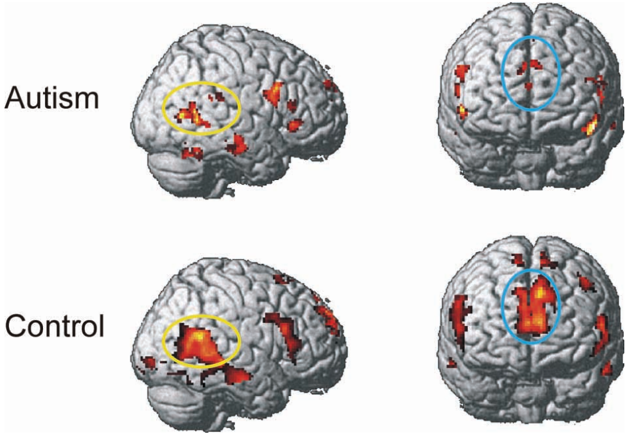
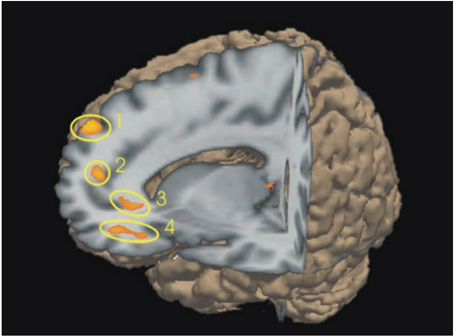
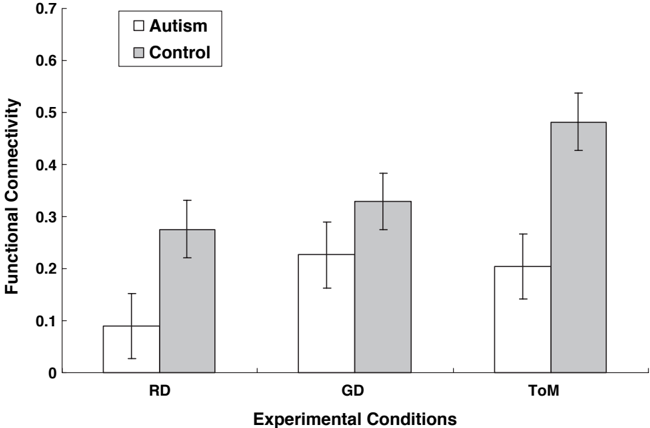
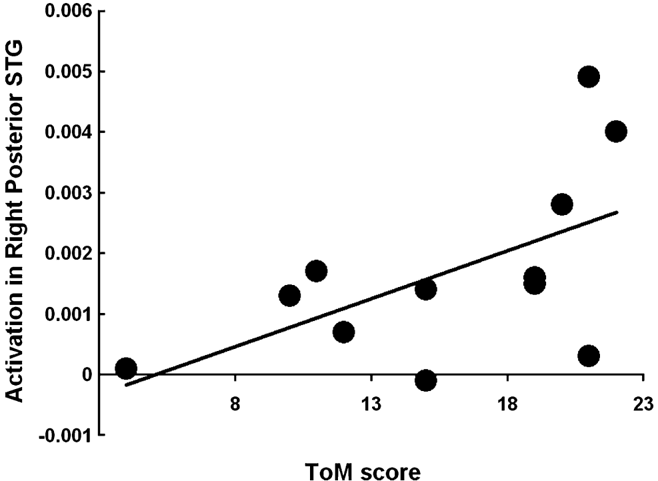
This study used fMRI to investigate the functioning of the Theory of Mind (ToM) cortical network in autism during the viewing of animations that in some conditions entailed the attribution of a mental state to animated geometric figures. At the cortical level, mentalizing (attribution of metal states) is underpinned by the coordination and integration of the components of the ToM network, which include the medial frontal gyrus, the anterior paracingulate, and the right temporoparietal junction. The pivotal new finding was a functional underconnectivity (a lower degree of synchronization) in autism, especially in the connections between frontal and posterior areas during the attribution of mental states. In addition, the frontal ToM regions activated less in participants with autism relative to control participants. In the autism group, an independent psychometric assessment of ToM ability and the activation in the right temporoparietal junction were reliably correlated. The results together provide new evidence for the biological basis of atypical processing of ToM in autism, implicating the underconnectivity between frontal regions and more posterior areas.
Overview
The claims and statistics of this paper haven’t been checked yet.
Free: it reads the open-access text and checks the first 5 claims that cite a source we can check. Create a free account to check every claim.
Integrity signals
Registry
Cites
Statistics
Figures
Verification
Claims the paper makes
The claims and statistics of this paper haven’t been checked yet.
Free: it reads the open-access text and checks the first 5 claims that cite a source we can check. Create a free account to check every claim.
Self-check
Percentages, sums and reported differences re-computed from the paper’s own numbers.
The self-check needs the paper’s full text.
Citations
Cites
Tzourio-Mazoyer, N., Landeau, B., Papathanassiou, D., Crivello, F., Etard, O., Delcroix, N., Mazoyer, B., & Joliot, M. (2002) · NeuroImage · doi:10.1006/nimg.2001.0978 · Cited by 16,319
Statistical parametric maps in functional imaging: A general linear approach
Friston, K. J., Holmes, A. P., Worsley, K. J., Poline, J. ‐., Frith, C. D., & Frackowiak, R. S. J. (1994) · Human Brain Mapping · doi:10.1002/hbm.460020402 · Cited by 9,688 · cited 3×
“To compare the participating groups in terms of the distribution of activation, the data were analyzed using SPM99.”
Lord, C., Rutter, M., & Le Couteur, A. (1994) · Journal of Autism and Developmental Disorders · doi:10.1007/bf02172145 · Cited by 9,065 · cited 1×
“The diagnosis of autism was established using two structured research diagnostic instruments, the ADI-R (Autism Diagnostic Interview—Revised; Lord, Rutter, & LeCouteur, 1994 ) and the ADOS-G (Autism Diagnostic Observation Schedule—Generic, Lord et al, 2000 ), supplemented with confirmation by expert opinion.”
Does the autistic child have a “theory of mind” ?
Baron-Cohen, S., Leslie, A. M., & Frith, U. (1985) · Cognition · doi:10.1016/0010-0277(85)90022-8 · Cited by 8,599 · cited 1×
“Even though difficulty with Theory of Mind (ToM) processing in autism has been demonstrated in many studies (e.g., Baron-Cohen, Leslie, & Frith, 1985; Baron-Cohen, Campbell, Karmiloff-Smith, Grant, & Walker, 1995; Leekam & Perner, 1991; Perner, Frith, Leslie, & Leekam, 1989; Reed & Peterson, 1990; Swettenham, 1996; Sw…”
Lord, C., Risi, S., Lambrecht, L., Cook, E. H., Leventhal, B. L., DiLavore, P. C., Pickles, A., & Rutter, M. (2000) · Journal of Autism and Developmental Disorders · doi:10.1023/a:1005592401947 · Cited by 7,520 · cited 3×
“…of autism was established using two structured research diagnostic instruments, the ADI-R (Autism Diagnostic Interview*Revised; Lord, Rutter, & LeCouteur, 1994) and the ADOS-G (Autism Diagnostic Observation Schedule*Generic, Lord et al., 2000), supplemented with confirmation by expert opinion.”
Meeting of minds: the medial frontal cortex and social cognition
Amodio, D. M., & Frith, C. D. (2006) · Nature Reviews Neuroscience · doi:10.1038/nrn1884 · Cited by 3,782 · cited 2×
“From an anatomical perspective, major afferents to the medial frontal regions come from the dorsolateral prefrontal cortex, temporal pole, anterior superior temporal gyrus, parietotemporal cortex, and posterior cingulate cortex (Barbas, Ghashghaei, Dombrowski, & Rempel-Clower, 1999; Carmichael & Price, 1996; see Amodi…”
Gusnard, D. A., Akbudak, E., Shulman, G. L., & Raichle, M. E. (2001) · Proceedings of the National Academy of Sciences · doi:10.1073/pnas.071043098 · Cited by 2,997 · cited 1×
“The medial prefrontal cortex has been credited with involvement in any kind of thought that uses the self as a referent (Gusnard, Akbudak, Shulman, & Raichle, 2001 ), the anterior paracingulate cortex is believed to be involved in the decoupling mechanism that distinguishes mental states from reality (Gallagher & Frit…”
Happé, F. G. E. (1994) · Journal of Autism and Developmental Disorders · doi:10.1007/bf02172093 · Cited by 2,352 · cited 2×
“…ability The brain activation in two regions of interest (the medial frontal gyrus, and the right posterior superior temporal gyrus), which are associated with processing of ToM, was correlated with the ToM score of the autism participants from the Happé strange stories test (Happé, 1994).”
People thinking about thinking peopleThe role of the temporo-parietal junction in “theory of mind”
Saxe, R., & Kanwisher, N. (2003) · NeuroImage · doi:10.1016/s1053-8119(03)00230-1 · Cited by 2,316 · cited 1×
“Others argue that the right temporoparietal junction is the central player in mental state reasoning, not only collating but also processing the cues to compute a mental state (Saxe & Kanwisher, 2003).”
Functional imaging of ‘theory of mind’
Gallagher, H. L., & Frith, C. D. (2003) · Trends in Cognitive Sciences · doi:10.1016/s1364-6613(02)00025-6 · Cited by 2,092 · cited 6×
“Gallagher and Frith (2003) propose that while the posterior superior temporal sulcus provides the cues for mentalizing, the medial prefrontal cortex does the mental state reasoning.”
Influential
Research works printed but not linked: 2
- Brothers, L. (1990). The social brain: A project for integrating primate behavior and neurophysiology in a new domain. Concepts in Neuroscience, 1, 27Á 51.
- Buxhoeveden, D. P., Semendeferi, K., Schenker, N., & Courchesne, E. (2004). Decreased cell column spa- cing in autism [abstract]. Social Neuroscience, 30, 582.
Cited by
Items 101–200 of 343
Reframing social cognition: Relational versus representational mentalizing.
Deschrijver, E., & Palmer, C. J. (2020) · Psychological Bulletin · doi:10.1037/bul0000302 · Cited by 80
Singletary, W. M. (2015) · Neuropsychoanalysis · doi:10.1080/15294145.2015.1092334 · Cited by 80
Reduced Gray Matter Volume in the Social Brain Network in Adults with Autism Spectrum Disorder
Sato, W., Kochiyama, T., Uono, S., Yoshimura, S., Kubota, Y., Sawada, R., Sakihama, M., & Toichi, M. (2017) · Frontiers in Human Neuroscience · doi:10.3389/fnhum.2017.00395 · Cited by 80
“…et al., 2000; Pierce et al., 2001), IFG (e.g., Baron-Cohen et al., 1999; Hall et al., 2003; Dapretto et al., 2006), OFC (e.g., Ashwin et al., 2007; Kana et al., 2009; Kaiser et al., 2010), and DMPFC (e.g., Castelli et al., 2002; Pierce et al., 2004; Wang et al., 2007) (for reviews, see Philip et…”
Animated brain: A functional neuroimaging study on animacy experience
Santos, N. S., Kuzmanovic, B., David, N., Rotarska-Jagiela, A., Eickhoff, S. B., Shah, N. J., Fink, G. R., Bente, G., & Vogeley, K. T. (2010) · NeuroImage · doi:10.1016/j.neuroimage.2010.05.080 · Cited by 81
“While most neuroimaging studies that have used animated stimuli aimed at evoking ToM in human subjects (Campbell et al., 2006; Castelli et al., 2002; Castelli et al., 2000; Gobbini et al., 2007; Horan et al., 2009; Kana et al., 2009; Russell et al., 2006; Salter et al., 2008), only few studies focused on the neural co…”
Backgroundthe EU-AIMS LEAP group, Moessnang, C., Baumeister, S., Tillmann, J., Goyard, D., Charman, T., Ambrosino, S., Baron‐Cohen, S., Beckmann, C. F., Bölte, S., et al. (2020) · Molecular Autism · doi:10.1186/s13229-020-0317-x · Cited by 79
Nijhof, A. D., Bardi, L., Braß, M., & Wiersema, J. R. (2018) · NeuroImage Clinical · doi:10.1016/j.nicl.2018.02.016 · Cited by 76
“In individuals with ASD, altered activity has been found in these regions during explicit mentalizing, particularly in the right TPJ (Eddy, 2016; Kana et al., 2009; Kennedy and Courchesne, 2008; Koster-Hale et al., 2013; Lombardo et al., 2011; Murdaugh et al., 2014; Spengler et al., 2010).”
Fitzgerald, J., Johnson, K. A., Kehoe, E. G., Bokde, A. L. W., Garavan, H., Gallagher, L., & McGrath, J. (2014) · Autism Research · doi:10.1002/aur.1430 · Cited by 69
“…precuneus [Just et al., 2007; Mizuno et al., 2006, 2011; Solomon et al., 2009], MFG [Delmonte et al., 2013; Just et al., 2007; Kana, Keller, Minshew, & Just, 2007; Koshino et al., 2008], anterior insula [Just et al., 2007; Kana et al., 2007; Mizuno et al., 2011] and the STS [Kana et al., 2009].”
BackgroundMaliske, L., Schurz, M., & Kanske, P. (2023) · Neuroscience & Biobehavioral Reviews · doi:10.1016/j.neubiorev.2023.105080 · Cited by 68
Autism and EEG Phase Reset: Deficient GABA Mediated Inhibition in Thalamo-Cortical Circuits
Thatcher, R. W., North, D. M., Neubrander, J., Biver, C. J., Cutler, S., & DeFina, P. (2009) · Developmental Neuropsychology · doi:10.1080/87565640903265178 · Cited by 61
Weisberg, J., Milleville, S. C., Kenworthy, L., Wallace, G. L., Gotts, S. J., Beauchamp, M. S., & Martin, A. (2014) · Cerebral Cortex · doi:10.1093/cercor/bhs276 · Cited by 59
Duan, X., Chen, H., He, C., Long, Z., Guo, X., Zhou, Y., Uddin, L. Q., & Chen, H. (2017) · Progress in Neuro-Psychopharmacology and Biological Psychiatry · doi:10.1016/j.pnpbp.2017.07.027 · Cited by 67
Reduced connectivity between mentalizing and mirror systems in autism spectrum condition
Cole, E. J., Barraclough, N. E., & Andrews, T. J. (2018) · Neuropsychologia · doi:10.1016/j.neuropsychologia.2018.11.008 · Cited by 68
“Behavioural studies have shown that adults with ASC do not display consistent impairments on mentalizing tasks, which do not involve observing human action (Ammons et al., 2018; Kana et al., 2009; Kirkovski et al., 2016; Murdaugh et al., 2012; Ponnet et al., 2004; Roeyers et al., 2001; Spek et al., 2010) and neuroimag…”
InfluentialPina‐Camacho, L., Villero, S., Fraguas, D., Boada, L., Janssen, J., Navas-Sánchez, F. J., Mayoral, M., Llorente, C., Arango, C., & Parellada, M. (2011) · Journal of Autism and Developmental Disorders · doi:10.1007/s10803-011-1360-4 · Cited by 69
“…2007, 2008; Greimel et al. 2010b; Grezes et al. 2009; Hadjikhani et al. 2004, 2007, 2009; Hall et al. 2010a; Hubl et al. 2003; Humphreys et al. 2008; Kana et al. 2009; Kleinhans et al. 2008b, 2009, 2011; Knaus et al. 2008; Koshino et al. 2008; Lombardo et al. 2010; Malisza et al. 2011; Mason et…”
Bliksted, V., Ubukata, S., & Koelkebeck, K. (2016) · Schizophrenia Research · doi:10.1016/j.schres.2016.01.037 · Cited by 64
“Moreover, abnormal network activation and de-synchronization in both samples (Castelli et al., 2002; Das et al., 2012b; Kana et al., 2009) with a general under-activation of frontal networks was suggested, including a reduced coupling between task-positive (ToM-related) and task-negative (e.”
InfluentialWilliams, D. L., Minshew, N. J., & Goldstein, G. (2015) · Autism · doi:10.1177/1362361315586171 · Cited by 53
“…with verbal, relatively able individuals with autism have reported similar results during tasks that involve problem-solving (Just et al., 2007), social thinking (Kana et al., 2009), inhibition (Kana et al., 2007), and coordination between language and theory-of-mind networks (Mason et al., 2008).”
BackgroundResultSelf-citationQuiñones‐Camacho, L. E., Fishburn, F. A., Belardi, K. M., Williams, D. L., Huppert, T. J., & Perlman, S. B. (2021) · Autism Research · doi:10.1002/aur.2513 · Cited by 62
“This effect in the TPJ was expected, as several studies have demonstrated the primary role of the TPJ in social cognition (Kana et al., 2009).”
ResultYe, H., Chen, S., Huang, D., Zheng, H., Jia, Y., & Luo, J. (2015) · Frontiers in Human Neuroscience · doi:10.3389/fnhum.2015.00659 · Cited by 64
“Furthermore, the impairment in the processing of the mental states of others in autism is associated with reduced RTPJ activity (Kana et al., 2009).”
BackgroundAutistic empathy toward autistic others
Komeda, H., Kosaka, H., Saito, D. N., Mano, Y., Jung, M., Fujii, T., Yanaka, H. T., Munesue, T., Ishitobi, M., Sato, M., et al. (2014) · Social Cognitive and Affective Neuroscience · doi:10.1093/scan/nsu126 · Cited by 74
“…of this nature was in the context of a language comprehension task (Just et al., 2004); undersynchronization of activation during cognitive tasks has been reported between the frontal lobe and more posterior regions in several other paradigms (Just et al., 2004, 2012; Kana et al., 2006, 2009).”
BackgroundLynn, A. C., Padmanabhan, A., Simmonds, D., Foran, W., Hallquist, M. N., Luna, B., & O'Hearn, K. (2018) · Developmental Science · doi:10.1111/desc.12508 · Cited by 49
Lobular patterns of cerebellar resting‐state connectivity in adults with Autism Spectrum Disorder
Olivito, G., Lupo, M., Laghi, F., Clausi, S., Baiocco, R., Cercignani, M., Bozzali, M., & Leggio, M. G. (2017) · European Journal of Neuroscience · doi:10.1111/ejn.13752 · Cited by 58
“, 2008), medial frontal and temporoparietal regions (Castelli et al., 2002; Kana et al., 2009).”
BackgroundShen, M. D., Shih, P., Öttl, B., Keehn, B., Leyden, K. M., Gaffrey, M. S., & Müller, R.-A. (2012) · NeuroImage · doi:10.1016/j.neuroimage.2012.06.008 · Cited by 50
“, 2007), and theory of mind (Kana et al., 2008; Mason et al., 2008), including the specific proposal of reduced fronto-posterior connectivity (Schipul et al.”
Chien, H., Lin, H., Lai, M., Gau, S. S., & Tseng, W. I. (2015) · Autism Research · doi:10.1002/aur.1457 · Cited by 54
Morality in autism spectrum disorder: A systematic review
Dempsey, E. E., Moore, C., Johnson, S. A., Stewart, S. H., & Smith, I. M. (2019) · Development and Psychopathology · doi:10.1017/s0954579419001160 · Cited by 56
“, 2011) and hyperconnectivity in these regions during affective empathy tasks (Kana et al., 2009).”
BackgroundNeuroimaging endophenotypes in autism spectrum disorder
Mahajan, R., & Mostofsky, S. H. (2015) · CNS Spectrums · doi:10.1017/s1092852915000371 · Cited by 59
Lázár, A. S., Lázár, Z. I., Bíró, A., Győri, M., Tárnok, Z., Prekop, C., Keszei, A. P., Stefanik, K., Gádoros, J., Halász, P., et al. (2010) · Clinical Neurophysiology · doi:10.1016/j.clinph.2010.03.054 · Cited by 61
“, 2005), social cognition (Castelli et al., 2002; Kana et al., 2008) and also during the baseline resting-state (Cherkassky et al.”
InfluentialLiu, Y., Cherkassky, V. L., Minshew, N. J., & Just, M. A. (2011) · Neuropsychologia · doi:10.1016/j.neuropsychologia.2011.04.005 · Cited by 47
Self-citationThe Superficial White Matter in Autism and Its Role in Connectivity Anomalies and Symptom Severity.
Hong, S.-J., Hyung, B., Paquola, C., & Bernhardt, B. (2018) · Cerebral Cortex · doi:10.1093/cercor/bhy321 · Cited by 53
“In line with the longstanding association of ASD to “atypical theory of mind” (Frith and Frith 2005), task-based fMRI in the condition revealed atypical activations during cognitive perspective-taking tasks in these regions (Castelli et al. 2002; Kennedy and Courchesne 2008; Kana et al. 2009; Lombardo et al. 2011).”
MET Receptor Tyrosine Kinase as an Autism Genetic Risk Factor
Peng, Y., Huentelman, M., Smith, C., & Qiu, S. (2013) · International Review of Neurobiology · doi:10.1016/b978-0-12-418700-9.00005-8 · Cited by 49
Matlis, S., Boric, K., Chu, C. J., & Kramer, M. (2015) · BMC Neurology · doi:10.1186/s12883-015-0355-8 · Cited by 53
“‘ Short range ’ coupling has been found to be both greater [12, 34, 37, 39] and lower [27 – 29, 31, 32, 44, 47, 48, 51, 52] in ASD subjects compared to control subjects.”
Murdaugh, D. L., Nadendla, K. D., & Kana, R. K. (2014) · Neuroscience Letters · doi:10.1016/j.neulet.2014.03.051 · Cited by 50
Self-citationNeural correlates of moral reasoning in autism spectrum disorder
Schneider, K., Pauly, K. D., Gossen, A., Mevissen, L., Michel, T. M., Gur, R. C., Schneider, F. W., & Habel, U. (2012) · Social Cognitive and Affective Neuroscience · doi:10.1093/scan/nss051 · Cited by 53
Autism and psychosis expressions diametrically modulate the right temporoparietal junction
Abu-Akel, A. M., Apperly, I. A., Wood, S. J., & Hansen, P. C. (2017) · Social Neuroscience · doi:10.1080/17470919.2016.1190786 · Cited by 47
Autistic Spectrum Disorders as Functional Disconnection Syndrome
Melillo, R. J., & Leisman, G. (2009) · Reviews in the Neurosciences · doi:10.1515/revneuro.2009.20.2.111 · Cited by 53
The local, global, and neural aspects of visuospatial processing in autism spectrum disorders
Kana, R. K., Liu, Y., Williams, D. L., Keller, T. A., Schipul, S. E., Minshew, N. J., & Just, M. A. (2013) · Neuropsychologia · doi:10.1016/j.neuropsychologia.2013.10.013 · Cited by 50
Self-citationHu, Y., Pereira, A. M., Gao, X., Campos, B. M., Derrington, E., Corgnet, B., Zhou, X., Cendes, F., & Dreher, J.-C. (2021) · The Journal of Neuroscience · doi:10.1523/jneurosci.1237-20.2020 · Cited by 35
“…compared with healthy control subjects (HCs) in a variety of social tasks that critically depend on ToM ability, such as processing naturalistic social situations (Pantelis et al., 2015), perceiving biological motion (Kana et al., 2009), or mentalizing about someone else (Lombardo et al., 2011).”
BackgroundBuilding a Social Neuroscience of Autism Spectrum Disorder
Pelphrey, K. A., Yang, D. Y. ‐., & McPartland, J. C. (2014) · Current topics in behavioral neurosciences · doi:10.1007/7854_2013_253 · Cited by 49
“…(Bird et al. 2006; Bullmore et al. 2005; Just et al. 2008; Aylward et al. 2008), attribution of mental states during viewing of animations (Kana et al. 2008; Castelli et al. 2002), language processing (Just et al. 2004; Kana et al. 2006, executive function (Just et al. 2005, 2007),…”
Moessnang, C., Otto, K., Bilek, E., Schäfer, A., Baumeister, S., Hohmann, S., Poustka, L., Brandeis, D., Banaschewski, T., Tost, H., et al. (2017) · Human Brain Mapping · doi:10.1002/hbm.23626 · Cited by 47
“At the higher end of the autism spectrum, patients with ASD have repeatedly demonstrated reduced dmPFC activation during tasks related to spontaneous mentalizing, for instance, in response to animated shapes [Castelli et al., 2002; Kana et al., 2009; Kana et al., 2015], task-irrelevant social content in naturalistic m…”
BackgroundInfluentialAutistic symptoms predict social cognitive performance in patients with schizophrenia.
Deste, G., Vita, A., Penn, D. L., Pinkham, A. E., Nibbio, G., & Harvey, P. D. (2019) · Schizophrenia Research · doi:10.1016/j.schres.2019.11.008 · Cited by 47
“These results are in line with literature about ASD patients showing deficits in emotion processing and mental state attribution (Golarai et al., 2006; Kana et al., 2009).”
ResultGwynette, M. F., Lowe, D. W., Henneberry, E. A., Sahlem, G. L., Wiley, M. G., Alsarraf, H., Russo, S. B., Joseph, J. E., Summers, P. M., Lohnes, L., et al. (2020) · Autism Research · doi:10.1002/aur.2266 · Cited by 45
Murphy, E. R., Foss-Feig, J., Kenworthy, L., Gaillard, W. D., & Vaidya, C. J. (2012) · Autism Research and Treatment · doi:10.1155/2012/652408 · Cited by 36
“, face processing [4]; theory of mind [5]), language (e.”
BackgroundA new synaptic player leading to autism risk: Met receptor tyrosine kinase
Judson, M. C., Eagleson, K. L., & Levitt, P. (2011) · Journal of Neurodevelopmental Disorders · doi:10.1007/s11689-011-9081-8 · Cited by 43
“However, compromised synchrony is selectively observed in fronto-parietal areas during executive function (Just et al. 2007) and social processing (Kana et al. 2009) tasks.”
BackgroundYamagata, B., Itahashi, T., Fujino, J., Ohta, H., Nakamura, M., Kato, N., Mimura, M., Hashimoto, R.-I., & Aoki, Y. Y. (2018) · Brain Imaging and Behavior · doi:10.1007/s11682-018-9973-2 · Cited by 46
Fitzgerald, J., Leemans, A., Kehoe, E. G., O’Hanlon, E., Gallagher, L., & McGrath, J. (2017) · European Journal of Neuroscience · doi:10.1111/ejn.13655 · Cited by 43
“Researchers posit that core behavioural features in ASD are under-pinned by both disrupted functional and structural connectivity (Just et al. , 2004, 2007; Courchesne & Pierce, 2005; Koshino et al. , 2005, 2008; Kana et al. , 2006, 2007, 2009).”
Henry, T. R., Dichter, G. S., & Gates, K. M. (2017) · Biological Psychiatry Cognitive Neuroscience and Neuroimaging · doi:10.1016/j.bpsc.2017.10.006 · Cited by 45
Lepping, R. J., McKinney, W. S., Magnon, G. C., Keedy, S., Wang, Z., Coombes, S. A., Vaillancourt, D. E., Sweeney, J. A., & Mosconi, M. W. (2021) · Human Brain Mapping · doi:10.1002/hbm.25692 · Cited by 46
“MFG and SPL, consistent with prior imaging studies (Just et al. 2007; Kana et al. 2009; Chen et al. 2015; Lee et al. 2016).”
ResultSommer, M., Döhnel, K., Jarvers, I., Blaas, L., Singer, M., Nöth, V., Schuwerk, T., & Rupprecht, R. (2018) · Frontiers in Psychology · doi:10.3389/fpsyg.2018.00183 · Cited by 43
“Whereas, some results pointed to lower activity of frontal areas and a decreased functional connectivity between frontal and other areas (Mason et al., 2008; Kana et al., 2009) or to decreased activity of the RTPJ during the processing of ToM tasks (Mason et al.”
BackgroundResultInfluentialWalsh, M. J. M., Baxter, L. C., Smith, C. J., & Braden, B. B. (2019) · Research in Autism · doi:10.1016/j.rasd.2019.02.008 · Cited by 41
Getting to know you: general and specific neural computations for learning about people
Stanley, D. A. (2015) · Social Cognitive and Affective Neuroscience · doi:10.1093/scan/nsv145 · Cited by 41
“…may underlie social impairments associated with autism spectrum disorder (Castelli et al., 2002; Kennedy et al., 2006; Kennedy and Courchesne, 2008; Kana et al., 2009); and gray matter volume in regions of this network reflects social network size (Lewis et al., 2011; Sallet et al., 2011).”
BackgroundThe role of the ventrolateral anterior temporal lobes in social cognition
Balgova, E., Diveica, V., Walbrin, J., & Binney, R. J. (2022) · Human Brain Mapping · doi:10.1002/hbm.25976 · Cited by 46
“…animations for probing ToM processes (see e.g., Abell et al., 2000; Bliksted et al., 2019; Castelli, 2002; Das et al., 2012; Hennion et al., 2016; Kana et al., 2009; Synn et al., 2018), but it was designed to be closer to that used in a key study by Ross and Olson (2010); (also see Schultz et…”
MethodKana, R. K., Sartin, E. B., Stevens, C., Deshpande, H., Klein, C. L., Klinger, M. R., & Klinger, L. G. (2017) · Neuropsychologia · doi:10.1016/j.neuropsychologia.2017.06.008 · Cited by 44
Self-citationSchuwerk, T., Schecklmann, M., Langguth, B., Döhnel, K., Sodian, B., & Sommer, M. (2014) · Behavioural Brain Research · doi:10.1016/j.bbr.2014.08.031 · Cited by 41
Opposite development of short- and long-range anterior cingulate pathways in autism
Zikopoulos, B., Liu, X., Tepe, J., Trutzer, I., John, Y. J., & Barbas, H. (2018) · Acta Neuropathologica · doi:10.1007/s00401-018-1904-1 · Cited by 38
Neuroimaging-Based Phenotyping of the Autism Spectrum
Bernhardt, B. C., Martino, A. D., Valk, S. L., & Wallace, G. L. (2016) · Current topics in behavioral neurosciences · doi:10.1007/7854_2016_438 · Cited by 40
Ilzarbe, D., Lukito, S., Moessnang, C., O’Daly, O., Lythgoe, D. J., Murphy, C. M., Ashwood, K. L., Stoencheva, V., Rubia, K., & Simonoff, E. A. (2020) · Frontiers in Psychiatry · doi:10.3389/fpsyt.2020.544482 · Cited by 38
“Such FC reduction in ASD has been reported between frontal, especially mPFC, and temporo-parietal regions, particularly on the right hemisphere (20, 26, 30), ventral premotor and sensorimotor areas (25), and among widespread seed regions in the network (21, 27).”
BackgroundMethodInfluentialTrutzer, I. M., García‐Cabezas, M. Á., & Zikopoulos, B. (2019) · Acta Neuropathologica Communications · doi:10.1186/s40478-019-0684-8 · Cited by 38
“Changes in frontal networks, including increased short-range and decreased long-range communication as well as changes in synchronization between cortical areas during tasks, have been described in individuals with autism [12, 24, 31, 61, 63, 110, 124].”
Tseng, Y., Yang, H. H., Savostyanov, A. N., Chien, V. S. C., & Liou, M. (2015) · Research in Autism · doi:10.1016/j.rasd.2015.01.003 · Cited by 34
Li, J., Zhu, L., Liu, J., & Li, X. (2014) · Research in Autism · doi:10.1016/j.rasd.2014.08.016 · Cited by 40
Social attribution skills of children born preterm at very low birth weight
Williamson, K. E., & Jakobson, L. S. (2014) · Development and Psychopathology · doi:10.1017/s0954579414000522 · Cited by 37
Yuk, V., Urbain, C. M., Pang, E. W., Anagnostou, E. A., Buchsbaum, D., & Taylor, M. J. (2018) · Developmental Cognitive Neuroscience · doi:10.1016/j.dcn.2018.08.001 · Cited by 37
Is He Being Bad? Social and Language Brain Networks during Social Judgment in Children with Autism
Carter, E. J., Williams, D. L., Minshew, N. J., & Lehman, J. F. (2012) · PLoS ONE · doi:10.1371/journal.pone.0047241 · Cited by 36
Self-citationCole, E. J., Slocombe, K. E., & Barraclough, N. E. (2017) · Journal of Autism and Developmental Disorders · doi:10.1007/s10803-017-3425-5 · Cited by 35
“However, the existing literature is more inconsistent regarding abilities to infer others’ mental states (Baron-Cohen et al. 1997; Kana et al. 2009; Kirkovski et al. 2015; Kleinman et al. 2001; Roeyers et al. 2001; Spek et al. 2010) or false beliefs (Frith and Happé 1994; Schuwerk et al.”
BackgroundAltered Connectivity During a False-Belief Task in Adults With Autism Spectrum Disorder
Yuk, V., Anagnostou, E. A., & Taylor, M. J. (2020) · Biological Psychiatry Cognitive Neuroscience and Neuroimaging · doi:10.1016/j.bpsc.2020.04.007 · Cited by 32
Neural Correlates of Theory of Mind Are Preserved in Young Women With Anorexia Nervosa
Leslie, M. R., Halls, D., Leppänen, J., Sedgewick, F., Smith, K., Hayward, H., Lang, K., Fonville, L., Simic, M., Mandy, W., et al. (2020) · Frontiers in Psychology · doi:10.3389/fpsyg.2020.568073 · Cited by 33
Rapid automatized naming as an index of genetic liability to autism
Losh, M. C., Esserman, D. A., & Piven, J. (2010) · Journal of Neurodevelopmental Disorders · doi:10.1007/s11689-010-9045-4 · Cited by 34
“RAN performance has also been associated with cortical connectivity (Deutsch et al. 2005; Mabbott et al. 2006), which appears to be compromised in autism (Just et al. 2004, 2007; Kana et al. 2009).”
BackgroundResultYeung, M. K.-C., Han, Y. M. Y., Sze, S. L., & Chan, A. S.-Y. (2014) · Research in Autism · doi:10.1016/j.rasd.2014.08.013 · Cited by 37
Brain Mechanisms Underlying Reading the Mind from Eyes, Voice, and Actions
Thye, M. D., Murdaugh, D. L., & Kana, R. K. (2018) · Neuroscience · doi:10.1016/j.neuroscience.2018.01.045 · Cited by 32
“…inferior frontal gyrus 50 (IFG), and bilateral temporo-parietal junction (TPJ: 51 Castelli et al., 2002; Saxe and Kanwisher, 2003; Mitchell 52 et al., 2005; Ochsner et al., 2005; Amodio and Frith, 53 2006; Saxe and Powell, 2006; Kana et al., 2009, 2015; 54 Mahy et al., 2014; Schurz et al., 2014).”
BackgroundSelf-citationHooft, J. J. V. ’., Pijnenburg, Y. A. L., Sikkes, S. A. M., Scheltens, P., Spikman, J. M., Jaschke, A. C., Warren, J. D., & Tijms, B. M. (2021) · Brain and Cognition · doi:10.1016/j.bandc.2020.105660 · Cited by 33
“24.4 ± 3.7 Mental states attribution to movement of geometrical figures (Castelli et al. 2002) Random movements Kana et al. 2016 n = 15 24.0 ± 13.5 Participants judged emotional facial/ body expressions Neutral expressions Kana and Travers 2012 n = 26 (54”
BackgroundInfluentialSeeing Social: A Neural Signature for Conscious Perception of Social Interactions
Varrier, R. S., & Finn, E. S. (2022) · Journal of Neuroscience · doi:10.1523/jneurosci.0859-22.2022 · Cited by 29
Organizational benefits of neurodiversity: Preliminary findings on autism and the bystander effect
Hartman, L. M., Farahani, M., Moore, A. K., Rabbani, A., & Hartman, B. L. (2023) · Autism Research · doi:10.1002/aur.3012 · Cited by 29
“…MRI studies when processing language and faces (Solomon-Harris et al., 2022), observing naturalistic social situations (Pantelis et al., 2015), perceiving biological motion (Kana et al., 2009), mentalizing about someone else (Lombardo et al., 2011), or making moral decisions (Hu et al., 2021).”
BackgroundVidya, S., Gupta, K., Aly, A., Wills, A. J., Ifeachor, E., & Shankar, R. (2025) · EClinicalMedicine · doi:10.1016/j.eclinm.2025.103452 · Cited by 27
RetractedIbrahim, K., Soorya, L. V., Halpern, D. B., Gorenstein, M., Siper, P. M., & Wang, A. T. (2021) · Autism Research · doi:10.1002/aur.2603 · Cited by 27
Specific tractography differences in autism compared to developmental coordination disorder
Kilroy, E., Gerbella, M., Cao, L., Molfese, P. J., Butera, C. D., Harrison, L., Jayashankar, A., Rizzolatti, G., & Aziz‐Zadeh, L. (2022) · Scientific Reports · doi:10.1038/s41598-022-21538-0 · Cited by 28
Network Analysis: Applications for the Developing Brain
Chu, C. J., Kramer, M., Bianchi, M. T., Caviness, V. S., & Cash, S. S. (2011) · Journal of Child Neurology · doi:10.1177/0883073810385345 · Cited by 29
“Similarly, functional MRI network connectivity studies show overall weaker functional connectivity in the resting state as well as during a social attribution task.(97) Further studies have identified decreased functional connectivity in specific regions, including the insula(98) and multiple default mode sub-networks…”
BackgroundYang, J., & Lee, J. (2016) · Autism · doi:10.1177/1362361316667056 · Cited by 27
“For example, in Assaf et al. (2010) and Kana et al. (2006, 2007, 2009), the FOVs were limited to action-derived ROIs, and in Weng et al. (2010), FOV was limited to anatomically determined ROIs (e.g. FC between a PCC seed and other areas of DMN was examined).”
BackgroundResultMentalizing and narrative coherence in autistic adults: Cerebellar sequencing and prediction
Bylemans, T., Heleven, E., Baetens, K., Deroost, N., Baeken, C., & Overwalle, F. V. (2023) · Neuroscience & Biobehavioral Reviews · doi:10.1016/j.neubiorev.2023.105045 · Cited by 25
Libero, L. E., Stevens, C. E., & Kana, R. K. (2014) · Human Brain Mapping · doi:10.1002/hbm.22544 · Cited by 22
“…Kana et al., 2011b; Martineau et al., 2008; Nishitani et al., 2004; Oberman et al., 2005; Williams et al., 2006], in ToM [Baron-Cohen et al., 1999; Kana et al., 2009, 2014; Pelphrey et al., 2005], and in understanding emotions [Ashwin et al., 2006; Critchley et al., 2000; Dalton et al., 2005;…”
BackgroundSelf-citationFunctional connectivity in autism spectrum disorder evaluated using rs-fMRI and DKI
Nagai, Y., Kirino, E., Tanaka, S., Usui, C., Inami, R., Inoue, R., Hattori, A., Uchida, W., Kamagata, K., & Aoki, S. (2023) · Cerebral Cortex · doi:10.1093/cercor/bhad451 · Cited by 24
“…(Courchesne and Pierce 2005; Cherkassky et al. 2006; Geschwind and Levitt 2007; Just et al. 2007; Rippon et al. 2007; Casanova and Trippe 2009; Kana et al. 2009) or strong activation in parietal cortex during suppression of distractors but low activity in integrative brain regions in…”
van Noordt, S. J. R., Wu, J., Venkataraman, A., Larson, M. J., South, M., & Crowley, M. J. (2017) · Research in Autism · doi:10.1016/j.rasd.2017.01.011 · Cited by 25
“…to executive function (Just, Cherkassky, Keller, Kana, & Minshew, 2007), inhibition (Kana, Keller, Minshew, & Just, 2006; Solomon et al., 2009), learning (Schipul & Adam, 2016), language (Just, Cherkassky, Keller, & Minshew, 2004; Mizuno et al., 2011), and social processing (Kana et al., 2009).”
Obtaining leaner deep neural networks for decoding brain functional connectome in a single shot
Gupta, S., Chan, Y. H., Rajapakse, J. C., & Initiative, T. A. D. N. (2020) · Neurocomputing · doi:10.1016/j.neucom.2020.04.152 · Cited by 23
Cremone, I. M., Nardi, B., Amatori, G., Palego, L., Baroni, D., Casagrande, D., Massimetti, E., Betti, L., Giannaccini, G., Dell’Osso, L., et al. (2023) · Biomedicines · doi:10.3390/biomedicines11061600 · Cited by 22
On the Role of Mentalizing Processes in Aesthetic Appreciation: An ERP Study
Beudt, S., & Jacobsen, T. (2015) · Frontiers in Human Neuroscience · doi:10.3389/fnhum.2015.00600 · Cited by 25
“…for the ToM vs. the control condition, empirical results show a quite heterogeneous pattern with either faster (e.g., Saxe et al., 2004; Luo et al., 2013) or slower (e.g., Kana et al., 2009) response times for the corresponding ToM condition, or even no significant differences (Wang et al., 2010).”
ResultElectroencephalogram (EEG) for Delineating Objective Measure of Autism Spectrum Disorder
Jayarathna, S., Jayawardana, Y., Jaime, M., & Thapaliya, S. (2019) · Advances in bioinformatics and biomedical engineering book series · doi:10.4018/978-1-5225-7467-5.ch002 · Cited by 21
“At the same time, it is well-established in the literature that the neural systems that subserve social cognition are functionally compromised in children with ASD [11, 12, 13, 14, 15].”
BackgroundBaduell, M. P., Salvadó, B. S., Clofent-Torrentó, M., & Santasusana, A. V. (2012) · Revista de Neurología · doi:10.33588/rn.54s01.2011711 · Cited by 21
Chen, T., Gau, S. S., Wu, Y., & Chou, T. (2022) · Journal of the Formosan Medical Association · doi:10.1016/j.jfma.2022.10.009 · Cited by 20
Kestemont, J., Vandekerckhove, M. M. P., Bulnes, L. C., Matthys, F., & Overwalle, F. V. (2015) · Social Neuroscience · doi:10.1080/17470919.2015.1074104 · Cited by 20
An investigation of social factors related to online mentalizing in a human‐robot competitive game
Takahashi, H., Saito, C., Okada, H., & Omori, T. (2013) · Japanese Psychological Research · doi:10.1111/jpr.12007 · Cited by 23
Modulating functional and dysfunctional mentalizing by transcranial magnetic stimulation
Schuwerk, T., Langguth, B., & Sommer, M. (2014) · Frontiers in Psychology · doi:10.3389/fpsyg.2014.01309 · Cited by 20
“Among these, a reduced functional connectivity between the MPFC and RTPJ during mentalizing has been observed in individuals with ASD (Castelli et al., 2002; Kana et al., 2009).”
BackgroundSpee, B. T. M., Sladky, R., Fingerhut, J., Laciny, A., Kraus, C., Carls‐Diamante, S., Brücke, C., Pelowski, M. J., & Treven, M. (2022) · Frontiers in Psychology · doi:10.3389/fpsyg.2022.930293 · Cited by 20
“Evidence from one study suggested a functional underconnectivity of longdistance cortico-cortical connections based on functional MRI measurements, particularly involving regions associated with Theory of Mind (Kana et al., 2009).”
BackgroundThe neurobiological map of theory of mind and pragmatic communication in autism
Duvall, L., May, K. E., Waltz, A., & Kana, R. K. (2023) · Social Neuroscience · doi:10.1080/17470919.2023.2242095 · Cited by 23
“Our results add to existing research citing diminished activation in these regions as an explanation to why autistic individuals exhibited delayed ToM ability (Castelli et al., 2002; Happé, 1995; Kana et al., 2009).”
Self-citationCortical Underconnectivity Hypothesis in Autism: Evidence from Functional Connectivity MRI
Anderson, J. S. (2013) · Springer eBooks · doi:10.1007/978-1-4614-4788-7_81 · Cited by 20
Supernumerary neurons within the cerebral cortical subplate in autism spectrum disorders
Avino, T. A., & Hutsler, J. J. (2021) · Brain Research · doi:10.1016/j.brainres.2021.147350 · Cited by 21
Zhou, Y., Jia, G., Ren, Y., Ren, Y., Xiao, Z., & Wang, Y. (2024) · BMC Medical Imaging · doi:10.1186/s12880-024-01360-y · Cited by 19
Convergent synaptic and circuit substrates underlying autism genetic risks
McGee, A. W., Li, G., Lu, Z., & Qiu, S. (2014) · Frontiers in Biology · doi:10.1007/s11515-014-1298-y · Cited by 17
“In his 1943 milestone paper “Autistic Disturbances of Affective Contact” (Kanner, 1943), Leo Kanner described 11 children affected by a psychiatric condition that “differs so markedly and uniquely from anything reported so far.””
BackgroundLi, S., Tang, Z., Jin, N., Yang, Q., Liu, G., Liu, T., Hu, J., Liu, S., Wang, P., Hao, J., et al. (2022) · International Journal of Neural Systems · doi:10.1142/s0129065722500447 · Cited by 17
Thérien, V. D., Degré‐Pelletier, J., Barbeau, É. B., Samson, F., & Soulières, I. (2022) · NeuroImage Clinical · doi:10.1016/j.nicl.2022.103221 · Cited by 20
Jayashankar, A., Bynum, B., Butera, C. D., Kilroy, E., Harrison, L., & Aziz‐Zadeh, L. (2023) · Cortex · doi:10.1016/j.cortex.2023.06.014 · Cited by 19
Prillinger, K., de Lara, G. A., Klöbl, M., Lanzenberger, R. R., Plener, P. L., Poustka, L., Konicar, L., & Radev, S. T. (2024) · Neurotherapeutics · doi:10.1016/j.neurot.2024.e00460 · Cited by 16
A Theory of Autism Based on Frontal- Posterior Underconnectivity
(2013) · Psychology Press eBooks · doi:10.4324/9780203073353-11 · Cited by 20
Hyperconnectivity of social brain networks in autism during action-intention judgment
Seghatol-Eslami, V. C., Maximo, J. O., Ammons, C. J., Libero, L. E., & Kana, R. K. (2019) · Neuropsychologia · doi:10.1016/j.neuropsychologia.2019.107303 · Cited by 16
Self-citationIdei, H., Murata, S., Yamashita, Y., & Ogata, T. (2021) · Neural Networks · doi:10.1016/j.neunet.2021.01.033 · Cited by 19
Metadata
- Authors
- Kana, R. K., Keller, T. A., Cherkassky, V. L., Minshew, N. J., & Just, M. A.
- Affiliations
- University of Alabama at Birmingham (US)
- Carnegie Mellon University (US)
- University of Pittsburgh (US)
- Corresponding author
- Kana, Rajesh K.
- Venue
- Social Neuroscience
- Publisher
- Informa UK Limited
- Published
- 2009-04
- Volume
- 4
- Issue
- 2
- Pages
- 135-152
- ISSN
- 1747-0919 (ISSN-L)
- 1747-0927
- PMC
- PMC3086301
- OpenAlex
- W2116442163
- Cited by
- 319
- References
- 80
- Citations by year
- 2026: 8 · 2025: 8 · 2024: 6 · 2023: 16 · 2022: 15 · 2021: 14 · 2020: 16 · 2019: 13 · 2018: 19 · 2017: 21 · 2016: 15 · 2015: 26 · 2014: 30 · 2013: 26 · 2012: 29
- FWCI
- 9.85
- Type
- journal article
- Language
- en
- Open access
- green
- www.ncbi.nlm.nih.gov
- Locations
- Social Neuroscience (publishedVersion)
- PubMed (publishedVersion)
- PubMed Central (acceptedVersion)
- Figshare (submittedVersion, cc-by)
- KiltHub Repository (submittedVersion)
- KiltHub Repository
- Funders
- King's College London
- Menzies Centre for Australian Studies, King's College London, University of London
- National Institute of Child Health and Human Development (HD 35469)
- Eunice Kennedy Shriver National Institute of Child Health and Human Development (P01HD035469, HD35469, U19HD035469, P50HD055748)
- Topics
- Life Sciences › Neuroscience › Cognitive Neuroscience › Autism Spectrum Disorder Research
- Social Sciences › Psychology › Developmental and Educational Psychology › Child and Animal Learning Development
- Social Sciences › Psychology › Social Psychology › Action Observation and Synchronization
- Keywords
- autism spectrum disorder, theory of mind, mental state attribution, functional connectivity, right temporoparietal junction, medial frontal gyrus, mentalization
- MeSH terms
- Adolescent, Adult, Analysis of Variance, Autistic Disorder, Brain Mapping, Corpus Callosum, Female, Frontal Lobe, Humans, Image Processing, Computer-Assisted, Magnetic Resonance Imaging, Male, Mental Processes, Models, Psychological, Neural Pathways, Neuropsychological Tests, Oxygen, Photic Stimulation, Psychometrics, Reaction Time, Temporal Lobe, Young Adult
About these checks
Registry, retraction, Cites and statistics results are computed, not judged, with one exception: a printed reference that no index lists is read once by a model before it counts as a citation error. Claims are extracted by a model and kept only when their quote appears verbatim in the text; each cited source is then checked, with a model’s help, for whether it says what the claim relies on. Those verdicts can be wrong — read the claim’s quote and the cited source before relying on one.
Statistics and arithmetic are recomputed, not judged.
Confidence bands are shown only for fields calibrated on our annotated test set. None is calibrated yet, so no band is shown.
What counts as a claim ›How we measure confidence ›How we check this ›
Are you an author, or do you see a problem with this page? Request a review
Data sources
Bibliographic data: Semantic Scholar, OpenAlex, Crossref.
Contains information from the Semantic Scholar Academic Graph Datasets, made available under the ODC Attribution License (ODC-BY 1.0).
Semantic Scholar’s data is described in: Kinney, R., et al. (2023). The Semantic Scholar Open Data Platform. arXiv:2301.10140.
