

MSS2 maintains mitochondrial function and is required for chitosan resistance, invasive growth, biofilm formation and virulence in Candida albicans
Open accessThe DOI matches its Crossref record; 109 of the 109 references it cites were found in a registry or an index.
Abstract
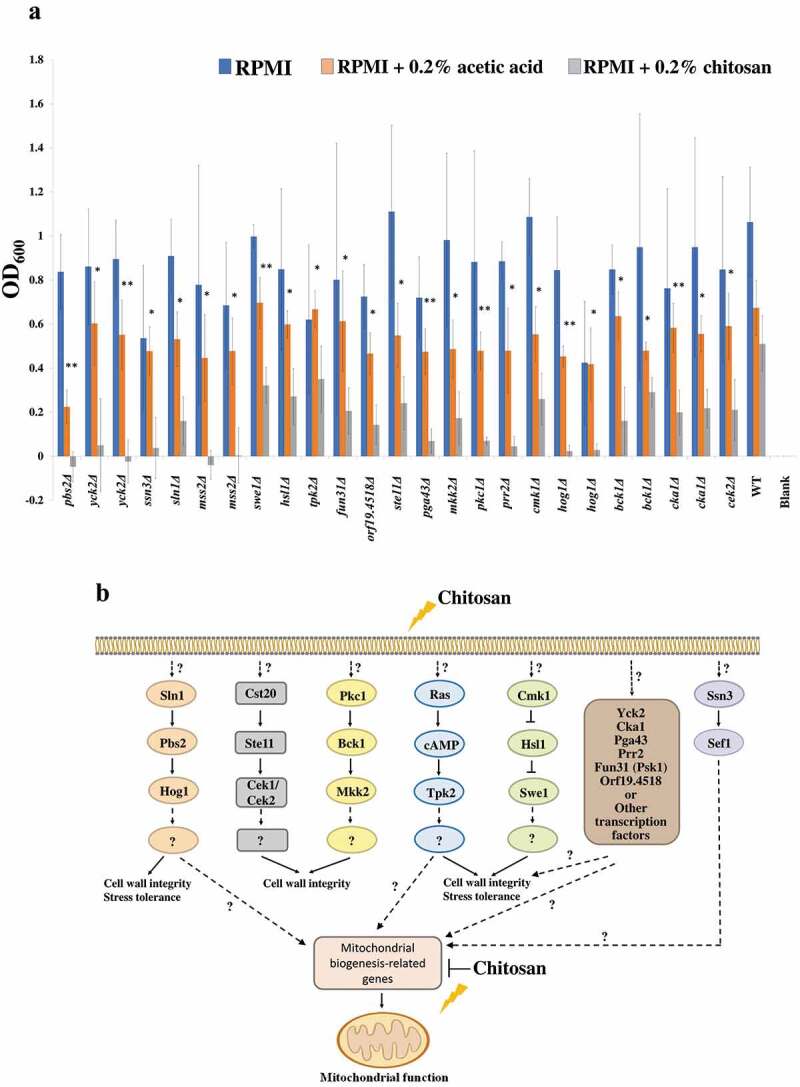
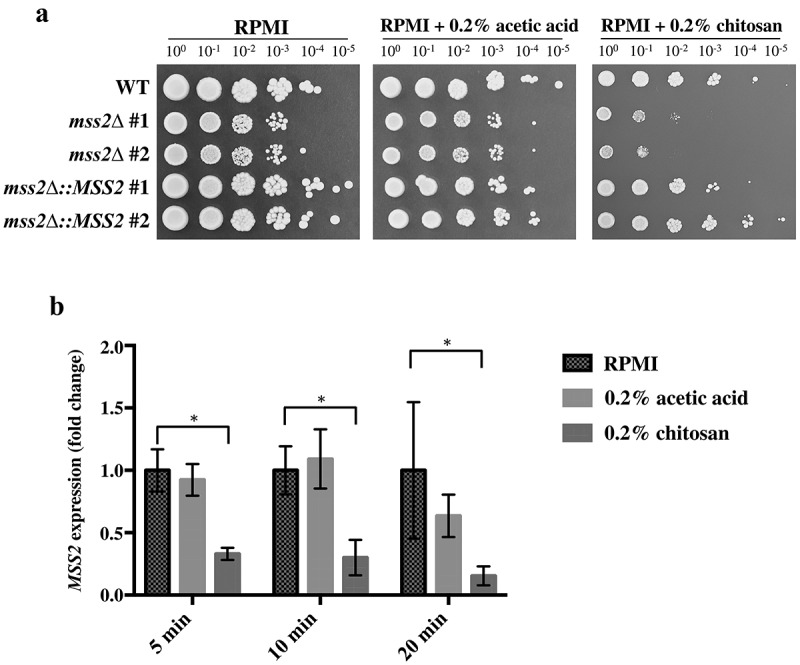
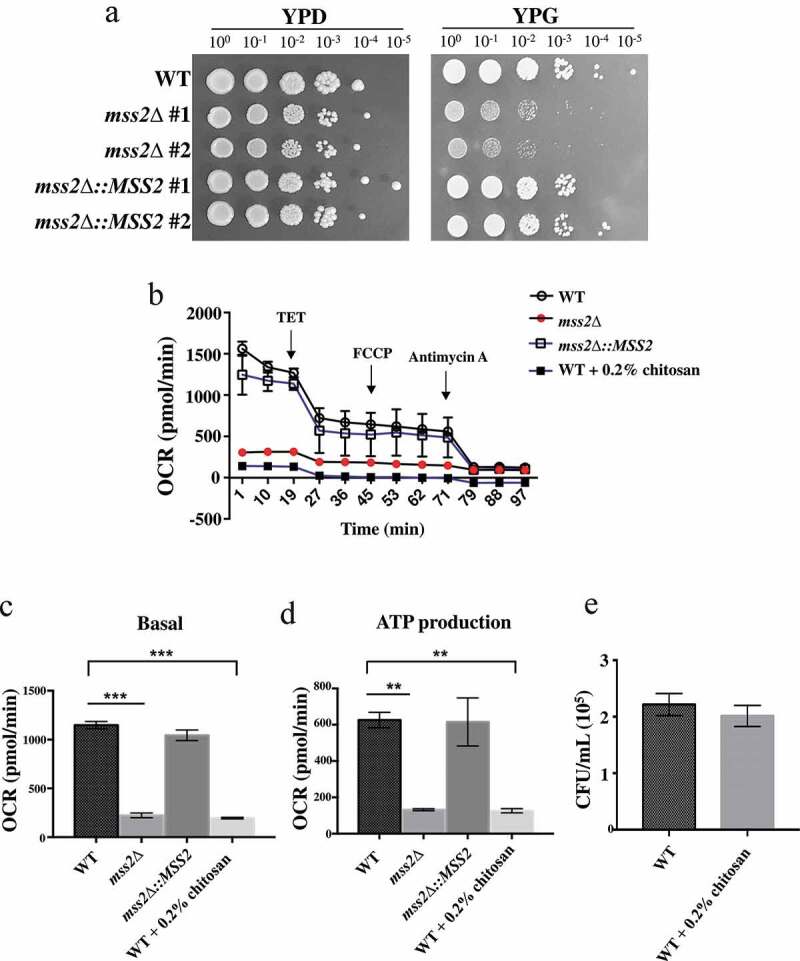
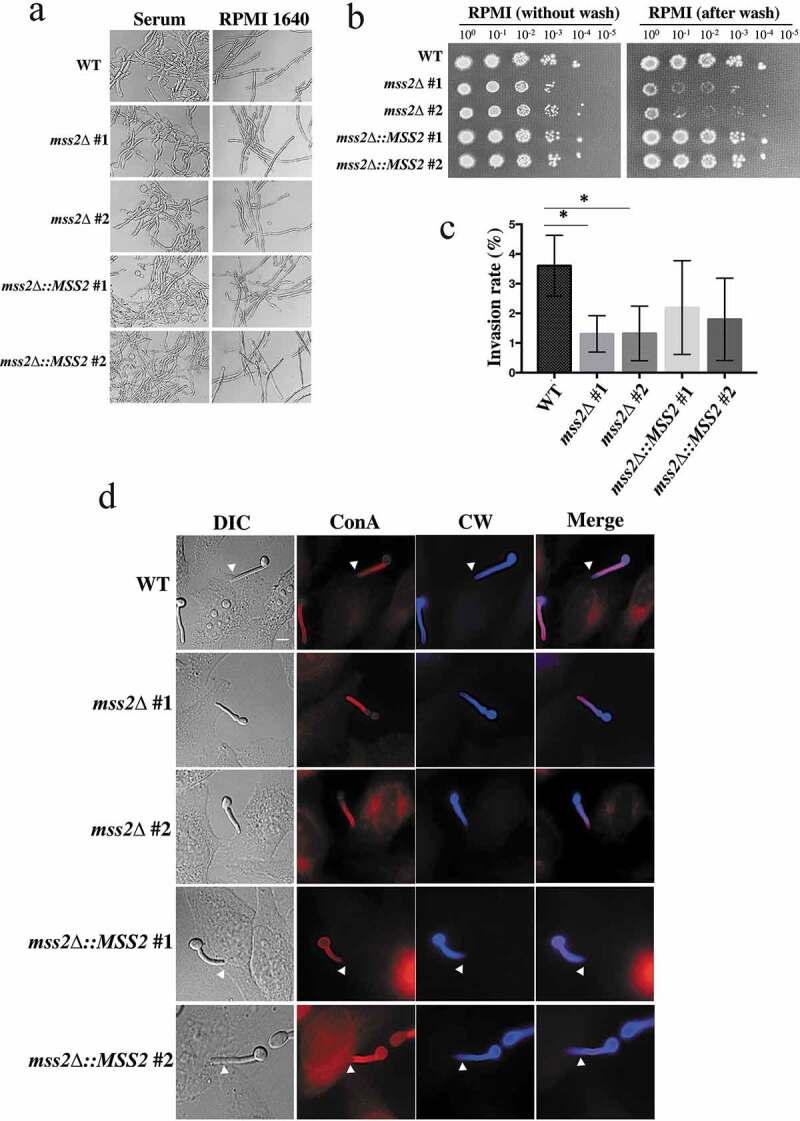
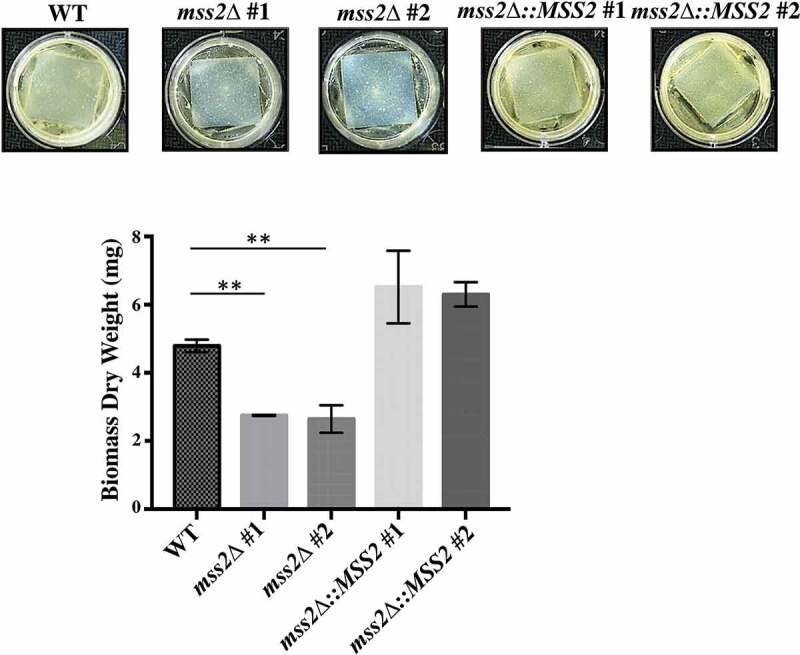
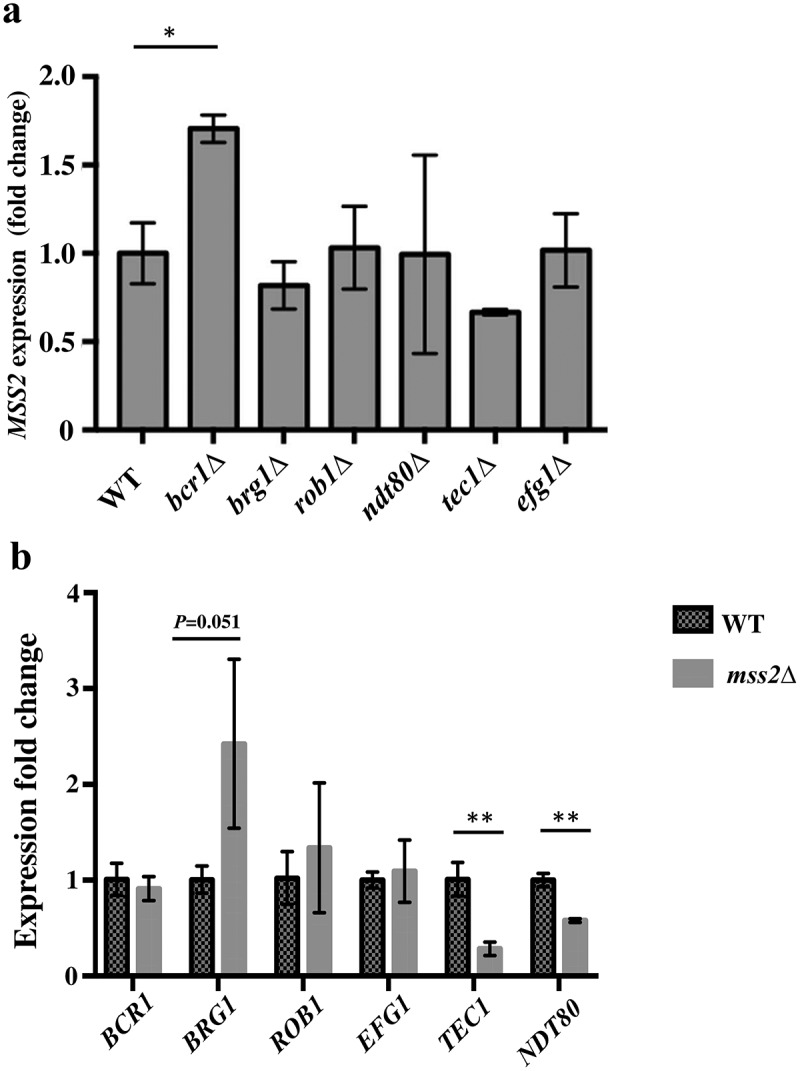
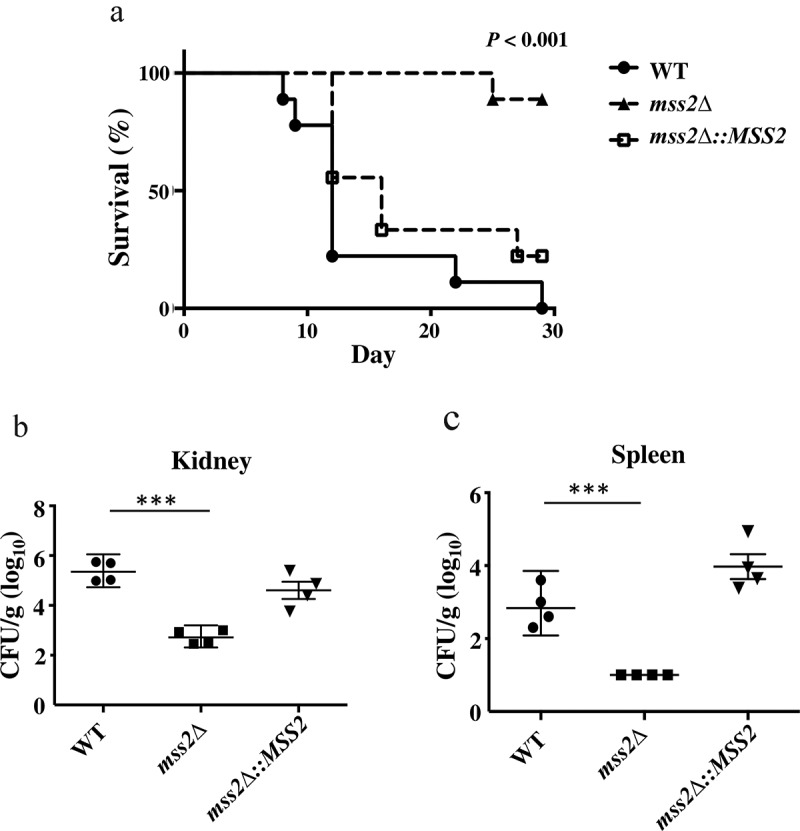
Candida albicans is the most prevalent fungal pathogen in humans, particularly in immunocompromised patients. In this study, by screening a C. albicans mutant library, we first identified that the MSS2 gene, an ortholog of Saccharomyces cerevisiae MSS2 required for mitochondrial respiration, mediates chitosan resistance. Upon treatment with 0.2% chitosan, the growth of mss2Δ strains was strikingly impaired, and MSS2 expression was significantly repressed by chitosan. Furthermore, mss2Δ strains exhibited slow growth on medium supplemented with glycerol as the sole carbon source. Similar to the chitosan-treated wild-type strain, the mss2Δ strain exhibited a significantly impaired ATP production ability. These data suggest that an antifungal mechanism of chitosan against C. albicans acts by inhibiting MSS2 gene expression, leading to repression of mitochondrial function. Normal respiratory function is suggested to be required for fungal virulence. Interestingly, the mss2Δ mutant strains exhibited significantly impaired invasive ability in vitro and ex vivo but retained normal hyphal development ability in liquid medium. Furthermore, the MSS2 deletion strains could not form robust biofilms and exhibited significantly reduced virulence. Collectively, these results demonstrated that the antifungal effect of chitosan against C. albicans is mediated via inhibition of mitochondrial biogenesis. These data may provide another strategy for antifungal drug development via inhibition of fungal mitochondria.
Overview
The claims and statistics of this paper haven’t been checked yet.
Free: it reads the open-access text and checks the first 5 claims that cite a source we can check. Create a free account to check every claim.
Integrity signals
Registry
Cites
Statistics
Figures
Verification
Claims the paper makes
The claims and statistics of this paper haven’t been checked yet.
Free: it reads the open-access text and checks the first 5 claims that cite a source we can check. Create a free account to check every claim.
Claims other papers make about this one
Each is checked against this paper’s own text: does it say what the citing paper says it does?
The source backs part of the claim, not all of it — or backs it for a different population, condition or comparison.
In the citing paper
“Existing researches have elucidated that mitochondrion participates in the pathogenic process of fungi through multidimensional mechanisms such as metabolite synthesis, membrane construction, drug resistance regulation, and pathogenicity determination [16,40].”
From Mitochondrial anchor protein Num11 is key to pathogenicity of Candida albicans by affecting mitochondrial function and cell wall masking (2025) · cites this paper as [16]
Experimental — accuracy not yet measuredThe cited source says what the claim attributes to it.
In the citing paper
“In pathogenic fungi including C. albicans, Cryptococcus neoformans, and Aspergillus fumigatus, inhibiting the respiratory chain can affect the morphological transition from yeast to hyphae, cell wall biogenesis, drug resistance, and virulence [10–17].”
From Mitochondrial anchor protein Num11 is key to pathogenicity of Candida albicans by affecting mitochondrial function and cell wall masking (2025) · cites this paper as [16]
Self-check
Percentages, sums and reported differences re-computed from the paper’s own numbers.
The self-check needs the paper’s full text.
Citations
Cites
A review of chitin and chitosan applications
Ravi Kumar, M. N. V. (2000) · Reactive and Functional Polymers · doi:10.1016/s1381-5148(00)00038-9 · Cited by 6,009
Chitosan as antimicrobial agent: applications and mode of action.
Rabea, E. I., Badawy, M. E.-T., Stevens, C. V., Smagghe, G., & Steurbaut, W. (2003) · Biomacromolecules · doi:10.1021/bm034130m · Cited by 3,123 · cited 1×
“These findings are not surprising, because it has been proposed that chitosan binds to the fungal surface [52,55,56], and these signaling pathways have been”
BackgroundAntimicrobial properties of chitosan and mode of action: a state of the art review
Kong, M., Chen, X. G., Xing, K., & Park, H. J. (2010) · International Journal of Food Microbiology · doi:10.1016/j.ijfoodmicro.2010.09.012 · Cited by 3,037 · cited 1×
“Chitosan is a biodegradable and nontoxic natural polysaccharide [50,93], and its broad-spectrum”
BackgroundMitochondria: More Than Just a Powerhouse
McBride, H. M., Neuspiel, M., & Wasiak, S. (2006) · Current Biology · doi:10.1016/j.cub.2006.06.054 · Cited by 1,985 · cited 2×
“cell wall integrity; thus, the respiratory chain is an attractive target for the development of drugs against human fungal pathogens [1,2,10].”
BackgroundCandida albicans pathogenicity mechanisms
Mayer, F. L., Wilson, D., & Hube, B. (2013) · Virulence · doi:10.4161/viru.22913 · Cited by 1,848 · cited 1×
“albicans to undergo the yeast-tohyphal transition is important in disseminated candidiasis and tissue invasion [21,25].”
BackgroundFood applications of chitin and chitosans
Shahidi, F., Arachchi, J. K. V., & Jeon, Y.-J. (1999) · Trends in Food Science & Technology · doi:10.1016/s0924-2244(99)00017-5 · Cited by 1,826
Nonfilamentous C. albicans Mutants Are Avirulent
Lo, H.-J., Köhler, J. R., DiDomenico, B., Loebenberg, D., Cacciapuoti, A., & Fink, G. R. (1997) · Cell · doi:10.1016/s0092-8674(00)80358-x · Cited by 1,809
Chitosan: an update on potential biomedical and pharmaceutical applications.
Cheung, R., Ng, T., Wong, J., & Chan, W. (2015) · Marine Drugs · doi:10.3390/md13085156 · Cited by 1,297 · cited 1×
“Chitosan is a biodegradable and nontoxic natural polysaccharide [50,93], and its broad-spectrum”
BackgroundGrowth of Candida albicans hyphae
Sudbery, P. E. (2011) · Nature Reviews Microbiology · doi:10.1038/nrmicro2636 · Cited by 1,110 · cited 1×
“albicans to undergo the yeast-tohyphal transition is important in disseminated candidiasis and tissue invasion [21,25].”
BackgroundCandida albicans Biofilms and Human Disease
Nobile, C. J., & Johnson, A. D. (2015) · Annual Review of Microbiology · doi:10.1146/annurev-micro-091014-104330 · Cited by 1,057 · cited 1×
“medical devices [36,37], leading to resistance to clin-”
Background
Cited by
Antimicrobial Actions and Applications of Chitosan
Ke, C.-L., Deng, F.-S., Chuang, C.-Y., & Lin, C.-H. (2021) · Polymers · doi:10.3390/polym13060904 · Cited by 949
“Furthermore, chitosan represses mitochondrial function by inhibiting MSS2 [123], which contradicts that observed in N. crassa during the response to chitosan [190].”
BackgroundMethodInfluentialSelf-citationAntimicrobial Properties of Chitosan and Chitosan Derivatives in the Treatment of Enteric Infections
Yan, D., Li, Y., Liu, Y., Li, N., Zhang, X., & Yan, C. (2021) · Molecules · doi:10.3390/molecules26237136 · Cited by 608
“Furthermore, chitosan can inhibit mitochondrial biogenesis of Candida albicans, indicating that the antifungal activity of chitosan is mediated by the repression of mitochondrial function and the following ATP production inhibition [95].”
BackgroundLee, S., Hao, L. T., Park, J., Oh, D. X., & Hwang, D. S. (2023) · Advanced Materials · doi:10.1002/adma.202203325 · Cited by 197
Progress in preparation and properties of chitosan-based hydrogels
Lv, S., Zhang, S., Zuo, J., Liang, S., Yang, J., Wang, J., & Wei, D. (2023) · International Journal of Biological Macromolecules · doi:10.1016/j.ijbiomac.2023.124915 · Cited by 149
Trends in Nanotechnology and Its Potentialities to Control Plant Pathogenic Fungi: A Review
Kutawa, A. B., Ahmad, K., Ali, A., Hussein, M. Z., Wahab, M. A. A., Adamu, A., Ismaila, A. A., Gunasena, M. T., Rahman, M. Z., & Hossain, M. I. (2021) · Biology · doi:10.3390/biology10090881 · Cited by 129
“Because high-MW chitosan is mainly unable to penetrate through the cell membrane and cell wall, its potential antimicrobial activities or effects include preventing nutrients from being absorbed from cells extracellularly, altering cell permeability, and acting as a chelator of essential metals [54,56].”
BackgroundTabassum, Z., Mohan, A., Mamidi, N., Khosla, A., Kumar, A., Solanki, P. R., Malik, T., & Girdhar, M. (2023) · IET Nanobiotechnology · doi:10.1049/nbt2.12122 · Cited by 75
“Furthermore, chitosan chelates the environmental ions and nutrients required for survival and may inhibit mitochondrial ATP production [214].”
BackgroundHassan, M. A., Tamer, T. M., Omer, A. M., Baset, W. M. A., Abbas, E., & Eldin, M. S. M. (2023) · International Journal of Pharmaceutics · doi:10.1016/j.ijpharm.2023.122649 · Cited by 49
Yin, Q., Liu, J., Zhong, Z., Zhang, Y., Zhang, F., & Wang, M. (2023) · International Journal of Biological Macromolecules · doi:10.1016/j.ijbiomac.2023.126905 · Cited by 43
Application of depolymerized chitosan in crop production: A review
Boamah, P. O., Onumah, J., Aduguba, W. O., & Santo, K. G. (2023) · International Journal of Biological Macromolecules · doi:10.1016/j.ijbiomac.2023.123858 · Cited by 44
Peng, Z., & Tang, J. (2022) · Frontiers in Microbiology · doi:10.3389/fmicb.2021.783010 · Cited by 27
Ramachandran, S., Narasimman, V., & Rajesh, P. (2022) · International Journal of Biological Macromolecules · doi:10.1016/j.ijbiomac.2022.02.121 · Cited by 20
Dube, E., & Okuthe, G. E. (2025) · International Journal of Food Science · doi:10.1155/ijfo/7955106 · Cited by 15
“This disruption compromises the pathogen ’ s ability to thrive and cause infection, highlighting chitosan ’ s potential as an e ff ective antifungal agent [60].”
El‐Naggar, M. E., Wael, K. D., Hemdan, B. A., Abdelgawad, A. M., Elsabee, M. Z., Elzayat, E. M., Hady, M. A., & Hashem, M. (2024) · International Journal of Biological Macromolecules · doi:10.1016/j.ijbiomac.2024.133749 · Cited by 16
Shape memory hallmarks and antimicrobial efficacy of polyurethane composites
Bhatt, S., Pathak, R., Punetha, V. D., & Punetha, M. (2023) · Reactive and Functional Polymers · doi:10.1016/j.reactfunctpolym.2023.105678 · Cited by 16
Chowdhury, M. F. M., Khan, M. N., & Rahman, M. M. (2024) · International Journal of Biological Macromolecules · doi:10.1016/j.ijbiomac.2024.137352 · Cited by 15
Chitosan for the treatment of inflammation of the oral mucosa: A systematic review
Zúñiga-López, C., Márquez-Pérez, K., Argueta‐Figueroa, L., Bautista-Hernández, M. A., & Rosas, R. T. (2023) · Medicina oral, patología oral y cirugía bucal · doi:10.4317/medoral.25987 · Cited by 11
Tabassum, Z., Mohan, A., & Girdhar, M. (2024) · Materials Today Proceedings · doi:10.1016/j.matpr.2024.05.069 · Cited by 11
Interaction effect of fungicide and chitosan on non-target lichenized fungi
Rola, K., Majewska, E., & Chowaniec, K. (2023) · Chemosphere · doi:10.1016/j.chemosphere.2023.137772 · Cited by 12
Melarcode, H. S., Ertuğrul, O., Alzate, P., Kerry, J. P., & Morris, M. A. (2025) · International Journal of Food Science & Technology · doi:10.1093/ijfood/vvaf168 · Cited by 9
Tedesco, F., Biundo, A., Caporusso, A., Pisano, I., Siesto, G., Pietrafesa, R., Abry, C., Alexandre, H., Falabella, P., & Capece, A. (2025) · Frontiers in Microbiology · doi:10.3389/fmicb.2025.1631987 · Cited by 10
“The low-molecular weight chitosan, in addition to these extracellular activities, has also intracellular actions, addressed toward RNA, protein synthesis, and mitochondrial function (Ke et al., 2021a).”
Jiang, S., Shang, X., Chen, G., Zhao, M., Kong, H., Huang, Z., & Zheng, X. (2023) · Journal of Environmental Management · doi:10.1016/j.jenvman.2023.118933 · Cited by 8
In vitro antimicrobial effects of chitosan on microcosm biofilms of oral candidiasis
Araujo, H. C., Carmona, W. R., Sato, C., Oliveira, M. J. D. S., Alves, G. D. S. G., Morato, D. N., Pessan, J. P., & Monteiro, D. R. (2022) · Journal of Dentistry · doi:10.1016/j.jdent.2022.104246 · Cited by 7
Wei, Y., He, D., Zhao, B., Liu, Y., Gao, S., Zhang, X., & Wang, L. (2022) · Microbiology Spectrum · doi:10.1128/spectrum.01558-21 · Cited by 8
Chang, B., Wan, Q., Wu, G., Cheng, Y., Wang, J., Huang, T., & Wen, G. (2024) · Journal of Hazardous Materials · doi:10.1016/j.jhazmat.2024.135138 · Cited by 7
Zhu, X., Jin, F., Yang, G., Zhuang, T., Zhang, C., Zhou, H., Niu, X., Wang, H., & Wu, D. (2024) · Journal of Fungi · doi:10.3390/jof10060391 · Cited by 5
“Despite evidence suggesting that dysfunctional mitochondria in C. albicans can hinder the formation of hyphae [6], the precise mechanisms governing morphological transitions and the regulation of hyphal growth in response to mitochondrial function in this organism are not yet fully understood.”
BackgroundLi, X., Zhang, M., Li, Y., Duan, X., Yu, W., & Sun, M. (2025) · Environmental Technology & Innovation · doi:10.1016/j.eti.2025.104561 · Cited by 5
Yang, G., Niu, X., Zhuang, T., Zhu, X., Xu, Q., Wang, H., Shao, J., Wang, C., Yang, Y., Wang, T., et al. (2025) · Virulence · doi:10.1080/21505594.2025.2519149 · Cited by 4
“Existing researches have elucidated that mitochon-drion participates in the pathogenic process of fungi through multidimensional mechanisms such as metabolite synthesis, membrane construction, drug resistance regulation, and pathogenicity determination [16,40].”
Zhao, J., Jiao, J., Fang, T., Li, H., Bai, L., & Li, P. (2025) · Pesticide Biochemistry and Physiology · doi:10.1016/j.pestbp.2025.106685 · Cited by 3
Biomedical applications of chitosan nanocarriers: Design strategies and translational challenges
Raghav, A., Chauhan, A. S., Agrawal, K., Anjali, K., & Sharma, V. (2026) · International Journal of Polymeric Materials · doi:10.1080/00914037.2026.2661651 · Cited by 4
“[71] Chitosan nanoparticles act as antimicrobial agents that interact electrostatically with bacterial membranes.”
Naseem, S., Zahumenský, J., Lanze, C. E., Douglas, L. M., Malínský, J., & Konopka, J. B. (2024) · mSphere · doi:10.1128/msphere.00391-24 · Cited by 3
“Consistent with this, a separate analysis of a set of C. albicans protein kinase mutants showed that cwr1 Δ cells were more susceptible to killing by chitosan, a deacetylated form of chitin that has antimicrobial properties (48).”
Chiang, H.-S., Chen, J.-H., Liao, Y., Peng, Y.-C., Hsu, C.-C., Ke, C.-L., Chung, C., Yeh, Y.-C., Tsai, H.-Y., & Lin, C. (2025) · Medical Mycology · doi:10.1093/mmy/myaf025 · Cited by 1
Self-citationMIURA, K., Matsumoto, A., Oogai, Y., Nakata, M., & Nishitani, Y. (2025) · Dental Materials Journal · doi:10.4012/dmj.2024-372 · Cited by 1
Revealing Molecular Mechanisms behind Nano-Fertilizers, Nano-Pesticides, and Nano-Fungicides
Rani, A., Sharma, A., Soni, N., Nile, A. S., & Nile, S. H. (2025) · Springer eBooks · doi:10.1007/978-3-031-97544-8_2 · Cited by 1
Ke, C.-L., Tsai, H.-Y., Kulkarni, A., Bennett, R. J., & Lin, C. (2025) · Virulence · doi:10.1080/21505594.2025.2590329 · Cited by 1
“Consistent with a previous report [10], mss2Δ cells also displayed severe defects in basal respiration and ATP production compared to wild-type cells or other mutant cells (Figure 4(C–”
InfluentialSelf-citationThe Role of Mitochondrial Protein UPS1 in Regulating Pathogenicity of Candida albicans
Xu, Q., Xie, C., Wang, D., Zhu, X., Wei, W., 牛晓佳, Wang, T., Wang, H., & Wu, D. (2026) · Journal of Fungi · doi:10.3390/jof12060411 · Cited by 1
“…tion via cellular respiration and oxidative phosphorylation [5], and they also serve as key regulatory hubs in fungal cells, orchestrating biological processes closely associated with C. albicans pathogenicity—including nutrient metabolism, biofilm development, drug re‑ sistance, and virulence [6].”
Candida: Biofilm formation and antifungal resistance
Sharma, S., Singh, S. M., Mane, G., Pote, S. T., Patole, M. S., & Sharma, R. K. (2023) · Elsevier eBooks · doi:10.1016/b978-0-323-99977-9.00024-7
The impact of ORF19.36.1 in the pathobiology of Candida albicans
Arita, G. S., Ma, Q., Leaves, I., Pradhan, A., Hickey, E., Dambuza, I. M., Bebes, A., Conrado, P. C. V., Galinari, C. B., Seixas, F. A. V., et al. (2023) · Microbial Pathogenesis · doi:10.1016/j.micpath.2023.106437
The Role of Nanocarriers in Phytopathogen Management
Elsharkawy, M. M. (2025) · IGI Global eBooks · doi:10.4018/979-8-3693-9869-2.ch012
Wang, J., Chen, M., Shao, T., & Zhen, W. (2025) · Polymers for Advanced Technologies · doi:10.1002/pat.70444
Quitosano derivado de quitina de langosta: actividad antioxidante y antimicrobiana
López, Z. P., Martín-Viña, N. D. L. P., Bécquer, M. M. D. L. A., Cervera, M. F., Mora, J. R. P., Hernández, O. D. L., & Mendoza, A. N. (2025) · Revista Colombiana de Ciencias Químico Farmacéuticas · doi:10.15446/rcciquifa.v53n3.119216
“…amino de las unidades de glucosamina interactúan con componentes extracelulares de la pared y la membrana celular de los hongos, mediante atracciones electrostáticas, provocando la formación de poros y la salida del contenido intracelular, lo que ocasiona inestabilidad y muerte celular [21, 23].”
Wang, S., Wang, P., Liu, Y., Yu, Q., Zhang, Y., Ma, X., & Wei, M. (2026) · BMC Microbiology · doi:10.1186/s12866-026-05595-3
“This enhanced respiratory capacity supplies the ATP required for energy-intensive processes during biofilm development, including extracellular matrix synthesis, cell wall remodeling, and maintenance of three-dimensional architecture [25].”
Metadata
- Authors
- Ke, C.-L., Liao, Y.-T., & Lin, C.-H.
- Affiliations
- National Taiwan University (TW)
- Corresponding author
- Lin, Ching-Hsuan
- Venue
- Virulence
- Publisher
- Informa UK Limited
- Published
- 2021-01-11
- Volume
- 12
- Issue
- 1
- Pages
- 281-297
- ISSN
- 2150-5594 (ISSN-L)
- 2150-5608
- PMC
- PMC7808435
- OpenAlex
- W3119986571
- Cited by
- 41
- References
- 109
- Citations by year
- 2026: 3 · 2025: 13 · 2024: 6 · 2023: 11 · 2022: 5 · 2021: 3
- FWCI
- 1.98
- Type
- journal article
- Language
- en
- Open access
- gold
- doi.org
- Licence
- doi.org/10.1080/policies-text-data-mining (tdm)
- Locations
- Virulence (publishedVersion)
- Europe PMC (PubMed Central) (publishedVersion, other-oa)
- PubMed Central (publishedVersion, cc-by)
- PubMed (publishedVersion)
- DOAJ (DOAJ: Directory of Open Access Journals) (submittedVersion, cc-by-sa)
- Funders
- Ministry of Science and Technology, Taiwan (MOST-105-2628-B-002-018-MY3)
- Topics
- Health Sciences › Medicine › Infectious Diseases › Antifungal resistance and susceptibility
- Life Sciences › Biochemistry, Genetics and Molecular Biology › Molecular Biology › Fungal and yeast genetics research
- Health Sciences › Medicine › Infectious Diseases › Fungal Infections and Studies
- Keywords
- Candida albicans, mitochondrial function, mitochondrial biogenesis, antifungal mechanism, invasive growth, biofilm formation, fungal virulence, glycerol utilization, ATP production, hyphal development, antifungal drug development
- MeSH terms
- Animals, Antifungal Agents, Candida albicans, Candidiasis, Fungal Proteins, Humans, Male, Membrane Proteins, Mice, Inbred ICR, Mitochondria, Virulence, Gene Expression Regulation, Fungal, Biofilms, Mitochondrial Proteins, Hyphae, Saccharomyces cerevisiae Proteins, Chitosan, Mice
About these checks
Registry, retraction, Cites and statistics results are computed, not judged, with one exception: a printed reference that no index lists is read once by a model before it counts as a citation error. Claims are extracted by a model and kept only when their quote appears verbatim in the text; each cited source is then checked, with a model’s help, for whether it says what the claim relies on. Those verdicts can be wrong — read the claim’s quote and the cited source before relying on one.
Statistics and arithmetic are recomputed, not judged.
Confidence bands are shown only for fields calibrated on our annotated test set. None is calibrated yet, so no band is shown.
What counts as a claim ›How we measure confidence ›How we check this ›
Are you an author, or do you see a problem with this page? Request a review
Data sources
Bibliographic data: Semantic Scholar, OpenAlex, Crossref.
Contains information from the Semantic Scholar Academic Graph Datasets, made available under the ODC Attribution License (ODC-BY 1.0).
Semantic Scholar’s data is described in: Kinney, R., et al. (2023). The Semantic Scholar Open Data Platform. arXiv:2301.10140.
