

MSS2 maintains mitochondrial function and is required for chitosan resistance, invasive growth, biofilm formation and virulence in Candida albicans
Open accessThe DOI matches its Crossref record; 109 of the 109 references it cites were found in a registry or an index.
Abstract
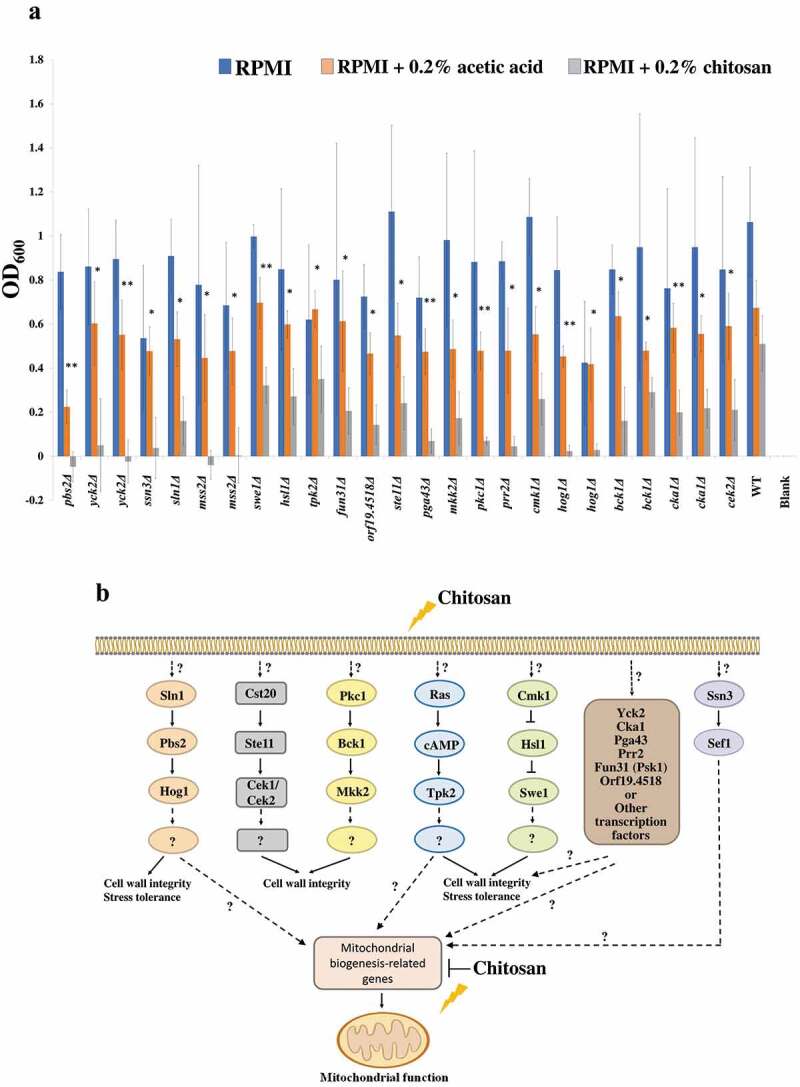
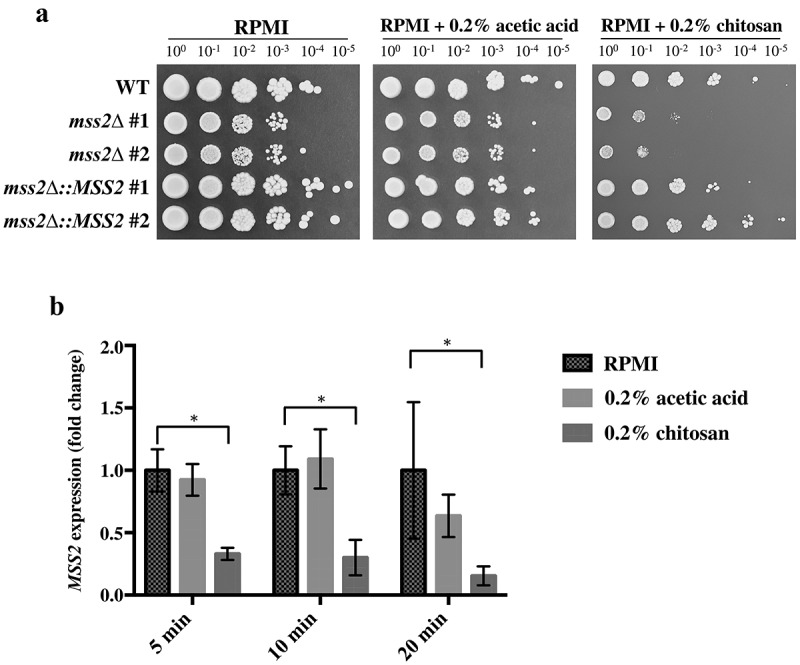
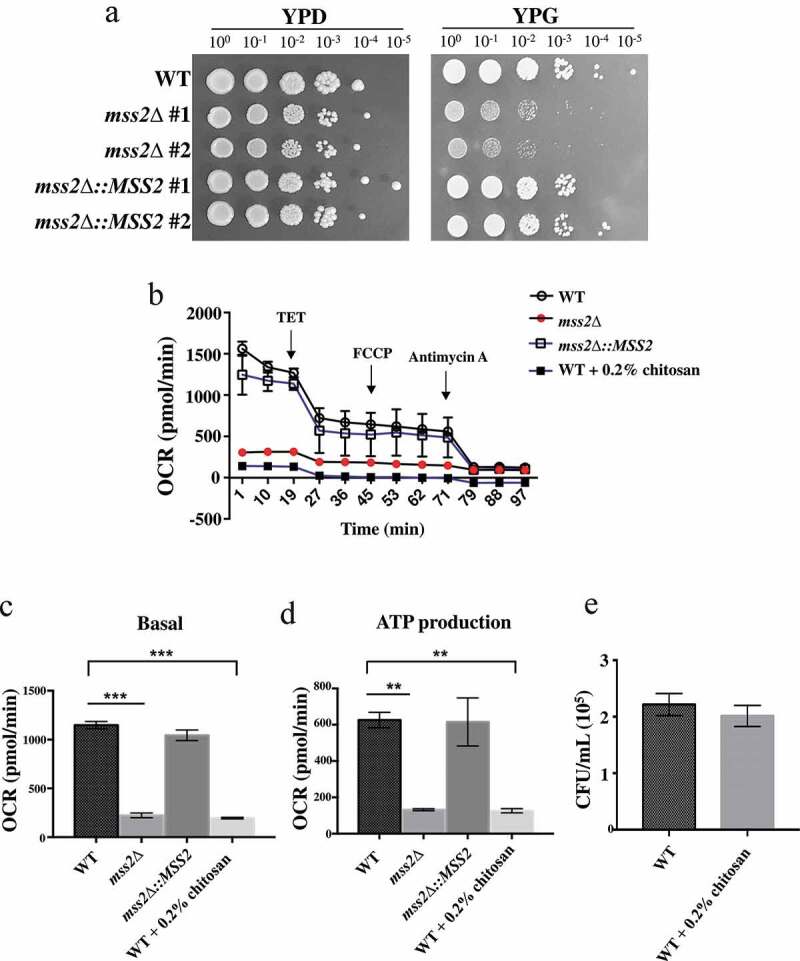
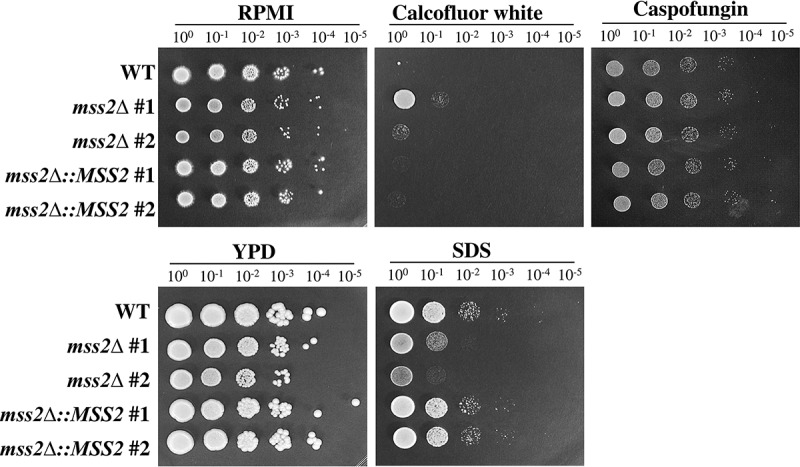
Candida albicans is the most prevalent fungal pathogen in humans, particularly in immunocompromised patients. In this study, by screening a C. albicans mutant library, we first identified that the MSS2 gene, an ortholog of Saccharomyces cerevisiae MSS2 required for mitochondrial respiration, mediates chitosan resistance. Upon treatment with 0.2% chitosan, the growth of mss2Δ strains was strikingly impaired, and MSS2 expression was significantly repressed by chitosan. Furthermore, mss2Δ strains exhibited slow growth on medium supplemented with glycerol as the sole carbon source. Similar to the chitosan-treated wild-type strain, the mss2Δ strain exhibited a significantly impaired ATP production ability. These data suggest that an antifungal mechanism of chitosan against C. albicans acts by inhibiting MSS2 gene expression, leading to repression of mitochondrial function. Normal respiratory function is suggested to be required for fungal virulence. Interestingly, the mss2Δ mutant strains exhibited significantly impaired invasive ability in vitro and ex vivo but retained normal hyphal development ability in liquid medium. Furthermore, the MSS2 deletion strains could not form robust biofilms and exhibited significantly reduced virulence. Collectively, these results demonstrated that the antifungal effect of chitosan against C. albicans is mediated via inhibition of mitochondrial biogenesis. These data may provide another strategy for antifungal drug development via inhibition of fungal mitochondria.
Overview
The claims and statistics of this paper haven’t been checked yet.
Free: it reads the open-access text and checks the first 5 claims that cite a source we can check. Create a free account to check every claim.
Integrity signals
Registry
Cites
Statistics
Figures
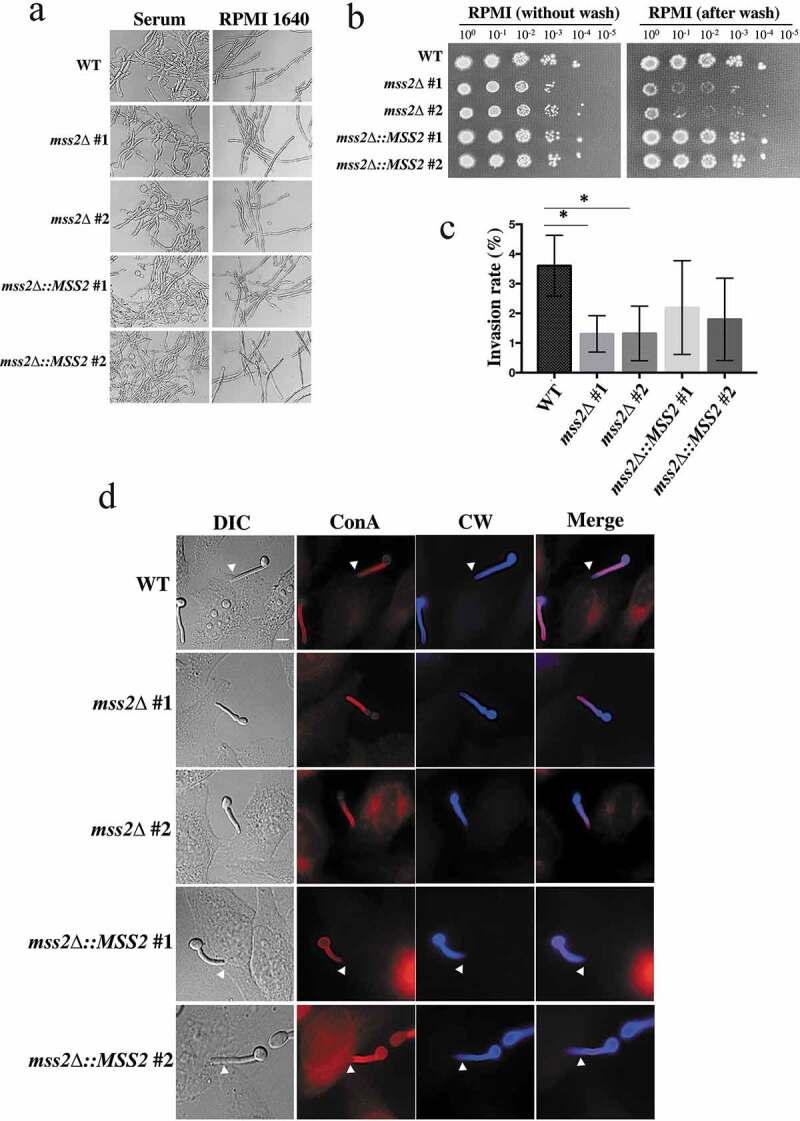
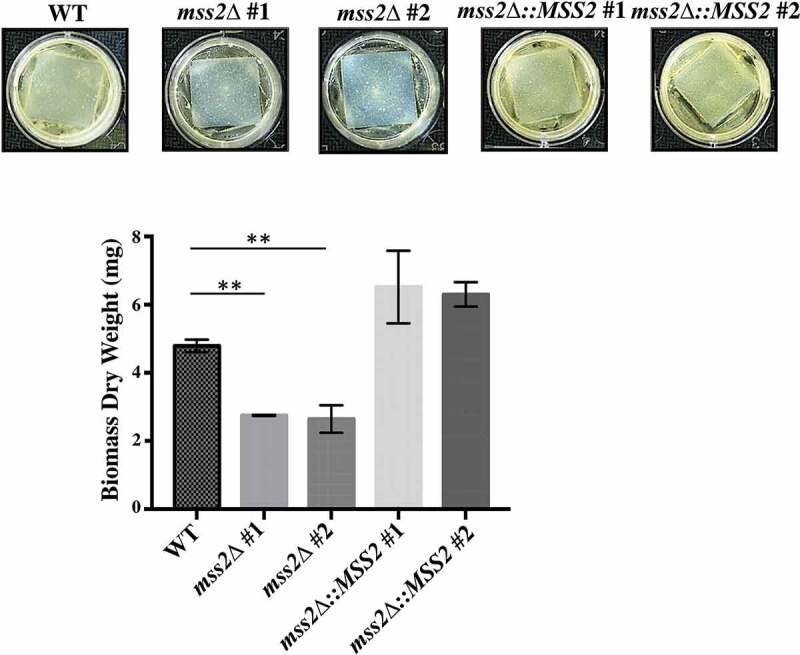
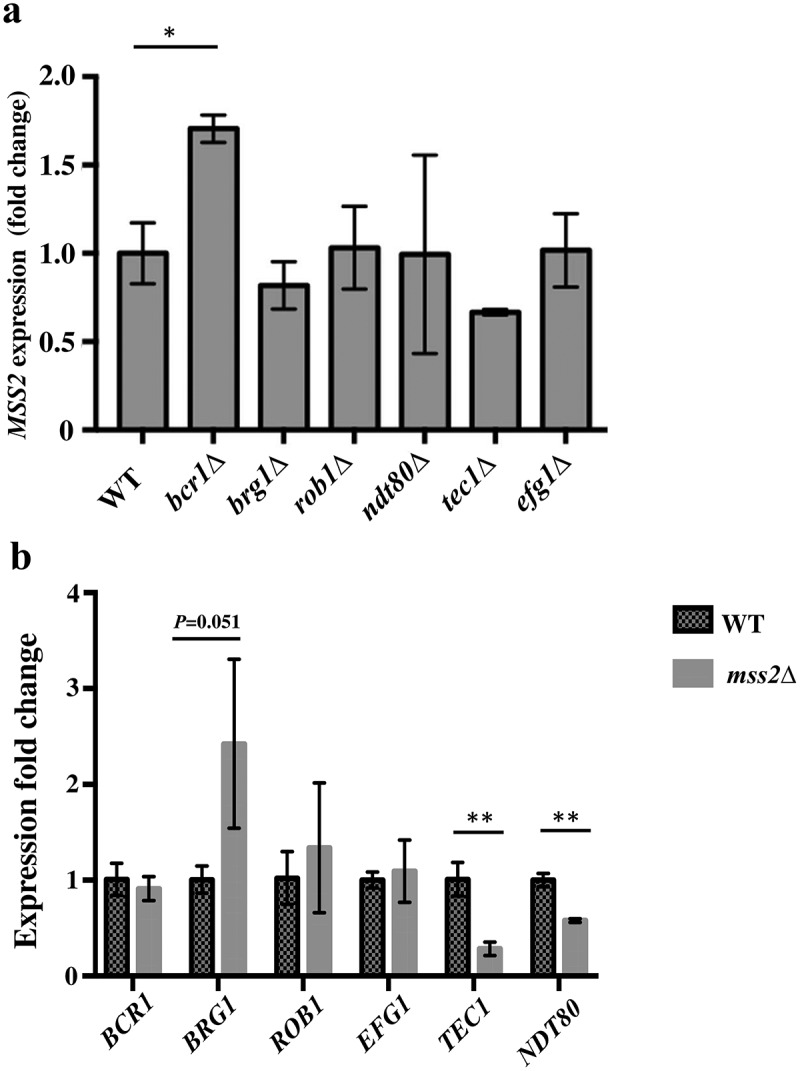
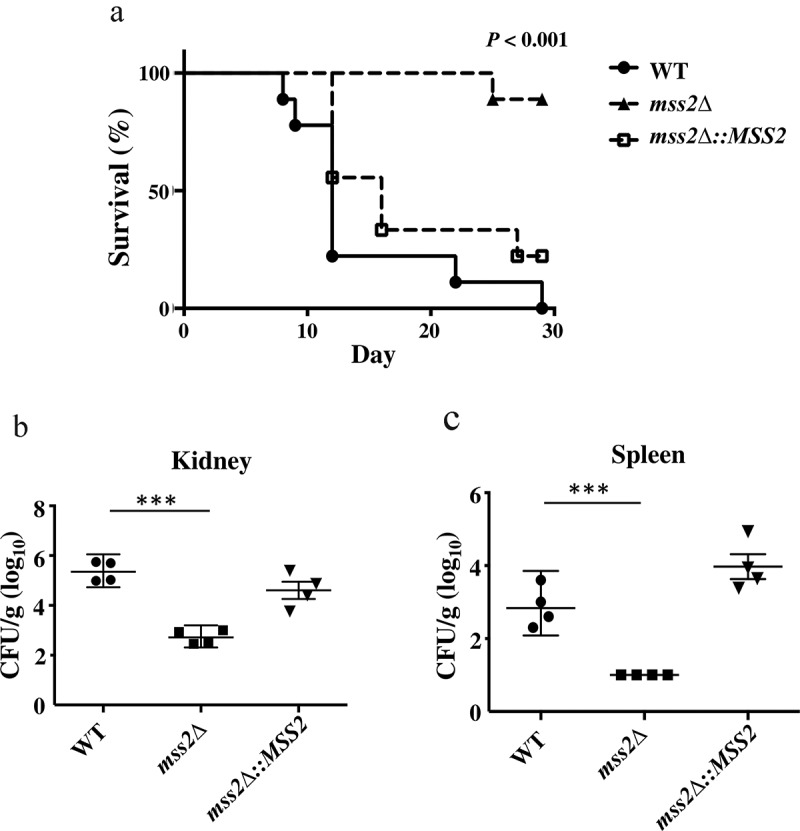
Verification
Claims the paper makes
The claims and statistics of this paper haven’t been checked yet.
Free: it reads the open-access text and checks the first 5 claims that cite a source we can check. Create a free account to check every claim.
Claims other papers make about this one
Each is checked against this paper’s own text: does it say what the citing paper says it does?
The source backs part of the claim, not all of it — or backs it for a different population, condition or comparison.
In the citing paper
“Existing researches have elucidated that mitochondrion participates in the pathogenic process of fungi through multidimensional mechanisms such as metabolite synthesis, membrane construction, drug resistance regulation, and pathogenicity determination [16,40].”
From Mitochondrial anchor protein Num11 is key to pathogenicity of Candida albicans by affecting mitochondrial function and cell wall masking (2025) · cites this paper as [16]
Experimental — accuracy not yet measuredThe cited source says what the claim attributes to it.
In the citing paper
“In pathogenic fungi including C. albicans, Cryptococcus neoformans, and Aspergillus fumigatus, inhibiting the respiratory chain can affect the morphological transition from yeast to hyphae, cell wall biogenesis, drug resistance, and virulence [10–17].”
From Mitochondrial anchor protein Num11 is key to pathogenicity of Candida albicans by affecting mitochondrial function and cell wall masking (2025) · cites this paper as [16]
Self-check
Percentages, sums and reported differences re-computed from the paper’s own numbers.
The self-check needs the paper’s full text.
Citations
Cites
A review of chitin and chitosan applications
Ravi Kumar, M. N. V. (2000) · Reactive and Functional Polymers · doi:10.1016/s1381-5148(00)00038-9 · Cited by 6,009
Chitosan as antimicrobial agent: applications and mode of action.
Rabea, E. I., Badawy, M. E.-T., Stevens, C. V., Smagghe, G., & Steurbaut, W. (2003) · Biomacromolecules · doi:10.1021/bm034130m · Cited by 3,123 · cited 1×
“These findings are not surprising, because it has been proposed that chitosan binds to the fungal surface [52,55,56], and these signaling pathways have been”
BackgroundAntimicrobial properties of chitosan and mode of action: a state of the art review
Kong, M., Chen, X. G., Xing, K., & Park, H. J. (2010) · International Journal of Food Microbiology · doi:10.1016/j.ijfoodmicro.2010.09.012 · Cited by 3,037 · cited 1×
“Chitosan is a biodegradable and nontoxic natural polysaccharide [50,93], and its broad-spectrum”
BackgroundMitochondria: More Than Just a Powerhouse
McBride, H. M., Neuspiel, M., & Wasiak, S. (2006) · Current Biology · doi:10.1016/j.cub.2006.06.054 · Cited by 1,985 · cited 2×
“cell wall integrity; thus, the respiratory chain is an attractive target for the development of drugs against human fungal pathogens [1,2,10].”
BackgroundCandida albicans pathogenicity mechanisms
Mayer, F. L., Wilson, D., & Hube, B. (2013) · Virulence · doi:10.4161/viru.22913 · Cited by 1,848 · cited 1×
“albicans to undergo the yeast-tohyphal transition is important in disseminated candidiasis and tissue invasion [21,25].”
BackgroundFood applications of chitin and chitosans
Shahidi, F., Arachchi, J. K. V., & Jeon, Y.-J. (1999) · Trends in Food Science & Technology · doi:10.1016/s0924-2244(99)00017-5 · Cited by 1,826
Nonfilamentous C. albicans Mutants Are Avirulent
Lo, H.-J., Köhler, J. R., DiDomenico, B., Loebenberg, D., Cacciapuoti, A., & Fink, G. R. (1997) · Cell · doi:10.1016/s0092-8674(00)80358-x · Cited by 1,809
Chitosan: an update on potential biomedical and pharmaceutical applications.
Cheung, R., Ng, T., Wong, J., & Chan, W. (2015) · Marine Drugs · doi:10.3390/md13085156 · Cited by 1,297 · cited 1×
“Chitosan is a biodegradable and nontoxic natural polysaccharide [50,93], and its broad-spectrum”
BackgroundGrowth of Candida albicans hyphae
Sudbery, P. E. (2011) · Nature Reviews Microbiology · doi:10.1038/nrmicro2636 · Cited by 1,110 · cited 1×
“albicans to undergo the yeast-tohyphal transition is important in disseminated candidiasis and tissue invasion [21,25].”
BackgroundCandida albicans Biofilms and Human Disease
Nobile, C. J., & Johnson, A. D. (2015) · Annual Review of Microbiology · doi:10.1146/annurev-micro-091014-104330 · Cited by 1,057 · cited 1×
“medical devices [36,37], leading to resistance to clin-”
BackgroundAntibacterial action of chitosan
Sudarshan, N. R., Hoover, D. G., & Knorr, D. (1992) · Food Biotechnology · doi:10.1080/08905439209549838 · Cited by 1,001
Insights into the mode of action of chitosan as an antibacterial compound.
Raafat, D., von Bargen, K., Haas, A., & Sahl, H.-G. (2008) · Applied and Environmental Microbiology · doi:10.1128/aem.00453-08 · Cited by 888
Evaluation of different factors affecting antimicrobial properties of chitosan
Hosseinnejad, M., & Jafari, S. M. (2016) · International Journal of Biological Macromolecules · doi:10.1016/j.ijbiomac.2016.01.022 · Cited by 884 · cited 1×
“These findings are not surprising, because it has been proposed that chitosan binds to the fungal surface [52,55,56], and these signaling pathways have been”
BackgroundThe SAT1 flipper, an optimized tool for gene disruption in Candida albicans
Reuß, O., Vik, Å., Kolter, R., & Morschhäuser, J. (2004) · Gene · doi:10.1016/j.gene.2004.06.021 · Cited by 742 · cited 1×
“The 5ʹ and 3ʹ PCR products were digested with ApaI/ XhoI and SacII/SacI, respectively, and cloned into the plasmid pSFS2A [68] to generate the plasmid pSFS2AMSS2 KO.”
MethodA Recently Evolved Transcriptional Network Controls Biofilm Development in Candida albicans
Nobile, C. J., Fox, E. P., Nett, J. E., Sorrells, T. R., Mitrovich, Q. M., Hernday, A. D., Tuch, B. B., Andes, D. R., & Johnson, A. D. (2012) · Cell · doi:10.1016/j.cell.2011.10.048 · Cited by 711 · cited 3×
“is critical for biofilm formation [75,105,106].”
MethodMitochondrial Dysfunction in Cardiac Disease: Ischemia–Reperfusion, Aging, and Heart Failure
Lesnefsky, E. J., Moghaddas, S., Tandler, B., Kerner, J., & Hoppel, C. L. (2001) · Journal of Molecular and Cellular Cardiology · doi:10.1006/jmcc.2001.1378 · Cited by 709
Development and regulation of single- and multi-species Candida albicans biofilms
Lohse, M. B., Gulati, M., Johnson, A. D., & Nobile, C. J. (2018) · Nature Reviews Microbiology · doi:10.1038/nrmicro.2017.107 · Cited by 643 · cited 1×
“is critical for biofilm formation [75,105,106].”
Genetic control of Candida albicans biofilm development
Finkel, J. S., & Mitchell, A. P. (2011) · Nature Reviews Microbiology · doi:10.1038/nrmicro2475 · Cited by 612 · cited 1×
“medical devices [36,37], leading to resistance to clin-”
BackgroundStoldt, V. R. (1997) · The EMBO Journal · doi:10.1093/emboj/16.8.1982 · Cited by 598
"White-opaque transition": a second high-frequency switching system in Candida albicans
Slutsky, B., Staebell, M., Anderson, J., Risen, L., Pfaller, M., & Soll, D. R. (1987) · Journal of Bacteriology · doi:10.1128/jb.169.1.189-197.1987 · Cited by 570
Candida albicans cell-type switching and functional plasticity in the mammalian host
Noble, S. M., Gianetti, B. A., & Witchley, J. N. (2017) · Nature Reviews Microbiology · doi:10.1038/nrmicro.2016.157 · Cited by 521 · cited 1×
“regulatory network involving several major transcription factors [16,17,18].”
BackgroundCritical Role of Bcr1-Dependent Adhesins in C. albicans Biofilm Formation In Vitro and In Vivo
Nobile, C. J., Andes, D. R., Nett, J. E., Smith, F. J., Yue, F., Phan, Q.-T., Edwards, J. E., Filler, S. G., & Mitchell, A. P. (2006) · PLoS Pathogens · doi:10.1371/journal.ppat.0020063 · Cited by 507 · cited 1×
“Similarly, bcr1Δ exhibits normal hyphal growth in liquid medium but reduced virulence due to its substrate adhesion deficiency and decreased biofilm formation [64,103].”
BackgroundMitochondrial biogenesis and dynamics in the developing and diseased heart
Dorn, G. W., Vega, R. B., & Kelly, D. P. (2015) · Genes & Development · doi:10.1101/gad.269894.115 · Cited by 470
Regulation of Cell-Surface Genes and Biofilm Formation by the C. albicans Transcription Factor Bcr1p
Nobile, C. J., & Mitchell, A. P. (2005) · Current Biology · doi:10.1016/j.cub.2005.05.047 · Cited by 464 · cited 1×
“Similarly, bcr1Δ exhibits normal hyphal growth in liquid medium but reduced virulence due to its substrate adhesion deficiency and decreased biofilm formation [64,103].”
BackgroundFujimoto, K. (1995) · Journal of Cell Science · doi:10.1242/jcs.108.11.3443 · Cited by 428
Transcription Profiling of Candida albicans Cells Undergoing the Yeast-to-Hyphal Transition
Nantel, A., Dignard, D., Bachewich, C., Harcus, D., Marcil, A., Bouin, A.-P., Sensen, C. W., Hogues, H., van het Hoog, M., Gordon, P., et al. (2002) · Molecular Biology of the Cell · doi:10.1091/mbc.e02-05-0272 · Cited by 378
Roncero, C., & Durán, A. (1985) · Journal of Bacteriology · doi:10.1128/jb.163.3.1180-1185.1985 · Cited by 377 · cited 1×
“Calcofluor white has been shown to interfere with cell wall assembly by targeting chitin, leading to an increase in cell wall stress [86,87].”
BackgroundEditorial (Thematic Issue: Mitochondrial Biogenesis: Pharmacological Approaches)
Valero, T. (2014) · Current Pharmaceutical Design · doi:10.2174/138161282035140911142118 · Cited by 367 · cited 1×
“Moreover, mitochondria perform diverse functions, including roles in controlling the cell cycle, cell growth, signaling, ion homeostasis and metabolite production [2,4].”
BackgroundCalcineurin is essential for survival during membrane stress in Candida albicans
Cruz, M. C., Goldstein, A. L., Blankenship, J. R., Del Poeta, M., Davis, D., Cardenas, M. E., Perfect, J. R., McCusker, J. H., & Heitman, J. (2002) · The EMBO Journal · doi:10.1093/emboj/21.4.546 · Cited by 342
Almeida, R. S., Brunke, S., Albrecht, A., Thewes, S., Laue, M., Edwards, J. E., Filler, S. G., & Hube, B. (2008) · PLoS Pathogens · doi:10.1371/journal.ppat.1000217 · Cited by 330 · cited 1×
“The experimental procedures of the cell invasive assays followed the established protocol with slight modifications [73,74].”
MethodEmerging and Emerged Pathogenic Candida Species: Beyond the Candida albicans Paradigm
Papon, N., Courdavault, V., Clastre, M., & Bennett, R. J. (2013) · PLoS Pathogens · doi:10.1371/journal.ppat.1003550 · Cited by 314 · cited 1×
“systemic infections, particularly in immunocompromised patients [15,16].”
Leberer, E., Harcus, D., Broadbent, I. D., Clark, K. L., Dignard, D., Ziegelbauer, K., Schmidt, A., Gow, N. A. R., Brown, A. J. P., & Thomas, D. Y. (1996) · Proceedings of the National Academy of Sciences · doi:10.1073/pnas.93.23.13217 · Cited by 311
Pande, K., Chen, C., & Noble, S. M. (2013) · Nature Genetics · doi:10.1038/ng.2710 · Cited by 306
Ram, A. F. J., Wolters, A., Hoopen, R. T., & Klis, F. M. (1994) · Yeast · doi:10.1002/yea.320100804 · Cited by 303 · cited 1×
“Calcofluor white has been shown to interfere with cell wall assembly by targeting chitin, leading to an increase in cell wall stress [86,87].”
BackgroundKadosh, D., & Johnson, A. D. (2005) · Molecular Biology of the Cell · doi:10.1091/mbc.e05-01-0073 · Cited by 289
In Vitro Activity of Caspofungin against Candida albicans Biofilms
Bachmann, S. P., VandeWalle, K., Ramage, G., Patterson, T. F., Wickes, B. L., Graybill, J. R., & López-Ribot, J. L. (2002) · Antimicrobial Agents and Chemotherapy · doi:10.1128/aac.46.11.3591-3596.2002 · Cited by 288
Molecular Mechanisms of Chitosan Interactions with Fungi and Plants
Lopez-Moya, F., Suarez-Fernandez, M., & Lopez-Llorca, L. V. (2019) · International Journal of Molecular Sciences · doi:10.3390/ijms20020332 · Cited by 288
Wächtler, B., Wilson, D., Haedicke, K., Dalle, F., & Hube, B. (2011) · PLoS ONE · doi:10.1371/journal.pone.0017046 · Cited by 270 · cited 1×
“Previous reports have shown that TEC1 is involved in the interaction with epithelial cells [97], suggesting that the MSS2 deletion strain might exhibit reduced adherence ability in vivo.”
TUP1, CPH1 and EFG1 Make Independent Contributions to Filamentation in Candida albicans
Braun, B. R., & Johnson, A. D. (2000) · Genetics · doi:10.1093/genetics/155.1.57 · Cited by 257
A characterization of pH-regulated dimorphism in Candida albicans
Buffo, J., Herman, M. A., & Soll, D. R. (1984) · Mycopathologia · doi:10.1007/bf00436698 · Cited by 256
High Variability of Mitochondrial Gene Order among Fungi
Aguileta, G., de Vienne, D. M., Ross, O. N., Hood, M. E., Giraud, T., Petit, E., & Gabaldón, T. (2014) · Genome Biology and Evolution · doi:10.1093/gbe/evu028 · Cited by 237
Gabaldón, T., Rainey, D., & Huynen, M. A. (2005) · Journal of Molecular Biology · doi:10.1016/j.jmb.2005.02.067 · Cited by 224
Rapid Identification of Candida Albicans by Filamentation on Serum and Serum Substitutes
TASCHDJIAN, C. L. (1960) · Archives of Pediatrics & Adolescent Medicine · doi:10.1001/archpedi.1960.02070030214011 · Cited by 223
Yeast-mycelial conversion induced by N-acetyl-D-glucosamine in Candida albicans
SIMONETTI, N., STRIPPOLI, V., & CASSONE, A. (1974) · Nature · doi:10.1038/250344a0 · Cited by 220
Effect of Chitosan on the Biological Properties of Sweet Basil (Ocimum basilicum L.)
Kim, H.-J., Chen, F., Wang, X., & Rajapakse, N. C. (2005) · Journal of Agricultural and Food Chemistry · doi:10.1021/jf0480804 · Cited by 209
A contact-activated kinase signals Candida albicans invasive growth and biofilm development
Kumamoto, C. A. (2005) · Proceedings of the National Academy of Sciences · doi:10.1073/pnas.0407097102 · Cited by 209
Shingu-Vazquez, M., & Traven, A. (2011) · Eukaryotic Cell · doi:10.1128/ec.05184-11 · Cited by 209 · cited 2×
“albicans [1,3,41,42], but the effect of respiratory deficiency on filamentation varies with the inducing”
BackgroundNavarro-García, F., Sánchez, M., Pla, J., & Nombela, C. (1995) · Molecular and Cellular Biology · doi:10.1128/mcb.15.4.2197 · Cited by 186
Davis, D. A., Bruno, V. M., Loza, L., Filler, S. G., & Mitchell, A. P. (2002) · Genetics · doi:10.1093/genetics/162.4.1573 · Cited by 184
An expanded regulatory network temporally controls C andida albicans biofilm formation
Fox, E. P., Bui, C. K., Nett, J. E., Hartooni, N., Mui, M. C., Andes, D. R., Nobile, C. J., & Johnson, A. D. (2015) · Molecular Microbiology · doi:10.1111/mmi.13002 · Cited by 173 · cited 1×
“is critical for biofilm formation [75,105,106].”
Eisman, B., Alonso-Monge, R., Román, E., Arana, D., Nombela, C., & Pla, J. (2006) · Eukaryotic Cell · doi:10.1128/ec.5.2.347-358.2006 · Cited by 163
Zakrzewska, A., Boorsma, A., Brul, S., Hellingwerf, K. J., & Klis, F. M. (2005) · Eukaryotic Cell · doi:10.1128/ec.4.4.703-715.2005 · Cited by 161
Tao, L., Du, H., Guan, G., Dai, Y., Nobile, C. J., Liang, W., Cao, C., Zhang, Q., Zhong, J., & Huang, G. (2014) · PLoS Biology · doi:10.1371/journal.pbio.1001830 · Cited by 157 · cited 1×
“regulatory network involving several major transcription factors [16,17,18].”
BackgroundShih, P.-Y., Liao, Y.-T., Tseng, Y.-K., Deng, F.-S., & Lin, C.-H. (2019) · Frontiers in Microbiology · doi:10.3389/fmicb.2019.00602 · Cited by 156 · cited 5×
“These findings are not surprising, because it has been proposed that chitosan binds to the fungal surface [52,55,56], and these signaling pathways have been”
BackgroundMethodInfluentialSelf-citationCandida albicans Biofilm-Defective Mutants
Richard, M. L., Nobile, C. J., Bruno, V. M., & Mitchell, A. P. (2005) · Eukaryotic Cell · doi:10.1128/ec.4.8.1493-1502.2005 · Cited by 155
Cassone, A., & Cauda, R. (2012) · AIDS · doi:10.1097/qad.0b013e3283536ba8 · Cited by 153 · cited 2×
“systemic infections, particularly in immunocompromised patients [15,16].”
BackgroundSaracco, S. A., & Fox, T. D. (2002) · Molecular Biology of the Cell · doi:10.1091/mbc.01-12-0580 · Cited by 152
Bonhomme, J., Chauvel, M., Goyard, S., Roux, P., Rossignol, T., & d'Enfert, C. (2011) · Molecular Microbiology · doi:10.1111/j.1365-2958.2011.07626.x · Cited by 144 · cited 1×
“RHR2 deletion strains exhibit no defect in hyphal formation [100] but do exhibit adherence defects and reduced biofilm formation [101,102].”
BackgroundCandida albicans commensalism in the gastrointestinal tract
Neville, B. A., d'Enfert, C., & Bougnoux, M.-E. (2015) · FEMS Yeast Research · doi:10.1093/femsyr/fov081 · Cited by 139 · cited 1×
“Candida albicans can reside in the human body as a commensal organism [14], but it is also the predominant fungal pathogen that can cause life-threatening”
BackgroundEffects of Chitosan on Candida albicans: Conditions for Its Antifungal Activity
Peña, A., Sánchez, N. S., & Calahorra, M. (2013) · BioMed Research International · doi:10.1155/2013/527549 · Cited by 136
Insights into Candida tropicalis nosocomial infections and virulence factors
Negri, M., Silva, S., Henriques, M., & Oliveira, R. (2012) · European Journal of Clinical Microbiology & Infectious Diseases · doi:10.1007/s10096-011-1455-z · Cited by 132
Requirement for Candida albicans Sun41 in Biofilm Formation and Virulence
Norice, C. T., Smith, F. J., Solis, N., Filler, S. G., & Mitchell, A. P. (2007) · Eukaryotic Cell · doi:10.1128/ec.00314-07 · Cited by 121
Bassilana, M., Blyth, J., & Arkowitz, R. A. (2003) · Eukaryotic Cell · doi:10.1128/ec.2.1.9-18.2003 · Cited by 120
Candida albicans Hyphae: From Growth Initiation to Invasion
Desai, J. (2018) · Journal of Fungi · doi:10.3390/jof4010010 · Cited by 117 · cited 1×
“turgor-driven force and proteolytic enzyme-mediated mechanisms are directly involved in successful invasion of host cells [96].”
BackgroundMultiple roles and diverse regulation of the Ras/cAMP/protein kinase A pathway in Candida albicans
Huang, G., Huang, Q., Wei, Y., Wang, Y., & Du, H. (2019) · Molecular Microbiology · doi:10.1111/mmi.14148 · Cited by 116
Grahl, N., Demers, E. G., Lindsay, A. K., Harty, C. E., Willger, S. D., Piispanen, A. E., & Hogan, D. A. (2015) · PLOS Pathogens · doi:10.1371/journal.ppat.1005133 · Cited by 111 · cited 1×
“kinase pathways have been shown to be important for maintaining mitochondrial activity [84,85].”
BackgroundAntifungal activity of low molecular weight chitosan against clinical isolates of Candida spp.
Alburquenque, C., Bucarey, S. A., Neira-Carrillo, A., Urzúa, B., Hermosilla, G., & Tapia, C. V. (2010) · Medical Mycology · doi:10.3109/13693786.2010.486412 · Cited by 109 · cited 1×
“2% acetic acid (experimental medium) were prepared as previously described [56,61,62].”
MethodYamada, K., Akiba, Y., Shibuya, T., Kashiwada, A., Matsuda, K., & Hirata, M. (2008) · Biotechnology Progress · doi:10.1021/bp0495668 · Cited by 107
The Hog1 MAP kinase controls respiratory metabolism in the fungal pathogen Candida albicans
Alonso-Monge, R., Carvaihlo, S., Nombela, C., Rial, E., & Pla, J. (2009) · Microbiology · doi:10.1099/mic.0.023309-0 · Cited by 105 · cited 1×
“kinase pathways have been shown to be important for maintaining mitochondrial activity [84,85].”
BackgroundSystem-level impact of mitochondria on fungal virulence: to metabolism and beyond
Calderone, R., Li, D., & Traven, A. (2015) · FEMS Yeast Research · doi:10.1093/femsyr/fov027 · Cited by 101 · cited 3×
“cell wall integrity; thus, the respiratory chain is an attractive target for the development of drugs against human fungal pathogens [1,2,10].”
BackgroundBambach, A., Fernandes, M. P., Ghosh, A., Kruppa, M., Alex, D., Li, D., Fonzi, W. A., Chauhan, N., Sun, N., Agrellos, O. A., et al. (2009) · Eukaryotic Cell · doi:10.1128/ec.00066-09 · Cited by 95 · cited 7×
“However, the growth of mss2Δ on medium supplemented with calcofluor white was different from that of the goa1Δ and nuo2Δ strains, which were highly sensitive to calcofluor white [12,41,42,44].”
BackgroundInfluentialWhite-Opaque Switching of Candida albicans Allows Immune Evasion in an Environment-Dependent Fashion
Sasse, C., Hasenberg, M., Weyler, M., Gunzer, M., & Morschhäuser, J. (2013) · Eukaryotic Cell · doi:10.1128/ec.00266-12 · Cited by 95
Sun, N., Fonzi, W., Chen, H., She, X., Zhang, L., Zhang, L., & Calderone, R. (2013) · Antimicrobial Agents and Chemotherapy · doi:10.1128/aac.01520-12 · Cited by 94
Griffiths, K. K., & Levy, R. J. (2017) · Oxidative Medicine and Cellular Longevity · doi:10.1155/2017/4314025 · Cited by 94
Rauceo, J. M., Blankenship, J. R., Fanning, S., Hamaker, J. J., Deneault, J.-S., Smith, F. J., Nantel, A., & Mitchell, A. P. (2008) · Molecular Biology of the Cell · doi:10.1091/mbc.e08-02-0191 · Cited by 89
Regulatory Role of Glycerol in Candida albicans Biofilm Formation
Desai, J. V., Bruno, V. M., Ganguly, S., Stamper, R. J., Mitchell, K. F., Solis, N., Hill, E. M., Xu, W., Filler, S. G., Andes, D. R., et al. (2013) · mBio · doi:10.1128/mbio.00637-12 · Cited by 87 · cited 1×
“RHR2 deletion strains exhibit no defect in hyphal formation [100] but do exhibit adherence defects and reduced biofilm formation [101,102].”
BackgroundCandida Species: New Insights into Biofilm Formation
Cuéllar-Cruz, M., López-Romero, E., Villagómez-Castro, J. C., & Ruiz-Baca, E. (2012) · Future Microbiology · doi:10.2217/fmb.12.48 · Cited by 80
Haque, T., Chen, H., Ouyang, W., Martoni, C., Lawuyi, B., Urbanska, A. M., & Prakash, S. (2005) · Molecular Pharmaceutics · doi:10.1021/mp049901v · Cited by 79
Marcet-Houben, M., Marceddu, G., & Gabaldón, T. (2009) · BMC Evolutionary Biology · doi:10.1186/1471-2148-9-295 · Cited by 75
Control of Dimorphism in a Biochemical Variant of Candida albicans
Mardon, D., Balish, E., & Phillips, A. W. (1969) · Journal of Bacteriology · doi:10.1128/jb.100.2.701-707.1969 · Cited by 73
Verma, S., Shakya, V. P. S., & Idnurm, A. (2018) · Virulence · doi:10.1080/21505594.2017.1414133 · Cited by 67
Time Course Analysis of Candida albicans Metabolites during Biofilm Development
Zhu, Z., Wang, H., Shang, Q., Jiang, Y., Cao, Y., & Chai, Y. (2013) · Journal of Proteome Research · doi:10.1021/pr300447k · Cited by 66 · cited 1×
“decreased mitochondrial activity in mature biofilms [75],(105)[108].”
Ene, I. V., Lohse, M. B., Vladu, A., Morschhäuser, J., Johnson, A. D., & Bennett, R. J. (2016) · mBio · doi:10.1128/mbio.01269-16 · Cited by 59
Lindsay, A. K., Morales, D. K., Liu, Z., Grahl, N., Zhang, A., Willger, S. D., Myers, L. C., & Hogan, D. A. (2014) · PLoS Genetics · doi:10.1371/journal.pgen.1004567 · Cited by 58
Broadley, S. A., Demlow, C. M., & Fox, T. D. (2001) · Molecular and Cellular Biology · doi:10.1128/mcb.21.22.7663-7672.2001 · Cited by 54
Regulation of azole drug susceptibility by Candida albicans protein kinase CK2
Bruno, V. M., & Mitchell, A. P. (2005) · Molecular Microbiology · doi:10.1111/j.1365-2958.2005.04562.x · Cited by 54
The potential of respiration inhibition as a new approach to combat human fungal pathogens
Duvenage, L., Munro, C. A., & Gourlay, C. W. (2019) · Current Genetics · doi:10.1007/s00294-019-01001-w · Cited by 52 · cited 1×
“tory chain inhibitors have shown considerable antifungal activity [3,11].”
BackgroundShe, X., Khamooshi, K., Gao, Y., Shen, Y., Lv, Y., Calderone, R., Fonzi, W., Liu, W., & Li, D. (2015) · Cellular Microbiology · doi:10.1111/cmi.12438 · Cited by 51 · cited 8×
“However, the growth of mss2Δ on medium supplemented with calcofluor white was different from that of the goa1Δ and nuo2Δ strains, which were highly sensitive to calcofluor white [12,41,42,44].”
BackgroundInfluentialUnique, Diverged, and Conserved Mitochondrial Functions Influencing Candida albicans Respiration
Sun, N., Parrish, R. S., Calderone, R. A., & Fonzi, W. A. (2019) · mBio · doi:10.1128/mbio.00300-19 · Cited by 51 · cited 1×
“Moreover, a recent study identified that several potential mitochondrial proteins involved in the expression of ETC complex I, III or IV are required for respiration, antifungal susceptibility and virulence [13].”
BackgroundChien, H.-F., Chen, C.-P., Chen, Y.-C., Chang, P.-H., Tsai, T., & Chen, C.-T. (2013) · International Journal of Molecular Sciences · doi:10.3390/ijms14047445 · Cited by 47 · cited 1×
“2% acetic acid (experimental medium) were prepared as previously described [56,61,62].”
MethodThewes, S., Moran, G. P., Magee, B. B., Schaller, M., Sullivan, D. J., & Hube, B. (2008) · BMC Microbiology · doi:10.1186/1471-2180-8-187 · Cited by 45
Maza, P. K., Bonfim-Melo, A., Padovan, A. C. B., Mortara, R. A., Orikaza, C. M., Ramos, L. M. D., Moura, T. R., Soriani, F. M., Almeida, R. S., Suzuki, E., et al. (2017) · Frontiers in Microbiology · doi:10.3389/fmicb.2017.01235 · Cited by 45 · cited 1×
“The experimental procedures of the cell invasive assays followed the established protocol with slight modifications [73,74].”
MethodShe, X., Zhang, L., Chen, H., Calderone, R., & Li, D. (2013) · Cellular Microbiology · doi:10.1111/cmi.12135 · Cited by 43
Jung, S., Rodriguez, N. S., Irrizary, J., Liboro, K., Bogarin, T., Macias, M., Eivers, E., Porter, E. M., Filler, S. G., & Park, H. (2017) · PLoS ONE · doi:10.1371/journal.pone.0187721 · Cited by 40
ADH1 promotes Candida albicans pathogenicity by stimulating oxidative phosphorylation
Song, Y., Li, S., Zhao, Y., Zhang, Y., Lv, Y., Jiang, Y., Wang, Y., Li, D., & Zhang, H. (2019) · International Journal of Medical Microbiology · doi:10.1016/j.ijmm.2019.151330 · Cited by 40 · cited 1×
“A Seahorse XF analyzer (XFe 24) was used to measure the oxygen consumption rate (OCR) following a previous protocol with slight modifications [69,70].”
MethodLiang, S.-H., Cheng, J.-H., Deng, F.-S., Tsai, P.-A., & Lin, C.-H. (2014) · Eukaryotic Cell · doi:10.1128/ec.00235-14 · Cited by 38 · cited 1×
“BioAgents, Jena, Germany), and Spider medium, and they were prepared as previously described [60].”
MethodSelf-citationHuang, X., Chen, X., He, Y., Yu, X., Li, S., Gao, N., Niu, L., Mao, Y., Wang, Y., Wu, X., et al. (2017) · PLOS Pathogens · doi:10.1371/journal.ppat.1006414 · Cited by 38 · cited 1×
“NUO1 or NUO2 have been shown to be involved in complex I activity, cell wall biogenesis, hyphal formation and biofilm development [9,41].”
BackgroundKhamooshi, K., Sikorski, P., Sun, N., Calderone, R., & Li, D. (2014) · BMC Genomics · doi:10.1186/1471-2164-15-56 · Cited by 37 · cited 4×
“three transcription factors (TFs) Rbf1, Hfl1 and Dpb4, which positively regulate GOA1 directly or indirectly, are involved in mitochondrial biogenesis [12].”
BackgroundInfluentialZucchi, P. C., Davis, T. R., & Kumamoto, C. A. (2010) · Molecular Microbiology · doi:10.1111/j.1365-2958.2010.07137.x · Cited by 36 · cited 1×
“The cell wall protein Dfip is involved in both invasive growth on semisolid agar and virulence, but the null mutant exhibits normal hyphal formation and adhesion ability [104].”
BackgroundRomán, E., Alonso-Monge, R., Miranda, A., & Pla, J. (2015) · PLOS ONE · doi:10.1371/journal.pone.0133476 · Cited by 31
Desai, J., Cheng, S., Ying, T., Nguyen, M., Clancy, C., Lanni, F., & Mitchell, A. (2015) · Pathogens · doi:10.3390/pathogens4030573 · Cited by 27
She, X., Calderone, R., Kruppa, M., Lowman, D., Williams, D., Zhang, L., Gao, Y., Khamooshi, K., Liu, W., & Li, D. (2016) · PLOS ONE · doi:10.1371/journal.pone.0147175 · Cited by 27 · cited 4×
“fluor white and other cell surface-perturbing agents [12,41,42,44].”
BackgroundInfluentialZhang, P., Li, H., Cheng, J., Sun, A., Wang, L., Мирчевска, Г., Calderone, R., & Li, D. (2017) · Fungal Genetics and Biology · doi:10.1016/j.fgb.2017.11.002 · Cited by 27 · cited 1×
“A Seahorse XF analyzer (XFe 24) was used to measure the oxygen consumption rate (OCR) following a previous protocol with slight modifications [69,70].”
MethodQuantitative agar-invasion assay
Zupan, J., & Raspor, P. (2008) · Journal of Microbiological Methods · doi:10.1016/j.mimet.2008.02.009 · Cited by 23 · cited 1×
“Colonies above the agar surface were washed with sterilized deionized water as previously described [72].”
MethodMitochondrial Control of Fungal Cell Walls: Models and Relevance in Fungal Pathogens
Koch, B., & Traven, A. (2019) · Current Topics in Microbiology and Immunology · doi:10.1007/82_2019_183 · Cited by 19 · cited 2×
“cell wall integrity; thus, the respiratory chain is an attractive target for the development of drugs against human fungal pathogens [1,2,10].”
BackgroundRor, S., & Panwar, S. L. (2019) · Frontiers in Microbiology · doi:10.3389/fmicb.2019.01528 · Cited by 17 · cited 1×
“Second, the Ssn3-regulated gene SEF1 is involved in mitochondrial iron metabolism [83].”
BackgroundChang, W.-H., Liang, S.-H., Deng, F.-S., & Lin, C. (2016) · Medical Mycology · doi:10.1093/mmy/myw015 · Cited by 16 · cited 1×
“The assay was performed in accordance with the established protocol in our laboratory [71].”
MethodSelf-citationSimon, M., Séraphin, B., & Faye, G. (1995) · Biochimica et Biophysica Acta (BBA) - Bioenergetics · doi:10.1016/0005-2728(94)00198-e · Cited by 9
Christensen, A. C. (2020) · Nature Plants · doi:10.1038/s41477-019-0576-8 · Cited by 6
Cited by
Antimicrobial Actions and Applications of Chitosan
Ke, C.-L., Deng, F.-S., Chuang, C.-Y., & Lin, C.-H. (2021) · Polymers · doi:10.3390/polym13060904 · Cited by 949
“Furthermore, chitosan represses mitochondrial function by inhibiting MSS2 [123], which contradicts that observed in N. crassa during the response to chitosan [190].”
BackgroundMethodInfluentialSelf-citationAntimicrobial Properties of Chitosan and Chitosan Derivatives in the Treatment of Enteric Infections
Yan, D., Li, Y., Liu, Y., Li, N., Zhang, X., & Yan, C. (2021) · Molecules · doi:10.3390/molecules26237136 · Cited by 608
“Furthermore, chitosan can inhibit mitochondrial biogenesis of Candida albicans, indicating that the antifungal activity of chitosan is mediated by the repression of mitochondrial function and the following ATP production inhibition [95].”
BackgroundLee, S., Hao, L. T., Park, J., Oh, D. X., & Hwang, D. S. (2023) · Advanced Materials · doi:10.1002/adma.202203325 · Cited by 197
Progress in preparation and properties of chitosan-based hydrogels
Lv, S., Zhang, S., Zuo, J., Liang, S., Yang, J., Wang, J., & Wei, D. (2023) · International Journal of Biological Macromolecules · doi:10.1016/j.ijbiomac.2023.124915 · Cited by 149
Trends in Nanotechnology and Its Potentialities to Control Plant Pathogenic Fungi: A Review
Kutawa, A. B., Ahmad, K., Ali, A., Hussein, M. Z., Wahab, M. A. A., Adamu, A., Ismaila, A. A., Gunasena, M. T., Rahman, M. Z., & Hossain, M. I. (2021) · Biology · doi:10.3390/biology10090881 · Cited by 129
“Because high-MW chitosan is mainly unable to penetrate through the cell membrane and cell wall, its potential antimicrobial activities or effects include preventing nutrients from being absorbed from cells extracellularly, altering cell permeability, and acting as a chelator of essential metals [54,56].”
Background
Metadata
- Authors
- Ke, C.-L., Liao, Y.-T., & Lin, C.-H.
- Affiliations
- National Taiwan University (TW)
- Corresponding author
- Lin, Ching-Hsuan
- Venue
- Virulence
- Publisher
- Informa UK Limited
- Published
- 2021-01-11
- Volume
- 12
- Issue
- 1
- Pages
- 281-297
- ISSN
- 2150-5594 (ISSN-L)
- 2150-5608
- PMC
- PMC7808435
- OpenAlex
- W3119986571
- Cited by
- 41
- References
- 109
- Citations by year
- 2026: 3 · 2025: 13 · 2024: 6 · 2023: 11 · 2022: 5 · 2021: 3
- FWCI
- 1.98
- Type
- journal article
- Language
- en
- Open access
- gold
- doi.org
- Licence
- doi.org/10.1080/policies-text-data-mining (tdm)
- Locations
- Virulence (publishedVersion)
- Europe PMC (PubMed Central) (publishedVersion, other-oa)
- PubMed Central (publishedVersion, cc-by)
- PubMed (publishedVersion)
- DOAJ (DOAJ: Directory of Open Access Journals) (submittedVersion, cc-by-sa)
- Funders
- Ministry of Science and Technology, Taiwan (MOST-105-2628-B-002-018-MY3)
- Topics
- Health Sciences › Medicine › Infectious Diseases › Antifungal resistance and susceptibility
- Life Sciences › Biochemistry, Genetics and Molecular Biology › Molecular Biology › Fungal and yeast genetics research
- Health Sciences › Medicine › Infectious Diseases › Fungal Infections and Studies
- Keywords
- Candida albicans, mitochondrial function, mitochondrial biogenesis, antifungal mechanism, invasive growth, biofilm formation, fungal virulence, glycerol utilization, ATP production, hyphal development, antifungal drug development
- MeSH terms
- Animals, Antifungal Agents, Candida albicans, Candidiasis, Fungal Proteins, Humans, Male, Membrane Proteins, Mice, Inbred ICR, Mitochondria, Virulence, Gene Expression Regulation, Fungal, Biofilms, Mitochondrial Proteins, Hyphae, Saccharomyces cerevisiae Proteins, Chitosan, Mice
About these checks
Registry, retraction, Cites and statistics results are computed, not judged, with one exception: a printed reference that no index lists is read once by a model before it counts as a citation error. Claims are extracted by a model and kept only when their quote appears verbatim in the text; each cited source is then checked, with a model’s help, for whether it says what the claim relies on. Those verdicts can be wrong — read the claim’s quote and the cited source before relying on one.
Statistics and arithmetic are recomputed, not judged.
Confidence bands are shown only for fields calibrated on our annotated test set. None is calibrated yet, so no band is shown.
What counts as a claim ›How we measure confidence ›How we check this ›
Are you an author, or do you see a problem with this page? Request a review
Data sources
Bibliographic data: Semantic Scholar, OpenAlex, Crossref.
Contains information from the Semantic Scholar Academic Graph Datasets, made available under the ODC Attribution License (ODC-BY 1.0).
Semantic Scholar’s data is described in: Kinney, R., et al. (2023). The Semantic Scholar Open Data Platform. arXiv:2301.10140.
