

Tumor-associated macrophages and response to 5-fluorouracil adjuvant therapy in stage III colorectal cancer
Open accessThe DOI matches its Crossref record; 51 of the 51 references it cites were found in a registry or an index.
Abstract
Tumor-associated macrophages (TAMs) play a role in tumor development and progression. We hypothesized that abundance of TAMs might modify efficacy of 5-fluorouracil chemotherapy in colorectal cancer. We measured the density of CD68+ TAMs at the invasive front of primary tumor of colorectal carcinoma (PT-TAMs; n = 208), at available matched metastatic lymph node (LN-TAMs; n = 149), and in an independent set of primary colorectal cancers (PT-TAMs, n = 111). The hazard ratios for disease-free survival were computed by Cox proportional-hazards model. In exploratory analysis, the interaction between TAMs and 5-fluorouracil adjuvant therapy was significant (PT-TAMs, p = 0.02; LN-TAMs, p = 0.005). High TAMs were independently associated with better disease-free survival only in 5-fluorouracil-treated patients (PT-TAMs, HR 0.23; 95%CI, 0.08–0.65; p = 0.005; LN-TAMs, HR 0.13; 95%CI, 0.04–0.43; p = 0.001). The independent predictive value of PT-TAMs was replicated in the external set (HR, 0.14; 95%CI 0.02–1.00; p = 0.05). In an in vitro experiment, 5-fluorouracil and macrophages showed a synergistic effect and increased colorectal cancer cell death. High densities of TAMs, particularly in metastatic lymph-nodes, identify stage III colorectal cancer patients benefitting from 5-fluorouracil adjuvant therapy.
Overview
The claims and statistics of this paper haven’t been checked yet.
Free: it reads the open-access text and checks the first 5 claims that cite a source we can check. Create a free account to check every claim.
Integrity signals
Registry
Cites
Statistics
Figures
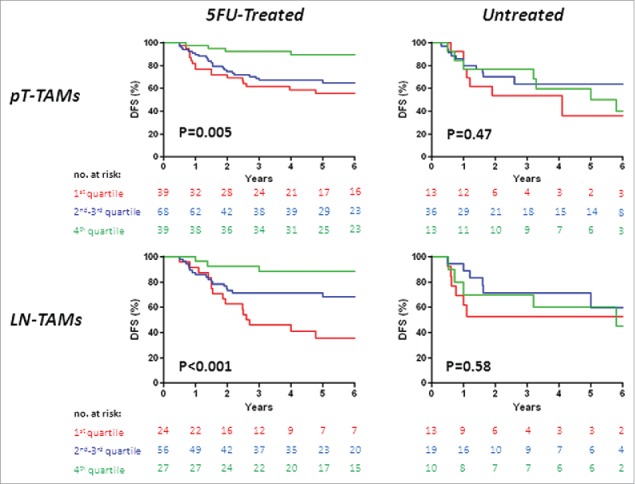
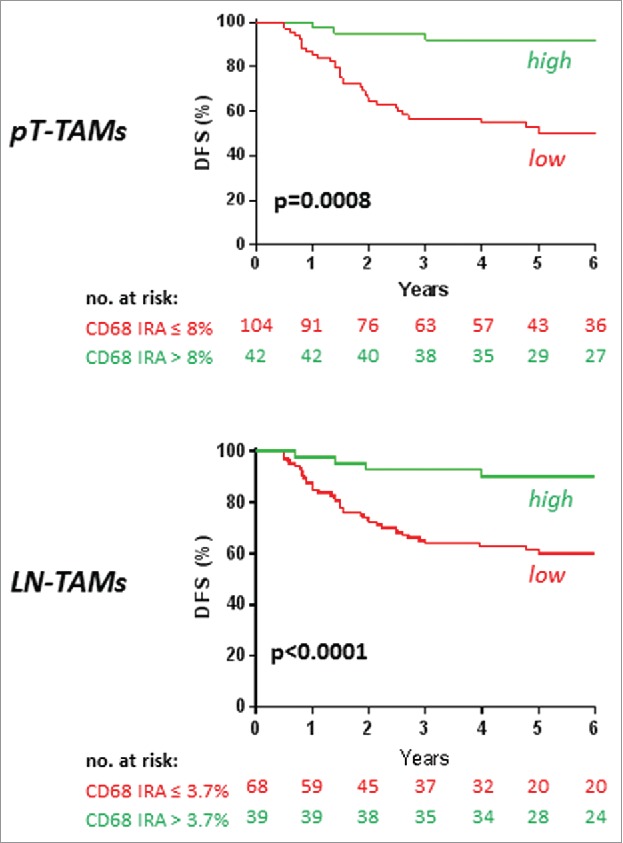
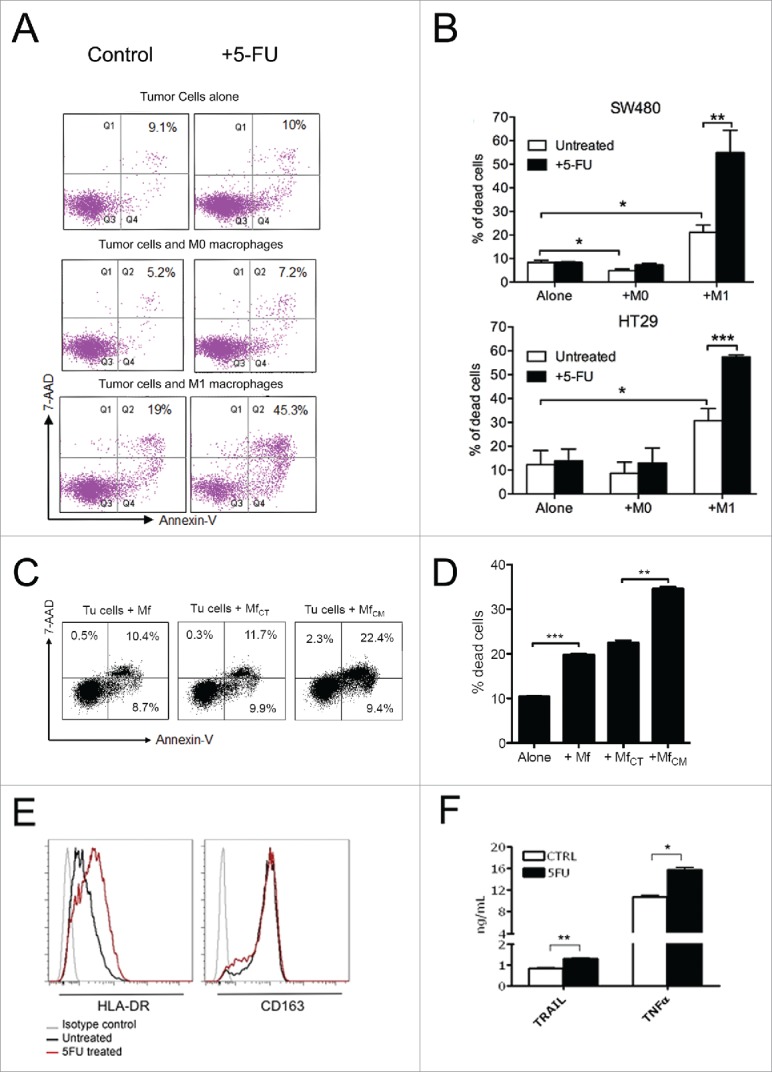
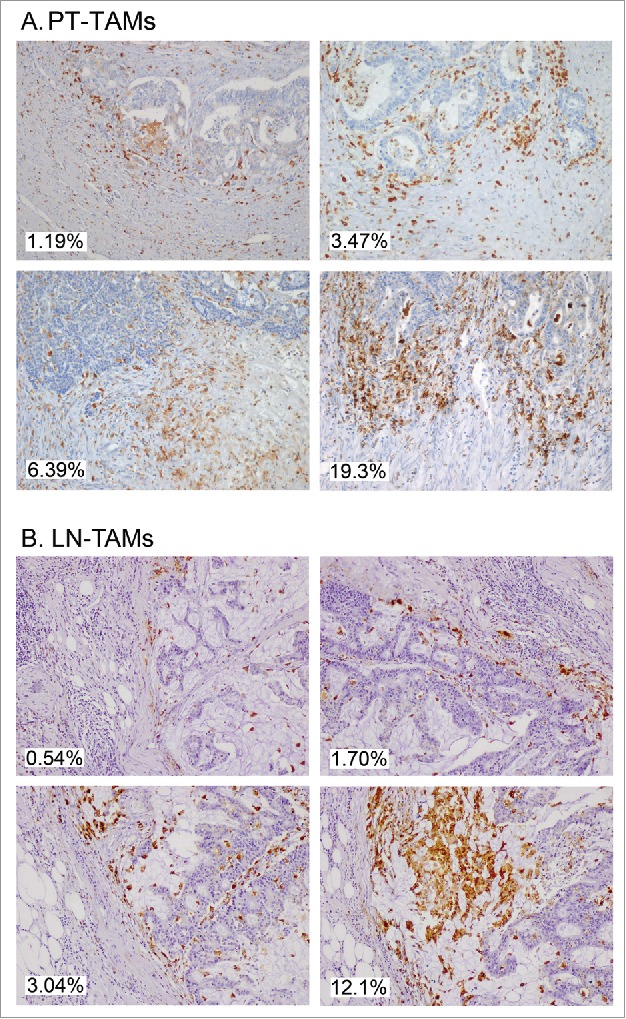
Verification
Claims the paper makes
The claims and statistics of this paper haven’t been checked yet.
Free: it reads the open-access text and checks the first 5 claims that cite a source we can check. Create a free account to check every claim.
Claims other papers make about this one
Each is checked against this paper’s own text: does it say what the citing paper says it does?
The cited source says what the claim attributes to it.
In the citing paper
“However, high densities of TAMs have been shown to significantly benefit stage III CRC patients treated with 5-FU [327].”
From Drug Resistance in Colorectal Cancer: From Mechanism to Clinic (2022) · cites this paper as [327]
Self-check
Percentages, sums and reported differences re-computed from the paper’s own numbers.
The self-check needs the paper’s full text.
Citations
Cites
Mantovani, A., Allavena, P., Sica, A., & Balkwill, F. (2008) · Nature · doi:10.1038/nature07205 · Cited by 11,399
Self-citationType, Density, and Location of Immune Cells Within Human Colorectal Tumors Predict Clinical Outcome
Galon, J., Costes, A., Sanchez-Cabo, F., Kirilovsky, A., Mlecnik, B., Lagorce-Pagès, C., Tosolini, M., Camus, M., Berger, A., Wind, P., et al. (2006) · Science · doi:10.1126/science.1129139 · Cited by 6,516
Tumour-associated macrophages as treatment targets in oncology
Mantovani, A., Marchesi, F., Malesci, A., Laghi, L., & Allavena, P. (2017) · Nature Reviews Clinical Oncology · doi:10.1038/nrclinonc.2016.217 · Cited by 4,033 · cited 1×
“Preclinical studies have also depicted a complex dual role for TAMs in modulating the response to anticancer therapies.(28-30) In some cancers, selected chemotherapeutic agents enhance the anti-tumor activity of TAMs by eliciting adaptive responses able to determine immunogenic cell death,(31,32) by depleting immunosu…”
BackgroundSelf-citationOxaliplatin, Fluorouracil, and Leucovorin as Adjuvant Treatment for Colon Cancer
André, T., Boni, C., Mounedji-Boudiaf, L., Navarro, M., Tabernero, J., Hickish, T., Topham, C., Zaninelli, M., Clingan, P., Bridgewater, J., et al. (2004) · New England Journal of Medicine · doi:10.1056/nejmoa032709 · Cited by 3,689 · cited 1×
“ropyrimidines improve 5-year survival rates by 10–15%, an additional 4–6% being contributed by their combination with oxaliplatin.(1-3) Even among patients receiving adjuvant therapy, one third still progresses to metastatic disease,(4-6) a rate not improved by biologic agents.”
BackgroundImmunogenic Cell Death in Cancer Therapy
Kroemer, G., Galluzzi, L., Kepp, O., & Zitvogel, L. (2013) · Annual Review of Immunology · doi:10.1146/annurev-immunol-032712-100008 · Cited by 3,303
André, T., Boni, C., Navarro, M., Tabernero, J., Hickish, T., Topham, C., Bonetti, A., Clingan, P., Bridgewater, J., Rivera, F., et al. (2009) · Journal of Clinical Oncology · doi:10.1200/jco.2008.20.6771 · Cited by 2,277 · cited 1×
“ropyrimidines improve 5-year survival rates by 10–15%, an additional 4–6% being contributed by their combination with oxaliplatin.(1-3) Even among patients receiving adjuvant therapy, one third still progresses to metastatic disease,(4-6) a rate not improved by biologic agents.”
BackgroundEffector Memory T Cells, Early Metastasis, and Survival in Colorectal Cancer
Pagès, F., Berger, A., Camus, M., Sanchez-Cabo, F., Costes, A., Molidor, R., Mlecnik, B., Kirilovsky, A., Nilsson, M., Damotte, D., et al. (2005) · New England Journal of Medicine · doi:10.1056/nejmoa051424 · Cited by 2,135
The Intestinal Microbiota Modulates the Anticancer Immune Effects of Cyclophosphamide
Viaud, S., Saccheri, F., Mignot, G., Yamazaki, T., Daillère, R., Hannani, D., Enot, D. P., Pfirschke, C., Engblom, C., Pittet, M. J., et al. (2013) · Science · doi:10.1126/science.1240537 · Cited by 2,050
Immunological effects of conventional chemotherapy and targeted anticancer agents
Galluzzi, L., Buqué, A., Kepp, O., Zitvogel, L., & Kroemer, G. (2015) · Cancer Cell · doi:10.1016/j.ccell.2015.10.012 · Cited by 1,530
Towards the introduction of the ‘Immunoscore’ in the classification of malignant tumours
Galon, J., Mlecnik, B., Bindea, G., Angell, H. K., Berger, A., Lagorce, C., Lugli, A., Zlobec, I., Hartmann, A., Bifulco, C., et al. (2014) · The Journal of Pathology · doi:10.1002/path.4287 · Cited by 1,360 · cited 1×
“Also tumor-infiltrating lymphocytes (TILs), which effectively forecast the outcome of patients with early colorectal cancer, are unlikely to act as predictive factor in node-positive patients.(13-16) Under this respect, other key players of the tumor”
BackgroundSelf-citation
Cited by
Items 101–128 of 128
Macrophage imaging and subset analysis using single-cell RNA sequencing
Arlauckas, S. P., Oh, N., Li, R., Weissleder, R., & Miller, M. A. (2020) · Nanotheranostics · doi:10.7150/ntno.50185 · Cited by 10
“Aside from abundance, altered TAM distribution in the tumor and neighboring tissue can be predictive of treatment response [201].”
BackgroundMattia, E. D., Dreussi, E., Montico, M., Gagno, S., Zanusso, C., Quartuccio, L., Vita, S. D., Guardascione, M., Buonadonna, A., D'Andrea, M. R., et al. (2018) · Frontiers in Pharmacology · doi:10.3389/fphar.2018.01101 · Cited by 7
“A genetic MTHFR deficiency, and the related disruption in folate metabolism, may impact the immune response by altering the expression of inflammatory mediators, including IFN-γ (Mikael et al., 2013; Meadows et al., 2014).”
BackgroundMackenzie, G. G. (2021) · Elsevier eBooks · doi:10.1016/b978-0-12-823397-9.00003-x · Cited by 6
PD-L1 expression and immune cells infiltration in primary tracheobronchial neoplasm
Zheng, K., Liu, Y., Ma, N., Xiong, Y., Tang, X., Zhang, Q., Luo, Z.-L., Tian, H., Hofman, P. M., Ichiki, Y., et al. (2021) · Translational Lung Cancer Research · doi:10.21037/tlcr-21-958 · Cited by 6
“The positive prognostic function of macrophages has also been observed in human colorectal cancer (57).”
Tu, X., Lu, Y., Zhao, L., Qi, X., Xu, Y. Y., & Yan, H. (2025) · JACS Au · doi:10.1021/jacsau.5c01249 · Cited by 5
How to Use Macrophages Against Cancer
Kuźnicki, J., Janicka, N., Bialynicka‐Birula, B., Kuźnicki, W., Chorążyczewska, H., Deszcz, I., & Kulbacka, J. (2024) · Cells · doi:10.3390/cells13231948 · Cited by 4
“In contrast, for colorectal cancer, a huge number of TAMs leads to longer patient survival [25].”
Patysheva, M. R., Stakheyeva, M. N., Larionova, I., Fedorov, A. A., Kzhyshkowska, J. G., & Чердынцева, Н. В. (2023) · Experimental Oncology · doi:10.32471/exp-oncology.2312-8852.vol-41-no-3.13597 · Cited by 5
Ugai, T., yrynen, J. P. V. A., Ugai, S., Zhong, R., Haruki, K., Lau, M. C., Zhao, M. M., Zhong, Y., Yao, Q., Matsuda, K., et al. (2024) · The Innovation Medicine · doi:10.59717/j.xinn-med.2024.100082 · Cited by 7
Self-citationEngineered macrophages as versatile platforms for targeted cancer immunotherapy
Mujahid, K., Aslam, M. A., Nam, J., & Choi, J. U. (2025) · Journal of Pharmaceutical Investigation · doi:10.1007/s40005-025-00754-6 · Cited by 4
“Gemcitabine, 5-fluorouracil, and platinum-based chemotherapeutic agents promote TAM polarization towards a tumoricidal phenotype in pancreatic, colorectal, and high-grade ovarian cancers, respectively (Di Caro et al. 2016; Malesci et al. 2017; Heath et al. 2021).”
Zhang, M., Zhang, X., Song, X., Bai, R., Qiao, Q., Wei, M., & Zhao, L. (2026) · Molecular Cancer · doi:10.1186/s12943-026-02598-6 · Cited by 3
Frei, A. L., McGuigan, A., Sinha, R. R., Glaire, M. A., Jabbar, F., Gneo, L., Tomasevic, T., Harkin, A., Iveson, T. J., Saunders, M. P., et al. (2023) · The Journal of Pathology Clinical Research · doi:10.1002/cjp2.342 · Cited by 3
“applied a pixel-based analysis approach for quantification of macrophage density and showed that a high density of macrophages in the tumour microenvironment was significantly associated with better prognosis in patients treated with 5-fluorouracil adjuvant therapy (20).”
MethodResultSelf-citationLiu, P., Wu, X., Jiang, Z., Zhang, P., Meng, Z., Xu, C., Ao, D., Jiang, J., & Liu, H. (2025) · European Journal of Pharmacology · doi:10.1016/j.ejphar.2025.178448 · Cited by 2
Xu, Z., Lin, X.-M., Zeng, H., Ma, X., Nabi, G., Abidin, Z. U., Wang, L., & Wang, L. (2023) · Frontiers in Genetics · doi:10.3389/fgene.2023.1238248 · Cited by 2
“Similarly, pretreatment high macrophage density was linked with an improved prognosis in patients treated with 5-FU adjuvant therapy (Malesci et al., 2017).”
BackgroundThe role of obesity in macrophage-mediated mechanisms promoting early-onset colon cancer.
Scheurlen, K. M. (2022) · ThinkIR: The University of Louisville's Institutional Repository (University of Louisville) · doi:10.18297/etd/3850 · Cited by 3
Dang, N., Lin, Y., Waer, M., & Sprangers, B. (2021) · Cancer Letters · doi:10.1016/j.canlet.2021.01.027 · Cited by 1
Prognostic Value of Innate and Adaptive Immunity in Cancers
Grizzi, F., Borroni, E. M., Yiu, D., Farina, F. M., Cananzi, F., & Laghi, L. (2020) · Springer eBooks · doi:10.1007/978-3-030-30845-2_19 · Cited by 1
Self-citationProstate Cancer and Inflammation
Hashemi, M., Tavakolipour, V., Morovatshoar, R., Samadpour, A., Asheghabadi, P. S., Hadadian, H., Bandsariyan, A., Ghasemi, Z., Orouei, S., AbolfathyNajmabady, N., et al. (2024) · Springer eBooks · doi:10.1007/978-981-97-4612-5_3 · Cited by 1
Data from The Prognostic Role of Macrophage Polarization in the Colorectal Cancer Microenvironment
Väyrynen, J. P., Haruki, K., Lau, M. C., Väyrynen, S. A., Zhong, R., Costa, A. D., Borowsky, J., Zhao, M. M., Fujiyoshi, K., Arima, K., et al. (2023) · doi:10.1158/2326-6066.c.6550351
Self-citationHeath, O. M., Berlato, C., Maniati, E., Lakhani, A., Pegrum, C., Kotantaki, P., Elorbany, S., Böhm, S., Barry, S. T., Annibaldi, A., et al. (2023) · doi:10.1158/2326-6066.c.6550176
Phenotypic and functional diversity of tumor-associated macrophages
Mitri, D. D., Mantovani, A., & Marchesi, F. (2024) · Elsevier eBooks · doi:10.1016/b978-0-443-14064-8.00013-8
Self-citationMultiple aspects of the chemotherapy effect on immune response
Fedorenko, A. A., Patysheva, M. R., Fedorov, A. A., Stakheyeva, M. N., Чердынцева, Н. В., & Gerashchenko, T. S. (2025) · Advances in molecular oncology · doi:10.17650/2313-805x-2025-12-3-8-25
Regulation of tumor progression by myeloid cells
Jaya, F. N. M., & Gabrilovich, D. I. (2025) · Elsevier eBooks · doi:10.1016/b978-0-443-14064-8.00038-2
Du, Z., Li, D., Xu, Z.-L., Li, Q., & Wu, Y. (2026) · BMC Cancer · doi:10.1186/s12885-026-15965-9
Machida, E., Takamizawa, Y., Takayanagi, D., Cho, H., Shida, D., Yamada, M., Asami, Y., Ono, H., Takeuchi, M., Hamamoto, R., et al. (2026) · JNCI Cancer Spectrum · doi:10.1093/jncics/pkag036
“42 M1-type TAMs promote tumor cell apoptosis in a dose-dependent manner and promoting MDSC differentiation into M1-type TAMs improves OX resistance and suppresses tumors.”
Dai, Z., Wang, Y., Brockhausen, I., & Gao, Y. (2026) · Biochimica et Biophysica Acta (BBA) - General Subjects · doi:10.1016/j.bbagen.2026.130997
Viatore, M., Polidori, R., Mantovani, A., & Marchesi, F. (2026) · Pharmacological Reviews · doi:10.1016/j.pharmr.2026.100167
Self-citation
Metadata
- Authors
- Malesci, A., Bianchi, P., Celesti, G., Basso, G., Marchesi, F., Grizzi, F., Di Caro, G., Cavalleri, T., Rimassa, L., Palmqvist, R., Lugli, A., Koelzer, V. H., Roncalli, M., Mantovani, A., Ogino, S., & Laghi, L.
- Affiliations
- University of Milan (IT)
- Fondazione Humanitas per la Ricerca (IT)
- Humanitas University (IT)
- Department of Immunology and Inflammation, Humanitas Clinical and Research Center, via Manzoni 113, Rozzano (Milan), Italy
- Humanitas Cancer Center, Humanitas Clinical and Research Center, Via Manzoni 56, Rozzano 20089 (Milan), Italy
- Umeå University (SE)
- University of Bern (CH)
- Brigham and Women's Hospital (US)
- Corresponding author
- Malesci, Alberto
- Laghi, Luigi
- ORCID
- Venue
- OncoImmunology
- Publisher
- Informa UK Limited
- Published
- 2017-07-12
- Volume
- 6
- Issue
- 12
- Pages
- e1342918
- ISSN
- 2162-4011 (ISSN-L)
- 2162-402X
- PMC
- PMC5706531
- OpenAlex
- W2735116030
- Cited by
- 124
- References
- 51
- Citations by year
- 2026: 4 · 2025: 8 · 2024: 11 · 2023: 13 · 2022: 10 · 2021: 23 · 2020: 29 · 2019: 15 · 2018: 9 · 2017: 2
- FWCI
- 6.81
- Type
- journal article
- Language
- en
- Open access
- gold
- doi.org
- Licence
- Locations
- OncoImmunology (publishedVersion, cc-by-nc-nd)
- Europe PMC (PubMed Central) (publishedVersion, cc-by-nc-nd)
- PubMed Central (publishedVersion, cc-by-nc-nd)
- PubMed (publishedVersion)
- Zurich Open Repository and Archive (University of Zurich) (acceptedVersion, cc-by-nc-nd)
- Digital Access to Scholarship at Harvard (DASH) (Harvard University) (submittedVersion, cc-by)
- DiVA at Umeå University (Umeå University) (submittedVersion, other-oa)
- Archivio Istituzionale della Ricerca (Universita Degli Studi Di Milano) (submittedVersion, other-oa)
- BORIS (University Library Bern) (submittedVersion, cc-by-nc-nd)
- DOAJ (DOAJ: Directory of Open Access Journals) (submittedVersion, cc-by-sa)
- Archivio Istituzionale della Ricerca - Università Vita-Salute San Raffaele (submittedVersion)
- Zurich Open Repository and Archive (University of Zurich) (submittedVersion, cc-by-nc-nd)
- Zurich Open Repository and Archive (University of Zurich)
- Open Access CRIS of the University of Bern
- Funders
- National Cancer Institute (R35CA197735)
- Topics
- Life Sciences › Immunology and Microbiology › Immunology › Immune cells in cancer
- Health Sciences › Medicine › Oncology › Colorectal Cancer Treatments and Studies
- Health Sciences › Medicine › Oncology › Cancer Immunotherapy and Biomarkers
- Keywords
- tumor-associated macrophages, 5-fluorouracil, adjuvant chemotherapy, stage III colorectal cancer, CD68, metastatic lymph nodes, disease-free survival, predictive biomarkers, chemotherapy response, tumor microenvironment
About these checks
Registry, retraction, Cites and statistics results are computed, not judged, with one exception: a printed reference that no index lists is read once by a model before it counts as a citation error. Claims are extracted by a model and kept only when their quote appears verbatim in the text; each cited source is then checked, with a model’s help, for whether it says what the claim relies on. Those verdicts can be wrong — read the claim’s quote and the cited source before relying on one.
Statistics and arithmetic are recomputed, not judged.
Confidence bands are shown only for fields calibrated on our annotated test set. None is calibrated yet, so no band is shown.
What counts as a claim ›How we measure confidence ›How we check this ›
Are you an author, or do you see a problem with this page? Request a review
Data sources
Bibliographic data: Semantic Scholar, OpenAlex, Crossref.
Contains information from the Semantic Scholar Academic Graph Datasets, made available under the ODC Attribution License (ODC-BY 1.0).
Semantic Scholar’s data is described in: Kinney, R., et al. (2023). The Semantic Scholar Open Data Platform. arXiv:2301.10140.
