

Tumor-associated macrophages and response to 5-fluorouracil adjuvant therapy in stage III colorectal cancer
Open accessThe DOI matches its Crossref record; 51 of the 51 references it cites were found in a registry or an index.
Abstract
Tumor-associated macrophages (TAMs) play a role in tumor development and progression. We hypothesized that abundance of TAMs might modify efficacy of 5-fluorouracil chemotherapy in colorectal cancer. We measured the density of CD68+ TAMs at the invasive front of primary tumor of colorectal carcinoma (PT-TAMs; n = 208), at available matched metastatic lymph node (LN-TAMs; n = 149), and in an independent set of primary colorectal cancers (PT-TAMs, n = 111). The hazard ratios for disease-free survival were computed by Cox proportional-hazards model. In exploratory analysis, the interaction between TAMs and 5-fluorouracil adjuvant therapy was significant (PT-TAMs, p = 0.02; LN-TAMs, p = 0.005). High TAMs were independently associated with better disease-free survival only in 5-fluorouracil-treated patients (PT-TAMs, HR 0.23; 95%CI, 0.08–0.65; p = 0.005; LN-TAMs, HR 0.13; 95%CI, 0.04–0.43; p = 0.001). The independent predictive value of PT-TAMs was replicated in the external set (HR, 0.14; 95%CI 0.02–1.00; p = 0.05). In an in vitro experiment, 5-fluorouracil and macrophages showed a synergistic effect and increased colorectal cancer cell death. High densities of TAMs, particularly in metastatic lymph-nodes, identify stage III colorectal cancer patients benefitting from 5-fluorouracil adjuvant therapy.
Overview
The claims and statistics of this paper haven’t been checked yet.
Free: it reads the open-access text and checks the first 5 claims that cite a source we can check. Create a free account to check every claim.
Integrity signals
Registry
Cites
Statistics
Figures
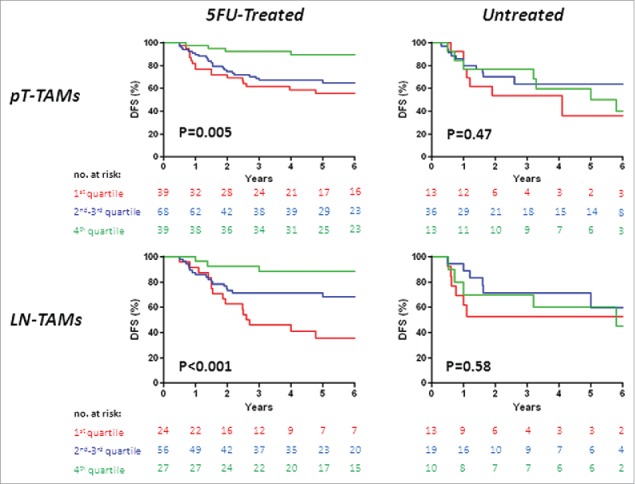
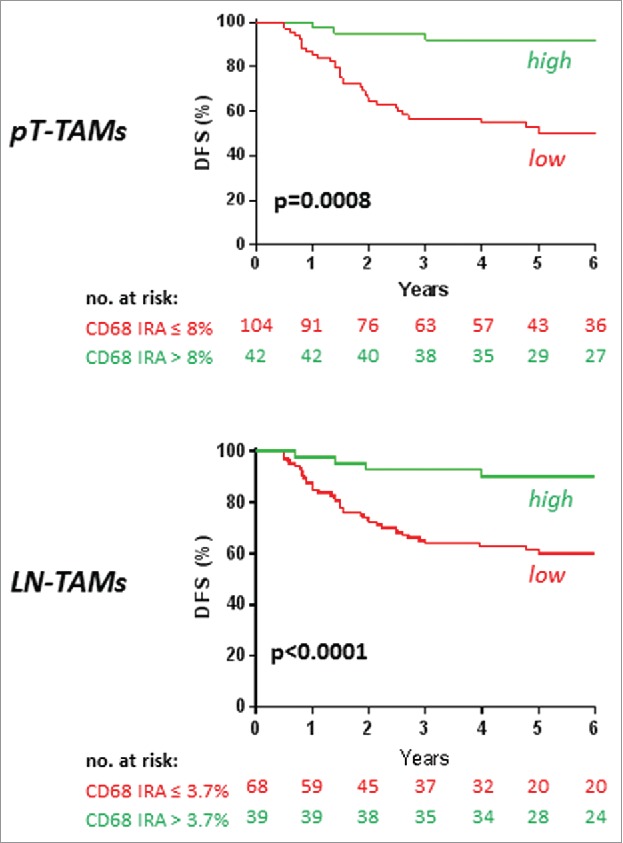
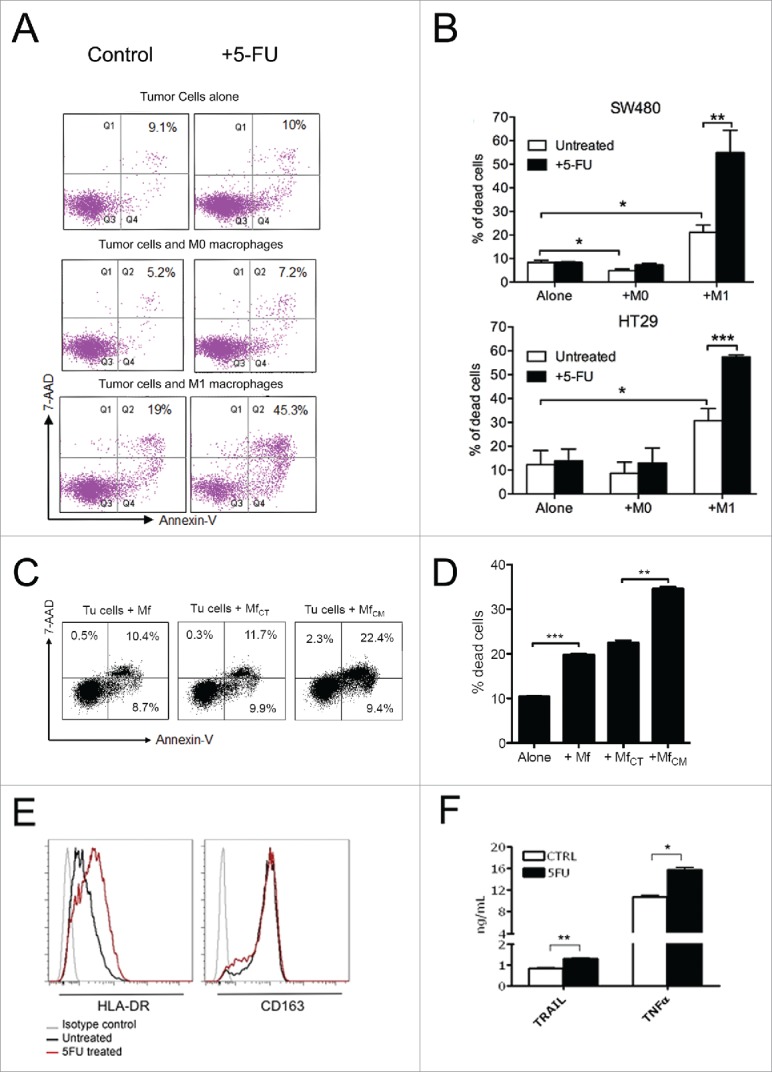
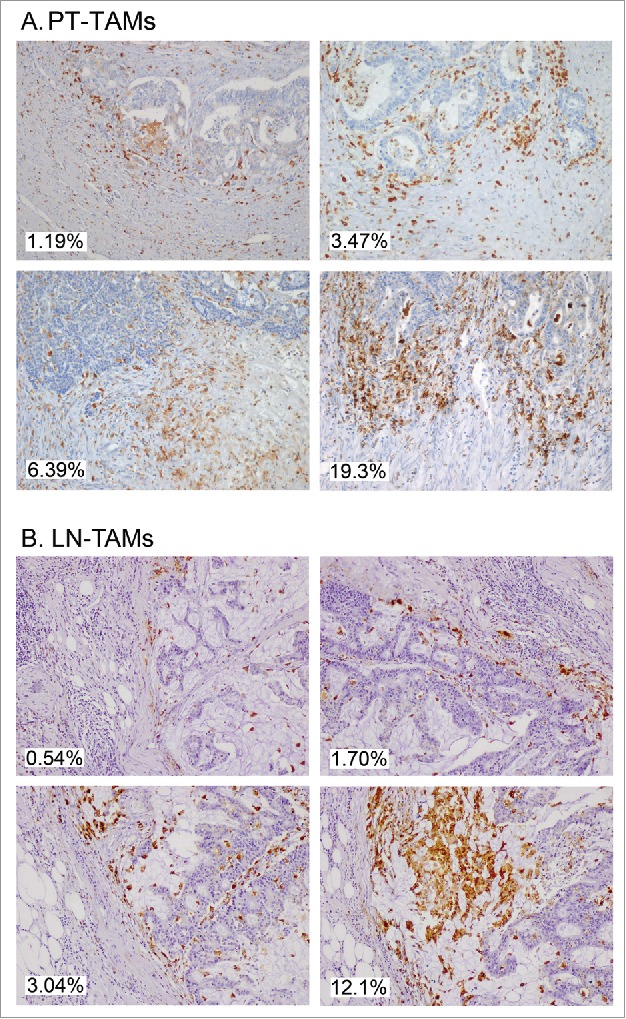
Verification
Claims the paper makes
The claims and statistics of this paper haven’t been checked yet.
Free: it reads the open-access text and checks the first 5 claims that cite a source we can check. Create a free account to check every claim.
Claims other papers make about this one
Each is checked against this paper’s own text: does it say what the citing paper says it does?
The cited source says what the claim attributes to it.
In the citing paper
“However, high densities of TAMs have been shown to significantly benefit stage III CRC patients treated with 5-FU [327].”
From Drug Resistance in Colorectal Cancer: From Mechanism to Clinic (2022) · cites this paper as [327]
Self-check
Percentages, sums and reported differences re-computed from the paper’s own numbers.
The self-check needs the paper’s full text.
Citations
Cites
Mantovani, A., Allavena, P., Sica, A., & Balkwill, F. (2008) · Nature · doi:10.1038/nature07205 · Cited by 11,399
Self-citationType, Density, and Location of Immune Cells Within Human Colorectal Tumors Predict Clinical Outcome
Galon, J., Costes, A., Sanchez-Cabo, F., Kirilovsky, A., Mlecnik, B., Lagorce-Pagès, C., Tosolini, M., Camus, M., Berger, A., Wind, P., et al. (2006) · Science · doi:10.1126/science.1129139 · Cited by 6,516
Tumour-associated macrophages as treatment targets in oncology
Mantovani, A., Marchesi, F., Malesci, A., Laghi, L., & Allavena, P. (2017) · Nature Reviews Clinical Oncology · doi:10.1038/nrclinonc.2016.217 · Cited by 4,033 · cited 1×
“Preclinical studies have also depicted a complex dual role for TAMs in modulating the response to anticancer therapies.(28-30) In some cancers, selected chemotherapeutic agents enhance the anti-tumor activity of TAMs by eliciting adaptive responses able to determine immunogenic cell death,(31,32) by depleting immunosu…”
BackgroundSelf-citationOxaliplatin, Fluorouracil, and Leucovorin as Adjuvant Treatment for Colon Cancer
André, T., Boni, C., Mounedji-Boudiaf, L., Navarro, M., Tabernero, J., Hickish, T., Topham, C., Zaninelli, M., Clingan, P., Bridgewater, J., et al. (2004) · New England Journal of Medicine · doi:10.1056/nejmoa032709 · Cited by 3,689 · cited 1×
“ropyrimidines improve 5-year survival rates by 10–15%, an additional 4–6% being contributed by their combination with oxaliplatin.(1-3) Even among patients receiving adjuvant therapy, one third still progresses to metastatic disease,(4-6) a rate not improved by biologic agents.”
BackgroundImmunogenic Cell Death in Cancer Therapy
Kroemer, G., Galluzzi, L., Kepp, O., & Zitvogel, L. (2013) · Annual Review of Immunology · doi:10.1146/annurev-immunol-032712-100008 · Cited by 3,303
André, T., Boni, C., Navarro, M., Tabernero, J., Hickish, T., Topham, C., Bonetti, A., Clingan, P., Bridgewater, J., Rivera, F., et al. (2009) · Journal of Clinical Oncology · doi:10.1200/jco.2008.20.6771 · Cited by 2,277 · cited 1×
“ropyrimidines improve 5-year survival rates by 10–15%, an additional 4–6% being contributed by their combination with oxaliplatin.(1-3) Even among patients receiving adjuvant therapy, one third still progresses to metastatic disease,(4-6) a rate not improved by biologic agents.”
BackgroundEffector Memory T Cells, Early Metastasis, and Survival in Colorectal Cancer
Pagès, F., Berger, A., Camus, M., Sanchez-Cabo, F., Costes, A., Molidor, R., Mlecnik, B., Kirilovsky, A., Nilsson, M., Damotte, D., et al. (2005) · New England Journal of Medicine · doi:10.1056/nejmoa051424 · Cited by 2,135
The Intestinal Microbiota Modulates the Anticancer Immune Effects of Cyclophosphamide
Viaud, S., Saccheri, F., Mignot, G., Yamazaki, T., Daillère, R., Hannani, D., Enot, D. P., Pfirschke, C., Engblom, C., Pittet, M. J., et al. (2013) · Science · doi:10.1126/science.1240537 · Cited by 2,050
Immunological effects of conventional chemotherapy and targeted anticancer agents
Galluzzi, L., Buqué, A., Kepp, O., Zitvogel, L., & Kroemer, G. (2015) · Cancer Cell · doi:10.1016/j.ccell.2015.10.012 · Cited by 1,530
Towards the introduction of the ‘Immunoscore’ in the classification of malignant tumours
Galon, J., Mlecnik, B., Bindea, G., Angell, H. K., Berger, A., Lagorce, C., Lugli, A., Zlobec, I., Hartmann, A., Bifulco, C., et al. (2014) · The Journal of Pathology · doi:10.1002/path.4287 · Cited by 1,360 · cited 1×
“Also tumor-infiltrating lymphocytes (TILs), which effectively forecast the outcome of patients with early colorectal cancer, are unlikely to act as predictive factor in node-positive patients.(13-16) Under this respect, other key players of the tumor”
BackgroundSelf-citation
Cited by
Inflammation and cancer: triggers, mechanisms, and consequences
Greten, F. R., & Grivennikov, S. I. (2019) · Immunity · doi:10.1016/j.immuni.2019.06.025 · Cited by 3,806
“, 2014) and inflammatory signaling targeting remaining tumor cell is an important driver of therapy resistance (Jinushi et al., 2011; Malesci et al., 2017).”
BackgroundMacrophages in immunoregulation and therapeutics
Chen, S., Saeed, A. F. U. H., Liu, Q., Jiang, Q., Xu, H., Xiao, G. G., Rao, L., & Duo, Y. (2023) · Signal Transduction and Targeted Therapy · doi:10.1038/s41392-023-01452-1 · Cited by 2,229
“In patients with stage III CRC treated with 5-FU adjuvant therapy, the high macrophage density before the treatment was strongly linked with a better-improved prognosis.(383) Increased numbers of CD68 TAMs in patients with pancreatic adenocarcinoma before treatment were only related to a favorable prognosis in those w…”
BackgroundMacrophages as tools and targets in cancer therapy
Mantovani, A., Allavena, P., Marchesi, F., & Garlanda, C. (2022) · Nature Reviews Drug Discovery · doi:10.1038/s41573-022-00520-5 · Cited by 1,807
Self-citationCurrent and future therapeutic approaches for osteosarcoma
Harrison, D. J., Geller, D. S., Gill, J. D., Lewis, V. O., & Gorlick, R. (2018) · Expert Review of Anticancer Therapy · doi:10.1080/14737140.2018.1413939 · Cited by 689
Drug resistance and new therapies in colorectal cancer
Jeught, K. V. D., Xu, H.-C., Li, Y.-J., Lu, X.-B., & Ji, G. (2018) · World Journal of Gastroenterology · doi:10.3748/wjg.v24.i34.3834 · Cited by 597
Targeting Macrophages in Cancer: From Bench to Bedside
Poh, A. R., & Ernst, M. (2018) · Frontiers in Oncology · doi:10.3389/fonc.2018.00049 · Cited by 501
Targeting Adenosine in Cancer Immunotherapy to Enhance T-Cell Function
Vigano, S., Alatzoglou, D., Irving, M., Ménétrier-Caux, C., Caux, C., Romero, P., & Coukos, G. (2019) · Frontiers in Immunology · doi:10.3389/fimmu.2019.00925 · Cited by 420
Chan, J. M., Quintanal-Villalonga, Á., Gao, V. R., Xie, Y., Allaj, V., Chaudhary, O., Masilionis, I., Egger, J., Chow, A., Walle, T., et al. (2021) · Cancer Cell · doi:10.1016/j.ccell.2021.09.008 · Cited by 434
Tumor-Associated Macrophages in Human Breast, Colorectal, Lung, Ovarian and Prostate Cancers
Larionova, I., Tuguzbaeva, G., Ponomaryova, A., Stakheyeva, M., Cherdyntseva, N., Pavlov, V., Choinzonov, E., & Kzhyshkowska, J. (2020) · Frontiers in Oncology · doi:10.3389/fonc.2020.566511 · Cited by 392
Tumor-associated macrophages: potential therapeutic strategies and future prospects in cancer
Li, C., Xu, X., Wei, S., Jiang, P., Xue, L., & Wang, J. (2021) · Journal for ImmunoTherapy of Cancer · doi:10.1136/jitc-2020-001341 · Cited by 360
Interaction of tumor-associated macrophages and cancer chemotherapy
Larionova, I., Cherdyntseva, N., Liu, T., Patysheva, M., Rakina, M., & Kzhyshkowska, J. (2019) · OncoImmunology · doi:10.1080/2162402x.2019.1596004 · Cited by 322
Workel, H. H., Lubbers, J. M., Arnold, R., Prins, T. M., van der Vlies, P., de Lange, K., Bosse, T., van Gool, I. C., Eggink, F. A., Wouters, M. C. A., et al. (2019) · Cancer Immunology Research · doi:10.1158/2326-6066.cir-18-0517 · Cited by 262
Bhat, A. A., Nisar, S., Singh, M., Ashraf, B., Masoodi, T., Prasad, C. P., Sharma, A., Maacha, S., Karedath, T., Hashem, S., et al. (2022) · Cancer Communications · doi:10.1002/cac2.12295 · Cited by 229
The Prognostic Role of Macrophage Polarization in the Colorectal Cancer Microenvironment
Väyrynen, J. P., Haruki, K., Lau, M. C., Väyrynen, S. A., Zhong, R., Dias Costa, A., Borowsky, J., Zhao, M., Fujiyoshi, K., Arima, K., et al. (2021) · Cancer Immunology Research · doi:10.1158/2326-6066.cir-20-0527 · Cited by 228
Self-citationTumor-associated myeloid cells: diversity and therapeutic targeting
Mantovani, A., Marchesi, F., Jaillon, S., Garlanda, C., & Allavena, P. (2021) · Cellular & Molecular Immunology · doi:10.1038/s41423-020-00613-4 · Cited by 219
Self-citationMacrophage targeting in cancer
Lopez‐Yrigoyen, M., Cassetta, L., & Pollard, J. W. (2021) · Annals of the New York Academy of Sciences · doi:10.1111/nyas.14377 · Cited by 221
Mlecnik, B., Bifulco, C., Bindea, G., Marliot, F., Lugli, A., Lee, J. J., Zlobec, I., Rau, T. T., Berger, M. D., Nagtegaal, I. D., et al. (2020) · Journal of Clinical Oncology · doi:10.1200/jco.19.03205 · Cited by 210
“The decision to give chemotherapy or not is based on neither scientific-, nor biomarker-, nor knowledge-based medical assessments, even though recent data support the use of predictive immune biomarkers.(37) The risk of death decreases by 10%-15% when fluorouracil monotherapy follows surgical resection, and by 20% whe…”
Self-citationThe Two Faces of Tumor-Associated Macrophages and Their Clinical Significance in Colorectal Cancer
Pinto, M. L., Rios, E., Durães, C., Ribeiro, R., Machado, J. C., Mantovani, A., Barbosa, M. A., Carneiro, F., & Oliveira, M. J. (2019) · Frontiers in Immunology · doi:10.3389/fimmu.2019.01875 · Cited by 213
“Conversely, in the presence of naïve, unstimulated macrophages, cell death remained unchanged or even decreased, depending on the cell line (28).”
BackgroundMethodInfluentialSelf-citationTargeting of TAMs: can we be more clever than cancer cells?
Kzhyshkowska, J. G., Shen, J., & Larionova, I. (2024) · Cellular and Molecular Immunology · doi:10.1038/s41423-024-01232-z · Cited by 201
Clinical landscape of macrophage-reprogramming cancer immunotherapies
Rannikko, J. H., & Hollmén, M. (2024) · British Journal of Cancer · doi:10.1038/s41416-024-02715-6 · Cited by 184
Donadon, M., Torzilli, G., Cortese, N., Soldani, C., Tommaso, L. D., Franceschini, B., Carriero, R., Barbagallo, M., Rigamonti, A., Anselmo, A., et al. (2020) · The Journal of Experimental Medicine · doi:10.1084/jem.20191847 · Cited by 191
“S1 A), an M2-like macrophage marker commonly used in immunohistochemical analyses (Forssell et al., 2007; Steidl et al., 2010; Di Caro et al., 2016; Malesci et al., 2017).”
Self-citationAzwar, S., Seow, H. F., Abdullah, M., Faisal Jabar, M., & Mohtarrudin, N. (2021) · Biology · doi:10.3390/biology10090854 · Cited by 173
“Paradoxically, improved disease-free survival is observed in stage III colon cancer patients expressing a high level of M1 macrophages, suggesting a synergistic effect through immunogenic death with 5-FU via TNFα/TRAIL [155].”
BackgroundAging, inflammation and cancer
Bottazzi, B., Riboli, E., & Mantovani, A. (2018) · Seminars in Immunology · doi:10.1016/j.smim.2018.10.011 · Cited by 169
Self-citationDrug Resistance in Colorectal Cancer: From Mechanism to Clinic
Wang, Q., Shen, X., Chen, G., & Du, J. (2022) · Cancers · doi:10.3390/cancers14122928 · Cited by 160
Evolution of Experimental Models in the Study of Glioblastoma: Toward Finding Efficient Treatments
Gómez‐Oliva, R., Domínguez‐García, S., Carrascal, L., Ábalos-Martínez, J., Pardillo-Díaz, R., Verástegui, C., Castro, C., Nunez‐Abades, P., & Geribaldi‐Doldán, N. (2021) · Frontiers in Oncology · doi:10.3389/fonc.2020.614295 · Cited by 120
Iron Metabolism in Cancer Progression
Forciniti, S., Greco, L., Grizzi, F., Malesci, A., & Laghi, L. (2020) · International Journal of Molecular Sciences · doi:10.3390/ijms21062257 · Cited by 112
“This is the case for colorectal cancer [90], in which the density of CD68+ TAMs interact with chemotherapy in predicting patient outcome, possibly linked to a skew of macrophage polarization toward a M1 anti-tumor role enhanced by 5-fluorouracil, as observed in vitro.”
BackgroundSelf-citationChen, W., Yang, C., Wang, S., Shi, D., Zhang, C., Lin, X., & Xiong, B. (2019) · OncoTargets and Therapy · doi:10.2147/ott.s198126 · Cited by 115
Cryopreservation impairs 3-D migration and cytotoxicity of natural killer cells
Mark, C., Czerwinski, T., Rößner, S., Mainka, A., Hörsch, F., Heublein, L., Winterl, A., Sanokowski, S., Richter, S., Bauer, N. G., et al. (2020) · Nature Communications · doi:10.1038/s41467-020-19094-0 · Cited by 106
Innate immunity, inflammation and tumour progression: double‐edged swords
Mantovani, A., Ponzetta, A., Inforzato, A., & Jaillon, S. (2019) · Journal of Internal Medicine · doi:10.1111/joim.12886 · Cited by 98
Self-citationHou, S., Zhao, Y., Chen, J., Lin, Y., & Qi, X. (2024) · Journal of Translational Medicine · doi:10.1186/s12967-024-04856-x · Cited by 106
“Similarly, Malesci et al. discovered that high levels of TAMs, specifically in metastatic lymph nodes, can be used for identifying stage III CRC patients who would benefit from adjuvant therapy with 5-fluorouracil [83].”
BackgroundKather, J. N., & Halama, N. (2019) · British Journal of Cancer · doi:10.1038/s41416-019-0441-6 · Cited by 101
Targeting the Tumor Microenvironment in Colorectal Peritoneal Metastases
Ceelen, W., Ramsay, R. G., Narasimhan, V., Heriot, A. G., & De Wever, O. (2020) · Trends in Cancer · doi:10.1016/j.trecan.2019.12.008 · Cited by 94
Biology and therapeutic targeting of tumour‐associated macrophages
Beltraminelli, T., & De Palma, M. (2020) · The Journal of Pathology · doi:10.1002/path.5403 · Cited by 86
“Indeed, high macrophage infiltration in some human tumours, such as colorectal cancer [200], correlates with a more favourable prognosis after standard chemotherapy [201].”
BackgroundPrognostic significance of tumor-associated macrophages: past, present and future
Cortese, N., Carriero, R., Laghi, L., Mantovani, A., & Marchesi, F. (2020) · Seminars in Immunology · doi:10.1016/j.smim.2020.101408 · Cited by 89
Self-citationTrial Watch: Oncolytic viro-immunotherapy of hematologic and solid tumors
Pol, J. G., Lévesque, S., Workenhe, S. T., Gujar, S., Le Boeuf, F., Clements, D. R., Fahrner, J.-E., Fend, L., Bell, J. C., Mossman, K. L., et al. (2018) · OncoImmunology · doi:10.1080/2162402x.2018.1503032 · Cited by 77
Cell Tracking in Cancer Immunotherapy
Perrin, J., Capitao, M., Mougin‐Degraef, M., Guérard, F., Faivre-Chauvet, A., Rbah‐Vidal, L., Gaschet, J., Guilloux, Y., Kraeber‐Bodéré, F., Chérel, M., et al. (2020) · Frontiers in Medicine · doi:10.3389/fmed.2020.00034 · Cited by 84
Li, Y., Xu, C., Wang, B., Xu, F., Ma, F., Qu, Y., Jiang, D., Li, K., Feng, J., Tian, S., et al. (2022) · Nature Communications · doi:10.1038/s41467-022-33282-0 · Cited by 80
Heath, O. M., Berlato, C., Maniati, E., Lakhani, A., Pegrum, C., Kotantaki, P., Elorbany, S., Böhm, S., Barry, S. T., Annibaldi, A., et al. (2021) · Cancer Immunology Research · doi:10.1158/2326-6066.cir-20-0968 · Cited by 72
Kuroda, H., Jamiyan, T., Yamaguchi, R., Kakumoto, A., Abe, A., Harada, O., & Masunaga, A. (2021) · Clinical & Translational Oncology · doi:10.1007/s12094-021-02652-3 · Cited by 69
Functionalized Nanoparticles Targeting Tumor-Associated Macrophages as Cancer Therapy
He, Y., Júnior, R. F. D. A., Cruz, L. J., & Eich, C. (2021) · Pharmaceutics · doi:10.3390/pharmaceutics13101670 · Cited by 70
Macrophages in Colorectal Cancer Liver Metastases
Cortese, N., Soldani, C., Franceschini, B., Barbagallo, M., Marchesi, F., Torzilli, G., & Donadon, M. (2019) · Cancers · doi:10.3390/cancers11050633 · Cited by 61
“In pancreatic [9] and colorectal cancer [10], a second mechanism involving the repolarization of macrophage phenotype by chemotherapy has been shown.”
BackgroundSelf-citationEvaluating the benefits of renin-angiotensin system inhibitors as cancer treatments
Perini, M. V., Dmello, R. S., Nero, T. L., & Chand, A. L. (2020) · Pharmacology & Therapeutics · doi:10.1016/j.pharmthera.2020.107527 · Cited by 66
Tumor-associated macrophages: Potential therapeutic targets and diagnostic markers in cancer
Song, J., Xiao, T., Li, M., & Jia, Q. (2023) · Pathology - Research and Practice · doi:10.1016/j.prp.2023.154739 · Cited by 61
Allavena, P., Anfray, C., Ummarino, A., & Torres, F. (2021) · Clinical Cancer Research · doi:10.1158/1078-0432.ccr-20-1679 · Cited by 58
Functional and Therapeutic Significance of Tumor-Associated Macrophages in Colorectal Cancer
Li, Y., Chen, Z., Han, J., Ma, X., Zheng, X., & Chen, J. (2022) · Frontiers in Oncology · doi:10.3389/fonc.2022.781233 · Cited by 64
Lü, J., Xu, Y., Wu, Y., Huang, X., Xie, J., Wang, J.-B., Lin, J.-X., Li, P., Zheng, C., Huang, A., et al. (2019) · BMC Cancer · doi:10.1186/s12885-019-6089-z · Cited by 63
Tumor-Associated Macrophages: Combination of Therapies, the Approach to Improve Cancer Treatment
Moeini, P., & Niedźwiedzka‐Rystwej, P. (2021) · International Journal of Molecular Sciences · doi:10.3390/ijms22137239 · Cited by 54
Immune infiltrating cells in duodenal cancers
Donisi, G., Capretti, G. L., Cortese, N., Rigamonti, A., Gavazzi, F., Nappo, G., Pulvirenti, A., Sollai, M., Spaggiari, P., Zerbi, A., et al. (2020) · Journal of Translational Medicine · doi:10.1186/s12967-020-02508-4 · Cited by 52
Self-citationMola, S., Pandolfo, C., Sica, A., & Porta, C. (2020) · International Journal of Molecular Sciences · doi:10.3390/ijms21186866 · Cited by 47
Yang, Z., Zhang, M., Peng, R., Liu, J., Wang, F., Li, Y., Zhao, Q., & Liu, J. (2020) · International Journal of Colorectal Disease · doi:10.1007/s00384-020-03686-9 · Cited by 50
Metabolic dysfunction and early‐onset colorectal cancer – how macrophages build the bridge
Scheurlen, K. M., Billeter, A. T., O'Brien, S. J., & Galandiuk, S. (2020) · Cancer Medicine · doi:10.1002/cam4.3315 · Cited by 48
Targeting the Tumor Microenvironment: A Close Up of Tumor-Associated Macrophages and Neutrophils
Russo, M., & Nastasi, C. (2022) · Frontiers in Oncology · doi:10.3389/fonc.2022.871513 · Cited by 48
Bringing Macrophages to the Frontline against Cancer: Current Immunotherapies Targeting Macrophages
Reis-Sobreiro, M., da Mota, A. T., Jardim, C., & Serre, K. (2021) · Cells · doi:10.3390/cells10092364 · Cited by 46
“In sharp contrast, high TAMs were independently associated with better disease-free survival in 5-fluorouracil-treated stage III colorectal cancer patients [54].”
ResultGrizzi, F., Basso, G., Borroni, E. M., Cavalleri, T., Bianchi, P. P., Štifter, S., Chiriva‐Internati, M., Malesci, A., & Laghi, L. (2018) · Inflammation Research · doi:10.1007/s00011-017-1128-1 · Cited by 45
“therapy while being irrelevant in those who did not receive adjuvant therapy [34].”
BackgroundSelf-citationCavalleri, T., Bianchi, P. P., Basso, G., Celesti, G., Grizzi, F., Bossi, P., Greco, L., Pitrone, C., Valtorta, E., Mauri, G., et al. (2019) · Cancer Immunology Research · doi:10.1158/2326-6066.cir-18-0661 · Cited by 43
“The outcome for patients with MSS CRCs harboring low densities of FoxP3þ cells and low densities of CD3þ cells was significantly worse than that of patients with cancers with high densities of both cell types (P < 0.001) or discordant TIL densities (low-high or high-low; P¼ 0.001).”
BackgroundInfluentialSelf-citationImmune cell networking in solid tumors: focus on macrophages and neutrophils
Ceglie, I. D., Carnevale, S., Rigatelli, A., Grieco, G., Molisso, P., & Jaillon, S. (2024) · Frontiers in Immunology · doi:10.3389/fimmu.2024.1341390 · Cited by 45
Promising Colorectal Cancer Biomarkers for Precision Prevention and Therapy
Turano, M., Delrio, P., Rega, D., Cammarota, F., Polverino, A., Duraturo, F., Izzo, P., & Rosa, M. D. (2019) · Cancers · doi:10.3390/cancers11121932 · Cited by 46
“[94] observed that TAMs are positive prognostic factors for 5-FU response in stage III CRC patients.”
BackgroundMarín, J. J. G., Macías, R. I. R., Monte, M. J., Herráez, E., Peleteiro‐Vigil, A., de Blas, B. S., Sanchon-Sanchez, P., Temprano, Á. G., Espinosa-Escudero, R. A., Lozano, E., et al. (2020) · Cancers · doi:10.3390/cancers12092605 · Cited by 44
Dendritic cells in systemic sclerosis: Advances from human and mice studies
Affandi, A. J., Carvalheiro, T., Radstake, T. R. D. J., & Marut, W. (2017) · Immunology Letters · doi:10.1016/j.imlet.2017.11.003 · Cited by 45
Janardhanam, L. S. L., Indukuri, V. V., Verma, P., Dusane, A., & Venuganti, V. V. K. (2020) · Materials Science and Engineering C · doi:10.1016/j.msec.2020.111118 · Cited by 39
Intestinal Macrophages at the Crossroad between Diet, Inflammation, and Cancer
Caprara, G., Allavena, P., & Erreni, M. (2020) · International Journal of Molecular Sciences · doi:10.3390/ijms21144825 · Cited by 40
“Recently, in stage III CRC, higher CD68+ macrophage infiltration has been correlated with decreased overall survival; on the contrary, another study showed that CD68+ macrophage infiltration at the tumor invasive front associates to increased overall survival in patients treated with 5-FU [186,187].”
BackgroundMo, X., Huang, X., Feng, Y., Wei, C., Liu, H., Ru, H., Qin, H., Lai, H., Wu, G., Xie, W., et al. (2020) · OncoImmunology · doi:10.1080/2162402x.2020.1832347 · Cited by 41
Han, J., Dong, L., Wu, M., & Ma, F. (2023) · Frontiers in Immunology · doi:10.3389/fimmu.2023.1160340 · Cited by 39
Greco, L., Rubbino, F., Buono, A. D., & Laghi, L. (2023) · Genes · doi:10.3390/genes14061169 · Cited by 42
“Interestingly, tumor-associated macrophages have been suggested as a potential biomarker of responsiveness to neoadjuvant therapy with 5-FU alone or in combination with OXA in stage III CRC [151,152].”
BackgroundSelf-citationMalik, S., Sureka, N., Ahuja, S., Aden, D., Zaheer, S., & Zaheer, S. (2024) · Cell Biology International · doi:10.1002/cbin.12226 · Cited by 36
“The polarization of TAMs toward the M1 phenotype is also observed with certain chemotherapeutic drugs such as 5 ‐ fluorouracil in colorectal cancer, (Malesci et al., 2017) gemcitabine in pancreatic cancer (Di Caro et al., 2016) and platinum ‐ based neo ‐ adjuvant chemotherapy in high ‐ grade…”
Miyasaka, Y., Yoshimoto, Y., Murata, K., Noda, S.-E., Ando, K., Ebara, T., Okonogi, N., Kaminuma, T., Yamada, S., Ikota, H., et al. (2020) · Journal of Radiation Research · doi:10.1093/jrr/rrz106 · Cited by 33
Gazzillo, A., Polidoro, M. A., Soldani, C., Franceschini, B., Lleò, A., & Donadon, M. (2022) · International Journal of Molecular Sciences · doi:10.3390/ijms232416197 · Cited by 33
“Specifically, while TAMs density did not correlate with survival in CLM patients, large (L)-TAMs, characterized by a bigger cell area and perimeter, were associated with statistically significantly worse prognosis and DFS, compared to small (S)-TAM ones [110].”
BackgroundResultMontfort, A., Barker-Clarke, R. J., Piskorz, A., Supernat, A. M., Moore, L., Al-Khalidi, S., Böhm, S., Pharoah, P. D. P., McDermott, J. R., Balkwill, F. R., et al. (2020) · British Journal of Cancer · doi:10.1038/s41416-020-0822-x · Cited by 31
Wilkinson, K. J., Ng, W. L., Roberts, T. L., Becker, T. M., Lim, S. H.-S., Chua, W. M., & Lee, C. S. (2021) · Journal of Clinical Pathology · doi:10.1136/jclinpath-2020-207309 · Cited by 35
Laghi, L., Negri, F., Gaiani, F., Cavalleri, T., Grizzi, F., Angelis, G. L. D., & Malesci, A. (2020) · International Journal of Molecular Sciences · doi:10.3390/ijms21249680 · Cited by 35
“23) in T4 or N2 diseases, indicating that the regimen choice (FOLFOX or XELOX) and risk group (T1-3N1 and T4 or N2) should be considered in evaluating the non-inferiority of 3 months of oxaliplatin-based adjuvant therapy [68,69].”
BackgroundSelf-citationJumaniyazova, E. D., Lokhonina, А. V., Dzhalilova, D. S., Miroshnichenko, E. A., Kosyreva, A. M., & Fatkhudinov, T. (2025) · Cancers · doi:10.3390/cancers17030342 · Cited by 29
“This ability is characteristic of Gemcitabine in pancreatic cancer [82], 5-Fluorouracil in colorectal cancer [83], and platinum-based chemotherapy in high-grade ovarian cancer [84].”
Association between diabetes, obesity, aging, and cancer: review of recent literature
Qiang, J. K., Lipscombe, L. L., & Lega, I. C. (2020) · Translational Cancer Research · doi:10.21037/tcr.2020.03.14 · Cited by 33
IL-21 Signaling in the Tumor Microenvironment
Chabab, G., Bonnefoy, N., & Lafont, V. (2020) · Advances in experimental medicine and biology · doi:10.1007/978-3-030-38315-2_6 · Cited by 29
Type of chemotherapy has substantial effects on the immune system in ovarian cancer
Vankerckhoven, A., Baert, T., Riva, M., Bruyn, C. D., Thirion, G., Vandenbrande, K., Ceusters, J., Vergote, I. B., & Coosemans, A. (2021) · Translational Oncology · doi:10.1016/j.tranon.2021.101076 · Cited by 31
Tumor‐associated macrophages and risk of recurrence in stage III colorectal cancer
Cavalleri, T., Greco, L., Rubbino, F., Hamada, T., Quaranta, M., Grizzi, F., Sauta, E., Craviotto, V., Bossi, P., Vetrano, S., et al. (2022) · The Journal of Pathology Clinical Research · doi:10.1002/cjp2.267 · Cited by 27
“We previously reported the association between CD68 TAM densities and stage III CRC outcome as highly significant but limited to subjects treated with 5-fluorouracil-based adjuvant therapy [11].”
BackgroundSelf-citationColorectal Cancer and Purinergic Signalling: An Overview
Roliano, G. G., Azambuja, J. H., Brunetto, V., Butterfield, H. E., Kalil, A. N., & Braganhol, E. (2022) · Cancers · doi:10.3390/cancers14194887 · Cited by 27
“However, TAMs and TANs can also exert anti-tumor effects, and are associated with better response to chemotherapy in CRC patients [49,50].”
Heterogeneity of Colorectal Cancer Progression: Molecular Gas and Brakes
Gaiani, F., Marchesi, F., Negri, F., Greco, L., Malesci, A., de’Angelis, G. L., & Laghi, L. (2021) · International Journal of Molecular Sciences · doi:10.3390/ijms22105246 · Cited by 30
“Despite this clear engagement in protumor functions, studies aimed at defining the prognostic role of macrophages in CRC have shown surprisingly association with favorable prognosis [96–98] and response to therapy [99].”
BackgroundSelf-citationData Driven Mathematical Model of FOLFIRI Treatment for Colon Cancer
Budithi, A., Su, S., Kirshtein, A., & Shahriyari, L. (2021) · Cancers · doi:10.3390/cancers13112632 · Cited by 28
Greco, L., Rubbino, F., Morelli, A., Gaiani, F., Grizzi, F., de’Angelis, G. L., Malesci, A., & Laghi, L. (2021) · International Journal of Molecular Sciences · doi:10.3390/ijms222111469 · Cited by 24
“However, it is generally accepted that TAMs infiltration in gastrointestinal tumors is usually associated with an aggressive phenotype, and advanced clinical stage [94,95], although this is likely not the case in CRC [21,96].”
BackgroundSelf-citationImmunogenic chemotherapy: great potential for improving response rates
Huang, X., Ren, Q., Yang, L., Cui, D., Ma, C., Zheng, Y., & Wu, J. (2023) · Frontiers in Oncology · doi:10.3389/fonc.2023.1308681 · Cited by 22
Progress in Tumor‐Associated Macrophages: From Bench to Bedside
Wang, Y., Lin, Y., Qiao, S., Wang, J., & Wang, H. (2018) · Advanced Biosystems · doi:10.1002/adbi.201800232 · Cited by 21
Chen, X., & Zeng, L. (2018) · Europe PMC (PubMed Central) · Cited by 19
Exosomes as new therapeutic vectors for pancreatic cancer treatment
Oliveira, C., Calmeiro, J., Carrascal, M. A., Falcão, A. C., Gomes, C. M. F., Neves, B. M., & Cruz, M. T. (2021) · European Journal of Pharmaceutics and Biopharmaceutics · doi:10.1016/j.ejpb.2021.02.002 · Cited by 19
Fan, J., Zhu, J., Zhu, H., & Xu, H. (2024) · Critical Reviews in Oncology/Hematology · doi:10.1016/j.critrevonc.2024.104362 · Cited by 18
Wu, S., He, H., Liu, H., Cao, Y., Li, R., Zhang, H., Li, H., Shen, Z., Qin, J., & Xu, J. (2018) · OncoImmunology · doi:10.1080/2162402x.2018.1433517 · Cited by 18
Pei, H., Qin, J., Wang, F., Tan, B., Zhao, Z., Peng, Y., Yu, F., Li, E., Liu, M., Zhang, R., et al. (2019) · European Journal of Medicinal Chemistry · doi:10.1016/j.ejmech.2019.111741 · Cited by 19
Engineering Cell‐Based Systems for Smart Cancer Therapy
Mirkhani, N., Gwisai, T., & Schuerle, S. (2021) · Advanced Intelligent Systems · doi:10.1002/aisy.202100134 · Cited by 18
Liang, Y., Lin, C.-N., Tsai, H.-F., Wu, P., Lin, S., Hong, T.-M., & Hsu, K. (2021) · Current Oncology · doi:10.3390/curroncol28050359 · Cited by 16
Macrophages play a role in inflammatory transformation of colorectal cancer
Lu, L., Liu, Y.-J., Cheng, P., Hu, D., Xu, H.-C., & Ji, G. (2021) · World Journal of Gastrointestinal Oncology · doi:10.4251/wjgo.v13.i12.2013 · Cited by 16
Lee, C.-C., Lee, A.-W., Wei, P., Liu, Y.-S., Chang, Y., & Huang, C. (2023) · Scientific Reports · doi:10.1038/s41598-023-31331-2 · Cited by 15
“PLCs catalyze PtdIns(4,5) P2 to form two intracellular second messengers, diacylglycerol (DAG) and inositol 1,4,5 trisphosphate (InsP3), which play important roles in signal transduction71,72.”
BackgroundJo, H., Lee, E., Cho, H. S., Rayhan, M. A., Cho, A., Chae, C.-S., & You, H. J. (2024) · Medicina · doi:10.3390/medicina60061009 · Cited by 19
“M2 macrophages produce IL-10, CD163, CD206, transforming growth factor (TGF)- β , transglutaminase 2 (TGM2), and macrophage colony-stimulating factor 1 (CSF1) [2,8,9,11,13–15].”
BackgroundSilveira, M. J., Martins, C., Cruz, T., Castro, F., Costa, Â. M., Chester, K. A., Oliveira, M. J., & Sarmento, B. F. C. C. (2023) · Journal of Nanobiotechnology · doi:10.1186/s12951-023-02126-4 · Cited by 15
“Moreover, some authors have investigated the synergistic effect of 5-FU and M1 macrophages whose findings are associated with higher rates of colo-rectal cell death [12, 13].”
BackgroundZhang, Y., Zheng, Y., Shou, L., Shi, Y., Shen, H., Zhu, M., Ye, X., Jin, J., & Xie, W. (2020) · Frontiers in Oncology · doi:10.3389/fonc.2020.584261 · Cited by 15
Next-generation CAR T cells to overcome current drawbacks
Lundh, S. M., Maji, S., & Melenhorst, J. J. (2020) · International Journal of Hematology · doi:10.1007/s12185-020-02923-9 · Cited by 15
Costa, G., Sposito, C., Soldani, C., Polidoro, M. A., Franceschini, B., Marchesi, F., Nasir, F. D., Virdis, M., Vingiani, A., Lleò, A., et al. (2023) · International Journal of Surgery · doi:10.1097/js9.0000000000000374 · Cited by 14
Self-citationAgostino, S. D., Padula, D. L., Rago, V., Gabriele, C., Conforti, F., Aprigliano, E., Urlandini, L., Parrotta, E. I., Lofaro, D., Vescio, F., et al. (2025) · Journal of Experimental & Clinical Cancer Research · doi:10.1186/s13046-025-03496-3 · Cited by 14
Takayama, T., Shimizu, T., Lila, A. S. A., Kanazawa, Y., Ando, H., Ishima, Y., & Ishida, T. (2020) · Pharmaceutics · doi:10.3390/pharmaceutics12100990 · Cited by 15
Tang, Y., Sun, Z., Wu, S., Zhang, C., Zhang, Y., & Cao, Y. (2023) · Biomedicine & Pharmacotherapy · doi:10.1016/j.biopha.2023.115828 · Cited by 13
Recent advances in non-invasive in vivo tracking of cell-based cancer immunotherapies
Kulkarni, A. D., Mukarrama, T., Barlow, B. R., & Kim, J. (2025) · Biomaterials Science · doi:10.1039/d4bm01677g · Cited by 12
Fusobacterium nucleatum and the Immune System in Colorectal Cancer
Borroni, E. M., Qehajaj, D., Farina, F. M., Yiu, D., Bresalier, R. S., Chiriva‐Internati, M., Mirandola, L., Štifter, S., Laghi, L., & Grizzi, F. (2019) · Current Colorectal Cancer Reports · doi:10.1007/s11888-019-00442-2 · Cited by 10
Self-citation
Metadata
- Authors
- Malesci, A., Bianchi, P., Celesti, G., Basso, G., Marchesi, F., Grizzi, F., Di Caro, G., Cavalleri, T., Rimassa, L., Palmqvist, R., Lugli, A., Koelzer, V. H., Roncalli, M., Mantovani, A., Ogino, S., & Laghi, L.
- Affiliations
- University of Milan (IT)
- Fondazione Humanitas per la Ricerca (IT)
- Humanitas University (IT)
- Department of Immunology and Inflammation, Humanitas Clinical and Research Center, via Manzoni 113, Rozzano (Milan), Italy
- Humanitas Cancer Center, Humanitas Clinical and Research Center, Via Manzoni 56, Rozzano 20089 (Milan), Italy
- Umeå University (SE)
- University of Bern (CH)
- Brigham and Women's Hospital (US)
- Corresponding author
- Malesci, Alberto
- Laghi, Luigi
- ORCID
- Venue
- OncoImmunology
- Publisher
- Informa UK Limited
- Published
- 2017-07-12
- Volume
- 6
- Issue
- 12
- Pages
- e1342918
- ISSN
- 2162-4011 (ISSN-L)
- 2162-402X
- PMC
- PMC5706531
- OpenAlex
- W2735116030
- Cited by
- 124
- References
- 51
- Citations by year
- 2026: 4 · 2025: 8 · 2024: 11 · 2023: 13 · 2022: 10 · 2021: 23 · 2020: 29 · 2019: 15 · 2018: 9 · 2017: 2
- FWCI
- 6.81
- Type
- journal article
- Language
- en
- Open access
- gold
- doi.org
- Licence
- Locations
- OncoImmunology (publishedVersion, cc-by-nc-nd)
- Europe PMC (PubMed Central) (publishedVersion, cc-by-nc-nd)
- PubMed Central (publishedVersion, cc-by-nc-nd)
- PubMed (publishedVersion)
- Zurich Open Repository and Archive (University of Zurich) (acceptedVersion, cc-by-nc-nd)
- Digital Access to Scholarship at Harvard (DASH) (Harvard University) (submittedVersion, cc-by)
- DiVA at Umeå University (Umeå University) (submittedVersion, other-oa)
- Archivio Istituzionale della Ricerca (Universita Degli Studi Di Milano) (submittedVersion, other-oa)
- BORIS (University Library Bern) (submittedVersion, cc-by-nc-nd)
- DOAJ (DOAJ: Directory of Open Access Journals) (submittedVersion, cc-by-sa)
- Archivio Istituzionale della Ricerca - Università Vita-Salute San Raffaele (submittedVersion)
- Zurich Open Repository and Archive (University of Zurich) (submittedVersion, cc-by-nc-nd)
- Zurich Open Repository and Archive (University of Zurich)
- Open Access CRIS of the University of Bern
- Funders
- National Cancer Institute (R35CA197735)
- Topics
- Life Sciences › Immunology and Microbiology › Immunology › Immune cells in cancer
- Health Sciences › Medicine › Oncology › Colorectal Cancer Treatments and Studies
- Health Sciences › Medicine › Oncology › Cancer Immunotherapy and Biomarkers
- Keywords
- tumor-associated macrophages, 5-fluorouracil, adjuvant chemotherapy, stage III colorectal cancer, CD68, metastatic lymph nodes, disease-free survival, predictive biomarkers, chemotherapy response, tumor microenvironment
About these checks
Registry, retraction, Cites and statistics results are computed, not judged, with one exception: a printed reference that no index lists is read once by a model before it counts as a citation error. Claims are extracted by a model and kept only when their quote appears verbatim in the text; each cited source is then checked, with a model’s help, for whether it says what the claim relies on. Those verdicts can be wrong — read the claim’s quote and the cited source before relying on one.
Statistics and arithmetic are recomputed, not judged.
Confidence bands are shown only for fields calibrated on our annotated test set. None is calibrated yet, so no band is shown.
What counts as a claim ›How we measure confidence ›How we check this ›
Are you an author, or do you see a problem with this page? Request a review
Data sources
Bibliographic data: Semantic Scholar, OpenAlex, Crossref.
Contains information from the Semantic Scholar Academic Graph Datasets, made available under the ODC Attribution License (ODC-BY 1.0).
Semantic Scholar’s data is described in: Kinney, R., et al. (2023). The Semantic Scholar Open Data Platform. arXiv:2301.10140.
