

CD133-directed CAR T cells for advanced metastasis malignancies: A phase I trial
Open accessThe DOI matches its Crossref record; 42 of the 42 references it cites were found in a registry or an index.
Abstract
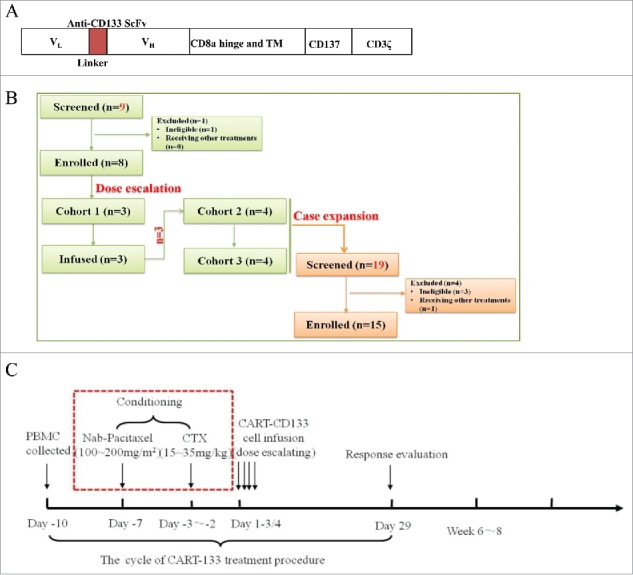
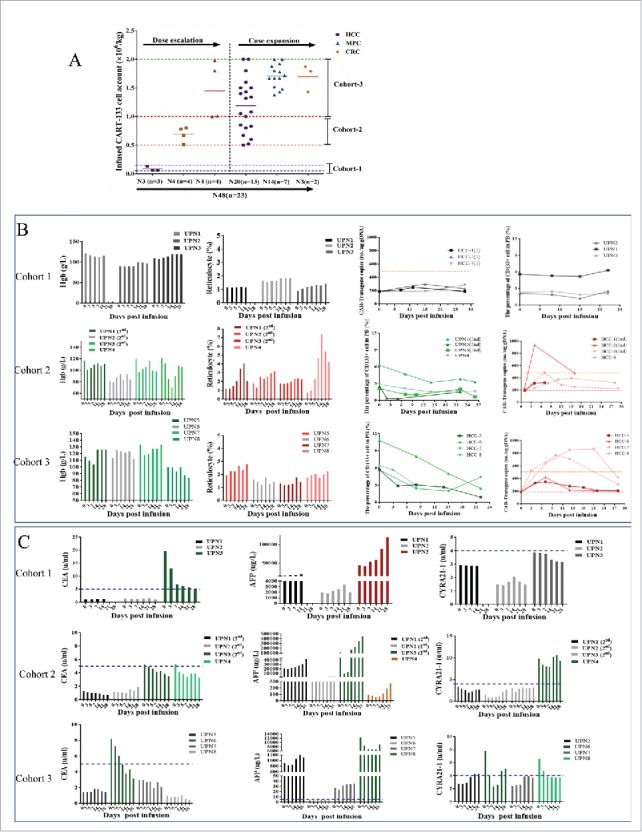
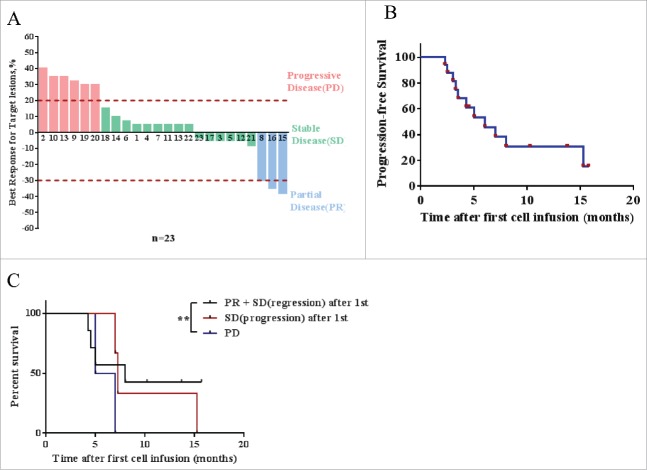
Expressed by cancer stem cells of various epithelial cell origins, CD133 is an attractive therapeutic target for cancers. Autologous chimeric antigen receptor-modified T-cell directed CD133 (CART-133) was first tested in this trial. The anti-tumor specificity and the postulated toxicities of CART-133 were first assessed. Then, we conducted a phase I clinical study in which patients with advanced and CD133-positive tumors received CART-133 cell-infusion. We enrolled 23 patients (14 with hepatocellular carcinoma [HCC], 7 with pancreatic carcinomas, and 2 with colorectal carcinomas). The 8 initially enrolled patients with HCC were treated by a CART-133 cell dose escalation scheme (0.05–2 × 10⁶/kg). The higher CAR-copy numbers and its reverse relationship with the count of CD133+ cells in peripheral blood led to the determination of an acceptable cell dose is 0.5–2 × 10⁶/kg and reinfusion cycle in 23 patients. The primary toxicity is a decrease in hemoglobin/platelet (≤ grade 3) that is self-recovered within 1 week. Of 23 patients, three achieved partial remission, and 14 achieved stable disease. The 3-month disease control rate was 65.2%, and the median progression-free survival was 5 months. Repeated cell infusions seemed to provide a longer period of disease stability, especially in patients who achieved tumor reduction after the first cell-infusion. 21 out of 23 patients had not developed detectable de novo lesions during this term. Analysis of biopsied tissues by immunohistochemistry showed CD133+ cells were eliminated after CART-133 infusions. This trial showed the feasibility, controllable toxicities, and effective activity of CART-133 transfer for treating patients with CD133-postive and late-stage metastasis malignancies.
Overview
The claims and statistics of this paper haven’t been checked yet.
Free: it reads the open-access text and checks the first 5 claims that cite a source we can check. Create a free account to check every claim.
Integrity signals
Registry
Cites
Statistics
Figures
Verification
Claims the paper makes
The claims and statistics of this paper haven’t been checked yet.
Free: it reads the open-access text and checks the first 5 claims that cite a source we can check. Create a free account to check every claim.
Claims other papers make about this one
Each is checked against this paper’s own text: does it say what the citing paper says it does?
The cited source says what the claim attributes to it.
In the citing paper
“CAR-T cells currently under development for targeting colorectal CSCs include CD133-, EpCAM-, or CD166-directed CAR-T cells [229,230,231,232].”
From Mechanisms and Strategies to Overcome Drug Resistance in Colorectal Cancer (2025) · cites this paper as [229]
Self-check
Percentages, sums and reported differences re-computed from the paper’s own numbers.
The self-check needs the paper’s full text.
Citations
Cites
New response evaluation criteria in solid tumours: revised RECIST guideline (version 1.1)
Eisenhauer, E. A., Therasse, P., Bogaerts, J., Schwartz, L. H., Sargent, D., Ford, R., Dancey, J., Arbuck, S., Gwyther, S., Mooney, M., et al. (2009) · European Journal of Cancer · doi:10.1016/j.ejca.2008.10.026 · Cited by 29,534 · cited 1×
“1 and immune-related response criteria.(25) Adverse events were documented and graded based on the Common Terminology Criteria for Adverse Events version 4.”
MethodSorafenib in advanced hepatocellular carcinoma
Llovet, J. M., Ricci, S., Mazzaferro, V., Hilgard, P., Gane, E., Blanc, J.-F., de Oliveira, A. C., Santoro, A., Raoul, J.-L., Forner, A., et al. (2008) · New England Journal of Medicine · doi:10.1056/nejmoa0708857 · Cited by 13,097
Stem cells, cancer, and cancer stem cells
Reya, T., Morrison, S. J., Clarke, M. F., & Weissman, I. L. (2001) · Nature · doi:10.1038/35102167 · Cited by 9,738 · cited 1×
“Moreover, CD133 is a marker of cancer stem cells (CSCs) and endothelial progenitor cells (EPCs) that had been verified to participate in tumor metastasis and recurrence.(20,21) These characteristics make CD133 a reasonable target for immunotherapy for patients with advanced CD133-postive tumors.”
BackgroundSorafenib in Advanced Hepatocellular Carcinoma
정, 재. (2008) · Cited by 5,586
Bruix, J., Qin, S., Merle, P., Granito, A., Huang, Y.-H., Bodoky, G., Pracht, M., Yokosuka, O., Rosmorduc, O., Breder, V., et al. (2017) · The Lancet · doi:10.1016/s0140-6736(16)32453-9 · Cited by 3,653
Clarke, M. F., Dick, J. E., Dirks, P. B., Eaves, C. J., Jamieson, C. H. M., Jones, D. L., Visvader, J., Weissman, I. L., & Wahl, G. M. (2006) · Cancer Research · doi:10.1158/0008-5472.can-06-3126 · Cited by 3,051 · cited 1×
“Moreover, CD133 is a marker of cancer stem cells (CSCs) and endothelial progenitor cells (EPCs) that had been verified to participate in tumor metastasis and recurrence.(20,21) These characteristics make CD133 a reasonable target for immunotherapy for patients with advanced CD133-postive tumors.”
BackgroundCancer Regression and Autoimmunity in Patients After Clonal Repopulation with Antitumor Lymphocytes
Dudley, M. E., Wunderlich, J. R., Robbins, P. F., Yang, J. C., Hwu, P., Schwartzentruber, D. J., Topalian, S. L., Sherry, R., Restifo, N. P., Hubicki, A. M., et al. (2002) · Science · doi:10.1126/science.1076514 · Cited by 2,823 · cited 1×
“Lymphocytes and interstitial cell clearance can contribute to the expansion of CART cells in vivo and infiltrate the solid tumor.(6,34,35) Therefore, lymphocyte clearance and reduced tumor load conditioning regimens are necessary under the premise that patients can tolerate a conditioning chemotherapy regimen to enhan…”
BackgroundCurrent concepts in the diagnosis and management of cytokine release syndrome.
Lee, D. W., Gardner, R., Porter, D. L., Louis, C. U., Ahmed, N., Jensen, M., Grupp, S. A., & Mackall, C. L. (2014) · Blood · doi:10.1182/blood-2014-05-552729 · Cited by 2,806 · cited 2×
“Cytokines release syndrome (CRS) graded and managed based on a previous report from Lee et al.(26) Dose-limiting toxicity (DLT) was defined as any grade 3 or above toxicity was considered possibly or likely related to CART-133 cells.”
MethodEfficacy and Toxicity Management of 19-28z CAR T Cell Therapy in B Cell Acute Lymphoblastic Leukemia
Davila, M. L., Riviere, I., Wang, X., Bartido, S., Park, J., Curran, K., Chung, S. S., Stefanski, J., Borquez-Ojeda, O., Olszewska, M., et al. (2014) · Science Translational Medicine · doi:10.1126/scitranslmed.3008226 · Cited by 2,476
Self-citationZou, W., Wolchok, J. D., & Chen, L. (2016) · Science Translational Medicine · doi:10.1126/scitranslmed.aad7118 · Cited by 2,400 · cited 1×
“PD-L1 pathway using anti-PD-1 therapy is considered an important approach with potential benefits in solid tumors.(39,40)”
MethodKalos, M., Levine, B. L., Porter, D. L., Katz, S., Grupp, S. A., Bagg, A., & June, C. H. (2011) · Science Translational Medicine · doi:10.1126/scitranslmed.3002842 · Cited by 2,388
Kochenderfer, J. N., Dudley, M. E., Kassim, S. H., Somerville, R. P. T., Carpenter, R. O., Stetler-Stevenson, M., Yang, J. C., Phan, G. Q., Hughes, M. S., Sherry, R. M., et al. (2015) · Journal of Clinical Oncology · doi:10.1200/jco.2014.56.2025 · Cited by 1,595 · cited 2×
“Lymphocytes and interstitial cell clearance can contribute to the expansion of CART cells in vivo and infiltrate the solid tumor.(6,34,35) Therefore, lymphocyte clearance and reduced tumor load conditioning regimens are necessary under the premise that patients can tolerate a conditioning chemotherapy regimen to enhan…”
BackgroundOrigins of circulating endothelial cells and endothelial outgrowth from blood
Lin, Y., Weisdorf, D. J., Solovey, A., & Hebbel, R. P. (2000) · Journal of Clinical Investigation · doi:10.1172/jci8071 · Cited by 1,531 · cited 1×
“On the other hand, CD133 is currently the most mature surface marker on EPCs, and EPCs have been shown to have important correlations with tumor recurrence and distal metastasis.(36,37) We found that patients seem can achieved long-term stability without new metastasis presented.”
BackgroundKochenderfer, J. N., Wilson, W. H., Janik, J. E., Dudley, M. E., Stetler-Stevenson, M., Feldman, S. A., Maric, I., Raffeld, M., Nathan, D.-A. N., Lanier, B. J., et al. (2010) · Blood · doi:10.1182/blood-2010-04-281931 · Cited by 1,337
Sotillo, E., Barrett, D. M., Black, K. L., Bagashev, A., Oldridge, D., Wu, G., Sussman, R., Lanauze, C., Ruella, M., Gazzara, M. R., et al. (2015) · Cancer Discovery · doi:10.1158/2159-8290.cd-15-1020 · Cited by 1,254 · cited 1×
“fragment containing cognate epitope is absent due to deleterious mutation and alternative splicing.(29) The other probable mechanism, a cellular immune response specific for murine scFv epitopes, of anti-CD19 CAR formed, resulting in the failure of the second infusion.”
BackgroundImmune Escape Mechanisms as a Guide for Cancer Immunotherapy
Beatty, G. L., & Gladney, W. L. (2015) · Clinical Cancer Research · doi:10.1158/1078-0432.ccr-14-1860 · Cited by 1,078 · cited 1×
“PD-L1 pathway using anti-PD-1 therapy is considered an important approach with potential benefits in solid tumors.(39,40)”
MethodTurtle, C. J., Hanafi, L.-A., Berger, C., Hudecek, M., Pender, B., Robinson, E., Hawkins, R., Chaney, C., Cherian, S., Chen, X., et al. (2016) · Science Translational Medicine · doi:10.1126/scitranslmed.aaf8621 · Cited by 1,016 · cited 1×
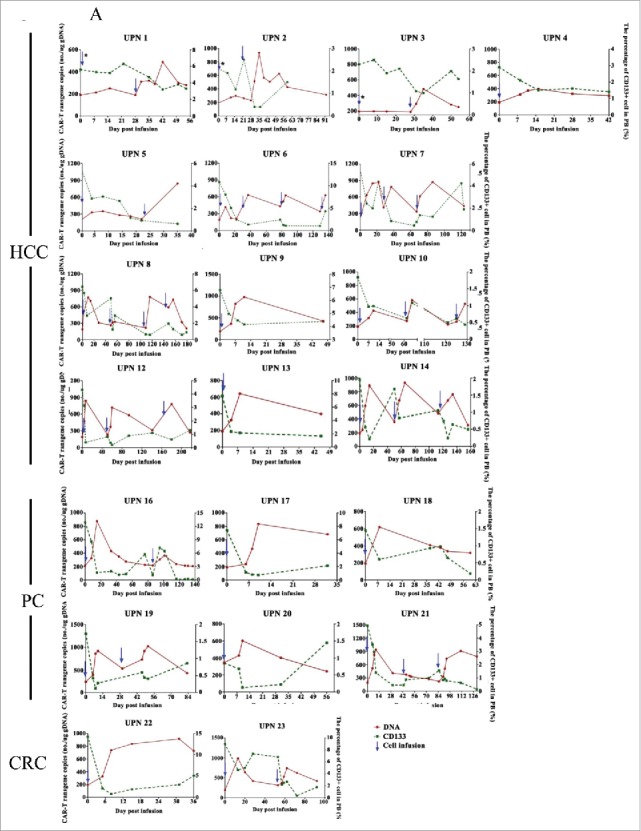
“The other probable mechanism, a cellular immune response specific for murine scFv epitopes, of anti-CD19 CAR formed, resulting in the failure of the second infusion.(30,31) In this study, the peak of amplification of the CAR-gene can be detected after CART-133 repeat infusion, and the CD133C cells in patients’ PB was…”
BackgroundAhmed, N., Brawley, V. S., Hegde, M., Robertson, C., Ghazi, A., Gerken, C., Liu, E., Dakhova, O., Ashoori, A., Corder, A., et al. (2015) · Journal of Clinical Oncology · doi:10.1200/jco.2014.58.0225 · Cited by 1,004
The epigenetic landscape of T cell exhaustion
Sen, D. R., Kaminski, J., Barnitz, R. A., Kurachi, M., Gerdemann, U., Yates, K. B., Tsao, H.-W., Godec, J., LaFleur, M. W., Brown, F. D., et al. (2016) · Science · doi:10.1126/science.aae0491 · Cited by 986 · cited 1×
“responses of engineered T cells in the setting of chronic antigen exposure.(38) Refueling the exhausted CART cells via the PD-1/”
BackgroundManaging Cytokine Release Syndrome Associated With Novel T Cell-Engaging Therapies
Maude, S. L., Barrett, D., Teachey, D. T., & Grupp, S. A. (2014) · The Cancer Journal · doi:10.1097/ppo.0000000000000035 · Cited by 752 · cited 1×
“In the previous study, CRS and tumor lysis symptoms correlated with the tumor burden at the time of the infusion of the CAR-directed T cells.(32,33) On the other hand, patients 6 and 12 were the only patients who had a lower-load tumor among HCC patients; they both achieved longer stable disease than other HCC patient…”
ResultGardner, R., Wu, D., Cherian, S., Fang, M., Hanafi, L.-A., Finney, O., Smithers, H., Jensen, M. C., Riddell, S. R., Maloney, D. G., et al. (2016) · Blood · doi:10.1182/blood-2015-08-665547 · Cited by 749
Weigmann, A., Corbeil, D., Hellwig, A., & Huttner, W. B. (1997) · Proceedings of the National Academy of Sciences · doi:10.1073/pnas.94.23.12425 · Cited by 608 · cited 2×
“CD133 was initially localized to CD34C hematopoietic stem cells, and CD133 was also confirmed on the surface of CD34C progenitor cells in adult bone marrow, umbilical cord blood, and PB.28 Hematopoietic system toxicities were observed in almost all patients in this study, including the reduction of hemoglobin, lymphoc…”
BackgroundKochenderfer, J. N., Somerville, R. P. T., Lu, T., Shi, V., Bot, A., Rossi, J., Xue, A., Goff, S. L., Yang, J. C., Sherry, R. M., et al. (2017) · Journal of Clinical Oncology · doi:10.1200/jco.2016.71.3024 · Cited by 569 · cited 1×
“Lymphocytes and interstitial cell clearance can contribute to the expansion of CART cells in vivo and infiltrate the solid tumor.(6,34,35) Therefore, lymphocyte clearance and reduced tumor load conditioning regimens are necessary under the premise that patients can tolerate a conditioning chemotherapy regimen to enhan…”
BackgroundPD-1 blockade modulates chimeric antigen receptor (CAR)–modified T cells: refueling the CAR
Chong, E. A., Melenhorst, J. J., Lacey, S. F., Ambrose, D. E., Gonzalez, V., Levine, B. L., June, C. H., & Schuster, S. J. (2017) · Blood · doi:10.1182/blood-2016-09-738245 · Cited by 496 · cited 1×
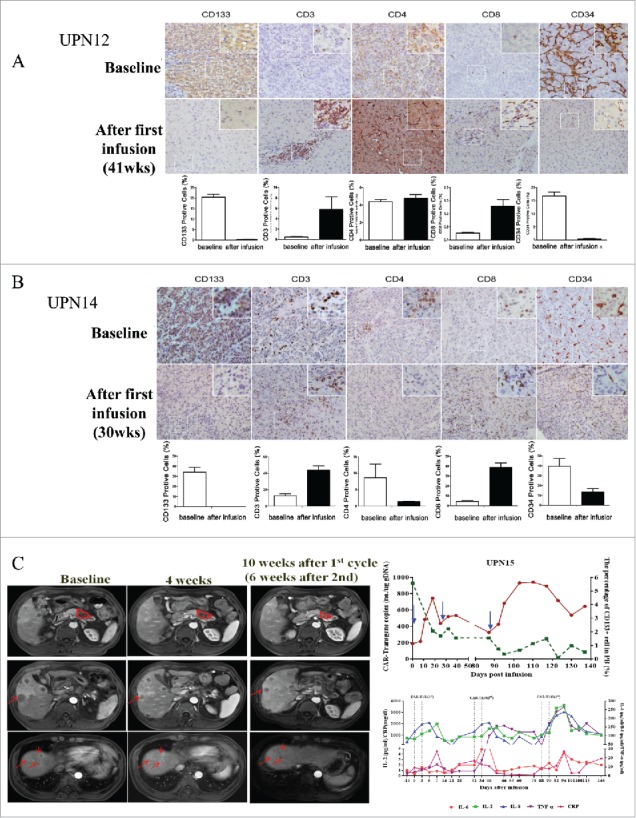
“Following PD-1 blockade, the patient had a clinically significant antitumor response, and a reexpansion of CART 19 cells.(41) However, massive T cells infiltrated the tumor tissue after CART-133 cell treatment (Fig.”
BackgroundKhakoo, A. Y., & Finkel, T. (2005) · Annual Review of Medicine · doi:10.1146/annurev.med.56.090203.104149 · Cited by 343
Wang, C.-M., Wu, Z.-Q., Wang, Y., Guo, Y.-L., Dai, H.-R., Wang, X.-H., Li, X., Zhang, Y.-J., Zhang, W.-Y., Chen, M.-X., et al. (2017) · Clinical Cancer Research · doi:10.1158/1078-0432.ccr-16-1365 · Cited by 332
Self-citationChimeric antigen receptor T cells: a novel therapy for solid tumors
Yu, S., Li, A., Liu, Q., Li, T., Yuan, X., Han, X., & Wu, K. (2017) · Journal of Hematology & Oncology · doi:10.1186/s13045-017-0444-9 · Cited by 306
Hurwitz, H. I., Uppal, N., Wagner, S. A., Bendell, J. C., Beck, J. T., Wade, S. M., Nemunaitis, J. J., Stella, P. J., Pipas, J. M., Wainberg, Z. A., et al. (2015) · Journal of Clinical Oncology · doi:10.1200/jco.2015.61.4578 · Cited by 292
Feng, K., Guo, Y., Dai, H., Wang, Y., Li, X., Jia, H., & Han, W. (2016) · Science China Life Sciences · doi:10.1007/s11427-016-5023-8 · Cited by 290
Self-citationYang, X.-R., Xu, Y., Yu, B., Zhou, J., Qiu, S.-J., Shi, G.-M., Zhang, B.-H., Wu, W.-Z., Shi, Y.-H., Wu, B., et al. (2010) · Gut · doi:10.1136/gut.2008.176271 · Cited by 270 · cited 2×
“Many studies have shown that the high level of CD133 predicts a poor prognosis in human HCC patients, is associated with lower survival rate, and also positively correlates with a high level of microvessel density and CD34C cells infiltration in the tumor bed.(18,19) On the other hand, CD133 is currently the most matu…”
BackgroundFeng, K.-C., Guo, Y.-L., Liu, Y., Dai, H.-R., Wang, Y., Lv, H.-Y., Huang, J.-H., Yang, Q.-M., & Han, W.-D. (2017) · Journal of Hematology & Oncology · doi:10.1186/s13045-016-0378-7 · Cited by 243 · cited 1×
“In our other case report, one patient achieved a longer period of disease remission through treatment with CART-EGFR combined with CART-133 and anti-PD-1.(23) We are evaluating the combination treatment of PD-1 antibody checkpoint blockade and CAR-redirected T-cell therapy in our other ongoing clinical trial.”
BackgroundSelf-citationBurga, R. A., Thorn, M., Point, G. R., Guha, P., Nguyen, C. T., Licata, L. A., DeMatteo, R. P., Ayala, A., Joseph Espat, N., Junghans, R. P., et al. (2015) · Cancer Immunology, Immunotherapy · doi:10.1007/s00262-015-1692-6 · Cited by 230
Wang, Y., Zhang, W.-Y., Han, Q.-W., Liu, Y., Dai, H.-R., Guo, Y.-L., Bo, J., Fan, H., Zhang, Y., Zhang, Y.-J., et al. (2014) · Clinical Immunology · doi:10.1016/j.clim.2014.10.002 · Cited by 194 · cited 3×
“On the other hand, patients 6 and 12 were the only patients who had a lower-load tumor among HCC patients; they both achieved longer stable disease than other HCC patients, which suggested the superiority of CART-133 cell treatment for HCC patients with lower tumor burden, as was endorsed by previous reports.(3,7) The…”
BackgroundMethodResultSelf-citationChimeric antigen receptor (CAR)-engineered lymphocytes for cancer therapy
Ramos, C. A., & Dotti, G. (2011) · Expert Opinion on Biological Therapy · doi:10.1517/14712598.2011.573476 · Cited by 182 · cited 1×
“T cells modified by CAR have a potent cellular effector mechanism, called HLA-independent recognition, to recognize and kill tumor cells expressing the corresponding antigen.(1) Especially in B cell acute lymphoblastic leukemia (B-ALL), the target CD19modified CAR-T cell therapy achieved a 74% to 90% complete remissio…”
BackgroundChallenges of advanced hepatocellular carcinoma
Colagrande, S., Inghilesi, A. L., Aburas, S., Taliani, G. G., Nardi, C., & Marra, F. (2016) · World Journal of Gastroenterology · doi:10.3748/wjg.v22.i34.7645 · Cited by 177 · cited 1×
“chemotherapy and targeted therapy agents, the only proven treatments for advanced disease are sorafenib, regorafenib, and lenvatinib, and overall survival benefits are modest.(12,13) Additionally, liver metastases may escape immune surveillance due to the immunosuppressive nature of the intrahepatic space,(11,14)”
BackgroundDai, H., Zhang, W., Li, X., Han, Q., Guo, Y., Zhang, Y., Wang, Y., Wang, C., Shi, F., Zhang, Y., et al. (2015) · OncoImmunology · doi:10.1080/2162402x.2015.1027469 · Cited by 166 · cited 1×
“On the other hand, patients 6 and 12 were the only patients who had a lower-load tumor among HCC patients; they both achieved longer stable disease than other HCC patients, which suggested the superiority of CART-133 cell treatment for HCC patients with lower tumor burden, as was endorsed by previous reports.(3,7) The…”
ResultSelf-citationCytokine release syndrome in cancer immunotherapy with chimeric antigen receptor engineered T cells
Xu, X.-J., & Tang, Y.-M. (2014) · Cancer Letters · doi:10.1016/j.canlet.2013.10.004 · Cited by 156 · cited 1×
“In the previous study, CRS and tumor lysis symptoms correlated with the tumor burden at the time of the infusion of the CAR-directed T cells.(32,33) On the other hand, patients 6 and 12 were the only patients who had a lower-load tumor among HCC patients; they both achieved longer stable disease than other HCC patient…”
ResultCD133, Selectively Targeting the Root of Cancer
Schmohl, J., & Vallera, D. A. (2016) · Toxins · doi:10.3390/toxins8060165 · Cited by 124 · cited 1×
“CD133 was found here to be highly expressed in 50% of case of HCC, pancreatic cancer, gastric cancer, and intrahepatic cholangiocarcinomas.(16,17) Especially for HCC, high CD133 expression in HCC cells corresponds with higher stage tumors, and indicating a poor prognosis for most patients.”
BackgroundTargeting CD133 antigen in cancer
Ferrandina, G., Petrillo, M., Bonanno, G., & Scambia, G. (2009) · Expert Opinion on Therapeutic Targets · doi:10.1517/14728220903005616 · Cited by 110 · cited 1×
“CD133 was found here to be highly expressed in 50% of case of HCC, pancreatic cancer, gastric cancer, and intrahepatic cholangiocarcinomas.(16,17) Especially for HCC, high CD133 expression in HCC cells corresponds with higher stage tumors, and indicating a poor prognosis for most patients.”
BackgroundKohga, K., Tatsumi, T., Takehara, T., Tsunematsu, H., Shimizu, S., Yamamoto, M., Sasakawa, A., Miyagi, T., & Hayashi, N. (2010) · Journal of Hepatology · doi:10.1016/j.jhep.2009.12.030 · Cited by 100 · cited 2×
“Many studies have shown that the high level of CD133 predicts a poor prognosis in human HCC patients, is associated with lower survival rate, and also positively correlates with a high level of microvessel density and CD34C cells infiltration in the tumor bed.(18,19) On the other hand, CD133 is currently the most matu…”
BackgroundClinical trials of CAR-T cells in China
Liu, B., Song, Y., & Liu, D. (2017) · Journal of Hematology & Oncology · doi:10.1186/s13045-017-0535-7 · Cited by 75 · cited 1×
“Clinical trials being conducted in China are evaluating MG7 and EpCAM antigen-targeted CAR-T cells in liver cancer.(15)”
MethodChimeric Antigen Receptor-Modified T Cells for Solid Tumors: Challenges and Prospects
Guo, Y., Wang, Y., & Han, W. (2016) · Journal of Immunology Research · doi:10.1155/2016/3850839 · Cited by 45
Self-citation
Cited by
Cancer stem cells—Origins and biomarkers: Perspectives for targeted personalized therapies
Walcher, L., Kistenmacher, A.-K., Suo, H., Kitte, R., Dluczek, S., Strauß, A., Blaudszun, A.-R., Yevsa, T., Fricke, S., & Kossatz-Boehlert, U. (2020) · Frontiers in Immunology · doi:10.3389/fimmu.2020.01280 · Cited by 1,007
Guidelines for the Diagnosis and Treatment of Hepatocellular Carcinoma (2019 Edition)
Zhou, J., Sun, H., Wang, Z., Cong, W., Wang, J., Zeng, M., Zhou, W., Bie, P., Liu, L., Wen, T., et al. (2020) · Liver Cancer · doi:10.1159/000509424 · Cited by 800
Self-citationClara, J. A., Monge, C., Yang, Y., & Takebe, N. (2020) · Nature Reviews Clinical Oncology · doi:10.1038/s41571-019-0293-2 · Cited by 752
Clinical lessons learned from the first leg of the CAR T cell journey
Majzner, R. G., & Mackall, C. L. (2019) · Nature Medicine · doi:10.1038/s41591-019-0564-6 · Cited by 636
T cell receptor (TCR) signaling in health and disease
Shah, K., Al-Haidari, A., Sun, J., & Kazi, J. U. (2021) · Signal Transduction and Targeted Therapy · doi:10.1038/s41392-021-00823-w · Cited by 604
“M A R T1 F5 TC R -g en e en g in ee re d ly m p h o cy te s C o m p le te d N C T0 05 09 28 8 M el an o m a n eo p la sm m et as ta si s Ly m p h o cy te re -in fu si o n d u ri n g im m u n e su p p re ss io n to tr ea t m et as ta ti c m el an o m a In te rv en ti o n al ; Ph as e II Ly m p h o cy te re -in fu si o…”
Background
Metadata
- Authors
- Wang, Y., Chen, M., Wu, Z., Tong, C., Dai, H., Guo, Y., Liu, Y., Huang, J., Lv, H., Luo, C., Feng, K.-C., Yang, Q.-M., Li, X.-L., & Han, W.
- Affiliations
- Chinese PLA General Hospital (CN)
- Department of Bio-therapeutic, Chinese PLA General Hospital, Beijing, China
- Department of Molecular & Immunology, Chinese PLA General Hospital, Beijing, China
- Corresponding author
- Han, Weidong
- Venue
- OncoImmunology
- Publisher
- Informa UK Limited
- Published
- 2018-05-07
- Volume
- 7
- Issue
- 7
- Pages
- e1440169
- ISSN
- 2162-4011 (ISSN-L)
- 2162-402X
- PMC
- PMC5993480
- OpenAlex
- W2790863559
- Cited by
- 338
- References
- 42
- Citations by year
- 2026: 25 · 2025: 37 · 2024: 50 · 2023: 48 · 2022: 57 · 2021: 47 · 2020: 39 · 2019: 26 · 2018: 9
- FWCI
- 11.37
- Type
- journal article
- Language
- en
- Open access
- gold
- doi.org
- Licence
- cc-by-nc-nd
- Locations
- OncoImmunology (publishedVersion, cc-by-nc-nd)
- Europe PMC (PubMed Central) (publishedVersion, cc-by-nc-nd)
- PubMed Central (publishedVersion, cc-by-nc-nd)
- PubMed (publishedVersion)
- DOAJ (DOAJ: Directory of Open Access Journals) (submittedVersion, cc-by-sa)
- Funders
- National Key Research and Developement Program of Chinas (2016YFC1303501 2016YFC1303504)
- Science and Technology Planning Project of Beijing City (Z151100003915076)
- Topics
- Health Sciences › Medicine › Oncology › CAR-T cell therapy research
- Life Sciences › Immunology and Microbiology › Immunology › Immunotherapy and Immune Responses
- Life Sciences › Biochemistry, Genetics and Molecular Biology › Biotechnology › Bacterial Cancer Therapy
- Keywords
- CD133, chimeric antigen receptor T cells, CAR T-cell therapy, cancer stem cells, hepatocellular carcinoma, pancreatic cancer, colorectal cancer, metastatic cancer, dose escalation, hematologic toxicity, disease control rate
About these checks
Registry, retraction, Cites and statistics results are computed, not judged, with one exception: a printed reference that no index lists is read once by a model before it counts as a citation error. Claims are extracted by a model and kept only when their quote appears verbatim in the text; each cited source is then checked, with a model’s help, for whether it says what the claim relies on. Those verdicts can be wrong — read the claim’s quote and the cited source before relying on one.
Statistics and arithmetic are recomputed, not judged.
Confidence bands are shown only for fields calibrated on our annotated test set. None is calibrated yet, so no band is shown.
What counts as a claim ›How we measure confidence ›How we check this ›
Are you an author, or do you see a problem with this page? Request a review
Data sources
Bibliographic data: Semantic Scholar, OpenAlex, Crossref.
Contains information from the Semantic Scholar Academic Graph Datasets, made available under the ODC Attribution License (ODC-BY 1.0).
Semantic Scholar’s data is described in: Kinney, R., et al. (2023). The Semantic Scholar Open Data Platform. arXiv:2301.10140.
