

CD133-directed CAR T cells for advanced metastasis malignancies: A phase I trial
Open accessThe DOI matches its Crossref record; 42 of the 42 references it cites were found in a registry or an index.
Abstract
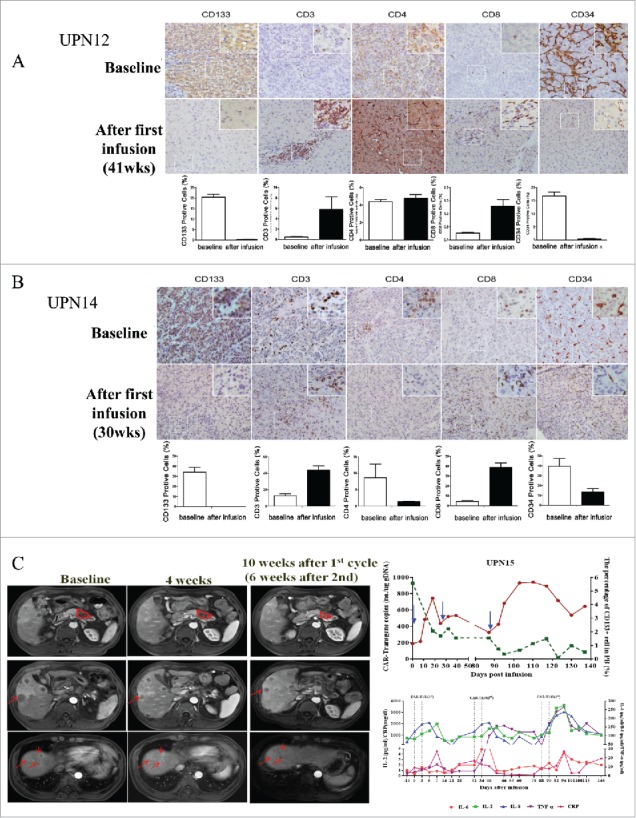
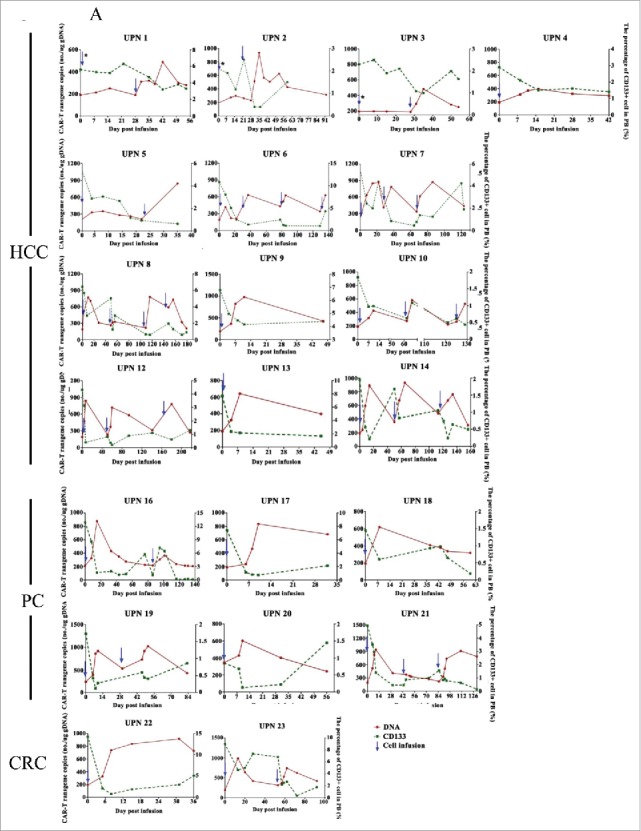
Expressed by cancer stem cells of various epithelial cell origins, CD133 is an attractive therapeutic target for cancers. Autologous chimeric antigen receptor-modified T-cell directed CD133 (CART-133) was first tested in this trial. The anti-tumor specificity and the postulated toxicities of CART-133 were first assessed. Then, we conducted a phase I clinical study in which patients with advanced and CD133-positive tumors received CART-133 cell-infusion. We enrolled 23 patients (14 with hepatocellular carcinoma [HCC], 7 with pancreatic carcinomas, and 2 with colorectal carcinomas). The 8 initially enrolled patients with HCC were treated by a CART-133 cell dose escalation scheme (0.05–2 × 10⁶/kg). The higher CAR-copy numbers and its reverse relationship with the count of CD133+ cells in peripheral blood led to the determination of an acceptable cell dose is 0.5–2 × 10⁶/kg and reinfusion cycle in 23 patients. The primary toxicity is a decrease in hemoglobin/platelet (≤ grade 3) that is self-recovered within 1 week. Of 23 patients, three achieved partial remission, and 14 achieved stable disease. The 3-month disease control rate was 65.2%, and the median progression-free survival was 5 months. Repeated cell infusions seemed to provide a longer period of disease stability, especially in patients who achieved tumor reduction after the first cell-infusion. 21 out of 23 patients had not developed detectable de novo lesions during this term. Analysis of biopsied tissues by immunohistochemistry showed CD133+ cells were eliminated after CART-133 infusions. This trial showed the feasibility, controllable toxicities, and effective activity of CART-133 transfer for treating patients with CD133-postive and late-stage metastasis malignancies.
Overview
The claims and statistics of this paper haven’t been checked yet.
Free: it reads the open-access text and checks the first 5 claims that cite a source we can check. Create a free account to check every claim.
Integrity signals
Registry
Cites
Statistics
Figures
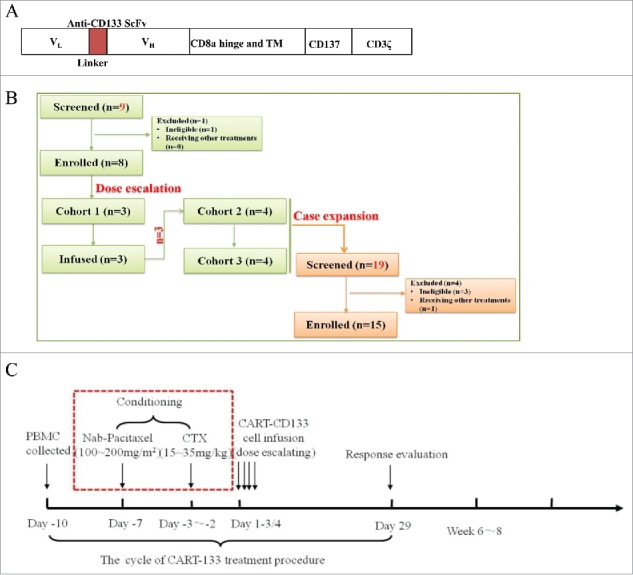
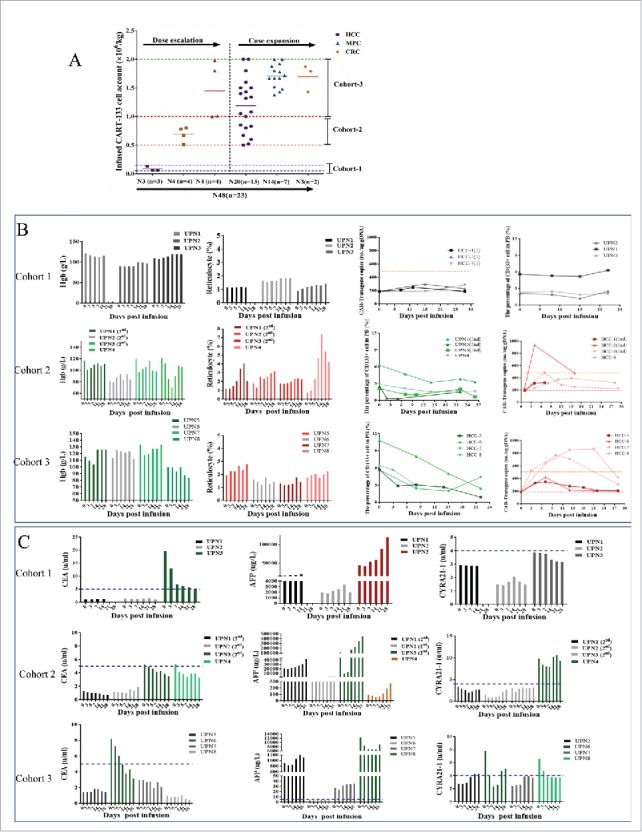
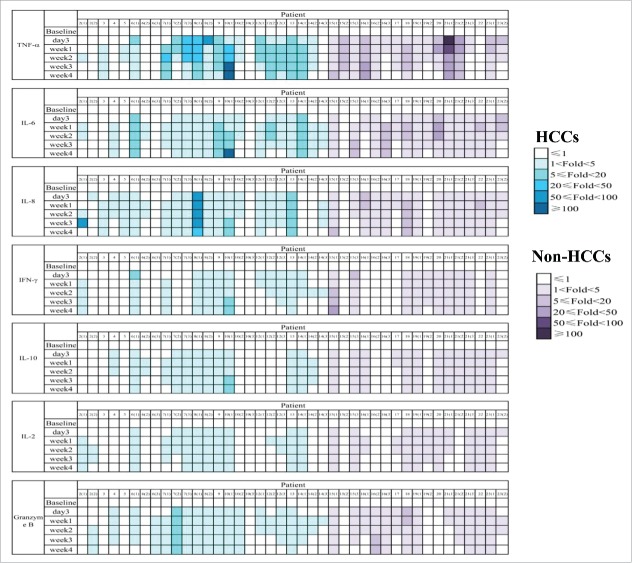
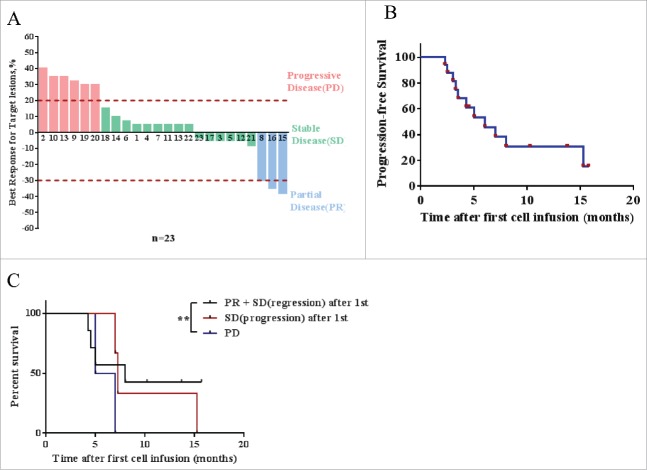
Verification
Claims the paper makes
The claims and statistics of this paper haven’t been checked yet.
Free: it reads the open-access text and checks the first 5 claims that cite a source we can check. Create a free account to check every claim.
Claims other papers make about this one
Each is checked against this paper’s own text: does it say what the citing paper says it does?
The cited source says what the claim attributes to it.
In the citing paper
“CAR-T cells currently under development for targeting colorectal CSCs include CD133-, EpCAM-, or CD166-directed CAR-T cells [229,230,231,232].”
From Mechanisms and Strategies to Overcome Drug Resistance in Colorectal Cancer (2025) · cites this paper as [229]
Self-check
Percentages, sums and reported differences re-computed from the paper’s own numbers.
The self-check needs the paper’s full text.
Citations
Cites
New response evaluation criteria in solid tumours: revised RECIST guideline (version 1.1)
Eisenhauer, E. A., Therasse, P., Bogaerts, J., Schwartz, L. H., Sargent, D., Ford, R., Dancey, J., Arbuck, S., Gwyther, S., Mooney, M., et al. (2009) · European Journal of Cancer · doi:10.1016/j.ejca.2008.10.026 · Cited by 29,534 · cited 1×
“1 and immune-related response criteria.(25) Adverse events were documented and graded based on the Common Terminology Criteria for Adverse Events version 4.”
MethodSorafenib in advanced hepatocellular carcinoma
Llovet, J. M., Ricci, S., Mazzaferro, V., Hilgard, P., Gane, E., Blanc, J.-F., de Oliveira, A. C., Santoro, A., Raoul, J.-L., Forner, A., et al. (2008) · New England Journal of Medicine · doi:10.1056/nejmoa0708857 · Cited by 13,097
Stem cells, cancer, and cancer stem cells
Reya, T., Morrison, S. J., Clarke, M. F., & Weissman, I. L. (2001) · Nature · doi:10.1038/35102167 · Cited by 9,738 · cited 1×
“Moreover, CD133 is a marker of cancer stem cells (CSCs) and endothelial progenitor cells (EPCs) that had been verified to participate in tumor metastasis and recurrence.(20,21) These characteristics make CD133 a reasonable target for immunotherapy for patients with advanced CD133-postive tumors.”
BackgroundSorafenib in Advanced Hepatocellular Carcinoma
정, 재. (2008) · Cited by 5,586
Bruix, J., Qin, S., Merle, P., Granito, A., Huang, Y.-H., Bodoky, G., Pracht, M., Yokosuka, O., Rosmorduc, O., Breder, V., et al. (2017) · The Lancet · doi:10.1016/s0140-6736(16)32453-9 · Cited by 3,653
Clarke, M. F., Dick, J. E., Dirks, P. B., Eaves, C. J., Jamieson, C. H. M., Jones, D. L., Visvader, J., Weissman, I. L., & Wahl, G. M. (2006) · Cancer Research · doi:10.1158/0008-5472.can-06-3126 · Cited by 3,051 · cited 1×
“Moreover, CD133 is a marker of cancer stem cells (CSCs) and endothelial progenitor cells (EPCs) that had been verified to participate in tumor metastasis and recurrence.(20,21) These characteristics make CD133 a reasonable target for immunotherapy for patients with advanced CD133-postive tumors.”
BackgroundCancer Regression and Autoimmunity in Patients After Clonal Repopulation with Antitumor Lymphocytes
Dudley, M. E., Wunderlich, J. R., Robbins, P. F., Yang, J. C., Hwu, P., Schwartzentruber, D. J., Topalian, S. L., Sherry, R., Restifo, N. P., Hubicki, A. M., et al. (2002) · Science · doi:10.1126/science.1076514 · Cited by 2,823 · cited 1×
“Lymphocytes and interstitial cell clearance can contribute to the expansion of CART cells in vivo and infiltrate the solid tumor.(6,34,35) Therefore, lymphocyte clearance and reduced tumor load conditioning regimens are necessary under the premise that patients can tolerate a conditioning chemotherapy regimen to enhan…”
BackgroundCurrent concepts in the diagnosis and management of cytokine release syndrome.
Lee, D. W., Gardner, R., Porter, D. L., Louis, C. U., Ahmed, N., Jensen, M., Grupp, S. A., & Mackall, C. L. (2014) · Blood · doi:10.1182/blood-2014-05-552729 · Cited by 2,806 · cited 2×
“Cytokines release syndrome (CRS) graded and managed based on a previous report from Lee et al.(26) Dose-limiting toxicity (DLT) was defined as any grade 3 or above toxicity was considered possibly or likely related to CART-133 cells.”
MethodEfficacy and Toxicity Management of 19-28z CAR T Cell Therapy in B Cell Acute Lymphoblastic Leukemia
Davila, M. L., Riviere, I., Wang, X., Bartido, S., Park, J., Curran, K., Chung, S. S., Stefanski, J., Borquez-Ojeda, O., Olszewska, M., et al. (2014) · Science Translational Medicine · doi:10.1126/scitranslmed.3008226 · Cited by 2,476
Self-citationZou, W., Wolchok, J. D., & Chen, L. (2016) · Science Translational Medicine · doi:10.1126/scitranslmed.aad7118 · Cited by 2,400 · cited 1×
“PD-L1 pathway using anti-PD-1 therapy is considered an important approach with potential benefits in solid tumors.(39,40)”
Method
Cited by
Cancer stem cells—Origins and biomarkers: Perspectives for targeted personalized therapies
Walcher, L., Kistenmacher, A.-K., Suo, H., Kitte, R., Dluczek, S., Strauß, A., Blaudszun, A.-R., Yevsa, T., Fricke, S., & Kossatz-Boehlert, U. (2020) · Frontiers in Immunology · doi:10.3389/fimmu.2020.01280 · Cited by 1,007
Guidelines for the Diagnosis and Treatment of Hepatocellular Carcinoma (2019 Edition)
Zhou, J., Sun, H., Wang, Z., Cong, W., Wang, J., Zeng, M., Zhou, W., Bie, P., Liu, L., Wen, T., et al. (2020) · Liver Cancer · doi:10.1159/000509424 · Cited by 800
Self-citationClara, J. A., Monge, C., Yang, Y., & Takebe, N. (2020) · Nature Reviews Clinical Oncology · doi:10.1038/s41571-019-0293-2 · Cited by 752
Clinical lessons learned from the first leg of the CAR T cell journey
Majzner, R. G., & Mackall, C. L. (2019) · Nature Medicine · doi:10.1038/s41591-019-0564-6 · Cited by 636
T cell receptor (TCR) signaling in health and disease
Shah, K., Al-Haidari, A., Sun, J., & Kazi, J. U. (2021) · Signal Transduction and Targeted Therapy · doi:10.1038/s41392-021-00823-w · Cited by 604
“M A R T1 F5 TC R -g en e en g in ee re d ly m p h o cy te s C o m p le te d N C T0 05 09 28 8 M el an o m a n eo p la sm m et as ta si s Ly m p h o cy te re -in fu si o n d u ri n g im m u n e su p p re ss io n to tr ea t m et as ta ti c m el an o m a In te rv en ti o n al ; Ph as e II Ly m p h o cy te re -in fu si o…”
BackgroundCAR T cells in solid tumors: challenges and opportunities
Marofi, F., Motavalli, R., Safonov, V. A., Thangavelu, L., Yumashev, A. V., Alexander, M., Shomali, N., Chartrand, M. S., Pathak, Y., Jarahian, M., et al. (2021) · Stem Cell Research & Therapy · doi:10.1186/s13287-020-02128-1 · Cited by 582
“In solid tumors, usually, it is more common to recognize a tumor-associated antigen (TAA) wherever the expression of markers, such as CEA, ERBB2, EGFR, GD2, mesothelin, MUC1, and PSMA, is increased on cancer cells.”
BackgroundInfluentialNeoantigen T-Cell Receptor Gene Therapy in Pancreatic Cancer
Leidner, R., Sanjuan Silva, N., Huang, H., Sprott, D., Zheng, C., Shih, Y.-P., Leung, A., Payne, R., Sutcliffe, K., Cramer, J., et al. (2022) · New England Journal of Medicine · doi:10.1056/nejmoa2119662 · Cited by 517
Cancer stem cells in hepatocellular carcinoma — from origin to clinical implications
Lee, T. K.-W., Guan, X.-Y., & Ma, S. (2022) · Nature Reviews Gastroenterology & Hepatology · doi:10.1038/s41575-021-00508-3 · Cited by 460
The role of CD133 in cancer: a concise review
Glumac, P. M., & LeBeau, A. M. (2018) · Clinical and Translational Medicine · doi:10.1186/s40169-018-0198-1 · Cited by 400
“A phase I clinical trial recently demonstrated the utility of chimeric antigen receptor-modified T-cell (CART) directed CD133 therapy in patients with hepatocellular carcinoma, pancreatic carcinomas, and colorectal carcinomas [137].”
BackgroundCAR T Cell Therapy for Solid Tumors: Bright Future or Dark Reality?
Wagner, J., Wickman, E., DeRenzo, C., & Gottschalk, S. (2020) · Molecular Therapy · doi:10.1016/j.ymthe.2020.09.015 · Cited by 380
Tumor microenvironment signaling and therapeutics in cancer progression
Goenka, A., Khan, F., Verma, B., Sinha, P., Dmello, C. C., Jogalekar, M. P., Gangadaran, P., & Ahn, B. (2023) · Cancer Communications · doi:10.1002/cac2.12416 · Cited by 323
“Advanced metastasis malignancies phase I trial [58]”
Molecular alterations and targeted therapy in pancreatic ductal adenocarcinoma
Qian, Y., Gong, Y., Fan, Z., Luo, G., Huang, Q., Deng, S., Cheng, H., Jin, K., Ni, Q., Yu, X., et al. (2020) · Journal of Hematology & Oncology · doi:10.1186/s13045-020-00958-3 · Cited by 312
“CD133 is a marker of cancer stem cells and is related to tumour metastasis and recurrence; a phase I trial (NCT02541370) confirmed the safety of CAR-T-133 in patients with advanced metastatic malignancies [172].”
BackgroundChen, C., Jing, W., Chen, Y., Wang, G., Abdalla, M., Gao, L., Han, M., Shi, C., Li, A., Sun, P., et al. (2022) · Science Translational Medicine · doi:10.1126/scitranslmed.abn1128 · Cited by 291
Self-citationGenetically engineered T cells for cancer immunotherapy
Li, D., Li, X., Zhou, W.-L., Huang, Y., Liang, X., Jiang, L., Yang, X., Sun, J., Li, Z., Han, W.-D., et al. (2019) · Signal Transduction and Targeted Therapy · doi:10.1038/s41392-019-0070-9 · Cited by 244
Self-citationCurrent and future immunotherapeutic approaches in pancreatic cancer treatment
Farhangnia, P., Khorramdelazad, H., Nickho, H., & Delbandi, A.-A. (2024) · Journal of Hematology & Oncology · doi:10.1186/s13045-024-01561-6 · Cited by 229
CAR T‐Cell‐Based gene therapy for cancers: new perspectives, challenges, and clinical developments
Jogalekar, M. P., Rajendran, R. L., Khan, F., Dmello, C., Gangadaran, P., & Ahn, B.-C. (2022) · Frontiers in Immunology · doi:10.3389/fimmu.2022.925985 · Cited by 214
CAR T cells for brain tumors: Lessons learned and road ahead
Akhavan, D., Alizadeh, D., Wang, D., Weist, M. R., Shepphird, J. K., & Brown, C. E. (2019) · Immunological Reviews · doi:10.1111/imr.12773 · Cited by 214
Burger, M. C., Zhang, C., Harter, P. N., Romanski, A., Strassheimer, F., Senft, C., Tonn, T., Steinbach, J. P., & Wels, W. S. (2019) · Frontiers in Immunology · doi:10.3389/fimmu.2019.02683 · Cited by 212
Guo, X., Jiang, H., Shi, B., Zhou, M., Zhang, H., Shi, Z., Du, G., Luo, H., Wu, X., Wang, Y., et al. (2018) · Frontiers in Pharmacology · doi:10.3389/fphar.2018.01118 · Cited by 206
“gov identifier: NCT02541370) of CD133-directed CAR T cells for advanced HCC showed that the feasibility, controllable toxicities, and effective activities of the CAR T cells for treating the patients with CD133-positive HCC (Wang et al., 2018).”
BackgroundSelf-citationTarget selection for CAR-T therapy
Wei, J., Han, X., Bo, J., & Han, W. (2019) · Journal of Hematology & Oncology · doi:10.1186/s13045-019-0758-x · Cited by 195
Self-citationThe Rational Development of CD133-Targeting Immunotherapies for Glioblastoma
Vora, P., Venugopal, C., Salim, S. K., Tatari, N., Bakhshinyan, D., Singh, M., Seyfrid, M., Upreti, D., Rentas, S., Wong, N., et al. (2020) · Cell Stem Cell · doi:10.1016/j.stem.2020.04.008 · Cited by 188
Next-Generation CAR T-cell Therapies
Young, R. M., Engel, N. W., Uslu, U., Wellhausen, N., & June, C. H. (2022) · Cancer Discovery · doi:10.1158/2159-8290.cd-21-1683 · Cited by 179
Dai, H., Tong, C., Shi, D., Chen, M., Guo, Y., Chen, D., Han, X., Wang, H., Wang, Y., & Shen, P. (2020) · OncoImmunology · doi:10.1080/2162402x.2020.1846926 · Cited by 179
“The initial results from the first 14 patients treated in this study were previously published.(27) The current report describes the longer-term clinical outcomes of these patients and an additional 7 treated subjects.”
MethodResultSelf-citationSas, Z., Cendrowicz, E., Weinhäuser, I., & Rygiel, T. P. (2022) · International Journal of Molecular Sciences · doi:10.3390/ijms23073778 · Cited by 177
“These proteins are often overexpressed in HCC, and involved in stem-cell-like characteristics, including self-renewal and differentiation (e.g., EpCAM, CD133), tumor proliferation, and metastasis (e.g., CD133 and CD147, c-Met), or invasion (e.g., GPC3, c-Met).”
BackgroundImmunotherapy for Hepatocellular Carcinoma: Current Status and Future Prospects
Liu, Z., Liu, X., Liang, J., Liu, Y., Hou, X., Zhang, M., Li, Y., & Jiang, X. (2021) · Frontiers in Immunology · doi:10.3389/fimmu.2021.765101 · Cited by 151
Self-citationCurrent challenges and therapeutic advances of CAR-T cell therapy for solid tumors
Chen, T. R., Wang, M., Chen, Y., & Liu, Y. (2024) · Cancer Cell International · doi:10.1186/s12935-024-03315-3 · Cited by 186
“Another Phase 1 clinical trial of CD133-targeting CAR T cell therapy (NCT02541370) [198] included 23 participants with solid tumors that had more than 50% CD133 expression.”
BackgroundSelf-citationAlnefaie, A., Albogami, S. M., Asiri, Y. A., Ahmad, T., Alotaibi, S. S., Al-Sanea, M. M., & Althobaiti, H. (2022) · Frontiers in Bioengineering and Biotechnology · doi:10.3389/fbioe.2022.797440 · Cited by 179
Clinical investigation of CAR T cells for solid tumors: Lessons learned and future directions
Bagley, S. J., & O’Rourke, D. M. (2020) · Pharmacology & Therapeutics · doi:10.1016/j.pharmthera.2019.107419 · Cited by 145
CD133 as a regulator of cancer metastasis through the cancer stem cells
Liou, G. (2018) · The International Journal of Biochemistry & Cell Biology · doi:10.1016/j.biocel.2018.10.013 · Cited by 143
Understanding and overcoming multidrug resistance in cancer
Ge, M., Chen, X.-Y., Huang, P., Fleishman, J. S., Yang, D., Wu, Z., Ke, Z., & Chen, Z. (2025) · Nature Reviews Clinical Oncology · doi:10.1038/s41571-025-01059-1 · Cited by 167
“With regard to solid tumours, CD133-targeted CAR T cells have been tested in a phase I trial involving patients with relapsed and/or chemotherapy-refractory advanced-stage HCC ( n = 14), PDAC ( n = 7) or CRC ( n = 2) 314 .”
Self-citationCAR T cell therapy in solid tumors: A review of current clinical trials
Patel, U., Abernathy, J., Savani, B. N., Oluwole, O. O., Sengsayadeth, S. M., & Dholaria, B. (2021) · eJHaem · doi:10.1002/jha2.356 · Cited by 149
“A different phase I study used CD133 targeting CAR T in advanced metastatic solid tumors [24].”
BackgroundEfficiency of CAR-T Therapy for Treatment of Solid Tumor in Clinical Trials: A Meta-Analysis
Hou, B., Tang, Y., Li, W., Zeng, Q., & Chang, D. (2019) · Disease Markers · doi:10.1155/2019/3425291 · Cited by 153
“Of all eligible studies, five studies reported on neurological tumors (n = 7) [4, 5, 10–14], followed by hepatobiliary and pancreatic cancers (n = 5) [15–19], melanoma and sarcoma (n = 4) [20–22], gastrointestinal malignancies (n = 2) [23, 24], prostate cancer (n = 1) [25], breast cancer (n = 1) [26], non-small-cell l…”
BackgroundCancer Stem Cells: Emerging Key Players in Immune Evasion of Cancers
Lei, M. M. L., & Lee, T. K. (2021) · Frontiers in Cell and Developmental Biology · doi:10.3389/fcell.2021.692940 · Cited by 130
Cancer biomarkers for targeted therapy
Liu, D. (2019) · Biomarker Research · doi:10.1186/s40364-019-0178-7 · Cited by 120
Hepatocellular carcinoma: Mechanisms of progression and immunotherapy
Jiang, Y., Han, Q., & Zhang, J. (2019) · World Journal of Gastroenterology · doi:10.3748/wjg.v25.i25.3151 · Cited by 135
Cancer stemness in hepatocellular carcinoma: mechanisms and translational potential
Tsui, Y., Chan, L., & Ng, I. O. (2020) · British Journal of Cancer · doi:10.1038/s41416-020-0823-9 · Cited by 126
Therapeutic potential of CAR T cell in malignancies: A scoping review
Mehrabadi, A. Z., Ranjbar, R., Farzanehpour, M., Shahriary, A., Dorostkar, R., Hamidinejad, M. A., & Ghaleh, H. E. G. (2021) · Biomedicine & Pharmacotherapy · doi:10.1016/j.biopha.2021.112512 · Cited by 124
Adoptive T cell therapy for solid tumors: current landscape and future challenges
Albarrán, V., Román, M. S., Pozas, J., Chamorro, J., Rosero, D. I., Guerrero, P., Calvo, J. C., González-Merino, C., de Quevedo, C. G., de Aguado, P. P., et al. (2024) · Frontiers in Immunology · doi:10.3389/fimmu.2024.1352805 · Cited by 129
Emerging agents that target signaling pathways to eradicate colorectal cancer stem cells
Silva, V. R., Santos, L. D. S., Dias, R. B., Quadros, C. A., & Bezerra, D. P. (2021) · 癌症:英文版 · doi:10.1002/cac2.12235 · Cited by 111
“CD133-directed CAR T cells CAR-T cells Eliminates CD133 cells and reduced tumor growth in a phase I clinical trial with patients with advanced metastasis colorectal, liver and pancreatic cancers [259]”
BackgroundThe Role of Immunotherapy in Pancreatic Cancer
Mukherji, R., Debnath, D., Hartley, M. L., & Noel, M. S. (2022) · Current Oncology · doi:10.3390/curroncol29100541 · Cited by 117
“[36] (1/2) Advanced PDAC (2nd+) n = 49 durvalumab + ibrutinib (Bruton tyrosine kinase inhibitor) 2% (1 PR, DOR 10 mo) - 2 4.0 [37] (2) mPDAC (2nd) n = 65 Randomized to: At 3 mo: treme + durva 3.1% (1 PR in an MSI-H pt, DOR 55 weeks) 9.4% 1.5 3.1 durva 0% 6.1% 1.5 3.6 COMBAT [38] (2) Cohort 1 mPDAC (2nd +) n = 37 pembr…”
BackgroundInfluentialThe Landscape of CAR-T Cell Clinical Trials against Solid Tumors—A Comprehensive Overview
Schaft, N. (2020) · Cancers · doi:10.3390/cancers12092567 · Cited by 99
Reprogramming the tumor microenvironment by genome editing for precision cancer therapy
Liu, K., Cui, J., Zhan, Y., Ouyang, Q., Lu, Q., Yang, D., Li, X., & Yin, J. (2022) · Molecular Cancer · doi:10.1186/s12943-022-01561-5 · Cited by 113
“CD133 Cholangiocarcinoma, Hepatocellular Carcinoma, Pancreatic Carcinomas, Colorectal Carcino‐ mas [259, 260]”
BackgroundSelf-citationThe next wave of cellular immunotherapies in pancreatic cancer
Yeo, D., Giardina, C., Saxena, P., & Rasko, J. E. J. (2022) · Molecular Therapy — Oncolytics · doi:10.1016/j.omto.2022.01.010 · Cited by 107
“In a phase 1 clinical trial (NCT02541370), T cells were engineered using lentiviral vectors to target CD133.(44) 23 individuals with various solid tumors, including 7 with advanced pancreatic cancer, were enrolled in the clinical trial.”
MethodInfluentialClinical development of CAR T cell therapy in China: 2020 update
Wei, J., Guo, Y., Wang, Y., Wu, Z., Bo, J., Zhang, B., Zhu, J., & Han, W. (2020) · Cellular and Molecular Immunology · doi:10.1038/s41423-020-00555-x · Cited by 98
“In 2018, the results of the CAR T-133 trial conducted by PLAGH were released.(89) They enrolled 23 patients (14 with HCC, 7 with PC, and 2 with colorectal carcinomas).”
BackgroundSelf-citationGalassi, C., Musella, M., Manduca, N., Maccafeo, E., & Sistigu, A. (2021) · Cells · doi:10.3390/cells10092361 · Cited by 101
Marquardt, S., Solanki, M., Spitschak, A., Vera, J., & Pützer, B. M. (2018) · Seminars in Cancer Biology · doi:10.1016/j.semcancer.2018.06.006 · Cited by 92
Chimeric Antigen Receptor (CAR) T Cell Therapy for Metastatic Melanoma: Challenges and Road Ahead
Soltantoyeh, T., Akbari, B., Karimi, A., Chalbatani, G. M., Ghahri-Saremi, N., Hadjati, J., Hamblin, M. R., & Mirzaei, H. R. (2021) · Cells · doi:10.3390/cells10061450 · Cited by 93
“Cancer stem cells CD133 Melanoma stem cells Yes [157] CD20 Melanoma stem cells Yes [158] + [159] NCT03893019 ABCB5 Melanoma stem cells No CD271 Melanoma stem cells No ALDH1 Melanoma stem cells No -”
BackgroundCell Therapy for Colorectal Cancer: The Promise of Chimeric Antigen Receptor (CAR)-T Cells
Aparicio, C., Belver, M., Enríquez, L., Espeso, F., Núñez, L., Sánchez, A., de la Fuente, M. Á., & González-Vallinas, M. (2021) · International Journal of Molecular Sciences · doi:10.3390/ijms222111781 · Cited by 86
Zhang, Y., Li, Y., Cao, W., Wang, F., Xie, X., Li, Y., Wang, X., Guo, R., Jiang, Z., & Guo, R. (2021) · Frontiers in Immunology · doi:10.3389/fimmu.2021.799206 · Cited by 94
Mechanisms and Strategies to Overcome Drug Resistance in Colorectal Cancer
Haynes, J., & Manogaran, P. (2025) · International Journal of Molecular Sciences · doi:10.3390/ijms26051988 · Cited by 82
“For instance, CAR-T cells currently under development for targeting colorectal CSCs include CD133, EpCAM-, or CD166-directed CAR-T cells [229–232].”
Chimeric antigen receptor T-cell therapy in glioblastoma: charging the T cells to fight
Land, C. A., Musich, P. R., Haydar, D., Krenciute, G., & Xie, Q. R. (2020) · Journal of Translational Medicine · doi:10.1186/s12967-020-02598-0 · Cited by 87
“[77] demonstrated that intra-tumoral injections of CD133-specific CAR T cells are effective at eliminating GBM and that this treatment does not cause systemic toxicity in humanized mouse models.”
BackgroundInfluentialImmune evader cancer stem cells direct the perspective approaches to cancer immunotherapy
Dianat‐Moghadam, H., Mahari, A., Salahlou, R., Khalili, M., Azizi, M., & Sadeghzadeh, H. (2022) · Stem Cell Research & Therapy · doi:10.1186/s13287-022-02829-9 · Cited by 84
“T cells infusions and revealed that a longer period of disease stability demanded CD133 CAR T repeat infusion [83].”
BackgroundImmunotherapy for targeting cancer stem cells in hepatocellular carcinoma
Dai, X., Guo, Y., Hu, Y., Bao, X., Zhu, X., Fu, Q., Zhang, H., Tong, Z., Liu, L., Zheng, Y., et al. (2021) · Theranostics · doi:10.7150/thno.54648 · Cited by 89
“2%, and the median progression-free survival was 5 months [154].”
BackgroundSelf-citationTreatment of Intrahepatic Cholangiocarcinoma—A Multidisciplinary Approach
Krenzien, F., Nevermann, N., Krombholz, A., Benzing, C., Haber, P., Fehrenbach, U., Lurje, G., Pelzer, U., Pratschke, J., Schmelzle, M., et al. (2022) · Cancers · doi:10.3390/cancers14020362 · Cited by 85
Efficacy, Safety, and Challenges of CAR T-Cells in the Treatment of Solid Tumors
Chen, Q., Lu, L., & Ma, W. (2022) · Cancers · doi:10.3390/cancers14235983 · Cited by 78
Chimeric Antigen Receptor T-Cell Therapy for Colorectal Cancer
Sur, D. G., Havasi, A. D., Cainap, C. I., Samaşcă, G., Burz, C. C., Bălăcescu, O., Lupan, I., Deleanu, D. M., & Irimie, A. (2020) · Journal of Clinical Medicine · doi:10.3390/jcm9010182 · Cited by 70
“Another practical implication was that by repeating cell infusions, a more extended period of stable disease resulted [122].”
BackgroundCancer stem cell impact on clinical oncology
Toledo-Guzmán, M. E., Ordóñez, G. D. B., Ibáñez-Hernández, M. Á., & Ortíz-Sánchez, E. (2018) · World Journal of Stem Cells · doi:10.4252/wjsc.v10.i12.183 · Cited by 74
Chen, X., Yang, S., Li, S., Qu, Y., Wang, H.-Y., Liu, J., Dunn, Z. S., Cinay, G. E., MacMullan, M. A., Hu, F., et al. (2021) · Molecular Therapy — Oncolytics · doi:10.1016/j.omto.2021.03.014 · Cited by 71
Tumor buster - where will the CAR-T cell therapy ‘missile’ go?
Qu, C., Zhang, H., Cao, H., Tang, L., Mo, H., Liu, F., Zhang, L., Yi, Z., Long, L., Yan, L., et al. (2022) · Molecular Cancer · doi:10.1186/s12943-022-01669-8 · Cited by 75
Bian, J., Lin, J., Long, J., Xu, Y., Yang, X., Lu, X., Sang, X., & Zhao, H. (2020) · American Journal of Cancer Research · Cited by 81
An evolving paradigm of cancer stem cell hierarchies: therapeutic implications
Cole, A. J., Fayomi, A. P., Anyaeche, V. I., Bai, S., & Buckanovich, R. J. (2020) · Theranostics · doi:10.7150/thno.41647 · Cited by 69
PTK7-Targeting CAR T-Cells for the Treatment of Lung Cancer and Other Malignancies
Jie, Y., Liu, G., Feng, L., Li, Y., Mingyan, E., Wu, L., Li, Y., Rong, G., Li, Y., Wei, H., et al. (2021) · Frontiers in Immunology · doi:10.3389/fimmu.2021.665970 · Cited by 63
“In fact, CAR T cells targeting several biomarkers of TICs/CSCs, including CD133, CD24, Receptor tyrosine kinase-like orphan receptor 1 (ROR1) or the epithelial cell adhesion molecule (EpCAM) have been developed and exhibited the excellent antitumor effects in preclinical models [34-40]; more importantly, CD133-targeti…”
BackgroundDu, G., Dou, C., Sun, P., Wang, S., Liu, J., & Ma, L. (2024) · Frontiers in Immunology · doi:10.3389/fimmu.2024.1431211 · Cited by 74
Jia, H., Wang, Z., Wang, Y., Liu, Y., Dai, H., Tong, C., Guo, Y., Guo, B., Ti, D., Han, X., et al. (2019) · Journal of Hematology & Oncology · doi:10.1186/s13045-019-0741-6 · Cited by 60
Self-citationChen, K., Shuen, T. W. H., & Chow, P. K. H. (2024) · British Journal of Cancer · doi:10.1038/s41416-024-02684-w · Cited by 67
Mechanism of cancer stemness maintenance in human liver cancer
Liang, N. N., Yang, T., Huang, Q., Yu, P., Liu, C., Chen, L., Wang, Q., Wang, G., & He, X. (2022) · Cell Death and Disease · doi:10.1038/s41419-022-04848-z · Cited by 62
“Recently, a single-arm open-label phase II trial demonstrated that CD133-targeted chimeric antigen receptor T-cell (CAR-T) cell therapy is efficacious and safe for patients with advanced HCC [109].”
BackgroundCAR-T cells for Colorectal Cancer: Target-selection and strategies for improved activity and safety
Li, H., Yang, C., Cheng, H., Huang, S., & Zheng, Y. (2021) · Journal of Cancer · doi:10.7150/jca.50509 · Cited by 58
Chimeric Antigen Receptor T-Cell Therapy in Glioblastoma: Current and Future
Li, L., Zhu, X., Yu, Q., Yuan, X., Ding, Y., Hu, D., He, X., & Wu, Y. (2020) · Frontiers in Immunology · doi:10.3389/fimmu.2020.594271 · Cited by 62
Chimeric antigen receptor T cells in solid tumors: a war against the tumor microenvironment
Zhao, Z., Xiao, X., Saw, P. E., Wu, W., Huang, H., Chen, J., & Nie, Y. (2019) · Science China Life Sciences · doi:10.1007/s11427-019-9665-8 · Cited by 60
“The interaction between CD47 and SIRPα can also support tumor angiogenesis and damage the anti-tumor function of T cells (Weiskopf, 2017; Tong and Wang, 2018).”
BackgroundMassively parallel knock-in engineering of human T cells
Dai, X., Park, J. J.-Y., Du, Y., Na, Z., Lam, S. Z., Chow, R. D.-W., Renauer, P. A., Gu, J., Shan, X., Chu, Z., et al. (2023) · Nature Biotechnology · doi:10.1038/s41587-022-01639-x · Cited by 58
Clinical immunotherapy in pancreatic cancer
Ye, X., Yu, Y., Zheng, X., & Ma, H. (2024) · Cancer Immunology Immunotherapy · doi:10.1007/s00262-024-03632-6 · Cited by 62
CAR-T-Derived Extracellular Vesicles: A Promising Development of CAR-T Anti-Tumor Therapy
Pagotto, S., Simeone, P., Brocco, D., Catitti, G., Bellis, D. D., Vespa, S., Pietro, N. D., Marinelli, L., Stefano, A. D., Veschi, S., et al. (2023) · Cancers · doi:10.3390/cancers15041052 · Cited by 53
Clinical immunology and immunotherapy for hepatocellular carcinoma: current progress and challenges
Wang, L., & Wang, F. (2019) · Hepatology International · doi:10.1007/s12072-019-09967-y · Cited by 54
Coston, T. W., Desai, A. P., Babiker, H. M., Sonbol, M. B., Chakrabarti, S., Mahipal, A., McWilliams, R. R., Ma, W. W., Bekaii‐Saab, T., Stauffer, J. A., et al. (2023) · JCO Precision Oncology · doi:10.1200/po.22.00706 · Cited by 63
Gastric Cancer Stem Cells: Current Insights into the Immune Microenvironment and Therapeutic Targets
Fu, L., Bu, L., Yasuda, T., Koiwa, M., Akiyama, T., Uchihara, T., Baba, H., & Ishimoto, T. (2020) · Biomedicines · doi:10.3390/biomedicines8010007 · Cited by 55
“Analysis of biopsied tissues by immunohistochemistry showed that CD133‐positive cells were completely eliminated by CART‐133 injection [65].”
BackgroundTargeting Cancer Stem Cells by Genetically Engineered Chimeric Antigen Receptor T Cells
Alhabbab, R. Y. (2020) · Frontiers in Genetics · doi:10.3389/fgene.2020.00312 · Cited by 53
The role of CD133 in hepatocellular carcinoma
Liu, F., & Qian, Y. (2021) · Cancer Biology & Therapy · doi:10.1080/15384047.2021.1916381 · Cited by 50
“They found encouraging antitumor activity from CART-133 for the treatment of HCC patients with advanced and CD133 + tumors.(99) Results from a recent clinical trial have shown an important therapeutic potential for CART-133 cell therapy in patients with advanced HCC.”
BackgroundMapping pediatric brain tumors to their origins in the developing cerebellum
Okonechnikov, K., Joshi, P. K., Sepp, M., Leiss, K., Sarropoulos, I., Murat, F., Sill, M., Beck, P., Chan, K. C.-H., Korshunov, A., et al. (2023) · Neuro-Oncology · doi:10.1093/neuonc/noad124 · Cited by 59
Sangsuwannukul, T., Supimon, K., Sujjitjoon, J., Phanthaphol, N., Chieochansin, T., Poungvarin, N., Wongkham, S., Junking, M., & Yenchitsomanus, P. (2020) · International Immunopharmacology · doi:10.1016/j.intimp.2020.107069 · Cited by 54
Recent updates on chimeric antigen receptor T cell therapy for hepatocellular carcinoma
Guo, J., & Tang, Q. (2021) · Cancer Gene Therapy · doi:10.1038/s41417-020-00259-4 · Cited by 47
Recent advances in CAR-T cells therapy for colorectal cancer
Qin, X., Wu, F., Chen, C., & Li, Q. (2022) · Frontiers in Immunology · doi:10.3389/fimmu.2022.904137 · Cited by 53
Yang, C., You, J., Pan, Q., Tang, Y., Cai, L., Huang, Y., Gu, J., Wang, Y., Yang, X., Du, Y., et al. (2023) · BMC Medicine · doi:10.1186/s12916-023-03016-0 · Cited by 51
“1 in a previous study [16] is expressed under the control of the EF1 alpha promoter.”
BackgroundSelf-citationCAR T-cells for colorectal cancer immunotherapy: Ready to go?
Ghazi, B., El Ghanmi, A., Kandoussi, S., Ghouzlani, A., & Badou, A. (2022) · Frontiers in Immunology · doi:10.3389/fimmu.2022.978195 · Cited by 46
Next-generation therapies for pancreatic cancer
Buckley, C. W., & O'Reilly, E. M. (2024) · Expert Review of Gastroenterology & Hepatology · doi:10.1080/17474124.2024.2322648 · Cited by 54
“A phase I trial of anti-CD133, a cancer stem cell marker highly expressed in PDAC, CAR-T included seven patients with mPDAC and showed that three individuals achieved SD, 2 PR, and 2 patients with POD [149].”
BackgroundChimeric Antigen Receptor T Cell Therapy for Pancreatic Cancer: A Review of Current Evidence
Czaplicka, A., Lachota, M., Pączek, L., Zagożdżon, R., & Kaleta, B. (2024) · Cells · doi:10.3390/cells13010101 · Cited by 50
“In a phase I clinical study evaluating CD133 CAR-T cells (NCT02541370), a therapy targeting the cancer stem cell marker CD133, 23 patients, including 7 with stage IV PADCs (grade 2 or 3), were enrolled [89].”
BackgroundCAR‐T therapy: Prospects in targeting cancer stem cells
Cui, X., Liu, R., Duan, L., Cao, D., Zhang, Q., & Zhang, A. (2021) · Journal of Cellular and Molecular Medicine · doi:10.1111/jcmm.16939 · Cited by 48
RNA Therapeutics for Improving CAR T-cell Safety and Efficacy
Schaible, P., Bethge, W. A., Lengerke, C., & Haraszti, R. Á. (2022) · Cancer Research · doi:10.1158/0008-5472.can-22-2155 · Cited by 44
Immunotherapies in rare cancers
Vivekanandhan, S., Bahr, D. A., Kothari, A., Ashary, M. A., Baksh, M., & Gabriel, E. M. (2023) · Molecular Cancer · doi:10.1186/s12943-023-01720-2 · Cited by 44
Heyman, B. M., & Yang, Y. (2019) · Cancers · doi:10.3390/cancers11020191 · Cited by 44
Merhi, M., Ahmad, F., Taib, N., Inchakalody, V. P., Shahab Uddin, M. S., Shablak, A., & Dermime, S. (2023) · Seminars in Cancer Biology · doi:10.1016/j.semcancer.2023.01.001 · Cited by 42
“In phase I clinical trial (NCT02541370), autologous CD133-directed chimeric antigen receptor-modified T-cell (CART-133) were infused into 23 patients with advanced CD133-positive tumors (including 2 CRC patients) [228].”
Zhao, Q., Zong, H., Zhu, P., Su, C., Tang, W., Chen, Z., & Jin, S. (2024) · Experimental Hematology and Oncology · doi:10.1186/s40164-024-00474-x · Cited by 50
“Anti-CD133 CAR-T cells showed strong antitumor activity against CD133 + colorectal CSCs, and their safety and preliminary efficacy have been verified in a phase I clinical trial [279].”
BackgroundChimeric Antigen Receptor Cell Therapy: Overcoming Obstacles to Battle Cancer
Petty, A. J., Heyman, B. M., & Yang, Y. (2020) · Cancers · doi:10.3390/cancers12040842 · Cited by 44
Enhancing the Efficacy of CAR T Cells in the Tumor Microenvironment of Pancreatic Cancer
Henze, J., Tacke, F., Hardt, O., Alves, F., & Rawashdeh, W. A. (2020) · Cancers · doi:10.3390/cancers12061389 · Cited by 46
“CAR T Cell Therapy for Pancreatic Cancer CEA CAR Target Pancreatic cancer: NCT03818165, NCT04037241, NCT02850536, NCT02349724, NCT03682744, NCT03267173, NCT02416466, NCT02959151 [31] CD133 CAR Target Pancreatic cancer: NCT02541370 [31,32] CD70 CAR Target Pancreatic cancer: NCT02830724 [31] Claudin 18.2 CAR Target Panc…”
BackgroundInfluentialMessing Up the Cancer Stem Cell Chemoresistance Mechanisms Supported by Tumor Microenvironment
Gaggianesi, M., Franco, S. D., Pantina, V. D., Porcelli, G., D’Accardo, C., Verona, F., Veschi, V., Colarossi, L., Faldetta, N., Pistone, G., et al. (2021) · Frontiers in Oncology · doi:10.3389/fonc.2021.702642 · Cited by 49
Clinical Application of Adaptive Immune Therapy in MSS Colorectal Cancer Patients
Wang, D., Zhang, H., Xiang, T., & Wang, G. (2021) · Frontiers in Immunology · doi:10.3389/fimmu.2021.762341 · Cited by 40
Zhang, G., Guanchang, J., Liwen, L., Huifen, W., Zhigang, R., Ranran, S., & Yu, Z. (2022) · Frontiers in Endocrinology · doi:10.3389/fendo.2022.918869 · Cited by 41
Colorectal Cancer Stem Cells in the Progression to Liver Metastasis
González-Villarreal, C. A., Quiroz-Reyes, A. G., Islas, J. F., & Garza-Treviño, E. N. (2020) · Frontiers in Oncology · doi:10.3389/fonc.2020.01511 · Cited by 43
The Functional Roles of Immune Cells in Primary Liver Cancer
Pham, L., Kyritsi, K., Zhou, T., Ceci, L., Baiocchi, L., Kennedy, L. L., Chakraborty, S., Glaser, S. S., Francis, H., Alpini, G. D., et al. (2022) · American Journal Of Pathology · doi:10.1016/j.ajpath.2022.02.004 · Cited by 40
“CD133 is highly expressed in various cancer cells, and a previous phase 1 study generated chimeric antigen receptor T cells transduced for CD133, and these cells showed anti-tumor activity against CD133þ cancer cells.(86) Elevated populations of FOXP3þ Tregs were identified in CCA and HCC tumors, which correlated with…”
BackgroundZhao, H., Ling, Y., He, J., Dong, J., Mo, Q., Wang, Y., Zhang, Y., Hongbin, Y., & Tang, C. (2024) · Drug Resistance Updates · doi:10.1016/j.drup.2024.101084 · Cited by 42
Self-citationWei, L., Lun, Y., Zhou, X., He, S., Gao, L., Liu, Y., He, Z., Li, B., & Wang, C. (2019) · Pharmacological Research · doi:10.1016/j.phrs.2019.03.009 · Cited by 37
Self-citation
Metadata
- Authors
- Wang, Y., Chen, M., Wu, Z., Tong, C., Dai, H., Guo, Y., Liu, Y., Huang, J., Lv, H., Luo, C., Feng, K.-C., Yang, Q.-M., Li, X.-L., & Han, W.
- Affiliations
- Chinese PLA General Hospital (CN)
- Department of Bio-therapeutic, Chinese PLA General Hospital, Beijing, China
- Department of Molecular & Immunology, Chinese PLA General Hospital, Beijing, China
- Corresponding author
- Han, Weidong
- Venue
- OncoImmunology
- Publisher
- Informa UK Limited
- Published
- 2018-05-07
- Volume
- 7
- Issue
- 7
- Pages
- e1440169
- ISSN
- 2162-4011 (ISSN-L)
- 2162-402X
- PMC
- PMC5993480
- OpenAlex
- W2790863559
- Cited by
- 338
- References
- 42
- Citations by year
- 2026: 25 · 2025: 37 · 2024: 50 · 2023: 48 · 2022: 57 · 2021: 47 · 2020: 39 · 2019: 26 · 2018: 9
- FWCI
- 11.37
- Type
- journal article
- Language
- en
- Open access
- gold
- doi.org
- Licence
- cc-by-nc-nd
- Locations
- OncoImmunology (publishedVersion, cc-by-nc-nd)
- Europe PMC (PubMed Central) (publishedVersion, cc-by-nc-nd)
- PubMed Central (publishedVersion, cc-by-nc-nd)
- PubMed (publishedVersion)
- DOAJ (DOAJ: Directory of Open Access Journals) (submittedVersion, cc-by-sa)
- Funders
- National Key Research and Developement Program of Chinas (2016YFC1303501 2016YFC1303504)
- Science and Technology Planning Project of Beijing City (Z151100003915076)
- Topics
- Health Sciences › Medicine › Oncology › CAR-T cell therapy research
- Life Sciences › Immunology and Microbiology › Immunology › Immunotherapy and Immune Responses
- Life Sciences › Biochemistry, Genetics and Molecular Biology › Biotechnology › Bacterial Cancer Therapy
- Keywords
- CD133, chimeric antigen receptor T cells, CAR T-cell therapy, cancer stem cells, hepatocellular carcinoma, pancreatic cancer, colorectal cancer, metastatic cancer, dose escalation, hematologic toxicity, disease control rate
About these checks
Registry, retraction, Cites and statistics results are computed, not judged, with one exception: a printed reference that no index lists is read once by a model before it counts as a citation error. Claims are extracted by a model and kept only when their quote appears verbatim in the text; each cited source is then checked, with a model’s help, for whether it says what the claim relies on. Those verdicts can be wrong — read the claim’s quote and the cited source before relying on one.
Statistics and arithmetic are recomputed, not judged.
Confidence bands are shown only for fields calibrated on our annotated test set. None is calibrated yet, so no band is shown.
What counts as a claim ›How we measure confidence ›How we check this ›
Are you an author, or do you see a problem with this page? Request a review
Data sources
Bibliographic data: Semantic Scholar, OpenAlex, Crossref.
Contains information from the Semantic Scholar Academic Graph Datasets, made available under the ODC Attribution License (ODC-BY 1.0).
Semantic Scholar’s data is described in: Kinney, R., et al. (2023). The Semantic Scholar Open Data Platform. arXiv:2301.10140.
