

“ Candida Albicans Interactions With The Host: Crossing The Intestinal Epithelial Barrier”
Open accessThe DOI matches its Crossref record; 236 of the 279 references it cites were found in a registry or an index.
Abstract
Formerly a commensal organism of the mucosal surfaces of most healthy individuals, Candida albicans is an opportunistic pathogen that causes infections ranging from superficial to the more life-threatening disseminated infections, especially in the ever-growing population of vulnerable patients in the hospital setting.In these situations, the fungus takes advantage of its host following a disturbance in the host defense system and/or the mucosal microbiota.Overwhelming evidence suggests that the gastrointestinal tract is the main source of disseminated C. albicans infections.Major risk factors for disseminated candidiasis include damage to the mucosal intestinal barrier, immune dysfunction, and dysbiosis of the resident microbiota.A better understanding of C. albicans' interaction with the intestinal epithelial barrier will be useful for designing future therapies to avoid systemic candidiasis.In this review, we provide an overview of the current knowledge regarding the mechanisms of pathogenicity that allow the fungus to reach and translocate the gut barrier.Invasion of C. albicans through the intestinal epithelial barrier.
Overview
The claims and statistics of this paper haven’t been checked yet.
Free: it reads the open-access text and checks the first 5 claims that cite a source we can check. Create a free account to check every claim.
Integrity signals
Registry
Cites
Statistics
Figures
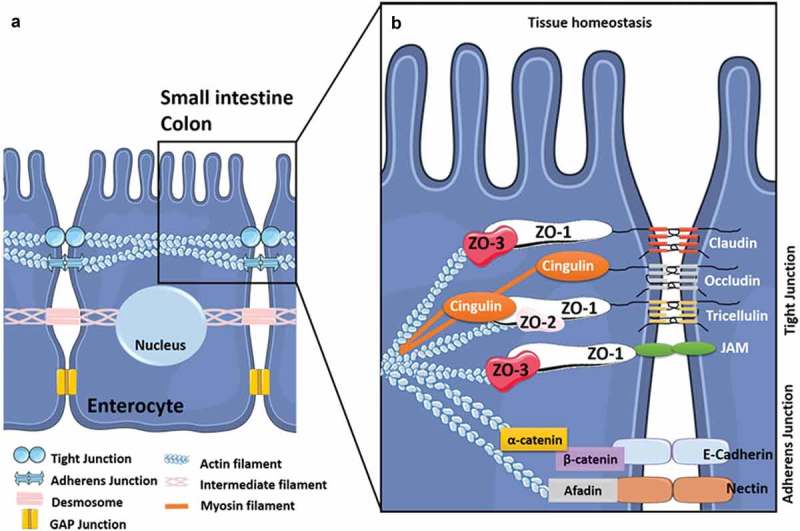
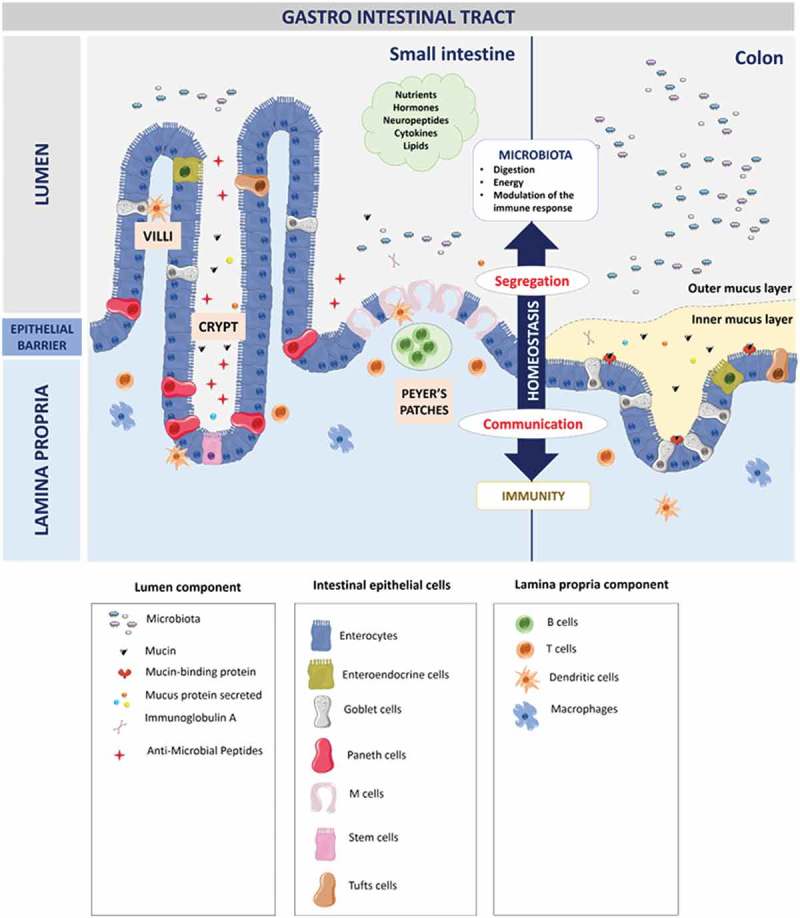
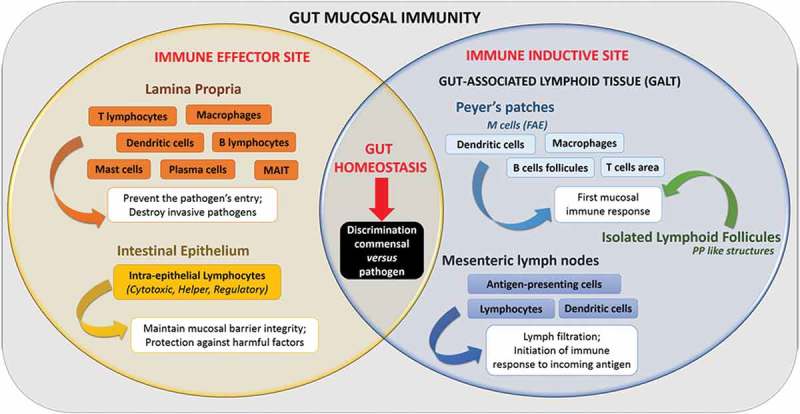
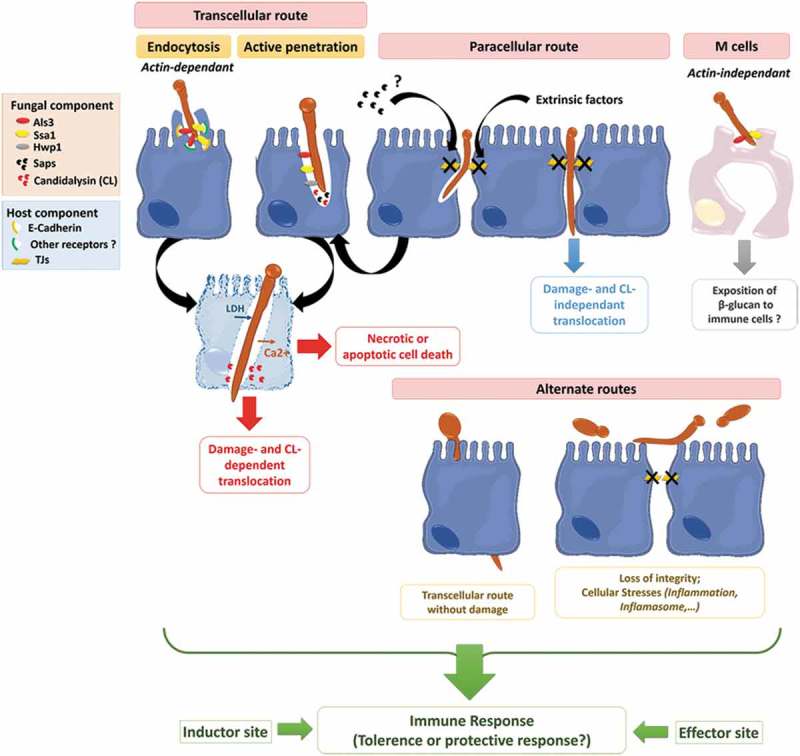
Verification
Claims the paper makes
The claims and statistics of this paper haven’t been checked yet.
Free: it reads the open-access text and checks the first 5 claims that cite a source we can check. Create a free account to check every claim.
Claims other papers make about this one
Each is checked against this paper’s own text: does it say what the citing paper says it does?
The cited source says what the claim attributes to it.
In the citing paper
“C. albicans invasins include Als3 and the heat shock protein Ssa1 [195, 199, 200].”
From Mechanisms of fungal dissemination (2021) · cites this paper as [200]
Self-check
Percentages, sums and reported differences re-computed from the paper’s own numbers.
The self-check needs the paper’s full text.
Citations
Cites
Diet rapidly and reproducibly alters the human gut microbiome
David, L. A., Maurice, C. F., Carmody, R. N., Gootenberg, D. B., Button, J. E., Wolfe, B. E., Ling, A. V., Devlin, A. S., Varma, Y., Fischbach, M. A., et al. (2014) · Nature · doi:10.1038/nature12820 · Cited by 10,100 · cited 1×
“It differs along the digestive tract(24) and varies according to environmental and lifestyle stimuli.(25) Although specialized in the digestion of nutrients, the GM contributes to the host’s gut homeostasis by (i) modulating the host’s energy metabolism,(26) (ii) sustaining gut integrity,(26) (iii) preventing gut colo…”
BackgroundChanges of Intestinal Functions in Liver Cirrhosis
Fukui, H., & Wiest, R. (2016) · Inflammatory Intestinal Diseases · doi:10.1159/000444436 · Cited by 6,808
Gut microbiota in health and disease
Sekirov, I., Russell, S. L., Antunes, L. C. M., & Finlay, B. B. (2010) · Physiological Reviews · doi:10.1152/physrev.00045.2009 · Cited by 4,182
Interactions Between the Microbiota and the Immune System
Hooper, L. V., Littman, D. R., & Macpherson, A. J. (2012) · Science · doi:10.1126/science.1223490 · Cited by 4,173 · cited 1×
“intestinal injury.(106,107) Another important line of immune cells for maintaining intestinal homeostasis are the CD4 regulatory T cells (Tregs).”
BackgroundThe gut microbiota--masters of host development and physiology
Sommer, F., & Bäckhed, F. (2013) · Nature Reviews Microbiology · doi:10.1038/nrmicro2974 · Cited by 3,681
Cell Adhesion: The Molecular Basis of Tissue Architecture and Morphogenesis
Gumbiner, B. M. (1996) · Cell · doi:10.1016/s0092-8674(00)81279-9 · Cited by 3,471
Gut microbiota, metabolites and host immunity
Rooks, M. G., & Garrett, W. S. (2016) · Nature reviews. Immunology · doi:10.1038/nri.2016.42 · Cited by 3,409 · cited 1×
“They are challenged with discriminating entero-pathogenic microorganisms from the resident commensal flora, and adapting the immune response as needed, from tolerance to inflammation.(103) These aspects have been extensively addressed elsewhere27 and will not be developed in this review.”
BackgroundIntestinal epithelial cells: regulators of barrier function and immune homeostasis
Peterson, L. W., & Artis, D. (2014) · Nature Reviews Immunology · doi:10.1038/nri3608 · Cited by 3,173
Zelante, T., Iannitti, R. G., Cunha, C., De Luca, A., Giovannini, G., Pieraccini, G., Zecchi, R., D’Angelo, C., Massi-Benedetti, C., Fallarino, F., et al. (2013) · Immunity · doi:10.1016/j.immuni.2013.08.003 · Cited by 2,614 · cited 1×
“Indeed, tryptophan promotes the local transcription of a bacterial gene that triggers IL22 productive cells and the proliferation of IL-22producing innate lymphoid cells in the GI tract.(148) As a result of its pivotal role in innate antifungal resistance,(149,150) the resulting increased production of IL-22 promotes…”
BackgroundMultifunctional strands in tight junctions
Tsukita, S., Furuse, M., & Itoh, M. (2001) · Nature Reviews Molecular Cell Biology · doi:10.1038/35067088 · Cited by 2,509
Cited by
Items 101–112 of 112
Phocaeicola vulgatus mpk colonization protects epithelial cells from Candida albicans infection
Hammer, M. L., Niemiec, M. J., Baumgarten, J., Auge, I., Gorki, F. S., Steimle, A., Frick, J.-S., Walker, A., & Jacobsen, I. D. (2026) · microLife · doi:10.1093/femsml/uqag030
A review on antifungal activities of benzoxazoles against Candida Albicans and SAR studies
Swaroop, T. R., Suresh, R. N., Basappa, B., & Rangappa, K. S. (2026) · Discover Chemistry. · doi:10.1007/s44371-026-00837-9
FunVFPred: Predicting fungal virulence factors using a unified representation learning model
Kaur, E., & Acharya, V. (2026) · iScience · doi:10.1016/j.isci.2026.117217
Saheb, J. J., & Al-Hussaini, I. M. (2026) · AIP conference proceedings · doi:10.1063/5.0330048
Rare variants in mucin-encoding genes in patients with recurrent vulvovaginal candidiasis
Consuegra‐Asprilla, J. M., Rojas, J., Carmona-Ramirez, M. C., Torres, B., Puel, A., Franco, J. L., Arias, A. A., & González, Á. (2026) · Medical Mycology · doi:10.1093/mmy/myag113
Ndlovu, E. (2026) · oURspace (University of Regina) · doi:10.82465/163
Fioroni, N. (2023) · theses.fr (ABES) · doi:10.70675/f1f99961zc559z4ae5z9228z0f4b3dc9e4fe
Inmunidad innata y adaptativa contra Candida spp.: Una revisión exhaustiva
Arciniega, J. R., Barros, S. S., Hurtado, B. R., & Coronel, A. I. P. (2024) · Polo del Conocimiento · doi:10.23857/pc.v9i2.6568
Asadzadeh, M., Ahmad, S., Al-Sweih, N., & Khan, Z. (2023) · doi:10.3389/fpubh.2023.1242622.s001
การคัดกรองแอคติโนแบคทีเรียที่ผลิตสารต้านจุลชีพจากดินป่าพรุเพื่อต้าน Candida albicans
Tongtoht, J., Benpard, C., Wongchawalit, J., & Mingma, R. (2026) · วารสารวิทยาศาสตร์และเทคโนโลยี มหาวิทยาลัยมหาสารคาม (Journal of Science and Technology Mahasarakham University)
Zapgue, K. L. C., Ngounou, E., Luma, W. S., Kouam, A. F., Tamufor, B. F., Bomba, F. D. T., Seukep, A. J., Tchuenmogne, M. A. T., & Menkem, E. Z. (2026) · Scientific Reports · doi:10.1038/s41598-026-67346-8
Metadata
- Authors
- Basmaciyan, L., Bon, F., Paradis, T., Lapaquette, P., & Dalle, F.
- Affiliations
- Procédés Alimentaires et Microbiologiques (FR)
- Corresponding author
- Dalle, Frédéric
- Venue
- Tissue Barriers
- Publisher
- Informa UK Limited
- Published
- 2019-04-03
- Volume
- 7
- Issue
- 2
- Pages
- 1612661-1612661
- ISSN
- 2168-8362 (ISSN-L)
- 2168-8370
- PMC
- PMC6619947
- OpenAlex
- W2950110036
- Semantic Scholar
- 346923f9ade80bdef7cece41949f234f9a9ba9e9
- Cited by
- 89
- References
- 279
- Citations by year
- 2026: 10 · 2025: 17 · 2024: 13 · 2023: 10 · 2022: 14 · 2021: 13 · 2020: 11 · 2019: 1
- FWCI
- 1.36
- Type
- journal article
- Language
- en
- Open access
- hybrid
- doi.org
- Licence
- Locations
- Tissue Barriers (publishedVersion, cc-by-nc-nd)
- Europe PMC (PubMed Central) (publishedVersion, cc-by-nc-nd)
- PubMed Central (publishedVersion, cc-by-nc-nd)
- PubMed (publishedVersion)
- HAL (submittedVersion)
- Funders
- Conseil régional de Bourgogne-Franche-Comté
- FEDER
- Topics
- Health Sciences › Medicine › Infectious Diseases › Antifungal resistance and susceptibility
- Life Sciences › Biochemistry, Genetics and Molecular Biology › Molecular Biology › Fungal and yeast genetics research
- Life Sciences › Biochemistry, Genetics and Molecular Biology › Molecular Biology › Gut microbiota and health
- Keywords
- Candida albicans, intestinal epithelial barrier, systemic candidiasis, host-pathogen interaction, immune dysfunction, opportunistic fungal infection
- MeSH terms
- Candida albicans, Humans, Intestinal Mucosa, Host-Pathogen Interactions
About these checks
Registry, retraction, Cites and statistics results are computed, not judged, with one exception: a printed reference that no index lists is read once by a model before it counts as a citation error. Claims are extracted by a model and kept only when their quote appears verbatim in the text; each cited source is then checked, with a model’s help, for whether it says what the claim relies on. Those verdicts can be wrong — read the claim’s quote and the cited source before relying on one.
Statistics and arithmetic are recomputed, not judged.
Confidence bands are shown only for fields calibrated on our annotated test set. None is calibrated yet, so no band is shown.
What counts as a claim ›How we measure confidence ›How we check this ›
Are you an author, or do you see a problem with this page? Request a review
Data sources
Bibliographic data: Semantic Scholar, OpenAlex, Crossref.
Contains information from the Semantic Scholar Academic Graph Datasets, made available under the ODC Attribution License (ODC-BY 1.0).
Semantic Scholar’s data is described in: Kinney, R., et al. (2023). The Semantic Scholar Open Data Platform. arXiv:2301.10140.
