

“ Candida Albicans Interactions With The Host: Crossing The Intestinal Epithelial Barrier”
Open accessThe DOI matches its Crossref record; 236 of the 279 references it cites were found in a registry or an index.
Abstract
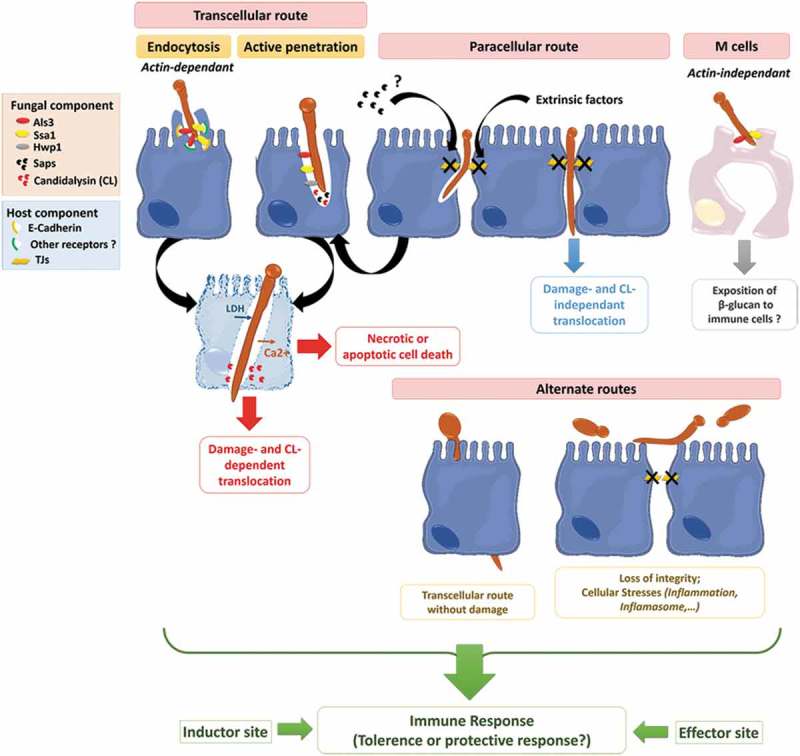
Formerly a commensal organism of the mucosal surfaces of most healthy individuals, Candida albicans is an opportunistic pathogen that causes infections ranging from superficial to the more life-threatening disseminated infections, especially in the ever-growing population of vulnerable patients in the hospital setting.In these situations, the fungus takes advantage of its host following a disturbance in the host defense system and/or the mucosal microbiota.Overwhelming evidence suggests that the gastrointestinal tract is the main source of disseminated C. albicans infections.Major risk factors for disseminated candidiasis include damage to the mucosal intestinal barrier, immune dysfunction, and dysbiosis of the resident microbiota.A better understanding of C. albicans' interaction with the intestinal epithelial barrier will be useful for designing future therapies to avoid systemic candidiasis.In this review, we provide an overview of the current knowledge regarding the mechanisms of pathogenicity that allow the fungus to reach and translocate the gut barrier.Invasion of C. albicans through the intestinal epithelial barrier.
Overview
The claims and statistics of this paper haven’t been checked yet.
Free: it reads the open-access text and checks the first 5 claims that cite a source we can check. Create a free account to check every claim.
Integrity signals
Registry
Cites
Statistics
Figures
Verification
Claims the paper makes
The claims and statistics of this paper haven’t been checked yet.
Free: it reads the open-access text and checks the first 5 claims that cite a source we can check. Create a free account to check every claim.
Claims other papers make about this one
Each is checked against this paper’s own text: does it say what the citing paper says it does?
The cited source says what the claim attributes to it.
In the citing paper
“C. albicans invasins include Als3 and the heat shock protein Ssa1 [195, 199, 200].”
From Mechanisms of fungal dissemination (2021) · cites this paper as [200]
Self-check
Percentages, sums and reported differences re-computed from the paper’s own numbers.
The self-check needs the paper’s full text.
Citations
Cites
Diet rapidly and reproducibly alters the human gut microbiome
David, L. A., Maurice, C. F., Carmody, R. N., Gootenberg, D. B., Button, J. E., Wolfe, B. E., Ling, A. V., Devlin, A. S., Varma, Y., Fischbach, M. A., et al. (2014) · Nature · doi:10.1038/nature12820 · Cited by 10,100 · cited 1×
“It differs along the digestive tract(24) and varies according to environmental and lifestyle stimuli.(25) Although specialized in the digestion of nutrients, the GM contributes to the host’s gut homeostasis by (i) modulating the host’s energy metabolism,(26) (ii) sustaining gut integrity,(26) (iii) preventing gut colo…”
BackgroundChanges of Intestinal Functions in Liver Cirrhosis
Fukui, H., & Wiest, R. (2016) · Inflammatory Intestinal Diseases · doi:10.1159/000444436 · Cited by 6,808
Gut microbiota in health and disease
Sekirov, I., Russell, S. L., Antunes, L. C. M., & Finlay, B. B. (2010) · Physiological Reviews · doi:10.1152/physrev.00045.2009 · Cited by 4,182
Interactions Between the Microbiota and the Immune System
Hooper, L. V., Littman, D. R., & Macpherson, A. J. (2012) · Science · doi:10.1126/science.1223490 · Cited by 4,173 · cited 1×
“intestinal injury.(106,107) Another important line of immune cells for maintaining intestinal homeostasis are the CD4 regulatory T cells (Tregs).”
BackgroundThe gut microbiota--masters of host development and physiology
Sommer, F., & Bäckhed, F. (2013) · Nature Reviews Microbiology · doi:10.1038/nrmicro2974 · Cited by 3,681
Cell Adhesion: The Molecular Basis of Tissue Architecture and Morphogenesis
Gumbiner, B. M. (1996) · Cell · doi:10.1016/s0092-8674(00)81279-9 · Cited by 3,471
Gut microbiota, metabolites and host immunity
Rooks, M. G., & Garrett, W. S. (2016) · Nature reviews. Immunology · doi:10.1038/nri.2016.42 · Cited by 3,409 · cited 1×
“They are challenged with discriminating entero-pathogenic microorganisms from the resident commensal flora, and adapting the immune response as needed, from tolerance to inflammation.(103) These aspects have been extensively addressed elsewhere27 and will not be developed in this review.”
BackgroundIntestinal epithelial cells: regulators of barrier function and immune homeostasis
Peterson, L. W., & Artis, D. (2014) · Nature Reviews Immunology · doi:10.1038/nri3608 · Cited by 3,173
Zelante, T., Iannitti, R. G., Cunha, C., De Luca, A., Giovannini, G., Pieraccini, G., Zecchi, R., D’Angelo, C., Massi-Benedetti, C., Fallarino, F., et al. (2013) · Immunity · doi:10.1016/j.immuni.2013.08.003 · Cited by 2,614 · cited 1×
“Indeed, tryptophan promotes the local transcription of a bacterial gene that triggers IL22 productive cells and the proliferation of IL-22producing innate lymphoid cells in the GI tract.(148) As a result of its pivotal role in innate antifungal resistance,(149,150) the resulting increased production of IL-22 promotes…”
BackgroundMultifunctional strands in tight junctions
Tsukita, S., Furuse, M., & Itoh, M. (2001) · Nature Reviews Molecular Cell Biology · doi:10.1038/35067088 · Cited by 2,509
Cited by
Candida albicans—The Virulence Factors and Clinical Manifestations of Infection
Talapko, J., Juzbašić, M., Matijević, T., Pustijanac, E., Bekić, S., Kotris, I., & Škrlec, I. (2021) · Journal of Fungi · doi:10.3390/jof7020079 · Cited by 794
Tight Junction Structure and Function Revisited
Otani, T., & Furuse, M. (2020) · Trends in Cell Biology · doi:10.1016/j.tcb.2020.08.004 · Cited by 665
Lass-Flörl, C., Kanj, S. S., Govender, N. P., Thompson, G. R., Ostrosky- Zeichner, L., & Govrins, M. A. (2024) · Nature Reviews Disease Primers · doi:10.1038/s41572-024-00503-3 · Cited by 298
Kumamoto, C. A., Gresnigt, M. S., & Hube, B. (2020) · Current Opinion in Microbiology · doi:10.1016/j.mib.2020.05.006 · Cited by 208
“albicans invasion are reviewed in [17,37].”
Intestinal mycobiota in health and diseases: from a disrupted equilibrium to clinical opportunities
Wu, X., Xia, Y., He, F., Zhu, C., & Ren, W. (2021) · Microbiome · doi:10.1186/s40168-021-01024-x · Cited by 162
Pathogenesis and Clinical Relevance of Candida Biofilms in Vulvovaginal Candidiasis
Rodríguez‐Cerdeira, C., Martínez-Herrera, E. O., Carnero-Gregorio, M., López-Bárcenas, A., Fabbrocini, G., Fida, M., El-Samahy, M., & González-Cespón, J. L. (2020) · Frontiers in Microbiology · doi:10.3389/fmicb.2020.544480 · Cited by 146
Progress in peptide and protein therapeutics: Challenges and strategies
Liu, M., Svirskis, D. M., Proft, T., Loh, J. M. S., Yin, N., Li, H., Li, D., Zhou, Y., Chen, S., Song, L., et al. (2025) · Acta Pharmaceutica Sinica B · doi:10.1016/j.apsb.2025.10.026 · Cited by 136
Mechanisms of fungal dissemination
Strickland, A. B., & Shi, M. (2021) · Cellular and Molecular Life Sciences · doi:10.1007/s00018-020-03736-z · Cited by 127
Antibiotics in the pathogenesis of diabetes and inflammatory diseases of the gastrointestinal tract
Fenneman, A. C., Weidner, M., Chen, L. A., Nieuwdorp, M., & Blaser, M. J. (2022) · Nature Reviews Gastroenterology & Hepatology · doi:10.1038/s41575-022-00685-9 · Cited by 117
Romo, J. A., & Kumamoto, C. A. (2020) · Journal of Fungi · doi:10.3390/jof6010016 · Cited by 87
The Role of Host and Fungal Factors in the Commensal-to-Pathogen Transition of Candida albicans
Jacobsen, I. D. (2023) · Current Clinical Microbiology Reports · doi:10.1007/s40588-023-00190-w · Cited by 79
Fusco, A., Savio, V., Donniacuo, M., Perfetto, B., & Donnarumma, G. (2021) · Frontiers in Cellular and Infection Microbiology · doi:10.3389/fcimb.2021.666900 · Cited by 79
McDonough, L., Mishra, A. A., Tosini, N., Kakade, P., Penumutchu, S., Liang, S.-H., Maufrais, C., Zhai, B., Taur, Y., Belenky, P. A., et al. (2021) · mBio · doi:10.1128/mbio.02878-21 · Cited by 71
Sprague, J. L., Kasper, L., & Hube, B. (2022) · Gut Microbes · doi:10.1080/19490976.2022.2154548 · Cited by 69
Phloroglucinol and Its Derivatives: Antimicrobial Properties toward Microbial Pathogens
Khan, F., Tabassum, N., Bamunuarachchi, N. I., & Kim, Y. (2022) · Journal of Agricultural and Food Chemistry · doi:10.1021/acs.jafc.2c00532 · Cited by 64
Border Control: The Role of the Microbiome in Regulating Epithelial Barrier Function
Schreiber, F., Balas, I., Robinson, M. J., & Bakdash, G. (2024) · Cells · doi:10.3390/cells13060477 · Cited by 58
In vitroinfection models to study fungal–host interactions
Last, A., Maurer, M., Mosig, A. S., Gresnigt, M. S., & Hube, B. (2021) · FEMS Microbiology Reviews · doi:10.1093/femsre/fuab005 · Cited by 49
Regulators of commensal and pathogenic life‐styles of an opportunistic fungus— Candida albicans
Rai, L. S., van Wijlick, L., Bougnoux, M., Bachellier‐Bassi, S., & d’Enfert, C. (2021) · Yeast · doi:10.1002/yea.3550 · Cited by 46
Lachat, J., Pascault, A., Thibaut, D., Borgne, R. L., Verbavatz, J., & Weiner, A. (2022) · Nature Communications · doi:10.1038/s41467-022-31237-z · Cited by 46
Is Candida albicans a contributor to cancer? A critical review based on the current evidence
Wang, X., Zhang, W., Wu, W., Wu, S., Young, A., & Yan, Z. (2023) · Microbiological Research · doi:10.1016/j.micres.2023.127370 · Cited by 44
Risk of candidiasis associated with interleukin-17 inhibitors: Implications and management
Bilal, H., Khan, M. N., Khan, S., Fang, W., Chang, W., Yin, B., Song, N., Liu, Z., Zhang, D., Yao, F., et al. (2023) · Mycology: An International Journal on Fungal Biology · doi:10.1080/21501203.2023.2265664 · Cited by 42
Interactions of microorganisms with host mucins: a focus on Candida albicans
Arevalo, A. V., & Nobile, C. J. (2020) · FEMS Microbiology Reviews · doi:10.1093/femsre/fuaa027 · Cited by 40
Gașpar, B. S., Roşu, O. A., Enache, R. M., Profir, M., Pavelescu, L. A., & Creţoiu, S. M. (2025) · Journal of Fungi · doi:10.3390/jof11050333 · Cited by 40
Candida kefyr in Kuwait: Prevalence, antifungal drug susceptibility and genotypic heterogeneity
Ahmad, S., Khan, Z., Al‐Sweih, N., Alfouzan, W. A., Joseph, L., & Asadzadeh, M. (2020) · PLoS ONE · doi:10.1371/journal.pone.0240426 · Cited by 39
Lapaquette, P., Ducreux, A., Basmaciyan, L., Paradis, T., Bon, F., Bataille, A., Winckler, P., Hube, B., d’Enfert, C., Esclatine, A., et al. (2022) · Gut Microbes · doi:10.1080/19490976.2021.2004798 · Cited by 36
Self-citationWang, L., Li, S., Yeh, Y., Lee, S.-Y., Kuo, H., & Yang, C. (2023) · Journal of Child Psychology and Psychiatry · doi:10.1111/jcpp.13779 · Cited by 35
Mechanical force-induced morphology changes in a human fungal pathogen
Puerner, C., Kukhaleishvili, N., Thomson, D., Schaub, S., Noblin, X., Seminara, A., Bassilana, M., & Arkowitz, R. A. (2020) · BMC Biology · doi:10.1186/s12915-020-00833-0 · Cited by 35
Hu, W., Huang, L., Zhou, Z., Yin, L., & Tang, J. (2022) · Frontiers in Cellular and Infection Microbiology · doi:10.3389/fcimb.2021.743454 · Cited by 34
Increased Intestinal Permeability: An Avenue for the Development of Autoimmune Disease?
English, J., Connolly, L., & Stewart, L. D. (2023) · Exposure and Health · doi:10.1007/s12403-023-00578-5 · Cited by 28
Mourer, T., Ghalid, M. E., d’Enfert, C., & Bachellier‐Bassi, S. (2021) · Research in Microbiology · doi:10.1016/j.resmic.2021.103813 · Cited by 26
Kioshima, É. S., Mesquita, C. S. S., Abadio, A. K. R., Felipe, M. S. S., Svidzinski, T. I. E., & Maigret, B. (2019) · Biotechnology Letters · doi:10.1007/s10529-019-02747-6 · Cited by 26
Metagenomic symphony of the intestinal ecosystem: How the composition affects the mind
Malan-Müller, S., Martín-Hernández, D., Caso, J. R., Matthijnssens, J., Rodríguez-Urrutia, A., Lowry, C. A., & Leza, J. C. (2025) · Brain, Behavior, and Immunity · doi:10.1016/j.bbi.2024.09.033 · Cited by 24
“The transition from commensal to pathogenic states involves host-related factors (the gut mucosa, GI-tract environment, genetics, and general health), the microbiota, and C. albicans itself (Basmaciyan et al., 2019).”
A Narrative Review of Invasive Candidiasis in the Intensive Care Unit
Noppè, E., Eloff, J. R. P., Keane, S., & Martín‐Loeches, I. (2024) · Therapeutic Advances in Pulmonary and Critical Care Medicine · doi:10.1177/29768675241304684 · Cited by 21
Candida Infections in Immunocompetent Hosts: Pathogenesis and Diagnosis
Rudramurthy, S. M., & Singh, S. (2020) · Current Fungal Infection Reports · doi:10.1007/s12281-020-00392-5 · Cited by 21
Molecular docking: Bioactive compounds of Mimosa pudica as an inhibitor of Candida albicans Sap 3
Gholam, G. M., Firdausy, I. A., Artika, I. M., Abdillah, R. M., Firmansyah, R. P., Irsal, R. A. P., & Zahra, H. (2023) · Current Biochemistry · doi:10.29244/cb.10.1.4 · Cited by 21
Smith, A. C., Morran, L. T., & Hickman, M. A. (2021) · Infection and Immunity · doi:10.1128/iai.00328-21 · Cited by 18
A Deep Learning Approach to Capture the Essence of Candida albicans Morphologies
Bettauer, V., Costa, A. C. B. P., Omran, R. P., Massahi, S., Kirbizakis, E., Simpson, S., Dumeaux, V., Law, C. O., Whiteway, M. S., & Hallett, M. T. (2022) · Microbiology Spectrum · doi:10.1128/spectrum.01472-22 · Cited by 16
Sánchez-Alonzo, K., Matamala-Valdés, L., Parra-Sepúlveda, C., Bernasconi, H., Campos, V. L., Smith, C. T., Sáez, K. L., & García, A. (2021) · Microorganisms · doi:10.3390/microorganisms9010131 · Cited by 16
Wronowska, E., Guevara-Lora, I., Brankiewicz, A., Braś, G., Zawrotniak, M., Satała, D., Karkowska‐Kuleta, J., Budziaszek, J., Kozieł, J., & Rąpała‐Kozik, M. (2025) · Frontiers in Cellular and Infection Microbiology · doi:10.3389/fcimb.2025.1552395 · Cited by 15
Li, J., Jin, Z., Li, J., Su, L.-Y., Wang, Y.-X., Zhang, Y., Qin, D., Rao, G.-X., & Wang, R. (2021) · Journal of Ethnopharmacology · doi:10.1016/j.jep.2021.114201 · Cited by 14
Peng, Z., Zhang, J., Zhang, M., Yin, L., Zhou, Z., Lv, C., Wang, Z., & Tang, J. (2024) · Food & Function · doi:10.1039/d4fo00432a · Cited by 13
Aguirre-Guataqui, K., Márquez-Torres, M., Pineda‐Castañeda, H. M., Vargas‐Casanova, Y., Ceballos-Garzón, A., Monroy, Z. J. R., García‐Castañeda, J. E., & Parra‐Giraldo, C. M. (2022) · Antibiotics · doi:10.3390/antibiotics11111561 · Cited by 12
Mauk, K. E., Miramón, P., Lorenz, M. C., Lortal, L., Naglik, J. R., Hube, B., Bimler, L. H., Kheradmand, F., & Corry, D. B. (2025) · Microbiology Spectrum · doi:10.1128/spectrum.00567-25 · Cited by 11
Assou, S. A., Grafov, A., Bousta, D., Bekkari, H., & Hassouni, M. E. (2024) · Scientific African · doi:10.1016/j.sciaf.2024.e02292 · Cited by 10
Sivaraman, D., Selvadoss, P. P., & Manoharan, S. S. (2022) · Applied Biochemistry and Biotechnology · doi:10.1007/s12010-022-04207-w · Cited by 9
Asare, K. K., Bentil, H. A., Gyesi, E., Amoah, S., Bentsi-Enchill, F., & Opoku, Y. K. (2023) · BMC Women s Health · doi:10.1186/s12905-023-02253-y · Cited by 9
Gao, Y., Liu, S., Wang, J., Xu, Y., Guo, Y., Fang, Z., Wang, F., Luo, J., & Yan, L. (2025) · Microorganisms · doi:10.3390/microorganisms13122724 · Cited by 8
Exploring therapeutic strategies for candidiasis: From current treatments to future perspectives
Kantroo, H. A., Mubarak, M. M., & Ahmad, Z. (2025) · Bioorganic Chemistry · doi:10.1016/j.bioorg.2025.108797 · Cited by 7
Long COVID and gut candidiasis: What is the existing relationship?
Bistagnino, F., Pizzi, D., Mantovani, F., Antonino, J. R., & Palone, M. R. T. (2024) · World Journal of Gastroenterology · doi:10.3748/wjg.v30.i37.4104 · Cited by 7
Sahu, M. S., Purushotham, R., & Kaur, R. (2024) · PLoS Genetics · doi:10.1371/journal.pgen.1011281 · Cited by 7
Mishra, A. A., Palmer, S. N., Zarek, C. M., Coughlin, L. A., Poulides, N. A., Dakour, J., Chiu, R. S.-Y., Sabaeifard, P., Li, W., Morrill, A. C., et al. (2026) · Cell Host & Microbe · doi:10.1016/j.chom.2026.05.007 · Cited by 7
The barrier and protective functions of intestinal mucin in defense against Candida albicans
Liu, Y., Li, D., Ma, L., Wen, Y., & Shi, D. (2025) · Frontiers in Microbiology · doi:10.3389/fmicb.2025.1561004 · Cited by 7
Asadzadeh, M., Ahmad, S., Al‐Sweih, N., & Khan, Z. (2023) · Frontiers in Public Health · doi:10.3389/fpubh.2023.1242622 · Cited by 7
Saeed, N. K., Almusawi, S., & Al‐Beltagi, M. (2024) · World Journal of Virology · doi:10.5501/wjv.v13.i4.98839 · Cited by 6
Cross-kingdom microbial interactions in the gut during inflammatory bowel disease
Li, L., Cai, F., Liu, Z., Mo, W., Zhang, J., Qin, J., Liang, C., Xu, H., Liu, S., Tang, S., et al. (2026) · Journal of Translational Medicine · doi:10.1186/s12967-026-07692-3 · Cited by 5
Carpenter, R. E. (2025) · Diagnostic Microbiology and Infectious Disease · doi:10.1016/j.diagmicrobio.2025.117005 · Cited by 5
Candida albicans infection: Virulence factors and pathogenesis
Patra, P., & Dey, R. (2024) · International Journal of Biology Sciences · doi:10.33545/26649926.2024.v6.i2c.254 · Cited by 5
Invasive Candida in the abdomen: how to differentiate infection from colonization
Deckers, C., Montesinos, I., Plum, P. E., Bassetti, M., & Honoré, P. M. (2025) · Expert Review of Anti-infective Therapy · doi:10.1080/14787210.2025.2516553 · Cited by 5
Kechi, E. L., Ubah, C. B., Runde, M., Owen, A. E., Godfrey, O. C., Agurokpon, D. C., Odey, M. O., Edet, U. O., Ekpong, B. O., Iyam, S. O., et al. (2024) · In Silico Pharmacology · doi:10.1007/s40203-024-00222-3 · Cited by 5
Development of Novel Approaches for the Treatment of Cutaneous Candidiasis
Singh, A. K., Mazumder, R., & Dogra, A. (2025) · Current Pharmaceutical Design · doi:10.2174/0113816128379927250807064636 · Cited by 4
Asadzadeh, M., Ahmad, S., Meis, J. F. G. M., Parker, J. E., & Alfouzan, W. A. (2025) · Journal of Fungi · doi:10.3390/jof11080570 · Cited by 4
Ergin, M., Budin, M., Canbaz, S. B., Çiloğlu, O., Salber, J., Gehrke, T. A., & Çıtak, M. (2024) · The Journal of Arthroplasty · doi:10.1016/j.arth.2024.08.030 · Cited by 4
García, F. L., Leng, J., Oliveira, H., Nassoy, P., & Dementhon, K. (2026) · Advanced Materials Technologies · doi:10.1002/admt.71187 · Cited by 3
de Kroon, R. R., Kreulen, I. A. M., Davids, M., van Thiel, I. A. M., Admiraal, I., Verdoes, X., van Weissenbruch, M. M., Niemarkt, H. J., de Jonge, W. J., de Meij, T. G. J., et al. (2025) · The Journal of Infectious Diseases · doi:10.1093/infdis/jiaf524 · Cited by 3
Hasan, S. F., Sidkey, N. M., & Elkhouly, H. I. (2025) · Microbial Pathogenesis · doi:10.1016/j.micpath.2025.107562 · Cited by 3
Review of Candida auris – An Emerging Global Threat
Ganguli, S., Edirisinghe, V., Dasanayaka, P. N., & Wijendra, W. A. S. (2024) · Current Research in Environmental & Applied Mycology · doi:10.5943/cream/14/1/8 · Cited by 3
Antiinflammatory, antimicrobial, and allelopathic activities of some cucurbit seed oils
Nwaiwu, O., & Mariod, A. A. (2022) · Elsevier eBooks · doi:10.1016/b978-0-12-824135-6.00026-x · Cited by 3
The Role of Drug Resistance in Candida Inflammation and Fitness
Piatti, G., Vitale, A., Schito, A. M., Penco, S., & Saverino, D. (2025) · Microorganisms · doi:10.3390/microorganisms13081777 · Cited by 2
α-Glucosidase-driven metabolism as a potential therapeutic vulnerability in Candida albicans
Mitra, J., Sajeevan, A., Sujith, S., Paramasivam, S., Shanmugam, K., & Solomon, A. P. (2026) · Frontiers in Microbiology · doi:10.3389/fmicb.2026.1812644 · Cited by 2
Biophysique de la croissance filamenteuse fongique et mécanique de perforation dans des élastomères
Kukhaleishvili, N. (2020) · theses.fr (ABES) · doi:10.70675/d078d26fz536cz4f1dzabddz2e947c8f556e · Cited by 2
Rodríguez-Leguizamón, G., Ceballos-Garzón, A., Suárez, C. F., Patarroyo, M. A., & Parra‐Giraldo, C. M. (2020) · Frontiers in Cellular and Infection Microbiology · doi:10.3389/fcimb.2020.571147 · Cited by 2
NKp46 recognizes the hyphal form of Candida albicans and mediates protective antifungal immunity
Liu, M., Rishiq, A., Charpak‐Amikam, Y., Li, F., & Mandelboim, O. (2025) · iScience · doi:10.1016/j.isci.2025.113556 · Cited by 2
Bègue, H., Ducreux, A., Paradis, T., Loiselet, A., Mourer, T., Lucchi, G., Kieffer‐Jaquinod, S., Couté, Y., Hube, B., Theodorou, I., et al. (2025) · Gut Microbes · doi:10.1080/19490976.2025.2573038 · Cited by 2
Self-citationPortela, F. V. M. (2024) · LA Referencia (Red Federada de Repositorios Institucionales de Publicaciones Científicas) · Cited by 2
From Oral Candidiasis to Candidemia: A Review of Superficial to Invasive Progression
Jerez, J. R., Ambrosio, M. V., Fernandes, M. E. O., & Mima, E. G. D. O. (2026) · MicrobiologyOpen · doi:10.1002/mbo3.70353 · Cited by 1
Christian, T. D., Kasiyati, K., Yuliani, T., Saputri, A., Priyoatmojo, D., & Angelina, M. (2023) · Jurnal Kimia Sains dan Aplikasi · doi:10.14710/jksa.26.9.344-352 · Cited by 1
Domi, O. K. H. B., & Darmani, H. (2023) · Journal of Herbs Spices & Medicinal Plants · doi:10.1080/10496475.2023.2196463 · Cited by 1
Cavalcante, A. P. T. M., Soares, A. P. D. O., Teles, Y. C. F., & Filho, A. A. D. O. (2024) · Revista Multidisciplinar do Nordeste Mineiro · doi:10.61164/rmnm.v8i1.2732 · Cited by 1
Domene Rubio, A. (2023) · Repository of Digital Objects for Teaching Research and Culture (University of Valencia) · Cited by 1
Batliner, M. (2024) · Online Publication Service of Würzburg University (Würzburg University) · doi:10.25972/opus-37573 · Cited by 1
Interactions hôte-candida au cours des péritonites fongiques graves de réanimation
Novy, E. (2024) · theses.fr (ABES) · doi:10.70675/bb875beazbffcz45cdz85b2z2ac1b68c7226
Paradis, T. (2021) · theses.fr (ABES) · doi:10.70675/cafcd288za23dz457ezb0ddz92235b0c3f89
Self-citationInvasive growth in a human fungal pathogen : mechanical forces and cellular reorganization
Puerner, C. T. S. (2020) · theses.fr (ABES) · doi:10.70675/1186056bz53ebz48ecz9c29z9cdd6eb6dde1
Detection of Fungal Translocation in Patients With Alcohol Use Disorder Using a Real‐Time PCR Assay
Pansu, N., Drakulovski, P., Krasteva, D., Bellet, V., Lavigne, J., Dunyach‐Remy, C., Salipante, F., Yahiaoui-Martinez, A., Donnadieu‐Rigole, H., & Bertout, S. (2026) · Apmis · doi:10.1111/apm.70181
Ticari oyun hamurlarının antimikrobiyal etkisi, güvenli mi değil mi?
Ağçeli, G. K. (2022) · Gümüşhane Üniversitesi Fen Bilimleri Enstitüsü Dergisi · doi:10.17714/gumusfenbil.1162689
Investigating Candida albicans epithelial infection using a high-throughput microscopy-based assay
Pascault, A. (2023) · theses.fr (ABES) · doi:10.70675/ff2492b1za253z4230zb90eze50f1e817aff
Lim, S. J., Noor, N. D. M., Sabri, S., Ali, M. S. M., Kumari, P., Kumari, S., Gaur, N. A., Salleh, A. B., & Oslan, S. N. (2025) · Microbial Pathogenesis · doi:10.1016/j.micpath.2025.107937
Orlandini, R. K. (2020) · Digital Library of Theses and Dissertations (Universidade de São Paulo) · doi:10.11606/d.58.2020.tde-06102022-165151
Faraj, N. S., Al-Dulaimi, F. K. Y., & Al-Sugmiany, R. Z. (2022) · Egyptian Academic Journal of Biological Sciences. G, Microbiology · doi:10.21608/eajbsg.2022.265797
Бліндер, O. O., Blinder, O. V., Humenna, A. V., Deineka, S. Y., & Mikheev, A. (2025) · Zaporozhye Medical Journal · doi:10.14739/2310-1210.2025.2.318170
Ukrainets, R. V., Korneva, Y. S., Azovskova, O. V., Shisterova, O. A., Alenina, G. N., Doronina, N. V., & Moiseenkova, M. I. (2022) · Russian Journal of Human Reproduction · doi:10.17116/repro20222806153
Subhadarsini, S. S., Purohit, G. K., Sahoo, L. S., Mishra, M. P., Pati, P. K., Behera, S., & Palo, S. (2025) · Journal of Carcinogenesis · doi:10.64149/j.carcinog.24.4s.32-47
Reduction of antimicrobial resistance through antimicrobial stewardship
Saxby, C. F. (2020) · Nottingham ePrints (University of Nottingham)
Sales, G. W. P. (2022) · LA Referencia (Red Federada de Repositorios Institucionales de Publicaciones Científicas)
Ali, M., & Al-Ezzy, A. I. A. (2026) · Open Veterinary Journal · doi:10.5455/ovj.2026.v16.i2.22
Zhao, J., Yin, L., Jiang, L., Shen, S., Tang, J., & Yin, X. (2025) · Sains Malaysiana · doi:10.17576/jsm-2025-5407-03
Owhe-Ureghe, J. E. E. U. B., Lawson, M. A. A. W. S. D., & Orutugu, L. A. (2021) · International Journal of Current Microbiology and Applied Sciences · doi:10.20546/ijcmas.2021.1008.086
Pikuza, O. I., Абдулахатовна, Ф. Р., Zakirova, A. M., & Анатольевна, С. Е. (2022) · Kazan medical journal · doi:10.17816/kmj2022-744
Inmunopatogénesis temprana en el cerebro durante la candidosis diseminada neonatal murina
Enríquez-Bañuelos, J. F. (2021) · El Repositorio Academico Digital de la UANL (Universidad Autónoma de Nuevo León)
Metadata
- Authors
- Basmaciyan, L., Bon, F., Paradis, T., Lapaquette, P., & Dalle, F.
- Affiliations
- Procédés Alimentaires et Microbiologiques (FR)
- Corresponding author
- Dalle, Frédéric
- Venue
- Tissue Barriers
- Publisher
- Informa UK Limited
- Published
- 2019-04-03
- Volume
- 7
- Issue
- 2
- Pages
- 1612661-1612661
- ISSN
- 2168-8362 (ISSN-L)
- 2168-8370
- PMC
- PMC6619947
- OpenAlex
- W2950110036
- Semantic Scholar
- 346923f9ade80bdef7cece41949f234f9a9ba9e9
- Cited by
- 89
- References
- 279
- Citations by year
- 2026: 10 · 2025: 17 · 2024: 13 · 2023: 10 · 2022: 14 · 2021: 13 · 2020: 11 · 2019: 1
- FWCI
- 1.36
- Type
- journal article
- Language
- en
- Open access
- hybrid
- doi.org
- Licence
- Locations
- Tissue Barriers (publishedVersion, cc-by-nc-nd)
- Europe PMC (PubMed Central) (publishedVersion, cc-by-nc-nd)
- PubMed Central (publishedVersion, cc-by-nc-nd)
- PubMed (publishedVersion)
- HAL (submittedVersion)
- Funders
- Conseil régional de Bourgogne-Franche-Comté
- FEDER
- Topics
- Health Sciences › Medicine › Infectious Diseases › Antifungal resistance and susceptibility
- Life Sciences › Biochemistry, Genetics and Molecular Biology › Molecular Biology › Fungal and yeast genetics research
- Life Sciences › Biochemistry, Genetics and Molecular Biology › Molecular Biology › Gut microbiota and health
- Keywords
- Candida albicans, intestinal epithelial barrier, systemic candidiasis, host-pathogen interaction, immune dysfunction, opportunistic fungal infection
- MeSH terms
- Candida albicans, Humans, Intestinal Mucosa, Host-Pathogen Interactions
About these checks
Registry, retraction, Cites and statistics results are computed, not judged, with one exception: a printed reference that no index lists is read once by a model before it counts as a citation error. Claims are extracted by a model and kept only when their quote appears verbatim in the text; each cited source is then checked, with a model’s help, for whether it says what the claim relies on. Those verdicts can be wrong — read the claim’s quote and the cited source before relying on one.
Statistics and arithmetic are recomputed, not judged.
Confidence bands are shown only for fields calibrated on our annotated test set. None is calibrated yet, so no band is shown.
What counts as a claim ›How we measure confidence ›How we check this ›
Are you an author, or do you see a problem with this page? Request a review
Data sources
Bibliographic data: Semantic Scholar, OpenAlex, Crossref.
Contains information from the Semantic Scholar Academic Graph Datasets, made available under the ODC Attribution License (ODC-BY 1.0).
Semantic Scholar’s data is described in: Kinney, R., et al. (2023). The Semantic Scholar Open Data Platform. arXiv:2301.10140.
