

The DOI matches its Crossref record; 27 of the 27 references it cites were found in a registry or an index.
Establishment and validation of a pseudovirus neutralization assay for SARS-CoV-2
Open accessAbstract
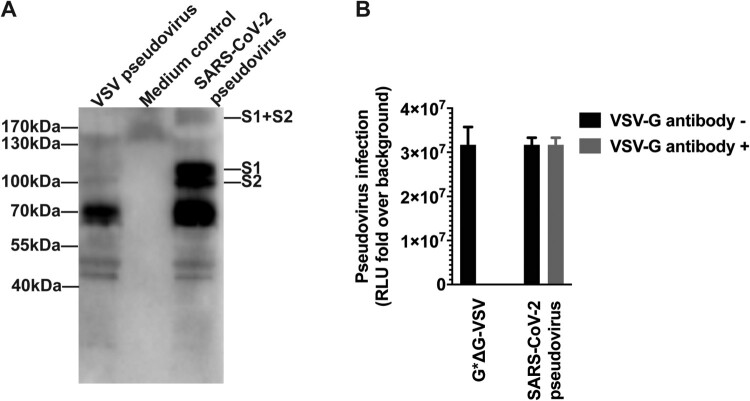
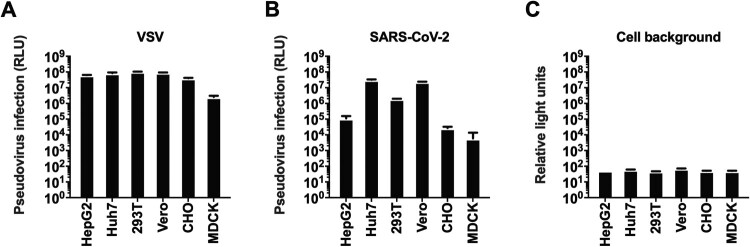
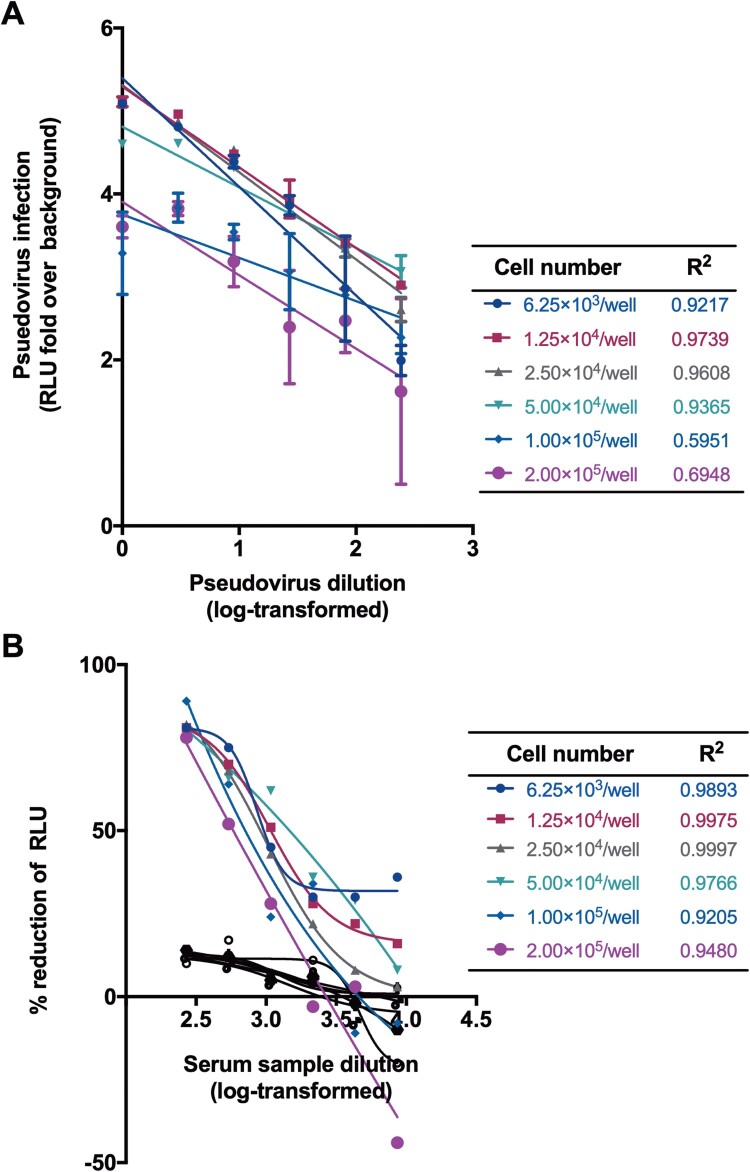
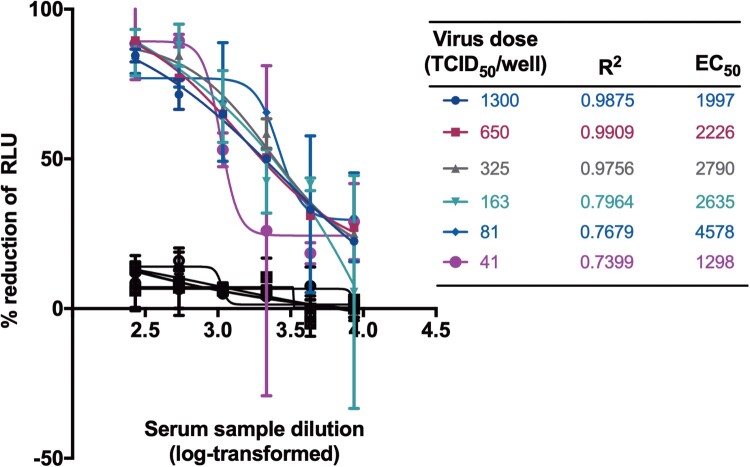
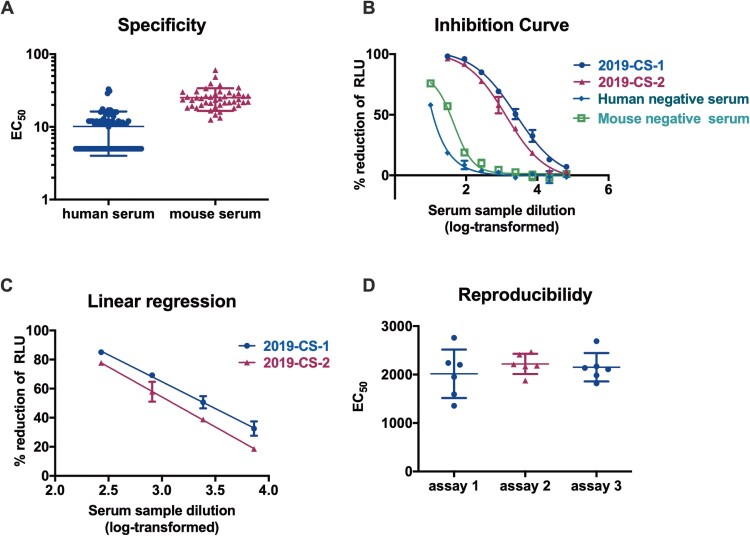
Pseudoviruses are useful virological tools because of their safety and versatility, especially for emerging and re-emerging viruses. Due to its high pathogenicity and infectivity and the lack of effective vaccines and therapeutics, live SARS-CoV-2 has to be handled under biosafety level 3 conditions, which has hindered the development of vaccines and therapeutics. Based on a VSV pseudovirus production system, a pseudovirus-based neutralization assay has been developed for evaluating neutralizing antibodies against SARS-CoV-2 in biosafety level 2 facilities. The key parameters for this assay were optimized, including cell types, cell numbers, virus inoculum. When tested against the SARS-CoV-2 pseudovirus, SARS-CoV-2 convalescent patient sera showed high neutralizing potency, which underscore its potential as therapeutics. The limit of detection for this assay was determined as 22.1 and 43.2 for human and mouse serum samples respectively using a panel of 120 negative samples. The cutoff values were set as 30 and 50 for human and mouse serum samples, respectively. This assay showed relatively low coefficient of variations with 15.9% and 16.2% for the intra- and inter-assay analyses respectively. Taken together, we established a robust pseudovirus-based neutralization assay for SARS-CoV-2 and are glad to share pseudoviruses and related protocols with the developers of vaccines or therapeutics to fight against this lethal virus.
Overview
The claims and statistics of this paper haven’t been checked yet.
Run the check — free, no account needed. It reads the open-access text and checks the sources it cites.
Integrity signals
Registry
Cites
Statistics
Figures
Verification
Claims the paper makes
The claims and statistics of this paper haven’t been checked yet.
Run the check — free, no account needed. It reads the open-access text and checks the sources it cites.
Claims other papers make about this one
Each is checked against this paper’s own text: does it say what the citing paper says it does?
The cited source says what the claim attributes to it.
In the citing paper
“and functionally inhibited entry of a vesicular stomatitis virus (VSV)-based pseudovirus expressing the SARS-CoV-2 S protein (Nie et al., 2020) in Huh7 cells (Figure 1D).”
From A thermostable mRNA vaccine against COVID-19 (2020) · cites this paper as Nie et al., 2020
Self-check
Percentages, sums and reported differences re-computed from the paper’s own numbers.
The self-check needs the paper’s full text.
Citations
Cites
A novel coronavirus from patients with pneumonia in China, 2019
Zhu, N., Zhang, D., Wang, W., Li, X., Yang, B., Song, J., Zhao, X., Huang, B., Shi, W., Lu, R., et al. (2020) · New England Journal of Medicine · doi:10.1056/nejmoa2001017 · Cited by 28,244
Self-citationA pneumonia outbreak associated with a new coronavirus of probable bat origin
Zhou, P., Yang, X.-L., Wang, X.-G., Hu, B., Zhang, L., Zhang, W., Si, H.-R., Zhu, Y., Li, B., Huang, C.-L., et al. (2020) · Nature · doi:10.1038/s41586-020-2012-7 · Cited by 21,969
Self-citationEarly transmission dynamics in Wuhan, China, of novel coronavirus-infected pneumonia
Li, Q., Guan, X., Wu, P., Wang, X., Zhou, L., Tong, Y., Ren, R., Leung, K. S. M., Lau, E. H. Y., Wong, J. Y., et al. (2020) · New England Journal of Medicine · doi:10.1056/nejmoa2001316 · Cited by 16,575
Self-citationHui, D. S., I Azhar, E., Madani, T. A., Ntoumi, F., Kock, R., Dar, O., Ippolito, G., Mchugh, T. D., Memish, Z. A., Drosten, C., et al. (2020) · International Journal of Infectious Diseases · doi:10.1016/j.ijid.2020.01.009 · Cited by 3,809
Chan, J. F., Kok, K., Zhu, Z., Chu, H., To, K. K., Yuan, S., & Yuen, K. (2020) · Emerging Microbes & Infections · doi:10.1080/22221751.2020.1719902 · Cited by 3,127
Emerging coronaviruses: Genome structure, replication, and pathogenesis
Chen, Y. Z., Liu, Q., & Guo, D. (2020) · Journal of Medical Virology · doi:10.1002/jmv.25681 · Cited by 3,069
Genome Composition and Divergence of the Novel Coronavirus (2019-nCoV) Originating in China
Wu, A., Peng, Y., Huang, B., Ding, X. L., Wang, X., Niu, P., Meng, J., Zhu, Z., Zhang, Z., Wang, J., et al. (2020) · Cell Host & Microbe · doi:10.1016/j.chom.2020.02.001 · Cited by 2,386
The spike protein of SARS-CoV — a target for vaccine and therapeutic development
Du, L., He, Y., Zhou, Y., Liu, S., Zheng, B.-J., & Jiang, S. (2009) · Nature Reviews Microbiology · doi:10.1038/nrmicro2090 · Cited by 1,678
The Novel Coronavirus Originating in Wuhan, China
Phelan, A., Katz, R., & Gostin, L. O. (2020) · JAMA · doi:10.1001/jama.2020.1097 · Cited by 1,210
Whitt, M. A. (2010) · Journal of Virological Methods · doi:10.1016/j.jviromet.2010.08.006 · Cited by 431
Cited by
Sorted by citations
Immunology of COVID-19: Current State of the Science
Vabret, N., Britton, G. J., Gruber, C., Hegde, S., Kim, J., Kuksin, M., Levantovsky, R., Malle, L., Moreira, A., Park, M. D., et al. (2020) · Immunity · doi:10.1016/j.immuni.2020.05.002 · Cited by 1,623
CD147-spike protein is a novel route for SARS-CoV-2 infection to host cells
Wang, K., Chen, W., Zhang, Z., Deng, Y., Lian, J., Du, P. F., Wei, D., Yang, Z., Sun, X., Gong, L., et al. (2020) · Signal Transduction and Targeted Therapy · doi:10.1038/s41392-020-00426-x · Cited by 1,630
Self-citationZhang, Y., Zeng, G., Pan, H., Li, C., Hu, Y., Chu, K., Han, W., Chen, Z., Tang, R., Yin, W., et al. (2021) · The Lancet Infectious Diseases · doi:10.1016/s1473-3099(20)30843-4 · Cited by 1,504
Self-citationThe Impact of Mutations in SARS-CoV-2 Spike on Viral Infectivity and Antigenicity
Li, Q., Wu, J., Nie, J., Zhang, L., Hao, H., Liu, S., Zhao, C., Zhang, Q., Liu, H., Nie, L., et al. (2020) · Cell · doi:10.1016/j.cell.2020.07.012 · Cited by 1,420
Self-citationZhu, F.-C., Li, Y.-H., Guan, X.-H., Hou, L.-H., Wang, W.-J., Li, J.-X., Wu, S.-P., Wang, B.-S., Wang, Z., Wang, L., et al. (2020) · The Lancet · doi:10.1016/s0140-6736(20)31208-3 · Cited by 1,382
Metadata
- Authors
- Nie, J., Li, Q., Wu, J., Zhao, C., Hao, H., Liu, H., Zhang, L., Nie, L., Qin, H., Wang, M., Lu, Q., Li, X., Sun, Q., Liu, J., Fan, C., Huang, W., Xu, M., & Wang, Y.
- Affiliations
- National Institutes for Food and Drug Control (CN)
- Chinese Academy of Medical Sciences & Peking Union Medical College (CN)
- Corresponding author
- Huang, Weijin
- Xu, Miao
- Wang, Youchun
- ORCID
- Venue
- Emerging Microbes & Infections
- Publisher
- Informa UK Limited
- Published
- 2020-01
- Volume
- 9
- Issue
- 1
- Pages
- 680-686
- ISSN
- 2222-1751 (ISSN-L)
- PMC
- PMC7144318
- OpenAlex
- W3012650581
- Cited by
- 711
- References
- 27
- Citations by year
- 2026: 21 · 2025: 37 · 2024: 73 · 2023: 95 · 2022: 157 · 2021: 186 · 2020: 141
- FWCI
- 19.06
- Type
- journal article
- Language
- en
- Open access
- gold
- doi.org
- Locations
- Emerging Microbes & Infections (publishedVersion, cc-by)
- PubMed Central (publishedVersion, cc-by)
- PubMed (publishedVersion)
- DOAJ (DOAJ: Directory of Open Access Journals) (submittedVersion)
- Informationszentrum Lebenswissenschaften (ZB MED) (submittedVersion, cc-by)
- Topics
- Health Sciences › Medicine › Infectious Diseases › SARS-CoV-2 and COVID-19 Research
- Health Sciences › Medicine › Infectious Diseases › SARS-CoV-2 detection and testing
- Life Sciences › Agricultural and Biological Sciences › Animal Science and Zoology › Animal Virus Infections Studies
- Keywords
- SARS-CoV-2, pseudovirus neutralization assay, neutralizing antibodies, biosafety level 2, convalescent sera, assay validation, detection limit, cut-off values, COVID-19 treatment
- MeSH terms
- Betacoronavirus, COVID-19, SARS-CoV-2, COVID-19 Serotherapy, Animals, Antibodies, Viral, Cell Line, Humans, Immune Sera, Immunization, Passive, Membrane Glycoproteins, Neutralization Tests, Plasmids, Pneumonia, Viral, Sensitivity and Specificity, Vesicular stomatitis Indiana virus, Viral Envelope Proteins, Reproducibility of Results, Coronavirus Infections, Mice, Virus Internalization, Antibodies, Neutralizing, Limit of Detection, Spike Glycoprotein, Coronavirus
About these checks
Registry, retraction, Cites and statistics results are computed, not judged, with one exception: a printed reference that no index lists is read once by a model before it counts as a citation error. Claims are extracted by a model and kept only when their quote appears verbatim in the text; each cited source is then checked, with a model’s help, for whether it says what the claim relies on. Those verdicts can be wrong — read the claim’s quote and the cited source before relying on one.
Statistics and arithmetic are recomputed, not judged.
Confidence bands are shown only for fields calibrated on our annotated test set. None is calibrated yet, so no band is shown.
What counts as a claim ›How we measure confidence ›How we check this ›
Are you an author, or do you see a problem with this page? Request a review
