

The DOI matches its Crossref record; 191 of the 191 references it cites were found in a registry or an index.
Body temperature regulation in diabetes
Open accessAbstract
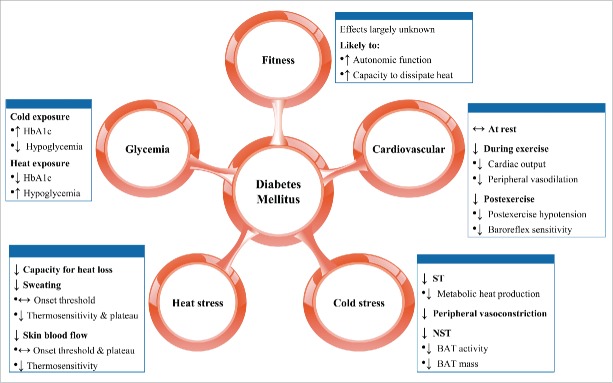
The effects of type 1 and type 2 diabetes on the body's physiological response to thermal stress is a relatively new topic in research. Diabetes tends to place individuals at greater risk for heat-related illness during heat waves and physical activity due to an impaired capacity to dissipate heat. Specifically, individuals with diabetes have been reported to have lower skin blood flow and sweating responses during heat exposure and this can have important consequences on cardiovascular regulation and glycemic control. Those who are particularly vulnerable include individuals with poor glycemic control and who are affected by diabetes-related complications. On the other hand, good glycemic control and maintenance of aerobic fitness can often delay the diabetes-related complications and possibly the impairments in heat loss. Despite this, it is alarming to note the lack of information regarding diabetes and heat stress given the vulnerability of this population. In contrast, few studies have examined the effects of cold exposure on individuals with diabetes with the exception of its therapeutic potential, particularly for type 2 diabetes. This review summarizes the current state of knowledge regarding the impact of diabetes on heat and cold exposure with respect to the core temperature regulation, cardiovascular adjustments and glycemic control while also considering the beneficial effects of maintaining aerobic fitness.
Overview
The claims and statistics of this paper haven’t been checked yet.
Run the check — free, no account needed. It reads the open-access text and checks the sources it cites.
Integrity signals
Registry
Cites
Statistics
Figures
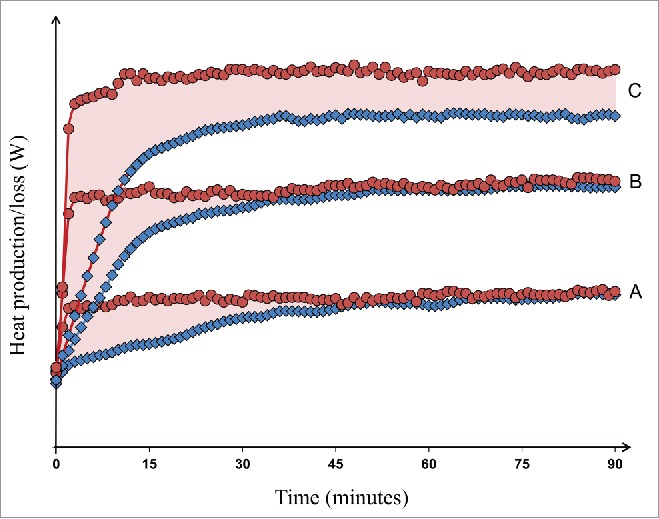
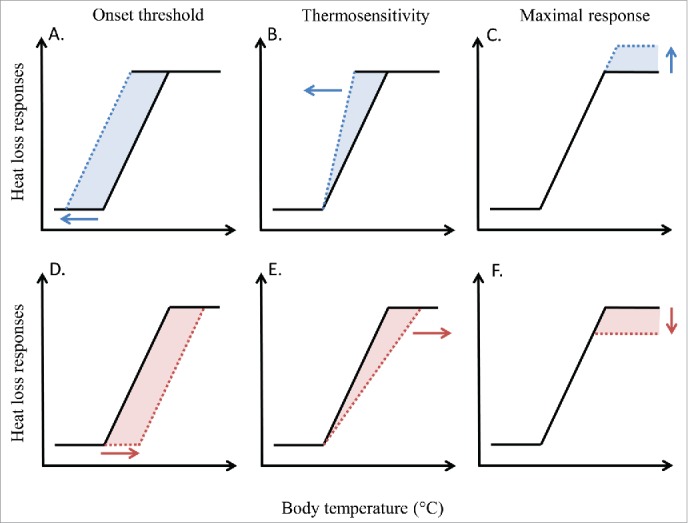
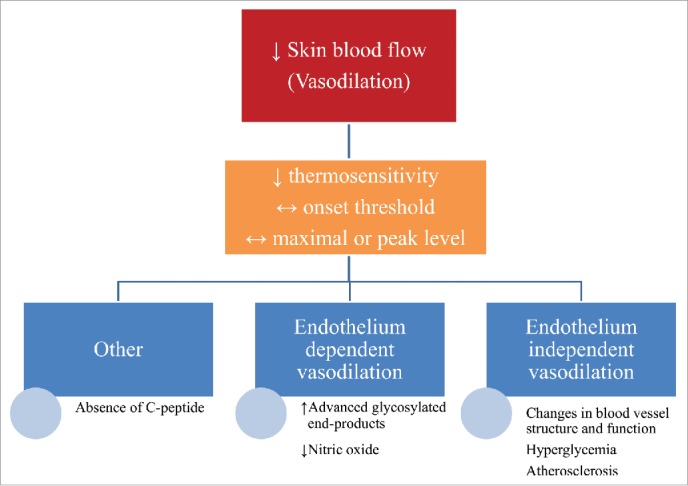
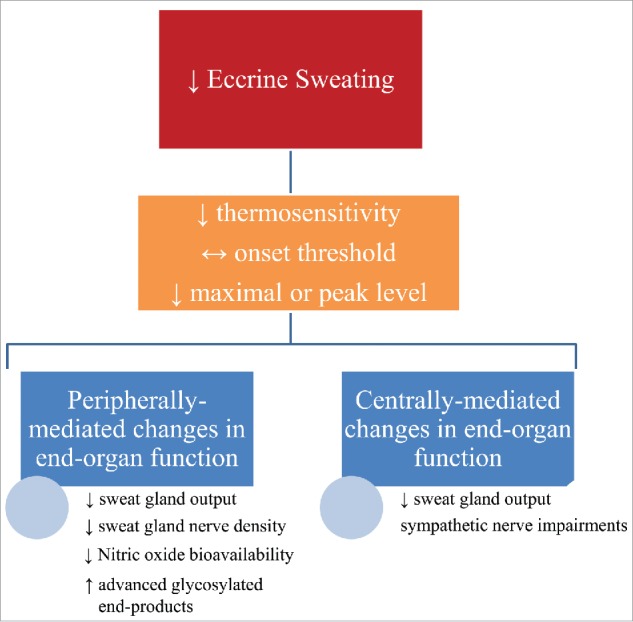



Verification
Claims the paper makes
The claims and statistics of this paper haven’t been checked yet.
Run the check — free, no account needed. It reads the open-access text and checks the sources it cites.
Claims other papers make about this one
Each is checked against this paper’s own text: does it say what the citing paper says it does?
The source backs part of the claim, not all of it — or backs it for a different population, condition or comparison.
In the citing paper
“For example, hypoglycemia is known to qualitatively increase sweating rates as the body seeks to lower core temperature to conserve energy52.”
From A wearable patch for continuous analysis of thermoregulatory sweat at rest (2021) · cites this paper as [52]
Experimental — accuracy not yet measuredThe cited source says what the claim attributes to it.
In the citing paper
“Furthermore, people with DM have been reported to have lower skin blood flow and dysregulated thermoregulatory responses during heat exposure, which is associated with dysregulated thermal, cardiovascular, and glycemic control6–8.”
From Sleep and temperature data from wearable devices support noninvasive detection of diabetes mellitus in a large-scale, retrospective analysis (2026) · cites this paper as [6]
The check wasn’t confident either way, so it gives no verdict — never disputed.
In the citing paper
“Similarly, features of sleep-wake time series can directly capture insomnia-like patterns in sleep related to DM6,34,43,44.”
From Sleep and temperature data from wearable devices support noninvasive detection of diabetes mellitus in a large-scale, retrospective analysis (2026) · cites this paper as [6]
Experimental — accuracy not yet measuredThe check wasn’t confident either way, so it gives no verdict — never disputed.
In the citing paper
“Within a night, the complexity of the distal body temperature time series has been related to the autonomic nervous system’s (ANS) health during sleep6,34.”
From Sleep and temperature data from wearable devices support noninvasive detection of diabetes mellitus in a large-scale, retrospective analysis (2026) · cites this paper as [6]
Experimental — accuracy not yet measured
Self-check
Percentages, sums and reported differences re-computed from the paper’s own numbers.
The self-check needs the paper’s full text.
Citations
Cites
International Diabetes Federation 2017
Carracher, A. M., Marathe, P. H., & Close, K. L. (2018) · Journal of Diabetes · doi:10.1111/1753-0407.12644 · Cited by 13,379
Atkinson, M. A., Eisenbarth, G. S., & Michels, A. W. (2014) · The Lancet · doi:10.1016/s0140-6736(13)60591-7 · Cited by 2,931
Bouchama, A., & Knochel, J. P. (2002) · New England Journal of Medicine · doi:10.1056/nejmra011089 · Cited by 1,898
Pathophysiology and treatment of type 2 diabetes: perspectives on the past, present, and future
Kahn, S. E., Cooper, M. E., & Del Prato, S. (2014) · The Lancet · doi:10.1016/s0140-6736(13)62154-6 · Cited by 1,743
The Effects of Climate Change on Cardiac Health
De Blois, J., Kjellstrom, T., Agewall, S., Ezekowitz, J. A., Armstrong, P. W., & Atar, D. (2015) · Cardiology · doi:10.1159/000398787 · Cited by 1,697
Umpierre, D. (2011) · JAMA · doi:10.1001/jama.2011.576 · Cited by 1,358 · cited 2×
“A recent meta-analysis by Umpierre et al.181 reported a mean decrease in HbA1c following a structured exercise intervention >12 weeks of ~0.7%.”
MethodInfluentialFeldmann, H. M., Golozoubova, V., Cannon, B., & Nedergaard, J. (2009) · Cell Metabolism · doi:10.1016/j.cmet.2008.12.014 · Cited by 1,318 · cited 1×
“The activity of brown adipose tissue has been shown to be characterized by uncoupling protein-1, a mitochondrial protein, and has been reported to have a pronounced role inwhole-body thermogenesis even under resting conditions.(155) While brown adipose tissue activity is reported to be relatively lower in individuals…”
BackgroundBoyle, J. P., Thompson, T. J., Gregg, E. W., Barker, L. E., & Williamson, D. F. (2010) · Population Health Metrics · doi:10.1186/1478-7954-8-29 · Cited by 1,309 · cited 1×
“Advanced age is a particularly important risk factor for type 2 diabetes, with diabetes prevalence rate reaching as high as 33% in older adults who are obese.(190) Given that the mean age of the workforce is increasing rapidly, employers are faced increasingly with the challenge of accommodating individuals with chron…”
BackgroundGenetics, pathogenesis and clinical interventions in type 1 diabetes
Bluestone, J. A., Herold, K., & Eisenbarth, G. (2010) · Nature · doi:10.1038/nature08933 · Cited by 1,265 · cited 1×
“Type 1 diabetes was formerly known as juvenile diabetes due to its common presentation in children and adolescents, and is characterized by the endocrine pancreas ceasing to produce insulin following the immune-mediated destruction of b-islet cells.(2)”
BackgroundInfluentialType 2 diabetes and incidence of cardiovascular diseases: a cohort study in 1.9 million people
Shah, A. D., Langenberg, C., Rapsomaniki, E., Denaxas, S., Pujades-Rodriguez, M., Gale, C. P., Deanfield, J., Smeeth, L., Timmis, A., & Hemingway, H. (2015) · The Lancet Diabetes & Endocrinology · doi:10.1016/s2213-8587(14)70219-0 · Cited by 1,225
Research works printed but not linked: 12
- World Health Organization, 2014, Page 150-154. Geneva
- Public Health Agency of Canada, 2011, Government of Canada, 27
- American Diabetes Association, 2014, National Diabetes Statistics Report
- Centers for Disease Control and Prevention, 2014, Division of Diabetes Translation,, 1
- IPCC. Intergovernmental Panel on Climate Change. 5th Assessment Report of the Intergovernmental Panel on Climate Change. Cambridge, UK. 2013.
- Yardley JE, 2013, Curr Diabetes Rev, 9, 126
- Gagge AP, 1996, New York: Oxford University Press, 45
- Petrofsky JS, 2005, Med Sci Monit, 11, CR515
- Rand S, 2008, J Appl Res, 8, 48
- Kenney WL, 1984, J Appl Physiol Respir Environ Exerc Physiol, 56, 930
- Vroman NB, 1983, J Appl Physiol Respir Environ Exerc Physiol, 55, 69
- Baron AD, 1994, Am J Physiol, 266, E248
Cited by
Sorted by citations
Hot weather and heat extremes: health risks
Ebi, K. L., Capon, A., Berry, P., Broderick, C., de Dear, R., Havenith, G., Honda, Y., Kovats, R. S., Ma, W., Malik, A., et al. (2021) · The Lancet · doi:10.1016/s0140-6736(21)01208-3 · Cited by 2,172
Physiology of sweat gland function: The roles of sweating and sweat composition in human health
Baker, L. B. (2019) · Temperature · doi:10.1080/23328940.2019.1632145 · Cited by 732
Physiological factors characterizing heat-vulnerable older adults: A narrative review
Meade, R. D., Akerman, A. P., Notley, S. R., McGinn, R. N., Poirier, P., Gosselin, P., & Kenny, G. P. (2020) · Environment International · doi:10.1016/j.envint.2020.105909 · Cited by 461
Self-citationA wearable patch for continuous analysis of thermoregulatory sweat at rest
Nyein, H. Y. Y., Bariya, M., Tran, B., Ahn, C. H., Brown, B. J., Ji, W., Davis, N., & Javey, A. (2021) · Nature Communications · doi:10.1038/s41467-021-22109-z · Cited by 437
Physical Activity and Diabetes
Sigal, R. J., Armstrong, M. J., Bacon, S., Boulé, N. G., Dasgupta, K., Kenny, G. P., & Riddell, M. C. (2018) · Canadian Journal of Diabetes · doi:10.1016/j.jcjd.2017.10.008 · Cited by 287
Self-citation
Metadata
- Authors
- Kenny, G. P., Sigal, R. J., & McGinn, R.
- Affiliations
- University of Ottawa (CA)
- University of Calgary (CA)
- Corresponding author
- Kenny, Glen P.
- Venue
- Temperature
- Publisher
- Informa UK Limited
- Published
- 2016-01-02
- Volume
- 3
- Issue
- 1
- Pages
- 119-145
- ISSN
- 2332-8940 (ISSN-L)
- 2332-8959
- PMC
- PMC4861190
- OpenAlex
- W2231185364
- Cited by
- 297
- References
- 190
- Citations by year
- 2026: 26 · 2025: 37 · 2024: 40 · 2023: 29 · 2022: 55 · 2021: 24 · 2020: 18 · 2019: 24 · 2018: 17 · 2017: 20 · 2016: 7
- FWCI
- 2.66
- Type
- journal article
- Language
- en
- Open access
- hybrid
- doi.org
- Licence
- Locations
- Temperature (publishedVersion, cc-by-nc)
- Europe PMC (PubMed Central) (publishedVersion, cc-by-nc)
- PubMed Central (publishedVersion, cc-by-nc)
- PubMed (publishedVersion)
- Topics
- Health Sciences › Medicine › Physiology (medical) › Thermoregulation and physiological responses
- Health Sciences › Medicine › Physiology (medical) › Cardiovascular and exercise physiology
- Life Sciences › Agricultural and Biological Sciences › Animal Science and Zoology › Effects of Environmental Stressors on Livestock
- Keywords
- diabetes mellitus, type 1 diabetes, type 2 diabetes, thermoregulation, heat stress, cold exposure, heat-related illness, heat dissipation, skin blood flow, sweating, glycemic control, cardiovascular regulation, core body temperature, cardiorespiratory fitness, diabetes complications
About these checks
Registry, retraction, Cites and statistics results are computed, not judged, with one exception: a printed reference that no index lists is read once by a model before it counts as a citation error. Claims are extracted by a model and kept only when their quote appears verbatim in the text; each cited source is then checked, with a model’s help, for whether it says what the claim relies on. Those verdicts can be wrong — read the claim’s quote and the cited source before relying on one.
Statistics and arithmetic are recomputed, not judged.
Confidence bands are shown only for fields calibrated on our annotated test set. None is calibrated yet, so no band is shown.
What counts as a claim ›How we measure confidence ›How we check this ›
Are you an author, or do you see a problem with this page? Request a review
