

Ligand crowding at a nascent signal sequence.
Open accessThe DOI matches its Crossref record; 43 of the 43 references it cites were found in a registry or an index.
Abstract
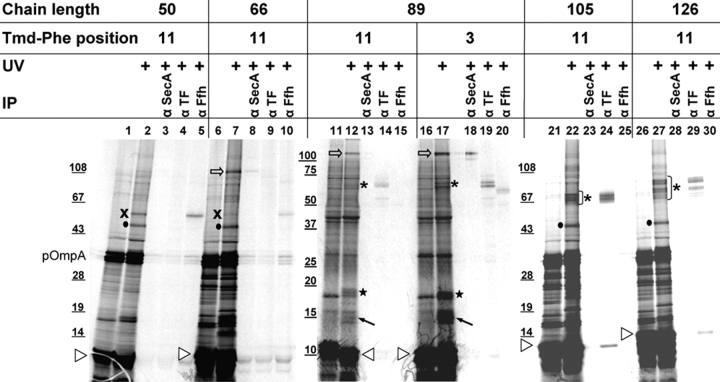
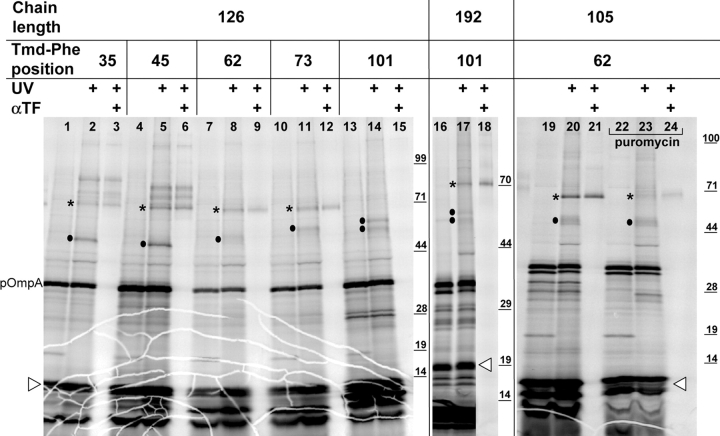
We have systematically analyzed the molecular environment of the signal sequence of a growing secretory protein from Escherichia coli using a stage- and site-specific cross-linking approach. Immediately after emerging from the ribosome, the signal sequence of pOmpA is accessible to Ffh, the protein component of the bacterial signal recognition particle, and to SecA, but it remains attached to the surface of the ribosome via protein L23. These contacts are lost upon further growth of the nascent chain, which brings the signal sequence into sole proximity to the chaperone Trigger factor (TF). In its absence, nascent pOmpA shows extended contacts with L23, and even long chains interact in these conditions proficiently with Ffh. Our results suggest that upon emergence from the ribosome, the signal sequence of an E. coli secretory protein gradually becomes sequestered by TF. Although TF thereby might control the accessibility of pOmpA's signal sequence to Ffh and SecA, it does not influence interaction of pOmpA with SecB.
Overview
The claims and statistics of this paper haven’t been checked yet.
Free: it reads the open-access text and checks the first 5 claims that cite a source we can check. Create a free account to check every claim.
Integrity signals
Registry
Cites
Statistics
Figures




Verification
Claims the paper makes
The claims and statistics of this paper haven’t been checked yet.
Free: it reads the open-access text and checks the first 5 claims that cite a source we can check. Create a free account to check every claim.
Claims other papers make about this one
Each is checked against this paper’s own text: does it say what the citing paper says it does?
In the citing paper
“In addition to this post-translational substrate recognition, SecA can bind to its substrates also co-translationally (Eisner et al., 2003; Karamyshev and Johnson, 2005; Huber et al., 2011, 2017; Figure 2). This was observed for secretory proteins, like MBP (Chun and Randall, 1994; Huber et al., 2017), but also for the membrane protein RodZ (Rawat et al., 2015; Wang et al., 2017).”
From The Dynamic SecYEG Translocon (2021) · cites this paper as Eisner et al., 2003
Self-check
Percentages, sums and reported differences re-computed from the paper’s own numbers.
The self-check needs the paper’s full text.
Citations
Cites
[6] Use of T7 RNA polymerase to direct expression of cloned genes
William Studier, F., Rosenberg, A. H., Dunn, J. J., & Dubendorff, J. W. (1990) · Methods in Enzymology · doi:10.1016/0076-6879(90)85008-c · Cited by 6,562 · cited 2×
“coli strain BL21 (DE3) pLysS (Studier et al., 1990) containing pET19b-P48 or pET10N-P48 was grown at 37 C in LB medium containing ampicillin and chloramphenicol and 0.”
MethodInfluentialThe Structural Basis of Ribosome Activity in Peptide Bond Synthesis
Nissen, P., Hansen, J., Ban, N., Moore, P. B., & Steitz, T. A. (2000) · Science · doi:10.1126/science.289.5481.920 · Cited by 2,269 · cited 3×
“Th e Jo ur na l o f C el l B io lo gy The Rockefeller University Press, 0021-9525/2003/10/35/10 $8.00 The Journal of Cell Biology, Volume 163, Number 1, October 13, 2003 35–44 http://www.jcb.org/cgi/doi/10.1083/jcb.200306069 JCB Article 35 Ligand crowding at a nascent signal sequence”
BackgroundInfluentialThe Ribosomal Exit Tunnel Functions as a Discriminating Gate
Nakatogawa, H., & Ito, K. (2002) · Cell · doi:10.1016/s0092-8674(02)00649-9 · Cited by 530 · cited 2×
“…nascent signal sequence when still traversing the ribosomal peptide tunnel, as evidence has recently accumulated for the ability of the ribosome to sense the nature of a nascent peptide when still embedded in the exit tunnel (Liao et al., 1997; Gong and Yanofsky, 2002; Nakatogawa and Ito, 2002).”
BackgroundTrigger factor and DnaK cooperate in folding of newly synthesized proteins
Deuerling, E., Schulze-Specking, A., Tomoyasu, T., Mogk, A., & Bukau, B. (1999) · Nature · doi:10.1038/23301 · Cited by 500 · cited 2×
“, 1991), and C600 tig (Deuerling et al., 1999).”
MethodSignal sequences specify the targeting route to the endoplasmic reticulum membrane.
Ng, D. T., Brown, J. D., & Walter, P. (1996) · The Journal of cell biology · doi:10.1083/jcb.134.2.269 · Cited by 472 · cited 2×
“…situation in the lower eukaryote yeast, in which the SRP-dependent route is reserved to secretory proteins with more hydrophobic signal sequences (Ng et al., 1996), the bacterial SRP selects inner membrane proteins on the basis of their longer and more hydrophobic signal anchor sequences (Valent…”
BackgroundInfluentialTruscott, K. N., Kovermann, P., Geissler, A., Merlin, A., Meijer, M., Driessen, A. J. M., Rassow, J., Pfanner, N., & Wagner, R. (2001) · Nature Structural Biology · doi:10.1038/nsb726 · Cited by 402 · cited 1×
“The PCR product was digested by BamHI and NdeI and cloned under T7 promoter control downstream of a 10His tag in pET19b (Novagen) or pET10N (Truscott et al., 2001), resulting in plasmids pET19b-P48 and pET10N-P48.”
MethodL23 protein functions as a chaperone docking site on the ribosome
Kramer, G., Rauch, T., Rist, W., Vorderwülbecke, S., Patzelt, H., Schulze-Specking, A., Ban, N., Deuerling, E., & Bukau, B. (2002) · Nature · doi:10.1038/nature01047 · Cited by 357 · cited 5×
“Th e Jo ur na l o f C el l B io lo gy The Rockefeller University Press, 0021-9525/2003/10/35/10 $8.00 The Journal of Cell Biology, Volume 163, Number 1, October 13, 2003 35–44 http://www.jcb.org/cgi/doi/10.1083/jcb.200306069 JCB Article 35 Ligand crowding at a nascent signal sequence”
BackgroundInfluentialValent, Q. A., Kendall, D. A., High, S., Kusters, R., Oudega, B., & Luirink, J. (1995) · The EMBO Journal · doi:10.1002/j.1460-2075.1995.tb00236.x · Cited by 280 · cited 1×
“Th e Jo ur na l o f C el l B io lo gy 36 The Journal of Cell Biology | Volume 163, Number 1, 2003 largely been found in contact with Trigger factor (TF) (Valent et al., 1995, 1997; Beck et al., 2000; Beha et al., 2003).”
BackgroundLiao, S., Lin, J., Do, H., & Johnson, A. E. (1997) · Cell · doi:10.1016/s0092-8674(00)80311-6 · Cited by 255 · cited 2×
“…nascent signal sequence when still traversing the ribosomal peptide tunnel, as evidence has recently accumulated for the ability of the ribosome to sense the nature of a nascent peptide when still embedded in the exit tunnel (Liao et al., 1997; Gong and Yanofsky, 2002; Nakatogawa and Ito, 2002).”
BackgroundHesterkamp, T., Hauser, S., Lütcke, H., & Bukau, B. (1996) · Proceedings of the National Academy of Sciences · doi:10.1073/pnas.93.9.4437 · Cited by 246 · cited 2×
“Th e Jo ur na l o f C el l B io lo gy The Rockefeller University Press, 0021-9525/2003/10/35/10 $8.00 The Journal of Cell Biology, Volume 163, Number 1, October 13, 2003 35–44 http://www.jcb.org/cgi/doi/10.1083/jcb.200306069 JCB Article 35 Ligand crowding at a nascent signal sequence”
BackgroundInfluential
Cited by
Molecular Chaperone Functions in Protein Folding and Proteostasis
Kim, Y. E., Hipp, M. S., Bracher, A., Hayer-Hartl, M., & Ulrich Hartl, F. (2013) · Annual Review of Biochemistry · doi:10.1146/annurev-biochem-060208-092442 · Cited by 1,475
Kramer, G., Boehringer, D., Ban, N., & Bukau, B. (2009) · Nature Structural & Molecular Biology · doi:10.1038/nsmb.1614 · Cited by 477
Structure of the signal recognition particle interacting with the elongation-arrested ribosome
Halic, M., Becker, T., Pool, M. R., Spahn, C. M. T., Grassucci, R. A., Frank, J., & Beckmann, R. (2004) · Nature · doi:10.1038/nature02342 · Cited by 417
DnaK Functions as a Central Hub in the E. coli Chaperone Network
Calloni, G., Chen, T., Schermann, S. M., Chang, H.-C., Genevaux, P., Agostini, F., Tartaglia, G. G., Hayer-Hartl, M., & Hartl, F. U. (2012) · Cell Reports · doi:10.1016/j.celrep.2011.12.007 · Cited by 380
Bacterial protein secretion through the translocase nanomachine
Papanikou, E., Karamanou, S., & Economou, A. (2007) · Nature Reviews Microbiology · doi:10.1038/nrmicro1771 · Cited by 273
Structure and function of the molecular chaperone Trigger Factor
Hoffmann, A., Bukau, B., & Kramer, G. (2010) · Biochimica et Biophysica Acta (BBA) - Molecular Cell Research · doi:10.1016/j.bbamcr.2010.01.017 · Cited by 267
Mapping the Pathways to StaphylococcalPathogenesis by Comparative Secretomics
Sibbald, M. J. J. B., Ziebandt, A. K., Engelmann, S., Hecker, M., de Jong, A., Harmsen, H. J. M., Raangs, G. C., Stokroos, I., Arends, J. P., Dubois, J. Y. F., et al. (2006) · Microbiology and Molecular Biology Reviews · doi:10.1128/mmbr.00008-06 · Cited by 269
“geting factors, such as Ffh or trigger factor (TF) (55).”
Backgrounddu Plessis, D. J. F., Nouwen, N., & Driessen, A. J. M. (2011) · Biochimica et Biophysica Acta (BBA) - Biomembranes · doi:10.1016/j.bbamem.2010.08.016 · Cited by 255
“SRPFtsY complex formation at the translocon prevents premature release of the RNC, and may ensure the efficient transfer of the RNC to the translocon as an elaborate rearrangement of the SRP-FtsY complex is required before the RNC can unload the substrate to initiate translocation [17,244].”
BackgroundInfluentialSRP-mediated protein targeting: structure and function revisited
LUIRINK, J. (2004) · Biochimica et Biophysica Acta (BBA) - Molecular Cell Research · doi:10.1016/j.bbamcr.2004.03.013 · Cited by 227
BIOGENESIS OF INNER MEMBRANE PROTEINS IN ESCHERICHIA COLI
Luirink, J., Heijne, G. V., Houben, E., & Gier, J.-W. D. (2005) · Annual Review of Microbiology · doi:10.1146/annurev.micro.59.030804.121246 · Cited by 197
Delivering proteins for export from the cytosol
Cross, B. C. S., Sinning, I., Luirink, J., & High, S. (2009) · Nature Reviews Molecular Cell Biology · doi:10.1038/nrm2657 · Cited by 191
“In addition to its activity at the translocon, it has also been suggested that a distinct cytosolic pool of SecA might promote membrane delivery by directly associating with the signal sequence of nascent secretory proteins independently of Sec”
BackgroundKudva, R., Denks, K., Kuhn, P., Vogt, A., Müller, M., & Koch, H.-G. (2013) · Research in Microbiology · doi:10.1016/j.resmic.2013.03.016 · Cited by 177
Self-citationThe signal recognition particle and its interactions during protein targeting
Halic, M., & Beckmann, R. (2005) · Current Opinion in Structural Biology · doi:10.1016/j.sbi.2005.01.013 · Cited by 167
SecB is a bona fide generalized chaperone in Escherichia coli
Ullers, R. S., Luirink, J., Harms, N., Schwager, F., Georgopoulos, C., & Genevaux, P. (2004) · Proceedings of the National Academy of Sciences · doi:10.1073/pnas.0402398101 · Cited by 119
Chaperone networking facilitates protein targeting to the bacterial cytoplasmic membrane.
Castanié-Cornet, M.-P., Bruel, N., & Genevaux, P. (2014) · Biochimica et Biophysica Acta (BBA) - Molecular Cell Research · doi:10.1016/j.bbamcr.2013.11.007 · Cited by 129
Sec-translocase mediated membrane protein biogenesis
Dalbey, R., & Chen, M. (2004) · Biochimica et Biophysica Acta (BBA) - Molecular Cell Research · doi:10.1016/j.bbamcr.2004.03.009 · Cited by 131
SecA interacts with ribosomes in order to facilitate posttranslational translocation in bacteria.
Huber, D., Rajagopalan, N., Preissler, S., Rocco, M. A., Merz, F., Kramer, G., & Bukau, B. (2011) · Molecular Cell · doi:10.1016/j.molcel.2010.12.028 · Cited by 109
Protein quality control in the bacterial periplasm
Miot, M., & Betton, J. (2004) · Microbial Cell Factories · doi:10.1186/1475-2859-3-4 · Cited by 118
Kramer, G., Rutkowska, A., Wegrzyn, R. D., Patzelt, H., Kurz, T. A., Merz, F., Rauch, T., Vorderwülbecke, S., Deuerling, E., & Bukau, B. (2004) · Journal of Bacteriology · doi:10.1128/jb.186.12.3777-3784.2004 · Cited by 89
“Accordingly, it was recently shown that in the absence of TF nascent polypeptides cross-link to the ribosomal protein L23, supporting the model of a shielding function of TF (6, 23).”
BackgroundIdentification of Nascent Chain Interaction Sites on Trigger Factor
Lakshmipathy, S. K., Tomic, S., Kaiser, C. M., Chang, H.-C., Genevaux, P., Georgopoulos, C., Barral, J. M., Johnson, A. E., Hartl, F. U., & Etchells, S. A. (2007) · Journal of Biological Chemistry · doi:10.1074/jbc.m609871200 · Cited by 88
Buskiewicz, I., Deuerling, E., Gu, S.-Q., Jöckel, J., Rodnina, M. V., Bukau, B., & Wintermeyer, W. (2004) · Proceedings of the National Academy of Sciences · doi:10.1073/pnas.0402231101 · Cited by 86
Oswald, J., Njenga, R., Natriashvili, A., Sarmah, P., & Koch, H.-G. (2021) · Frontiers in Molecular Biosciences · doi:10.3389/fmolb.2021.664241 · Cited by 88
“This is in line with the ability of SecA to interact with translating and non-translating ribosomes (Eisner et al., 2003; Karamyshev and Johnson, 2005; Huber et al., 2011; Knupffer et al., 2019; Origi et al., 2019; Wang S. et al., 2019).”
BackgroundSelf-citationCo-translational protein targeting in bacteria.
Steinberg, R., Knüpffer, L., Origi, A., Asti, R., & Koch, H.-G. (2018) · FEMS Microbiology Letters · doi:10.1093/femsle/fny095 · Cited by 81
Self-citationThe way is the goal: how SecA transports proteins across the cytoplasmic membrane in bacteria.
Cranford-Smith, T., & Huber, D. (2018) · FEMS Microbiology Letters · doi:10.1093/femsle/fny093 · Cited by 77
“One idea is that competition between TF and the SRP influences the choice of translocation pathways, perhaps by making the SRP more selective (Eisner et al. 2003, 2006; Bornemann, Holtkamp and Wintermeyer 2014; Ariosa et al. 2015).”
BackgroundNishiyama, K., Ikegami, A., Moser, M. J., Schiltz, E., Tokuda, H., & Müller, M. (2006) · Journal of Biological Chemistry · doi:10.1074/jbc.m608228200 · Cited by 78
Membrane Targeting of a Bacterial Virulence Factor Harbouring an Extended Signal Peptide
Chevalier, N., Moser, M. J., Koch, H., Schimz, K.-L., Willery, E., Locht, C., Jacob‐Dubuisson, F., & Müller, M. (2004) · Microbial Physiology · doi:10.1159/000082076 · Cited by 79
“Cross-linking products in the range of 20– 25 kDa presumably reflect interactions with ribosomal proteins, as inferred from results previously obtained with pOmpA [Eisner et al., 2003].”
ResultSelf-citationThe periplasmic chaperone PpiD interacts with secretory proteins exiting from the SecYEG translocon.
Antonoaea, R., Fürst, M., Nishiyama, K.-I., & Müller, M. (2008) · Biochemistry · doi:10.1021/bi800233w · Cited by 69
Peterson, J. H., Szabady, R. L., & Bernstein, H. D. (2006) · Journal of Biological Chemistry · doi:10.1074/jbc.m508681200 · Cited by 79
Signal peptide hydrophobicity is critical for early stages in protein export by Bacillus subtilis
Zanen, G., Houben, E. N. G., Meima, R., Tjalsma, H., Jongbloed, J. D. H., Westers, H., Oudega, B., Luirink, J., van Dijl, J. M., & Quax, W. J. (2005) · FEBS Journal · doi:10.1111/j.1742-4658.2005.04777.x · Cited by 71
SecA Cotranslationally Interacts with Nascent Substrate Proteins In Vivo
Huber, D., Jamshad, M., Hanmer, R., Schibich, D., Döring, K., Marcomini, I., Kramer, G., & Bukau, B. (2017) · Journal of Bacteriology · doi:10.1128/jb.00622-16 · Cited by 61
“Mutations in the gene encoding TF (tig) improve the efficiency of translocation (22, 28) and can suppress the translocation defect of a secB mutant (29, 30), suggesting that TF antagonizes uncoupled translocation.”
BackgroundTatB Functions as an Oligomeric Binding Site for Folded Tat Precursor Proteins
Maurer, H. C., Panahandeh, S., Jungkamp, A.-C., Moser, M. J., & Müller, M. (2010) · Molecular Biology of the Cell · doi:10.1091/mbc.e10-07-0585 · Cited by 59
“Position-specific cross-links varying in electrophoretic mobility have also been observed for Sec precursors proteins and the chaperone Trigger factor (Eisner et al., 2003).”
BackgroundTargeting and Translocation of Two Lipoproteins in Escherichia coli via the SRP/Sec/YidC Pathway
Fröderberg, L., Houben, E. N. G., Baars, L., Luirink, J., & de Gier, J.-W. (2004) · Journal of Biological Chemistry · doi:10.1074/jbc.m403229200 · Cited by 56
Selective SecA Association with Signal Sequences in Ribosome-bound Nascent Chains
Karamyshev, A. L., & Johnson, A. E. (2005) · Journal of Biological Chemistry · doi:10.1074/jbc.m509100200 · Cited by 53
Mitra, K., Frank, J., & Driessen, A. J. M. (2006) · Nature Structural & Molecular Biology · doi:10.1038/nsmb1166 · Cited by 63
“As the signal emerges from the polypeptide exit tunnel, it binds the large ribosomal subunit proteins L23 and L29 (ref”
BackgroundTrigger Factor Binding to Ribosomes with Nascent Peptide Chains of Varying Lengths and Sequences
Raine, A., Lovmar, M., Wikberg, J. E. S., & Ehrenberg, M. (2006) · Journal of Biological Chemistry · doi:10.1074/jbc.m605753200 · Cited by 50
Versatility of Trigger Factor Interactions with Ribosome-Nascent Chain Complexes
Lakshmipathy, S. K., Gupta, R., Pinkert, S., Etchells, S. A., & Hartl, F. U. (2010) · Journal of Biological Chemistry · doi:10.1074/jbc.m110.134163 · Cited by 45
Braig, D., Mircheva, M., Sachelaru, I., van der Sluis, E. O., Sturm, L., Beckmann, R., & Koch, H.-G. (2011) · Molecular Biology of the Cell · doi:10.1091/mbc.e11-02-0152 · Cited by 42
Self-citationUllers, R. S., Houben, E. N. G., Brunner, J., Oudega, B., Harms, N., & Luirink, J. (2006) · Journal of Biological Chemistry · doi:10.1074/jbc.m600638200 · Cited by 46
Self-citationMircheva, M., Boy, D., Weiche, B., Hucke, F., Graumann, P., & Koch, H.-G. (2009) · BMC Biology · doi:10.1186/1741-7007-7-76 · Cited by 42
“5S RNA were purified (as described in [24,42]).”
MethodSelf-citationDifferential Bacterial Surface Display of Peptides by the Transmembrane Domain of OmpA
Verhoeven, G. S., Alexeeva, S., Dogterom, M., & den Blaauwen, T. (2009) · PLoS ONE · doi:10.1371/journal.pone.0006739 · Cited by 42
“Since OmpA is mostly post-translationally translocated to the periplasm via the Sec system [32], in these cases perhaps some tertiary structure forms in the cytoplasm that delays, or interferes with, its translocation [33].”
Eisner, G., Moser, M. J., Schäfer, U., Beck, K., & Müller, M. P. (2006) · Journal of Biological Chemistry · doi:10.1074/jbc.m511388200 · Cited by 39
Self-citationJong, W. S. P., ten Hagen‐Jongman, C. M., Genevaux, P., Brunner, J., Oudega, B., & Luirink, J. (2004) · European Journal of Biochemistry · doi:10.1111/j.1432-1033.2004.04442.x · Cited by 46
Self-citationPeterson, J. H., Woolhead, C. A., & Bernstein, H. D. (2010) · Molecular Microbiology · doi:10.1111/j.1365-2958.2010.07325.x · Cited by 36
Biology and Assembly of the Bacterial Envelope
Dufresne, K., & Paradis‐Bleau, C. (2015) · Advances in experimental medicine and biology · doi:10.1007/978-3-319-23603-2_3 · Cited by 35
Molecular mimicry of SecA and signal recognition particle binding to the bacterial ribosome.
Knüpffer, L., Fehrenbach, C., Denks, K., Erichsen, V., Petriman, N.-A., & Koch, H.-G. (2019) · mBio · doi:10.1128/mbio.01317-19 · Cited by 28
“tion that SecA can interact with nontranslating ribosomes and that it can associate with its substrates even before translation is terminated (25, 38, 41), i.”
BackgroundSelf-citationThe bacterial protein YidC accelerates MPIase-dependent integration of membrane proteins
Sasaki, M., Nishikawa, H., Suzuki, S., Moser, M. J., Huber, M., Sawasato, K., Matsubayashi, H. T., Kumazaki, K., Tsukazaki, T., Kuruma, Y., et al. (2019) · Journal of Biological Chemistry · doi:10.1074/jbc.ra119.011248 · Cited by 27
“Ffh (46), FtsY by gest on M arch 5, 2020 hp://w w w .”
Grallath, S., Schwarz, J. P., Böttcher, U. M. K., Bracher, A., Hartl, F. U., & Siegers, K. (2007) · EMBO Reports · doi:10.1038/sj.embor.7401114 · Cited by 25
RetractedGrallath, S., Schwarz, J. P., Böttcher, U. M. K., Bracher, A., Hartl, F. U., & Siegers, K. (2005) · EMBO Reports · doi:10.1038/sj.embor.7400551 · Cited by 23
“A direct interaction with SRP was not found for TF, which regulates protein export by competing with SRP for binding to secretory proteins (Lee & Bernstein, 2002; Eisner et al, 2003).”
BackgroundRetractedMitra, K., & Frank, J. (2006) · FEBS Letters · doi:10.1016/j.febslet.2006.05.019 · Cited by 21
“The hydrophobic projection of L23 near the tunnel exit could serve as a ‘lever’, attracting a hydrophobic NPS/TMH toward it and guiding it to the L23/L29 hydrophobic surfaces (Fig.”
BackgroundInfluentialGuzmán‐Luna, V., Fuchs, A. M., Allen, A. J., Staikos, A., & Cavagnero, S. (2021) · Communications Biology · doi:10.1038/s42003-021-02752-4 · Cited by 20
In vitro Assay for Bacterial Membrane Protein Integration into Proteoliposomes
Nishikawa, H., Sasaki, M., & Nishiyama, K. (2020) · BIO-PROTOCOL · doi:10.21769/bioprotoc.3626 · Cited by 16
“Ffh, purified as described (Eisner et al., 2003) 27.”
How Quality Control Systems AID Sec-Dependent Protein Translocation
Jiang, C., Wynne, M., & Huber, D. (2021) · Frontiers in Molecular Biosciences · doi:10.3389/fmolb.2021.669376 · Cited by 14
Zhou, Y., Ueda, T., & Müller, M. (2014) · PLoS ONE · doi:10.1371/journal.pone.0092994 · Cited by 14
“Isolation of Ribosomes High salt-washed ribosomes were prepared as described [23] except that prior to sucrose gradient centrifugation, ribosomes were spun through a 1.”
BackgroundMethodResultComplementary Role of Co- and Post-Translational Events in De Novo Protein Biogenesis
Addabbo, R. M., Dalphin, M. D., Mecha, M. F., Liu, Y., Staikos, A., Guzmán‐Luna, V., & Cavagnero, S. (2020) · The Journal of Physical Chemistry B · doi:10.1021/acs.jpcb.0c03039 · Cited by 13
Ito, K. (2005) · Molecular Microbiology · doi:10.1111/j.1365-2958.2005.04696.x · Cited by 11
Li, X., Chen, X., Zhao, S., Jiang, H. L., Bai, J., Bai, J., Shao, J., Yu, H., & Chen, T. (2025) · Environmental Pollution · doi:10.1016/j.envpol.2025.126135 · Cited by 6
Crosslinking and Reconstitution Approaches to Study Protein Transport
Kühn, A. (2019) · The Protein Journal · doi:10.1007/s10930-019-09842-7 · Cited by 2
Substrate selection by the ClpXP protease : a tail of destruction
Flynn, J. M. (2004) · DSpace@MIT (Massachusetts Institute of Technology) · Cited by 3
Cotranslational Protein Targeting in Escherichia coli
Ullers, R. S., Genevaux, P., Luirink, S., & Dalbey, R. (2007) · The Enzymes · doi:10.1016/s1874-6047(07)25001-2 · Cited by 3
A short two-drug regimen prevents active TB.
Torres, G. (1998) · PubMed · Cited by 2
The Role of Trigger Factor in Folding of Newly Synthesized Proteins
Deuerling, E., Rauch, T., Patzelt, H., & Bukau, B. (2005) · Wiley eBooks · doi:10.1002/9783527619498.ch46
Protein Folding Activity of the Ribosome and Its Implication in Prion Processes
Pang, Y. (2016) · KTH Publication Database DiVA (KTH Royal Institute of Technology)
Ribosome Associated Factors Recruited for Protein Export and Folding
Raine, A. (2005) · Uppsala University Publications (Uppsala University)
Driessen, A. J. M., de Wit, J. G., & Nouwen, N. P. (2005) · Wiley eBooks · doi:10.1002/9783527619498.ch60
Bibi, E. (2019) · Faculty Opinions – Post-Publication Peer Review of the Biomedical Literature · doi:10.3410/f.736422813.793566881
Bibi, E. (2019) · Faculty Opinions – Post-Publication Peer Review of the Biomedical Literature · doi:10.3410/f.726904705.793566883
Kleinbeck, F. (2021) · University writing server of the University of Hohenheim (Universität Hohenheim)
Jiang, C. (2025) · University of Birmingham Institutional Research Archive (University of Birmingham)
Caractérisation structurale et fonctionnelle de la peptide déformylase du phage Vp16T
Nusbaum, J. (2016) · theses.fr (ABES) · doi:10.70675/b36d10ffz2f4az4864z92e7z1941e516cae7
Study of the co-translational assembly mechanism of transcription complexes in mammalian cells
Mukherjee, P. (2019) · theses.fr (ABES) · doi:10.70675/738c094cz1dc9z431fzaf17zad0fb9e6be1c
Lavecchia, F. (2019) · theses.fr (ABES) · doi:10.70675/13a9b9c8z5586z47b3z8afcz0aaf97371a50 · Cited by 1
Metadata
- Authors
- Eisner, G., Koch, H.-G., Beck, K., Brunner, J., & Müller, M.
- Affiliations
- University of Freiburg (DE)
- ETH Zurich (CH)
- 1Institut für Biochemie und Molekularbiologie, Universität Freiburg, D-79104 Freiburg, Germany
- ORCID
- Koch, Hans-Georg
- Venue
- The Journal of Cell Biology
- Publisher
- Rockefeller University Press
- Published
- 2003-10-06
- Volume
- 163
- Issue
- 1
- Pages
- 35-44
- ISSN
- 0021-9525 (ISSN-L)
- 1540-8140
- PMC
- PMC2173441
- OpenAlex
- W1970964125
- Cited by
- 69
- References
- 43
- Citations by year
- 2025: 1 · 2022: 1 · 2021: 3 · 2020: 2 · 2019: 7 · 2018: 2 · 2016: 2 · 2015: 1 · 2014: 1 · 2013: 3 · 2012: 1
- FWCI
- 4.95
- Type
- journal article
- Language
- en
- Open access
- green
- www.ncbi.nlm.nih.gov
- Licence
- cc-by-nc-sa
- Locations
- The Journal of Cell Biology (publishedVersion)
- Europe PMC (PubMed Central) (publishedVersion, cc-by-nc-sa)
- PubMed Central (publishedVersion, cc-by-nc-sa)
- PubMed (publishedVersion)
- FreiDok plus (Universitätsbibliothek Freiburg) (submittedVersion)
- Topics
- Life Sciences › Biochemistry, Genetics and Molecular Biology › Genetics › Bacterial Genetics and Biotechnology
- Life Sciences › Biochemistry, Genetics and Molecular Biology › Molecular Biology › RNA and protein synthesis mechanisms
- Life Sciences › Biochemistry, Genetics and Molecular Biology › Molecular Biology › Heat shock proteins research
- Keywords
- signal peptide, nascent polypeptide chains, signal recognition particle, Ffh, SecA, precipitating factors, SecB, protein secretion, secreted proteins, Escherichia coli, crosslinking
- MeSH terms
- Bacterial Outer Membrane Proteins, Bacterial Proteins, Binding Sites, Escherichia coli, Ligands, Ribosomes, Protein Sorting Signals
About these checks
Registry, retraction, Cites and statistics results are computed, not judged, with one exception: a printed reference that no index lists is read once by a model before it counts as a citation error. Claims are extracted by a model and kept only when their quote appears verbatim in the text; each cited source is then checked, with a model’s help, for whether it says what the claim relies on. Those verdicts can be wrong — read the claim’s quote and the cited source before relying on one.
Statistics and arithmetic are recomputed, not judged.
Confidence bands are shown only for fields calibrated on our annotated test set. None is calibrated yet, so no band is shown.
What counts as a claim ›How we measure confidence ›How we check this ›
Are you an author, or do you see a problem with this page? Request a review
Data sources
Bibliographic data: Semantic Scholar, OpenAlex, Crossref.
Contains information from the Semantic Scholar Academic Graph Datasets, made available under the ODC Attribution License (ODC-BY 1.0).
Semantic Scholar’s data is described in: Kinney, R., et al. (2023). The Semantic Scholar Open Data Platform. arXiv:2301.10140.
