

The DOI matches its Crossref record; 45 of the 48 references it cites were found in a registry or an index.
A Proinflammatory Cytokine Inhibits P53 Tumor Suppressor Activity
Open accessAbstract
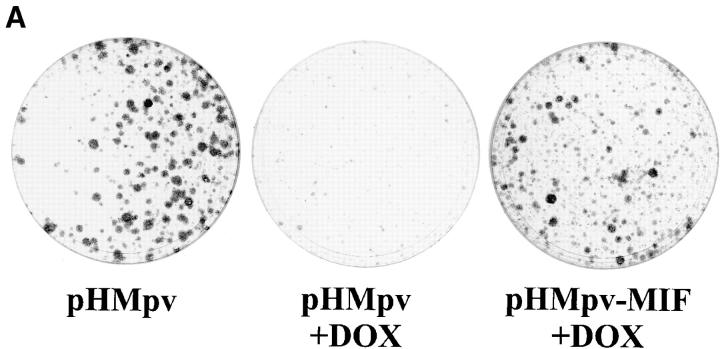
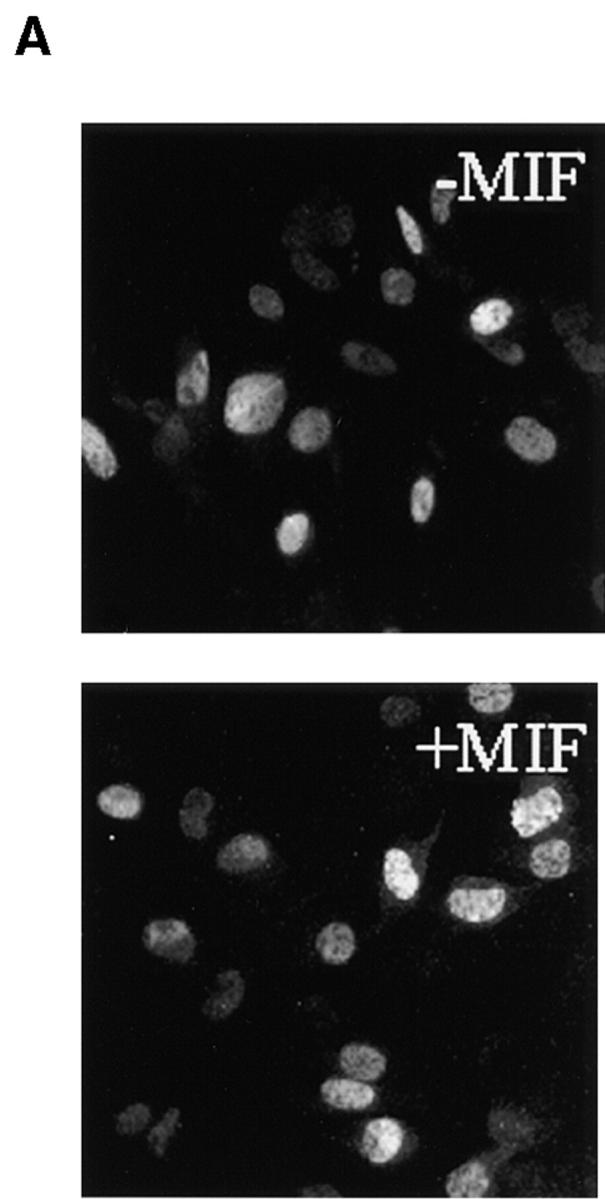
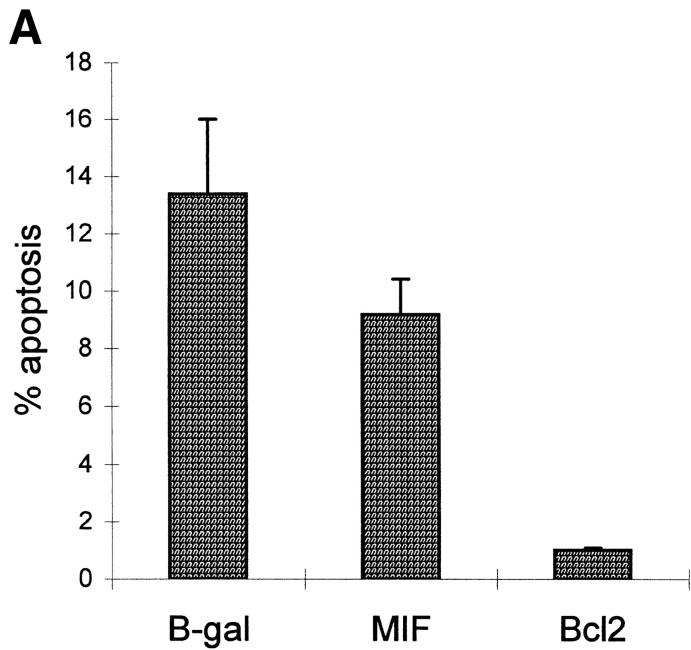
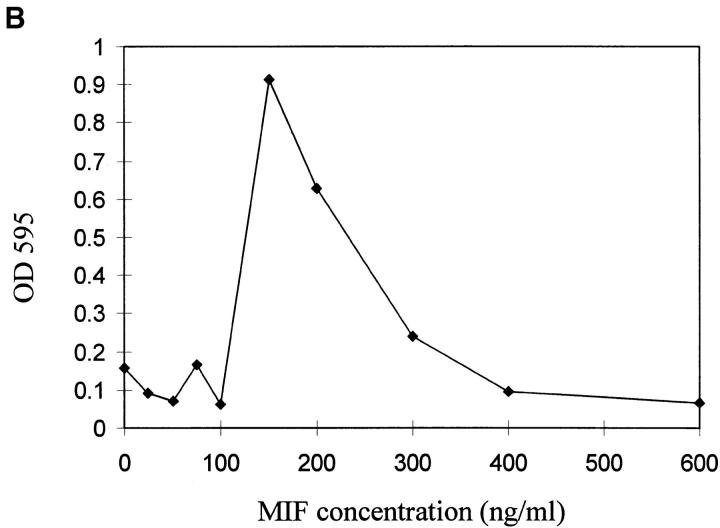
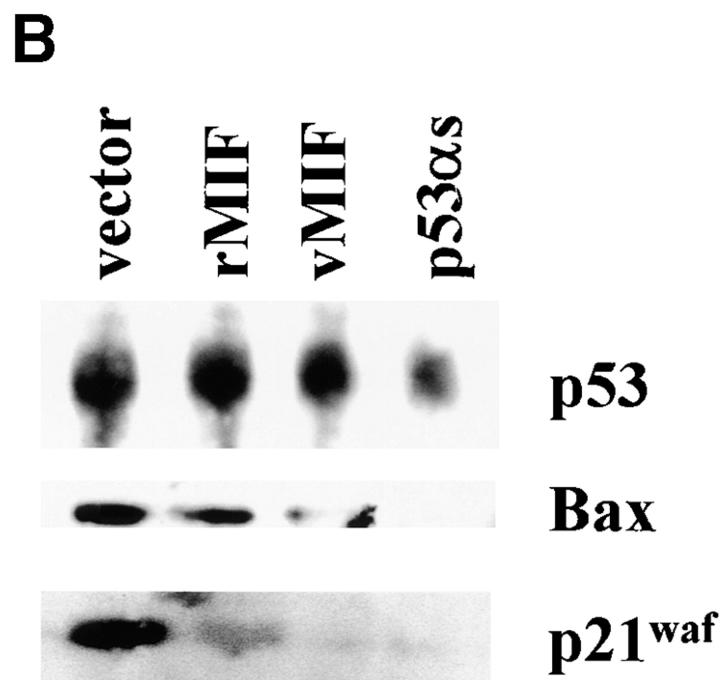
p53 has a key role in the negative regulation of cell proliferation, in the maintenance of genomic stability, and in the suppression of transformation and tumorigenesis. To identify novel regulators of p53, we undertook two functional screens to isolate genes which bypassed either p53-mediated growth arrest or apoptosis. In both screens, we isolated cDNAs encoding macrophage migration inhibitory factor (MIF), a cytokine that was shown previously to exert both local and systemic proinflammatory activities. Treatment with MIF overcame p53 activity in three different biological assays, and suppressed its activity as a transcriptional activator. The observation that a proinflammatory cytokine, MIF, is capable of functionally inactivating a tumor suppressor, p53, may provide a link between inflammation and tumorigenesis.
Overview
The claims and statistics of this paper haven’t been checked yet.
Run the check — free, no account needed. It reads the open-access text and checks the sources it cites.
Integrity signals
Registry
Cites
Statistics
Figures
Verification
Claims the paper makes
The claims and statistics of this paper haven’t been checked yet.
Run the check — free, no account needed. It reads the open-access text and checks the sources it cites.
Claims other papers make about this one
Each is checked against this paper’s own text: does it say what the citing paper says it does?
In the citing paper
“MIF is a potent cytokine that overcomes p53 function by suppressing its transcriptional activity33.”
From Inflammation and cancer (2002) · cites this paper as [33]
In the citing paper
“tetracycline regulated expression of wild-type p53 (GFP tagged) in the TGP53-4 mouse cell line (27) caused a significant decline in endogenous PGM activity (Fig. 5B).”
From Glycolytic Enzymes Can Modulate Cellular Life Span (2005) · cites this paper as [27]
Self-check
Percentages, sums and reported differences re-computed from the paper’s own numbers.
The self-check needs the paper’s full text.
Citations
Cites
The serial cultivation of human diploid cell strains
Hayflick, L., & Moorhead, P. S. (1961) · Experimental Cell Research · doi:10.1016/0014-4827(61)90192-6 · Cited by 8,508
WAF1, a potential mediator of p53 tumor suppression
El-Deiry, W. S., Tokino, T., Velculescu, V. E., Levy, D. B., Parsons, R., Trent, J. M., Lin, D., Mercer, W. E., Kinzler, K. W., & Vogelstein, B. (1993) · Cell · doi:10.1016/0092-8674(93)90500-p · Cited by 8,321
The p21 Cdk-interacting protein Cip1 is a potent inhibitor of G1 cyclin-dependent kinases.
Wade Harper, J. (1993) · Cell · doi:10.1016/0092-8674(93)90499-g · Cited by 5,651
Lane, D. P. (1992) · Nature · doi:10.1038/358015a0 · Cited by 5,138
NITRIC OXIDE AND MACROPHAGE FUNCTION
MacMicking, J. D., Xie, Q. W., & Nathan, C. (1997) · Annual Review of Immunology · doi:10.1146/annurev.immunol.15.1.323 · Cited by 4,245
Tumor suppressor p53 is a direct transcriptional activator of the human bax gene
Toshiyuki, M., & Reed, J. C. (1995) · Cell · doi:10.1016/0092-8674(95)90412-3 · Cited by 4,063
Participation of p53 protein in the cellular response to DNA damage.
Kastan, M. B., Onyekwere, O. C., Sidransky, D., Vogelstein, B., & Craig, R. W. (1991) · PubMed · Cited by 3,761
p21 is a universal inhibitor of cyclin kinases
Xiong, Y., Hannon, G., Zhang, H., Casso, D., Kobayashi, R., & Beach, D. (1993) · Nature · doi:10.1038/366701a0 · Cited by 3,691
Self-citationp53 is required for radiation-induced apoptosis in mouse thymocytes
Lowe, S. W., Schmitt, E. M., Smith, S. W., Osborne, B. A., & Jacks, T. (1993) · Nature · doi:10.1038/362847a0 · Cited by 2,864
Transcriptional Activation by Tetracyclines in Mammalian Cells
Gossen, M., Freundlieb, S., Bender, G., Müller, G., Hillen, W., & Bujard, H. (1995) · Science · doi:10.1126/science.7792603 · Cited by 2,488 · cited 1×
“the tetracycline inducible system (22), and pBabe-puro-tet-GFP-”
p53: puzzle and paradigm.Preprint
Ko, L. J., & Prives, C. L. (1996) · Genes & Development · doi:10.1101/gad.10.9.1054 · Cited by 2,346
Thymocyte apoptosis induced by p53-dependent and independent pathways
Clarke, A. R., Purdie, C. A., Harrison, D. J., Morris, R. G., Bird, C. C., Hooper, M. L., & Wyllie, A. H. (1993) · Nature · doi:10.1038/362849a0 · Cited by 2,271
Wild-type p53 induces apoptosis of myeloid leukaemic cells that is inhibited by interleukin-6
Yonish-Rouach, E., Resnftzky, D., Lotem, J., Sachs, L., Kimchi, A., & Oren, M. (1991) · Nature · doi:10.1038/352345a0 · Cited by 2,079
Definition of a consensus binding site for p53
El-Deiry, W. S., Kern, S. E., Pietenpol, J. A., Kinzler, K. W., & Vogelstein, B. (1992) · Nature Genetics · doi:10.1038/ng0492-45 · Cited by 1,985
Wild-type p53 is a cell cycle checkpoint determinant following irradiation.
Kuerbitz, S. J., Plunkett, B., Walsh, W., & Kastan, M. B. (1992) · Proceedings of the National Academy of Sciences · doi:10.1073/pnas.89.16.7491 · Cited by 1,837
The p53-mdm-2 autoregulatory feedback loop.
Wu, X., Bayle, J. H., Olson, D., & Levine, A. J. (1993) · Genes & Development · doi:10.1101/gad.7.7a.1126 · Cited by 1,801
mdm2 expression is induced by wild type p53 activity.
Barak, Y., Juven, T., Haffner, R., & Oren, M. (1993) · The EMBO Journal · doi:10.1002/j.1460-2075.1993.tb05678.x · Cited by 1,290
Radiation-induced cell cycle arrest compromised by p21 deficiency
Brugarolas, J., Chandrasekaran, C., Gordon, J. I., Beach, D., Jacks, T., & Hannon, G. J. (1995) · Nature · doi:10.1038/377552a0 · Cited by 1,242 · cited 1×
“nology), MDM2 (SMP-14; Santa Cruz Biotechnology), Bax (BAX D p21; Santa Cruz Biotechnology), or p21 (23) followed by a horseradish peroxidase–conjugated anti–mouse antibody, and”
BackgroundSelf-citationUV Irradiation Stimulates Levels of p53 Cellular Tumor Antigen in Nontransformed Mouse Cells
Maltzman, W., & Czyzyk, L. (1984) · Molecular and Cellular Biology · doi:10.1128/mcb.4.9.1689 · Cited by 893
Inflammation and cancer: role of phagocyte-generated oxidants in carcinogenesis
Weitzman, S., & Gordon, L. I. (1990) · Blood · doi:10.1182/blood.v76.4.655.655 · Cited by 761
A role for both RB and p53 in the regulation of human cellular senescence*1
SHAY, J. (1991) · Experimental Cell Research · doi:10.1016/0014-4827(91)90453-2 · Cited by 757
An essential regulatory role for macrophage migration inhibitory factor in T-cell activation.
Bacher, M., Metz, C. N., Calandra, T., Mayer, K., Chesney, J. A., Lohoff, M. D., Gemsa, D., Donnelly, T. M., & Bucala, R. (1996) · Proceedings of the National Academy of Sciences · doi:10.1073/pnas.93.15.7849 · Cited by 664
Two distinct mechanisms alter p53 in breast cancer: mutation and nuclear exclusion.
Moll, U. M., RIOU, G. F., & Levine, A. J. (1992) · Proceedings of the National Academy of Sciences · doi:10.1073/pnas.89.15.7262 · Cited by 572
Cellular immortalization by a cDNA clone encoding the transformation-associated phosphoprotein p53
Jenkins, J. R., Rudge, K., & Currie, G. A. (1984) · Nature · doi:10.1038/312651a0 · Cited by 543
Wagner, A. J., Kokontis, J. M., & Hay, N. (1994) · Genes & Development · doi:10.1101/gad.8.23.2817 · Cited by 541
twist is a potential oncogene that inhibits apoptosis
Maestro, R., Tos, A. P. D., Hamamori, Y., Krasnokutsky, S., Sartorelli, V., Kedes, L., Doglioni, C., Beach, D. H., & Hannon, G. J. (1999) · Genes & Development · doi:10.1101/gad.13.17.2207 · Cited by 516
Self-citation(1993) · PubMed · Cited by 469
Cyclin G is a transcriptional target of the p53 tumor suppressor protein.
Okamoto, K., & Beach, D. (1994) · The EMBO Journal · doi:10.1002/j.1460-2075.1994.tb06807.x · Cited by 455
Self-citationPhagocytes as Carcinogens: Malignant Transformation Produced by Human Neutrophils
Weitzman, S. A., Weitberg, A. B., Clark, E. P., & Stossel, T. P. (1985) · Science · doi:10.1126/science.3975611 · Cited by 440
Moll, U. M., LaQuaglia, M. P., Bénard, J., & RIOU, G. F. (1995) · Proceedings of the National Academy of Sciences · doi:10.1073/pnas.92.10.4407 · Cited by 428
Nitric oxide-induced apoptosis: p53-dependent and p53-independent signalling pathways
Meßmer, U. K., & Brüne, B. (1996) · Biochemical Journal · doi:10.1042/bj3190299 · Cited by 285
Stimulated Human Phagocytes Produce Cytogenetic Changes in Cultured Mammalian Cells
Weitberg, A. B., Weitzman, S. A., Destrempes, M. M., Latt, S. A., & Stossel, T. P. (1983) · New England Journal of Medicine · doi:10.1056/nejm198301063080107 · Cited by 261
UV Irradiation Stimulates Levels of p53 Cellular Tumor Antigen in Nontransformed Mouse Cells
Maltzman, W., & Czyzyk, L. (1984) · Molecular and Cellular Biology · doi:10.1128/mcb.4.9.1689-1694.1984 · Cited by 226
Calandra, T., & Bucala, R. (1997) · Critical Reviews in Immunology · doi:10.1615/critrevimmunol.v17.i1.30 · Cited by 220
p53; from inductive signal to cellular effect
Hansen, R., & Oren, M. (1997) · Current Opinion in Genetics & Development · doi:10.1016/s0959-437x(97)80108-6 · Cited by 213
Schaffer, C. J., & Nanney, L. B. (1996) · International review of cytology · doi:10.1016/s0074-7696(08)61986-5 · Cited by 136
ONODERA, S., Suzuki, K., MATSUNO, T., Kaneda, K., TAKAGI, M., & Nishihira, J. (1997) · Immunology · doi:10.1046/j.1365-2567.1997.00311.x · Cited by 119
Meßmer, U. K., & Brüne, B. (1996) · Archives of Biochemistry and Biophysics · doi:10.1006/abbi.1996.0085 · Cited by 97
MaRX: An Approach to Genetics in Mammalian Cells
Hannon, G. J., Sun, P., Carnero, A., Xie, L. Y., Maestro, R., Conklin, D. S., & Beach, D. (1999) · Science · doi:10.1126/science.283.5405.1129 · Cited by 93
Self-citationHibi, K., Mitomi, H., Koizumi, W., Tanabe, S., Saigenji, K., & Okayasu, I. (1997) · American Journal of Clinical Pathology · doi:10.1093/ajcp/108.1.26 · Cited by 90
Helicobacter pylori infection and gastric lymphoma
Wotherspoon, A. (1998) · British Medical Bulletin · doi:10.1093/oxfordjournals.bmb.a011683 · Cited by 77
Absence of p53 permits propagation of mutant cells following genotoxic damage
Griffiths, S. D., Clarke, A. R., Healy, L. E., Ross, G., Ford, A. M., Hooper, M. L., Wyllie, A. H., & Greaves, M. F. (1997) · Oncogene · doi:10.1038/sj.onc.1200871 · Cited by 76
Maestro, R., Gloghini, A., Doglioni, C., Gasparotto, D., Vukosavljevic, T., Re, V. D., Laurino, L., Carbone, A., & Boiocchi, M. (1995) · Blood · doi:10.1182/blood.v85.11.3239.bloodjournal85113239 · Cited by 35
Self-citationKrishna, M., Woda, B. A., Savas, L., Baker, S., & Banner, B. F. (1995) · PubMed · Cited by 31
Norris, P. S., & Haas, M. (1997) · Oncogene · doi:10.1038/sj.onc.1201406 · Cited by 19
Research works printed but not linked: 1
- Christen, 1999, Chronic infection and inflammation lead to cancer
Cited by
Sorted by citations
Hanahan, D., & Weinberg, R. A. (2000) · Cell · doi:10.1016/s0092-8674(00)81683-9 · Cited by 29,219
Coussens, L. M., & Werb, Z. (2002) · Nature · doi:10.1038/nature01322 · Cited by 15,111
Mantovani, A., Allavena, P., Sica, A., & Balkwill, F. (2008) · Nature · doi:10.1038/nature07205 · Cited by 11,399
Inflammation and cancer: back to Virchow?
Balkwill, F., & Mantovani, A. (2001) · The Lancet · doi:10.1016/s0140-6736(00)04046-0 · Cited by 7,746
Tumour-educated macrophages promote tumour progression and metastasis
Pollard, J. W. (2004) · Nature reviews. Cancer · doi:10.1038/nrc1256 · Cited by 3,413
Metadata
- Authors
- Hudson, J. D., Shoaibi, M. A., Maestro, R., Carnero, A., Hannon, G. J., & Beach, D. H.
- Affiliations
- aUnit of Cancer Biology, Institute of Child Health, London WC1N 1EH, United Kingdom
- Centro di Riferimento Oncologico (IT)
- Cold Spring Harbor Laboratory (US)
- Venue
- The Journal of Experimental Medicine
- Publisher
- Rockefeller University Press
- Published
- 1999-11-15
- Volume
- 190
- Issue
- 10
- Pages
- 1375-1382
- ISSN
- 0022-1007 (ISSN-L)
- 1540-9538
- PMC
- PMC2195698
- OpenAlex
- W2110929110
- Cited by
- 649
- References
- 48
- Citations by year
- 2026: 8 · 2025: 12 · 2024: 14 · 2023: 10 · 2022: 12 · 2021: 18 · 2020: 25 · 2019: 17 · 2018: 14 · 2017: 14 · 2016: 27 · 2015: 24 · 2014: 25 · 2013: 25 · 2012: 38
- FWCI
- 9.23
- Type
- journal article
- Language
- en
- Open access
- bronze
- doi.org
- Locations
- The Journal of Experimental Medicine (publishedVersion)
- PubMed Central (publishedVersion, cc-by-nc-sa)
- PubMed (publishedVersion)
- Cold Spring Harbor Laboratory Institutional Repository (Cold Spring Harbor Laboratory) (acceptedVersion)
- DIGITAL.CSIC (Spanish National Research Council (CSIC)) (submittedVersion, other-oa)
- Funders
- University College London
- Associazione Italiana per la Ricerca sul Cancro
- Topics
- Life Sciences › Immunology and Microbiology › Immunology › Macrophage Migration Inhibitory Factor
- Health Sciences › Medicine › Oncology › Cancer-related Molecular Pathways
- Life Sciences › Biochemistry, Genetics and Molecular Biology › Molecular Biology › Mechanisms of cancer metastasis
- Keywords
- p53, macrophage migration inhibitory factor, inflammatory cytokines, tumor suppressor inactivation, inflammation and tumorigenesis, p53 transcriptional activation, apoptosis, cell proliferation, genome stability
- MeSH terms
- Animals, Cell Line, Chronic Disease, Fibroblasts, Inflammation, Macrophage Migration-Inhibitory Factors, Neoplasms, Nitric Oxide, Transcriptional Activation, Tumor Suppressor Protein p53, Apoptosis, Mice, Rats
About these checks
Registry, retraction, Cites and statistics results are computed, not judged, with one exception: a printed reference that no index lists is read once by a model before it counts as a citation error. Claims are extracted by a model and kept only when their quote appears verbatim in the text; each cited source is then checked, with a model’s help, for whether it says what the claim relies on. Those verdicts can be wrong — read the claim’s quote and the cited source before relying on one.
Statistics and arithmetic are recomputed, not judged.
Confidence bands are shown only for fields calibrated on our annotated test set. None is calibrated yet, so no band is shown.
What counts as a claim ›How we measure confidence ›How we check this ›
Are you an author, or do you see a problem with this page? Request a review
