

The DOI matches its Crossref record; 41 of the 44 references it cites were found in a registry or an index.
Synergism of cytotoxic T lymphocyte-associated antigen 4 blockade and depletion of CD25+ regulatory T cells in antitumor therapy reveals alternative pathways for suppression of autoreactive cytotoxic T lymphocyte responses
Open accessAbstract
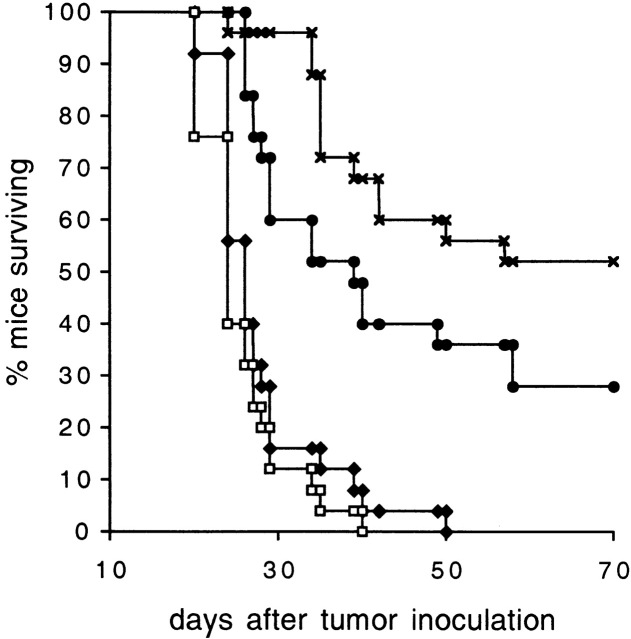
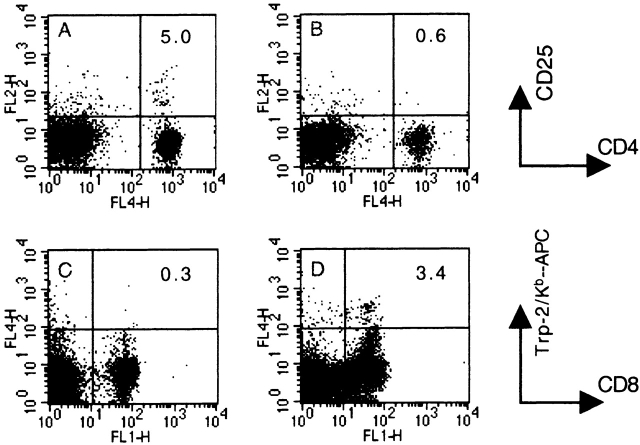
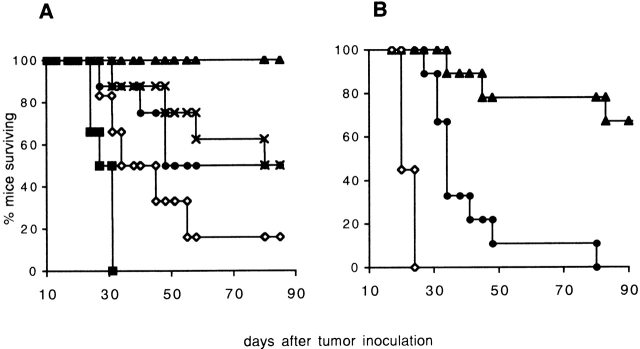
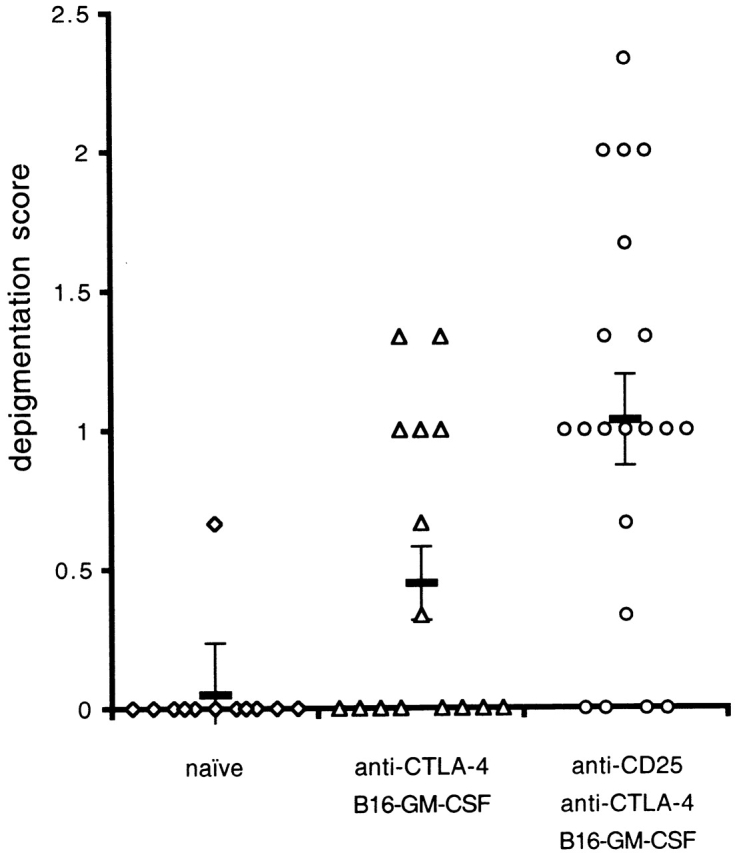
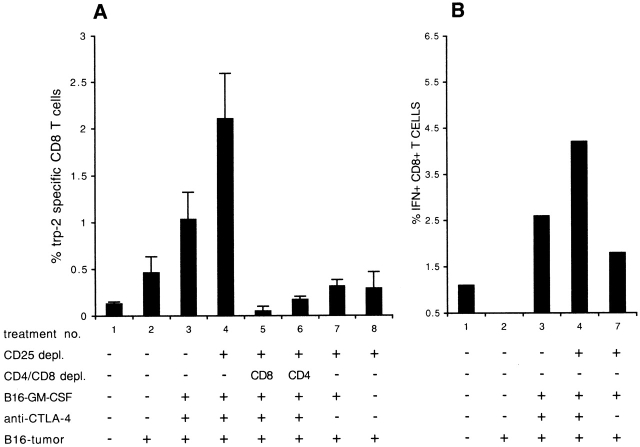
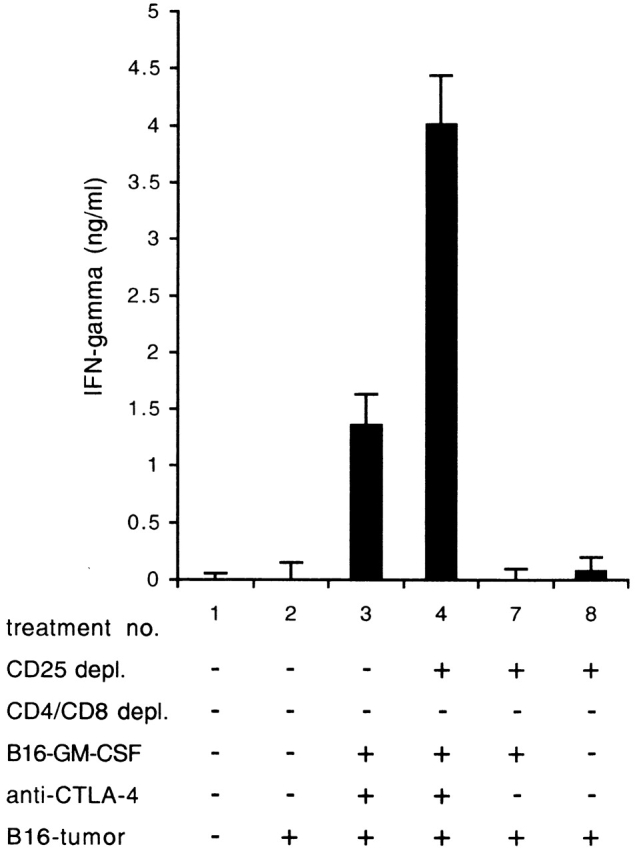
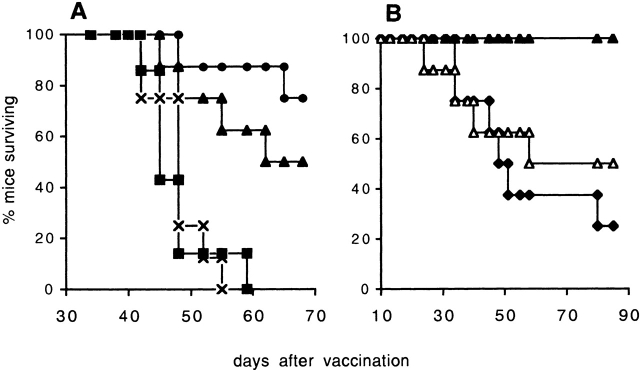
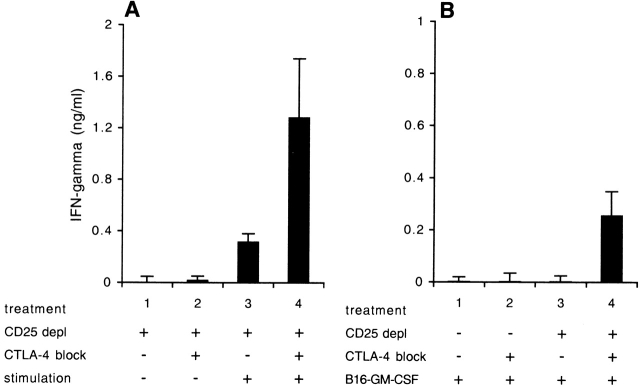
Therapeutic efficacy of a tumor cell–based vaccine against experimental B16 melanoma requires the disruption of either of two immunoregulatory mechanisms that control autoreactive T cell responses: the cytotoxic T lymphocyte–associated antigen (CTLA)-4 pathway or the CD25+ regulatory T (Treg) cells. Combination of CTLA-4 blockade and depletion of CD25+ Treg cells results in maximal tumor rejection. Efficacy of the antitumor therapy correlates with the extent of autoimmune skin depigmentation as well as with the frequency of tyrosinase-related protein 2180–188–specific CTLs detected in the periphery. Furthermore, tumor rejection is dependent on the CD8+ T cell subset. Our data demonstrate that the CTL response against melanoma antigens is an important component of the therapeutic antitumor response and that the reactivity of these CTLs can be augmented through interference with immunoregulatory mechanisms. The synergism in the effects of CTLA-4 blockade and depletion of CD25+ Treg cells indicates that CD25+ Treg cells and CTLA-4 signaling represent two alternative pathways for suppression of autoreactive T cell immunity. Simultaneous intervention with both regulatory mechanisms is therefore a promising concept for the induction of therapeutic antitumor immunity.
Overview
The claims and statistics of this paper haven’t been checked yet.
Run the check — free, no account needed. It reads the open-access text and checks the sources it cites.
Integrity signals
Registry
Cites
Statistics
Figures
Verification
Claims the paper makes
The claims and statistics of this paper haven’t been checked yet.
Run the check — free, no account needed. It reads the open-access text and checks the sources it cites.
Claims other papers make about this one
Each is checked against this paper’s own text: does it say what the citing paper says it does?
In the citing paper
“CD8+ T cells and CD4+ effector T cells have demonstrated anti-cancer potential, while regulatory T cells (CD4+ CD25+ Tregs) have been shown to be able to contribute to the attenuated immune response exhibited in cancer [65,66].”
From Current and Future Trends of Colorectal Cancer Treatment: Exploring Advances in Immunotherapy (2024) · cites this paper as [66]
Self-check
Percentages, sums and reported differences re-computed from the paper’s own numbers.
The self-check needs the paper’s full text.
Citations
Cites
Park, J., Adoro, S., Guinter, T. I., Erman, B., Alag, A., Catálfamo, M., Kimura, M. Y., Cui, Y., Lucas, P. J., Gress, R. E., et al. (2010) · Nature Immunology · doi:10.1038/ni.1840 · Cited by 5,835
Sakaguchi, S., Sakaguchi, N., Asano, M., Itoh, M., & Toda, M. (1995) · The Journal of Immunology · doi:10.4049/jimmunol.155.3.1151 · Cited by 5,608
Phenotypic Analysis of Antigen-Specific T Lymphocytes
Altman, J. D., Moss, P. A. H., Goulder, P. J. R., Barouch, D. H., McHeyzer-Williams, M. G., Bell, J. I., McMichael, A. J., & Davis, M. M. (1996) · Science · doi:10.1126/science.274.5284.94 · Cited by 3,544 · cited 1×
“H-2K b tetramers were produced as described previously (20, 21) and stored frozen in Tris-buffered saline/16% glycerol/0.”
MethodThornton, A. M., & Shevach, E. M. (1998) · The Journal of Experimental Medicine · doi:10.1084/jem.188.2.287 · Cited by 2,637
CD28 and CTLA-4 have opposing effects on the response of T cells to stimulation.
Krummel, M. F., & Allison, J. P. (1995) · The Journal of experimental medicine · doi:10.1084/jem.182.2.459 · Cited by 2,245 · cited 2×
“Anderson Cancer Center, Houston, TX), GM-CSF‐producing B16 cell lines BL6/GM-E, BL6/GM18 (18), B16/B7.1 (18), 9H10 ( 19 ), and PC61 (American Type Culture Collection) were cultured in Iscove’s IMDM (BioWhittaker) supplemented with 1 U/ml penicillin, 1 � g/ml streptomycin, 2 � M L -glutamine, 20 � M � -mercaptoethanol…”
MethodSelf-citationTakahashi, T., Tagami, T., Yamazaki, S., Uede, T., Shimizu, J., Sakaguchi, N., Mak, T. W., & Sakaguchi, S. (2000) · The Journal of Experimental Medicine · doi:10.1084/jem.192.2.303 · Cited by 2,233
CTLA-4 can function as a negative regulator of T cell activation
Walunas, T. L., Lenschow, D. J., Bakker, C. Y., Linsley, P. S., Freeman, G. J., Green, J. M., Thompson, C. B., & Bluestone, J. A. (1994) · Immunity · doi:10.1016/1074-7613(94)90071-x · Cited by 2,222
Read, S., Malmström, V., & Powrie, F. M. (2000) · The Journal of Experimental Medicine · doi:10.1084/jem.192.2.295 · Cited by 2,206
Salomon, B. L., Lenschow, D. J., Rhee, L., Ashourian, N., Singh, B., Sharpe, A. H., & Bluestone, J. A. (2000) · Immunity · doi:10.1016/s1074-7613(00)80195-8 · Cited by 2,058
Takahashi, T., Kuniyasu, Y., Toda, M., Sakaguchi, N., Itoh, M., Iwata, M., Shimizu, J., & Sakaguchi, S. (1998) · International Immunology · doi:10.1093/intimm/10.12.1969 · Cited by 1,566
Cited by
Sorted by citations
Items 601–700 of 1,000
Breaking Tolerance in a Mouse Model of Multiple Myeloma by Chemoimmunotherapy
Sharabi, A., & Haran‐Ghera, N. (2010) · Advances in cancer research · doi:10.1016/s0065-230x(10)07001-6 · Cited by 27
Liang, S. C., Москаленко, М., Roey, M. V., & Jooss, K. U. (2013) · Clinical Immunology · doi:10.1016/j.clim.2013.05.011 · Cited by 27
Localization of IL-17+Foxp3+ T Cells in Esophageal Cancer
Huang, C., & Fu, Z. (2011) · Immunological Investigations · doi:10.3109/08820139.2011.555489 · Cited by 30
Tanaka, A., Jensen, J. D., Prado, R., Riemann, H., Shellman, Y. G., Norris, D. A., Chin, L.-Y., Yee, C., & Fujita, M. (2011) · Gene Therapy · doi:10.1038/gt.2011.28 · Cited by 28
Is IDO a key enzyme bridging the gap between tumor escape and tolerance induction?
Löb, S., & Königsrainer, A. (2007) · Langenbeck s Archives of Surgery · doi:10.1007/s00423-007-0245-7 · Cited by 27
Cho, J. S., Hsu, J., & Morrison, S. L. (2008) · Cancer Immunology Immunotherapy · doi:10.1007/s00262-008-0622-2 · Cited by 27
Horani, A., Muhanna, N., Pappo, O., Melhem, A., Alvarez, C. E., Doron, S., Wehbi, W., Karussis, D., Friedman, S. L., & Safadi, R. (2006) · American Journal of Physiology-Gastrointestinal and Liver Physiology · doi:10.1152/ajpgi.00137.2006 · Cited by 27
Mihalyo, M. A., Hagymasi, A. T., Slaiby, A. M., Nevius, E., & Adler, A. J. (2007) · The Prostate · doi:10.1002/pros.20549 · Cited by 27
CD25+ regulatory T cells and tumor immunity
Jones, E., Dahm‐Vicker, M., Golgher, D. B., & Gallimore, A. (2003) · Immunology Letters · doi:10.1016/s0165-2478(02)00240-7 · Cited by 27
Sarkar, I., Basak, D., Ghosh, P., Gautam, A., Bhoumik, A., Singh, P., Kar, A., Mahanti, S., Chowdhury, S., Chakraborty, L., et al. (2025) · Science Advances · doi:10.1126/sciadv.adt2117 · Cited by 26
Black, C. C., Turk, M. J., Dragnev, K. H., & Rigas, J. R. (2013) · Lung · doi:10.1007/s00408-013-9455-7 · Cited by 26
Namdar, A., Mirzaei, R., Memarnejadian, A., Boghosian, R., Samadi, M., Mirzaei, H. R., Farajifard, H., Zavar, M., Azadmanesh, K., Elahi, S., et al. (2017) · Cancer Immunology Immunotherapy · doi:10.1007/s00262-017-2088-6 · Cited by 26
Mechanisms of T-cell inhibition: implications for cancer immunotherapy
Mittendorf, E. A., & Sharma, P. (2009) · Expert Review of Vaccines · doi:10.1586/erv.09.144 · Cited by 26
CD4 + regulatory cells as a potential immunotherapy
Fehervari, Z. T., & Sakaguchi, S. (2005) · Philosophical Transactions of the Royal Society B Biological Sciences · doi:10.1098/rstb.2005.1695 · Cited by 26
Laronne, A., Zipori, D., & Haran‐Ghera, N. (2008) · The Journal of Immunology · doi:10.4049/jimmunol.181.5.3714 · Cited by 26
Inhibitory costimulation and anti-tumor immunity
Martín‐Orozco, N., & Dong, C. (2007) · Seminars in Cancer Biology · doi:10.1016/j.semcancer.2007.06.003 · Cited by 26
Transduction of an HLA-DP4–restricted NY-ESO-1–specific TCR into Primary Human CD4+ Lymphocytes
Zhao, Y., Zheng, Z., Khong, H. T., Rosenberg, S. A., & Morgan, R. A. (2006) · Journal of Immunotherapy · doi:10.1097/01.cji.0000203082.20365.7f · Cited by 26
Kochenderfer, J. N., Chien, C. D., Simpson, J. L., & Gress, R. E. (2006) · The Journal of Immunology · doi:10.4049/jimmunol.177.12.8860 · Cited by 26
Downregulation of IFN‐γR in association with loss of Fas function is linked to tumor progression
Yang, D., Stewart, T. J., Smith, K. K., Georgi, D. E., Abrams, S. I., & Liu, K. (2007) · International Journal of Cancer · doi:10.1002/ijc.23090 · Cited by 26
The changes of CD4+CD25+/CD4+ proportion in spleen of tumor-bearing BALB/c mice
Liu, J., Zhang, X., Ding, Y., Peng, R., Cheng, X., Zhang, N.-H., Xia, J., & Zeng, Y. (2005) · Journal of Translational Medicine · doi:10.1186/1479-5876-3-5 · Cited by 26
Dendritic Cell–Based Vaccination Against Cancer
Saito, H., Frleta, D., Dubsky, P. C., & Palucka, K. (2006) · Hematology/Oncology Clinics of North America · doi:10.1016/j.hoc.2006.02.011 · Cited by 27
Antigen-specific CD4+ regulatory T cells in cancer: implications for immunotherapy
Wang, H. Y., & Wang, R. (2005) · Microbes and Infection · doi:10.1016/j.micinf.2005.03.028 · Cited by 26
Raeisi, E., Yavuz, M., Khosravifarsani, M., & Fadaei, Y. (2024) · The European Physical Journal Plus · doi:10.1140/epjp/s13360-024-05111-4 · Cited by 25
Janikashvili, N., LaCasse, C. J., Larmonier, C. B., Trad, M., Herrell, A., Bustamante, S., Bonnotte, B., Har-Noy, M., Larmonier, N., & Katsanis, E. (2010) · Blood · doi:10.1182/blood-2010-06-288621 · Cited by 25
In vitroinduction of T cells that are resistant to A2adenosine receptor‐mediated immunosuppression
Ohta, A., Kjærgaard, J., Sharma, S., Mohsin, M., Goel, N., Madasu, M. M., Fradkov, E., Akiko, O., & Sitkovsky, M. V. (2009) · British Journal of Pharmacology · doi:10.1111/j.1476-5381.2008.00019.x · Cited by 25
Regulatory T cells control macrophage accumulation and activation in lymphoma
Galani, I. E., Wendel, M., Stojanovic, A., Jesiak, M., Müller, M., Schellack, C., Suri‐Payer, E., & Cerwenka, A. (2009) · International Journal of Cancer · doi:10.1002/ijc.25132 · Cited by 25
Regulatory T cells—the renaissance of the suppressor T cells
Bopp, T., Jonuleit, H., & Schmitt, E. (2007) · Annals of Medicine · doi:10.1080/07853890701379700 · Cited by 25
BiovaxID™: a personalized therapeutic cancer vaccine for non-Hodgkin’s lymphoma
Lee, S., Jiang, Y.-F., Park, K. U., Woo, A. F., & Neelapu, S. S. (2006) · Expert Opinion on Biological Therapy · doi:10.1517/14712598.7.1.113 · Cited by 25
Targeting Costimulatory Pathways for Tumor Immunotherapy
Ward, R. C., & Kaufman, H. L. (2007) · International Reviews of Immunology · doi:10.1080/08830180701365941 · Cited by 27
Immune alterations in malignant melanoma and current immunotherapy concepts
Shimanovsky, A., Jethava, A., & Dasanu, C. A. (2013) · Expert Opinion on Biological Therapy · doi:10.1517/14712598.2013.827658 · Cited by 24
Chinese Medicine and Biomodulation in Cancer Patients—Part One
Sagar, S. M., & Wong, R. K. (2008) · Current Oncology · doi:10.3747/co.2008.197 · Cited by 24
Santinon, F., Bennani, F. E., Bachais, M., Pacis, A., & Rudd, C. E. (2022) · Scientific Reports · doi:10.1038/s41598-022-23016-z · Cited by 25
CD4+CD25+ regulatory T cells: II. Origin, disease models and clinical aspects
Nielsen, J., Holm, T. L., & Claësson, M. H. (2004) · Apmis · doi:10.1111/j.1600-0463.2004.apm1121002.x · Cited by 24
Curiel, T. J. (2011) · Springer eBooks · doi:10.1007/978-1-4419-9914-6_9 · Cited by 24
Muto, S., Owada, Y., Inoue, T., Watanabe, Y., Yamaura, T., Fukuhara, M., Okabe, N., Matsumura, Y., Hasegawa, T., Osugi, J., et al. (2015) · International Journal of Oncology · doi:10.3892/ijo.2015.3196 · Cited by 23
The Microbiome-Immune Axis Therapeutic Effects in Cancer Treatments
Son, Y. M., & Kim, J. (2022) · Journal of Microbiology and Biotechnology · doi:10.4014/jmb.2208.08002 · Cited by 23
Stein, P., Weber, M., Prüfer, S., Schmid, B., Schmitt, E., Probst, H. C., Waisman, A., Langguth, P., Schild, H., & Radsak, M. P. (2011) · PLoS ONE · doi:10.1371/journal.pone.0027911 · Cited by 23
Oral Squamous Carcinoma Cells Express B7-H1 and B7-DC Receptors in Vivo
Groeger, S. E., Howaldt, H., Raifer, H., Gattenloehner, S., Chakraborty, T., & Meyle, J. (2016) · Pathology & Oncology Research · doi:10.1007/s12253-016-0100-7 · Cited by 23
Miguel, A., Sendra, L., Noé, V., Ciudad, C. J., Dası́, F., Hervás, D., Herrero, M. J., & Aliño, S. F. (2017) · OncoTargets and Therapy · doi:10.2147/ott.s104393 · Cited by 23
Song, S., Wang, Y., Zhang, Y., Wang, F., He, Y., Ren, D., Guo, Y., & Sun, S. (2007) · Cancer Letters · doi:10.1016/j.canlet.2007.06.004 · Cited by 23
Krajina, T., Leithäuser, F., & Reimann, J. (2004) · European Journal of Immunology · doi:10.1002/eji.200324463 · Cited by 23
Tano, T., Okamoto, M., Kan, S., Bando, T., Goda, H., Nakashiro, K., Shimodaira, S., Koido, S., Homma, S., Fujita, T., et al. (2013) · Neoplasia · doi:10.1593/neo.13488 · Cited by 22
Regulatory T cells in the immunotherapy of melanoma
Ouyang, Z., Wu, H., Li, L., Luo, Y., Li, X., & Huang, G. (2015) · Tumor Biology · doi:10.1007/s13277-015-4315-0 · Cited by 22
Technology Insight: vaccine therapy for prostate cancer
Vieweg, J., & Dannull, J. (2005) · Nature Clinical Practice Urology · doi:10.1038/ncpuro0079 · Cited by 22
The Role of Post-Translational Modifications of Chemokines by CD26 in Cancer
Zutter, A. D., Damme, J. V., & Struyf, S. (2021) · Cancers · doi:10.3390/cancers13174247 · Cited by 22
Cell-Based Regeneration and Treatment of Liver Diseases
Hofmann, J. D., Hackl, V., Esser, H., Mészáros, A., Fodor, M., Öfner, D., Troppmair, J., Schneeberger, S., & Hautz, T. (2021) · International Journal of Molecular Sciences · doi:10.3390/ijms221910276 · Cited by 22
Immunotherapy of multiple myeloma: the start of a long and tortuous journey
Harrison, S. J., Cook, G., Nibbs, R. J. B., & Prince, H. M. (2006) · Expert Review of Anticancer Therapy · doi:10.1586/14737140.6.12.1769 · Cited by 22
McGee, H. S., Edwan, J. H., & Agrawal, D. K. (2009) · American Journal of Respiratory Cell and Molecular Biology · doi:10.1165/rcmb.2008-0397oc · Cited by 23
Elkord, E., Burt, D. J., Drijfhout, J. W., Hawkins, R. E., & Stern, P. L. (2007) · Cancer Immunology Immunotherapy · doi:10.1007/s00262-007-0419-8 · Cited by 22
Yannelli (2009) · Oncology Reports · doi:10.3892/or_00000588 · Cited by 22
Regulatory T cells: How do they find their space in the immunological arena?
D’Ambrosio, D. (2005) · Seminars in Cancer Biology · doi:10.1016/j.semcancer.2005.11.002 · Cited by 22
Renga, M., Pedrazzoli, P., & Siena, S. (2003) · Annals of Oncology · doi:10.1093/annonc/mdg317 · Cited by 22
Effects of the Tumor Microenvironment on the Efficacy of Tumor Immunotherapy
Neeson, P. J., & Paterson, Y. Y. W. (2006) · Immunological Investigations · doi:10.1080/08820130600755009 · Cited by 22
Stevenson, F. K., Rice, J., & Zhu, D. (2004) · Advances in immunology · doi:10.1016/s0065-2776(04)82002-9 · Cited by 22
The Dendritic Cell Dilemma in the Skin: Between Tolerance and Immunity
Scheib, N., Tiemann, J., Becker, C., Probst, H. C., Raker, V., & Steinbrink, K. (2022) · Frontiers in Immunology · doi:10.3389/fimmu.2022.929000 · Cited by 24
Li, K., Lv, J., Wang, J., Wei, Y., Zhang, Y., Lin, J., & Zhu, Q. (2024) · International Immunopharmacology · doi:10.1016/j.intimp.2024.112485 · Cited by 21
Analysis of splenic Gr‐1int immature myeloid cells in tumor‐bearing mice
Yamamoto, Y., Ishigaki, H., Ishida, H., Itoh, Y., Noda, Y., & Ogasawara, K. (2008) · Microbiology and Immunology · doi:10.1111/j.1348-0421.2008.00009.x · Cited by 21
The role of regulatory T cells in ovarian cancer
Dietl, J., Engel, J. B., & Wischhusen, J. (2007) · International Journal of Gynecological Cancer · doi:10.1111/j.1525-1438.2006.00861.x · Cited by 21
Wang, M., Yang, I. V., Davidson, E., Joetham, A., Takeda, K., O’Connor, B. P., & Gelfand, E. W. (2017) · Journal of Allergy and Clinical Immunology · doi:10.1016/j.jaci.2017.04.020 · Cited by 21
Treg Cells As Potential Cellular Targets for Functionalized Nanoparticles in Cancer Therapy
Jonuleit, H., Bopp, T., & Becker, C. (2016) · Nanomedicine · doi:10.2217/nnm-2016-0197 · Cited by 21
Immunotherapy in Renal Cell Carcinoma
Heine, A., Holderried, T. A. W., & Brossart, P. (2008) · Immunotherapy · doi:10.2217/1750743x.1.1.97 · Cited by 21
Qu, Y., Taylor, J. L., Bose, A., & Storkus, W. J. (2011) · Cancer Gene Therapy · doi:10.1038/cgt.2011.37 · Cited by 21
Differential Suppression of Tumor-Specific CD8+ T Cells by Regulatory T Cells
James, E., Yeh, A., King, C., Korangy, F., Bailey, I., Boulanger, D. S. M., den Eynde, B. J. V., Murray, N., & Elliott, T. J. (2010) · The Journal of Immunology · doi:10.4049/jimmunol.1000134 · Cited by 21
Chen, Y., Fang, J.-H., Lai, M., & Shan, Y. (2008) · World Journal of Gastroenterology · doi:10.3748/wjg.14.5797 · Cited by 21
Immunological responses can have both pro- and antitumour effects: implications for immunotherapy
Stewart, T. J., Greeneltch, K. M., Lutsiak, M. E. C., & Abrams, S. I. (2007) · Expert Reviews in Molecular Medicine · doi:10.1017/s1462399407000233 · Cited by 21
Edward, M. (2006) · Frontiers in bioscience · doi:10.2741/1895 · Cited by 21
Klyushnenkova, E., Riabov, V., Kouiavskaia, D. V., Wietsma, A. C., Zhan, M., & Alexander, R. B. (2014) · The Prostate · doi:10.1002/pros.22858 · Cited by 20
Regional lymphatic immunity in melanoma
Grotz, T. E., Mansfield, A. S., Jakub, J. W., & Markovic, S. N. (2011) · Melanoma Research · doi:10.1097/cmr.0b013e32834e1f33 · Cited by 20
Rossi, G. R., Mautino, M. R., Awwad, D. Z., Husske, K., Lejukole, H., Koenigsfeld, M., Ramsey, W. J., Vahanian, N. N., & Link, C. J. (2008) · Journal of Immunotherapy · doi:10.1097/cji.0b013e31817d2f45 · Cited by 20
High-avidity Autoreactive CD4+ T Cells Induce Host CTL, Overcome Tregs and Mediate Tumor Destruction
Brandmaier, A., Leitner, W. W., Ha, S. P., Sidney, J., Restifo, N. P., & Touloukian, C. E. (2009) · Journal of Immunotherapy · doi:10.1097/cji.0b013e3181ab1824 · Cited by 20
Shi, L. Z., Kalupahana, N. S., Turnis, M. E., Neale, G. A. M., Hock, H. R., Vignali, D. A. A., & Chi, H. (2013) · Proceedings of the National Academy of Sciences · doi:10.1073/pnas.1300950110 · Cited by 20
Altering immune tolerance therapeutically: the power of negative thinking
Prud’homme, G. J. (2003) · Journal of Leukocyte Biology · doi:10.1189/jlb.0803394 · Cited by 20
Modulation of antitumor responses by dendritic cells
Vieweg, J., & Jackson, A. M. (2004) · Springer Seminars in Immunopathology · doi:10.1007/s00281-004-0175-1 · Cited by 20
Regulatory T Cells: Potential Target in Anticancer Immunotherapy
Juang, C., Hung, C., Yeh, J.-Y., Horng, H., Twu, N., Cheng, M., Wen, K.-C., Yuan, C., Chao, K.-C., Wu, T. ‐., et al. (2007) · Taiwanese Journal of Obstetrics and Gynecology · doi:10.1016/s1028-4559(08)60023-6 · Cited by 19
Jing, W., Orentas, R. J., & Johnson, B. D. (2007) · Transplantation and Cellular Therapy · doi:10.1016/j.bbmt.2006.11.018 · Cited by 19
Maxeiner, J., Karwot, R., Sauer, K., Scholtes, P., Boross, I., Koslowski, M., Türeci, Ö., Wiewrodt, R. G., Neurath, M. F., Lehr, H. A., et al. (2009) · Cancer Research · doi:10.1158/0008-5472.can-08-1678 · Cited by 19
Stathopoulos, A., Samuelson, C. G., Milbouw, G., Hermanne, J. P., Schijns, V. E. C. J., & Chen, T. C. (2008) · Vaccine · doi:10.1016/j.vaccine.2008.01.039 · Cited by 19
Multhoff, G., Habl, G., & Combs, S. E. (2016) · International Journal of Hyperthermia · doi:10.3109/02656736.2016.1152632 · Cited by 19
Interleukin 21 inhibits cancer-mediated FOXP3 induction in naïve human CD4 T cells
Kannappan, V., Butcher, K., Trela, M., Nicholl, I. D., Wang, W., & Attridge, K. (2017) · Cancer Immunology Immunotherapy · doi:10.1007/s00262-017-1970-6 · Cited by 19
Sharabi, A., & Haran‐Ghera, N. (2011) · Bone Marrow Research · doi:10.1155/2011/269519 · Cited by 19
Bergot, A., Durgeau, A., Levacher, B., Colombo, B. M., Cohen, J. L., & Klatzmann, D. (2010) · Cancer Gene Therapy · doi:10.1038/cgt.2010.21 · Cited by 19
Hagymasi, A. T., Slaiby, A. M., Mihalyo, M. A., Qui, H. Z., Zammit, D. J., Lefrançois, L., & Adler, A. J. (2007) · The Journal of Immunology · doi:10.4049/jimmunol.179.3.1524 · Cited by 19
Margalit, A., Migalovich-Sheikhet, H., Carmi, Y., Berko, D., Tzehoval, E., Eisenbach, L., & Gross, G. (2006) · The Journal of Immunology · doi:10.4049/jimmunol.176.1.217 · Cited by 19
Regulatory T cells as therapeutic target in Hodgkin's lymphoma
Koenecke, C., Ukena, S. N., Ganser, A., & Franzke, A. (2008) · Expert Opinion on Therapeutic Targets · doi:10.1517/14728222.12.6.769 · Cited by 19
Prevention of Graft-Versus-Host Diseases by in Vivo supCD28mAb-Expanded Antigen-Specific nTreg Cells
Kitazawa, Y., Li, X., Liu, Z., Kimura, H., Isaka, Y., Hünig, T., & Takahara, S. (2010) · Cell Transplantation · doi:10.3727/096368910x508870 · Cited by 18
Structure of CTLA-4 complexed with a pH-sensitive cancer immunotherapeutic antibody
Gao, H. J., Cai, H., Liu, J., Wang, X., Zheng, P., Devenport, M., Xu, T., Dou, F., Liu, Y., & Zhou, A. (2020) · Cell Discovery · doi:10.1038/s41421-020-00202-9 · Cited by 18
Combination Adjuvants Enhance Recombinant Protein Vaccine Protection against Fungal Infection
Wüthrich, M., Dobson, H. E., Taira, C. L., Okaa, U. J., Dias, L. D. S., Isidoro‐Ayza, M., Petrovsky, N., & Klein, B. S. (2021) · mBio · doi:10.1128/mbio.02018-21 · Cited by 18
Uraki, R., Imai, M., Ito, M., Shime, H., Odanaka, M., Okuda, M., Kawaoka, Y., & Yamazaki, S. (2021) · PLoS Pathogens · doi:10.1371/journal.ppat.1010085 · Cited by 18
New strategies for the manipulation of adaptive immune responses
Bopp, T., Radsak, M. P., Schmitt, E., & Schild, H. (2010) · Cancer Immunology Immunotherapy · doi:10.1007/s00262-010-0851-z · Cited by 18
Hasegawa, K., Tagawa, M., Takagi, K., Tsukamoto, H., Tomioka, Y., Suzuki, T., Nishioka, Y., Ohrui, T., & Numasaki, M. (2016) · Cancer Gene Therapy · doi:10.1038/cgt.2016.29 · Cited by 18
Liu, W., Liu, Y., Hu, C., Xu, C., Chen, J., Chen, Y., Cai, J., Yan, G., & Zhu, W. (2021) · International Journal of Cancer · doi:10.1002/ijc.33703 · Cited by 18
Targeting TNFR2: A Novel Breakthrough in the Treatment of Cancer
Li, M., Zhang, X., Bai, X., & Liang, T. (2022) · Frontiers in Oncology · doi:10.3389/fonc.2022.862154 · Cited by 18
Translating Treg Therapy in Humanized Mice
Hahn, S. A., Bellinghausen, I., Trinschek, B., & Becker, C. (2015) · Frontiers in Immunology · doi:10.3389/fimmu.2015.00623 · Cited by 18
Naturally occurring self-reactive CD4+CD25+ regulatory T cells: universal immune code.
Pakravan, N., Hassan, A. T. M., & Hassan, Z. M. (2007) · PubMed · Cited by 18
Therapeutic lymphoma vaccines: importance of T-cell immunity
Neelapu, S. S., Lee, S., Qin, H., Cha, S.-C., Woo, A. F., & Kwak, L. W. (2006) · Expert Review of Vaccines · doi:10.1586/14760584.5.3.381 · Cited by 18
The clinical utility of cytotoxic T lymphocyte antigen 4 abrogation by human antibodies
Weber, J. S. (2006) · Melanoma Research · doi:10.1097/01.cmr.0000232292.06785.a3 · Cited by 18
Lotz, C., Ferreira, E. A., Drexler, I., Mutallib, S. A., Huber, C., Sutter, G., & Theobald, M. (2003) · International Journal of Cancer · doi:10.1002/ijc.11602 · Cited by 18
T-regulatory cells in tumour-specific vaccination strategies
Welters, M. J. P., Piersma, S. J., & van der Burg, S. H. (2008) · Expert Opinion on Biological Therapy · doi:10.1517/14712598.8.9.1365 · Cited by 17
Regulatory T cells: magic bullets for immunotherapy?
Frey, O., & Bräuer, R. (2006) · Archivum Immunologiae et Therapiae Experimentalis · doi:10.1007/s00005-006-0008-0 · Cited by 17
Wüthrich, M., Fisette, P. L., Filutowicz, H. I., & Klein, B. S. (2006) · The Journal of Immunology · doi:10.4049/jimmunol.176.9.5538 · Cited by 16
Metadata
- Authors
- Sutmuller, R. P. M., van Duivenvoorde, L. M., van Elsas, A., Schumacher, T. N. M., Wildenberg, M. E., Allison, J. P., Toes, R. E. M., Offringa, R., & Melief, C. J. M.
- Affiliations
- Leiden University Medical Center (NL)
- aDepartment of Immunohematology and Blood Transfusion, Tumor Immunology Lab, E3-Q, Leiden University Medical Center, 2300 RC Leiden, Netherlands
- The Netherlands Cancer Institute (NL)
- University of California, Berkeley (US)
- Venue
- The Journal of Experimental Medicine
- Publisher
- Rockefeller University Press
- Published
- 2001-09-17
- Volume
- 194
- Issue
- 6
- Pages
- 823-832
- ISSN
- 0022-1007 (ISSN-L)
- 1540-9538
- PMC
- PMC2195955
- OpenAlex
- W2148911309
- Cited by
- 1,008
- References
- 44
- Citations by year
- 2026: 3 · 2025: 7 · 2024: 8 · 2023: 12 · 2022: 15 · 2021: 15 · 2020: 18 · 2019: 11 · 2018: 12 · 2017: 25 · 2016: 22 · 2015: 36 · 2014: 26 · 2013: 48 · 2012: 41
- FWCI
- 13.30
- Type
- journal article
- Language
- en
- Open access
- green
- www.ncbi.nlm.nih.gov
- Licence
- cc-by-nc-sa
- Locations
- The Journal of Experimental Medicine (publishedVersion)
- PubMed Central (publishedVersion, cc-by-nc-sa)
- PubMed (publishedVersion)
- Data Archiving and Networked Services (DANS) (submittedVersion)
- Pure Amsterdam UMC (submittedVersion)
- Topics
- Life Sciences › Immunology and Microbiology › Immunology › T-cell and B-cell Immunology
- Health Sciences › Medicine › Oncology › Cancer Immunotherapy and Biomarkers
- Life Sciences › Immunology and Microbiology › Immunology › Immunotherapy and Immune Responses
- Keywords
- CTLA-4 blockade, CD25+ regulatory T cells, Treg depletion, antitumor immunity, B16 melanoma, CD8+ T cells, tyrosinase-related protein 2, immune regulation, tumor rejection
- MeSH terms
- Abatacept, Animals, Antibodies, Monoclonal, Antigens, Differentiation, Antigens, Neoplasm, Female, Immunotherapy, Lymphocyte Depletion, Melanoma, Experimental, Mice, Inbred C57BL, Mice, Nude, T-Lymphocytes, Cytotoxic, Tumor Cells, Cultured, Receptors, Interleukin-2, Biomarkers, CD4-Positive T-Lymphocytes, Antigens, CD, Immunoconjugates, Intramolecular Oxidoreductases, Mice, CTLA-4 Antigen
About these checks
Registry, retraction, Cites and statistics results are computed, not judged, with one exception: a printed reference that no index lists is read once by a model before it counts as a citation error. Claims are extracted by a model and kept only when their quote appears verbatim in the text; each cited source is then checked, with a model’s help, for whether it says what the claim relies on. Those verdicts can be wrong — read the claim’s quote and the cited source before relying on one.
Statistics and arithmetic are recomputed, not judged.
Confidence bands are shown only for fields calibrated on our annotated test set. None is calibrated yet, so no band is shown.
What counts as a claim ›How we measure confidence ›How we check this ›
Are you an author, or do you see a problem with this page? Request a review
