

The DOI matches its Crossref record; 43 of the 45 references it cites were found in a registry or an index.
Subsets of Human Dendritic Cell Precursors Express Different Toll-like Receptors and Respond to Different Microbial Antigens
Open accessAbstract
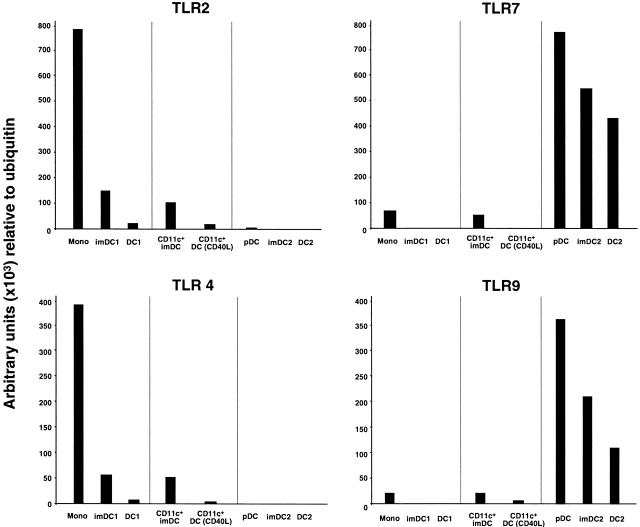
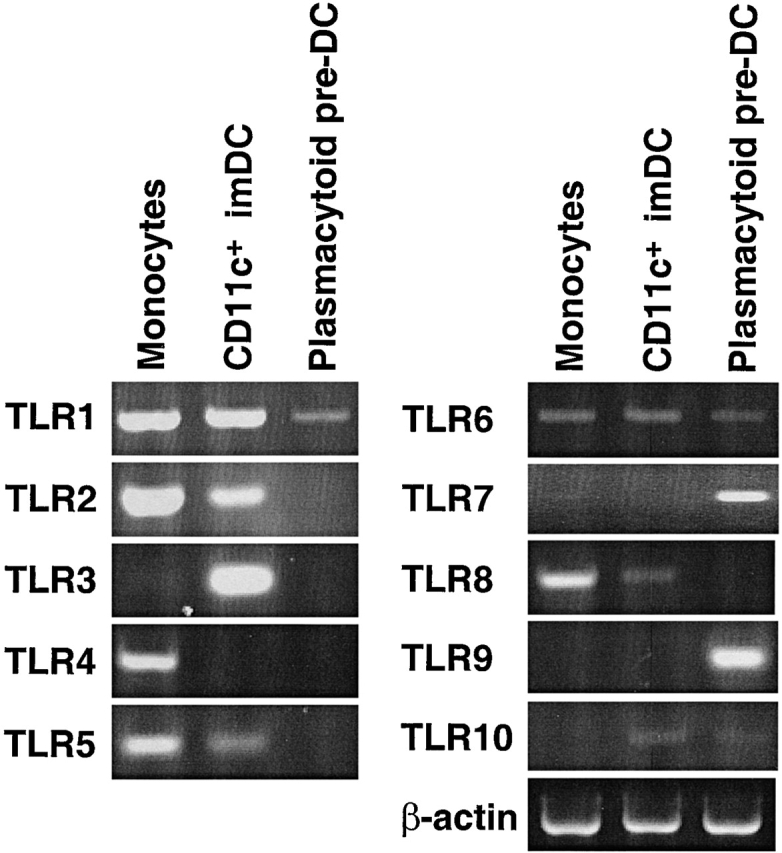
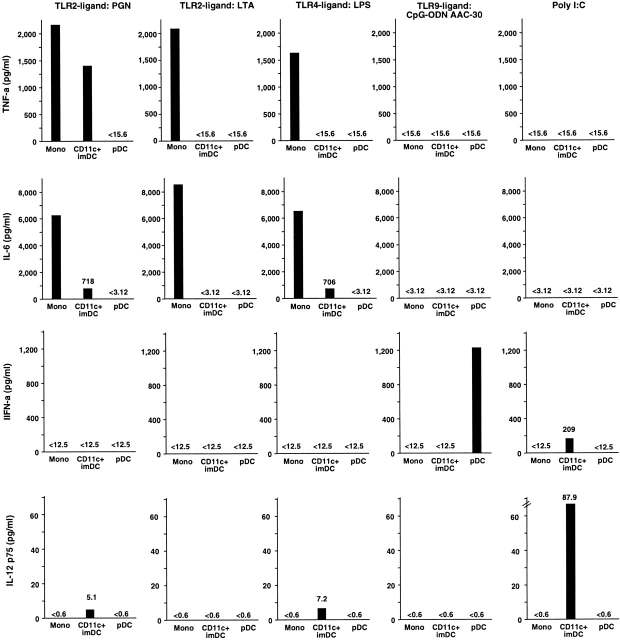
Toll-like receptors (TLRs) are ancient microbial pattern recognition receptors highly conserved from Drosophila to humans. To investigate if subsets of human dendritic cell precursors (pre-DC), including monocytes (pre-DC1), plasmacytoid DC precursors (pre-DC2), and CD11c+ immature DCs (imDCs) are developed to recognize different microbes or microbial antigens, we studied their TLR expression and responses to microbial antigens. We demonstrate that whereas monocytes preferentially express TLR 1, 2, 4, 5, and 8, plasmacytoid pre-DC strongly express TLR 7 and 9. In accordance with these TLR expression profiles, monocytes respond to the known microbial ligands for TLR2 (peptidoglycan [PGN], lipoteichoic acid) and TLR4 (lipopolysaccharide), by producing tumor necrosis factor (TNF)-α and interleukin (IL)-6. In contrast, plasmacytoid pre-DCs only respond to the microbial TLR9-ligand, CpG-ODNs (oligodeoxynucleotides [ODNs] containing unmethylated CpG motifs), by producing IFN-α. CD11c+ imDCs preferentially express TLR 1, 2, and 3 and respond to TLR 2-ligand PGN by producing large amounts of TNF-α, and to viral double-stranded RNA-like molecule poly I:C, by producing IFN-α and IL-12. The expression of distinct sets of TLRs and the corresponding difference in reactivity to microbial molecules among subsets of pre-DCs and imDCs support the concept that they have developed through distinct evolutionary pathways to recognize different microbial antigens.
Overview
The claims and statistics of this paper haven’t been checked yet.
Run the check — free, no account needed. It reads the open-access text and checks the sources it cites.
Integrity signals
Registry
Cites
Statistics
Figures
Verification
Claims the paper makes
The claims and statistics of this paper haven’t been checked yet.
Run the check — free, no account needed. It reads the open-access text and checks the sources it cites.
Claims other papers make about this one
Each is checked against this paper’s own text: does it say what the citing paper says it does?
In the citing paper
“In addition, cytokines produced by the epithelium or by migrating inflammatory cells upon viral infection may affect cell-to-cell contact through interaction with TJs and desmosomes and thus disrupt the continuity of the epithelial barrier (135).”
From The airway epithelium: soldier in the fight against respiratory viruses (2011) · cites this paper as [135]
Self-check
Percentages, sums and reported differences re-computed from the paper’s own numbers.
The self-check needs the paper’s full text.
Citations
Cites
Single-Step Method of RNA Isolation by Acid Guanidinium Thiocyanate–Phenol–Chloroform Extraction
Chomczynski, P., & Sacchi, N. (1987) · Analytical Biochemistry · doi:10.1006/abio.1987.9999 · Cited by 65,515
Dendritic cells and the control of immunity
Banchereau, J., & Steinman, R. M. (1998) · Nature · doi:10.1038/32588 · Cited by 14,486
A Toll-like receptor recognizes bacterial DNA
Hemmi, H., Takeuchi, O., Kawai, T., Kaisho, T., Sato, S., Sanjo, H., Matsumoto, M., Hoshino, K., Wagner, H., Takeda, K., et al. (2000) · Nature · doi:10.1038/35047123 · Cited by 6,491
Takeuchi, O., Hoshino, K., Kawai, T., Sanjo, H., Takada, H., Ogawa, T., Takeda, K., & Akira, S. (1999) · Immunity · doi:10.1016/s1074-7613(00)80119-3 · Cited by 3,680
Toll-like receptors in the induction of the innate immune response
Aderem, A. A., & Ulevitch, R. J. (2000) · Nature · doi:10.1038/35021228 · Cited by 3,082
The Nature of the Principal Type 1 Interferon-Producing Cells in Human Blood
Siegal, F. P., Kadowaki, N., Shodell, M., Fitzgerald-Bocarsly, P. A., Shah, K., Ho, S., Antonenko, S., & Liu, Y.-J. (1999) · Science · doi:10.1126/science.284.5421.1835 · Cited by 2,293
Self-citationOzinsky, A., Underhill, D. M., Fontenot, J. D., Hajjar, A. M., Smith, K. D., Wilson, C. B., Schroeder, L. A., & Aderem, A. A. (2000) · Proceedings of the National Academy of Sciences · doi:10.1073/pnas.250476497 · Cited by 2,086
Reciprocal Control of T Helper Cell and Dendritic Cell Differentiation
Rissoan, M., Soumelis, V., Kadowaki, N., Grouard, G., Brière, F., Malefyt, R. D. W., & Liu, Y.-J. (1999) · Science · doi:10.1126/science.283.5405.1183 · Cited by 1,835
Self-citationCella, M., Jarrossay, D., Facchetti, F., Alebardi, O., Nakajima, H., Lanzavecchia, A., & Colonna, M. (1999) · Nature Medicine · doi:10.1038/11360 · Cited by 1,734
Peptidoglycan- and Lipoteichoic Acid-induced Cell Activation Is Mediated by Toll-like Receptor 2
Schwandner, R., Dziarski, R., Wesche, H., Rothe, M., & Kirschning, C. J. (1999) · Journal of Biological Chemistry · doi:10.1074/jbc.274.25.17406 · Cited by 1,704
Cited by
Sorted by citations
Items 301–400 of 1,001
Wit, D. D., Olislagers, V., Goriely, S., Vermeulen, F., Wagner, H., Goldman, M., & Willems, F. (2003) · Blood · doi:10.1182/blood-2003-04-1216 · Cited by 168
Variegation of the Immune Response with Dendritic Cells and Pathogen Recognition Receptors
Pulendran, B. (2005) · The Journal of Immunology · doi:10.4049/jimmunol.174.5.2457 · Cited by 171
Kastenmüller, K., Wille-Reece, U., Lindsay, R. W. B., Trager, L., Darrah, P. A., Flynn, B. J., Becker, M. R., Udey, M. C., Clausen, B. E., Igyártó, B. Z., et al. (2011) · Journal of Clinical Investigation · doi:10.1172/jci45416 · Cited by 167
Human blood mDC subsets exhibit distinct TLR repertoire and responsiveness
Hémont, C., Néel, A., Heslan, M., Braudeau, C., & Josien, R. (2013) · Journal of Leukocyte Biology · doi:10.1189/jlb.0912452 · Cited by 167
Palomares, Ó., Rückert, B., Jartti, T. T., Küçüksezer, U. C., Puhakka, T., Alcaide, E. G., Fahrner, H. B., Speiser, A., Jung, A., Kwok, W. W., et al. (2011) · Journal of Allergy and Clinical Immunology · doi:10.1016/j.jaci.2011.09.031 · Cited by 166
Harnessing human dendritic cell subsets for medicine
Ueno, H., Schmitt, N., Klechevsky, E., Pedroza‐González, A., Matsui, T., Zurawski, G., Oh, S., Fay, J. W., Pascual, V., Banchereau, J., et al. (2010) · Immunological Reviews · doi:10.1111/j.0105-2896.2009.00884.x · Cited by 172
Dendritic Cells and Tumor Microenvironment: A Dangerous Liaison
Fricke, I., & Gabrilovich, D. I. (2006) · Immunological Investigations · doi:10.1080/08820130600803429 · Cited by 172
Periodontal disease immunology: ‘double indemnity’ in protecting the host
Ebersole, J. L., Dawson, D. R., Morford, L. A., Peyyala, R., Miller, C. S., & González, O. A. (2013) · Periodontology 2000 · doi:10.1111/prd.12005 · Cited by 175
Jackson, S. H., Yu, C., Mahdi, R. M., Ebong, S., & Egwuagu, C. E. (2004) · The Journal of Immunology · doi:10.4049/jimmunol.172.4.2307 · Cited by 169
Human Toll‐like receptor‐dependent induction of interferons in protective immunity to viruses
Zhang, S., Jouanguy, E., Sancho‐Shimizu, V., von Bernuth, H., Yang, K., Abel, L., Pïcard, C., Puel, A., & Casanova, J. (2007) · Immunological Reviews · doi:10.1111/j.1600-065x.2007.00564.x · Cited by 171
HCV-related hepatocellular carcinoma: From chronic inflammation to cancer
Castello, G., Scala, S., Palmieri, G., Curley, S. A., & Izzo, F. (2009) · Clinical Immunology · doi:10.1016/j.clim.2009.10.007 · Cited by 163
Nugent, A. S., Corr, S. C., Carpenter, S. B., Keogh, L., Doyle, B., Martin, C. M., Fitzgerald, K. A., Daly, S., O’Leary, J. J., & O'Neill, L. A. J. (2012) · The Journal of Immunology · doi:10.4049/jimmunol.1103454 · Cited by 164
Derivation of 2 categories of plasmacytoid dendritic cells in murine bone marrow
Pelayo, R., Hirose, J., Huang, J., Garrett, K. P., Delogu, A., Busslinger, M., & Kincade, P. W. (2005) · Blood · doi:10.1182/blood-2004-07-2529 · Cited by 164
Jégo, G., Bataille, R., Geffroy-Luseau, A., Descamps, G., & Pellat‐Deceunynck, C. (2006) · Leukemia · doi:10.1038/sj.leu.2404226 · Cited by 163
Immunostimulatory CpG-DNA Activates Murine Microglia
Dalpke, A. H., Schäfer, M. K.-H., Frey, M., Zimmermann, S., Tebbe, J. J., Weihe, E., & Heeg, K. M. (2002) · The Journal of Immunology · doi:10.4049/jimmunol.168.10.4854 · Cited by 163
Plasmacytoid dendritic cells: the key to CpG
Rothenfußer, S., Tuma, E., Endres, S., & Hartmann, G. (2002) · Human Immunology · doi:10.1016/s0198-8859(02)00749-8 · Cited by 168
Phenotype and function of neonatal DC
Willems, F., Vollstedt, S., & Suter, M. (2009) · European Journal of Immunology · doi:10.1002/eji.200838391 · Cited by 161
Sioud, M., Fløisand, Y., Forfang, L., & Lund‐Johansen, F. (2006) · Journal of Molecular Biology · doi:10.1016/j.jmb.2006.09.054 · Cited by 160
BDCA2/FcεRIγ Complex Signals through a Novel BCR-Like Pathway in Human Plasmacytoid Dendritic Cells
Cao, W., Zhang, L., Rosen, D. B., Bover, L. C., Watanabe, G., Bao, M., Lanier, L. L., & Liu, Y. (2007) · PLoS Biology · doi:10.1371/journal.pbio.0050248 · Cited by 177
Self-citationSalazar, J. C., Pope, C. D., Sellati, T. J., Feder, H. M., Kiely, T. G., Dardick, K. R., Buckman, R. L., Moore, M. W., Caimano, M. J., Pope, J. G., et al. (2003) · The Journal of Immunology · doi:10.4049/jimmunol.171.5.2660 · Cited by 159
The Interaction of Immunodeficiency Viruses with Dendritic Cells
Steinman, R. M., Granelli‐Piperno, A., Pope, M., Trumpfheller, C., Ignatius, R., Arrode, G., Rácz, P., & Tenner‐Racz, K. (2003) · Current topics in microbiology and immunology · doi:10.1007/978-3-662-06508-2_1 · Cited by 159
Dijkman, R., van Doorn, R., Szuhai, K., Willemze, R., Vermeer, M. H., & Tensen, C. P. (2006) · Blood · doi:10.1182/blood-2006-04-018143 · Cited by 163
Toll-Like Receptor 4 Activation in Cancer Progression and Therapy
Oblak, A., & Jerala, R. (2011) · Clinical and Developmental Immunology · doi:10.1155/2011/609579 · Cited by 165
The sterile immune response during hepatic ischemia/reperfusion
van Golen, R. F., van Gulik, T. M., & Heger, M. (2012) · Cytokine & Growth Factor Reviews · doi:10.1016/j.cytogfr.2012.04.006 · Cited by 163
Distinct indirect pathways govern human NK-cell activation by TLR-7 and TLR-8 agonists
Gorski, K. S., Waller, E. L., Bjornton-Severson, J., Hanten, J. A., Riter, C. L., Kieper, W. C., Gorden, K. B., Miller, J. S., Vasilakos, J. P., Tomai, M. A., et al. (2006) · International Immunology · doi:10.1093/intimm/dxl046 · Cited by 158
Tanaka, J., Watanabe, N., Kido, M., Saga, K., Akamatsu, T., Nishio, A., & Chiba, T. (2008) · Clinical & Experimental Allergy · doi:10.1111/j.1365-2222.2008.03151.x · Cited by 158
Natural type I interferon-producing cells as a link between innate and adaptive immunity
Kadowaki, N., & Liu, Y.-J. (2002) · Human Immunology · doi:10.1016/s0198-8859(02)00751-6 · Cited by 164
Self-citationKusumoto, Y., Hirano, H., Saitoh, K., Yamada, S., Takedachi, M., Nozaki, T., Ozawa, Y., Nakahira, Y., Saho, T., Ogo, H., et al. (2004) · Journal of Periodontology · doi:10.1902/jop.2004.75.3.370 · Cited by 158
No Love Lost Between Viruses and Interferons
Fensterl, V., Chattopadhyay, S., & Sen, G. C. (2015) · Annual Review of Virology · doi:10.1146/annurev-virology-100114-055249 · Cited by 167
Tsai, A., Irrinki, A., Kaur, J., Cihlář, T., Kukolj, G., Sloan, D. D., & Murry, J. P. (2017) · Journal of Virology · doi:10.1128/jvi.02166-16 · Cited by 160
Wagner, M., Poeck, H., Jahrsdoerfer, B., Rothenfußer, S., Prell, D., Bohle, B., Tuma, E., Giese, T., Ellwart, J. W., Endres, S., et al. (2004) · The Journal of Immunology · doi:10.4049/jimmunol.172.2.954 · Cited by 157
Molecular and Cellular Basis of Microflora-Host Interactions1,
Winkler, P., Ghadimi, D., Schrezenmeir, J., & Kraehenbühl, J.-P. (2007) · Journal of Nutrition · doi:10.1093/jn/137.3.756s · Cited by 158
Liu, T., Matsuguchi, T., Tsuboi, N., Yajima, T., & Yoshikai, Y. (2002) · Infection and Immunity · doi:10.1128/iai.70.12.6638-6645.2002 · Cited by 157
Toll-like receptors in the skin
Miller, L. S., & Modlin, R. L. (2007) · Seminars in Immunopathology · doi:10.1007/s00281-007-0061-8 · Cited by 157
Biofilms and host response – helpful or harmful
Moser, C. E., Pedersen, H. T., Lerche, C. J., Kolpen, M., Line, L., Thomsen, K., Høiby, N., & Jensen, P. Ø. (2017) · Apmis · doi:10.1111/apm.12674 · Cited by 160
The expanding family of MyD88-like adaptors in Toll-like receptor signal transduction
McGettrick, A. F. (2004) · Molecular Immunology · doi:10.1016/j.molimm.2004.04.006 · Cited by 157
Role of Toll‐like receptors in costimulating cytotoxic T cell responses
Schwarz, K., Storni, T., Manolova, V., Didierlaurent, A. M., Sirard, J., Röthlisberger, P., & Bachmann, M. F. (2003) · European Journal of Immunology · doi:10.1002/eji.200323919 · Cited by 155
Macedo, G. C., Magnani, D. M., Carvalho, N. B., Bruña–Romero, O., Gazzinelli, R. T., & Oliveira, S. C. (2008) · The Journal of Immunology · doi:10.4049/jimmunol.180.2.1080 · Cited by 154
Simvastatin suppresses endotoxin-induced upregulation of toll-like receptors 4 and 2 in vivo
Niessner, A., Steiner, S., Speidl, W. S., Pleiner, J., Seidinger, D., Maurer, G., Goronzy, J. J., Weyand, C. M., Kopp, C. W., Huber, K., et al. (2006) · Atherosclerosis · doi:10.1016/j.atherosclerosis.2005.12.022 · Cited by 155
Li, H., Zhang, J., Kumar, A., Zheng, M., Atherton, S. S., & Yu, F. X. (2005) · Immunology · doi:10.1111/j.1365-2567.2005.02275.x · Cited by 156
Hofmann, M. A., Kors, C., Audring, H., Walden, P., Sterry, W., & Trefzer, U. (2008) · Journal of Immunotherapy · doi:10.1097/cji.0b013e318174a4df · Cited by 153
Probiotics and prebiotics in gastrointestinal disorders
Fedorak, R. N., & Madsen, K. L. (2004) · Current Opinion in Gastroenterology · doi:10.1097/00001574-200403000-00017 · Cited by 148
Impaired responses to toll-like receptor 4 and toll-like receptor 3 ligands in human cord blood
Wit, D. D., Tonon, S., Olislagers, V., Goriely, S., Boutriaux, M., Goldman, M., & Willems, F. (2003) · Journal of Autoimmunity · doi:10.1016/j.jaut.2003.08.003 · Cited by 152
Schroeder, J. T., Bieneman, A. P., Xiao, H., Chichester, K. L., Vasagar, K., Saini, S. S., & Liu, M. C. (2005) · The Journal of Immunology · doi:10.4049/jimmunol.175.9.5724 · Cited by 152
Developmental Immunology and Role of Host Defenses in Fetal and Neonatal Susceptibility to Infection
Lewis, D. B., & Wilson, C. B. (2006) · Elsevier eBooks · doi:10.1016/b0-72-160537-0/50006-2 · Cited by 151
Erbel, C., Akhavanpoor, M., Okuyucu, D., Wangler, S., Dietz, A., Zhao, L., Stellos, K., Little, K. M., Lasitschka, F., Doesch, A. O., et al. (2014) · The Journal of Immunology · doi:10.4049/jimmunol.1400181 · Cited by 153
Saito, M. K., Nishikomori, R., Kambe, N., Fujisawa, A., Tanizaki, H., Takeichi, K., Imagawa, T., Iehara, T., Takada, H., Matsubayashi, T., et al. (2007) · Blood · doi:10.1182/blood-2007-06-094201 · Cited by 151
Regulatory T cells and tolerogenic dendritic cells: from basic biology to clinical applications
Rutella, S., & Lemoli, R. M. (2004) · Immunology Letters · doi:10.1016/j.imlet.2004.04.015 · Cited by 147
Galluzzi, L., Senovilla, L., Vacchelli, E., Eggermont, A. M. M., Fridman, W. H., Galon, J., Sautès‐Fridman, C., Tartour, É., Zitvogel, L., & Kroemer, G. (2012) · OncoImmunology · doi:10.4161/onci.21494 · Cited by 151
The role of Toll-like receptors in combating mycobacteria
Krutzik, S. R., & Modlin, R. L. (2004) · Seminars in Immunology · doi:10.1016/j.smim.2003.10.005 · Cited by 148
Ng, S. C., Plamondon, S., Kamm, M. A., Hart, A. L., Al-Hassi, H. O., Guenther, T., Stagg, A. J., & Knight, S. C. (2010) · Inflammatory Bowel Diseases · doi:10.1002/ibd.21222 · Cited by 147
Adjuvant Activity of CpG Oligodeoxynucleotides
Klinman, D. M. (2006) · International Reviews of Immunology · doi:10.1080/08830180600743057 · Cited by 147
The danger within: endogenous danger signals, atopy and asthma
Willart, M. A. M., & Lambrecht, B. N. (2008) · Clinical & Experimental Allergy · doi:10.1111/j.1365-2222.2008.03118.x · Cited by 144
Interferons in cancer immunoediting: sculpting metastasis and immunotherapy response
von Locquenghien, M., Rozalén, C., & Celià-Terrassa, T. (2021) · Journal of Clinical Investigation · doi:10.1172/jci143296 · Cited by 144
Evolution of the TIR, Tolls and TLRs: Functional Inferences from Computational Biology
Beutler, B., & Rehli, M. (2002) · Current topics in microbiology and immunology · doi:10.1007/978-3-642-59430-4_1 · Cited by 151
Dai, J., Megjugorac, N. J., Amrute, S. B., & Fitzgerald-Bocarsly, P. A. (2004) · The Journal of Immunology · doi:10.4049/jimmunol.173.3.1535 · Cited by 146
Defining the Antigen-Specific T-Cell Response to Vaccination and Poly(I:C)/TLR3 Signaling
Salem, M. L., Kadima, A. N., Cole, D. J., & Gillanders, W. E. (2005) · Journal of Immunotherapy · doi:10.1097/01.cji.0000156828.75196.0d · Cited by 142
Role of TLR9 in hepatic stellate cells and experimental liver fibrosis
Gäbele, E., Mühlbauer, M., Dorn, C., Weiß, T. S., Froh, M., Schnabl, B., Wiest, R., Schölmerich, J., Obermeier, F., & Hellerbrand, C. (2008) · Biochemical and Biophysical Research Communications · doi:10.1016/j.bbrc.2008.08.096 · Cited by 148
Li, Y., Chu, N., Rostami, A. M., & Zhang, G. (2006) · The Journal of Immunology · doi:10.4049/jimmunol.177.3.1679 · Cited by 144
Wermuth, P. J., & Jiménez, S. A. (2015) · Clinical and Translational Medicine · doi:10.1186/s40169-015-0047-4 · Cited by 141
TLR2 & Co: a critical analysis of the complex interactions between TLR2 and coreceptors
van Bergenhenegouwen, J., Plantinga, T. S., Joosten, L. A. B., Netea, M. G., Folkerts, G., Kraneveld, A. D., Garssen, J., & Vos, A. P. (2013) · Journal of Leukocyte Biology · doi:10.1189/jlb.0113003 · Cited by 149
Dendritic Cells and Cancer: From Biology to Therapeutic Intervention
Wylie, B., Macri, C., Mintern, J. D., & Waithman, J. C. (2019) · Cancers · doi:10.3390/cancers11040521 · Cited by 149
Ouaissi, A., Guilvard, E., Delneste, Y., Caron, G., Magistrelli, G., Herbault, N., Thiéblemont, N., & Jeannin, P. (2002) · The Journal of Immunology · doi:10.4049/jimmunol.168.12.6366 · Cited by 141
Toll-like Receptors in Innate Immunity
Hawn, T. R., & Underhill, D. M. (2005) · Elsevier eBooks · doi:10.1016/b978-012455900-4/50268-3 · Cited by 142
Hanagata, N. (2017) · International Journal of Nanomedicine · doi:10.2147/ijn.s114477 · Cited by 142
Applications of Immunomodulatory Immune Synergies to Adjuvant Discovery and Vaccine Development
Tom, J. K., Albin, T. J., Manna, S., Moser, B., Steinhardt, R. C., & Esser-Kahn, A. P. (2018) · Trends in biotechnology · doi:10.1016/j.tibtech.2018.10.004 · Cited by 137
Dendritic cells at the host-pathogen interface
Kelsall, B. L., Biron, C. A., Sharma, O. K., & Kaye, P. M. (2002) · Nature Immunology · doi:10.1038/ni0802-699 · Cited by 138
Niessner, A., Shin, M. S., Pryshchep, O., Goronzy, J. J., Chaikof, E. L., & Weyand, C. M. (2007) · Circulation · doi:10.1161/circulationaha.107.697789 · Cited by 136
An innately interesting decade of research in immunology
Germain, R. N. (2004) · Nature Medicine · doi:10.1038/nm1159 · Cited by 136
Characterization of Myeloid and Plasmacytoid Dendritic Cells in Human Lung
Masten, B. J., Olson, G. K., Tarleton, C. A., Rund, C. R., Schuyler, M. R., Mehran, R. J., Archibeque, T., & Lipscomb, M. F. (2006) · The Journal of Immunology · doi:10.4049/jimmunol.177.11.7784 · Cited by 137
Lian, Z., Okada, T., He, X.-S., Kita, H., Liu, Y., Ansari, A. A., Kikuchi, K., Ikehara, S., & Gershwin, M. E. (2003) · The Journal of Immunology · doi:10.4049/jimmunol.170.5.2323 · Cited by 134
Self-citationIL-10 regulates plasmacytoid dendritic cell response to CpG-containing immunostimulatory sequences
Duramad, O., Fearon, K. L., Chan, J. H., Kanzler, H., Marshall, J. D., Coffman, R. L., & Barrat, F. J. (2003) · Blood · doi:10.1182/blood-2003-07-2465 · Cited by 136
Challenges and advances towards the rational design of mRNA vaccines
Pollard, C., Koker, S. D., Saelens, X., Vanham, G. L., & Grooten, J. (2013) · Trends in Molecular Medicine · doi:10.1016/j.molmed.2013.09.002 · Cited by 138
Daissormont, I., Christ, A., Temmerman, L., Sampedro, S., Seijkens, T. T. P., Manca, M., Rousch, M., Poggi, M., Boon, L., van der Loos, C. M., et al. (2011) · Circulation Research · doi:10.1161/circresaha.111.256529 · Cited by 135
Generation of clinical grade dendritic cells with capacity to produce biologically active IL-12p70
Zobywalski, A., Javorovic, M., Frankenberger, B., Pohla, H., Kremmer, E., Bigalke, I., & Schendel, D. J. (2007) · Journal of Translational Medicine · doi:10.1186/1479-5876-5-18 · Cited by 135
Modulating Th1/Th2 Responses With Microbes, Dendritic Cells, and Pathogen Recognition Receptors
Pulendran, B. (2004) · Immunologic Research · doi:10.1385/ir:29:1-3:187 · Cited by 135
Karlsson, H., Larsson, P., Wold, A. E., & Rudin, A. (2004) · Infection and Immunity · doi:10.1128/iai.72.5.2671-2678.2004 · Cited by 135
Scarlett, U. K., Cubillos‐Ruiz, J. R., Nesbeth, Y. C., Martinez, D. G., Engle, X. A., Gewirtz, A. T., Ahonen, C. L., & Conejo-Garcia, J. R. (2009) · Cancer Research · doi:10.1158/0008-5472.can-09-0835 · Cited by 137
CpG Oligonucleotides as Vaccine Adjuvants
Kayraklioglu, N., Horuluoglu, B., & Klinman, D. M. (2020) · Methods in molecular biology · doi:10.1007/978-1-0716-0872-2_4 · Cited by 138
Recent Advances in Dendritic Cell Biology
Adams, S., O’Neill, D. W., & Bhardwaj, N. (2005) · Journal of Clinical Immunology · doi:10.1007/s10875-005-2814-2 · Cited by 134
Different Roles for Human Lung Dendritic Cell Subsets in Pulmonary Immune Defense Mechanisms
Demedts, I., Bracke, K. R., Maes, T., Joos, G., & Brusselle, G. (2006) · American Journal of Respiratory Cell and Molecular Biology · doi:10.1165/rcmb.2005-0382oc · Cited by 133
Kwissa, M., Nakaya, H. I., Oluoch, H., & Pulendran, B. (2012) · Blood · doi:10.1182/blood-2011-10-388579 · Cited by 132
CpG Oligonucleotides as Cancer Vaccine Adjuvants
Shirota, H., Tross, D., & Klinman, D. M. (2015) · Vaccines · doi:10.3390/vaccines3020390 · Cited by 136
Human and Mouse Mononuclear Phagocyte Networks: A Tale of Two Species?
Reynolds, G., & Haniffa, M. A. (2015) · Frontiers in Immunology · doi:10.3389/fimmu.2015.00330 · Cited by 138
Yin, X., Yu, H., Jin, X., Li, J., Guo, H., Shi, Q., Yin, Z., Xu, Y., Wang, X., Liu, R., et al. (2017) · The Journal of Immunology · doi:10.4049/jimmunol.1600193 · Cited by 132
Chen, W., Antonenko, S. V., Sederstrom, J. M., Liang, X., Chan, A. S. H., Kanzler, H., Blom, B., Blazar, B. R., & Liu, Y. (2003) · Blood · doi:10.1182/blood-2003-09-3058 · Cited by 130
Self-citationLongman, R., Talal, A. H., Jacobson, I. M., Rice, C. M., & Albert, M. L. (2005) · The Journal of Infectious Diseases · doi:10.1086/431523 · Cited by 131
Type I Interferon Production Is Profoundly and Transiently Impaired in Primary HIV‐1 Infection
Kamga, I., Kahi, S., Develioglu, L., Lichtner, M., Marañón, C., Deveau, C., Meyer, L., Goujard, C., Lebon, P., Sinet, M., et al. (2005) · The Journal of Infectious Diseases · doi:10.1086/430931 · Cited by 130
Type I interferons and the innate immune response--more than just antiviral cytokines.
Smith, P., Lombardi, G., & Foster, G. (2005) · Molecular Immunology · doi:10.1016/j.molimm.2004.11.008 · Cited by 133
Levy, D. E., Marié, I., & Prakash, A. (2003) · Current Opinion in Immunology · doi:10.1016/s0952-7915(02)00011-0 · Cited by 130
Kuwana, M. (2002) · Human Immunology · doi:10.1016/s0198-8859(02)00754-1 · Cited by 129
Molenkamp, B. G., van Leeuwen, P. A. M., Meijer, S., Sluijter, B. J. R., Wijnands, P. G. J. T. B., Baars, A., van den Eertwegh, A. J. M., Scheper, R. J., & de Gruijl, T. D. (2007) · Clinical Cancer Research · doi:10.1158/1078-0432.ccr-07-0050 · Cited by 131
Type I interferons and dendritic cells in cancer immunotherapy
(2019) · International Review of Cell and Molecular Biology · doi:10.1016/bs.ircmb.2019.06.001 · Cited by 124
Toll-like Receptors from the Perspective of Cancer Treatment
Javaid, N., & Choi, S. (2020) · Cancers · doi:10.3390/cancers12020297 · Cited by 138
Protective immunity to tuberculosis with Ag85B-ESAT-6 in a synthetic cationic adjuvant system IC31
Agger, E. M., Rosenkrands, I., Olsen, A. W., Hatch, G. J., Williams, A., Kritsch, C. E., Lingnau, K., von Gabain, A., Andersen, C. S., Korsholm, K. S., et al. (2006) · Vaccine · doi:10.1016/j.vaccine.2006.03.072 · Cited by 128
Geijtenbeek, T. B. H., & van Kooyk, Y. (2003) · Apmis · doi:10.1034/j.1600-0463.2003.11107803.x · Cited by 129
Adjuvants modulating mucosal immune responses or directing systemic responses towards the mucosa
Cox, E., Verdonck, F., Vanrompay, D. C. G., & Goddeeris, B. M. (2006) · Veterinary Research · doi:10.1051/vetres:2006014 · Cited by 129
Wang, Y., Abel, K., Lantz, K., Krieg, A. Μ., McChesney, M. B., & Miller, C. J. (2005) · Journal of Virology · doi:10.1128/jvi.79.22.14355-14370.2005 · Cited by 127
Immunostimulatory Sequences Regulate Interferon-inducible Genes but not Allergic Airway Responses
Gauvreau, G. M., Hessel, E. M., Boulet, L., Coffman, R. L., & O’Byrne, P. M. (2006) · American Journal of Respiratory and Critical Care Medicine · doi:10.1164/rccm.200601-057oc · Cited by 126
de la Rosa, G., Longo, N., Rodríguez‐Fernández, J. L., Puig‐Kröger, A., Gómez-Pineda, A., Corbí, A. L., & Sánchez‐Mateos, P. (2003) · Journal of Leukocyte Biology · doi:10.1189/jlb.1002516 · Cited by 125
Metadata
- Authors
- Kadowaki, N., Ho, S., Antonenko, S., de Waal Malefyt, R., Kastelein, R. A., Bazan, F., & Liu, Y.-J.
- Affiliations
- aDNAX Research Institute of Molecular and Cellular Biology, Palo Alto, CA 94304
- Venue
- The Journal of Experimental Medicine
- Publisher
- Rockefeller University Press
- Published
- 2001-09-17
- Volume
- 194
- Issue
- 6
- Pages
- 863-870
- ISSN
- 0022-1007 (ISSN-L)
- 1540-9538
- PMC
- PMC2195968
- OpenAlex
- W2104904748
- Cited by
- 1,964
- References
- 45
- Citations by year
- 2026: 10 · 2025: 12 · 2024: 16 · 2023: 16 · 2022: 27 · 2021: 37 · 2020: 39 · 2019: 38 · 2018: 28 · 2017: 62 · 2016: 52 · 2015: 56 · 2014: 86 · 2013: 90 · 2012: 95
- FWCI
- 40.14
- Type
- journal article
- Language
- en
- Open access
- bronze
- doi.org
- Locations
- The Journal of Experimental Medicine (publishedVersion)
- PubMed Central (publishedVersion, cc-by-nc-sa)
- PubMed (publishedVersion)
- Topics
- Life Sciences › Immunology and Microbiology › Immunology › Immune Response and Inflammation
- Life Sciences › Immunology and Microbiology › Immunology › Immunotherapy and Immune Responses
- Life Sciences › Immunology and Microbiology › Immunology › Immune responses and vaccinations
- Keywords
- Toll-like receptors, dendritic cell precursors, plasmacytoid dendritic cells, monocytes, TLR2, TLR4, TLR7, TLR9, peptidoglycan, lipoteichoic acid, lipopolysaccharide, CpG oligodeoxynucleotides, poly(I:C), TNF-α, interleukin-6, interferon-alpha, IL-12, dendritic cell development
- MeSH terms
- Dendritic Cells, Hematopoietic Stem Cells, Humans, Lipopolysaccharides, Membrane Glycoproteins, Monocytes, Oligodeoxyribonucleotides, Receptors, Cell Surface, Staphylococcus aureus, Biomarkers, Gene Expression, Cytokines, Drosophila Proteins, Toll-Like Receptors, Toll-Like Receptor 1, Toll-Like Receptor 2, Toll-Like Receptor 4, Toll-Like Receptor 7, Toll-Like Receptor 9
About these checks
Registry, retraction, Cites and statistics results are computed, not judged, with one exception: a printed reference that no index lists is read once by a model before it counts as a citation error. Claims are extracted by a model and kept only when their quote appears verbatim in the text; each cited source is then checked, with a model’s help, for whether it says what the claim relies on. Those verdicts can be wrong — read the claim’s quote and the cited source before relying on one.
Statistics and arithmetic are recomputed, not judged.
Confidence bands are shown only for fields calibrated on our annotated test set. None is calibrated yet, so no band is shown.
What counts as a claim ›How we measure confidence ›How we check this ›
Are you an author, or do you see a problem with this page? Request a review
