

IL-23 drives a pathogenic T cell population that induces autoimmune inflammation
Open accessThe DOI matches its Crossref record; 39 of the 39 references it cites were found in a registry or an index.
Abstract
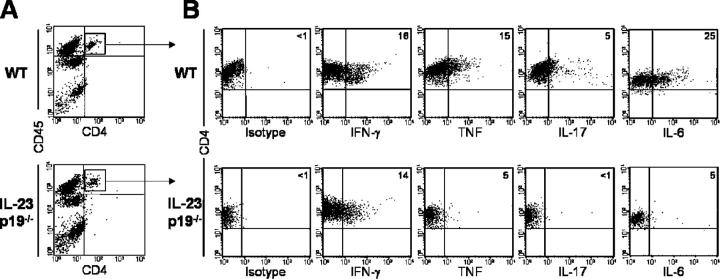
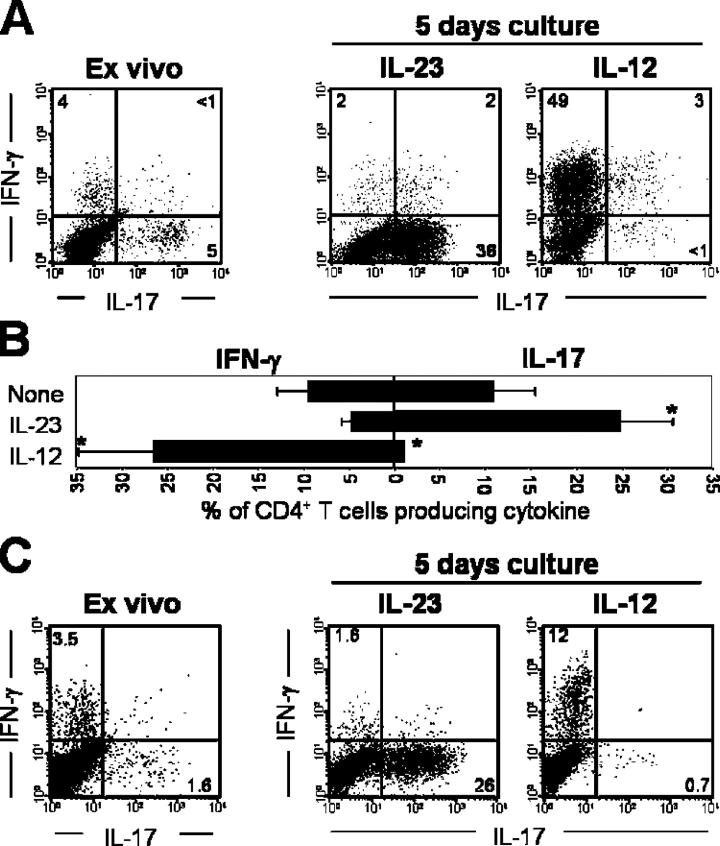
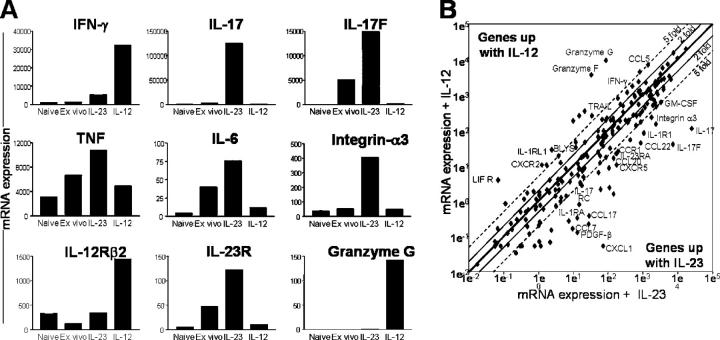
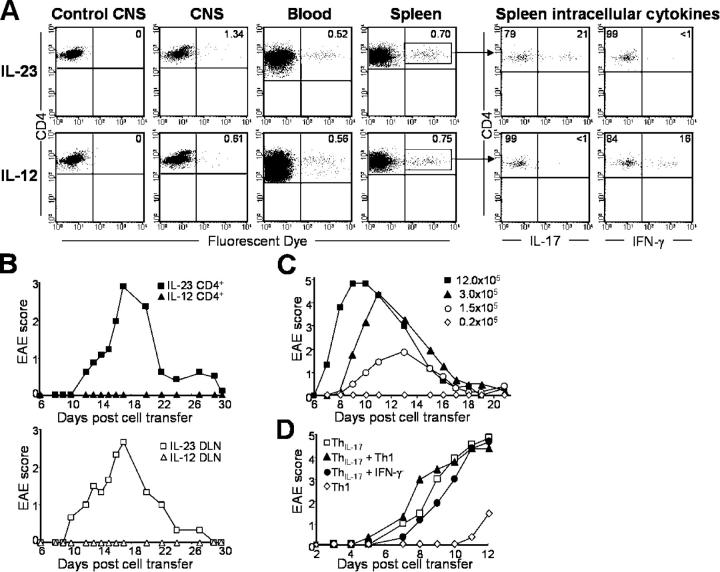
Interleukin (IL)-23 is a heterodimeric cytokine composed of a unique p19 subunit, and a common p40 subunit shared with IL-12. IL-12 is important for the development of T helper (Th)1 cells that are essential for host defense and tumor suppression. In contrast, IL-23 does not promote the development of interferon-gamma-producing Th1 cells, but is one of the essential factors required for the expansion of a pathogenic CD4(+) T cell population, which is characterized by the production of IL-17, IL-17F, IL-6, and tumor necrosis factor. Gene expression analysis of IL-23-driven autoreactive T cells identified a unique expression pattern of proinflammatory cytokines and other novel factors, distinguishing them from IL-12-driven T cells. Using passive transfer studies, we confirm that these IL-23-dependent CD4(+) T cells are highly pathogenic and essential for the establishment of organ-specific inflammation associated with central nervous system autoimmunity.
Overview
The claims and statistics of this paper haven’t been checked yet.
Free: it reads the open-access text and checks the first 5 claims that cite a source we can check. Create a free account to check every claim.
Integrity signals
Registry
Cites
Statistics
Figures
Verification
Claims the paper makes
The claims and statistics of this paper haven’t been checked yet.
Free: it reads the open-access text and checks the first 5 claims that cite a source we can check. Create a free account to check every claim.
Claims other papers make about this one
Each is checked against this paper’s own text: does it say what the citing paper says it does?
The source backs part of the claim, not all of it — or backs it for a different population, condition or comparison.
In the citing paper
“which is induced after stimulation by IL-21.”
From Distinct characteristics of hippocampal pathogenic th17 cells in a mouse model of depression (2018) · cites this paper as Langrish et al., 2005
Experimental — accuracy not yet measuredThe source backs part of the claim, not all of it — or backs it for a different population, condition or comparison.
In the citing paper
“the acquisition of the pathogenic phenotype occurs after expression of the IL-23 receptor (IL-23R) by TH17 cells (Ghoreschi et al., 2010; Langrish et al., 2005)”
From Distinct characteristics of hippocampal pathogenic th17 cells in a mouse model of depression (2018) · cites this paper as Langrish et al., 2005
Experimental — accuracy not yet measuredThe source backs part of the claim, not all of it — or backs it for a different population, condition or comparison.
In the citing paper
“CCR6 and IL-23R have been linked to the pathogenicity of TH17 cells in autoimmune diseases (Hirota et al., 2007; Kohler et al., 2003; Langrish et al., 2005), such as multiple sclerosis, suggesting that the depression-associated hippocampal TH17 cells display CNS-directed pathogenic properties that may underlie a portion of their pro-depressive actions.”
From Distinct characteristics of hippocampal pathogenic th17 cells in a mouse model of depression (2018) · cites this paper as Langrish et al., 2005
Experimental — accuracy not yet measuredIn the citing paper
“The so-called “IL-23-IL-17 axis” was found to function as a critical driver of autoimmune disease”
From The IL-17 Family of Cytokines in Health and Disease (2019) · cites this paper as Langrish et al., 2005
Self-check
Percentages, sums and reported differences re-computed from the paper’s own numbers.
The self-check needs the paper’s full text.
Citations
Cites
2 retracted
Inducible costimulator is essential for collagen-induced arthritis
Nurieva, R. I., Treuting, P., Duong, J., Flavell, R. A., & Dong, C. (2003) · Journal of Clinical Investigation · doi:10.1172/jci17321 · Cited by 117
RetractedThe IL-12Rβ2 gene functions as a tumor suppressor in human B cell malignancies
Airoldi, I., Carlo, E. D., Banelli, B., Moserle, L., Cocco, C., Pezzolo, A., Sorrentino, C., Rossi, E., Romani, M., Amadori, A., et al. (2004) · Journal of Clinical Investigation · doi:10.1172/jci20303 · Cited by 65 · cited 1×
“IL-12 is an important factor for the differentiation of naive T cells into IFN- � ‐producing Th1 cells, is essential for antimicrobial responses (4, 5), and serves as a suppressor of human B cell tumors ( 6 ).”
BackgroundRetractedCua, D. J., Sherlock, J., Chen, Y., Murphy, C. A., Joyce, B., Seymour, B., Lucian, L., To, W., Kwan, S., Churakova, T., et al. (2003) · Nature · doi:10.1038/nature01355 · Cited by 2,906 · cited 3×
“Blood was collected and lysed (RBC lysis buffer; Sigma-Aldrich), and mononuclear cells from brains and spinal cord tissue were prepared as described previously ( 1 ) and surface stained with anti‐CD4-APC.”
MethodInfluentialSelf-citationOppmann, B., Lesley, R., Blom, B., Timans, J. C., Xu, Y., Hunte, B., Vega, F., Yu, N., Wang, J., Singh, K., et al. (2000) · Immunity · doi:10.1016/s1074-7613(00)00070-4 · Cited by 2,822 · cited 1×
“Although IL-23 shares a common p40 subunit with IL-12 (3), these cytokines have divergent activities.”
BackgroundSelf-citationToll Pathway-Dependent Blockade of CD4 + CD25 + T Cell-Mediated Suppression by Dendritic Cells
Pasare, C., & Medzhitov, R. (2003) · Science · doi:10.1126/science.1078231 · Cited by 1,997 · cited 1×
“IL-6 produced by LPS-activated dendritic cells can turn off regulatory T cell (T reg cell) function, allowing effector T cell activation ( 35 ).”
BackgroundAggarwal, S., Ghilardi, N., Xie, M.-H., de Sauvage, F. J., & Gurney, A. L. (2003) · Journal of Biological Chemistry · doi:10.1074/jbc.m207577200 · Cited by 1,847 · cited 1×
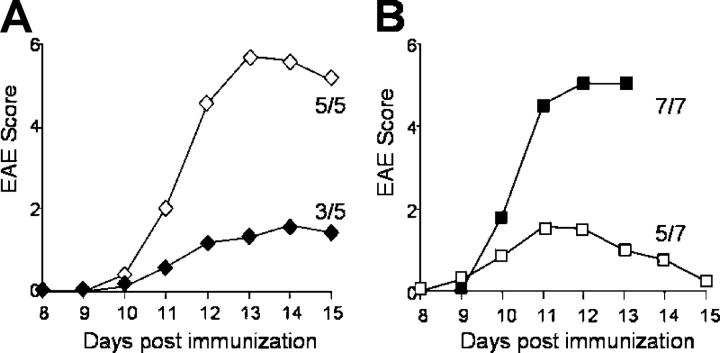
“Ex vivo analysis of draining LN (DLN) cells from immunized WT and IL-23p19 mice reflected the CNS data, with similar IFN- levels, but no IL-17 production by the IL-23p19 cells (2, 14, 15).”
BackgroundDivergent Pro- and Antiinflammatory Roles for IL-23 and IL-12 in Joint Autoimmune Inflammation
Murphy, C. A., Langrish, C. L., Chen, Y., Blumenschein, W., McClanahan, T., Kastelein, R. A., Sedgwick, J. D., & Cua, D. J. (2003) · The Journal of Experimental Medicine · doi:10.1084/jem.20030896 · Cited by 1,669 · cited 3×
“These results are consistent with papers suggesting that IL-23 is required for the development and expansion of IL-17–producing CD4 T cells (2, 16, 17).”
BackgroundMethodResultSelf-citationSuppression of Immune Induction of Collagen-Induced Arthritis in IL-17-Deficient Mice
Nakae, S., Nambu, A., Sudo, K., & Iwakura, Y. (2003) · The Journal of Immunology · doi:10.4049/jimmunol.171.11.6173 · Cited by 1,273
Exacerbations of multiple sclerosis in patients treated with gamma interferon
Panitch, H., Haley, A., Hirsch, R., & Johnson, K. (1987) · The Lancet · doi:10.1016/s0140-6736(87)92863-7 · Cited by 1,071 · cited 1×
“Treatments with IFNlead to disease exacerbation in human MS (22), and transgenic mice overexpressing IFN- in the CNS showed increased oligodendrocyte death leading to demyelinating diseases (23, 24).”
BackgroundFerber, I. A., Brocke, S., Taylor-Edwards, C., Ridgway, W., Dinisco, C., Steinman, L., Dalton, D., & Fathman, C. G. (1996) · The Journal of Immunology · doi:10.4049/jimmunol.156.1.5 · Cited by 989
Interleukin-17 mRNA expression in blood and CSF mononuclear cells is augmented in multiple sclerosis
Matusevicius, D., Kivisäkk, P., He, B., Kostulas, N., Özenci, V, Fredrikson, S., & Link, H. (1999) · Multiple Sclerosis Journal · doi:10.1177/135245859900500206 · Cited by 751 · cited 1×
“In addition, IL-17 has been found in many human autoimmune diseases, including multiple sclerosis (30), rheumatoid arthritis (31), and psoriasis (32).”
BackgroundLubberts, E., Koenders, M. I., Oppers‐Walgreen, B., van den Bersselaar, L., Coenen‐de Roo, C. J. J., Joosten, L. A. B., & van den Berg, W. B. (2004) · Arthritis & Rheumatism · doi:10.1002/art.20001 · Cited by 709 · cited 4×
“Daniel J. Cua: daniel.cua@dnax.org Abbreviations used: CIA, collagen-induced arthritis; CNS, central nervous system; DLN, draining LN; EAE, experimental autoimmune encephalomyelitis; MOG, myelin-oligodendrocyte glycoprotein peptide; PLP, proteolipid protein peptide.”
BackgroundInfluentialDevelopment of anti-TNF therapy for rheumatoid arthritis
Feldmann, M. (2002) · Nature Reviews Immunology · doi:10.1038/nri802 · Cited by 673 · cited 1×
“The role of TNF in chronic inflammatory diseases is well recognized (36).”
BackgroundWillenborg, D. O., Fordham, S., Bernard, C. C., Cowden, W. B., & Ramshaw, I. A. (1996) · The Journal of Immunology · doi:10.4049/jimmunol.157.8.3223 · Cited by 635 · cited 1×
“However, IFN- (8), IFN- R (9), IL-12R 2 (10), and IL12p35 mice (11, 12), which all lack critical components of the Th1–IFN- pathway, are highly susceptible to inflammatory autoimmune diseases, questioning whether IFN- – producing T cells have an essential role in autoimmune pathogenesis.”
BackgroundIL-17: prototype member of an emerging cytokine family
Aggarwal, S., & Gurney, A. L. (2002) · Journal of Leukocyte Biology · doi:10.1189/jlb.71.1.1 · Cited by 597 · cited 1×
“Engagement of IL-17 and/or IL-17F on these cell types promotes expression of IL-1, IL-6, IL-8, TNF, and ICAM-1, which are all critical factors that drive inflammation (34).”
BackgroundMicrobial lipopeptides induce the production of IL-17 in Th cells
Infante-Duarte, C., Horton, H. F., Byrne, M. C., & Kamradt, T. (2000) · The Journal of Immunology · doi:10.4049/jimmunol.165.11.6107 · Cited by 586 · cited 1×
“IL-17–producing T cells have also been identified in the synovial fluid of patients with Lyme arthritis (33), suggesting involvement of IL-17 in infection-induced immunopathology.”
BackgroundZiolkowska, M., Koc, A., Luszczykiewicz, G., Ksiezopolska-Pietrzak, K., Klimczak, E., Chwalinska-Sadowska, H., & Maslinski, W. (2000) · The Journal of Immunology · doi:10.4049/jimmunol.164.5.2832 · Cited by 580 · cited 1×
“In addition, IL-17 has been found in many human autoimmune diseases, including multiple sclerosis (30), rheumatoid arthritis (31), and psoriasis (32).”
BackgroundTeunissen, M. B. M., Bos, J. D., Koomen, C. W., de Waal Malefyt, R., & Wierenga, E. A. (1998) · Journal of Investigative Dermatology · doi:10.1046/j.1523-1747.1998.00347.x · Cited by 570 · cited 1×
“In addition, IL-17 has been found in many human autoimmune diseases, including multiple sclerosis (30), rheumatoid arthritis (31), and psoriasis (32).”
BackgroundPrevention of experimental autoimmune encephalomyelitis by antibodies against interleukin 12.
Leonard, J. P., Waldburger, K. E., & Goldman, S. J. (1995) · The Journal of experimental medicine · doi:10.1084/jem.181.1.381 · Cited by 547 · cited 1×
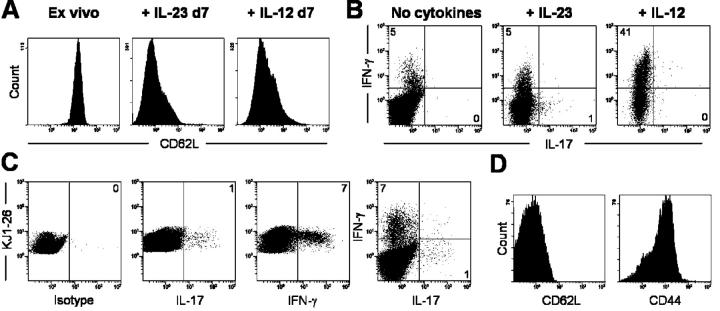
“In key published EAE passive transfer papers (25, 26), PLP-primed DLN cells were cultured with rIL-12 for 4 d before transfer of 20–30 106 cells into recipient mice.”
BackgroundNakae, S., Saijo, S., Horai, R., Sudo, K., Mori, S., & Iwakura, Y. (2003) · Proceedings of the National Academy of Sciences · doi:10.1073/pnas.1035999100 · Cited by 490 · cited 1×
“In addition, IL-17 may also have a role in the initial expansion of the ThIL-17 cells as suggested by a recent paper showing a role for IL-17 during immune priming (21).”
BackgroundHappel, K. I., Zheng, M., Young, E., Quinton, L. J., Lockhart, E., Ramsay, A. J., Shellito, J. E., Schurr, J. R., Bagby, G. J., Nelson, S., et al. (2003) · The Journal of Immunology · doi:10.4049/jimmunol.170.9.4432 · Cited by 449 · cited 2×
“These results are consistent with papers suggesting that IL-23 is required for the development and expansion of IL-17–producing CD4 T cells (2, 16, 17).”
BackgroundResultIL-17 Is Produced by Some Proinflammatory Th1/Th0 Cells But Not by Th2 Cells
Aarvak, T., Chabaud, M., Miossec, P., & Natvig, J. B. (1999) · The Journal of Immunology · doi:10.4049/jimmunol.162.3.1246 · Cited by 410 · cited 1×
“These results are consistent with papers suggesting that IL-23 is required for the development and expansion of IL-17–producing CD4 T cells (2, 16, 17).”
ResultGran, B., Zhang, G.-X., Yu, S., Li, J., Chen, X.-H., Ventura, E. S., Kamoun, M., & Rostami, A. (2002) · The Journal of Immunology · doi:10.4049/jimmunol.169.12.7104 · Cited by 405 · cited 2×
“However, IFN- (8), IFN- R (9), IL-12R 2 (10), and IL12p35 mice (11, 12), which all lack critical components of the Th1–IFN- pathway, are highly susceptible to inflammatory autoimmune diseases, questioning whether IFN- – producing T cells have an essential role in autoimmune pathogenesis.”
BackgroundResultThe molecular basis of T helper 1 and T helper 2 cell differentiation
O’Garra, A., & Arai, N. (2000) · Trends in Cell Biology · doi:10.1016/s0962-8924(00)01856-0 · Cited by 400 · cited 1×
“IL-12 is an important factor for the differentiation of naive T cells into IFN- –producing Th1 cells, is essential for antimicrobial responses (4, 5), and serves as a suppressor of human B cell tumors (6).”
BackgroundExperimental autoimmune encephalitis and inflammation in the absence of interleukin-12
Becher, B., Durell, B. G., & Noelle, R. J. (2002) · Journal of Clinical Investigation · doi:10.1172/jci15751 · Cited by 386 · cited 1×
“However, IFN- (8), IFN- R (9), IL-12R 2 (10), and IL12p35 mice (11, 12), which all lack critical components of the Th1–IFN- pathway, are highly susceptible to inflammatory autoimmune diseases, questioning whether IFN- – producing T cells have an essential role in autoimmune pathogenesis.”
BackgroundHickey, W. F. (1991) · Brain Pathology · doi:10.1111/j.1750-3639.1991.tb00646.x · Cited by 357 · cited 1×
“RESULTS Differential cytokine expression of central nervous system (CNS)–infiltrating CD4 T cells To study the role of IL-23 in autoimmune inflammatory disease pathogenesis, we used a CNS autoimmune model because the target organ is normally free of activated macrophages and CD4 T cells (13); therefore, we can monitor…”
BackgroundExperimental autoimmune encephalitis and inflammation in the absence of interleukin-12
Becher, B., Durell, B. G., & Noelle, R. J. (2002) · Journal of Clinical Investigation · doi:10.1172/jci0215751 · Cited by 346
The role of gamma interferon in antimicrobial immunity
Shtrichman, R., & Samuel, C. E. (2001) · Current Opinion in Microbiology · doi:10.1016/s1369-5274(00)00199-5 · Cited by 334 · cited 1×
“IL-12 is an important factor for the differentiation of naive T cells into IFN- –producing Th1 cells, is essential for antimicrobial responses (4, 5), and serves as a suppressor of human B cell tumors (6).”
BackgroundZhang, G.-X., Gran, B., Yu, S., Li, J., Siglienti, I., Chen, X., Kamoun, M., & Rostami, A. (2003) · The Journal of Immunology · doi:10.4049/jimmunol.170.4.2153 · Cited by 305
Vartanian, T. K., Li, Y., Zhao, M., & Stefánsson, K. (1995) · PubMed Central · Cited by 285
Distinct lineages of TH1 cells have differential capacities for memory cell generation in vivo
Wu, C.-Y., Kirman, J. R., Rotte, M. J., Davey, D. F., Perfetto, S. P., Rhee, E. G., Freidag, B. L., Hill, B. J., Douek, D. C., & Seder, R. A. (2002) · Nature Immunology · doi:10.1038/ni832 · Cited by 285 · cited 2×
“In addition, some but not all IFN- cells could produce IFN- at a later stage after strong antigenic stimulation in the presence of IL-12 (27), suggesting a shared a precursor lineage.”
BackgroundVartanian, T., Li, Y., Zhao, M., & Stefansson, K. (1995) · Molecular Medicine · doi:10.1007/bf03401888 · Cited by 261
A Protective and Agonistic Function of IL-12p40 in Mycobacterial Infection
Hölscher, C., Atkinson, R. A., Arendse, B., Brown, N., Myburgh, E., Alber, G., & Brombacher, F. (2001) · The Journal of Immunology · doi:10.4049/jimmunol.167.12.6957 · Cited by 229 · cited 1×
“Its capacity to induce IL-17 and other proinflammatory factors appears important for neutrophil recruitment (17) and granuloma formation (19).”
BackgroundTakada, Y., Wayner, E. A., Carter, W. G., & Hemler, M. E. (1988) · Journal of Cellular Biochemistry · doi:10.1002/jcb.240370406 · Cited by 214 · cited 1×
“Integrin- 3, which enhances cellular migration within the target organ during inflammation (18), was also up-regulated in the IL-23– driven cells.”
BackgroundCompromised Humoral and Delayed-Type Hypersensitivity Responses in IL-23-Deficient Mice
Ghilardi, N., Kljavin, N., Chen, Q., Lucas, S., Gurney, A. L., & de Sauvage, F. J. (2004) · The Journal of Immunology · doi:10.4049/jimmunol.172.5.2827 · Cited by 206 · cited 1×
“Ex vivo analysis of draining LN (DLN) cells from immunized WT and IL-23p19 mice reflected the CNS data, with similar IFN- levels, but no IL-17 production by the IL-23p19 cells (2, 14, 15).”
BackgroundIL-12 unmasks latent autoimmune disease in resistant mice.
Segal, B. M., & Shevach, E. M. (1996) · The Journal of experimental medicine · doi:10.1084/jem.184.2.771 · Cited by 182 · cited 1×
“In key published EAE passive transfer papers (25, 26), PLP-primed DLN cells were cultured with rIL-12 for 4 d before transfer of 20–30 106 cells into recipient mice.”
BackgroundIL-23 Provides a Limited Mechanism of Resistance to Acute Toxoplasmosis in the Absence of IL-12
Lieberman, L. A., Cardillo, F., Owyang, A. M., Rennick, D. M., Cua, D. J., Kastelein, R. A., & Hunter, C. A. (2004) · The Journal of Immunology · doi:10.4049/jimmunol.173.3.1887 · Cited by 169 · cited 1×
“IL-23‐ deficient mice display normal immune responses to acute microbial infections such as Toxoplasma gondii . ( 7 ).”
BackgroundSelf-citationInterferon-γ in Progression to Chronic Demyelination and Neurological Deficit Following Acute EAE
Renno, T., Taupin, V., Bourbonnière, L., Verge, G. M., Tran, E., Simone, R. D., Krakowski, M. L., Rodriguez, M., Peterson, A., & Owens, T. (1998) · Molecular and Cellular Neuroscience · doi:10.1006/mcne.1998.0725 · Cited by 99
The IL-12Rβ2 gene functions as a tumor suppressor in human B cell malignancies
Airoldi, I., Carlo, E. D., Banelli, B., et al. (2004) · Journal of Clinical Investigation · doi:10.1172/jci200420303 · Cited by 53
Cited by
Exploring the full spectrum of macrophage activation
Mosser, D. M., & Edwards, J. P. (2008) · Nature Reviews Immunology · doi:10.1038/nri2448 · Cited by 9,144
“For example, IL-1 , IL-6 and IL-23 are produced by classically activated macrophages and have been associated with the development and expansion of T H 17 cell”
BackgroundBettelli, E., Carrier, Y., Gao, W., Korn, T., Strom, T. B., Oukka, M., Weiner, H. L., & Kuchroo, V. K. (2006) · Nature · doi:10.1038/nature04753 · Cited by 6,992
Ivanov, I. I., McKenzie, B. S., Zhou, L., Tadokoro, C. E., Lepelley, A., Lafaille, J. J., Cua, D. J., & Littman, D. R. (2006) · Cell · doi:10.1016/j.cell.2006.07.035 · Cited by 5,145
Self-citationKorn, T., Bettelli, E., Oukka, M., & Kuchroo, V. K. (2009) · Annual Review of Immunology · doi:10.1146/annurev.immunol.021908.132710 · Cited by 4,873
“In the follow-up study (9), they showed that IL-23 expands/generates IL-17-producing T cells that are capable of inducing EAE when adoptively transferred into naive wild-type mice.”
BackgroundInfluentialHarrington, L. E., Hatton, R. D., Mangan, P. R., Turner, H., Murphy, T. L., Murphy, K. M., & Weaver, C. T. (2005) · Nature Immunology · doi:10.1038/ni1254 · Cited by 4,742
“In both experimental autoimmune encephalomyelitis (EAE) and type II collagen-induced arthritis, two heretofore prototypical 'T H 1' disease models, it has been found that IL-17-producing CD4 + effector T cells, not IFN-γ-producing effector cells, are pathogenic, thereby challenging the importance of classical T H 1 ce…”
Background
Metadata
- Authors
- Langrish, C. L., Chen, Y., Blumenschein, W. M., Mattson, J., Basham, B., Sedgwick, J. D., McClanahan, T., Kastelein, R. A., & Cua, D. J.
- Affiliations
- 1Discovery Research, DNAX Research Inc., Palo Alto, CA 94304
- 2Experimental Pathology and Pharmacology, DNAX Research Inc., Palo Alto, CA 94304
- 3Bioinformatics, DNAX Research Inc., Palo Alto, CA 94304
- Venue
- The Journal of Experimental Medicine
- Publisher
- Rockefeller University Press
- Published
- 2005-01-17
- Volume
- 201
- Issue
- 2
- Pages
- 233-240
- ISSN
- 0022-1007 (ISSN-L)
- 1540-9538
- PMC
- PMC2212798
- OpenAlex
- W2006249161
- Cited by
- 4,099
- References
- 39
- Citations by year
- 2026: 65 · 2025: 98 · 2024: 107 · 2023: 103 · 2022: 134 · 2021: 147 · 2020: 157 · 2019: 150 · 2018: 165 · 2017: 176 · 2016: 147 · 2015: 238 · 2014: 201 · 2013: 242 · 2012: 261
- FWCI
- 87.41
- Type
- journal article
- Language
- en
- Open access
- bronze
- doi.org
- Locations
- The Journal of Experimental Medicine (publishedVersion)
- PubMed Central (publishedVersion, cc-by-nc-sa)
- PubMed (publishedVersion)
- Topics
- Life Sciences › Immunology and Microbiology › Immunology › Psoriasis: Treatment and Pathogenesis
- Life Sciences › Immunology and Microbiology › Immunology › T-cell and B-cell Immunology
- Life Sciences › Immunology and Microbiology › Immunology › Cytokine Signaling Pathways and Interactions
- Keywords
- IL-23, IL-12, p40 subunit, CD4+ T cells, Th1 cells, IL-17, IL-17F, inflammatory cytokines, autoimmunity, central nervous system autoimmunity, T cell gene expression, passive transfer
- MeSH terms
- Animals, Central Nervous System, Encephalomyelitis, Autoimmune, Experimental, Inflammation, Interleukins, Time Factors, CD4-Positive T-Lymphocytes, Autoimmunity, Gene Expression, Cytokines, Interleukin-12, Interleukin-17, Gene Expression Profiling, Mice, Interleukin-23, Interleukin-23 Subunit p19
About these checks
Registry, retraction, Cites and statistics results are computed, not judged, with one exception: a printed reference that no index lists is read once by a model before it counts as a citation error. Claims are extracted by a model and kept only when their quote appears verbatim in the text; each cited source is then checked, with a model’s help, for whether it says what the claim relies on. Those verdicts can be wrong — read the claim’s quote and the cited source before relying on one.
Statistics and arithmetic are recomputed, not judged.
Confidence bands are shown only for fields calibrated on our annotated test set. None is calibrated yet, so no band is shown.
What counts as a claim ›How we measure confidence ›How we check this ›
Are you an author, or do you see a problem with this page? Request a review
Data sources
Bibliographic data: Semantic Scholar, OpenAlex, Crossref.
Contains information from the Semantic Scholar Academic Graph Datasets, made available under the ODC Attribution License (ODC-BY 1.0).
Semantic Scholar’s data is described in: Kinney, R., et al. (2023). The Semantic Scholar Open Data Platform. arXiv:2301.10140.
