

The DOI matches its Crossref record; 29 of the 29 references it cites were found in a registry or an index.
A critical role for the autophagy gene Atg5 in T cell survival and proliferation
Open accessAbstract
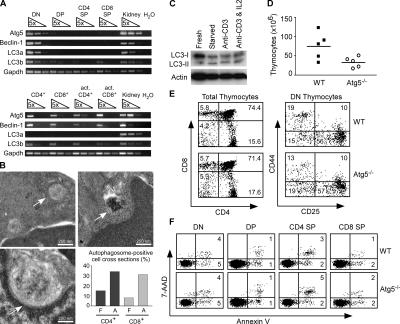
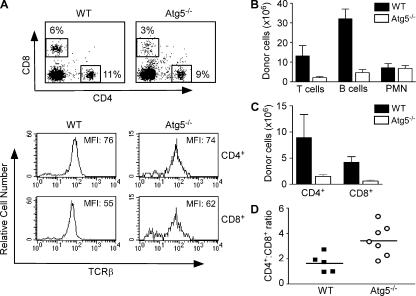
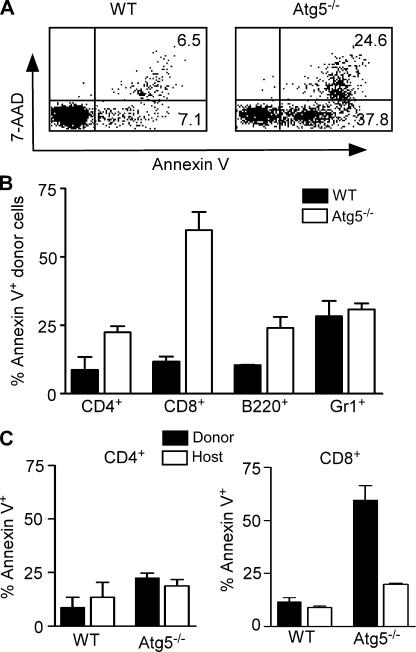
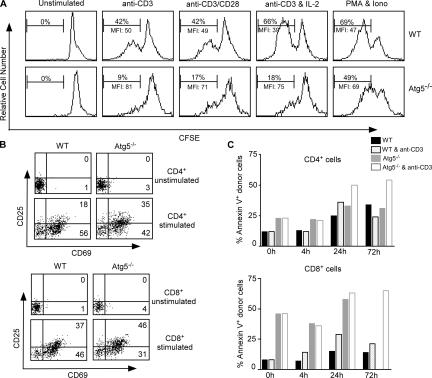
Macroautophagy (hereafter referred to as autophagy) is a well-conserved intracellular degradation process. Recent studies examining cells lacking the autophagy genes Atg5 and Atg7 have demonstrated that autophagy plays essential roles in cell survival during starvation, in innate cell clearance of microbial pathogens, and in neural cell maintenance. However, the role of autophagy in T lymphocyte development and survival is not known. Here, we demonstrate that autophagosomes form in primary mouse T lymphocytes. By generating Atg5−/− chimeric mice, we found that Atg5-deficient T lymphocytes underwent full maturation. However, the numbers of total thymocytes and peripheral T and B lymphocytes were reduced in Atg5 chimeras. In the periphery, Atg5−/− CD8+ T lymphocytes displayed dramatically increased cell death. Furthermore, Atg5−/− CD4+ and CD8+ T cells failed to undergo efficient proliferation after TCR stimulation. These results demonstrate a critical role for Atg5 in multiple aspects of lymphocyte development and function and suggest that autophagy may be essential for both T lymphocyte survival and proliferation.
Overview
The claims and statistics of this paper haven’t been checked yet.
Run the check — free, no account needed. It reads the open-access text and checks the sources it cites.
Integrity signals
Registry
Cites
Statistics
Figures
Verification
Claims the paper makes
The claims and statistics of this paper haven’t been checked yet.
Run the check — free, no account needed. It reads the open-access text and checks the sources it cites.
Claims other papers make about this one
Each is checked against this paper’s own text: does it say what the citing paper says it does?
The source backs part of the claim, not all of it — or backs it for a different population, condition or comparison.
In the citing paper
“In this respect it is noteworthy that some cell-types of the immune system such as dendritic cells 260 seem to tolerate loss of autophagy fairly well, whereas others such as T and B cells are compromised in their development and function after autophagy inhibition.757,758”
From Guidelines for the use and interpretation of assays for monitoring autophagy (2012) · cites this paper as [757]
Experimental — accuracy not yet measuredIn the citing paper
“Proper induction of autophagy has been shown to be important for the maintenance of cellular bioenergetics and sustained T cell viability after activation (25, 26).”
From Fueling Immunity: Insights into Metabolism and Lymphocyte Function (2013) · cites this paper as [26]
Self-check
Percentages, sums and reported differences re-computed from the paper’s own numbers.
The self-check needs the paper’s full text.
Citations
Cites
Repertoires of Autophagy in the Pathogenesis of Ocular Diseases
Li, Y., Jiang, Q. L., Cao, G.-F., Yao, J., & Yan, B. (2015) · Cellular Physiology and Biochemistry · doi:10.1159/000373980 · Cited by 16,351
LC3, a mammalian homologue of yeast Apg8p, is localized in autophagosome membranes after processing.
Kabeya, Y., Mizushima, N., Ueno, T., Yamamoto, A., Kirisako, T., Noda, T., Kominami, E., Ohsumi, Y., & Yoshimori, T. (2000) · The EMBO Journal · doi:10.1093/emboj/19.21.5720 · Cited by 6,605 · cited 2×
“The second pathway results in the conjugation of microtubule-associated protein 1 light chain 3 (LC3; yeast Atg8) to phospholipids for incorporation into the autophagosome membrane (14).”
Self-citationCui, C., Cui, J., Jin, F., Cui, Y., Li, R., Jiang, X., Tian, Y., Wang, R. C., Jiang, P., & Gao, J. (2017) · Cellular Physiology and Biochemistry · doi:10.1159/000479571 · Cited by 5,214
Suppression of basal autophagy in neural cells causes neurodegenerative disease in mice
Hara, T., Nakamura, K., Matsui, M., Yamamoto, A., Nakahara, Y., Suzuki-Migishima, R., Yokoyama, M., Mishima, K., Saito, I., Okano, H., et al. (2006) · Nature · doi:10.1038/nature04724 · Cited by 3,882
Self-citationBcl-2 Antiapoptotic Proteins Inhibit Beclin 1-Dependent Autophagy
Pattingre, S., Tassa, A., Qu, X., Garuti, R., Liang, X. H., Mizushima, N., Packer, M., Schneider, M. D., & Levine, B. (2005) · Cell · doi:10.1016/j.cell.2005.07.002 · Cited by 3,536 · cited 1×
“Bcl-2 has been shown to inhibit autophagosome formation in nutrient-starved yeast and human cancer cell lines (25), yet Bcl-2 expression in Bax−/− Bak−/− mouse embryonic fi broblasts enhances autophagy after etoposide treatment (19).”
Self-citationLoss of autophagy in the central nervous system causes neurodegeneration in mice
Komatsu, M., Waguri, S., Chiba, T., Murata, S., Iwata, J.-I., Tanida, I., Ueno, T., Koike, M., Uchiyama, Y., Kominami, E., et al. (2006) · Nature · doi:10.1038/nature04723 · Cited by 3,500
The role of autophagy during the early neonatal starvation period
Kuma, A., Hatano, M., Matsui, M., Yamamoto, A., Nakaya, H., Yoshimori, T., Ohsumi, Y., Tokuhisa, T., & Mizushima, N. (2004) · Nature · doi:10.1038/nature03029 · Cited by 2,865 · cited 2×
“Although autophagy is important for survival during periods of nutrient deprivation (5), its role in regulating cellular life and death decisions remains largely unknown (for review see reference 15).”
Self-citationGutierrez, M. G., Master, S. S., Singh, S. B., Taylor, G. A., Colombo, M. I., & Deretic, V. (2004) · Cell · doi:10.1016/j.cell.2004.11.038 · Cited by 2,252 · cited 1×
“Furthermore, autophagy contributes to the clearance of intracellular pathogens including group A Streptococcus and Mycobacterium tuberculosis (9, 10).”
Isolation and characterization of autophagy‐defective mutants of Saccharomyces cerevisiae
Tsukada, M., & Ohsumi, Y. (1993) · FEBS Letters · doi:10.1016/0014-5793(93)80398-e · Cited by 1,837 · cited 2×
“Atg5 was fi rst identifi ed in a screen for yeast incapable of surviving nitrogen starvation (2).”
Inhibition of Macroautophagy Triggers Apoptosis
Boya, P., González‐Polo, R. A., Casares, N., Perfettini, J., Dessen, P., Larochette, N., Métivier, D., Meley, D., Souquère, S., Yoshimori, T., et al. (2005) · Molecular and Cellular Biology · doi:10.1128/mcb.25.3.1025-1040.2005 · Cited by 1,669 · cited 1×
“Both the inhibition of apoptosis can induce autophagy (19, 20, 23), and the inhibition of autophagy can induce apoptosis (24).”
Research works printed but not linked: 2
- 2005, Nat. Rev. Mol. Cell Biol., 6, 505
- 2004, Cell Cycle., 3, 1124
Cited by
Sorted by citations
Items 401–500 of 623
The negative effect of lipid challenge on autophagy inhibits T cell responses
Guerrero‐Ros, I., Clement, C. C., Reynolds, C. A., Patel, B., Santambrogio, L., Cuervo, A. M., & Macián, F. (2019) · Autophagy · doi:10.1080/15548627.2019.1606635 · Cited by 24
“It is not surprising thus that inhibition of autophagy has a profound effect on T cell activation [33,35,51].”
BackgroundAutophagy and Metabolism in Normal and Malignant Hematopoiesis
Stergiou, I. Ε., & Kapsogeorgou, E. K. (2021) · International Journal of Molecular Sciences · doi:10.3390/ijms22168540 · Cited by 23
Cao, S., Hung, Y., Wang, Y.-C., Chung, Y., Qi, Y., Ouyang, C., Zhong, X., Hu, W., Coblentz, A., Maghami, E. G., et al. (2022) · Theranostics · doi:10.7150/thno.73896 · Cited by 25
“Deletion of Atg7, Atg5 or Atg3 impairs CD4+ and CD8+ T cell proliferation and function in knockout mice [28, 32, 33], whereas deletion of Atg7 or Atg5 leads to Treg depletion and greater antitumor response [34].”
Giansanti, M., Theinert, T., Boeing, S. K., Haas, D., Schlegel, P., Vacca, P., Nazio, F., & Caruana, I. (2023) · Molecular Cancer · doi:10.1186/s12943-023-01893-w · Cited by 24
“Furthermore, mice deficient for the essential autophagy genes like Atg3, Atg5 and Atg7 in both CD4 + and CD8 + T cells displayed defects in activation-induced proliferation [48, 53, 55, 56, 58].”
BackgroundResultInfluentialAutophagy upregulation and loss of NF-κB in oxidative stress-related immunodeficient SAMP8 mice
Caballero, B., Vega‐Naredo, I., Sierra, V., de Gonzalo‐Calvo, D., Medrano‐Campillo, P., Guerrero, J. M., Tolivia, D., Rodríguez‐Colunga, M. J., & Coto‐Montes, A. M. (2009) · Mechanisms of Ageing and Development · doi:10.1016/j.mad.2009.09.001 · Cited by 22
Autophagy as an Innate Immune Modulator
Oh, J. E., & Lee, H. K. (2013) · Immune Network · doi:10.4110/in.2013.13.1.1 · Cited by 25
“Moreover, autophagy affects the adaptive immune system by contributing to antigen presentation and controlling T- and B-cell homeostasis (21-26).”
BackgroundVij, A., Randhawa, R., Parkash, J., & Changotra, H. (2016) · Meta Gene · doi:10.1016/j.mgene.2016.07.012 · Cited by 22
“ATG5 plays important role in cell death progression by interacting with FADD (Pyo et al., 2005), B and T-cell survival and proliferation (Pua et al., 2007; Miller et al., 2008) mitochondrial maintenance (Stephenson et al., 2009), regression of de fi cits in neurogenesis at embryonal level due to…”
BackgroundMünz, C. (2020) · Progress in molecular biology and translational science · doi:10.1016/bs.pmbts.2020.03.005 · Cited by 23
Zhao, M., Duan, X.-H., Wu, Z., Gao, C., Wang, N., & Zheng, Z. (2017) · Europe PMC (PubMed Central) · Cited by 22
Ginsenoside Re enhances survival of human CD4+ T cells through regulation of autophagy
Son, Y. M., Kwak, C. W., Lee, Y. J., Yang, D., Park, B.-C., Lee, W. K., Han, S. H., & Yun, C. (2010) · International Immunopharmacology · doi:10.1016/j.intimp.2010.03.002 · Cited by 22
Niu, Y., Liu, Q.-Q., Zhang, S., Yuan, N., Cao, Y., Cai, J., Lin, W., Xu, F., Wang, Z., Chen, B., et al. (2014) · Asian Pacific Journal of Cancer Prevention · doi:10.7314/apjcp.2014.15.5.2153 · Cited by 23
“Recent studies suggest that autophagy plays an essential role in hematopoietic stem cells (HSCs) and might also be implicated in leukemia by using conditional knockout mouse models (Pua et al., 2007; Kundu et al., 2008; Sandoval et al., 2008; Zhang et al., 2009a; Mortensen et al., 2010a; Mortensen et al., 2010b; Morte…”
BackgroundThe impact of macroautophagy on CD 8+ T‐cell‐mediated antiviral immunity
Pérot, B. P., Ingersoll, M. A., & Albert, M. L. (2013) · Immunological Reviews · doi:10.1111/imr.12096 · Cited by 23
“This effect is likely caused by a higher tendency of ATG5 / CD8 T cells to undergo apoptosis, and that TCR-induced proliferation is dependent on autophagic flux (139).”
BackgroundQi, Y., Zhou, S., Nath, S. K., Sun, C., Wang, Y., Hou, P., Mu, R., Li, C., Guo, J., Li, Z., et al. (2017) · Arthritis & Rheumatology · doi:10.1002/art.40353 · Cited by 23
The role of autophagy in the pathogenesis of SARS-CoV-2 infection in different cell types
Samimi, N., Farjam, M., Klionsky, D. J., & Rezaei, N. (2021) · Autophagy · doi:10.1080/15548627.2021.1989150 · Cited by 21
“pathway is induced in many pathological conditions such as T or B cell antigen receptor stimulation, cytokine stimulation, and serum starvation [12,13].”
BackgroundAutophagy takes it all – autophagy inducers target immune aging
Zinecker, H., & Simon, A. K. (2022) · Disease Models & Mechanisms · doi:10.1242/dmm.049345 · Cited by 22
“Considering that autophagy facilitates adaptive immune cell activation (Clarke and Simon, 2019; Hubbard et al., 2010; Pua et al., 2007) and differentiation (Mortensen et al., 2011; Riffelmacher et al., 2017), and partially reverses systemic immunosenescence via modulating T cell immunity, clinical…”
Flynn, A. L. B., Gans, J., Escobedo, J., Zhu, C., Florescu, A.-M., Shankara, S., Madden, S. L., Kim, P. S., & Pao, L. I. (2023) · The Journal of Immunology · doi:10.4049/jimmunol.2200402 · Cited by 22
Targeting Metabolism and Autophagy in the Context of Haematologic Malignancies
Banerji, V., & Gibson, S. B. (2012) · International Journal of Cell Biology · doi:10.1155/2012/595976 · Cited by 20
“In lymphocytes autophagy proteins Atg5, Beclin1, and LC3 are upregulated in early thymocyte development and Tcell activation but downregulated in the mature CD4+ and CD8+ T cells [22].”
BackgroundULK1 affects cell viability of goat Sertoli cell by modulating both autophagy and apoptosis
Pang, J., Han, L., Liu, Z.-F., Zheng, J., Zhao, J., Deng, K.-P., Wang, F., & Zhang, Y.-L. (2019) · In vitro Cellular & Developmental Biology-Animal · doi:10.1007/s11626-019-00371-2 · Cited by 15
The molecular regulation of autophagy in antimicrobial immunity
Qin, C., Lu, Y., Bai, L., & Wang, K. (2022) · Journal of Molecular Cell Biology · doi:10.1093/jmcb/mjac015 · Cited by 20
“The autophagy gene ATG5 is necessary for T lymphocyte survival and proliferation (Pua et al., 2007).”
Xiong, W., Wei, W., Qi, Y., Du, Z., Qu, T., Liu, K., & Gong, S. (2020) · Neuroscience · doi:10.1016/j.neuroscience.2020.01.032 · Cited by 20
Cai, P., Wang, H., Zhuang, J., Liu, Q.-B., Zhao, G., Li, Z., & Wu, Z. (2014) · Autoimmunity · doi:10.3109/08916934.2014.929668 · Cited by 20
“The compromised regulation of T cell survival and proliferation in response to antigen presentation was attributed to the occurrence of autoimmunity [20].”
BackgroundAkhtar, A., Shakir, M., Ansari, M. S., Divya, Faizan, M. I., Chauhan, V., Singh, A., Alam, R., Azmi, I., Sharma, S., et al. (2025) · Cell Reports Medicine · doi:10.1016/j.xcrm.2025.102021 · Cited by 21
Role of Autophagy in Cancer and Tumor Progression
Janji, B., Viry, E., Bagińska, J., Van, K. T., & Berchem, G. (2013) · InTech eBooks · doi:10.5772/55388 · Cited by 19
“Targeting autophagy by silencing ATG5 or ATG7 during T cell receptor stimulation leads to a significant decrease in cellular proliferation, highlighting the importance of autophagy during T cell activation [63, 64].”
BackgroundDefective autophagy in CD4 T cells drives liver fibrosis via type 3 inflammation
Sayegh, R. A., Wan, J., Caër, C., Azoulai, M., Gasperment, M., Baweja, S., Chouillard, M.-A., Kandiah, J., Cadoux, M., Mabire, M., et al. (2025) · Nature Communications · doi:10.1038/s41467-025-59218-y · Cited by 20
Tolerance induction in memory CD4 T cells requires two rounds of antigen-specific activation
David, A. P., Crawford, F., Garside, P., Kappler, J. W., Marrack, P., & MacLeod, M. K. L. (2014) · Proceedings of the National Academy of Sciences · doi:10.1073/pnas.1406218111 · Cited by 19
“T-cell activation leads to increased expression of proteins involved in autophagy allowing cells to maintain energy and nutrients during proliferation (32, 33).”
BackgroundZhang, D., Dong, M., Song, X., Qiao, X., Yang, Y., Yu, S., Sun, W., Wang, L., & Song, L. (2022) · Developmental & Comparative Immunology · doi:10.1016/j.dci.2022.104479 · Cited by 18
c-FLIP Protects T Lymphocytes from Apoptosis in the Intrinsic Pathway
He, M., & He, Y.-W. (2015) · The Journal of Immunology · doi:10.4049/jimmunol.1400469 · Cited by 18
Self-citationKim, J. H., Huh, Y. H., & Kim, H. R. (2016) · PLoS ONE · doi:10.1371/journal.pone.0153308 · Cited by 18
Roles of autophagy in lymphocytes: reflections and directions
McLeod, I. X., & He, Y.-W. (2010) · Cellular and Molecular Immunology · doi:10.1038/cmi.2009.115 · Cited by 19
Self-citationRole of innate and adaptive immunity during drug-induced liver injury
Williams, C. D., & Jaeschke, H. (2012) · Toxicology Research · doi:10.1039/c2tx20032e · Cited by 18
Ishikura, S., Iwaihara, Y., Tanaka, Y., Luo, H. L., Nishi, K., Doi, K., Koyanagi, M., Okamura, T., Tsunoda, T., & Shirasawa, S. (2016) · Journal of Biological Chemistry · doi:10.1074/jbc.m116.723734 · Cited by 18
Protein Synthesis and Metabolism in T Cells
Sinclair, L. V., & Cantrell, D. A. (2025) · Annual Review of Immunology · doi:10.1146/annurev-immunol-082323-035253 · Cited by 19
Wu, J., Xu, W., Su, Y., Wang, G., & Ma, J. (2024) · Acta Pharmacologica Sinica · doi:10.1038/s41401-024-01416-3 · Cited by 21
Chiaranunt, P., Ferrara, J. L. M., & Byersdorfer, C. A. (2015) · Molecular Immunology · doi:10.1016/j.molimm.2015.07.023 · Cited by 20
GIMAP6 is required for T cell maintenance and efficient autophagy in mice
Pascall, J. C., Webb, L. M. C., Eskelinen, E., Innocentin, S., Attaf, N., & Butcher, G. W. (2018) · PLoS ONE · doi:10.1371/journal.pone.0196504 · Cited by 17
Costimulatory Blockade-Induced Allograft Survival Requires Beclin1
Verghese, D. A., Yadav, A., Bizargity, P., Murphy, B. T., Heeger, P. S., & Schröppel, B. (2014) · American Journal of Transplantation · doi:10.1111/ajt.12610 · Cited by 17
Crosstalk between autophagy and immune cell infiltration in the tumor microenvironment
Yang, T., Zhang, Y., Chen, J., & Sun, L. (2023) · Frontiers in Medicine · doi:10.3389/fmed.2023.1125692 · Cited by 17
“In proliferating T cells, autophagy is usually upregulated and determines the survival of T cells (64, 65).”
BackgroundNew insights into autophagy in inflammatory subtypes of asthma
Dong, H., Yang, W. Z., Li, W., Zhu, S., Zhu, L., Gao, P., & Hao, Y. (2023) · Frontiers in Immunology · doi:10.3389/fimmu.2023.1156086 · Cited by 16
Gressler, A. E., Leng, H., Zinecker, H., & Simon, A. K. (2023) · Seminars in Immunology · doi:10.1016/j.smim.2023.101838 · Cited by 15
“Supportively, defects in macro-autophagy inhibit T cell activation [196] and reduce peripheral T cell survival [186,187].”
BackgroundQiu, G.-H., Liu, J., Cheng, Q., Wang, Q., Jing, Z., Pei, Y., Zhao, M., Wang, J., Guo, J. Y., & Zhang, J. (2017) · Frontiers in Immunology · doi:10.3389/fimmu.2017.00575 · Cited by 16
“Cell Death Differ (2012) 19(1):144–52.”
Autophagy and Immune Tolerance
Wu, Y., Jin, S., & Cui, J. (2019) · Advances in experimental medicine and biology · doi:10.1007/978-981-15-0602-4_28 · Cited by 16
Raj, P., Song, R., Zhu, H., Riediger, L., Jun, D., Liang, C., Arana, C., Zhang, B., Gao, Y., Wakeland, B., et al. (2020) · Genome biology · doi:10.1186/s13059-020-02184-z · Cited by 16
Adapter and enzymatic functions of proteases in T‐cell activation
Hailfinger, S., Rebeaud, F., & Thome, M. (2009) · Immunological Reviews · doi:10.1111/j.1600-065x.2009.00830.x · Cited by 16
“T-cell autophagy, that is the limited autophagocytotic digestion of intracellular structures, is indeed induced by mitogenic activation of T cells (68, 69) and required for efficient T-cell activation (69), most likely because it promotes the recycling-dependent generation of metabolic substrates during limited availa…”
BackgroundAutophagy as an antimicrobial strategy
Subauste, C. S. (2009) · Expert Review of Anti-infective Therapy · doi:10.1586/eri.09.41 · Cited by 18
“For example, autophagy modulates T-cell homeostasis [109–111].”
Sharma, K. B., Sharma, M., Aggarwal, S., Yadav, A. K., Bhatnagar, S., Vrati, S., & Kalia, M. (2019) · mSystems · doi:10.1128/msystems.00481-19 · Cited by 15
Autophagy and Immune-Related Diseases
Tan, P., Ye, Y., Mao, J., & He, L. (2019) · Advances in experimental medicine and biology · doi:10.1007/978-981-15-0606-2_10 · Cited by 15
Zhou, D., Borsa, M., Puleston, D. J., Zellner, S., Capera, J., Sanderson, S., Schifferer, M., Hester, S. S., Ge, X., Fischer, R., et al. (2022) · Nature Communications · doi:10.1038/s41467-022-32718-x · Cited by 15
Autophagy in Innate Recognition of Pathogens and Adaptive Immunity
Oh, J. E., & Lee, H. K. (2012) · Yonsei Medical Journal · doi:10.3349/ymj.2012.53.2.241 · Cited by 15
Autophagy in immune cell regulation and dysregulation
Chaturvedi, A., & Pierce, S. K. (2009) · Current Allergy and Asthma Reports · doi:10.1007/s11882-009-0050-1 · Cited by 15
Autophagy and haematopoietic stem cell transplantation
Leveque, L., Texier, L. L., Lineburg, K. E., Hill, G. R., & MacDonald, K. P. A. (2014) · Immunology and Cell Biology · doi:10.1038/icb.2014.95 · Cited by 15
Human Diversity in a Cell Surface Receptor that Inhibits Autophagy
Chaudhary, A., Leite, M., Kulasekara, B. R., Altura, M. A., Ogahara, C., Weiss, E. J., Fu, W., Blanc, M.-P., O’Keeffe, M., Terhorst, C., et al. (2016) · Current Biology · doi:10.1016/j.cub.2016.05.003 · Cited by 14
Effects of peritoneal macrophage autophagy on the immune function of sepsis mice.
Zhang, D.-L., Zhang, S., Cheng, Q. H., Wu, F., Wu, J., Zhang, J., Dong, J.-T., Zhu, H., Zhang, S., Wu, Q., et al. (2017) · Europe PMC (PubMed Central) · Cited by 14
Kim, Y. S., Yang, H. J., Kee, S., Choi, I., Ha, K. S., Ki, K. K., Jeong, I. S., & Cho, H. J. (2021) · Pediatric Rheumatology · doi:10.1186/s12969-021-00573-7 · Cited by 14
Autophagy, a Novel Pathway to Regulate Calcium Mobilization in T Lymphocytes
Jia, W., He, M., McLeod, I. X., & He, Y.-W. (2013) · Frontiers in Immunology · doi:10.3389/fimmu.2013.00179 · Cited by 14
“Many Atgs, such as Atg5, Beclin 1 and LC3, are expressed in thymocytes, most highly during double negative (DN) thymocyte development, but also expressed in mature CD4+ and CD8+ T cell sub-populations.”
BackgroundMethodInfluentialSelf-citationAutophagy-dependent danger signaling and adaptive immunity to poorly immunogenic tumors
Kroemer, G., & Galluzzi, L. (2016) · Oncotarget · doi:10.18632/oncotarget.13892 · Cited by 15
“Similarly, the spontaneous CD3+CD4+ and CD3+CD8+ T-cell infiltrates isolated from autophagyproficient versus -deficient B16 and 4T1 tumors growing in immunocompetent syngeneic mice did not differ with respect to an panel of activation/exhaustion markers encompassing CD44, interferon gamma (IFNG), tumor necrosis factor…”
BackgroundOravecz-Wilson, K. I., Rossi, C., Zajac, C. K., Sun, Y., Li, L., Decoville, T., Fujiwara, H., Kim, S. H., Peltier, D., & Reddy, P. R. (2020) · Cancer Research · doi:10.1158/0008-5472.can-20-1346 · Cited by 13
“Furthermore, consistent with previous reports (13, 20), no differences were observed in expression levels of CD69 upon activation (Supplementary Fig.”
MethodResultA Spontaneous H2-Aa Point Mutation Impairs MHC II Synthesis and CD4+ T-Cell Development in Mice
Zhao, Y. F., Xiong, J., Chen, H., Zhang, M., Zhou, L., Wu, Y., Li, W.-J., Fei, X., Li, F., Zhu, C., et al. (2022) · Frontiers in Immunology · doi:10.3389/fimmu.2022.810824 · Cited by 13
“Although autophagy was shown to play an essential role in T-cell proliferation, survival, and activation (11), knockout of autophagy-related protein ATG5 displayed no influence on T-cell development in the thymus (12).”
BackgroundRedox status regulates autophagy in thymic stromal cells and promotes T cell tolerance
Semwal, M. K., Hester, A. K., Xiao, Y., Udeaja, C., Cepeda, S., Verschelde, J., Jones, N., Wedemeyer, S. A., Emtage, S., Wimberly, K., et al. (2022) · Proceedings of the National Academy of Sciences · doi:10.1073/pnas.2204296119 · Cited by 13
“Since stimulation of T cells is known to induce autophagy (28), we first evaluated whether we could measure increased autophagosome formation using a cytometric approach in GFP-LC3 Tg mice.”
MethodAutophagy and T-cell education in the thymus: Eat yourself to know yourself
Nedjic, J., Aichinger, M., & Klein, L. (2008) · Cell Cycle · doi:10.4161/cc.7.23.7121 · Cited by 18
Autophagy of pathogens alarms the immune system and participates in its effector functions
Romão, S., & Münz, C. (2011) · Swiss Medical Weekly · doi:10.4414/smw.2011.13198 · Cited by 14
Autophagy: Shedding Light on the Mechanisms and Multifaceted Roles in Cancers
You, H., Wang, L., Meng, H., Li, J., & Fang, G.-Y. (2025) · Biomolecules · doi:10.3390/biom15070915 · Cited by 14
Endoplasmic reticulum stress in T cell‐mediated diseases
Chen, S., Wang, Q., Wang, H., & Xia, S. (2023) · Scandinavian Journal of Immunology · doi:10.1111/sji.13307 · Cited by 13
Schreurs, R., Koulis, A., Booiman, T., Boeser‐Nunnink, B., Cloherty, A. P. M., Rader, A. G., Patel, K. S., Kootstra, N. A., & Ribeiro, C. M. S. (2024) · Nature Communications · doi:10.1038/s41467-024-46606-z · Cited by 12
Caspase-independent cell death in lung cancer: from mechanisms to clinical applications
Gupta, G., Samuel, V. P., Rekha, M. M., Rani, B., Sasikumar, Y., Nayak, P. P., Sudan, P., Goyal, K., Oliver, B. G. G., Chakraborty, A., et al. (2025) · Naunyn-Schmiedeberg s Archives of Pharmacology · doi:10.1007/s00210-025-04149-0 · Cited by 13
“Autophagy is an example of autophagy’s dual nature because of the critical function ATG5 (Pua et al. 2007).”
InfluentialAutophagy-related IFNG is a prognostic and immunochemotherapeutic biomarker of COAD patients
Yue, T., Cai, Y., Zhu, J., Liu, Y., Chen, S., Wang, P., & Rong, L. (2023) · Frontiers in Immunology · doi:10.3389/fimmu.2023.1064704 · Cited by 12
“Besides, autophagy participated in innate immunity, inflammatory response (3) and adaptive immune response by processing antigens (4) and regulating the development and function of lymphocytes (5).”
BackgroundPoranki, D. R., & Dyke, M. E. V. (2014) · Biomaterials · doi:10.1016/j.biomaterials.2014.02.044 · Cited by 12
Macroautophagy during Innate Immune Activation
Münz, C. (2011) · Frontiers in Microbiology · doi:10.3389/fmicb.2011.00072 · Cited by 13
“…both innate and adaptive immunity (Münz, 2009) and macroautophagy clearly assists T cell development and T cell mediated immune responses in vivo (Pua et al., 2007; Nedjic et al., 2008; Lee et al., 2010), the contributions of innate and adaptive pathogen restriction mechanisms via macroautophagy…”
BackgroundHistone Methylation Keeps the Brakes on Autophagy
Collins, P. L., & Oltz, E. M. (2013) · Molecular and Cellular Biology · doi:10.1128/mcb.01033-13 · Cited by 12
“Indeed, mice rendered incapable of inducing autophagy in this lineage exhibit impaired T cell proliferation and survival (12).”
BackgroundIncreased Thymic Cell Turnover under Boron Stress May Bypass TLR3/4 Pathway in African Ostrich
Huang, H., Xiao, K., Lu, S., Yang, K., Ansari, A. R., Khaliq, H., Song, H., Zhong, J., Liu, H., & Peng, K. (2015) · PLoS ONE · doi:10.1371/journal.pone.0129596 · Cited by 12
“Recent studies also showed that autophagy played a critical role for T cell development [4], thus we evaluated the expression of LC3A/B, the classic index for autophagy [3], in ostrich thymus.”
BackgroundT cell intrinsic roles of autophagy in promoting adaptive immunity
Walsh, C. M., & Bell, B. D. (2010) · Current Opinion in Immunology · doi:10.1016/j.coi.2010.03.005 · Cited by 12
Wu, C., Guo, X., & Li, H. Y. (2014) · Clinical & Translational Oncology · doi:10.1007/s12094-014-1211-9 · Cited by 12
Role of canonical and noncanonical autophagy pathways in shaping the life journey of B cells
Wang, Y., Wu, L., & Kaer, L. V. (2024) · Frontiers in Immunology · doi:10.3389/fimmu.2024.1426204 · Cited by 13
Jin, Y., Wang, Y., Feng, M., Ni, X., Qiang, L., Xue, J., Sun, L., Gao, C., & Luo, J. (2024) · International Immunopharmacology · doi:10.1016/j.intimp.2024.113514 · Cited by 11
The regulation of microglia by aging and autophagy in multiple sclerosis
Wang, X., Sun, Y., Yu, H., Xue, C., Pei, X., Chen, Y., & Guan, Y. (2025) · Pharmacological Research · doi:10.1016/j.phrs.2025.107786 · Cited by 11
Zhou, S., Sun, X., Jin, Z., Yang, H., & Ye, W. (2022) · Critical Reviews in Oncology/Hematology · doi:10.1016/j.critrevonc.2022.103702 · Cited by 11
Autophagy Regulation of Mammalian Immune Cells
He, W., Xiong, W., & Xia, X. (2019) · Advances in experimental medicine and biology · doi:10.1007/978-981-15-0606-2_2 · Cited by 11
Autophagy and senescence: Insights from normal and cancer stem cells
Talukdar, S., Das, S. K., Emdad, L., & Fisher, P. B. (2021) · Advances in cancer research · doi:10.1016/bs.acr.2021.01.005 · Cited by 12
CD8+ T cell survival in lethal fungal sepsis was ameliorated by T-cell-specific mTOR deletion
Wang, H., Han, W., Guo, R., Bai, G., Chen, J., & Cui, N. (2021) · International Journal of Medical Sciences · doi:10.7150/ijms.55592 · Cited by 9
“The mTOR signaling pathway is closely related to T-cell death-survival balancing in infection or stress [11-12].”
BackgroundZhou, S., & Yang, H. (2025) · Biochimica et Biophysica Acta (BBA) - Reviews on Cancer · doi:10.1016/j.bbcan.2025.189302 · Cited by 9
ALKhemeiri, N., Eljack, S., & Saber-Ayad, M. M. (2025) · Cells · doi:10.3390/cells14100745 · Cited by 9
“Collectively, these studies elucidated that ablation of the core autophagy proteins resulted in a significant reduction in thymocytes and peripheral T-cells (lymphocyte survival) [119,120].”
L’autophagie et l’homéostasie des lymphocytes T et B - Bien recycler pour un développement durable
Arnold, J., Murera, D., Arbogast, F., Muller, S., & Gros, F. (2016) · médecine/sciences · doi:10.1051/medsci/20163203013 · Cited by 6
“La première étude s’intéressant au rôle de l’autophagie dans les lymphocytes a été publiée par Heather Pua [10], à partir de modèles murins de délétion du gène Atg5.”
BackgroundInfluentialMroczek, A., Cieloch, A., Manda‐Handzlik, A., Kuźmicka, W., Muchowicz, A., & Wachowska, M. (2020) · International Journal of Molecular Sciences · doi:10.3390/ijms21155194 · Cited by 9
“Murine CD4 and CD8 lymphocytes lacking ATG5 failed to undergo efficient proliferation after TCR stimulation [10].”
BackgroundAutophagic flux restoration enhances the antitumor efficacy of tumor infiltrating lymphocytes
Zhang, C., Sun, Y., Li, S., Shen, L., Teng, X., Xiao, Y., Wu, N., & Lu, Z. (2022) · Journal for ImmunoTherapy of Cancer · doi:10.1136/jitc-2022-004868 · Cited by 9
Autophagy modulation in cancer
Guilbaud, E., Ryan, K. M., Green, D. R., & Galluzzi, L. (2026) · Nature Reviews Drug Discovery · doi:10.1038/s41573-026-01449-9 · Cited by 11
“Similarly, ATG5 is fundamental for T cell survival and proliferation 273,274 , as well as for the establishment of immunological memory upon antigenic challenges 274 .”
Redox balance of mouse medullary CD4 single‐positive thymocytes
Jin, R., Teng, F., Xu, X., Yao, Y., Zhang, S., Sun, X., Zhang, Y., & Ge, Q. (2013) · Immunology and Cell Biology · doi:10.1038/icb.2013.57 · Cited by 8
Nemati, S., Pazoki, H., Rahimi, H. M., Aghdaei, H. A., Shahrokh, S., Baghaei, K., Mirjalali, H., & Zali, M. R. (2021) · Molecular Biology Reports · doi:10.1007/s11033-021-06667-5 · Cited by 8
Crosstalk between autophagy and metabolic regulation of (CAR) T cells: therapeutic implications
Meymandi, A. R. P., Akbari, B., Soltantoyeh, T., Hadjati, J., Klionsky, D. J., Badie, B., & Mirzaei, H. R. (2023) · Frontiers in Immunology · doi:10.3389/fimmu.2023.1212695 · Cited by 9
“Autophagy has been shown to enhance T cell survival by preventing cell death (19, 23).”
BackgroundInfluentialMechanisms and regulation of autophagy in mammalian cells
Mehrpour, M., Botti, J., & Codogno, P. (2012) · Atlas of Genetics and Cytogenetics in Oncology and Haematology · doi:10.4267/2042/46951 · Cited by 8
Meng, Q., Zhang, Y., & Hu, L. G. (2020) · Frontiers in Oncology · doi:10.3389/fonc.2020.00886 · Cited by 8
CD8+ T cell metabolic changes in breast cancer
Castoldi, Â., Lee, J., Carvalho, D. D. S., & Souto, F. O. (2022) · Biochimica et Biophysica Acta (BBA) - Molecular Basis of Disease · doi:10.1016/j.bbadis.2022.166565 · Cited by 9
Hsu, C. (2019) · The Chinese Journal of Physiology · doi:10.4103/cjp.cjp_25_19 · Cited by 8
“The progression of sepsis into immunosuppression also can be explained by the role of autophagy in maintaining survival and proliferation of T-lymphocytes.[65] A recent study further finds that restoring impaired autophagic flux by genipin and sinomenine protects against septic liver injury.”
BackgroundFlati, I., Nolfi, M. D. V., Dall’Aglio, F., Vecchiotti, D., Verzella, D., Alesse, E., Capece, D., & Zazzeroni, F. (2023) · Genes · doi:10.3390/genes14101953 · Cited by 7
Molecular and temporal control of restimulation-induced cell death (RICD) in T lymphocytes
Lee, K. P., Epstein, B. E., Lake, C. M., & Snow, A. L. (2023) · Frontiers in Cell Death · doi:10.3389/fceld.2023.1281137 · Cited by 7
“TCR-induced selective autophagy and macroautophagy have been shown to help to regulate NF-κ B activation and enable clonal expansion, respectively, in part by promoting T cell survival (Pua et al., 2007; Paul et al., 2012).”
Research progress of T cell autophagy in autoimmune diseases
Zhao, X., Ma, D., Yang, B., Wang, Y., & Zhang, L. (2024) · Frontiers in Immunology · doi:10.3389/fimmu.2024.1425443 · Cited by 8
Lei, L., Zhang, J., Wei, R., Dong, B., Wang, X., & Zhou, Y. (2025) · Discover Oncology · doi:10.1007/s12672-025-02802-x · Cited by 8
“Research has shown that autophagy is necessary for the proliferation of T lymphocytes, and the control of T cell metabolism that is dependent on autophagy is necessary for T cell immunity against tumors [204, 205].”
The role of autophagy protein Atg5 in multiple sclerosis
Baeva, M.-E., & Camara-Lemarroy, C. R. (2023) · Multiple Sclerosis and Related Disorders · doi:10.1016/j.msard.2023.105029 · Cited by 7
Varma, M., Kadoki, M., Lefkovith, A. J., Conway, K. L., Gao, K. M., Mohanan, V., Tusi, B. K., Graham, D. B., Latorre, I. J., Tolonen, A. C., et al. (2020) · The Journal of Immunology · doi:10.4049/jimmunol.1900750 · Cited by 8
Wang, J., Yang, L., You, J., Wen, D., Yang, B., & Jiang, C. (2021) · Journal of Inflammation Research · doi:10.2147/jir.s313910 · Cited by 7
Wu, T.-H., Hsieh, S., Li, T.-H., Lu, C., Liao, H., Shen, C., Li, K., Wu, C.-H., Kuo, Y., Tsai, C., et al. (2022) · Biomedicines · doi:10.3390/biomedicines10040773 · Cited by 7
CD30 plays a role in T‐dependent immune response and T cell proliferation
Cui, D., Zhang, Y., Chen, L., Du, H., Zheng, B., Huang, M., Li, X., Wei, J., & Chen, Q. (2023) · The FASEB Journal · doi:10.1096/fj.202301747rr · Cited by 7
“50,51 Thus, the downregulation of FOXO-autophagy axis related genes might contribute to the impaired T cell function in CD30-KO mice.”
Background
Metadata
- Authors
- Pua, H. H., Dzhagalov, I., Chuck, M., Mizushima, N., & He, Y.-W.
- Affiliations
- Duke Medical Center (US)
- Japan Science and Technology Agency (JP)
- Venue
- The Journal of Experimental Medicine
- Publisher
- Rockefeller University Press
- Published
- 2006-12-26
- Volume
- 204
- Issue
- 1
- Pages
- 25-31
- ISSN
- 0022-1007 (ISSN-L)
- 1540-9538
- PMC
- PMC2118420
- OpenAlex
- W2154663531
- Cited by
- 622
- References
- 29
- Citations by year
- 2026: 10 · 2025: 23 · 2024: 17 · 2023: 23 · 2022: 25 · 2021: 31 · 2020: 34 · 2019: 35 · 2018: 34 · 2017: 39 · 2016: 45 · 2015: 35 · 2014: 34 · 2013: 42 · 2012: 55
- FWCI
- 19.36
- Type
- journal article
- Language
- en
- Open access
- bronze
- doi.org
- Locations
- The Journal of Experimental Medicine (publishedVersion)
- Europe PMC (PubMed Central) (publishedVersion, cc-by-nc-sa)
- PubMed Central (publishedVersion, cc-by-nc-sa)
- PubMed (publishedVersion)
- Funders
- National Institutes of Health
- National Cancer Institute (R01CA092123, CA92123)
- National Institute of Diabetes and Digestive and Kidney Diseases (P30DK040561)
- Topics
- Life Sciences › Biochemistry, Genetics and Molecular Biology › Cell Biology › Autophagy in Disease and Therapy
- Life Sciences › Immunology and Microbiology › Immunology › T-cell and B-cell Immunology
- Life Sciences › Immunology and Microbiology › Immunology › Phagocytosis and Immune Regulation
- Keywords
- autophagy, ATG5, ATG7, T cell proliferation, T cell development, autophagosomes, CD8+ T cells, CD4+ T cells, T cell receptor stimulation, lymphocyte apoptosis, chimeric mice
- MeSH terms
- Autophagy-Related Protein 5, Animals, Autophagy, Base Sequence, Cell Differentiation, Cell Survival, Female, Mice, Inbred C57BL, Microtubule-Associated Proteins, Pregnancy, Receptors, Antigen, T-Cell, T-Lymphocytes, Fetal Tissue Transplantation, DNA Primers, Transplantation Chimera, Mice, Knockout, Hematopoietic Stem Cell Transplantation, CD8-Positive T-Lymphocytes, Cell Proliferation, Mice
About these checks
Registry, retraction, Cites and statistics results are computed, not judged, with one exception: a printed reference that no index lists is read once by a model before it counts as a citation error. Claims are extracted by a model and kept only when their quote appears verbatim in the text; each cited source is then checked, with a model’s help, for whether it says what the claim relies on. Those verdicts can be wrong — read the claim’s quote and the cited source before relying on one.
Statistics and arithmetic are recomputed, not judged.
Confidence bands are shown only for fields calibrated on our annotated test set. None is calibrated yet, so no band is shown.
What counts as a claim ›How we measure confidence ›How we check this ›
Are you an author, or do you see a problem with this page? Request a review
