

IL-25 regulates Th17 function in autoimmune inflammation
Open accessThe DOI matches its Crossref record; 59 of the 59 references it cites were found in a registry or an index.
Abstract
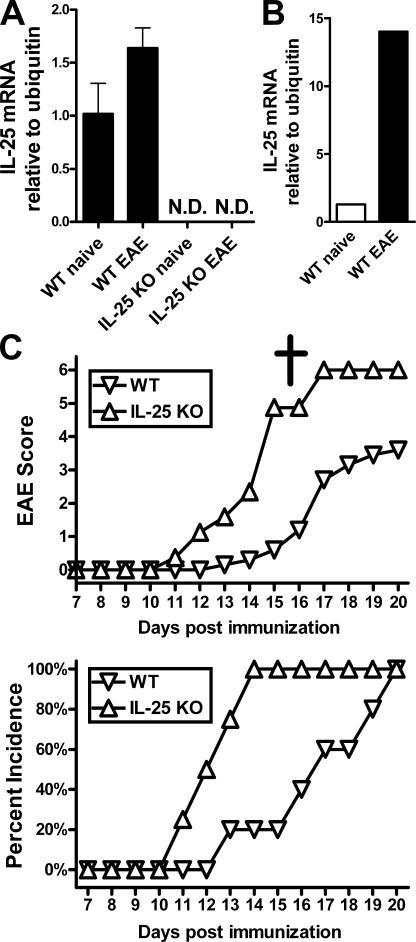
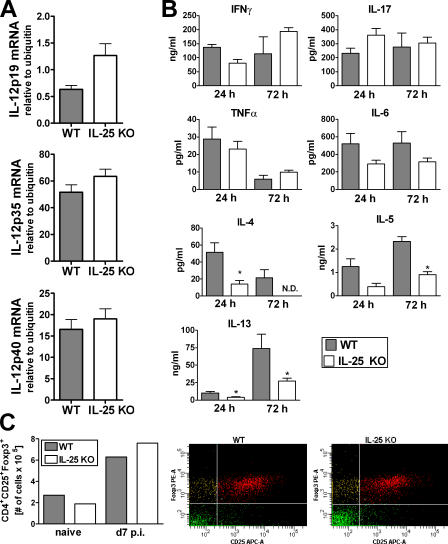
Interleukin (IL)-25 is a member of the IL-17 family of cytokines. However, unlike the other members of this family, IL-25 promotes T helper (Th) 2 responses. We now show that IL-25 also regulates the development of autoimmune inflammation mediated by IL-17-producing T cells. We have generated IL-25-deficient (il25-/-) mice and found that they are highly susceptible to experimental autoimmune encephalomyelitis (EAE). The accelerated disease in the il25-/- mice is associated with an increase of IL-23 in the periphery and a subsequent increase in the number of inflammatory IL-17-, IFNgamma-, and TNF-producing T cells that invade the central nervous system. Neutralization of IL-17 but not IFNgamma in il25-/- mice prevented EAE, suggesting that IL-17 is a major disease-promoting factor. IL-25 treatment at several time points during a relapse-remitting model or chronic model of EAE completely suppressed disease. IL-25 treatment induced elevated production of IL-13, which is required for suppression of Th17 responses by direct inhibition of IL-23, IL-1beta, and IL-6 expression in activated dendritic cells. Thus, IL-25 and IL-17, being members of the same cytokine family, play opposing roles in the pathogenesis of organ-specific autoimmunity.
Overview
The claims and statistics of this paper haven’t been checked yet.
Free: it reads the open-access text and checks the first 5 claims that cite a source we can check. Create a free account to check every claim.
Integrity signals
Registry
Cites
Statistics
Figures



Verification
Claims the paper makes
The claims and statistics of this paper haven’t been checked yet.
Free: it reads the open-access text and checks the first 5 claims that cite a source we can check. Create a free account to check every claim.
Claims other papers make about this one
Each is checked against this paper’s own text: does it say what the citing paper says it does?
The cited source says what the claim attributes to it.
In the citing paper
“IL-25 can also inhibit autoimmunity mediated by Th17 cells.”
From The IL-17 Family of Cytokines in Health and Disease (2019) · cites this paper as Kleinschek et al., 2007
In the citing paper
“IL-25 treatment elevated production of IL-13 and suppressed expression of IL-1, IL-6, and IL-23 by activated dendritic cells”
From The IL-17 Family of Cytokines in Health and Disease (2019) · cites this paper as Kleinschek et al., 2007
Self-check
Percentages, sums and reported differences re-computed from the paper’s own numbers.
The self-check needs the paper’s full text.
Citations
Cites
Bettelli, E., Carrier, Y., Gao, W., Korn, T., Strom, T. B., Oukka, M., Weiner, H. L., & Kuchroo, V. K. (2006) · Nature · doi:10.1038/nature04753 · Cited by 6,992
Alternative activation of macrophages
Gordon, S. (2003) · Nature Reviews Immunology · doi:10.1038/nri978 · Cited by 6,189 · cited 1×
“Consistent with pervious reports (55, 56), we observed that IL-25 could induce IL-13 mRNA expression in cultured DCs (unpublished data).”
ResultIvanov, I. I., McKenzie, B. S., Zhou, L., Tadokoro, C. E., Lepelley, A., Lafaille, J. J., Cua, D. J., & Littman, D. R. (2006) · Cell · doi:10.1016/j.cell.2006.07.035 · Cited by 5,145
Self-citationHarrington, L. E., Hatton, R. D., Mangan, P. R., Turner, H., Murphy, T. L., Murphy, K. M., & Weaver, C. T. (2005) · Nature Immunology · doi:10.1038/ni1254 · Cited by 4,742 · cited 3×
“Recent in vitro studies have suggested that Th17 cells are also negatively regulated by IL-4 signaling pathways (21, 22).”
BackgroundResultA distinct lineage of CD4 T cells regulates tissue inflammation by producing interleukin 17
Park, H., Li, Z., Yang, X. O., Chang, S. H., Nurieva, R., Wang, Y.-H., Wang, Y., Hood, L., Zhu, Z., Tian, Q., et al. (2005) · Nature Immunology · doi:10.1038/ni1261 · Cited by 4,265 · cited 3×
“Recent in vitro studies have suggested that Th17 cells are also negatively regulated by IL-4 signaling pathways (21, 22).”
BackgroundResultIL-23 drives a pathogenic T cell population that induces autoimmune inflammation
Langrish, C. L., Chen, Y., Blumenschein, W. M., Mattson, J., Basham, B., Sedgwick, J. D., McClanahan, T., Kastelein, R. A., & Cua, D. J. (2005) · The Journal of Experimental Medicine · doi:10.1084/jem.20041257 · Cited by 4,099 · cited 3×
“In contrast, anti-IFNγ treatment had no eff ect, consistent with studies demonstrating that Th1 cells only play a minor role in EAE (13).”
BackgroundResultSelf-citationVeldhoen, M., Hocking, R. J., Atkins, C. J., Locksley, R. M., & Stockinger, B. (2006) · Immunity · doi:10.1016/j.immuni.2006.01.001 · Cited by 3,605
Transforming growth factor-β induces development of the TH17 lineage
Mangan, P. R., Harrington, L. E., O'Quinn, D. B., Helms, W. S., Bullard, D. C., Elson, C. O., Hatton, R. D., Wahl, S. M., Schoeb, T. R., & Weaver, C. T. (2006) · Nature · doi:10.1038/nature04754 · Cited by 3,087
Cua, D. J., Sherlock, J., Chen, Y., Murphy, C. A., Joyce, B., Seymour, B., Lucian, L., To, W., Kwan, S., Churakova, T., et al. (2003) · Nature · doi:10.1038/nature01355 · Cited by 2,906 · cited 1×
“cyto metric sorting from >100 irradiation bone marrow chimeric mice (11).”
BackgroundSelf-citationInterleukin-17 Family Members and Inflammation
Kolls, J. K., & Lindén, A. (2004) · Immunity · doi:10.1016/j.immuni.2004.08.018 · Cited by 2,372 · cited 1×
“Although IL-25 promotes allergic responses, IL-17A had been characterized to promote chronic infl ammatory responses (9, 10).”
Background
Cited by
Items 101–200 of 399
New perspectives on effector mechanisms in uveitis
Luger, D., & Caspi, R. R. (2008) · Seminars in Immunopathology · doi:10.1007/s00281-008-0108-5 · Cited by 112
“IL-17A is a proinflammatory cytokine, while IL-17E (IL-25) is anti-inflammatory [38].”
BackgroundWilson, M. S., Ramalingam, T. R., Rivollier, A., Shenderov, K., Mentink–Kane, M. M., Madala, S. K., Cheever, A. W., Artis, D., Kelsall, B. L., & Wynn, T. A. (2011) · Gastroenterology · doi:10.1053/j.gastro.2010.09.047 · Cited by 101
Sonobe, Y., Takeuchi, H., Kataoka, K., Li, H., Jin, S., Mimuro, M., Hashizume, Y., Sano, Y., Kanda, T., Mizuno, T., et al. (2009) · Journal of Biological Chemistry · doi:10.1074/jbc.m109.025940 · Cited by 99
IL-13 Regulates Th17 Secretion of IL-17A in an IL-10–Dependent Manner
Newcomb, D. C., Boswell, M. G., Huckabee, M. M., Goleniewska, K., Dulek, D. E., Reiss, S., Lukacs, N. W., Kolls, J. K., & Peebles, R. S. (2011) · The Journal of Immunology · doi:10.4049/jimmunol.1102216 · Cited by 98
“T cells were differentiated into Th17 cells by adding mouse rIL-23 (10 ng/ml), human rTGF-b (1 ng/ml), mouse rIL-6 (20 ng/ml), anti-IFN-g (10 mg/ml), and anti-IL-4 (10 mg/ml).”
BackgroundInfluentialAwang, R. A., Lappin, D. F., MacPherson, A., Riggio, M. P., Robertson, D. P., Hodge, P. J., Ramage, G., Culshaw, S., Preshaw, P. M., Taylor, J. J., et al. (2014) · Inflammation Research · doi:10.1007/s00011-014-0776-7 · Cited by 113
Miossec, P. (2017) · RMD Open · doi:10.1136/rmdopen-2016-000284 · Cited by 96
Keratinocyte-Derived IL-17E Contributes to Inflammation in Psoriasis
Senra, L., Stalder, R., Martínez, D. Á., Chizzolini, C., Boehncke, W., & Brembilla, N. C. (2016) · Journal of Investigative Dermatology · doi:10.1016/j.jid.2016.06.009 · Cited by 103
“It was shown to limit Th1 and Th17 responses in mice via APC and mesenchymal stem cell activation (Caruso et al., 2009; Kleinschek et al., 2007; Liu et al., 2015; Wang et al., 2015).”
BackgroundThe role of interleukin-17 in asthma: a protective response?
Hynes, G., & Hinks, T. (2020) · ERJ Open Research · doi:10.1183/23120541.00364-2019 · Cited by 103
Huang, Q., Niu, Z., Tan, J., Yang, J., Liu, Y., Ma, H., Lee, V. W., Sun, S., Song, X., Guo, M., et al. (2015) · Journal of the American Society of Nephrology · doi:10.1681/asn.2014050479 · Cited by 96
TH17 cells in asthma and inflammation
Aujla, S. J., & Alcorn, J. F. (2011) · Biochimica et Biophysica Acta (BBA) - General Subjects · doi:10.1016/j.bbagen.2011.02.002 · Cited by 104
Targeting the development and effector functions of TH17 cells
Ghilardi, N., & Ouyang, W. (2007) · Seminars in Immunology · doi:10.1016/j.smim.2007.10.016 · Cited by 106
The IL-17 Differentiation Pathway and Its Role in Transplant Outcome
Serody, J. S., & Hill, G. R. (2012) · Transplantation and Cellular Therapy · doi:10.1016/j.bbmt.2011.10.001 · Cited by 92
“However, it is now clear that Th-17 cells may have pathogenic or regulatory effects, depending on the coproduction of proinflammatory (TNF and IFN-γ) or anti-inflammatory (IL-10 and IL-22) cytokines [6,7].”
BackgroundRegulation of Th2 Cell Immunity by Dendritic Cells
Na, H., Cho, M., & Chung, Y. (2016) · Immune Network · doi:10.4110/in.2016.16.1.1 · Cited by 82
“driven inflammation in the gut was also found to be inhibited by IL-25 (45).”
BackgroundInfluentialYang, J., Yang, X., Zou, H., Chu, Y., & Li, M. (2011) · Rheumatology · doi:10.1093/rheumatology/ker116 · Cited by 93
Murdock, B. J., Falkowski, N. R., Shreiner, A. B., Sadighi Akha, A. A., McDonald, R. A., White, E. S., Toews, G. B., & Huffnagle, G. B. (2012) · Infection and Immunity · doi:10.1128/iai.05529-11 · Cited by 87
“Though its precise role is unclear, the TH17 response can be reciprocally regulated by the TH1, TH2, and regulatory arms of adaptive immunity (10, 12, 24, 26, 43, 47).”
BackgroundImpaired T cell activation and increased Th2 lineage commitment in Annexin‐1‐deficient T cells
D'Acquisto, F., Paschalidis, N., Sampaio, A. L. F., Merghani, A., Flower, R. J., & Perretti, M. (2007) · European Journal of Immunology · doi:10.1002/eji.200636792 · Cited by 89
Lochner, M., Bérard, M., Sawa, S., Hauer, S., Gaboriau-Routhiau, V., Fernandez, T. D., Snel, J., Bousso, P., Cerf-Bensussan, N., & Eberl, G. (2011) · The Journal of Immunology · doi:10.4049/jimmunol.1001723 · Cited by 80
“Both IL-25 and IL-27 antagonize the Th17 pathway (12, 27, 28), and IL-27 inhibits the generation of”
BackgroundKorn, T., Anderson, A. C., Bettelli, E., & Oukka, M. (2007) · Journal of Neuroimmunology · doi:10.1016/j.jneuroim.2007.09.009 · Cited by 99
Structure and function of interleukin-17 family cytokines
Zhang, X., Angkasekwinai, P., Dong, C., & Tang, H. (2011) · Protein & Cell · doi:10.1007/s13238-011-1006-5 · Cited by 96
IL-25 Induces M2 Macrophages and Reduces Renal Injury in Proteinuric Kidney Disease
Cao, Q., Wang, C., Zheng, D., Wang, Y., Lee, V. W. S., Wang, Y. M., Zheng, G., Tan, T. K., Yu, D., Alexander, S. I., et al. (2011) · Journal of the American Society of Nephrology · doi:10.1681/asn.2010070693 · Cited by 82
High salt diet stimulates gut Th17 response and exacerbates TNBS-induced colitis in mice
Wei, Y., Lu, C., Chen, J., Cui, G., Wang, L., Yu, T., Yang, Y., Wu, W., Ding, Y., Li, L., et al. (2017) · Oncotarget · doi:10.18632/oncotarget.13783 · Cited by 84
“Different from other Th17 associated cytokines, IL-17E was reported negatively regulate the Th17 response [30].”
Liver X receptor agonist regulation of Th17 lymphocyte function in autoimmunity
Xu, J., Wagoner, G., Douglas, J. C., & Drew, P. D. (2009) · Journal of Leukocyte Biology · doi:10.1189/jlb.1008600 · Cited by 81
“Second, Th17 cells are capable of inducing EAE [33].”
BackgroundLi, Y., & Begovich, A. B. (2009) · Seminars in Immunology · doi:10.1016/j.smim.2009.04.002 · Cited by 90
Interleukin‐17 and ischaemic stroke
Zhang, Q., Liao, Y., Liu, Z., Dai, Y., Li, Y., Li, Y., & Tang, Y. (2020) · Immunology · doi:10.1111/imm.13265 · Cited by 88
Kan, A. A., de Jager, W., de Wit, M., Heijnen, C., van Zuiden, M., Ferrier, C., van Rijen, P., Gosselaar, P., Hessel, E., van Nieuwenhuizen, O., et al. (2012) · Journal of Neuroinflammation · doi:10.1186/1742-2094-9-207 · Cited by 76
“[63,64] IL-25 - Protects BBB integrity [62,65]”
The role of Th17 cells in the pathogenesis and treatment of breast cancer
Karpisheh, V., Ahmadi, M., Abbaszadeh‐Goudarzi, K., Saray, M. M., Barshidi, A., Mohammadi, H., Yousefi, M., & Jadidi‐Niaragh, F. (2022) · Cancer Cell International · doi:10.1186/s12935-022-02528-8 · Cited by 87
“IL-17 produced by Th17 cells can increase the secretion of inflammatory cytokines, including IL-6, TNF-α, and IL-1β, not only by enhancing the production of chemokines such as CXCL-2 and CXCL-8 but also by secreting significant intestinal stimuli such as GM-CSF.”
BackgroundInfluentialKuwabara, T., Ishikawa, F., Yasuda, T., Aritomi, K., Nakano, H., Tanaka, Y., Okada, Y., Lipp, M., & Kakiuchi, T. (2009) · The Journal of Immunology · doi:10.4049/jimmunol.0800729 · Cited by 87
“Very recently, it has been reported that the enhancement of IL-13 production inhibits IL-23 production and increases the Th2type immune response, which is accompanied by a reduction in EAE development (35).”
BackgroundWang, W.-B., Yen, M.-L., Liu, K.-J., Hsu, P.-J., Lin, M.-H., Chen, P.-M., Sudhir, P.-R., Chen, C.-H., Chen, C.-H., Sytwu, H.-K., et al. (2015) · Stem Cell Reports · doi:10.1016/j.stemcr.2015.07.013 · Cited by 81
“Surprisingly, MS/MS studies revealed that IL-25, also known as IL17E and a potent suppressor of Th17 responses (Kleinschek et al., 2007; Zaph et al., 2008), was highly secreted by hMSCs.”
BackgroundBasso, A. S., Cheroutre, H., & Mucida, D. (2009) · Cell Research · doi:10.1038/cr.2009.26 · Cited by 104
“IL-25 treatment induced elevated production of IL-13, which was required for suppression of Th17 responses by direct inhibition of IL-23, IL-1 β and IL-6 expression in activated DCs [127].”
BackgroundEmerging cytokine targets in rheumatoid arthritis
Asquith, D. L., & McInnes, I. B. (2007) · Current Opinion in Rheumatology · doi:10.1097/bor.0b013e3280eec78c · Cited by 88
The Evolution, Immunopathogenesis and Biomarkers of Type 2 Inflammation in Common Allergic Disorders
Gao, Y., Wang, Z., Öğülür, İ., Li, S., Yazıcı, D., Li, X., Pat, Y., Zheng, Y., Babayev, H., Zeyneloglu, C., et al. (2025) · Allergy · doi:10.1111/all.16620 · Cited by 84
“It promotes the production of IL-4, IL-5, and IL-13, thereby mitigating IL- 17-dependent autoimmune responses [30].”
Innate and adaptive mechanisms to control of pathological intestinal inflammation
Kelsall, B. (2008) · The Journal of Pathology · doi:10.1002/path.2286 · Cited by 77
“IL-25 can also suppress Th17 development via its induction of IL-13, but does not appear to affect the induction of Tregs [173].”
BackgroundShuai, C., Yang, X., Pan, H., & Han, W. (2020) · Frontiers in Oncology · doi:10.3389/fonc.2020.582863 · Cited by 79
“IL-17E induces T-helper 2 (Th2) cell responses by promoting the secretion of Th2-related cytokines (IL-4, IL-5, and IL13), whereas it suppresses Th17 responses and autoimmune inflammation (25).”
BackgroundTanabe, S. (1998) · International Journal of Molecular Medicine · doi:10.3892/ijmm_00000006 · Cited by 76
The Interleukin-17 Family of Cytokines in Breast Cancer
Fabre, J., Giustiniani, J., Garbar, C., Merrouche, Y., Antonicelli, F. D., & Bensussan, A. (2018) · International Journal of Molecular Sciences · doi:10.3390/ijms19123880 · Cited by 81
“Besides, this study confirms deep implication in the deregulation of Th2 responses seen in chronic allergy diseases [77].”
ResultRoles of IL-25 in Type 2 Inflammation and Autoimmune Pathogenesis
Deng, C., Peng, N., Tang, Y., Yu, N., Wang, C., Cai, X., Zhang, L., Hu, D., Ciccia, F., & Lu, L. (2021) · Frontiers in Immunology · doi:10.3389/fimmu.2021.691559 · Cited by 81
“Recent studies show that IL-25-deficient (Il25) mice are highly susceptible to experimental autoimmune encephalomyelitis (EAE), a mouse model for human MS, while neutralization of IL-17A prevents EAE in IL-25-deficient mice, indicating a role of IL-25 in attenuating inflammation by inhibiting Th17 function (48).”
BackgroundOchoa-Repáraz, J., Rynda, A., Ascón, M. A., Yang, X., Kochetkova, I., Riccardi, C., Callis, G., Trunkle, T., & Pascual, D. W. (2008) · The Journal of Immunology · doi:10.4049/jimmunol.181.2.954 · Cited by 72
“Moreover, it was shown that the protection conferred by IL-25 was lost in IL-13-deficient mice (40).”
BackgroundSolt, L. A., Banerjee, S., Campbell, S., Kamenecka, T. M., & Burris, T. P. (2015) · Endocrinology · doi:10.1210/en.2014-1677 · Cited by 77
Alarmin cytokines as central regulators of cutaneous immunity
Hasegawa, T., Oka, T., & Demehri, S. (2022) · Frontiers in Immunology · doi:10.3389/fimmu.2022.876515 · Cited by 70
“members of the IL-17 cytokine family and has been implicated as a type 2 cytokine that induces the production of IL-4, IL-5, and IL-13, which in turn inhibit the IL-17-dependent autoimmune diseases (110).”
BackgroundTh17 Differentiation and Their Pro-inflammation Function
Song, X., Gao, H., & Qian, Y. (2014) · Advances in experimental medicine and biology · doi:10.1007/978-94-017-9487-9_5 · Cited by 74
“In addition, Il25-deficient mice were susceptible to EAE induction [126], indicating a negative role of IL-17E in controlling Th17 responses.”
BackgroundCytokine Pathways in Allergic Disease
Williams, C. M. M., Rahman, S., Hubeau, C., & Ma, H. (2012) · Toxicologic Pathology · doi:10.1177/0192623311430694 · Cited by 79
“…further studies have demonstrated expression in IgE-activated mast cells (Ikeda et al. 2003), alveolar macro- phages (Kang et al. 2005), microglia (Kleinschek et al. 2007), eosinophils (Dolgachev et al. 2009; Wang et al. 2007), basophils (Wang et al. 2007), epithelial cells (Angkasekwinai et…”
BackgroundRegulation of IL-17 in autoimmune diseases by transcriptional factors and microRNAs
Khan, D., & Ahmed, S. A. (2015) · Frontiers in Genetics · doi:10.3389/fgene.2015.00236 · Cited by 78
“In addition, a selective RORγt inverse agonist (TMP778) has been shown to inhibit Th17 signature gene expression, and IL-17 production from Tc17 and γδ T cells indicating the therapeutic potential of targeting RORγt in inflammatory conditions (Skepner et al., 2014).”
BackgroundInfluentialPeron, J. P. S., Yang, K., Chen, M., Brandão, W. N., Basso, A. S., Commodaro, A. G., Weiner, H. L., & Rizzo, L. V. (2010) · Journal of Neuroimmunology · doi:10.1016/j.jneuroim.2010.06.002 · Cited by 69
“, 2007), or those that are counter-regulatory, such as IL-13 and IL-25 (Kleinsheck et al., 2007) and IL-27 (Fitzgerald et al.”
Interleukin-17 in Liver Disease Pathogenesis
Li, N., Yamamoto, G., Fuji, H., & Kisseleva, T. (2021) · Seminars in Liver Disease · doi:10.1055/s-0041-1730926 · Cited by 74
Type 2 immunity in the brain and brain borders
Mamuladze, T., & Kipnis, J. (2023) · Cellular and Molecular Immunology · doi:10.1038/s41423-023-01043-8 · Cited by 69
Reciprocal expression of IL‐25 and IL‐17A is important for allergic airways hyperreactivity
Barlow, J. L., Flynn, R. J., Ballantyne, S. J., & McKenzie, A. N. J. (2011) · Clinical & Experimental Allergy · doi:10.1111/j.1365-2222.2011.03806.x · Cited by 68
Th17 cells: The emerging reciprocal partner of regulatory T cells in the liver
ZHAO, L., QIU, D. K., & MA, X. (2010) · Journal of Digestive Diseases · doi:10.1111/j.1751-2980.2010.00428.x · Cited by 66
Ethanol Consumption Modifies Dendritic Cell Antigen Presentation in Mice
Heinz, R. E., & Waltenbaugh, C. R. (2007) · Alcoholism Clinical and Experimental Research · doi:10.1111/j.1530-0277.2007.00479.x · Cited by 69
Caruso, R., Stolfi, C., Sarra, M., Rizzo, A., Fantini, M. C., Pallone, F., MacDonald, T. T., & Monteleone, G. (2009) · Blood · doi:10.1182/blood-2008-08-172767 · Cited by 68
Interleukin-23 and Th17 Cells in Transplantation Immunity: Does 23+17 Equal Rejection?
Chen, Y., & Wood, K. J. (2007) · Transplantation · doi:10.1097/01.tp.0000287126.12083.48 · Cited by 60
“Th2-produced IL-4 and IL-25 promote Th2 responses but suppress Th17 function (15, 31).”
BackgroundSelf-citationTatano, Y., Shimizu, T., & Tomioka, H. (2014) · Scientific Reports · doi:10.1038/srep04146 · Cited by 60
Shi, T., Xie, Y., Fu, Y., Zhou, Q., Ma, Z., Ma, J., Huang, Z., Zhang, J., & Chen, J. (2016) · Mucosal Immunology · doi:10.1038/mi.2016.102 · Cited by 61
“Mice deficient in IL-25 were shown to be highly susceptible to experimental autoimmune encephalomyelitis, which is a Th17 cell-driven autoimmune inflammatory disease of the central nervous system.(13) In addition, the administration of recombinant IL-25 to experimental colitis or germ-free mice could significantly red…”
BackgroundInterplay of parasite-driven immune responses and autoimmunity
Zaccone, P., Burton, O. T., & Cooke, A. (2007) · Trends in Parasitology · doi:10.1016/j.pt.2007.10.006 · Cited by 64
Th17 immune response in IBD: A new pathogenic mechanism
Caprioli, F., Pallone, F., & Monteleone, G. (2008) · Journal of Crohn s and Colitis · doi:10.1016/j.crohns.2008.05.004 · Cited by 62
New complexities in helper T cell fate determination and the implications for autoimmune diseases
Takatori, H., Kanno, Y., Chen, Z., & O’Shea, J. J. (2008) · Modern Rheumatology · doi:10.1007/s10165-008-0099-z · Cited by 55
Egeberg, A., Hansen, P. R., Gislason, G. H., Skov, L., & Mallbris, L. (2016) · British Journal of Dermatology · doi:10.1111/bjd.14633 · Cited by 55
IL-17E (IL-25) Enhances Innate Immune Responses during Skin Inflammation
Senra, L., Mylonas, A., Kavanagh, R. D., Fallon, P. G., Conrad, C., Borowczyk, J., Wrobel, L. J., Kaya, G., Yawalkar, N., Boehncke, W., et al. (2019) · Journal of Investigative Dermatology · doi:10.1016/j.jid.2019.01.021 · Cited by 61
Liu, C., Swaidani, S., Qian, W., Kang, Z., Sun, P., Han, Y., Wang, C., Gulen, M. F., Yin, W., Zhang, C., et al. (2011) · Science Signaling · doi:10.1126/scisignal.2001843 · Cited by 54
Sarcoidosis Th17 Cells are ESAT-6 Antigen Specific but Demonstrate Reduced IFN-γ Expression
Richmond, B. W., Ploetze, K., Isom, J., Chambers-Harris, I., Braun, N. A., Taylor, T. R., Abraham, S., Mageto, Y. N., Culver, D. A., Oswald-Richter, K. A., et al. (2012) · Journal of Clinical Immunology · doi:10.1007/s10875-012-9817-6 · Cited by 54
“Th-17 cells produce IL-17A [21], IL-17F [22], IL-21 [23, 24] and IL-22 [25] and mediate recruitment of CXCR3+ T cells to the lung by production of the chemokines CXCL9, CXCL10, and CXCL11 [26].”
BackgroundWong, C. K., Li, P. W., & Lam, C. W. K. (2007) · Immunology Letters · doi:10.1016/j.imlet.2007.07.002 · Cited by 59
van Hamburg, J. P., de Bruijn, M. J. W., de Almeida, C. R., van Zwam, M., van Meurs, M., de Haas, E. F. E., Boon, L., Samsom, J. N., & Hendriks, R. W. (2008) · European Journal of Immunology · doi:10.1002/eji.200737840 · Cited by 65
Sarra, M., Cupi, M. L., Bernardini, R., Ronchetti, G., Monteleone, I., Ranalli, M., Franzè, E., Rizzo, A., Colantoni, A., Caprioli, F., et al. (2013) · Hepatology · doi:10.1002/hep.26446 · Cited by 55
“lation of IL-25 production has been described in many inflammatory disorders and is supposed to contribute to the progression of the pathology.(8,9,13,14) For example, high IL-25 sustains inflammation in airways of patients with asthma, whereas defective IL-25 synthesis helps perpetuate chronic inflammation in the gut…”
BackgroundIL-25 Inhibits Atherosclerosis Development in Apolipoprotein E Deficient Mice
Mantani, P. T., Dunér, P., Bengtsson, E., Alm, R., Ljungcrantz, I., Söderberg, I., Sundius, L., To, F., Nilsson, J. Å., Björkbacka, H., et al. (2015) · PLoS ONE · doi:10.1371/journal.pone.0117255 · Cited by 55
“In addition, IL25 deficiency has been shown to induce more severe experimental autoimmune encephalomyelitis, accelerated by increased numbers of inflammatory IL-17 and IFN-γ producing T cells [3].”
BackgroundPharmacologic Inhibition of MEK–ERK Signaling Enhances Th17 Differentiation
Tan, A. H., & Lam, K. (2010) · The Journal of Immunology · doi:10.4049/jimmunol.0901509 · Cited by 57
“For example, IL-10 deficiency in mice led to enhanced IL-12 and IL-23 production by accessory cells and promoted Th17-associated colitis (24) whereas IL-25 deficiency resulted in high levels of IL-23 in the periphery and increased numbers of infiltrating T cells that produced IL-17, TNF-a, and IFN-g in the CNS (25), a…”
BackgroundInoue, N., Watanabe, M., Morita, M., Tatusmi, K., Hidaka, Y., Akamizu, T., & Iwatani, Y. (2011) · Clinical & Experimental Immunology · doi:10.1111/j.1365-2249.2010.04306.x · Cited by 52
Luz‐Crawford, P., Téjédor, G., Mausset-Bonnefont, A.-L., Beaulieu, É., Morand, E. F., Jørgensen, C., Noël, D., & Djouad, F. (2015) · Arthritis & Rheumatology · doi:10.1002/art.39069 · Cited by 52
Liu, D., Cao, T., Wang, N., Liu, C., Ma, N., Tu, R., & Min, X. (2016) · Scientific Reports · doi:10.1038/srep36002 · Cited by 54
Peron, J. P. S., de Oliveira, A. P. L., & Rizzo, L. V. (2009) · Autoimmunity Reviews · doi:10.1016/j.autrev.2009.02.024 · Cited by 52
“Besides, we cannot exclude that counteregulatory molecules may also be present, such as IL-13, IL-25 [39] and IL-27 as recently reviewed [40].”
Proinflammatory effects of malondialdehyde in lymphocytes
Raghavan, S., Subramaniyam, G., & Shanmugam, N. (2012) · Journal of Leukocyte Biology · doi:10.1189/jlb.1211617 · Cited by 55
Rutitzky, L. I., Smith, P. M., & Stadecker, M. J. (2009) · European Journal of Immunology · doi:10.1002/eji.200939325 · Cited by 55
Classic Models for New Perspectives: Delving into Helminth–Microbiota–Immune System Interactions
Cortés, A., Toledo, R., & Cantacessi, C. (2018) · Trends in Parasitology · doi:10.1016/j.pt.2018.05.009 · Cited by 50
Interleukin-17: Potential Target for Chronic Wounds
Hadian, Y., Bagood, M. D., Dahle, S. E., Sood, A., & Isseroff, R. R. (2019) · Mediators of Inflammation · doi:10.1155/2019/1297675 · Cited by 57
“Interestingly, IL-17E has been shown to attenuate the TH17 response in a model of experimental autoimmune encephalomyelitis by stimulating the production of the T-helper 2 (TH2) cytokine IL-13, which inhibits the production of TH17-promoting cytokines IL-1β, IL-6, and IL-23 from dendritic cells [39].”
BackgroundInterleukin-25 production is differently regulated by TNF-α and TGF-β1 in the human gut
Fina, D., Franzè, E., Rovedatti, L., Corazza, G. R., Biancone, L., Sileri, P., Sica, G. S., MacDonald, T. T., Pallone, F., Sabatino, A. D., et al. (2010) · Mucosal Immunology · doi:10.1038/mi.2010.68 · Cited by 51
Mériaux, C., Arafah, K., Tasiemski, A., Wisztorski, M., Bruand, J., Boidin‐Wichlacz, C., Desmons, A., Debois, D., Laprévôte, O., Brunelle, A., et al. (2011) · PLoS ONE · doi:10.1371/journal.pone.0018359 · Cited by 61
“Molecules related to cyclophilin, ERp60 [9] in conjunction with cytokines like those related to IL-16, IL-17 and IL-25, are implicated in the control of inflammation [64–68] and the presence of such molecules in leech CNS [12,18] after trauma suggests a generality and convergence of such a biological phenomena at earl…”
BackgroundChiricozzi, A., Romanelli, M., Saraceno, R., & Torres, T. R. (2016) · Expert Opinion on Drug Safety · doi:10.1080/14740338.2016.1228872 · Cited by 52
“In an experimental autoimmune encephalomyelitis (EAE) model, IL-25 treatment showed to induce production of IL-13, suppressing Th17 responses by direct inhibition of IL-23, IL-1β, and IL-6 expression in activated dendritic cells [20].”
BackgroundNew insights into the function of Interleukin-25 in disease pathogenesis
Yuan, Q., Peng, N., Xiao, F., Shi, X., Zhu, B., Rui, K., Tian, J., & Lu, L. (2023) · Biomarker Research · doi:10.1186/s40364-023-00474-9 · Cited by 54
“Nevertheless, IL-25 was found to antagonize the pro-inflammatory effects of IL-17 A in both mouse models of collagen-induced arthritis (CIA), a mouse model for human RA, and experimental autoimmune encephalomyelitis (EAE), a mouse model for human multiple sclerosis (MS), thereby inhibiting the Th17 response and decrea…”
BackgroundThe microbiota and immune response during Clostridium difficile infection
Buonomo, E. L., & Petri, W. A. (2016) · Anaerobe · doi:10.1016/j.anaerobe.2016.05.009 · Cited by 55
Suto, H., Nambu, A., Morita, H., Yamaguchi, S., Numata, T., Yoshizaki, T., Shimura, E., Arae, K., Asada, Y., Motomura, K., et al. (2018) · Journal of Allergy and Clinical Immunology · doi:10.1016/j.jaci.2017.12.1007 · Cited by 51
Smith, K. A., Löser, S., Varyani, F., Harcus, Y. M., McSorley, H. J., McKenzie, A. N. J., & Maizels, R. M. (2018) · eLife · doi:10.7554/elife.38269 · Cited by 51
“, 2001) and preventing IL-17A-dependent autoimmune disease (Kleinschek et al., 2007).”
BackgroundThe Th17 Pathway in Vascular Inflammation: Culprit or Consort?
Robert, M., Miossec, P., & Hot, A. (2022) · Frontiers in Immunology · doi:10.3389/fimmu.2022.888763 · Cited by 48
Škarica, M., Wang, T., McCadden, E., Kardian, D., Calabresi, P. A., Small, D., & Whartenby, K. A. (2009) · The Journal of Immunology · doi:10.4049/jimmunol.0803631 · Cited by 46
Kizelsztein, P., Komarnytsky, S., & Raskin, I. (2009) · Journal of Neuroimmunology · doi:10.1016/j.jneuroim.2009.08.017 · Cited by 48
“EAE induction critically depends on the presence of the IFN-γ producing cells and acute inflammation in the CNS, whereas the Th17 cells play an important role in the progression of disease (Kleinschek et al., 2007).”
BackgroundRegulatory role of resveratrol on Th17 in autoimmune disease
Petro, T. M. (2010) · International Immunopharmacology · doi:10.1016/j.intimp.2010.07.011 · Cited by 47
Negative regulation of Th17 responses
Stumhofer, J. S., Silver, J., & Hunter, C. A. (2007) · Seminars in Immunology · doi:10.1016/j.smim.2007.11.006 · Cited by 52
“More recently in a mouse model of experimental autoimmune encephalitis (EAE) the absence of IL-25 was associated with more severe disease, elevated levels of IL-23 in the periphery and increased numbers of T cells producing IL-17, TNF-α and IFNγ in the central nervous system (CNS)[37].”
BackgroundInterleukin‐25: New perspective and state‐of‐the‐art in cancer prognosis and treatment approaches
Shabgah, A. G., Amir, A., Gardanova, Z. R., Zekiy, A. O., Thangavelu, L. P., Nik, M. E., Ahmadi, M., & Navashenaq, J. G. (2021) · Cancer Medicine · doi:10.1002/cam4.4060 · Cited by 50
Siegle, J. S., Hansbro, N. G., Dong, C., Angkasekwinai, P., Foster, P. S., & Kumar, R. K. (2011) · Clinical & Experimental Immunology · doi:10.1111/j.1365-2249.2011.04392.x · Cited by 44
IL-17E (IL-25) and IL-17RB promote respiratory syncytial virus-induced pulmonary disease
Petersen, B., Dolgachev, V. A., Rasky, A. J., & Lukacs, N. W. (2014) · Journal of Leukocyte Biology · doi:10.1189/jlb.0913482 · Cited by 47
“Numerous studies have demonstrated that IL-25 regulates Th1 and Th17 immune responses [20–22], and most recently, the expression of IL-25 in the gut mucosa can regulate inflammatory bowel disease via IL-10 [23].”
BackgroundBiological Properties and the Role of IL-25 in Disease Pathogenesis
Liu, Y., Shao, Z., Shangguan, G., Bie, Q., & Zhang, B. (2018) · Journal of Immunology Research · doi:10.1155/2018/6519465 · Cited by 42
“Later, the IL-25 expression was identified in the central nervous system [12] and the bronchial submucosa in asthmatic patients [13].”
BackgroundInterleukin-25: A two-edged sword in the control of immune-inflammatory responses
Monteleone, G., Pallone, F., & MacDonald, T. T. (2010) · Cytokine & Growth Factor Reviews · doi:10.1016/j.cytogfr.2010.05.001 · Cited by 50
Abdelnabi, M. N., Hassan, G. S., & Shoukry, N. H. (2024) · Frontiers in Immunology · doi:10.3389/fimmu.2024.1437046 · Cited by 46
Lee, Y., Ishikawa, T., Lee, H., Lee, B., Ryu, C., Mejia, I. D., Kim, M., Lu, G., Hong, Y., Feng, M., et al. (2025) · Cell · doi:10.1016/j.cell.2025.03.006 · Cited by 46
Sauer, A., Rochet, E., Lahmar, I., Brunet, J., Sabou, M., Bourcier, T., Candolfi, E., & Pfaff, A. W. (2013) · International Journal for Parasitology · doi:10.1016/j.ijpara.2013.04.004 · Cited by 42
Akt3-Mediated Protection Against Inflammatory Demyelinating Disease
DuBois, J. C., Ray, A. K., Gruber, R. C., Zhang, Y., Aflakpui, R., Macián, F., & Shafit‐Zagardo, B. (2019) · Frontiers in Immunology · doi:10.3389/fimmu.2019.01738 · Cited by 44
“IL-13 is known to promote protection during EAE (29, 30), and IL-13 producing T-cells are significantly increased in MS patients during relapse and returned to normal levels during remission (31).”
BackgroundThe minor salivary gland proteome in Sjögren’s syndrome
Hjelmervik, T. O., Jonsson, R., & Bolstad, A. (2009) · Oral Diseases · doi:10.1111/j.1601-0825.2009.01531.x · Cited by 46
IL-17 Signaling-Independent Central Nervous System Autoimmunity Is Negatively Regulated by TGF-β
González-García, I., Zhao, Y., Ju, S., Gu, Q., Liu, L., Kolls, J. K., & Lu, B. (2009) · The Journal of Immunology · doi:10.4049/jimmunol.0802221 · Cited by 42
Khorramdelazad, H., Bagheri, V., Hassanshahi, G., Zeinali, M., & Vakilian, A. (2015) · Journal of Neuroimmunology · doi:10.1016/j.jneuroim.2015.11.021 · Cited by 43
Enteric pathogens and gut function: Role of cytokines and STATs
Shea‐Donohue, T., Fasano, A., Smith, A. D., & Zhao, A. (2010) · Gut Microbes · doi:10.4161/gmic.1.5.13329 · Cited by 44
Autoimmune diseases in the TH17 era
Mesquita, D., Jr., Cruvinel, W. M., Câmara, N. O. S., Kallas, E. G., & Andrade, L. E. C. (2009) · Brazilian Journal of Medical and Biological Research · doi:10.1590/s0100-879x2009000600002 · Cited by 48
IL‐25: A key requirement for the regulation of type‐2 immunity
Barlow, J. L., & McKenzie, A. N. J. (2009) · BioFactors · doi:10.1002/biof.24 · Cited by 41
“more closely investigated the association between IL-25 and IL-17A [33] in experimental autoimmune encephalomyelitis (EAE), a mouse model of multiple sclerosis where IL-17A and IL-23 are known to be important mediators [34].”
Recent advances on CD4 + T cells in atherosclerosis and its implications for therapy
Grönberg, C., Nilsson, J. Å., & Wigren, M. (2017) · European Journal of Pharmacology · doi:10.1016/j.ejphar.2017.04.029 · Cited by 41
“(Fort et al., 2001; Kleinschek et al., 2007) Current evidence supports the role of IL-25 in expanding innate lymphoid cells type 2 (ILC2), which have the capacity to produce Th2 related cytokines.”
Background
Metadata
- Authors
- Kleinschek, M. A., Owyang, A. M., Joyce-Shaikh, B., Langrish, C. L., Chen, Y., Gorman, D. M., Blumenschein, W. M., McClanahan, T., Brombacher, F., Hurst, S. D., Kastelein, R. A., & Cua, D. J.
- Affiliations
- 1Discovery Research
- 2Experimental Pathology and Pharmacology, Schering-Plough Biopharma, Palo Alto, CA 94304
- University of Cape Town (ZA)
- Venue
- The Journal of Experimental Medicine
- Publisher
- Rockefeller University Press
- Published
- 2007-01-02
- Volume
- 204
- Issue
- 1
- Pages
- 161-170
- ISSN
- 0022-1007 (ISSN-L)
- 1540-9538
- PMC
- PMC2118427
- OpenAlex
- W2118140057
- Cited by
- 396
- References
- 58
- Citations by year
- 2026: 4 · 2025: 12 · 2024: 7 · 2023: 11 · 2022: 13 · 2021: 14 · 2020: 20 · 2019: 14 · 2018: 15 · 2017: 12 · 2016: 23 · 2015: 14 · 2014: 24 · 2013: 15 · 2012: 32
- FWCI
- 16.20
- Type
- journal article
- Language
- en
- Open access
- green
- europepmc.org
- Licence
- cc-by-nc-sa
- Locations
- The Journal of Experimental Medicine (publishedVersion)
- Europe PMC (PubMed Central) (publishedVersion, cc-by-nc-sa)
- PubMed Central (publishedVersion, cc-by-nc-sa)
- PubMed (publishedVersion)
- Topics
- Life Sciences › Immunology and Microbiology › Immunology › Psoriasis: Treatment and Pathogenesis
- Life Sciences › Immunology and Microbiology › Immunology › T-cell and B-cell Immunology
- Health Sciences › Medicine › Clinical Neurology › Multiple Sclerosis Research Studies
- Keywords
- IL-25, Th17 cells, IL-17, autoimmune encephalomyelitis, IL-23, IL-13, dendritic cells, IL-1β, interleukin-6, IL-17 family cytokines, organ-specific autoimmunity, Th2 immune response, relapsing-remitting EAE, cytokine therapy
- MeSH terms
- Animals, Base Sequence, Central Nervous System, DNA, Encephalomyelitis, Autoimmune, Experimental, Female, T-Lymphocytes, Helper-Inducer, Inflammation, Interferon-gamma, Interleukins, Male, Mice, Inbred C57BL, Autoimmunity, Mice, Knockout, Th2 Cells, Interleukin-17, Mice
About these checks
Registry, retraction, Cites and statistics results are computed, not judged, with one exception: a printed reference that no index lists is read once by a model before it counts as a citation error. Claims are extracted by a model and kept only when their quote appears verbatim in the text; each cited source is then checked, with a model’s help, for whether it says what the claim relies on. Those verdicts can be wrong — read the claim’s quote and the cited source before relying on one.
Statistics and arithmetic are recomputed, not judged.
Confidence bands are shown only for fields calibrated on our annotated test set. None is calibrated yet, so no band is shown.
What counts as a claim ›How we measure confidence ›How we check this ›
Are you an author, or do you see a problem with this page? Request a review
Data sources
Bibliographic data: Semantic Scholar, OpenAlex, Crossref.
Contains information from the Semantic Scholar Academic Graph Datasets, made available under the ODC Attribution License (ODC-BY 1.0).
Semantic Scholar’s data is described in: Kinney, R., et al. (2023). The Semantic Scholar Open Data Platform. arXiv:2301.10140.
