

IL-25 regulates Th17 function in autoimmune inflammation
Open accessThe DOI matches its Crossref record; 59 of the 59 references it cites were found in a registry or an index.
Abstract
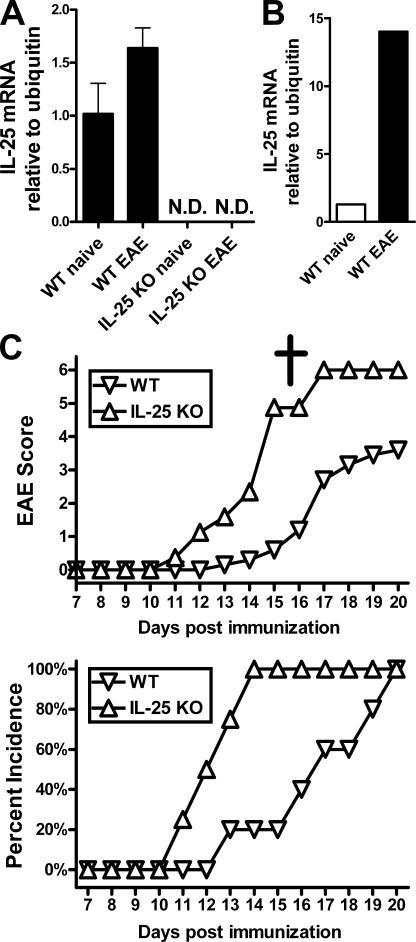
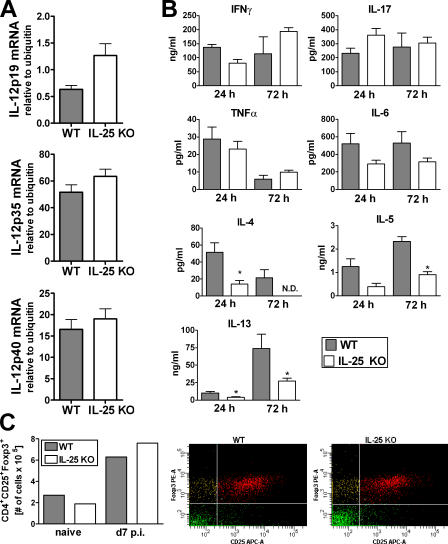
Interleukin (IL)-25 is a member of the IL-17 family of cytokines. However, unlike the other members of this family, IL-25 promotes T helper (Th) 2 responses. We now show that IL-25 also regulates the development of autoimmune inflammation mediated by IL-17-producing T cells. We have generated IL-25-deficient (il25-/-) mice and found that they are highly susceptible to experimental autoimmune encephalomyelitis (EAE). The accelerated disease in the il25-/- mice is associated with an increase of IL-23 in the periphery and a subsequent increase in the number of inflammatory IL-17-, IFNgamma-, and TNF-producing T cells that invade the central nervous system. Neutralization of IL-17 but not IFNgamma in il25-/- mice prevented EAE, suggesting that IL-17 is a major disease-promoting factor. IL-25 treatment at several time points during a relapse-remitting model or chronic model of EAE completely suppressed disease. IL-25 treatment induced elevated production of IL-13, which is required for suppression of Th17 responses by direct inhibition of IL-23, IL-1beta, and IL-6 expression in activated dendritic cells. Thus, IL-25 and IL-17, being members of the same cytokine family, play opposing roles in the pathogenesis of organ-specific autoimmunity.
Overview
The claims and statistics of this paper haven’t been checked yet.
Free: it reads the open-access text and checks the first 5 claims that cite a source we can check. Create a free account to check every claim.
Integrity signals
Registry
Cites
Statistics
Figures



Verification
Claims the paper makes
The claims and statistics of this paper haven’t been checked yet.
Free: it reads the open-access text and checks the first 5 claims that cite a source we can check. Create a free account to check every claim.
Claims other papers make about this one
Each is checked against this paper’s own text: does it say what the citing paper says it does?
The cited source says what the claim attributes to it.
In the citing paper
“IL-25 can also inhibit autoimmunity mediated by Th17 cells.”
From The IL-17 Family of Cytokines in Health and Disease (2019) · cites this paper as Kleinschek et al., 2007
In the citing paper
“IL-25 treatment elevated production of IL-13 and suppressed expression of IL-1, IL-6, and IL-23 by activated dendritic cells”
From The IL-17 Family of Cytokines in Health and Disease (2019) · cites this paper as Kleinschek et al., 2007
Self-check
Percentages, sums and reported differences re-computed from the paper’s own numbers.
The self-check needs the paper’s full text.
Citations
Cites
Bettelli, E., Carrier, Y., Gao, W., Korn, T., Strom, T. B., Oukka, M., Weiner, H. L., & Kuchroo, V. K. (2006) · Nature · doi:10.1038/nature04753 · Cited by 6,992
Alternative activation of macrophages
Gordon, S. (2003) · Nature Reviews Immunology · doi:10.1038/nri978 · Cited by 6,189 · cited 1×
“Consistent with pervious reports (55, 56), we observed that IL-25 could induce IL-13 mRNA expression in cultured DCs (unpublished data).”
ResultIvanov, I. I., McKenzie, B. S., Zhou, L., Tadokoro, C. E., Lepelley, A., Lafaille, J. J., Cua, D. J., & Littman, D. R. (2006) · Cell · doi:10.1016/j.cell.2006.07.035 · Cited by 5,145
Self-citationHarrington, L. E., Hatton, R. D., Mangan, P. R., Turner, H., Murphy, T. L., Murphy, K. M., & Weaver, C. T. (2005) · Nature Immunology · doi:10.1038/ni1254 · Cited by 4,742 · cited 3×
“Recent in vitro studies have suggested that Th17 cells are also negatively regulated by IL-4 signaling pathways (21, 22).”
BackgroundResultA distinct lineage of CD4 T cells regulates tissue inflammation by producing interleukin 17
Park, H., Li, Z., Yang, X. O., Chang, S. H., Nurieva, R., Wang, Y.-H., Wang, Y., Hood, L., Zhu, Z., Tian, Q., et al. (2005) · Nature Immunology · doi:10.1038/ni1261 · Cited by 4,265 · cited 3×
“Recent in vitro studies have suggested that Th17 cells are also negatively regulated by IL-4 signaling pathways (21, 22).”
BackgroundResultIL-23 drives a pathogenic T cell population that induces autoimmune inflammation
Langrish, C. L., Chen, Y., Blumenschein, W. M., Mattson, J., Basham, B., Sedgwick, J. D., McClanahan, T., Kastelein, R. A., & Cua, D. J. (2005) · The Journal of Experimental Medicine · doi:10.1084/jem.20041257 · Cited by 4,099 · cited 3×
“In contrast, anti-IFNγ treatment had no eff ect, consistent with studies demonstrating that Th1 cells only play a minor role in EAE (13).”
BackgroundResultSelf-citationVeldhoen, M., Hocking, R. J., Atkins, C. J., Locksley, R. M., & Stockinger, B. (2006) · Immunity · doi:10.1016/j.immuni.2006.01.001 · Cited by 3,605
Transforming growth factor-β induces development of the TH17 lineage
Mangan, P. R., Harrington, L. E., O'Quinn, D. B., Helms, W. S., Bullard, D. C., Elson, C. O., Hatton, R. D., Wahl, S. M., Schoeb, T. R., & Weaver, C. T. (2006) · Nature · doi:10.1038/nature04754 · Cited by 3,087
Cua, D. J., Sherlock, J., Chen, Y., Murphy, C. A., Joyce, B., Seymour, B., Lucian, L., To, W., Kwan, S., Churakova, T., et al. (2003) · Nature · doi:10.1038/nature01355 · Cited by 2,906 · cited 1×
“cyto metric sorting from >100 irradiation bone marrow chimeric mice (11).”
BackgroundSelf-citationInterleukin-17 Family Members and Inflammation
Kolls, J. K., & Lindén, A. (2004) · Immunity · doi:10.1016/j.immuni.2004.08.018 · Cited by 2,372 · cited 1×
“Although IL-25 promotes allergic responses, IL-17A had been characterized to promote chronic infl ammatory responses (9, 10).”
Background
Cited by
IL-21 initiates an alternative pathway to induce proinflammatory TH17 cells
Korn, T., Bettelli, E., Gao, W., Awasthi, A., Jäger, A., Strom, T. B., Oukka, M., & Kuchroo, V. K. (2007) · Nature · doi:10.1038/nature05970 · Cited by 1,848
McGeachy, M. J., Bak-Jensen, K. S., Chen, Y., Tato, C. M., Blumenschein, W., McClanahan, T., & Cua, D. J. (2007) · Nature Immunology · doi:10.1038/ni1539 · Cited by 1,520
“IL-27 and IL-25, originally defined for their T H 1- and T H 2-promoting activities, also regulate T H -17 cell”
BackgroundSelf-citationEssential autocrine regulation by IL-21 in the generation of inflammatory T cells
Nurieva, R., Yang, X. O., Martinez, G., Zhang, Y., Panopoulos, A. D., Ma, L., Schluns, K., Tian, Q., Watowich, S. S., Jetten, A. M., et al. (2007) · Nature · doi:10.1038/nature05969 · Cited by 1,466
The IL-17 Family of Cytokines in Health and Disease
McGeachy, M. J., Cua, D. J., & Gaffen, S. L. (2019) · Immunity · doi:10.1016/j.immuni.2019.03.021 · Cited by 1,443
“IL-25 treatment elevated production of IL-13 and suppressed expression of IL-1, IL-6, and IL-23 by activated dendritic cells (Kleinschek et al., 2007).”
BackgroundSelf-citationTargeting IL-17 and TH17 cells in chronic inflammation
Miossec, P., & Kolls, J. K. (2012) · Nature Reviews Drug Discovery · doi:10.1038/nrd3794 · Cited by 1,414
Interleukin-17 and Type 17 Helper T Cells
Miossec, P., Korn, T., & Kuchroo, V. K. (2009) · New England Journal of Medicine · doi:10.1056/nejmra0707449 · Cited by 1,409
CD4 + T Cells: Differentiation and Functions
Luckheeram, R. V., Zhou, R., Verma, A. D., & Xia, B. (2012) · Clinical and Developmental Immunology · doi:10.1155/2012/925135 · Cited by 1,381
“In IL25(−/−) mice, the susceptibility to acquire experimental autoimmune encephalitis was found to be significantly raised, and disease course was accelerated [133].”
BackgroundFunctional Specialization of Interleukin-17 Family Members
Iwakura, Y., Ishigame, H., Saijo, S., & Nakae, S. (2011) · Immunity · doi:10.1016/j.immuni.2011.02.012 · Cited by 1,289
Induction and effector functions of TH17 cells
Bettelli, E., Korn, T., Oukka, M., & Kuchroo, V. K. (2008) · Nature · doi:10.1038/nature07036 · Cited by 1,216
T cell subsets and their signature cytokines in autoimmune and inflammatory diseases
Raphael, I., Nalawade, S., Eagar, T. N., & Forsthuber, T. G. (2015) · Cytokine · doi:10.1016/j.cyto.2014.09.011 · Cited by 1,160
The IL-23/Th17 Axis in the Immunopathogenesis of Psoriasis
Di Cesare, A., Di Meglio, P., & Nestle, F. O. (2009) · Journal of Investigative Dermatology · doi:10.1038/jid.2009.59 · Cited by 1,129
“, 2007), has been found to negatively regulate Th17 cells by inhibiting the expression of IL-1b and IL-23 by DC (Kleinschek et al., 2007).”
BackgroundPsoriasis Vulgaris Lesions Contain Discrete Populations of Th1 and Th17 T Cells
Lowes, M. A., Kikuchi, T., Fuentes-Duculan, J., Cardinale, I., Zaba, L. C., Haider, A. S., Bowman, E. P., & Krueger, J. G. (2008) · Journal of Investigative Dermatology · doi:10.1038/sj.jid.5701213 · Cited by 1,082
“, 2006), whereas IL-25, IL-27, and T-bet may be negative regulators of IL-17 production (Batten et al., 2006; Rangachari et al., 2006; Stumhofer et al., 2006; Kleinschek et al., 2007).”
BackgroundTH17 cells in development: an updated view of their molecular identity and genetic programming
Dong, C. (2008) · Nature reviews. Immunology · doi:10.1038/nri2295 · Cited by 1,064
O'Connor, R. A., Prendergast, C. T., Sabatos, C. A., Lau, C. W. Z., Leech, M. D., Wraith, D. C., & Anderton, S. M. (2008) · The Journal of Immunology · doi:10.4049/jimmunol.181.6.3750 · Cited by 350
Autoimmune T cell responses in the central nervous system
Goverman, J. (2009) · Nature Reviews Immunology · doi:10.1038/nri2550 · Cited by 1,030
T cells in multiple sclerosis and experimental autoimmune encephalomyelitis
Fletcher, J. M., Lalor, S. J., Sweeney, C. M., Tubridy, N., & Mills, K. H. G. (2010) · Clinical and Experimental Immunology · doi:10.1111/j.1365-2249.2010.04143.x · Cited by 945
Interleukins, from 1 to 37, and interferon-γ: Receptors, functions, and roles in diseases
Akdis, M., Burgler, S., Crameri, R., Eiwegger, T., Fujita, H., Gomez, E., Klunker, S., Meyer, N., O’Mahony, L., Palomares, O., et al. (2011) · Journal of Allergy and Clinical Immunology · doi:10.1016/j.jaci.2010.11.050 · Cited by 778
Luger, D., Silver, P. B., Tang, J., Cua, D., Chen, Z., Iwakura, Y., Bowman, E. P., Sgambellone, N. M., Chan, C.-C., & Caspi, R. R. (2008) · The Journal of Experimental Medicine · doi:10.1084/jem.20071258 · Cited by 721
Self-citationImmunological decision‐making: how does the immune system decide to mount a helper T‐cell response?
Kaiko, G. E., Horvat, J. C., Beagley, K. W., & Hansbro, P. M. (2008) · Immunology · doi:10.1111/j.1365-2567.2007.02719.x · Cited by 658
Th17: the third member of the effector T cell trilogy
Bettelli, E., Korn, T., & Kuchroo, V. K. (2007) · Current Opinion in Immunology · doi:10.1016/j.coi.2007.07.020 · Cited by 652
Sawa, S., Lochner, M., Satoh-Takayama, N., Dulauroy, S., Bérard, M., Kleinschek, M., Cua, D., Di Santo, J. P., & Eberl, G. (2011) · Nature Immunology · doi:10.1038/ni.2002 · Cited by 568
“Mice deficient in IL-23 or IL-25 have been describe”
BackgroundSelf-citationCutaneous immunosurveillance and regulation of inflammation by group 2 innate lymphoid cells
Roediger, B., Kyle, R., Yip, K. H., Sumaria, N., Guy, T. V., Kim, B. S., Mitchell, A. J., Tay, S. S., Jain, R., Forbes-Blom, E., et al. (2013) · Nature Immunology · doi:10.1038/ni.2584 · Cited by 492
Saenz, S. A., Taylor, B. C., & Artis, D. (2008) · Immunological Reviews · doi:10.1111/j.1600-065x.2008.00713.x · Cited by 484
“Mice deficient in IL-25 display accelerated disease onset and an increase in the severity of disease (40), suggesting that IL-25 may act to inhibit EAEmediated inflammation.”
BackgroundInfluentialTranscriptional regulation of Th17 cell differentiation
Ivanov, I. I., Zhou, L., & Littman, D. R. (2007) · Seminars in Immunology · doi:10.1016/j.smim.2007.10.011 · Cited by 484
“Recently, IL-25 (IL-17E), a member of the IL-17 cytokine family, was shown to inhibit IL-17 expression through promoting Th2 differentiation [44,45].”
BackgroundThe IL-17 Family of Cytokines in Psoriasis: IL-17A and Beyond
Brembilla, N. C., Senra, L., & Boehncke, W.-H. (2018) · Frontiers in Immunology · doi:10.3389/fimmu.2018.01682 · Cited by 475
“Not investigated yet CNS, central nervous system; IMQ, imiquimod; RA, rheumatoid arthritis; CIA, collageninduced arthritis; CD, Crohn’s disease; MS, multiple sclerosis; EAE, experimental autoimmune encephalomyelitis.”
BackgroundInfluentialThe Emerging Role of IL-17 in the Pathogenesis of Psoriasis: Preclinical and Clinical Findings
Martin, D. A., Towne, J. E., Kricorian, G., Klekotka, P., Gudjonsson, J. E., Krueger, J. G., & Russell, C. B. (2013) · Journal of Investigative Dermatology · doi:10.1038/jid.2012.194 · Cited by 466
“IL-17E (IL-25) is distinct from IL-17A, IL-17C, and IL-17F in that it is generally produced by epithelial cells during an allergic response and acts to induce Th2-type responses (Kleinschek et al., 2007; Rickel et al., 2008; Barlow and McKenzie, 2009).”
APC-derived cytokines and T cell polarization in autoimmune inflammation
Gutcher, I., & Becher, B. (2007) · Journal of Clinical Investigation · doi:10.1172/jci31720 · Cited by 459
Role of Th1 and Th17 cells in organ-specific autoimmunity
Dardalhon, V., Korn, T., Kuchroo, V. K., & Anderson, A. C. (2008) · Journal of Autoimmunity · doi:10.1016/j.jaut.2008.04.017 · Cited by 452
“IL-25 inhibits Th17 responses indirectly by inducing IL-13, which decreases the production of IL-23, IL-1 and IL-6 in antigen presenting cells [52].”
BackgroundTh17 cells: Effector T cells with inflammatory properties
Korn, T., Oukka, M., Kuchroo, V., & Bettelli, E. (2007) · Seminars in Immunology · doi:10.1016/j.smim.2007.10.007 · Cited by 445
“Accordingly, treatment with recombinant IL-25 or IL-25 delivered by a viral vector system is sufficient to suppress EAE in wild type mice [87].”
BackgroundElias, K. M., Laurence, A., Davidson, T. S., Stephens, G., Kanno, Y., Shevach, E. M., & O'Shea, J. J. (2008) · Blood · doi:10.1182/blood-2007-06-096438 · Cited by 448
IL-17 in Chronic Inflammation: From Discovery to Targeting
Beringer, A., Noack, M., & Miossec, P. (2016) · Trends in Molecular Medicine · doi:10.1016/j.molmed.2016.01.001 · Cited by 402
Th17 Cell, the New Player of Neuroinflammatory Process in Multiple Sclerosis
Jadidi‐Niaragh, F., & Mirshafiey, A. (2011) · Scandinavian Journal of Immunology · doi:10.1111/j.1365-3083.2011.02536.x · Cited by 384
Inhibition of Th17 Cells Regulates Autoimmune Diabetes in NOD Mice
Emamaullee, J. A., Davis, J., Merani, S., Toso, C., Elliott, J. F., Thiesen, A., & Shapiro, A. M. J. (2009) · Diabetes · doi:10.2337/db08-1113 · Cited by 378
“6C), which is consistent with previous studies illustrating that this cytokine can inhibit formation of the Th17 population (18).”
BackgroundMethodResultInfluentialBaker, K. F., & Isaacs, J. D. (2018) · Annals of the Rheumatic Diseases · doi:10.1136/annrheumdis-2017-211555 · Cited by 370
The type I IFN induction pathway constrains Th17-mediated autoimmune inflammation in mice
Guo, B., Chang, E. Y., & Cheng, G. (2008) · Journal of Clinical Investigation · doi:10.1172/jci33342 · Cited by 371
Interleukin-17 and innate immunity in infections and chronic inflammation
Isailovic, N., Daigo, K., Mantovani, A., & Selmi, C. (2015) · Journal of Autoimmunity · doi:10.1016/j.jaut.2015.04.006 · Cited by 363
Blocking IL-25 prevents airway hyperresponsiveness in allergic asthma
Ballantyne, S. J., Barlow, J. L., Jolin, H. E., Nath, P., Williams, A. S., Chung, K. F., Sturton, G., Wong, S. H., & McKenzie, A. N. J. (2007) · Journal of Allergy and Clinical Immunology · doi:10.1016/j.jaci.2007.07.051 · Cited by 368
Alcorn, J. F., Crowe, C. R., & Kolls, J. K. (2010) · Annual Review of Physiology · doi:10.1146/annurev-physiol-021909-135926 · Cited by 348
LI, M., & RANSOHOFF, R. (2008) · Progress in Neurobiology · doi:10.1016/j.pneurobio.2007.11.003 · Cited by 352
Monin, L., & Gaffen, S. L. (2018) · Cold Spring Harbor Perspectives in Biology · doi:10.1101/cshperspect.a028522 · Cited by 339
“However, IL-17E expression can be advantageous in some situations, as IL-17E can inhibit Th17 development through the induction of IL-13 by dendritic cells (DCs) and by inhibiting macrophage-derived IL-23 production (Kleinschek et al. 2007).”
BackgroundLow Expression of the IL-23/Th17 Pathway in Atopic Dermatitis Compared to Psoriasis
Guttman-Yassky, E., Lowes, M. A., Fuentes-Duculan, J., Zaba, L. C., Cardinale, I., Nograles, K. E., Khatcherian, A., Novitskaya, I., Carucci, J. A., Bergman, R., et al. (2008) · The Journal of Immunology · doi:10.4049/jimmunol.181.10.7420 · Cited by 331
“, S100A7 (psoriasin) and -defensin, are induced or regulated by IL-23 or IL-22 in the skin (11, 25).”
BackgroundRickel, E. A., Siegel, L. A., Yoon, B.-R. P., Rottman, J. B., Kugler, D. G., Swart, D. A., Anders, P. M., Tocker, J. E., Comeau, M. R., & Budelsky, A. L. (2008) · The Journal of Immunology · doi:10.4049/jimmunol.181.6.4299 · Cited by 321
“Transcript levels of proinflammatory cytokines and chemokines previously identified as being up-regulated by IL-25 or other IL-17 receptor and ligand family members were chosen for evaluation (4, 7, 23).”
MethodFitzgerald, D. C., Ciric, B., Touil, T., Harle, H., Grammatikopolou, J., Sarma, J. D., Gran, B., Zhang, G.-X., & Rostami, A. (2007) · The Journal of Immunology · doi:10.4049/jimmunol.179.5.3268 · Cited by 308
“To further examine the significance of IL-27-induced suppression of IL-17 in effector cells in EAE, we used a recently described IL-23-driven model of adoptive transfer EAE which results in a high proportion of pathogenic Th17 cells (4, 31).”
BackgroundMethodResultInfluentialA novel role of CD4 Th17 cells in mediating cardiac allograft rejection and vasculopathy
Yuan, X., Paez-Cortez, J., Schmitt-Knosalla, I., D'Addio, F., Mfarrej, B., Donnarumma, M., Habicht, A., Clarkson, M. R., Iacomini, J., Glimcher, L. H., et al. (2008) · The Journal of Experimental Medicine · doi:10.1084/jem.20081937 · Cited by 302
Kang, Z., Altuntas, C. Z., Gulen, M. F., Liu, C., Giltiay, N., Qin, H., Liu, L., Qian, W., Ransohoff, R. M., Bergmann, C., et al. (2010) · Immunity · doi:10.1016/j.immuni.2010.03.004 · Cited by 297
“…cells were shown to play a critical role in the initiation of inflammatory responses in CNS (Agrawal et al., 2006; Bettelli et al., 2004; Korn et al., 2009; Yang et al., 2009), Th2 cells were considered as counterinflammatory (Butti et al., 2008; Kleinschek et al., 2007; Ramı́rez and Mason, 2000).”
Commensal-dependent expression of IL-25 regulates the IL-23–IL-17 axis in the intestine
Zaph, C., Du, Y., Saenz, S. A., Nair, M. G., Perrigoue, J. G., Taylor, B. C., Troy, A. E., Kobuley, D. E., Kastelein, R. A., Cua, D. J., et al. (2008) · The Journal of Experimental Medicine · doi:10.1084/jem.20080720 · Cited by 293
Self-citationInterleukin-23/Th17 pathways and inflammatory bowel disease
Abraham, C., & Cho, J. (2009) · Inflammatory Bowel Diseases · doi:10.1002/ibd.20894 · Cited by 289
Th17 Cells in Immunity and Autoimmunity
Bedoya, S. K., Lam, B., Lau, K., & Larkin, J. (2013) · Clinical and Developmental Immunology · doi:10.1155/2013/986789 · Cited by 282
“It has been shown using IL-25−/− mice that the lack of IL-25 increases IL-23 and IL-17 production, therefore resulting in increased EAE disease severity [84].”
BackgroundPappu, R., Ramirez-Carrozzi, V., & Sambandam, A. (2011) · Immunology · doi:10.1111/j.1365-2567.2011.03465.x · Cited by 281
Mitroulis, I., Alexaki, V. I., Kourtzelis, I., Ziogas, A., Hajishengallis, G., & Chavakis, T. (2015) · Pharmacology & Therapeutics · doi:10.1016/j.pharmthera.2014.11.008 · Cited by 283
“Based on the fact that both Th1 lymphocytes and Th17 lymphocytes contribute to EAE development (Kebir et al., 2007; Kleinschek et al., 2007; Jäger et al., 2009), the involvement of LFA-1 in the recruitment of these separate lymphocyte populations into the CNS was addressed.”
BackgroundMüller, U., Stenzel, W., Köhler, G., Werner, C., Polte, T., Hansen, G., Schütze, N., Straubinger, R. K., Blessing, M., McKenzie, A. N. J., et al. (2007) · The Journal of Immunology · doi:10.4049/jimmunol.179.8.5367 · Cited by 271
“neoformans strain 1841 infection that the protective function of IL-23 is associated with IL-17 production (62).”
BackgroundSelf-citationShen, F., & Gaffen, S. L. (2008) · Cytokine · doi:10.1016/j.cyto.2007.11.013 · Cited by 256
“[38] Kleinschek MA, Owyang AM, Joyce-Shaikh B, Langrish CL, Chen Y, Gorman DM, et al.”
BackgroundAverting inflammation by targeting the cytokine environment
Kopf, M., Bachmann, M. F., & Marsland, B. J. (2010) · Nature Reviews Drug Discovery · doi:10.1038/nrd2805 · Cited by 257
“However, a caveat to such treatment was highlighted by the findings that IL-25 could act directly to suppress T H 17 cell function, and IL-25-deficient mice were highly susceptible to the development of EA”
BackgroundSarra, M., Pallone, F., MacDonald, T. T., & Monteleone, G. (2010) · Inflammatory Bowel Diseases · doi:10.1002/ibd.21248 · Cited by 249
Cherrier, M., Sawa, S., & Eberl, G. (2012) · Journal of Experimental Medicine · doi:10.1084/jem.20111594 · Cited by 243
GM-CSF mediates autoimmunity by enhancing IL-6–dependent Th17 cell development and survival
Sonderegger, I., Iezzi, G., Maier, R., Schmitz, N., Kurrer, M., & Kopf, M. (2008) · The Journal of Experimental Medicine · doi:10.1084/jem.20071119 · Cited by 238
IL-17 and Th17 cells in human inflammatory diseases
Miossec, P. (2009) · Microbes and Infection · doi:10.1016/j.micinf.2009.04.003 · Cited by 236
IL-17 family member cytokines: Regulation and function in innate immunity
Reynolds, J. M., Angkasekwinai, P., & Dong, C. (2010) · Cytokine & Growth Factor Reviews · doi:10.1016/j.cytogfr.2010.10.002 · Cited by 235
“In the brain, IL-25 mRNA is constitutively expressed by mouse microglia and by brain capillary endothelial cells and its expression is involved in protection from inflammatory brain diseases such as MS (118,123).”
BackgroundPro- and anti-inflammatory cytokines in cutaneous leishmaniasis: a review
Maspi, N., Abdoli, A., & Ghaffarifar, F. (2016) · Pathogens and Global Health · doi:10.1080/20477724.2016.1232042 · Cited by 222
IL-17 receptor signaling and T helper 17-mediated autoimmune demyelinating disease
Zepp, J., Wu, L., & Li, X. (2011) · Trends in Immunology · doi:10.1016/j.it.2011.02.007 · Cited by 224
Plasticity of T‐cell phenotype and function: the T helper type 17 example
Peck, A., & Mellins, E. D. (2010) · Immunology · doi:10.1111/j.1365-2567.2009.03189.x · Cited by 196
Aldosterone Promotes Autoimmune Damage by Enhancing Th17-Mediated Immunity
Herrada, A. A., Contreras, F. J., Marini, N. P., Amador, C. A., González, P. A., Cortés, C. M., Riedel, C. A., Carvajal, C. A., Figueroa, F., Michea, L. F., et al. (2010) · The Journal of Immunology · doi:10.4049/jimmunol.0802886 · Cited by 191
“Considering that Th17 cells can contribute to autoimmunity, their development, proliferation, and survival require appropriate regulation (30).”
BackgroundNiess, J. H., Leithäuser, F., Adler, G., & Reimann, J. (2008) · The Journal of Immunology · doi:10.4049/jimmunol.180.1.559 · Cited by 192
and the IBSEN study group, Franke, A., Balschun, T., Sina, C., Ellinghaus, D., Häsler, R., Mayr, G., Albrecht, M., Wittig, M., Buchert, E., et al. (2010) · Nature Genetics · doi:10.1038/ng.553 · Cited by 194
Biology of Interleukin-17 and Its Pathophysiological Significance in Sepsis
Ge, Y., Huang, M., & Yao, Y.-M. (2020) · Frontiers in Immunology · doi:10.3389/fimmu.2020.01558 · Cited by 179
“Furthermore, IL-17E-mediated responses depend on the airway epithelium, mast cells, eosinophils, and Th2 cells, thereby contributing to the immunopathogenesis of asthma (33).”
Backgroundde Boer, O. J., van der Meer, J. J., Teeling, P., van der Loos, C. M., Idu, M. M., van Maldegem, F., Aten, J., & van der Wal, A. C. (2010) · The Journal of Pathology · doi:10.1002/path.2667 · Cited by 183
“On the other hand, in two different experimental models of inflammation [experimental autoimmune encephalopathy (EAE) and inflammation in the gastrointestinal tract] it has been shown that IL-17E is also able to limit a local and pathological immune response [21,35].”
BackgroundRobert, M., & Miossec, P. (2019) · Frontiers in Medicine · doi:10.3389/fmed.2018.00364 · Cited by 165
“In addition, it also regulates Th17 inflammatory response and IL-17 function (20) (Figure 1).”
BackgroundResultEl Malki, K., Karbach, S. H., Huppert, J., Zayoud, M., Reißig, S., Schüler, R., Nikolaev, A., Karram, K., Münzel, T., Kuhlmann, C. R. W., et al. (2013) · Journal of Investigative Dermatology · doi:10.1038/jid.2012.318 · Cited by 174
“, 2009) and suppressing experimental autoimmune encephalomyelitis (Kleinschek et al., 2007).”
BackgroundIFN‐γ enhances neurogenesis in wild‐type mice and in a mouse model of Alzheimer's disease
Baron, R., Nemirovsky, A., Harpaz, I., Cohen, H., Owens, T., & Monsonego, A. (2008) · The FASEB Journal · doi:10.1096/fj.08-105866 · Cited by 166
“Furthermore, IL-25 knockout mice, recently shown to be highly susceptible to EAE, were protected from the disease by antibodies to IL-17 but not to IFN(44).”
BackgroundCha, H.-R., Chang, S.-Y., Chang, J.-H., Kim, J.-O., Yang, J.-Y., Kim, C.-H., & Kweon, M.-N. (2010) · The Journal of Immunology · doi:10.4049/jimmunol.0902944 · Cited by 165
“They proposed that commensal bacteria-dependent IL-25 expression by epithelial cells could suppress Th17 cells by inhibiting expression of macrophagederived IL-23 (14).”
BackgroundInfluentialIL-25 (IL-17E) in epithelial immunology and pathophysiology
Borowczyk, J., Shutova, M., Brembilla, N. C., & Boehncke, W.-H. (2021) · Journal of Allergy and Clinical Immunology · doi:10.1016/j.jaci.2020.12.628 · Cited by 158
IL-17 family cytokines mediated signaling in the pathogenesis of inflammatory diseases
Song, X., & Qian, Y. (2013) · Cellular Signalling · doi:10.1016/j.cellsig.2013.07.021 · Cited by 162
Romagnani, S. (2008) · Arthritis Research & Therapy · doi:10.1186/ar2392 · Cited by 163
Interleukin-17A: The Key Cytokine in Neurodegenerative Diseases
Chen, J., Liu, X., & Zhong, Y. (2020) · Frontiers in Aging Neuroscience · doi:10.3389/fnagi.2020.566922 · Cited by 165
“An early study indicated that IL-25 exerts an opposite function in the pathogenesis of organ-specific autoimmunity compared to IL-17A (Kleinschek et al., 2007).”
BackgroundSystemic effects of IL-17 in inflammatory arthritis
Beringer, A., & Miossec, P. (2019) · Nature Reviews Rheumatology · doi:10.1038/s41584-019-0243-5 · Cited by 163
Buonomo, E. L., Cowardin, C. A., Wilson, M. G., Saleh, M. M., Pramoonjago, P., & Petri, W. A. (2016) · Cell Reports · doi:10.1016/j.celrep.2016.06.007 · Cited by 155
“IL-25 is an inducer of type 2 immune responses and increased levels correlate with decreased IL-23 expression (Kleinschek et al., 2007; Zaph et al., 2008).”
BackgroundThe Adaptor Protein CIKS/Act1 Is Essential for IL-25-Mediated Allergic Airway Inflammation
Claudio, E., Sønder, S. U., Saret, S., Carvalho, G., Ramalingam, T. R., Wynn, T. A., Chariot, A., Garcia-Perganeda, A., Leonardi, A., Paun, A., et al. (2009) · The Journal of Immunology · doi:10.4049/jimmunol.182.3.1617 · Cited by 141
“However, IL-25 and IL-17 have very divergent biologic effects; they may even oppose each other: IL-25 down-modulates IL-17-fueled inflammation associated with experimental autoimmune encephalomyelitis (35), whereas IL-17 keeps Th2-driven allergic pulmonary pathologies in check (36).”
BackgroundInterleukin-25 Inhibits Interleukin-12 Production and Th1 Cell-Driven Inflammation in the Gut
Caruso, R., Sarra, M., Stolfi, C., Rizzo, A., Fina, D., Fantini, M. C., Pallone, F., MacDonald, T. T., & Monteleone, G. (2009) · Gastroenterology · doi:10.1053/j.gastro.2009.02.049 · Cited by 148
Immunopathobiology and therapeutic targets related to cytokines in liver diseases
He, Y., Hwang, S., Ahmed, Y. A., Feng, D., Li, N., Ribeiro, M., Lafdil, F., Kisseleva, T., Szabo, G., & Gao, B. (2021) · Cellular & Molecular Immunology · doi:10.1038/s41423-020-00580-w · Cited by 137
Tosello Boari, J., Amezcua Vesely, M. C., Bermejo, D. A., Ramello, M. C., Montes, C. L., Cejas, H., Gruppi, A., & Acosta Rodríguez, E. V. (2012) · PLoS Pathogens · doi:10.1371/journal.ppat.1002658 · Cited by 137
“suppressing Th1 and Th17 responses [11,12,13].”
Interleukin-17 in rheumatoid arthritis: Trials and tribulations
Taams, L. S. (2020) · The Journal of Experimental Medicine · doi:10.1084/jem.20192048 · Cited by 143
Xu, M., Li, J., Lee, Y., Wu, Y., Liu, K., Shi, Y., An, H., Zhang, J.-R., Wang, X., Lai, Y., et al. (2018) · Immunity · doi:10.1016/j.immuni.2018.03.019 · Cited by 140
Cytokines and effector T cell subsets causing autoimmune CNS disease
Petermann, F., & Korn, T. (2011) · FEBS Letters · doi:10.1016/j.febslet.2011.03.064 · Cited by 128
“In fact, IL-17A (more than IL-17F) plays a disease promoting role in EAE while IL-25 is protective [70,71].”
BackgroundRegulation of epithelial immunity by IL-17 family cytokines
Pappu, R., Rutz, S., & Ouyang, W. (2012) · Trends in Immunology · doi:10.1016/j.it.2012.02.008 · Cited by 146
The IL-17 Family Cytokines in Immunity and Disease
Pappu, R., Ramirez-Carrozzi, V. R., Ota, N., Ouyang, W., & Hu, Y. (2010) · Journal of Clinical Immunology · doi:10.1007/s10875-010-9369-6 · Cited by 143
“Myelin oligodendrocyte glycoprotein (MOG)-treated Il17e mice displayed an elevated number of IL-17A-expressing cells and higher EAE clinical scores [80].”
BackgroundResultCCR6 regulates EAE pathogenesis by controlling regulatory CD4+ T‐cell recruitment to target tissues
Villares, R., Cadenas, V., Lozano, M., Almonacid, L., Zaballos, A., Martínez‐A, C., & Varona, R. (2009) · European Journal of Immunology · doi:10.1002/eji.200839123 · Cited by 126
The deubiquitinase A20 mediates feedback inhibition of interleukin-17 receptor signaling
Garg, A. V., Ahmed, M., Vallejo, A. N., Ma, A., & Gaffen, S. L. (2013) · Science Signaling · doi:10.1126/scisignal.2003699 · Cited by 128
Role of Th17 and IL-17 Cytokines on Inflammatory and Auto-immune Diseases
Akhter, S., Tasnim, F. M., Islam, M. N., Rauf, A., Mitra, S., Emran, T. B., Alhumaydhi, F. A., Khalil, A. A., Aljohani, A. S. M., Abdulmonem, W. A., et al. (2023) · Current Pharmaceutical Design · doi:10.2174/1381612829666230904150808 · Cited by 144
Th17 Cells in Immunopathogenesis and treatment of rheumatoid arthritis
Azizi, G., Jadidi‐Niaragh, F., & Mirshafiey, A. (2013) · International Journal of Rheumatic Diseases · doi:10.1111/1756-185x.12132 · Cited by 138
Newcomb, D. C., Zhou, W., Moore, M. L., Goleniewska, K., Hershey, G. K. K., Kolls, J. K., & Peebles, R. S. (2009) · The Journal of Immunology · doi:10.4049/jimmunol.0803868 · Cited by 126
“As IL-13 negatively regulated Th17 responses in the EAE model (9), we hypothesized that Th17 cells expressed IL-13R 1.”
BackgroundInfluentialFoster, J. G., Blunt, M. D., Carter, E. P., & Ward, S. G. (2012) · Pharmacological Reviews · doi:10.1124/pr.110.004051 · Cited by 133
“However, considerable evi- dence now indicates that the T-cell lineage most likely to be driving EAE pathogenesis are Th17 cells (Kleinschek et al., 2007).”
BackgroundDendritic Cell-Mediated Th2 Immunity and Immune Disorders
Kumar, S., Ashraf, M. U., Jeong, Y., & Bae, Y. (2019) · International Journal of Molecular Sciences · doi:10.3390/ijms20092159 · Cited by 130
“In autoimmune inflammation, IL-25 suppresses Th17-mediated inflammation [50] and gut inflammation by inhibiting Th1 responses [51].”
BackgroundIL ‐25 in allergic inflammation
Xu, M., & Dong, C. (2017) · Immunological Reviews · doi:10.1111/imr.12558 · Cited by 121
Much More Than IL-17A: Cytokines of the IL-17 Family Between Microbiota and Cancer
Brevi, A., Cogrossi, L. L., Grazia, G., Masciovecchio, D., Impellizzieri, D., Lacanfora, L., Grioni, M., & Bellone, M. (2020) · Frontiers in Immunology · doi:10.3389/fimmu.2020.565470 · Cited by 121
“IL-25 has been also found expressed in the murine central nervous system (138) as well as in the bronchial submucosa from asthmatic patients (139).”
BackgroundTuft Cells and Their Role in Intestinal Diseases
Hendel, S. K., Kellermann, L., Hausmann, A., Bindslev, N., Jensen, K. B., & Nielsen, O. H. (2022) · Frontiers in Immunology · doi:10.3389/fimmu.2022.822867 · Cited by 127
“difficile pathophysiology IL-23 is consideredmainly responsible for the destructive inflammatory response leading to severe tissue damage (113, 114), whereas IL-25, the main TC derived cytokine, demonstrates protective properties (115).”
BackgroundSu, J., Chen, T., Ji, X., Liu, C., Yadav, P. K., Wu, R., Yang, P., & Liu, Z. (2013) · Inflammatory Bowel Diseases · doi:10.1097/mib.0b013e3182802a76 · Cited by 118
“Moreover, IL-25 has been found to suppress the development of the Th1/Th17 immune response.(22) Our findings have demonstrated that IL-25 could markedly suppress IBD CD4+ T-cell activation to produce proinflammatory cytokines (e.”
BackgroundResultInfluentialCritical Role of IL-25 in Nematode Infection-Induced Alterations in Intestinal Function
Zhao, A., Urban, J. F., Sun, R., Stiltz, J., Morimoto, M., Notari, L., Madden, K. B., Yang, Z., Grinchuk, V., Ramalingam, T. R., et al. (2010) · The Journal of Immunology · doi:10.4049/jimmunol.1000450 · Cited by 105
“This is consistent with data showing that IL-13 was required for IL-25–mediated protection against experimental autoimmune encephalomyelitis and Th17 suppression (3).”
BackgroundResultChung, K. F., & Marwick, J. A. (2010) · Annals of the New York Academy of Sciences · doi:10.1111/j.1749-6632.2010.05600.x · Cited by 113
Murdock, B. J., Shreiner, A. B., McDonald, R. A., Osterholzer, J. J., White, E. S., Toews, G. B., & Huffnagle, G. B. (2011) · Infection and Immunity · doi:10.1128/iai.00508-10 · Cited by 105
“The TH17 response hinders TH1-mediated clearance of fungi and can promote severe neutrophil-mediated tissue inflammatory pathology associated with infection (17), but on its own the TH17 response has antifungal properties (22, 25, 38, 39).”
BackgroundIL-17E, a proinflammatory cytokine, has antitumor efficacy against several tumor types in vivo
Benatar, T., Cao, M. Y., Lee, Y., Lightfoot, J., Feng, N., Gu, X., Lee, V., Jin, H., Wang, M., Wright, J. A., et al. (2009) · Cancer Immunology Immunotherapy · doi:10.1007/s00262-009-0802-8 · Cited by 112
“Interestingly, IL-25 suppresses Th17 function through induction of the Th2 cytokine IL-13, and IL-25 is important in mitigating the inflammatory response mediated by Th17 cells in animal models of experimental autoimmune encephalomyelitis (EAE) [ 42 ].”
Background
Metadata
- Authors
- Kleinschek, M. A., Owyang, A. M., Joyce-Shaikh, B., Langrish, C. L., Chen, Y., Gorman, D. M., Blumenschein, W. M., McClanahan, T., Brombacher, F., Hurst, S. D., Kastelein, R. A., & Cua, D. J.
- Affiliations
- 1Discovery Research
- 2Experimental Pathology and Pharmacology, Schering-Plough Biopharma, Palo Alto, CA 94304
- University of Cape Town (ZA)
- Venue
- The Journal of Experimental Medicine
- Publisher
- Rockefeller University Press
- Published
- 2007-01-02
- Volume
- 204
- Issue
- 1
- Pages
- 161-170
- ISSN
- 0022-1007 (ISSN-L)
- 1540-9538
- PMC
- PMC2118427
- OpenAlex
- W2118140057
- Cited by
- 396
- References
- 58
- Citations by year
- 2026: 4 · 2025: 12 · 2024: 7 · 2023: 11 · 2022: 13 · 2021: 14 · 2020: 20 · 2019: 14 · 2018: 15 · 2017: 12 · 2016: 23 · 2015: 14 · 2014: 24 · 2013: 15 · 2012: 32
- FWCI
- 16.20
- Type
- journal article
- Language
- en
- Open access
- green
- europepmc.org
- Licence
- cc-by-nc-sa
- Locations
- The Journal of Experimental Medicine (publishedVersion)
- Europe PMC (PubMed Central) (publishedVersion, cc-by-nc-sa)
- PubMed Central (publishedVersion, cc-by-nc-sa)
- PubMed (publishedVersion)
- Topics
- Life Sciences › Immunology and Microbiology › Immunology › Psoriasis: Treatment and Pathogenesis
- Life Sciences › Immunology and Microbiology › Immunology › T-cell and B-cell Immunology
- Health Sciences › Medicine › Clinical Neurology › Multiple Sclerosis Research Studies
- Keywords
- IL-25, Th17 cells, IL-17, autoimmune encephalomyelitis, IL-23, IL-13, dendritic cells, IL-1β, interleukin-6, IL-17 family cytokines, organ-specific autoimmunity, Th2 immune response, relapsing-remitting EAE, cytokine therapy
- MeSH terms
- Animals, Base Sequence, Central Nervous System, DNA, Encephalomyelitis, Autoimmune, Experimental, Female, T-Lymphocytes, Helper-Inducer, Inflammation, Interferon-gamma, Interleukins, Male, Mice, Inbred C57BL, Autoimmunity, Mice, Knockout, Th2 Cells, Interleukin-17, Mice
About these checks
Registry, retraction, Cites and statistics results are computed, not judged, with one exception: a printed reference that no index lists is read once by a model before it counts as a citation error. Claims are extracted by a model and kept only when their quote appears verbatim in the text; each cited source is then checked, with a model’s help, for whether it says what the claim relies on. Those verdicts can be wrong — read the claim’s quote and the cited source before relying on one.
Statistics and arithmetic are recomputed, not judged.
Confidence bands are shown only for fields calibrated on our annotated test set. None is calibrated yet, so no band is shown.
What counts as a claim ›How we measure confidence ›How we check this ›
Are you an author, or do you see a problem with this page? Request a review
Data sources
Bibliographic data: Semantic Scholar, OpenAlex, Crossref.
Contains information from the Semantic Scholar Academic Graph Datasets, made available under the ODC Attribution License (ODC-BY 1.0).
Semantic Scholar’s data is described in: Kinney, R., et al. (2023). The Semantic Scholar Open Data Platform. arXiv:2301.10140.
