

IL-25 regulates Th17 function in autoimmune inflammation
Open accessThe DOI matches its Crossref record; 59 of the 59 references it cites were found in a registry or an index.
Abstract
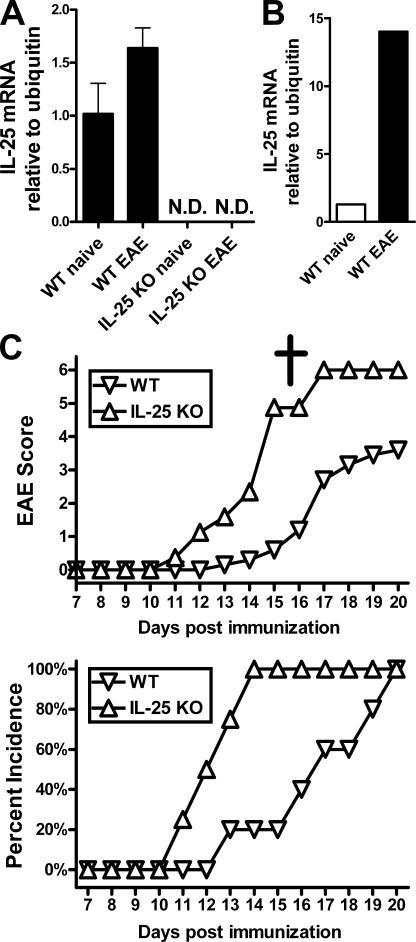
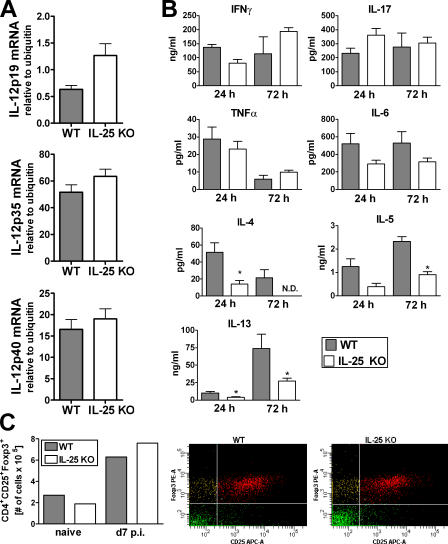
Interleukin (IL)-25 is a member of the IL-17 family of cytokines. However, unlike the other members of this family, IL-25 promotes T helper (Th) 2 responses. We now show that IL-25 also regulates the development of autoimmune inflammation mediated by IL-17-producing T cells. We have generated IL-25-deficient (il25-/-) mice and found that they are highly susceptible to experimental autoimmune encephalomyelitis (EAE). The accelerated disease in the il25-/- mice is associated with an increase of IL-23 in the periphery and a subsequent increase in the number of inflammatory IL-17-, IFNgamma-, and TNF-producing T cells that invade the central nervous system. Neutralization of IL-17 but not IFNgamma in il25-/- mice prevented EAE, suggesting that IL-17 is a major disease-promoting factor. IL-25 treatment at several time points during a relapse-remitting model or chronic model of EAE completely suppressed disease. IL-25 treatment induced elevated production of IL-13, which is required for suppression of Th17 responses by direct inhibition of IL-23, IL-1beta, and IL-6 expression in activated dendritic cells. Thus, IL-25 and IL-17, being members of the same cytokine family, play opposing roles in the pathogenesis of organ-specific autoimmunity.
Overview
The claims and statistics of this paper haven’t been checked yet.
Free: it reads the open-access text and checks the first 5 claims that cite a source we can check. Create a free account to check every claim.
Integrity signals
Registry
Cites
Statistics
Figures



Verification
Claims the paper makes
The claims and statistics of this paper haven’t been checked yet.
Free: it reads the open-access text and checks the first 5 claims that cite a source we can check. Create a free account to check every claim.
Claims other papers make about this one
Each is checked against this paper’s own text: does it say what the citing paper says it does?
The cited source says what the claim attributes to it.
In the citing paper
“IL-25 can also inhibit autoimmunity mediated by Th17 cells.”
From The IL-17 Family of Cytokines in Health and Disease (2019) · cites this paper as Kleinschek et al., 2007
In the citing paper
“IL-25 treatment elevated production of IL-13 and suppressed expression of IL-1, IL-6, and IL-23 by activated dendritic cells”
From The IL-17 Family of Cytokines in Health and Disease (2019) · cites this paper as Kleinschek et al., 2007
Self-check
Percentages, sums and reported differences re-computed from the paper’s own numbers.
The self-check needs the paper’s full text.
Citations
Cites
Bettelli, E., Carrier, Y., Gao, W., Korn, T., Strom, T. B., Oukka, M., Weiner, H. L., & Kuchroo, V. K. (2006) · Nature · doi:10.1038/nature04753 · Cited by 6,992
Alternative activation of macrophages
Gordon, S. (2003) · Nature Reviews Immunology · doi:10.1038/nri978 · Cited by 6,189 · cited 1×
“Consistent with pervious reports (55, 56), we observed that IL-25 could induce IL-13 mRNA expression in cultured DCs (unpublished data).”
ResultIvanov, I. I., McKenzie, B. S., Zhou, L., Tadokoro, C. E., Lepelley, A., Lafaille, J. J., Cua, D. J., & Littman, D. R. (2006) · Cell · doi:10.1016/j.cell.2006.07.035 · Cited by 5,145
Self-citationHarrington, L. E., Hatton, R. D., Mangan, P. R., Turner, H., Murphy, T. L., Murphy, K. M., & Weaver, C. T. (2005) · Nature Immunology · doi:10.1038/ni1254 · Cited by 4,742 · cited 3×
“Recent in vitro studies have suggested that Th17 cells are also negatively regulated by IL-4 signaling pathways (21, 22).”
BackgroundResultA distinct lineage of CD4 T cells regulates tissue inflammation by producing interleukin 17
Park, H., Li, Z., Yang, X. O., Chang, S. H., Nurieva, R., Wang, Y.-H., Wang, Y., Hood, L., Zhu, Z., Tian, Q., et al. (2005) · Nature Immunology · doi:10.1038/ni1261 · Cited by 4,265 · cited 3×
“Recent in vitro studies have suggested that Th17 cells are also negatively regulated by IL-4 signaling pathways (21, 22).”
BackgroundResultIL-23 drives a pathogenic T cell population that induces autoimmune inflammation
Langrish, C. L., Chen, Y., Blumenschein, W. M., Mattson, J., Basham, B., Sedgwick, J. D., McClanahan, T., Kastelein, R. A., & Cua, D. J. (2005) · The Journal of Experimental Medicine · doi:10.1084/jem.20041257 · Cited by 4,099 · cited 3×
“In contrast, anti-IFNγ treatment had no eff ect, consistent with studies demonstrating that Th1 cells only play a minor role in EAE (13).”
BackgroundResultSelf-citationVeldhoen, M., Hocking, R. J., Atkins, C. J., Locksley, R. M., & Stockinger, B. (2006) · Immunity · doi:10.1016/j.immuni.2006.01.001 · Cited by 3,605
Transforming growth factor-β induces development of the TH17 lineage
Mangan, P. R., Harrington, L. E., O'Quinn, D. B., Helms, W. S., Bullard, D. C., Elson, C. O., Hatton, R. D., Wahl, S. M., Schoeb, T. R., & Weaver, C. T. (2006) · Nature · doi:10.1038/nature04754 · Cited by 3,087
Cua, D. J., Sherlock, J., Chen, Y., Murphy, C. A., Joyce, B., Seymour, B., Lucian, L., To, W., Kwan, S., Churakova, T., et al. (2003) · Nature · doi:10.1038/nature01355 · Cited by 2,906 · cited 1×
“cyto metric sorting from >100 irradiation bone marrow chimeric mice (11).”
BackgroundSelf-citationInterleukin-17 Family Members and Inflammation
Kolls, J. K., & Lindén, A. (2004) · Immunity · doi:10.1016/j.immuni.2004.08.018 · Cited by 2,372 · cited 1×
“Although IL-25 promotes allergic responses, IL-17A had been characterized to promote chronic infl ammatory responses (9, 10).”
BackgroundDivergent Pro- and Antiinflammatory Roles for IL-23 and IL-12 in Joint Autoimmune Inflammation
Murphy, C. A., Langrish, C. L., Chen, Y., Blumenschein, W., McClanahan, T., Kastelein, R. A., Sedgwick, J. D., & Cua, D. J. (2003) · The Journal of Experimental Medicine · doi:10.1084/jem.20030896 · Cited by 1,669
Self-citationTh17: An Effector CD4 T Cell Lineage with Regulatory T Cell Ties
Weaver, C. T., Harrington, L. E., Mangan, P. R., Gavrieli, M., & Murphy, K. M. (2006) · Immunity · doi:10.1016/j.immuni.2006.06.002 · Cited by 1,422
IL-25 Induces IL-4, IL-5, and IL-13 and Th2-Associated Pathologies In Vivo
Fort, M. M., Cheung, J., Yen, D., Li, J., Zurawski, S. M., Lo, S., Menon, S., Clifford, T., Hunte, B., Lesley, R., et al. (2001) · Immunity · doi:10.1016/s1074-7613(01)00243-6 · Cited by 1,203 · cited 11×
“20061738 1 of 10 IL-25 (IL-17E) is a recently identifi ed member of the IL-17 family of cytokines (1).”
BackgroundInfluentialSelf-citationGodfrey, D. I., MacDonald, H. R., Kronenberg, M., Smyth, M. J., & Kaer, L. V. (2004) · Nature Reviews Immunology · doi:10.1038/nri1309 · Cited by 1,182 · cited 1×
“NKT cells secrete IL-4, IL-13, and IFNγ upon activation and have an important immunoregulatory role (49, 50).”
BackgroundNakae, S., Komiyama, Y., Nambu, A., Sudo, K., Iwase, M., Homma, I., Sekikawa, K., Asano, M., & Iwakura, Y. (2002) · Immunity · doi:10.1016/s1074-7613(02)00391-6 · Cited by 1,052 · cited 1×
“Although IL-25 promotes allergic responses, IL-17A had been characterized to promote chronic infl ammatory responses (9, 10).”
BackgroundSeder, R. A., Paul, W. E., Davis, M. M., & Fazekas de St Groth, B. (1992) · The Journal of experimental medicine · doi:10.1084/jem.176.4.1091 · Cited by 997 · cited 1×
“IL-4 is required for the diff erentiation of Th cells toward the Th2 pathway (42, 43).”
BackgroundWynn, T. A. (2003) · Annual Review of Immunology · doi:10.1146/annurev.immunol.21.120601.141142 · Cited by 958
Le Gros, G., Ben-Sasson, S. Z., Seder, R., Finkelman, F. D., & Paul, W. E. (1990) · The Journal of experimental medicine · doi:10.1084/jem.172.3.921 · Cited by 954 · cited 1×
“IL-4 is required for the diff erentiation of Th cells toward the Th2 pathway (42, 43).”
BackgroundYoshimoto, T., & Paul, W. E. (1994) · The Journal of experimental medicine · doi:10.1084/jem.179.4.1285 · Cited by 841 · cited 1×
“It is also possible that IL-25 acts on NKT cells, which play an important role in the early IL-4 production during an immune response (47, 48).”
BackgroundUnderstanding the IL-23–IL-17 immune pathway
McKenzie, B. S., Kastelein, R. A., & Cua, D. J. (2006) · Trends in Immunology · doi:10.1016/j.it.2005.10.003 · Cited by 766
Self-citationFallon, P. G., Ballantyne, S. J., Mangan, N. E., Barlow, J. L., Dasvarma, A., Hewett, D. R., McIlgorm, A., Jolin, H. E., & McKenzie, A. N. J. (2006) · The Journal of Experimental Medicine · doi:10.1084/jem.20051615 · Cited by 738 · cited 1×
“Expression of this cytokine is critical for immunity against helminth infections (5, 6).”
BackgroundAkbari, O., Stock, P., Meyer, E., Kronenberg, M., Sidobre, S., Nakayama, T., Taniguchi, M., Grusby, M. J., DeKruyff, R. H., & Umetsu, D. T. (2003) · Nature Medicine · doi:10.1038/nm851 · Cited by 706 · cited 1×
“NKT cells secrete IL-4, IL-13, and IFNγ upon activation and have an important immunoregulatory role (49, 50).”
BackgroundSedgwick, J. D., Schwender, S., Imrich, H., Dörries, R., Butcher, G. W., & ter Meulen, V (1991) · Proceedings of the National Academy of Sciences · doi:10.1073/pnas.88.16.7438 · Cited by 698 · cited 1×
“gradient centrifugation as described previously (57).”
Hurst, S. D., Muchamuel, T., Gorman, D. M., Gilbert, J. M., Clifford, T., Kwan, S., Menon, S., Seymour, B., Jackson, C., Kung, T. T., et al. (2002) · The Journal of Immunology · doi:10.4049/jimmunol.169.1.443 · Cited by 619 · cited 8×
“IL-25 protein administration or transgenic overexpression of IL-25 in mice resulted in Th2-like responses associated multiorgan infl ammation characterized by elevated ex pression of IL-4, IL-5, and IL-13, infl ammatory cell infi ltration, and epithelial cell hyper plasia (1, 2, 7, 8).”
BackgroundInfluentialSelf-citationStetson, D. B., Mohrs, M., Reinhardt, R. L., Baron, J. L., Wang, Z.-E., Gapin, L., Kronenberg, M., & Locksley, R. M. (2003) · The Journal of Experimental Medicine · doi:10.1084/jem.20030630 · Cited by 617 · cited 1×
“It is also possible that IL-25 acts on NKT cells, which play an important role in the early IL-4 production during an immune response (47, 48).”
BackgroundCytokine-induced immune deviation as a therapy for inflammatory autoimmune disease.
Racke, M. K., Bonomo, A., Scott, D. E., Cannella, B., Levine, A., Raine, C. S., Shevach, E. M., & Röcken, M. (1994) · The Journal of experimental medicine · doi:10.1084/jem.180.5.1961 · Cited by 594 · cited 1×
“In EAE, deviation of the immune system toward a Th2 response correlates with disease resistance (44, 45), and delivery of IL-4 in vivo can modulate the immune response to ameliorate disease (29, 46).”
BackgroundBettelli, E., Prabhu Das, M., Howard, E. D., Weiner, H. L., Sobel, R. A., & Kuchroo, V. K. (1998) · The Journal of Immunology · doi:10.4049/jimmunol.161.7.3299 · Cited by 556
Prevention of experimental autoimmune encephalomyelitis by antibodies against interleukin 12.
Leonard, J. P., Waldburger, K. E., & Goldman, S. J. (1995) · The Journal of experimental medicine · doi:10.1084/jem.181.1.381 · Cited by 547 · cited 1×
“EAE can be induced by passive transfer of myelin antigen–specifi c Th17 or Th1, but not Th2 cells (13, 24, 25).”
BackgroundDiversification of T-helper-cell lineages: finding the family root of IL-17-producing cells
Dong, C. (2006) · Nature Reviews Immunology · doi:10.1038/nri1807 · Cited by 487
An altered peptide ligand mediates immune deviation and prevents autoimmune encephalomyelitis
Nicholson, L. B., Greer, J. M., Sobel, R. A., Lees, M. B., & Kuchroo, V. K. (1995) · Immunity · doi:10.1016/1074-7613(95)90169-8 · Cited by 412 · cited 1×
“In EAE, deviation of the immune system toward a Th2 response correlates with disease resistance (44, 45), and delivery of IL-4 in vivo can modulate the immune response to ameliorate disease (29, 46).”
BackgroundIL-17E, a Novel Proinflammatory Ligand for the IL-17 Receptor Homolog IL-17Rh1
Lee, J., Ho, W.-H., Maruoka, M., Corpuz, R. T., Baldwin, D. T., Foster, J. S., Goddard, A. D., Yansura, D. G., Vandlen, R. L., Wood, W. I., et al. (2001) · Journal of Biological Chemistry · doi:10.1074/jbc.m008289200 · Cited by 405 · cited 1×
“IL-25 is constitutively expressed in the CNS (37).”
BackgroundThe molecular basis of T helper 1 and T helper 2 cell differentiation
O’Garra, A., & Arai, N. (2000) · Trends in Cell Biology · doi:10.1016/s0962-8924(00)01856-0 · Cited by 400 · cited 1×
“It is well accepted that type 2 responses provide multiple signals that inhibit IFNγ-producing Th1 cells (31, 32).”
BackgroundNatural Killer T Cell Activation Protects Mice Against Experimental Autoimmune Encephalomyelitis
Singh, A. K., Wilson, M. T., Hong, S., Olivares-Villagómez, D., Du, C., Stanic, A. K., Joyce, S., Sriram, S., Koezuka, Y., & Van Kaer, L. (2001) · The Journal of Experimental Medicine · doi:10.1084/jem.194.12.1801 · Cited by 386
Owyang, A. M., Zaph, C., Wilson, E. H., Guild, K. J., McClanahan, T., Miller, H. R. P., Cua, D. J., Goldschmidt, M., Hunter, C. A., Kastelein, R. A., et al. (2006) · The Journal of Experimental Medicine · doi:10.1084/jem.20051496 · Cited by 379 · cited 3×
“Expression of this cytokine is critical for immunity against helminth infections (5, 6).”
BackgroundResultSelf-citationJahng, A. W., Maricic, I., Pedersen, B., Burdin, N., Naidenko, O., Kronenberg, M., Koezuka, Y., & Kumar, V. (2001) · The Journal of Experimental Medicine · doi:10.1084/jem.194.12.1789 · Cited by 291
Shaw, M. K., Lorens, J. B., Dhawan, A., DalCanto, R., Tse, H. Y., Tran, A. B., Bonpane, C., Eswaran, S. L., Brocke, S., Sarvetnick, N., et al. (1997) · The Journal of Experimental Medicine · doi:10.1084/jem.185.9.1711 · Cited by 260 · cited 1×
“In EAE, deviation of the immune system toward a Th2 response correlates with disease resistance (44, 45), and delivery of IL-4 in vivo can modulate the immune response to ameliorate disease (29, 46).”
BackgroundCD4+ T-cell subsets in autoimmunity
O'Garra, A. (1997) · Current Opinion in Immunology · doi:10.1016/s0952-7915(97)80192-6 · Cited by 243 · cited 2×
“On the other hand, Th2 cytokines such as IL-4 and IL-13 have been shown to be important for preventing or ameliorating disease (26, 27, 36).”
BackgroundMast cells produce interleukin-25 upon FcεRI-mediated activation
Ikeda, K., Nakajima, H., Suzuki, K., Kagami, S.-I., Hirose, K., Suto, A., Saito, Y., & Iwamoto, I. (2003) · Blood · doi:10.1182/blood-2002-09-2817 · Cited by 240
Ulrichs, T., Munk, M. E., Mollenkopf, H., Behr-Perst, S., Colangeli, R., Gennaro, M. L., & Kaufmann, S. H. E. (1998) · European Journal of Immunology · doi:10.1002/(sici)1521-4141(199812)28:12<3949::aid-immu3949>3.0.co;2-4 · Cited by 203
Cua, D. J., Hinton, D. R., & Stohlman, S. A. (1995) · The Journal of Immunology · doi:10.4049/jimmunol.155.8.4052 · Cited by 201 · cited 1×
“In EAE, deviation of the immune system toward a Th2 response correlates with disease resistance (44, 45), and delivery of IL-4 in vivo can modulate the immune response to ameliorate disease (29, 46).”
BackgroundTransgenic Interleukin 10 Prevents Induction of Experimental Autoimmune Encephalomyelitis
Cua, D. J., Groux, H., Hinton, D. R., Stohlman, S. A., & Coffman, R. L. (1999) · The Journal of Experimental Medicine · doi:10.1084/jem.189.6.1005 · Cited by 201
Self-citationKim, M. R., Manoukian, R., Yeh, R., Silbiger, S. M., Danilenko, D. M., Scully, S., Sun, J., DeRose, M. L., Stolina, M., Chang, D., et al. (2002) · Blood · doi:10.1182/blood-2002-01-0012 · Cited by 188 · cited 1×
“IL-25 protein administration or transgenic overexpression of IL-25 in mice resulted in Th2-like responses associated multiorgan infl ammation characterized by elevated ex pression of IL-4, IL-5, and IL-13, infl ammatory cell infi ltration, and epithelial cell hyper plasia (1, 2, 7, 8).”
BackgroundPan, G., French, D., Mao, W., Maruoka, M., Risser, P., Lee, J., Foster, J., Aggarwal, S., Nicholes, K., Guillet, S., et al. (2001) · The Journal of Immunology · doi:10.4049/jimmunol.167.11.6559 · Cited by 184 · cited 1×
“IL-25 protein administration or transgenic overexpression of IL-25 in mice resulted in Th2-like responses associated multiorgan infl ammation characterized by elevated ex pression of IL-4, IL-5, and IL-13, infl ammatory cell infi ltration, and epithelial cell hyper plasia (1, 2, 7, 8).”
BackgroundIL-12 unmasks latent autoimmune disease in resistant mice.
Segal, B. M., & Shevach, E. M. (1996) · The Journal of experimental medicine · doi:10.1084/jem.184.2.771 · Cited by 182 · cited 1×
“EAE can be induced by passive transfer of myelin antigen–specifi c Th17 or Th1, but not Th2 cells (13, 24, 25).”
BackgroundCentral Nervous System Expression of IL-10 Inhibits Autoimmune Encephalomyelitis
Cua, D. J., Hutchins, B., LaFace, D. M., Stohlman, S. A., & Coffman, R. L. (2001) · The Journal of Immunology · doi:10.4049/jimmunol.166.1.602 · Cited by 182
Self-citationThe Function Role of GATA-3 in Th1 and Th2 Differentiation
Zhou, M., & Ouyang, W. (2003) · Immunologic Research · doi:10.1385/ir:28:1:25 · Cited by 166 · cited 1×
“It is well accepted that type 2 responses provide multiple signals that inhibit IFNγ-producing Th1 cells (31, 32).”
BackgroundInterleukin-25 and Interleukin-13 Production by Alveolar Macrophages in Response to Particles
Kang, C.-M., Jang, A.-S., Ahn, M.-H., Shin, J.-A., Kim, J.-H., Choi, Y.-S., Rhim, T.-Y., & Park, C.-S. (2005) · American Journal of Respiratory Cell and Molecular Biology · doi:10.1165/rcmb.2005-0003oc · Cited by 163 · cited 2×
“Again, highly specialized tissue-resident cells, in this case, alveolar macrophages, were shown to be the source of IL-25 (4).”
BackgroundFalcone, M., Rajan, A. J., Bloom, B. R., & Brosnan, C. F. (1998) · The Journal of Immunology · doi:10.4049/jimmunol.160.10.4822 · Cited by 158
Macrophage-inactivating IL-13 suppresses experimental autoimmune encephalomyelitis in rats.
Cash, E., Minty, A., Ferrara, P., Caput, D., Fradelizi, D., & Rott, O. (1994) · The Journal of Immunology · doi:10.4049/jimmunol.153.9.4258 · Cited by 133 · cited 11×
“For the CBA assay, 50 μl of supernatant was incubated with a mixture of beads coated with capture antibodies for IL-2, IL-4, IL-5, IFNγ, or TNF (for Th1/Th2 kit), or IL-6, IL-10, MCP-1, IFNγ, TNF, or IL-12p70 (for Infl ammation kit).”
BackgroundInfluentialCytokine-producing cells in experimental autoimmune encephalomyelitis and multiple sclerosis
Olsson, T. (1995) · Neurology · doi:10.1212/wnl.45.6_suppl_6.s11 · Cited by 132 · cited 1×
“On the other hand, Th2 cytokines such as IL-4 and IL-13 have been shown to be important for preventing or ameliorating disease (26, 27, 36).”
BackgroundYoung, D. A., Lowe, L. D., Booth, S. S., Whitters, M. J., Nicholson, L., Kuchroo, V. K., & Collins, M. (2000) · The Journal of Immunology · doi:10.4049/jimmunol.164.7.3563 · Cited by 125
Pál, E., Tabira, T., Kawano, T., Taniguchi, M., Miyake, S., & Yamamura, T. (2001) · The Journal of Immunology · doi:10.4049/jimmunol.166.1.662 · Cited by 122
Graber, P., Gretener, D., Herren, S., Aubry, J.-P., Elson, G., Poudrier, J., Lecoanet-Henchoz, S., Alouani, S., Losberger, C., Bonnefoy, J., et al. (1998) · European Journal of Immunology · doi:10.1002/(sici)1521-4141(199812)28:12<4286::aid-immu4286>3.0.co;2-h · Cited by 113 · cited 2×
“Indeed, although T cells are shown to express the shared IL-4/IL-13 receptor chain IL-4Rα, the specifi c IL-13 receptor is not expressed on T cells (35).”
BackgroundTGF-β, a 'double agent' in the immune pathology war
Cua, D. J., & Kastelein, R. A. (2006) · Nature Immunology · doi:10.1038/ni0606-557 · Cited by 83
Self-citationCua, D. J., Coffman, R. L., & Stohlman, S. A. (1996) · The Journal of Immunology · doi:10.4049/jimmunol.157.7.2830 · Cited by 73
Self-citationAdenosine triphosphate deficiency: A genre of optic neuropathy
Rizzo, J. F. (1995) · Neurology · doi:10.1212/wnl.45.1.11 · Cited by 68
The Receptor for Interleukin‐17E is Induced by Th2 Cytokines in Antigen‐Presenting Cells
Gratchev, A., Kzhyshkowska, J., Duperrier, K., Utikal, J., Velten, F. W., & Goerdt, S. (2004) · Scandinavian Journal of Immunology · doi:10.1111/j.0300-9475.2004.01443.x · Cited by 59 · cited 1×
“The IL-25 receptor, IL-17RB, has been found to be up-regulated in DCs under Th2-inducing conditions (54).”
BackgroundSchif‐Zuck, S., Westermann, J., Netzer, N., Zohar, Y., Meiron, M., Wildbaum, G., & Karin, N. (2005) · The Journal of Immunology · doi:10.4049/jimmunol.174.7.4307 · Cited by 26
IL-5-deficient mice are susceptible to experimental autoimmune encephalomyelitis
Weir, C. R., Bernard, C. C. A., & Bäckström, B. T. (2003) · International Immunology · doi:10.1093/intimm/dxg127 · Cited by 24
Cited by
IL-21 initiates an alternative pathway to induce proinflammatory TH17 cells
Korn, T., Bettelli, E., Gao, W., Awasthi, A., Jäger, A., Strom, T. B., Oukka, M., & Kuchroo, V. K. (2007) · Nature · doi:10.1038/nature05970 · Cited by 1,848
McGeachy, M. J., Bak-Jensen, K. S., Chen, Y., Tato, C. M., Blumenschein, W., McClanahan, T., & Cua, D. J. (2007) · Nature Immunology · doi:10.1038/ni1539 · Cited by 1,520
“IL-27 and IL-25, originally defined for their T H 1- and T H 2-promoting activities, also regulate T H -17 cell”
BackgroundSelf-citationEssential autocrine regulation by IL-21 in the generation of inflammatory T cells
Nurieva, R., Yang, X. O., Martinez, G., Zhang, Y., Panopoulos, A. D., Ma, L., Schluns, K., Tian, Q., Watowich, S. S., Jetten, A. M., et al. (2007) · Nature · doi:10.1038/nature05969 · Cited by 1,466
The IL-17 Family of Cytokines in Health and Disease
McGeachy, M. J., Cua, D. J., & Gaffen, S. L. (2019) · Immunity · doi:10.1016/j.immuni.2019.03.021 · Cited by 1,443
“IL-25 treatment elevated production of IL-13 and suppressed expression of IL-1, IL-6, and IL-23 by activated dendritic cells (Kleinschek et al., 2007).”
BackgroundSelf-citationTargeting IL-17 and TH17 cells in chronic inflammation
Miossec, P., & Kolls, J. K. (2012) · Nature Reviews Drug Discovery · doi:10.1038/nrd3794 · Cited by 1,414
Metadata
- Authors
- Kleinschek, M. A., Owyang, A. M., Joyce-Shaikh, B., Langrish, C. L., Chen, Y., Gorman, D. M., Blumenschein, W. M., McClanahan, T., Brombacher, F., Hurst, S. D., Kastelein, R. A., & Cua, D. J.
- Affiliations
- 1Discovery Research
- 2Experimental Pathology and Pharmacology, Schering-Plough Biopharma, Palo Alto, CA 94304
- University of Cape Town (ZA)
- Venue
- The Journal of Experimental Medicine
- Publisher
- Rockefeller University Press
- Published
- 2007-01-02
- Volume
- 204
- Issue
- 1
- Pages
- 161-170
- ISSN
- 0022-1007 (ISSN-L)
- 1540-9538
- PMC
- PMC2118427
- OpenAlex
- W2118140057
- Cited by
- 396
- References
- 58
- Citations by year
- 2026: 4 · 2025: 12 · 2024: 7 · 2023: 11 · 2022: 13 · 2021: 14 · 2020: 20 · 2019: 14 · 2018: 15 · 2017: 12 · 2016: 23 · 2015: 14 · 2014: 24 · 2013: 15 · 2012: 32
- FWCI
- 16.20
- Type
- journal article
- Language
- en
- Open access
- green
- europepmc.org
- Licence
- cc-by-nc-sa
- Locations
- The Journal of Experimental Medicine (publishedVersion)
- Europe PMC (PubMed Central) (publishedVersion, cc-by-nc-sa)
- PubMed Central (publishedVersion, cc-by-nc-sa)
- PubMed (publishedVersion)
- Topics
- Life Sciences › Immunology and Microbiology › Immunology › Psoriasis: Treatment and Pathogenesis
- Life Sciences › Immunology and Microbiology › Immunology › T-cell and B-cell Immunology
- Health Sciences › Medicine › Clinical Neurology › Multiple Sclerosis Research Studies
- Keywords
- IL-25, Th17 cells, IL-17, autoimmune encephalomyelitis, IL-23, IL-13, dendritic cells, IL-1β, interleukin-6, IL-17 family cytokines, organ-specific autoimmunity, Th2 immune response, relapsing-remitting EAE, cytokine therapy
- MeSH terms
- Animals, Base Sequence, Central Nervous System, DNA, Encephalomyelitis, Autoimmune, Experimental, Female, T-Lymphocytes, Helper-Inducer, Inflammation, Interferon-gamma, Interleukins, Male, Mice, Inbred C57BL, Autoimmunity, Mice, Knockout, Th2 Cells, Interleukin-17, Mice
About these checks
Registry, retraction, Cites and statistics results are computed, not judged, with one exception: a printed reference that no index lists is read once by a model before it counts as a citation error. Claims are extracted by a model and kept only when their quote appears verbatim in the text; each cited source is then checked, with a model’s help, for whether it says what the claim relies on. Those verdicts can be wrong — read the claim’s quote and the cited source before relying on one.
Statistics and arithmetic are recomputed, not judged.
Confidence bands are shown only for fields calibrated on our annotated test set. None is calibrated yet, so no band is shown.
What counts as a claim ›How we measure confidence ›How we check this ›
Are you an author, or do you see a problem with this page? Request a review
Data sources
Bibliographic data: Semantic Scholar, OpenAlex, Crossref.
Contains information from the Semantic Scholar Academic Graph Datasets, made available under the ODC Attribution License (ODC-BY 1.0).
Semantic Scholar’s data is described in: Kinney, R., et al. (2023). The Semantic Scholar Open Data Platform. arXiv:2301.10140.
