

Sustained desensitization to bacterial Toll-like receptor ligands after resolutionof respiratory influenza infection
Open accessThe DOI matches its Crossref record; 31 of the 31 references it cites were found in a registry or an index.
Abstract
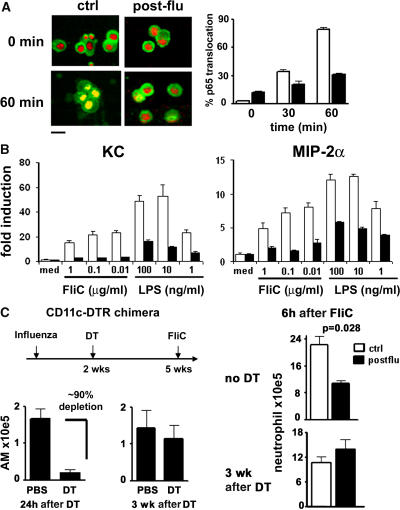
The World Health Organization estimates that lower respiratory tract infections (excluding tuberculosis) account for ∼35% of all deaths caused by infectious diseases. In many cases, the cause of death may be caused by multiple pathogens, e.g., the life-threatening bacterial pneumonia observed in patients infected with influenza virus. The ability to evolve more efficient immunity on each successive encounter with antigen is the hallmark of the adaptive immune response. However, in the absence of cross-reactive T and B cell epitopes, one lung infection can modify immunity and pathology to the next for extended periods of time. We now report for the first time that this phenomenon is mediated by a sustained desensitization of lung sentinel cells to Toll-like receptor (TLR) ligands; this is an effect that lasts for several months after resolution of influenza or respiratory syncytial virus infection and is associated with reduced chemokine production and NF-κB activation in alveolar macrophages. Although such desensitization may be beneficial in alleviating overall immunopathology, the reduced neutrophil recruitment correlates with heightened bacterial load during secondary respiratory infection. Our data therefore suggests that post-viral desensitization to TLR signals may be one possible contributor to the common secondary bacterial pneumonia associated with pandemic and seasonal influenza infection.
Overview
The claims and statistics of this paper haven’t been checked yet.
Free: it reads the open-access text and checks the first 5 claims that cite a source we can check. Create a free account to check every claim.
Integrity signals
Registry
Cites
Statistics
Figures
Verification
Claims the paper makes
The claims and statistics of this paper haven’t been checked yet.
Free: it reads the open-access text and checks the first 5 claims that cite a source we can check. Create a free account to check every claim.
Claims other papers make about this one
Each is checked against this paper’s own text: does it say what the citing paper says it does?
The source backs part of the claim, not all of it — or backs it for a different population, condition or comparison.
In the citing paper
“Late after infection, when virus has cleared (.12 days), desensitization of pattern recognition receptors to stimuli reverses this effect, preventing beneficial inflammatory responses from contributing to bacterial clearance [40].”
From Influenza virus primes mice for pneumonia from Staphylococcus aureus. (2011) · cites this paper as [40]
Experimental — accuracy not yet measuredThe cited source says what the claim attributes to it.
In the citing paper
“respiratory viruses can modulate innate and adaptive immune responses in the host, thereby promoting bacterial colonization and infection; for example, by impairing monocyte activity108, the extended desensitization of alveolar macrophages for Toll-like receptor (TLR)-ligands109, suppressing phagocytic capacity of alveolar macrophages110, and by inhibiting the production of antimicrobial peptides”
From The microbiota of the respiratory tract: gatekeeper to respiratory health (2017) · cites this paper as [109]
In the citing paper
“Third, respiratory viral infections impair innate immune responses against bacteria (128–130).”
From Respiratory viral infection-induced microbiome alterations and secondary bacterial pneumonia. (2018) · cites this paper as [129]
Self-check
Percentages, sums and reported differences re-computed from the paper’s own numbers.
The self-check needs the paper’s full text.
Citations
Cites
2 retracted
Induction of a Homeostatic Circuit in Lung Tissue by Microbial Compounds
Takabayshi, K., Corr, M., Hayashi, T., Redecke, V., Beck, L., Guiney, D. G., Sheppard, D., & Raz, E. (2008) · Immunity · doi:10.1016/j.immuni.2008.04.011 · Cited by 89
RetractedRETRACTED: Induction of a Homeostatic Circuit in Lung Tissue by Microbial Compounds
Takabayshi, K., Corr, M., Hayashi, T., Redecke, V., Beck, L., Guiney, D. G., Sheppard, D., & Raz, E. (2006) · Immunity · doi:10.1016/j.immuni.2006.02.008 · Cited by 76
RetractedPathogen Recognition and Innate Immunity
Akira, S., Uematsu, S., & Takeuchi, O. (2006) · Cell · doi:10.1016/j.cell.2006.02.015 · Cited by 11,952
Jung, S., Unutmaz, D., Wong, P., Sano, G.-I., De los Santos, K., Sparwasser, T., Wu, S., Vuthoori, S., Ko, K., Zavala, F., et al. (2002) · Immunity · doi:10.1016/s1074-7613(02)00365-5 · Cited by 1,773
Insights into the Interaction between Influenza Virus and Pneumococcus
McCullers, J. A. (2006) · Clinical Microbiology Reviews · doi:10.1128/cmr.00058-05 · Cited by 846
Prokaryotic Regulation of Epithelial Responses by Inhibition of IκB-α Ubiquitination
Neish, A. S., Gewirtz, A. T., Zeng, H., Young, A. N., Hobert, M. E., Karmali, V., Rao, A. S., & Madara, J. L. (2000) · Science · doi:10.1126/science.289.5484.1560 · Cited by 844
Role of inducible bronchus associated lymphoid tissue (iBALT) in respiratory immunity
Moyron-Quiroz, J. E., Rangel-Moreno, J., Kusser, K., Hartson, L., Sprague, F., Goodrich, S., Woodland, D. L., Lund, F. E., & Randall, T. D. (2004) · Nature Medicine · doi:10.1038/nm1091 · Cited by 821
van Rijt, L. S., Jung, S., KleinJan, A., Vos, N., Willart, M., Duez, C., Hoogsteden, H. C., & Lambrecht, B. N. (2005) · The Journal of Experimental Medicine · doi:10.1084/jem.20042311 · Cited by 623
Self-citationPostnatal acquisition of endotoxin tolerance in intestinal epithelial cells
Lotz, M., Gütle, D., Walther, S., Ménard, S., Bogdan, C., & Hornef, M. W. (2006) · The Journal of Experimental Medicine · doi:10.1084/jem.20050625 · Cited by 464
Andonegui, G., Bonder, C. S., Green, F., Mullaly, S. C., Zbytnuik, L., Raharjo, E., & Kubes, P. (2003) · Journal of Clinical Investigation · doi:10.1172/jci16510 · Cited by 408
Cited by
Items 101–200 of 406
Alhumaid, S., Mutair, A. S. A., Alawi, Z. A., Alshawi, A. M., Alomran, S. A., Almuhanna, M. S., Almuslim, A. A., Shafia, A. H. B., Alotaibi, A. F., Ahmed, G. Y., et al. (2021) · Pathogens · doi:10.3390/pathogens10070809 · Cited by 85
“aureus co-infections include viral modification of airway structures and increased adherence of the organism to respiratory mucosa, as well as initiation of immune-suppressive responses [22,100,101].”
BackgroundSpatiotemporal Adaptations of Macrophage and Dendritic Cell Development and Function
Roquilly, A., Mintern, J. D., & Villadangos, J. A. (2022) · Annual Review of Immunology · doi:10.1146/annurev-immunol-101320-031931 · Cited by 84
Poly I:C Enhances Susceptibility to Secondary Pulmonary Infections by Gram-Positive Bacteria
Tian, X., Xu, F., Lung, W. Y., Meyerson, C., Ghaffari, A. A., Cheng, G., & Deng, J. C. (2012) · PLoS ONE · doi:10.1371/journal.pone.0041879 · Cited by 76
“In the case of influenza, mechanisms that have been proposed include influenza-induced damage of the normally protective respiratory epithelial cell layer, enhanced receptormediated binding of bacteria, induction of anti-inflammatory molecules such as IL-10, and attenuated expression of patternrecognition molecules su…”
BackgroundViral–bacterial interactions in the respiratory tract
Bellinghausen, C., Rohde, G. G. U., Savelkoul, P. H. M., Wouters, E. F. �., & Stassen, F. R. M. (2016) · Journal of General Virology · doi:10.1099/jgv.0.000627 · Cited by 87
Airway structural cells regulate TLR5-mediated mucosal adjuvant activity
Maele, L. V., Fougeron, D., Janot, L., Didierlaurent, A. M., Cayet, D., Tabareau, J., Rumbo, M., Corvo-Chamaillard, S., Boulenouar, S., Jeffs, S. A., et al. (2013) · Mucosal Immunology · doi:10.1038/mi.2013.66 · Cited by 82
“Similarly, TLR5-mediated mucosal innate immunity was found to depend on signaling within the epithelium compartment of mucosa.(28,43) Stromal and hematopoietic cells can crosstalk to provide effective adaptive responses upon TLR stimulation.”
BackgroundSelf-citationThe Multiple Facets of Toll-Like Receptors in Transplantation Biology
Alegre, M., Leemans, J. C., Moine, A. L., Florquin, S., Wilde, V. D., Chong, A. S., & Goldman, M. (2008) · Transplantation · doi:10.1097/tp.0b013e31817c11e6 · Cited by 80
“This desensitization phenomenon and subsequent inhibition of NF- B activation can last for several months, as observed after lung infection by influenza or respiratory syncytial virus (87).”
BackgroundBarthélémy, A., Ivanov, S., Fontaine, J., Soulard, D., Bouabe, H., Paget, C., Faveeuw, C., & Trottein, F. (2016) · Mucosal Immunology · doi:10.1038/mi.2016.49 · Cited by 77
“This finding is in line with the fact that influenza cripples the functions of innate sensors (including Toll-like receptors) and compromises innate immunity.(39) Further ex vivo analysis demonstrated that (i) iNKT cells conserved their ability to respond to inflammatory cytokines released by accessory cells and (ii)…”
ResultRole of surfactant protein A and D SP-A and SP-D in human antiviral host defense
Hartshorn, K. L. (2010) · Frontiers in Bioscience-Scholar · doi:10.2741/s83 · Cited by 81
“It should be noted that bacterial superinfection and suppression of innate immunity also occur after RSV infection (173) and metapneumovirus infection (42, 174-176).”
BackgroundHoeksema, M. A., Scicluna, B. P., Boshuizen, M. C. S., van der Velden, S., Neele, A. E., den Bossche, J. V., Matlung, H. L., van den Berg, T. K., Goossens, P., & de Winther, M. P. J. (2015) · The Journal of Immunology · doi:10.4049/jimmunol.1402077 · Cited by 92
Karppinen, S., Toivonen, L., Schuez‐Havupalo, L., Waris, M. E., & Peltola, V. T. (2015) · Clinical Microbiology and Infection · doi:10.1016/j.cmi.2015.10.002 · Cited by 73
A Mouse Model of Lethal Synergism Between Influenza Virus and Haemophilus influenzae
Lee, L. N., Dias, P. B., Han, D., Yoon, S., Shea, A., Zakharov, V., Parham, D. M., & Sarawar, S. R. (2009) · American Journal Of Pathology · doi:10.2353/ajpath.2010.090596 · Cited by 82
Subversion of Pulmonary Dendritic Cell Function by Paramyxovirus Infections
Guerrero-Plata, A., Kolli, D., Hong, C., Casola, A., & Garofalo, R. P. (2009) · The Journal of Immunology · doi:10.4049/jimmunol.0802262 · Cited by 80
“The panel included the following cytokines: IL-1 , IL-1 , IL-2, IL-3, IL-4, IL-5, IL-6, IL-9, IL-10, IL-12p40, IL-12p70, IL13, IL-17, TNF- , GM-CSF, IFN- , G-CSF, KC, CCL3 (MIP-1 ), CCL4 (MIP-1 ), CCL11 (eotaxin), CCL2 (MCP-1), and CCL5 (RANTES).”
ResultInfluentialThe role of respiratory viruses in the etiology of bacterial pneumonia: An ecological perspective
Lee, K. H., Gordon, A., & Foxman, B. (2016) · Evolution Medicine and Public Health · doi:10.1093/emph/eow007 · Cited by 83
“These include impairment and depletion of resident alveolar macrophages [119–121] and neutrophils, which are necessary for bacterial clearance, mediated by induction of type I interferons (IFN) [122] and desensitization to Toll-like receptor (TLR) ligands [123].”
Respiratory syncytial virus infection and immunity
González, P. A., Bueno, S. M., Carreño, L. J., Riedel, C. A., & Kalergis, A. M. (2012) · Reviews in Medical Virology · doi:10.1002/rmv.1704 · Cited by 76
“This process could imprint the affected lungs with a phenotype that promotes airway pathology to subsequent viral or bacterial infections [34].”
BackgroundRole of human Toll‐like receptors in naturally occurring influenza A infections
Lee, N. L. S., Wong, C. K., Hui, D. S. C., Lee, S. K. W., Wong, R. Y. K., Ngai, K. L. K., Chan, M. C. W., Chu, Y. J., Ho, A. M. ‐., Lui, G. C.-Y., et al. (2013) · Influenza and Other Respiratory Viruses · doi:10.1111/irv.12109 · Cited by 69
Borca, M. V., Gudmundsdottir, I., Fernandez-Sainz, I. J., Holinka, L. G., & Risatti, G. R. (2008) · Virus Research · doi:10.1016/j.virusres.2008.08.009 · Cited by 69
Cellular immune reactions in the lung
Hasenberg, M., Stegemann‐Koniszewski, S., & Gunzer, M. (2012) · Immunological Reviews · doi:10.1111/imr.12020 · Cited by 73
“This state persists for several months after experimental influenza or RSV infection in mice, which might be one explanation for the long-lasting enhanced susceptibility toward secondary bacterial infection, as it can be observed also in human influenza patients (269).”
BackgroundNeonatal Immunity, Respiratory Virus Infections, and the Development of Asthma
Restori, K. H., Srinivasa, B. T., Ward, B. J., & Fixman, E. D. (2018) · Frontiers in Immunology · doi:10.3389/fimmu.2018.01249 · Cited by 85
“On the other hand, over-enthusiastic repair of virally damaged airways could be maladaptive with longterm changes in macrophage phenotype that promote pathologic changes in airway structure and function (131, 134, 161).”
BackgroundHabibzay, M., Saldana, J. I., Goulding, J., Lloyd, C. M., & Hussell, T. (2012) · Mucosal Immunology · doi:10.1038/mi.2012.28 · Cited by 67
Self-citationPrasso, J. E., & Deng, J. C. (2016) · Clinics in Chest Medicine · doi:10.1016/j.ccm.2016.11.006 · Cited by 74
Influenza vaccination is associated with reduced severity of community-acquired pneumonia
Tessmer, A., Welte, T., Schmidt-Ott, R., Eberle, S., Barten, G., Suttorp, N., & Schaberg, T. (2011) · European Respiratory Journal · doi:10.1183/09031936.00133510 · Cited by 65
You, D., Ripple, M., Balakrishna, S., Troxclair, D., Sandquist, D., Ding, L., Ahlert, T. A., & Cormier, S. A. (2008) · The Journal of Immunology · doi:10.4049/jimmunol.181.5.3486 · Cited by 65
“tended periods of time (43), emphasize the importance of delaying”
BackgroundPreventing and Treating Secondary Bacterial Infections with Antiviral Agents
McCullers, J. A. (2011) · Antiviral Therapy · doi:10.3851/imp1730 · Cited by 68
“pneumoniae [111], ALI from influenza viruses [112] and induction of SBI [51], interactions such as this with NAIs could have significant downstream effects.”
A review of the role of Haemophilus influenzae in community-acquired pneumonia
Slack, M. (2015) · Pneumonia · doi:10.15172/pneu.2015.6/520 · Cited by 71
“Respiratory viruses also interact with Toll-like receptors (TLRs) desensitising the lung sentinel cells to bacterial ligands [51].”
BackgroundDysregulated inflammation as a risk factor for pneumonia in the elderly.
Boyd, A. R., & Orihuela, C. J. (2011) · Europe PMC (PubMed Central) · Cited by 82
Chen, W. H., Toapanta, F. R., Shirey, K. A., Zhang, L., Giannelou, A., Page, C., Frieman, M. B., Vogel, S. N., & Cross, A. S. (2011) · Immunology Letters · doi:10.1016/j.imlet.2011.10.009 · Cited by 69
“Since there is previous evidence that alveolar macrophages respond poorly to TLR ligands during recovery from influenza infection [9] and we imply that these may be AAM, we explored whether the cytokine responses of a distal, extra-pulmonary organ may also be affected (i.”
InfluentialThe contributions of lung macrophage and monocyte heterogeneity to influenza pathogenesis
Duan, M., Hibbs, M. L., & Chen, W. (2016) · Immunology and Cell Biology · doi:10.1038/icb.2016.97 · Cited by 75
Sharma-Chawla, N., Sender, V., Kershaw, O., Gruber, A. D., Volckmar, J., Henriques-Normark, B., Stegemann-Koniszewski, S., & Bruder, D. (2016) · Infection and Immunity · doi:10.1128/iai.00422-16 · Cited by 63
“In fact, IAV-induced impairment of AM sensitivity is proposed to persist until 100 days after IAV infection in mice (24).”
BackgroundMicroRNA-155 regulates host immune response to postviral bacterial pneumonia via IL-23/IL-17 pathway
Podsiad, A. B., Standiford, T. J., Ballinger, M. N., Eakin, R., Park, P. K., Kunkel, S. L., Moore, B. B., & Bhan, U. (2015) · American Journal of Physiology-Lung Cellular and Molecular Physiology · doi:10.1152/ajplung.00224.2015 · Cited by 63
Unger, B. L., Faris, A. N., Ganesan, S., Comstock, A. T., Hershenson, M. B., & Sajjan, U. S. (2012) · PLoS Pathogens · doi:10.1371/journal.ppat.1002969 · Cited by 68
“Influenza virus also desensitizes TLR receptors in vivo and decreases pro-inflammatory cytokine responses to bacterial ligands long after the viral infection resolves [16].”
BackgroundInvasive Bacterial Infections in Relation to Influenza Outbreaks, 2006–2010
Tasher, D., Stein, M., Simões, E. A. F., Shohat, T., Bromberg, M., & Somekh, E. (2011) · Clinical Infectious Diseases · doi:10.1093/cid/cir726 · Cited by 65
Pomorska‐Mól, M., Markowska‐Daniel, I., Kwit, K., Stępniewska, K., & PEJSAK, Z. (2013) · BMC Veterinary Research · doi:10.1186/1746-6148-9-14 · Cited by 62
“impairing of alveolar macrophage phagocytic function) [17-20].”
Porte, R., Fougeron, D., Muñoz‐Wolf, N., Tabareau, J., Georgel, A., Wallet, F., Paget, C., Trottein, F., Chabalgoity, J. A., Carnoy, C., et al. (2015) · Antimicrobial Agents and Chemotherapy · doi:10.1128/aac.01210-15 · Cited by 66
“Data in the literature indicate that after the resolution of infection, IAV induces the sustained desensitization of TLR-mediated lung innate responses (32).”
BackgroundSelf-citationDamjanovic, D., Lai, R., Jeyanathan, M., Hogaboam, C. M., & Xing, Z. (2013) · American Journal Of Pathology · doi:10.1016/j.ajpath.2013.05.016 · Cited by 63
Influenza “Trains” the Host for Enhanced Susceptibility to Secondary Bacterial Infection
Shirey, K. A., Perkins, D. J., Lai, W., Zhang, W., Fernando, L. R., Gusovsky, F., Blanco, J. C. G., & Vogel, S. N. (2019) · mBio · doi:10.1128/mbio.00810-19 · Cited by 63
Ichinohe, T. (2010) · Expert Review of Vaccines · doi:10.1586/erv.10.118 · Cited by 61
The innate immune rheostat: influence on lung inflammatory disease and secondary bacterial pneumonia
Hussell, T., & Cavanagh, M. M. (2009) · Biochemical Society Transactions · doi:10.1042/bst0370811 · Cited by 54
Self-citationSepsis, Severe Sepsis, and Septic Shock
Munford, R. S., & Suffredini, A. F. (2010) · Elsevier eBooks · doi:10.1016/b978-0-443-06839-3.00070-9 · Cited by 63
Janot, L., Sirard, J., Sécher, T., Noulin, N., Fick, L., Akira, S., Uematsu, S., Didierlaurent, A. M., Hussell, T., Ryffel, B., et al. (2009) · European Journal of Immunology · doi:10.1002/eji.200838907 · Cited by 59
Self-citationViral strategies predisposing to respiratory bacterial superinfections
Rossi, G. A., Fanous, H., & Colin, A. A. (2020) · Pediatric Pulmonology · doi:10.1002/ppul.24699 · Cited by 58
de Geus, E. D., & Vervelde, L. (2013) · Developmental & Comparative Immunology · doi:10.1016/j.dci.2013.03.008 · Cited by 60
Wong, S. M. S., Bernui, M., Shen, H., & Akerley, B. J. (2013) · Proceedings of the National Academy of Sciences · doi:10.1073/pnas.1311217110 · Cited by 59
Structured regulation of inflammation during respiratory viral infection
Hussell, T., & Goulding, J. (2010) · The Lancet Infectious Diseases · doi:10.1016/s1473-3099(10)70067-0 · Cited by 61
Self-citationMcCallum, G. B., Morris, P. S., Chatfield, M. D., Maclennan, C., White, A. V., Sloots, T. P., Mackay, I. M., & Chang, A. B. (2013) · PLoS ONE · doi:10.1371/journal.pone.0074316 · Cited by 52
“Viral-bacterial co-infections are more likely when the upper airways are densely colonised with bacteria or during repeated infections [25].”
Crossing barriers: infections of the lung and the gut
Openshaw, P. (2009) · Mucosal Immunology · doi:10.1038/mi.2008.79 · Cited by 52
Shepardson, K. M., Schwarz, B. H., Larson, K., Morton, R. V., Avera, J., McCoy, K., Caffrey, A. K., Harmsen, A. L., Douglas, T., & Rynda‐Apple, A. (2017) · mBio · doi:10.1128/mbio.01356-17 · Cited by 51
“contribute to susceptibility to pneumococcal pneumonia induced much later, at 1 or 2 weeks post-IAV infection (52, 53), at which points the immune response is much different from the initial response (18, 19).”
BackgroundResultRetractedGlennie, S., Gritzfeld, J. F., Pennington, S. H., Garner-Jones, M., Coombes, N., Hopkins, M. J., Vadesilho, C. F., Miyaji, E. N., Wang, D., Wright, A. D., et al. (2016) · Mucosal Immunology · doi:10.1038/mi.2015.35 · Cited by 51
“Several possible mechanisms may account for increased nasopharyngeal pneumococcal density, including influenza-induced damage to the epithelium and/or alterations in host cellular responses to bacterial pathogens.(8,9) Viral infections reduce mucociliary velocity, denude epithelial surfaces and expose basement membran…”
BackgroundWhy is coinfection with influenza virus and bacteria so difficult to control?
Cauley, L. S., & Vella, A. T. (2015) · PubMed · Cited by 54
A Critical, Nonlinear Threshold Dictates Bacterial Invasion and Initial Kinetics During Influenza
Smith, A. M., & Smith, A. P. (2016) · Scientific Reports · doi:10.1038/srep38703 · Cited by 49
Novak, N., & Cabanillas, B. (2020) · Immunology · doi:10.1111/imm.13240 · Cited by 50
Airborne inflammatory factors from the nose to the brain
Tonelli, L. H. (2010) · Frontiers in Bioscience · doi:10.2741/s52 · Cited by 46
“All together, these inflammatory pathogens produce significant changes in the immunity of the respiratory system and the type of response mounted after successive infections (125-127).”
BackgroundThe yin and the yang of immunosuppression with inhaled corticosteroids
Sabroe, I., Postma, D. S., Heijink, I. H., & Dockrell, D. H. (2013) · Thorax · doi:10.1136/thoraxjnl-2013-203773 · Cited by 47
Antibiotics for persistent cough or wheeze following acute bronchiolitis in children
McCallum, G. B., Plumb, E. J., Morris, P. S., & Chang, A. B. (2017) · Cochrane Database of Systematic Reviews · doi:10.1002/14651858.cd009834.pub3 · Cited by 46
Do, Y., Didierlaurent, A. M., Ryu, S., Koh, H., Park, C. G., Park, S., Perlin, D. S., Powell, B. S., & Steinman, R. M. (2012) · Vaccine · doi:10.1016/j.vaccine.2012.08.051 · Cited by 46
“For ICS of pulmonary T cells, lungs were collected and single cell suspensions were prepared[19].”
MethodSelf-citationDuvigneau, S., Sharma-Chawla, N., Boianelli, A., Stegemann‐Koniszewski, S., Nguyễn, V. K., Bruder, D., & Hernandez-Vargas, E. A. (2016) · Scientific Reports · doi:10.1038/srep37045 · Cited by 47
Pulmonary Innate Immunity in Children with Protracted Bacterial Bronchitis
Chang, A. B., Yerkovich, S. T., Gibson, P. G., Anderson‐James, S., Petsky, H., Carroll, M. L., Masters, I. B., Marchant, J. M., Wurzel, D. F., & Upham, J. W. (2012) · The Journal of Pediatrics · doi:10.1016/j.jpeds.2012.03.049 · Cited by 45
Schnoeller, C., Roux, X., Sawant, D., Raze, D., Olszewska, W., Locht, C., & Openshaw, P. (2014) · American Journal of Respiratory and Critical Care Medicine · doi:10.1164/rccm.201307-1227oc · Cited by 47
“, RSV and influenza) may alter the pulmonary immune defense against bacterial infections (15, 16), but we found that prior RSV infection did not aggravate inflammatory responses to BPZE1.”
BackgroundInnate Immune Cell Suppression and the Link With Secondary Lung Bacterial Pneumonia
Morgan, D. J., Casulli, J., Chew, C., Connolly, E., Lui, S., Brand, O. J., Rahman, R., Jagger, C., & Hussell, T. (2018) · Frontiers in Immunology · doi:10.3389/fimmu.2018.02943 · Cited by 45
“However, their responsiveness to TLR agonists is significantly dampened (163).”
BackgroundSelf-citationSurviving Deadly Lung Infections: Innate Host Tolerance Mechanisms in the Pulmonary System
Crane, M. J., Lee, K. M., FitzGerald, E. S., & Jamieson, A. M. (2018) · Frontiers in Immunology · doi:10.3389/fimmu.2018.01421 · Cited by 49
A Novel Outbred Mouse Model of 2009 Pandemic Influenza and Bacterial Co-Infection Severity
McHugh, K. J., Mandalapu, S., Kolls, J. K., Ross, T. M., & Alcorn, J. F. (2013) · PLoS ONE · doi:10.1371/journal.pone.0082865 · Cited by 44
“Influenza virus infection has been shown to enhance susceptibility to secondary bacterial infections by multiple pathways including altering bacterial adhesions, TLR expression and pathogen-associated molecular pattern (PAMP) receptors on epithelial cells [8-11].”
BackgroundChristian, D. A., Koshy, A. A., Reuter, M. A., Betts, M. R., Boothroyd, J. C., & Hunter, C. A. (2014) · Infection and Immunity · doi:10.1128/iai.01643-14 · Cited by 44
“This lack of responsiveness is reminiscent of the TLR desensitization observed in resident macrophages in other tissues (55).”
BackgroundRisk factors for adverse outcomes of Indigenous infants hospitalized with bronchiolitis
McCallum, G. B., Chatfield, M. D., Morris, P. S., & Chang, A. B. (2015) · Pediatric Pulmonology · doi:10.1002/ppul.23342 · Cited by 43
“However, it is plausible that secondary bacterial infection that occur post viral infections 15 are more likely when the nasopharynx is colonized with bacteria, as found in some populations such as in Northern Territory Indigenous infants.”
BackgroundPatterns in Bacterial- and Viral-Induced Immunosuppression and Secondary Infections in the ICU
Koch, R. M., Kox, M., de Jonge, M. I., van der Hoeven, J. G., Ferwerda, G., & Pickkers, P. (2016) · Shock · doi:10.1097/shk.0000000000000731 · Cited by 48
“This includes desensitization of lung sentinel cells to Tolllike receptor (TLR) ligands (11), leading to reduced NF-kB activation and chemokine production, and decreased expression of the macrophage receptor MARCO (19), resulting in reduced activation of these cells.”
InfluentialImmunomodulators targeting MARCO expression improve resistance to postinfluenza bacterial pneumonia
Wu, M., Gibbons, J. G., DeLoid, G. M., Bedugnis, A. S., Thimmulappa, R. K., Biswal, S. S., & Kobzik, L. (2017) · American Journal of Physiology-Lung Cellular and Molecular Physiology · doi:10.1152/ajplung.00075.2017 · Cited by 44
Stegemann, S., Dahlberg, S., Kröger, A., Gereke, M., Bruder, D., Henriques-Normark, B., & Gunzer, M. (2009) · PLoS ONE · doi:10.1371/journal.pone.0004840 · Cited by 43
“This was associated with a decreased response of alveolar macrophages (AM) in IAV-infected mice in response to Toll-like receptor (TLR) ligands of bacterial origin leading to their inability to produce neutrophil attracting chemokines such as Mip-2 and KC [18].”
BackgroundNeutrophil Apoptosis During Viral Infections
Elbim, C., Katsikis, P. D., & Estaquier, J. (2009) · The Open Virology Journal · doi:10.2174/1874357900903010052 · Cited by 50
“Although TLR desensitization may be a contributing factor for reduced recruitment [94], PMN apoptosis occurring during influenza virus infection may be a more likely explanation as these bacterial infections occur quickly after or during influenza virus infection.”
BackgroundGonzalez, A. L., Dungan, M. M., Smart, C. D., Madhur, M. S., & Doran, A. C. (2023) · Antioxidants and Redox Signaling · doi:10.1089/ars.2023.0284 · Cited by 46
“This occurs through inhibition of TLR signaling by the macrophages as well as through negative regulation by signals such as CD200, which prevents activation of both monocytes and surrounding vascular cells (Didierlaurent et al., 2008; Kassiteridi et al., 2021; Snelgrove et al., 2008).”
Bansal, S., Yajjala, V. K., Bauer, C. D., & Sun, K. (2018) · The Journal of Immunology · doi:10.4049/jimmunol.1700210 · Cited by 43
“In some studies, this suppression has been attributed to activation of the type I IFN signaling pathway during influenza infection (11, 25, 32), whereas others have shown its association with suppressed TLR sensing and proinflammatory cytokine responses (13, 26).”
BackgroundMuscedere, J., Ofner, M., Kumar, A., Long, J., Lamontagne, F., Cook, D., McGeer, A., Chant, C., Marshall, J., Jouvet, P., et al. (2013) · Chest · doi:10.1378/chest.12-1861 · Cited by 40
Respiratory syncytial virus: A new era
Ruiz‐Galiana, J., Cantón, R., Ramos, P. D. L., Botella, A. G., García‐Lledó, A., Hernández‐Sampelayo, T., Gómez‐Pavón, J., del Castillo, J. M. G., Martín-Delgado, M. C., Martín‐Sánchez, F. J., et al. (2024) · Revista Española de Quimioterapia · doi:10.37201/req/147.2023 · Cited by 40
“RSV conditions functional alterations of the immune response; it can desensitize macrophages for Toll receptor ligands [21], facilitating for months other infections; it can also hyper-express, in infected epithelial cells, inhibitory molecules such as PD-L1, which decrease T-cell activation [27].”
BackgroundPomorska‐Mól, M., Dors, A., Kwit, K., Czyżewska-Dors, E. B., & PEJSAK, Z. (2017) · BMC Veterinary Research · doi:10.1186/s12917-017-1298-7 · Cited by 41
“Pig-MAP: asignificant differences between co-inoculated and control pigs; * -significant differences between Hps and control group phagocytic function of alveolar macrophages) [23] [24] [25] [26] .”
BackgroundBertho, N., & Meurens, F. (2021) · Molecular Immunology · doi:10.1016/j.molimm.2021.03.014 · Cited by 41
Esposito, S., Zampiero, A., Terranova, L., Ierardi, V., Ascolese, B., Daleno, C., Prada, E., Pelucchi, C., & Principi, N. (2013) · The Pediatric Infectious Disease Journal · doi:10.1097/inf.0b013e31829ec274 · Cited by 40
“Pediatric invasive pneumococcal disease has been associated with RSV activity in the previous 4 weeks,(31) and RSV impairs the signaling of interferon types I and II(32) and can disrupt toll-like receptor activity.(33) On the contrary, the association between bacterial lower respiratory tract infections in TABLE 3.”
BackgroundInnate immunity to influenza virus: implications for future therapy
White, M. R., Doss, M., Boland, P. M., Tecle, T., & Hartshorn, K. L. (2008) · Expert Review of Clinical Immunology · doi:10.1586/1744666x.4.4.497 · Cited by 44
Persistently Active Microbial Molecules Prolong Innate Immune Tolerance In Vivo
Lu, M., Varley, A. W., & Munford, R. S. (2013) · PLoS Pathogens · doi:10.1371/journal.ppat.1003339 · Cited by 41
“The phenomenon has also been produced in animals by peritonitis [16], influenza virus infection [17] and bacterial lipopeptides [18,19] and in cultured macrophages using muramyl dipeptide [20], lipoteichoic acid [21], and flagella [22].”
BackgroundViral–bacterial interactions–therapeutic implications
Deng, J. C. (2013) · Influenza and Other Respiratory Viruses · doi:10.1111/irv.12174 · Cited by 46
“82 Given the ample evidence that both cell types are essential to the clearance of bacterial pathogens from the lung, it is likely that influenza-induced suppression of phagocytic cell populations plays a major role in governing susceptibility to secondary bacterial infections.”
BackgroundThe Role of Macrophages in Influenza a Virus Infection
Nicol, M. Q., & Dutia, B. M. (2014) · Future Virology · doi:10.2217/fvl.14.65 · Cited by 43
Macrophage adaptation in airway inflammatory resolution
Kaur, M., Bell, T., Salek‐Ardakani, S., & Hussell, T. (2015) · European Respiratory Review · doi:10.1183/16000617.0030-2015 · Cited by 42
Self-citationD’Anna, S. E., Balbi, B., Cappello, F., Carone, M., & Stefano, A. D. (2016) · International Journal of COPD · doi:10.2147/copd.s93398 · Cited by 44
“Influenza A virus causes apoptosis and alters the function of alveolar macrophages, 47,48 suppressing their activation in response to secondary bacterial challenge and phagocytic capacity by increasing the expression of CD 200 receptor ligation antigen 49 and reducing the expression in the alveolar…”
Wu, Y., Tu, W., Lam, K.-T., Chow, K., Ho, P., Guan, Y., Peiris, J. S. M., & Lau, Y. (2014) · Journal of Virology · doi:10.1128/jvi.02455-14 · Cited by 40
“For example, influenza virus can desensitize epithelial cells and alveolar macrophages to Toll-like receptor (TLR) signals for defense against bacteria (10).”
BackgroundRodriguez, L. A., López‐Hoyos, M., Mata, C., Fontalba, A., Alén, J. C., Marín, M. J. A., Fernández-Luna, J. L., Balbín, J. A., Aranzamendi, M., Blanco, R., et al. (2011) · Annals of the Rheumatic Diseases · doi:10.1136/ard.2010.140194 · Cited by 41
Flórido, M., Grima, M. A., Gillis, C. M., Xia, Y., Turner, S. J., Triccas, J. A., Stambas, J., & Britton, W. J. (2013) · The Journal of Immunology · doi:10.4049/jimmunol.1202824 · Cited by 39
“pneumoniae have attributed the increased susceptibility to secondary bacterial infections to deleterious effects on innate immunity (21, 33, 34).”
BackgroundMathematical Modeling of Streptococcus pneumoniae Colonization, Invasive Infection and Treatment
Domínguez‐Hüttinger, E., Boon, N. J., Clarke, T. B., & Tanaka, R. J. (2017) · Frontiers in Physiology · doi:10.3389/fphys.2017.00115 · Cited by 41
“…of proteases that damage the epithelial cells (Oggioni et al., 2004; Schmeck et al., 2004; Attali et al., 2008; Tieu et al., 2009) and by reduction of the barrier recovery rate due to the increased expression of the transcriptional repressor SNAIL1, which inhibits the expression of claudin…”
Okamoto, S., & Nagase, S. (2018) · Microbiology and Immunology · doi:10.1111/1348-0421.12577 · Cited by 39
“Influenza virus-infected alveolar macrophages also show poor secretion of cytokines and chemokines as a result of decreased translocation of nuclear factor-kB (83).”
BackgroundThe Role of Virus Infection in Deregulating the Cytokine Response to Secondary Bacterial Infection
Mehta, D., Petes, C., Gee, K., & Basta, S. (2015) · Journal of Interferon & Cytokine Research · doi:10.1089/jir.2015.0072 · Cited by 37
The influence of influenza virus infections on the development of tuberculosis
de Paus, R. A., van Crevel, R., van Beek, R., Sahiratmadja, E., Alisjahbana, B., Marzuki, S., Rimmelzwaan, G. F., van Dissel, J. T., Ottenhoff, T. H. M., & van de Vosse, E. (2013) · Tuberculosis · doi:10.1016/j.tube.2013.02.006 · Cited by 43
“In mice, Toll like receptor-induced responses of alveolar macrophages to bacterial ligands remain desensitized for months after an influenza virus infection [20].”
BackgroundRisk factors for nosocomial infection among hospitalised severe influenza A(H1N1)pdm09 patients
Zhou, F., Li, H., Gu, L., Liu, M., Xue, C., Cao, B., & Wang, C. (2017) · Respiratory Medicine · doi:10.1016/j.rmed.2017.11.017 · Cited by 42
Novel cancer therapy targeting microbiome
Nagano, T., Otoshi, T., Hazama, D., Kiriu, T., Umezawa, K., Katsurada, N., & Nishimura, Y. (2019) · OncoTargets and Therapy · doi:10.2147/ott.s207546 · Cited by 39
Trained immunity and host‐pathogen interactions
Peignier, A., & Parker, D. (2020) · Cellular Microbiology · doi:10.1111/cmi.13261 · Cited by 38
“In addition, tolerance appears to be involved in influenza induced susceptibility to secondary infections with respiratory syncytial virus, Cryptococcus neoformans, Streptococcus pneumoniae and Escherichia coli (Didierlaurent et al., 2008; Roquilly et al., 2017).”
BackgroundTsitsiklis, A., Zha, B. S., Byrne, A., DeVoe, C., Rackaityte, E., Levan, S., Sunshine, S., Mick, E., Ghale, R., Love, C., et al. (2021) · Research Square · doi:10.1101/2021.03.23.21253487 · Cited by 38
Regulation of mononuclear phagocyte function by the microbiota at mucosal sites
Scott, N. A., & Mann, E. R. (2019) · Immunology · doi:10.1111/imm.13155 · Cited by 37
Martínez-Colón, G. J., Warheit-Niemi, H. I., Gurczynski, S. J., Taylor, Q. M., Wilke, C. A., Podsiad, A. B., Crespo, J., Bhan, U., & Moore, B. B. (2019) · PLoS Pathogens · doi:10.1371/journal.ppat.1007560 · Cited by 36
Dumoutier, L., de Heusch, M., Orabona, C., Satoh‐Takayama, N., Eberl, G., Sirard, J., Santo, J. P. D., & Renauld, J. (2011) · European Journal of Immunology · doi:10.1002/eji.201040878 · Cited by 34
Self-citationLuissint, A., Williams, H. C., Kim, W., Flemming, S., Azcutia, V., Hilgarth, R., Leary, M. N. O., Denning, T. L., Nusrat, A., & Parkos, C. A. (2019) · Mucosal Immunology · doi:10.1038/s41385-019-0143-7 · Cited by 33
The role of monocyte-derived macrophages in the lung: It’s all about context
T’Jonck, W., & Bain, C. C. (2023) · The International Journal of Biochemistry & Cell Biology · doi:10.1016/j.biocel.2023.106421 · Cited by 38
TLR and RLR Signaling Are Reprogrammed in Opposite Directions after Detection of Viral Infection
Hotz, C., Roetzer, L. C., Huber, T., Sailer, A. W., Oberson, A., Treinies, M., Heidegger, S. M., Herbst, T., Endres, S., & Bourquin, C. (2015) · The Journal of Immunology · doi:10.4049/jimmunol.1500079 · Cited by 33
Chapter 2 Kill the Bacteria…and Also Their Messengers?
Munford, R. S., Lu, M., & Varley, A. W. (2009) · Advances in immunology · doi:10.1016/s0065-2776(09)03002-8 · Cited by 36
“Recovery from certain viral infections may also take a long time (Didierlaurent et al., 2008), raising the possibility that hosts might differ in their ability to degrade stimulatory viral nucleic acids or proteins.”
Metzger, D. W., Furuya, Y., Salmon, S. L., Roberts, S., & Sun, K. (2015) · The Journal of Infectious Diseases · doi:10.1093/infdis/jiv066 · Cited by 31
Villeret, B., Solhonne, B., Straube, M., Lemaire, F., Cazes, A., García-Verdugo, I., & Sallenave, J. (2020) · Frontiers in Immunology · doi:10.3389/fimmu.2020.00117 · Cited by 33
“These include, not exhaustively however, IAV-mediated desensitization of TLR signaling (13), type I interferonmediated impairment of neutrophil chemokines or function (14–17), down-regulation of antimicrobial production (18–20), attenuation of IL1β production or IL1β-mediated alveolar macrophage activity (21, 22), exa…”
BackgroundBacterial Complications During Pandemic Influenza Infection
Hussell, T., Wissinger, E., & Goulding, J. (2009) · Future Microbiology · doi:10.2217/fmb.09.3 · Cited by 35
Self-citation
Metadata
- Authors
- Didierlaurent, A., Goulding, J., Patel, S., Snelgrove, R., Low, L., Bebien, M., Lawrence, T., van Rijt, L. S., Lambrecht, B. N., Sirard, J.-C., & Hussell, T.
- Affiliations
- Imperial College London (GB)
- 1Kennedy Institute of Rheumatology, Imperial College London, London W6 8LH, England, UK
- 2Department of Pulmonary Medicine, Erasmus Medical Center, 3015 GE Rotterdam, Netherlands
- Erasmus MC (NL)
- Inserm (FR)
- ORCID
- Venue
- The Journal of Experimental Medicine
- Publisher
- Rockefeller University Press
- Published
- 2008-01-28
- Volume
- 205
- Issue
- 2
- Pages
- 323-329
- ISSN
- 0022-1007 (ISSN-L)
- 1540-9538
- PMC
- PMC2271005
- OpenAlex
- W2127612599
- Cited by
- 399
- References
- 31
- Citations by year
- 2026: 9 · 2025: 14 · 2024: 12 · 2023: 19 · 2022: 11 · 2021: 23 · 2020: 26 · 2019: 15 · 2018: 20 · 2017: 20 · 2016: 27 · 2015: 25 · 2014: 24 · 2013: 36 · 2012: 25
- FWCI
- 12.79
- Type
- journal article
- Language
- en
- Open access
- bronze
- doi.org
- Locations
- The Journal of Experimental Medicine (publishedVersion)
- Europe PMC (PubMed Central) (publishedVersion, cc-by-nc-sa)
- PubMed Central (publishedVersion, cc-by-nc-sa)
- PubMed (publishedVersion)
- Pure Amsterdam UMC (publishedVersion)
- Research Explorer (The University of Manchester) (publishedVersion)
- Data Archiving and Networked Services (DANS) (submittedVersion)
- RePub (Erasmus University Rotterdam) (submittedVersion, other-oa)
- HAL (submittedVersion)
- Ghent University Academic Bibliography (Ghent University) (submittedVersion)
- RePub (Erasmus University Rotterdam) (submittedVersion)
- Topics
- Life Sciences › Immunology and Microbiology › Immunology › Immune Response and Inflammation
- Life Sciences › Immunology and Microbiology › Immunology › Immune responses and vaccinations
- Life Sciences › Biochemistry, Genetics and Molecular Biology › Molecular Biology › Inflammasome and immune disorders
- Keywords
- influenza virus, respiratory syncytial virus, secondary bacterial pneumonia, alveolar macrophages, chemokine production, NF-κB activation, neutrophil recruitment
- MeSH terms
- Animals, Bacterial Infections, Bronchoalveolar Lavage Fluid, Epithelial Cells, Female, Flagellin, Ligands, Lipopolysaccharides, Mice, Inbred BALB C, Mice, Inbred C57BL, Mice, Transgenic, Neutrophils, Orthomyxoviridae Infections, Pseudomonas aeruginosa, Respiratory System, Respiratory Tract Infections, Streptococcus pneumoniae, Cytokines, NF-kappa B, Macrophages, Alveolar, Toll-Like Receptors, Mice
About these checks
Registry, retraction, Cites and statistics results are computed, not judged, with one exception: a printed reference that no index lists is read once by a model before it counts as a citation error. Claims are extracted by a model and kept only when their quote appears verbatim in the text; each cited source is then checked, with a model’s help, for whether it says what the claim relies on. Those verdicts can be wrong — read the claim’s quote and the cited source before relying on one.
Statistics and arithmetic are recomputed, not judged.
Confidence bands are shown only for fields calibrated on our annotated test set. None is calibrated yet, so no band is shown.
What counts as a claim ›How we measure confidence ›How we check this ›
Are you an author, or do you see a problem with this page? Request a review
Data sources
Bibliographic data: Semantic Scholar, OpenAlex, Crossref.
Contains information from the Semantic Scholar Academic Graph Datasets, made available under the ODC Attribution License (ODC-BY 1.0).
Semantic Scholar’s data is described in: Kinney, R., et al. (2023). The Semantic Scholar Open Data Platform. arXiv:2301.10140.
